India Insider: Pharma and Earning Trust Thru Accountability
The pharmaceutical industry in India is a global powerhouse, often touted as “best in class.” Nearly 32% of India’s pharma exports go to the United States, and India’s products are renowned for their quality and affordability. Giants like Sun Pharma, Cipla, Dr. Reddy’s and Mankind Pharma cater to millions worldwide. Mankind Pharma, in particular, is celebrated for selling affordable essential medicines, ensuring access for lower-income communities.
The Opposite Side: A Fatal Flaw
Yet, within India, the same country with world class technology and research, exists a grim paradox: sub-standard drugs that have caused devastating human loss.
This is not a new problem. In 2022, toxic cough syrups made by two Indian companies were linked to the deaths of 70 children in The Gambia and 19 in Uzbekistan. According to the World Health Organization (WHO), the products contained excess levels of diethylene glycol (DEG).
A Killer Drug: New Tragedy 2025
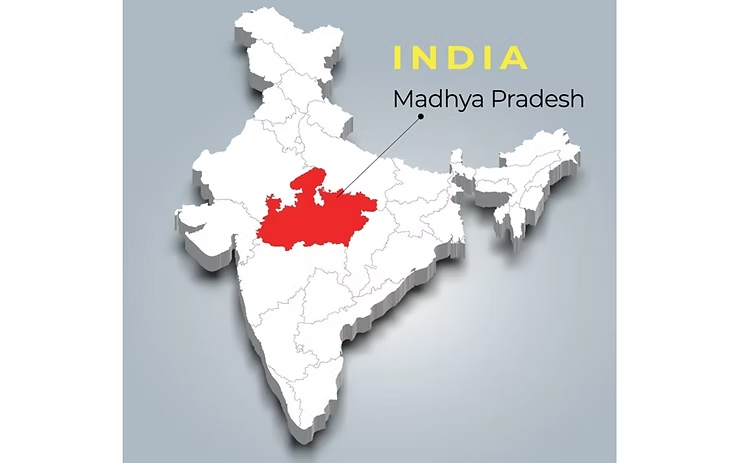
The contamination has now hit home with horrifying consequences quite recently. As Frontline magazine detailed, in the Madhya Pradesh State, Rajesh Yaduvansi’s two-year-old daughter, Jayesha, was admitted to a local clinic on September 14th for pain and fever. After temporary relief, her condition worsened. By September 25th, doctors revealed her kidneys had stopped functioning. She was rushed to Nagpur, but tragically died on October 7th from acute kidney failure.
Jayesha was one of at least 24 children who has died since early September across Madhya Pradesh, mostly from Chhindwara and nearby tribal districts. Three more patients remain in critical condition. Most victims came from poor and tribal families. They are the victims of a lethal lapse in quality control.
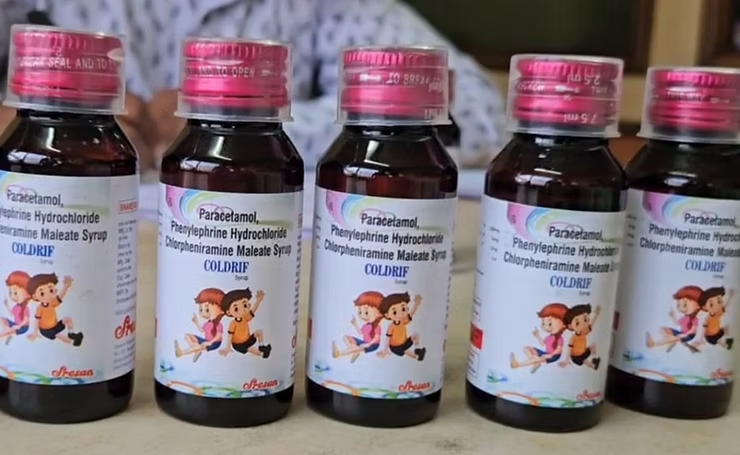
The culprit was the toxic industrial solvent, diethylene glycol (DEG), which causes kidney failure when ingested. The contaminated cough syrup, Coldrif, was manufactured by Tamil Nadu State based Sresan Pharmaceutical.
Following the cough syrup deaths, authorities formed an SIT (Special Investigation Team) and raided the manufacturer, Sresan Pharmaceutical, near Chennai. The company’s owner, Ranganathan Govindan, has been arrested, and several Madhya Pradesh drug officials have been suspended or transferred.
The Solvent Issue: Cutting Corners
Cough syrups typically use propylene glycol as a solvent. This ingredient exists in two grades: industrial and pharmaceutical. The industrial version, which is cheaper, can contain dangerously high levels of DEG.
When manufacturers prioritize cost cutting and fail to ensure pharmaceutical grade purity, tragedy follows. This is a profit driven decision that ignores human life and can produce fatalities.
Regulatory Failures and Neglect
India aims to reach developed nation status economy by 2047, but this ambition will ring hollow if it neglects its own people.
The drug control system is fractured. The Central Drugs Standard Control Organization (CDSCO) issues drug licenses, while State authorities are responsible for essential quality checks. In Madhya Pradesh, accountability rests with the Drug Controller and Food and Drug Administration.
The system is fundamentally broken. According to K.R. Ashokan, a former President of the Indian Medical Association (IMA), fewer than 1% of drugs are tested for quality or impurities. Indian citizens face massive risks which are often unreported. While a pharmacovigilance system exists, its national reach is minimal and desperately inadequate for a country of 1.4 billion people.
The Central Government health care expenditure remains under 2% of its GDP and this is far too little for a nation aspiring for global leadership in pharmaceutical research.
A Call for Accountability
This catastrophe has shaken parents’ trust in the medical system, especially among the most vulnerable communities. India has the potential to be a world-class player, but without strong, centralized regulation and comprehensive preventive care, such incidents will continue.
We cannot bring back the 24 children who died due to cough syrup poisoning. This tragedy must serve as a necessary wake-up call, because no parent should ever lose a child to medicines that are meant to heal again.