Water India Graph 20260430

India Insider: Water Crisis Has Turned From Severe to Critical

India Needs Sustainable Water Security With Improved Infrastructure

India’s population has been expanding at a rapid pace and stands at 1.4 billion. Due to the urbanization process, industrialization in cities like Chennai, Mumbai and Delhi must continue to emphasize improving public infrastructures in order to maintain vital growth.

The growing population and urbanization adds noteworthy stress to the nation’s water bodies. With more people living in increasingly congested areas and pumping large amounts of water via borewells, groundwater levels are rapidly diminishing.

For instance, India consumes roughly 761 billion cubic meters of water per year, making it the largest water consumer in the world, ahead of China and the United States. 85% of rural India is dependent on ground water for agriculture and consumption, this because lake and pond water are not accessible. Rural India suffers from a lack of maintenance and sewage water that often contaminates these important sources.

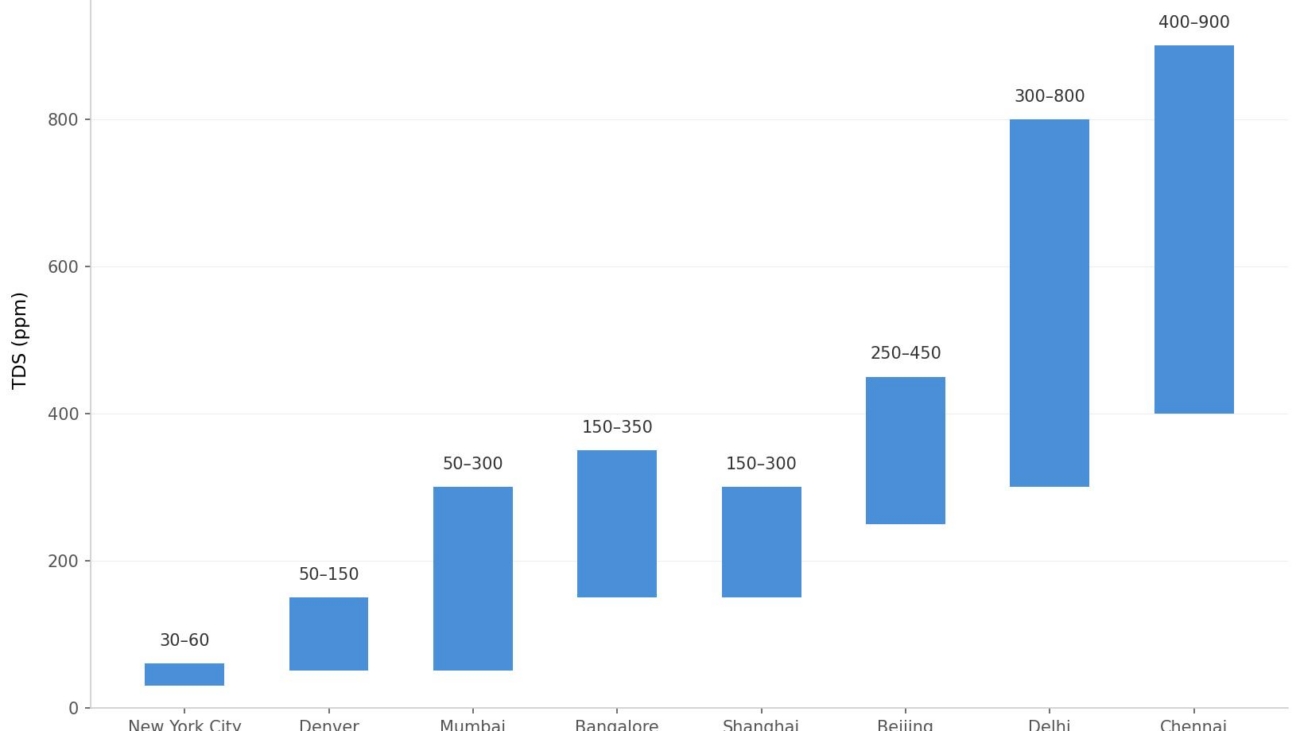
Tap Water via Total Dissolved Solids Comparison in Various Cities Worldwide 

Only a few years ago, water facilities provided by municipalities and urban systems were relatively accessible in India. Low and middle income households relied on pipelines, wells and tap water for their daily usage. However, with sharp rises in population, government capital expenditures on water pipelines and sanitation has not kept pace and often fails to meet needs.

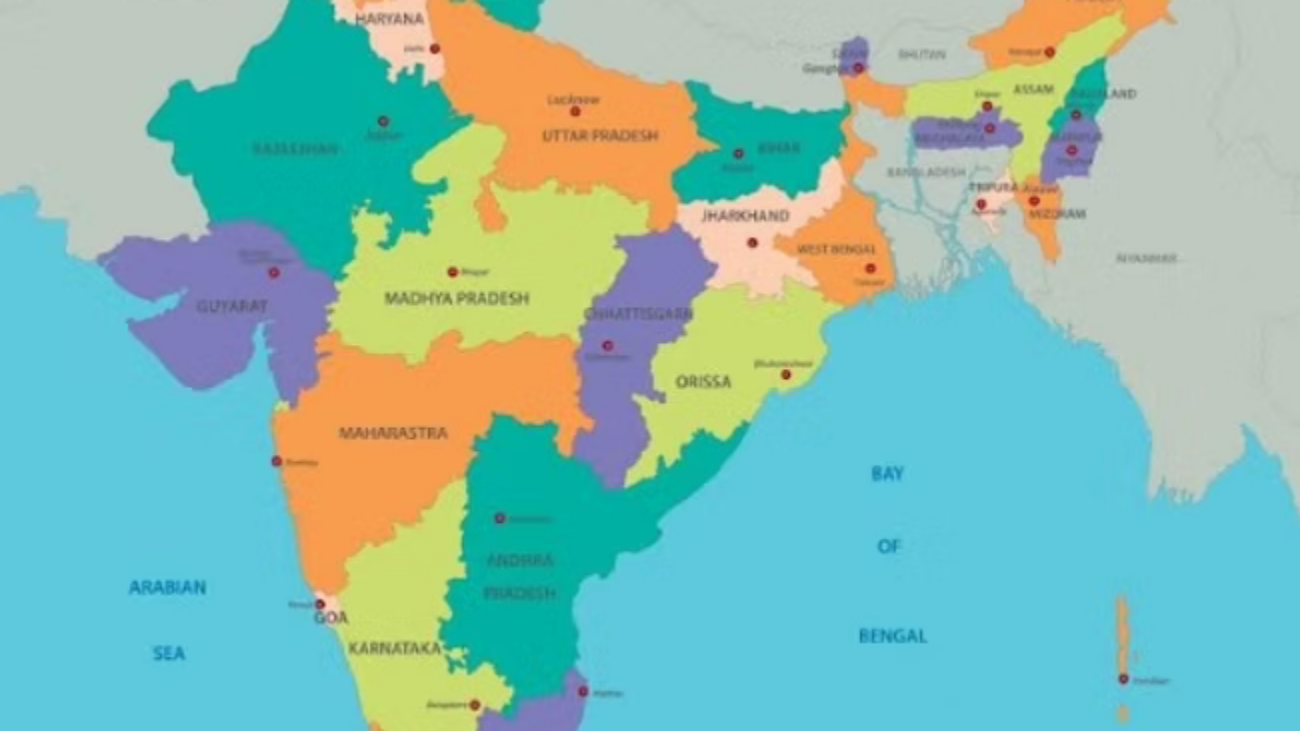
For example, rainfall in Chennai City always ends up staying on roads and platforms in the last few years, this despite the city’s infrastructure which has expanded multifold. In many parts of Chennai, water contamination has become severe with high levels of iron, hardness, turbidity and nitrate levels visible. The government has been inefficient when addressing the contamination. As I witnessed in 2019, many parts of Chennai cannot use ground water due to inadequate rainfall, storage and lack of proper municipal supplies.

And due to excessive extraction of ground water and an inability to channel rain water into the ground, many parts of Tamil Nadu now report total dissolved solids (TDS) ranging from 500 to 1000 parts per million, reaching extreme levels of 3000–5000 ppm in some areas. The World Health Organization recommends much lower levels for safe and palatable drinking water.

Water treatment for households using reverse osmosis plants, which were not normal a few years back have become essential for people seeking safe drinking water. Despite being a coastal region , cities like Chennai cannot rely solely on seawater desalination to meet their drinking water needs. While desalination plants contribute to supply, they account for only a fraction of total demand.

Desalination is an energy intensive and expensive process, making it difficult to scale for universal, affordable access. More importantly, producing water is only one part of the solution and delivering it efficiently remains a major challenge.

India endures 3 to 4 crore (30–40 million) waterborne disease cases every year, mostly from contaminated drinking water. As borewells go deeper, they draw water containing high concentrations of fluoride, arsenic, nitrates, and heavy metals. This creates significant health risks, especially for low income households that cannot afford advanced purification systems. The depletion crisis and contamination crisis are increasingly converging.

Due to rapid urbanization and high population with inefficient audits, many water bodies such as lakes and ponds have been encroached upon by the real estate sector or contaminated by waste disposal by surrounding settlements. This is quite visible in Chennai.

Experts claim that many water officials do not have a clear understanding of how pipeline networks are laid out across cities. As Frontline magazine columnist Vedaant Lakhera wrote in April 2026, India’s water crisis stems less from hydrological scarcity and more from a failure of governance.

The absence of water sensitive designs have allowed cities to expand unchecked, almost freely, contaminating local water sources such as lakes and ponds. This has led to a significant depletion of groundwater availability, which were supposed to act as reserve water reserves.

Addressing this crisis requires a multi-dimensional approach. Rainwater harvesting must be scaled to improve groundwater recharge and long-term availability, while modern purification systems remain essential to ensure safe consumption in the short term. At the same time, systemic reforms such as regular pipeline audits, mandatory replacement of ageing infrastructure, and better urban water management are critical to prevent contamination at its source.

Without such integrated efforts, cities will continue to face a paradox of water scarcity amid abundance. Sustainable water security in India does not depend only on how much water is available, but on how effectively it is managed, protected and delivered.

Copy and paste the text from AMT that you want to share

post302

India Insider: Pharma and Earning Trust Thru Accountability

India Insider: Pharma and Earning Trust Thru Accountability

The pharmaceutical industry in India is a global powerhouse, often touted as “best in class.” Nearly 32% of India’s pharma exports go to the United States, and India’s products are renowned for their quality and affordability. Giants like Sun Pharma, Cipla, Dr. Reddy’s and Mankind Pharma cater to millions worldwide. Mankind Pharma, in particular, is celebrated for selling affordable essential medicines, ensuring access for lower-income communities.

The Opposite Side: A Fatal Flaw

Yet, within India, the same country with world class technology and research, exists a grim paradox: sub-standard drugs that have caused devastating human loss.

This is not a new problem. In 2022, toxic cough syrups made by two Indian companies were linked to the deaths of 70 children in The Gambia and 19 in Uzbekistan. According to the World Health Organization (WHO), the products contained excess levels of diethylene glycol (DEG).

A Killer Drug: New Tragedy 2025

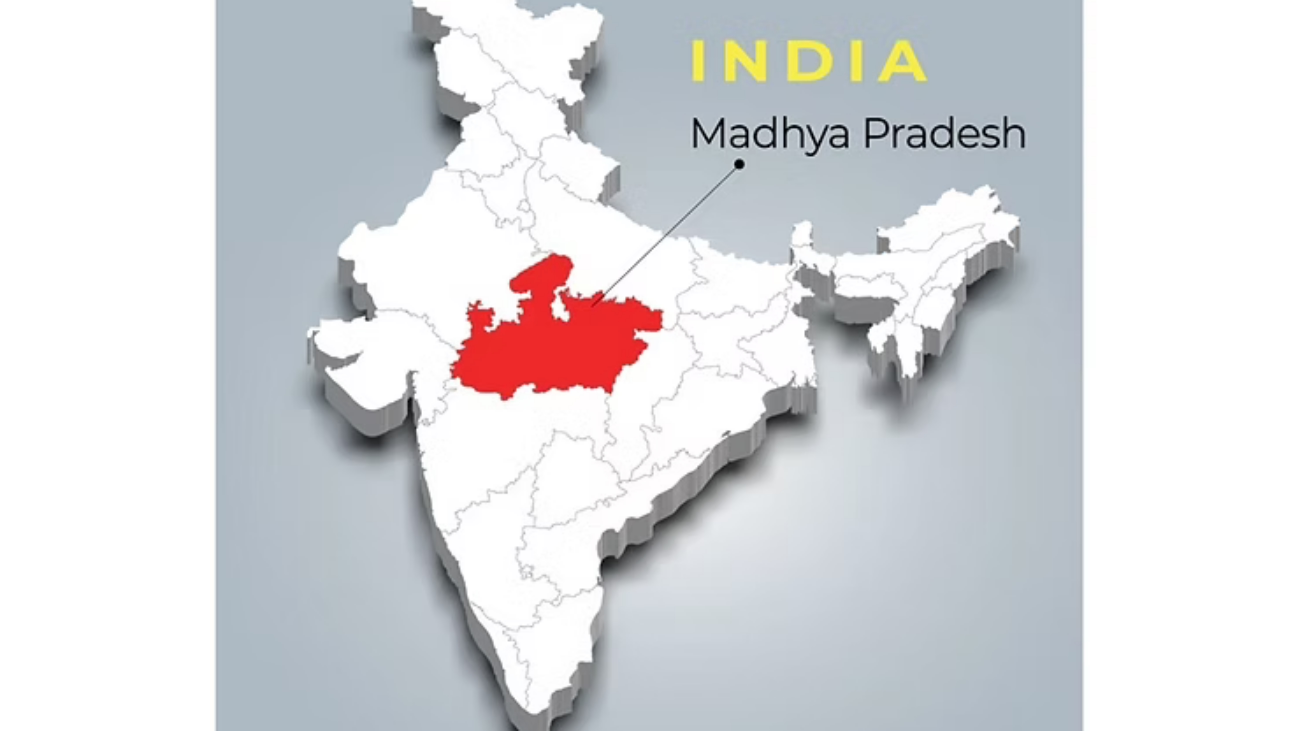
The contamination has now hit home with horrifying consequences quite recently. As Frontline magazine detailed, in the Madhya Pradesh State, Rajesh Yaduvansi’s two-year-old daughter, Jayesha, was admitted to a local clinic on September 14th for pain and fever. After temporary relief, her condition worsened. By September 25th, doctors revealed her kidneys had stopped functioning. She was rushed to Nagpur, but tragically died on October 7th from acute kidney failure.

Jayesha was one of at least 24 children who has died since early September across Madhya Pradesh, mostly from Chhindwara and nearby tribal districts. Three more patients remain in critical condition. Most victims came from poor and tribal families. They are the victims of a lethal lapse in quality control.

The culprit was the toxic industrial solvent, diethylene glycol (DEG), which causes kidney failure when ingested. The contaminated cough syrup, Coldrif, was manufactured by Tamil Nadu State based Sresan Pharmaceutical.

Following the cough syrup deaths, authorities formed an SIT (Special Investigation Team) and raided the manufacturer, Sresan Pharmaceutical, near Chennai. The company’s owner, Ranganathan Govindan, has been arrested, and several Madhya Pradesh drug officials have been suspended or transferred.

The Solvent Issue: Cutting Corners

Cough syrups typically use propylene glycol as a solvent. This ingredient exists in two grades: industrial and pharmaceutical. The industrial version, which is cheaper, can contain dangerously high levels of DEG.

When manufacturers prioritize cost cutting and fail to ensure pharmaceutical grade purity, tragedy follows. This is a profit driven decision that ignores human life and can produce fatalities.

Regulatory Failures and Neglect

India aims to reach developed nation status economy by 2047, but this ambition will ring hollow if it neglects its own people.

The drug control system is fractured. The Central Drugs Standard Control Organization (CDSCO) issues drug licenses, while State authorities are responsible for essential quality checks. In Madhya Pradesh, accountability rests with the Drug Controller and Food and Drug Administration.

The system is fundamentally broken. According to K.R. Ashokan, a former President of the Indian Medical Association (IMA), fewer than 1% of drugs are tested for quality or impurities. Indian citizens face massive risks which are often unreported. While a pharmacovigilance system exists, its national reach is minimal and desperately inadequate for a country of 1.4 billion people.

The Central Government health care expenditure remains under 2% of its GDP and this is far too little for a nation aspiring for global leadership in pharmaceutical research.

A Call for Accountability

This catastrophe has shaken parents’ trust in the medical system, especially among the most vulnerable communities. India has the potential to be a world-class player, but without strong, centralized regulation and comprehensive preventive care, such incidents will continue.

We cannot bring back the 24 children who died due to cough syrup poisoning. This tragedy must serve as a necessary wake-up call, because no parent should ever lose a child to medicines that are meant to heal again.

postN9

India’s Speculative Real Estate Bubble and Values: Part One

India’s Speculative Real Estate Bubble and Values: Part One

India’s Real Estate Sector is a Well Known Affair to its own Citizens and to Global Asset Management Companies

India’s major cities like Mumbai, the financial capital of India, Gurgaon, Delhi, Bengaluru and Hyderabad, the tech hub of the nation, serve as major attractions for local players and international corporate giants who want to participate in the real estate sector. While transparency still remains a challenge that needs to be addressed in Tier 2 and Tier 3 cities of India, underlying demand continues to expand throughout the nation. The Real Estate Regulatory Authority, passed a bill known as the RERA Act, by the serving government in March of 2016, to create transparency and fairness between buyers and sellers in the residential real estate market, however these measures do not always help circumstances as hoped.

Well known companies like Blackstone which is based in New York, and Brookfield Asset Management of Toronto have vast operations in the commercial real estate sector of India. Their estimated investments are significant. Amounts spent are believed respectively to be nearly 50 billion USD by Blackstone, and the Brookfield figure is likely around 22 billion USD. The companies concentrate money for real estate, and infrastructure like telecommunications, roads and other spheres crucial to create value.

The reason why private equity giants allocate massive investments into India commercial real estate is due to the remarkable advantages of the locations available for property, and the capability to turn a profit. The land purchased and developed is usually situated close to burgeoning information technology companies. It is easily understood these IT companies have expansive needs to function properly which include plenty of area for employees to work. This is relevant in the north of India where Brookfield has invested in places like Mumbai and Gurgaon. Apart from the commercial demand for property, the employees who work in these type of companies also drive residential apartment sales in these cities.

The real estate market in Gurgaon has seen remarkable growth in the recent years where prices have experienced double digit appreciation. Readers need to understand that Gurgaon, is a city near India’s capital of New Delhi in northern

India. It’s known as a financial and technology hub. The rise of e-commerce players like Amazon and the Walmart owned Flipkart are important. Walmart spent around 16 USD billion to buy about 77% of Flipkart in 2018 and their vast operations also have sparked demand for huge amounts of property, including warehouses. This activity has certainly attracted the attention and desire of global players to invest in commercial real estate operations.

The residential real estate market has grown fast, and continues to achieve huge growth even after the coronavirus pandemic. An extremely rapid pace is fueled because low interest rates have appealed to new home buyers to initiate purchases of apartments and condominiums in metropolitan cities like Chennai, Mumbai, Hyderabad, and Bengaluru. Many affluent families in India from these major cities continue to own and rent residential homes in the areas, taking advantage of demand. According to a survey conducted by the global property consultancy firm Savills, now 70% of families in the metropolitan cities mentioned previously from the north and south of India have answered positively when asked if they would like to buy a second home in the next couple of years.

Residential real estate sales have been rising after the pandemic, especially for double bedroom apartments averaging 1200 square feet of housing, usually within a category that is priced in a range above 5,000,000 Rupees (around 60,000 USD). India’s benchmark mortgage rate is in the 8.7% to 9.7% range as of this writing, this is higher than it was one year ago. But Indian home buyers haven’t yet stepped back from buying, this because interest rates in India have not increased too much in percentage terms. The average time to pay a loan for residential mortgages ranges from 10 to 20 years in India. This allowable time frame makes it affordable for employees to pay via Monthly EMI, Equated Monthly Installments. The mortgages come with a floating rate meaning the buyers can reset their rates when the local interest rate falls. Yes, floating rates certainly do contain dangers if interest rates climb too high.

A Speculative Roulette Game: The Least Known and Unequal Affair

But there is another reality and a very different story in certain areas of India where data misses critical elements of the real estate business. Speculative participation in property is done by the most affluent who are the dominant buyers and sellers; speculative buying and selling is too expensive for most citizens. Real estate has frequently been used as a tool to hide wealth and avoid taxes by many within certain segments of India. The real estate speculative bubble creates vast distortions in the costs of rents, and affects employment opportunities for the masses. Government offices may sometimes turn a blind eye to these circumstances, because as long as cities and regions can collect money from the speculative frenzy there is little reason to turn off the revenue streams.

Frequently there is someone who is capable of bidding higher for lands in most of the Tier 2 and Tier 3 cities discussed, compared to those who actually need the property to live there and function properly. It is important to mention Tier 2 and Tier 3 cities and what is taking place in these areas, because these locations frequently lack substantial income generation opportunities for people and don’t have massive infrastructure or enough office space to employ people where wages have stagnated for many years. Take for example the Tamil Nadu, a state in southern India where I live, the average price of a double bedroom 1200 sq’ft residential apartment in the capital city of Chennai is around 6,000,000 Rupees (around $73,000 USD).

Readers need to note that the Indian ‘middle class’ prefers to have 2 bedroom 1200 sq’ft residential houses and apartments on average, thus builders construct houses and units based on land availability. Market prices for the property equals the costs of building materials and labor along with the speculative factors worked into the total value.

A look at the town of Madurai where the same apartment is available at a comparable price tag like Chennai is important to critique. Because wages in Madurai are a quarter, and sometimes less than half of what one could earn in Chennai, the disparities in the income distribution and the property prices in India become evident and need to be recognized.

In some rural towns where wages have not grown more than 5% per year,

India has seen real estate prices doubling every 4 years. For example, the rural town called Ponnamaravathy near to Madurai, which is my hometown, speculation in the real estate sector has seen frenzied pricing in an unprecedented manner for land and newly built houses. There is a great divergence between real per capita income versus the escalating real estate prices and rents in the interiors of India in towns such as Ponnamaravathy.

According to real estate analysts, most land parcels and their inventory of projects within metropolitan cities that are under construction has been bought by speculators. When units in new projects are sold to speculators, these generally change hands multiple times during the construction period, which generally lasts three to four years. Such heavy ‘churning’ means fast price increases. Also, the builders who market their own projects as investments raise list prices frequently to keep existing investors happy with notional gains, so they can point to the ‘attractiveness’ of potential speculation.

While it may not matter to some citizens in the larger cities, the problem of speculative influences do matter in the small towns where community wages have not grown properly. Inflation and speculative investments in these towns do not create sufficient job growth either. Surplus cash profits earned by many businesses, and foreign remittances, which were close to 108 billion USD in 2022, goes back into real estate speculation causing higher rents and forcing lower income households to struggle.

Rural Wages Haven’t Grown but Prices are Increasing for Homes

According to economists data, Average Nominal Wages in rural India is approximately 15,000 Rupees per month for men and 8,000 Rupees per month for women.There is an ample real estate supply in the rural market, but speculative demand has created steep pricing, typically initiated by large ‘investors’ willing to pay top money for any asset irrespective of its location, affordability or current market price based on the assumption values will continue to increase.

The difference between rural wages and costs for homes creates heavy disparities and inequalities for households living within the lower thresholds of society. For example, a double bedroom 1200 sq’ft residential apartment in Ponnamaravathy can be selling at a whopping 7,000,000 Rupees (approximately 85,365 USD). This is 20% more than what we have seen before on average in Chennai, and Madurai, a Tier 2 city, in Tamil Nadu state. The wages in the rural town of Ponnamaravathy are just 10% compared to what one could earn in Chennai annually, making the purchase of a residence priced at these higher values difficult for most residents and making many people renters for life.