A Roadmap for Fed Chairman Kevin Warsh to Rescue U.S Debt
Many think the market decides interest rates.
Wrong!
The Fed – and only the Fed – has full control over interest rates, all over the curve!
We just need to have the right person on board.
During the European crisis in 2011, speculators all around the world were betting that the Eurozone would explode and that the EUR would collapse under the weight of government debt that had started with Greece and spread to other countries that were shamelessly labelled “PIGS,” adding insult to the speculative attack.
Trichet, at that time chair of the ECB, seemed totally clueless, afraid to take any “unconventional” step, even at the risk of seeing the entire European financial system go bust.
The crisis seemed unstoppable… until Mario Draghi stepped in, replacing Trichet.
With just one magical statement (“the ECB will do whatever it takes to save the Euro. And believe me, it will be enough”) Draghi implied that he was ready to buy government bonds from European countries, even though such action was considered at the time to be “against the ECB’s statutes” and outside its mandate.
By going against the prevailing market narrative, and knowing very well the economic strength of the Eurozone, Draghi forced the market to follow him.
The speculation against the Eurozone stopped almost instantly, and European government bond prices recovered without the ECB even being forced to intervene!
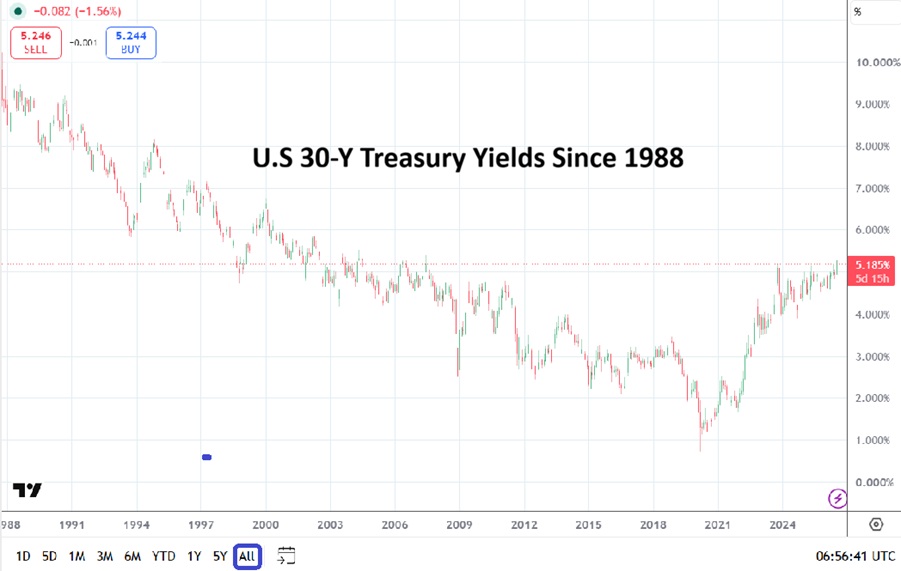
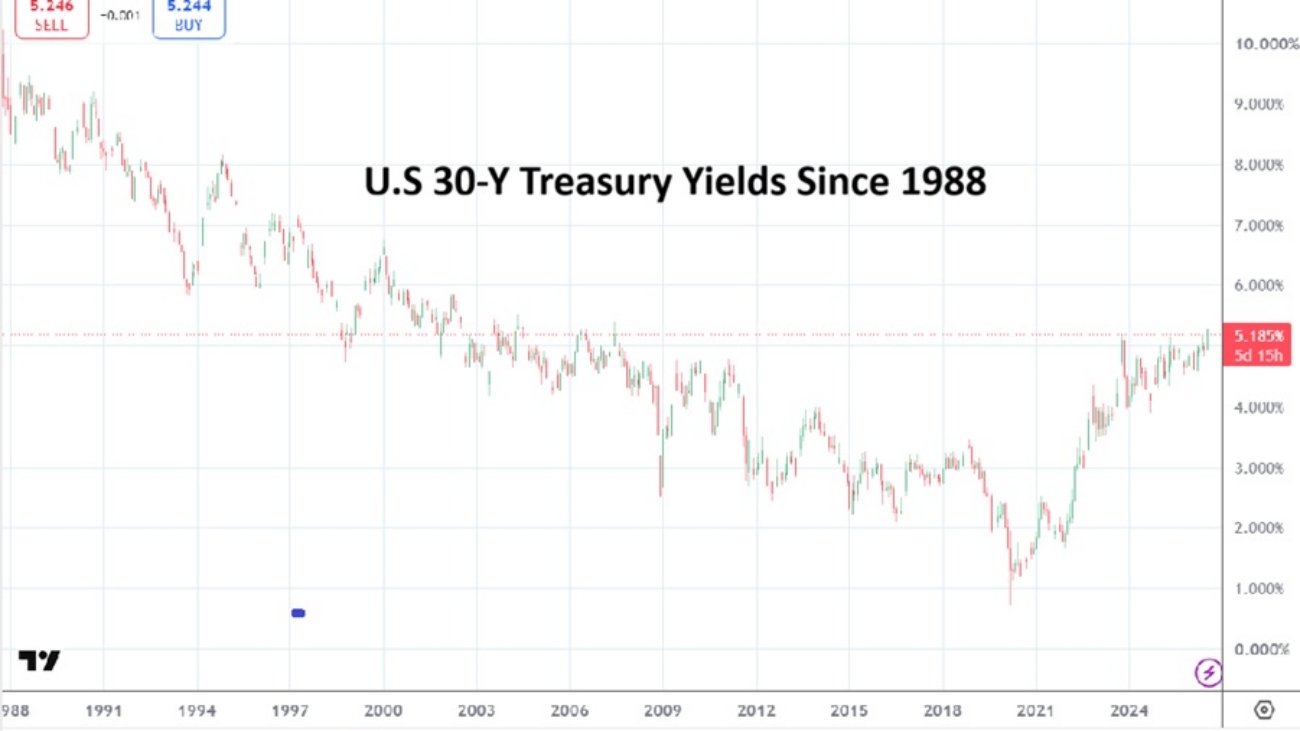
U.S 30-Year Treasury Yields Chart From 1988 until 26 August 2026
Today, the U.S is in exactly the same position!
A massive speculative attack is being waged against U.S debt (probably led in part by the crypto industry in an attempt to justify the “value” of its virtual tokens), with “inflation” suddenly becoming the ultimate beast.
Like Trichet at the time, the weak Powell got driven into the trap of raising rates abruptly on his own government, forcing it to pay more than $1 trillion in yearly interest, a massive and unnecessary injection of liquidity that is itself… inflationary!
In today’s world, driven by massive debt, raising interest rates on governments is INFLATIONARY!
Now that Powell is almost gone, all hopes lie on Warsh’s shoulders.
He can save the U.S from the current debt crisis with just a few words, exactly as Draghi did for Europe.
Warsh completely missed his first intervention a month ago. Instead of showing the market who’s boss, he showed total febrility.
Fearing being labelled a “Trump puppet,” he insisted on the 2% inflation target – an absurd threshold that nobody really knows where it came from – and claimed that “the economy is robust”… while we all know it is not!
Then he totally capitulated to the market by saying that he would “listen to the market” to determine where rates should go. The worst thing any Governor could ever say!
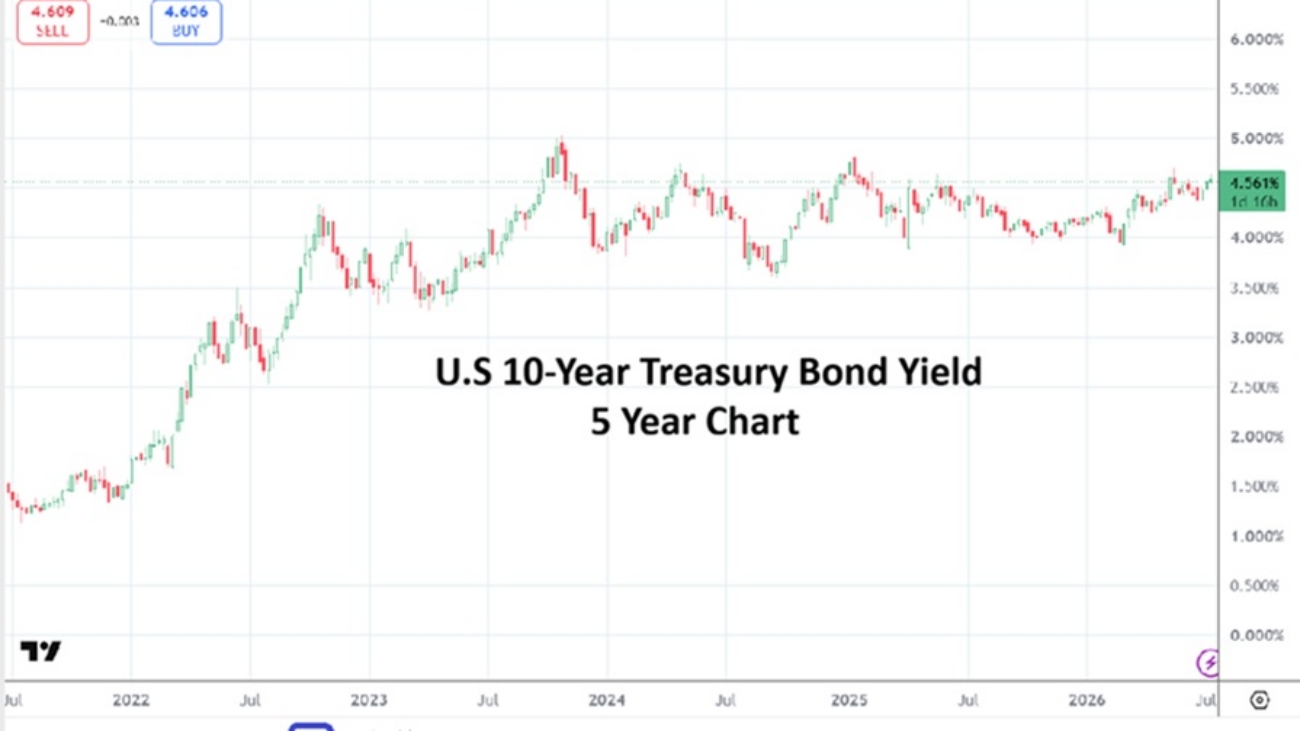
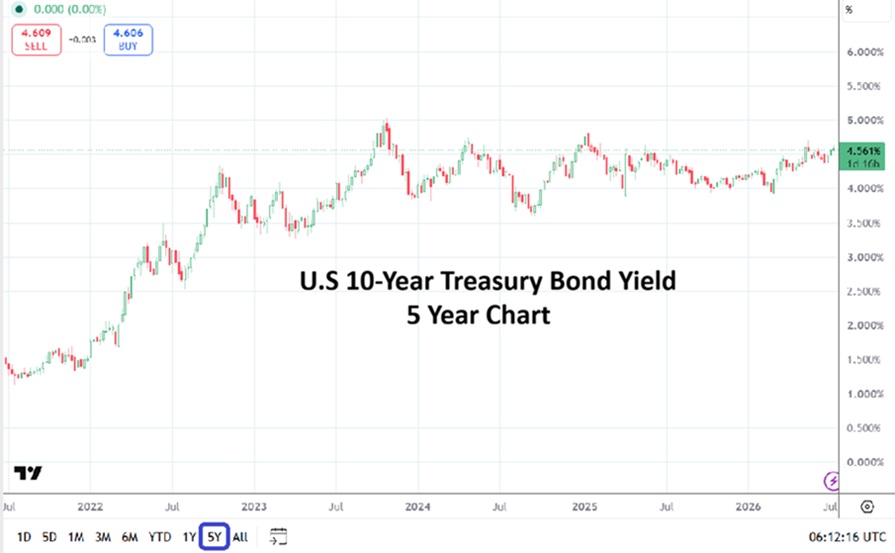
That’s how long-term yields exploded to levels not seen since 2007, and forcing Bessent to intervene to limit the damage.
We are now just one day away from the Jackson Hole Symposium.
Warsh can now either save the U.S or send it into Armageddon!
Every word he says could change the entire picture.
He simply has to focus on the right narrative:
- Current inflation is geopolitical and driven by supply shocks. Raising interest rates has zero impact on such inflation.
- The 2% inflation target is NOT an absolute figure. A 3% inflation rate should be acceptable when the economy is at risk.
- Signs of recession are looming, with the labor market under pressure, rising bankruptcies, and record rates of defaults on credit cards and car loans.
- Forcing the government to inject more than $1 trillion through interest payments is itself inflationary. Raising interest rates to fight inflation is counterproductive at such a high level of government debt.
If Warsh is capable of highlighting these arguments, yields will drop instantly without any intervention from Bessent.
Then the Fed can start decreasing interest rates gradually, with the market accepting whatever rate it sets.
What if Warsh deliberately gave a disastrous speech a month ago, taking a tough position against what Trump appointed him to do and allowing the market to drive rates to extreme levels… only to radically change his position following the recommendations of the task force he appointed?
This way, he would have absolved himself from being labelled Trump’s puppet while executing exactly the plan of reducing interest rates.
We can therefore suspect that he will take the opportunity at Jackson Hole to present the first findings of this task force, which could include, among other things:
- A questioning of the 2% inflation threshold, especially when the economy is at risk of entering a deep recession.
- Stressing that inflation comes mainly from geopolitical issues and supply shock. Fighting such inflation with high interest rates is totally inefficient.
- A highlight of the absurdity of raising interest rates on the U.S government and forcing it to inject $1 trillion in interest payments – an unnecessary injection of liquidity that is itself inflationary.
- The necessity of coordinating with the Treasury Department to fight inflation where it hurts the most, through subsidies, tax relief, and other targeted measures, while primarily fighting “greedflation” through higher profit taxes on specific industries.
- A warning about the increasing risk of recession, with record numbers of corporate bankruptcies, credit-card defaults, and a deteriorating job market.
Warsh has a unique chance to prove that he is the right person for the job by rescuing the U.S from the massive speculation against its debt, exactly like “Super Mario” did when he saved Europe from collapse in 2012.