post11.1

The Yuan’s Slip is Showing and Troublesome

The Yuan’s Slip is Showing and Troublesome

Two and a half weeks from Xi Jinping’s expected and unprecedented 3rd term coronation as China’s president, the country is trying hard to tamp down any distractions in a year that has provided plenty of them: pandemic lockdowns; faltering economy; supply chain headaches; a reeling real estate bubble; you know the list.

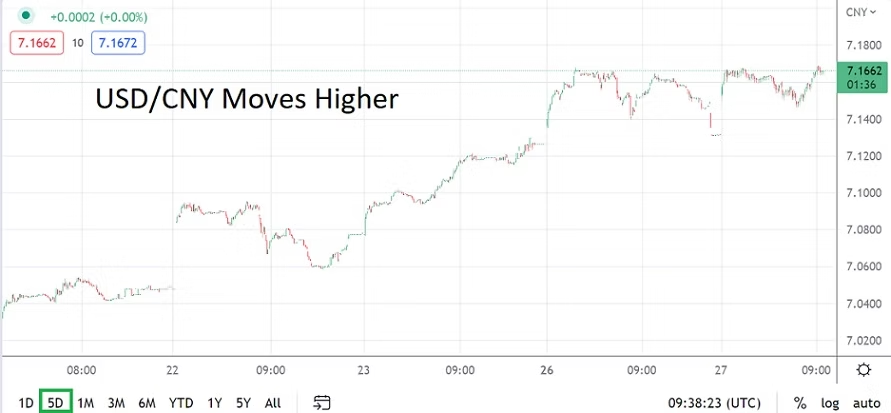
We can now add plunging currency to the usual suspects, as China’s Yuan — also known as renminbi (literally translated as the peoples’ currency) or simply RMB — weakened a further 3.7% against the dollar in the past month, and over 11% so far this year. That’s trending for its worst annual performance against the Greenback since 1994, which is the year China unified its currency market in an effort to modernize it. Not great for a basket currency its promotors aspire to be the world’s finest.

Monday’s mark of 7.1738 RMB to dollar is also its worst since 2008, back when global markets were collapsing. This is a psychologically meaningful level that all but guarantees aggressive pushback by the People’s Bank of China (PBOC). On Monday, the bank announced the imposition of a risk reserve requirement of 20% on currency forward sales by banks, starting on September 28.

China has adjusted the FX risk reserve ratio on occasion in recent years, starting in 2015, but stopped doing so in 2020. The goal is to deter short sellers betting on further depreciation, something government spokesmen have even come out and warned investors against in the past several weeks, including PBOC deputy governor Liu Guoqiang.

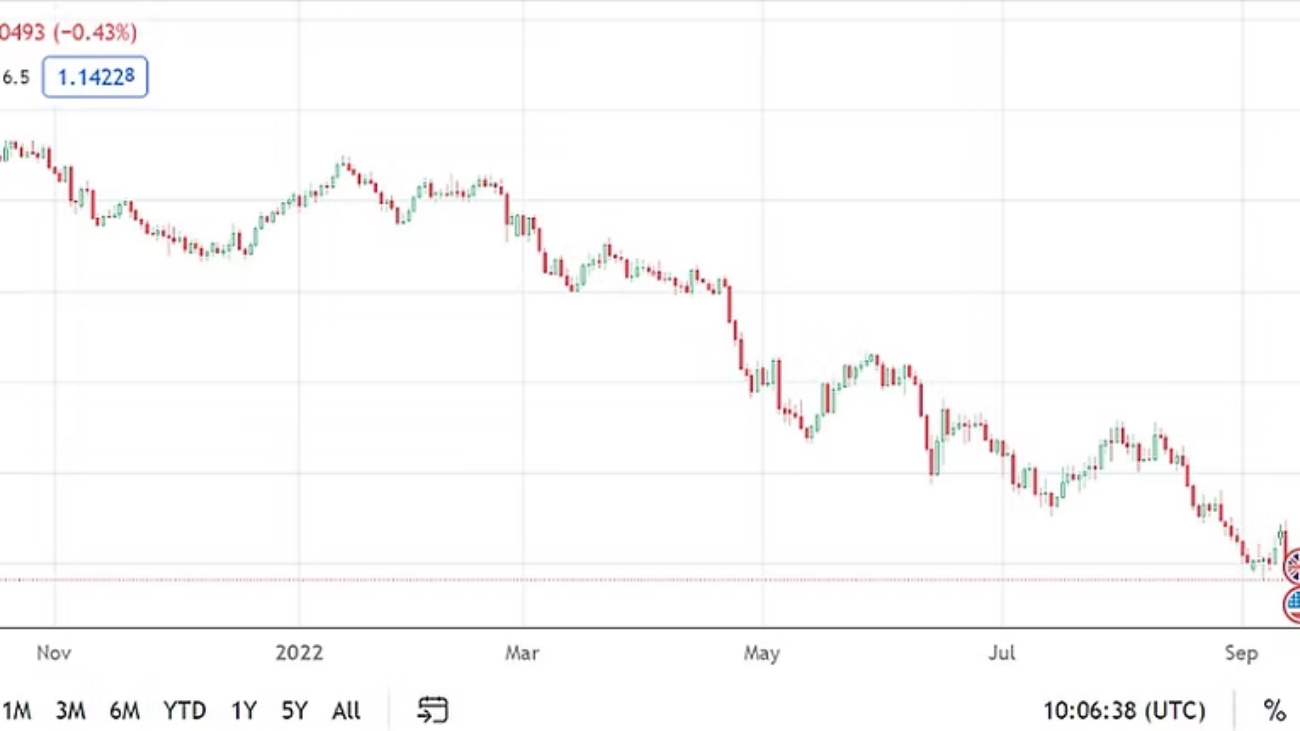
USD/CNY 5 Day Chart

It’s not the only move we’ll see. Other steps we can expect in the long term are delays in easing of monetary policy (a recent tool against recession); further cuts to foreign exchange reserve ratios; and pumping central bank bills into Hong Kong or elsewhere to stave off RMB liquidity. You can bet on a lot more firmer than usual midpoint fixings going forward as well.

Of course there’s not much they can do against the prime driver of the dollar’s recent surge: that would be the Federal Reserve, which has been aggressively raising rates to pump the brakes on inflation, resulting in part in bringing the trading strength of the dollar to a 20 year high, with all indications the policy will continue into next year. Other currencies, including the British pound and the South Korean won, have also struggled of late; the pound reaching a historic record low against the currency this week.

Look for more PBOC efforts to keep a lid on the problem, especially as the calendar draws nearer to the opening of the 20th Party Congress on October 16. While it has so far avoided more direct intervention, such moves are not off the table, should the slide persist or worsen significantly. Time will tell.

post10

Central Bank Capitulation led by Federal Reserve

Central Bank Capitulation led by Federal Reserve

The 21st and 22nd of September were potentially important signals for traders as the Federal Reserve admitted they remain reactive to inflationary pressures, and other global central banks countered with acts of their own.

While it is difficult and often foolish to believe the markets can be timed, this past Wednesday may have been an important moment for speculators in Forex. Many traders may have veered off into cryptocurrencies or into equities as day traders the past few years, but FX still remains a place that offers volatility and where wagers on price direction can be made.

The Federal Reserve raised their interest rate 0.75% again, and importantly issued a loud admission that the U.S central bank is caught in a reactionary mode. Other global central banks have begun to protect their own currencies too. Jerome Powell, the U.S Federal Reserve Chairman, said he believes the current interest rate is likely at the low end of the spectrum regarding where it has to be to have an affect on current inflationary pressures.

The USD has been strong against many major currencies with a rather unforgiving bullish trend. Raising the Federal Funds rate from 0.25% to 3.25% the past year in the U.S has made short term purchases of U.S debt attractive to many financial institutions. On Wednesday, Jerome Powell made it clear other hikes will be delivered and it is not farfetched to believe the U.S is looking at a potential rate of 4.50% and higher in the spring of 2023. This doesn’t mean the Fed’s policy is correct, it is simply an outlook for the potential Federal Funds Rate based on rhetoric.

  • A Federal Funds Rate in the U.S of 4.00% is likely by early this winter, per the Federal Reserve’s interest rate outlook.

  • Global central banks have reacted to the U.S Fed’s recent interest rate hike, by enacting methods to try and safeguard the value of their own domestic currencies.

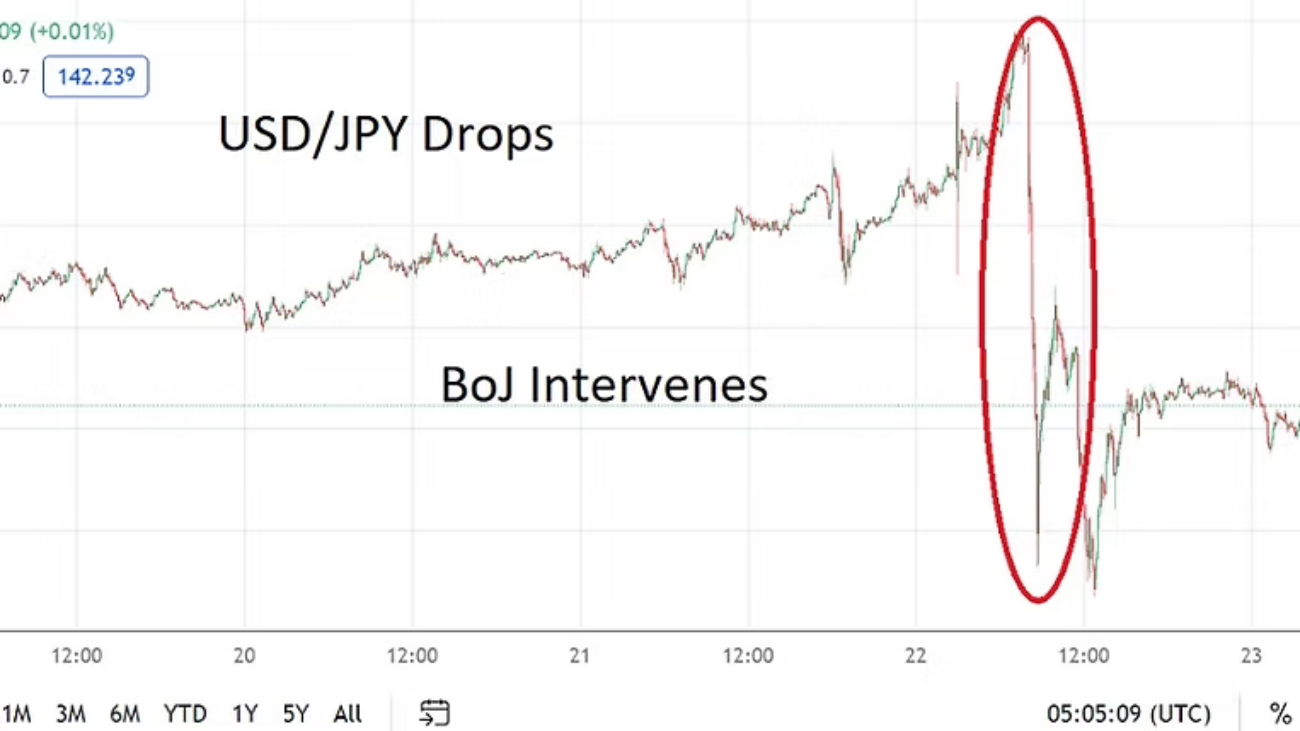
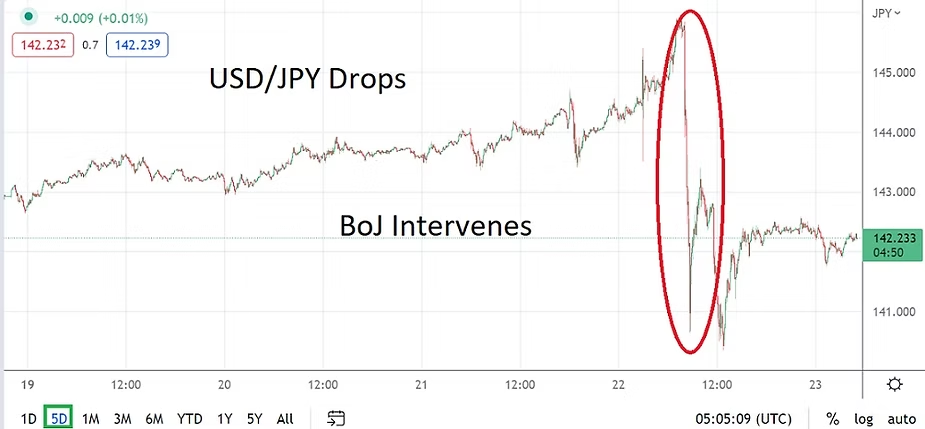
The USD surged ahead slightly before the rate announcement from the Fed, while many other currencies lost value. However, on Thursday the Bank of Japan intervened by starting to buy Japanese Yen against the USD. The Bank of Japan said it will not raise interest rates yet, but its action showed it clearly does not want the JPY to lose additional value to the USD, via the USD/JPY Forex pair. Whether the BoJ’s actions work mid-term remain to be seen.

Global Central Banks feel they must counter the U.S Federal Reserve’s Actions

Other central banks started to act too. The Bank of England and Swiss central bank both raised interest rates yesterday. Speculators who have been watching the USD dominate Forex the past year, may now have to consider that the last two day’s of action via global central banks is a signal an attitude change has taken place, which may begin to affect Forex long term. Traders need to understand opportunity also means there are risks.

Inflation remains high and governments have reached a point where they have had to admit they will have to risk slowing their economies and potentially suffer recessionary pressures to curb price increases. Many central banks likely feel they have to match the hike increases by the U.S Federal Reserve within their own systems to protect the value of their currencies.

BoJ Intervention on the 22nd of September

End of the Dominant USD Bullish Cycle in Forex?

While Japan for the moment refuses to raise borrowing rates, the BoJ’s buying of JPY effectively signals the USD has become too strong and is starting to hurt the Japanese economy. The the Bank of Japan will be interesting to study long term, to quantify if Japan’s lack of raising rates proves to actually be correct in the current environment.

Philosophical differences and central bank maneuvering is complex and has a long history of debate. Having said that the Bank of Japan has been largely scorned by many other central banks the past three decades for its methods, but while Japan has never recaptured the growth numbers it attained in the 1970’s and 1980’s, the nation remains one of the world’s richest.

The action of the BoJ and other global central banks means that speculators may want begin to look at Forex and tinker with the notion that the bullish trend of a dominant USD may start coming to an end. The cycle has been strong and again, it is difficult to say today is the day. Timing the market is often proven wrong, but the messaging from global central banks that they will start to shadow and react to the U.S Federal Reserve’s actions may mean that they will try to curtail the decreasing values of their own domestic currencies with more robust methods.

Day Traders need to understand a Complex Puzzle is Ahead

Forex markets can produce dramatic changes of value abruptly and cause costly losses to traders who bet wildly. The use of too much leverage and a lack of efficient risk management frequently destroys value quickly. However, now may be the time to contemplate testing Forex with the notion the USD may start to incrementally loss value. A lot has to happen. There are plenty of risk events ahead which could lead to wildly unforeseen results. In other words there are no guarantees.

Global equities led by the U.S indices appear very fragile and if the major stocks loss more value, this could also cause a stronger USD. Why? Because the USD would have to be purchased to buy U.S stocks by foreign investors who want a safe heaven. While it may seem contradictory to think U.S equities would be bought in downturns, this is what has historically happened when global financial institutions seek safe havens and believe other places are too dangerous to invest.

Remember financial institutions are not supposed to be day traders, they are supposed to be long term investment vehicles. Meaning if global equities suffer, even if U.S indices suffer too, the U.S is likely to remain the choice of investment houses as the place to seek shelter if they have to purchase equities as part of their mandates.

Yes, Forex will always be a complex puzzle for short term traders seeking to take advantage of the daily gyrations in the global markets. If a speculator insists on participating with wagers in the market place, they must consider that financial storms are always brewing because trading is seldom easy.


post9

Escalation of Rhetoric doesn’t create Calm Investors

Escalation of Rhetoric doesn't create Calm Investors

Putin and U.S Federal Reserve will Stir U.S Markets Today

An escalation of rhetoric via Russian President Vladimir Putin regarding his nation’s war with Ukraine took place this morning via a televised address to the Russian people. Putin has said Russia will call upon those with previous military training, and use a ‘limited’ call up of potential new troops. A claim of nearly 300,000 additional soldiers to be readied has been made by senior Russian officials shortly after Putin’s speech.

Making matters more intense, Putin said all military options are possible while Russia protects its sovereign territory. The land he was speaking about however, is not recognized Russian territory, it is Ukrainian soil. Putin’s ‘talk’ to Russia has firmly put him in a position which shows that results from the Ukrainian war have not had favorable results and that he is showing signs of frustration. An anxious Vladimir Putin is not about to calm down what are already nervous global markets.

China Urges a De-escalation in Ukraine while not naming Russia

China has already reacted to Putin’s speech by urging all sides active in the Ukrainian conflict to de-escalate the situation. China has its own economic worries presently and certainly doesn’t need another bad ingredient thrown into its midst as it deals with weaker demand for export products and a shaky real estate market as the global economy reacts to inflation and recessionary concerns.

International traders will hardly hear what China had to say today, not because it isn’t important, but because their attention will be on Putin and the U.S Federal Reserve. However, it is important to point out China did not condemn Russia, instead it asked that all sides involved in the Ukrainian sphere to lessen the dangers. China and its relationship with Russia remains an important aspect of global politics.

The U.S Federal Reserve will raise Interest Rates Today

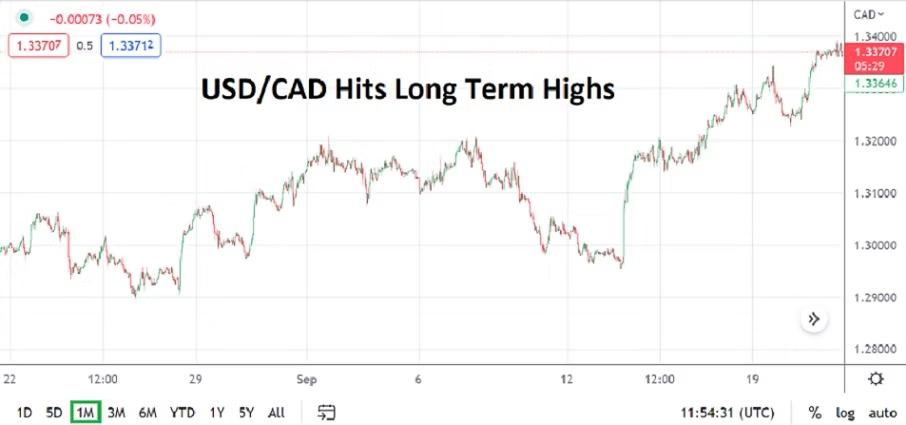
The U.S Fed will raise its interest rate by 0.75% today according to most financial houses which have already acted accordingly within Forex per interpreted price action. The USD has made new long term highs within the USD/ZAR and the USD/CAD. The EUR is below par as of this writing against the USD, and the JPY and GBP also continue to struggle near long term lows versus the USD.

USD/CAD One Month Chart

U.S equity indices which have been struggling are not showing a massive promise of a reversal upwards which will alleviate losses seen this year. Investors need to remain patient if they are invested in indices such as the S&P 500. Day traders looking to profit from the volatility ripping through the markets will continue to be challenged by choppy conditions, difficult perceptions of short term technical charts and a lack of positive behavioral sentiment among the larger players in the marketplace who actually drive the markets most of the time.

  • USD remains stronger against many major and emerging market currencies, day traders need to be very careful if they pursue Forex positions in the short term.

  • U.S equity indices traded lower yesterday, and if the Federal Reserve falters and doesn’t offer solid clarity regarding interest rates today, this could create more nervousness.

Optimism is not being heard far and wide. While it is always interesting to be a contrarian and sometimes the correct avenue to engage thinking, the notion that upwards trajectories will suddenly occur may be wishful thinking in the near and mid term. Many asset classes are under stress.

Today’s upcoming pronouncements from the Fed will be important for institutional investors as they try to gauge the U.S central bank’s outlook until early 2023. If the Fed gives clues they will remain hawkish into the winter and a Funds rate around 4.50 to 5.00%is a possibility, this could shake investors and cause more capitulation – meaning a stronger selloff via equity indices could ensue. Short term traders will need to be prepared for violent conditions if they are day traders of stocks or CFDs. The inverted U.S bond yields remains a sign investors are seeking short and mid-term safety via interest rates to preserve money.

The fact that most traders are typically buyers first, not sellers first makes trading in bear markets difficult. Psychologically humans want to be optimistic. Today’s speech by Vladimir Putin while it doesn’t change the conditions on the ground in the Ukraine immediately, will shake the confidence of some financial houses which may have become accustomed to a ‘polite war’ they could ‘forget’ about and make believe would not get loud again. Nervous behavior is likely to be seen later today as early risers in the States awake to the news of Putin’s speech and react.

In short global markets will be dynamic today and tomorrow, as financial houses position their portfolios according to their foresight regarding developments the next few months. Day traders are urged to be cautious, and the prospect of sitting on the sidelines and watching ‘the show’ may prove to be a solid choice.

post8

U.S Fed will raise Interest Rates this Week Once Again

U.S Fed will raise Interest Rates this Week Once Again

September Federal Reserve Pronouncements on the Calendar

The U.S Federal Reserve will raise their Federal Funds Rate by another 0.75% this coming Wednesday the 21st of September. If they do not it would send a shock wave through the markets, inflation data via Core CPI statistics, which were published nearly ten days ago in the U.S cemented the hike to come.

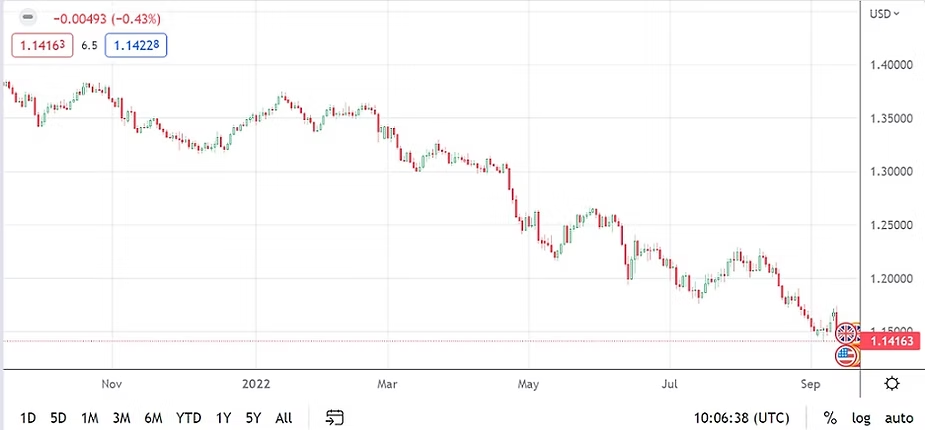
The hike has already been factored into the global markets. Forex has essentially gone ballistic via a strong USD, the GBP/USD is shown below as an example. The British Pound is now touching lows it has not seen since 1985 against the USD. Speculators may be tempted to trade this week believing they are smarter than the ‘crowd’, and that may be the case – congratulations if you are one of the few, but this may simply be an outcome of luck too. Many retail investors and speculators have been mauled in the current trading environment.

GBP/USD 1 Year Chart showing new Lows

Investors are Struggling as Clarity is Sought

Indices are struggling, gold is sputtering, U.S Treasury bonds are inverted, cryptos are under scrutiny. The U.S Fed is between the proverbial rock and hard place. Economic conditions promise to stay stormy in the next month and a half too. U.S elections will have an affect on behavioral sentiment. Certainly the Fed’s outlook which will be delivered on the 21st of September will cause turbulence also. A long term view via dividends from the S&P 500 remains a benchmark for investors seeking returns. Short term traders on the other hand must fight through the ‘noise of the experts’.

  • The U.S Fed is nearly certain to raise their key interest rate by 0.75% this week.
  • The key clarity investment houses seek is outlook regarding potential interest rate hikes to come later this year and early in 2023.

Where have the Gurus Gone?

Many self proclaimed gurus who claimed enlightenment only a year and a half ago, and offered their ‘insights’ regarding investment promises to eagerly awaiting traders are now hiding in their safe places and eating their words. Very few assets have proven profitable in the past year. Many investors are not used to the idea of merely preserving money, they have worked on the premise of solid gains made with speculative decisions which have been carried upwards by positive sentiment. Dealing with actual bear markets has not been a shared experience for many in the world of investing the past 13 years and the fresh scars are visible.

The ability to make money in this environment is difficult. The inverted bond yields in the U.S are evidence that folks are putting their money into relatively short term assets and trying to secure some of their capital. Traders can certainly wager this coming week in a variety of ways, but short term positions need to be considered with the knowledge volatility will be part of the terrain. Risk management is essential.

U.S Federal Reserve is in a Difficult Position

The notion that the U.S Federal Reserve will not stop raising their interest rates after the September meeting pronouncements this Wednesday still needs to be digested in many investment spheres. A Fed Funds Rate later this week of 3.25% is almost a 100% certainty. Speculation about a borrowing rate at 4% later this year may be realistic. And the question about how long the ‘transient’ inflation remains – yes, please laugh out loud, is a tough consideration. The outlook remains chilling.

While higher fuel costs have simmered a bit and have come off their highs, energy remains problematic and is having an effect on the costs of logistics, food and manufacturing. Energy concerns will remain the devil within the details. Some may want to look at the ISM Manufacturing data from the States for clues, but its merits remain debated too.