Gordons Bay Sunset 20260514

Investing and Sunshine: Positive Momentum While Guarding Against Worst Scenarios

The Reliability of Optimism in the Marketplace

Once again the world has not ended. The sun continues to rise and set on a daily basis and the world’s investment outlook remains towards an optimistic approach. Day traders should take this notion to heart and actually repeat it as a mantra when they consider pursuing the marketplace based on notions of fear.

Solid risk management equally needs solid risk taking tactics. And speculators need to always remember long-term investors are not basing their decisions on what will happen near-term, they are looking towards the future. While this may seem like a reminder a father would say to his children as a life lesson, day traders should not be offended, but use this as a keepsake and understand the world of investing is made up of elements that have proven durable.

Sunset over Gordon’s Bay, South Africa

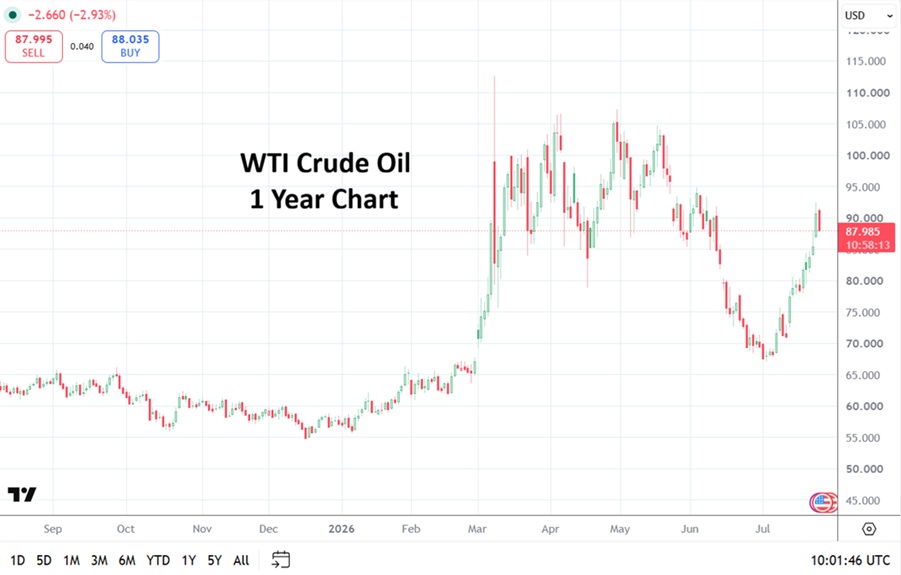
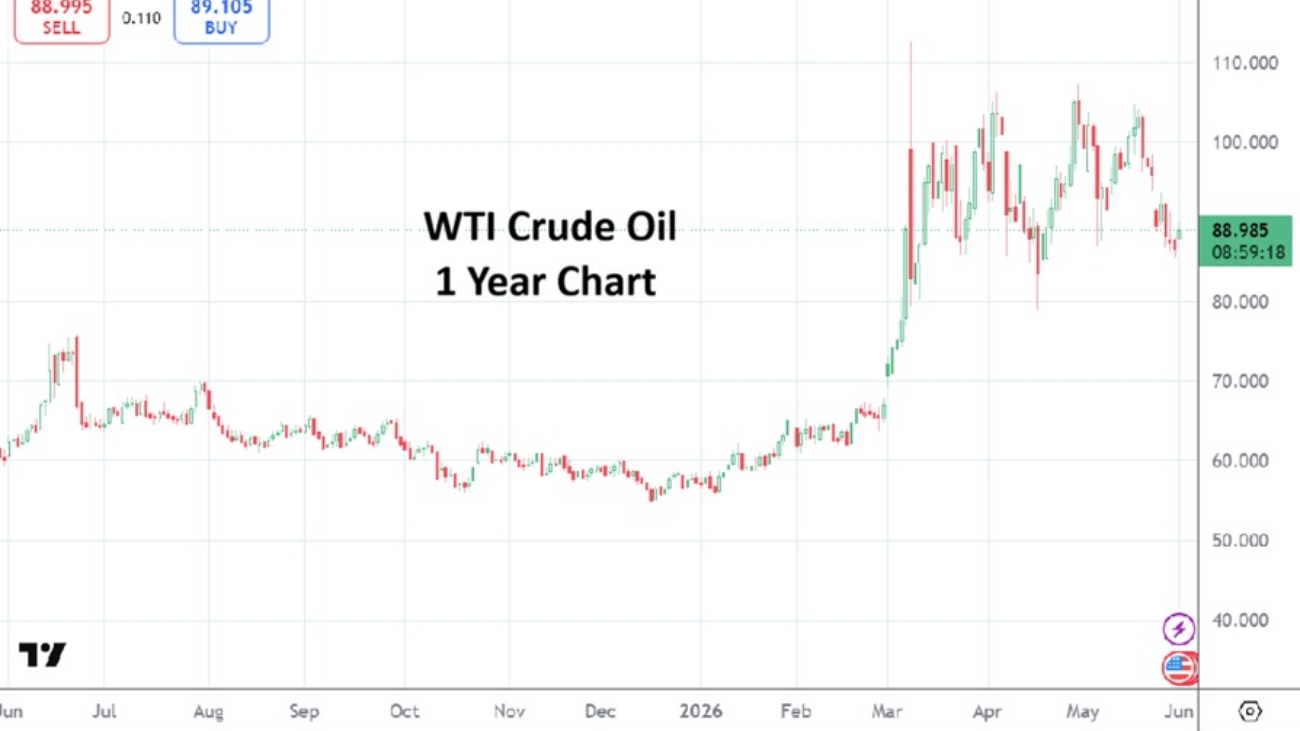
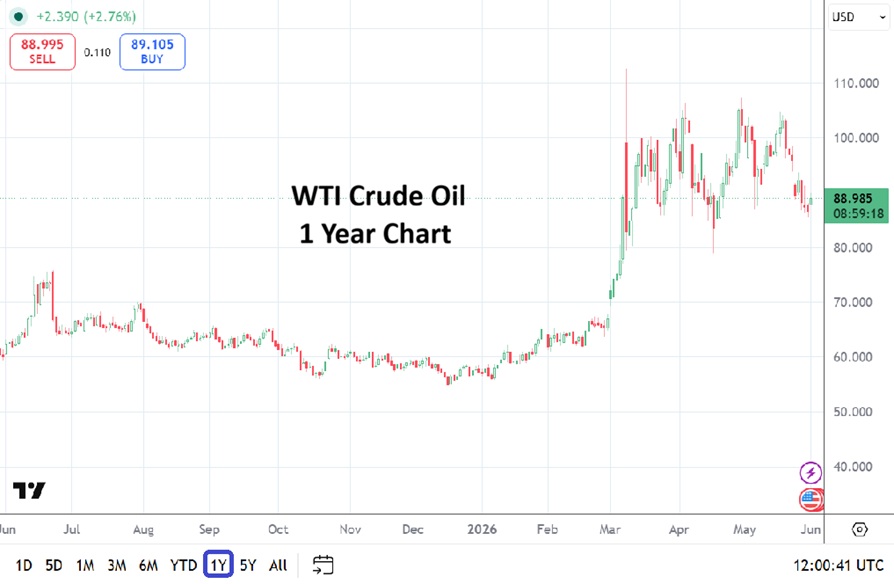
While the price of energy, namely WTI Crude Oil, remains in elevated realms, corporations are still producing, and financial institutions have not shuttered their offices. There are some nervous types that speak about $200.00 a barrel Crude Oil, yet the higher price of the commodity remains perched near $100.00. This value is high compared to where the price of oil has traded the past few years, but the reality is that the current values of Crude Oil have been within these realms before and the economic world has survived. The price of Crude Oil is not going to hit $200.00 anytime soon.

Inflation is certainly an unwelcome specter, but there is the added fact that part of the long-term outlook is – if and when the Iran saga ends the price of WTI Crude Oil is likely to drop significantly. Yes, that is not going to happen near-term, but it is part of an optimistic view looking forward. In the meantime, commodity pricing has become a focus for large players who are taking advantage of fears and an ever flowing river of optimism which creates dynamic prices in agricultural resources. Logistics via fuel costs are certainly effected as is manufacturing and farming, but again let’s soothe ourselves with the knowledge most of those involved in these industries have dealt with high costs before and will constructively deal with the vagaries of mid-term uncertainty.

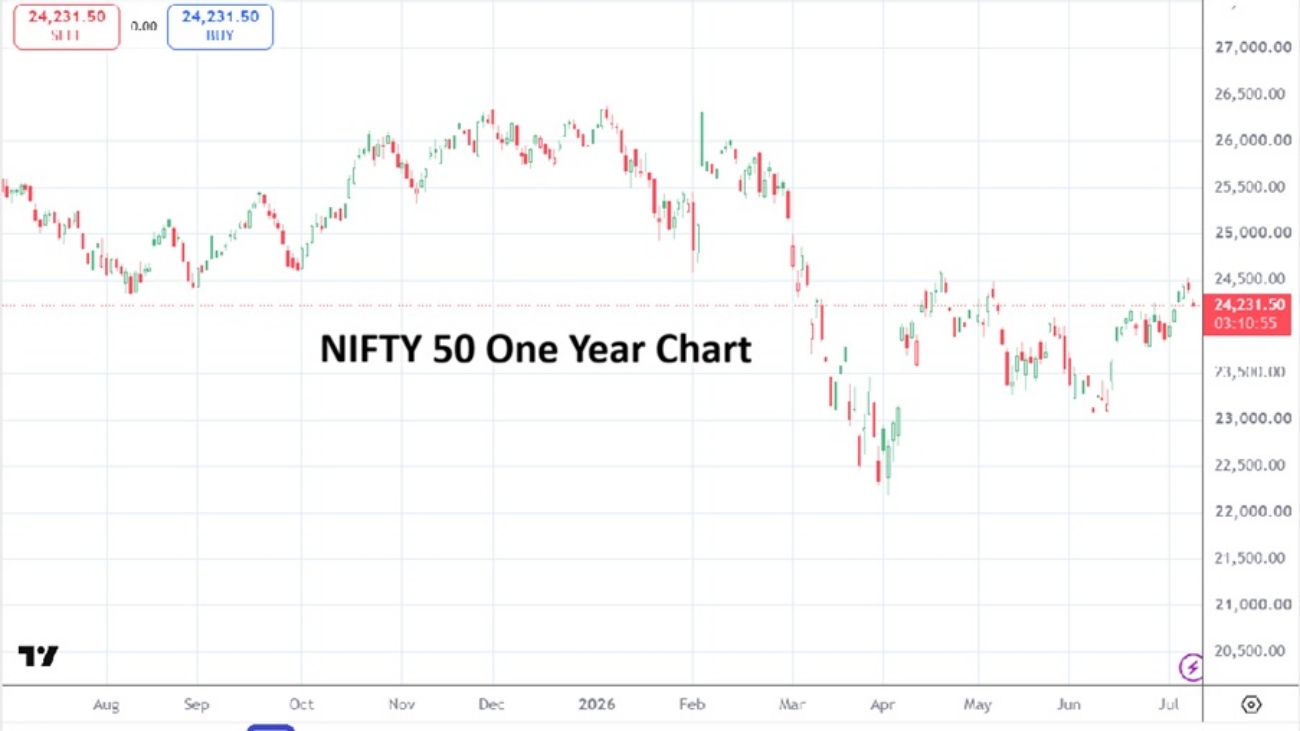
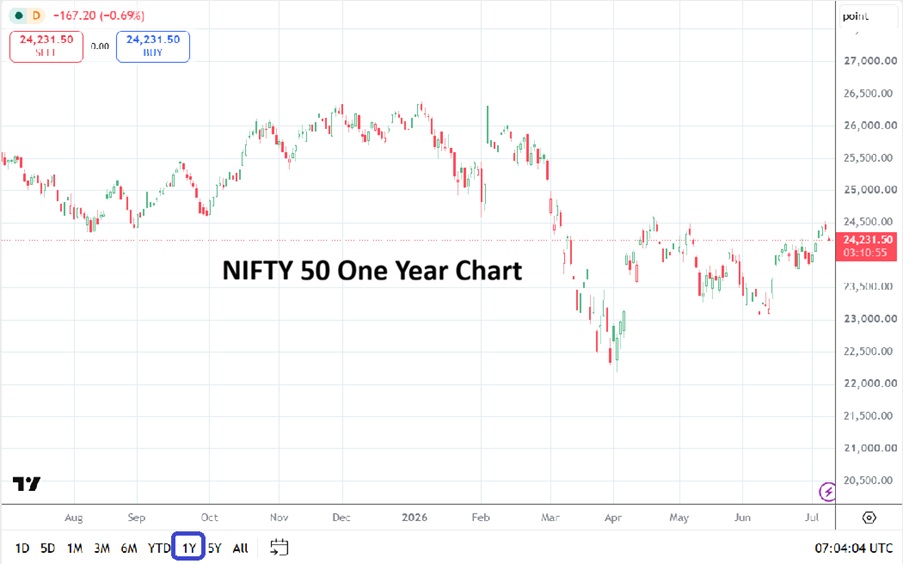
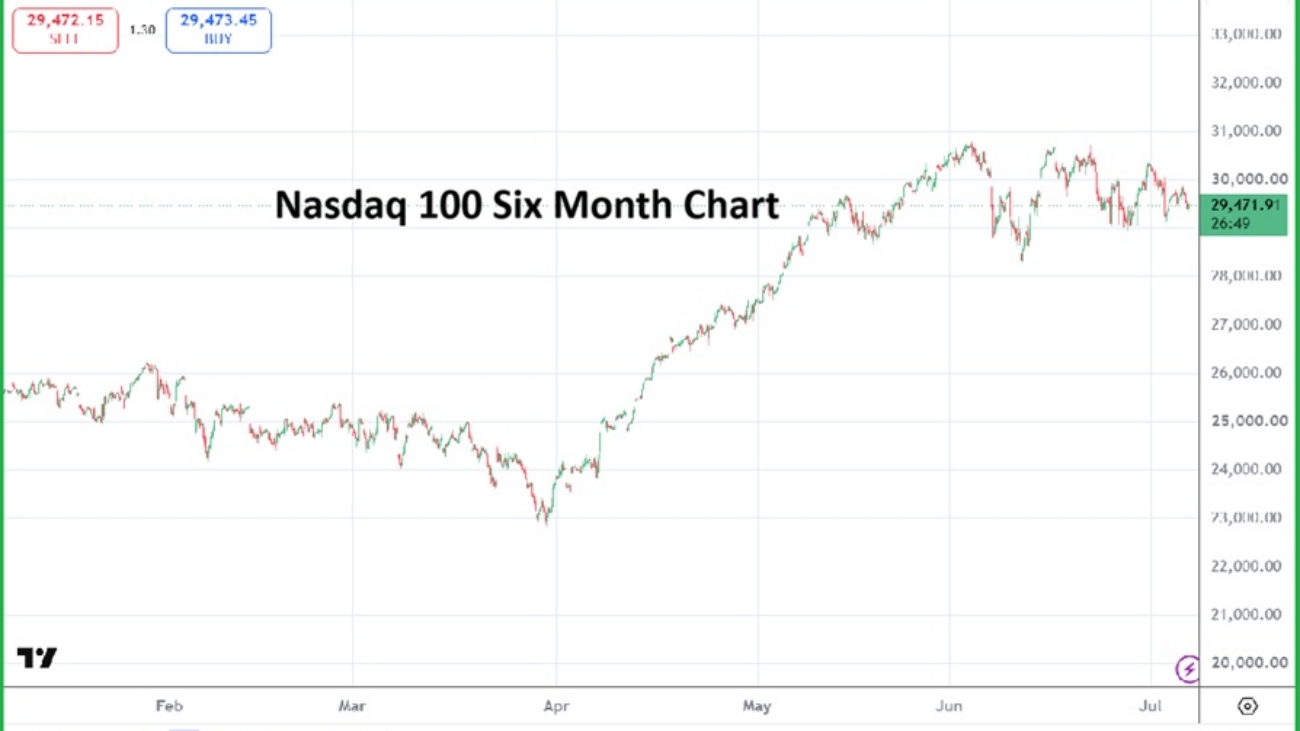
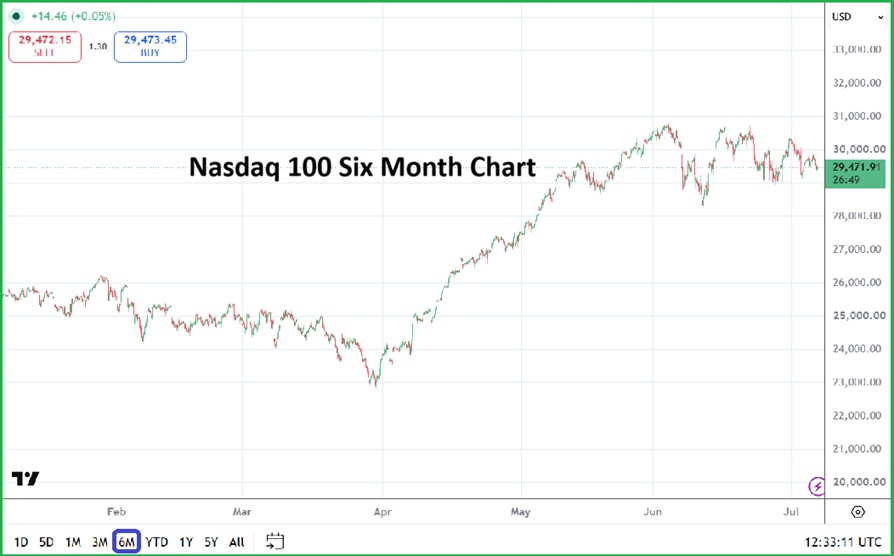
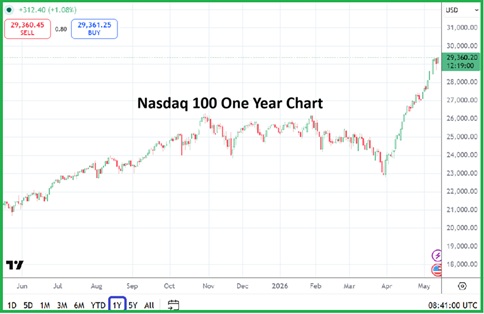
Almost needless to say, the U.S stock markets are doing extremely well per the results of the big indices. The S&P and Nasdaq have all gained in exquisite fashion since the end of March. Who had that on their bingo card? While financial institutions pouring money into equities likely didn’t count on double digits gains in one month’s time, that is what has happened and they will not complain. Perceptions about the sun continuing to show up even in the midst of rainstorms gets investors through whirlwinds. The U.S and China summit taking place now will also add a dose of optimism for equity investors who gear their visions towards results over a three to five years span.

Nasdaq 100 One Year Chart as of 13th May 2026

Different Show and Outcomes for Day Traders

Day traders who are pursuing intraday results are not participating in the same environment as long-term investors. A casino like experience is the best comparison for many retail traders, but the option of trying to catch momentum and using techniques that can accomplish better results are available for those who try to ride the waves caused by big players. 

Some may view money as a game, but it is actually more aligned with the concept of a tool. If a retail trader – or institutional investor – participates in a particular asset, they must have an understanding of how it works. 

Trying to gauge behavioral sentiment is a key ingredient for speculators when trying to deduce what will happen in the marketplace. Predicting what will happen within an intraday framework is difficult at best. However, there is something to be said for understanding how the emotions of investors and large players work while they make their decisions – particularly when day traders are using these notions as a barometer. The trading in the USD/JPY is a prime example of how trading/investing and outlooks work:

Our Friend the Japanese Yen and Forex Opportunities


It is recommended that day traders do not try to tackle too many speculative sectors at the same time. It is urged that they get familiar with one part of the financial market and make it a specialty. 

No one can know everything. Experts in one area – like an academic field – often believe this entitles them to speak on a variety of subjects they have no expertise within and this often leads to catastrophe. Day traders need to make sure they are getting information from sources that are reliable. Because sure as heck the sun will rise and set, no matter what dire predictions are made by those who prefer to focus on the worst.

Copy and paste the text from AMT that you want to share

AMT Top 10

AMT Top Ten Miscellaneous Early May Reflections

May Day Parades and Wishing on Santa Claus

10. NBA Playoffs: Basketball has now entered its serious season, one in which rest days are no longer done in order to gain better draft day lottery odds, nor appease star players who feel the need to take a day off. There have been a couple of upsets already during these playoffs with Houston, Denver and Boston all of whom were favored to win their first round competitions going down in flames. Semi-conference championship contests will begin tonight. Basketball fans are now getting the NBA product they want.

9. May Day: Parades and protests were seen throughout the United States this past Friday. The once treated contemptuous flag of communists was held aloft and portrayed as a viable ideology at many demonstrations. Protestors marched and chanted their displeasure about free enterprise. A lack of historical knowledge about the massacres ignited by Joseph Stalin, Mao Zedong and Pol Pot while paying homage to iconic Che Guevara images was evident. However, their longing for a Santa Claus like figure to come bearing free gifts did not appear. 

AMT Top 10 Miscellaneous Early May Reflections on the 4th of May 2026

8. $80,000.00: Bitcoin has been traversing higher and continues to flirt with the eighty thousand USD realm in its sights. Strategy (MSTR) finished last week above the $177.00 ratio. Are the new higher avenues a sign momentum will continue to endure for these two highly flammable speculative wagers, or will profit taking douse them again when suspicious caution reemerges?

7. NYC: Mayor Mamdani has made it known the city is not going to be able to meet his budget requirements and has postponed the publication of New York City expenditures until the second week of May. Mamdani has called on the State of New York to change is financial arrangements with NYC in order to facilitate his wishes. In the meantime, the Mayor has decided to pick a battle with hedge fund manager Ken Griffin, the primary owner of Citadel, which if unresolved is likely to cost NYC vital jobs and income. Charm and ignorance are likely to get Mayor Zohran Mamdani only so far.

6. Warning: USD/JPY is traversing near 156.900 as if this writing. Last week the USD/JPY was over the 160.000 ratio and sustaining values. But official murmurs from the Bank of Japan proclaiming readiness to intervene sent the Forex pair tumbling. Japanese Yen speculators betting against the BoJ should remain alert and understand that quick profits and escaping before an actual intervention strikes is a very dangerous game to play. The USD/JPY is the domain of large players and financial institutions. Yields on Japanese bonds have escalated, which is a sign that belief in Japanese fiscal policy remains lukewarm, but participating in the USD/JPY via wagers needs to be done with extreme care.

5. Hormuz Strait: WTI Crude Oil values continues to effect behavioral sentiment amongst investors and speculators. The price for spot Crude Oil is above $106.00, while futures are challenging the $100.00 realm. Inflation concerns are turning from whispers into fact. Airlines are being impacted, and logistics for large companies like Unilever are becoming higher costs for global consumers.

4. Reality Shock: Escalating electricity costs for the giant data centers that Artificial Intelligence infrastructure needs are starting to not only be realized, but causing investors to understand genuine profits for the mega-sized ambitions of many companies may prove fleeting. Hyper-scaling companies seeking to build bigger electrical capacity include Microsoft, Alphabet, Meta, Amazon Web Services and Equinix and it will not be easy. Potential and real electricity shortages are causing some nations, states and cities to plead for help due to too much demand on their overwhelmed power grids.

3. Voting: Jerome Powell has decided that he will remain as one of the seven Federal Reserve Governors, which allows him to vote fully on interest rate (FOMC) policy. Powell’s action is highly irregular and one that certainly doesn’t please the Trump administration. Treasury Secretary Scott Bessent has expressed his exasperation regarding Powell’s non-departure from the FOMC. Powell will step down as the Chairman of the Fed on the 15th of May, but his position as Governor doesn’t end until the close of January 2028. Because the Fed is an independent entity in theory, President Trump and those aligned with Trump’s economic outlooks will have to deal with Powell who will clearly not bend to White House desires. 

2. Apex Peaks: The official start to the Middle East conflict – this time – began on the 28th of February. Since deciding the Nasdaq 100 and S&P 500 were vastly oversold in late March, a parade upwards bearing gifts has developed and both indices attained record heights this past week. The Dow Jones 30 is still below its all-time levels produced in the second week of February when it scorched above the 50,000 level, but the granddaddy of U.S indices also did remarkably well in April. 

1. Exit West: The decision to officially leave OPEC by the United Arab Emirates is a clear sign that the Iranian war has turned into a philosophical realism regarding existential outlook. The UAE’s has aligned itself with the West and has said no to radicalization. The United Arab Emirates desire to become a Singapore like model in the Middle East that practices free enterprise and provides a worldwide hub for commerce is clear. Many people are not connecting the dots regarding the UAE’s choice, a realignment of the Middle East is underway and it will have a profound economic effect globally.

Copy and paste the text from AMT that you want to share

US Cash Index 20260424

Upcoming Weekend Nervousness: Does Anyone Know What is Going On?

Preaching Caution and Looking Like a Fool to Those Who Want to Profit

Can someone please tell the rest of us what is going on? Global markets via Forex this morning are demonstrating additional USD centric strength which developed yesterday. The price of WTI Crude Oil is above $94.00. Gold is languishing and around 4,675.00 USD. And although the 3 major U.S stock indices are all within their higher realms – one thing stands out – folks are uneasy.  But then again, the markets never move in one direction only, and perhaps current results can be interpreted as profit taking by those on winning sides.

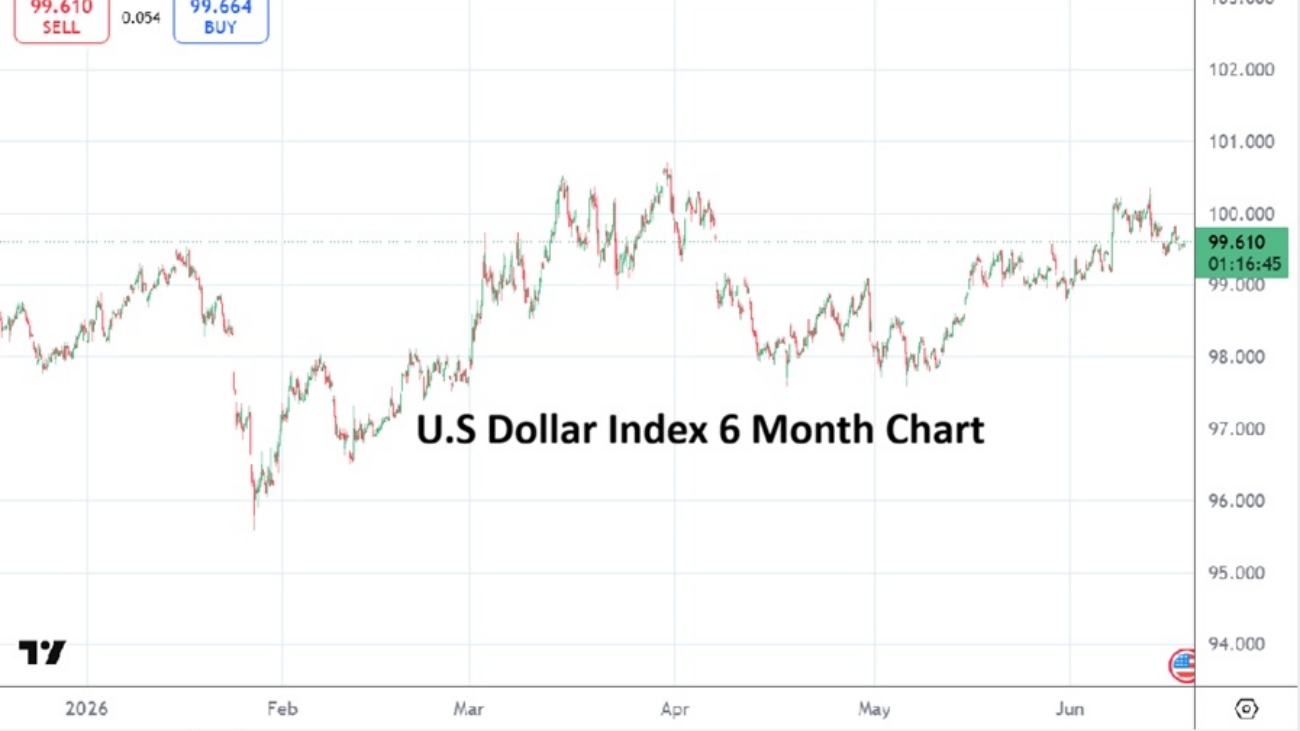
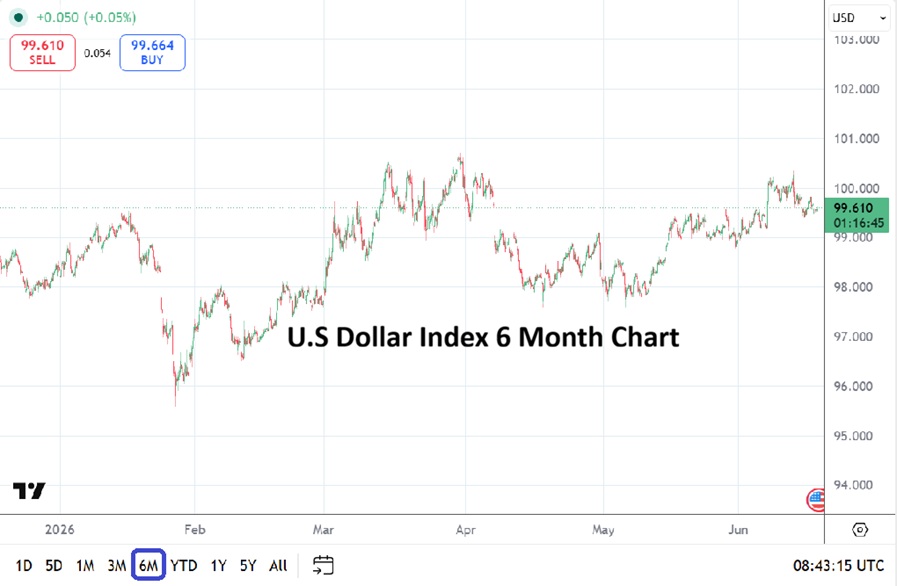
U.S Dollar Index One Month Chart on the 24th April 2026

I would love to be the person to tell you what is going to happen, but as this weekend looms making short and near-term bets still appears a fool’s game. Yes, it is easy to make predictions, but being correct is more difficult. Retail traders are suffering more than most market participants, this as leverage and a lack of funds to remain in a position through violent reversals destroy plenty of trading accounts.

There is talk of manipulation via chat rooms regarding the price of WTI Crude Oil. The usual dialogues can be seen – largely based on conspiracies via large players trying to blow out smaller traders. However, these types of forum chatter are mostly wrong. Large players are getting hurt too in the energy markets. Anyone who is taking a position in order to speculate on a quick hitting foray in WTI is betting on their perceptions. 

The problem is that unless there is inside knowledge of what the next words out of President Trump’s mouth are going to be, or that from Iranian officials – any pursuit of WTI Crude Oil at this juncture is a ‘vibe’ trade. What is going to happen from Saturday and into Sunday is an unknown quantity. Folks holding positions into this weekend need to understand they are wagering. And some may find they are quite profitable afterwards, while others grimace and find themselves on the wrong side of the next surges higher or spikes downward. Intraday trading volatility in nothing new however.

The USD/JPY is near 159.600 as of this writing. The EUR/USD is close to 1.16820. While a tourist traversing foreign lands may not find the Forex incremental shifts in value mesmerizing or of interest, FX traders who do not have deep pockets are likely wondering why risk adverse conditions are prevailing suddenly. But as a risk analyst, I must say that conditions simply may have been perceived to have been oversold in the USD by financial institutions, this as the Fed looms on the horizon.

However, my task as a risk analyst the past two months has been like a carnival barker, because while it has been easy to say that a show is happening within the big tent of speculation, I have been hard pressed to predict short and near-term directions correctly. Perhaps I fret too much. The optimistic thunder claps upwards in the stock markets since the 31st of March have been astounding to many. Hopefully it has been prosperous for day traders, but the likelihood is that financial institutions are the ones who are profiting more via their pension funds purchases for institutional clients.

This coming week the U.S Federal Reserve will make their FOMC decision public. This will be Jerome Powell’s swan song at the Fed. The Chairman is being faded out by the U.S White House mid-May. And somewhere when he is all alone, Jerome Powell may be having a quiet laugh to himself. The Fed will not act this week. Rates will remain the same – unless there is some bizarre move in the global markets over the next handful of days. Yet, Powell’s remarks will be listened to for warnings. While it is not in Powell’s nature to issue a ‘I told you so’ quote, and he is likely content to walk away from the Federal Reserve quietly, it would be captivating if Powell looked into the cameras and pointed fingers. 

But because Jerome Powell like most others, likely has no clue what is going to happen next internationally he will remain mostly mute (cautious as always).

And here we meet again, wondering what the next 72 hours hold. Will the Iranian ceasefire remain observed? Is it even a ceasefire in reality? The Strait of Hormuz remains a linchpin for military action by the U.S Navy and Iranian Revolutionary Guards via a cascade of ship seizures. Maybe that continues to be the key, WTI Crude Oil prices remain a crucial barometer. USD centric prices via Forex action seems to be a reflection of fear or positive thinking in the energy sector depending on the prevailing tides.

Last week there was so much optimism folks were talking about WTI prices potentially hitting $75.00 and lower, now this hope seems to be wishful thinking. Global markets will remain fast and dangerous, that is easy to say and is right, but telling you which direction assets will move, that is a bit different.

And there is the old standard test I use when an opinion is definitely asked for: if someone were to put a gun theoretically to my head and ask me what I think, I would venture to say things will remain quiet and optimism will seep into the markets before the close this weekend. However, I don’t like to play fool’s games, so I will leave now and wish you luck via your own perspectives because the near-term remains more speculative than normal for day traders – even if strict risk management is used. 

Copy and paste the text from AMT that you want to share

postN87

AMT Top Ten Miscellaneous Bits of Clarity for the 19th of April 2026

In a World Filled with Bread and Circuses, Now a Dose of Transparency

10: The Risk Reward Show: Sommer and Petrucci will return to the airwaves this coming week, via sources like Spotify and YouTube, with their podcast starting after a long break (absence).

9. Hardball: Major League Baseball is back and the sport continues to attract more fans and growing attention with its quicker games, a new computerized strike zone, and maybe even more dislike of the Los Angeles Dodgers. Yes, Shohei Ohtani remains a dominant and positive force in the baseball world.

AMT Top 10 for the 19th of April 2026

8. Populism: Politicians on both sides of the Atlantic continue to display a wide display of nonsensical rhetoric and bold asinine actions equating into empty spectacles. An example from the Left is Zohran Mamdani the mayor of New York City with his socialist platform, which is certain to fail and equate into more people and companies leaving NYC for less expensive and friendlier tax environments. And from the Right Italian Prime Minister Giorgia Meloni who talks a tough game but consistently falls short of backing up her words when she senses she could lose control of her power base. The putrid smell of trying to please voters with rotting bread and circuses prevails.

7. Speculation: Gold finished Friday’s trading near $4,837.50, Silver around 80.78. Bitcoin is close to $75,570.00. 

6. AI: While the Artificial Intelligence hangover has been widely discussed for a handful of months, health continues to be seen via Nvidia which closed above $201.00 going into this weekend, and Anthropic PBC which appears to be aiming for an IPO in late 2026 or early 2027. At this moment Anthropic has an estimated valuation of 800+ billion USD. If Nasdaq is able to secure a listing with Anthropic it will immediately factor into the Nasdaq 100. Are some investors betting on upside now which they believe will be seen when Nasdaq reorganizes its index?

5. Optimism: India, South Africa, Brazil and other emerging markets have experienced Forex volatility like all nations the past month and half due to the Iranian war. However, in the past two weeks the Indian Rupee, South African Rand and Brazilian Real have performed better as global markets have calmed. The ZAR and BRL have actually outperformed major currencies over the past handful of months showcasing existing optimism within financial institutions dealing with these currencies.

4. Money for Something: Lefarge, a French company specializing in concrete, was found guilty this past week of paying ISIS (Daesh) and other terrorists groups money in the years from 2012 into 2014, this in order to maintain their business operations in Syria. While Lafarge claims they paid the money to keep their operating staff safe, a French court ruled Lafarge was buying not only safe passage to allow employees to work, but also paying for physical resources needed from quarries that were controlled by the terrorists. Critics of Lafarge point towards the company’s massive infrastructure investments leading up to 2012 and a decision to seek profits no matter the costs of dubious morality. Some Lafarge former senior executives involved have been sentenced to prison including Bruno Lafont and Christian Herrault. Lafarge and Holcim (a Swiss conglomerate) merged officially in July of 2015.

3. WTI Prices: The value of the world’s most famous Crude Oil went into the weekend near $83.30 via futures markets. The commodity is certain to open with volatility early on Monday, this as folks weigh in via their existing behavioral sentiment which will range from speculative perceptions to insights they hold to be true (but that could prove false). WTI Crude Oil challenged 79.00 USD momentarily on Friday, before sparking upwards as cautious attitudes likely ignited doubts about what would happen this weekend in the Middle East regarding potential developments. Wagering on WTI in the coming days for day traders may be akin to spins of the roulette wheel.

2. Apex Heights: The winning streak and surge upwards for the Nasdaq 100, S&P 500 and Dow 30 via gains have caught some investors by surprise and standing on the sidelines. Some large financial institutions may find they have to explain why they did not participate in the rally which has unfolded since late March. The S&P 500 has gone up around 9.5% during this time.

1. Straight Talk: The Hormuz and whether or not the strait is open for oil tankers will remain a catalyst for all global assets until clarity is gained. In the meantime a whirlwind of noise and threats from President Trump, the U.S White House and Iran will remain a menace for all traders – small and large. Is the Strait of Hormuz open or closed?

Copy and paste the text from AMT that you want to share

Troll

Risk Analysis versus Trolls Demanding to Know the Impossible

Behavioral Sentiment Fatigue and Long-Term Opportunities

As I write Gold remains below $5,000.00. Silver is slightly above $75.00. The Nasdaq 100 and S&P 500 remain cautious. And my favorite exclusion choice – MicroStrategy is struggling below $129.00. The markets in general appear to be waiting for a dose of impetus, be it positive or negative. Some investors who are brave may believe assets have reached an accumulation phase as support levels get tested in equity markets. They hopefully also understand that the equity indices can go lower and they may suffer for a while as prices decline. And because of this notion, perhaps the larger investors remain ultra-cautious and are trying to time when they will re-enter the marketplace as a forceful buyer. In the meantime bonds will be bought as signals are awaited on for long-term positions in the major indices.

However, there is also a large contingent of traders who are not looking for long-term investment, instead they are hoping to take advantage of short-term price movement – positive and negative – depending on their philosophies. These folks may be part of hedge funds, or simply large players who believe they have the benefit of experience and know-how.

And then there are folks like me who watch the market and offer analysis on current conditions. I am of the opinion the broad markets are nervous and that behavioral sentiment remains troubled. While I know that experienced large players and financial institutions are accustomed to noise, there seems to be sense that an attitude of fatigue is being felt. People are tired of dealing with the constant amplitude of policy threats and risks. However, this insight regarding tired minds and markets may serve a purpose, it is possible long-term players will see current conditions as an opportunity to buy and hold.

If short-term players such as hedge funds and large speculators are too busy being nervous and assets are straddling prices in equities that are seen as potentially oversold by others, real value can be accumulated and waited upon to produce more growth. This is still a gamble, there are no guarantees. The markets go up and they go down. Cycles occur and new traders are often perplexed when their insights do not come to fruition. Patience is needed. And it is also good to have others in your ear who serve as contrarian advocates offering different opinions that you may not find agreement.

Perhaps you know someone who has an interest in the financial markets and is the same good friend. There is even a chance that you have worked with this person professionally, and have shared ideas on business management, organization and scaling trades and investing. And there is a chance that even though you like this person and find them completely engaging, that you disagree with everything they say.

Trust me when I say my friend (colleague) knows I am talking about them, and suffice it to say that I know he will completely disagree with my further comments, but also quietly embrace the words and believe he is serving his function as a voice of reason. He will not call himself a devil’s advocate, but as someone who serves to create focus. He is the person that says charge ahead, aim for an outcome and tell people what you think. He wants values to look for and timeframes to take action.

However, as a risk manager I frequently find myself being cautious, I try not to make outlandish predictions and try to remain conservative in my approach. I tend to think long-term, while he the trader frequently acts on short-term intuition with a focus on the future per his perspectives. But timing the market and exactly what is going to happen in the next five minutes, one hour, day and sometimes even a week remains a difficult and often an expensive game, I am constantly vigilant of this possible plight.

When I wrote that Silver appeared to be in a speculative mode and feared the highs, and told folks to be prepared for the metal returning to earth it was appreciated by my associate, but it also came with the question of when. When is Silver going to fall, he would ask. And I typically answered that patience was needed. And now that Silver has fallen he says, ‘you warned us that Silver would fall, but didn’t say when’, and he is correct. I cannot give an exact answer because I am not a master of the universe.

Day traders need to know that their CFD positions do not move the cash market. And even participants in the cash market are actually mostly wagering in the futures markets via exchanges and hoping for prices to move in their chosen direction only. Most people choosing to trade in the futures markets do not want to take deliverables of a commodity. Speculators in the futures markets may dream about taking Gold and Silver deliverables, but they know logically they cannot. The same goes for traders in futures with agricultural products and soft commodities.

To buy or not to buy is not the question. To participate or not to participate is the question. You do not have to trade every day, even if you are a short-term speculator. You can watch the markets. Sometimes the best trades you will ever make are the ones you do not pursue.

Copy and paste the text from AMT that you want to share

Confused Markets 20260217

Market Volatility: Structure, Geo-Politics and Culture

Why the (Free) World is so Confused and Depressed

Opinion: The following article is commentary and its views are solely those of the author. This article was first published the 16th of February via The Angry Demagogue.

Having been involved in the capital markets for the better part of the last four decades, I wouldn’t go so far as to say that I have not seen this amount of volatility and uncertainty in the markets, but I will say that this uncertainty and this volatility is different. The differences are important and have to do with the current structure of the markets as well as the geopolitical goals of the various powers and would-be powers. The trading world has changed radically over the last two decades with the advent of algorithmic trading and how they respond to global events as well as the type of money that is coming to dominate the markets.

The “type” of money has changed from those who invest in “things” – be they long term value investors like Warren Buffet and Peter Lynch, to those who chase income and dividends and to those who like to follow trends and industries. These investors, different in their own methods and goals had one thing in common – they invested in companies they felt had a future, or in the case of short-sellers (as legitimate as buyers) who thought it didn’t. The few hedge funds that were around four or five decades ago did what the name of the type of fund said – it “hedged” positions and gave up some potential upside in order to cushion losses when markets went south. That changed sometime at the end of the last century when George Soros nearly ended the United Kingdom by mercilessly shorting the Pound.

We are being very general of course and have not spoken about those who invested in bonds of “fixed income” products, corporate, federal or municipal as well as the basic speculator in all sorts of investment products. Nor have we spoken of the crooks who populate any era. We don’t want to give the impression that all was wonderful “then” – this is not a nostalgic look at the recent past but an attempt to understand what people were doing and how they did it, and how things have changed.

We are seeing now a sea change in the way the markets are responding to news and the way money is being invested. We still have the value and income investors; we have the large and small investors doing their best to pick the right stocks and bonds, and some of these investors also use options and futures to enhance and hedge their investments. Investing has become more sophisticated- read more mathematical – and the “basic” investor, large or small has been able to use this sophistication. However, the current hedge fund environment is based on much more than picking the right stocks or bonds and all that goes with it. The current hedge fund system is a group of funds, many of multiple hundreds of millions or even billions of dollars that don’t make investments per se as they try to beat their competitors by the microsecond in order to profit a very small amount on a a large but extremely short term investment (we will speak of the money of unfree countries, below).

As an example, there are dozens of hedge funds who work their “algos” to respond to market news and announcements only to get out of the position within minutes or even seconds. Each algo basically says the same thing – if X happens then buy and if Y happens, sell. The only difference is who will buy or sell quicker and then reverse what they have done. There have always been those with fingers on the button ready to buy or sell but the amounts were smaller and the effect less. Today, the reaction time is so quick that the large firms have their servers in the stock exchange buildings, close to the exchange computers so that they will get their orders in first. Remember, these are electronic so they are going at the speed of light. The difference between 100 feet way and 100 miles should not matter – but it does. We are talking the difference between 0.0000001 seconds for 100 feet and 0.000537 seconds for 100 miles – a time difference that people cannot discern.

This of course is not necessarily a bad thing if the algos themselves were correct for the long or even medium term (or what used to be called the short term – a quarter of a year). But they are programmed for the shortest of short term – what will happen over the next 30 or 40 seconds or maybe a day or two or a week. We see incredible volatility and panic where we should find none. A good or bad jobs report, inflation release or even a Federal Reserve rate cut or hike might have long term consequences but these trades that cause this radical volatility are not concerned with that. The market dropping two or three percent in a matter of minutes does not provide the comfort that investors usually seek. People jump on the bandwagon fearing the worst –when it was just the algos responses to the news rather than intelligent judgement on the news that drove the prices.

We will stop with the details and summarize – a large part of the uncertainty of the markets is structural as technology and the sheer amount of money being traded has surpassed what the markets, as currently structured can stand. As an example, as an employee of the Nasdaq Stock Market in the early 1990’s we were told to prepare for a 1 billion share day. During those days, there were very few shares that traded above $100 as the companies wanted more investors and there were many stock splits (more rare these days). The 1 billion share day in 1995 would have totaled around $40 billion. Today, daily trading activity has passed 15 billion shares and the total money is above $1 trillion.

It is not clear what structural changes need to be made in order to take all of this into consideration, but we do have some ideas (which we won’t bore you with now).

The second major issue that is the cause of the volatility and uncertainty in the markets has to do with what news is “good” and what news is “bad”. Not in the moral sense but in the economic and geo-political sense. What we mean by this is that there does not seem to be a unified view in the Western world where it should be going and because of this, it is not clear what news is in fact good and what is not. Economically it might be easier to figure out but even that has been hard since so many major American cities and so many young people are voting socialist and so much foreign money from non-free countries is flooding the market. News may say one thing for a free market economy and something entirely else for a planned socialist economy. It might mean one thing for investors in New York or Cleveland and something entirely different in China or Qatar.

Therefore, geo-politically the uncertainty is confusing. During the cold war of course we basically understood what moves were positive and which were negative. That is not to say there were no policy arguments but for the most part, the ends were agreed upon. Selling grain to the Soviets may or may not have bettered the Western world but both those like Henry Kissinger who supported it and Senator Scoop Jackson who opposed it argued based on the same goal – what was better for the free world.

This goes beyond who is considered the “enemies of the West” to what is considered the West – or even if it exists! We have always tried to write here from the perspective of what is good for free countries even if many free countries seem to think that Israel, for example, is not a member of that community. The same goes for those who doubt the cause that Ukraine is fighting for, as they support the Putin tyranny in the name of balance or alleged Christian values or whatnot. Interestingly, both sides – the right in the Russia-Ukraine war (and the Tuckeronian Right regarding Israel, too) and the left in the Israel-Islamist war – are willing to forgo freedom for some amorphous, form of justice or truth.

Iran is the perfect example. In every measure of Western values since WWII the Islamic Republic of Iran is an evil country. It denies freedom to its citizens, massacres them, executes women for immodesty and homosexuals for being homosexual. We don’t have to go on regarding the evils of the Islamic Republic of Iran but even with that, there are those in the West who support it. We are not talking about the legitimate policy debate regarding a war with Iran – morally as well as politically – but rather the fact that many just don’t consider that Iran is on the wrong side. Israel as we said is another example, but we can go on and on. Venezuela, Cuba and even China come to mind.

True enough, there were always people in the West that thought the Soviet Union or Maoist China was morally “better” than the United States or Europe, but never did they influence the politics, culture and businesses as the current naysayers do. The markets “understood’ that the Soviet Union was bad and reacted accordingly. The geo-political goals were mostly in sync.

The global markets reflect the geo-politics of the day and “vote” on it in a daily basis. The fact that there is a vast sum of money that influences the markets that are actively opposed to the freedom project – China, Qatar and Russia come to mind – does not help the situation. It is not the “foreign” money that disturbs the markets but rather which foreign money. There is a difference between an investor who is looking for the good company or the safe bond, and one who is looking to use their investment to further a radical Islamist or Chinese Communist agenda. President Trump’s trillion dollars of investments from Qatar and Saudi Arabia and others comes with a price tag he does not usually deal with – the price tag of undermining the market economy that has made him so successful. The proof of “goodwill” in the investments in the United States ought to be shown before that money flows into the economy. They have already contributed to ruining the universities (not that they needed the help) – there is no reason to permit them to ruin America’s great corporations, too.

The markets are crazy due to its structural issues and due to the “uncertainty” that is today’s world. Sadly, that uncertainty is not just uncertainty about what will happen, but uncertainty about what is good or bad (news). This goes beyond unity and “can’t we just get along?” and gets to the heart of why we are living today in the same culture. We say culture instead of country or city since that culture is the one that “got us here” as basketball or football coaches like to say.

The lack of agreement as to what matters most has affected the markets more than we think, and it all has contributed to the depression that so many in the free world are feeling at the moment.

Disclaimer: the views expressed in this opinion article are solely those of the author, and not necessarily the opinions reflected by angrymetatraders.com or its associated parties.

You can follow Ira Slomowitz via The Angry Demagogue on Substack https://iraslomowitz.substack.com/ 


Copy and paste the text from AMT that you want to share

post18

We Have Seen This Show Before Friends

We Have Seen This Show Before Friends

Another day, week, month and year – another financial crisis causing havoc. We have seen this show before, and experienced traders should make sure friends who are ‘newbies’ are prepared for what is going to happen next. And what is next is: unknown.

People who believe they can profit from the current mess in the markets need to have deep pockets to sustain choppy conditions and a time parameter that allows for volatile prices until the results targeted are achieved. Day traders need to have very narrow goals, because if they do not cash out of the market quickly, then they should expect to get burned by the price velocity which will ensue.

Sharks Eating the Minnows as Crony Capitalism Flourishes

The demise of Silicon Valley Bank and Signature Bank are unpleasant surprises, but not shocking, and not to sound too matter of fact or contradictory, but the handwriting has been on the wall. The aggressive stance by the Federal Reserve finally caused enough nervousness in the stock markets to make certain equities shake and the banking sector has proven vulnerable. It is easy for many corporations to make money when it is cheap, but when ‘and not so suddenly’ borrowing costs, inflation and bonds chaos combine and deliver mayhem then profitable outcomes become more difficult, and for some – impossible. Corporate investors do not look kindly on mid-term and long-term projections which hint of negative growth implications. Investors tend to punish these equities.

Gold One Month Chart

What comes over the next week and month will likely anger many people. Capitalism is good, it is even great. However, a dark and evil shadow lurks when crony capitalism starts to have an upper hand. The insolvency of Silicon Valley Bank raises the prospect for crony capitalism to be witnessed by all. Suddenly the U.S Treasury, Federal Reserve and government have emerged to save the skin of depositors within a bank which up until last week was heralding its ability to be a ‘lone wolf’; merrily disregarding sound investment principles and saying they knew better. It is only my opinion, but it stinks of contradiction that both the U.S Federal Reserve and Silicon Valley Bank have made vast mistakes and now are being allowed to cover their tracks and protect members of their ‘club’. Both Fed and Silicon Valley Bank officers need to be held accountable, but do not count on this result producing more than scapegoats.

Rising interest rates which are causing ‘import inflation’ has been a worry expressed by some economists and they can still be heard, but obviously not given enough attention. The Fed has marched to its own drummer and disregarded ‘the street’ for its own ideals and statistics viewed from its ‘ivory tower’ where it could not be held accountable.

Inflation is stubborn, yes, but it is a result of chaos via global commerce from the effects of difficult supply and logistics problems caused by coronavirus. Inflation became problematic two years ago and it was essentially disregarded for about nine months, until the Fed and others admitted rising prices was a concern. Hopes of transitory inflation have faded into oblivion. But I digress…..

Nervous Financial Institutions Battling as Federal Reserve Wavers

A sin bin of mistakes has collected and is now being exposed. Many financial houses were surprised when the Fed came out on the 1st of February and sounded so aggressive talking about inflation while increasing the Federal Funds rate again. Then jobs numbers came out on the 3rd of February, along with Average Hourly Earnings and showed the U.S economy was stronger than expected. The USD began to find strength again, and inflation data then added an extra punch by coming in strong again in February via the CPI results.

Btw, Consumer Price Index will be published today too from the U.S, and this will cause a reverberation for those attempting to day trade among waters filled with nervous financial houses who have their programmed algos ready to take advantage of hectic markets. Volatility the next handful of trading days is set to be wild. The Fed is not likely to raise interest rates by half a basis point on the 22nd of March, but if CPI numbers are stronger than anticipated today, this could cause a tremor and fear. Even if the Fed pauses for the moment, the prospects of raising interest rates again in the near future unless the banking sector shows it cannot sustain another round of Federal Fund increases is troublesome. Nothing like a complete lack of clarity for short-term traders to cause bedlam and a complex gauntlet of inflation statistics to make the Federal Reserve squirm.

Traders have to understand that if they are going to attempt to wager on the markets in the near-term that they are taking a huge risk. The use of leverage could provide solid profits on a winning bets via Forex, commodities or CFD wagers, but it could also wipe a trader completely out if they are caught by a violent wave. And the U.S Federal Reserve is not here to protect small traders, they frankly do not consider your results very much and likely believe you should not be wagering.

What the U.S government and its institutions like the Fed, Treasury and FDIC want to do is guard against systemic risks for the larger speculators – corporate traders, banks, hedge funds, V.C’s, etc. to make sure they do not go belly up and cause a global financial sink hole and long-term ruptures. The financial crisis of 2007 and 2008, the coronavirus pandemic starting in 2020 and the ongoing Ukrainian war have tested the markets and were likely enough for most of us to voice troubles. Now the prospects of a far-reaching banking crisis and illiquidity adding fuel to the fire are quite a combination of risk events usable as costly teaching moments. Do we seriously need another teaching moment however?

We are the little people and nobody sees us. We may yell, we may bellow our angst towards the system, but the system treats us as an afterthought. Day traders should keep this in mind as they bet in the coming days, because more gyrations are likely as a metaphoric ‘country club for institutional risk takers’ is given sanctuary. This as we minnows look up, shaking our heads in disbelief while our trading accounts flounder.

post14

U.S Inflation Data Ready to Rattle Markets and Traders

U.S Inflation Data Ready to Rattle Markets and Traders

Another Day to Prove some of us are Fools

The U.S will publish its PPI data in a few hours time. The outlooks from many experts regarding the Federal Reserve have been rather suspicious when contemplating the U.S central bank. However, the results of the Non-Farm Employment Change numbers on the 3rd of February, and this Tuesday’s rather stubborn Consumer Price Index reports have created doubt among the ‘experts’.

  • Forex and equities and their related indices will react to the publication of the Producer Price Index statistics today and create price velocity that day traders may find dangerous.

  • On the surface it appears many Forex pairs have begun to search for a calm middle ground leading up to the release of the PPI report. Perhaps positions are on hold until the release of the inflation data.

  • Traders should not be tempted and get stuck in tranquil waters that could turn into seas that drown their victims later.

Day traders who choose to wager before the reports are published today are essentially gambling with their money unless they have direct knowledge regarding today’s outcome. The rather comfortable mid-term bearish trend in the USD against most major currencies has been stopped cold since the 3rd of February.

GBP/USD Five Day Chart

Outlook regarding the U.S Federal Reserve has gone from scorn and mockery and become a rather more sedated acknowledgement that inflation is rather robust. Today’s PPI numbers will provide evidence and clarity. If the number via the Producer Price Index is stronger than anticipated it will certainly create a foundation for the ‘promised’ 0.25% rate hike in March, but also set the road for more hikes to potentially come.

Questions remain loud. The better than expected jobs numbers a couple of weeks ago was a cumbersome development for financial houses paying attention to recent layoffs from top companies and betting on weaker data. When hiring proved to be stronger than anticipated it could be pointed out that the employment numbers were looking backwards and not forward. Yet, the strong Retail Sales numbers and the improving Empire State Manufacturing reading yesterday are signs the U.S economy remains in a better place than forecasted. Recession may not be around corner.

Day traders need to be cautious and the ‘experts’ may want to look for their safe places today.

post10

Central Bank Capitulation led by Federal Reserve

Central Bank Capitulation led by Federal Reserve

The 21st and 22nd of September were potentially important signals for traders as the Federal Reserve admitted they remain reactive to inflationary pressures, and other global central banks countered with acts of their own.

While it is difficult and often foolish to believe the markets can be timed, this past Wednesday may have been an important moment for speculators in Forex. Many traders may have veered off into cryptocurrencies or into equities as day traders the past few years, but FX still remains a place that offers volatility and where wagers on price direction can be made.

The Federal Reserve raised their interest rate 0.75% again, and importantly issued a loud admission that the U.S central bank is caught in a reactionary mode. Other global central banks have begun to protect their own currencies too. Jerome Powell, the U.S Federal Reserve Chairman, said he believes the current interest rate is likely at the low end of the spectrum regarding where it has to be to have an affect on current inflationary pressures.

The USD has been strong against many major currencies with a rather unforgiving bullish trend. Raising the Federal Funds rate from 0.25% to 3.25% the past year in the U.S has made short term purchases of U.S debt attractive to many financial institutions. On Wednesday, Jerome Powell made it clear other hikes will be delivered and it is not farfetched to believe the U.S is looking at a potential rate of 4.50% and higher in the spring of 2023. This doesn’t mean the Fed’s policy is correct, it is simply an outlook for the potential Federal Funds Rate based on rhetoric.

  • A Federal Funds Rate in the U.S of 4.00% is likely by early this winter, per the Federal Reserve’s interest rate outlook.

  • Global central banks have reacted to the U.S Fed’s recent interest rate hike, by enacting methods to try and safeguard the value of their own domestic currencies.

The USD surged ahead slightly before the rate announcement from the Fed, while many other currencies lost value. However, on Thursday the Bank of Japan intervened by starting to buy Japanese Yen against the USD. The Bank of Japan said it will not raise interest rates yet, but its action showed it clearly does not want the JPY to lose additional value to the USD, via the USD/JPY Forex pair. Whether the BoJ’s actions work mid-term remain to be seen.

Global Central Banks feel they must counter the U.S Federal Reserve’s Actions

Other central banks started to act too. The Bank of England and Swiss central bank both raised interest rates yesterday. Speculators who have been watching the USD dominate Forex the past year, may now have to consider that the last two day’s of action via global central banks is a signal an attitude change has taken place, which may begin to affect Forex long term. Traders need to understand opportunity also means there are risks.

Inflation remains high and governments have reached a point where they have had to admit they will have to risk slowing their economies and potentially suffer recessionary pressures to curb price increases. Many central banks likely feel they have to match the hike increases by the U.S Federal Reserve within their own systems to protect the value of their currencies.

BoJ Intervention on the 22nd of September

End of the Dominant USD Bullish Cycle in Forex?

While Japan for the moment refuses to raise borrowing rates, the BoJ’s buying of JPY effectively signals the USD has become too strong and is starting to hurt the Japanese economy. The the Bank of Japan will be interesting to study long term, to quantify if Japan’s lack of raising rates proves to actually be correct in the current environment.

Philosophical differences and central bank maneuvering is complex and has a long history of debate. Having said that the Bank of Japan has been largely scorned by many other central banks the past three decades for its methods, but while Japan has never recaptured the growth numbers it attained in the 1970’s and 1980’s, the nation remains one of the world’s richest.

The action of the BoJ and other global central banks means that speculators may want begin to look at Forex and tinker with the notion that the bullish trend of a dominant USD may start coming to an end. The cycle has been strong and again, it is difficult to say today is the day. Timing the market is often proven wrong, but the messaging from global central banks that they will start to shadow and react to the U.S Federal Reserve’s actions may mean that they will try to curtail the decreasing values of their own domestic currencies with more robust methods.

Day Traders need to understand a Complex Puzzle is Ahead

Forex markets can produce dramatic changes of value abruptly and cause costly losses to traders who bet wildly. The use of too much leverage and a lack of efficient risk management frequently destroys value quickly. However, now may be the time to contemplate testing Forex with the notion the USD may start to incrementally loss value. A lot has to happen. There are plenty of risk events ahead which could lead to wildly unforeseen results. In other words there are no guarantees.

Global equities led by the U.S indices appear very fragile and if the major stocks loss more value, this could also cause a stronger USD. Why? Because the USD would have to be purchased to buy U.S stocks by foreign investors who want a safe heaven. While it may seem contradictory to think U.S equities would be bought in downturns, this is what has historically happened when global financial institutions seek safe havens and believe other places are too dangerous to invest.

Remember financial institutions are not supposed to be day traders, they are supposed to be long term investment vehicles. Meaning if global equities suffer, even if U.S indices suffer too, the U.S is likely to remain the choice of investment houses as the place to seek shelter if they have to purchase equities as part of their mandates.

Yes, Forex will always be a complex puzzle for short term traders seeking to take advantage of the daily gyrations in the global markets. If a speculator insists on participating with wagers in the market place, they must consider that financial storms are always brewing because trading is seldom easy.

post9

Escalation of Rhetoric doesn’t create Calm Investors

Escalation of Rhetoric doesn't create Calm Investors

Putin and U.S Federal Reserve will Stir U.S Markets Today

An escalation of rhetoric via Russian President Vladimir Putin regarding his nation’s war with Ukraine took place this morning via a televised address to the Russian people. Putin has said Russia will call upon those with previous military training, and use a ‘limited’ call up of potential new troops. A claim of nearly 300,000 additional soldiers to be readied has been made by senior Russian officials shortly after Putin’s speech.

Making matters more intense, Putin said all military options are possible while Russia protects its sovereign territory. The land he was speaking about however, is not recognized Russian territory, it is Ukrainian soil. Putin’s ‘talk’ to Russia has firmly put him in a position which shows that results from the Ukrainian war have not had favorable results and that he is showing signs of frustration. An anxious Vladimir Putin is not about to calm down what are already nervous global markets.

China Urges a De-escalation in Ukraine while not naming Russia

China has already reacted to Putin’s speech by urging all sides active in the Ukrainian conflict to de-escalate the situation. China has its own economic worries presently and certainly doesn’t need another bad ingredient thrown into its midst as it deals with weaker demand for export products and a shaky real estate market as the global economy reacts to inflation and recessionary concerns.

International traders will hardly hear what China had to say today, not because it isn’t important, but because their attention will be on Putin and the U.S Federal Reserve. However, it is important to point out China did not condemn Russia, instead it asked that all sides involved in the Ukrainian sphere to lessen the dangers. China and its relationship with Russia remains an important aspect of global politics.

The U.S Federal Reserve will raise Interest Rates Today

The U.S Fed will raise its interest rate by 0.75% today according to most financial houses which have already acted accordingly within Forex per interpreted price action. The USD has made new long term highs within the USD/ZAR and the USD/CAD. The EUR is below par as of this writing against the USD, and the JPY and GBP also continue to struggle near long term lows versus the USD.

USD/CAD One Month Chart

U.S equity indices which have been struggling are not showing a massive promise of a reversal upwards which will alleviate losses seen this year. Investors need to remain patient if they are invested in indices such as the S&P 500. Day traders looking to profit from the volatility ripping through the markets will continue to be challenged by choppy conditions, difficult perceptions of short term technical charts and a lack of positive behavioral sentiment among the larger players in the marketplace who actually drive the markets most of the time.

  • USD remains stronger against many major and emerging market currencies, day traders need to be very careful if they pursue Forex positions in the short term.

  • U.S equity indices traded lower yesterday, and if the Federal Reserve falters and doesn’t offer solid clarity regarding interest rates today, this could create more nervousness.

Optimism is not being heard far and wide. While it is always interesting to be a contrarian and sometimes the correct avenue to engage thinking, the notion that upwards trajectories will suddenly occur may be wishful thinking in the near and mid term. Many asset classes are under stress.

Today’s upcoming pronouncements from the Fed will be important for institutional investors as they try to gauge the U.S central bank’s outlook until early 2023. If the Fed gives clues they will remain hawkish into the winter and a Funds rate around 4.50 to 5.00%is a possibility, this could shake investors and cause more capitulation – meaning a stronger selloff via equity indices could ensue. Short term traders will need to be prepared for violent conditions if they are day traders of stocks or CFDs. The inverted U.S bond yields remains a sign investors are seeking short and mid-term safety via interest rates to preserve money.

The fact that most traders are typically buyers first, not sellers first makes trading in bear markets difficult. Psychologically humans want to be optimistic. Today’s speech by Vladimir Putin while it doesn’t change the conditions on the ground in the Ukraine immediately, will shake the confidence of some financial houses which may have become accustomed to a ‘polite war’ they could ‘forget’ about and make believe would not get loud again. Nervous behavior is likely to be seen later today as early risers in the States awake to the news of Putin’s speech and react.

In short global markets will be dynamic today and tomorrow, as financial houses position their portfolios according to their foresight regarding developments the next few months. Day traders are urged to be cautious, and the prospect of sitting on the sidelines and watching ‘the show’ may prove to be a solid choice.

post8

U.S Fed will raise Interest Rates this Week Once Again

U.S Fed will raise Interest Rates this Week Once Again

September Federal Reserve Pronouncements on the Calendar

The U.S Federal Reserve will raise their Federal Funds Rate by another 0.75% this coming Wednesday the 21st of September. If they do not it would send a shock wave through the markets, inflation data via Core CPI statistics, which were published nearly ten days ago in the U.S cemented the hike to come.

The hike has already been factored into the global markets. Forex has essentially gone ballistic via a strong USD, the GBP/USD is shown below as an example. The British Pound is now touching lows it has not seen since 1985 against the USD. Speculators may be tempted to trade this week believing they are smarter than the ‘crowd’, and that may be the case – congratulations if you are one of the few, but this may simply be an outcome of luck too. Many retail investors and speculators have been mauled in the current trading environment.

GBP/USD 1 Year Chart showing new Lows

Investors are Struggling as Clarity is Sought

Indices are struggling, gold is sputtering, U.S Treasury bonds are inverted, cryptos are under scrutiny. The U.S Fed is between the proverbial rock and hard place. Economic conditions promise to stay stormy in the next month and a half too. U.S elections will have an affect on behavioral sentiment. Certainly the Fed’s outlook which will be delivered on the 21st of September will cause turbulence also. A long term view via dividends from the S&P 500 remains a benchmark for investors seeking returns. Short term traders on the other hand must fight through the ‘noise of the experts’.

  • The U.S Fed is nearly certain to raise their key interest rate by 0.75% this week.
  • The key clarity investment houses seek is outlook regarding potential interest rate hikes to come later this year and early in 2023.

Where have the Gurus Gone?

Many self proclaimed gurus who claimed enlightenment only a year and a half ago, and offered their ‘insights’ regarding investment promises to eagerly awaiting traders are now hiding in their safe places and eating their words. Very few assets have proven profitable in the past year. Many investors are not used to the idea of merely preserving money, they have worked on the premise of solid gains made with speculative decisions which have been carried upwards by positive sentiment. Dealing with actual bear markets has not been a shared experience for many in the world of investing the past 13 years and the fresh scars are visible.

The ability to make money in this environment is difficult. The inverted bond yields in the U.S are evidence that folks are putting their money into relatively short term assets and trying to secure some of their capital. Traders can certainly wager this coming week in a variety of ways, but short term positions need to be considered with the knowledge volatility will be part of the terrain. Risk management is essential.

U.S Federal Reserve is in a Difficult Position

The notion that the U.S Federal Reserve will not stop raising their interest rates after the September meeting pronouncements this Wednesday still needs to be digested in many investment spheres. A Fed Funds Rate later this week of 3.25% is almost a 100% certainty. Speculation about a borrowing rate at 4% later this year may be realistic. And the question about how long the ‘transient’ inflation remains – yes, please laugh out loud, is a tough consideration. The outlook remains chilling.

While higher fuel costs have simmered a bit and have come off their highs, energy remains problematic and is having an effect on the costs of logistics, food and manufacturing. Energy concerns will remain the devil within the details. Some may want to look at the ISM Manufacturing data from the States for clues, but its merits remain debated too.

post2

NASDAQ Composite: Bearish Trend Testing Trading Inexperience

NASDAQ Composite: Bearish Trend Testing Trading Inexperience

The NASDAQ Composite has been within the grasp of a selling trend since late November of 2021, and traders who feel the urge to buy should understand their goals and time frames clearly.

The NASDAQ Composite has seen a strong wave of selling take hold of its equities since the later stage of 2021. Investors have likely been spooked by inflation and high PE ratios which correlate into questionable values and fears of over exuberance and reactions. The combination of U.S Federal Reserve policy which is certainly having an effect on behavioral sentiment is problematic too. Investors are not fans of unclear outlooks and current economic conditions are definitely causing nervous sentiment.

Many traders and investors have not experienced a sincere bear market during their financial careers. Indices and their equities have produced a rather steady upwards vehicle for years. The thought that an equity index can actually go down for a long duration, without significant reversals higher following is troubling and new for many people. Timing new trends is exceptionally hard. An investor who has a ten year outlook certainly brings a different perspective to buying the NASDAQ Composite compared to a day trader who is likely maneuvering in the index with short term wagers using CFDs.

Current market conditions in the NASDAQ and other major global equity indices remain challenging and this will likely continue into early this summer. The U.S Federal Reserve will be conducting an FOMC meeting in mid-June and another interest rate hike is likely being considered. A potential rate hike of 0.50% may be seen. The potential of this additional hike to the current interest rate of 1.00% has likely been digested into the marketplace by financial institutions, but that is not the end of the troubling concerns.

Technical traders who watch the daily results of the NASDAQ Composite and other indices may attempt to speculate on the gyrations of their moves based on short term volatility. These traders should understand they are also battling large institutional traders who use complex algorithms to pursue their positions. The combination of nervous equity markets caused by uncertain economic outlooks, while it waits on the pronouncements of the U.S Federal Reserve are bound to deliver more nervous results in the NASDAQ Composite and other global equity indices.

While it may be accepted that the U.S Fed will raise interest rates again in June, the greater question that financial institutions want answered is what the U.S central bank’s outlook on additional interest rate hikes in the summer and fall will be. Inflation in the U.S remains troubling high. The rising costs of logistics, food and consumer goods are largely a manifestation of higher energy costs.

Yes, coronavirus has been a large ingredient too, regarding inflation and its current effect on employment and the resulting lack of workers is a component in the equation due to new perspectives among the workforce. The shortage of employable labor has also sparked concerns about demographics for the future. While the virus and its effects seem to have eroded in the West for the time being, unfortunately there are concerns regarding a potentially large problem in China if coronavirus infections continue to occur there. Shutdowns in China due to the virus can affect supply and commodities prices globally.

The costs of higher energy and commodity prices are something that companies and consumers will have to deal with in the months ahead. Disinflation is likely to come, but it may take a handful of months more. It is a complex puzzle and traders who want to bet on short term results will have to endure sudden storms of volatility which are likely to arise. Unanswered questions await and because of the shadows that hover over the economic landscape, clarity is not going to be delivered soon.