postN5

USD/INR: Stubborn Higher Range and Risky Speculative Wagers

USD/INR: Stubborn Higher Range and Risky Speculative Wagers

The USD/INR has remained within the higher level of its one month price range as behavioral sentiment remains difficult to gauge. As of this writing the USD/INR is near the 82.7200 ratio, but readers are urged to check this price against live market action as they read to compare conditions.

The Broad Forex Market is Nervous and so is the USD/INR

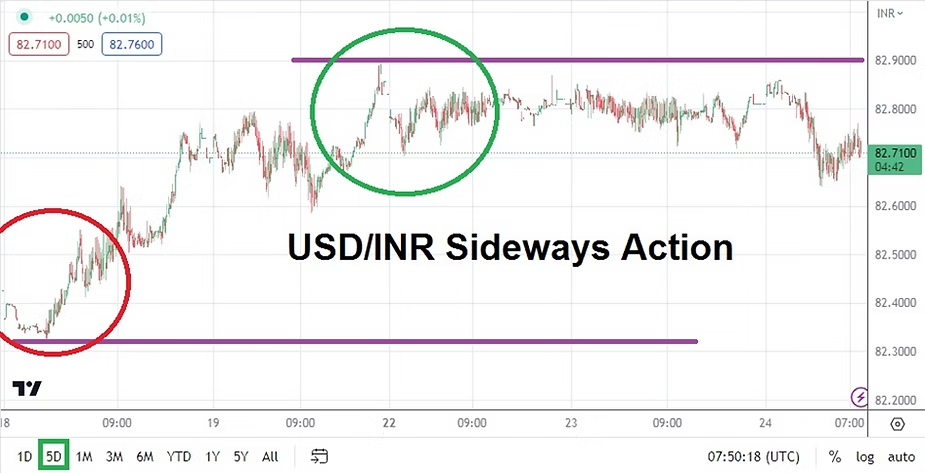
While many traders of the USD/INR who have been tempted to be sellers of the currency pair might be taking it personally that their perceived price targets have not been accomplished, they should note the broad Forex market has been difficult for most global speculators. The price action the USD/INR is experiencing currently comes from impetus due to nervous behavioral tendencies being generated from conflicting sentiment. The price range between 82.5000 and 82.8500 since the 18th of May has been rather persistent with momentary outliers.
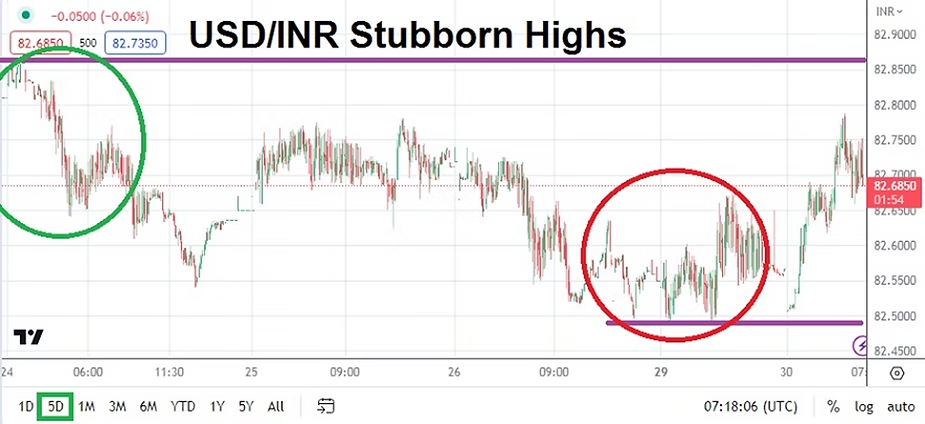
USD/INR Five Day Chart as of 30th May 2023

Fear of the U.S Federal Reserve remains rather strong in Forex, this has affected the USD/INR because of concerns the U.S central bank might increase the Federal Funds Rate on the 14th of June. Inflation remains durable and is showing few signs of vanishing. The higher consumer prices in the U.S are a thorn in the side of the Federal Reserve which is intent on trying to put a dent into rising prices. If U.S data continues to show inflation is pushing ahead a rate increase could happen, and the higher prices in the USD/INR likely reflect this has been priced into the currency pair.

Federal Reserve policy can certainly be debated and fingers pointed at their wrong conclusions and decisions made the past two years. The current circumstances for the Fed has put it in a very difficult position. The lack of a clear outlook for financial institutions is leading to a lot of risk adverse trading since the 9th of May. Also concerns about the U.S debt ceiling did not calm many nerves the past few weeks, although the crisis seemingly has found a compromise which is likely to be approved tomorrow in Washington.

High U.S Interest Rates and More Corporate Banking Woes as a Potential

Higher interest rates are hurting U.S corporate banking particularly in the mid and small sized sectors of the industry. If these banks continue to suffer, their problems will create a credit crunch for many in the U.S middle class, which could have a big effect on consumer spending.

Higher interest rates via the increasing Federal Funds Rate are hurting the corporate banking sector because it makes it harder to lend money, and some clients are taking their money out of deposits to seek better returns elsewhere – like Treasury Bonds. The increased interest rates in the U.S also hurt many global currencies like the USD/INR because global financial institutions sometimes seek the better paying U.S bonds, which are also seen as more trustworthy long-term investment vehicles.

Thus, while the Fed is projecting tough talk about the potential of raising interest rates in June, and warning the mid and long-term outlook is cause for concern as inflation shows its ugly head, financial institutions are demonstrating nervous behavioral sentiment. The strong rhetoric from the U.S Fed and its lack of clarity regarding real direction has left the USD/INR and many other major currency pairs in awkward choppy positions with highs being tested. Until U.S economic data shows inflation is under control and growth is slowing down substantially, the Fed may have to continue to be rather hawkish sounding, which will not help the USD/INR selloff strongly in the near-term. In other words traders considering selling should be conservative with the USD/INR and not be overly ambitious with their targets.

Today the CB Consumer Sentiment reading is coming from the U.S, a lackluster report with negative data would actually help the USD/INR. Also this coming Friday jobs statistics will be published. While many folks will watch the employment outcome from the Non-Farm Employment Change, the Average Hourly Earnings could be more important and provide insights regarding inflation which could prove crucial. A rise in wages is not the outcome the Federal Reserve wants to see.

Warning: Use Entry Price Orders when Trading the USD/INR when Possible

Traders should also note that short-term wagers on the USD/INR should be done with entry price orders to make sure they are not caught and hurt by the large spreads which might be offered by their brokers – the spread is the differential between the ‘bid and ask’ price. Frequently a trader will be given a price fill that leaves them feeling like they have been cheated. Speculators frequently try to target short-term price goals with quick hitting bets, but bad price fills make these types of wagers difficult to get a positive result – when only a handful of pips in either direction can hurt a trader because too much leverage is being used.

USD/INR traders who are buyers should understand they will most likely be given the sell price of the ‘bid and ask’ when seeking upwards direction, and sellers of the currency pair are likely to get the ‘buying’ price of the spread – thus making a chosen wager on direction further away and difficult to achieve profits. Using an entry order which pinpoints a chosen price to enter a trade is vital. A trader should not expect to get a price fill which is ‘geared’ towards their chosen direction. Also, spreads in the USD/INR are wider than many major currency pairs because the amount of volume in the Indian Rupee cash market tends to be thinner, leaving more room for the technological capabilities of Forex brokers to provide less than attractive pricing.

postN4

The Ten Commandments of Business and How to Break Them

The Ten Commandments of Business and How to Break Them

Book Corner: Ten Commandments of Business and How to Break Them, written by Bill Fromm

When Fromm wrote this book in the early 1990s, he was the president of Barkley and Evergreen (now Barkley), a Kansas City-based advertising agency and was a known and respected veteran in the advertising field. The book describes his personal philosophy of managing employees and dealing with customers, which, according to this book, breaks the mold of standard – and sometimes stodgy – corporate culture. Fromm provides a quick and interesting read, (the book clocks in at a tight 170 pages) with each “commandment”, or rather lesson, backed up with snippets from his personal experience.

Fromm writes about eliminating the tendency to hide behind memos and reports, calling it the “CYO” (cover your ass) culture. He states that the most effective form of communication is face-to-face. Same for suggestion boxes – he says to get rid of them. If your employees cannot comfortably speak their minds, then your company has a serious communication problem that must be dealt with on its own before you start taking suggestions. Fromm also tackles the modern management culture: when you separate the company into “officers” and “enlisted men” with layers of bureaucracy, perks, privileges (such as reserved parking for management) and physical barriers, you end up instead with an “us vs. them” attitude where the company is two teams, not one. And, as Fromm says, the company must be one team, not two.

Overall, Fromm places a heavy emphasis on treating employees with respect and class, resulting in what he says are happier and more productive workers. The most memorable example is his insistence that business cards be given to everyone, regardless of position – even the custodian. It makes the employees feel special and provides great advertising for the company. He gives the example of summer interns who were given business cards, and when polled later about their experience at the company, all the interns listed the cards as one of the most memorable experiences there. Fromm also stresses the importance of company events and fun meetings as enjoyable means to build and maintain morale.

In addition to culture and morale, Fromm writes about profits, marketing, customers, and more. Not every one of Fromm’s commandments is applicable to every company, and not every company needs to adhere to every commandment to be successful. But in a world where the successful reach their achievements by putting radical spins on standard thinking, Fromm’s book has much food for thought.

post42

Calendar this Week includes Debt Ceiling, Earnings and Jobs

Calendar this Week includes Debt Ceiling, Earnings and Jobs

Monday the 29th of May, Many banking holidays including in the U.S and U.K – traders choosing to participate in the markets should be aware that low transaction volumes can cause volatility due to imbalances. Be careful if you choose to trade on Monday.

Tuesday the 30th of May, U.S Debt Ceiling – talks and vote will be in focus. It appears an agreement may be in place, but financial institutions will certainly monitor the shenanigans from Washington, D.C. this week to see if a compromise can avert a crisis. Equity and Forex markets will respond to all developing news.

Tuesday the 30th of May, U.S CB Consumer Confidence – this survey of households in the States should be monitored. Spending remains strong in the U.S while manufacturing outlook appears nervous. The results may imply forward looking sentiment for U.S economy regarding consumption and could stir the markets slightly.

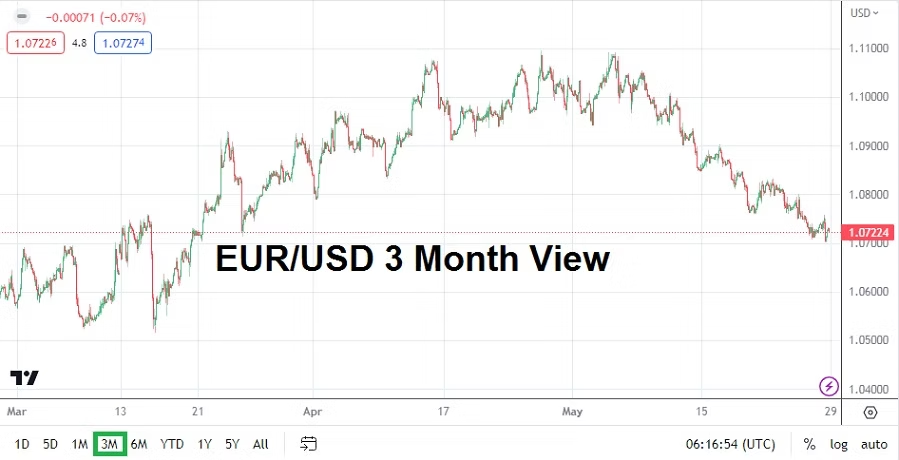
EUR/USD Three Month Chart as of 28 May 2023

Wednesday the 31st of May, Germany Preliminary CPI – inflation remains troubling in Europe and the German economy is seen as the linchpin. The result from the Consumer Price Index could rattle the EUR/USD a bit.

Thursday the 1st of June, China Caixin Manufacturing PMI – this Purchasing Managers Index from China will give some insight regarding the nation’s economic sentiment and its results will offer some clues regarding global demand for goods. Last month’s number was viewed as slightly negative.

Thursday the 1st of June, U.S ISM Manufacturing PMI – last week’s manufacturing and Core Durable Goods Orders numbers from the U.S were negative. While growth via the Prelim GDP came in slightly better this past Thursday, economic outlook remains skittish. Last month’s ISM data result was negative and this month’s forecast is not optimistic either.

Friday the 2nd of June, U.S Average Hourly Earnings and Non-Farm Employment Change – the results will shake the broad marketplace. Inflation via wages in the U.S remains a concern for the U.S Federal Reserve and the job market has appeared on the surface to remain rather strong statistically. A strong number from the Average Hourly Earnings could keep the Fed nervous and another hike on the 14th of June within their mindset.

post41.1

Risk Friday: To Freeze or Reduce is not the Correct Question

Risk Friday: To Freeze or Reduce is not the Correct Question

The U.S debt ceiling debate in actuality, is a vote to legally increase the amount of debt the U.S government can spend. Approval of the debt ceiling vote will give a green light to the government to be a larger debtor without consequence. Other than eventually not being able to pay its bills in the future, what’s the problem some might ask. And let’s not consider potential downgrades from S&P, Fitch Ratings and others for the moment.

Here are the Problems Ahead for the U.S

U.S debt dominoes have grown heavy and are getting harder to stand back up, but those with the ability to spend simply do not care because they will never be held responsible. The U.S government seems to have forsaken capitalism and have entered the plundering stage, where the government believes it can ‘find’ enough revenues from higher taxes and the selling of long-term Treasury bonds while remaining the big man on campus.

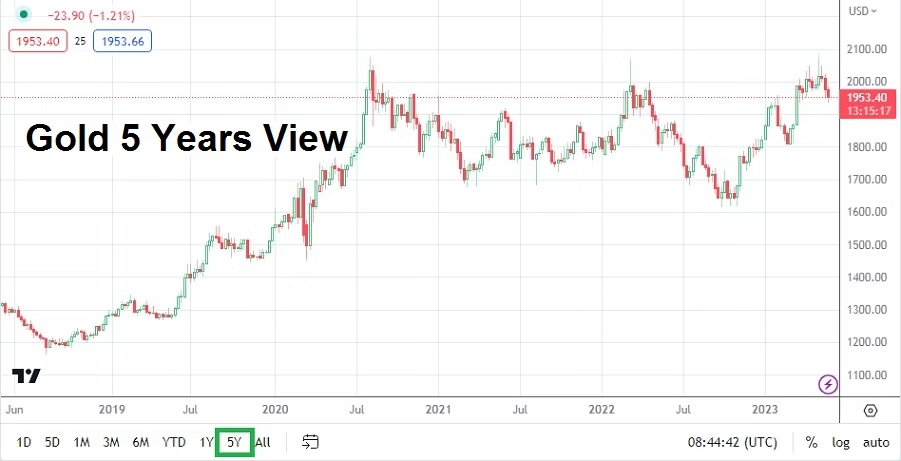
Gold Five Years Chart as of 26 May 2023

Higher taxes frequently stymie businesses and make it harder to hire employees because the expenses become too big. As an example for what the future could look like in the States turn your eyes to Chicago, where elected city leadership is considering implementing a ‘head tax’ in which businesses would need to pay a fee on each person it employs. The tax situation is getting so ridiculous in Chicago, that long time economic juggernauts like the Chicago Mercantile Exchange are grumbling and threatening to leave because of “ill-conceived” policies.

Likewise, the U.S government seemingly doesn’t understand that spending cannot be replenished by tax collection alone. Actual cuts to spending need to take place. It is called reducing the deficit. The naive will eventually be made to see the light painfully.

The Ramifications for the U.S could be Economically Untenable

U.S interest rates which have been raised the past year and a half, have affected mid and small sized banks and the amount of money the U.S government has to pay on maturing bonds because of higher borrowing costs. Fitch Ratings has recently whispered publicly they may be forced to downgrade U.S debt offerings, this if the U.S government doesn’t increase the amount of money it is legally allowed to owe. Pause for a second here, do you see the absurdity in this clown show? In other words a rating service company is OK with the debtor being allowed to ‘borrow’ more money from itself that it does not have – in order for that same debtor to be allowed to ‘promise’ it can repay its debt at a later time.

The U.S government keeps allowing debts to grow and creating entitlements as if this has no effect on inflation. Quantitative easing and stimulus packages initiated by the U.S government artificially kept the Gross Domestic Product figures looking positive and the equity markets happy for more than a handful of years. However, the proverbial ‘can’ has been kicked down the road so many times it is ready to disintegrate. The debt problem is simply being passed down to the children and grandchildren of the U.S, or so the current leadership seems to hope. But what if the debt problem explodes now? This generational problem is systematic globally, other governments practice equally bad or worse fiscal policy. Politicians do not like to walk around with empty hands.

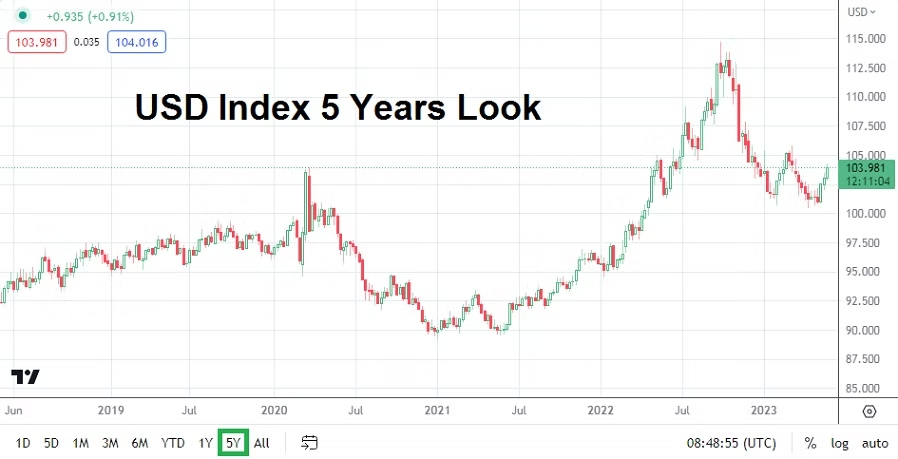
USD Index Five Years Chart as of 26 May 2023

The Clock is Ticking Loudly and Some Investors are Paying Attention

The clock is ticking in the U.S and unless they can prove expenses can be managed better, they are on a perilous road to becoming a regular nation among others, that is looked upon with scorn and derision because they cannot pay their debts. The dominance of the USD will be punished and shattered if they do not stop the nonsense. The dollar’s status as the reserve currency of the world has been slipping incrementally for a couple of decades and this will continue if the U.S government does not seize the problem and find solutions. A failure to show budgetary sanity and decrease expenditures will eventually cause something many U.S citizens do not want, relegation to the status of a ‘regular’ nation. The attitude of, “I remember when” could become a refrain heard in the U.S sooner rather than later.

The U.S is in a precarious place and sunshine in many respects is not on the horizon. Financial institutions supposedly believe the U.S debt ceiling will be taken care of in the coming days or weeks. However, a debt ceiling agreement is not the correct bandage for a broken leg, the problem is much larger. Debt should not be allowed to continuously grow. If the situation gets worse, some nations sitting on the geopolitical fence may shift their alliances depending on the ability of mutual relationships to help deliver economic stability.

post40

USD/INR: Narrow Price Range as Nervous Sentiment Exhibited

USD/INR: Narrow Price Range as Nervous Sentiment Exhibited

The USD/INR has delivered a rather narrow price range the past four days of trading as the currency pair awaits impetus from crucial U.S risk events.

The USD/INR is trading near the 82.7000 ratio as of this writing. While the currency pair over the past month has seen a rather incremental climb higher, the past handful of days has seen rather sideways price range emerge. Talk about Reserve Bank of India intervention has been discussed widely and this has caused speculative caution too. However, risk events from the U.S which will be delivered soon are also a catalyst for conservative trading in the USD/INR and broad Forex markets globally.

Trading Tip Regarding Bias that Forex Speculators should try to Avoid

A very important aspect for USD/INR traders to consider is that they should remove any bias they may feel personally regarding the Indian Rupee. Traders closely connected to the currency they are trading, particularly if they are citizens of the nation; tend to believe their national currency should always be stronger no matter the circumstances. This notion of bias does not always work out well for traders with a nationalist leaning.

The Indian Rupee is no different regarding its ability to maneuver against the USD like many other major currencies. While the Indian Rupee certainly has its own financial capabilities, the USD remains the dominant currency on the block and affects most outcomes. If a trader can remove their bias and love of their nation from their trading sentiment, this often makes it easier to have a more realistic viewpoint about potential price direction in the short-term and long-term. The Indian Rupee is an important global currency, one that will grow in stature, but traders should remember current circumstances too.

USD/INR Five Day Chart as of 24th May 2023

U.S Debt Ceiling Concerns and the Upwards Drift of the USD/INR Causing Problems

Concerns are being voiced regarding the failure of U.S debt ceiling talks, the inability to not find an agreement in the U.S Congress is problematic. June 1st is supposedly the date the U.S government must reach a conclusion. The past week has seen signs from Democrats and Republicans acknowledging the importance of finding a settlement, but political rancor still is making a mess of the situation. Trading institutions are certainly not happy about the loud debate and could ‘punish’ financial assets more over the short-term until a debt ceiling compromise is reached.

The move higher in the USD/INR has likely caught many speculators by surprise the past month. However, the drift upwards has correlated to the broad Forex markets the past couple of weeks, this as the USD has turned stronger against many major currencies. The USD/INR essentially went from 82.1200 to its current price since the 15th of May. The Forex pair was trading near 81.6000 on the 4th of May. The temptation to sell the USD/INR the past couple of weeks has likely been strong as traders flirted with the notion technically that the currency would have to reignite its downwards path, but that clearly has not happened.

Today and the remainder of the week, the U.S has important risk events on the calendar. U.S Treasury Secretary Janet Yellen will be speaking and will certainly be asked to state her opinion on the debt ceiling talks. She will likely try to offer a neutral tone and not scare the financial markets. However, she can certainly be counted upon to say it is important to reach an agreement so the U.S can continue paying its financial obligations.

Perhaps more important than Treasury Yellen’s talk this afternoon, will be the U.S Federal Reserve’s FOMC Meeting Minutes publication later in the day. Financial institutions globally are nervous about the Fed’s interest rate outlook regarding its June Federal Funds Rate decision. Many analysts have predicted the U.S central bank will halt interest rate hikes and not increase on the 14th of June. Yet inflation data from the U.S remains problematic. Today’s FOMC Meeting Minutes text will provide insights regarding the Federal Reserve’s last meeting and give an inside look towards its leanings for a potential hike or pause.

USD/INR traders should also be aware that important Gross Domestic Product data will come tomorrow which will offer details regarding U.S growth. On Friday the U.S will release Core Personal Consumption Expenditure statistics and this will provide inflation results, and the outcome will certainly influence the U.S Federal Reserve’s June interest rate decision.

post39

AI Noise and Manipulation Feared as a Potential Threat

AI Noise and Manipulation Feared as a Potential Threat

Yesterday’s AI generated graphic which claimed an explosion had happened around the Pentagon in Washington D.C. sent equity indices into a brief selloff mode. However, the graphic was soon proven to be false news as people in Washington confirmed there had been no explosion.

AI has the capacity to cause surprise storms if some people try to trigger manipulation in the financial world and elsewhere by using ‘false’ data and graphics. ‘Bad actors’ within A.I will likely be compared to ‘ransomware’ folks in the world of high-tech, and people and institutions will have to react quickly to distinguish between fact and fiction. The ability of AI to manipulate the markets yesterday is only the beginning and we need to be prepared for more stories like the Washington D.C fake.

AI Mania is Building in the Media and People are Concerned about Wrong ‘Facts’

AI machine learning is coded by people and some of them are prone to bias, which raises the specter of bad input being used in systems that serve the public and clients in an ill-fated manner. Putting all of our trust into an AI system is wrong minded, just as we do not put all of our trust into Wikipedia information, and are aware facts should be checked on within a variety of sources.

Yesterday’s deep fake AI graphic highlights the need for financial markets to discern in a timely fashion attempts to manipulate narrative. Certainly some traders got hurt during yesterday’s reaction to the false report of an explosion in Washington. The dishonest graphic made instant news globally, and social media gadflies raced to report ‘the explosion’ and then had to quickly say they had been tricked. Data bias in AI is just as problematic and perhaps more dangerous, because what is presented as facts will always have to be given critical consideration by its users.

The prospect of bias producing arrogant AI systems ‘tools’ full of hubris as they assert ‘truth’ could develop and create self-perpetuating machines full of wrong details. This could happen as AI searches the internet for information and relies on data that is poor, and uses statistics from its own system posted elsewhere which could manifest falsehoods. The prospect of AI using its own potentially bad coding, and previous input distributed into other information networks in theory could lead to stubborn ecosystems which insists that they are correct, when they are actually not accurate.

Middle of the Road Results will make Users Choose Direction Sometimes

Public AI systems tend to frequently deliver ‘middle of the road’ result aggregates so they do not offend, leaving the users with mixed insights and without a firm stance. Perhaps if users understand this circumstance it can be perceived as a good outcome, because the person will have to do their own critical thinking while choosing direction. There is a danger that politically correct thinking which is coded into AI could lead to more vanilla and less flavor. The fear of offending people with facts may become a danger for AI, and coders will have to decide how to program searches as they produce objective and subjective outcomes.

Learning has changed as the internet has grown more robust with ‘facts’. Students often do not feel it is necessary to master particulars by reading a range of books. Instead they tend to rely on their mobile phones and laptops for their knowledge, avoiding in depth study on their own which would offer more insights and create critical thinking. This can and does lead to the use of ‘expertise’ produced by the internet which is incorrect.

Let’s also consider the notion that public use of artificial intelligence has won a large amount of publicity in the past year, but machine learning capabilities have in fact been used for a long time. The media has done a fairly good job of stirring the masses into a furor, and solid marketing has led to AI being the center of conversation the past handful of months.

AI is far from perfect because it is being built by flawed humans. In 1952 IBM via Arthur Samuel built a program allowing a computer to play checkers and learn how to improve its outcomes through ‘play’. In 1997 an IBM system called Deep Blue beat world chess champion Gary Kasparov in a six game match. The 45 year gap should be noted as we contemplate how AI will develop in the future.

post38

FOMC Meeting Minutes and Key Growth Data Coming this Week

FOMC Meeting Minutes and Key Growth Data Coming this Week

Monday the 22nd of May, Japan Core Machinery Orders – which will likely have very little impact on the markets – not even the USD/JPY should react too much. Although it should be noted last month’s figure was negative and this month’s result is expecting a better outcome.

Monday the 22nd of May, E.U Consumer Confidence – forecast to produce a negative number, but this statistic doesn’t usually get much of a response in the financial markets unless there is a shocking result.

Tuesday the 23rd of May, E.U French and German Manufacturing and Services PMI, along with the broad E.U results – the manufacturing statistics from France and Germany are expected to come in slightly better than last month’s results but remain in negative territory.

Tuesday the 23rd of May, U.K Manufacturing and Services PMI – traders will watch these results after the bad GDP numbers from Britain almost two weeks ago.

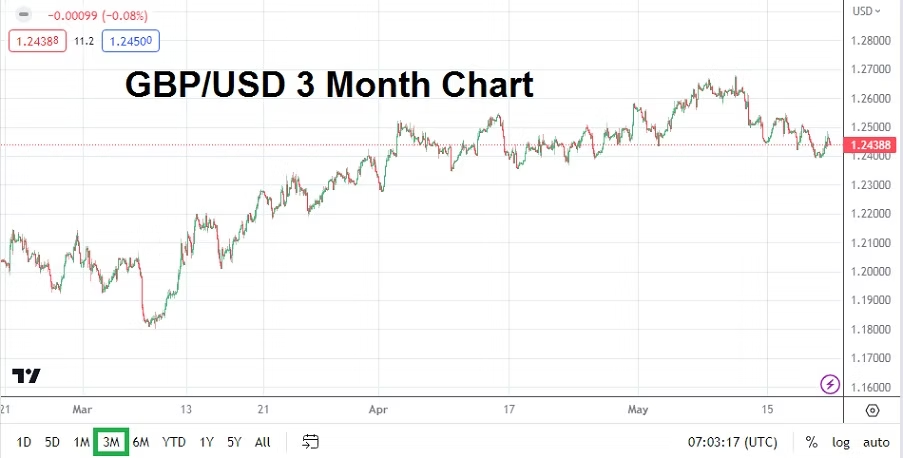
GBP/USD Three Month Chart as of 21st of May 2023

Tuesday the 23rd of May, U.S Flash Manufacturing and Services PMI – the reports could prove of interest and cause a bit of a tremor in the market, but unless there is a big surprise investors will remain cautious as they anticipate the next day’s potentially big risk events.

Wednesday the 24th of May, U.K Bank of England Governor Bailey – will be speaking at two events and could stir the GBP/USD with his comments on the British economy and inflation.

Wednesday the 24th of May, U.S Treasury Secretary Janet Yellen – will be speaking at a Wall Street Journal event, where she will be listened to for any comments on the ‘U.S debt ceiling” crisis. Yellen is a ‘trained’ speaker and she will try not to scare financial institutions who will have some leaders in attendance.

Wednesday the 24th of May, U.S FOMC Meeting Minutes – the report which will outline the U.S Federal Reserve’s thinking regarding its recent interest rate hike and what it might be considering regarding June could impact the marketplace. The report is published late in the day, but financial institutions will certainly wait for the publication and react. While the FOMC paper is sometimes considered ‘noise’, this report will be important because of the nervous sentiment which exists in markets like Forex and equity indices as they deal with a lack of clarity.

Thursday the 25th of May, U.S Preliminary Gross Domestic Product – the growth (or lack of growth) numbers from the States will be watched intently. A muted projected gain of 1.1% is anticipated by some analysts.

Thursday the 25th of May, U.S Preliminary GDP Price Index – this report will deliver insights regarding inflation in the U.S and should be given some attention by traders.

Friday the 26th of May, Core PCE Price Index – the inflation numbers should be watched. Any surprise above the anticipated 0.3% forecast could cause an affect in the financial markets.

post37.1

Nervous Contradictory Trading Winds for Behavioral Sentiment

Nervous Contradictory Trading Winds for Behavioral Sentiment

Behavioral sentiment in the broad financial markets is nervous, and mixed results in the major asset classes are likely causing retail traders to feel uneasy. Most day traders try to perceive which direction they should lean based on price momentum while looking for fast profits. The current state of the broad markets are making decisions difficult for retail traders.

A healthy dose of nervousness at this moment might be a good thing for speculators and keep them conservative. Swirling results in Forex and commodities are causing plenty of problems for traders who instinctively like to pursue buying positions because of the human tendency to be optimistic.

Federal Reserve Causing Headaches for Smaller Banks and Forex

Forex markets have been choppy since the beginning of February 2023, when the U.S Federal Reserve surprised many people with continued aggressive rhetoric. The U.S central bank has backed up its ‘tough’ talk as it ‘fights’ inflation with more interest rate hikes. Clarity regarding a potential June hike from the Fed remains problematic with no certain answer yet. For the moment there seems to be a belief there will be a genuine pause, which may be fueling better returns for U.S equity indices, but there are no guarantees. Behavioral sentiment remains fragile.

The detrimental effect from higher interest rates on mid and small size banks in the U.S remains harmful. Mid and smaller corporate banks continue to struggle with the increased Federal Funds Rate. Bad business decisions within these banks have made it difficult to make profits in an environment when money is no longer ‘free’, this as many of their depositors look for better returns.

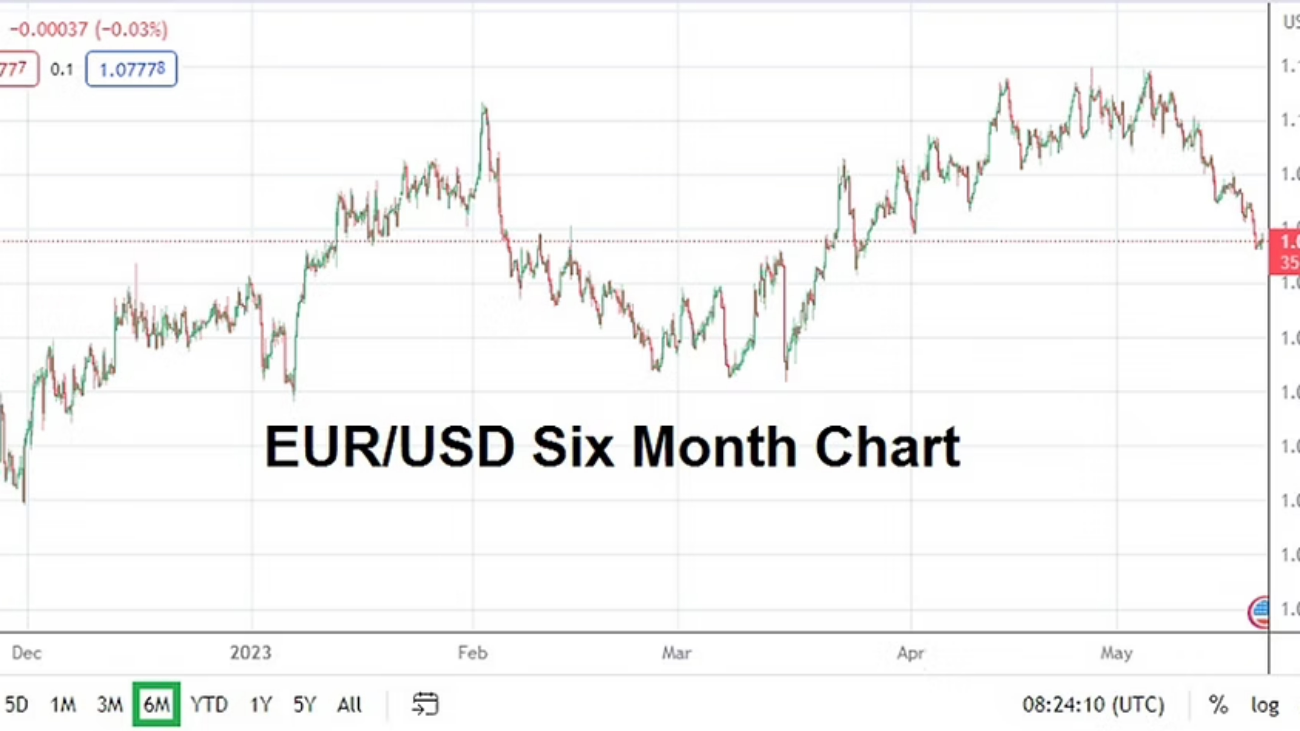
A six month chart of the EUR/USD below shows how the EUR started to climb in the fall of 2022, but then began to run into headwinds when financial institutions started to reconsider the seriousness of U.S Federal Reserve policy earlier this year. Analysis regarding the timing of the Federal Funds Rate forecast to actually start becoming dovish has proven problematic.

While the EUR/USD still maintains plenty of its gains, the current price of the the currency pair is below early February highs. The EUR/USD was trading near 0.95700 in late September of 2022, and the price as of today near 1.07800 is a vast improvement for the EUR. However, the choppiness of the Forex market the past few months has not been easy for day traders who have suffered from sudden reversals frequently in many of the major currency pairs.

EUR/USD Six Month Chart as of 19th May 2023

The KRE regional bank index below shows the dramatic drop in value of the mid and small size banks in the U.S the past year, and the sector certainly still has financial concerns and shadows which are causing pressure on their corporate share values. Stubborn inflation remains and the desire of the U.S Federal Reserve to attack rising costs with higher interest rates remains a serious concern.

KRE Regional Banking Index One Year Chart as of 19th May 2023

Stock Markets Suddenly at One Year Highs as Investors Seem to Return

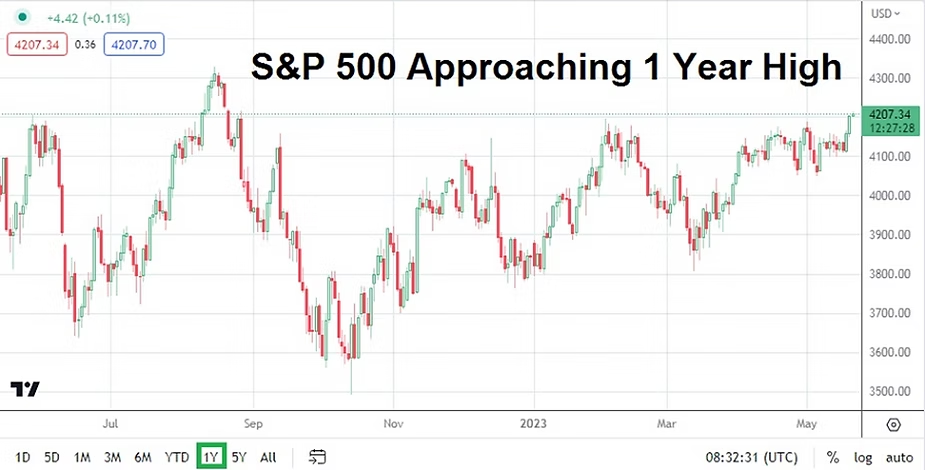
Is the S&P 500 a harbinger of things to come or are investors in the index being too optimistic? Day traders likely stay away from the S&P 500 many times because they are mostly trading the index via CFD’s and this can prove expensive regarding transactions, they are not long-term investors – meaning they do not like to make bets that take awhile to materialize. The results from the past year and a half in the stock markets have made speculators nervous regarding bets on equities.

However, institutions and long-term investors buy and hold the S&P with a vision towards the future; they also reap the rewards of its dividends. The ability of the S&P to be trading at nearly one year highs is curious. The improvement in equity values in the indices may be a sign that ‘smart money’ continues to invest in the stock market for the long-term, even during what is perceived as a fragile period of behavioral sentiment. Financial institutions may also be betting on the U.S Federal Reserve having to become more dovish regarding interest rate policy in June and looking forward.

S&P 500 Index One Year Chart as of 19th May 2023

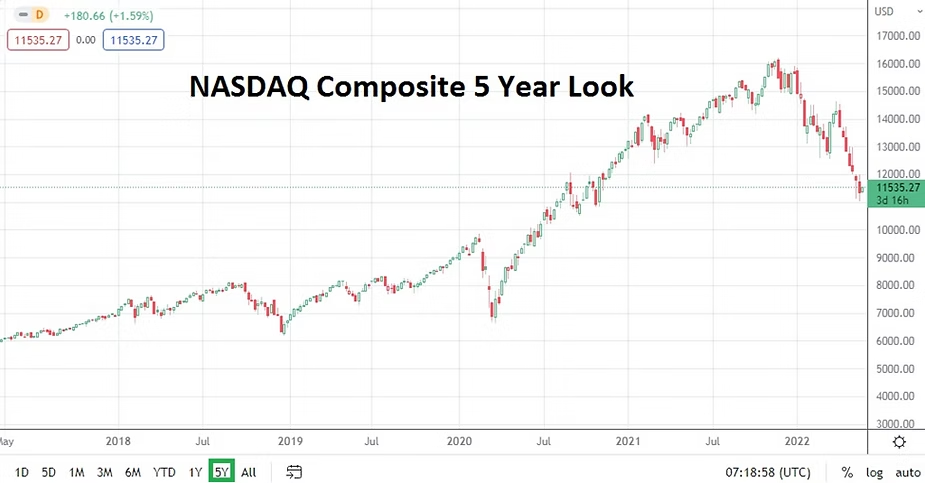
Results on the NASDAQ 100 may be surprising to many and the index is trading at one year highs, and though like the S&P it is still under all-time highs from late 2021 and early 2022, investors have shown a taste for investing in the ‘hi-tech’ index again. While this may contradict the behavioral sentiment of Forex and the results in the mid and small size banking sector, the NASDAQ 100 does point out money is still being invested and might be an indication that day traders need to be more patient, more optimistic about the coming months and year.

While a recession might be looming, large companies have started to lay off workers and scale back on bonuses in an effort to fight against reduced profits. The narrative from the media may be negative in many cases, but many long-term investors tend to look at more conservative fiscal policy in companies as a good practice and a sign they should invest.

Perhaps the market is going through a needed case of the jitters and the U.S indices are showing that brighter days are ahead, even if there are storm clouds that still must be dealt with regarding inflation and possible recession.The long-term horizon tends to always be more optimistic. Day traders may not be able to take advantage of quick hitting trades, but what about changing perspective and looking for more patient results by being more conservative as a speculator? Or maybe investors in the stock market are wrong and another violent selling surge will return into equities, but what if it doesn’t.

NASDAQ 100 Index Five Year Chart as of 19th May 2023

There is a fear among mid-size brokers that trading volumes in many sectors are dropping. Showing cautious investor sentiment on the retail front – which may be a healthy reaction in many respects because it is hard to read momentum right now. Day traders tend to get killed by the daily gyrations of Forex and equities in choppy markets because they are using too much leverage. However, historically when retail traders have turned cautious, this is when institutional trading houses have tended to do remarkably well. Investment houses can take on more risks in markets that are perceived as nervous and fragile, because they have a longer time horizon and more cash to absorb momentary losses.

Commodity prices are also intriguing because after hitting highs nearly one year ago in May and June of 2022, the ratios of many broad commodity indices have come down and values are traversing near late 2021 levels. Which brings us to the consideration that global demand for physical resources are limited because corporations are not making large purchases of commodities, this as they wait on better manufacturing demand for their products. This may appear contradictory and create nervous behavioral sentiment for traders, but cautious business practices are a way to make sure there is enough money for the future when conditions turn optimistic again.

post36

Wemby to the Spurs, but is VW 1st Round in Fantasy Basketball

Wemby to the Spurs, but is VW 1st Round in Fantasy Basketball

The San Antonio Spurs landed the top NBA Draft pick which will be held on the 22nd of June. The top pick will be Victor Wembanyama. There will be no drama regarding the choice. After Wembanyama is named at the Barclays Center in New York, the audience could get a surprise regarding the selection of the number two pick which seems to a decision between Scoot Henderson and Brandon Miller.

When the San Antonio Spurs took David Robinson in the 1987 NBA Draft they improved by 35 wins in his first season, this after only winning 28 games in the 86-87 season. When the Spurs drafted Tim Duncan in the 1997 NBA Draft, their win total during an injury plagued year for Robinson in the 96-97 campaign was 20 wins. The Spurs won 56 games in Duncan’s first year and made it to the Conference Semi-Finals when they lost to the Utah Jazz.

The Spurs have had amazing luck being able to draft Robinson, Duncan and now Wembanyama. The question is how many games will they improve by during the 23-24 NBA campaign? San Antonio won 22 games this past season. A surge of 25 additional wins would not be shocking. Can the Spurs win 50?

An other interesting question many folks who play fantasy basketball are starting to ask is, will you be willing to take Victor Wembanyama in the first round of your fantasy league? Will he be good enough to make an immediate impact?

VW is certainly going to be entertaining, but are you bold enough to take him in the first round? You might be inclined to take Nikola Jokic, Luka Doncic and Antetokounmpo before Wembanyama, but will you let him slide much past those fellows? It is likely VW will go in many first rounds of fantasy basketball this coming season, selected by fans who have been following his development in Europe. Folks who want to say Victor Wembanyama is only 19 years old should remember he has already played three years of professional basketball in Europe.

post35.1

Sudden Bullish Momentum of Indian Rupee Raises Questions

Sudden Bullish Momentum of Indian Rupee Raises Questions

The past week of trading within the USD/INR has seen a bullish trend emerge, this while many speculators were likely starting to believe lower price realms and targets were possible.

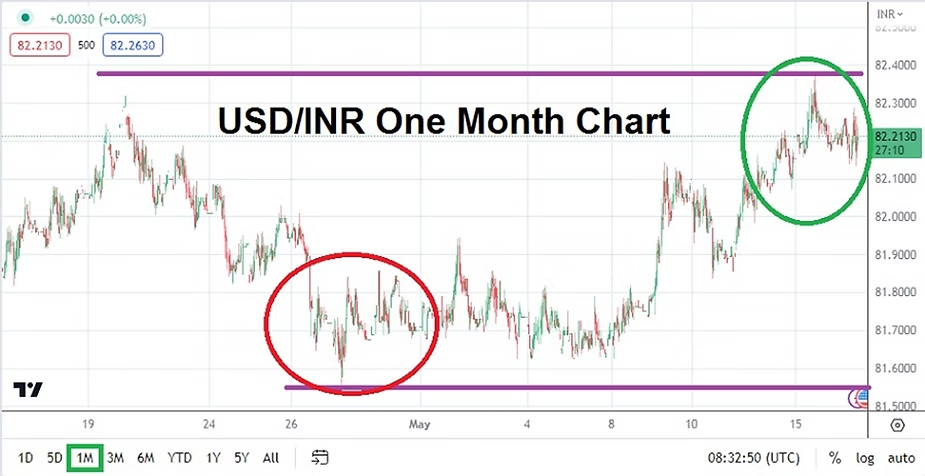
The USD/INR is trading near the 82.2200 mark as of this writing, which is within the higher elements of its one month price range. Volatility within the USD/INR has been abundant the past week and has likely proven expensive for speculators who were pursuing the currency pair with visions of more bearish price action to target. Early May values of the USD/INR certainly tested lows and likely fueled the appeal of selling positions. However, the early May lows within the Forex pair tested the 81.6260 mark, while never actually hitting April’s lowest values which tested the 81.5500 ratio on a couple of occasions.

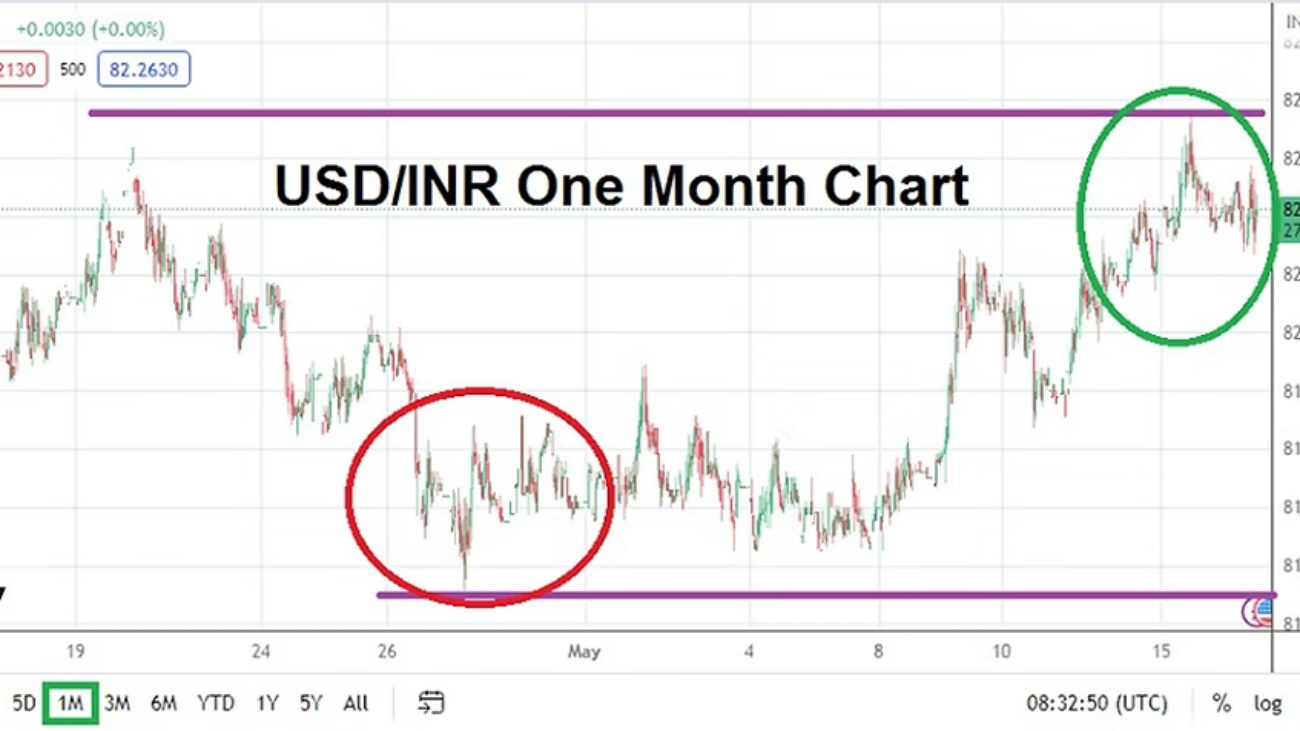
USD/INR One Month Chart as of 16th May 2023

One of the dangers of trading is always the potential for a sudden change in behavioral sentiment. The lows in the USD/INR seen on the 8th of May, which is only a little bit more than a week ago, highlights the price velocity the currency pair has demonstrated. While many speculators are trying to understand why the sudden shift in dynamics has taken place, it is important to remember the USD/INR was actually trading above its current values in February, March and early April of this year.

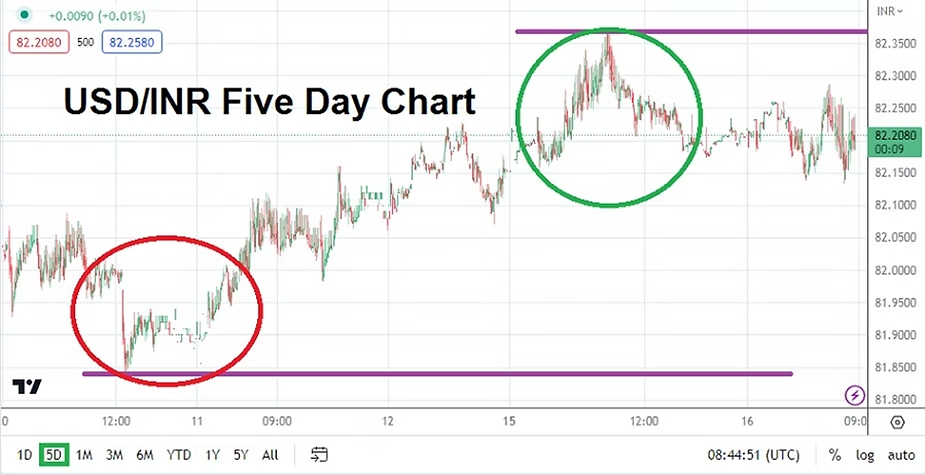
USD/INR Five Day Chart as of 16th of May 2023

The Difference between Day Traders and Financial Institutions

The outlook of speculators within the USD/INR is totally different than financial institutions. This is because most speculators are short and near-term traders. They do not have deep pockets like financial institutions – which can hold the USD/INR in a chosen direction for a long period of time and simply allow the currency pair to trade until they want to cash out of a position. Day traders are also using leverage a lot of the time, and the combination of leverage with limited available trading funds makes the daily gyrations of trading volatile and frequently dangerous.

Short-term traders look at the USD/INR with a technical viewpoint much of the time, financial institutions are likely maneuvering in the Forex pair with fundamental perspectives and inside knowledge based on known transactions they have to accomplish.

Many financial houses believe the U.S Federal Reserve will have to become less aggressive regarding its hawkish interest rate stance it has maintained the past year and a half. However there is enough nervousness within the broad Forex markets to make things very difficult for day traders, this as the potential for risk adverse trading based on economic data results move currency pairs including the USD/INR constantly, particularly if a financial institution needs to react quickly.

The ability of the USD/INR to move downward and hit support depths at the beginning of last week, may indeed be a sign that financial institutions have a belief the currency pair should be lower. However, the recent strength of the USD the past handful of days may have been brought on by the simple notion that financial houses grew momentarily nervous. There is also the possibility that large corporations made transactions in the USD/INR that moved the price higher. Day traders must understand there are forces within the USD/INR that are much stronger than their opinions. The USD/INR is not a widely traded currency pair in the open markets, it is difficult for instance to trade the currency pair in a speculative manner within India and traders in the nation face restrictions, which forces many Indian speculators who want to wager on the USD/INR to seek foreign brokers abroad.

Data and Rumors Can Sometimes be False Flags for USD/INR Traders

Some analysts have claimed the recent move higher in the USD/INR has taken place because of factors like a fear of the U.S debt ceiling not being raised in time and causing chaos in the financial markets, however this if true is likely only a short-term worry. It is very unlikely the U.S government is ‘idiotic’ enough to allow the U.S debt ceiling to not be taken care of within Congress. It would be very problematic for the U.S Federal Reserve and Treasury to have to explain why U.S bonds are suddenly difficult to repay. In other words, the U.S debt ceiling is likely to be taken care of and many financial institutions with a long-term view know this, although it is a possibility they could ‘punish’ the financial markets and act in a risk adverse manner in the short-term.

Data from the U.S yesterday highlighted another important aspect again regarding behavioral sentiment. The U.S Empire State Manufacturing Index reading came in with a negative number of minus -31.8. The expected result was -3.7, the report shows that New York business activity and outlook is worse than forecasted. This doesn’t mean the entire U.S manufacturing sector will have the same results, but it underscores the potential for a U.S recession to possibly occur. Today the U.S will release Retail Sales numbers. If these numbers come in with a negative result this could spur on bearish sentiment within the USD/INR in the near-term, particularly if financial institutions feel the results are more evidence the U.S Federal Reserve will have to pause interest rate hikes in June. USD/INR day traders should be ready for more choppiness. But there is reason to suspect resistance above in the currency pair may start to prove durable from a speculative point of view considering the trading results the past month in the USD/INR.

Traders wishing to pursue the USD/INR need to use solid risk management. Entry price orders will help traders get a ‘fill’ they are expecting and the use of stop loss and take profit tactics are highly encouraged. The past week of trading in the USD/INR has likely tested the nerves of many speculators and the assault on highs is alarming, but downside price action may be ready to reignite if U.S economic data continues to falter in the near-term.

post34

Economic Data and Underlying Factors this Week

Economic Data and Underlying Factors this Week

Monday 15th of May, U.S Empire State Manufacturing – N.Y manufacturing sector report regarding business conditions, which serves as a sentiment reading. A lackluster outcome could put a bit more pressure on the Federal Reserve to lessen their aggressive stance, and certainly point out nervousness among U.S corporations regarding profits.

Monday 15th of May, U.S TIC Long-Term Purchases – report shows results from between domestic and international purchases of U.S Treasuries. While not considered a major data release, this one could give an impetus to investors in U.S banking sector who may find intriguing potential correlations. An increase in the number of domestic purchases compared to international buyers would be of interest. Large dark shadows on the U.S mid and small size banking sector still exists, pressures boil as depositors are still considering parking their money elsewhere, and corporate share values remain fragile.

Tuesday 16th of May, China Industrial Production and Retail Sales – China economic results are a barometer of global health due to the fact the nation is a large supplier of worldwide products. Industrial Production results if they are lagging in China, would indicate decreasing demand and global economic weakness. Retail Sales figures from China is an indicator of consumer sentiment within the nation.

Tuesday 16th of May, U.S Retail Sales – results indicate buying power and confidence among U.S consumers. Underlying numbers also focus on how Americans are spending, in other words – are they paying the full price being asked or are they looking for discounted goods as inflation continues to hit wallets.

Wednesday 17th of May, Japan Preliminary Gross Domestic Product – No real surprises expected from Japan’s growth numbers, but the results are always appealing to economists who debate the nation’s ability to remain among the wealthiest without any truly outstanding GDP numbers produced in years. In other words a lot of noise for traders without much real impact.

WTI Crude Oil – One Month Chart as of 14th May 2023

Wednesday 17th of May, U.S Crude Oil Inventories – another report that seems important for commodities traders, but without any real surprises has limited impact. Many times even among WTI Crude Oil speculators, they are often looking at other data they have gathered like production numbers from OPEC, Mexico and Canada. And also oil tanker movements around the globe.

Thursday 18th of May, Australia Employment Change and Unemployment Rate – outcome from these numbers could factor into AUD/USD momentarily, but without a major surprise will likely have little impact on global speculators for more than a couple of hours.

Thursday 18th of May, U.S Existing Home Sales – housing numbers are under some scrutiny as they reflect behavior of current U.S home owners as they react to growing interest rate pressures on mortgages and stay within their current homes to avoid higher borrowing costs.

post33.1

Spiral Downward of South African Rand as Confidence Weakens

Spiral Downward of South African Rand as Confidence Weakens

The USD/ZAR has hit a bad milestone today as the bullish trend of the currency pair has toppled the 19.00000 mark momentarily, this as the USD has shown weakness against many other major currencies in the past week because financial institutions are positioning for a more dovish tone from the U.S Federal Reserve as they wager the U.S central bank may pause its interest rate hikes. In other words, the South Africa Rand is trading in the wrong direction.

The USD/ZAR is now languishing near the 19.00000 ratio as behavioral sentiment continues to show signs of nervous exhaustion regarding the perceived political ineptness of the South African government. Nearly one month ago on the 14th of April, the USD/ZAR was slightly below 18.00000.

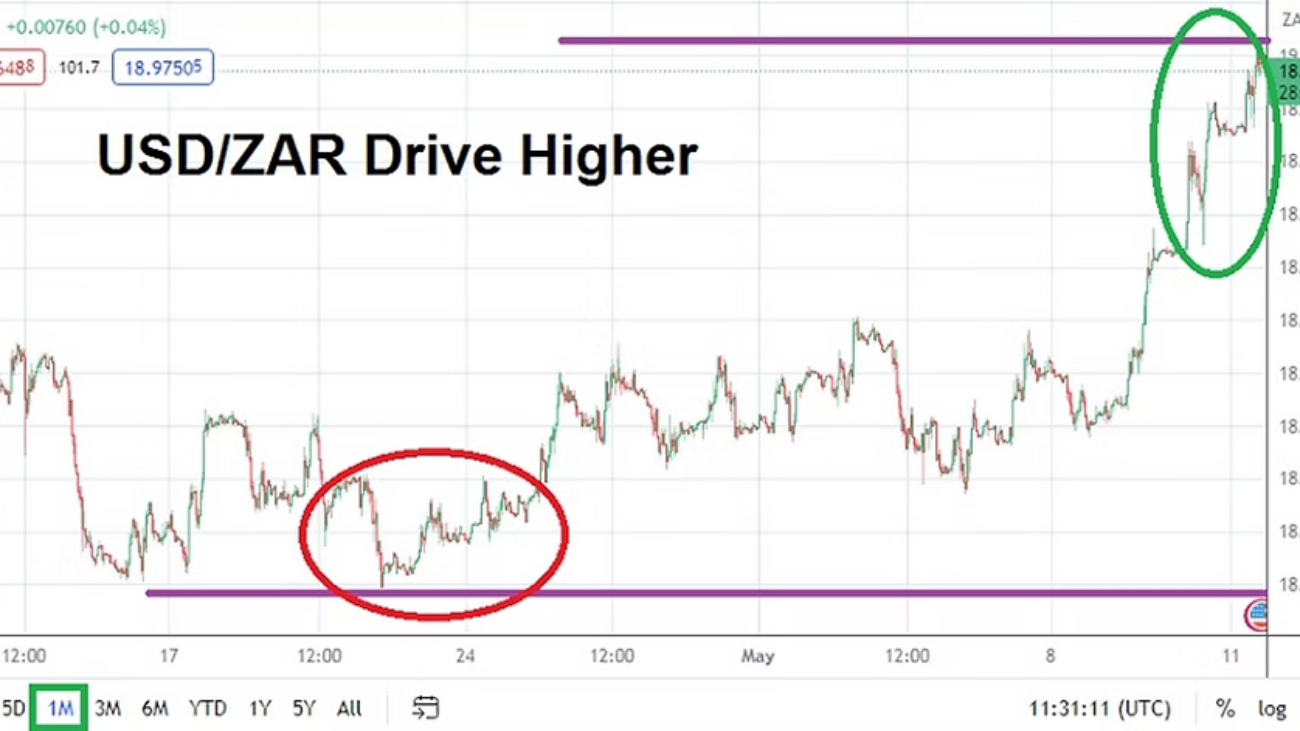
USD/ZAR One Month Chart as of 11th May 2023

South African Government is Perceived as Corrupt and Ineffective and this Hurts the USD/ZAR

The non-correlation of the USD/ZAR to the broader Forex market is not happening because financial institutions believe in the overall long-term strength of the USD, it is happening because dark shadows loom over the South African Rand. The darkness hovering over the Rand is occurring because of mismanagement within the South African political system, and it’s inability to deliver a reliable electricity supply to citizens and businesses domestically due to a combination of corruption and criminal activity.

The people of South Africa have plenty to be proud of because their country is one of the most beautiful in the world geographically, and it has abundant natural resources. The nation has been a pioneer regarding science and commercial enterprise in the past. However, political opportunism and neglect have led to a quagmire that has muddled the nation’s infrastructure into a nightmarish state. Loadshedding – which is the South Africa government’s term for rolling blackouts, continues to get worse and winter is approaching. Outages of electricity have steadily hit Stage 6 lately with worse loadshedding feared on the horizon. There looks to be little respite coming as electrical stoppages are happening two to three times a day, and communities are going without electrical power for up to four hours during each halt of energy. These rolling blackouts also happen daily, it is not like they are only happening once a week. Businesses of all sizes are being hurt because of a lack of production. Businesses that burn diesel via generators to power their enterprises are suffering financially due to the high costs and a dramatic loss of profits.

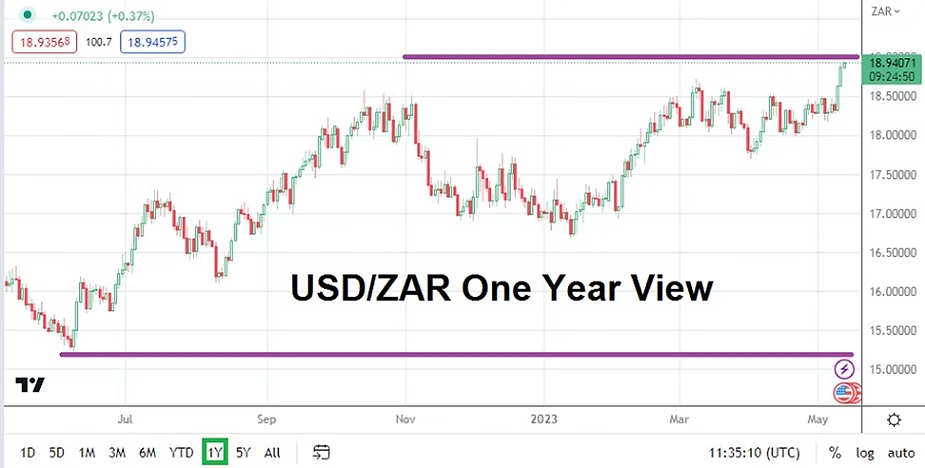
USD/ZAR One Year Chart as of 11th May 2023

Long-Term Outlook is in Question as USD/ZAR suffers from Political Peril

The loss of value in the USD/ZAR has been going on for a long time and no technical charts are inspiring confidence. The South African Rand which used to be considered among the best currencies within developing nations is now compared unfavorably. Mismanagement of the economy within South Africa has led the Rand to be associated to the likes of the Turkish Lira. Financial institutions have little reason to trust the effectiveness and long-term value of the South African Rand until concrete political changes are made, which end alleged corruption and cronyism and that seemingly look blindly on criminal activity within crucial infrastructures.

USD/ZAR Five Year Chart as of 11th May 2023

The South African Rand is not the Argentine Peso in terms of misdeeds and mismanagement, but there is a growing fear that political ineffectiveness, a lack of transparency and a poor reputation are making economic conditions worse. The last and only time the USD/ZAR traded above the 19.00000 level before was at the height of coronavirus. Yes, the value of the USD/ZAR improved from that apex of late March 2020, and the currency pair touched the 13.45000 ratio in late May of 2021. However, nearly two years later the USD/ZAR has returned to a value that shows a supreme lack of confidence exists regarding the outlook for the South Africa economy, this as Gold trades above 2000.00 USD per ounce.