US Cash Index 20260617

Forex and the Fed Chair: Kevin Warsh in the Spotlight Later Today

New Federal Reserve Chairman will Cause a Reaction in Forex Today

I offer readers a ‘what if’ proposition ahead. These are my opinions and I am simply trying to give my perspective on what may happen in the Forex market in the coming hours.

The Fed Press Conference later today will be must watch television for Forex traders, including retail speculators, large players and financial institutions. Federal Reserve Chairman Kevin Warsh will make his first appearance after a FOMC rate decision. Dynamic conditions in the broad Forex market should be anticipated – that doesn’t tell day traders much I know, keep reading, please. 

U.S inflation has sparked higher this as energy prices have ignited upwards and caused logistics, manufacturing and agriculture to become more expensive. The Bank of Japan raised its interest rate by a quarter of a point yesterday to 1.00%. However, these two bits of evidence doesn’t mean the Federal Reserve will increase its interest rate today. 

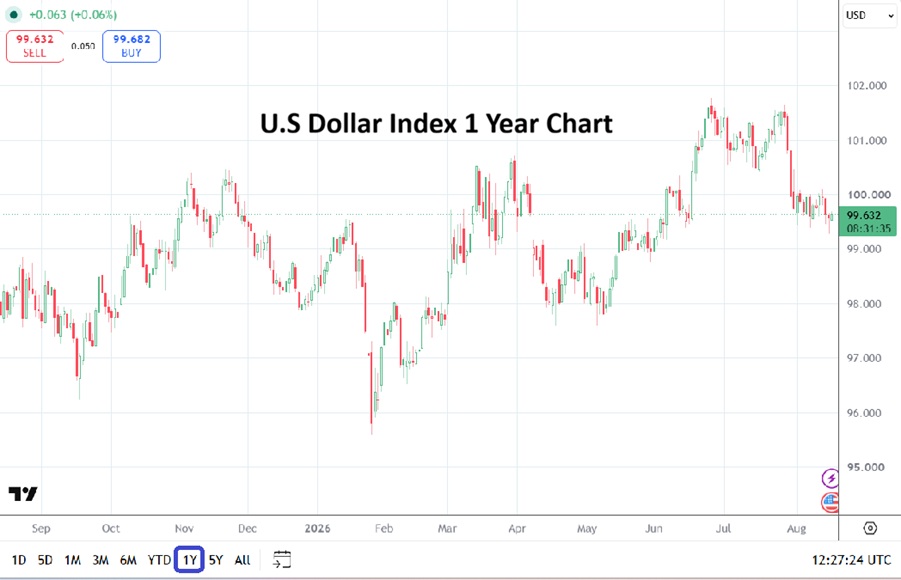
The U.S Dollar Index is trading near relative highs. The broad FX market is certainly cautious, but financial institutions may be leaning into the notion of USD centric weakness. Yes, the USD/JPY remains above 160.000+ for the moment, but the USD/SGD is flirting with its lower range and came within sight of the 1.28000 mark on Monday. So why is this important? Because folks are acting cautious before a potential storm.

U.S Dollar Index Six Month Chart as of 17th of June, 2026

Perhaps this will go down as an infamous egg on the face situation for me personally, but does Fed Chair Kevin Warsh really want to raise interest rates during his first FOMC meeting at the helm? Yes, Jerome Powell is still around as a voting Governor, but Warsh may find he has enough votes (and influence) to get a majority of other FOMC voting members to allow today’s decision to be a test case in favor of patience. 

If the Fed holds the Fed Funds Rate in place and announces it will use the near and mid-term as a trial period regarding their belief inflation will lessen, because it believes energy prices over the mid-term will erode rapidly, that may be enough to cause USD centric selling later today. The Fed will not use the word transitory I suspect, but an argument can certainly be made that now is the time to actually elucidate on the subject of transitory inflation.

Monday’s trading in the broad Forex markets showed that financial institutions bought into the optimism of an anticipated U.S and Iranian agreement and what it could deliver – a glut of Crude Oil, including lower costs for its ancillary products. Financial institutions were also relieved that U.S equity markets survived the launch of the SpaceX IPO certainly. While yesterday’s broad market trading turned cautious and demonstrated sideways action in Forex, many major currencies are traversing near curious values. Equities also went sideways for the most part on Tuesday.

The U.S Dollar Index is swimming within its higher terrain via a six month chart (per a look above), yet financial institutions – if they hear dovish sentiment from the new Fed Chair today could spring into action and sell the USD quickly. Day traders need to understand even if this occurs that it will still be ultra-dangerous to bet ahead of the Fed rate announcement and Press Conference. This because volatility leading up to and following the FOMC Federal Funds Rate decision will create large spreads in Forex and choppiness that small retail accounts cannot handle most of the time – particularly when too much leverage creates wildfires.

While the before and after of the Fed interest rate announcement will garner the headline news, and create a reaction on Wall Street for the S&P 500 and Nasdaq 100 immediately; it will be wise to pay attention to Fed Chairman Kevin Warsh a half hour later when he steps into the spotlight for the first time. There has been chatter that Warsh is not keen on trying to give too many signals regarding the Fed’s thinking regarding every move it is contemplating. 

This coincides with thoughts that Kevin Warsh and Scott Bessent believe in a more high-tech and pro-active approach to interest rate and monetary policy based on forward looking data. The consideration of a more dynamic approach to interest rates has not been widely considered by financial institutions quite yet. If the new Fed Chair surprises reporters and onlookers at the Press Conference today with a new philosophy on the way the Fed will work, this will set the stage for potentially large behavioral sentiment shifts that were not wagered on quite yet. In other words mid-term outlooks regarding U.S interest rate policy may change in a handful of hours more than many people think. 

Maybe I am wrong, maybe I am interpreting the political and financial landscape incorrectly, but these are my thoughts as a risk analyst – one who thinks the U.S White House would not mind seeing a weaker USD, a Fed that likely wants a different approach to interest rates – as they both hope for energy prices to lower (and may get their wishes fulfilled).

Copy and paste the text from AMT that you want to share

Indian Rupee 20260611

India Insider: Should the RBI Raise Interest Rates?

A Case for Higher Interest Rates In India

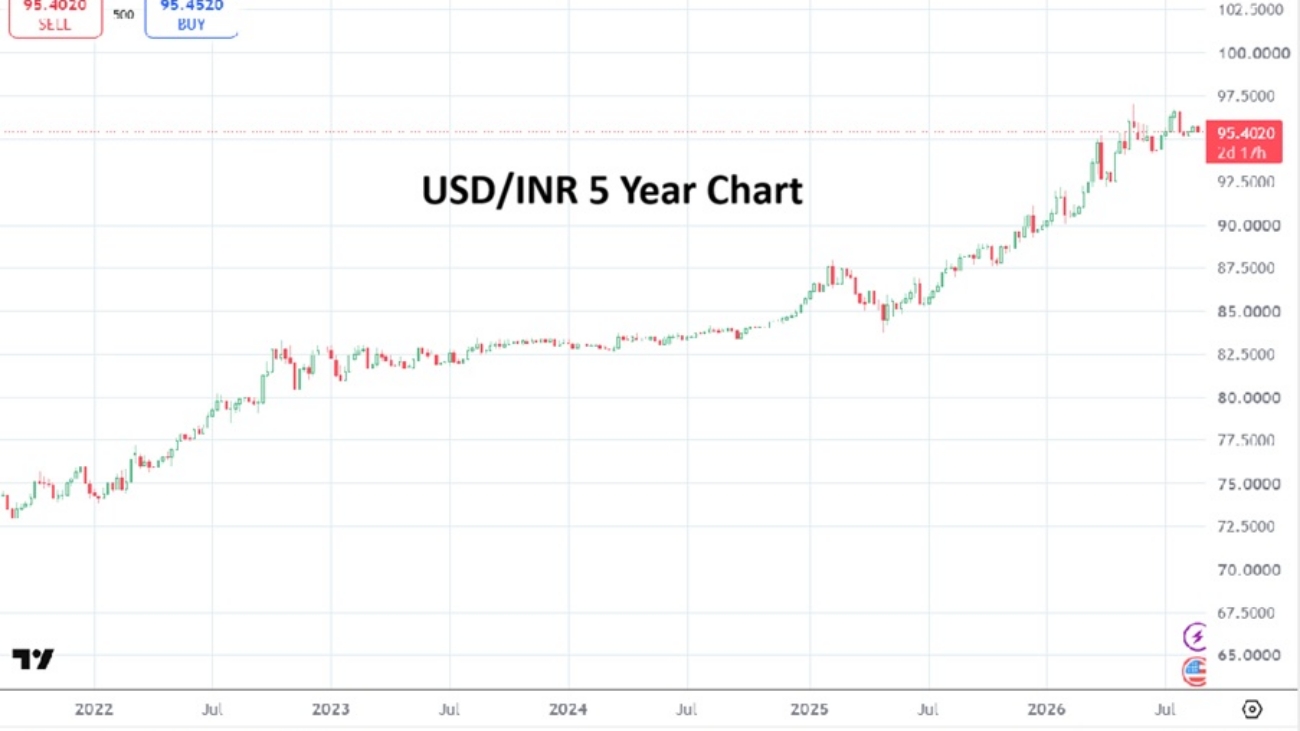
As the Rupee remains under pressure and oil prices continue to rise amid tensions in the Middle East, the debate has shifted towards what the Reserve Bank of India (RBI) should do next.

Economist Janak Raj has argued that raising interest rates to defend the Rupee comes with significant costs. Higher rates increase the cost of capital for businesses, reduce investment activity, and compress equity valuations. In theory, this could even accelerate foreign outflows from equities rather than attract fresh capital. Yet the RBI may soon find itself with limited options.

USD/INR One Year Chart as of 11th of June 2026

Foreign Portfolio Investors (FPIs) were net buyers of Indian equities for most of the period between 2004 and 2024, with only a few exceptions such as 2011, 2018 and 2022. However, the trend has changed. FPIs sold approximately $19 billion USD worth of Indian equities in 2025 and another $24 billion USD so far in 2026.

Question: Why are Foreign Investors Selling

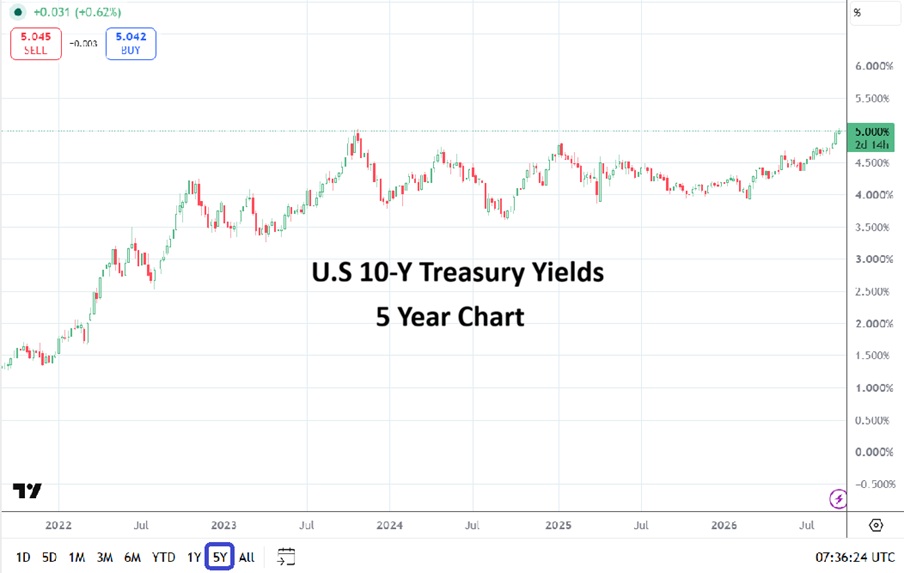
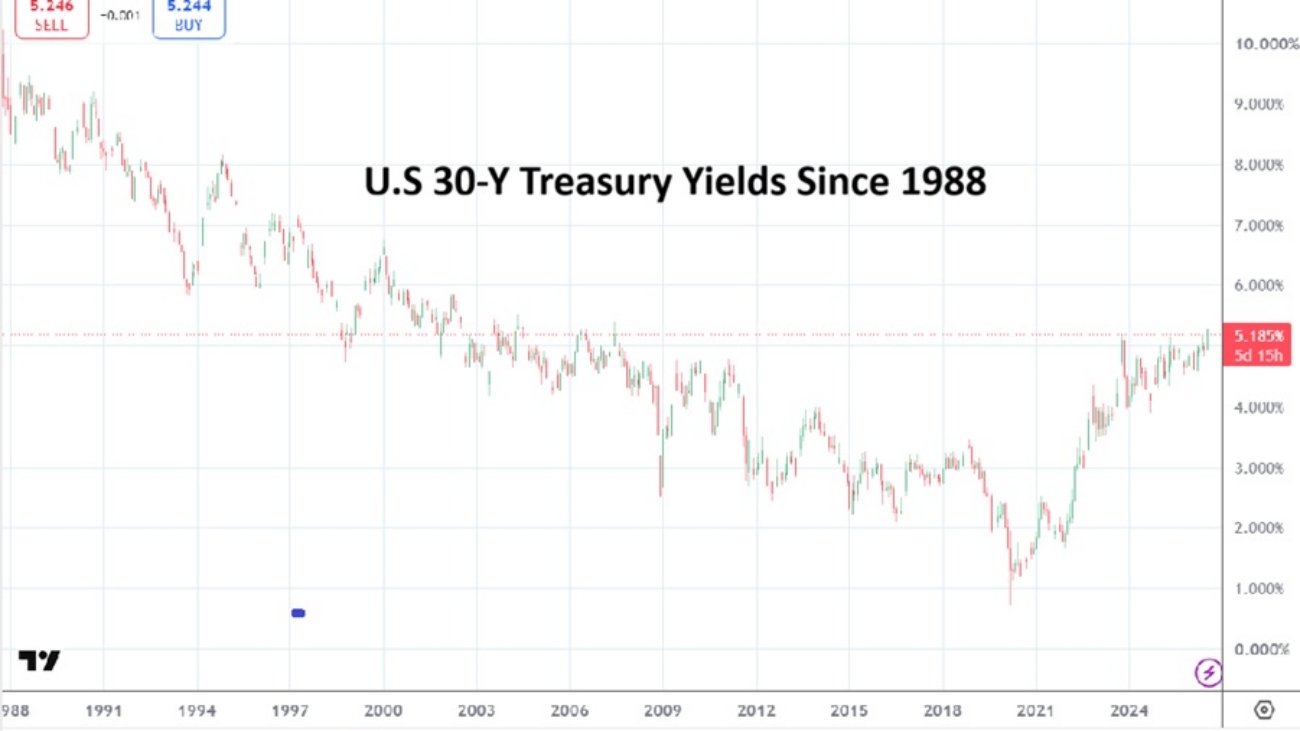
One reason is that global investors today have alternatives. The growth of Artificial Intelligence related companies in the United States has created significant investment opportunities. At the same time, U.S Treasury yields hovering around 4.6% offer attractive risk-free returns in a strengthening dollar environment.

For many global investors, earning high returns in Dollar assets is preferable to taking exposure in emerging markets that face current account pressures from rising  Crude Oil prices and other energy costs.

Taxation is another factor. India taxes foreign investors at 20% on short-term capital gains and 12.5% on long-term gains. Meanwhile, competing financial centres such as Singapore, Hong Kong, Malaysia and Thailand generally do not tax foreign investors’ capital gains.

Some global funds have argued that India should move closer to international norms, where capital gains are usually taxed in the investor’s home jurisdiction rather than the country where the investment is made. Higher post-tax returns would undoubtedly make Indian assets more attractive.

A stable Rupee would also reduce hedging costs, lower currency-risk premiums and improve the overall risk-reward profile for overseas investors. However, tax cuts alone cannot solve India’s problem.

The Real Issue is Balance of Payments

As Business Line columnist Lokeshwari Mam has pointed out, a significant portion of equity outflows consists of short-term speculative capital. Long-term capital tends to remain invested. This is why the decline in net Foreign Direct Investment (FDI) should concern policymakers more than short-term fluctuations in portfolio flows.

Net FDI has fallen sharply from $28 billion in FY 2022-23 to just $7.7 billion in the year ended March 2026. This is a worrying trend because FDI is the most stable source of external financing. Unlike portfolio flows, it creates factories, jobs, exports and long-term productive capacity.

India therefore needs more than tax incentives. A genuine single window clearance system, reduced bureaucracy, easier business regulations and reforms in manufacturing remain essential. Attracting long-term capital should be a national priority.

The recent foreign buying of Indian bonds after tax cuts is encouraging. But relative to India’s current account financing requirements, it remains a small drop in the ocean.

For example, in FY 2025, the current account deficit was 0.6% of GDP. And in Q4, the current account became a surplus. Is it really that difficult to finance it’s small current account deficit?

India’s external vulnerability is determined not merely by a current account deficit, but by whether the capital account can be comfortably financed. A modest current account deficit still creates currency pressure if foreign capital inflows weaken (which we are seeing), while a larger deficit may be sustainable when capital inflows remain strong. The risk of sustained higher oil prices could widen the deficit, increasing India’s dependence on foreign capital at a time when global liquidity is tightening and U.S Treasury yields are rising.

Furthermore, hedging costs continue to erode much of the yield advantage that Indian bonds offer over U.S Treasuries. In that sense, active global money is likely to prefer Dollar assets over emerging-market debt or equities

India’s repo rate currently stands at 5.25%. The RBI’s decision to raise its inflation forecast to 5.1%, while lowering its GDP growth projection to 6.6% reveals where the shock from the Iran conflict is likely to be felt via higher inflation and weaker growth. For an economy that remains heavily dependent on imported oil, a depreciating Rupee only compounds the problem by increasing the cost of energy imports. 

In such an environment, the Monetary Policy Committee is unlikely to focus solely on growth. Currency stability, inflation expectations and the availability of foreign capital to finance India’s external requirements could become increasingly important considerations. If these pressures persist, the RBI should raise the repo rate, in the same manner other Asian central banks have done in recent weeks.

Copy and paste the text from AMT that you want to share

WTI Crude Oil 20260601

Clues and Insults: Forex and Equity Indices During the Iran Saga

Profits: Optimistic Wagers and Preserving Self as the Party Rages

New Federal Reserve Chairman Kevin Warsh certainly doesn’t want to have problems with President Trump. On the 17th of June the FOMC meeting via the Fed will make their interest rate decision known. Who really believes that during the first month on the job at the helm of the U.S central bank that Warsh is not going to fight to keep interest rates in place?

Those who are expecting an interest rate hike in June of a quarter of a point (0.25%) are most likely wrong. Yes, the price of WTI Crude Oil is high and the situation in Iran via narrative varies from one moment to the next per the reported incidents on the Strait of Hormuz.

However, just like the Fed there is a certain amount of reality that must be dealt with regarding human nature and behavioral sentiment regarding Iran and how it is dealt with via market participants. From the department of no news is good news: financial institutions and investors would like the noise to be kept to a minimum so they can continue doing their jobs and not be criticized themselves for potentially wrong outlooks. The art of making sure disclaimers are up to date is important for everyone who wants to stay employed.

WTI Crude Oil 1 Year Chart as of 1st June 2026

USD centric weakness was seen late last week in many currency pairs, but a quick glance at the majors: EUR/USD, GBP/USD and USD/JPY actually show the pairs traversing rather cautious values. The EUR has gained slightly for instance, but at its current levels around 1.16410 some may believe it is a safe equilibrium. (One that may be able to be taken advantage of by those with the ability to bet on mid-term higher trajectories).

Central Banks globally also want to keep the noise down in their various locations. Inflation concerns persists worldwide depending on the amount of knock-on effects that higher energy costs have on national economies.

Also adding additional intrigue to the storyline of wanting to keep quiet while volatility threatens the gates, is that many people with comfortable jobs in various government institutions do not want to step out of line and sacrifice their careers for the sake of being proven right. They would rather be proven wrong, but would like to do this quietly without facing consequences.

The fact that we are now in a situation in which we are afraid to undertake critical thinking aloud is going to cause problems down the road, but for the moment most will simply go on with their various duties and pretend all is well.

U.S equity indices have been having a massive upwards party since the end of March as record heights are attained. Certainly some long-term investors are simply throwing money into indices as a way to get positioned before the SpaceX IPO which is coming soon. There will also be the Anthropic IPO which is reportedly set for late 2026.

The SPCX which seems to be aiming for the 12th of June will create a valuation well above 1 Trillion USD for SpaceX. The perceived value of Anthropic is becoming a loud talking point among analysts in the tech sectors and they are keen to have the company join the 1 Trillion USD party. The cost of admission for bragging rights is getting more expensive.

There was a time when things like PE (price and earnings) ratios mattered on Wall Street. Some brave folks still whisper about such things in meetings and bars late at night, but many do not want to be insulted or possibly worse get marketing folks selling these high priced products angry. The reason for speaking softly about actual earnings regarding SpaceX is because the company is actually working via an earnings loss, and instead price to sales estimates are being offered as some type of guideline. Having said the above, it would be foolhardy to bet against SpaceX and Elon Musk. And it might be equally unwise to bet against Anthropic in a handful of months. And thus, the rush into equity indices because there is a genuine fear of missing out does exist. Afterall, we all want to be part of the party.

And that brings us back to Fed Chairman Kevin Warsh who has the backing of President Trump and Treasury Secretary Scott Bessent, he doesn’t want to insult these men either. Warsh may be quite good at what he does, he might be an expert and have real world business experience, and that might be a real clue for Forex traders who think higher interest rates are coming. Warsh will likely want to keep his first months on the job at the Fed on good terms with the White House and the Treasury. Kevin Warsh might be a free-thinker and know legally he is an independent leader of the Federal Reserve, but he also knows he was hired with a stated mission. There is a pro-business, free enterprise administration in power at the White House. Bessent, Warsh and Trump are on the same team.

So again, while some traders may believe the Fed will raise interest rates in June because of concerns of higher inflation, it most likely will not happen. While the Iranian war continues to make headlines in the financial world and dealt with via sentiment decisions, actual economic U.S data will start being watched in the coming days and weeks and might even influence perspectives. Investors will get bored of the Iranian saga as long as its narrative stays somewhat tepid. Meaning investors will start looking at CPI and PPI numbers coming from the U.S next week and talking about higher interest rates that will likely not be delivered in the upcoming FOMC meeting. 

The price of WTI Crude Oil as boring as it is to say remains a strong sentiment gauge for traders intraday. Large players involved in Forex might believe this will involve higher interest rates, but on the 17th of June it is more likely that Kevin Warsh will say that for the moment the Fed chooses to watch energy sector costs with the belief prices will decline in the coming months. The Fed will not use the term ‘transitory’ which was used infamously during the Covid crisis and turned into a poison pill with inflation that was not effectively fought. What the Fed will likely do is say they want more info to be gathered and more clarity regarding the Iranian situation and its overall effect on oil prices for a little while longer. Some patience will be asked for and it might be granted by investors who want the party to continue via equities.

Day traders should expect cautious markets to prevail in Forex with choppy results as financial institutions weigh their behavioral sentiment and try to make believe they are not too worried about near-term inflation. The CPI and PPI readings next week will prove of interest, but the results may be brushed aside by market pundits.

In the meantime, the celebrations on Wall Street continue as folks march merrily into the frenzy. Retail speculators who want to pursue short or near-term profits on the Nasdaq 100, S&P 500 or Dow 30 indices need to be careful and might want to stay away from daily bets and instead engage in conservative positions that allow for a full week of results. The gains made since the end of March have been outlandish and likely will not be repeated anytime soon, but why try standing in front of a trend that can crush you.

Near-term considerations in these markets should be done carefully. The mid-term may be very different from where we stand today and our current outlooks. One thing that may bother some risk analysts is that it may prove wrong to bet against the current parade of optimists who insists on participating in dangerous conditions and profit, while they (the risks mavens) stand in place.

Copy and paste the text from AMT that you want to share

post277

India Insider: Growth without Prosperity, Thoughts and Comparisons

Growth and Prosperity Data Meet India and China's Realities

Economic growth is important for generating prosperity. India as well as China has helped millions be lifted out of poverty using separate development trajectories. Still, questions about income distribution remain a difficult topic that policy makers in both nations often are unwilling to look at with deeper persistence because plenty of inequalities still exists and the subject remains potentially divisive.

China’s low income population is extremely large. Professor Li Shi’s research argues that nearly 300 million people in China are earning less than 1000 Yuan ($149 USD) per month in 2021, while nearly 98 million had monthly incomes below 500 Yuan ($75 USD).

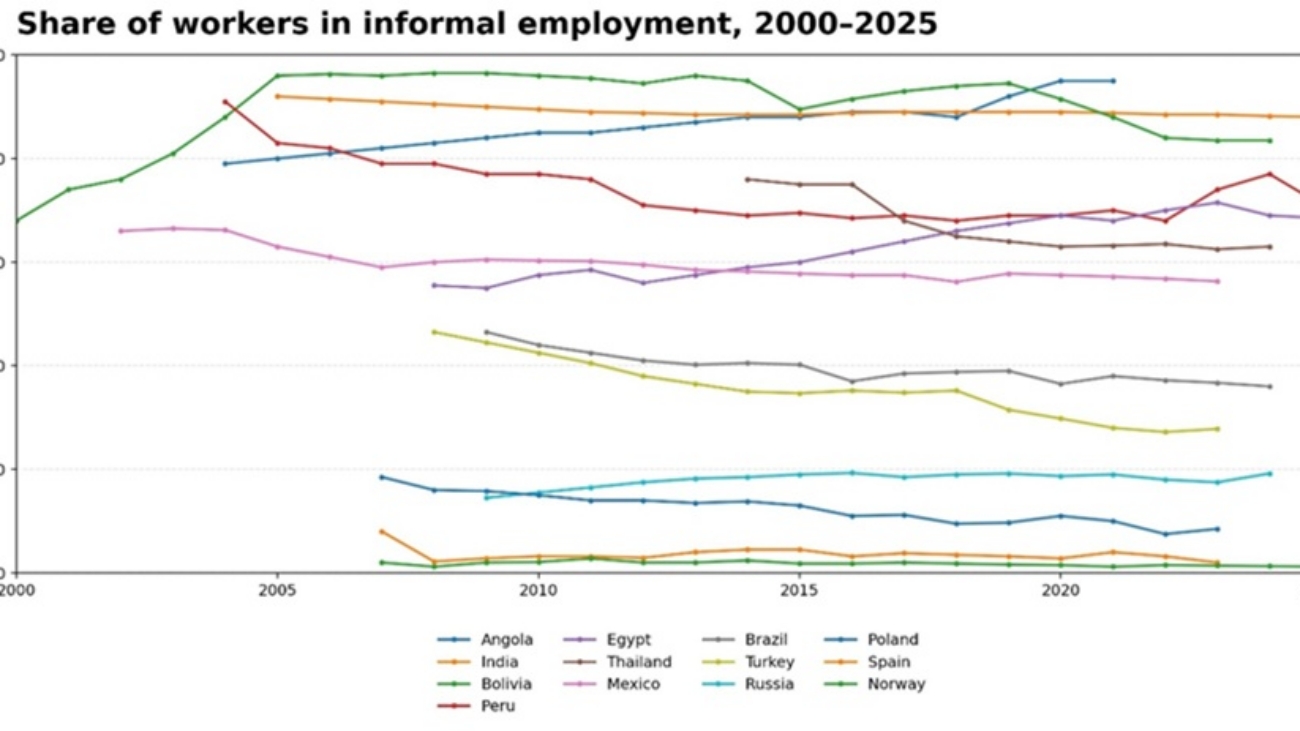
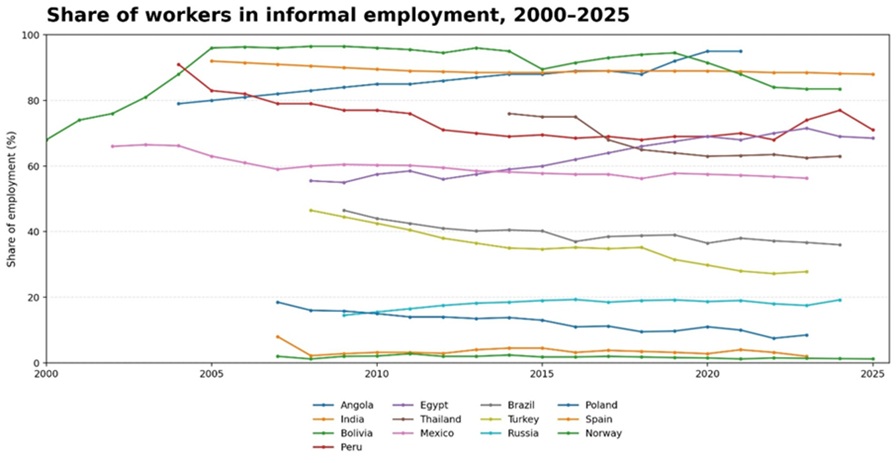
The same is true for the majority in India. As per the Pahle Foundation research shows nearly 91% of India’s workforce remains in the informal sector where their annual per capita incomes are below ₹2.5 lakh Rupees or ₹20,800 Rupees per month ($217 USD per month).

Although industrial and wage models are different comparatively, for instance in China the industrial sector includes 32% of the total working age population and produces an estimate of 36 to 37% of the GDP. And 22% of China’s workforce are employed in agriculture and produce close to 7% of GDP. In India a higher share of the people are in agriculture – close to 45%, and generate roughly 15-18% of the nation’s GDP.

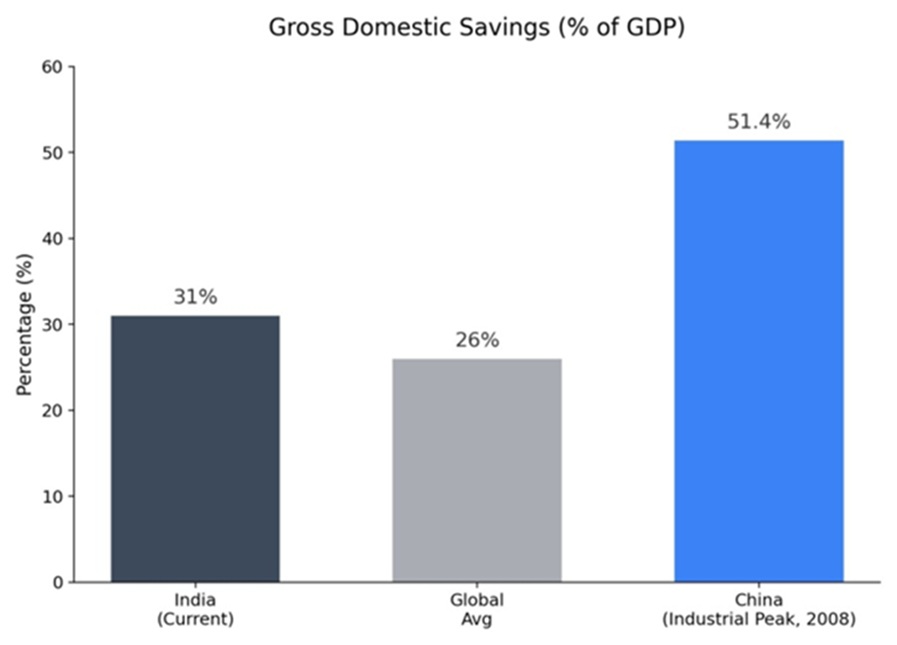
However, there are still problems in both countries regarding inequality via wage disparities of citizens. When income growth is stagnated or not growing, fixed assets capital formation is difficult. People save less and invest less, which in turn makes the economic consumption story difficult. This is happening in China and in India.

Regarding growth, Professor Li listed a series of mounting pressures: China’s growth rate has fallen from its high-speed era of 8 to 10% to around 5%. Household income growth has slowed sharply and the weakest gains are among the poorest groups. Urban wage growth has also softened. Consumption remains structurally weak. Fixed-asset investment, especially private investment has lost momentum. Unemployment, particularly among young people remains elevated. These are not separate problems. Taken together they raise a harder question, whether China can still generate the level of growth needed to meet its 2035 and 2050 prosperity targets?

India between 2015–2016 experienced significant growth driven by consumption, investment and services expansion. After Covid-19 its growth has stabilized around 6 to 7%, yet higher levels of prosperity are not clearly visible for many and inequality has widened.

The unemployment rate among those aged 16 to 24 in China has remained around 16% for an extended period, fluctuating during seasonal reasons. Unemployment among other age groups have also risen gradually, indicating clear pressure in the labor markets.

In India the unemployment for youth aged between 16 to 25 of age is 42%, per a Azim Premji University Surveys and State of Working India report in 2023. This unemployment rate is double the ratio of what we are witnessing in China.

While in China the education departments have shifted towards STEM (Science, Technology, Engineering and Medicine). India still focuses on Social Science curriculums and students who study within these fields often cannot find job opportunities in the labor market.

India for many years hasn’t invested a substantial amount of energy and commitment to build a vibrant manufacturing sector. Yet, studies have shown that every job created by manufacturing exports creates two additional jobs in related sectors like transportation and logistics. 

China’s wealth inequality via income has risen sharply, Professor Li Shi estimates the wealth Gini coefficient above 0.7 in 2023. India’s wealth inequality may be even more concentrated. Various estimates place India’s wealth inequality/income distribution per the Gini coefficient above 0.80, indicating an extremely unequal distribution of assets and accumulated capital. 

However, the structures of inequality differ between the two economies. In China inequality emerged alongside rapid industrialization, urbanization and export, and led to manufacturing growth. A large industrial economy generated substantial wealth – but distributed it unevenly between labor and capital. 

In India inequality is shaped not only by a wealth concentration at the top, but also by the persistence of low productivity via employment, informal labor markets, weak wage growth, and limited human capital investment across large sections of the population. Thus, while China faces the challenge of emphasizing prosperity within a middle income industrial economy, India continues to struggle with the deeper structural problem of trying to create broad based household income growth in the first place. The differential also sheds light on industrial sector based employment and those in agricultural jobs comparatively between the two nations regarding wage context.

Hard questions that China should ask include if their employment force – who are without many social protections and suffer a lack of higher wages, will allow China to attain competitive advantage over the rest of the world? While its manufacturing products are in demand, it doesn’t help the average Chinese person see realized wages go up and nor creates a dignified life. And China’s trading partners do not benefit, because a lack of competitive advantage destroys industries and makes unemployment problems even worse in other nations. It’s not a question about advantage only, it’s also about why this surplus and deficit competitive problem is growing rapidly and makes stable prosperity unachievable over the long term.

In India despite being proclaimed as the fastest growing global economy, if the young population don’t get jobs and cannot create income for their families, then what’s the purpose of this high GDP growth? Yes, the nation gets to show good growth numbers while hoping to achieve additional investment, but problematic results still occur.

Economic growth without wage growth leads to widening inequality, social unrest and sometimes political backlash. For growth to be inclusive, wages need to rise along with GDP. This requires not just distribution, but a transformation like raising the average productivity of every worker and ensuring they receive their fair share of the economic pie.

Copy and paste the text from AMT that you want to share

US Dollar Index 20260627

The USD and The Art of Not Knowing

Being Mature Enough to Know You Don't Know as You Watch the Marketplace

Ask anyone that typically knows how they gauge the state of the global marketplace for the near-term and you are likely to either get a solid, “I have no idea” now. Or a bunch of thoughts on what might happen, which might lead to being more confused. Simply put at this point, it is easier to admit that potential conclusions regarding the world’s current affairs taking place and effecting the global marketplace are out of most peoples’ hands. 

Even those who have duties within the higher paid grades likely are just as confused about the potential unintended consequences not wanted, and results they hope will be achieved. And what am I speaking about exactly, regarding the world and its state of affairs, is that even qualifying the particular topics are difficult to put a finger on. Ramblings certainly include the Iran saga, but Cuba, the Ukraine, the NATO pact, shifting world alliances and future ones are creating a whirlwind. Besides the rather noisy political landscape of the USA. Not to mention China and Russia and other nations with aspirations.

Yet, the global markets continue to trade, albeit within a confused haze it sometimes appears. But do not be despondent day traders, brokers and their platforms will offer you the opportunity to wager on results of the USD in Forex, and CFDs certainly contain opportunities in major equity indices the world over, various big singular companies, commodities and yes cryptocurrencies (apologies to Bitcoin fans – who insist it is called a digital currency).

U.S Dollar Index Six Month Chart as of 27th May 2026

Iran War and Unclear Results

The U.S Dollar Index for the moment is near the 98.880 ratio, which it should be pointed out is near the values it swam upon the April 8th announcement of a ceasefire between Iran and the States, this after dropping from its 99.800 threshold on the 7th when investors were more troubled. The ceasefire is still in effect and now there seems to be a resolution which is being hoped for by the U.S White House – although when pressed about what negotiations between Iran and the U.S will result in delivers a few different versions of ideas. 

Perhaps that is to be expected via the fog of war, but what should not be expected is an easy path to a genuine resolution. And even if there is a pact of some type, what objectives will have been genuinely fulfilled? But alas, that is a question for those in the future, because the facts on the ground do not bode well for ordinary Iranians who have yearned for freedom. 

The Fed Has a Problem

But again, let’s not dwell on things like the individual rights of people, money is at stake…..(that is humor folks, others can call it sarcasm). The price of WTI Crude Oil has dropped this week on the idea that a resolution will actually be accomplished between Iran and the U.S – one at least that allows tankers to navigate the Hormuz Strait. 

The price of WTI via futures at this moment are around the $90.00 mark again, this after moving within sight of 88.00 USD earlier today. At the end of last week the $96.00 mark was in sight for WTI. And the price of energy continues to cast a shadow that is moving over the U.S Federal Reserve and has large implications for the new Fed Chairman Kevin Warsh. 

The mid-term versus the long-term in financial institutions as they judge their interest rate perspectives are likely making for rather entertaining dialogue. And let’s not forget ladies and gentlemen, the U.S mid-term elections are approaching in November of this year and are resulting in primary elections that are punishing Republicans who voiced criticism towards President Trump. The question about who will hold power in the U.S House of Representatives is a big riddle. Even the U.S Senate leadership may be fragile. Why is that important, because if President Trump were to become what is known as a lame-duck President during his last two years in office, this would produce different outlooks among investors. Stay focused on the money people. 

Our Forex Friend: The BoJ

The USD/JPY is now traversing its 159.490 vicinity again, and perhaps that is a bell weather for soothsayers to criticize again. The Bank of Japan is watching the Japanese Yen as its trades within sight of its weakest values, and yes, the BoJ can be expected to issue another warning to speculators once again about being run over by an intervention. The BoJ’s broken record about interventions have produced solid results for folks who are able to trade the USD/JPY with positions that can be held for a few weeks at a time – namely hedge funds, large players and some financial institutions. Retail traders trying to take advantage of the USD/JPY are likely suffering trauma via anxiety if their wagers have gone in the wrong direction.

SpaceX and Scams in the Cryptoworld

And as a bonus, let’s not forget about rumblings regarding SpaceX and another topic within the I do not know category. Elon Musk has set the table for an attempt at a 2 trillion USD market cap after the IPO for the corporation is launched in the second week of June. The value of SpaceX can be and will be argued for the next few years as admirers and critics lineup to be heard and spread sheets are compared regarding revenues against one of the greatest marketing giants of our time. Intriguingly, however, are hints that there has been a lot of cryptocurrency fiddling regarding how the corporation is going to allow investors to participate. Apparently there have been tokens issued in the cryptocurrency world that have promised some type of participation in SpaceX and most are being exposed as scams and have nothing to do with the company or Musk. Buyer beware folks.

Copy and paste the text from AMT that you want to share

Indian Rupee 20260515

India Insider: Rupee Under Pressure as Oil Prices Surge and Import Bills Rise

Iranian War and Implications for India as Energy Prices Cause Vulnerability

India is currently facing mounting external economic pressures as rising global crude oil prices weaken the Rupee, widen the current account deficit, and increase the risk of imported inflation. As one of the world’s largest energy importing nations, India remains highly vulnerable to fluctuations in global oil markets. The recent surge in energy prices, combined with geopolitical tensions and volatility in currency markets, has intensified concerns among policymakers, economists and investors.

The Reserve Bank of India (RBI) has stepped up its intervention in the foreign exchange market to stabilize the Rupee, while the government is evaluating measures to reduce pressure on import billing. Rising fuel prices, weakening currency conditions and growing external imbalances have combined to create a challenging macroeconomic environment that may test India’s economic resilience in the coming years.

USD/INR Six Month Chart as of 15th March 2026

Gold and consumer electronics imports are increasingly being viewed as non-essential imports, and policymakers may consider restricting these categories in order to reduce stress on the current account deficit. Officials are concerned that a widening trade imbalance could place further downward pressure on the Rupee and increase dependence on foreign capital inflows.

The Rupee on Thursday fell to a record low near ₹95.95 per USD, making it one of Asia’s weakest performing currencies this year. The currency has erased most of the gains achieved following earlier RBI intervention measures aimed at curbing speculation in the Forex market. Analysts expect the Rupee to remain under pressure through 2026, especially if global crude oil prices continue to rise and significantly increase India’s import billings.

The impact of rising crude oil prices is becoming increasingly visible across the Indian economy. Private fuel retailers have either reduced diesel sales or raised prices in response to the rally in global oil markets, leaving state owned refiners to absorb a larger share of domestic demand. Long queues at fuel stations and rising transportation costs have intensified concerns over inflationary pressures.

Earlier today, State-owned fuel retailers raised fuel prices for the first time in nearly four years as New Delhi adjusted domestic pricing to reflect higher international crude prices following escalating tensions in Western Asia. Diesel and gasoline prices increased by more than 3%, even though Brent crude prices had risen by nearly 50% over the same period.

In New Delhi, diesel prices climbed to around ₹90.67 per litre, while gasoline prices rose to approximately ₹97.77 per litre. These are among the highest levels recorded since 2022 and reflect the growing burden of imported energy costs on the Indian economy.

Economists argue that the rise in fuel prices signals a gradual shift toward market based pricing rather than extensive government controls. Policymakers increasingly recognize that artificially suppressing fuel prices could worsen fiscal pressures and create larger external imbalances over time.

Currency Weakness and Monetary Policy Challenges

RBI Governor Sanjay Malhotra recently remarked at an event in Switzerland that continued currency weakness may be “only a matter of time” if global energy prices remain elevated and capital flows become increasingly volatile.

Foreign outflows during the year have already exceeded previous levels, while a sustained rise in crude oil prices above $100 per barrel could significantly widen the trade deficit and push India towards another period of pressure on balance of payments.

In this climate, attracting foreign capital via various tax cuts or raising the interest rates is paramount to reduce the pressure on the currency. It’s already been seen that New Delhi is working on reducing taxes for foreigners investing in Indian bonds.

Rise of Inflationary Pressures

Although India’s headline inflation remains relatively contained and below the RBI’s 4% medium term target, imported inflation risks are steadily increasing.

Economists also believe the RBI may eventually be forced to maintain tighter monetary conditions or raise interest rates further if energy prices continue to accelerate.

The central bank has already raised interest rates to around 5.25% this year, but several economists argue that further tightening may still become necessary.

Historical Perspective and Structural Risks

Economic historians often compare the current situation with the oil shocks of the 1970s. During that period, the United States was heavily dependent on imported oil. The oil crises of 1973 and again in 1979 contributed to inflationary pressures, balance of payments stress, and periods of USD weakness.

However, economists note that today’s global environment is significantly different. The United States has become one of the world’s largest oil and gas producers, reducing its dependence on imported energy. As a result, rising oil prices no longer weaken the U.S Dollar in the same way they did during earlier oil shocks.

For countries like India, the impact remains severe. India imports the majority of its crude oil requirements. Higher global oil prices directly increase India’s import billing and create additional demands for USD.

As Economist Philip Verleger was quoted by Bloomberg, “when you are a major oil importing nation, you are not only paying more for crude itself, you are also paying more for the dollars required to purchase it.” India is now facing this realization again.

Copy and paste the text from AMT that you want to share

USDJPY 20260505

Our Friend the Japanese Yen and Forex Opportunities

Bank of Japan's 'Do As We Say' A USD/JPY FX Advantage Technically

Forex traders who have been keen on trying to venture wagers on the USD/JPY certainly cannot be faulted. As of this writing the USD/JPY is near the 157.720 vicinity, this after falling to lows around the 155.750 mark and below momentarily last Thursday, Friday and briefly yesterday. 

The Bank of Japan let it be known in the middle of last week that speculators should not be buying the USD/JPY because they – the BoJ – could and would intervene with strong selling to kill off the momentum higher. The ‘do as we say’ approach from the BoJ is a contrarian trader’s dream, but one that needs as always a strong dose of risk analysis.

USD/JPY Five Year Chart on the 5th of May 2026

And this is where it gets properly intriguing for USD/JPY traders, because the Bank of Japan is literally setting the table for two different types of Forex trades when they threaten or actually intercede with interventions. One is a selling notion per the warnings, the second is a buying excursion for the emotionally stable after they think the intervention has run out of power.

A five year chart shows the immense pressure the Japanese Yen has been under as it has lost value against the USD. However, it is all about perspective depending on how a trader wants to chase momentum shifts. 

Technical traders can easily see that when higher vicinities are approached the USD/JPY is sometimes met with spikes downward. And then technically it is rather evident that support levels tend to spur on buying. The problem for buyers seeking support levels after Bank of Japan selling is to know when it is safe to become a buyer again.

If a trader has courage and wants to bet against the large players and financial institutions leaning into long positions of the USD/JPY, a selling position at higher marks is a solid choice. Yet, the other question then arises – where is resistance going to actually translate into a warning sounded by the BoJ in order to create the desired landslides lower in the USD/JPY?

Bank of Japan policy regarding interest rates has only been in question for over 3 decades now from outside observers who like to be critical. Yet, the conservative (and questionable) policies of the Japanese government via fiscal and monetary policy is a looking glass into practicalities for Forex traders. 

10-Year Japanese bond yields are now at twenty-nine year highs. The rate as of this writing is above the 2.50% level. The Bank of Japan Policy Rate remains low at 0.75%. While many analysts believe borrowing costs from the BoJ should be higher, what some might be missing is that the Japanese people are already being penalized via a weaker Japanese Yen. Higher borrowing costs and a weak Yen would likely not go over well with many Japanese citizens.

The Bank of Japan is in a difficult place regarding outlook as it tries to help keep exports strong, while also having to consider the higher costs of energy which is certain to hit Japanese industries over the mid-term. These considerations may cause some financial institutions to continue leaning into a buying outlook regarding the JPY, but near-term considerations must also be weighed as nervous sentiment cascades throughout the broad Forex market shifting abruptly. 

USD centric price action has been choppy, but overall the USD has also been weaker against many major currencies and even emerging market currencies. Yet, the USD/JPY remains within its higher realm. All of the Bank of Japan warnings to speculators telling them not to pursue buying the USD/JPY continues to make the BoJ sound weak and this doesn’t help sentiment surrounding the JPY. While the Bank of Japan can certainly intervene with massive amounts of buying the Japanese Yen – selling the USD/JPY – the central bank also is probably quite keen on making sure the JPY doesn’t get too strong. 

And this is where confusion must be put to the side, economics are wonderful when studied in a textbook, but the reality of trading the USD/JPY lives in the real world. Fiscal and monetary policies do not always work out the way governments intend.

The BoJ probably has a polite trading range they would like to see for the USD/JPY between 154.000 to 158.000 currently, but getting financial institutions to help achieve this realm remains difficult. The range between 156.000 to 159.000 likely remains a practical area for the BoJ as of now, one in which they believe their policies can work properly. 

Opportunities need to be viewed with a proper lens by day traders. Participating in the USD/JPY is a dangerous place because the currency pair has massive volume and the BoJ and U.S Federal Reserve often work together to gear valuations – even if they frequently disagree on techniques. Price velocity in the USD/JPY will continue to prove dynamic in the near-term and speculators need to practice patience and keep their risk taking tactics strict.

Copy and paste the text from AMT that you want to share

WTI Crude Oil 20260428

Shift To Economic War Against Iran to Deprive Funds to Regime and IRGC

What If Everyone Is Looking At The Wrong Things About Iran?

The current futures price for WTI Crude Oil is above $98.00. The cash price for the commodity is above $103.00. While many people continue to fret about what endgame strategy the U.S White House is conducting, what if we are seeing it play out in real time via the price of Crude Oil? Is it possible that President Trump has a coordinated plan to starve the Iranian regime and the IRGC of its much loved and needed money? It appears this is the case.

WTI Crude Oil Futures Three Months Chart on the 28th of April

Simply put, the Iranian Revolutionary Guard Corps is a mafia. They stay in power using the tool of fear brought upon by their ability to be ruthless to the Iranian citizens. They are a terrorist organization in the truest sense. If you disagree with that assessment, you are free to do so. However, facts when they are studied point to the conclusion Iran is a terrorist state led by its regime and the IRGC. 

Iran has made massive amounts of money via its energy products for decades. The shutdown of the Hormuz Strait, or at least the inability to export Crude Oil freely, is putting a strain on global energy prices, and it is causing a major fracture in the main financial export of Iran. 

The U.S has not only shut down easy navigation in the Hormuz Strait, but it is also going after Iran’s cryptocurrency operations. The ability to receive and transfer digital money by Iran is being strangled. What if President Trump is not only listening to the opinions of his military officers, and Secretary of State Rubio and Vice-President Vance, but also Treasury Secretary Scott Bessent who has an abundance of financial knowledge about how money flows internationally and how to create obstacles.

If the IRGC is not able to pay its own members, and other adherents to the Iranian regime are only slowly reimbursed, the apparatus of the IRGC will certainly lose its influence. The inability to pay allies that exists merely because they are employed or corrupted by the IRGC likely is starting to cause fractures regarding loyalties. 

China needs Iranian oil too. And evidence is starting to be speculated upon that China is facing tough decisions about acquiring Crude Oil from other sources. China will not be happy about having to pay higher costs, this because discounted Iranian oil that has abundantly been used is no longer available. 

Equities via the major U.S indices have done incredibly well since the end of March. The Nasdaq 100 has seemingly forgotten about AI overbought concerns, the S&P 500 is within apex territory and the VIX is acting as if sunny days are in the forecast. Forex has been volatile, but the value of the USD is within known realms.  However, the price of WTI Crude Oil is high and it has gotten higher since the 17th of April when futures prices briefly flirted with the $80.00 realm – this before going into a weekend. And this is a clue that something is afoot, beside larger players speculating on what their outlooks are for WTI Crude Oil in the mid-term.

The weekend of the 18th and 19th of April witnessed talk of an end to the Iranian war fall short; and heard President Trump essentially declare the ceasefire is still on but with the caveat that the U.S would create a blockade in the Hormuz Strait. While the semantics of a blockade can be debated, the U.S has caused shipping problems for tankers that were supposed to ship Iranian Crude Oil. The U.S clearly decided to create economic distress for Iran.

The Iranian regime still stands, but its leadership is rather shaken. The IRGC is controlling a lot of the decision making for the time being, and it appears the U.S White House is trying to make the IRGC weaker by ending their financial lifelines. It appears that it has been figured out that an economic war which includes starving Iran of cash is the most certain way to create revolts inside of the nation. When the influence of money is eroded, and temptations via other spheres of power suddenly sound tempting and can be joined, this is when shifts in authority and leadership can occur. 

While many analysts wonder about the lack of an obvious endgame being announced by the Trump administration, maybe it is already being played out. President Trump has a large ego and he is happy to extoll the virtues of his ‘tremendous’ policies frequently, but he also has shown the ability to remain quiet when it comes to plans of action and carrying them out. Yes, this can be argued into the late hours by pro-Trump and anti-Trump people. But maybe Trump is simply telling the truth when it comes to the U.S having time on its side regarding the Iranian ceasefire and the Strait of Hormuz. Maybe the clock is ticking on the eroding cash pile the Iranian regime and IRGC has within its grasp.

Copy and paste the text from AMT that you want to share

India Rupee 20260416

Progression Upwards for Indian Rupee and Catalysts

USD/INR Persistent Trajectory Remains in Force and Mid-Term Concerns

As of this writing the USD/INR is within the 93.2000 vicinity. The price of Gold is around $4,810.00 and Silver close to 79.50. Importantly, WTI Crude Oil is trading around $89.25. Global markets have turned in solid performances the past two weeks, this has been a two step progression for most investors. 

Indian financial institutions began to digest their worries regarding the Iranian war late in March – perhaps acknowledging the risks and ramifications, while adjusting outlooks. Then on Tuesday the 7th of April the establishment of a ceasefire was announced. However, after hitting a low of around the 92.2200 realm on the 8th of April, the USD/INR is back within higher ratios.

USD/INR Six Month Price Chart as of 16th April 2026

Yes, the USD/INR had been traversing above the 95.0000 ratio late in March, so it can be said the Indian Rupee has gotten stronger. Yet, there will not be many willing participants who will join a parade with the belief this lower trend can be sustained. The bullish trajectory of the USD/INR is not going to vanish.

On the 24th of October 2025, the USD/INR was near 87.7500. At this time last year the currency pair was close to 85.5000. A persistent and long-term move higher has been the theme in the USD/INR. Weakness in the Indian Rupee has been part of India’s economic story rather consistently for a handful of years. 

Narendra Modi has been in power since 2014, he is serving his third term as Prime Minister. His political party the BJP clearly has its chosen people within the Reserve Bank of India.

The government’s position of allowing the Indian Rupee to be weaker is not something they will want to state out loud as part of their mandate, but it is clearly not bothering them.

The pursuit of creating a stronger industrial and manufacturing base for India, including IT and software via good exchange rates for international clients is seen as a cornerstone to build demand. The quality of work and technology provided by the Indian workforce is good and this allows global clients to foster solid relationships with Indian companies.

However, the rise of the USD/INR to above the 95.0000 level in late March was a warning sign, that sometimes price velocity in Forex can become dangerous. And the Iranian war although enjoying a week and half of less noise, still could escalate into a problematic scenario for India that could cause additional concerns in Indian financial institutions who are trying to gauge their mid-term outlooks.

The USD/INR is an important part of this economic math and the prospect that higher energy costs, or in a worst case scenario – shortages incur hardship for Indian citizens and companies is an actual concern.

The current situation in the Hormuz Strait and availability of Crude Oil is significantly important for India. So is supply of LNG (liquefied natural gas) which Qatar, Oman and the UAE play a role. The supply of energy presents a glaring dark shadow for the prospects of the Indian economy should there be shortfalls. 

The 93.5000 resistance level has been durable since early April in the USD/INR. Stability of the exchange rate is crucial for a wide range of business in India, including banking and financial institutions active in the Bombay stock market – particularly since a weaker India Rupee opens the door to Forex concerns for foreign investors who do not have the ability to hedge if they are exposed via the INR too much. Foreign investors are needed in the Nifty indices to help values.

The near-term is likely going to remain a difficult path for the USD/INR and its outlook. The positive sentiment which has prevailed the past couple of weeks has been welcome and certainly stable conditions are hoped for so equilibrium can be kept. However, if the Iranian situation manifests into open military conflict again, or if there is a disruption of supply of energy that cannot be easily solved by India – then the USD/INR could once again face price velocity upwards that is uncomfortable.

While China may be getting the headlines regarding potential ramifications of its Crude Oil supply being threatened, India is estimated to have consumption that is ranked as the 3rd biggest globally. India’s ability to get a supply of energy from a diversified stable of sources is a key for the nation moving forward. 

The USD/INR will continue to move higher, the question is how fast? A slow steady rise in the currency pair – again, this will not be a spoken mandate by the Indian government – will continue. The fear of a rapid debasement is a concern. Financial institutions in India need steady emotions and are certainly hoping for the Iranian war to conclude with a sliver of optimism. 

Copy and paste the text from AMT that you want to share

Universe 20260409

Foreign Exchange and Reading Through the Noise

Brief Clarity, Constantly Interrupted: What Does Copernicus Have To Do With FX?

This article was first published the 7th of April on LinkedIn by the author.

I have spent most of my professional life in foreign exchange markets – an environment that rewards the ability to read signal through noise. And yet the older I get, the more I find myself drawn to a question that no Reuters terminal can answer: why do intelligent, well-resourced people, working inside some of the most information-rich institutions ever created, still systematically misread reality?

I think the answer has less to do with the quality of our data, and more to do with the nature of our frameworks.

The Ptolemaic Trading Floor

In the sixteenth century, Copernicus did not discover new stars. He did not build a better telescope. He simply stood in a different place and looked at the same sky – and from that different vantage point, the complexity that had been accumulating for centuries suddenly resolved into something simpler and more true.

The philosopher Thomas Kuhn, writing about this in The Structure of Scientific Revolutions, made a point that has stayed with me. The Ptolemaic astronomers were not stupid. They were brilliant people doing extraordinarily sophisticated work, and their model of the universe – with its epicycles and equants – was genuinely good at predicting where the planets would be. By their own measures, they were succeeding. But the framework was self-sealing. Every anomaly became a problem to be patched rather than a signal that the whole edifice needed replacing. The epicycles kept accumulating.

I recognise that trading floor.

The VAR models, the correlation assumptions, the ratings frameworks that failed simultaneously in 2008 did not fail because the mathematics was wrong within the model. They failed because the model had pre-decided what reality looked like, and reality declined to cooperate. The framework had accumulated its own epicycles – its own patches and exceptions and special cases – and nobody had stood back to ask whether the whole structure still made sense.

This is what the economist Herbert Simon called bounded rationality – the idea that we make decisions within limits of information, time, and cognitive capacity. But I think there is a deeper form of boundedness that Simon’s original formulation didn’t fully capture. It is not just that we lack information within a given framework. It is that the framework itself determines what counts as information in the first place. The boundary is not cognitive – it is epistemological. The frame has pre-decided what reality looks like, and we optimize furiously within it, never suspecting there is anything outside.

This is framework-induced bounded rationality. And financial markets are one of its purest expressions.

The Filmiest of Screens

William James, writing in 1902, described something that has always struck me as one of the most quietly radical observations in the history of psychology:

“Our normal waking consciousness, rational consciousness as we call it, is but one special type of consciousness, whilst all about it, parted from it by the filmiest of screens, there lie potential forms of consciousness entirely different. We may go through life without suspecting their existence; but apply the requisite stimulus, and at a touch they are there in all their completeness.”

James was writing about mystical experience. But I think he was also describing something that every trader knows intuitively – that there are moments of genuine clarity, where the market’s structure becomes briefly, luminously obvious, and then the noise closes back in. Not constant confusion, but brief clarity, constantly interrupted.

What interrupts it? I think James gives us a clue, though the fuller answer comes from a tradition he was only beginning to encounter.

The Deluded Self and the Distracted Market

The Yogācāra school of Buddhist philosophy, developed in the fourth and fifth centuries, offers one of the most sophisticated maps of consciousness ever produced. It describes eight layers of awareness, from the basic sense consciousnesses up through something far more interesting – the seventh consciousness, called kliṣa-manas.

Kliṣṭa-manas is the layer of mind whose function is to construct and defend a sense of self. But the Yogācāra tradition makes a more precise and more troubling point than simply calling it deluded. By the time information reaches the seventh consciousness, it has already passed through the sense consciousnesses and the discriminating mind – each stage filtering, selecting, and coloring what gets through. The seventh consciousness is not distorting clean data. It is working with inputs that are already biased, and it has no way of knowing this. It constructs its picture of reality from pre-processed material, and then defends that picture as if it were direct perception. Try telling a QANON follower to get a vaccine jab.

The parallel to institutional behavior in markets is uncomfortable in its precision. Risk committees, house views, investment mandates – these are the kliṣṭa-manas of the trading floor. They exist, at least in part, to protect the institution’s sense of itself. The risk manager who cannot recommend a position that contradicts last quarter’s framework. The economist whose forecast must remain defensible to the committee. The trader who holds a losing position because admitting the loss means admitting the thesis was wrong. These are not failures of analysis. They are the seventh consciousness doing exactly what it was built to do.

And into this environment, the attention economy arrives as accelerant. Social media does not simply distract – it feeds kliṣṭa-manas directly. Likes, outrage, identity, tribal affiliation – all of it strengthens the self-constructing layer and weakens the capacity for clear perception. The signal-to-noise ratio in markets was already difficult. We have now built an entire industrial infrastructure for generating noise that feels like signal, because it flatters the self that is doing the perceiving.

Standing in a Different Place

The Yogācāra tradition does not stop at the seventh consciousness. Beneath it lies the ālaya-vijñāna — the storehouse awareness, a kind of ground-level consciousness before the self-construction begins. It is not a mystical concept, or not only that. It is a description of what perception might be like before the defending ego has finished processing it.

The best risk-takers I have encountered in markets seem to access something like this, in their better moments. A capacity to see the position as it actually is, without the framework that produced it colouring the perception. To hold a view lightly enough to abandon it when the evidence changes. Copernicus looking at the same sky and seeing something different – not because he had more data, but because he had momentarily freed himself from the inherited frame.

James was right that these states are parted from ordinary consciousness by the filmiest of screens. The Eastern traditions – Buddhist and Vedantic – have spent two and a half millennia developing systematic methods for thinning that screen. Western psychology, for all its extraordinary achievements, has been slower to take this seriously, often treating consciousness itself as a problem that better neuroscience will eventually dissolve. It may be that, in this respect, we are in the position of the medieval scholars encountering Arabic science – not lacking intelligence, but working within a framework that makes certain questions difficult to even formulate.

What This Has To Do With FX

Markets are reflexive. The moment enough participants adopt the same model, the model changes the thing it was measuring. The framework that produced clarity attracts capital, the capital erodes the edge, and you need a new framework. Brief clarity, constantly interrupted – not as a pathology, but as the structural condition of the thing itself.

The question is not how to achieve permanent clarity, which is probably neither possible nor desirable. The question is whether we can develop the capacity to notice when we are inside a framework rather than seeing through it – to feel the epicycles accumulating before the model breaks.

That capacity, I suspect, is less a matter of better data or faster processing, and more a matter of the quality of attention we bring to the screen. Which means the most important professional development available to a markets practitioner might not be in a CFA curriculum.

I am aware of the irony of writing this on LinkedIn, which is itself a highly effective delivery mechanism for kliṣṭa-manas. The seventh consciousness is nothing if not adaptive.

Note: The author works in foreign exchange markets and thinks too much.

Copy and paste the text from AMT that you want to share

Markets Say 20260407

What Do the Markets Say?

Ambivalence Rules the Day

Opinion: The following article is commentary and its views are solely those of the author. This article was first published the 7th of April via The Angry Demagogue.

There is nothing we capitalists like saying more than “the markets say….”. What we mean is that the amorphous group of individuals and institutions that together form some sort of consensus as to the value of “things” taking everything known by the individuals involved into consideration. Since no one can know everything, the idea is that the market represents the sum of knowledge of everyone who has money to invest – or, as we like to say, “skin in the game”.

Below is a graph from the start of the war until April 2, of oil, gold, 10-Year U.S Treasury yields, American and European stocks. Each should tell us something and in general all together they should be saying the same thing. However – that is not the case here considering we are in the midst of a major Middle Eastern war, with China and Russia watching with interest and Western Europe squirming with unease.

Normalized at 100 via ChatGPT as source.

Those items that signify a flight to safety are the price of gold and the U.S Treasury yields, while those that signify a faith in the future of the economies are the index levels of the U.S and European stocks. A commodity that is directly affected, oil in this case, is expected to rise and it has, by over 50% since the start of the war.

While one would expect the price of U.S Treasuries to rise considerably as it is considered a “safe haven” by investors, it has risen just 4% as yields dropped from 4.31% to 4.13% (with bonds, prices and yields moving inversely. A rise in bond price is a decline is their yield – meaning they earn less for the bondholder). Gold, the other safe haven, though has dropped by nearly 12% since the start of the war. True enough, the price of gold has skyrocketed over the past year, but still while there is a reason why gold might underperform U.S Treasuries, it is odd that it has underperformed stocks on both sides of the Atlantic, in spite of the 50% increase in the price of oil – forcing up energy prices for industry. Stocks in the U.S have dropped by just 4.95% while in Europe the decline is just 5.8%. Neither number is one an investor wants to see in just six weeks, but all things considered the war has not caused a lack of confidence in the economies of the EU or the U.S.

People might claim that gold has lost its safe haven luster over the years, but that is not the belief of governments as India and China have been buyers of vast stores of gold and France decided to repatriate all of their gold reserves. They still see it as necessary.

So, what are the markets telling us about this war and the future of domestic and global economies? Regarding Iran, the supposed victors in this “quagmire”, the Iranian Rial has dropped 96.8% in 2026 and has moved from 0.00002378 to the dollar to an incredible 0.00000076 (that means that 1 million Iranian Rial equals 76 cents) the market speaks in one voice – no confidence.

Regarding the rest of the world the markets are not really telling us much of anything because there has not been a rush to safe havens as usually happens in wars and happened during Covid, nor has there been supreme confidence. The markets are, shall we say, ambivalent.

That volatility is high and that they move drastically on each Trumpian proclamation is more a sign that the algorithms that control the very short term market trends are mostly chasing the same thing. When X happens, sell Y is a race to the bottom by unthinking and unsophisticated (in spite of AI) analysis until that race causes the “when Y hits a certain price, buy it” or “when Z happens then buy A” algorithms kick in. After a few days or weeks, we can start to see trends as long as we ignore the record highs or lows. However, there is nothing other than “wait and see” ambivalence in the current market data.

While this does not necessarily mean that the “markets” are in support of the war, but neither does it see a debacle of any sort. The Libyan bombing campaign of 2011 lasted seven months with no real Western interests involved and the Kosovo ariel campaign of 1999 lasted around 3 months and involved humanitarian but not economic interests. The 6 weeks of this war, so far, is not at a level of “quagmire” for the markets.

If the markets are telling us anything now it is that while oil may stay high for awhile, the world is not heading south due to the war. This can change– for good or bad – but the markets themselves are not currently taking a stand either way. They are not telling us we are in for a rough ride. While we believe that this war will reshape global politics and alliances and create an economic boon for the victors, no one can be sure who will end up on top and who will suffer once the war winds down.

The defeatists around the western world could do worse than listen to what the markets are not telling us.

Disclaimer: the views expressed in this opinion article are solely those of the author, and not necessarily the opinions reflected by angrymetatraders.com or its associated parties.

You can follow Ira Slomowitz via The Angry Demagogue on Substack https://iraslomowitz.substack.com/

Copy and paste the text from AMT that you want to share

South African Rand 20260327

G7 Snub for South Africa and other Troubles for the South African Rand

USD Centric Strength and Global Anxiety Weighing on Value of Rand

The USD/ZAR is still above 17.00000 in early trading this morning, this as USD centric strength manifests globally due to anxiety which clearly exudes because of the ongoing Iranian war. The USD/ZAR is near the 17.11000 realm, with wide spreads via bids and asks.

The price of Gold is close to $4,450.00 and Palladium is around $1,395.00 – this after touching apex marks in late January when the $2,100.00 level was breached.

USDZAR Six Month Chart as of 27th March 2026

These metals are important for South Africa, but their daily values do not effect the USD/ZAR like they did in the past because of other complexities. The USD/ZAR which had enjoyed a stellar bearish trend and touched lows of 15.68000, late in January, could be correlated to the decrease in value to the precious metals by some, but this is likely false narrative.

When the larger picture of pure behavioral sentiment within the Forex broad market is looked upon other factors are a certainty. The South African Rand, in a rather healthy manner, is largely dependent on financial institutions outlooks regarding the USD, 10-Year U.S Treasury yields, and what the U.S Federal Reserve outlook projects.

The U.S central bank, which many people including myself, was thought to be in position in which the Federal Funds Rate would be lowered in the coming months, now faces complications due to what may become chronic higher energy costs through the mid-term if the war in the Middle East persists and inflation due to logistics, manufacturing and agriculture are effected.

The USD/ZAR near the 17.0000 is a good barometer of South African financial institutional attitudes. Yesterday’s news that South Africa will be excluded from the G7 meetings in France, which will be held in June, will not make folks in South African financial spheres content. However, these same people within the machines of corporate finance in South Africa have grown used to the vagaries of mismanagement, corruption and perceptions these cause for the nation. While some South African government officials initially said France had been pressured by the U.S to disinvite South Africa from the G7 summit, they have changed their tune this morning and are trying to downplay the exclusion as insignificant.

Thus, we return back to the USD/ZAR and near-term considerations. While the currency pair has shown the tendency to reverse lower when marks above 17.10000 have been challenged the past few weeks in March, this morning’s early trading which is sustaining higher values is troubling. The consideration that nervousness among global investors remains skittish at best is unsettling. Those who are making short and near-term wagers on the USD/ZAR are likely concerning themselves with the upcoming weekend and its unknowns. From a trading perspective, folks are usually cautious about taking speculative positions over the weekend when they fear there is a possibility of bad news.

The USD/ZAR is touching important resistance above, if calm doesn’t return to the broad markets across various international assets today, the currency pair may find itself testing higher realms as next week begins.

Looking for downside in the USD/ZAR may prove difficult to attain later today. Traders should keep their eyes on other gauges and watch the U.S 10-Year Treasury yields which are near 4.45% (highs that haven’t been seen since July of 2025), WTI Crude Oil prices and the major U.S equity indices which are in correction territories.

From a betting perspective, if U.S 10-Year yields escalate and the price of energy ebbs upwards today in commodity markets, and there is more trouble on the Nasdaq 100 and S&P 500, this will be problematic. The USD has been volatile, but has certainly shown a tendency to get stronger in recent weeks. A higher USD/ZAR above the 17.20000 is not out of the question.

Copy and paste the text from AMT that you want to share