Cactus flower 20260121

Emotional and Speculative Market Could Spark Trouble

Day Trading Problems: Not Everyday Produces a Profitable Outcome

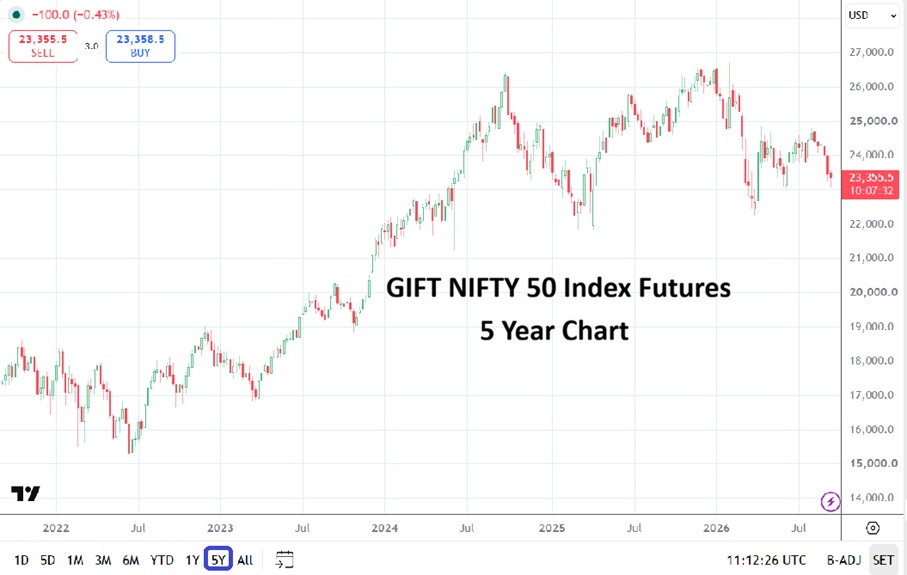
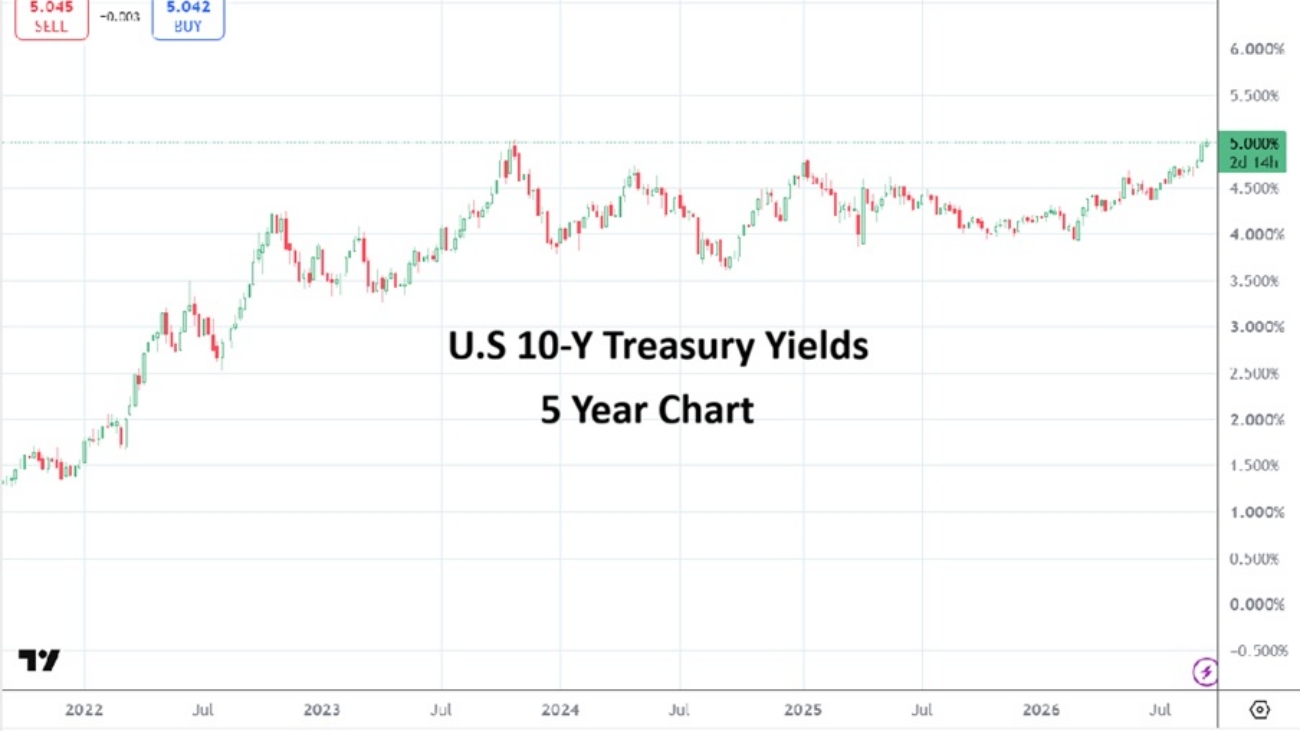
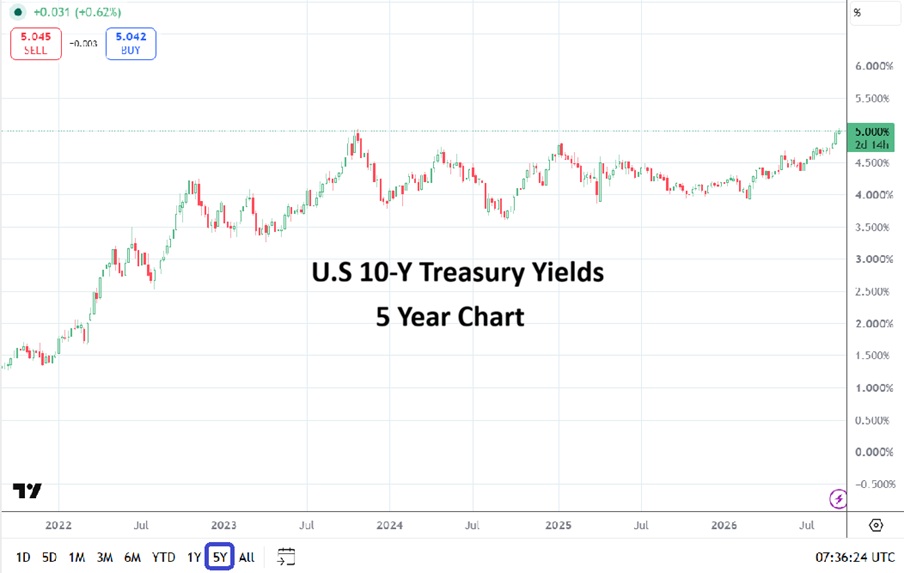
Early indications show that U.S markets will produce volatility today. The EUR/USD is straddling the 1.19000 level, Gold is around $5005.00. Bitcoin for those that care is near 68,700.00 USD.

Flowering Cactus

Not everyday produces profits. That is rather easily dealt with by large speculators, big players and financial institutions who have the time and money to withstand short and near-term storms. The current markets represent danger if you listen to the noise from outside sources – media, analysts and influencers engaged in trying to create opinions a lot of the time. However, bias must be distinguished and another very fundamental thing needs to be accessed.

Day trading is not the same as being a large speculator, big player or financial institution. Day trading usually means a person is a retail trader, a client therefore of a brokerage house. Day traders do not typically have deep pockets.

Getting caught up in the fear factor is a quick way to lose money fast. Gold, Silver, Bitcoin, U.S major indices, Forex have all delivered volatile trading the past few weeks. What looks like a gentle day on tap for day traders must always be treated carefully.

This week the U.S will release Retail Sales, Non-Farm Employment Change data and Consumer Price Index readings.

The jobs numbers which traditionally get released on Fridays and should have been published last week, were delayed because of the quasi-govt shutdown which happened. 

Last night’s Super Bowl was a rather lackluster game, while this has nothing to do with the markets, perhaps it will cause some type of reaction via a need for more noise (emotions) to be heard by those who have a desire for attention they do not deserve. No do not worry, the game’s outcome is not going to affect today’s trading. However, via behavioral sentiment this week’s coming results across a wide range of assets are set to be more entertaining than the Seahawks victory over the Patriots last night.

Day traders have likely made money for their brokers the past couple of weeks as they have taken hits because of volatility. This week could provide more choppiness. Retail traders need to remain careful and not bet on things simply because someone else suggests they are an expert on world affairs when they in actuality are merely getting paid to make noise and sell more bets. And by the way, betting on the Patriots last night to win just because they had won so many times before is a reminder past performance doesn’t guarantee future results.

Copy and paste the text from AMT that you want to share

post269

India Insider: Labor Productivity and Rising Household Debt

India Insider: Labor Productivity and Rising Household Debt

The desire for India to become a fast growing economy can be alluring, but without proper distribution of income and improved labor codes, this remains a major challenge to achieve. During coronavirus, acute problems were faced by those working in private enterprises. While some businesses and institutions supported their employees, many people were left behind without social protective measures.

According to Business Line newspaper analysis, from July 2022 to June 2023, an average salaried Indian male made 20,666 Rupees ($236 USD) and a woman made 15,722 Rupees ( $180 USD) per month.

Experience tells us that lower salaries in the rural areas are pervasive. Many private sector nurses, schoolteachers, and other service workers earn less than the international poverty line of $3 per day (around 250 Rupees per current Forex). Sometimes due to extensive workforce supply, some educated people must work blue collar service jobs additionally to make their ends meet.

Agriculture and Low Productivity:

Wage disparity and underemployment exists rampantly. Half of India’s labor force works in agriculture, where productivity is poor. In agriculture, farmers are both producers and consumers. There are barriers in food supply and demand for agricultural products. Farmers need access to local markets where their buyers can afford to purchase their produce. Without solid markets or better road infrastructure to reach them, many rural areas have less incentive to improve productivity.

As a result, many farmers produce low volumes. This is also one of the reasons why New Delhi is reluctant to permit U.S imports of agricultural and dairy products. Smaller farmers cannot afford to invest in education, which hinders their efforts to move into industries with higher wages. Without increasing labor productivity and better opportunities, most of the population will continue to work in agriculture.

Stagnant Wages, Informal Work and Problems in Micro-Finance:

India’s Micro-Finance Lenders Culminative Returns Past Year

A large portion of the workforce is employed via informal and low-paying jobs. If wage growth does not keep pace with increased productivity, domestic consumption will remain weak, making the economy more fragile during global downturns. Drivers and gig workers provide some insights because of their inability to make ends meet. Minimum wage policies are lacking for many gig workers. Employees work higher hours in these enterprises. Yet another reason why Indian households prefer to prepare their children for government jobs.

India’s micro lending industry is under stress as delinquencies rise at an alarming pace. This has prompted the Reserve Bank of India to intervene and impose fines on lenders charging excessive interest rates. Loan disbursements shrank 13.5% year-on-year, and shares of some small finance banks have fallen, this as they have been forced to set aside higher provisions for bad loans.

Total loans outstanding in the industry are around 3.75 lakh crore rupees ($43 billion USD) in financial year 2025, with non-housing retail loans accounting for nearly 55% of total household debt. Small ticket loans were meant to ensure financial inclusion in underserved areas. The RBI defines microfinance as collateral-free loans to households with annual incomes of up to 3 lakh Rupees (approximately $3,400 USD).

But when wages do not rise in line with inflation, households begin to borrow to cover deficits, often at high interest rates. This creates risk for small finance banks when borrowers default, besides many consumers who are clearly struggling. A bank employee in Tamil Nadu has said loan disbursements are now scrutinized more closely, and applicants with monthly EMIs – equated monthly installments – above 10,000 Rupees ($115 USD) are no longer eligible for micro-loans.

Job creation in the Manufacturing:

Despite media portrayals of India’s manufacturing ascent, Harvard economist Dani Rodrik offered a compelling remark paraphrased here which points out obstacles ahead, ‘what made manufacturing a vehicle for transformational growth was its ability to generate productivity while drawing unskilled labor from traditional farming’. Rodrik seems to believe manufacturing remains a lower income sector in India due to its large work force and inability to transform efficiently, while also facing globalization problems from other Asian competitors.

The reason why manufacturing companies in India can pay lower salaries is because of high unemployment ratios and a steady supply of new graduates every year, making it easy to find new employees. Wages don’t see much improvement because workers are replaced easily. Many employees working in manufacturing actually have engineering and Masters’ degree backgrounds. Their average salary is around 15,000 Rupees a month ($170 USD), the same amount paid to low skilled employees who have technician diplomas.

India needs to work on improving core manufacturing capabilities, creating better infrastructure via land reforms and logistical capabilities. Implementing a fair minimum wage policy would also influence the economy via better household wages. Yes, inflation is a concern, but India’s aspiration to become a $10 trillion economy will remain hard to attain unless coordinated policy changes occur.

Notes: 1 USD = 87.5 Rupees

post205

The Wigged and the Robed: All Hail the ICC in The Hague

The Wigged and the Robed: All Hail the ICC in The Hague

Opinion: The following article is commentary and its views are solely those of the author.

There is an old saying that extreme cases make bad law and that is mostly the case. Regarding policy though, sometimes it takes a disaster to shake people out of their mindset. Regarding the absurdly named International Criminal Court, or The Hague, as we like to call it, we have to admit that the recent decision to issue arrest warrants to Israel’s Prime Minister and ex-Defense Minister should be one of those decisions that will push the civilized world to correct its self-righteous post-Holocaust decision to create that court. 

What better way to make amends for the crimes of Europe, they thought way back when, than to judge, honestly and fairly all such “crimes against humanity” that happen in the world?

How much better the guilty Europeans will feel when they bring the less civilized to trial in their palatial courtrooms, especially as they will train the non-European judges themselves in the fineries of “human rights law”? The next Hitlers of the world will never be able to do their dastardly deeds since the civilized world will deter them with lawyers in fancy wigs and robes. Just look at all the tyrants and mass murderers who have been deterred over the past 70 years. The people of Cambodia, Rwanda, Sudan and Biafra (remember that?) thank their betters in European capitals. The Bangladeshis, too. 

I am sure that those men, women and children in Darfur have an annual party celebrating the brave men and women in wigs who sit in the Hague, for saving their lives. We understand that the hundred’s of thousands of women and girls in the Congo who have been raped (many multiple times) give a prayer of thanks to the judges in the ICC for saving them from their next rape, since the rapists have certainly been deterred by the brilliant legal analysis done in the Hague.

With the issuing of arrest warrants for Israel’s Prime Minister Benjamin Netanyahu and ex-Defense Minister Yoav Gallant, the ICC has done a great deed for all the suffering women in Congo and families in Sudan, to say nothing of all those hundreds of thousands of Syrians who have been killed or made homeless by the Syrian regime and their Russian, Iranian and Lebanese helpers. The young Iranian women who have been jailed for showing their hair and the Uighurs in China who are right now in concentration camps are now in a better place since Netanyahu and Gallant will be hunted down and shackled to be judged by the robed and wigged in The Hague.

But most important, all those European Jew haters, those of Marxist, Jihadist, Aristocratic or Nazi bent no longer must feel guilty for killing Jews. They have learned the lessons of the Holocaust very well – the lessons taught by the enablers of the perpetrators in the universities, courtrooms and media outlets.

What can the civilized world do to make sure that the wonderful gains the ICC in The Hague don’t disappear? Make the ICC disappear. There is nothing so satisfying for those of us who love truth and justice than ridding the world of another symbol of global hypocrisy and self-righteousness. I can assure you that those that actually suffer from mass murder and rape will not be worse off.

Disclaimer: the views expressed in this opinion article are solely those of the author, and not necessarily the opinions reflected by angrymetatraders.com or its associated parties.

You can follow Ira Slomowitz via The Angry Demagogue on Substack https://iraslomowitz.substack.com/ 

postR176

Make Common Sense Great Again: On Moving Away from Nuance

Make Common Sense Great Again: On Moving Away from Nuance

Opinion: The following article is commentary and its views are solely those of the author. This article was first published the 23rd of July 2024 via The Angry Demagogue.

Has there been a total breakdown of readiness in the West? When we look at seemingly unrelated events we see that people in responsible positions in governments around the Western world have missed signs that are obvious – and not only after the fact. The attempted Trump assassination just got me thinking how no one seems to react to the obvious anymore. It seems that both the local police and the Secret Service knew that this young man was on a roof with a rifle and no one took the most elementary actions of delaying Trump’s appearance or trying to stop the shooter or even ascertain his motives all of which was obvious to everyone else. We are not talking about someone missing a shot at him or even forgetting to check a specific place, but an active decision was made – to do nothing.

On October 6 and 7 the IDF Chief of Staff and his senior advisors on the General Staff heard of possible Hamas plans to attack, knew of previous intelligence that detailed the exact attack that happened and even refused a request of the head of the Southern Command to move 4 helicopters closer to Gaza. Instead of doing even the minimum, they just did nothing. They ignored the obvious and ruled purposely against common sense and in favor of their own preconceived notions.

As Russia was massing troops on the border and as Putin’s talk was becoming more and more belligerent the US administration did nothing that might have at least hinted to Putin that this could only lead to disaster. Putting US troops on a higher alert, inviting the Ukrainian ambassador to the White House as a show of support – anything really, might have given Putin food for thought. As Iran moves closer and closer to attaining a nuclear weapon and taking control of the middle east, the West just does nothing. Destroying Houthi assets (as the Israelis have just done), sending B52’s into the sky for training missions to destroy Islamic Republic assets – all that might have made the Iranian rulers wonder what was in store for them and limiting the war to Gaza. But again, against common sense, nothing was done because …. Wishful thinking.

If those responsible were acting like boys in the school playground (are boys still allowed to play in the playground?) they would have done more than they did in all these cases. 

Since the end of the Cold War we have seen the abandonment of common sense in favor of sophisticated analyses where nuance trumps simplicity and bias dominates the analysis of data and where cliches overtake serious policy. In classical Jewish biblical exegesis, there is one rule which nearly all (non-mystical) commentators hold and that is that the exegesis cannot contradict the simple meaning of the words of the Bible.  True enough, that is stretched to points of wonder sometimes – but they still cling to the rule. 

Common sense is underrated in policy analysis and often in business, but those who ignore it now will be challenged later. Common sense means the acceptance of what people say and looking at data without bias. Common sense means that you have to understand the person you are talking to and don’t assume they think like you. 

Back in my university days I read a lot of Hannah Arendt, who, in spite of the banality of her banality of evil theory had a lot to say. In her book “The Human Condition” she speaks of common sense – or as she often puts it “the sense of the common”.

I would like to quote her here, even though I tend to think she would not have thought that it was the rulers, the policy makers and the writers who are ignoring common sense:

“The only character of the world by which to gauge its reality is its being common to us all, and common sense occupies such a high rank in the hierarchy of political qualities because it is the one sense that fits into reality as a whole our five strictly individual senses and the strictly particular data they perceive.  It is by virtue of common sense that the other sense perceptions are known to disclose reality …. A noticeable decrease in common sense in any given community and a noticeable increase in superstition and gullibility are therefore almost infallible signs of alienation from the world.”

Arendt of course assumed that the lower or working classes were susceptible to superstition and gullibility but in these times it is the ruling classes that have abandoned common sense in favor of superstition and gullibility. It is they who are alienated from the world. Preconceived notions that contradict the plain meaning of the world is today’s superstition – and it is no less dangerous and irrational than the superstitions of times past.

Let’s take a brief look at these policy decisions by nearly all western countries, regardless of their geographical location or economic outlooks, their demographic trends or the overall culture of their people and their neighbors resulting directly or indirectly of the perilous situation the free world is now in.

Defense Spending and Force Size

The post-cold war “peace dividend” became an idol of western policy makers.  Massive cuts in defense spending even in things that were very necessary to the maintenance of said “peace dividend” – like naval power – was the preferred way of dealing with the end of the Soviet Union. The “End of History” was read simplistically instead of realizing that other ideologies and other powers might very soon challenge the victorious west. Some thinkers, I think of a professor of mine (Elie Krakowski) who back in 1979-80, before the collapse of the Soviet Union, spoke of Islam as the third force which will challenge the West and the East. I studied in a small university and if we were discussing it back then how are policy makers in Washington, London, Tel Aviv and Paris not speaking of it today?

While Edward Said’s “Orientalism” was the talk of the town, Bernard Lewis and Fouad Ajami were, despite their posts at Princeton and Johns Hopkins, not taken seriously enough. If they were, the US Navy would not have gone from 594 ships in 1987 to 275 in 2016. The British Navy  went from about 170 ships in 1970 to well under 50 in 2017. The rest of Western Europe we all know about. But at least countries like Netherlands, Belgium and Denmark don’t face hostile neighbors and were never meant to have forces that would do more than assist in minor operations.

Israel on the other hand has always faced neighbors who have desired to destroy it.  Even the countries with which it signed peace treaters, Jordan and Egypt, have never been able to translate these treaties into popular support and are always a coup away from belligerence. The history of dictatorships in general and of the Middle East in particular ought to have given the Israeli high command at least a hint as to what they might be facing. With the advent of Iran as a major regional power with the means and desire to spread its theo-revolutionary ideology, Israel ought to have realized that the era of wars was not over. Yet, since 2000 Israel has cut 6 divisions and decommissioned 2,000 tanks from its forces. It has cut military service for men from 36 to 32 months, even as it has not increased the mandatory service for woman from 24 months even though it has increased the amount of women in combat and combat support roles. The ultra-orthodox still don’t serve (they are about 16% of the draft class) zero even after October 7 and the number of youth who have received exemptions due to “psychological” reasons has skyrocketed to nearly 13% of the draft class. I don’t mean to belittle those with true psychological issues but rather the high numbers signify that many if not most are of a class that allows them to afford to pay psychologists for convenient diagnoses.

In other words – the IDF, the Finance Ministry and the political class all found it convenient to reduce the size of the army – both manpower and equipment – and used the excuse that there will be no more ground wars to justify the move.

The Ukraine conflict revealed to the world that US arms production of even the most basic arms is not enough for the US itself to maintain minimal levels during wartime.   The current Middle East conflict has magnified this disaster.

Common sense readiness has been ignored throughout the Western world due to sophisticated thinking more wishful than realistic. This is nothing less than a messianic and superstitious belief in the end of wars.

Immigration and Assimilation

If there is one issue that common sense has missed it is immigration. The reactions of average citizens to unlimited immigration in Western democratic countries has been uniform – NO! In some countries the yelling is louder but in all western countries there is significant opposition, on common sense grounds often, to the establishment immigration policies.

I am an immigrant to Israel and my grandparents were immigrants to the United States. Immigration, the movement of peoples from place to place has been going on since people left Africa – and before. But there is no separating immigration from assimilation unless your immigration is due to imperialism and conquest.  The Romans, Greeks, Chinese and Persians of ancient times, the Arabs of late antiquity were all imperialists. There was of course the age of imperialism that ended in WWI. But 21st century immigration is not of national conquest but of individual movement of people and families. One by definition must adapt to the local cultures – in the widest sense of the word. If a cotton farmer from Arizona wants to move to Iowa, he better adapt to the climate and figure out how to grow wheat or soybeans instead of cotton. If an aristocrat from England decides to move to the United States, he needs to know that his family heritage and titles won’t get him much. If a Spanish or Chinese speaker moves to Germany, the expectation is that he will learn to speak German.

An immigrant who does not respect the local culture in all its manifestations needs to get permission in order to stay in the new country. That is the way of the nation-state that has protected freedom in the western world so well (if not always so well). We can’t compare the 21st century to the pre-WWI world where borders were porous and people that survived the trip across a continent or an ocean could settle in that new land. Some more successfully than others. 

Common sense dictates that an immigrant that does not respect the laws of his new home has no right to live there. Yet, time and again, immigration policy has been separated from the law and being law abiding has no bearing on future citizenship.  Therefore, there is no demand from the immigrant and no opportunity for the immigrant to assimilate and be part of the social fabric of his new country. That being said, the mass Islamic immigration into Europe could be said to be imperialistic as the leaders of these communities have discouraged any type of rapprochement with Western values and law. That, along with the demographic collapse of indigenous Europe has put Europe on the brink of either a civil war or a peaceful surrender to Islamic imperial forces.  

Free Trade and Social Peace

There is no doubting that free trade brings prosperity and that economic growth better than any other global trading system. Free trade  is also the best way to lift the global poor out of poverty. The U.S constitution understood the importance of free trade, as states were prohibited from starting trade wars with each other.   This has also been the “good” in the E.U and has produced much prosperity in that Union.

Yet, free trade with allies needs to be differentiated between free trade with enemies  – meaning those that oppose our system. Free trade that allows your enemies to defeat you militarily is not free trade but suicide. So too, trade policies need to have social issues taken into consideration. This is not a call for tariffs or against free trade pacts, especially with neighbors, but rather they need to be adjusted with common sense solutions to employment and other problems that will arise from any economic change. 

Social peace is the second half of this section because, besides immigration, the erosion, not to say destruction of physically intensive jobs can and often does lead to social violence for reasons obvious to those with common sense.

Energy and Food Supply

For the most part, you would think that after national defense, it is a government’s first responsibility to its citizens to guarantee the food and energy supply of its citizens. Before we get to luxury and access to travel, the ready supply of food and energy seems to be the minimum that a government ought to do. And yet, when we speak of issues related to climate change (and lets not get into the “is it or isn’t it real” argument) the solutions first mandated to the problem have to do with limiting both of these items without which we cannot live. In California, farmer’s access to water is limited even after the drought due to concerns about some fish and climate, and in the Netherlands they want to pay farmers to stop producing food so that the Earth will not suffer. 

What is the plan here? Regarding energy supply, one would think that shoring up access to alternative energy would take priority over banning current ways of producing energy. In California, they have been having rolling blackouts in the summer for years and they are looking to ban gas stoves and ovens and gasoline powered cars. Private jets and yachts though are off limits for obvious reasons. What is the plan there? Is there any real preparation?

As for food supply, is the  plan to reduce population or to reduce calory intake? To what levels? Is there an expectation that people will starve themselves to “save the planet”? Again – I am not arguing for or against human causes of climate change but rather, for the common sense understanding that securing the world’s food supply takes priority over closing farms or turning them into organic utopias.

A perfect example is Sri Lanka where those in power bought into the organic farming ideology of Western aristocrats and they ended all non-organic farming causing a famine and a depression. People who worked hard their whole lives lost all their savings as they were unwilling participants in a cruel experiment to see if organic farming can feed a small island nation.  

In sum – a bit less nuance and a bit more common sense – a bit more sensing what is “common to us all” would be welcome in political and policy matters. Maybe if we pursued more common sense policies and a lot less superstition and bias there would be less yelling and screaming in the public square. 

Disclaimer: the views expressed in this opinion article are solely those of the author, and not necessarily the opinions reflected by angrymetatraders.com or its associated parties.

You can follow Ira Slomowitz via The Angry Demagogue on Substack https://iraslomowitz.substack.com/ 

postN99

Regional War Spreads: Will Blinken Wake Up to the Reality?

Regional War Spreads: Will Blinken Wake Up to the Reality?

Opinion: The following article is commentary and its views are solely those of the author.

Despite the denial of reality by the Blinken State Department the Middle East war gets hotter and spreads eastward (even without) Israel’s intervention. After spending years appeasing the Iranians the world is now faced with the results of that policy. 

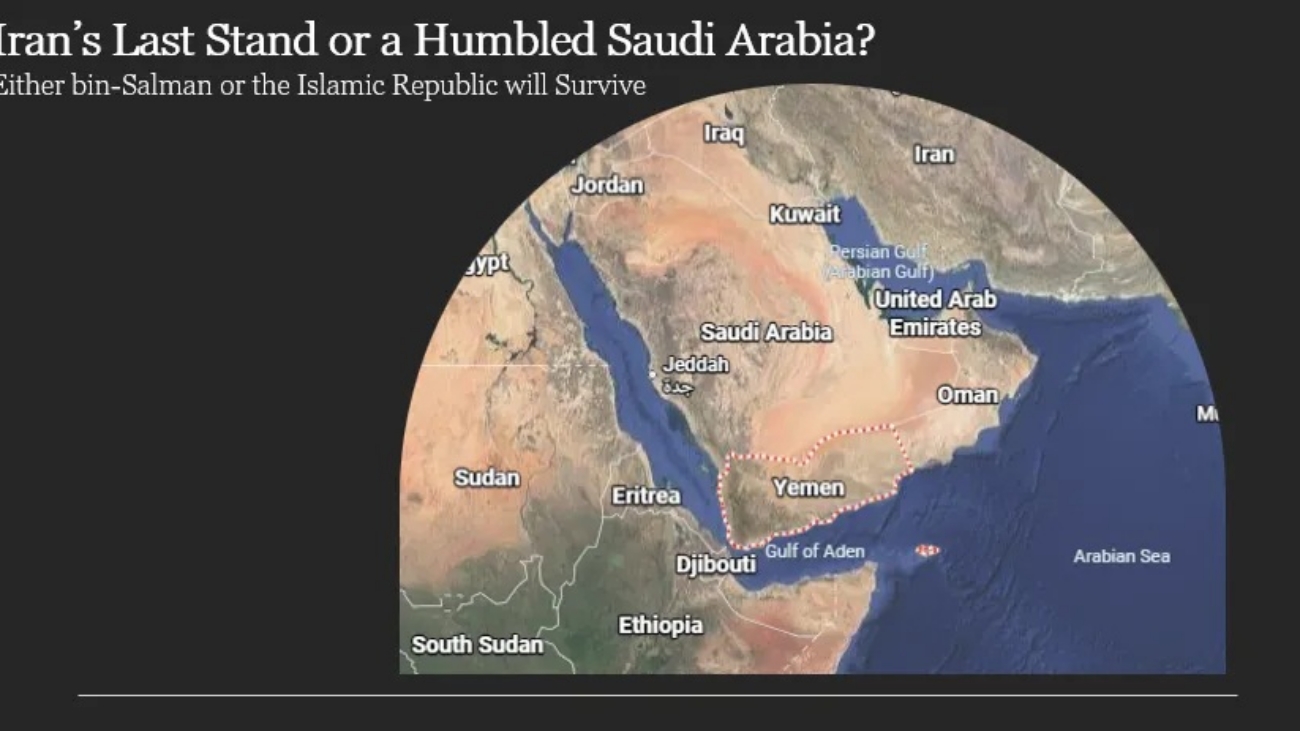
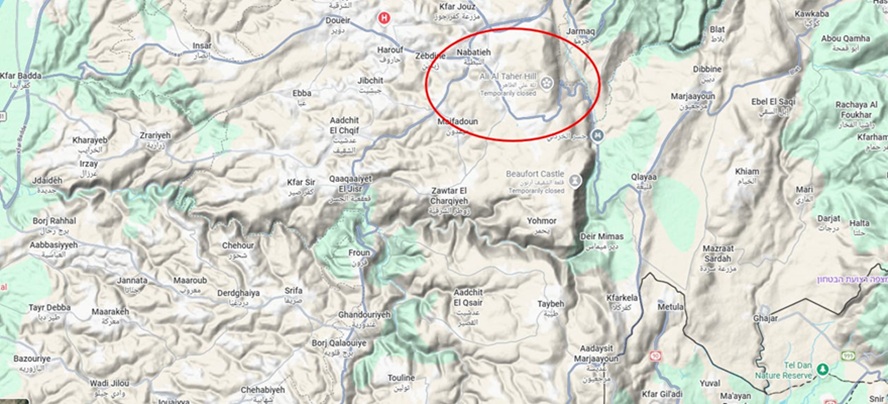
Iran has trained and funded terrorists in Gaza and the West Bank where the high intensity battles continue. In Lebanon-Israel there are close to 100,000 Israelis displaced, and it seems more Lebanese have left the area south of the Litani as heavy rocket, tank, artillery and air attacks continue from both sides of the border. Attacks have intensified against Israel from Syria and Yemen, and Iranians and their militias are attacking U.S forces in Iraq and Syria. Turkey, Russia and Syrian forces continue bombing areas of northern Syria and now both Iran and Turkey are bombing Kurdish lands.  

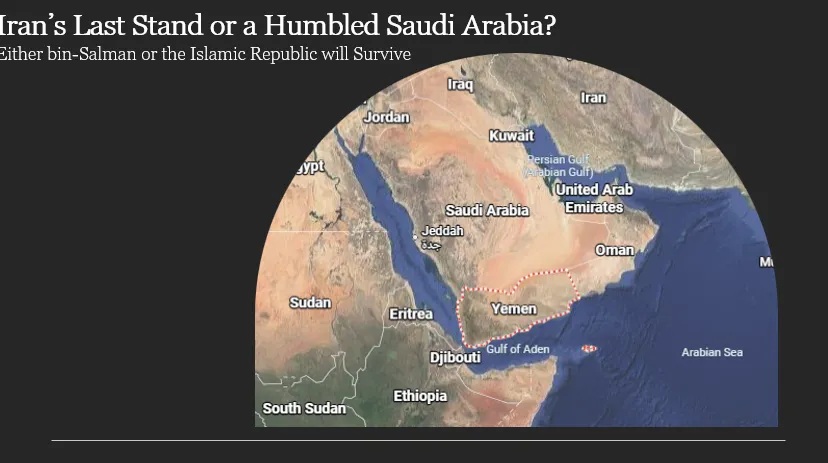
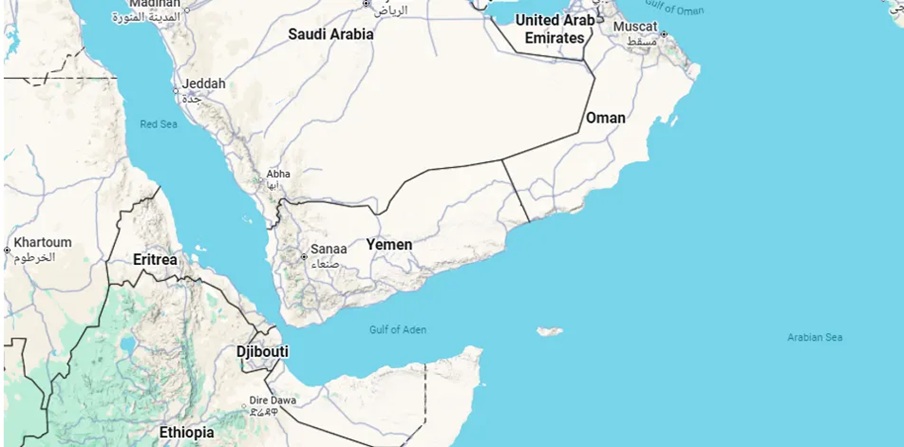
We know what is going on in Yemen and the surrounding seas with global shipping coming to a standstill there, and diminishing Suez Canal traffic is slowly crippling an already disastrous Egyptian economy. The U.S and the U.K have been forced to bomb Houthi areas, but this of course is after the total failure of the Blinken foreign policy of ‘ending’ the war in Yemen by cutting arms sales to the side that was pro-West while encouraging Iran to continue funding, arming and training of their Houthi allies.

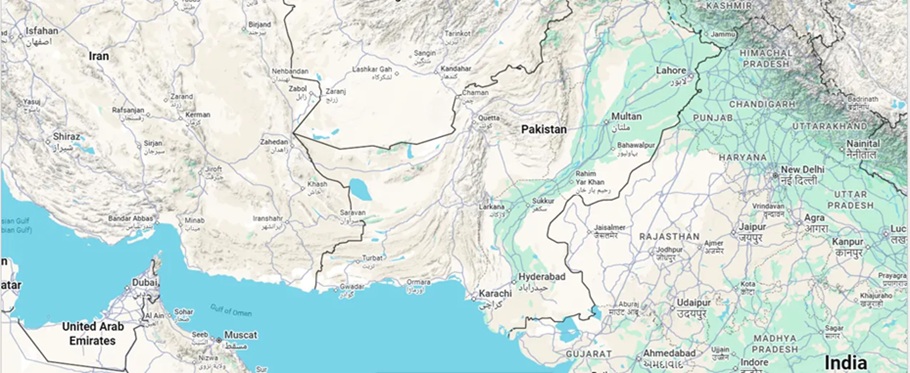
A new front has now opened between Pakistan and Iran. We spoke earlier of the Sunni-Shiite war heating up, but it has spread faster and more violently than we expected. 

Over the last few days fighting on the Iran-Pakistan border has heated up. It started with heavy fire between the Pakistani group Jaish ul-Adl and Iranian border guards in the Sistan-Baluchestan border area, and included the assassination of Iranian Hussain Gwadanfur on the Khash-Saravan road.

In other clashes between Iranian and Pakistani forces at least two Iranian Revolutionary Guard (IRG) soldiers were killed, and the IRG has shot rockets into Pakistan hitting Turbat and surrounding areas near the coast.

Pakistan’s Ministry of Foreign Affairs released a statement claiming that they “undertook a series of highly coordinated …. precision military strikes against terrorist hideouts in Siestan-o-Baluchistan province of Iran”. At the end of the press release they speak of Iran being a “brotherly country” with “great respect and admiration for the Iranian people”. It seems that Pakistan does not want to publicly admit that official Iranian forces were involved in the attacks.

What is incredible about Iran is that they have now attacked three nuclear armed states – the U.S, Pakistan and Israel – without fear of retaliation. We can only imagine what the Revolutionary Islamic Republic of Iran will do once they too have a nuclear weapon.

We are in a regional war with fighting going on daily from Pakistan to Libya. Iran, not Israel, is at the center and is the cause of nearly all the fighting and tough statements and tough actions need to be taken against Iran – not Israel. Senate majority leader Schumer has been quoted as saying that he wants to put extra conditions upon the sale of arms to Israel, but where was he when Obama sent planeloads of cash to Iran and Biden-Blinken released further billions in November of 2023? Where are the conditions placed on a terrorist state?  

The Biden-Blinken foreign policy of appeasing enemies and threatening allies that is at the core of its operation continues apace. First with the cutoff of arms to Saudi Arabia and their Yemeni allies in order to “end the war” and then to “advice” the Ukrainians not to provoke the Russians, and next heavy pressure on Israel to ‘surrender’ to Hamas by leaving them in power.  

One can make deals with countries that are interested in their people. One cannot make deals with terrorist groups or revolutionary states that are looking to upend the global order. That is Iran in a nutshell. 

Disclaimer: the views expressed in this opinion article are solely those of the author, and not necessarily the opinions reflected by angrymetatraders.com or its associated parties.

You can follow Ira Slomowitz via The Angry Demagogue on Substack https://iraslomowitz.substack.com/

postN19

Preventing WWIII: This is a 1936 Moment for the Middle East

Preventing WWIII: This is a 1936 Moment for the Middle East

Opinion: The following article is commentary and its views are solely those of the author.

The wonderful historian and public intellectual Niall Ferguson has aptly called the current US-China relationship a “Cold War II” and the current debate in the punditry is if the Israel-Hamas war lead to a WWIII. But what if we are already in WWIII? While Russia and the rest of the world did not expect the war in Ukraine to still be fought nearly three years later, the Russia-Ukraine war is now clearly a part of the fight of the West vs the new Axis – Russia/Iran/China/North Korea. But it was the Hamas attack of Israel on October 7 and the response of the Axis and its allies that have more clearly established the battle lines.

We have Russian and Iranian weaponry vs. American and Israeli weaponry. The Russians and the Iranians are using what we so quaintly call “proxies” for a plausible (un)deniability, sheltering them from retaliation. Iran has its various Shiite militias, with Hezbollah being the strongest and most lethal. Hamas and Palestinian Islamic Jihad (PIF) are the Sunni useful idiots helping the Shiite empire to destroy their Sunni cousins by dying for the cause. The Shiite militias formed and fighting in Iraq and Syria along with the Houthis in Yemen round out Iran’s ability to pretend it is not fighting while creating a genocide of Sunnis in Syria and Iraq and Jews in Israel. On the Russian side we have of course the infamous Wagner Group which in its racist undertaking is taking over and subjugating sub-Saharan Africa in its run to control minerals, gold and diamonds. They are now helping Hezbollah with weaponry and training by providing anti-aircraft weapons. The two groups fought hand in hand saving Bashir Assad, the leader and butcher of Syria, to stay in power so they already have close ties. Wagner is Russia and Russia is Wagner. Hezbollah is Iran and Iran is Hezbollah. The quicker we understand this the better off we will be.

We don’t have any details on Chinese or North Korean weaponry being used by Hamas or Hezbollah, but that might just be a timing issue. China has already decided not to report Hamas atrocities to its people in its official Chinese language news service and are eliminating Israel from its maps. It only reports Israeli’s response and has taken a clear stance supporting its ally, Iran. Will they learn from their Axis allies and also form proxies in Asia to destabilize countries like the Philippines or Vietnam while being immune to retaliation? They don’t need to conquer or even blockade Taiwan if they can destabilize their neighbors while still selling the West all that it wants to buy and inundate our youth via Tik-Tok propaganda.

Japan has realized what this war is about, and is supporting Israel like it never has. Being totally dependent upon the Mideast for its oil, Japan has never been a close friend of Israel. But they have now condemned the Hamas attack while refusing the criticize Israel’s massive response. The Japanese understand well that an Israeli defeat can lead to Chinese dominance in the Indo-Pacific.

Back to the Mideast – it seems we always go back to the Mideast.

Iranian backed Hamas and PIJ launched a brutal attack on Israel.

The Iranian backed Houthis in Yemen declared war on Israel and launched cruise missiles and drones in their opening attack.

Iranian backed and financed Shiite militias are moving to Syria and Lebanon hoping to open two new fronts against Israel.

Iranian backed and financed Hezbollah is attacking from the north in what, for some reason, we are not yet considering a war.

And Iran itself is feeling safe from attack from Israel or the US/West since “only” its proxies are fighting.

This is the remilitarization of the Rhineland of 1936 and a Western betrayal of Israel by hamstringing the IDF by allowing gasoline into Gaza or by a forced cease fire, will be the Munich, 1938.

Are we in WWIII yet? Not being an expert, I don’t know. But the main link tying the Axis together is Iran. They are the most experienced in exporting terror and supporting anti-Western regimes from the Mideast to Africa to America’s doorstep – Latin America. They support and are supported by the Castroite regimes in Cuba and Venezuela and have made deep inroads in Argentina, Brazil and now even Mexico. They are currently nearly as great a threat to the west as is China and probably a greater threat than Russia. A nuclear Iran would create three nuclear powers that could threaten the West as an Axis or independently. The Obama-Biden Iranian policy has been proven a total disaster and its seems that the Biden team is finally understanding this. But they can, in Margaret Thatcher’s famous warning to the first President Bush, “go wobbly” at any moment.

The only way to prevent a full fledged WWIII is Iranian regime change. This would bring the entire Persian Gulf (and its oil) into the Western sphere of influence as China does not yet have the naval power to challenge the US. Hezbollah would be instantly neutralized reducing the threat of war and denying the anti-Western powers another presence in the Eastern Mediterranean. Although the Syrian butcher, Bashir Assad would still have Russia to back him, it is not clear that Russian power alone could keep him in power. In Latin America, Iranian export of terror would stop instantly.

This does not mean that the US needs to invade Iran in order to defeat it. A majority of the Iranian people are sick of the Islamist regime and sick of paying the price for their being ruled by terrorists. The destruction of Iranian nuclear and missile facilities along with the destruction, by air and cruise missiles, of the main Revolutionary Guard bases will be enough. It is not an easy task -but one within the capabilities of the US Navy and Air Force. It is only the Revolutionary Guards that keep the terrorists in power in Iran – the regular Iranian armed forces can be left alone to decide if they want to help overthrow the regime or stay in their barracks. Once they see that the Guards are weakened it is a good bet they will take the side of the Iranian people and help topple the Islamist-terrorist regime.

Regime change in Iran in 2023 will change the global dynamic just as regime change in Nazi Germany in 1936 would have saved 70 million lives in WWII. A failure to act against the source of evil and to cut off the main link in the current Axis will just kick the can down the road – once again. We have appeased Iran enough and if the West and the US don’t act quickly it will have to act while simultaneously fighting off a Chinese attack in the Indo-Pacific – on its own or with its very own proxies – as well as terrorist attempts coming from Latin America and Russian nuclear blackmail in Europe.

And we haven’t even spoken of the West’s moral obligation to prevent a second holocaust, which will be the very first task of a nuclear Iranian regime.

Disclaimer: the views expressed in this opinion article are solely those of the author, and not necessarily the opinions reflected by angrymetatraders.com or its associated parties.

You can follow Ira Slomowitz via The Angry Demagogue on Substack https://iraslomowitz.substack.com/

postN19

Broader Alliances: Sustaining Economic and Political Power

Broader Alliances: Sustaining Economic and Political Power

The following article is commentary and its views are solely those of the author.

If the United States decides to abandon its role as the premier global superpower and shall only be a Pacific and Atlantic power, withdrawing as defender of free seas, free trade and freedom in general, its democratic allies will have to start looking elsewhere for broader military alliances. This large group of nations would have to defend their interests against a revanchist China tied to Iran, Russia, North Korea and many of the Latin American countries – possibly including Brazil, and South Africa who have questionable politics and outlooks.

Eastern Mediterranean Alliance: A Strong Sea Power

Here is a speculative, yet reasonable look at the future of the free world. Let’s start with the Eastern Mediterranean where the two major powers are Israel and Turkey. One cannot deny that both these countries outclass all others regarding military might in the region. Israel’s air force is second to none and its navy is becoming a strategic necessity as it needs to defend its natural gas fields miles offshore. It now has six submarines that are capable of projecting power anywhere in the Mediterranean and even into the Indian Ocean and Persian Gulf. Turkey is currently a NATO member, but it is not clear that this will outlast the first half of the 21st century.

There is currently an informal alliance among Israel, Greece and Cyprus (both NATO countries) via joint military exercises and intelligence sharing. The Israeli navy and air force train regularly with Greece and its special forces train in the Cyprian mountains with its army. It would be in all three countries interests to formalize a treaty – if not of mutual defense, at least of mutual aid during times of war. All three of these countries are democracies and all three have mutual economic interests.

A formalization of this alliance makes sense now and if there is a NATO collapse it turns into a necessity for Greece and Cyprus. Adding Egypt (although it would be the only non-democracy) to this group would only strengthen the alliance and keep Turkey at bay. A post-Erdogan Turkey that is comfortable with its Islamic character and its modern society could even join this grouping with Israel as a potential peacemaker between the historic Greek-Turkish rivalry.

This alliance without Turkey is a powerful force in the eastern Mediterranean, and this alliance with Turkey could neutralize a nuclear Iran. A Post-Hezbollah Lebanon which is in the interests of all of these alliance members (including Turkey and Egypt), could become a reality and another member.

A New Alignment: The United Border Nations

What about Eastern and Central Europe? Poland is rapidly becoming the major non-nuclear European military power. Within the next few years it will outshine Germany and the U.K and rival France. It is quite clear, nuclear weapons aside, Poland would probably defeat Russia in a number of weeks, if not days if a conflict were to ignite.

Whether the Russian-Ukrainian war ends in a Russian defeat or in some sort of face saving armistice, Russia will not lose its aggressive nature or nuclear capabilities and it will inevitably become aligned more closely with China and Iran because of its current political nature.

The important new alignment will be categorization of ‘countries bordering Russia’. A new alliance of Poland, Finland, Sweden, Norway and the Baltic states – Lithuania, Estonia and Latvia together would have the land, sea and air power necessary to deter and defeat, if necessary, any Russian imperialist expansion. Even with closer ties to China it would be difficult to imagine that, over the next 50 years, Russia would be a threat to this alliance. Adding Ukraine to this grouping would make a powerful force. Its joint population of over 100 million people, while not quite Russia’s 150 million – would be a formidable adversary, especially as the technological skills of these countries is first world and continuing to improve. Adding the other former Warsaw Pact countries like Czech, Slovakia, Romania, Moldova and Bulgaria can only increase its potency.

Unlike the Eastern Mediterranean alliance mentioned above, this would have to be based on a mutual defense treaty in order to properly deter any Russian-Chinese-Iranian attack. Linking up, informally with the ‘new’ Eastern Mediterranean Alliance would create a powerful grouping of free countries against any attempt by authoritarian adversaries. Adding an economic aspect to these border nations and an alliance with the Eastern Med group with free trade zones would create a strong challenge to any attempted Chinese hegemony.

Asian Border Nations Group: Potential Look Ahead at Potential

If we were to unite the Eastern Mediterranean and Border Alliances to an admittedly non-democratic Asian ‘stans nations, including Kazakhstan, Kyrgyzstan, Tajikistan, Turkmenistan and Uzbekistan with a joint population of around 80 million, we are beginning to see the creation of a multi-cultural alliance that extends from the Arctic Ocean through Central Europe, Northern Africa and into Asia.

The Crucial Partner in Order to Balance Power: India

Which leads us to the Indian Ocean; a dominant India can help control the sea lanes from the Persian Gulf to the Bay of Bengal and down to Australia. An Indian-Australian alliance, along with Israel would create a democratic economic and military force that would keep China and Iran from dominating the region. This would require an Indian navy that is not only large, but effective also because it would hold a main responsibility for patrolling the seas from the Persian Gulf up to Australia strongholds.

As India also reaches its potential as a global manufacturing giant, it will be a force to be reckoned with. Including into this potent mix of nations, is the possibility of adding authoritarian countries like Saudi Arabia and the other Gulf states; along with Thailand, Myanmar, Malaysia and Indonesia who have strong ‘western’ economic interests and would create a formidable bulwark against China’s imperialist Belt and Road project.

Without the need to project naval power worldwide the Unites States could use it massive naval, air and ground forces to take better control of the Pacific Ocean along with Japan, South Korea and Australia.

If we add countries like the Philippines and Vietnam, then China would be deterred from further aggression. The only other region that would fall under American responsibility would be the Atlantic Ocean – the shipping lanes to Europe, West Africa and the Mediterranean. Along with the UK and France there would be no challenger to the control of the Atlantic. This could also lead to a revival of the old Monroe Doctrine and maybe free South America from the destructive influences of Iran, China and Russia.

The Global Economy and Free Trade Zones with a Stable USD as Reserve Currency

What does all this mean for the global economy? The free world along with its less than free allies who fear China, Russia and Iran could still maintain a U.S dollar based world. Free trade zones amongst and between the various alliances along with a revival of manufacturing led by a technology revolution using AI, quantum computing, renewable energy and space exploration could lead to a global resurgence of free countries that could stop the authoritarian appetites of Russia, China and Iran in its tracks. This can only happen with a stable reserve currency the ‘West’ can rely upon which is the USD.

Potentially a U.S freed from being the sole defender of freedom in the world, would help get America’s fiscal house in order and allow it to focus on being a dominant economic power. Is there a future for the ‘free world’ without a United States that projects power globally? Currently, a U.S withdrawal from global military assertion would certainly cause the end of freedom (economic and political) in the world for many nations. However, with the new alliances described above and a fiscally responsible United States, freedom could yet make a comeback.

Disclaimer: the views expressed in this article are solely those of the author, and not necessarily the opinions reflected by angrymetatraders.com or its associated parties.