Alphabet 20260724

The Not So Coincidental World of Google and WTI Crude Oil

Energy and Commodities in a World Where Legacy and Infrastructure Collide

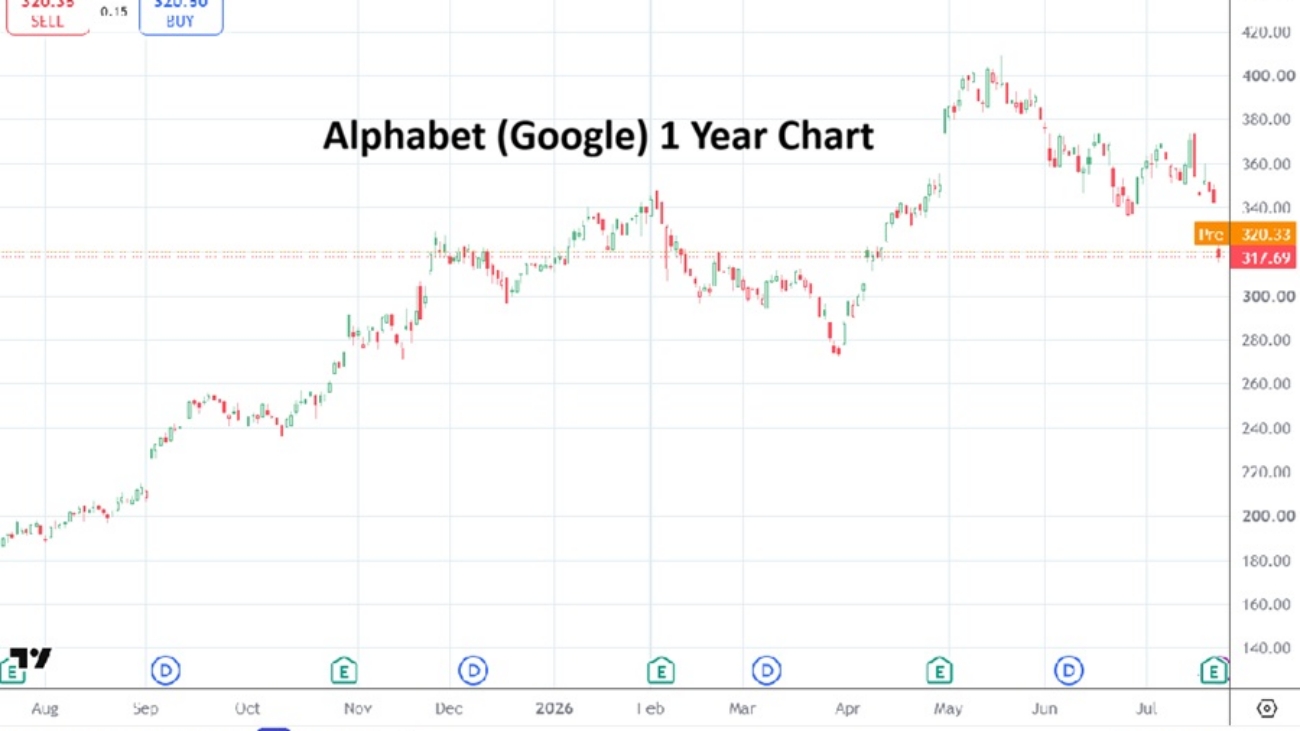
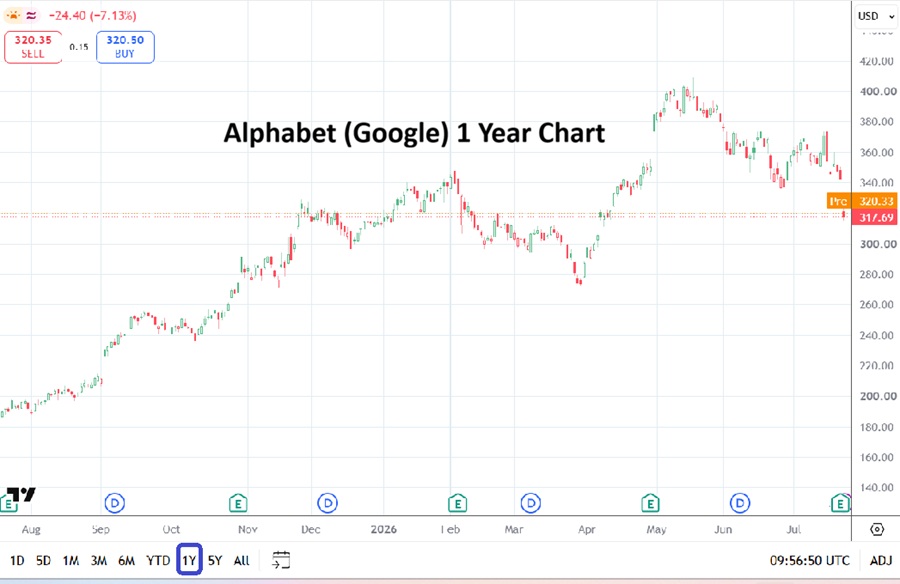
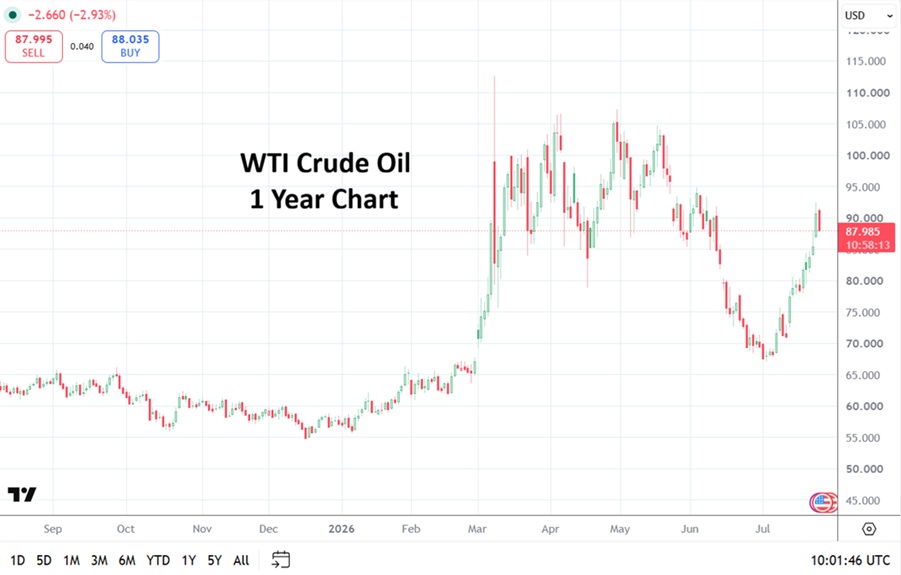
Google (Alphabet) finished yesterday’s trading near $ 317.69, as of this moment WTI Crude Oil is around $88.50. It might seem rather odd to pair the two into the same paragraph, but this is not a coincidence. Both are now relevant regarding energy costs for consumers and produce an abundance of legacy products the world over. And oddly enough their one year charts almost look as if they are dancing in step.

Google is facing headwinds in recent trading as questions surround its capability to produce revenues because of its push into Artificial Intelligence and always growing need for more data center power. AI which has been an abundant source of bullishness in the Nasdaq 100 and had a knock-on effect into the S&P 500 the past couple of years has become shadowed by concerns of turning into a commodity. 

Alphabet (Google) One Year Chart as of 24 July 2026

As competition in the AI sector increases this is creating pressure on prices in order to allure customers away from competing brands. China is also stepping into the world of Artificial Intelligence and it will certainly use its ability to produce less expensive products moving forward. Profit margins are being fought over by competing companies

Google is not a poor company, but there are growing doubts about its debt and revenue ratios. The costs to power its worldwide data ability for its users and its investment into AI via Gemini and its DeepMind technology does not have a particularly easy solution. Estimates from a variety of sources claim that Google has reduced its staff between 1,500 to 3,000 through employee reductions and reorganization, this as the company needs to pile more cash into infrastructure.

The onslaught of other companies able to produce AI which is seen as more robust and capable have also caused a marketing headache for Google, which has an effect on behavioral sentiment. GOOGL was trading at apex levels only two months ago when it was traversing above the $400.00 mark. The downturn thus far has been bad, but not catastrophic. 

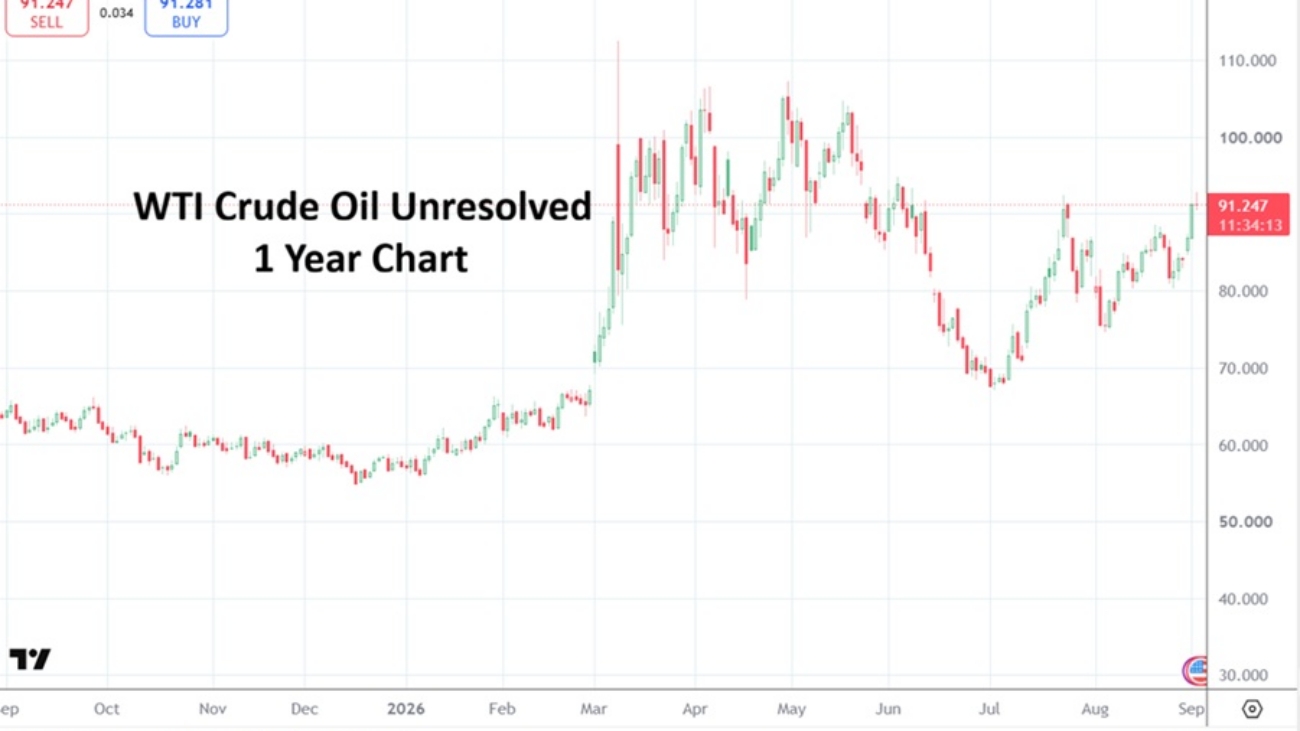
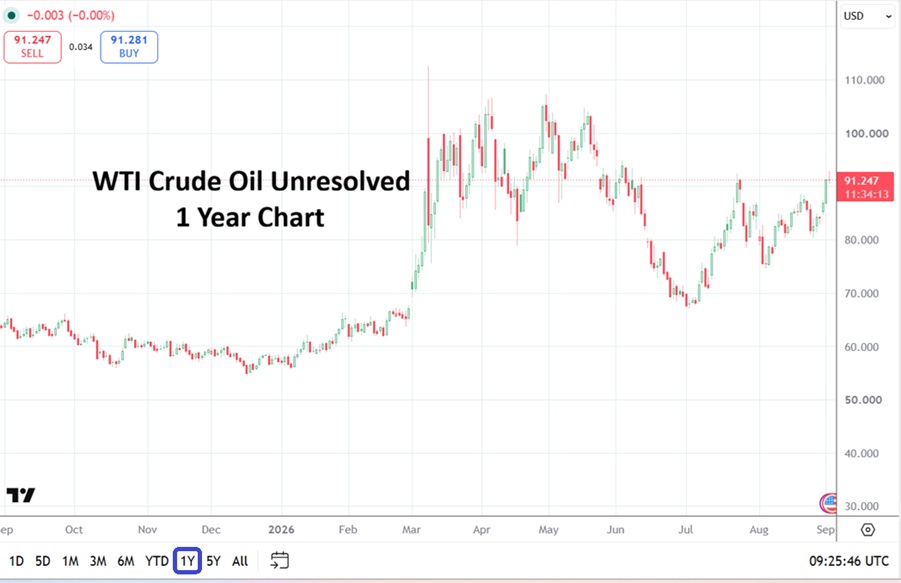
WTI Crude Oil One Year Chart as of 24 July 2026

While nervous sentiment can be blamed on the situation in the Middle East the past handful of months, the downturn which has occurred for Google and other important companies on the Nasdaq 100 involved or seen as having an ancillary association with AI needs to be considered a legitimate reaction because of worries surfacing regarding the ability to simply pay for all of the research and infrastructure. 

In order to power AI it is becoming clear that energy costs are part of investing frameworks. Concerns about an AI bubble started to gather an audience last fall and the rumblings have grown louder, yet it can be said the ability of Google and many other companies to gain the past year in value still outweighs this current downturn experienced the past couple of months.

The Iranian war which is ongoing, appears to be entering a phase in which financial institutions are having to succumb to the notion of higher prices not only for WTI Crude Oil but other energy resources with a mid-term viewpoint. While there is abundant supply of Crude Oil worldwide, the current problems surrounding navigation and logistics are causing pandemonium in a consistent manner via WTI’s price as Middle East nations try to ship to their clients. This is causing many Asian nations to look elsewhere for their energy, Brazil has seen an increase in orders. And because of the upwards trend in fuel costs again, the Federal Reserve will have to look hard at inflation data and play a game of interest rate mania, which investors will have to calculate into their outlooks regarding debt ratios.

What does this have to do with Google and AI?

People like nations will search for the easiest and most cost efficient pathway to access their needs. Anthropic, OpenAI, Kimi K3, Microsoft Copilot, DeepBlue Technology, Meta, Sakana AI, IBM, Nvidia are only some of the companies involved in sourcing software and providing hardware to users. Many nations are involved in this AI chase and understand the importance of cybersecurity, data sharing and the problems surrounding the costs to power all of these machines.

Many of these companies above including Google are searching for a holy grail via energy supply and discussing the financing and building of energy infrastructure including nuclear capabilities. But as Google and other companies search for more energy to fuel their dependence on powering their systems for clients, they continue to be confronted by a growing wave which will eventually drown some of the companies in debt that they will not be able to recover from.

I am not forecasting an apocalypse, but I am suggesting not all of these companies which we think of as part of our everyday lives will survive this fight. Legacy companies eventually parish, just like many start ups. The realization that many companies are merely providing what the public is starting to see as necessity is a simple competitive evolution. BlackBerry, Nokia and Motorola are examples of giants falling.

It appears many investors are starting to ask hard questions about costs compared to future earnings in AI. The allure of the next big thing, which AI has been part of the past couple of years, is running into well-practiced investment cycle as froth erodes and financial institutions start to look at the accounting of the companies they are being asked to consider as long-term endeavors. Not all that glitters is gold will certainly start to create a patina on many of the so-called AI companies as they are forced to prove their worth as suppliers of a commodity.

The AI world has run into the time honored financial realization that many exotic tastes soon turn into another form of vanilla. The next big thing is always being anticipated and hoping to attract the deep pockets of investors. Certainly many of the big companies including Google are going to survive the current headwinds. but real profits could become harder to attain. Investors and speculators should not be surprised that reality has a tendency to reduce momentum.  Entropy is part of the investment world, investors and speculators always have to be ready for new disruptions and systems to emerge.

Copy and paste the text from AMT that you want to share

SIngapore Dollar 20260717

Thoughts on the USD/SGD, Cautious Broad Market Sentiment and the Weekend

USD/SGD: Currently a Hope and Prayers Barometer in Global Forex

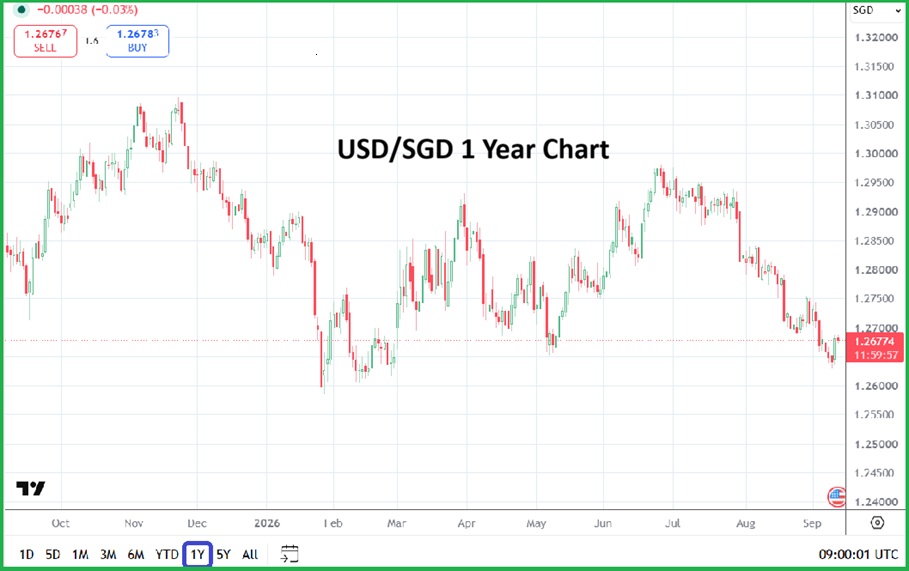
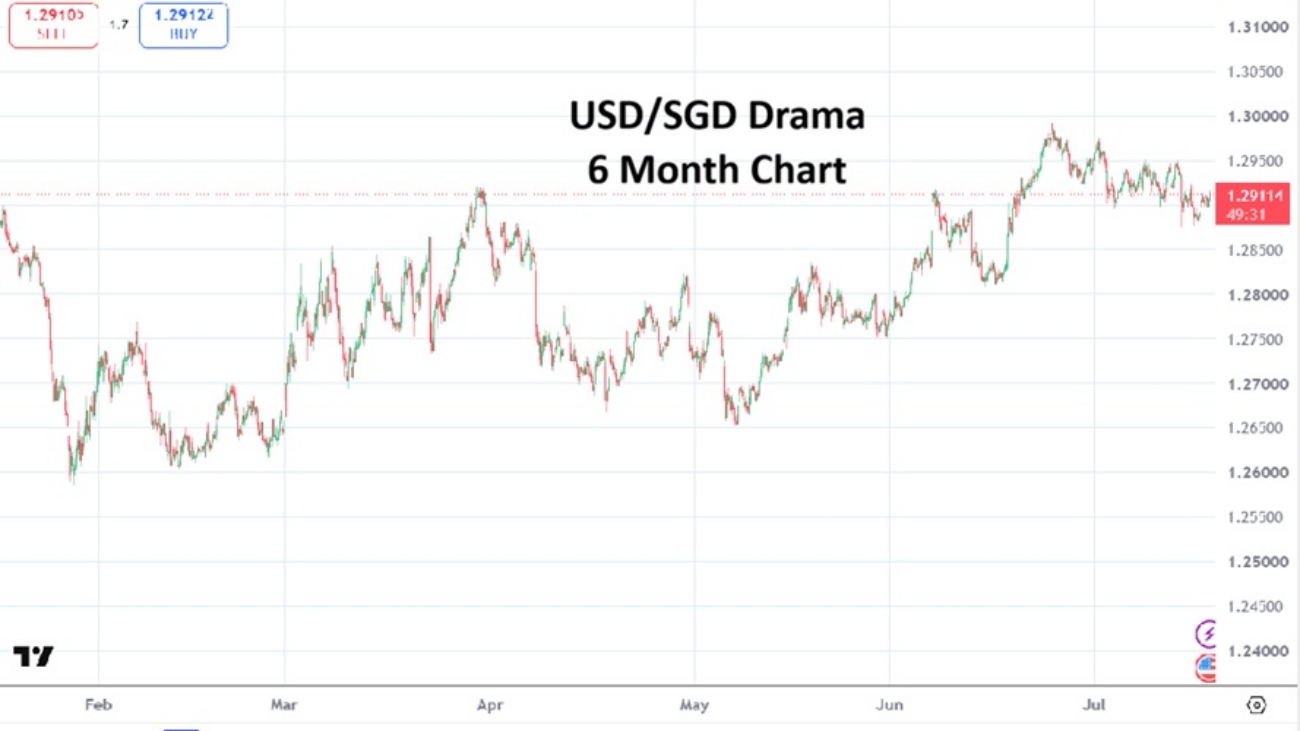
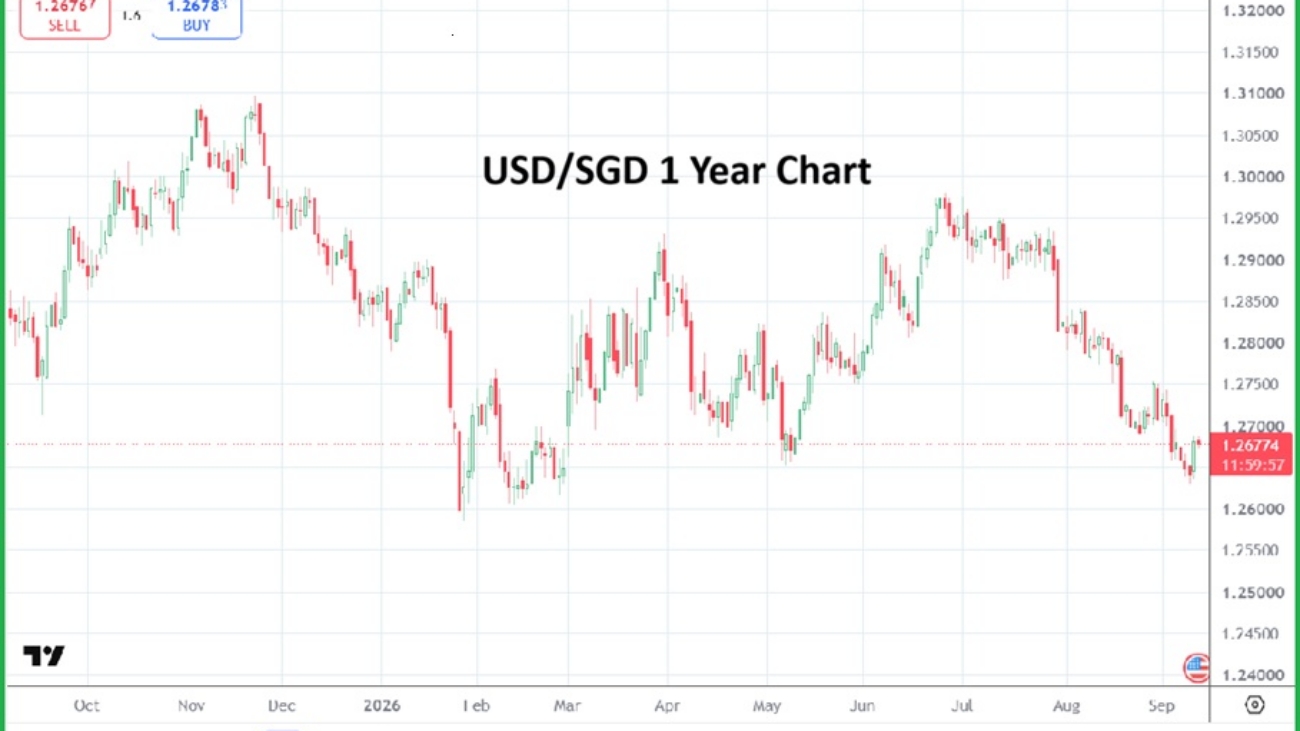
The USD/SGD is near the 1.29110 vicinity as of this writing. Financial institutions apparently have combined their cautious outlooks in the broad Forex market as USD centric strength continues to leak into sentiment, while their instincts technically demonstrate that over the mid-term currencies like the Singapore Dollar should be stronger and the USD/SGD is supposed to show some bearish activity.

For dramatic purposes let’s call this current phase of Forex trading including the USD/SGD as the hope and prayers act. The Singapore Dollar has sustained highs, but it has traversed lower over the past few weeks. On the 24th of June the USD/SGD was near the 1.29940 ratio. Let’s be clear, for small speculative Forex traders broad market wagering on USD direction remains dangerous.

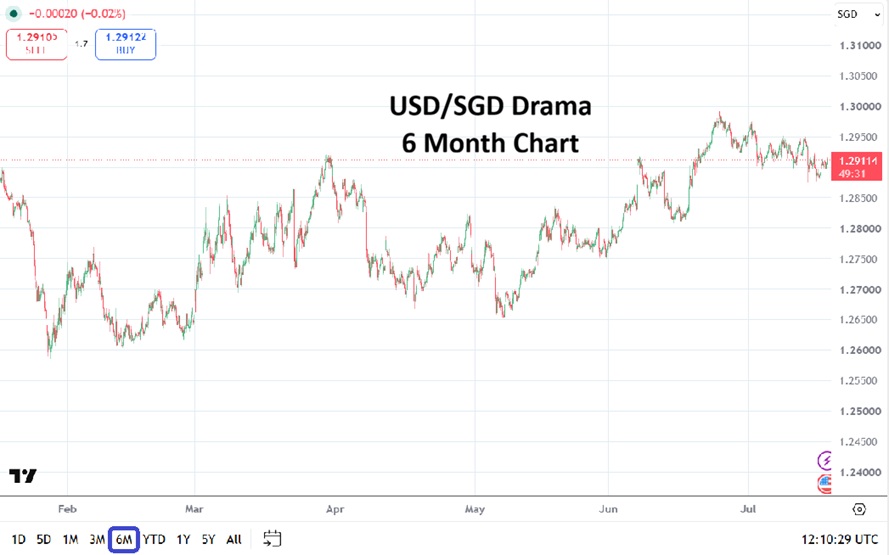
USD/SGD Six Month Chart as of 17th July 2026

Fed Chairman Keven Warsh and His Desire to Introduce New Data

During the recent testimony of Fed Chairman Kevin Warsh in Washington D.C he made it clear he is keen on introducing AI tools into interpretations regarding Federal Reserve policy. However, he also said that AI will not be relied upon alone. From a coding perspective, Warsh essentially said proactive data will become part of the Fed’s thinking with proper supervision: some of you may want to call this a stack developer’s job.

At the same time while refusing to tip his cards regarding his stance on interest rates too much, Forex markets responded by selling the USD in incremental bouts. Intraday trading flared in its usual manner, but started show a core belief that Warsh is demonstrating dovish sentiment regarding interest rates.

USD/SGD as a Forex Barometer and Near-Term Behavioral Sentiment

The USD/SGD serves as a solid barometer of the Forex market. It offers perspectives on Asian sentiment, but also shows how global financial institutions are leaning. The escalation of firepower in the Middle East the past week and into today has caused reactions in the USD/SGD, but somewhat politely.

Having been able to trade below the 1.29000 mark on Tuesday and Thursday of this week, the currency pair is trading near values seen on the 8th of June and 18th. A lack of clarity remains a theme in Forex. The USD/SGD is the 10th biggest Forex pair via transactional averaged volume, so traders should give it attention even if they do not pursue.

Wall Street Remains Nervous and the Tense Weekend to Come

Going into this weekend Forex traders have created downside pressure on the EUR/USD and GBP/USD. The USD/JPY remains stubbornly above the 162.300 ratio. Nervous selling on the Nasdaq 100 via futures trading has been seen today and it looks as if Wall Street will be in for another bumpy ride. The wishful thinking drama in the financial markets is being confronted by the reality of a potentially loud weekend of military conflict between Iran and the U.S, and a seemingly unconvinced marketplace that doesn’t want to demonstrate risk appetite.

WTI Crude Oil prices via futures trading are above $80.00. Having been able to sustain values above the 1.29100 mark in the USD/SGD signals that bearish mid-term perspectives still need additional impetus to create more selling, but this doesn’t appear a wise speculative bet going into the weekend.

A cautious stance over the coming hours should be anticipated as folks wonder what the coming weekend will bring. At least there is the World Cup championship on Sunday (New York time) to take our minds off of concerns. However, Monday will not react to the trophy being raised, but to behavioral sentiment that will takes its cue via today’s finish on Wall Street and noise generated via the Strait of Hormuz this weekend.

Copy and paste the text from AMT that you want to share

Nvidia 20260630

Nvidia Suffering From the AI Cold Bothering Investors and Speculators

AI: Exuberance and Threats of Fatigue

Has Nvidia now been oversold? While the Nasdaq 100 produces a casino like experience for day traders and large players, the velocity of value changes in the index should serve as a simple reminder that before stepping into traffic a speculator needs to acknowledge the road. A large collision is taking place before our eyes and it will generate more noise over the coming months. 

Nvidia is a solid indicator of behavioral sentiment being influenced by a mix of optimism and fears by speculators and investors competing, and trying to define terrain as turmoil swirls and a battle for profits rage. Day traders need to remember a lot of hyperbole is amplified to get eyeballs on opinions, hoping that your attention is grabbed. (Please buy me a cup of coffee has become a begging mantra).

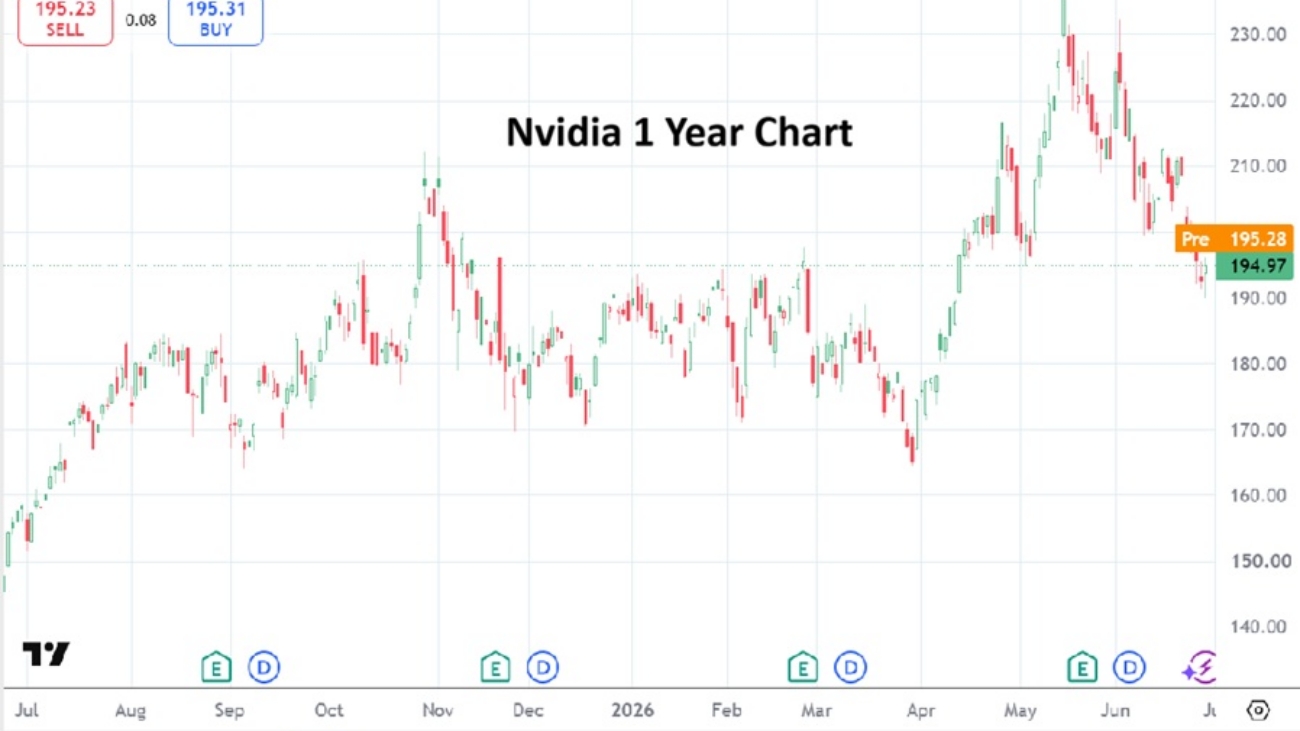
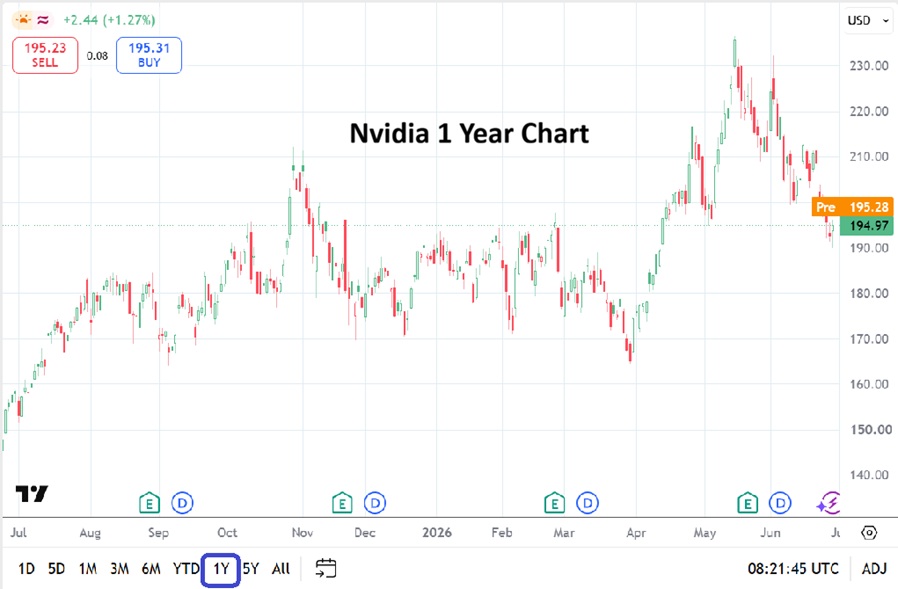
Nvidia One Year Chart as of 30th June 2026

Nvidia finished yesterday’s trading near $195.00, this after touching highs in May around the $238.00 vicinity. The fact that NVDA has lost a large chunk of its value indicates sentiment is not entirely rational. There is a vast difference between speculative hopes compared to long-term investing. 

Results in the stock markets do show symptoms of overbought conditions prevail, but over indulgent fears are taking hold as folks try to interpret every move in a haphazard manner and make correlations which often have no evidence. Nvidia is a solid company which will continue to produce product lines that will be needed long-term. Talk of Nvidia suffering from an AI cold is relevant because it has certainly lost value, but the patient is going to survive.

Others however may not. AI companies and their proclamations about being able to deliver substantial change for users has become tiresome. Supply of software is widespread. While there is demand for use, competitors are abundant and growing daily. Users can now question just how reliable and strong the products they are using are, and if promises meet the results wanted. Costs users are paying for services will also become more critical. If products don’t meet needs, other AI systems can be easily installed nowadays. 

Oversupply is Saturating the Marketplace

Because AI tools are widespread it means users will demand services get cheaper. At some point it is clear that consumers will gravitate to competitive pricing, because at the end of the day there is only a certain amount of time to verify all the products in the marketplace and understand what works best. Branding as always is important, but so is quality. Loyalty in the AI world is only a couple of years old and cannot be counted on, some early companies are already seen as legacies and allegiances will shift. 

Competitors and new ideas continue to be brought forth quickly. A lot of product is being rushed to the market that lacks proper Q&A and actually does not deliver what is promised. Proof of concept is fluid with Artificial Intelligence, along with many claims of superiority. A company can get a product into consumers hands first, but at some point value has to be delivered too.

Investors are growing wary from too many claims. Yes, a revolution has taken place, but a counter-revolution is certainly coming. A lot of AI products are simply poor. Day traders have seen chaotic results on the Nasdaq 100 over the past year. 

President Trump, tariffs, the war in Iran, Federal Reserve and interest rate uncertainty, fear of inflation (all headlines from only the past few weeks) and other complexities can be blamed for volatility as folks wager on values on the Nasdaq 100. However, the prime mover of the index has not only been investing by long-term players, it has come from speculation chasing momentum via the Artificial Intelligence boom. However, a genuine concern that a fear of missing out is turning into fatigue exists.

AI because of its abundance is going to eliminate competing systems which are seen as cumbersome and expensive. Chinese companies appear ready to confront American enterprises with cheaper products that consumers may not mind paying less for even if this means consumers are sharing intellectual property and data with unknown entities. 

Sakana AI from Japan has announced and shown the past couple of weeks that it has software, Sakana Fugu, that is comparable in a favorable manner to Anthropic and Claude services. Sakana testers claim their system is robust and offers a multi-integrated modeling system, meaning a user doesn’t have to toggle in and out of models to deliver efficient information. The data via Sakana’s system is brought together via coordinated agent forces for the user. What will this do to valuation of Anthropic moving forward?

There is also a South Korean company called Furiosa, which is not public yet, that stands in the shadows and makes outstanding AI infrastructure. Furiosa appears ready to become an important player in chips and software innovation. Nvidia is certainly keeping their eyes on Furiosa. Meta offered Furiosa 800 million USD and was rejected in March 2025. 

Investors and speculators should not discount the potential of an AI tech dump from global competitors into the U.S and elsewhere developing over the next year. Mobile phones became a rather boring commodity after their initial entry astonished first time users two decades ago, AI will undergo the same pathway.

Some AI companies will certainly struggle over the next few years, but other enterprises will succeed merrily and profit. There is a big difference between investing and speculating. Even mid-term forays into the stock markets remain only gambles if a person plans on cashing out profits when they have hit a price target, instead of long-term ambitions to own shares in a quality company. 

Nasdaq100 bubble talk which has recently reignited in a loud manner should be given attention but astutely. It is hard to argue that the value of the indices like the Nasdaq 100 and S&P 500 are not in over-inflated territory. Looking at historical p/e ratios seems to have gone out of fashion. Warren Buffet cannot be thrilled and his fundamental strategies should not be ignored. Speculative hype needs to be confronted by investment reality. Folks will continue talking themselves into stances that are comfortable, even if they make little sense. The markets will certainly survive and so will AI.

Copy and paste the text from AMT that you want to share

US Cash Index 20260617

Forex and the Fed Chair: Kevin Warsh in the Spotlight Later Today

New Federal Reserve Chairman will Cause a Reaction in Forex Today

I offer readers a ‘what if’ proposition ahead. These are my opinions and I am simply trying to give my perspective on what may happen in the Forex market in the coming hours.

The Fed Press Conference later today will be must watch television for Forex traders, including retail speculators, large players and financial institutions. Federal Reserve Chairman Kevin Warsh will make his first appearance after a FOMC rate decision. Dynamic conditions in the broad Forex market should be anticipated – that doesn’t tell day traders much I know, keep reading, please. 

U.S inflation has sparked higher this as energy prices have ignited upwards and caused logistics, manufacturing and agriculture to become more expensive. The Bank of Japan raised its interest rate by a quarter of a point yesterday to 1.00%. However, these two bits of evidence doesn’t mean the Federal Reserve will increase its interest rate today. 

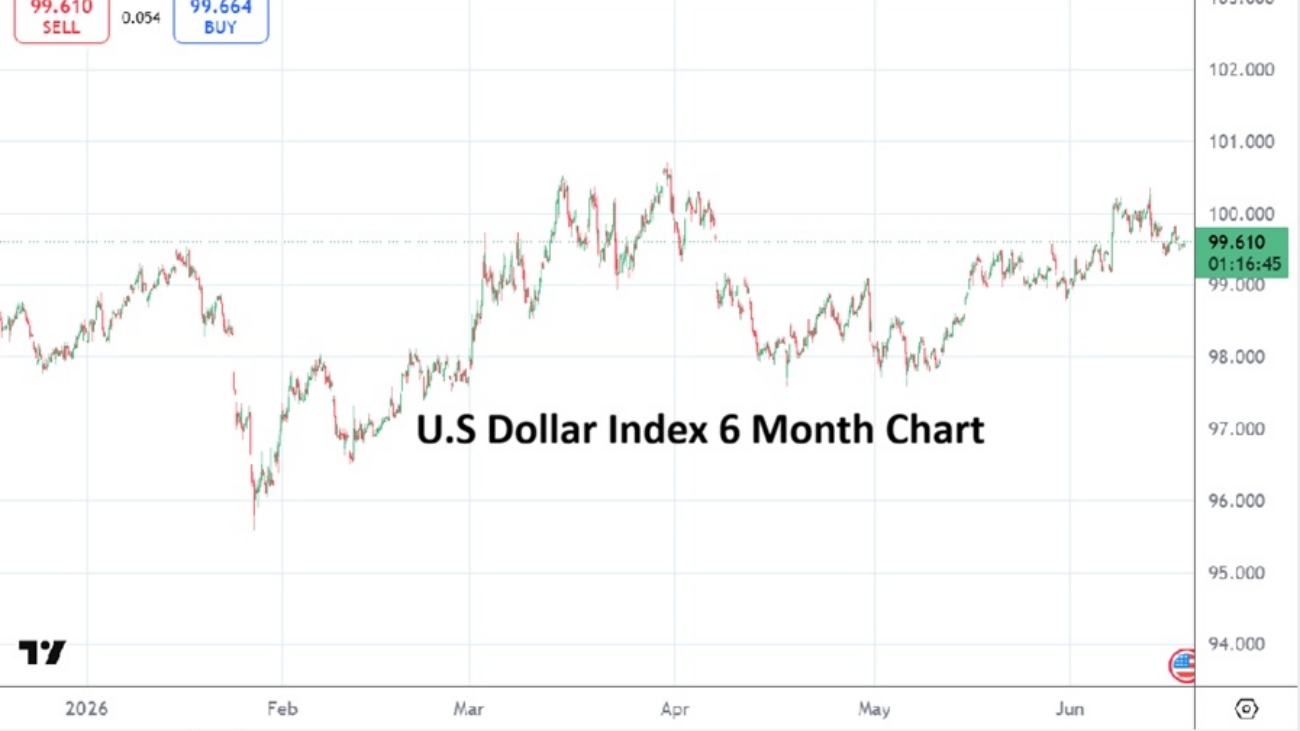
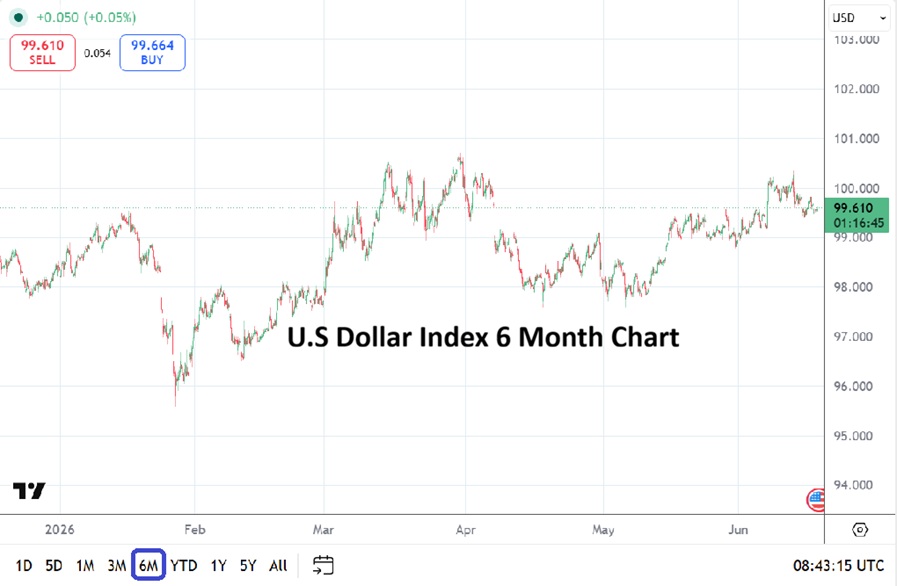
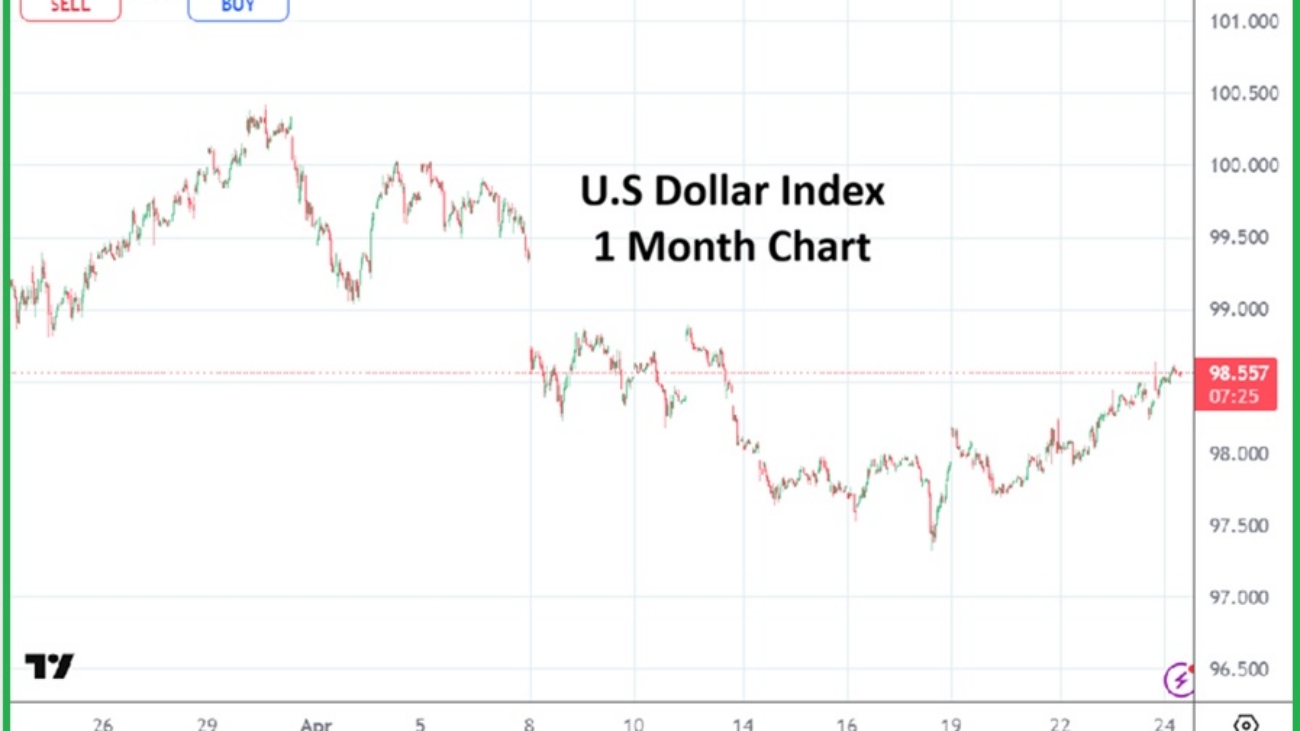
The U.S Dollar Index is trading near relative highs. The broad FX market is certainly cautious, but financial institutions may be leaning into the notion of USD centric weakness. Yes, the USD/JPY remains above 160.000+ for the moment, but the USD/SGD is flirting with its lower range and came within sight of the 1.28000 mark on Monday. So why is this important? Because folks are acting cautious before a potential storm.

U.S Dollar Index Six Month Chart as of 17th of June, 2026

Perhaps this will go down as an infamous egg on the face situation for me personally, but does Fed Chair Kevin Warsh really want to raise interest rates during his first FOMC meeting at the helm? Yes, Jerome Powell is still around as a voting Governor, but Warsh may find he has enough votes (and influence) to get a majority of other FOMC voting members to allow today’s decision to be a test case in favor of patience. 

If the Fed holds the Fed Funds Rate in place and announces it will use the near and mid-term as a trial period regarding their belief inflation will lessen, because it believes energy prices over the mid-term will erode rapidly, that may be enough to cause USD centric selling later today. The Fed will not use the word transitory I suspect, but an argument can certainly be made that now is the time to actually elucidate on the subject of transitory inflation.

Monday’s trading in the broad Forex markets showed that financial institutions bought into the optimism of an anticipated U.S and Iranian agreement and what it could deliver – a glut of Crude Oil, including lower costs for its ancillary products. Financial institutions were also relieved that U.S equity markets survived the launch of the SpaceX IPO certainly. While yesterday’s broad market trading turned cautious and demonstrated sideways action in Forex, many major currencies are traversing near curious values. Equities also went sideways for the most part on Tuesday.

The U.S Dollar Index is swimming within its higher terrain via a six month chart (per a look above), yet financial institutions – if they hear dovish sentiment from the new Fed Chair today could spring into action and sell the USD quickly. Day traders need to understand even if this occurs that it will still be ultra-dangerous to bet ahead of the Fed rate announcement and Press Conference. This because volatility leading up to and following the FOMC Federal Funds Rate decision will create large spreads in Forex and choppiness that small retail accounts cannot handle most of the time – particularly when too much leverage creates wildfires.

While the before and after of the Fed interest rate announcement will garner the headline news, and create a reaction on Wall Street for the S&P 500 and Nasdaq 100 immediately; it will be wise to pay attention to Fed Chairman Kevin Warsh a half hour later when he steps into the spotlight for the first time. There has been chatter that Warsh is not keen on trying to give too many signals regarding the Fed’s thinking regarding every move it is contemplating. 

This coincides with thoughts that Kevin Warsh and Scott Bessent believe in a more high-tech and pro-active approach to interest rate and monetary policy based on forward looking data. The consideration of a more dynamic approach to interest rates has not been widely considered by financial institutions quite yet. If the new Fed Chair surprises reporters and onlookers at the Press Conference today with a new philosophy on the way the Fed will work, this will set the stage for potentially large behavioral sentiment shifts that were not wagered on quite yet. In other words mid-term outlooks regarding U.S interest rate policy may change in a handful of hours more than many people think. 

Maybe I am wrong, maybe I am interpreting the political and financial landscape incorrectly, but these are my thoughts as a risk analyst – one who thinks the U.S White House would not mind seeing a weaker USD, a Fed that likely wants a different approach to interest rates – as they both hope for energy prices to lower (and may get their wishes fulfilled).

Copy and paste the text from AMT that you want to share

SouthAfrican Rand 20260520

South Africa Outsider: Thoughts on the Rand and Guest Observations

USD/ZAR Considerations as Water Flows and Political Concerns are Compared

As a guest of South Africa (because of a personal relationship) and having been coming here frequently during the past four plus years it is easy to love the nation. Early last week a severe storm which brought high winds and plenty of rain hit a lot of the Western Cape knocking out electricity and water in a variety of towns. Having experienced hurricanes in the past, the wind was not quite comparable, but the consistency of the gusts over two days caused major damage.

Electricity and water have been restored to most people now. Wifi remains a problem for some, but folks are surviving. The damage to homes, infrastructure in towns and agriculture will keep individuals busy for a while. However, the Western Cape because of good political leadership and the stoic mannerisms of the people have worked together to move forward. So what does this all have to do with the South African Rand?

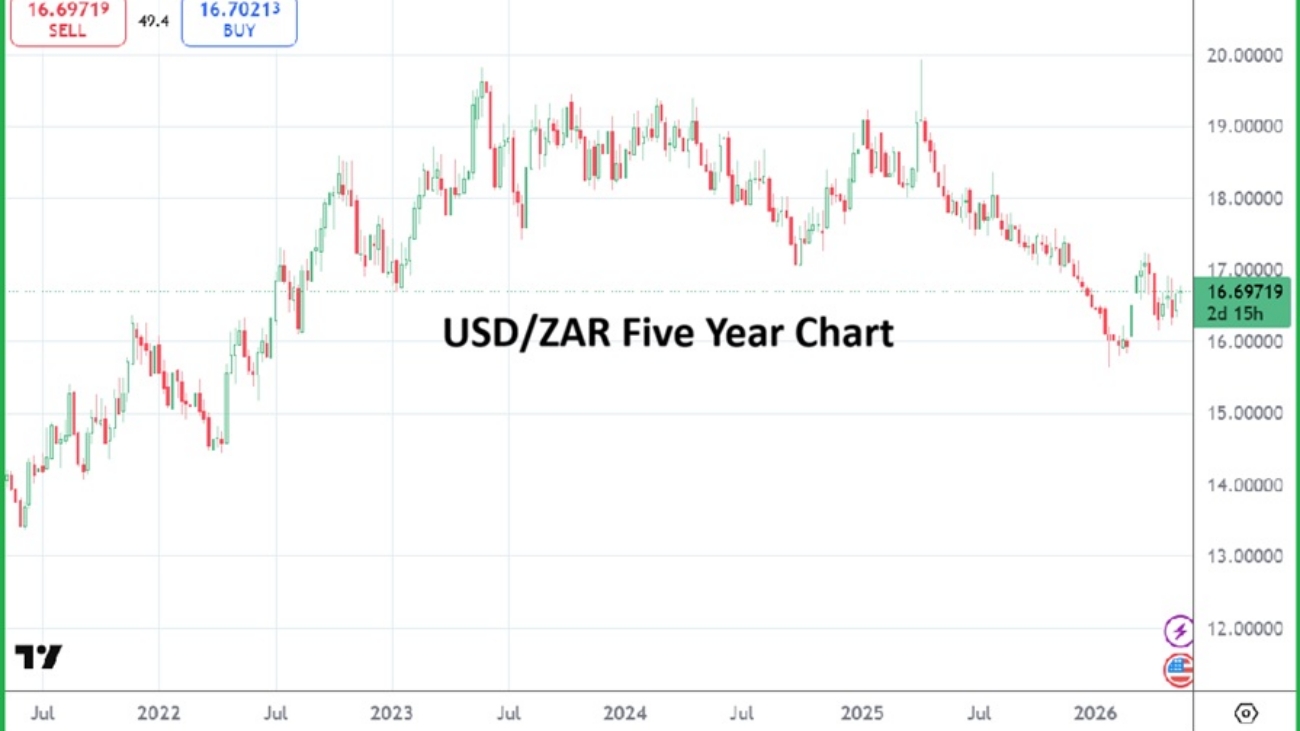
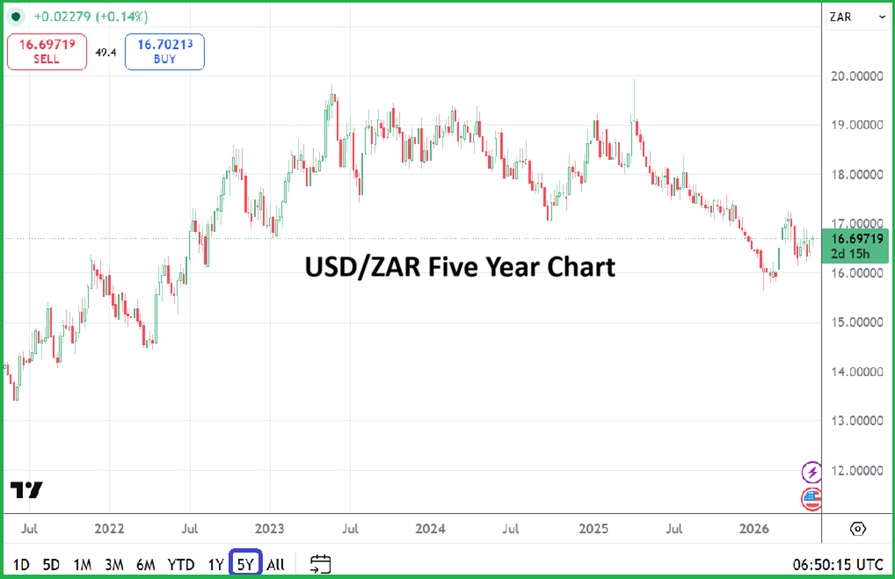
USD/ZAR Five Year Chart as of 20th May 2026

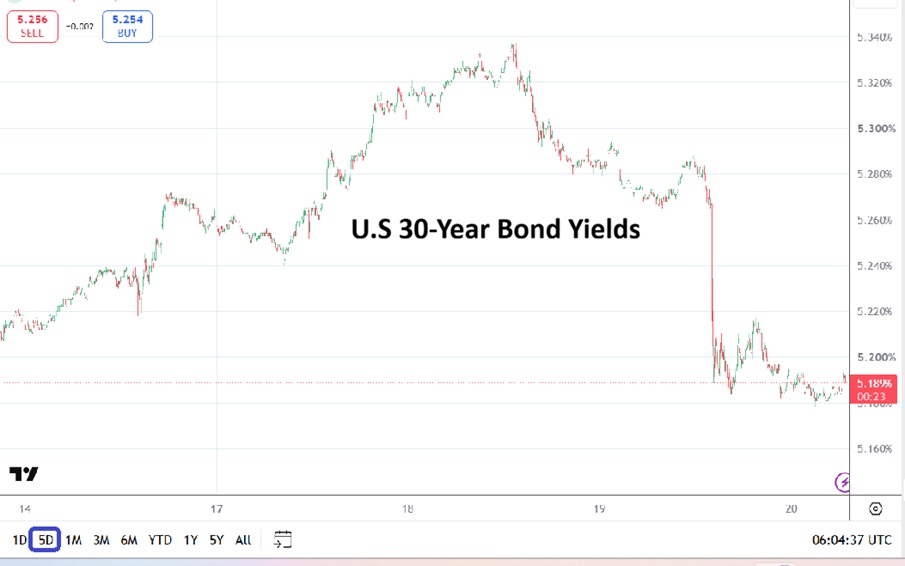
The USD/ZAR is traversing within a higher price realm since the start of March because of the Iranian conflict. The currency pair flirted with depths below 16.00000 in the middle of February. The value of the USD/ZAR at this time is close to 16.70000 depending on bids and asks. The Rand is correlating to the broad Forex market as USD centric strength has emerged recently, this as U.S 10 Year Treasury yields increase and threaten to become sustained. The U.S Federal Reserve is suddenly dealing with threats of inflation becoming sticky over the mid-term because of escalating energy costs. The U.S has plenty of WTI Crude Oil, but nations which had counted on energy from the Middle East are suddenly U.S customers and increased demand is going to cause WTI to remain elevated until the Iranian situation resolves. 

The USD/ZAR was in a bearish trend since early August 2025 when values were above 18.00000. The highs in early August of last year were caused by concerns the U.S White House sparked because of tariffs. South Africa is still facing tirades from the Trump administration about some policies being practiced in South Africa, but financial institutions have looked elsewhere regarding impetus for the Rand and its correlation to global Forex is the chief influencer.

While South Africa and its people and culture are easy to embrace, there are issues that remain problematic in the nation. Politics around the world often appear to be a complex myriad because certain people and partisanship are transfixed on power. Corruption globally is an issue in many nations that causes not only fiscal problems but inflation. South Africa suffers from these complications too. These matters can only be fixed with transparency and patience, and importantly – for citizens to demand better. 

Politically the current coalition government on the surface appears to be working. Yet, the potential for fractures to grow over the next handful of months as municipal elections approach –  the Johannesburg mayoral and city council results will prove fascinating, will be crucial for South Africa. Johannesburg has been facing a water supply crisis for a while and its consequences are a stark contrast to the Western Cape’s ability to repair and replace infrastructure in a matter of days after the recent storm.

The USD/ZAR is likely to correlate to USD centric price action near and mid-term, but there is a chance heightened political rhetoric and voting outcomes in a handful of months could shift impetus for a short while. Higher energy costs in South Africa now and into the mid-term will cause inflation. Food costs do appear to be incrementally rising in supermarkets. 

Yes, gold and platinum values will be looked at by some analysts and pointed to as reasons for the stronger South African Rand, and this influence may be real – to a degree. However for the moment, the USD/ZAR remains transfixed within the lower realms of its long-term price range mostly because the coalition government here is viewed positively, and the USD was weaker globally. 

The U.S Fed does have inflation concerns arising. As much as President Trump would like the new Fed Chairman, Kevin Warsh, to be dovish the reality for the U.S central bank and financial institutions judging outlooks lacks clarity for the moment. Sideways choppy price action in Forex and for the USD/ZAR may prevail in the coming days and weeks. And if the Iranian situation grows more boisterous, USD centric strength could grow.

Copy and paste the text from AMT that you want to share

Gordons Bay Sunset 20260514

Investing and Sunshine: Positive Momentum While Guarding Against Worst Scenarios

The Reliability of Optimism in the Marketplace

Once again the world has not ended. The sun continues to rise and set on a daily basis and the world’s investment outlook remains towards an optimistic approach. Day traders should take this notion to heart and actually repeat it as a mantra when they consider pursuing the marketplace based on notions of fear.

Solid risk management equally needs solid risk taking tactics. And speculators need to always remember long-term investors are not basing their decisions on what will happen near-term, they are looking towards the future. While this may seem like a reminder a father would say to his children as a life lesson, day traders should not be offended, but use this as a keepsake and understand the world of investing is made up of elements that have proven durable.

Sunset over Gordon’s Bay, South Africa

While the price of energy, namely WTI Crude Oil, remains in elevated realms, corporations are still producing, and financial institutions have not shuttered their offices. There are some nervous types that speak about $200.00 a barrel Crude Oil, yet the higher price of the commodity remains perched near $100.00. This value is high compared to where the price of oil has traded the past few years, but the reality is that the current values of Crude Oil have been within these realms before and the economic world has survived. The price of Crude Oil is not going to hit $200.00 anytime soon.

Inflation is certainly an unwelcome specter, but there is the added fact that part of the long-term outlook is – if and when the Iran saga ends the price of WTI Crude Oil is likely to drop significantly. Yes, that is not going to happen near-term, but it is part of an optimistic view looking forward. In the meantime, commodity pricing has become a focus for large players who are taking advantage of fears and an ever flowing river of optimism which creates dynamic prices in agricultural resources. Logistics via fuel costs are certainly effected as is manufacturing and farming, but again let’s soothe ourselves with the knowledge most of those involved in these industries have dealt with high costs before and will constructively deal with the vagaries of mid-term uncertainty.

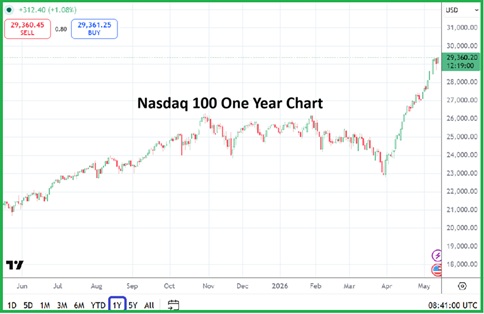
Almost needless to say, the U.S stock markets are doing extremely well per the results of the big indices. The S&P and Nasdaq have all gained in exquisite fashion since the end of March. Who had that on their bingo card? While financial institutions pouring money into equities likely didn’t count on double digits gains in one month’s time, that is what has happened and they will not complain. Perceptions about the sun continuing to show up even in the midst of rainstorms gets investors through whirlwinds. The U.S and China summit taking place now will also add a dose of optimism for equity investors who gear their visions towards results over a three to five years span.

Nasdaq 100 One Year Chart as of 13th May 2026

Different Show and Outcomes for Day Traders

Day traders who are pursuing intraday results are not participating in the same environment as long-term investors. A casino like experience is the best comparison for many retail traders, but the option of trying to catch momentum and using techniques that can accomplish better results are available for those who try to ride the waves caused by big players. 

Some may view money as a game, but it is actually more aligned with the concept of a tool. If a retail trader – or institutional investor – participates in a particular asset, they must have an understanding of how it works. 

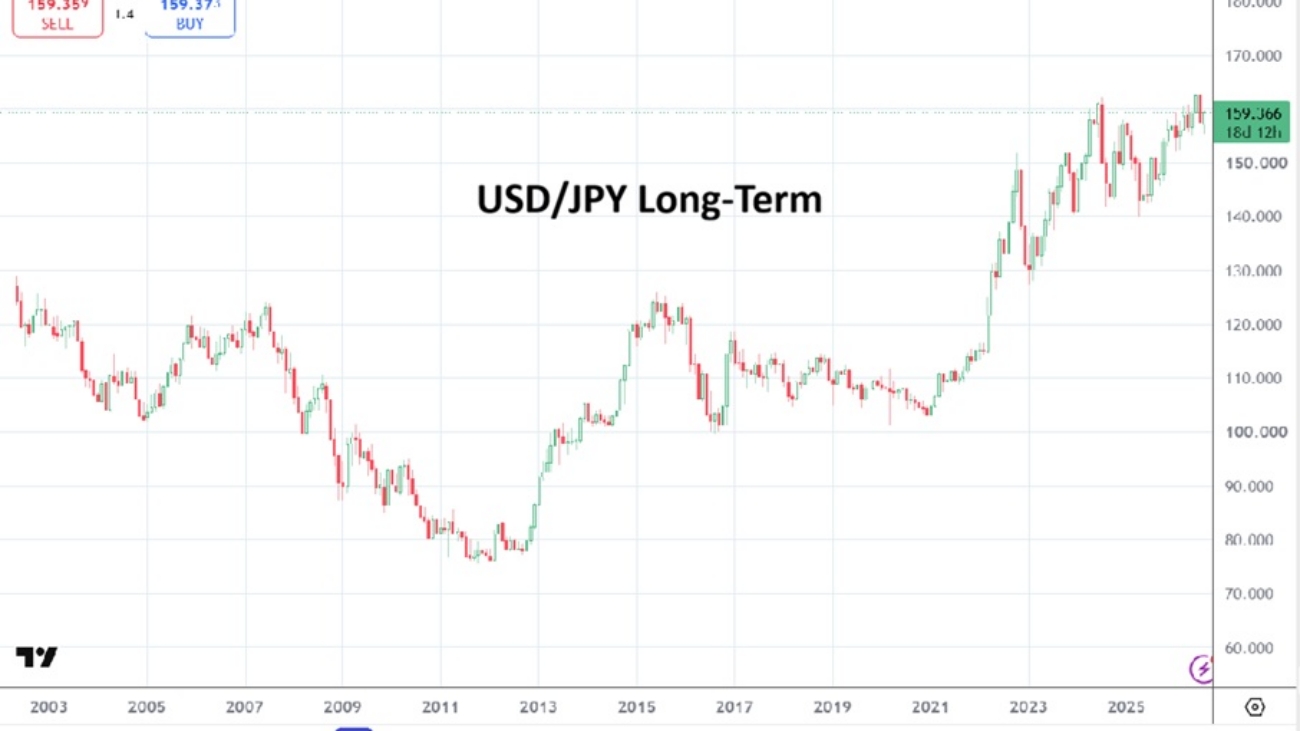
Trying to gauge behavioral sentiment is a key ingredient for speculators when trying to deduce what will happen in the marketplace. Predicting what will happen within an intraday framework is difficult at best. However, there is something to be said for understanding how the emotions of investors and large players work while they make their decisions – particularly when day traders are using these notions as a barometer. The trading in the USD/JPY is a prime example of how trading/investing and outlooks work:

Our Friend the Japanese Yen and Forex Opportunities


It is recommended that day traders do not try to tackle too many speculative sectors at the same time. It is urged that they get familiar with one part of the financial market and make it a specialty. 

No one can know everything. Experts in one area – like an academic field – often believe this entitles them to speak on a variety of subjects they have no expertise within and this often leads to catastrophe. Day traders need to make sure they are getting information from sources that are reliable. Because sure as heck the sun will rise and set, no matter what dire predictions are made by those who prefer to focus on the worst.

Copy and paste the text from AMT that you want to share

US Cash Index 20260424

Upcoming Weekend Nervousness: Does Anyone Know What is Going On?

Preaching Caution and Looking Like a Fool to Those Who Want to Profit

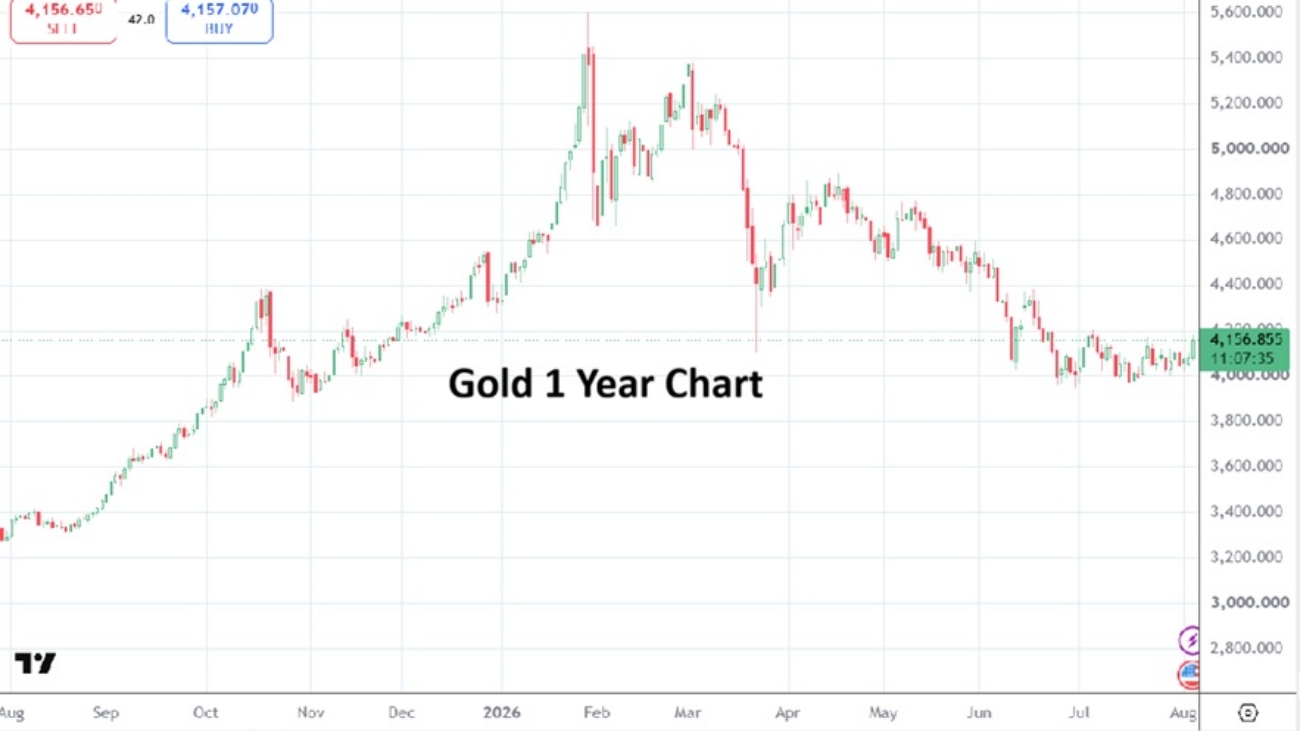
Can someone please tell the rest of us what is going on? Global markets via Forex this morning are demonstrating additional USD centric strength which developed yesterday. The price of WTI Crude Oil is above $94.00. Gold is languishing and around 4,675.00 USD. And although the 3 major U.S stock indices are all within their higher realms – one thing stands out – folks are uneasy.  But then again, the markets never move in one direction only, and perhaps current results can be interpreted as profit taking by those on winning sides.

U.S Dollar Index One Month Chart on the 24th April 2026

I would love to be the person to tell you what is going to happen, but as this weekend looms making short and near-term bets still appears a fool’s game. Yes, it is easy to make predictions, but being correct is more difficult. Retail traders are suffering more than most market participants, this as leverage and a lack of funds to remain in a position through violent reversals destroy plenty of trading accounts.

There is talk of manipulation via chat rooms regarding the price of WTI Crude Oil. The usual dialogues can be seen – largely based on conspiracies via large players trying to blow out smaller traders. However, these types of forum chatter are mostly wrong. Large players are getting hurt too in the energy markets. Anyone who is taking a position in order to speculate on a quick hitting foray in WTI is betting on their perceptions. 

The problem is that unless there is inside knowledge of what the next words out of President Trump’s mouth are going to be, or that from Iranian officials – any pursuit of WTI Crude Oil at this juncture is a ‘vibe’ trade. What is going to happen from Saturday and into Sunday is an unknown quantity. Folks holding positions into this weekend need to understand they are wagering. And some may find they are quite profitable afterwards, while others grimace and find themselves on the wrong side of the next surges higher or spikes downward. Intraday trading volatility in nothing new however.

The USD/JPY is near 159.600 as of this writing. The EUR/USD is close to 1.16820. While a tourist traversing foreign lands may not find the Forex incremental shifts in value mesmerizing or of interest, FX traders who do not have deep pockets are likely wondering why risk adverse conditions are prevailing suddenly. But as a risk analyst, I must say that conditions simply may have been perceived to have been oversold in the USD by financial institutions, this as the Fed looms on the horizon.

However, my task as a risk analyst the past two months has been like a carnival barker, because while it has been easy to say that a show is happening within the big tent of speculation, I have been hard pressed to predict short and near-term directions correctly. Perhaps I fret too much. The optimistic thunder claps upwards in the stock markets since the 31st of March have been astounding to many. Hopefully it has been prosperous for day traders, but the likelihood is that financial institutions are the ones who are profiting more via their pension funds purchases for institutional clients.

This coming week the U.S Federal Reserve will make their FOMC decision public. This will be Jerome Powell’s swan song at the Fed. The Chairman is being faded out by the U.S White House mid-May. And somewhere when he is all alone, Jerome Powell may be having a quiet laugh to himself. The Fed will not act this week. Rates will remain the same – unless there is some bizarre move in the global markets over the next handful of days. Yet, Powell’s remarks will be listened to for warnings. While it is not in Powell’s nature to issue a ‘I told you so’ quote, and he is likely content to walk away from the Federal Reserve quietly, it would be captivating if Powell looked into the cameras and pointed fingers. 

But because Jerome Powell like most others, likely has no clue what is going to happen next internationally he will remain mostly mute (cautious as always).

And here we meet again, wondering what the next 72 hours hold. Will the Iranian ceasefire remain observed? Is it even a ceasefire in reality? The Strait of Hormuz remains a linchpin for military action by the U.S Navy and Iranian Revolutionary Guards via a cascade of ship seizures. Maybe that continues to be the key, WTI Crude Oil prices remain a crucial barometer. USD centric prices via Forex action seems to be a reflection of fear or positive thinking in the energy sector depending on the prevailing tides.

Last week there was so much optimism folks were talking about WTI prices potentially hitting $75.00 and lower, now this hope seems to be wishful thinking. Global markets will remain fast and dangerous, that is easy to say and is right, but telling you which direction assets will move, that is a bit different.

And there is the old standard test I use when an opinion is definitely asked for: if someone were to put a gun theoretically to my head and ask me what I think, I would venture to say things will remain quiet and optimism will seep into the markets before the close this weekend. However, I don’t like to play fool’s games, so I will leave now and wish you luck via your own perspectives because the near-term remains more speculative than normal for day traders – even if strict risk management is used. 

Copy and paste the text from AMT that you want to share

Troll

Risk Analysis versus Trolls Demanding to Know the Impossible

Behavioral Sentiment Fatigue and Long-Term Opportunities

As I write Gold remains below $5,000.00. Silver is slightly above $75.00. The Nasdaq 100 and S&P 500 remain cautious. And my favorite exclusion choice – MicroStrategy is struggling below $129.00. The markets in general appear to be waiting for a dose of impetus, be it positive or negative. Some investors who are brave may believe assets have reached an accumulation phase as support levels get tested in equity markets. They hopefully also understand that the equity indices can go lower and they may suffer for a while as prices decline. And because of this notion, perhaps the larger investors remain ultra-cautious and are trying to time when they will re-enter the marketplace as a forceful buyer. In the meantime bonds will be bought as signals are awaited on for long-term positions in the major indices.

However, there is also a large contingent of traders who are not looking for long-term investment, instead they are hoping to take advantage of short-term price movement – positive and negative – depending on their philosophies. These folks may be part of hedge funds, or simply large players who believe they have the benefit of experience and know-how.

And then there are folks like me who watch the market and offer analysis on current conditions. I am of the opinion the broad markets are nervous and that behavioral sentiment remains troubled. While I know that experienced large players and financial institutions are accustomed to noise, there seems to be sense that an attitude of fatigue is being felt. People are tired of dealing with the constant amplitude of policy threats and risks. However, this insight regarding tired minds and markets may serve a purpose, it is possible long-term players will see current conditions as an opportunity to buy and hold.

If short-term players such as hedge funds and large speculators are too busy being nervous and assets are straddling prices in equities that are seen as potentially oversold by others, real value can be accumulated and waited upon to produce more growth. This is still a gamble, there are no guarantees. The markets go up and they go down. Cycles occur and new traders are often perplexed when their insights do not come to fruition. Patience is needed. And it is also good to have others in your ear who serve as contrarian advocates offering different opinions that you may not find agreement.

Perhaps you know someone who has an interest in the financial markets and is the same good friend. There is even a chance that you have worked with this person professionally, and have shared ideas on business management, organization and scaling trades and investing. And there is a chance that even though you like this person and find them completely engaging, that you disagree with everything they say.

Trust me when I say my friend (colleague) knows I am talking about them, and suffice it to say that I know he will completely disagree with my further comments, but also quietly embrace the words and believe he is serving his function as a voice of reason. He will not call himself a devil’s advocate, but as someone who serves to create focus. He is the person that says charge ahead, aim for an outcome and tell people what you think. He wants values to look for and timeframes to take action.

However, as a risk manager I frequently find myself being cautious, I try not to make outlandish predictions and try to remain conservative in my approach. I tend to think long-term, while he the trader frequently acts on short-term intuition with a focus on the future per his perspectives. But timing the market and exactly what is going to happen in the next five minutes, one hour, day and sometimes even a week remains a difficult and often an expensive game, I am constantly vigilant of this possible plight.

When I wrote that Silver appeared to be in a speculative mode and feared the highs, and told folks to be prepared for the metal returning to earth it was appreciated by my associate, but it also came with the question of when. When is Silver going to fall, he would ask. And I typically answered that patience was needed. And now that Silver has fallen he says, ‘you warned us that Silver would fall, but didn’t say when’, and he is correct. I cannot give an exact answer because I am not a master of the universe.

Day traders need to know that their CFD positions do not move the cash market. And even participants in the cash market are actually mostly wagering in the futures markets via exchanges and hoping for prices to move in their chosen direction only. Most people choosing to trade in the futures markets do not want to take deliverables of a commodity. Speculators in the futures markets may dream about taking Gold and Silver deliverables, but they know logically they cannot. The same goes for traders in futures with agricultural products and soft commodities.

To buy or not to buy is not the question. To participate or not to participate is the question. You do not have to trade every day, even if you are a short-term speculator. You can watch the markets. Sometimes the best trades you will ever make are the ones you do not pursue.

Copy and paste the text from AMT that you want to share