AMT Top 10

AMT Top Ten Miscellaneous Early May Reflections

May Day Parades and Wishing on Santa Claus

10. NBA Playoffs: Basketball has now entered its serious season, one in which rest days are no longer done in order to gain better draft day lottery odds, nor appease star players who feel the need to take a day off. There have been a couple of upsets already during these playoffs with Houston, Denver and Boston all of whom were favored to win their first round competitions going down in flames. Semi-conference championship contests will begin tonight. Basketball fans are now getting the NBA product they want.

9. May Day: Parades and protests were seen throughout the United States this past Friday. The once treated contemptuous flag of communists was held aloft and portrayed as a viable ideology at many demonstrations. Protestors marched and chanted their displeasure about free enterprise. A lack of historical knowledge about the massacres ignited by Joseph Stalin, Mao Zedong and Pol Pot while paying homage to iconic Che Guevara images was evident. However, their longing for a Santa Claus like figure to come bearing free gifts did not appear. 

AMT Top 10 Miscellaneous Early May Reflections on the 4th of May 2026

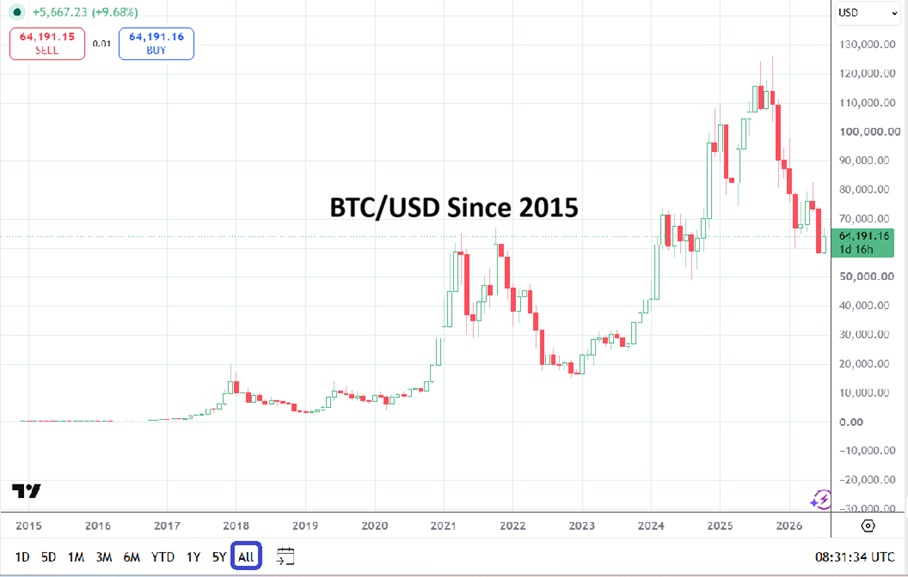
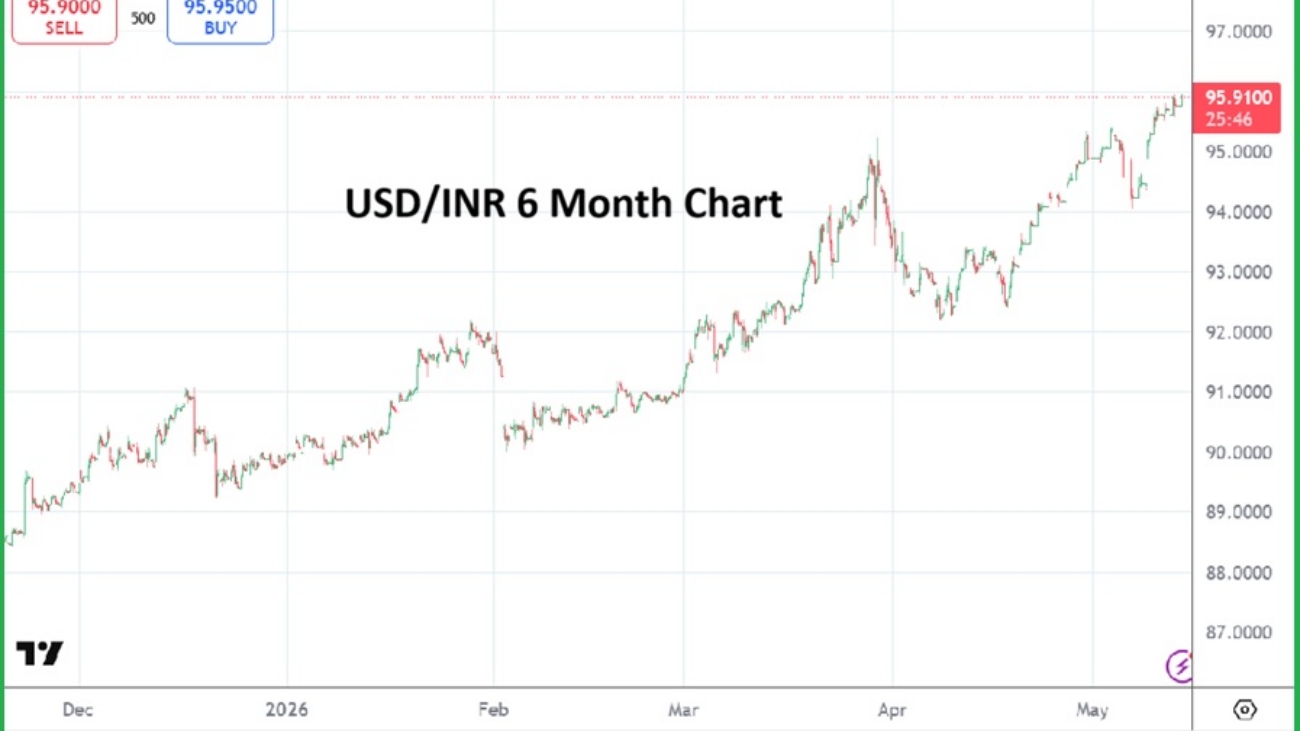
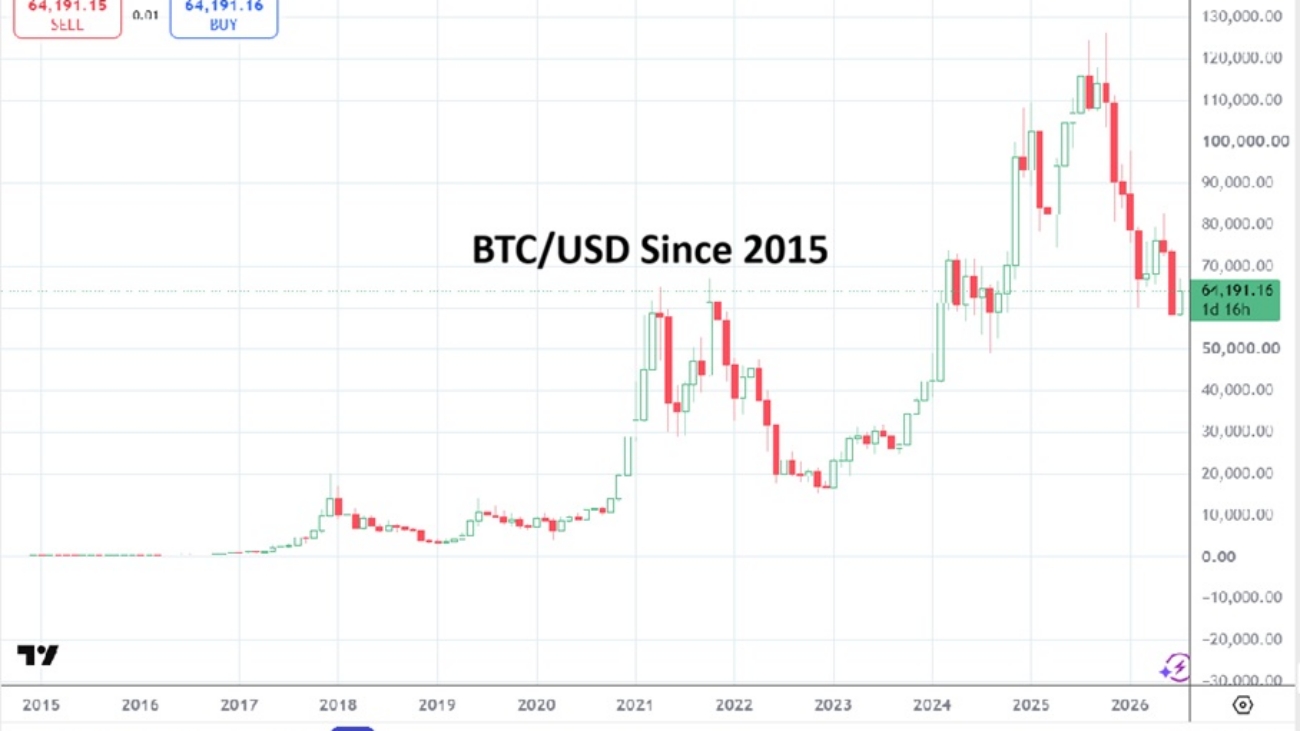
8. $80,000.00: Bitcoin has been traversing higher and continues to flirt with the eighty thousand USD realm in its sights. Strategy (MSTR) finished last week above the $177.00 ratio. Are the new higher avenues a sign momentum will continue to endure for these two highly flammable speculative wagers, or will profit taking douse them again when suspicious caution reemerges?

7. NYC: Mayor Mamdani has made it known the city is not going to be able to meet his budget requirements and has postponed the publication of New York City expenditures until the second week of May. Mamdani has called on the State of New York to change is financial arrangements with NYC in order to facilitate his wishes. In the meantime, the Mayor has decided to pick a battle with hedge fund manager Ken Griffin, the primary owner of Citadel, which if unresolved is likely to cost NYC vital jobs and income. Charm and ignorance are likely to get Mayor Zohran Mamdani only so far.

6. Warning: USD/JPY is traversing near 156.900 as if this writing. Last week the USD/JPY was over the 160.000 ratio and sustaining values. But official murmurs from the Bank of Japan proclaiming readiness to intervene sent the Forex pair tumbling. Japanese Yen speculators betting against the BoJ should remain alert and understand that quick profits and escaping before an actual intervention strikes is a very dangerous game to play. The USD/JPY is the domain of large players and financial institutions. Yields on Japanese bonds have escalated, which is a sign that belief in Japanese fiscal policy remains lukewarm, but participating in the USD/JPY via wagers needs to be done with extreme care.

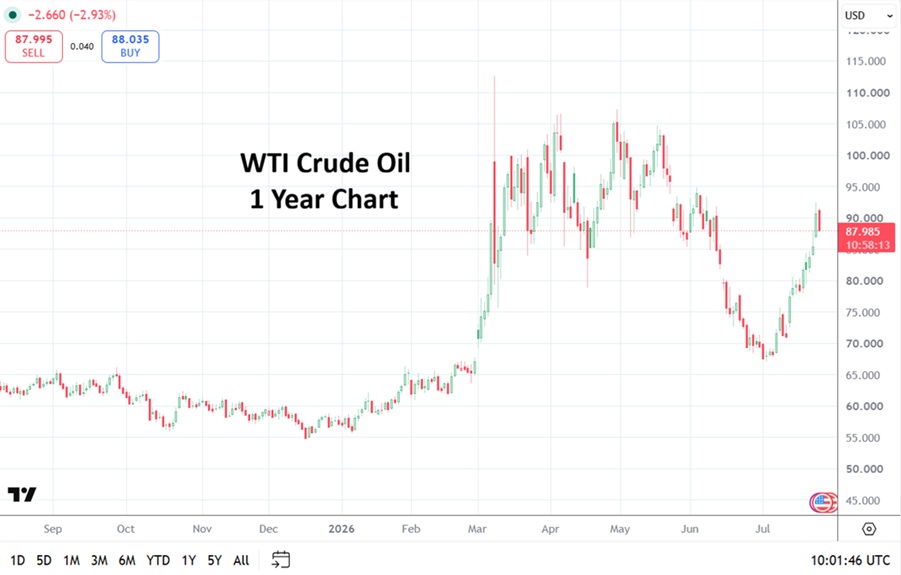
5. Hormuz Strait: WTI Crude Oil values continues to effect behavioral sentiment amongst investors and speculators. The price for spot Crude Oil is above $106.00, while futures are challenging the $100.00 realm. Inflation concerns are turning from whispers into fact. Airlines are being impacted, and logistics for large companies like Unilever are becoming higher costs for global consumers.

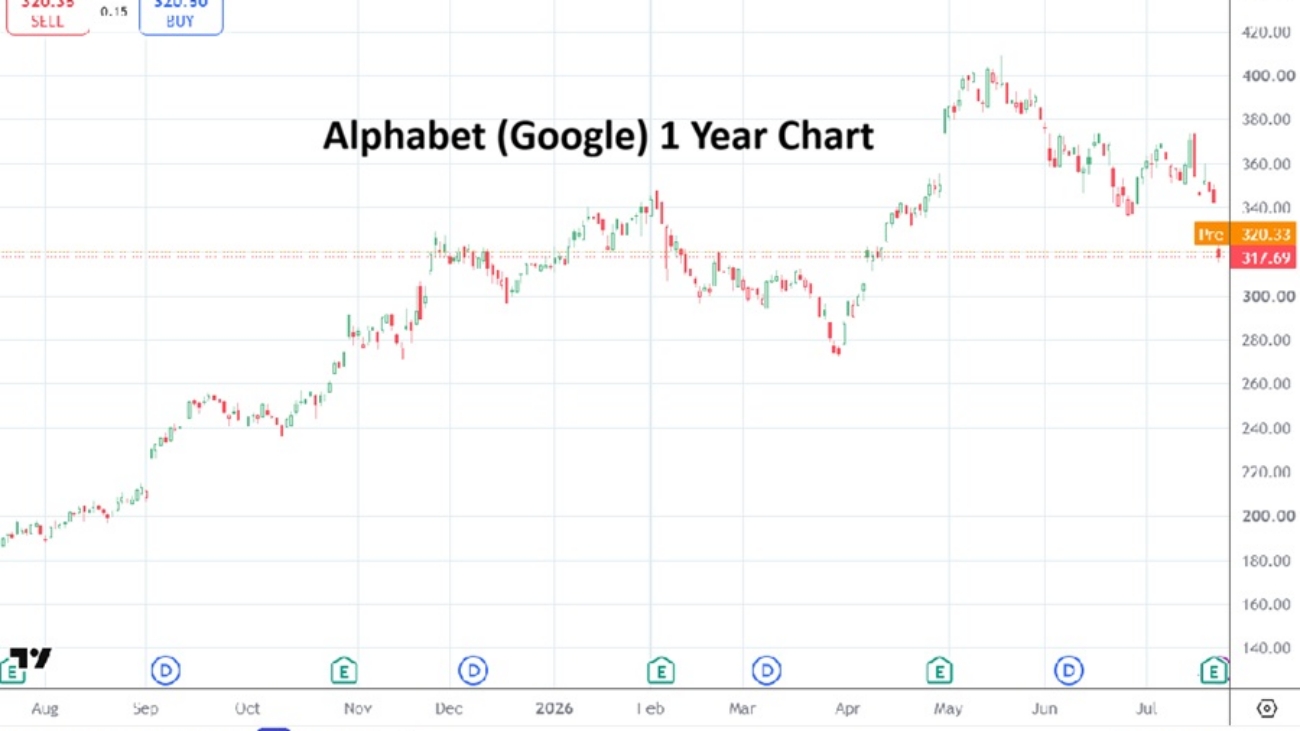
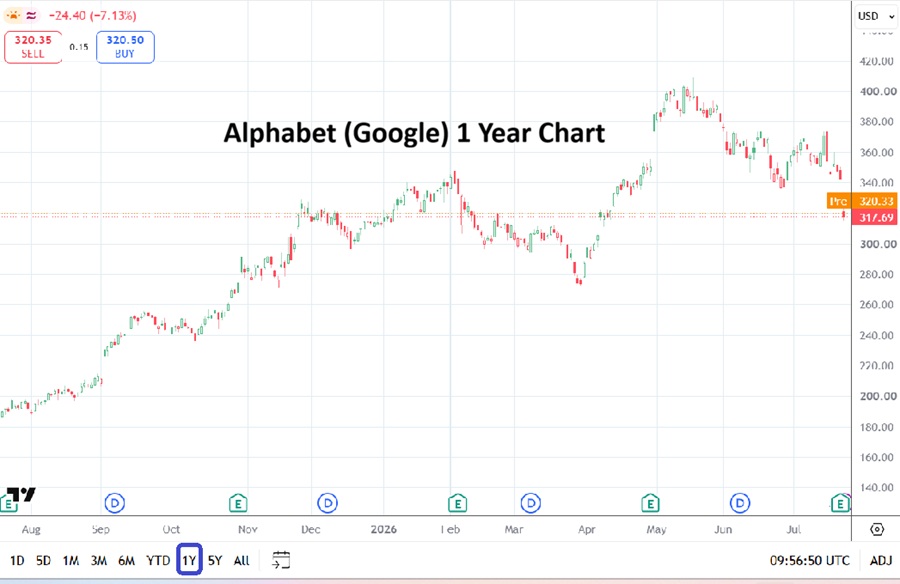
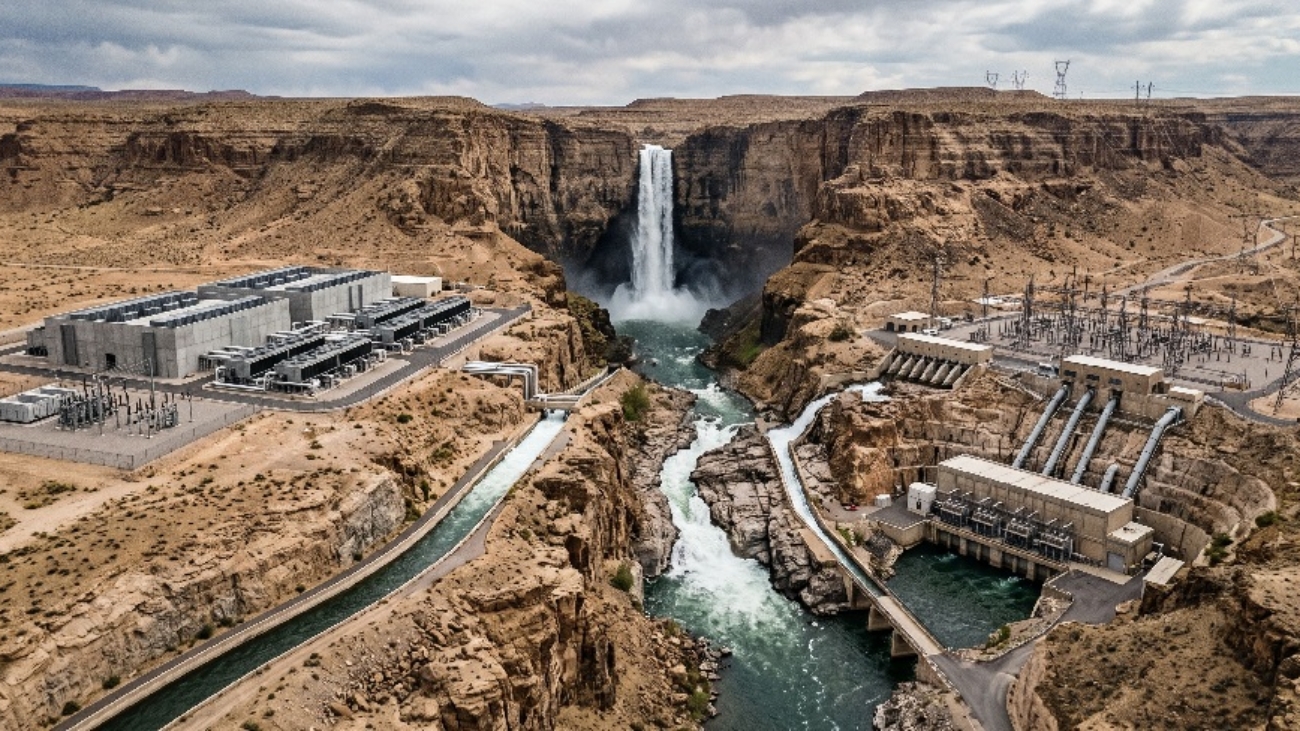
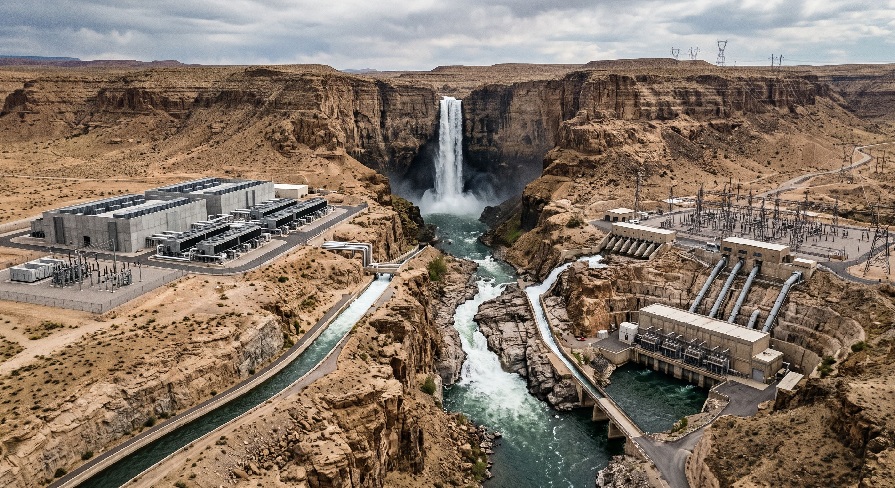
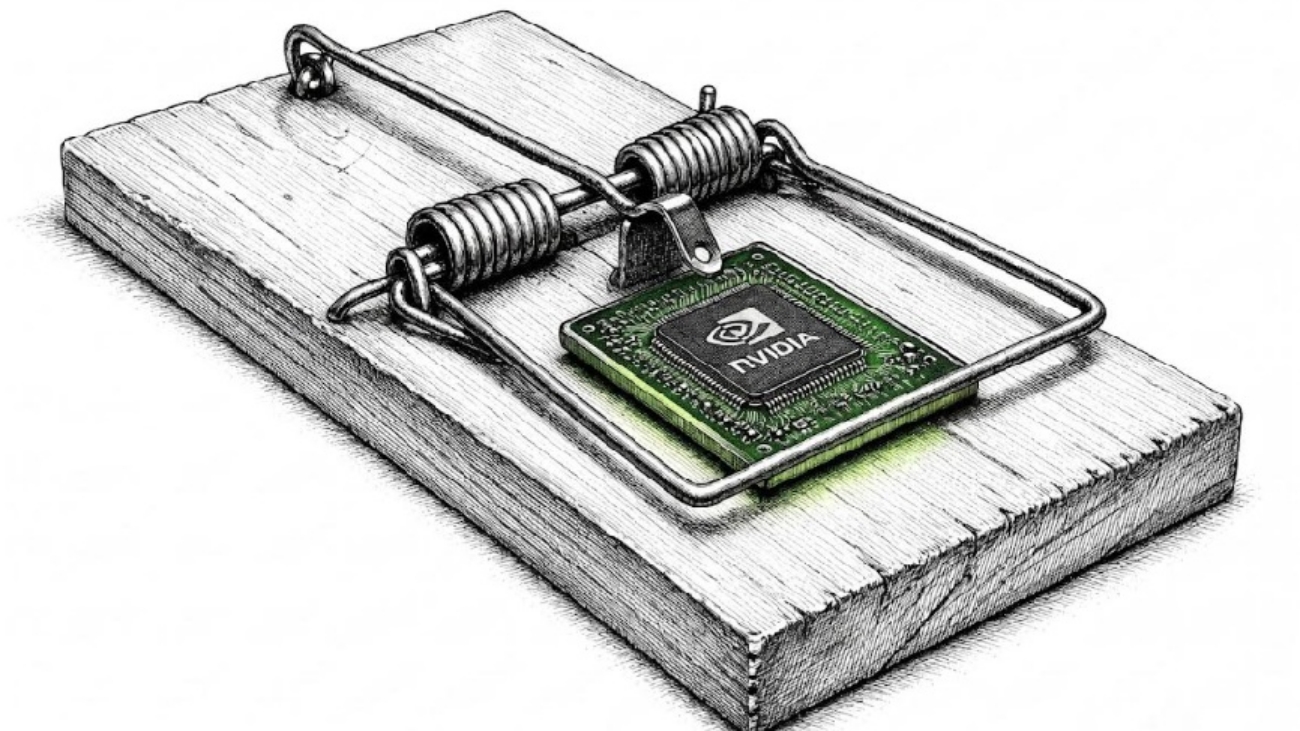
4. Reality Shock: Escalating electricity costs for the giant data centers that Artificial Intelligence infrastructure needs are starting to not only be realized, but causing investors to understand genuine profits for the mega-sized ambitions of many companies may prove fleeting. Hyper-scaling companies seeking to build bigger electrical capacity include Microsoft, Alphabet, Meta, Amazon Web Services and Equinix and it will not be easy. Potential and real electricity shortages are causing some nations, states and cities to plead for help due to too much demand on their overwhelmed power grids.

3. Voting: Jerome Powell has decided that he will remain as one of the seven Federal Reserve Governors, which allows him to vote fully on interest rate (FOMC) policy. Powell’s action is highly irregular and one that certainly doesn’t please the Trump administration. Treasury Secretary Scott Bessent has expressed his exasperation regarding Powell’s non-departure from the FOMC. Powell will step down as the Chairman of the Fed on the 15th of May, but his position as Governor doesn’t end until the close of January 2028. Because the Fed is an independent entity in theory, President Trump and those aligned with Trump’s economic outlooks will have to deal with Powell who will clearly not bend to White House desires. 

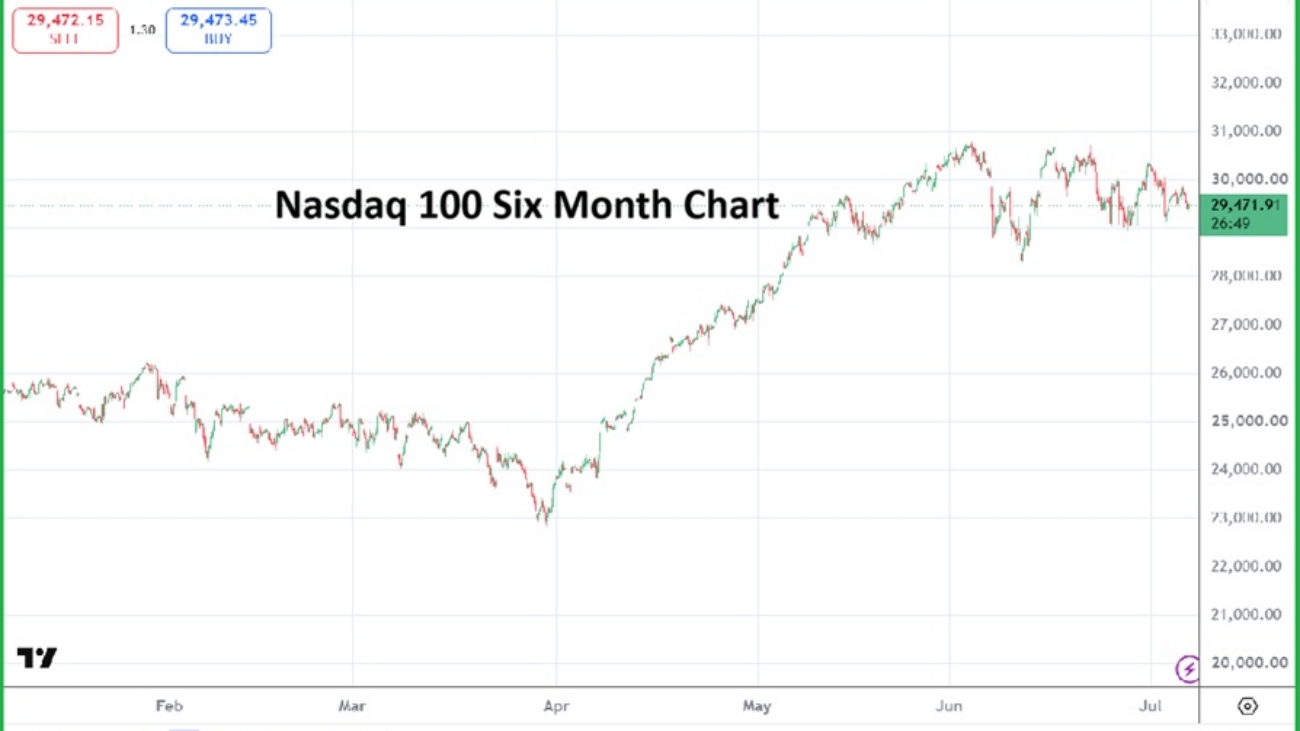
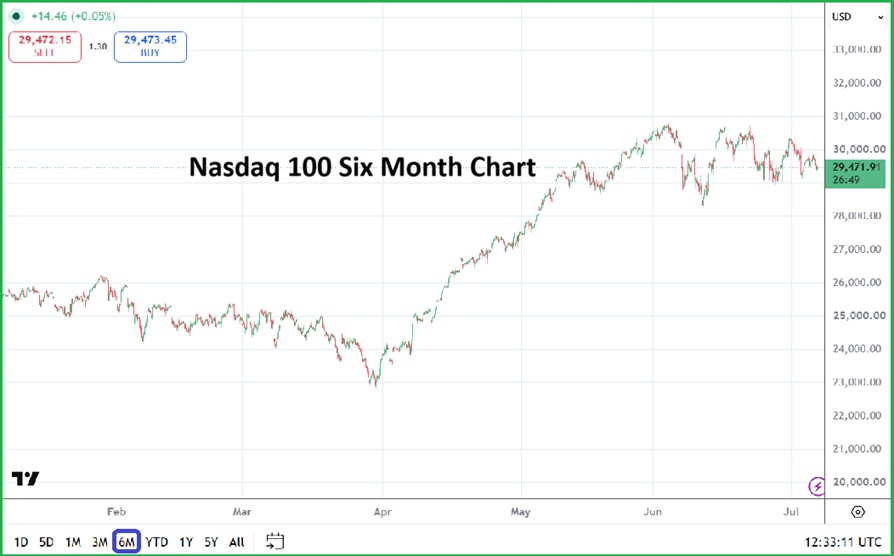
2. Apex Peaks: The official start to the Middle East conflict – this time – began on the 28th of February. Since deciding the Nasdaq 100 and S&P 500 were vastly oversold in late March, a parade upwards bearing gifts has developed and both indices attained record heights this past week. The Dow Jones 30 is still below its all-time levels produced in the second week of February when it scorched above the 50,000 level, but the granddaddy of U.S indices also did remarkably well in April. 

1. Exit West: The decision to officially leave OPEC by the United Arab Emirates is a clear sign that the Iranian war has turned into a philosophical realism regarding existential outlook. The UAE’s has aligned itself with the West and has said no to radicalization. The United Arab Emirates desire to become a Singapore like model in the Middle East that practices free enterprise and provides a worldwide hub for commerce is clear. Many people are not connecting the dots regarding the UAE’s choice, a realignment of the Middle East is underway and it will have a profound economic effect globally.

Copy and paste the text from AMT that you want to share

WTI Crude Oil 20260428

Shift To Economic War Against Iran to Deprive Funds to Regime and IRGC

What If Everyone Is Looking At The Wrong Things About Iran?

The current futures price for WTI Crude Oil is above $98.00. The cash price for the commodity is above $103.00. While many people continue to fret about what endgame strategy the U.S White House is conducting, what if we are seeing it play out in real time via the price of Crude Oil? Is it possible that President Trump has a coordinated plan to starve the Iranian regime and the IRGC of its much loved and needed money? It appears this is the case.

WTI Crude Oil Futures Three Months Chart on the 28th of April

Simply put, the Iranian Revolutionary Guard Corps is a mafia. They stay in power using the tool of fear brought upon by their ability to be ruthless to the Iranian citizens. They are a terrorist organization in the truest sense. If you disagree with that assessment, you are free to do so. However, facts when they are studied point to the conclusion Iran is a terrorist state led by its regime and the IRGC. 

Iran has made massive amounts of money via its energy products for decades. The shutdown of the Hormuz Strait, or at least the inability to export Crude Oil freely, is putting a strain on global energy prices, and it is causing a major fracture in the main financial export of Iran. 

The U.S has not only shut down easy navigation in the Hormuz Strait, but it is also going after Iran’s cryptocurrency operations. The ability to receive and transfer digital money by Iran is being strangled. What if President Trump is not only listening to the opinions of his military officers, and Secretary of State Rubio and Vice-President Vance, but also Treasury Secretary Scott Bessent who has an abundance of financial knowledge about how money flows internationally and how to create obstacles.

If the IRGC is not able to pay its own members, and other adherents to the Iranian regime are only slowly reimbursed, the apparatus of the IRGC will certainly lose its influence. The inability to pay allies that exists merely because they are employed or corrupted by the IRGC likely is starting to cause fractures regarding loyalties. 

China needs Iranian oil too. And evidence is starting to be speculated upon that China is facing tough decisions about acquiring Crude Oil from other sources. China will not be happy about having to pay higher costs, this because discounted Iranian oil that has abundantly been used is no longer available. 

Equities via the major U.S indices have done incredibly well since the end of March. The Nasdaq 100 has seemingly forgotten about AI overbought concerns, the S&P 500 is within apex territory and the VIX is acting as if sunny days are in the forecast. Forex has been volatile, but the value of the USD is within known realms.  However, the price of WTI Crude Oil is high and it has gotten higher since the 17th of April when futures prices briefly flirted with the $80.00 realm – this before going into a weekend. And this is a clue that something is afoot, beside larger players speculating on what their outlooks are for WTI Crude Oil in the mid-term.

The weekend of the 18th and 19th of April witnessed talk of an end to the Iranian war fall short; and heard President Trump essentially declare the ceasefire is still on but with the caveat that the U.S would create a blockade in the Hormuz Strait. While the semantics of a blockade can be debated, the U.S has caused shipping problems for tankers that were supposed to ship Iranian Crude Oil. The U.S clearly decided to create economic distress for Iran.

The Iranian regime still stands, but its leadership is rather shaken. The IRGC is controlling a lot of the decision making for the time being, and it appears the U.S White House is trying to make the IRGC weaker by ending their financial lifelines. It appears that it has been figured out that an economic war which includes starving Iran of cash is the most certain way to create revolts inside of the nation. When the influence of money is eroded, and temptations via other spheres of power suddenly sound tempting and can be joined, this is when shifts in authority and leadership can occur. 

While many analysts wonder about the lack of an obvious endgame being announced by the Trump administration, maybe it is already being played out. President Trump has a large ego and he is happy to extoll the virtues of his ‘tremendous’ policies frequently, but he also has shown the ability to remain quiet when it comes to plans of action and carrying them out. Yes, this can be argued into the late hours by pro-Trump and anti-Trump people. But maybe Trump is simply telling the truth when it comes to the U.S having time on its side regarding the Iranian ceasefire and the Strait of Hormuz. Maybe the clock is ticking on the eroding cash pile the Iranian regime and IRGC has within its grasp.

Copy and paste the text from AMT that you want to share

Negotiation 20260415

Checkmate: Who is Afraid of Negotiations?

President Trump has Laid a Trap for Iran and China

Opinion: The following article is commentary and its views are solely those of the author. This article was first published the 15th of April via The Angry Demagogue.

Both the defeatist camp and the “victory now” group see the advent of negotiations between the United States and Iran as a defeat for the United States and Israel. The argument by the defeatists is that victory was supposed to be quick and now we are stuck and looking for a way out since no one saw Iranian use of the Straits of Hormuz coming. The defeatists claim that only negotiations can end the conflict and anyway, Iran never should have been considered an enemy so the United States and Israel have overemphasized Iranian danger. The defeatists do not want a military victory and assume defeat as the moral choice.

For the victory now group, negotiations are seen as a weakness by the United States and Israel since a further pummeling of Iranian military and civil assets is the only thing that will guarantee a non-nuclear Iran incapable of threatening their neighbors – and the Straits of Hormuz. If there is no regime change, this group says, then there is nothing left to do except continue fighting until the regime falls or until there is nothing left for them to fight with.

A third group sees tactical victory and strategic defeat – or at least strategic stalemate which has forced both sides to the negotiating table meaning for the United States and Israel it is at least a temporary defeat since a stalemate is not victory.

Which if any of these assessments are correct? Or is there a third explanation that says that the negotiations themselves are a victory even if the absolute goals of the war, removing Iran from the Chinese-Russian axis has yet to be accomplished. We won’t retread the arguments about how much punishment the Islamic Republic has endured nor will we agree that as long as they have one missile launcher and enough Kalashnikov’s to stay in power there is no victory.

However, we do agree as we argued in The Art of the (Middle Eastern) Deal, that negotiations done incorrectly will be a precursor to defeat. Each time there is a rumor of continued negotiations there is panic from the victory now crowd, assuming that this time, President Trump will cave into Iranian demands. The defeatists on the other hand assume that the fact of negotiations is a good thing since military defeat is assured. The Macron-Starmer wing of the defeatists are trying to pretend to be the grownups in the room, as they want to be part of the opening of Hormuz but not be on “either side”. Their attempt to insert themselves into the situation but not on “either side” puts them a step or two below Pakistan but maybe one level above Sanchez’s Spain in influence.

Back to the real world. While the negotiations are between two countries and hosted or mediated by a third, there are two other countries involved on the Iranian side – China and Russia, and four on the American side – Saudi Arabia, Qatar, UAE and Israel. Each has its own interests and in general most of those mesh with the main participants in the talks. American allies need a non-nuclear Iran that is weak enough that it can’t threaten those countries and America has the same interests. Although a non-Islamist regime would be the best guarantor of that, it is not something that can be done only from the outside.

Russia and China need an American defeat more than anything especially after the world has witnessed the poor performance of their weaponry. They will try to re-arm Iran in order to create a war of attrition with the United States that America will be forced to end. This is where the interests of Russia and China clash. Russia would love the damage if not the destruction of Persian Gulf oil fields and refineries but the subsequent rise in oil prices would further damage China’s increasingly fragile economy. If Putin’s Russia has a goal of survival, self-enrichment and embarrassing the west (one seems to go with the other for Putin) and China’s goal is to dominate the Indo-Pacific, then the survival of Iran is a nice to have for Russia but a need to have for China.

China does not have the will and/or ability to do what is necessary to defend their Iranian ally, so they are really in a no win situation without a nuclear Iran. The American insistence on a complete end to the Iranian nuclear program is a shot right at the Chinese global strategy. Without the Iranian nuclear umbrella, China will depend on the United States for the flow of oil to their country.

As for Iran, they have one goal in this war and that is to survive with enough firepower intact to continue their quest to destroy Israel, rid the middle east of the United States and eventually to bring the Sunni Arab states in the Gulf under their thumb. As opposed to a dictatorship that is “only” corrupt and can be bought, they also need their theological goals met – and that starts with the destruction of Israel and genocide of the Jews. That, like Hitler’s Germany is an aim greater than the goal of winning the war.

They have come to the negotiating table because they felt that a continued bombing attack by the U.S and Israel and possibly the Gulf states risks their goals more than negotiating. This is the same reason that Hamas agreed to release the hostages as they saw the needed respite from the IDF in order to retain control of at least part of Gaza. This could be seen as Iran’s last ditch effort to survive and are using the cease fire to reconstitute their industry, re-arm and most important – to dig out and reach their underground missile cities

So why has the United States come to the negotiating table? Is it a show of weakness? An attempt to re-arm and bring more troops to the region? Is there a regime change plan that needs time to take share?

As for the last of these, over that last two days there have been car bombs and shootings at Basij checkpoints and the commander of Basij forces of Teheran has been assassinated. There is clearly something going on inside of Teheran and the head of the Mossad, David Barnea stated yesterday that the Iran mission will not end until there is regime change. Not only are the IRGC using the cease fire to regroup, so, it seems, is the opposition.

In addition to continued operations in Iran, the blockade of the Straits of Hormuz, an act of war in itself, tells Iran not to see negotiations as a sign of weakness by the United States, but rather as an opportunity for the US to widen their attacks beyond bombs and missiles.

The move from bombing to negotiations have trapped both Iran and China in a place where neither can win unless the U.S, against all statements by the President, VP, Secretary of State and Secretary of War, decides to fold.

Iran is trapped in a place where if they starts to shoot they will have their economy in worse shape than it is now and they no longer are lords of the Straits of Hormuz – THE trump card (no pun intended) that the defeatists have been gloating about.

China is trapped in a place where they need the United States to guarantee their flow of oil and their ally is no longer able to sell it to them on the cheap.

Negotiations have taken away the two things that were pressuring America and its allies – Iran’s daily missile attacks and their veto over the Straits of Hormuz. While they are using the time to try and rebuild what has been destroyed, that will take so long that, assuming no surrender by the United States, will be irrelevant to this war and the next -if there is one.

President Trump and the United States have set a trap for Iran and China and there does not seem to be a good way out. That doesn’t mean Iran will recognize it and end their genocidal quests, but it does mean that their path to victory has been shut down.

Checkmate?

Disclaimer: the views expressed in this opinion article are solely those of the author, and not necessarily the opinions reflected by angrymetatraders.com or its associated parties.

You can follow Ira Slomowitz via The Angry Demagogue on Substack https://iraslomowitz.substack.com/

Copy and paste the text from AMT that you want to share

postN87

AMT Top Ten Miscellaneous Missiles and Missives for the 29th of March, 2026

The Iranian War Dominates our Lack of Humor

10. Final Four: The Men’s NCAA Basketball Championship will be set after today’s games. The Arizona Wildcats, our pick, advanced to the Final 4 by beating Purdue last night. Michigan is favored to beat Tennessee and the Duke vs. UConn game is anticipated to be close. The University of Illinois advanced by beating Iowa on Saturday and maybe the biggest underdog – if the Volunteers lose to the Wolverines today.

AMT Top Ten for the 29th of March 2026

9. Jobs Data: U.S Non-Farm Employment Change numbers will be published during a banking holiday on the 3rd of April, this as the Iranian war shadows investment sentiment. Will potential jobs numbers results create nervousness on Thursday, and side effects Monday the 6th of April? 

8. Private Equity: Outflows remain a problem for BlackRock and other firms as deal making comes under a bright light. Investors are questioning valuations, lack of exits and money that sits in ‘zombie’ funds. Imposed limits on redemptions by some firms have created nervous indicators. Is the private equity problem correlated to lackluster momentum on Wall Street, this as desire for the next big thing runs out of marketing hyperbole?

7. 10-Y Notes: U.S 10-Year Treasury yields finished the week near 4.43%, Friday’s price action saw an apex around the 4.48% vicinity, highlighting nervousness. On Friday the 27th of February 10-Y yields were close to 3.94%,

6. Forex: USD/JPY ended this past Friday around 160.250, making it cheaper for tourists to visit Japan as cherry blossom season starts this week and lasts into early May. However, the Bank of Japan and Japanese citizens are not amused by the weakening Yen. USD centric strength continues to resonate loudly. 

5. Fed: Potential drama surrounding the U.S central bank and the replacement of Fed Chairman Jerome Powell has taken a backseat to the Middle East conflict. Concerns about inflation are legitimate. The Federal Reserve will be hard pressed to defend an interest rate cut in the mid-term.

4. President Trump: Speaking from both sides of his mouth (and his opponents might say another area of the body) may be strategic genius from the White House regarding Iran or prove to be a lack of focus. However, it certainly keeps everyone guessing what is going to happen next in the Middle East.

3. $100.00: WTI Crude Oil prices have remained below the one-hundred level for the most part during the Iranian war, yes – there have been outliers above. Will we begin to see sustained prices above the century mark this week? Short-term reactions to the U.S military potentially seizing Iran’s Kharg island would certainly cause price chaos, but could it also soothe some large players in the energy sector via mid-term outlooks? 

2. Good Friday: The holiday at the end of this week will be effected by anxious behavioral sentiment. The potential of a long weekend with plenty of noisy chatter could make for nervous investors this coming Thursday as they position themselves ahead of possible escalating storms.

1. Fear: The S&P 500 and Nasdaq 100 have entered corrective depths. Who will be brave enough to start looking for bottoms as the Iranian war rages with no end in sight? Will a reversal upwards emerge this week?

Copy and paste the text from AMT that you want to share

Iran: What Victory Looks Like Part 2 - The Military

Iran: What Victory Looks Like, Part 2 – The Military

Missiles, Drones, the Straits and Regime Change

Opinion: The following article is commentary and its views are solely those of the author. This article was first published the 17th of March via The Angry Demagogue.

In a recent X post, Edward Luttwak, the elder statesmen amongst strategists and one who we ignore at our own peril, stated that “The regime is impotent viz the U.S but all-powerful against its own people. So, regime change with bombs may fail but without bombs it might last for ever.” In other words, American and Israeli bombing is a necessary, but not sufficient condition for the overthrow of the Islamic Republic. Luttwak also made it clear that the Iranian people cannot overthrow the regime without native military support.

Not only will bombing not be sufficient to overthrow the regime, but American and Israeli commandos combined with Mossad and CIA operations will not be enough because for the Islamic Republic, internal, Iranian opponents of the regime are a bigger religious and ideological threat than Americans, Israelis or Sunni Arabs and they will always have enough Kalashnikovs and machine guns to kill 30,000 Iranians a night.

But regime change is not the only path to military victory. The mistaken views of the war when the opponents are “shocked”, Casablanca style, when they realize that wars are difficult and unpredictable and come with speed bumps, unexpected ups as well as downs and that not everything is in your control.

The first path to victory is one that is occurring now. That is the destruction of the military and command and control assets of the Islamic Republic. That focuses as we know, on the Revolutionary Guards (IRGC) and the “Basaj” – essentially the IRGC’s domestic militia who are responsible for keeping Iranian citizens in line and are, for the most part, ideological hardheads. With other types of dictatorships, the embarrassing way their military has handled Israeli and American attacks past and present would have been enough to topple them. However, with Shiite fanatics who know no borders (morally or geographically) and whose main enemies are domestic, that is not the case – and no one expected that to be the case.

The attacks must continue until either the regime changes or until their military-industrial infrastructure is destroyed. This means its drone and missile production, its naval forces, air-defenses and underground missile storage and nuclear facilities must be done away with. It does not mean the nearly impossible attempt to secure enriched uranium. Regime change can lead to cease fire and negotiations but without regime change the attacks must continue until the mission is completed.

The second path to victory is the opening and complete control of the Strait of Hormuz. While there still are ships that make it through, this is the one thing that the regime still holds over the United States and the world. The missiles they send to Israel and the gulf will be degraded enough if the bombings continue, but the Western world cannot allow a vicious, cruel dictatorship to control any waterway. Freedom of navigation is one of the key reasons why Taiwan is so important (which Japan knows well – making us wonder why it has not sent ships to help with the Straits) and a key reason this war must be fought. We wrote the other day about the price premium that the Islamic Republic holds over the world (and there was a Jerusalem Post article quoting Peter Navarro, head of the White House Office of Trade and Manufacturing state that the price premium is between $5-15 a barrel – we think that is understated). The Islamic Republic must be denied this ability to blackmail the world.

Of course, it seems that Western Europe is happier with the Iranian regime not losing, than with the American (or Israeli) government winning, but that is something to be dealt with later

The third thing that will bring a military victory is of course, regime change. First, the presence of a new leader on Iranian soil must be attained. This can either be the Shah’s son, Reza Pahlavi, who has been encouraging his countrymen to revolt and therefore needs to show real leadership by making his way home, or someone, possibly a senior military figure, who is in Iran now. Pahlavi is the natural choice, but he must take some risks and show he has the pull and prestige with at least part of the military in order to be able to accomplish the mission of overturning the regime.

In order for that to happen, circumstances must be created where a few divisions of the regular army can protect Pahlavi as he enters the country and he can lead the people to revolt. Once a few divisions defect and with American and Israeli air-power, they can liberate territory, further army divisions will probably join in – assuming they see a path to victory. A revolution need not happen overnight but can come with the army moving across the country and the defeat or defection of some in the IRGC. A few million in Swiss or Dubai bank accounts will also encourage defection.

Without a leader and an organized armed force, the regime just needs small weapons fire to put down any citizen revolt – and they will.

Military victory can come either with the destruction of the drone/missile capabilities and stockpiles along with the forced re-opening of the Strait of Hormuz or with regime change. If the former two, then the Iranian people will continue to suffer, but the Persian Gulf countries, Israel, the United States and the rest of the free world will not. If the latter, then everyone except China and Russia will be winners.

Let us not forget what everyone has been saying since day 1 – that only the Iranians can overthrow the government and that will only be done if the regular army decides to throw itself to the side of the people. The United States and Israel can only create the necessary (but not sufficient) conditions for this to happen. Without regime change, but with the opening and complete control of the Straits, the destruction of the regime’s naval, air defense, missile and drone forces and production, along with the elimination of senior Basaj and IRGC commanders, will still constitute a satisfactory military victory.

Disclaimer: the views expressed in this opinion article are solely those of the author, and not necessarily the opinions reflected by angrymetatraders.com or its associated parties.

You can follow Ira Slomowitz via The Angry Demagogue on Substack https://iraslomowitz.substack.com/

Copy and paste the text from AMT that you want to share

WTI Crude Oil 20260309

Fear Factor High in Oil Markets and Outlook is King

WTI Crude Oil Trading in a Storm (War)

Writing from within the storm, it would be easy to feel a strong sense of nervousness as the newest Middle East War rages. However, this is unlikely the beginning of World War 3. Traders looking at WTI Crude Oil this morning have seen the commodity launch over $110.00. But the price has seen a slight dip and is now hovering above $105.00 in albeit fast conditions.

WTI Crude Oil Three Month Chart on 9th March 2026

Behavioral sentiment is nervous, there is no disregarding that notion and taking it seriously. Iran has been firing missiles and drones at neighbors and Saudi Arabia has been effected via some of their oil production. The Strait of Hormuz is certainly seeing an escalation in tension and is threatening to become a sea battle.

However, while the price of WTI Crude Oil rocks higher and day traders either make or lose money fast, speculators wager on short and near-term notions, there is likely a group of folks taking another approach and watching cash prices compared to options.

Yes, the intra-day price of WTI Crude Oil and all other energy sources will remain volatile near-term, but those with a mid and long-term outlook may be betting on optimism and the belief an end game will produce calmer prices. 

WTI Crude Oil is up close to 40% percent when a mid-term perspective is used. Will the commodity remain above 100.00 USD six months from now? Will WTI Crude Oil be above $100.00 three months from now or even one?

This thinking may deliver some type of price resistance in WTI Crude Oil. Certainly, there is a chance of greater escalation. But even though it was widely reported that oil facilities in Iran were bombed this weekend by Israel, the terminals hit were on the outskirts of Teheran, not on the island of Kharg. As dangerous as the war has become and the potential of worse damage occurring, those who are striking Iran do not want to damage Kharg terminals – at least not yet.

As for endgame, Russian oil is being allowed to be sold more easily, sanctions have been relaxed. Thus, it can be said there are international efforts to fight against price spikes. There are concerns about higher oil prices causing bedlam via inflation for the global economy rightfully. However, at some juncture things will eventually calm down. And that is what day traders need to keep in mind as WTI Crude Oil has raced higher, the notion that tactically the Iranian war will reach a de-escalation period is reasonable. 

Yes, there is a threat that Iran plays the an ‘Armageddon’ card and tries to destroy all vital energy resources in the Middle East, but we have likely passed that stage. Iran in many respects, respectfully, has been declawed. Iran can threaten, but can it really bite at this point? The island of Kharg is a key barometer, its facilities remain mostly kept out of the destruction zone, WTI Crude Oil may not spike too much higher.

As for highs, this morning’s jump occurred on fear, however the price has started to calm. We could certainly still see higher values in WTI Crude Oil this week or next, but thoughts about the potential of an end game resolving the current dangers, whatever that may be and no matter how long it will take – may prove to be an important ointment.  Time shall tell.

Copy and paste the text from AMT that you want to share

postN76.1

India Insider: Strategic Memory and Why Unilateral Power is Resisted

India Insider: Strategic Memory and Why Unilateral Power is Resisted

After Independence, India was often described as “tilting” toward the Soviet Union. In reality, this was the outcome of India’s pursuit of Non-Alignment at a time when the United States was actively backing perceived rogue actors in South Asia, most notably Pakistan. What appeared as ideological preference was, in fact, strategic necessity born of hard experience.

The Soviet Union supported India on core security concerns when few others would. The first major Soviet defense deal was not merely a weapons sale. It included licensed production in India through Hindustan Aeronautics Limited, full technology transfer, and made India the first non-Communist country to receive the MiG-21. This distinction mattered. India was treated as a sovereign partner capable of absorbing technology, not as a dependent client expected to align unquestioningly.

By contrast, Washington’s alignment with Pakistan was driven by Cold War geopolitics rather than South Asian stability. Despite repeated military coups, wars with India, and regional destabilization, the United States armed Pakistan, provided diplomatic cover during conflicts, and sustained the relationship through military rule and nuclear proliferation. These experiences deeply shaped India’s strategic culture and explain its enduring emphasis on autonomy, redundancy, and diversified partnerships rather than alliance dependency.

This history is one of the central reasons India resists Washington dictating regional dynamics. South Asia, in New Delhi’s view, is not a chessboard for external powers to reorder at will.

Democratic Republic of the Congo Example

The same pattern is visible beyond Asia. Take the Democratic Republic of Congo. After decades of horrific colonial exploitation, the Belgians realized by the mid-20th century that they could not hold on indefinitely and exited abruptly, having never prepared the country for self-rule. What they left behind was not independence, but a political vacuum. The United States and the United Nations intervened, but their actions were shaped less by concern for Congolese society than by geopolitical rivalry, ideological competition, and racial hierarchy.

The assassination of Patrice Lumumba destroyed the Republic of the Congo’s (as it was known then) only credible attempt at building a unified nationalist state at independence. The dictatorship of Mobutu Sese Seko that followed did not merely fail to develop institutions; it actively hollowed them out. Corruption became a governing principle, loyalty replaced competence, and the state turned into a vehicle for extraction. Today’s instability in the Democratic Republic of the Congo is not a governance failure in isolation—it is the predictable outcome of a political system designed to rule without building state capacity. For countries like India, this is not ancient history, it is a warning.

Washington’s unilateralism reinforces this mistrust:

The recent military operation to remove Venezuelan President Nicolás Maduro without U.S Congress authorization, international legal justification, or an imminent threat would have been unthinkable as recently as the first Trump administration. It became possible in 2026 only because of congressional capitulation, judicial immunity, and the transformation of an apolitical defense establishment into a politicized instrument of executive power. To much of the world, this signals that restraint is no longer embedded in American decision making.

Europe exposes another contradiction. The post war order was built on liberal democracy and collective security through NATO. When that order is weakened by unilateral action, trust erodes, even among allies expected to align automatically.

Even before Trump, the U.S – India relationship remained cordial rather than fully strategic. Before 9/11, India was the most natural regional ally against Al-Qaeda, yet Washington lacked patience and local understanding to navigate India’s complex democracy and nationalism. That failure was not tactical, it was conceptual.

India’s neutrality today is deliberate:

It prioritizes diplomacy over military actions that violate international law. India sees a multipolar world emerging, not as disorder, but as the end of unchecked unilateral supremacy. This is not ambiguity. It is a strategic memory.

post266

India Insider: Manufacturing Strategy to Create Rural Jobs

India Insider: Manufacturing Strategy to Create Rural Jobs

Across much of India’s rural landscape, manufacturing remains scarce and finding a solution for this remains a priority. While some towns do have small scale industries that offer jobs, this is still limited. As of financial year 2023, agriculture accounts for only 16% of India’s GDP, down sharply from around 35% in the 1990s, due to a structural shift toward services and manufacturing.

A large share of rural families still depend on agriculture, often engaging in farming and irrigation with modern equipment. However, marketing their produce remains a persistent challenge. Meanwhile, many rural workers are engaged in low-wage trade and commerce, often in informal settings such as small shops and roadside businesses. These roles typically offer limited income and little upward mobility. Falling real wages have pushed many to migrate to India’s urban centers or venture overseas to Singapore, Malaysia, and the Gulf countries in search of better livelihoods, aided by favorable exchange rates.

Capitalism and Efficient Manufacturing

Adam Smith, in his seminal work The Wealth of Nations wrote that, ‘it is not by gold or silver, but by labor that all the wealth of nations is created’. This fundamental idea underpins the modern economic thought that wealth is not derived merely from money, but from the productive capacity of people.

When capital is invested in a capitalist enterprise, it generates profits for the owner, provides wages for employees, and delivers returns (such as dividends) for shareholders. But this cycle of value creation depends on active and efficient enterprise, particularly manufacturing which has been missing or underdeveloped in many parts of rural India.

Unlike countries such as the United States, where people readily relocate across States, India faces some unique challenges. Like the European Union, India is a union of diverse linguistic and cultural regions. It is uncommon for a small business owner from Himachal Pradesh to directly access markets in Tamil Nadu or Karnataka due to language barriers, cultural differences, and logistical constraints. These frictions further isolate rural producers from wider markets.

Garment Industry Values in India, Bangladesh and Vietnam

Strategic Solutions and the Role of State Governments

To revive rural economies, business people along with their state governments must identify and invest in strategic sectors that create jobs and add value. Kerala is a fine example: as one of India’s top spice-producing States, Kerala has the potential to establish local industries focused on spice processing, packaging, and export. Coordination between agriculture and manufacturing can generate employment, stimulate local economies, and enhance foreign exchange earnings.

Albert Hirschman, a development economist, highlighted this approach through his theory of unbalanced growth and economic integration. He argued that certain industries have strong reciprocal connections with other parts of the economy. By prioritizing sectors with good synergy potential, developing countries can achieve significant growth even with limited resources.

Growing competition from countries like Bangladesh and Vietnam which both enjoy favorable trade agreements do pose new challenges, this must be taken seriously by India and create a focus on forward looking international commerce. There will always be competition from distant enterprises and nations, this must be accepted and planned for via commercial insights.

Within India is Tiruppur, a city in Tamil Nadu, known as the ‘Manchester of South India’ due to its vibrant textile industry. The city has created an ecosystem of manufacturing that consistently offers higher real wages compared to other towns in the region. It has successfully shifted labor from agriculture to industry, thereby increasing productivity and income. It is a bright example and defines one way to make progress.

Protecting New Industries and Creation of Success

In his book How Rich Countries Got Rich and Why Poor Countries Stay Poor, economist Erik Reinert argues that nations develop not just by doing what they are currently good – such as agriculture or mining, but by nurturing industries that can become more productive long-term. Typically manufacturing and technology sectors lead to greater innovation and economic resilience.

Reinert provides numerous examples, like South Korea’s emerging growth in steel and its automotive industries, and Ireland’s rise in information technology where specific protections and support for young industries has led to long-term prosperity.

India’s rural transformation cannot rely on New Delhi alone. State governments along with business people must take the lead by identifying sectors that have the potential to foster high growth and employment. Helping to create local value chains, investing in infrastructure, training, and market access will build resilience in these communities. By encouraging small-scale manufacturing and leveraging regional strengths, the country’s rural areas can become engines of economic growth.

post264

India Insider: Concern IT Empire is at Risk in Age of AI

India Insider: Concern IT Empire is at Risk in Age of AI

When China’s DeepSeek announced its Generative AI program as a rival to U.S based ChatGPT, the world paid close attention. In fact, Nasdaq bellwether stock Nvidia, the world’s most valuable company, took a hit because the DeepSeek product was made with less expensive chip processors compared to ChatGPT’s infrastructure, which uses Nvidia’s GPU technology.

In North America and Europe, DeepSeek’s rollout was met with much surprise and intrigue. And the true ‘poster child’ of India’s post-liberalization era, the IT (Information Technology) sector has been facing its own challenges and was also caught off guard. India’s IT sector employs some 5.3 million people and helps maintain its current account balance sheet by earning crucial foreign exchange reserves. The top four major IT companies have a combined market cap of $300 billion USD, larger than India’s richest man Mukesh Ambani’s Reliance Industries, which stands around $238 billion USD.

Nifty IT Index One Year Chart as of 29th July 2025

India’s IT Business Model and Artificial Intelligence

Indian IT companies operate on a model of software servicing for offshore clients, typically via medium to long-term contracts. Their business operations are embedded across the globe thanks to affordable pricing and the quality of services provided by Indian software engineers. Now, this model is being threatened by the rise of Generative AI and taking it lightly would be a serious mistake by India.

Shares of major IT companies ­- TCS, Infosys, Wipro, and HCL have delivered lackluster returns since their post pandemic rally. Since Covid high valuations amid deal pessimism were a concern. Now those worries are amplified by AI and the disruption it brings to their business models. Software exporters remain the worst performers, the Nifty IT index is down 18% year-to-date, underperforming the broader index consequentially.

The recent release of Q1 fiscal year 2026 numbers from these four IT companies have been met with skepticism regarding forecasted outlook. Analysts noted that Indian IT firms are grappling with margin pressures amid persistent macroeconomic headwinds and rising threats from AI-driven productivity improvements. In response, companies have started to protect their margins with layoffs, TCS (Tata Consultancy Services) shed around 2% of its workforce this past weekend which could affect more than 12,000 jobs.

Time For India’s IT Sector to Become Proactive

Pricing models that IT companies charge customers are changing from long to short-term flexible contracts like ‘pay as you go’ over traditional fixed annual licensing models. Despite changing CEOs in several of these companies over the last few years, animal spirits are failing thus far to innovate AI products that can enhance the bottom line. Instead, companies prefer share buybacks and paying stellar dividends to appease the shareholders rather than to invest in R&D especially when their core model is under threat.

Hang Seng Index One Year Chart as of 29th July 2025

The euphoria surrounding India’s $5.4 trillion equity market is cooling in 2025, amid concerns over slowing earnings growth, elevated valuations, and tariff related uncertainty. At the same time, sentiment towards Hong Kong’s listed Chinese shares are improving with global fund managers rapidly reallocating capital to that market. The Hang Seng Index has delivered an impressive 27% return year-to-date. Meanwhile, India’s stock market still lacks depth for investors seeking meaningful exposure to the booming Artificial Intelligence theme.

Indian IT companies excel at scaling and delivering AI solutions for global clients, but they do not own the core models, platforms, or consumer data needed to become true AI disruptors like China’s tech giants. The industry contributes approximately 7.5% to India’s GDP and remains the primary employment avenue for engineering graduates. It’s time for India’s IT sector to proactively address the growing AI threat posed by global competitors.

post246

An Expanding Axis – Will Egypt and Pakistan Become Members?

An Expanding Axis - Will Egypt and Pakistan Become Members?

Opinion: The following article is commentary and its views are solely those of the author. This article was first published the 26th of May via The Angry Demagogue.

China seems to be taking advantage of the transition from the Obama-Biden appeasement based foreign policy to the Trump commercial based system. Whereas Obama-Biden had no problem punishing allies that dared to oppose the US-EU appeasement and woke revolution, Trump is looking to create alliances based on commerce – and threatens allies that don’t go along. While the Obama-Biden policy failed utterly and arguably caused the wars in Ukraine and the Middle East, the Trump administration seems to be playing for time as it restructures the global security order.

China however does not seem to care to wait and are stretching their sway not only in the South China Sea but westward towards the Middle East. The four member Axis – Russia, China, Iran and North Korea seems to be expanding to other countries with strong military dictatorships. Egypt and Pakistan will be the next members of the Axis. While much of China’s belt and road policy deals with bankrupting poor, weak countries, they seem now to concentrate on strong military dictatorships. Egypt and Pakistan are being pried from the western camp as we speak.

Pakistan has, for awhile not been firmly in the western camp. It was a cold war U.S ally as India, while democratic, sided with the Soviets on most international issues. While the US was busy in Afghanistan, the Pakistanis played double agent. Now that the U.S is not in the region and the U.S and India have become closer, Pakistan is now firmly in the Chinese camp.

In addition to Pakistan, Egypt becoming the next major member of the Axis.

Let’s take a few steps back and examine the burgeoning relationship between Egypt – a military dictatorship and Communist China. As we have written China and Egypt had joint military maneuvers that included deliberate violations of the Egyptian-Israeli peace treaty guaranteed by the United States. Egypt, in thumbing its nose not only at Israel but at the United States, allowed Chinese planes to approach the Israeli border in order to test Israeli reaction to a possible invasion. Multiple Chinese military cargo jets flew in undisclosed hardware in the days leading up to the maneuvers.

Three more Chinese Y-20 cargo planes landed in Egypt last week again, carrying unknown hardware. At least one of these planes came from Pakistan. Egypt also seems to be signing major arms deals with France as Macron reeks of desperation in his attempt to remain relevant – but a de Gaulle he is not, and he will not be able to create a force or policy independent of the U.S. Egypt will be glad to take advanced French weaponry while it creates a stronger alliance with China.

Back to Pakistan one has to wonder if the Pakistan-Indian flareup a prelude to what can happen in other theatres – or worse, a purposeful conflagration to test Chinese weapons systems in actual combat and keep the West on its back feet? According to most reports they were able to shoot down between 3 and 5 of France’s most advanced Rafal fighters without even entering Indian territory. The confrontation started with a heinous terrorist attack against Indians in Kashmir by a terror group associated with the Pakistani armed forces. India claims that Pakistan is directly involved in the attack. If so, this would not have been the first one.

The downing of the Indian French built Rafal fighters by Pakistan’s Chinese produced 10-C was, according to expert reports, not just or even mainly superior piloting but with a Chinese strategy and technology that includes all aspects of air power – including recognition of the target, locking on and attack from distances in what an American air expert called a perfect air based killing machine. This would seem to be the first real test of Chinese advanced air-power and it something that needed to be done before any invasion of Taiwan. This may not test their own pilots but it does test the strategy and the technology.

China has a main medium term goal here and it is not a secret. They are planning to take Taiwan by force and need to make sure their soldiers, sailors and hardware are up to the job. They have seen how poorly the Russian army has performed and have seen how Israel has dismantled Iran’s defenses and swatted away Iran’s offensive attacks. China has not fought a major war for decades and for all the advances they say they have made – all have been untested. Until now.

China will not risk a war with India itself but would be more than happy to have its proxy involved. Chinese fighters and their new “over the horizon” missiles are key in their plans to deter the U.S from defending Taiwan – or in defeating U.S naval airpower if the U.S does get actively involved. However, as close as French technology is to America’s it is not the same and the one country that seems to have taken U.S technology to the next level is Israel. How would Chinese weaponry due against American arms in the hands of an air force equivalent in skill and bravery to the American air forces? That has yet to be tested but that brings us back to Egypt. Is it in China’s interests for Egypt to make a major break with the U.S at China’s urging much as they made a break with the Soviet Union at America’s urging? Of course. Would that mean that China might help Egypt provoke a military confrontation with Israel in order to test Chinese arms and relieve pressure on Iran? Maybe.

On to Iran then, where it does not seem that the Americans or Israelis understand the nature of the Iranian-Chinese relationship. Not only does China get the bulk of its oil (subsidized) from Iran but they have just completed a rail link from Xinjiang, China to Teheran, Iran – running through four countries. This rail line can ship oil as well as other cargo, cutting into the American (and Indian) naval superiority around the Persian Gulf and Indian Ocean. The assumption by military planners has always been that the U.S can cut off Chinese access to oil, if necessary. That is no longer the case.

China is not standing still – they are expanding their axis of dictatorships to countries in which the army is in control. Pakistan and Egypt qualify. Iran, while a theocracy is controlled by the Iranian Revolutionary Guards. No matter the “deal” that the Trump administration negotiates with Iran they will not be pried away from Iran. China has more to offer an ideological dictatorship then commercial deals with the United States. What the alleged realists in foreign policy refuse to understand is that dictatorships have no interest in commercial success if it weakens their grip on power. They are interested in deals that enrich their regimes since that also strengthens their grip on their people.

The trillion of so dollars in deals that the U.S has now made with the Persian Gulf states ensures that America remains a player in the middle east. Those who think that the Mideast is a tertiary region at best – after Asia and South America – need to rethink their strategies. As China closes in on control of the world from the Pacific to the Mediterranean the U.S is left with just two military powers it can depend on – Israel and India – to help defend its old/new commercial interests. It is not only oil – it is not Boeing jets, Nvidia chips and many other products that are moving from the US to the Gulf as opposed from the Gulf to the U.S. The U.S is no longer a commercial client of the Gulf states but the country who needs to protect its clients. The relationship has changed but the security relationship has only gotten more important.

The addition of Egypt and Pakistan to the Axis means that the Chinese threat has expanded. They are not giving up on Taiwan, nor are they giving up on South America and the Pacific Ocean but rather, China is using its experience as a dictatorship to strengthen ties with other freedom hating countries. We can all pretend that values and culture don’t matter, but that doesn’t mean that they don’t. This Axis is one where the interest of each member is to stay in power, force its will on its people and enrich itself at the expense of its people. This is an Axis, not only of the unfree, but of those who need to eradicate freedom to “thrive”.

Disclaimer: the views expressed in this opinion article are solely those of the author, and not necessarily the opinions reflected by angrymetatraders.com or its associated parties.

You can follow Ira Slomowitz via The Angry Demagogue on Substack https://iraslomowitz.substack.com/ 

post234

New Alternatives for Regional Alliances & Global Effects?

New Alternatives for Regional Alliances & Global Effects?

Opinion: The following article is commentary and its views are solely those of the author. This article was first published the 14th of March, 2025 via The Angry Demagogue.

There is so much going on that it really is difficult to keep up. Israel is at the center of many of the regional developments, as would be expected. But it is not just Israel as Israel, but Israel as an ally of the United States that is interesting. The Syria problem we have written about and it is still not clear what the Trump administration’s policy is there as they look skeptically but hopefully at Al-Julani’s Syria. In our opinion that decision will be made for them, since the chances that Al-Julani has changed his stripes to a Western democrat is small and even if we are wrong there – the armed Jihadist groups that he needs to control seem more interested in ridding Syria of ‘heretics’ than stabilizing the country.

Lebanon has changed enough for the United States and Israel to take chances. While it is too bad that Israel did not do more in ridding the country of Hezbollah, the fact that Syria is no longer part of the Shiite crescent means that they are isolated and not able to get funding and arms from Iran with the same ease. What is important about the current Lebanese government is that Hezbollah is not a part of it. That does not leave them powerless, but it allows the government to act more independently. The Lebanese Shiites, under Hezbollah and the less but still militant Amal, will have to rethink their loyalty to these two organizations. At the least, it should move Amal away from their stronger partner.

Iran now has no land route to Hezbollah and will have a harder time arming the Houthis, too. But it is in Iraq that they are facing problems which could cause as much damage to their projection of power as did the loss of Syria. Due to US pressure, Iraq has stopped buying Iranian electricity although they can still buy gas. It seems that the US is giving Iraq some time to find alternatives to Iranian gas and the Iraqi government is moving away from Iran on other issues too and are trying to get rid of Iran’s Shiite militias.

But the most interesting thing to happen is Israel’s attempt to strengthen America’s relationship with Azerbaijan, a country that Israel is in close contact with regarding Iran. Israel has always been rumored to plan to use Azeri air force bases in a possible attack on Iran. The Azeri official responsible for regional development was in Israel last month and is trying to bridge differences between Israel and Turkey. The Azeri’s next stop after Israel was to Turkey. Steve Witkoff is reported to have stopped in Baku after his visit to Moscow.

An Azeri company has also bought rights to Israel’s Tamar gas field. Israel currently gets oil from Azerbaijan via a pipeline that goes through Turkey so the energy relationship is strong and longstanding between Israel and Azerbaijan. It seems that Turkey’s relationship with Azerbaijan is more important to them than their animosity towards Israel – probably because the Azeris and Armenians are enemies. It seems that sometimes not only friendships have to be ranked but enemies, too.

Trump’s game with Ukraine is not necessarily to my taste but it could be that there is something much bigger going on here and that is connecting Israel, Russia, Central Asia and Turkey to a grand alliance with the United States. I don’t think that Trump will succeed in pulling Russia away from Iran and China and that Erdogan’s Turkey will not give up their dream of destroying Israel. But what if the Iranian regime falls after a combination of harsh sanctions, economic collapse and Israeli military attacks? What if Iran is pulled away from the alliance leaving Russia with just China? What if a Russian base in Syria is dependent upon their moving away from China?

Last year the Axis held a near continuous land bridge from the Pacific to the Mediterranean. China was moving into Russia’s “sphere of influence” in the “Stans” of Central Asia with their economic bear hugs. This was something that the Biden administration ignored, but could be a bigger headache for Putin than a well armed but non-NATO Ukraine with American businessmen instead of soldiers as a tripwire.

Are we giving too much credit to Trump and his foreign policy team and to Israel’s influence in the expanded region that reaches beyond Syria? Is there more going on than we know or less?

On October 7 and the days that followed, the Biden Administration was sure that Israel was in such a panic that it would agree to anything, and they could force the Obama Middle East of a hegemonic Iran and a Palestinian state down Israel’s throats – and overthrow Netanyahu as an extra. None of those things happened.

Only a fool would predict what will be in a year, but what we have discussed above is one scenario no one would have considered even six months ago. The post WWII world looked nothing like the world of 1937, and the post WWIII world (the one we wrote about a year ago and may or may not have happened!) will look nothing like September 2023 – no matter how hard the UN yells and screams.

Could Israel and Azerbaijan be the keys to a realigned world?

It is against my nature to be optimistic, especially since Israel is still not done with Gaza, the hostages are not yet home and the internal politics are reaching levels that border on a soft coup.

However, while we don’t know where the aces are, we know that the Obama-Biden jokers are no longer in the deck.

Disclaimer: the views expressed in this opinion article are solely those of the author, and not necessarily the opinions reflected by angrymetatraders.com or its associated parties.

You can follow Ira Slomowitz via The Angry Demagogue on Substack https://iraslomowitz.substack.com/