post277

India Insider: Growth without Prosperity, Thoughts and Comparisons

Growth and Prosperity Data Meet India and China's Realities

Economic growth is important for generating prosperity. India as well as China has helped millions be lifted out of poverty using separate development trajectories. Still, questions about income distribution remain a difficult topic that policy makers in both nations often are unwilling to look at with deeper persistence because plenty of inequalities still exists and the subject remains potentially divisive.

China’s low income population is extremely large. Professor Li Shi’s research argues that nearly 300 million people in China are earning less than 1000 Yuan ($149 USD) per month in 2021, while nearly 98 million had monthly incomes below 500 Yuan ($75 USD).

The same is true for the majority in India. As per the Pahle Foundation research shows nearly 91% of India’s workforce remains in the informal sector where their annual per capita incomes are below ₹2.5 lakh Rupees or ₹20,800 Rupees per month ($217 USD per month).

Although industrial and wage models are different comparatively, for instance in China the industrial sector includes 32% of the total working age population and produces an estimate of 36 to 37% of the GDP. And 22% of China’s workforce are employed in agriculture and produce close to 7% of GDP. In India a higher share of the people are in agriculture – close to 45%, and generate roughly 15-18% of the nation’s GDP.

However, there are still problems in both countries regarding inequality via wage disparities of citizens. When income growth is stagnated or not growing, fixed assets capital formation is difficult. People save less and invest less, which in turn makes the economic consumption story difficult. This is happening in China and in India.

Regarding growth, Professor Li listed a series of mounting pressures: China’s growth rate has fallen from its high-speed era of 8 to 10% to around 5%. Household income growth has slowed sharply and the weakest gains are among the poorest groups. Urban wage growth has also softened. Consumption remains structurally weak. Fixed-asset investment, especially private investment has lost momentum. Unemployment, particularly among young people remains elevated. These are not separate problems. Taken together they raise a harder question, whether China can still generate the level of growth needed to meet its 2035 and 2050 prosperity targets?

India between 2015–2016 experienced significant growth driven by consumption, investment and services expansion. After Covid-19 its growth has stabilized around 6 to 7%, yet higher levels of prosperity are not clearly visible for many and inequality has widened.

The unemployment rate among those aged 16 to 24 in China has remained around 16% for an extended period, fluctuating during seasonal reasons. Unemployment among other age groups have also risen gradually, indicating clear pressure in the labor markets.

In India the unemployment for youth aged between 16 to 25 of age is 42%, per a Azim Premji University Surveys and State of Working India report in 2023. This unemployment rate is double the ratio of what we are witnessing in China.

While in China the education departments have shifted towards STEM (Science, Technology, Engineering and Medicine). India still focuses on Social Science curriculums and students who study within these fields often cannot find job opportunities in the labor market.

India for many years hasn’t invested a substantial amount of energy and commitment to build a vibrant manufacturing sector. Yet, studies have shown that every job created by manufacturing exports creates two additional jobs in related sectors like transportation and logistics. 

China’s wealth inequality via income has risen sharply, Professor Li Shi estimates the wealth Gini coefficient above 0.7 in 2023. India’s wealth inequality may be even more concentrated. Various estimates place India’s wealth inequality/income distribution per the Gini coefficient above 0.80, indicating an extremely unequal distribution of assets and accumulated capital. 

However, the structures of inequality differ between the two economies. In China inequality emerged alongside rapid industrialization, urbanization and export, and led to manufacturing growth. A large industrial economy generated substantial wealth – but distributed it unevenly between labor and capital. 

In India inequality is shaped not only by a wealth concentration at the top, but also by the persistence of low productivity via employment, informal labor markets, weak wage growth, and limited human capital investment across large sections of the population. Thus, while China faces the challenge of emphasizing prosperity within a middle income industrial economy, India continues to struggle with the deeper structural problem of trying to create broad based household income growth in the first place. The differential also sheds light on industrial sector based employment and those in agricultural jobs comparatively between the two nations regarding wage context.

Hard questions that China should ask include if their employment force – who are without many social protections and suffer a lack of higher wages, will allow China to attain competitive advantage over the rest of the world? While its manufacturing products are in demand, it doesn’t help the average Chinese person see realized wages go up and nor creates a dignified life. And China’s trading partners do not benefit, because a lack of competitive advantage destroys industries and makes unemployment problems even worse in other nations. It’s not a question about advantage only, it’s also about why this surplus and deficit competitive problem is growing rapidly and makes stable prosperity unachievable over the long term.

In India despite being proclaimed as the fastest growing global economy, if the young population don’t get jobs and cannot create income for their families, then what’s the purpose of this high GDP growth? Yes, the nation gets to show good growth numbers while hoping to achieve additional investment, but problematic results still occur.

Economic growth without wage growth leads to widening inequality, social unrest and sometimes political backlash. For growth to be inclusive, wages need to rise along with GDP. This requires not just distribution, but a transformation like raising the average productivity of every worker and ensuring they receive their fair share of the economic pie.

Copy and paste the text from AMT that you want to share

postR168

AMT Top Ten Miscellaneous Intrigues for the 17th of May 2024

AMT Top Ten Miscellaneous Intrigues for the 17th of May 2024

10. Georgia and Slovakia: It would we wise to pay attention to Tbilisi demonstrations, and also cast an eye on Bratislava after the assassination attempt of Prime Minister Fico. Russia is certainly paying attention.

9. Superconductivity: Origin Quantum Computing Technology of China is making solid advancements and has announced they are ready to domestically produce a 72 qubit capable microwave module known as ‘Origin Wukong’. The battle to create efficient quantum components and operating systems between China, the U.S and others is real.

8. Secretary of Music: Anthony Blinken’s naive decision to play guitar in a Kiev nightclub this week is comparable to Nero playing music while Rome burned. U.S foreign policy continues to raise concerned eyebrows from friends and foes alike.

7. South African Election: The coming vote on the 29th of May is less than two weeks away. USD/ZAR as of this writing is near 18.22000, where will it be on the 30th of May?

6. Biden and Trump: The potential for debates between the two presidential candidates is growing. One question observers may be wondering is if there is adequate supply of caffeine to keep Joe energetic and ample enough hairspray for Donald to look under control?

5. GameStop: Yet another market manipulation of GME is causing massive losses for day traders. The price for the stock finished near $27.67 yesterday, this after touching a high above $56.00 on the 14th of May. GME was close to $10.00 on the 15th of April. Buyers that get in too late to these betting schemes created by frenzied crowds tend to go bust as the early manipulators cash out their profits.

4. Commodities: Cocoa is near 7560.0 USD per metric ton, and Coffee Arabica is traversing slightly below 200.00 USD. Speculative forces remain powerful in both and while they are likely still overpriced, risk management is imperative for those pursuing lower values.

3. Federal Reserve: After the weaker than anticipated CPI numbers printed this Wednesday, and last week’s eroding GDP growth statistics, financial institutions are increasing their risk appetite as they watch U.S Treasury yields decline and consider a mid-term outlook which is allowing for the contemplation of actual Federal Funds Rate cuts.

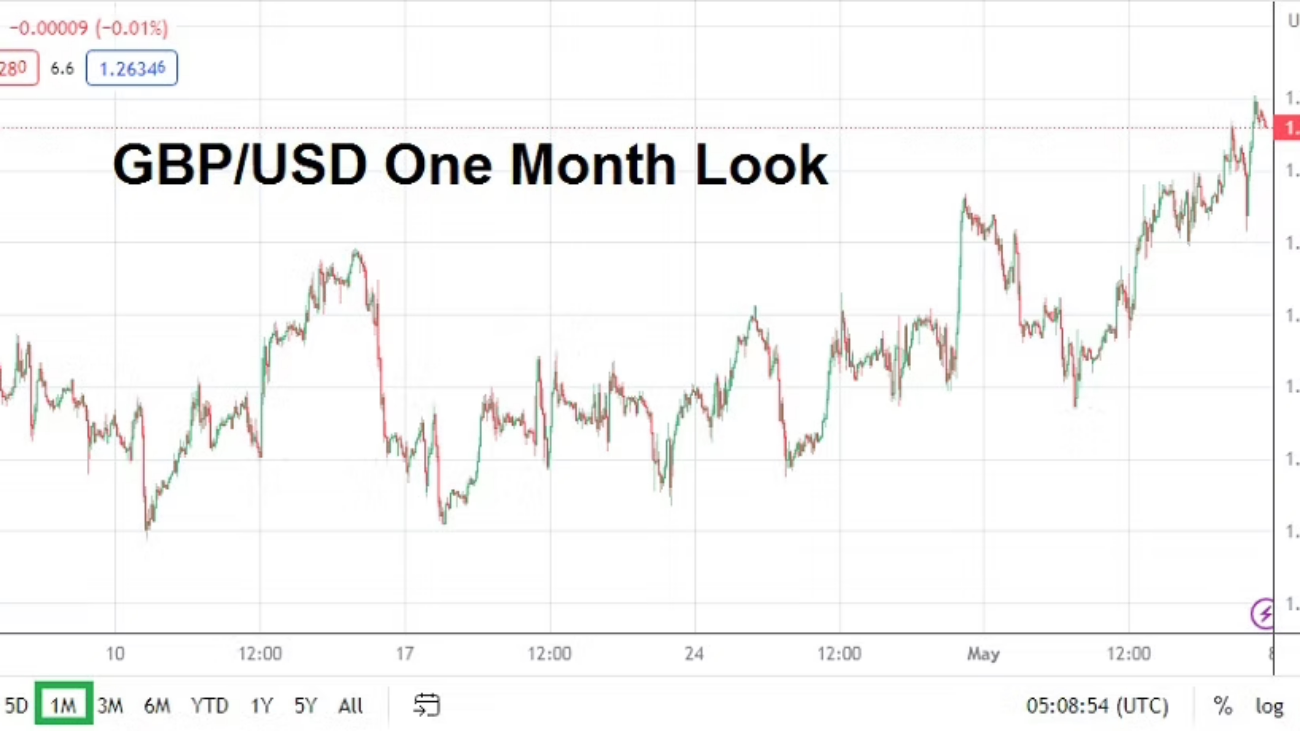
2. Forex: The EUR/USD is back above the 1.08000 level comfortably, and the GBP/USD has found sustainable trading beyond the 1.26000 ratio. While the major currencies versus the USD have pulled back slightly from near-term highs, large commercial traders are exhibiting risk appetite. A weaker USD centric notion is coming into vogue again.

1. Apex Equities: The three major U.S indices are all near record territories as solid earnings reports from corporations, amidst hopes the Federal Reserve will be able to cut rates a couple of times this year has combined to allow optimism to grow in the S&P 500, Dow 30 and Nasdaq 100. While the U.S public is starting to show they are losing confidence because of escalating consumer prices, financial institutions are wagering on solid returns via economic outlooks. Day traders looking to join the indices parade should make sure they limit their exposure, particularly if they are using CFDs and relying on short-term climbs which can suffer from sudden reversals lower.

postN49.1

Lack of Big U.S Data this Week but Fed Officials to be Heard

Lack of Big U.S Data this Week but Fed Officials to be Heard

There will be an absence of large trading volume in many markets today, because of the U.S and Canada Labor Day holiday celebrations. Results from forex markets should be considered with a healthy dose of skepticism by day traders. If you choose to participate today, using entry price orders may protect you against the possibility of price volatility due to quiet markets having the ability to create sudden jolts.

Day traders are advised to be on the lookout for potential surges to develop on Tuesday. U.S financial institutions returning to the markets in full could possibly react to economic data from the States that they may not have acted upon yet, this as outlooks may have been reconsidered over the Labor Day weekend. Equities and indices, U.S Treasuries, and gold should get plenty of attention this week as summer trading comes to an end.

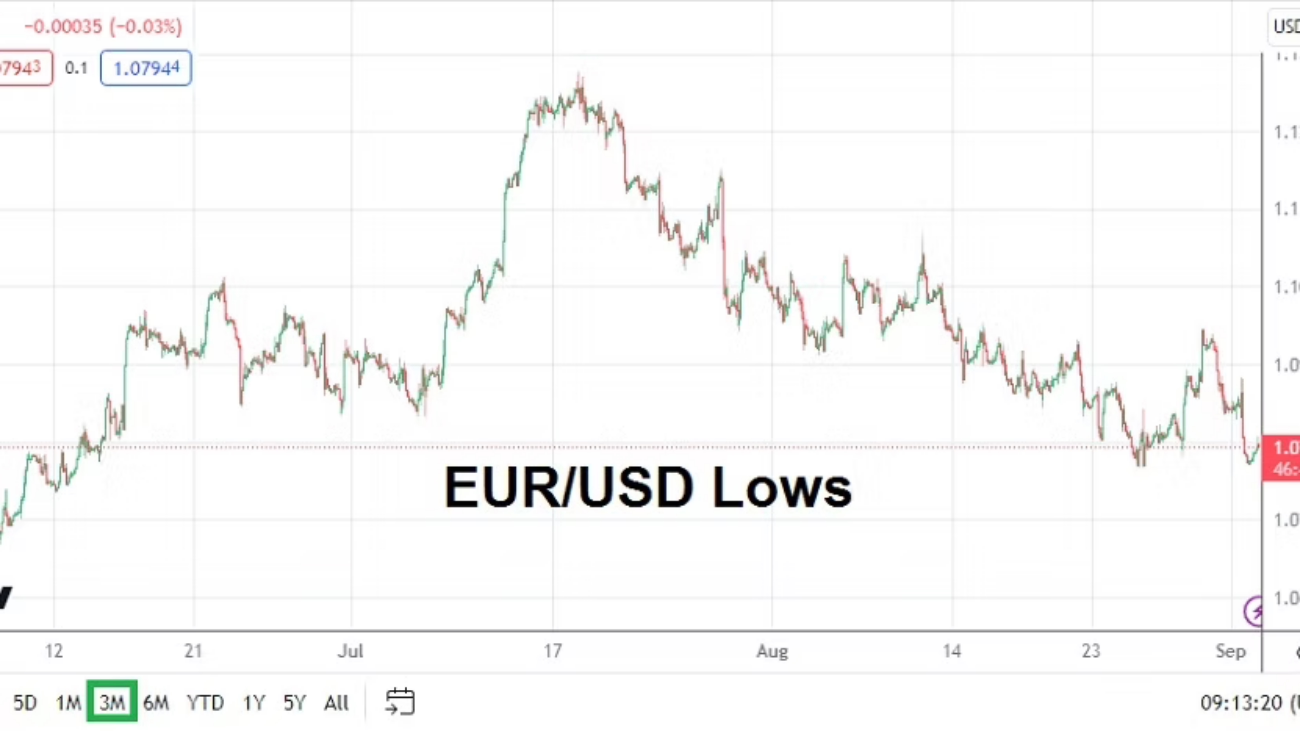
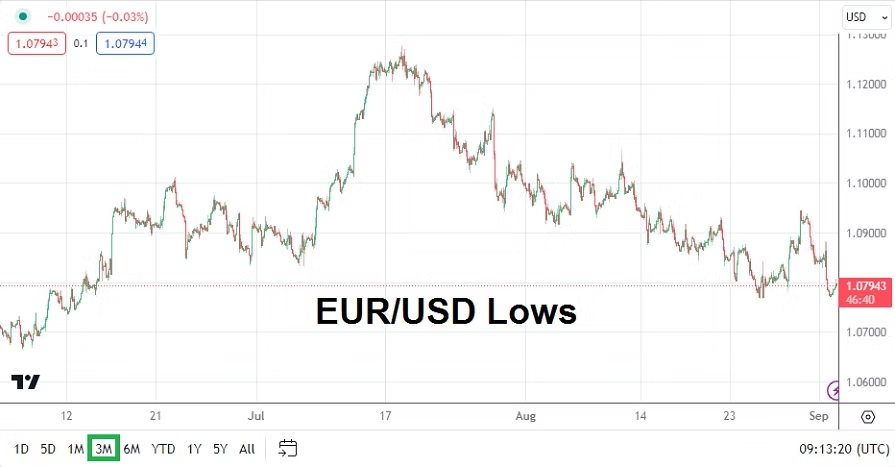
EUR/USD Three Months Chart as of 4th Sept. 2023

Monday, 4th of September, E.U ECB President Christine Lagarde – the ECB chief will be speaking in London later today. The ECB President might get the attention of EUR/USD traders who may still be scratching their heads regarding last week’s decline in the EUR and trying to figure out why it happened.

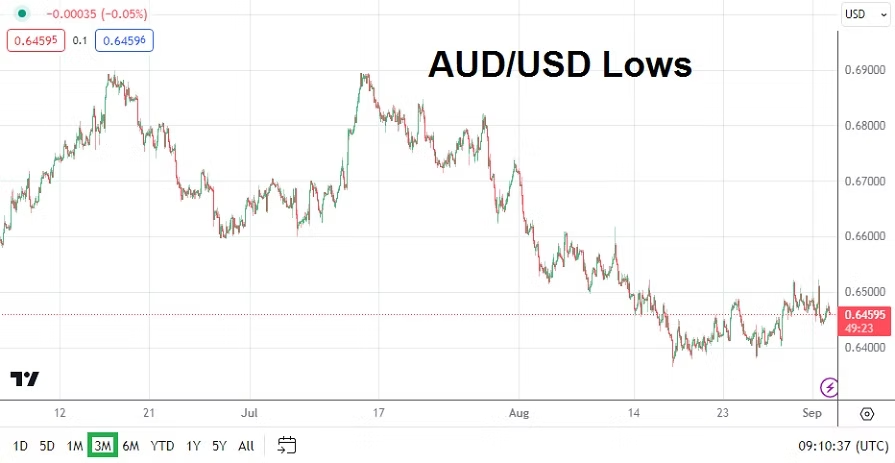
AUD/USD Three Months Chart as of 4th Sept. 2023

Tuesday, 5th of September, Australia RBA Cash Rate – the Reserve Bank of Australia is expected to hold its ground and make no major changes to interest rate policy. The AUD/USD is trading at lows the RBA has acknowledged are troubling. However, there seems to be little the RBA can really do except to wait out the U.S Federal Reserve’s rhetoric to change. As a note, GDP numbers will come from Australia on Wednesday.

Wednesday, 6th of September, Canada BoC Overnight Rate – the Bank of Canada is expected to keep its interest rate policy steadfast without any changes. The USD/CAD could react momentarily to the Bank of Canada’s Rate Statement.

Thursday, 7th of September, China Trade Balance – economic statistics from China have been troubling over the mid-term and there is no reason to think they are suddenly going to turn optimistic. China is receiving plenty of negative attention from ‘Western’ analysts, but the concerns expressed could be legitimate. Slumping growth, real estates problems, and the shadow of deflation are issues in China.

Thursday, 7th of September, U.S Federal Reserve Officials – several high ranking members from the Fed will be speaking at various conferences across the States. Following the lackluster economic data published in the U.S the past couple of weeks, comments from the Federal Reserve members should be given attention to see if they begin to acknowledge interest rate policy should turn more dovish. USD traders will certainly have the ability to spark Forex on Thursday if rhetoric from the ‘officials’ starts to change tone.

Friday, 8th of September, Japan Final GDP – the Gross Domestic Product numbers could prove interesting for USD/JPY traders. Growth is expected to show a gain of 1.4%. The GDP Price Index results should be watched and are expected to match last month’s number with a gain of 3.4%.

Saturday, 9th of September, China CPI and PPI – the inflation numbers will be of interest to investors. These data reports could prove more important than the Trade Balance results released earlier in the week. The USD/CNY should be monitored in the wake of these inflation (deflation) results.

post31

Economic Data that needs Attention this Week

Economic Data that needs Attention this Week

Tuesday 8th of May, U.S FOMC Member Speaks – N.Y Federal Reserve President John Williams will talk at the New York Economic Club. N.Y Fed is important regarding monetary policy particularly for financial institutions. Williams words should be given merit. Williams will also be likely listened to for any comments regarding U.S corporate banking health regarding mid-size and smaller institutions.

Wednesday 9th of May, U.S Consumer Price Index reports – three key inflation consumer price statistics will be published including monthly, annual and core monthly changes. The results will be important taking into consideration the manner the U.S Federal Reserve conducted its ‘sitting on the fence’ rhetoric last week, as if looking for an accuse to continue to raise interest rates if inflation remains stubborn or worse continues to climb.

Thursday 10th of May, U.K BoE Monetary Policy Summary and Official Bank Rate – which is expected to produce another increase of 0.25%.

GBP/USD One Month Chart as of 7th of May 2023

Friday 11th of May, U.K Gross Domestic Product – growth numbers from the U.K are expected to demonstrate economic conditions remain challenging.

Friday 11th of May, U.S Preliminary University of Michigan Consumer Sentiment – a rise in consumer sentiment from this report could add to the confusion and ‘concern’ that financial institutions have regarding the U.S Federal Reserve’s short term monetary policy regarding the prospects for a June increase to the Federal Funds Rate. If the number is weaker than expected this could help ‘pause’ outlooks.

post27

Risk Events Pose Danger this Week

Risk Events Pose Danger this Week

Monday 1st of May, U.S ISM Manufacturing PMI – weaker than expected Advance GDP results last week make this report of keen interest for investors regarding U.S growth (or recessionary) prospects.

Tuesday 2nd of May, Australia RBA Cash Rate – Reserve Bank of Australia is expected to hold the line regarding borrowing.

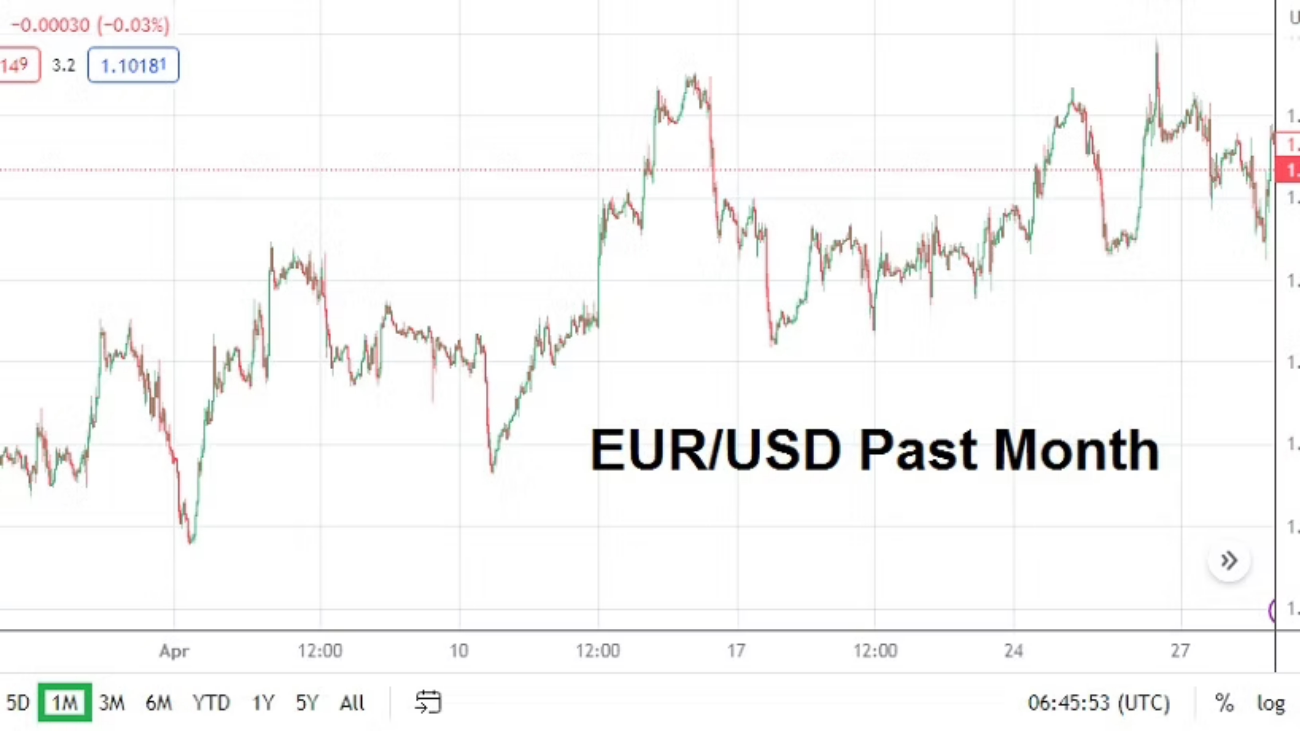
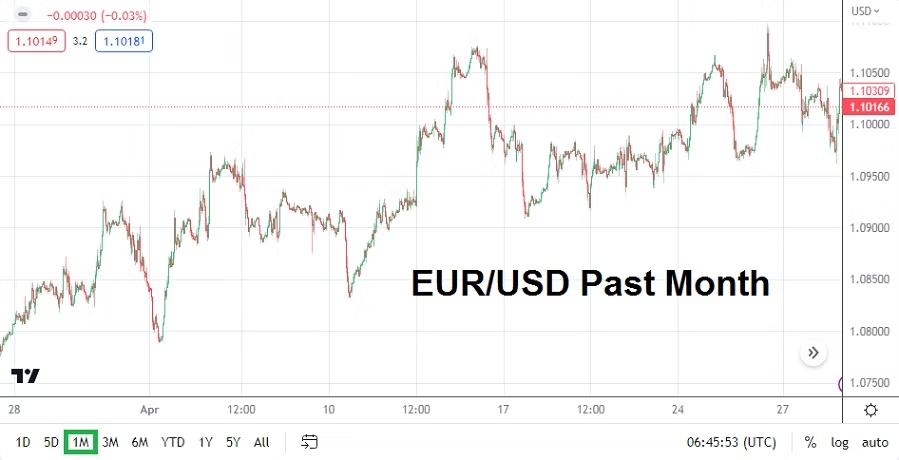
EUR/USD 1 Month Chart as of 30th April

Wednesday 3rd of May, U.S Federal Reserve FOMC Statement and Federal Funds Rate – U.S central bank expected to raise by another 0.25% making key lending mark 5.25%. This number has been digested into the broad markets, what investors want to know is the Fed’s June outlook. Federal Reserve outlook and FOMC Press Conference will move Forex and equities globally. Traders remains suspicious regarding another hike in June.

Thursday 4th of May, E.U ECB Main Refinancing Rate – European Central Bank expected to hike by another 0.25%. Anything different would be a surprise. ECB Press Conference should be rather tranquil.

Friday 5th of May, U.S Non-Farm Employment Change and Average Hourly Earnings – while jobs numbers are always of interest, it is the earnings statistics which should be watched and will give insight regarding inflation and potential actions about Fed’s June considerations.

post20

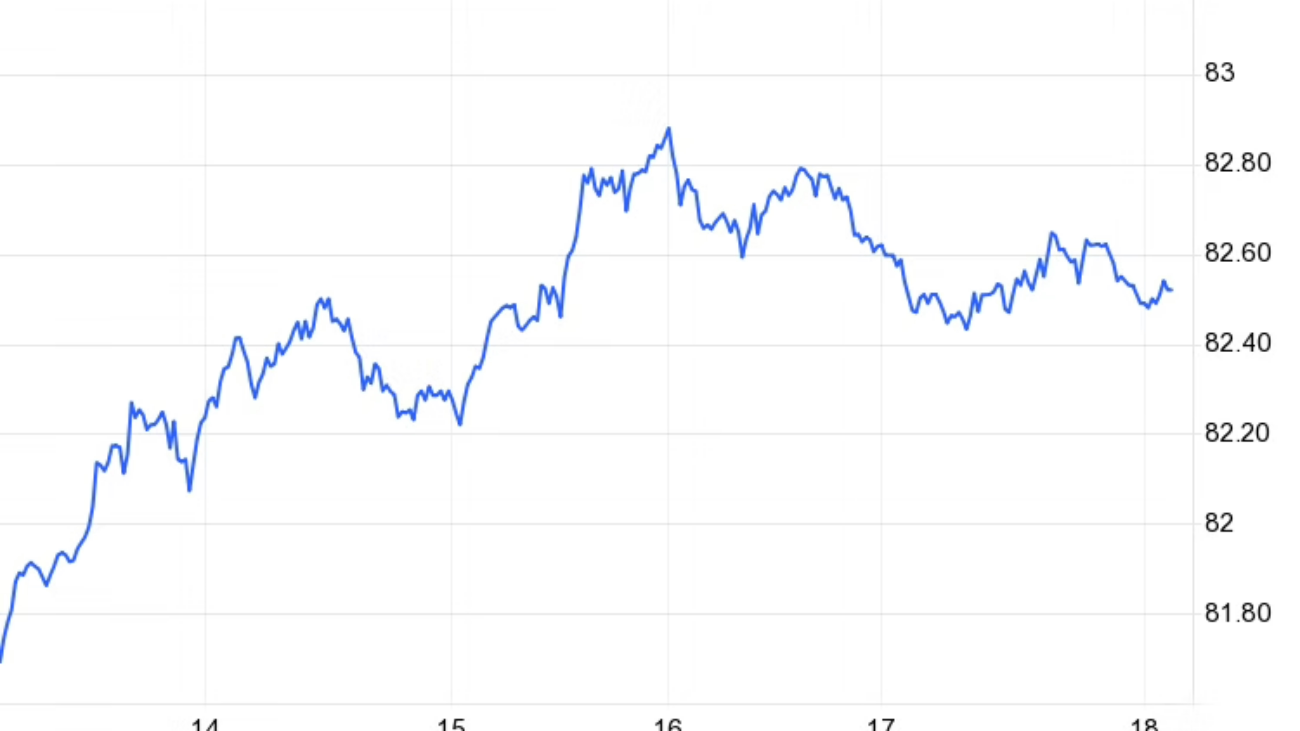
USDINR: 83/$ & Above is a Possibility

USDINR: 83/$ & Above is a Possibility

The Indian Rupee continues to remain under pressure as volatility in the global market triggers capital outflows amid investors concerns over the stress levels in banks worldwide especially in the U.S and in Europe.

RBI Governor Das yesterday, said in a conference that India today has a well regulated and well supervised banking sector.

Not to forget, India has past issues with some private banks that have been lending to corporations that defaulted on their debt . Yes Bank and Lakshmi Villas Bank are some of these examples, and today these banks are well capitalized and their loan books are diversified as the RBI has tightened its grip on regulatory frameworks.

Also, the loan books of Indian banks are being more diversified, and Government Bonds portfolios are comprising only 18-22% of the total assets, meaning banks are not at greater risk than their western counterparts.

The central bank of India holds Forex reserves of over $560 billion USD and has been actively intervening in the Spot & Forward markets since 2022 as the U.S Federal Reserve started to raise rates to tackle higher inflation. Governor Das also cautioned, ”the worst of inflation is behind us,” but pointed out that with the Russia – Ukrainian war, along with monetary tightening by major central banks, that there is still stress for nations that have high external debt and more capital outflows, which can put pressure on their currencies and trigger imported inflation.

India also has sticker inflation of around 6.4% down from 6.52% in January, this while the RBI is expected to raise rates by 25 bps in the April monetary policy meeting . The Indian Rupee was among the worst-performing currencies among emerging Asian peers last year, counter weighed by a stronger dollar and outflows from local assets. 

As a net importer of oil from Russia which grew 4 times in 2022, and less exposure to external debt means headwinds from shocks will be minimal which will help the Indian Rupee. However, as growth slows down in the West, this means more capital outflows and a flight to safer assets possibly taking place.

The RBI stance is very different than a month ago, where it didn’t allow markets to take the Indian Rupee above 83/$, but now it’s significant that the central bank could let to the USD/INR depreciate above 83 to save foreign exchange reserves.

The RBI’s equation is very simple as the Federal Reserve reduced its rates to zero back in 2020 because of Covid19, more money chased speculative assets especially in the emerging markets. And the RBI accumulated a lot of Forex reserves. Now the tables have changed. In addition to this, India also is not keen to add its bonds to global indexes due to concerns over potential ensuing market volatility not supporting capital inflows, and thus perhaps damaging the Rupee.

With current account deficits widening to 4.4% of India GDP in Q2, this means India needs to work hard to achieve better capital flows, particularly as tensions on some important global banks continue to be demonstrated.