US Cash Index 20260617

Forex and the Fed Chair: Kevin Warsh in the Spotlight Later Today

New Federal Reserve Chairman will Cause a Reaction in Forex Today

I offer readers a ‘what if’ proposition ahead. These are my opinions and I am simply trying to give my perspective on what may happen in the Forex market in the coming hours.

The Fed Press Conference later today will be must watch television for Forex traders, including retail speculators, large players and financial institutions. Federal Reserve Chairman Kevin Warsh will make his first appearance after a FOMC rate decision. Dynamic conditions in the broad Forex market should be anticipated – that doesn’t tell day traders much I know, keep reading, please. 

U.S inflation has sparked higher this as energy prices have ignited upwards and caused logistics, manufacturing and agriculture to become more expensive. The Bank of Japan raised its interest rate by a quarter of a point yesterday to 1.00%. However, these two bits of evidence doesn’t mean the Federal Reserve will increase its interest rate today. 

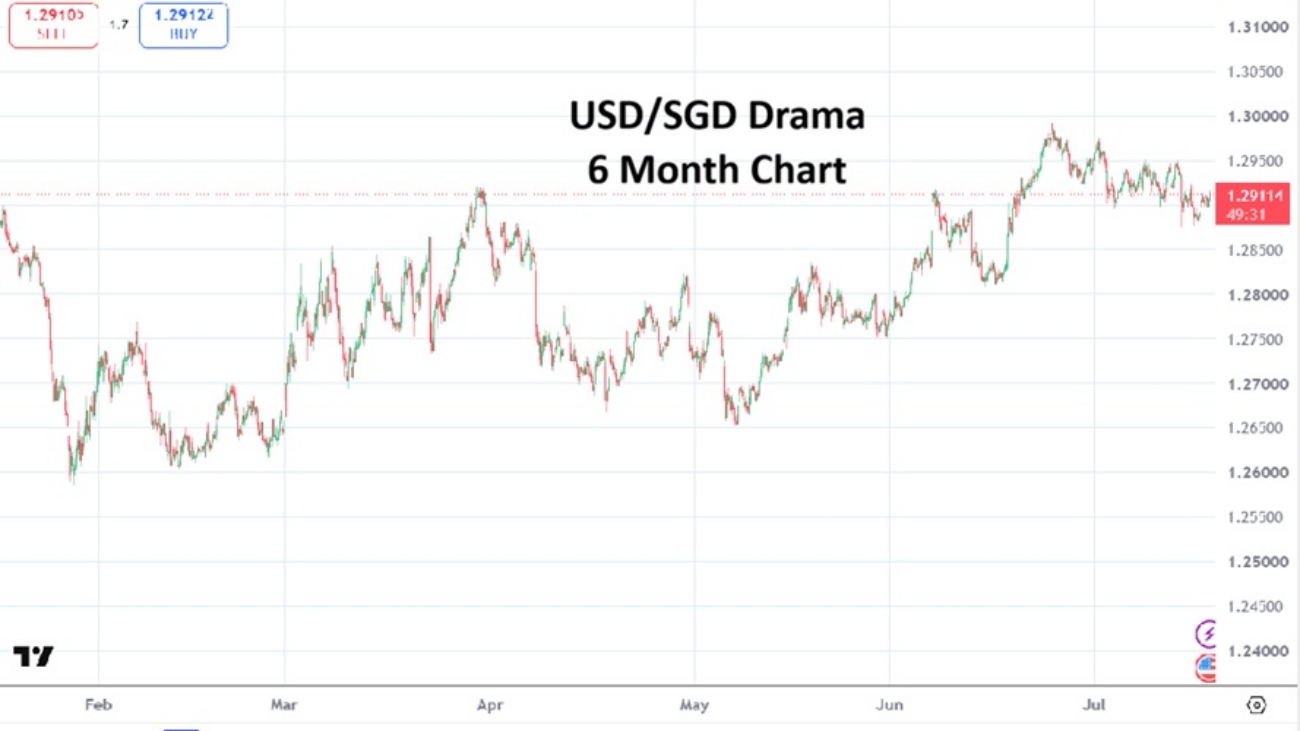
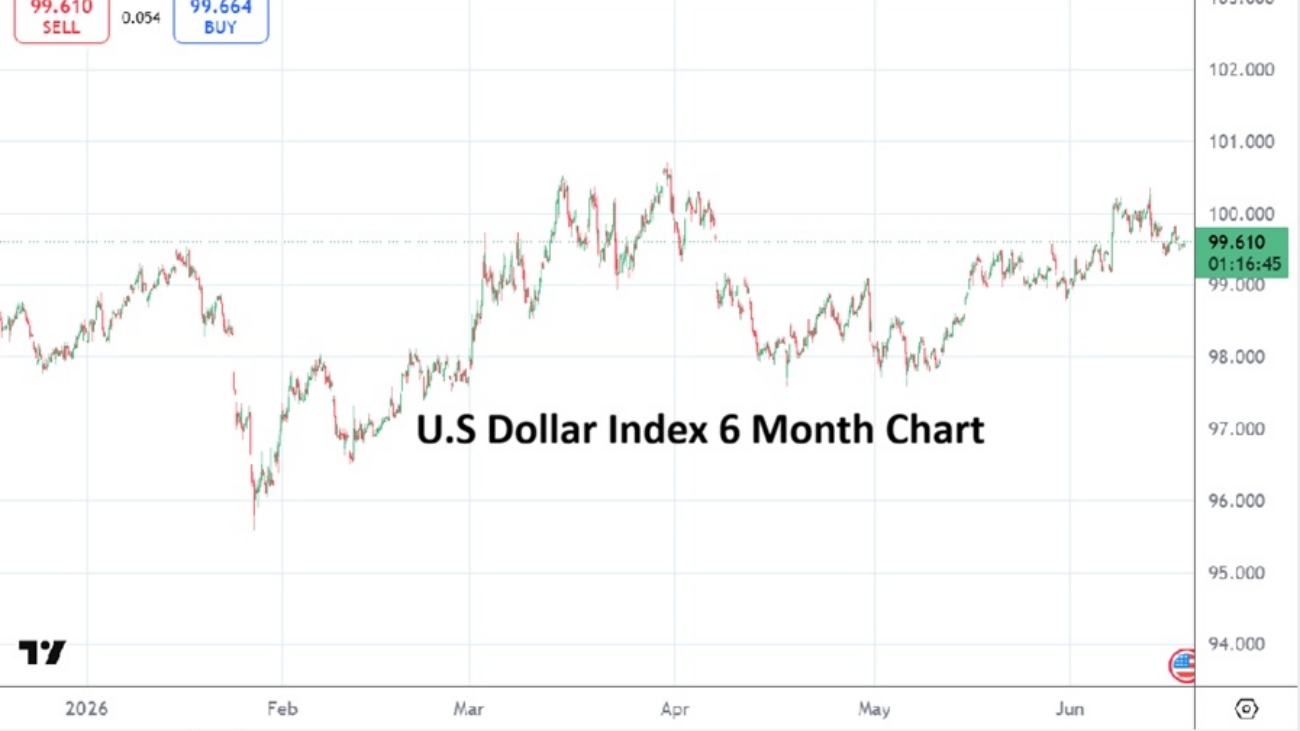
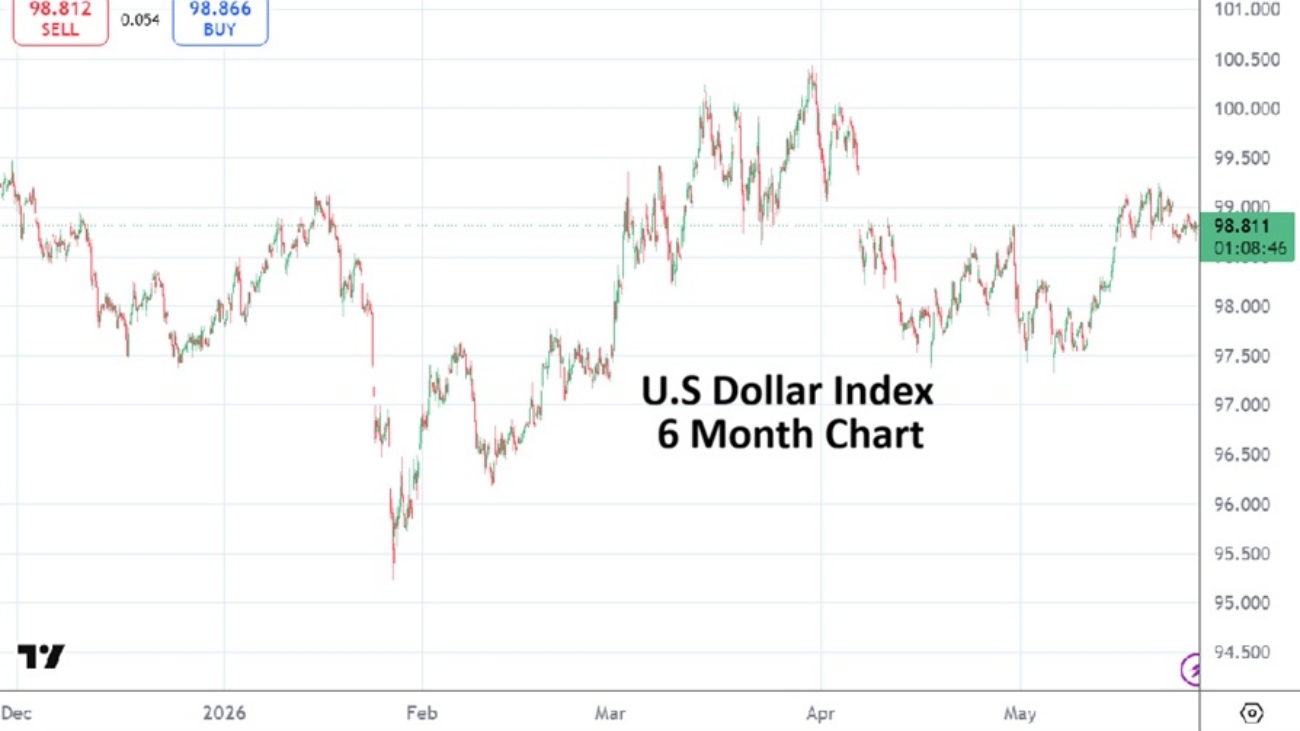
The U.S Dollar Index is trading near relative highs. The broad FX market is certainly cautious, but financial institutions may be leaning into the notion of USD centric weakness. Yes, the USD/JPY remains above 160.000+ for the moment, but the USD/SGD is flirting with its lower range and came within sight of the 1.28000 mark on Monday. So why is this important? Because folks are acting cautious before a potential storm.

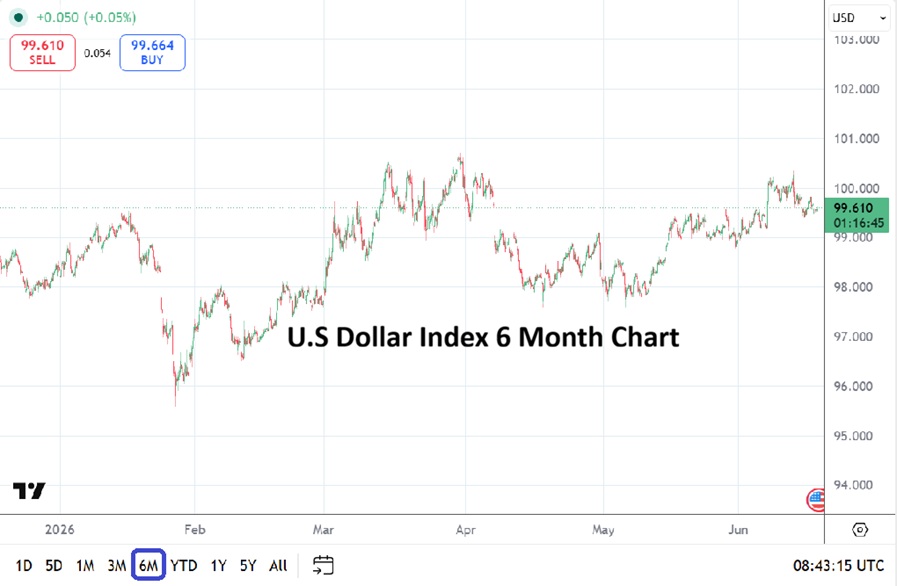
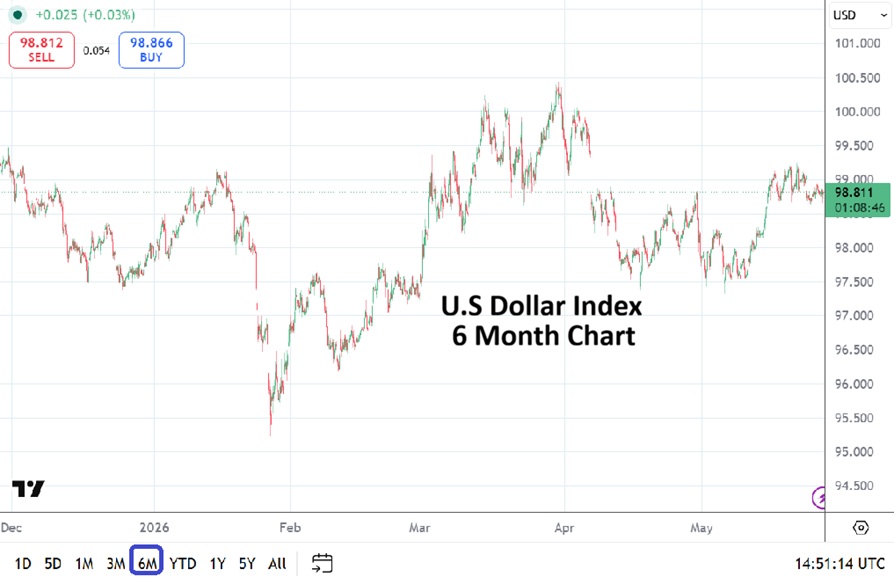
U.S Dollar Index Six Month Chart as of 17th of June, 2026

Perhaps this will go down as an infamous egg on the face situation for me personally, but does Fed Chair Kevin Warsh really want to raise interest rates during his first FOMC meeting at the helm? Yes, Jerome Powell is still around as a voting Governor, but Warsh may find he has enough votes (and influence) to get a majority of other FOMC voting members to allow today’s decision to be a test case in favor of patience. 

If the Fed holds the Fed Funds Rate in place and announces it will use the near and mid-term as a trial period regarding their belief inflation will lessen, because it believes energy prices over the mid-term will erode rapidly, that may be enough to cause USD centric selling later today. The Fed will not use the word transitory I suspect, but an argument can certainly be made that now is the time to actually elucidate on the subject of transitory inflation.

Monday’s trading in the broad Forex markets showed that financial institutions bought into the optimism of an anticipated U.S and Iranian agreement and what it could deliver – a glut of Crude Oil, including lower costs for its ancillary products. Financial institutions were also relieved that U.S equity markets survived the launch of the SpaceX IPO certainly. While yesterday’s broad market trading turned cautious and demonstrated sideways action in Forex, many major currencies are traversing near curious values. Equities also went sideways for the most part on Tuesday.

The U.S Dollar Index is swimming within its higher terrain via a six month chart (per a look above), yet financial institutions – if they hear dovish sentiment from the new Fed Chair today could spring into action and sell the USD quickly. Day traders need to understand even if this occurs that it will still be ultra-dangerous to bet ahead of the Fed rate announcement and Press Conference. This because volatility leading up to and following the FOMC Federal Funds Rate decision will create large spreads in Forex and choppiness that small retail accounts cannot handle most of the time – particularly when too much leverage creates wildfires.

While the before and after of the Fed interest rate announcement will garner the headline news, and create a reaction on Wall Street for the S&P 500 and Nasdaq 100 immediately; it will be wise to pay attention to Fed Chairman Kevin Warsh a half hour later when he steps into the spotlight for the first time. There has been chatter that Warsh is not keen on trying to give too many signals regarding the Fed’s thinking regarding every move it is contemplating. 

This coincides with thoughts that Kevin Warsh and Scott Bessent believe in a more high-tech and pro-active approach to interest rate and monetary policy based on forward looking data. The consideration of a more dynamic approach to interest rates has not been widely considered by financial institutions quite yet. If the new Fed Chair surprises reporters and onlookers at the Press Conference today with a new philosophy on the way the Fed will work, this will set the stage for potentially large behavioral sentiment shifts that were not wagered on quite yet. In other words mid-term outlooks regarding U.S interest rate policy may change in a handful of hours more than many people think. 

Maybe I am wrong, maybe I am interpreting the political and financial landscape incorrectly, but these are my thoughts as a risk analyst – one who thinks the U.S White House would not mind seeing a weaker USD, a Fed that likely wants a different approach to interest rates – as they both hope for energy prices to lower (and may get their wishes fulfilled).

Copy and paste the text from AMT that you want to share

Indian Rupee 20260611

India Insider: Should the RBI Raise Interest Rates?

A Case for Higher Interest Rates In India

As the Rupee remains under pressure and oil prices continue to rise amid tensions in the Middle East, the debate has shifted towards what the Reserve Bank of India (RBI) should do next.

Economist Janak Raj has argued that raising interest rates to defend the Rupee comes with significant costs. Higher rates increase the cost of capital for businesses, reduce investment activity, and compress equity valuations. In theory, this could even accelerate foreign outflows from equities rather than attract fresh capital. Yet the RBI may soon find itself with limited options.

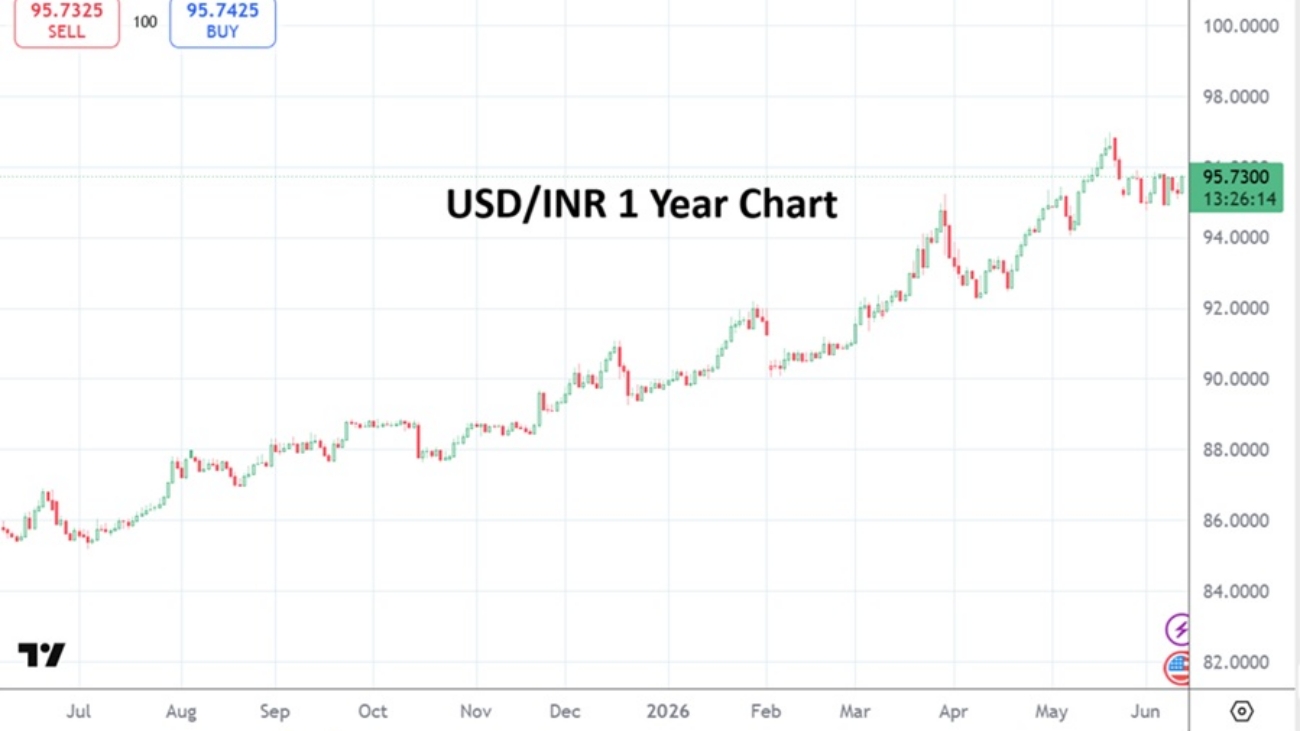
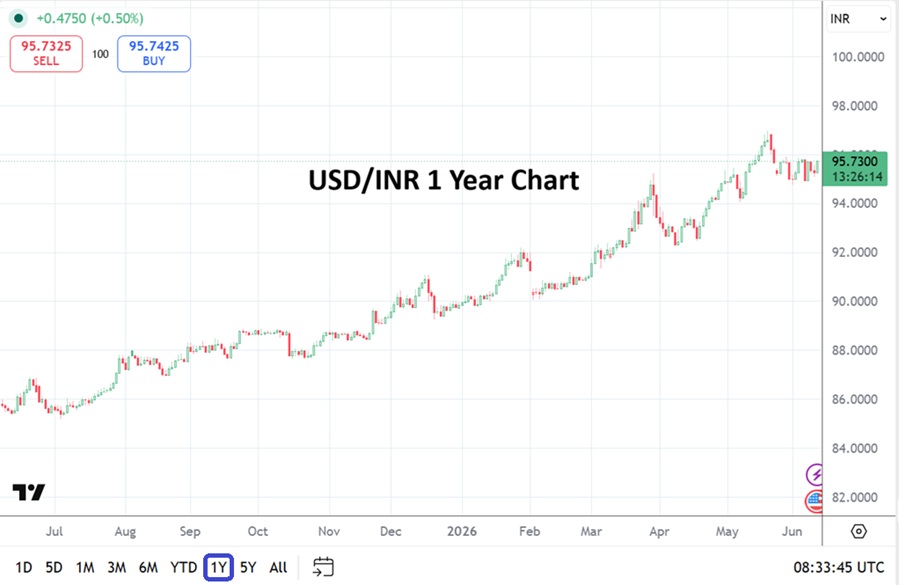
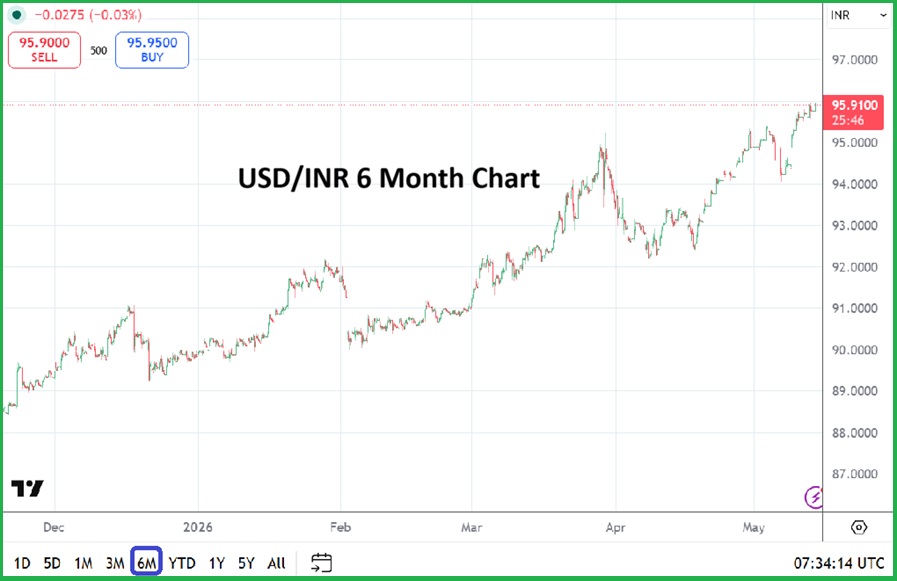
USD/INR One Year Chart as of 11th of June 2026

Foreign Portfolio Investors (FPIs) were net buyers of Indian equities for most of the period between 2004 and 2024, with only a few exceptions such as 2011, 2018 and 2022. However, the trend has changed. FPIs sold approximately $19 billion USD worth of Indian equities in 2025 and another $24 billion USD so far in 2026.

Question: Why are Foreign Investors Selling

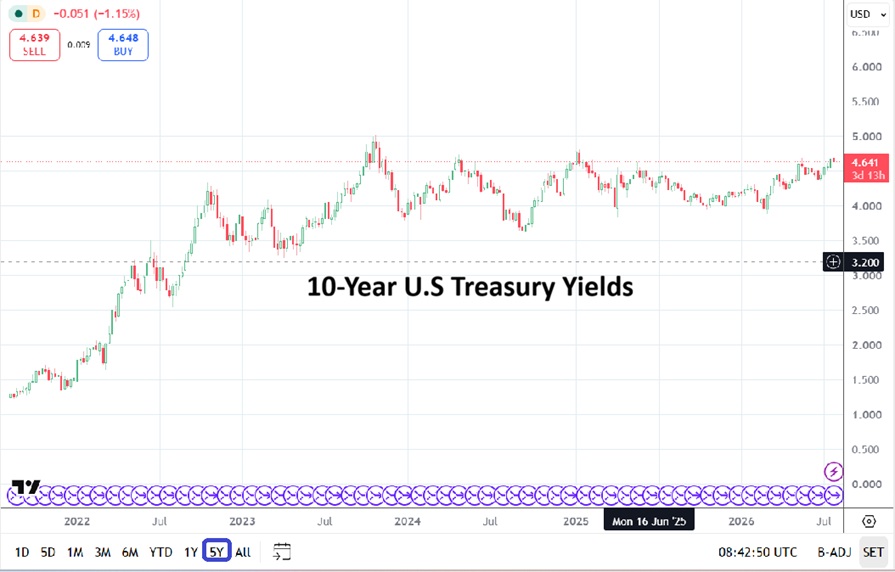
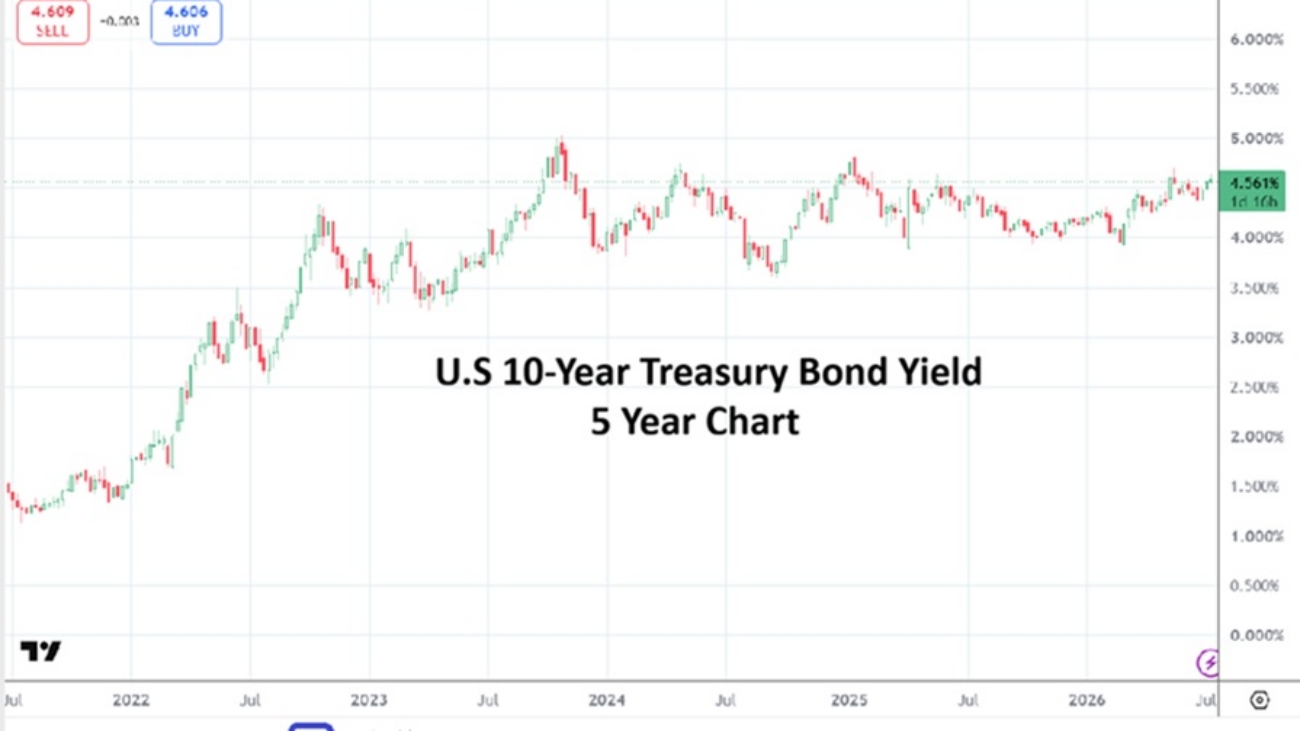
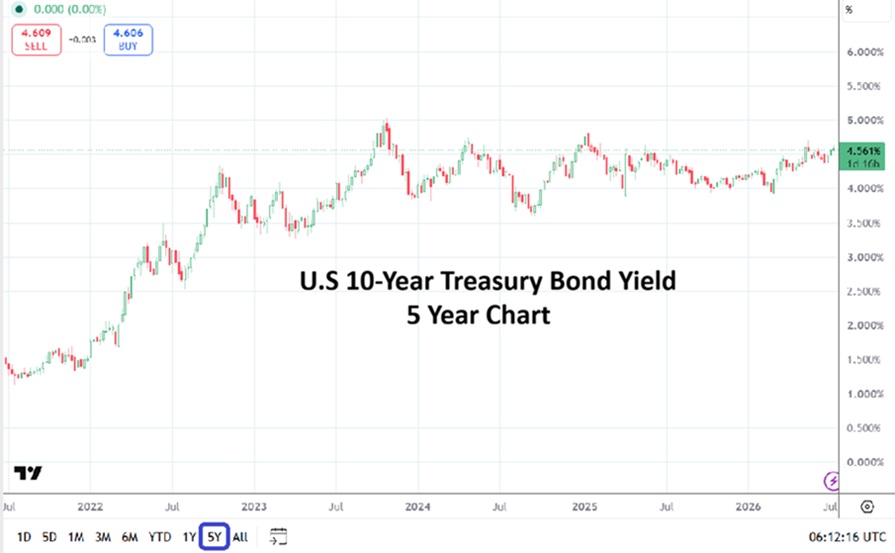
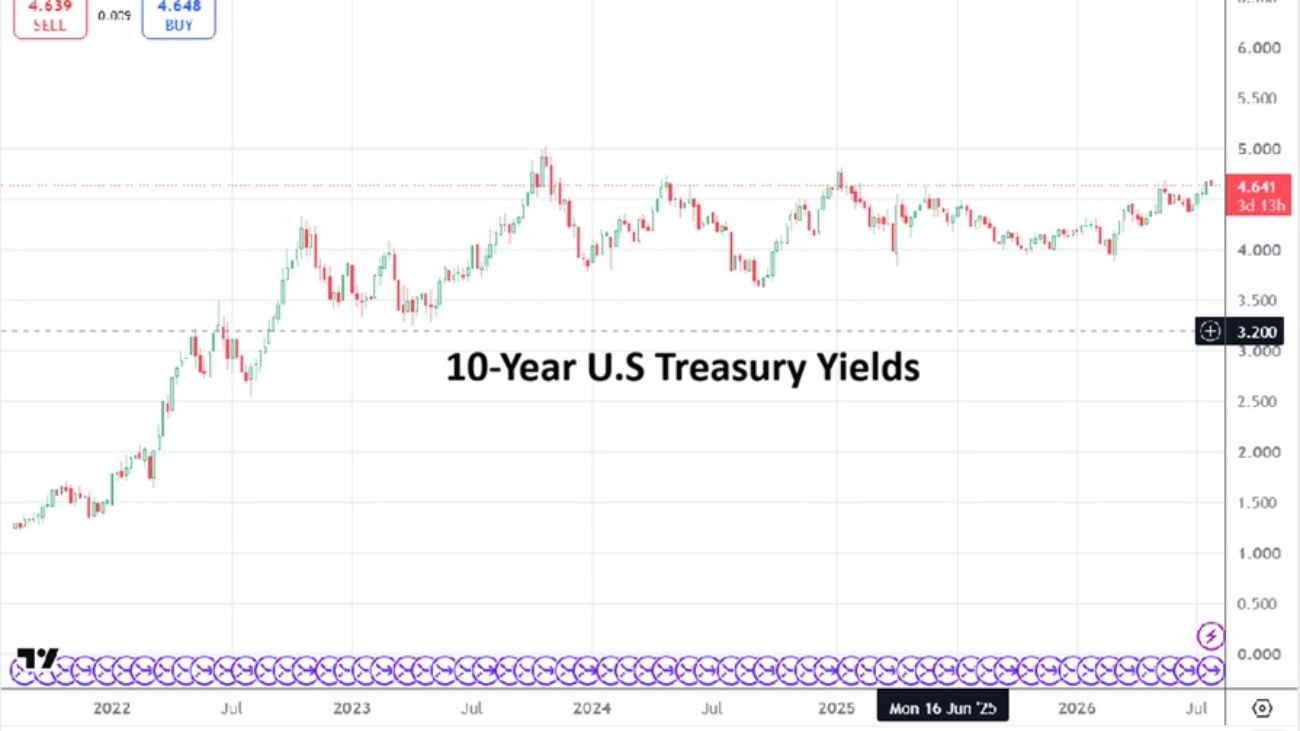
One reason is that global investors today have alternatives. The growth of Artificial Intelligence related companies in the United States has created significant investment opportunities. At the same time, U.S Treasury yields hovering around 4.6% offer attractive risk-free returns in a strengthening dollar environment.

For many global investors, earning high returns in Dollar assets is preferable to taking exposure in emerging markets that face current account pressures from rising  Crude Oil prices and other energy costs.

Taxation is another factor. India taxes foreign investors at 20% on short-term capital gains and 12.5% on long-term gains. Meanwhile, competing financial centres such as Singapore, Hong Kong, Malaysia and Thailand generally do not tax foreign investors’ capital gains.

Some global funds have argued that India should move closer to international norms, where capital gains are usually taxed in the investor’s home jurisdiction rather than the country where the investment is made. Higher post-tax returns would undoubtedly make Indian assets more attractive.

A stable Rupee would also reduce hedging costs, lower currency-risk premiums and improve the overall risk-reward profile for overseas investors. However, tax cuts alone cannot solve India’s problem.

The Real Issue is Balance of Payments

As Business Line columnist Lokeshwari Mam has pointed out, a significant portion of equity outflows consists of short-term speculative capital. Long-term capital tends to remain invested. This is why the decline in net Foreign Direct Investment (FDI) should concern policymakers more than short-term fluctuations in portfolio flows.

Net FDI has fallen sharply from $28 billion in FY 2022-23 to just $7.7 billion in the year ended March 2026. This is a worrying trend because FDI is the most stable source of external financing. Unlike portfolio flows, it creates factories, jobs, exports and long-term productive capacity.

India therefore needs more than tax incentives. A genuine single window clearance system, reduced bureaucracy, easier business regulations and reforms in manufacturing remain essential. Attracting long-term capital should be a national priority.

The recent foreign buying of Indian bonds after tax cuts is encouraging. But relative to India’s current account financing requirements, it remains a small drop in the ocean.

For example, in FY 2025, the current account deficit was 0.6% of GDP. And in Q4, the current account became a surplus. Is it really that difficult to finance it’s small current account deficit?

India’s external vulnerability is determined not merely by a current account deficit, but by whether the capital account can be comfortably financed. A modest current account deficit still creates currency pressure if foreign capital inflows weaken (which we are seeing), while a larger deficit may be sustainable when capital inflows remain strong. The risk of sustained higher oil prices could widen the deficit, increasing India’s dependence on foreign capital at a time when global liquidity is tightening and U.S Treasury yields are rising.

Furthermore, hedging costs continue to erode much of the yield advantage that Indian bonds offer over U.S Treasuries. In that sense, active global money is likely to prefer Dollar assets over emerging-market debt or equities

India’s repo rate currently stands at 5.25%. The RBI’s decision to raise its inflation forecast to 5.1%, while lowering its GDP growth projection to 6.6% reveals where the shock from the Iran conflict is likely to be felt via higher inflation and weaker growth. For an economy that remains heavily dependent on imported oil, a depreciating Rupee only compounds the problem by increasing the cost of energy imports. 

In such an environment, the Monetary Policy Committee is unlikely to focus solely on growth. Currency stability, inflation expectations and the availability of foreign capital to finance India’s external requirements could become increasingly important considerations. If these pressures persist, the RBI should raise the repo rate, in the same manner other Asian central banks have done in recent weeks.

Copy and paste the text from AMT that you want to share

Nasdaq 100 20260608

Nasdaq 100: Terrible Friday Being Confronted by Manic Monday

Fear of the Middle East Not the Main Motivator for the Nasdaq 100

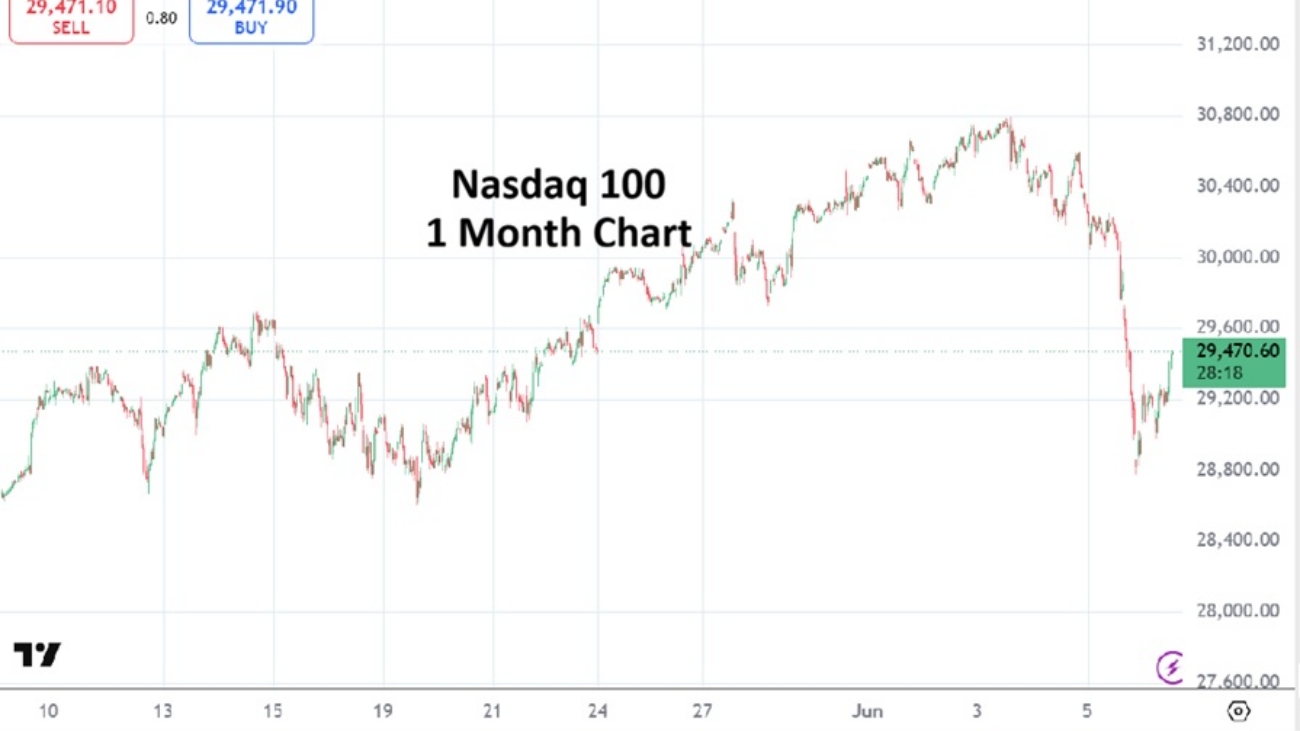
After Friday’s selling surge and a fall of -4.77% with a close of 28,957.60, the Nasdaq 100 futures trading this morning has actually seen an increase and is near the 29,479.00 mark as of this writing before the cash Nasdaq 100 market opens.

Friday’s selling nightmare for traders who found themselves stubbornly locked into what were to be short-term buying positions and saw the Nasdaq 100 plummet -4.77%, probably woke this morning believing ugly conditions may not stop. An escalation in military action via proclaimed retaliatory moves between Israel and Iran started today’s trading with a high degree of more anxiousness. USD centric strength in Forex was demonstrated early.

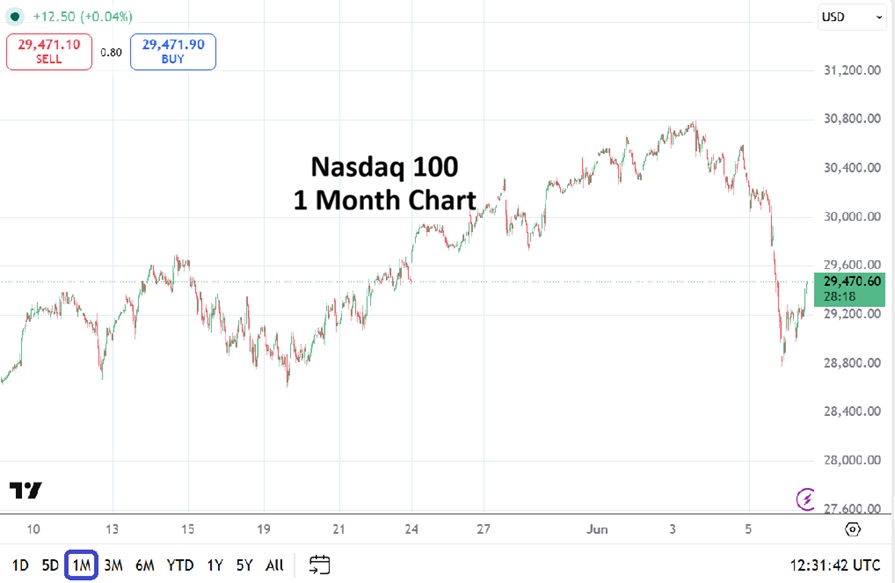
Nasdaq 100 Futures Value 1 Month Chart as of the 8th of June 2026

However, in the past couple of hours calmer heads have prevailed among financial institutions and USD centric buying in the broad Forex market has run out of steam – at least momentarily. For instance the USD/JPY is near 159.927 currently, opposed to earlier highs seen this morning which challenged the 160.400 vicinity. What does this have to do with the Nasdaq 100 and its current status? 

It appears via futures trading that large players may also have taken a sedative and looked at the index as having been oversold on Friday. The Nasdaq 100 has actually gained early today and signs that a de-escalation of military force between Israel and Iran is being reported. However, that still leaves day traders wondering what will happen as the cash market opens soon and volumes increase.

Let’s Say Quiet Prevails the Remainder of the Day

Not because of a utopian outlook, but a geopolitical perspective, let’s try to image Iran’s stated intentions of no more retaliatory strikes being launched towards Israel as true. The past couple of hours have been more tranquil as a signal in case you are wondering. Then investors and financial institutions will have to digest the Middle East concerns as they have done over the past couple of months in U.S equities, and decide to operate again on the Nasdaq 100 with near and mid-term outlooks.

Friday’s huge selling was blamed by some on the likelihood of a ‘potential’ U.S Federal Reserve interest rate taking place on the 17th of June. This because better than expected jobs numbers showed to some that the U.S economy was running hot once again. 

Additionally expressed fears, which are legitimate, about higher energy costs sparking sticky inflation have been discussed and worried about aloud. Yet, again let’s decide to say even if U.S inflation numbers via the Consumer Price Index come in higher than expected this Wednesday via the coming CPI data, that doesn’t shut the door on the possibility the new Fed Chair Kevin Warsh won’t fight against an interest rate hike during the FOMC meeting next week. In other words it still seems rather unlikely – to me – that the new Federal Reserve Chairman is going to want to initiate higher interest rates the first month on the job. So what if there was another reason for the steep selling on the Nasdaq 100?

Not Paradise but Purgatory

The Nasdaq 100 actually has other questions which have been raised as possible fodder for its large selling this past Friday. Was it spawned because of profit taking by those who took advantage of the index’s fabulous rise knowing that many institutions had been front running the IPO of SpaceX which is scheduled to happen on the 12th of June – this Friday? 

Did large players who rode the wave of frontrunning by financial institutions up in the Nasdaq 100 since late March, decide to cash in profits. There is plenty of nervousness surrounding what will take place with SpaceX in the coming months and long-term via outlooks because of its rather inflated valuation which looks like it will be around 1.7+ Trillion plus at share values of $135.00 per share this coming Friday. 

Questions surrounding SpaceX’s price per sales rhetoric, this instead of price per earnings (because SpaceX is not making a net profit) is just one example. While denying Elon Musk’s genius and ability to create clamor for his companies has proven to be a losing proposition for many, doubters still remain. 

Folks might have cashed out winnings on Friday and decided to now wait on the sidelines to see where behavioral sentiment takes the Nasdaq 100. After two full months of paradise for the Nasdaq 100, a few days of purgatory and seeing which direction U.S indices go may be the right decision by folks who rely on clarity; this as the Middle East gets untangled (or becomes more complicated), the Federal Reserve offers insights on the 17th of June, and large financial institutions lead the way regarding investment decisions.

Copy and paste the text from AMT that you want to share

WTI Crude Oil 20260601

Clues and Insults: Forex and Equity Indices During the Iran Saga

Profits: Optimistic Wagers and Preserving Self as the Party Rages

New Federal Reserve Chairman Kevin Warsh certainly doesn’t want to have problems with President Trump. On the 17th of June the FOMC meeting via the Fed will make their interest rate decision known. Who really believes that during the first month on the job at the helm of the U.S central bank that Warsh is not going to fight to keep interest rates in place?

Those who are expecting an interest rate hike in June of a quarter of a point (0.25%) are most likely wrong. Yes, the price of WTI Crude Oil is high and the situation in Iran via narrative varies from one moment to the next per the reported incidents on the Strait of Hormuz.

However, just like the Fed there is a certain amount of reality that must be dealt with regarding human nature and behavioral sentiment regarding Iran and how it is dealt with via market participants. From the department of no news is good news: financial institutions and investors would like the noise to be kept to a minimum so they can continue doing their jobs and not be criticized themselves for potentially wrong outlooks. The art of making sure disclaimers are up to date is important for everyone who wants to stay employed.

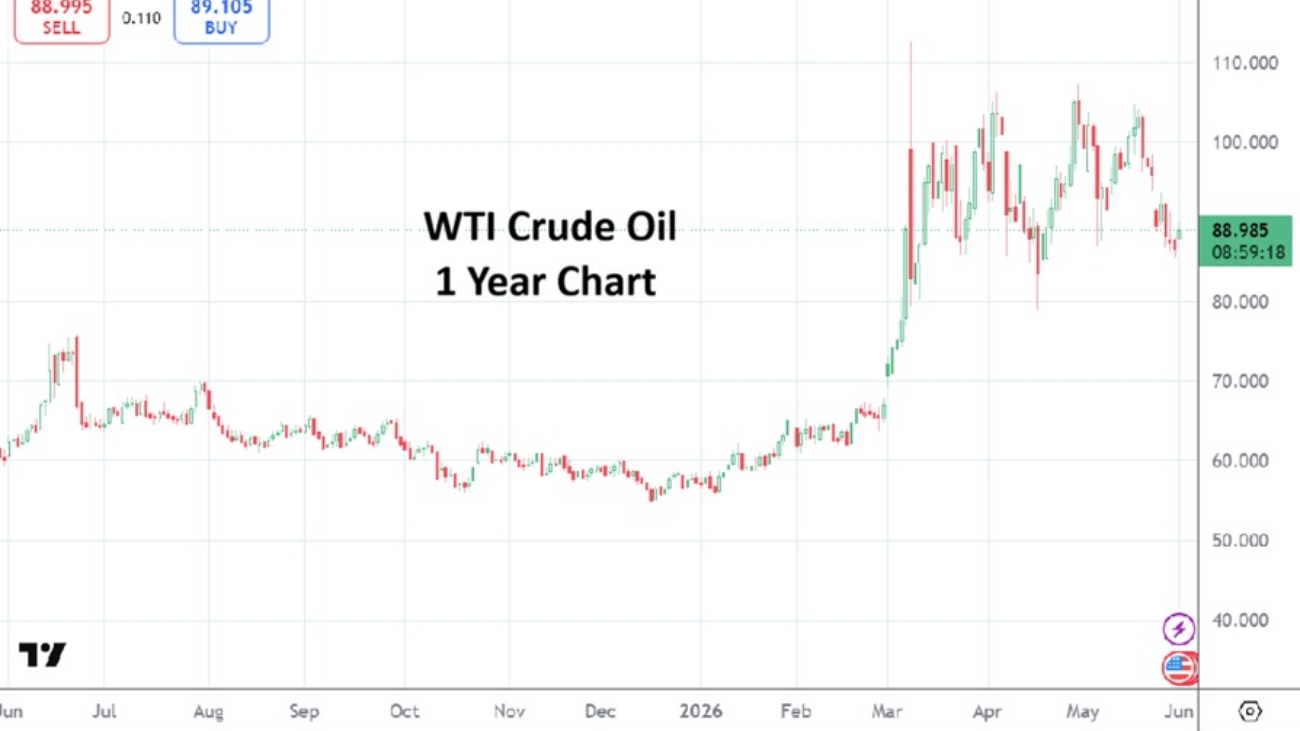
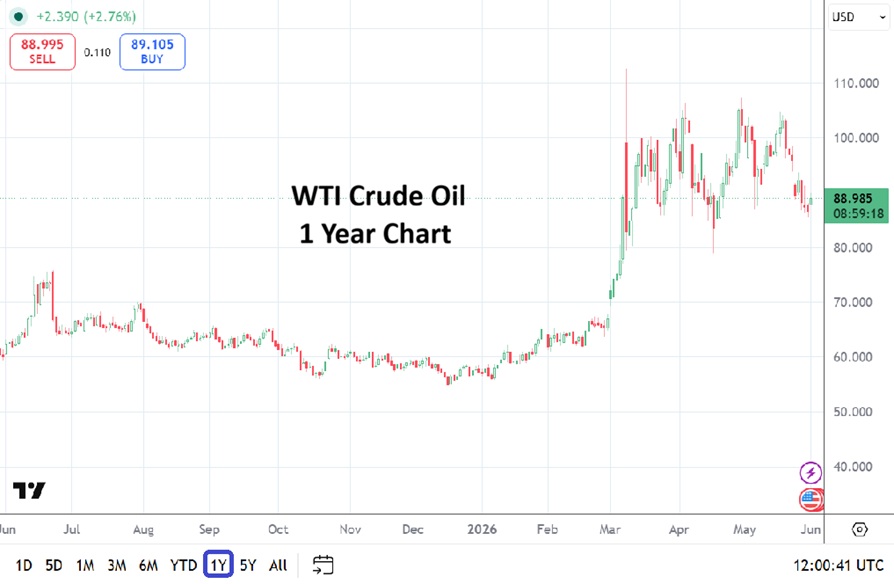
WTI Crude Oil 1 Year Chart as of 1st June 2026

USD centric weakness was seen late last week in many currency pairs, but a quick glance at the majors: EUR/USD, GBP/USD and USD/JPY actually show the pairs traversing rather cautious values. The EUR has gained slightly for instance, but at its current levels around 1.16410 some may believe it is a safe equilibrium. (One that may be able to be taken advantage of by those with the ability to bet on mid-term higher trajectories).

Central Banks globally also want to keep the noise down in their various locations. Inflation concerns persists worldwide depending on the amount of knock-on effects that higher energy costs have on national economies.

Also adding additional intrigue to the storyline of wanting to keep quiet while volatility threatens the gates, is that many people with comfortable jobs in various government institutions do not want to step out of line and sacrifice their careers for the sake of being proven right. They would rather be proven wrong, but would like to do this quietly without facing consequences.

The fact that we are now in a situation in which we are afraid to undertake critical thinking aloud is going to cause problems down the road, but for the moment most will simply go on with their various duties and pretend all is well.

U.S equity indices have been having a massive upwards party since the end of March as record heights are attained. Certainly some long-term investors are simply throwing money into indices as a way to get positioned before the SpaceX IPO which is coming soon. There will also be the Anthropic IPO which is reportedly set for late 2026.

The SPCX which seems to be aiming for the 12th of June will create a valuation well above 1 Trillion USD for SpaceX. The perceived value of Anthropic is becoming a loud talking point among analysts in the tech sectors and they are keen to have the company join the 1 Trillion USD party. The cost of admission for bragging rights is getting more expensive.

There was a time when things like PE (price and earnings) ratios mattered on Wall Street. Some brave folks still whisper about such things in meetings and bars late at night, but many do not want to be insulted or possibly worse get marketing folks selling these high priced products angry. The reason for speaking softly about actual earnings regarding SpaceX is because the company is actually working via an earnings loss, and instead price to sales estimates are being offered as some type of guideline. Having said the above, it would be foolhardy to bet against SpaceX and Elon Musk. And it might be equally unwise to bet against Anthropic in a handful of months. And thus, the rush into equity indices because there is a genuine fear of missing out does exist. Afterall, we all want to be part of the party.

And that brings us back to Fed Chairman Kevin Warsh who has the backing of President Trump and Treasury Secretary Scott Bessent, he doesn’t want to insult these men either. Warsh may be quite good at what he does, he might be an expert and have real world business experience, and that might be a real clue for Forex traders who think higher interest rates are coming. Warsh will likely want to keep his first months on the job at the Fed on good terms with the White House and the Treasury. Kevin Warsh might be a free-thinker and know legally he is an independent leader of the Federal Reserve, but he also knows he was hired with a stated mission. There is a pro-business, free enterprise administration in power at the White House. Bessent, Warsh and Trump are on the same team.

So again, while some traders may believe the Fed will raise interest rates in June because of concerns of higher inflation, it most likely will not happen. While the Iranian war continues to make headlines in the financial world and dealt with via sentiment decisions, actual economic U.S data will start being watched in the coming days and weeks and might even influence perspectives. Investors will get bored of the Iranian saga as long as its narrative stays somewhat tepid. Meaning investors will start looking at CPI and PPI numbers coming from the U.S next week and talking about higher interest rates that will likely not be delivered in the upcoming FOMC meeting. 

The price of WTI Crude Oil as boring as it is to say remains a strong sentiment gauge for traders intraday. Large players involved in Forex might believe this will involve higher interest rates, but on the 17th of June it is more likely that Kevin Warsh will say that for the moment the Fed chooses to watch energy sector costs with the belief prices will decline in the coming months. The Fed will not use the term ‘transitory’ which was used infamously during the Covid crisis and turned into a poison pill with inflation that was not effectively fought. What the Fed will likely do is say they want more info to be gathered and more clarity regarding the Iranian situation and its overall effect on oil prices for a little while longer. Some patience will be asked for and it might be granted by investors who want the party to continue via equities.

Day traders should expect cautious markets to prevail in Forex with choppy results as financial institutions weigh their behavioral sentiment and try to make believe they are not too worried about near-term inflation. The CPI and PPI readings next week will prove of interest, but the results may be brushed aside by market pundits.

In the meantime, the celebrations on Wall Street continue as folks march merrily into the frenzy. Retail speculators who want to pursue short or near-term profits on the Nasdaq 100, S&P 500 or Dow 30 indices need to be careful and might want to stay away from daily bets and instead engage in conservative positions that allow for a full week of results. The gains made since the end of March have been outlandish and likely will not be repeated anytime soon, but why try standing in front of a trend that can crush you.

Near-term considerations in these markets should be done carefully. The mid-term may be very different from where we stand today and our current outlooks. One thing that may bother some risk analysts is that it may prove wrong to bet against the current parade of optimists who insists on participating in dangerous conditions and profit, while they (the risks mavens) stand in place.

Copy and paste the text from AMT that you want to share

US Dollar Index 20260627

The USD and The Art of Not Knowing

Being Mature Enough to Know You Don't Know as You Watch the Marketplace

Ask anyone that typically knows how they gauge the state of the global marketplace for the near-term and you are likely to either get a solid, “I have no idea” now. Or a bunch of thoughts on what might happen, which might lead to being more confused. Simply put at this point, it is easier to admit that potential conclusions regarding the world’s current affairs taking place and effecting the global marketplace are out of most peoples’ hands. 

Even those who have duties within the higher paid grades likely are just as confused about the potential unintended consequences not wanted, and results they hope will be achieved. And what am I speaking about exactly, regarding the world and its state of affairs, is that even qualifying the particular topics are difficult to put a finger on. Ramblings certainly include the Iran saga, but Cuba, the Ukraine, the NATO pact, shifting world alliances and future ones are creating a whirlwind. Besides the rather noisy political landscape of the USA. Not to mention China and Russia and other nations with aspirations.

Yet, the global markets continue to trade, albeit within a confused haze it sometimes appears. But do not be despondent day traders, brokers and their platforms will offer you the opportunity to wager on results of the USD in Forex, and CFDs certainly contain opportunities in major equity indices the world over, various big singular companies, commodities and yes cryptocurrencies (apologies to Bitcoin fans – who insist it is called a digital currency).

U.S Dollar Index Six Month Chart as of 27th May 2026

Iran War and Unclear Results

The U.S Dollar Index for the moment is near the 98.880 ratio, which it should be pointed out is near the values it swam upon the April 8th announcement of a ceasefire between Iran and the States, this after dropping from its 99.800 threshold on the 7th when investors were more troubled. The ceasefire is still in effect and now there seems to be a resolution which is being hoped for by the U.S White House – although when pressed about what negotiations between Iran and the U.S will result in delivers a few different versions of ideas. 

Perhaps that is to be expected via the fog of war, but what should not be expected is an easy path to a genuine resolution. And even if there is a pact of some type, what objectives will have been genuinely fulfilled? But alas, that is a question for those in the future, because the facts on the ground do not bode well for ordinary Iranians who have yearned for freedom. 

The Fed Has a Problem

But again, let’s not dwell on things like the individual rights of people, money is at stake…..(that is humor folks, others can call it sarcasm). The price of WTI Crude Oil has dropped this week on the idea that a resolution will actually be accomplished between Iran and the U.S – one at least that allows tankers to navigate the Hormuz Strait. 

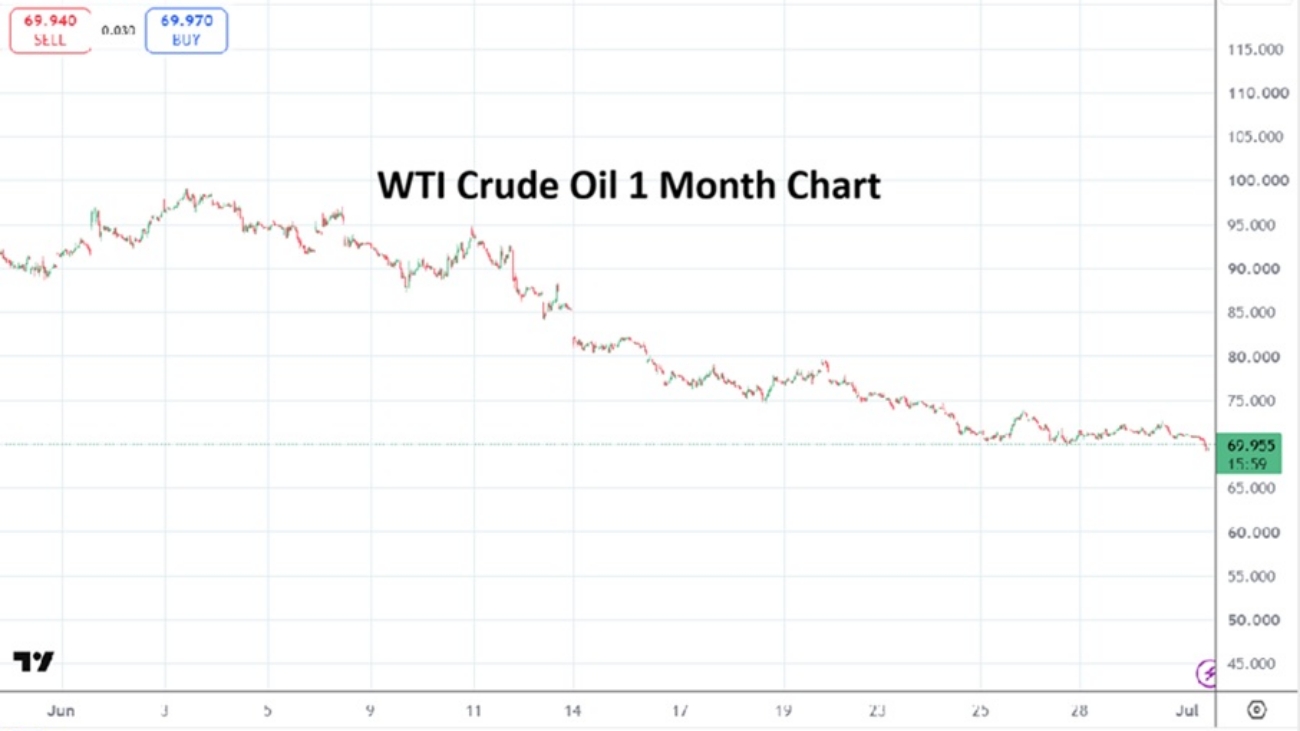
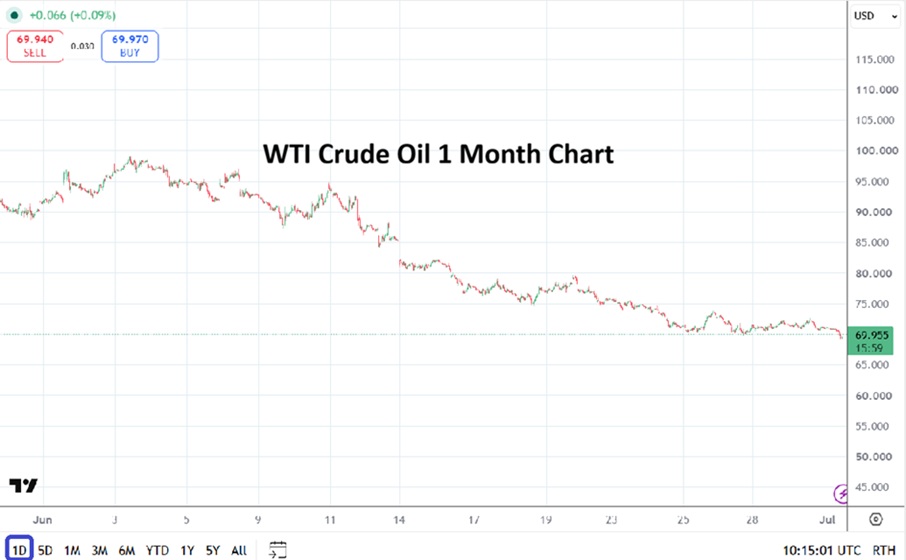
The price of WTI via futures at this moment are around the $90.00 mark again, this after moving within sight of 88.00 USD earlier today. At the end of last week the $96.00 mark was in sight for WTI. And the price of energy continues to cast a shadow that is moving over the U.S Federal Reserve and has large implications for the new Fed Chairman Kevin Warsh. 

The mid-term versus the long-term in financial institutions as they judge their interest rate perspectives are likely making for rather entertaining dialogue. And let’s not forget ladies and gentlemen, the U.S mid-term elections are approaching in November of this year and are resulting in primary elections that are punishing Republicans who voiced criticism towards President Trump. The question about who will hold power in the U.S House of Representatives is a big riddle. Even the U.S Senate leadership may be fragile. Why is that important, because if President Trump were to become what is known as a lame-duck President during his last two years in office, this would produce different outlooks among investors. Stay focused on the money people. 

Our Forex Friend: The BoJ

The USD/JPY is now traversing its 159.490 vicinity again, and perhaps that is a bell weather for soothsayers to criticize again. The Bank of Japan is watching the Japanese Yen as its trades within sight of its weakest values, and yes, the BoJ can be expected to issue another warning to speculators once again about being run over by an intervention. The BoJ’s broken record about interventions have produced solid results for folks who are able to trade the USD/JPY with positions that can be held for a few weeks at a time – namely hedge funds, large players and some financial institutions. Retail traders trying to take advantage of the USD/JPY are likely suffering trauma via anxiety if their wagers have gone in the wrong direction.

SpaceX and Scams in the Cryptoworld

And as a bonus, let’s not forget about rumblings regarding SpaceX and another topic within the I do not know category. Elon Musk has set the table for an attempt at a 2 trillion USD market cap after the IPO for the corporation is launched in the second week of June. The value of SpaceX can be and will be argued for the next few years as admirers and critics lineup to be heard and spread sheets are compared regarding revenues against one of the greatest marketing giants of our time. Intriguingly, however, are hints that there has been a lot of cryptocurrency fiddling regarding how the corporation is going to allow investors to participate. Apparently there have been tokens issued in the cryptocurrency world that have promised some type of participation in SpaceX and most are being exposed as scams and have nothing to do with the company or Musk. Buyer beware folks.

Copy and paste the text from AMT that you want to share

SouthAfrican Rand 20260520

South Africa Outsider: Thoughts on the Rand and Guest Observations

USD/ZAR Considerations as Water Flows and Political Concerns are Compared

As a guest of South Africa (because of a personal relationship) and having been coming here frequently during the past four plus years it is easy to love the nation. Early last week a severe storm which brought high winds and plenty of rain hit a lot of the Western Cape knocking out electricity and water in a variety of towns. Having experienced hurricanes in the past, the wind was not quite comparable, but the consistency of the gusts over two days caused major damage.

Electricity and water have been restored to most people now. Wifi remains a problem for some, but folks are surviving. The damage to homes, infrastructure in towns and agriculture will keep individuals busy for a while. However, the Western Cape because of good political leadership and the stoic mannerisms of the people have worked together to move forward. So what does this all have to do with the South African Rand?

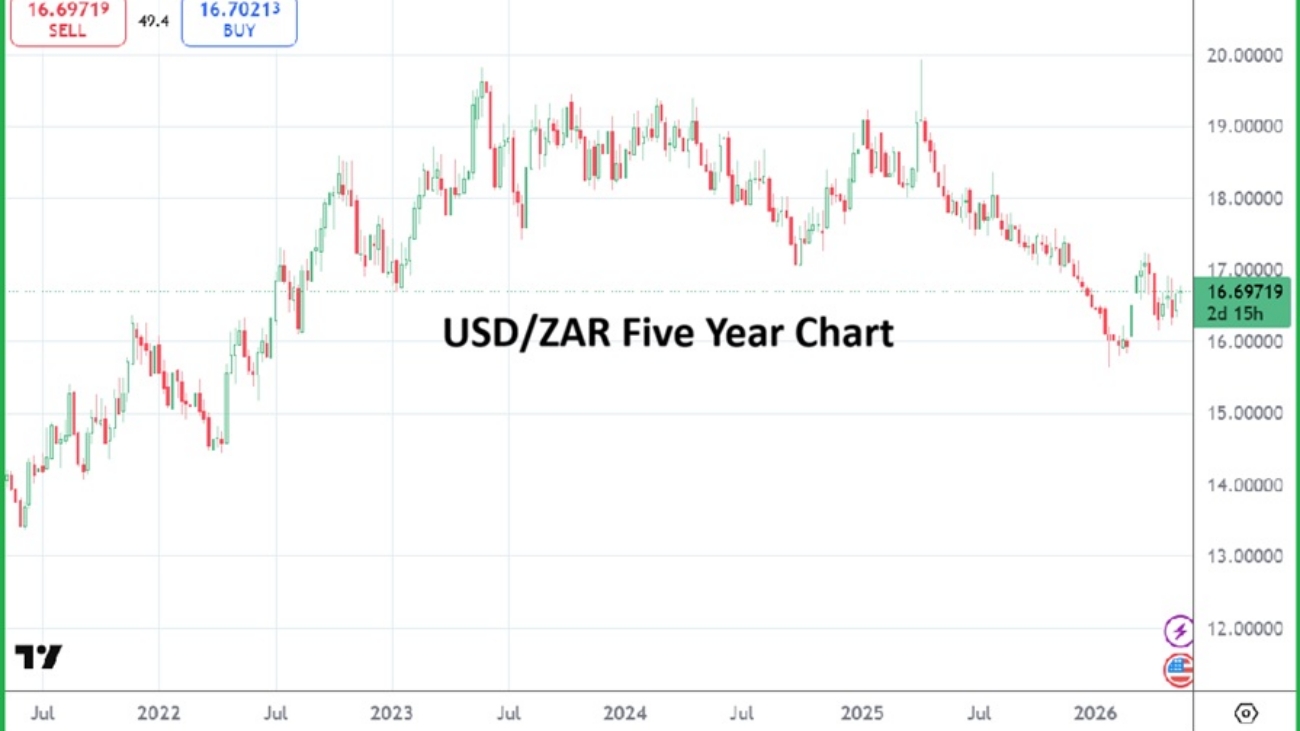
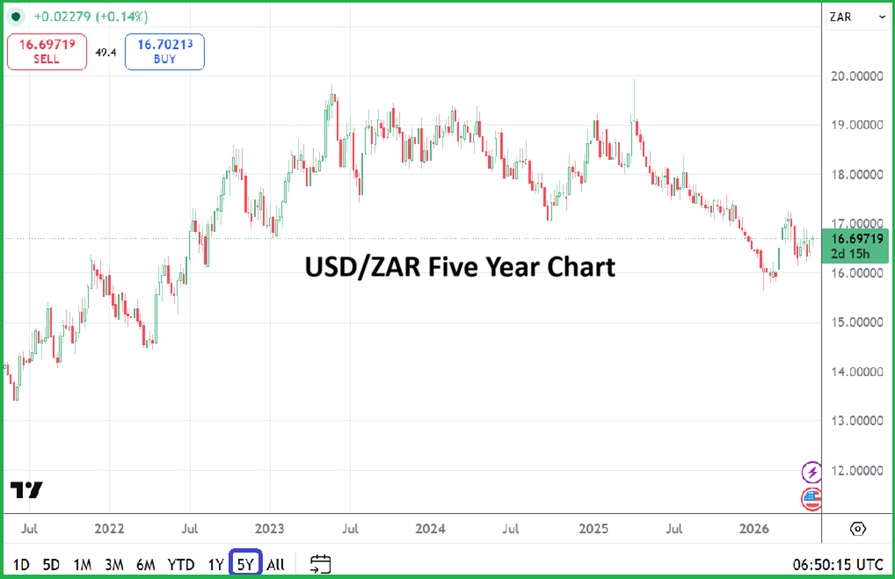
USD/ZAR Five Year Chart as of 20th May 2026

The USD/ZAR is traversing within a higher price realm since the start of March because of the Iranian conflict. The currency pair flirted with depths below 16.00000 in the middle of February. The value of the USD/ZAR at this time is close to 16.70000 depending on bids and asks. The Rand is correlating to the broad Forex market as USD centric strength has emerged recently, this as U.S 10 Year Treasury yields increase and threaten to become sustained. The U.S Federal Reserve is suddenly dealing with threats of inflation becoming sticky over the mid-term because of escalating energy costs. The U.S has plenty of WTI Crude Oil, but nations which had counted on energy from the Middle East are suddenly U.S customers and increased demand is going to cause WTI to remain elevated until the Iranian situation resolves. 

The USD/ZAR was in a bearish trend since early August 2025 when values were above 18.00000. The highs in early August of last year were caused by concerns the U.S White House sparked because of tariffs. South Africa is still facing tirades from the Trump administration about some policies being practiced in South Africa, but financial institutions have looked elsewhere regarding impetus for the Rand and its correlation to global Forex is the chief influencer.

While South Africa and its people and culture are easy to embrace, there are issues that remain problematic in the nation. Politics around the world often appear to be a complex myriad because certain people and partisanship are transfixed on power. Corruption globally is an issue in many nations that causes not only fiscal problems but inflation. South Africa suffers from these complications too. These matters can only be fixed with transparency and patience, and importantly – for citizens to demand better. 

Politically the current coalition government on the surface appears to be working. Yet, the potential for fractures to grow over the next handful of months as municipal elections approach –  the Johannesburg mayoral and city council results will prove fascinating, will be crucial for South Africa. Johannesburg has been facing a water supply crisis for a while and its consequences are a stark contrast to the Western Cape’s ability to repair and replace infrastructure in a matter of days after the recent storm.

The USD/ZAR is likely to correlate to USD centric price action near and mid-term, but there is a chance heightened political rhetoric and voting outcomes in a handful of months could shift impetus for a short while. Higher energy costs in South Africa now and into the mid-term will cause inflation. Food costs do appear to be incrementally rising in supermarkets. 

Yes, gold and platinum values will be looked at by some analysts and pointed to as reasons for the stronger South African Rand, and this influence may be real – to a degree. However for the moment, the USD/ZAR remains transfixed within the lower realms of its long-term price range mostly because the coalition government here is viewed positively, and the USD was weaker globally. 

The U.S Fed does have inflation concerns arising. As much as President Trump would like the new Fed Chairman, Kevin Warsh, to be dovish the reality for the U.S central bank and financial institutions judging outlooks lacks clarity for the moment. Sideways choppy price action in Forex and for the USD/ZAR may prevail in the coming days and weeks. And if the Iranian situation grows more boisterous, USD centric strength could grow.

Copy and paste the text from AMT that you want to share

AMT Top 10

AMT Top Ten Miscellaneous Insights on the 18th of May, 2026

Valuations and Drinking, Bad Storms and Politics Amidst the Resilient Nature of People

10. Resilience: The Western Cape of South Africa endured strong storm conditions last week. One of the hardest hit areas was the Cape Winelands District, but electricity and water have been widely restored. And a collective of people have proven working together can produce solid results when needed. 

9. Spencer Who: The Los Angeles mayor race is growing intriguing. A reality star turned social influencer threatens to become an influenza for his opponents. This as Spencer Pratt’s campaign gets noticed for its entertaining social media videos. This has caused many folks to ask what has happened to the state of politics and meaningful policy. But if NYC can elect a socialist, why can’t L.A elect an influencer and make some people feel sick?

AMT Top 10 Miscellaneous Insights for the 18th of May, 2026

8. Two Trillion: SpaceX early investors have agreed to allow a five for one stock split, meaning the company (and Elon Musk) are now aiming for a potential doubling of its worth when its IPO is initiated – on Nasdaq – in the second week of June. Some very serious accountants will be kept busy trying to show how SpaceX will produce enough revenue over the next twenty years in order to make a 2 trillion USD valuation palpable to future investors.

7. Drunk: Brown-Forman Corporation will begin its trading near $26.28 on the NYSE today. The company is the majority owner of Jack Daniels and other alcohol related enterprises. The value of Brown-Forman Inc. in June of 2021 was around 80.00 per share. The sobering phase of the public – particularly among young drinkers – to avoid bars and clubs, and instead stay on their mobile phones has hurt share values in many alcohol related companies. There are also concerns that too many drink companies now exists. Before Brown-Forman becomes the life of the party again, it appears some competition will have to go dry.

6. Deals: Prime Minister Modi visited Abu Dhabi a few days ago, and one of the results was an agreement to purchase and store energy reserves on a large scale in the United Arab Emirates. Modi also confirmed India’s strong connection to the UAE politically. While always trying to maintain a non-aligned stature, India appears to be moving closer to an increasingly important alliance with the UAE – which has also aligned with Israel strategically. The potential of these three nations acting together will ruffle feathers in a few noteworthy Middle Eastern and Asian countries.

5. Populists: President Trump’s tendency to say outlandish things and then suddenly turn around and show a willingness to negotiate terms has always been part of his art of the deal composite. However, saying what people want to hear and then turning on a dime and not delivering is also a symptom of populism. Trump isn’t the only politician suffering from this flaw. What do politicians really think, and how differently would they act if a they didn’t need votes for themselves or backers to remain in power?

4. Wall Street: After attaining apex highs early last week, the three major indices have taken a step backwards. Near-term concerns are effecting outlook as financial institutions balance risk averse tactics to long-term belief that sunnier days will prevail. While the Dow 30 didn’t set a record last week, the ability of the index to climb above 50,000 was noticeable. Equity markets appear tentative as this week begins and folks seemingly wait for more thunder and its potential effects.

3. Emirates: The UAE was attacked by drones yet again yesterday, this time at the Barakah nuclear facility. The hit has been downplayed, but highlights that military conflict with Iran remains very possible across the region. It is doubtful conversations are being conducted with polite undertones behind closed doors. The U.S, Israel and other nations are watching Iran – and Iran is watching them. The price of WTI Crude Oil remains a key barometer regarding the markets and concerns about the war igniting in full once more. Prices of oil remain sustained above $101.00 per barrel in the futures markets. The UAE might not want to be a focal point, but it isn’t backing down either.

2. Hawkish: The U.S Federal Reserve may have to actually consider raising interest rates before they can realistically discuss the notion of cutting borrowing costs, particularly if energy prices remain elevated and spark a sustained inflation threat over the mid-term. The USD started to show renewed strength the past few trading sessions in Forex, this as financial institutions compare their near-term anxiousness to growing concerns about mid-term ramifications regarding higher fuel costs.

1. Ego vs. Hubris: The U.S and China summit held largely in Beijing this past Thursday and Friday matched competing politicians and ideologies. In one corner U.S President Trump spoke with a rather inflated sense of himself while he detailed policy objectives and his perspectives. In the other corner Xi Jinping, the President of China, might have displayed some hubris as he warned the U.S about the Thucydides Trap. Xi expressed his belief that China is the emerging super power and that the U.S is a declining nation. However, China’s economy is known to be suffering because of a myriad of complex reasons, and could face more headwinds if energy prices and supplies remain hard-pressed.

Copy and paste the text from AMT that you want to share

Indian Rupee 20260515

India Insider: Rupee Under Pressure as Oil Prices Surge and Import Bills Rise

Iranian War and Implications for India as Energy Prices Cause Vulnerability

India is currently facing mounting external economic pressures as rising global crude oil prices weaken the Rupee, widen the current account deficit, and increase the risk of imported inflation. As one of the world’s largest energy importing nations, India remains highly vulnerable to fluctuations in global oil markets. The recent surge in energy prices, combined with geopolitical tensions and volatility in currency markets, has intensified concerns among policymakers, economists and investors.

The Reserve Bank of India (RBI) has stepped up its intervention in the foreign exchange market to stabilize the Rupee, while the government is evaluating measures to reduce pressure on import billing. Rising fuel prices, weakening currency conditions and growing external imbalances have combined to create a challenging macroeconomic environment that may test India’s economic resilience in the coming years.

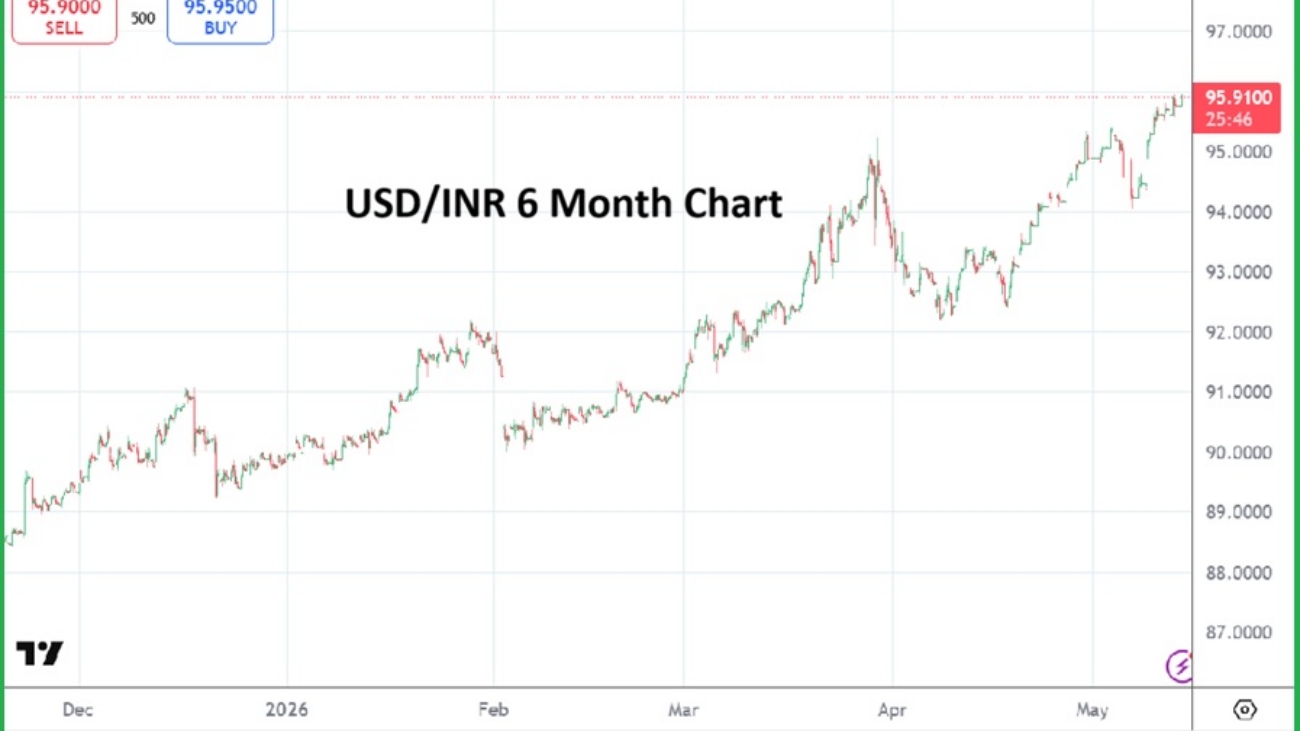
USD/INR Six Month Chart as of 15th March 2026

Gold and consumer electronics imports are increasingly being viewed as non-essential imports, and policymakers may consider restricting these categories in order to reduce stress on the current account deficit. Officials are concerned that a widening trade imbalance could place further downward pressure on the Rupee and increase dependence on foreign capital inflows.

The Rupee on Thursday fell to a record low near ₹95.95 per USD, making it one of Asia’s weakest performing currencies this year. The currency has erased most of the gains achieved following earlier RBI intervention measures aimed at curbing speculation in the Forex market. Analysts expect the Rupee to remain under pressure through 2026, especially if global crude oil prices continue to rise and significantly increase India’s import billings.

The impact of rising crude oil prices is becoming increasingly visible across the Indian economy. Private fuel retailers have either reduced diesel sales or raised prices in response to the rally in global oil markets, leaving state owned refiners to absorb a larger share of domestic demand. Long queues at fuel stations and rising transportation costs have intensified concerns over inflationary pressures.

Earlier today, State-owned fuel retailers raised fuel prices for the first time in nearly four years as New Delhi adjusted domestic pricing to reflect higher international crude prices following escalating tensions in Western Asia. Diesel and gasoline prices increased by more than 3%, even though Brent crude prices had risen by nearly 50% over the same period.

In New Delhi, diesel prices climbed to around ₹90.67 per litre, while gasoline prices rose to approximately ₹97.77 per litre. These are among the highest levels recorded since 2022 and reflect the growing burden of imported energy costs on the Indian economy.

Economists argue that the rise in fuel prices signals a gradual shift toward market based pricing rather than extensive government controls. Policymakers increasingly recognize that artificially suppressing fuel prices could worsen fiscal pressures and create larger external imbalances over time.

Currency Weakness and Monetary Policy Challenges

RBI Governor Sanjay Malhotra recently remarked at an event in Switzerland that continued currency weakness may be “only a matter of time” if global energy prices remain elevated and capital flows become increasingly volatile.

Foreign outflows during the year have already exceeded previous levels, while a sustained rise in crude oil prices above $100 per barrel could significantly widen the trade deficit and push India towards another period of pressure on balance of payments.

In this climate, attracting foreign capital via various tax cuts or raising the interest rates is paramount to reduce the pressure on the currency. It’s already been seen that New Delhi is working on reducing taxes for foreigners investing in Indian bonds.

Rise of Inflationary Pressures

Although India’s headline inflation remains relatively contained and below the RBI’s 4% medium term target, imported inflation risks are steadily increasing.

Economists also believe the RBI may eventually be forced to maintain tighter monetary conditions or raise interest rates further if energy prices continue to accelerate.

The central bank has already raised interest rates to around 5.25% this year, but several economists argue that further tightening may still become necessary.

Historical Perspective and Structural Risks

Economic historians often compare the current situation with the oil shocks of the 1970s. During that period, the United States was heavily dependent on imported oil. The oil crises of 1973 and again in 1979 contributed to inflationary pressures, balance of payments stress, and periods of USD weakness.

However, economists note that today’s global environment is significantly different. The United States has become one of the world’s largest oil and gas producers, reducing its dependence on imported energy. As a result, rising oil prices no longer weaken the U.S Dollar in the same way they did during earlier oil shocks.

For countries like India, the impact remains severe. India imports the majority of its crude oil requirements. Higher global oil prices directly increase India’s import billing and create additional demands for USD.

As Economist Philip Verleger was quoted by Bloomberg, “when you are a major oil importing nation, you are not only paying more for crude itself, you are also paying more for the dollars required to purchase it.” India is now facing this realization again.

Copy and paste the text from AMT that you want to share

Gordons Bay Sunset 20260514

Investing and Sunshine: Positive Momentum While Guarding Against Worst Scenarios

The Reliability of Optimism in the Marketplace

Once again the world has not ended. The sun continues to rise and set on a daily basis and the world’s investment outlook remains towards an optimistic approach. Day traders should take this notion to heart and actually repeat it as a mantra when they consider pursuing the marketplace based on notions of fear.

Solid risk management equally needs solid risk taking tactics. And speculators need to always remember long-term investors are not basing their decisions on what will happen near-term, they are looking towards the future. While this may seem like a reminder a father would say to his children as a life lesson, day traders should not be offended, but use this as a keepsake and understand the world of investing is made up of elements that have proven durable.

Sunset over Gordon’s Bay, South Africa

While the price of energy, namely WTI Crude Oil, remains in elevated realms, corporations are still producing, and financial institutions have not shuttered their offices. There are some nervous types that speak about $200.00 a barrel Crude Oil, yet the higher price of the commodity remains perched near $100.00. This value is high compared to where the price of oil has traded the past few years, but the reality is that the current values of Crude Oil have been within these realms before and the economic world has survived. The price of Crude Oil is not going to hit $200.00 anytime soon.

Inflation is certainly an unwelcome specter, but there is the added fact that part of the long-term outlook is – if and when the Iran saga ends the price of WTI Crude Oil is likely to drop significantly. Yes, that is not going to happen near-term, but it is part of an optimistic view looking forward. In the meantime, commodity pricing has become a focus for large players who are taking advantage of fears and an ever flowing river of optimism which creates dynamic prices in agricultural resources. Logistics via fuel costs are certainly effected as is manufacturing and farming, but again let’s soothe ourselves with the knowledge most of those involved in these industries have dealt with high costs before and will constructively deal with the vagaries of mid-term uncertainty.

Almost needless to say, the U.S stock markets are doing extremely well per the results of the big indices. The S&P and Nasdaq have all gained in exquisite fashion since the end of March. Who had that on their bingo card? While financial institutions pouring money into equities likely didn’t count on double digits gains in one month’s time, that is what has happened and they will not complain. Perceptions about the sun continuing to show up even in the midst of rainstorms gets investors through whirlwinds. The U.S and China summit taking place now will also add a dose of optimism for equity investors who gear their visions towards results over a three to five years span.

Nasdaq 100 One Year Chart as of 13th May 2026

Different Show and Outcomes for Day Traders

Day traders who are pursuing intraday results are not participating in the same environment as long-term investors. A casino like experience is the best comparison for many retail traders, but the option of trying to catch momentum and using techniques that can accomplish better results are available for those who try to ride the waves caused by big players. 

Some may view money as a game, but it is actually more aligned with the concept of a tool. If a retail trader – or institutional investor – participates in a particular asset, they must have an understanding of how it works. 

Trying to gauge behavioral sentiment is a key ingredient for speculators when trying to deduce what will happen in the marketplace. Predicting what will happen within an intraday framework is difficult at best. However, there is something to be said for understanding how the emotions of investors and large players work while they make their decisions – particularly when day traders are using these notions as a barometer. The trading in the USD/JPY is a prime example of how trading/investing and outlooks work:

Our Friend the Japanese Yen and Forex Opportunities


It is recommended that day traders do not try to tackle too many speculative sectors at the same time. It is urged that they get familiar with one part of the financial market and make it a specialty. 

No one can know everything. Experts in one area – like an academic field – often believe this entitles them to speak on a variety of subjects they have no expertise within and this often leads to catastrophe. Day traders need to make sure they are getting information from sources that are reliable. Because sure as heck the sun will rise and set, no matter what dire predictions are made by those who prefer to focus on the worst.

Copy and paste the text from AMT that you want to share

USDJPY 20260505

Our Friend the Japanese Yen and Forex Opportunities

Bank of Japan's 'Do As We Say' A USD/JPY FX Advantage Technically

Forex traders who have been keen on trying to venture wagers on the USD/JPY certainly cannot be faulted. As of this writing the USD/JPY is near the 157.720 vicinity, this after falling to lows around the 155.750 mark and below momentarily last Thursday, Friday and briefly yesterday. 

The Bank of Japan let it be known in the middle of last week that speculators should not be buying the USD/JPY because they – the BoJ – could and would intervene with strong selling to kill off the momentum higher. The ‘do as we say’ approach from the BoJ is a contrarian trader’s dream, but one that needs as always a strong dose of risk analysis.

USD/JPY Five Year Chart on the 5th of May 2026

And this is where it gets properly intriguing for USD/JPY traders, because the Bank of Japan is literally setting the table for two different types of Forex trades when they threaten or actually intercede with interventions. One is a selling notion per the warnings, the second is a buying excursion for the emotionally stable after they think the intervention has run out of power.

A five year chart shows the immense pressure the Japanese Yen has been under as it has lost value against the USD. However, it is all about perspective depending on how a trader wants to chase momentum shifts. 

Technical traders can easily see that when higher vicinities are approached the USD/JPY is sometimes met with spikes downward. And then technically it is rather evident that support levels tend to spur on buying. The problem for buyers seeking support levels after Bank of Japan selling is to know when it is safe to become a buyer again.

If a trader has courage and wants to bet against the large players and financial institutions leaning into long positions of the USD/JPY, a selling position at higher marks is a solid choice. Yet, the other question then arises – where is resistance going to actually translate into a warning sounded by the BoJ in order to create the desired landslides lower in the USD/JPY?

Bank of Japan policy regarding interest rates has only been in question for over 3 decades now from outside observers who like to be critical. Yet, the conservative (and questionable) policies of the Japanese government via fiscal and monetary policy is a looking glass into practicalities for Forex traders. 

10-Year Japanese bond yields are now at twenty-nine year highs. The rate as of this writing is above the 2.50% level. The Bank of Japan Policy Rate remains low at 0.75%. While many analysts believe borrowing costs from the BoJ should be higher, what some might be missing is that the Japanese people are already being penalized via a weaker Japanese Yen. Higher borrowing costs and a weak Yen would likely not go over well with many Japanese citizens.

The Bank of Japan is in a difficult place regarding outlook as it tries to help keep exports strong, while also having to consider the higher costs of energy which is certain to hit Japanese industries over the mid-term. These considerations may cause some financial institutions to continue leaning into a buying outlook regarding the JPY, but near-term considerations must also be weighed as nervous sentiment cascades throughout the broad Forex market shifting abruptly. 

USD centric price action has been choppy, but overall the USD has also been weaker against many major currencies and even emerging market currencies. Yet, the USD/JPY remains within its higher realm. All of the Bank of Japan warnings to speculators telling them not to pursue buying the USD/JPY continues to make the BoJ sound weak and this doesn’t help sentiment surrounding the JPY. While the Bank of Japan can certainly intervene with massive amounts of buying the Japanese Yen – selling the USD/JPY – the central bank also is probably quite keen on making sure the JPY doesn’t get too strong. 

And this is where confusion must be put to the side, economics are wonderful when studied in a textbook, but the reality of trading the USD/JPY lives in the real world. Fiscal and monetary policies do not always work out the way governments intend.

The BoJ probably has a polite trading range they would like to see for the USD/JPY between 154.000 to 158.000 currently, but getting financial institutions to help achieve this realm remains difficult. The range between 156.000 to 159.000 likely remains a practical area for the BoJ as of now, one in which they believe their policies can work properly. 

Opportunities need to be viewed with a proper lens by day traders. Participating in the USD/JPY is a dangerous place because the currency pair has massive volume and the BoJ and U.S Federal Reserve often work together to gear valuations – even if they frequently disagree on techniques. Price velocity in the USD/JPY will continue to prove dynamic in the near-term and speculators need to practice patience and keep their risk taking tactics strict.

Copy and paste the text from AMT that you want to share

AMT Top 10

AMT Top Ten Miscellaneous Early May Reflections

May Day Parades and Wishing on Santa Claus

10. NBA Playoffs: Basketball has now entered its serious season, one in which rest days are no longer done in order to gain better draft day lottery odds, nor appease star players who feel the need to take a day off. There have been a couple of upsets already during these playoffs with Houston, Denver and Boston all of whom were favored to win their first round competitions going down in flames. Semi-conference championship contests will begin tonight. Basketball fans are now getting the NBA product they want.

9. May Day: Parades and protests were seen throughout the United States this past Friday. The once treated contemptuous flag of communists was held aloft and portrayed as a viable ideology at many demonstrations. Protestors marched and chanted their displeasure about free enterprise. A lack of historical knowledge about the massacres ignited by Joseph Stalin, Mao Zedong and Pol Pot while paying homage to iconic Che Guevara images was evident. However, their longing for a Santa Claus like figure to come bearing free gifts did not appear. 

AMT Top 10 Miscellaneous Early May Reflections on the 4th of May 2026

8. $80,000.00: Bitcoin has been traversing higher and continues to flirt with the eighty thousand USD realm in its sights. Strategy (MSTR) finished last week above the $177.00 ratio. Are the new higher avenues a sign momentum will continue to endure for these two highly flammable speculative wagers, or will profit taking douse them again when suspicious caution reemerges?

7. NYC: Mayor Mamdani has made it known the city is not going to be able to meet his budget requirements and has postponed the publication of New York City expenditures until the second week of May. Mamdani has called on the State of New York to change is financial arrangements with NYC in order to facilitate his wishes. In the meantime, the Mayor has decided to pick a battle with hedge fund manager Ken Griffin, the primary owner of Citadel, which if unresolved is likely to cost NYC vital jobs and income. Charm and ignorance are likely to get Mayor Zohran Mamdani only so far.

6. Warning: USD/JPY is traversing near 156.900 as if this writing. Last week the USD/JPY was over the 160.000 ratio and sustaining values. But official murmurs from the Bank of Japan proclaiming readiness to intervene sent the Forex pair tumbling. Japanese Yen speculators betting against the BoJ should remain alert and understand that quick profits and escaping before an actual intervention strikes is a very dangerous game to play. The USD/JPY is the domain of large players and financial institutions. Yields on Japanese bonds have escalated, which is a sign that belief in Japanese fiscal policy remains lukewarm, but participating in the USD/JPY via wagers needs to be done with extreme care.

5. Hormuz Strait: WTI Crude Oil values continues to effect behavioral sentiment amongst investors and speculators. The price for spot Crude Oil is above $106.00, while futures are challenging the $100.00 realm. Inflation concerns are turning from whispers into fact. Airlines are being impacted, and logistics for large companies like Unilever are becoming higher costs for global consumers.

4. Reality Shock: Escalating electricity costs for the giant data centers that Artificial Intelligence infrastructure needs are starting to not only be realized, but causing investors to understand genuine profits for the mega-sized ambitions of many companies may prove fleeting. Hyper-scaling companies seeking to build bigger electrical capacity include Microsoft, Alphabet, Meta, Amazon Web Services and Equinix and it will not be easy. Potential and real electricity shortages are causing some nations, states and cities to plead for help due to too much demand on their overwhelmed power grids.

3. Voting: Jerome Powell has decided that he will remain as one of the seven Federal Reserve Governors, which allows him to vote fully on interest rate (FOMC) policy. Powell’s action is highly irregular and one that certainly doesn’t please the Trump administration. Treasury Secretary Scott Bessent has expressed his exasperation regarding Powell’s non-departure from the FOMC. Powell will step down as the Chairman of the Fed on the 15th of May, but his position as Governor doesn’t end until the close of January 2028. Because the Fed is an independent entity in theory, President Trump and those aligned with Trump’s economic outlooks will have to deal with Powell who will clearly not bend to White House desires. 

2. Apex Peaks: The official start to the Middle East conflict – this time – began on the 28th of February. Since deciding the Nasdaq 100 and S&P 500 were vastly oversold in late March, a parade upwards bearing gifts has developed and both indices attained record heights this past week. The Dow Jones 30 is still below its all-time levels produced in the second week of February when it scorched above the 50,000 level, but the granddaddy of U.S indices also did remarkably well in April. 

1. Exit West: The decision to officially leave OPEC by the United Arab Emirates is a clear sign that the Iranian war has turned into a philosophical realism regarding existential outlook. The UAE’s has aligned itself with the West and has said no to radicalization. The United Arab Emirates desire to become a Singapore like model in the Middle East that practices free enterprise and provides a worldwide hub for commerce is clear. Many people are not connecting the dots regarding the UAE’s choice, a realignment of the Middle East is underway and it will have a profound economic effect globally.

Copy and paste the text from AMT that you want to share

US Cash Index 20260424

Upcoming Weekend Nervousness: Does Anyone Know What is Going On?

Preaching Caution and Looking Like a Fool to Those Who Want to Profit

Can someone please tell the rest of us what is going on? Global markets via Forex this morning are demonstrating additional USD centric strength which developed yesterday. The price of WTI Crude Oil is above $94.00. Gold is languishing and around 4,675.00 USD. And although the 3 major U.S stock indices are all within their higher realms – one thing stands out – folks are uneasy.  But then again, the markets never move in one direction only, and perhaps current results can be interpreted as profit taking by those on winning sides.

U.S Dollar Index One Month Chart on the 24th April 2026

I would love to be the person to tell you what is going to happen, but as this weekend looms making short and near-term bets still appears a fool’s game. Yes, it is easy to make predictions, but being correct is more difficult. Retail traders are suffering more than most market participants, this as leverage and a lack of funds to remain in a position through violent reversals destroy plenty of trading accounts.

There is talk of manipulation via chat rooms regarding the price of WTI Crude Oil. The usual dialogues can be seen – largely based on conspiracies via large players trying to blow out smaller traders. However, these types of forum chatter are mostly wrong. Large players are getting hurt too in the energy markets. Anyone who is taking a position in order to speculate on a quick hitting foray in WTI is betting on their perceptions. 

The problem is that unless there is inside knowledge of what the next words out of President Trump’s mouth are going to be, or that from Iranian officials – any pursuit of WTI Crude Oil at this juncture is a ‘vibe’ trade. What is going to happen from Saturday and into Sunday is an unknown quantity. Folks holding positions into this weekend need to understand they are wagering. And some may find they are quite profitable afterwards, while others grimace and find themselves on the wrong side of the next surges higher or spikes downward. Intraday trading volatility in nothing new however.

The USD/JPY is near 159.600 as of this writing. The EUR/USD is close to 1.16820. While a tourist traversing foreign lands may not find the Forex incremental shifts in value mesmerizing or of interest, FX traders who do not have deep pockets are likely wondering why risk adverse conditions are prevailing suddenly. But as a risk analyst, I must say that conditions simply may have been perceived to have been oversold in the USD by financial institutions, this as the Fed looms on the horizon.

However, my task as a risk analyst the past two months has been like a carnival barker, because while it has been easy to say that a show is happening within the big tent of speculation, I have been hard pressed to predict short and near-term directions correctly. Perhaps I fret too much. The optimistic thunder claps upwards in the stock markets since the 31st of March have been astounding to many. Hopefully it has been prosperous for day traders, but the likelihood is that financial institutions are the ones who are profiting more via their pension funds purchases for institutional clients.

This coming week the U.S Federal Reserve will make their FOMC decision public. This will be Jerome Powell’s swan song at the Fed. The Chairman is being faded out by the U.S White House mid-May. And somewhere when he is all alone, Jerome Powell may be having a quiet laugh to himself. The Fed will not act this week. Rates will remain the same – unless there is some bizarre move in the global markets over the next handful of days. Yet, Powell’s remarks will be listened to for warnings. While it is not in Powell’s nature to issue a ‘I told you so’ quote, and he is likely content to walk away from the Federal Reserve quietly, it would be captivating if Powell looked into the cameras and pointed fingers. 

But because Jerome Powell like most others, likely has no clue what is going to happen next internationally he will remain mostly mute (cautious as always).

And here we meet again, wondering what the next 72 hours hold. Will the Iranian ceasefire remain observed? Is it even a ceasefire in reality? The Strait of Hormuz remains a linchpin for military action by the U.S Navy and Iranian Revolutionary Guards via a cascade of ship seizures. Maybe that continues to be the key, WTI Crude Oil prices remain a crucial barometer. USD centric prices via Forex action seems to be a reflection of fear or positive thinking in the energy sector depending on the prevailing tides.

Last week there was so much optimism folks were talking about WTI prices potentially hitting $75.00 and lower, now this hope seems to be wishful thinking. Global markets will remain fast and dangerous, that is easy to say and is right, but telling you which direction assets will move, that is a bit different.

And there is the old standard test I use when an opinion is definitely asked for: if someone were to put a gun theoretically to my head and ask me what I think, I would venture to say things will remain quiet and optimism will seep into the markets before the close this weekend. However, I don’t like to play fool’s games, so I will leave now and wish you luck via your own perspectives because the near-term remains more speculative than normal for day traders – even if strict risk management is used. 

Copy and paste the text from AMT that you want to share