postN87

AMT Top Ten Miscellaneous Bits of Clarity for the 19th of April 2026

In a World Filled with Bread and Circuses, Now a Dose of Transparency

10: The Risk Reward Show: Sommer and Petrucci will return to the airwaves this coming week, via sources like Spotify and YouTube, with their podcast starting after a long break (absence).

9. Hardball: Major League Baseball is back and the sport continues to attract more fans and growing attention with its quicker games, a new computerized strike zone, and maybe even more dislike of the Los Angeles Dodgers. Yes, Shohei Ohtani remains a dominant and positive force in the baseball world.

AMT Top 10 for the 19th of April 2026

8. Populism: Politicians on both sides of the Atlantic continue to display a wide display of nonsensical rhetoric and bold asinine actions equating into empty spectacles. An example from the Left is Zohran Mamdani the mayor of New York City with his socialist platform, which is certain to fail and equate into more people and companies leaving NYC for less expensive and friendlier tax environments. And from the Right Italian Prime Minister Giorgia Meloni who talks a tough game but consistently falls short of backing up her words when she senses she could lose control of her power base. The putrid smell of trying to please voters with rotting bread and circuses prevails.

7. Speculation: Gold finished Friday’s trading near $4,837.50, Silver around 80.78. Bitcoin is close to $75,570.00. 

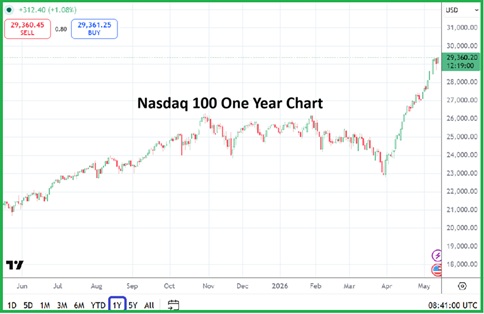
6. AI: While the Artificial Intelligence hangover has been widely discussed for a handful of months, health continues to be seen via Nvidia which closed above $201.00 going into this weekend, and Anthropic PBC which appears to be aiming for an IPO in late 2026 or early 2027. At this moment Anthropic has an estimated valuation of 800+ billion USD. If Nasdaq is able to secure a listing with Anthropic it will immediately factor into the Nasdaq 100. Are some investors betting on upside now which they believe will be seen when Nasdaq reorganizes its index?

5. Optimism: India, South Africa, Brazil and other emerging markets have experienced Forex volatility like all nations the past month and half due to the Iranian war. However, in the past two weeks the Indian Rupee, South African Rand and Brazilian Real have performed better as global markets have calmed. The ZAR and BRL have actually outperformed major currencies over the past handful of months showcasing existing optimism within financial institutions dealing with these currencies.

4. Money for Something: Lefarge, a French company specializing in concrete, was found guilty this past week of paying ISIS (Daesh) and other terrorists groups money in the years from 2012 into 2014, this in order to maintain their business operations in Syria. While Lafarge claims they paid the money to keep their operating staff safe, a French court ruled Lafarge was buying not only safe passage to allow employees to work, but also paying for physical resources needed from quarries that were controlled by the terrorists. Critics of Lafarge point towards the company’s massive infrastructure investments leading up to 2012 and a decision to seek profits no matter the costs of dubious morality. Some Lafarge former senior executives involved have been sentenced to prison including Bruno Lafont and Christian Herrault. Lafarge and Holcim (a Swiss conglomerate) merged officially in July of 2015.

3. WTI Prices: The value of the world’s most famous Crude Oil went into the weekend near $83.30 via futures markets. The commodity is certain to open with volatility early on Monday, this as folks weigh in via their existing behavioral sentiment which will range from speculative perceptions to insights they hold to be true (but that could prove false). WTI Crude Oil challenged 79.00 USD momentarily on Friday, before sparking upwards as cautious attitudes likely ignited doubts about what would happen this weekend in the Middle East regarding potential developments. Wagering on WTI in the coming days for day traders may be akin to spins of the roulette wheel.

2. Apex Heights: The winning streak and surge upwards for the Nasdaq 100, S&P 500 and Dow 30 via gains have caught some investors by surprise and standing on the sidelines. Some large financial institutions may find they have to explain why they did not participate in the rally which has unfolded since late March. The S&P 500 has gone up around 9.5% during this time.

1. Straight Talk: The Hormuz and whether or not the strait is open for oil tankers will remain a catalyst for all global assets until clarity is gained. In the meantime a whirlwind of noise and threats from President Trump, the U.S White House and Iran will remain a menace for all traders – small and large. Is the Strait of Hormuz open or closed?

Copy and paste the text from AMT that you want to share

India Rupee 20260416

Progression Upwards for Indian Rupee and Catalysts

USD/INR Persistent Trajectory Remains in Force and Mid-Term Concerns

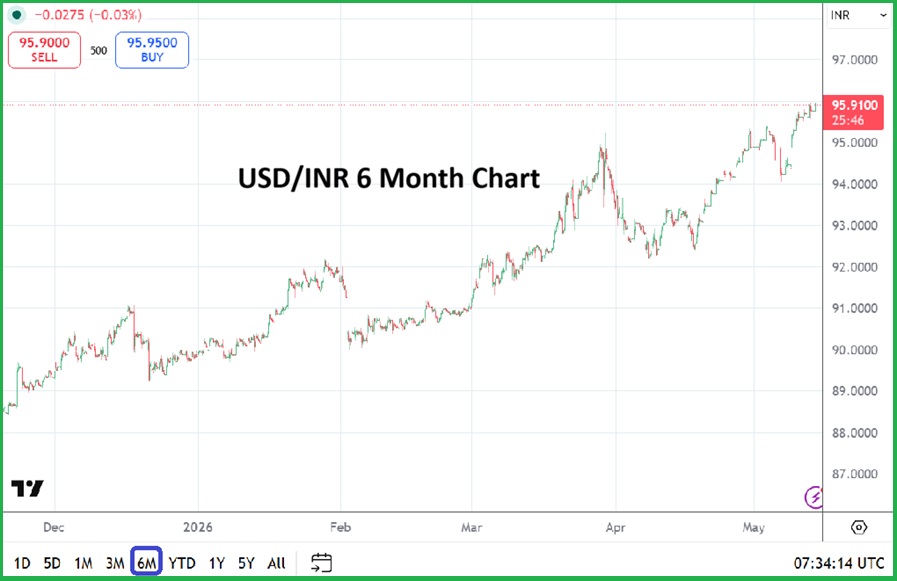
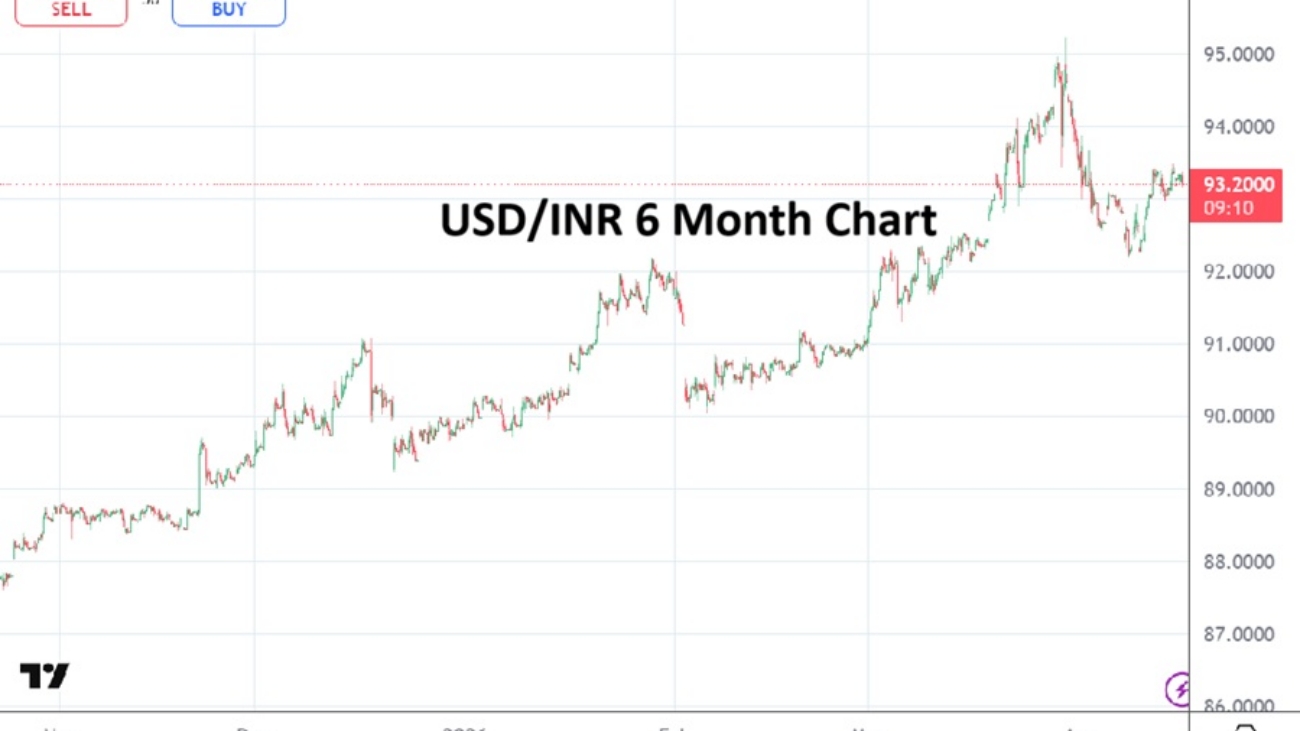
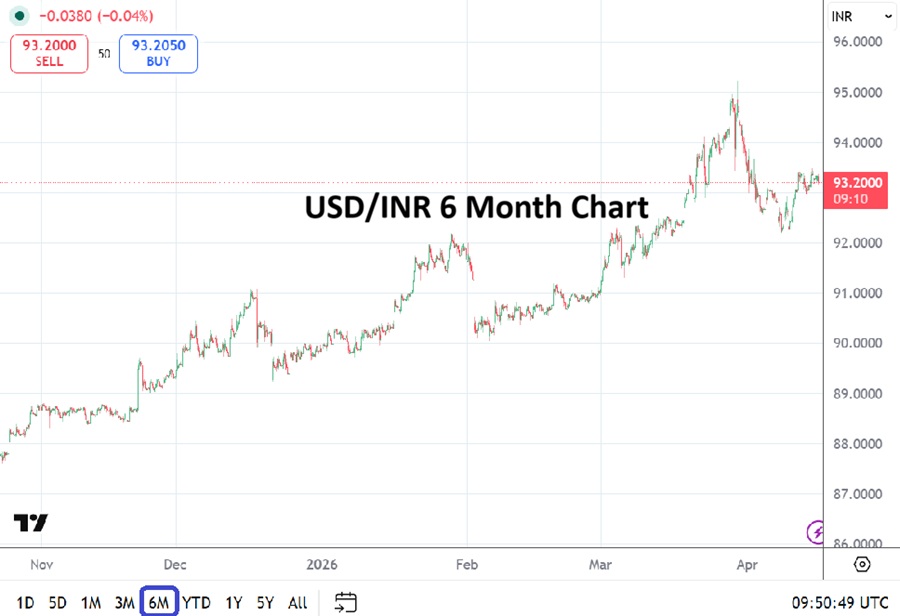
As of this writing the USD/INR is within the 93.2000 vicinity. The price of Gold is around $4,810.00 and Silver close to 79.50. Importantly, WTI Crude Oil is trading around $89.25. Global markets have turned in solid performances the past two weeks, this has been a two step progression for most investors. 

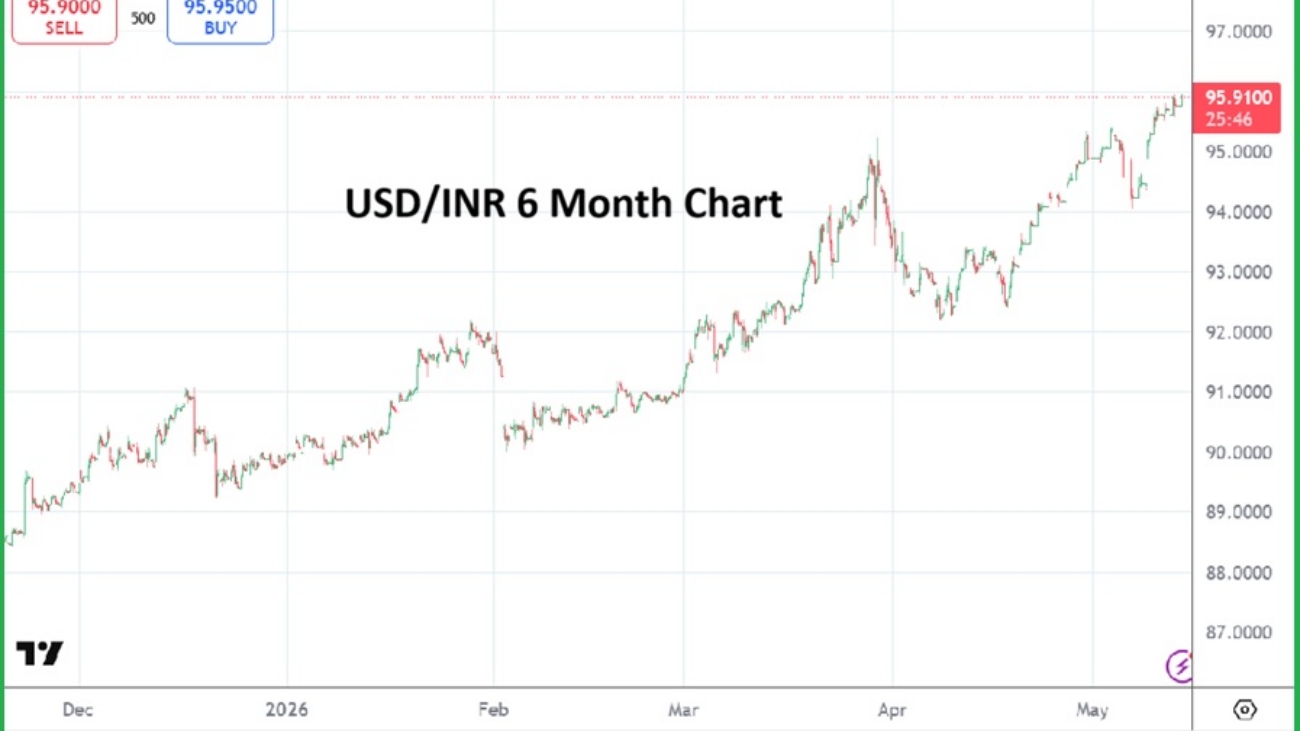
Indian financial institutions began to digest their worries regarding the Iranian war late in March – perhaps acknowledging the risks and ramifications, while adjusting outlooks. Then on Tuesday the 7th of April the establishment of a ceasefire was announced. However, after hitting a low of around the 92.2200 realm on the 8th of April, the USD/INR is back within higher ratios.

USD/INR Six Month Price Chart as of 16th April 2026

Yes, the USD/INR had been traversing above the 95.0000 ratio late in March, so it can be said the Indian Rupee has gotten stronger. Yet, there will not be many willing participants who will join a parade with the belief this lower trend can be sustained. The bullish trajectory of the USD/INR is not going to vanish.

On the 24th of October 2025, the USD/INR was near 87.7500. At this time last year the currency pair was close to 85.5000. A persistent and long-term move higher has been the theme in the USD/INR. Weakness in the Indian Rupee has been part of India’s economic story rather consistently for a handful of years. 

Narendra Modi has been in power since 2014, he is serving his third term as Prime Minister. His political party the BJP clearly has its chosen people within the Reserve Bank of India.

The government’s position of allowing the Indian Rupee to be weaker is not something they will want to state out loud as part of their mandate, but it is clearly not bothering them.

The pursuit of creating a stronger industrial and manufacturing base for India, including IT and software via good exchange rates for international clients is seen as a cornerstone to build demand. The quality of work and technology provided by the Indian workforce is good and this allows global clients to foster solid relationships with Indian companies.

However, the rise of the USD/INR to above the 95.0000 level in late March was a warning sign, that sometimes price velocity in Forex can become dangerous. And the Iranian war although enjoying a week and half of less noise, still could escalate into a problematic scenario for India that could cause additional concerns in Indian financial institutions who are trying to gauge their mid-term outlooks.

The USD/INR is an important part of this economic math and the prospect that higher energy costs, or in a worst case scenario – shortages incur hardship for Indian citizens and companies is an actual concern.

The current situation in the Hormuz Strait and availability of Crude Oil is significantly important for India. So is supply of LNG (liquefied natural gas) which Qatar, Oman and the UAE play a role. The supply of energy presents a glaring dark shadow for the prospects of the Indian economy should there be shortfalls. 

The 93.5000 resistance level has been durable since early April in the USD/INR. Stability of the exchange rate is crucial for a wide range of business in India, including banking and financial institutions active in the Bombay stock market – particularly since a weaker India Rupee opens the door to Forex concerns for foreign investors who do not have the ability to hedge if they are exposed via the INR too much. Foreign investors are needed in the Nifty indices to help values.

The near-term is likely going to remain a difficult path for the USD/INR and its outlook. The positive sentiment which has prevailed the past couple of weeks has been welcome and certainly stable conditions are hoped for so equilibrium can be kept. However, if the Iranian situation manifests into open military conflict again, or if there is a disruption of supply of energy that cannot be easily solved by India – then the USD/INR could once again face price velocity upwards that is uncomfortable.

While China may be getting the headlines regarding potential ramifications of its Crude Oil supply being threatened, India is estimated to have consumption that is ranked as the 3rd biggest globally. India’s ability to get a supply of energy from a diversified stable of sources is a key for the nation moving forward. 

The USD/INR will continue to move higher, the question is how fast? A slow steady rise in the currency pair – again, this will not be a spoken mandate by the Indian government – will continue. The fear of a rapid debasement is a concern. Financial institutions in India need steady emotions and are certainly hoping for the Iranian war to conclude with a sliver of optimism. 

Copy and paste the text from AMT that you want to share

Sunset 20260413

Speculative Prospects and Temptations Via Perilous Opportunities

Desire to Gamble on Perceptions and Risk Management

The markets have acted in a polite fashion as of early trading via Asian and European perspectives today. After this weekend’s proclamation that talks between the U.S and Iran didn’t attain an agreement, there probably weren’t many folks in financial institutions who were surprised by the outcome. Thus the theme, no action is the best action may be holding true as folks simply watch.

While the USD has picked up some momentum in Forex this morning, the gains by the USD against other major currencies have not been significant. However, the near-term will remain tenuous and day traders with a taste for adventure may believe opportunities lurk.

Western Cape Sky

The temptation to take advantage of market situations which hold the prospect of volatility will be strong among many. If a trader were to bet on the right direction and catch momentum from a Forex, equity index or commodity move in WTI Crude Oil, large profits could be found. The realization consisting of ‘what can be gained can also be lost’ must be considered too. Greater velocity in prices means there are risks that must be considered.

USD centric strength this morning has been rather polite, and suggests that if financial institutions are forced to shift their behavioral sentiment greater movements will occur. This sets the table for speculators who want to bet on a chosen direction per their perspective regarding what will unfold in the coming hours and days. 

The U.S White House is talking tough and threatening to blockade the Strait of Hormuz, but nobody really has a clear picture of what that means entirely, nor if it can be done. The Iranians continue to talk tough and say they are in control of the Hormuz. It does appear this body of water will be a chief ignition switch per an escalation for the Middle East conflict. 

The ceasefire which was declared last Tuesday is one week old as of today. The ceasefire agreed upon last week was for 14 days, meaning there is one week left if both sides hold their fire. There are no guarantees tranquility will prevail. If the U.S does go ahead and try to seize the Strait of Hormuz’s sea navigation, this could spell a sudden and loud end to the ceasefire which in theory still exists.

Forex, gold, equity futures have shown no real shockwaves as of today following this weekend’s failure to find a peaceful path forward. Traders who have the ability to be patient and hold onto positions may be able to take advantage of moves that could develop. Serious risk management will be a key part of any wagers taken. The use of very conservative leverage is advised too. Traders also have a hurdle they must consider regarding overnight charges via their brokers if they wish to pursue trades that carry over into the next day.

So what will happen? If the Iranian war becomes loud again there is a real chance the USD will become stronger. The EUR gained quite well against the USD since the announced ceasefire and it looks like it remains in what may be considered overbought territory, particularly if fiery rhetoric turns into missiles being launched again.

However, as some analysts have pointed out, there is a chance the worst of the news and its negative impact has already been traded into the marketplace. There is a temptation to believe USD centric strength in Forex, and price action in the S&P 500, Nasdaq 100, Dow 30 and its international counterparts have already suffered massive negative selloffs and that any declines that take place now will be met with reversals higher. Yet, betting on this type of shifting sentiment by day traders is akin to throwing darts at a moving target, because the volatility and timeframes will prove difficult for those betting on momentum spikes. And things in the Middle East could actually get worse.

Thus, day traders should remain cautious. If they want to wager on noise developing into a violent rupture again in the Middle East they might be proven correct. The near-term remains dangerous. Day traders have an opportunity to catch a news cycle that delivers the turbulence they believe may happen. Stop losses need to be used though, in case the Middle East saga takes an unexpected turn. It is unlikely that peace is going to suddenly break out, but rumors about Saudi Arabia is talking with the U.S about a more coordinated regional enclave that involves the U.A.E and Israel is creating attention. Yet, the fog of war via verbal interludes which seem improbable, and realities that are pushed to the limit hold no promises either.

Wagering on what is going to happen over the next few days and into next week in the Middle East is a gamble. And this may explain a lot of the sideways price action seen early today, and the rather pragmatic conservative approach by financial institutions as they play a game of wait and see.

Copy and paste the text from AMT that you want to share

postN87

AMT Top Ten Miscellaneous Morsels for the 12th of April 2026

Optimistic Hopes Appear Ready to Fade into the Distance

10. B-ball: The NCAA Men’s Basketball Championship concluded early last week with a rather resounding outcome for the University of Michigan who won their 2nd Men’s trophy, the first one coming in 1989. Michigan dismantled the Arizona Wildcats and then handled the Connecticut Huskies. The NBA playoffs will start this coming week. The Oklahoma Thunder and the San Antonio Spurs are getting a lot of attention, and the Denver Nuggets might have something to offer.

9. Trump: A week of optimism now leads towards threats of additional noise. Peace talks held in Pakistan appear to have failed this weekend, and now another countdown has begun as the Iranian conflict appears ready to escalate. The U.S White House and President Trump will certainly make more noise in the coming days.

AMT Top 10 for the 12th of April 2026

8. Logistics Advertising: Kit Kat and Nutella have been rewarded with massive exposure. The Kit Kat truck heist of 12 tons of product (reportedly said to be in a special F1 designed candy bar theme) made headlines. Kit Kat’s owner, Nestle, was obviously content with the free publicity and proof of demand. And a jar of Nutella floated across the Artemis 2 spacecraft unexpectedly this week, gaining international attention and sparking smiles from fans of the Italian chocolate hazelnut spread.

7. Creator: Yet another candidate accused of being Satoshi Nakamoto has been produced. Blockstream’s CEO Adam Back has been named by the N.Y Times as a potential creator. In the meantime, the real question is whether anyone but Iran (as they run their illicit shadow economy), Michael Saylor of MSTR and a few big whales consisting of institutions and hedge funds are really paying any attention to BTC anymore. The BTC/USD price as of this morning is around $71,600.00. Bitcoin was traversing near $126,000.00 in the first week of October 2025.

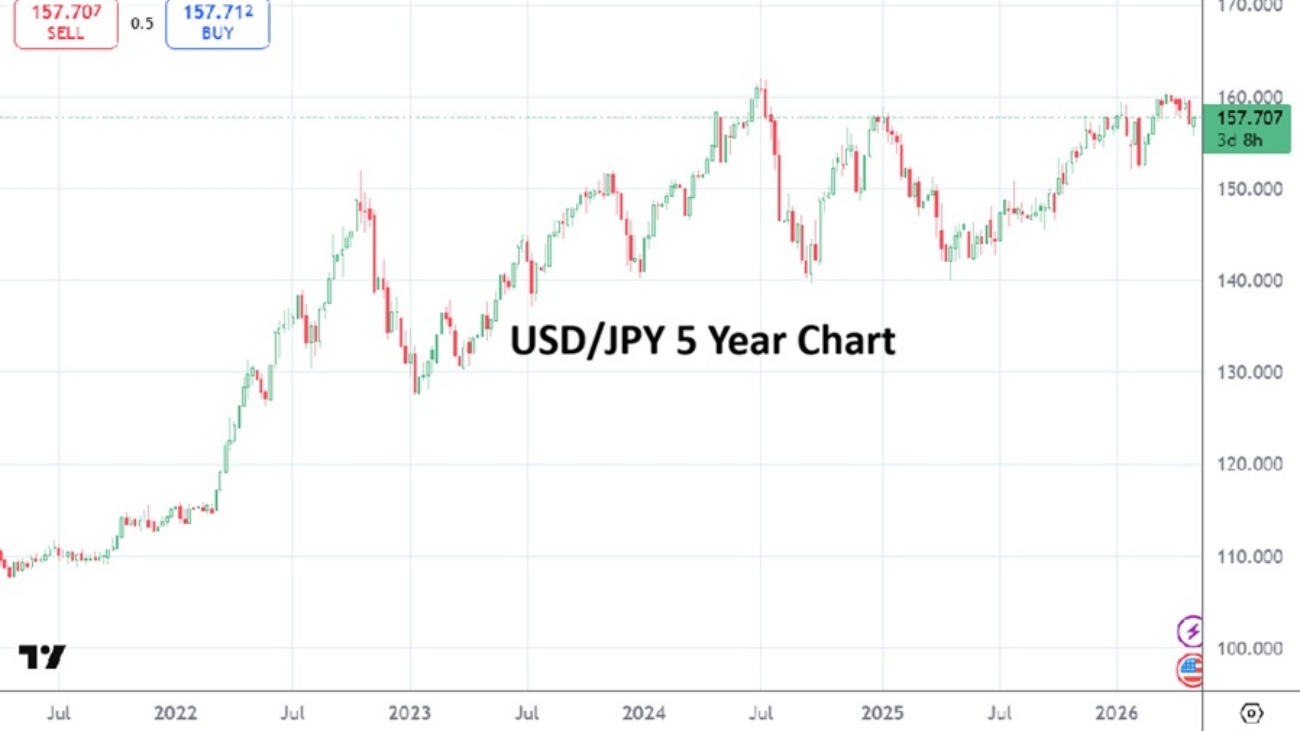
6. Greenback: USD/JPY 159.240, EUR/USD 1.17225, USD/ZAR 16.38540, USD/INR 93.0480. USD centric strength may prove solid this coming week and other currencies may suffer a bit.

5. Sideways Shimmer: Gold finished the week near $4.745.00, roughly $100.00 above its starting point last Monday. U.S 10-Y Treasury yields went into this weekend around 4.34%. Shifting outlooks this coming week will likely ignite turbulence in both assets.

4. Blind Eyes: More than a handful of U.S politicians have been featured as big winners regarding their stock trading abilities. Their gains far exceed the winning percentages of the overall returns made by indexes (as a benchmark). Little has been done to stop what many view as insider trading. There are many forms of political corruption around the world. However, a variety of places and people, including Americans seem to accept this potential misconduct. The ‘Stop Insider Trading Act’ has been brought forth in the House of Representatives and Senate, but the legislation may simply meet a slow death and disappear.

3. Inflation: U.S interest rates via the Federal Reserve will be held in check at a minimum over the next few months. The higher costs of energy will certainly seep into prices for transportation, manufacturing and agriculture. Fed Chairman Jerome Powell may be quite content to leave his position May the 15th. The next Fed FOMC interest rate decision is due on the 29th of April.

2. Strait of Hormuz: WTI Crude Oil closed above $90.00 going into this weekend. When futures markets open early on Monday, the price of the commodity is likely to rise via increased anxiousness which will build into the mindsets of large players today because of the failure of peace talks in Pakistan. The price of Crude Oil remained high last week, only moving to a low of around $85.00 this past Tuesday, showing cautious attitudes remained. Prices above $100.00 will likely become a new target quickly for some who bet. Will an early spike upwards this week then start a counter reversal lower, or will a climb become sustained?

1.  Risk Off: The S&P 500 and Nasdaq 100 will get plenty of attention this coming week as behavioral sentiment remains fragile. Having skirted near its 200-days moving average lows in recent weeks, the indices have gained handsomely since the 31st of March. Will the upwards momentum come to an abrupt end this week, or have financial institutions been able to digest their nervousness and will they show a capability of remaining buyers?

Copy and paste the text from AMT that you want to share

Gold 20260409

Intraday Blues as Trading Conditions Remain Perilous

Red Flags Persists for Day Traders and Hedge Funds as More Wild Surf Predicted

Risk on or risk off? Day traders and hedge funds, two groups who are known to speculate, have both suffered considerably the past handful of weeks due to the market turbulence. While falls of 4 to 5% the past handful of weeks for long-term investors can be digested with proper patience and accumulation ability, those who are using leverage or making monster sized bets on intraday speculation continue to suffer from widespread anxiousness within the marketplace.

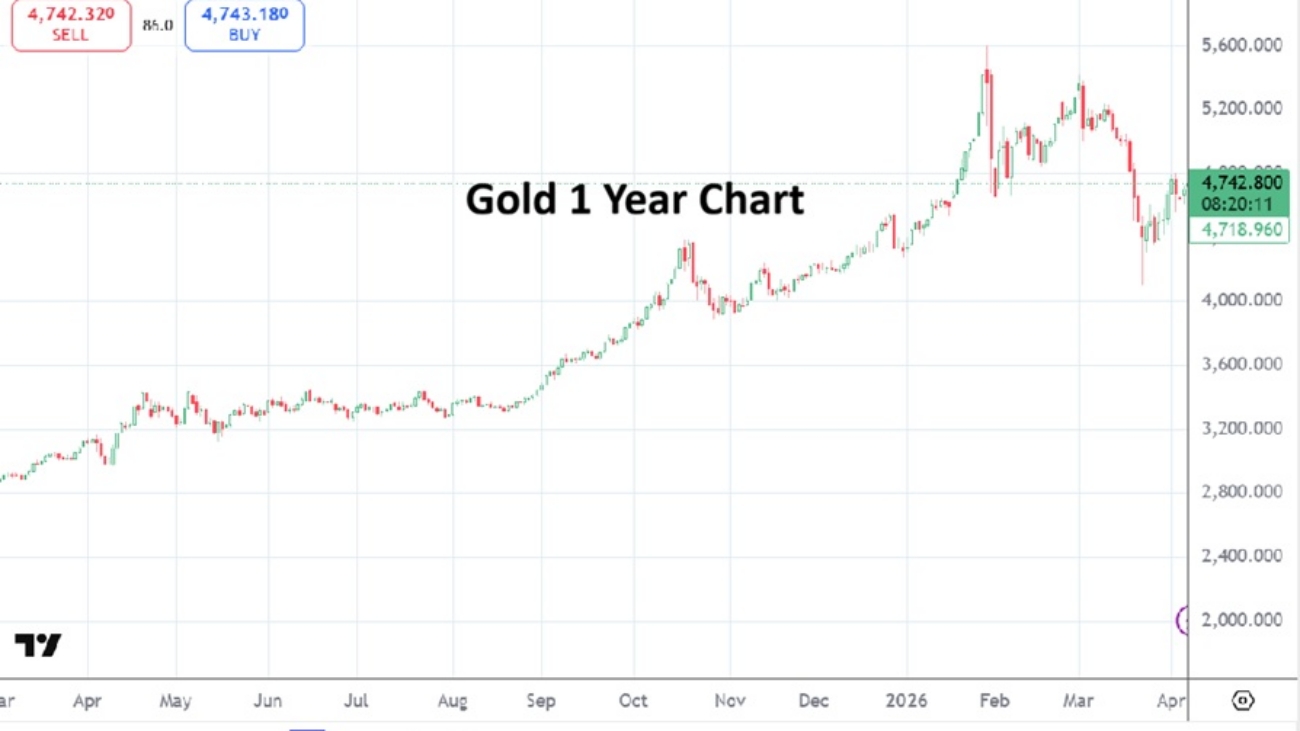
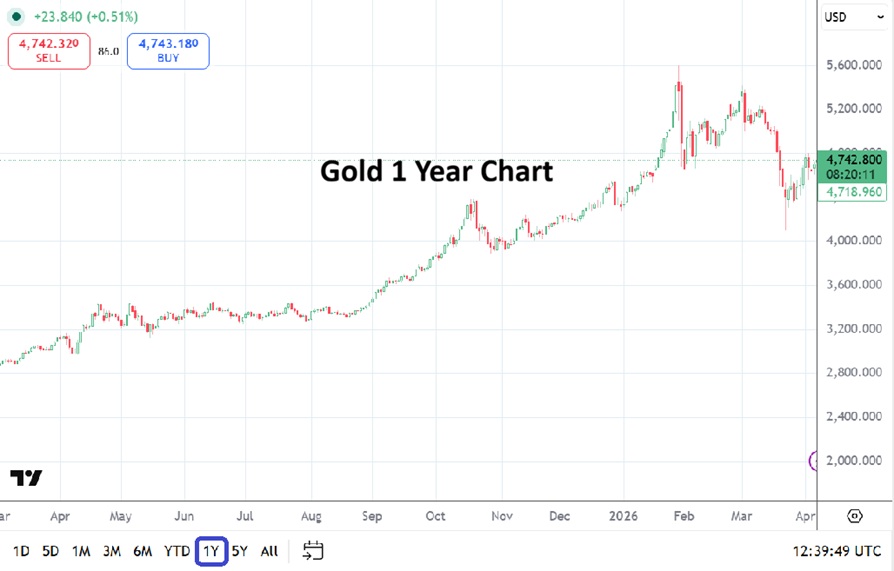
Gold One Year Chart as of 9th March 2026

WTI Crude Oil should have gone back down below $80.000 in many folks thinking – and they may have bet on this strike price via options –  due to ideas of an Iranian ceasefire, but the target has not been met. WTI did in fact challenge $88.000 early this week, but it is back around $93.000.

With the weekend quickly approaching and concerns about what will happen when the marketplace is largely shuttered, March mayhem has opened the door for April surprises. Gold is near $4,737.00, and this price remains mildly upsetting for many who believed it would act as a safe haven asset that would gain during the war, but hasn’t responded with buying fever. Gold was near $5,180.00 on the 27th of February. But in fact gold has performed rather well considering it was riding a long-term speculative buying spree and its current price still remains well above where is was last year around this time near $2920.00.

The point? The markets still exists and can still be bet on. The parameters may have changed, but let’s recall at this time last year global investors were dealing with the potential of Trump tariffs which was an entirely other set of hypersonic conditions caused by noise. If you don’t like loud markets you can cover your ears. You can try to take advantage of them too, but day trading the marketplace via Forex, commodities and stock indices has always been gambling. Perhaps this is what you are looking for – price action.

Again, the global markets are not concerned with your feelings. If you want to cry, grab a tissue and sit on the sidelines until the big show is over. However, know that the Iranian war is certain to have an encore from either a new round of potential fighting in the Middle East via stresses caused by the said openings/closings of the Hormuz Strait, or some other entirely new flashpoint elsewhere. 

The S&P 500 closed slightly below 6783.00 yesterday, last year the index was close to 5,745.00. Sometimes the best thing all traders and investors can do is take a deep breath and believe in better days.

Near-term price action will remain choppy. That is very easy to say and agree to, yet it tells you nothing. It doesn’t tell you what the markets are going to do today or tomorrow. And the reason for that is that intraday performance at this juncture is being driven by swiftly changing sentiment in which momentum is a swirling sea. Technical traders may claim they have a handle on the price skirmishes via their perceptions, but are likely suffering like everyone else as they try to surf the rather wild waves.

Copy and paste the text from AMT that you want to share

Universe 20260409

Foreign Exchange and Reading Through the Noise

Brief Clarity, Constantly Interrupted: What Does Copernicus Have To Do With FX?

This article was first published the 7th of April on LinkedIn by the author.

I have spent most of my professional life in foreign exchange markets – an environment that rewards the ability to read signal through noise. And yet the older I get, the more I find myself drawn to a question that no Reuters terminal can answer: why do intelligent, well-resourced people, working inside some of the most information-rich institutions ever created, still systematically misread reality?

I think the answer has less to do with the quality of our data, and more to do with the nature of our frameworks.

The Ptolemaic Trading Floor

In the sixteenth century, Copernicus did not discover new stars. He did not build a better telescope. He simply stood in a different place and looked at the same sky – and from that different vantage point, the complexity that had been accumulating for centuries suddenly resolved into something simpler and more true.

The philosopher Thomas Kuhn, writing about this in The Structure of Scientific Revolutions, made a point that has stayed with me. The Ptolemaic astronomers were not stupid. They were brilliant people doing extraordinarily sophisticated work, and their model of the universe – with its epicycles and equants – was genuinely good at predicting where the planets would be. By their own measures, they were succeeding. But the framework was self-sealing. Every anomaly became a problem to be patched rather than a signal that the whole edifice needed replacing. The epicycles kept accumulating.

I recognise that trading floor.

The VAR models, the correlation assumptions, the ratings frameworks that failed simultaneously in 2008 did not fail because the mathematics was wrong within the model. They failed because the model had pre-decided what reality looked like, and reality declined to cooperate. The framework had accumulated its own epicycles – its own patches and exceptions and special cases – and nobody had stood back to ask whether the whole structure still made sense.

This is what the economist Herbert Simon called bounded rationality – the idea that we make decisions within limits of information, time, and cognitive capacity. But I think there is a deeper form of boundedness that Simon’s original formulation didn’t fully capture. It is not just that we lack information within a given framework. It is that the framework itself determines what counts as information in the first place. The boundary is not cognitive – it is epistemological. The frame has pre-decided what reality looks like, and we optimize furiously within it, never suspecting there is anything outside.

This is framework-induced bounded rationality. And financial markets are one of its purest expressions.

The Filmiest of Screens

William James, writing in 1902, described something that has always struck me as one of the most quietly radical observations in the history of psychology:

“Our normal waking consciousness, rational consciousness as we call it, is but one special type of consciousness, whilst all about it, parted from it by the filmiest of screens, there lie potential forms of consciousness entirely different. We may go through life without suspecting their existence; but apply the requisite stimulus, and at a touch they are there in all their completeness.”

James was writing about mystical experience. But I think he was also describing something that every trader knows intuitively – that there are moments of genuine clarity, where the market’s structure becomes briefly, luminously obvious, and then the noise closes back in. Not constant confusion, but brief clarity, constantly interrupted.

What interrupts it? I think James gives us a clue, though the fuller answer comes from a tradition he was only beginning to encounter.

The Deluded Self and the Distracted Market

The Yogācāra school of Buddhist philosophy, developed in the fourth and fifth centuries, offers one of the most sophisticated maps of consciousness ever produced. It describes eight layers of awareness, from the basic sense consciousnesses up through something far more interesting – the seventh consciousness, called kliṣa-manas.

Kliṣṭa-manas is the layer of mind whose function is to construct and defend a sense of self. But the Yogācāra tradition makes a more precise and more troubling point than simply calling it deluded. By the time information reaches the seventh consciousness, it has already passed through the sense consciousnesses and the discriminating mind – each stage filtering, selecting, and coloring what gets through. The seventh consciousness is not distorting clean data. It is working with inputs that are already biased, and it has no way of knowing this. It constructs its picture of reality from pre-processed material, and then defends that picture as if it were direct perception. Try telling a QANON follower to get a vaccine jab.

The parallel to institutional behavior in markets is uncomfortable in its precision. Risk committees, house views, investment mandates – these are the kliṣṭa-manas of the trading floor. They exist, at least in part, to protect the institution’s sense of itself. The risk manager who cannot recommend a position that contradicts last quarter’s framework. The economist whose forecast must remain defensible to the committee. The trader who holds a losing position because admitting the loss means admitting the thesis was wrong. These are not failures of analysis. They are the seventh consciousness doing exactly what it was built to do.

And into this environment, the attention economy arrives as accelerant. Social media does not simply distract – it feeds kliṣṭa-manas directly. Likes, outrage, identity, tribal affiliation – all of it strengthens the self-constructing layer and weakens the capacity for clear perception. The signal-to-noise ratio in markets was already difficult. We have now built an entire industrial infrastructure for generating noise that feels like signal, because it flatters the self that is doing the perceiving.

Standing in a Different Place

The Yogācāra tradition does not stop at the seventh consciousness. Beneath it lies the ālaya-vijñāna — the storehouse awareness, a kind of ground-level consciousness before the self-construction begins. It is not a mystical concept, or not only that. It is a description of what perception might be like before the defending ego has finished processing it.

The best risk-takers I have encountered in markets seem to access something like this, in their better moments. A capacity to see the position as it actually is, without the framework that produced it colouring the perception. To hold a view lightly enough to abandon it when the evidence changes. Copernicus looking at the same sky and seeing something different – not because he had more data, but because he had momentarily freed himself from the inherited frame.

James was right that these states are parted from ordinary consciousness by the filmiest of screens. The Eastern traditions – Buddhist and Vedantic – have spent two and a half millennia developing systematic methods for thinning that screen. Western psychology, for all its extraordinary achievements, has been slower to take this seriously, often treating consciousness itself as a problem that better neuroscience will eventually dissolve. It may be that, in this respect, we are in the position of the medieval scholars encountering Arabic science – not lacking intelligence, but working within a framework that makes certain questions difficult to even formulate.

What This Has To Do With FX

Markets are reflexive. The moment enough participants adopt the same model, the model changes the thing it was measuring. The framework that produced clarity attracts capital, the capital erodes the edge, and you need a new framework. Brief clarity, constantly interrupted – not as a pathology, but as the structural condition of the thing itself.

The question is not how to achieve permanent clarity, which is probably neither possible nor desirable. The question is whether we can develop the capacity to notice when we are inside a framework rather than seeing through it – to feel the epicycles accumulating before the model breaks.

That capacity, I suspect, is less a matter of better data or faster processing, and more a matter of the quality of attention we bring to the screen. Which means the most important professional development available to a markets practitioner might not be in a CFA curriculum.

I am aware of the irony of writing this on LinkedIn, which is itself a highly effective delivery mechanism for kliṣṭa-manas. The seventh consciousness is nothing if not adaptive.

Note: The author works in foreign exchange markets and thinks too much.

Copy and paste the text from AMT that you want to share

South African Rand 20260327

G7 Snub for South Africa and other Troubles for the South African Rand

USD Centric Strength and Global Anxiety Weighing on Value of Rand

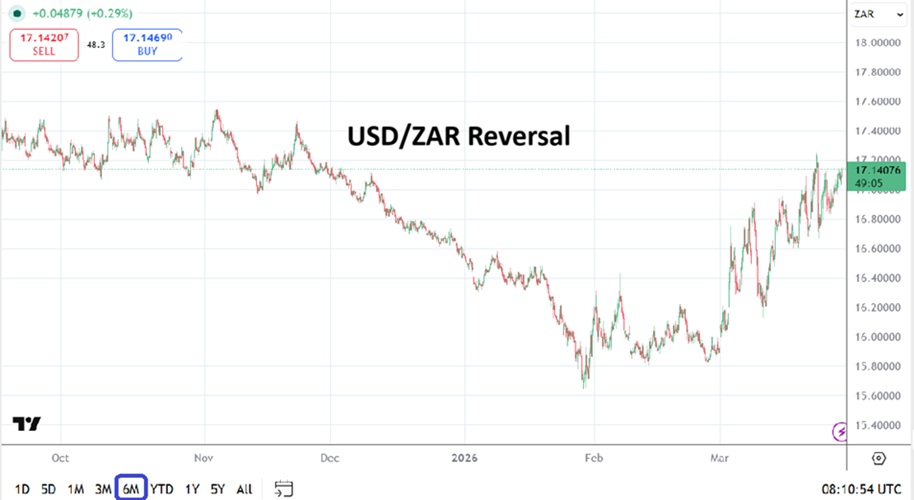
The USD/ZAR is still above 17.00000 in early trading this morning, this as USD centric strength manifests globally due to anxiety which clearly exudes because of the ongoing Iranian war. The USD/ZAR is near the 17.11000 realm, with wide spreads via bids and asks.

The price of Gold is close to $4,450.00 and Palladium is around $1,395.00 – this after touching apex marks in late January when the $2,100.00 level was breached.

USDZAR Six Month Chart as of 27th March 2026

These metals are important for South Africa, but their daily values do not effect the USD/ZAR like they did in the past because of other complexities. The USD/ZAR which had enjoyed a stellar bearish trend and touched lows of 15.68000, late in January, could be correlated to the decrease in value to the precious metals by some, but this is likely false narrative.

When the larger picture of pure behavioral sentiment within the Forex broad market is looked upon other factors are a certainty. The South African Rand, in a rather healthy manner, is largely dependent on financial institutions outlooks regarding the USD, 10-Year U.S Treasury yields, and what the U.S Federal Reserve outlook projects.

The U.S central bank, which many people including myself, was thought to be in position in which the Federal Funds Rate would be lowered in the coming months, now faces complications due to what may become chronic higher energy costs through the mid-term if the war in the Middle East persists and inflation due to logistics, manufacturing and agriculture are effected.

The USD/ZAR near the 17.0000 is a good barometer of South African financial institutional attitudes. Yesterday’s news that South Africa will be excluded from the G7 meetings in France, which will be held in June, will not make folks in South African financial spheres content. However, these same people within the machines of corporate finance in South Africa have grown used to the vagaries of mismanagement, corruption and perceptions these cause for the nation. While some South African government officials initially said France had been pressured by the U.S to disinvite South Africa from the G7 summit, they have changed their tune this morning and are trying to downplay the exclusion as insignificant.

Thus, we return back to the USD/ZAR and near-term considerations. While the currency pair has shown the tendency to reverse lower when marks above 17.10000 have been challenged the past few weeks in March, this morning’s early trading which is sustaining higher values is troubling. The consideration that nervousness among global investors remains skittish at best is unsettling. Those who are making short and near-term wagers on the USD/ZAR are likely concerning themselves with the upcoming weekend and its unknowns. From a trading perspective, folks are usually cautious about taking speculative positions over the weekend when they fear there is a possibility of bad news.

The USD/ZAR is touching important resistance above, if calm doesn’t return to the broad markets across various international assets today, the currency pair may find itself testing higher realms as next week begins.

Looking for downside in the USD/ZAR may prove difficult to attain later today. Traders should keep their eyes on other gauges and watch the U.S 10-Year Treasury yields which are near 4.45% (highs that haven’t been seen since July of 2025), WTI Crude Oil prices and the major U.S equity indices which are in correction territories.

From a betting perspective, if U.S 10-Year yields escalate and the price of energy ebbs upwards today in commodity markets, and there is more trouble on the Nasdaq 100 and S&P 500, this will be problematic. The USD has been volatile, but has certainly shown a tendency to get stronger in recent weeks. A higher USD/ZAR above the 17.20000 is not out of the question.

Copy and paste the text from AMT that you want to share

postN50

Clear Betting Environment Is a Winning Proposition for Brokers, Not Day Traders

Things Unlikely To Get Easier for Retail Speculators Remainder of Week

I would like to offer day traders encouragement under the current market circumstances. However, the reality is that the next handful of days will remain difficult for retail traders who do not have comfortable amounts of cash to absorb when intraday chaos occurs. On the other hand as an ex-risk manager for a brokerage house, I can state that CFD providers are singing joyfully because they are making profits from the wild fluctuations in equity indices, Forex and commodities.

Gasoline and Burning Cash Continues

A case in point are the results via the future markets, this via CFD offerings by brokers’ platforms yesterday for the S&P 500 and Nasdaq 100. Early nervousness saw an electric amount of selling get demonstrated and then suddenly a reversal higher, this as President Trump caused a thunderous optimistic reaction as he spoke about the potential of a deal with Iran in the coming days. The dose of optimistic risk taking lasted a couple of hours.

Not only did U.S equity indices bolt higher, but WTI Crude Oil prices slid lower, and Forex suddenly saw the USD losing strength. Here’s the thing, some day traders certainly made money as waves of momentum carried their wagers into positive terrain, but many speculators were likely knocked out of the their trades with sudden loses. CFD trading using leverage has always been a casino, this is not going to change. But the volatility seen the past three weeks has likely not created great wealth for retail traders. Some have gained certainly, but I can guarantee you brokers are making more money via the intraday swings and volatility that knock smaller traders out, this as leverage causes fluctuations that expose too much risk and cause folks to lose money.

Again, this is the nature of the beast. Day traders wanting to participate in the markets have to acknowledge the risks that will confront them. It is a warning worth noting once again as a war rages in the Middle East. 

Markets in the best of times are difficult. Risk management is constantly needed. While the thrill of trading is fantastic, without solid tactics speculating equates into gambling. Think of brokers as bookies, they gear the market via wide spreads, transaction fees including overnight charges to favor themselves. Brokers are certainly glad to pay out winners so others are enticed and bring more business, but strategic day traders who use well practiced methodology are watched closely by brokers – because these folks (good traders who are careful) are a threat for brokers bottom lines – profits are king.

Trading and fundamental notions are proving dangerous too during these loud times. Gold for instance which was trading at all-time highs in January (along with silver – but that is another speculative story) is now traversing near $4,425.00. The precious metal was testing the $5,600.00 vicinity in late January. So how did this long heralded safe haven metal actually see a selloff become stronger since the start of the Iranian war when it was around $5,200.00 on the 27th of February?

IMO, it shows that speculative fervor in gold was fever pitched in January, and even though a war has broken out and caused widespread anxiety in the broad markets (which in theory is supposed to make gold more valuable), the volatile nature of wagering – yes gambling – on the markets including gold, often is a crapshoot. Folks who bought gold as a speculative endeavor have now cashed out their profits, those who believe gold is a safe haven and are buying based on this belief will need another round of speculative fuel to induce significant gains like those made in January. The market sometimes runs out of participants when things get too cautious. In other words, if there are not enough buyers, selling momentum takes over.

And to put a finishing touch on this piece, let there be no doubt that brokers were likely relieved that the one way avenue upwards for gold (and silver) seen into January has now turned into a volatile betting battle. The point here, if I am able to make one is this, market conditions are rough and will remain extreme in the coming days. Folks need to be cautious, the markets are not your friend, they are a tool for making money (or losing it).

Copy and paste the text from AMT that you want to share

post229

EUR/USD: Volatility is Visiting Again upon the Trump Effect

EUR/USD: Volatility is Visiting Again upon the Trump Effect

EUR/USD One Month Chart as of 3rd of March 2025

The EUR/USD bounced slightly higher in early trading this morning, this after Friday’s burst lower when nervousness was ignited by the loud outcome (and lack of a resolution) via the Zelensky and Trump meeting. However, after achieving some buying impetus to start today, the EUR/USD is running into nervous headwinds as concerns remain evident.

This Thursday the ECB is expected to cut another 0.25 from its Main Refinancing Rate. The difference between borrowing rates from the ECB and Fed will be significant if the ECB does lower costs. E.U economic data warrants the dovish policy, while concerns about stubborn U.S inflation persists. And President Trump will have something to say about the Federal Reserve’s policy too. Trump wants the Fed to lower the Federal Funds Rate.

The U.S will issue its Non-Farm Employment Change numbers this Friday. And many Fed members will be speaking at various engagements this coming Thursday and Friday which is certain to get attention. Financial institutions will certainly be listening for clues regarding the potential of shifting viewpoints regarding the Fed’s current stance which is cautious from FOMC officials.

Which brings us back to the current value of the EUR/USD and behavioral sentiment which is being generated by a deep sea which is not clear. The EUR/USD into early last week was showing signs of bullishness, this as folks piled into the notion the currency pair was in oversold territory. The ability of the EUR/USD to remain above 1.04000 today should be watched. While there has been upside early this morning, European traders and full market action will begin to kick off in about one hour.

Day traders need to know the potential rate cut cut from the ECB this coming Thursday has been anticipated and factored into the EUR/USD already. Leaving the currency pair ready to be influenced by USD centric perspectives, and Ukraine concerns which are unresolved. The U.S equity indices should be watched too via their less than inspiring results the past week. While many financial institutions believe the EUR/USD should be valued higher, this may be based on instinctive bias instead of fundamental reasons.

Economists are great for insights, but it is skittish sentiment which is driving the markets. Volatility is likely and the price range of the EUR/USD could prove tactically challenging and wide. If cautious attitudes in financial institutions create calm, the EUR/USD could produce durable support levels, which could be used for upside wagers. Speculators will have opportunities in the currency pair this week, but risk management will be essential to protect against sudden gusts caused by swirling Trump rhetoric.

postN17

AMT Warning: Many Brokers Do Not Care if you Lose your Money

AMT Warning: Many Brokers Do Not Care if you Lose your Money

Sounds like the title has been written wrong doesn’t it? Reads as if the editor clearly doesn’t understand the nature of the financial markets and how they work. Certainly anyone who offers their services to you would like to see you make money, or so you would like to think if you are an idealist who remains innocent and trusts all people.

Unfortunately, the title of this artcle which has lured you into reading this WARNING is not wrong. It has been written as cautionary advice for new and even experienced speculators. Many of the ‘financial’ websites and people you are considering to engage with via their day trading platforms and ‘expert’ systems are not worthy. Many do not care if you make money and some in fact are planning on ripping you off.

Blackjack Betting and Sitting at the Table with Too Much Leverage

Volatility is in the eye of the beholder, brokers like when day traders without deep pockets use leverage, because they expect their ‘clients’ to get wiped out. Yes, brokers are not your friends in many cases, in fact they are rooting against you in the back rooms of their trading operations. Why? Because they are not actually putting your trade into the cash markets, they are allowing you to trade virtuallly. Think of it as entering a casino.

The casino wants you to bet outrageous sums of money, because they know statistically most gamblers will lose. Again, you have been warned. Your use of leverage is music to the ears of your broker, because they know the volatility of the market will knock you out of a trade if your margin trading is too high and the slightest of technical reversals will produce a losing position for you. Then they will ask you if you want to make another wager. You can continue to sit at the ‘blackjack’ table or walk away.

Learn To Trade Without Getting Ripped Off

The first thing you might want to ask and acknowledge when you begin to trade is how much money can be lost? The answer is all of your money. If the answer being given to you is that there is minimal risk and that you are guaranteed profits – immediately close the website you are looking at and find another. Guaranteed profits equates into assured losses for unsophisticated traders most of the time.

If you are speaking to someone on the phone and the person keeps asking you how much money you want to make, please hang up the phone and speak to someone else. Self proclaimed gurus should be shunned. As someone once said, people tend to use the word guru, because the word charlatan takes too long to spell.

Yes, even in the most reputable and best of companies who provide trading platforms, you are going to lose money sometimes. The art of speculating and successsful trading is a delicate balance between losing money and making money. It is probable if you are a new trader, that unfortunately you are going to lose money and you will become uncomfortable. Sure you could get lucky or be a prodigy who is supremely talented, but you should understand many folks lose money in the beginning. There is a learning curve for day traders and you need good teachers. You also need a calm emotional state of mind.

Finding a Pro to Trade for You

You might want to consider letting someone that you trust and who has a proven track record with verifiable clients you can authenticate to invest your money. However to have a pro trade for you, the amount of money as a minimum you will need for them to consider trading your cash is likely sizeable. It doesn’t seem like a fair question from a social perspective, but are you wealthy enough to allow someone to trade for you?

If you find a person that is reputable to trade for you, make sure they have explained their modus operandi and you agree with their outline. In other words have them discuss their plan of attack and how they perceive complexities within the markets. What sectors do they invest in, what is the break down via percentages regarding the amounts of money they put into various financial assets? Asking questions may seem a bit impolite, but reputable fund managers and family offices should not get flustered by your questions, and they should have answers that are easy to understand. Do not let them talk over your head with fancy words and equations. Clear and concise language is necessary.

You shoud ask how often they rebalance their portfolios and if they issue a quartertly report. Importantly, ask for an example of transparent accounting which shows transaction fees that will be charged in full, including services they are charged by other financial providers within your account. Commission and banking fees can add up quickly. And then ask the magic question regarding drawdowns, and what are the allowable losses in a trade and in an account that can happen before they have to stop trading. You should get clear explanations regarding all of your inquiries.

But You Likely Still Want to Trade for Yourself

If your emotions do not let you take into consideration that there are going to be negative days, perhaps declines for weeks and bad months – simply put, trading isn’t for you. Learning to handle your money and investing should not be a speculative adventure, this is not about having fun. Oh you will certainly experience thrills, but you should try your best to limit crises. Risk management is a way to curb the elements of gambling which every day trader is undertaking.

Will you become a professional investor? What is a professional investor? Nothing like semantics and flattery to get the juices of a prospective investor going. Do not be fooled by flattery. Do not be fooled by the fact that you have a degree. There are folks who do not have high school graduation certificates looking to take advantage of you, some of them are great traders and will eat you alive. Education at the best of colleges or universities is no guarantee you will become a good trader. There is a difference between paper trading and having skin in the game.

The marketplace is waiting for you to enter and anticipates taking your money. Brokers are trying to get you to come to their trading platforms because they want to make money from your transactions and wagers if they are not reputable. These brokers actually do not believe you will make money. Until you prove you know what you are doing you will be treated like a ‘mark’. When you do prove you know what you are doing you will be treated differently in more ways than one, and it might prove difficult to withdraw your winnings.

Trust is Important, but Facts and Regulations Help

You must deal with people and companies you trust. Make sure to do a deep examination of the folks you are about to forge a trading association. Trading virtually via digitalized CFD and Forex houses that are not regulated can lead to financial disaster. And ask where your broker is regulated, and then check on the mandates of the entity and government which has written the rules for brokers – are they legitimate supervisors and who do the regulations favor? There is a lot of work involved before you trade, you must practice due diligence.

AngryMetaTraders wants you to understand the game of trading. We talk about sports often because the world of trading can be closely compared. If you are good and lucky, perhaps the world of investing awaits your success. If you suffer a learning curve like many, you can compare yourself to an athlete that must train to beat the best. You will need patience and dedication. Surround yourself with reputable firms and people to asssociate your speculative endeavors with in order to get solid results long-term.

post20

USDINR: 83/$ & Above is a Possibility

USDINR: 83/$ & Above is a Possibility

The Indian Rupee continues to remain under pressure as volatility in the global market triggers capital outflows amid investors concerns over the stress levels in banks worldwide especially in the U.S and in Europe.

RBI Governor Das yesterday, said in a conference that India today has a well regulated and well supervised banking sector.

Not to forget, India has past issues with some private banks that have been lending to corporations that defaulted on their debt . Yes Bank and Lakshmi Villas Bank are some of these examples, and today these banks are well capitalized and their loan books are diversified as the RBI has tightened its grip on regulatory frameworks.

Also, the loan books of Indian banks are being more diversified, and Government Bonds portfolios are comprising only 18-22% of the total assets, meaning banks are not at greater risk than their western counterparts.

The central bank of India holds Forex reserves of over $560 billion USD and has been actively intervening in the Spot & Forward markets since 2022 as the U.S Federal Reserve started to raise rates to tackle higher inflation. Governor Das also cautioned, ”the worst of inflation is behind us,” but pointed out that with the Russia – Ukrainian war, along with monetary tightening by major central banks, that there is still stress for nations that have high external debt and more capital outflows, which can put pressure on their currencies and trigger imported inflation.

India also has sticker inflation of around 6.4% down from 6.52% in January, this while the RBI is expected to raise rates by 25 bps in the April monetary policy meeting . The Indian Rupee was among the worst-performing currencies among emerging Asian peers last year, counter weighed by a stronger dollar and outflows from local assets. 

As a net importer of oil from Russia which grew 4 times in 2022, and less exposure to external debt means headwinds from shocks will be minimal which will help the Indian Rupee. However, as growth slows down in the West, this means more capital outflows and a flight to safer assets possibly taking place.

The RBI stance is very different than a month ago, where it didn’t allow markets to take the Indian Rupee above 83/$, but now it’s significant that the central bank could let to the USD/INR depreciate above 83 to save foreign exchange reserves.

The RBI’s equation is very simple as the Federal Reserve reduced its rates to zero back in 2020 because of Covid19, more money chased speculative assets especially in the emerging markets. And the RBI accumulated a lot of Forex reserves. Now the tables have changed. In addition to this, India also is not keen to add its bonds to global indexes due to concerns over potential ensuing market volatility not supporting capital inflows, and thus perhaps damaging the Rupee.

With current account deficits widening to 4.4% of India GDP in Q2, this means India needs to work hard to achieve better capital flows, particularly as tensions on some important global banks continue to be demonstrated.

post17

Angry Voters and the Federal Reserve

Angry Voters and the Federal Reserve

Federal Reserve Chairman Jerome Powell is scheduled to testify before the U.S Senate tomorrow. Certainly we are going to hear the words inflation and growth mentioned, this as the Fed Chairman speaks about monetary policy and the trajectory for the U.S central bank to continue raising interest rates over the mid-term.

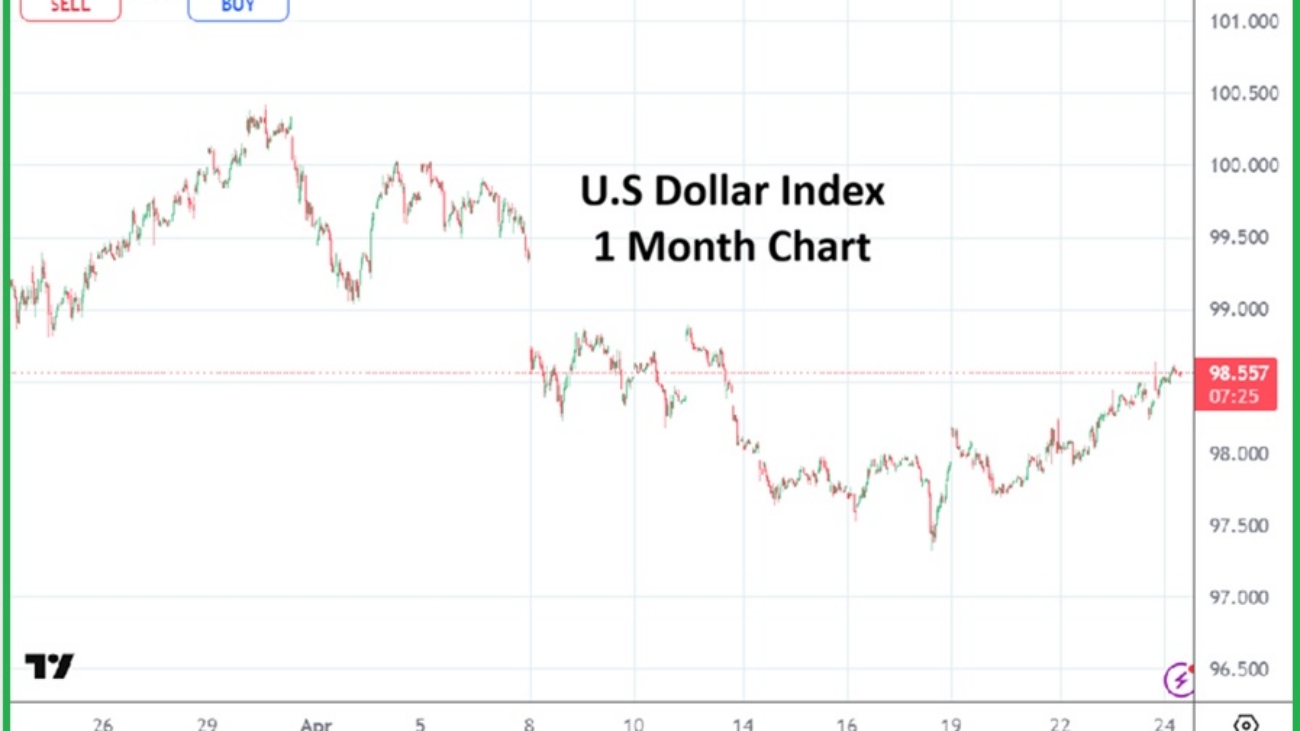
Via prices in the Forex market since the start of February, financial houses have likely priced in two additional interest rate hikes from the U.S central bank into the USD, one of them being a quarter of a point increase coming on the 22nd of March. The USD has been mostly stronger across the board the past four weeks. This week’s coming Non-Farm Employment Change numbers and Average Hourly Earnings data results should be monitored on Friday.

USD Index One Month Chart

While financial houses may have accepted the interest rates to come, this doesn’t change the rather complex economic data in the U.S which is demonstrating rather stubborn inflation, while also showing growth is not slowing down as much as has been anticipated. GDP numbers reported recently from the States showed only a slight decrease.

  • How much more can the U.S Federal Reserve increase interest rates over the next six months without making the USD too strong?

  • At what point will the Fed become less aggressive?

  • While an additional .50% has been ‘accepted’ by financial institutions, will the Fed bring the lending rate to 5.50%?

  • High inflation and limited growth could result in political quicksand for many elected officials.

The U.S Federal Reserve is going to get pressure from both sides of the aisle in Washington D.C.. Traders should not discount their perceptions that elected officials are starting to consider the ramifications of the coming elections in a year and half, because this will affect behavioral sentiment in the markets. Neither Democrats or Republicans will be happy if inflation remains a problem going into the vote. Rising costs equal less money in the bank accounts of American voters.

The U.S public has a history of voting via sentiment generated from their wallets and the power to consume. Prices that feel like they are out of control will win no friends. While energy prices seem to have calmed down in the headlines, energy costs remain a risk and concern for manufacturers worldwide. The inability to save money for individuals, and lack of profits for corporations makes for potentially angry voting results.

There is an additional problem lurking. The strong USD driven by the Federal Reserve’s increased borrowing costs, the Federal Funds Rate, has weakened currencies across the world. Vulnerable currencies have spurred inflation in many nations which are producers of goods that global consumers buy, these rising prices are being imported into the U.S economy.

As much as international economic integration helps the world, the rise of coronavirus and its knock-on affects via costs were not anticipated enough, causing weaknesses to be exposed. The U.S attempted to save its skin economically by creating a massive amount of stimulus, which certainly fueled domestic inflation. The U.S might have saved the American public in the short-term, but the government faces a long climb upwards to fix the problems overspending has caused.

The rising costs of logistics and the spotty supply of commodities internationally generated higher prices in the aftermath of coronavirus. Commodity prices have become more tranquil, but the costs of production has not eased because weaker currencies globally are hurting producers who need to use the USD to purchase resources. The U.S Federal Reserve’s attempt to tackle inflation with higher interest rates, has fueled ‘import’ inflation. This is not an easy problem to solve.

The Fed will not say in public they want the U.S economy to slow down, this acknowledgement would costs jobs which rely on political backing. The White House certainly doesn’t want the economy to suffer as it prepares for an election within a year and a half, but quietly officials likely accept slower growth and perhaps recession may become inevitable. Both the Fed and elected officials are performing a delicate dance that may be interrupted any moment.

The Fed doesn’t want us to remember they said inflation would prove transitory almost two years ago. The Fed needs to fight rising costs certainly, but very carefully. The desire to weaken inflation is correct but a dangerous balancing act, because the USD remains the global reserve currency.