post302

India Insider: Pharma and Earning Trust Thru Accountability

India Insider: Pharma and Earning Trust Thru Accountability

The pharmaceutical industry in India is a global powerhouse, often touted as “best in class.” Nearly 32% of India’s pharma exports go to the United States, and India’s products are renowned for their quality and affordability. Giants like Sun Pharma, Cipla, Dr. Reddy’s and Mankind Pharma cater to millions worldwide. Mankind Pharma, in particular, is celebrated for selling affordable essential medicines, ensuring access for lower-income communities.
The Opposite Side: A Fatal Flaw

Yet, within India, the same country with world class technology and research, exists a grim paradox: sub-standard drugs that have caused devastating human loss.

This is not a new problem. In 2022, toxic cough syrups made by two Indian companies were linked to the deaths of 70 children in The Gambia and 19 in Uzbekistan. According to the World Health Organization (WHO), the products contained excess levels of diethylene glycol (DEG).

A Killer Drug: New Tragedy 2025

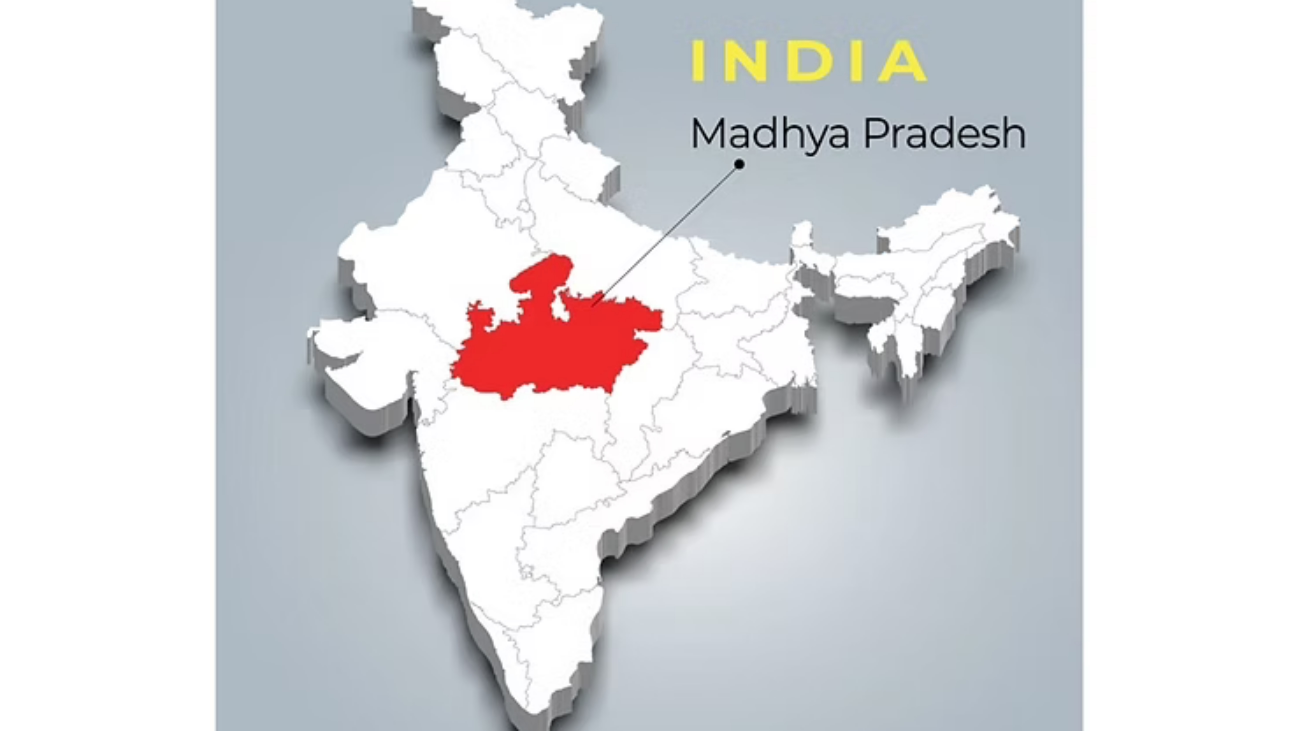
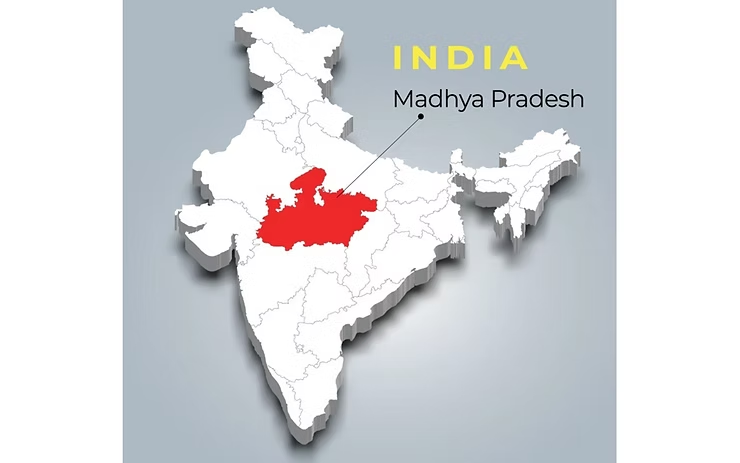
The contamination has now hit home with horrifying consequences quite recently. As Frontline magazine detailed, in the Madhya Pradesh State, Rajesh Yaduvansi’s two-year-old daughter, Jayesha, was admitted to a local clinic on September 14th for pain and fever. After temporary relief, her condition worsened. By September 25th, doctors revealed her kidneys had stopped functioning. She was rushed to Nagpur, but tragically died on October 7th from acute kidney failure.

Jayesha was one of at least 24 children who has died since early September across Madhya Pradesh, mostly from Chhindwara and nearby tribal districts. Three more patients remain in critical condition. Most victims came from poor and tribal families. They are the victims of a lethal lapse in quality control.

The culprit was the toxic industrial solvent, diethylene glycol (DEG), which causes kidney failure when ingested. The contaminated cough syrup, Coldrif, was manufactured by Tamil Nadu State based Sresan Pharmaceutical.

Following the cough syrup deaths, authorities formed an SIT (Special Investigation Team) and raided the manufacturer, Sresan Pharmaceutical, near Chennai. The company’s owner, Ranganathan Govindan, has been arrested, and several Madhya Pradesh drug officials have been suspended or transferred.

The Solvent Issue: Cutting Corners

Cough syrups typically use propylene glycol as a solvent. This ingredient exists in two grades: industrial and pharmaceutical. The industrial version, which is cheaper, can contain dangerously high levels of DEG.

When manufacturers prioritize cost cutting and fail to ensure pharmaceutical grade purity, tragedy follows. This is a profit driven decision that ignores human life and can produce fatalities.

Regulatory Failures and Neglect

India aims to reach developed nation status economy by 2047, but this ambition will ring hollow if it neglects its own people.

The drug control system is fractured. The Central Drugs Standard Control Organization (CDSCO) issues drug licenses, while State authorities are responsible for essential quality checks. In Madhya Pradesh, accountability rests with the Drug Controller and Food and Drug Administration.

The system is fundamentally broken. According to K.R. Ashokan, a former President of the Indian Medical Association (IMA), fewer than 1% of drugs are tested for quality or impurities. Indian citizens face massive risks which are often unreported. While a pharmacovigilance system exists, its national reach is minimal and desperately inadequate for a country of 1.4 billion people.

The Central Government health care expenditure remains under 2% of its GDP and this is far too little for a nation aspiring for global leadership in pharmaceutical research.

A Call for Accountability

This catastrophe has shaken parents’ trust in the medical system, especially among the most vulnerable communities. India has the potential to be a world-class player, but without strong, centralized regulation and comprehensive preventive care, such incidents will continue.

We cannot bring back the 24 children who died due to cough syrup poisoning. This tragedy must serve as a necessary wake-up call, because no parent should ever lose a child to medicines that are meant to heal again.

postN3.1

India Insider: Working with the West as it Deals with Others

India Insider: Working with the West as it Deals with Others

India’s Prime Minister Narendra Modi visited Tianjin, China for the 2025 Shanghai Cooperation Organization Summit in early September, which was attended by over twenty nations. Before India visited the conference in August, Washington D.C had already imposed a 50% punitive tariff on India’s exports. The initial tariff was a 25% duty, but included another 25% penalty because India purchases a large amount of Russian Oil, which the U.S seeks to reduce. An uneasy trade dilemma looms for India.

Many Western analysts quickly concluded that Prime Minister Modi was tilting India towards a stronger relationship with the Russian and Chinese camps, by potentially embracing warmer associations with Presidents Vladimir Putin and Xi Jinping, and defying Washington’s previous warnings.

Yet, the trade composition and the underlying reality highlights a different story. Despite India being positioned in the global South politically, the nation recognizes its higher value exports – which include textiles, gems and jewelry, apparel, and pharmaceuticals are primarily sold to the West. The United States clearly remains India’s biggest consumer. In essence President Trump holds a trump card.

In contrast, China’s total exports to the global South (excluding Western Europe, Australia, New Zealand, and North America) has doubled since 2015. Chinese exports to the U.S were $525 billion USD in 2024, but to the global South, China’s exports grew to nearly $1.3 trillion USD.

As Professor Michael Pettis accurately points out, “countries with expanding trade surpluses with the U.S, use their higher revenues to fund deficits with the rest of the world.”

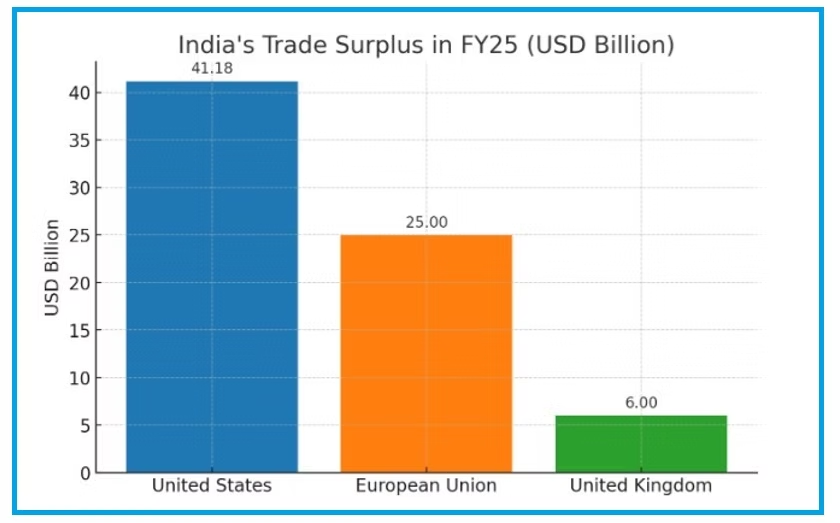
India Exports More to the West:

India’s trade surplus with United States, the European Union and U.K stands at $72.18 billion USD. If India wants to be competitive with China in terms of manufacturing, it should affiliate more astutely with the Western camp.

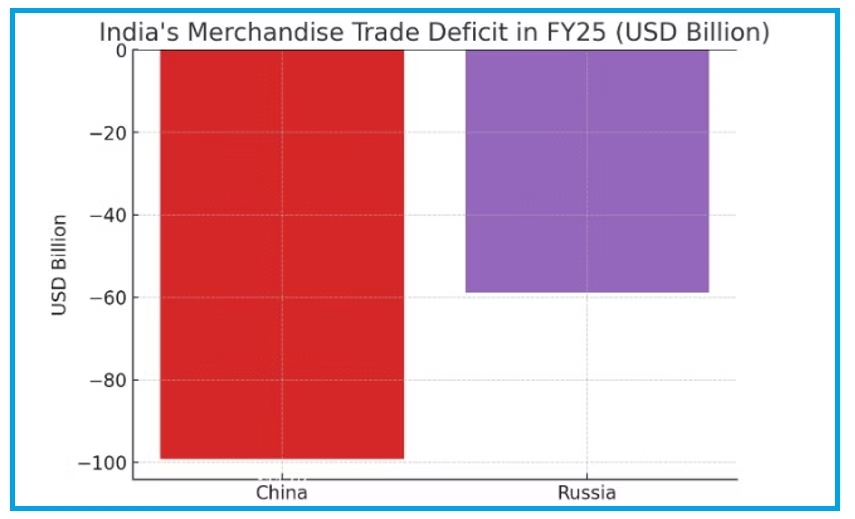
Dependence on Anti-Western Countries Hurts India’s Trade Balance:

India’s combined trade deficit with Russia and China is approximately $158 billion USD, which demonstrates how much less India exports to these two countries. India’s overall merchandise trade deficit is $282 billion USD, with a deficit of almost 56% in total attributed to Russia and China.

Service Exports a Crucial Metric in India’s Balance of Payments:

India’s services exports stood at $383 billion USD in financial year 2025, earned primarily from the U.S and other Western countries. Washington has imposed tariffs on India’s tradable goods sector, while the nation’s non-tradable sector has been operating without much stress.

India’s overall trade deficit stood at minus $94.26 billion USD in financial year 2025. Without service exports (predominately from the software services sector), India’s current account deficit would be much larger and the Indian Rupee would face greater depreciation pressures.

India’s economic stability is precarious, equilibrium needs to be found. Solid domestic outcomes for manufacturing and a stable Rupee, including exchange rates, could be achieved with a well-defined calibration that looks West but does not weaken India’s stance as a non-aligned nation. New Delhi should focus on maintaining neutrality and strategic autonomy.

While India may shake hands with Presidents Vladimir Putin and Xi Jinping, an important economic lifeline runs firmly through Washington, Brussels, and London. Crucial negotiations are said to be taking place between Prime Minister Narendra Modi’s team and President Trump’s White House behind closed doors. New Delhi could become vulnerable if it does not find adequate solutions. President Trump has recently reiterated his friendship with the Prime Minister Modi, perhaps an agreement can be produced in the mid-term.

post274

India Insider: K-Shaped Economy via Growth and Inequality

India Insider: K-Shaped Economy via Growth and Inequality

ndia’s growth story remains inspiring, supported by the National Democratic Alliance (NDA) government’s policies that attract foreign capital into infrastructure projects. The last decade has seen improvements in railways, ports, bridges and highways. In Financial Year 2025 (1st April 2024 to 31st March 2025), gross Foreign Direct Investment inflows reached USD 81.04 billion, a 14% rise from the previous year, reflecting global investor confidence under the China+ strategy. However, net FDI shrank to just USD 353 million, its lowest on record, as significant divestments and profit repatriations offset the inflows.

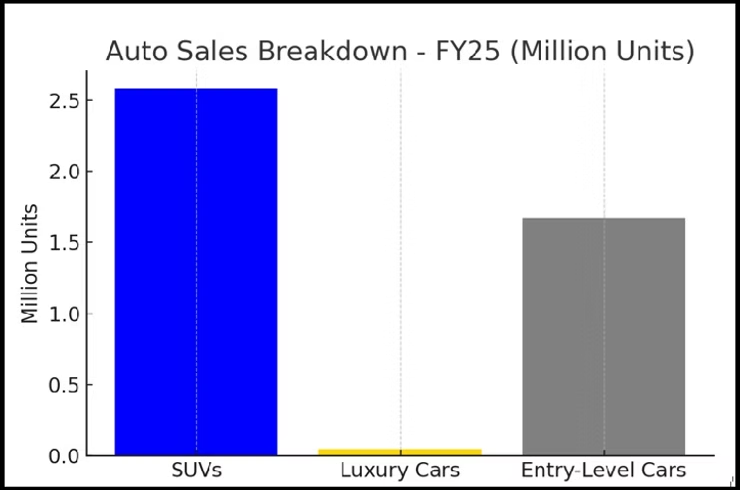
Auto Sales in India from 1st of April 2024 to the 31st of March 2025

India’s stock market has rallied recently, driven by strong corporate performance despite tariff-related jitters. Corporate capital expenditures by listed non-financial companies rose over 20% year-on-year to exceed 11 lakh crore ($125 billion USD) in FY25, surpassing the government’s capital expenditures of 10.5 lakh crore ($120 billion USD). This signals robust investment by large firms.

In contrast, the unlisted corporate sector, contributing two-thirds of corporate value added and holding most corporate debt, remains weak with falling profits and tax payments. The divergence comes from the markets they serve: listed firms cater to higher-income households, while unlisted firms rely on low and middle income consumers, where progress and recovery is slower. Corporate tax receipts remain healthy, but are largely driven by listed firms. Collections in FY25 reached 12.72 lakh crore ($145 billion USD), while net direct tax collections climbed to 22.26 lakh crore ($254.97 billion USD).

Consumer trends mirror this imbalance. Passenger vehicle sales hit a record 4.3 million units, led by SUVs and luxury cars, while entry level cars and two-wheelers saw subdued demand. The aspirational middle class, especially tech professionals in their late 20s and 30s, drives premium demand, leaving the mass market segments of the population behind.

Nearly half of the nation’s workforce remains in low productivity sectors contributing only a fifth of national income. Wage growth is stagnant in several States. Micro, medium and small enterprises struggle with credit, policy bottlenecks, and institutional constraints. This is India’s K-shaped economy as large corporates and affluent consumers thrive, while smaller businesses and lower-income groups lag. India’s booming economy hasn’t delivered progress for all quite yet.

The country remains the fastest-growing major economy in the world, above 6%. A crucial question is whether this astonishing growth will create mass employment and better equality. Unfortunately, without updated consumer expenditures data since 2011–12 due to the lack of a recent census, policymakers rely on capital expenditure and earnings trends to gauge consumption patterns which deliver incomplete insights. The next census for India is scheduled to be conducted in 2027. More transparency is needed statistically to help alleviate the K-shaped results via the Indian economy.