Female Work Percents 20260605

India Insider: Growth Matters, Development Matters Even More

Participation of Women in the Workforce and Advancing Progress

There is more poverty in this world than many of us realize and would like to comprehend when confronted by the facts, and this is also true with India.

Recently, I visited several villages in Tiruvannamalai District in Tamil Nadu State on behalf of Angry Meta Traders to survey household capital formation, wage growth and labor market dynamics. To my astonishment, in many homes, people still use rice and palm oil purchased through ration shops. The important observation is their consumption basket appears narrow and heavily dependent on subsidized essentials. I saw simple aluminum utensils in kitchens, when higher income households often use silver-plated utensils. Things that many middle-class families consider normal like energy drinks, snacks, or packaged foods were often absent.

What struck me even more was the number of women managing families alone. In some households, the husbands had died due to excessive alcohol consumption. Children attended government schools and depended on nutritious meal schemes provided by the State.

Growing up, I have seen people wear torn uniforms in school because their family could not afford new uniform every year. Some did not wear shoes, and many students stood outside the class because the fees in private schools in India are several times higher than what government schools would charge and their families could not pay on time. Yet, through education and perseverance, many people have succeeded. 

However, the poverty I witnessed in Tiruvannamalai District is different. These observations reminded me of a study published in the Lancet Regional Health Center. Researchers followed 251 children in Vellore District (closer to Tiruvannamalai District) and found that poor children living in urban areas were often exposed to calorie-rich but nutrient poor food environments.

If such conditions exist in parts of Tamil Nadu State, one of India’s more developed states, then we should think carefully about the situation across the country.

Another Transformation is Taking Place

For generations, many women carried the burden of childcare, household work, elder care and agricultural labor simultaneously. In many families, they sacrificed their own aspirations for others. Are women born to carry everyone’s burden?

Interestingly, across the globe especially in Southeast Asia, education and economic opportunities have expanded women’s choices. Researchers such as Stanford University’s visiting Professor Alice Evans argue that many women choose marriage only when their partner’s own goals align with their own. If not, remaining single becomes a reasonable choice for them

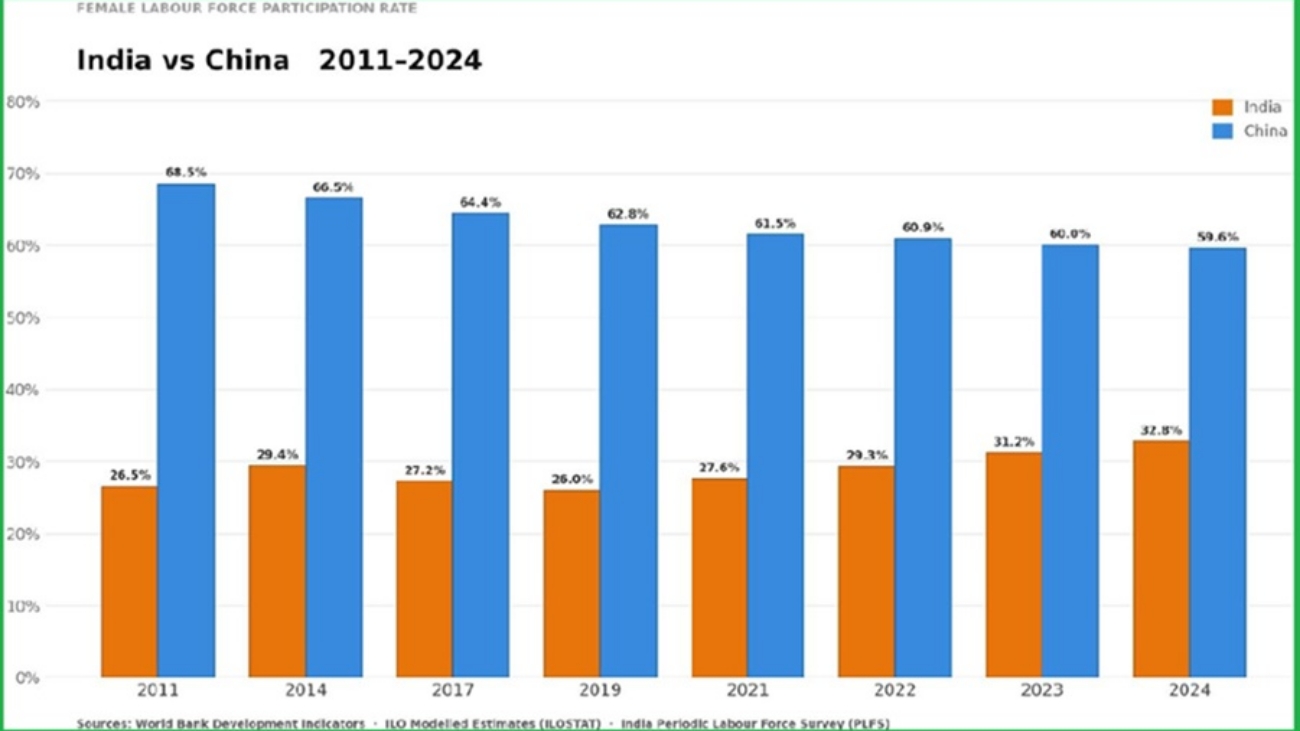
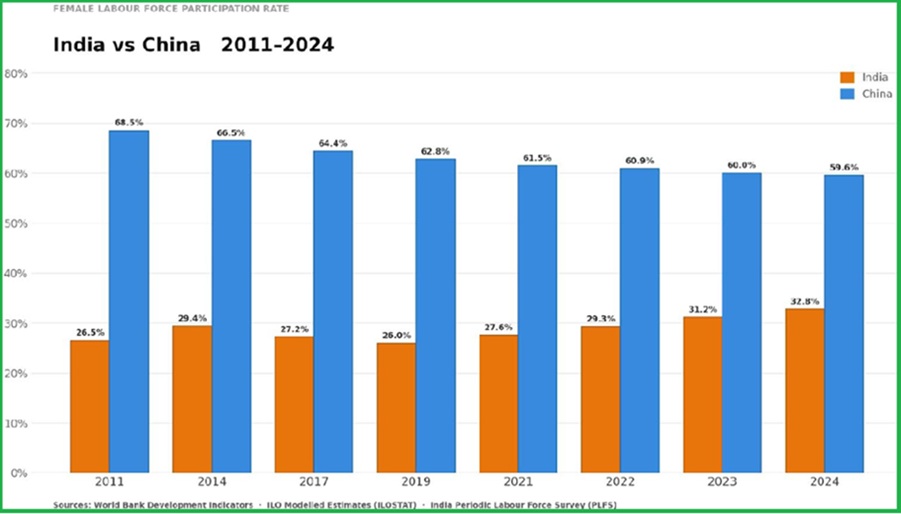
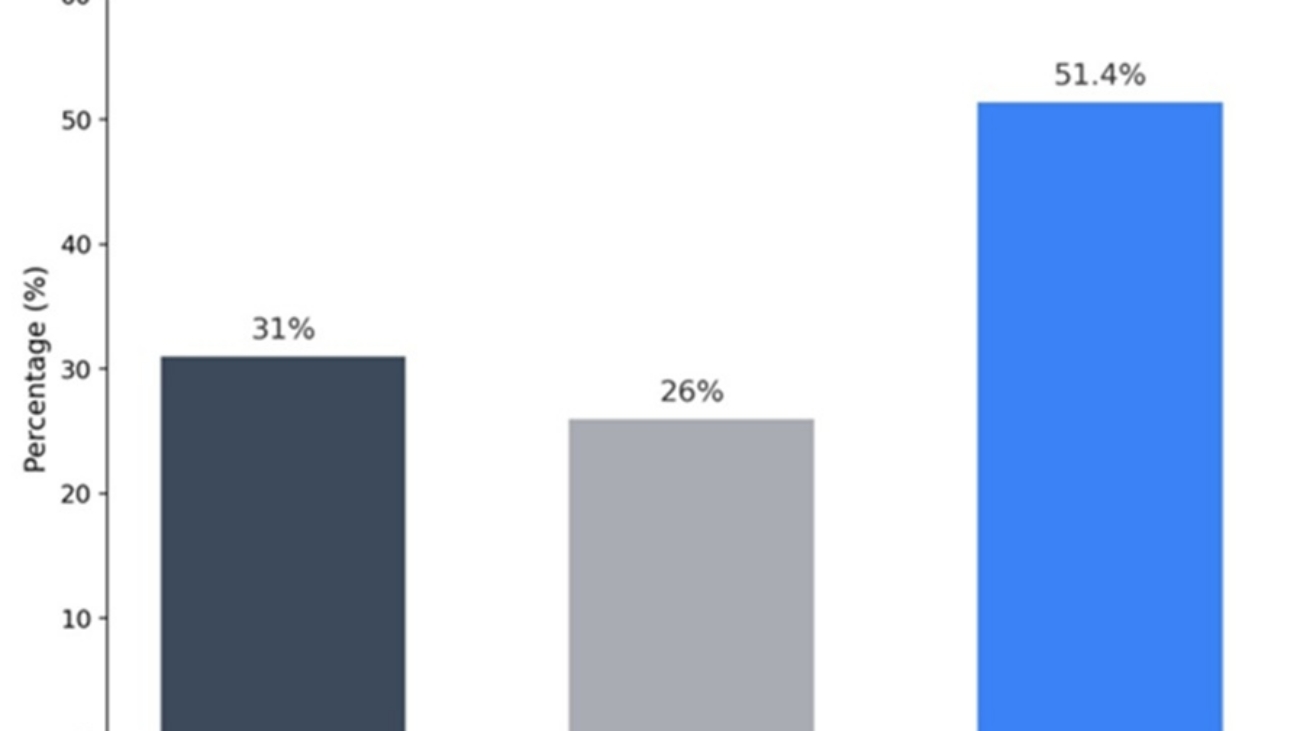
Female Labor Participation Rates Comparing India and China from 2011 to 2024

As shown in the above chart, India has certainly made progress, but female participation in the workforce remains below that of many East Asian economies. A society that fully allows women to participate in economic life is likely to become more prosperous and productive.

Economic realities are also shaping family decisions. Housing is expensive. Job markets are uncertain. Inflation remains a challenge. Asset prices have risen significantly.

Yesterday, a college friend called me. He recently built a new house in his town. He is 33 years old, unmarried, and works in Oman. Years of overseas employment and remittances have helped him to achieve his goals. I sometimes wonder whether the same outcome would have been possible had he stayed and earned entirely in India, especially outside the software and technology sectors.

India still has demographic advantages, but a demographic does not bear fruit automatically. It requires healthy, educated and economically secure citizens.

We often speak about India becoming a developed nation. However, the real question is whether growth can and will improve the lives of ordinary people, especially women, children and underprivileged. Growth matters, development matters even more.

Copy and paste the text from AMT that you want to share

post277

India Insider: Growth without Prosperity, Thoughts and Comparisons

Growth and Prosperity Data Meet India and China's Realities

Economic growth is important for generating prosperity. India as well as China has helped millions be lifted out of poverty using separate development trajectories. Still, questions about income distribution remain a difficult topic that policy makers in both nations often are unwilling to look at with deeper persistence because plenty of inequalities still exists and the subject remains potentially divisive.

China’s low income population is extremely large. Professor Li Shi’s research argues that nearly 300 million people in China are earning less than 1000 Yuan ($149 USD) per month in 2021, while nearly 98 million had monthly incomes below 500 Yuan ($75 USD).

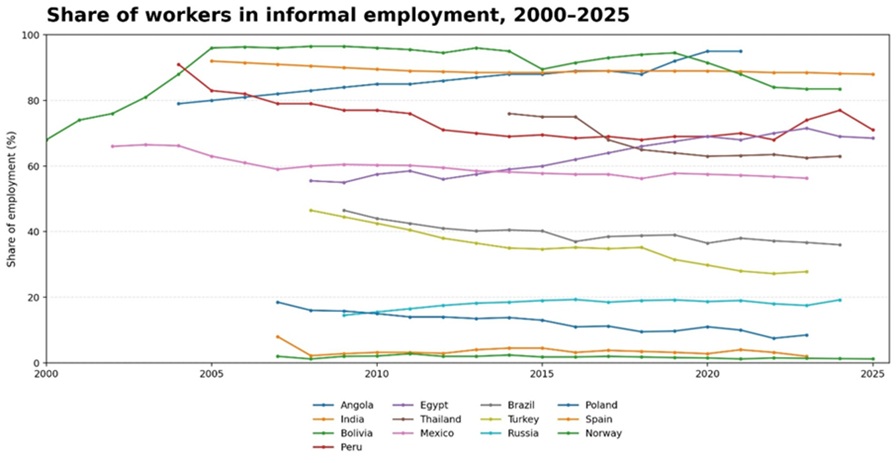
The same is true for the majority in India. As per the Pahle Foundation research shows nearly 91% of India’s workforce remains in the informal sector where their annual per capita incomes are below ₹2.5 lakh Rupees or ₹20,800 Rupees per month ($217 USD per month).

Although industrial and wage models are different comparatively, for instance in China the industrial sector includes 32% of the total working age population and produces an estimate of 36 to 37% of the GDP. And 22% of China’s workforce are employed in agriculture and produce close to 7% of GDP. In India a higher share of the people are in agriculture – close to 45%, and generate roughly 15-18% of the nation’s GDP.

However, there are still problems in both countries regarding inequality via wage disparities of citizens. When income growth is stagnated or not growing, fixed assets capital formation is difficult. People save less and invest less, which in turn makes the economic consumption story difficult. This is happening in China and in India.

Regarding growth, Professor Li listed a series of mounting pressures: China’s growth rate has fallen from its high-speed era of 8 to 10% to around 5%. Household income growth has slowed sharply and the weakest gains are among the poorest groups. Urban wage growth has also softened. Consumption remains structurally weak. Fixed-asset investment, especially private investment has lost momentum. Unemployment, particularly among young people remains elevated. These are not separate problems. Taken together they raise a harder question, whether China can still generate the level of growth needed to meet its 2035 and 2050 prosperity targets?

India between 2015–2016 experienced significant growth driven by consumption, investment and services expansion. After Covid-19 its growth has stabilized around 6 to 7%, yet higher levels of prosperity are not clearly visible for many and inequality has widened.

The unemployment rate among those aged 16 to 24 in China has remained around 16% for an extended period, fluctuating during seasonal reasons. Unemployment among other age groups have also risen gradually, indicating clear pressure in the labor markets.

In India the unemployment for youth aged between 16 to 25 of age is 42%, per a Azim Premji University Surveys and State of Working India report in 2023. This unemployment rate is double the ratio of what we are witnessing in China.

While in China the education departments have shifted towards STEM (Science, Technology, Engineering and Medicine). India still focuses on Social Science curriculums and students who study within these fields often cannot find job opportunities in the labor market.

India for many years hasn’t invested a substantial amount of energy and commitment to build a vibrant manufacturing sector. Yet, studies have shown that every job created by manufacturing exports creates two additional jobs in related sectors like transportation and logistics. 

China’s wealth inequality via income has risen sharply, Professor Li Shi estimates the wealth Gini coefficient above 0.7 in 2023. India’s wealth inequality may be even more concentrated. Various estimates place India’s wealth inequality/income distribution per the Gini coefficient above 0.80, indicating an extremely unequal distribution of assets and accumulated capital. 

However, the structures of inequality differ between the two economies. In China inequality emerged alongside rapid industrialization, urbanization and export, and led to manufacturing growth. A large industrial economy generated substantial wealth – but distributed it unevenly between labor and capital. 

In India inequality is shaped not only by a wealth concentration at the top, but also by the persistence of low productivity via employment, informal labor markets, weak wage growth, and limited human capital investment across large sections of the population. Thus, while China faces the challenge of emphasizing prosperity within a middle income industrial economy, India continues to struggle with the deeper structural problem of trying to create broad based household income growth in the first place. The differential also sheds light on industrial sector based employment and those in agricultural jobs comparatively between the two nations regarding wage context.

Hard questions that China should ask include if their employment force – who are without many social protections and suffer a lack of higher wages, will allow China to attain competitive advantage over the rest of the world? While its manufacturing products are in demand, it doesn’t help the average Chinese person see realized wages go up and nor creates a dignified life. And China’s trading partners do not benefit, because a lack of competitive advantage destroys industries and makes unemployment problems even worse in other nations. It’s not a question about advantage only, it’s also about why this surplus and deficit competitive problem is growing rapidly and makes stable prosperity unachievable over the long term.

In India despite being proclaimed as the fastest growing global economy, if the young population don’t get jobs and cannot create income for their families, then what’s the purpose of this high GDP growth? Yes, the nation gets to show good growth numbers while hoping to achieve additional investment, but problematic results still occur.

Economic growth without wage growth leads to widening inequality, social unrest and sometimes political backlash. For growth to be inclusive, wages need to rise along with GDP. This requires not just distribution, but a transformation like raising the average productivity of every worker and ensuring they receive their fair share of the economic pie.

Copy and paste the text from AMT that you want to share

India Tamil Nadu State 20260521

India Insider: Capital Formation in Rural Areas and Distress Hill Terrain

Income Comparison via Two Distinct Districts: Tiruvannamlai and Madurai

India is a vastly developing economy, but its national accounting frequently relies on formal sector performance to extrapolate the conditions of the informal economy. Despite official statistics continuing to rise, the economic reality of rural India remains largely unchanged.

Recently, I was travelling extensively across villages in the Tiruvannamalai district of Tamil Nadu State in South India, trying to understand how capital formation works in rural and semi-rural areas.

For more than 50 kilometers, there were barely any shops related to consumption activity. There is no absolute poverty in these areas, but income levels are clearly not standard enough to support strong consumption patterns.

Many people in Tiruvannamalai district villages work in neighboring cities liken Tiruppur, Bengaluru or Chennai and send cash back to their families. Apart from these remittances, agriculture and related seasonal income add to household earnings.

The second observation based on my extensive survey with about 55 women, was that I hardly saw anyone wearing gold chains or ornaments in villages. In other words, household income is often not sufficient enough for families to consistently accumulate gold or jewelry, which traditionally act as a form of savings in Tamil Nadu households.

Evidence suggests the reason for weak savings and low capital formation in Tiruvannamalai is due to low household income generation. And the reason for low household income can be attributed to a lack of local opportunities which offer weak wage growth, plus dependence on migration and the seasonal nature of agriculture sector. Education also plays a decisive role, but the broader issue demonstrates inadequacy of stable income generation.

We do not have sufficient recent district level data to fully validate many of these observations. Tamil Nadu State GDDP data (Gross District Domestic Product) exists, but it often lags. RBI remittance data does helps, but that is largely available at the State level rather than district level.

However, these observations do find relevance in prior surveys conducted by the Tamil Nadu Government before COVID-19.  Districts such as Tiruvannamalai were often catagorized as relatively backward compared to more industralized districts where consumption pattern improved dramatically through manufacturing and urbanization.

Instability via MNREGA’s Distress Hills Data

One interesting way to study this phenomenon is from Mahatma Gandhi National Rural Employment Guarantee Act (MGNREGA) employment data. MGNREGA data is measured in lakh person-days. (A lakh equals 100,000). In simple terms, it measures the amount of labor generated through a combination of workers and days worked under the scheme. 

Say for example, if 100,000 people work for 10 days, or 50,000 people work for 20 days, then: lakh person-days per 100,000*10 equals 10 lakhs person-days. And conversely 50,000*20 equals 10 lakhs person-days.

Sometimes, fewer workers, often work for many days or many workers work for fewer days. Thus, economists use person-days instead of counting only people.

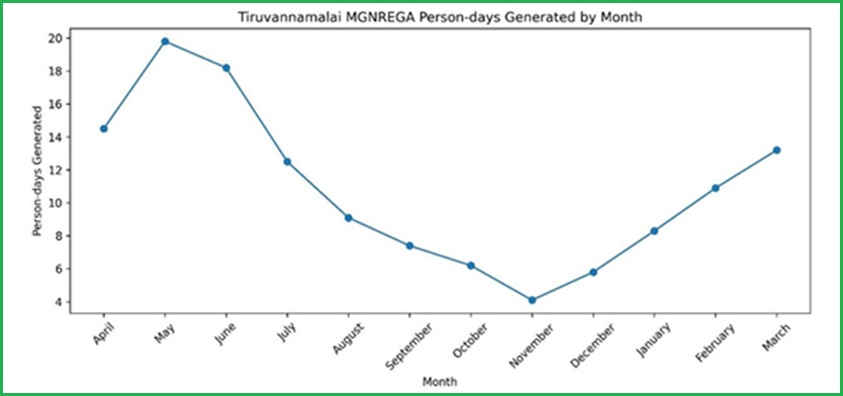
In Tiruvannamalai the pattern of MGNREGA demand reveals a strikingly seasonal and distress driven rural labor cycle. Person-days generated surged to nearly 19.8 lakhs during May, before falling sharply toward November as agricultural activity resumed. The peak compared to it low variation is close to 5:1, creating what can be described as a steep “distress hill” in rural employment demand. 

Such a dramatic fluctuation suggests that a large share of rural households rely on MGNREGA not as supplementary employment, but as an emergency income stabilizer during periods of agricultural inactivity and cash flow stress. The intensity of the spike indicates the absence of diversified rural income sources, exposing the structural vulnerability of the local informal economy.

Tiruvannamalai District: FY monthly 2024-2025, from MGNREGA person-days shows sharp seasonal distress, peaking near 19.8 lakh person-days during May before collapsing toward November.

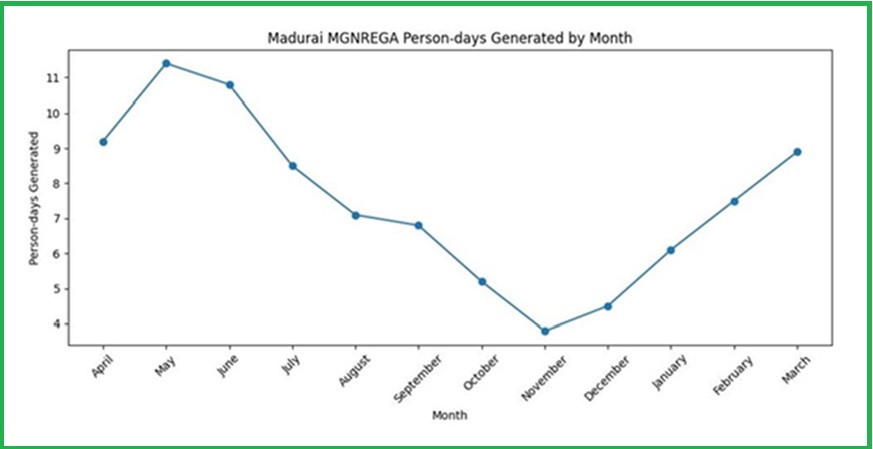
In contrast, the Madurai district in Tamil Nadu State presents a far more stable rural employment profile under MGNREGA. Peak demand was comparatively lower, reaching around 11.4 lakh person-days, while the decline across the year was considerably less severe than in Tiruvannamalai. The peak to low ratio was closer to 3:1, indicating significantly lower seasonal volatility in rural wage dependence.

Madurai District: FY monthly 2024-2025 displays a smoother MGNREGA employment curve with lower seasonal volatility, indicating stronger economic continuity and more diversified income generation.

Rather than exhibiting a sharp distress hill, Madurai’s smoother employment curve suggests a more diversified local economy. This because households may have greater access to non-farm income sources including urban linkages or more stable agricultural activity. The reduced fluctuation implies that MGNREGA functions more as a supplementary employment buffer than as a critical survival mechanism in Madurai compared to Tiruvannamalai.

Seemingly it is evident that consumption oriented businesses may struggle to scale in districts such as Tiruvannamalai, where disposable income growth and household surplus remain weak.

Industrialisation changes this dynamic because stable wage growth improves consumption depth and household savings. Without stable income growth, retail expansion and capital formation remain structurally weak.

The distress hill therefore represents far more than a simple employment fluctuation. The steep seasonal dependence on MGNREGA highlights how large sections of the rural economy remain vulnerable to agricultural cycles, with insufficient diversification, weak consumption resilience, and limited avenues for sustained wealth creation.

Notes:

Chart Sources: Ministry of Rural Development, Government of India, MGNREGA Dashboard (District level monthly person-days generated data).

Distress hills refers to my analysis of seasonal MGNREGA employment patterns to measure rural income instability and economic vulnerability. When plotted month-by-month, districts experiencing severe seasonal stress tend to exhibit a steep hill shape, characterized by sharp spikes in person-days generated during agricultural lean periods, followed by rapid declines once farm employment resumes. The steeper the hill, the greater the dependence of rural households on emergency wage employment for income stabilization.

Copy and paste the text from AMT that you want to share

Indian Rupee 20260515

India Insider: Rupee Under Pressure as Oil Prices Surge and Import Bills Rise

Iranian War and Implications for India as Energy Prices Cause Vulnerability

India is currently facing mounting external economic pressures as rising global crude oil prices weaken the Rupee, widen the current account deficit, and increase the risk of imported inflation. As one of the world’s largest energy importing nations, India remains highly vulnerable to fluctuations in global oil markets. The recent surge in energy prices, combined with geopolitical tensions and volatility in currency markets, has intensified concerns among policymakers, economists and investors.

The Reserve Bank of India (RBI) has stepped up its intervention in the foreign exchange market to stabilize the Rupee, while the government is evaluating measures to reduce pressure on import billing. Rising fuel prices, weakening currency conditions and growing external imbalances have combined to create a challenging macroeconomic environment that may test India’s economic resilience in the coming years.

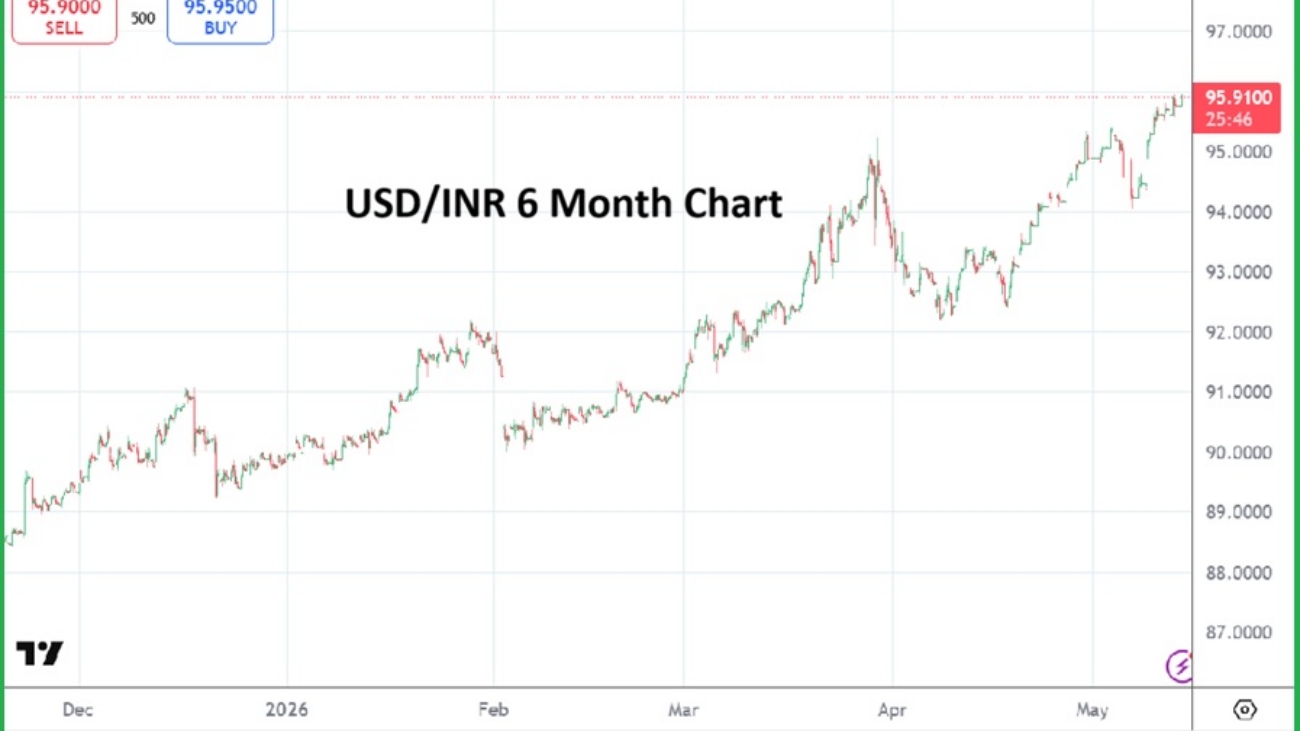
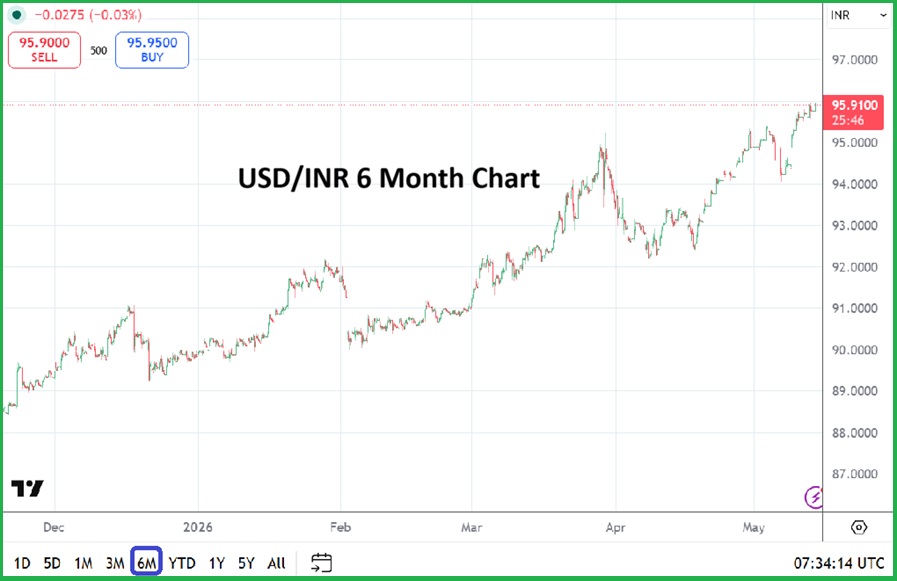
USD/INR Six Month Chart as of 15th March 2026

Gold and consumer electronics imports are increasingly being viewed as non-essential imports, and policymakers may consider restricting these categories in order to reduce stress on the current account deficit. Officials are concerned that a widening trade imbalance could place further downward pressure on the Rupee and increase dependence on foreign capital inflows.

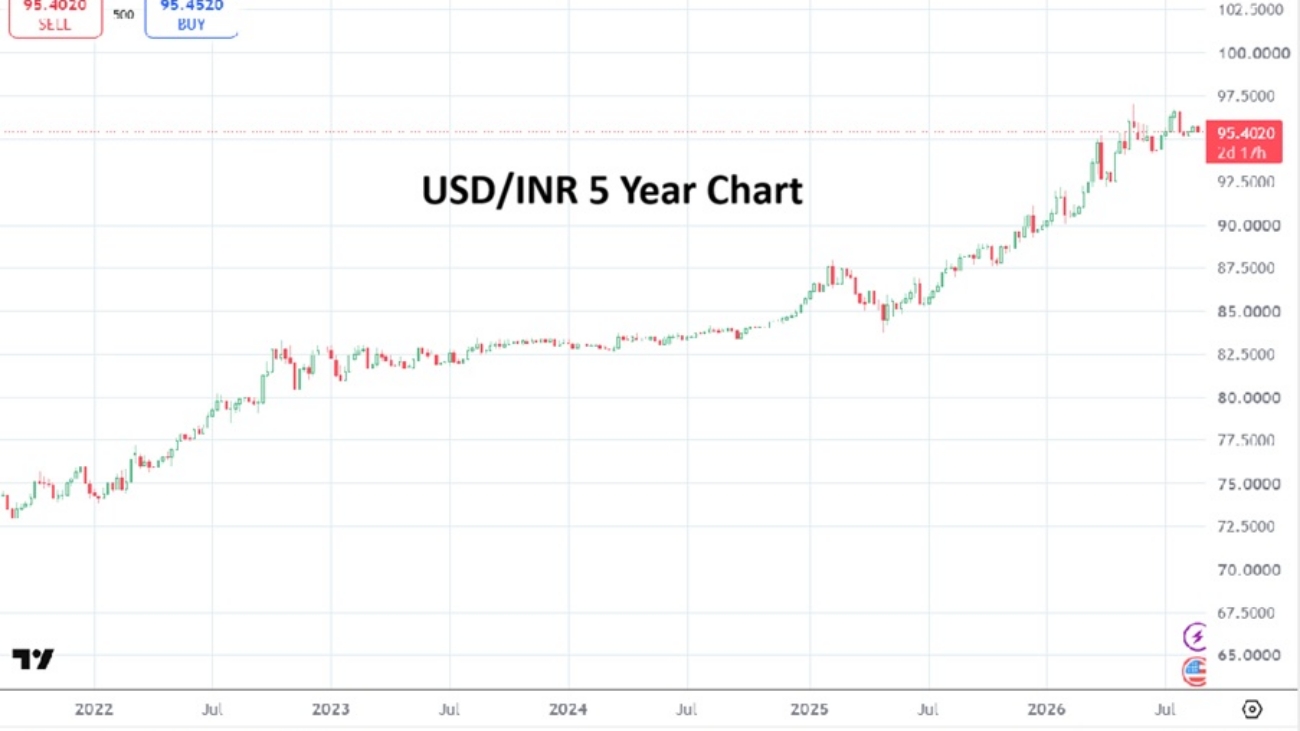
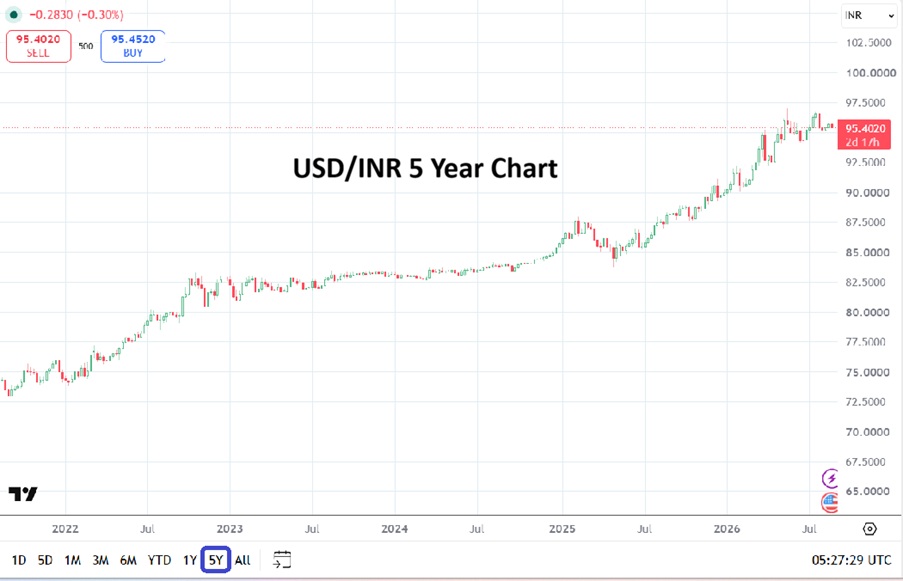
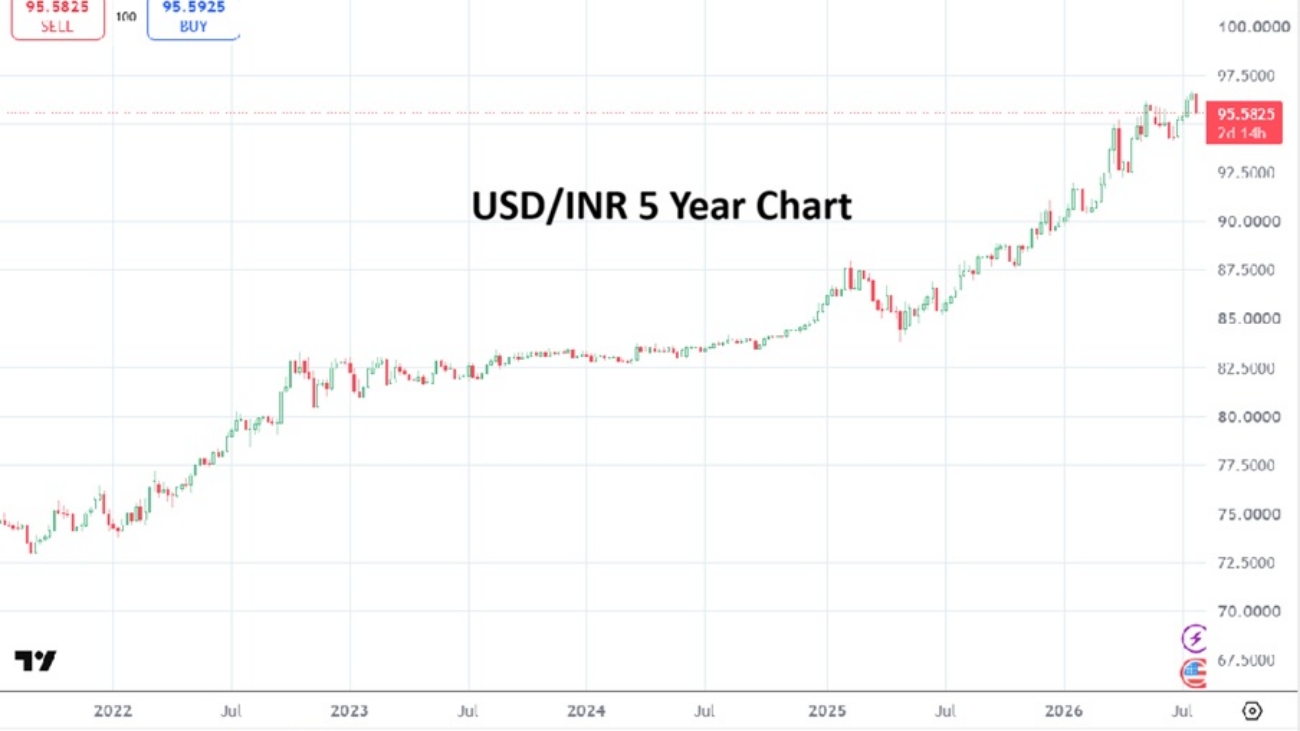
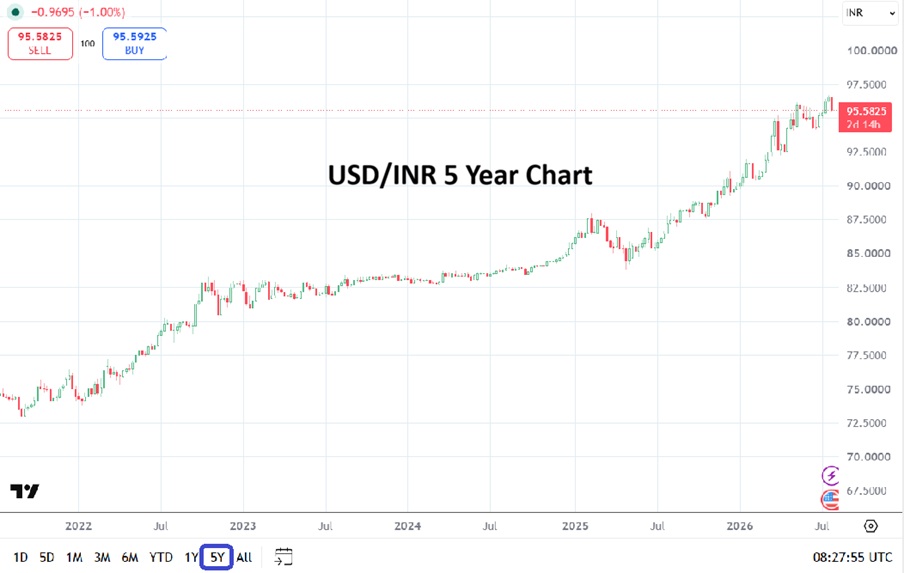
The Rupee on Thursday fell to a record low near ₹95.95 per USD, making it one of Asia’s weakest performing currencies this year. The currency has erased most of the gains achieved following earlier RBI intervention measures aimed at curbing speculation in the Forex market. Analysts expect the Rupee to remain under pressure through 2026, especially if global crude oil prices continue to rise and significantly increase India’s import billings.

The impact of rising crude oil prices is becoming increasingly visible across the Indian economy. Private fuel retailers have either reduced diesel sales or raised prices in response to the rally in global oil markets, leaving state owned refiners to absorb a larger share of domestic demand. Long queues at fuel stations and rising transportation costs have intensified concerns over inflationary pressures.

Earlier today, State-owned fuel retailers raised fuel prices for the first time in nearly four years as New Delhi adjusted domestic pricing to reflect higher international crude prices following escalating tensions in Western Asia. Diesel and gasoline prices increased by more than 3%, even though Brent crude prices had risen by nearly 50% over the same period.

In New Delhi, diesel prices climbed to around ₹90.67 per litre, while gasoline prices rose to approximately ₹97.77 per litre. These are among the highest levels recorded since 2022 and reflect the growing burden of imported energy costs on the Indian economy.

Economists argue that the rise in fuel prices signals a gradual shift toward market based pricing rather than extensive government controls. Policymakers increasingly recognize that artificially suppressing fuel prices could worsen fiscal pressures and create larger external imbalances over time.

Currency Weakness and Monetary Policy Challenges

RBI Governor Sanjay Malhotra recently remarked at an event in Switzerland that continued currency weakness may be “only a matter of time” if global energy prices remain elevated and capital flows become increasingly volatile.

Foreign outflows during the year have already exceeded previous levels, while a sustained rise in crude oil prices above $100 per barrel could significantly widen the trade deficit and push India towards another period of pressure on balance of payments.

In this climate, attracting foreign capital via various tax cuts or raising the interest rates is paramount to reduce the pressure on the currency. It’s already been seen that New Delhi is working on reducing taxes for foreigners investing in Indian bonds.

Rise of Inflationary Pressures

Although India’s headline inflation remains relatively contained and below the RBI’s 4% medium term target, imported inflation risks are steadily increasing.

Economists also believe the RBI may eventually be forced to maintain tighter monetary conditions or raise interest rates further if energy prices continue to accelerate.

The central bank has already raised interest rates to around 5.25% this year, but several economists argue that further tightening may still become necessary.

Historical Perspective and Structural Risks

Economic historians often compare the current situation with the oil shocks of the 1970s. During that period, the United States was heavily dependent on imported oil. The oil crises of 1973 and again in 1979 contributed to inflationary pressures, balance of payments stress, and periods of USD weakness.

However, economists note that today’s global environment is significantly different. The United States has become one of the world’s largest oil and gas producers, reducing its dependence on imported energy. As a result, rising oil prices no longer weaken the U.S Dollar in the same way they did during earlier oil shocks.

For countries like India, the impact remains severe. India imports the majority of its crude oil requirements. Higher global oil prices directly increase India’s import billing and create additional demands for USD.

As Economist Philip Verleger was quoted by Bloomberg, “when you are a major oil importing nation, you are not only paying more for crude itself, you are also paying more for the dollars required to purchase it.” India is now facing this realization again.

Copy and paste the text from AMT that you want to share

India Vote 20260507

India Insider: How a Film Star is Reshaping Politics in Tamil Nadu

Vijay: A Stunning Victory by an Actor Turned Politician in India

When the Tamil Nadu state election results were announced this Monday, many people were stunned that a party with barely two years of political existence had managed to unseat parties that had dominated the state for more than 75 and 50 years respectively.

TVK (Tamizhaga Vetri Kazhagam), founded by actor turned politician Vijay, used his charismatic presence in Tamil cinema along with the power of social media to attract Gen Z voters and women.

This came despite the incumbent DMK (Dravida Munnetra Kazhagam) government under Chief Minister M.K. Stalin being widely credited for stable governance and helping Tamil Nadu remain one of India’s fastest growing state economies, with a GSDP( Gross State Domestic Product) growth rate of 11.9%.

Voting Results in Tamil Nadu and TVK Topping the Results

The two major Dravidian parties – DMK and AIADMK (All India Anna Dravida Munnetra Kalagam) were originally built on the foundations of social justice, welfare, and development. For decades, they shaped Tamil Nadu’s political identity and succeeded in winning the trust of the people.

However, despite the DMK government’s governance record, allegations of corruption, nepotism, and cash for votes politics continued to surround both DMK and ADMK. These criticisms have become deeply embedded in public perception over the years.

Today’s Gen Z voters appear to want change. Many were looking for a fresh political face capable of reshaping Tamil Nadu’s political landscape.

Vijay’s party reportedly secured around 1.67 crore votes, or approximately 34.3% of the total vote share, one of the strongest performances ever recorded by a newly formed political party contesting its first major election.

India’s political landscape has also been evolving rapidly in recent years. Prime Minister Narendra Modi and the BJP have successfully consolidated much of North India politically and are now working aggressively to expand their influence in southern states such as Telangana, Karnataka, and Tamil Nadu.

For Modi, strong regional opposition leaders such as M.K. Stalin in Tamil Nadu and Mamata Banerjee in West Bengal have remained major political challenges. Any significant political shifts in states like Tamil Nadu and West Bengal could reshape India’s national political dynamics in the years ahead.

While corruption, nepotism, and vote buying are important issues to consider, it is also necessary to distinguish between political allegations and governance outcomes.

In many ways, the DMK government performed better during the last five years than several previous ADMK and DMK administrations. Social indicators are impressive while Tamil Nadu State has attracted billions of USD investment for iPhone and automobile manufacturing.

During the election results, I was driving through Tiruvannamalai in northern Tamil Nadu and noticed that the streets were unusually silent. There were hardly any people celebrating openly.

If another traditional Dravidian party had won, the roads would likely have been filled with supporters distributing sweets and celebrating publicly.

For the first time, it felt as though a major electoral victory had been shaped more by social media influence and public perception than by traditional ground level welfare based political desires.

On my way back home on Monday, I saw an elderly man sitting at a bus stop equipped with fans that helped ease the intense summer heat.

That moment made me wonder: in the next five years, will political change alone truly improve the lives of ordinary people?

Or will charisma and digital influence matter more than governance, infrastructure, and social-welfare in the long run?

Copy and paste the text from AMT that you want to share

Water India Graph 20260430

India Insider: Water Crisis Has Turned From Severe to Critical

India Needs Sustainable Water Security With Improved Infrastructure

India’s population has been expanding at a rapid pace and stands at 1.4 billion. Due to the urbanization process, industrialization in cities like Chennai, Mumbai and Delhi must continue to emphasize improving public infrastructures in order to maintain vital growth.

The growing population and urbanization adds noteworthy stress to the nation’s water bodies. With more people living in increasingly congested areas and pumping large amounts of water via borewells, groundwater levels are rapidly diminishing.

For instance, India consumes roughly 761 billion cubic meters of water per year, making it the largest water consumer in the world, ahead of China and the United States. 85% of rural India is dependent on ground water for agriculture and consumption, this because lake and pond water are not accessible. Rural India suffers from a lack of maintenance and sewage water that often contaminates these important sources.

Tap Water via Total Dissolved Solids Comparison in Various Cities Worldwide 

Only a few years ago, water facilities provided by municipalities and urban systems were relatively accessible in India. Low and middle income households relied on pipelines, wells and tap water for their daily usage. However, with sharp rises in population, government capital expenditures on water pipelines and sanitation has not kept pace and often fails to meet needs.

For example, rainfall in Chennai City always ends up staying on roads and platforms in the last few years, this despite the city’s infrastructure which has expanded multifold. In many parts of Chennai, water contamination has become severe with high levels of iron, hardness, turbidity and nitrate levels visible. The government has been inefficient when addressing the contamination. As I witnessed in 2019, many parts of Chennai cannot use ground water due to inadequate rainfall, storage and lack of proper municipal supplies.

And due to excessive extraction of ground water and an inability to channel rain water into the ground, many parts of Tamil Nadu now report total dissolved solids (TDS) ranging from 500 to 1000 parts per million, reaching extreme levels of 3000–5000 ppm in some areas. The World Health Organization recommends much lower levels for safe and palatable drinking water.

Water treatment for households using reverse osmosis plants, which were not normal a few years back have become essential for people seeking safe drinking water. Despite being a coastal region , cities like Chennai cannot rely solely on seawater desalination to meet their drinking water needs. While desalination plants contribute to supply, they account for only a fraction of total demand.

Desalination is an energy intensive and expensive process, making it difficult to scale for universal, affordable access. More importantly, producing water is only one part of the solution and delivering it efficiently remains a major challenge.

India endures 3 to 4 crore (30–40 million) waterborne disease cases every year, mostly from contaminated drinking water. As borewells go deeper, they draw water containing high concentrations of fluoride, arsenic, nitrates, and heavy metals. This creates significant health risks, especially for low income households that cannot afford advanced purification systems. The depletion crisis and contamination crisis are increasingly converging.

Due to rapid urbanization and high population with inefficient audits, many water bodies such as lakes and ponds have been encroached upon by the real estate sector or contaminated by waste disposal by surrounding settlements. This is quite visible in Chennai.

Experts claim that many water officials do not have a clear understanding of how pipeline networks are laid out across cities. As Frontline magazine columnist Vedaant Lakhera wrote in April 2026, India’s water crisis stems less from hydrological scarcity and more from a failure of governance.

The absence of water sensitive designs have allowed cities to expand unchecked, almost freely, contaminating local water sources such as lakes and ponds. This has led to a significant depletion of groundwater availability, which were supposed to act as reserve water reserves.

Addressing this crisis requires a multi-dimensional approach. Rainwater harvesting must be scaled to improve groundwater recharge and long-term availability, while modern purification systems remain essential to ensure safe consumption in the short term. At the same time, systemic reforms such as regular pipeline audits, mandatory replacement of ageing infrastructure, and better urban water management are critical to prevent contamination at its source.

Without such integrated efforts, cities will continue to face a paradox of water scarcity amid abundance. Sustainable water security in India does not depend only on how much water is available, but on how effectively it is managed, protected and delivered.

Copy and paste the text from AMT that you want to share

Hospitalization Costs 20260421

India Insider: Rising Hospitalization Costs a Growing Concern

Indian Households Face Rising Expenditures for Hospitalization and Critical Care

Many households in India face unexpected hospital expenses that have become almost routine in today’s environment. Rapid urbanization, unclean drinking water, poor air quality due to carbon emissions and industrialization have hit low and middle income homes harder than upper income families. These households are increasingly exposed to diseases that require critical treatment, but the government institutions are ill-equipped to handle the growing patient loads. As a result, many Indians are forced to seek treatment in private hospitals, where costs are significantly higher.

Consider that a middle income household in Madurai earns roughly between 15,000 to 20,000 Rupees per month per person. This per the Periodic Labor Force Survey 2023-2024 Annual Report. So if two people are working in a family, it means empirically, we can estimate the income between 35,000 to 40,000 per month. We need to compute the family’s expenditures – if one member is hospitalized for critical illness or gets hospitalized treatment in private and public hospital.

Even if the income range for this family is better than median estimates, their capacity to absorb medical shocks are limited due to high baseline consumption and minimal household savings.

In the case of hospitalization in a government facility, out of pocket expenditures such as medicines, diagnostics, transport, and wage loss can amount to 12,000 to 40,000, effectively deducting one to two months of household income.

In other words, families need to spend out of pocket by borrowing to finance these gaps for consumption and medical expenses.

However, if a family is forced to take treatment in a private hospital, they would be spending 100,000 to 500,000 Rupees in critical cases, their total spending as a higher percentage of net income and is close to 1,250% in extreme cases.

The Role of Savings and Informal Safety Nets

As observed during Covid-19 and other crises, Gold has often acted as a financial buffer for Indian households.

Families that save during stable periods are able to pledge or sell gold in times of distress, helping them to manage medical expenses without relying entirely on high cost borrowing.

In contrast households without many buffers, often turn to informal lenders or personal loans, where interest rates can range between 36 to 60% compounding the financial distress.

Looking at Government Data for Clues

The most authoritative survey on household expenditures on hospitalization comes from National Sample Survey Office’s (NSSO) “Health in India” (2017-2018), and it showed the costs for those hospitalized in private facilities were eight times costlier than government facilitys.

An average hospitalization (excluding child birth) cost 4,290 Rupees in a rural government hospital, and 4,837 in an urban government hospital. The same scenario in a private hospital cost 27,347 in rural India and 38,822 in urban India. Out of pocket expenditures – the amount families pay themselves, follows the same pattern with families having to pay out about 4,000 Rupees in government hospitals, versus 26,000 – 32,000 Rupees in private ones.

Hospitalization Expenditure by Hospital Type and Sector, NSSO 75th Round (2017-2018). Source: MoSPI, Ministry of Statistics.

These were already catastrophic figures for a typical household in 2017-2018. A single private hospital admission cost more than a month’s wages for most Indian families, and it is getting worse.

Seven Years of 12-14% Medical Inflation

Since 2018, the cost of being hospitalized in India has risen at a pace that outstrips almost every other category of spending: Millman’s 2025 medical inflation report pegged the rate at 12% in 2024, more than triple the general CPI inflation of 4.2%.

An urban private hospital admission that cost 38,822 Rupees in 2017-2018 now is in a 76,000 – 91,000 price range, this while real wages are stagnant and not growing. Recent RBI Household surveys conclude that Indians absorb higher debt in order to manage their household expenses.

Critical Illness Can Wipe Out a Household’s Future

Critical illness like heart attacks, a cancer diagnosis, renal failure, kidney transplants costs even more in India – and the problems grow unbearable for Indian families after they are forced to take on more debt. For example, a heart angioplasty with stent that costs 100,000 in 2018 now costs between 200,000 – 300,000 Rupees in private hospitals.  A kidney transplant which costs 400,000 – 600,000 a decade ago now costs 1 million to 1.5 million Rupees. A full course of chemotherapy ranges from 250,000 for early stage diseases to 2.5 million Rupees for advanced cases requiring targeted biologics.

Cost ranges for major critical illness in India, 2024-2025, green bars show public hospital costs, orange bars show private hospital costs. Sources: ACKO India Health Report 2024, HCG Oncology, Hospital Quote Data from Apollo, CARE and others.

Where the Indian Household Stands

As per periodic labor force surveys, the median Indian worker earns 10,000 Rupees a month. The Economic Survey in 2024-2025 recorded average monthly earnings of 13,279 for self-employed workers, 20,702 for salaried workers, and 12,750 for casual laborers. Crucially, only the top 22% of the India’s labor force earns more than 15,000 Rupees per month.

Monthly household income distribution, rural vs urban India (2023-2024). Sources: Periodic Labor Force Surveys, Azim Premji University Income Distribution Study 2019-2024.

Statistically, the household we have taken for the reference is not a poor household by national standards. It is comfortably above the rural and urban median, sitting in the top fifth of the country, and this is what makes the rest of the story so troubling. If this household cannot afford a critical illness, almost no household outside the urban upper middle class can afford rising hospitalization costs.

The Insurance Gap

The government of India has expanded insurance schemes for low income households since 2018 via the Ayushman Bharat PM-JAY with 500,000 Rupees coverage. But the scheme which was set many years ago, does not match the current medical costs scenarios. Income eligibility is an another problem where a majority of people who earn in the middle, slip out of the government insurance schemes and have to take private insurance to cover their health risks. Health insurance penetration in India is low at 3.7% of GDP, well below global statistical standards of 7%.

Across much of India, a single critical illness can effectively destroy years of household income accumulation and trigger debt dependence. In the absence of stronger public healthcare delivery, and without deeper insurance penetration at affordable costs providing better claims services, and lacking robust risk sharing mechanisms – escalating medical costs could act as a drag on India’s economic growth trajectory by weakening household balance sheets.

Notes: 1 USD = 93.24 INR

Copy and paste the text from AMT that you want to share

India Insider GDP Savings and Investment 20260408

India Insider: Education, GDP and Personalized Growth a Difficult Balancing Act

Is India Still 'The Country of the Future'?

In 1991, when India’s foreign exchange reserves had dwindled to barely three weeks of import cover, the government pledged its gold to the Bank of England. It was a moment of humiliation and, paradoxically, of liberation as the crisis forced an opening that three decades of socialist planning had resisted. Fast forward into 2025: India is a $4.1 trillion USD economy, the world’s most populous nation, with a moon rover, a thriving startup ecosystem, and a digital payments infrastructure the developed world now studies with envy.

This article asks if India is still ‘the country of the future’ using the same growth determinants framework applied by Professor Manoel Bittencourt to Brazil, and argues that the answer lies not primarily in corruption (though it matters), not in policy failure (though that matters too), but in two structural features that resist easy reform: the vast informality of the Indian economy, and the depth of its inequality.

Does Growth Matter? The 70/g Rule Applied to India

Before diagnosing India’s problems, we must appreciate what it has already achieved. Using the 70/g rule which tells us how many years it takes for income per capita to double at a given growth rate – India’s average GDP growth of roughly 6.5% since 1991 implies a doubling of income every 11 years. That is extraordinary by historical standards.

But averages mask distributions. If growth accrues predominantly to the formal sector – the top 10% of earners who hold formal employment, own financial assets, and participate in the organized economy, then the 70/g rule tells a story of elite enrichment, not a broad based development. This is India’s core dilemma.

The Eight Growth Determinants: India in the Data

Bittencourt’s framework identifies eight standard growth determinants: savings, fertility, rule of law, government consumption, trade openness, education and health investment, inflation, and finance. Let us examine some of each through Indian data, with Brazil as our comparator.

Savings & Investment

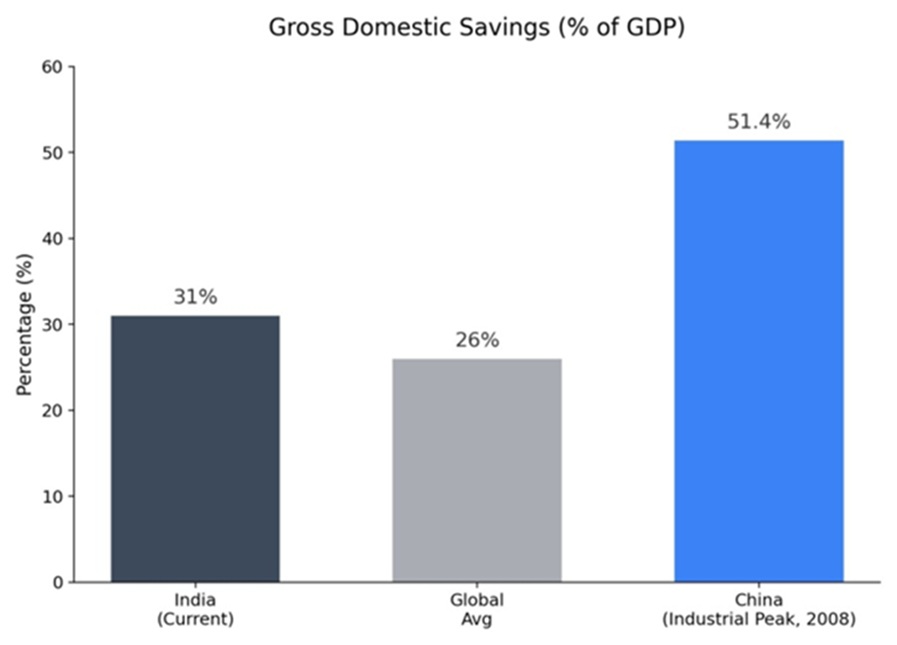
India’s gross savings rate has historically been a strength hovering around 30–32% of GDP through the 2000s and 2010s. But the investment picture is more troubled. Fixed capital formation has declined since its peak around 2011–12, driven by a stressed banking sector, weak private investment appetite, and an infrastructure gap. Brazil shows a similar pattern of savings-investment divergence  but India’s gap has widened more sharply in recent years.

Gross Domestic Savings and Fixed Capital Formation. India vs Brazil. 2000-2023

Education & Health Spending

Perhaps nowhere is India’s “policy-delivery gap” more apparent than in social spending. India spends approximately 4.5% of GDP on education and just over 3% on health, and both figures are well below what comparable middle income countries invest. Brazil, despite its own fiscal struggles, consistently outspends India on health as a share of GDP. The consequences are visible in learning outcomes: the Annual Status of Education Report (ASER) consistently finds that a significant share of Indian schoolchildren cannot read a simple paragraph or perform basic arithmetic.

This matters enormously for growth. An economy hoping to absorb millions of workers into formal, productive employment each year needs those workers to arrive with usable skills. When they do not, informal low productivity employment becomes the default  and cycles of informality perpetuate.

Government Spending on Human Capital. India vs Brazil. 2000-2023

The Thesis: Informality as Structural Trap

Bittencourt identified corruption as the growth killer in Brazil. For India, the more precise diagnosis is informality and the inequality it both reflects and reinforces.

Consider the arithmetic: approximately 80% of India’s workforce is informally employed who are working without contracts, without social protection, without access to formal credit, and largely invisible to the tax system. This informal mass produces perhaps 50% of GDP. The productivity gap between the formal and informal sectors is staggering, and it does not shrink naturally with overall growth.

Share of Workforce in Formal Employment. India vs Brazil. 2000-2023

Brazil is itself a country with significant informality, but its formal sector share has grown meaningfully since the early 2000s, driven by the expansion of the Bolsa Família program, minimum wage policies, and labor formalization drives. India, by contrast, saw its already small formal sector shrink as a share of total employment after demonetization in 2016 and the disruptions of COVID-19. The gap between the two countries on this metric is instructive.

Inequality: When Growth Passes People By

India’s Gini coefficient – a standard measure of income inequality – has risen over the reform era even as aggregate poverty has fallen.  It shows the signature of unequal growth. The bottom quartile has seen real income gains, but the top decile has captured a disproportionate share of the growth dividend. Recent estimates suggest that India’s top 1% now hold a larger share of national income than at any point since Independence.

Income Distribution India vs. Brazil.

Compare this to Brazil, which, despite its own severe inequality, pursued deliberate redistributive policies through the 2000s with Bolsa Família reaching 14 million families at its peak and a concerted minimum wage policy. India’s equivalents – the MNREGA rural employment guarantee, PM-Kisan farm payments are larger in coverage but smaller in benefit size at this stage, and reach informal workers imperfectly.

The Structural Complications

A purely data driven analysis, as Bittencourt himself acknowledged for Brazil, understates the depth of the challenge. India’s informality is not simply a policy failure, it is rooted in structures that predate modern economics.

The caste system, legally prohibited but still socially persistent, has historically sorted populations into occupational roles and those at the bottom of the hierarchy were systematically excluded from property ownership, formal education, and credit. Colonial de-industrialization destroyed the artisan economy that might otherwise have been a pathway to formal employment. The fragmentation of the federal system with 28 states running effectively different labor markets, land acquisition regimes, and social programs means that a policy that works in Tamil Nadu may fail in Uttar Pradesh.

These are not excuses. They are explanatory variables that any honest growth analysis must include.

What Does Growth Theory Tell Us to Do?

The prescription is not mysterious. If informality is the barrier, then the priority is to make formal employment more accessible through labor law simplification, portable social insurance that follows the worker rather than the employer, and a genuine skill based learning infrastructure that reaches the rural poor.

If inequality is the barrier, then the priority is redistribution that enhances human capital at the bottom – not cash transfers alone, but the quality of the school your child attends and the clinic your mother can access. India has the architecture of such systems; it does not yet have substantive results.

The demonstrators on India’s streets – whether farmers in 2020-21, or youth protesting paper leaks, or contract workers demanding permanence – know this intuitively. They are not asking for charity. They are asking to be absorbed into the formal economy that has prospered around them.

Conclusion: Is India Still the ‘Country of the Future’?

The answer to the question is Yes, and it is both an achievement and an indictment. India has built a moon program and yet cannot reliably staff a primary school. It has produced the world’s most used digital payments system and left 200 million people without bank accounts until recently. It exports software engineers to Silicon Valley, while its domestic labor market cannot absorb graduates at scale.

Brazil, our comparison, has struggled with its own version of this duality longer. But Brazil’s welfare state, however fiscally stressed has created a floor. India’s floor is thinner, and the drop beneath it steeper.

Informality is not the destiny for any developing economy. South Korea was deeply informal in the 1960s, China was an overwhelmingly rural agrarian nation in 1980. Both made transitions through deliberate, state led investment in human capital and formal employment creation. The path is known. The question for India in 2026 is whether the political will exists to progress via focused programs, or whether fifty years from now someone else will write another article illuminating the same structural problems.

Article Notes:

Data sources include the World Bank World Development Indicators, ILO Labour Statistics, Transparency International Corruption Perceptions Index, ASER Centre (India), UNESCO Institute for Statistics, and IMF World Economic Outlook. Growth determinant categories follow Barro (2008) as synthesized by Bittencourt.

Copy and paste the text from AMT that you want to share

Indian Diaspora 20260325

India Insider: Why the Gulf Remains a Vital Economic Lifeboat

Indian Expat Labour and Recalibration Realities

The skyline of Dubai, once a symbol of untouchable prosperity, now sits under a shadow of regional recalibration. As Reuters recently noted, Dubai has successfully transitioned to a non-oil economy, with oil accounting for less than 2% of its GDP. It is now a powerhouse of trade, high-end real estate, and financial services. 

However, its “backyard” – the Strait of Hormuz – remains a strategic bottleneck. With 20% of global seaborne crude passing through this narrow vein, the recent tensions in March 2026 have forced a shift in perception: the Gulf is no longer an insulated sanctuary, including Dubai where millions of Indians work and earn for their families in India.

Indian Diaspora Gulf Representation

The scale of this “labour export” is enormous. As of early 2026, approximately 9.5 to 10 million Indians live and work across the GCC (Gulf Cooperation Council) countries. To put that in perspective, that is nearly the entire population of a country like the UAE, made up solely of Indian expats.

A Remittance Driven Economy

As per Government data sources, India remains the world’s top remittance recipient, with total inflows hitting a record $135.4 billion in the last fiscal year. And despite a rise in high-skilled migration to the US and UK, the GCC remains a juggernaut, contributing roughly 38% of India’s total remittances.

For states like Tamil Nadu, Kerala, and Maharashtra, which receive nearly 50% of these total inflows, it is a macroeconomic stabilizer that funds the current account deficit and keeps the Rupee from a freefall.

India’s Labour Market Paradox

But here is the real question, if people return to India due to the crisis in the Middle East, are there any “good quality” jobs waiting for them in India? The honest answer is no.

Youth unemployment remains elevated, particularly among graduates. Engineers in mechanical and construction fields face limited opportunities. Outside IT, and to some extent automobiles, there are not enough stable, high-paying jobs.

So people adjust. You will find postgraduates working in delivery jobs and informal sectors. I have personally spoken to Amazon delivery workers who told me they hold M.A degrees, or that they had worked in Dubai or Singapore before Covid and are now trying to leave again. This is becoming norm nowadays.

Indian National Wages and Savings Compared to Expat GCC Averages

In many towns in India, migration itself has become an economic model. People move to Singapore, Malaysia, or the Gulf, and the money they send back drives real estate, consumption, and local business activity. In many such regions, the labour market feels tight, not because jobs are available, but because the workforce has already left.

The wage gap explains everything. A nurse or lab technician in India may earn ₹15,000–₹20,000 per month. The same person can earn close to ₹80,000 in the Gulf. A private school teacher in Villupuram city in Tamil Nadu state earns around ₹8,000.

While nominal wages are  2–2.5x higher in GCC, the true driver of migration is savings arbitrage , which can be 5–6x higher.

This reflects structural differences in labour productivity and capital intensity.

India has a large pool of educated labour. But instead of becoming an advantage, it has turned into a wage suppressing force. There is always someone willing to work for less. As a result, wages remain low and bargaining power stays weak.

Percent of India’s Remittances From The GCC

At the same time, we are told growth is strong. Yes, the labour force participation is rising, but inequality is also increasing. A large share of employment remains informal and unstable. Inflation continues to erode purchasing power, and disposable incomes remain under pressure.

Right now, for many Indians, prosperous conditions are easier to find outside the country. Yes, the Gulf has risks. However, geopolitical tensions will come and go, and these are short-term disruptions.

Structurally, GCC economies will stabilize and grow again, and when they do, the flow of Indian labour will continue to pursue these opportunities. Because until India creates enough high-quality jobs at scale, migration will not slow down.

Copy and paste the text from AMT that you want to share

Outflows 20250220a

India Insider: Macro Stress a Capital Flow Problem, Not a Trade One

India Insider: Macro Stress a Capital Flow Problem, Not a Trade One

Editor’s note: This article was originally written in January 2026. It has been updated to incorporate developments through February 2026, including the U.S – India interim trade agreement and subsequent capital flow data.

India is currently experiencing what can best be described as macro stress. By macro stress, we mean pressure across the broader economy that shows up simultaneously in the currency, financial markets, and capital flows, rather than a problem limited to one sector or company. In India’s case, this stress is visible in a weak rupee, persistent foreign investor outflows, and rising concerns about equity valuations.

This stress is often misinterpreted as a trade or export problem. In reality, the pressure on the Rupee and the growing fragility in equity markets stem primarily from the capital account, not from collapsing exports or remittances. Even as the U.S Dollar softens – helped by Federal Reserve rate cuts and renewed trade tensions under U.S President Donald Trump, India continues to struggle to attract foreign capital, exposing a deeper structural imbalance.

Source: NSDL (FPI Equity Flows): Reuters and author’s calculations.

Recent weakness in the USD would normally support emerging market currencies and risk assets. This time, however, the response across emerging markets has been uneven. Capital has flowed toward economies linked to artificial intelligence, semiconductors, and commodities, as well as toward markets where valuations have already adjusted. South Korea, Hong Kong, Chile, and South Africa have all benefited from this rotation. India has not.

The Rupee’s weakness reflects this divergence. USD/INR continues to trade around ₹91.5–91.6 despite the absence of a sharp deterioration in India’s trade fundamentals. Services exports, particularly IT services, remain resilient, and remittances continue to provide a steady source of foreign exchange. This brings us to the current account.

The current account represents a country’s net trade balance with the rest of the world, including goods, services, and remittances. India runs a current account deficit, meaning it imports more than it exports. While this deficit persists, it is manageable at present, supported by stable services exports and remittance inflows.

The real problem lies in the capital account, which tracks investment flows such as foreign investors buying or selling Indian equities and bonds. When foreign capital flows into the country, it helps finance the current account deficit. When it flows out, pressure builds quickly on the currency and financial markets.

Foreign capital is neither entering India in sufficient scale, nor remaining invested. Portfolio outflows have become persistent, and this has emerged as the dominant driver of currency pressure. In calendar year 2025, foreign portfolio investors sold approximately USD 19–20 billion worth of Indian equities, marking one of the largest annual equity outflow episodes in recent years. Importantly, this selling has been sustained rather than episodic, pointing to a structural reassessment of India’s growth outlook and valuation premium rather than a temporary risk off shock.

Crucially, this capital flight is not the result of a collapse in exports to the United States. Despite tariff concerns, the U.S remains India’s largest export destination. Between April and December 2025, Indian exports to the U.S rose to roughly $65–68 billion, compared with $60–63 billion during the same period last year. Trade flows, for now, are holding up better than sentiment suggests.

The effects of capital account stress are most visible in financial markets. Indian equities are failing to attract foreign inflows as growth momentum weakens. Market leadership has narrowed, with headline indices supported by a small group of large-cap stocks, while consumption-sensitive sectors such as FMCG remain under pressure.

This dynamic fits squarely within the balance of payments framework described by Professor Michael Pettis. He described, “a country cannot sustainably run a current account deficit without stable capital inflows. When capital inflows weaken, the adjustment shows up through a weaker currency, tighter financial conditions, and pressure on asset prices.”

Indian equities now trade at some of the highest valuation multiples globally, supported largely by domestic retail and mutual fund flows. However, domestic capital is structurally constrained, while global investors can freely reallocate. As Bloomberg’s Andy Mukherjee recently noted, Indian cement stocks now trade at higher valuations than Hong Kong Tech stocks showing the exuberance of Domestic equity capital chasing local themes.

At a deeper level, India’s vulnerability reflects a structural imbalance between savings and investment. Domestic savings are insufficient relative to the economy’s long term investment needs, and the financial system lacks the institutional capacity to consistently channel savings into productivity enhancing investment. As a result, growth has become increasingly dependent on mobile foreign capital – capital that is cyclical, return sensitive, and easily reversible. It is this dependence, more than any near term trade shock, that leaves the Indian rupee vulnerable when global capital flows turn cautious.

Update: The US–India Interim Trade Agreement (February 2026)

Since this article was first written, a significant development has reshaped the near-term outlook. In early February 2026, the United States and India reached an interim trade agreement. As part of the deal, the US lowered its reciprocal tariff on Indian goods from 25% to 18%. President Trump also signed a separate executive order removing an additional punitive 25% tariff that had been imposed as a penalty for India’s purchases of Russian oil, meaning the effective tariff burden on Indian exports had, at its peak, approached 50% before being brought down to 18%.

The announcement acted as an immediate sentiment catalyst. The rupee, which had been trading in the ₹91.5–92 range under stress conditions, strengthened on the news, touching ₹90.30 before settling near ₹90.70. Foreign portfolio investors, who had spent most of 2025 as relentless net sellers, turned net buyers in the first week of February 2026, purchasing approximately $897 million worth of Indian equities.

These are meaningful moves. After 18 months of persistent underperformance relative to other emerging markets, India’s excessive valuation premium has moderated toward historical averages, which may create better entry points for global capital going forward.

Copy and paste the text from AMT that you want to share

postN105.1

India Insider: Agriculture Still Traps Nation’s Workforce

India Insider: Agriculture Still Traps Nation's Workforce

A Field Survey in South India’s Agricultural Towns

India’s growth story is usually told through noteworthy headline numbers. Yet beneath these aggregates lies a persistent imbalance, agriculture continues to employ a large share of the workforce, while contributing a much smaller share of output. This gap shapes income stability, consumption patterns, and the complicated experience of growth across much of the country for many people.

This essay uses field observations comparing two major agricultural towns in Tamil Nadu State in India, Tiruvannamalai and Kallakurichi. After analyzing their respective data and examining how this imbalance plays out on the ground, I offer my perspective.

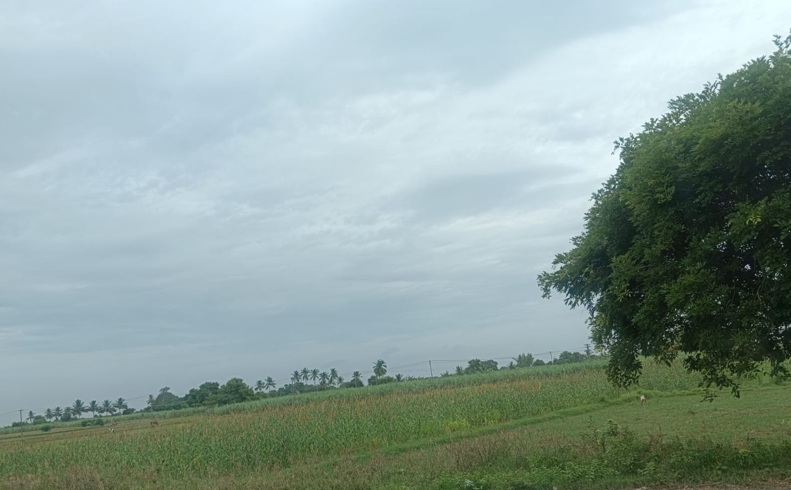
Typical Agricultural Field in Southern India

Tiruvannamalai: Growth Without Employment Transformation

In Tiruvannamalai district, I visited several areas where housing conditions were poor and informal settlements were widespread. I have visited many households here since 2023. These conditions are now changing, but not in a way that fundamentally transforms employment.

Capital inflows from the neighboring State of Andhra Pradesh have fueled a real estate boom and expanded services such as lodging, restaurants, and transport. While this has altered the physical landscape and raised asset values, it has not created stable non-farm jobs at scale. Employment remains largely informal, seasonal, and low-paid, leaving the underlying agricultural labor trap intact.

Although Tiruvannamalai exhibits a relatively high services share in district GDP, the income generated by this sector accrues from a narrow group of asset owners, intermediaries, and rent-seekers. As a result, per capita income figures overstate the extent of broad-based welfare. A large share of the workforce remains engaged in low-wage service activities with limited income security.

Kallakurichi: Agricultural Dependence, Weaker Services

In Kallakurichi district, the structural imbalance is even more pronounced. Agriculture accounts for a noticeably larger share of district GDP than in Tiruvannamalai, while the services share is correspondingly lower. District level GDDP and sectoral composition data from the Department of Economics and Statistics, Government of Tamil Nadu (2022–23 provisional, current prices), show that agriculture contributes roughly one-fifth of district output, even as a disproportionately large share of the workforce continues to depend on this type of work for income.

This high dependence on agriculture results in extremely low output per worker, widespread disguised unemployment, and chronically weak incomes. Growth exists, but it is concentrated in activities that do not absorb labor effectively.

Gross Domestic District Product Comparison of Agriculture versus Non-Agriculture

Core Problem: Growth Composition, Not Growth Absence

The core structural problem in districts like Tiruvannamalai and Kallakurichi is therefore not the absence of growth, but its composition. Too many workers remain tied to a sector that generates relatively little value. Services and industry have expanded, but not in a manner that absorbs surplus rural labor at scale.

As long as labor remains trapped in low productivity farming, while non-farm sectors fail to provide stable employment opportunities, headline income measures will continue to overstate actual welfare.

Consumption Consequences of Agricultural Dependence

This imbalance has direct consequences for consumption. Towns that depend heavily on agriculture tend to exhibit weak and uneven consumption patterns. Farm incomes are inherently volatile, driven by fluctuations in commodity prices, weather conditions, and market access. In many cases, farmers are forced to sell produce at a discount, incur outright losses, or delay sales under distressing conditions. Only intermittently do they realize meaningful profits.

Chart Comparing Towns of Tiruvannamalai and Kallakurichi in Tamil Nadu

This volatility translates into cautious spending behavior. Consumption rises in short bursts following a good season, but thereafter contracts sharply. This pattern is clearly visible in districts such as Tiruvannamalai and Kallakurichi, where agricultural dependence suppresses steady consumption despite occasional income windfalls.

The same dynamic is visible at State level. Across Tamil Nadu, agriculture employs over 40 percent of the labor force, while contributing a far smaller share of output. The statistics exhibited at the district level are therefore not an isolated phenomenon, but a systemic one.

National Structural Imbalance

Zooming out further, what is visible in Tiruvannamalai and Kallakurichi mirrors India’s broader structural imbalance. Nationally, agriculture employs close to half the workforce, but contributes less than a fifth of GDP. This gap suppresses incomes, weakens consumption, and reflects India’s limited success in industrializing at scale.

India Agriculture as Percent of GDP from 1990s into 2020s

Services have grown rapidly, but they remain reliant on capital and skill intensive, and unable to absorb surplus rural labor in large numbers. As a result, economic growth continues without broad based prosperity. Headline GDP numbers improve, but the underlying structure remains fragile.

India’s central economic scrouge is growth without labor mobility. Until workers move out of low productivity agriculture jobs and into stable non-farm employment at scale, income volatility and weak consumption will remain defining features of the economy. Regardless of how strong the headline growth numbers appear, a national challenge remains.

Copy and paste the text from AMT that you want to share

postN104

India Insider: Weakening the MNREGA Employment Guarantees

India Insider: Weakening the MNREGA Employment Guarantees

When the Mahatma Gandhi National Rural Employment Guarantee Act was enacted in 2005, it was conceived as more than a poverty-alleviation program. It was a direct intervention in India’s rural labor market. By guaranteeing employment on demand at a statutory wage, MNREGA established what the agrarian economy had long lacked – a credible wage floor.

For India, where nearly half the workforce remains trapped in agriculture and align activities often involuntarily, this mattered enormously. Rural labor markets are structurally weak in India. They are seasonal, informal, and dominated by excess labor. In such conditions, wages do not rise organically. MNREGA altered that balance by providing an outside option. A worker who could demand public employment could also refuse exploitative private wages. That is why rural real wages rose meaningfully during the first decade of MNREGA’s implementation.

MNREGA Rural Poverty Data from 2005 to 2018

The figure above illustrates the broader context in which MNREGA operated. Rural poverty declined sharply after 2005, falling from over 40 per cent in the mid 2000s to below 20 per cent by the late 2010s. While this decline reflects multiple forces like overall growth, structural change, and social programs, micro-level studies consistently find that districts and households with higher exposure to MNREGA experienced significantly larger gains in consumption and poverty reduction compared to areas where the program was weakly implemented.

The scheme also acted as a counter cyclical stabilizer. During droughts, agrarian distress, or macro slowdowns, MNREGA expanded automatically, injecting purchasing power into rural areas. This supported consumption, reduced distress migration, and softened downturns. In macroeconomic terms, MNREGA transferred income to households with the highest marginal propensity to consume, precisely where fiscal multipliers are strongest.

Despite its strong design, MNREGA has long suffered from implementation weaknesses. Chronic delays in wage payments undermined its credibility as a reliable source of income. Corruption has generated fake muster rolls, ghost workers, inflated material bills, and substandard asset creation. Social audits which meant to be the backbone of accountability were uneven across states while effective in some.

Technological reforms such as Aadhaar linked payments, and digital attendance reduced certain leakages but introduced new problems, including worker exclusion, authentication failures, and further payment delays. The result was not only fiscal leakage, but a weakening of MNREGA’s core economic function which had promised a dependable wage floor.

Yet instead of fixing these implementation failures, a new policy chose to change the promise itself. In December 2025, this shift became explicit with the passage of the VB-G RAM G Act, 2025 in Parliament, replacing the Mahatma Gandhi National Rural Employment Guarantee Act with a redesigned rural jobs framework.

Under MNREGA, employment was a legal right, if work was demanded, it had to be provided. The new framework reverses this logic altogether. Employment now depends on budget limits, administrative approvals, and notifications from the center, not on demand. What was once automatic is now conditional.

This change also quietly shifts risk onto States. With limited revenue powers and tight borrowing limits, States responded by rationing work and delaying payments. As a result, the employment guarantee weakens, rural workers lose bargaining power, and wages come under pressure. What appears as fiscal control for the central government to rein on capital expenditures on paper thus becomes wage suppression in practice for rural workers.

Almost half of India’s workforce, around 46 per cent, still depends on agriculture and allied rural activities for employment, even though agriculture produces a much smaller share of the country’s total output. This gap between employment and output signals very low productivity in rural work and a large pool of surplus labor. For most of these workers, moving out of agriculture is difficult. They face barriers because of a lack of skills, weak urban job absorption, high migration costs, and social constraints. As a result, the ability to bargain for higher wages is structurally limited.

In such an economy, rural labor markets tend not to be competitive. Employers often face many workers competing for few jobs, while workers have few alternative sources of income. This creates conditions close to monopsony, where employers have disproportionate power in setting wages. In the absence of an institutional counterweight, wages tend to settle near subsistence levels rather than reflecting productivity or broader economic growth.

The consequences are visible in wage outcomes. Daily wages in rural areas stagnate or decline in real terms, failing to keep pace with inflation. Over time, this suppresses labor incomes relative to profits and rents, leading to a further decline in labor’s share of national income. In effect, weakening the employment guarantee shifts income distribution away from workers and back toward employers, reinforcing existing structural inequalities in the economy.

Copy and paste the text from AMT that you want to share