Indian Expat Labour and Recalibration Realities
The skyline of Dubai, once a symbol of untouchable prosperity, now sits under a shadow of regional recalibration. As Reuters recently noted, Dubai has successfully transitioned to a non-oil economy, with oil accounting for less than 2% of its GDP. It is now a powerhouse of trade, high-end real estate, and financial services.
However, its “backyard” – the Strait of Hormuz – remains a strategic bottleneck. With 20% of global seaborne crude passing through this narrow vein, the recent tensions in March 2026 have forced a shift in perception: the Gulf is no longer an insulated sanctuary, including Dubai where millions of Indians work and earn for their families in India.
Indian Diaspora Gulf Representation
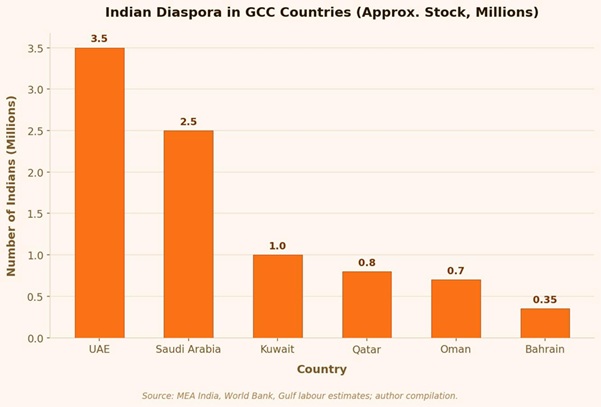
The scale of this “labour export” is enormous. As of early 2026, approximately 9.5 to 10 million Indians live and work across the GCC (Gulf Cooperation Council) countries. To put that in perspective, that is nearly the entire population of a country like the UAE, made up solely of Indian expats.
A Remittance Driven Economy
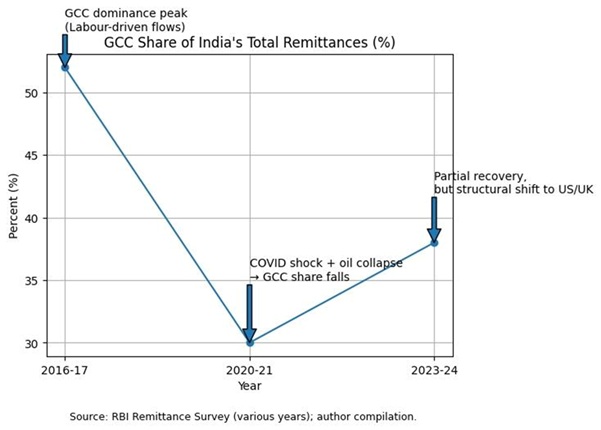
As per Government data sources, India remains the world’s top remittance recipient, with total inflows hitting a record $135.4 billion in the last fiscal year. And despite a rise in high-skilled migration to the US and UK, the GCC remains a juggernaut, contributing roughly 38% of India’s total remittances.
For states like Tamil Nadu, Kerala, and Maharashtra, which receive nearly 50% of these total inflows, it is a macroeconomic stabilizer that funds the current account deficit and keeps the Rupee from a freefall.
India’s Labour Market Paradox
But here is the real question, if people return to India due to the crisis in the Middle East, are there any “good quality” jobs waiting for them in India? The honest answer is no.
Youth unemployment remains elevated, particularly among graduates. Engineers in mechanical and construction fields face limited opportunities. Outside IT, and to some extent automobiles, there are not enough stable, high-paying jobs.
So people adjust. You will find postgraduates working in delivery jobs and informal sectors. I have personally spoken to Amazon delivery workers who told me they hold M.A degrees, or that they had worked in Dubai or Singapore before Covid and are now trying to leave again. This is becoming norm nowadays.
Indian National Wages and Savings Compared to Expat GCC Averages
In many towns in India, migration itself has become an economic model. People move to Singapore, Malaysia, or the Gulf, and the money they send back drives real estate, consumption, and local business activity. In many such regions, the labour market feels tight, not because jobs are available, but because the workforce has already left.
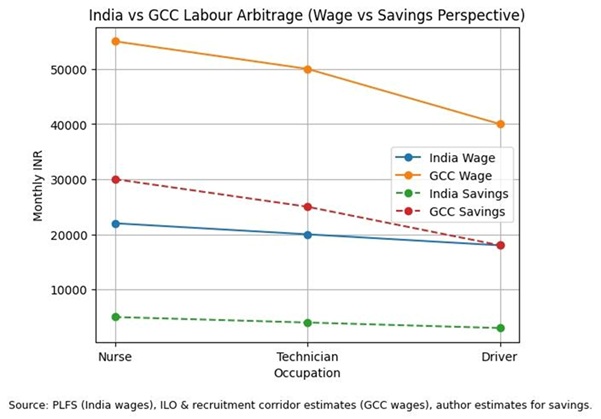
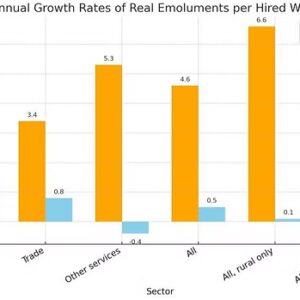
The wage gap explains everything. A nurse or lab technician in India may earn ₹15,000–₹20,000 per month. The same person can earn close to ₹80,000 in the Gulf. A private school teacher in Villupuram city in Tamil Nadu state earns around ₹8,000.
While nominal wages are 2–2.5x higher in GCC, the true driver of migration is savings arbitrage , which can be 5–6x higher.
This reflects structural differences in labour productivity and capital intensity.
India has a large pool of educated labour. But instead of becoming an advantage, it has turned into a wage suppressing force. There is always someone willing to work for less. As a result, wages remain low and bargaining power stays weak.
Percent of India’s Remittances From The GCC
At the same time, we are told growth is strong. Yes, the labour force participation is rising, but inequality is also increasing. A large share of employment remains informal and unstable. Inflation continues to erode purchasing power, and disposable incomes remain under pressure.
Right now, for many Indians, prosperous conditions are easier to find outside the country. Yes, the Gulf has risks. However, geopolitical tensions will come and go, and these are short-term disruptions.
Structurally, GCC economies will stabilize and grow again, and when they do, the flow of Indian labour will continue to pursue these opportunities. Because until India creates enough high-quality jobs at scale, migration will not slow down.