Only a Few Seem to be Giving Attention to the Glaring Warning Signs
I am not a fan of hyperbole. I do not like writing that traders should be careful and stay out of the marketplace. However, there is a whiff of bad air in this current global marketplace that is eerily similar to 2006-07 conditions. Whispers, rumors and facts are colliding. Evidence suggests that a trainwreck is coming. Again, I do not write these words to cause fear, I write them as a warning. I have seen this show before. Folks will act surprised if the train leaves the tracks and cause injuries and mayhem, but the alarms are glaring and we should pay attention.
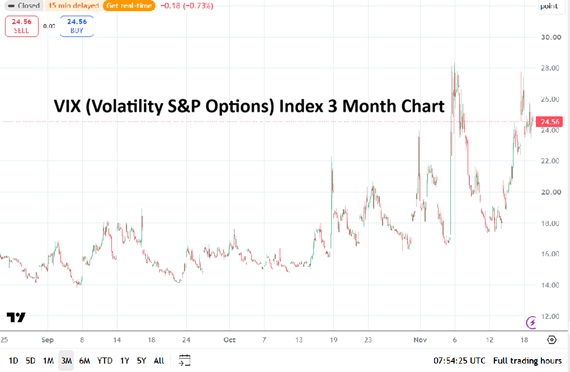
VIX (Volatility) Index Three Month Chart as of 19th November
In 2006 there were rampant whispers that the U.S housing market was in trouble and that people were getting behind on their mortgages. Additionally, there was also a known problem in the construction sector which was demonstrated via an inability to get crews to work on new housing projects in a timely manner. Builders were having problems finding workers because the growing demand in the housing market for new properties was out of control.
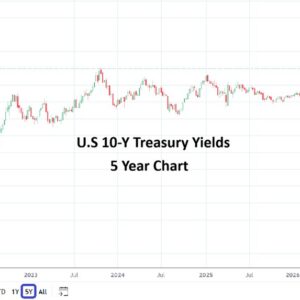
The problem was that folks were not only buying their first house, they were attempting to buy their second and third homes with the idea of flipping them for quick profits. Potential owners were getting mortgages as if they were simply ordering food at McDonalds – it was all too easy to qualify for loans. We all know what happened in 2007 and into 2008. We are still living with some of the consequences via huge government debts which linger on the books and are causing long-term bonds to come into question currently with increasingly high yields as investors demand more returns as risks escalate.
One of the things that I remember clearly during the 2006-07 period was the lack of understanding from the Federal Reserve and European Central Bank. They were simply not looking at the risks (or at least doing a sensational job of avoiding evidence that was staring them in the face). Rating agencies who are still treated like royalty simply collected their paychecks from their corporate clients and proclaimed there were no problems to see…. and this continued well after the mortgage problems broke into the news openly, this as it became clear banks and other lenders could not collect money from their clients who were unable to pay their monthly home loan requirements.
No, I am not talking about a housing crisis now. Although it is true that only a limited few want to buy a new home in the U.S for the moment, this as interest rates are too high. However, the subject is related, because one of the reasons for this warning is that interest rates are problematic. The U.S Federal Reserve is actively talking up interest rates again and is expected to raise on the the 9th of December.
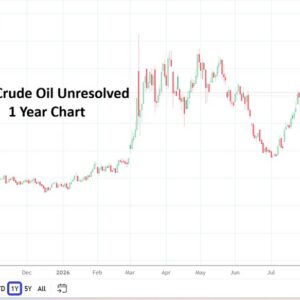
The price of WTI Crude Oil during this writing is near $84.00 and if the Middle East saga remains quiet until the next Fed meeting, this should be carefully considered by inflation hawks. The price of energy has caused massive inflation across the board globally. Yet somehow the Fed doesn’t seem to recognize they cannot control the price of energy caused by geo-political risks.
The price of WTI Crude Oil was above $100.00 on the 16th of September when the Fed raised its interest rate by a basis (0.25) point. In October the Fed did not raise rates, but the Consumer Price Index came in slightly higher on the 10th of November and sounded alarms in the media and financial institutions who acted somehow surprised that rising logistics, manufacturing and agricultural prices could somehow cause inflation in consumer goods. The USD bolted higher again in the clamor and folks are talking another Federal Funds Rate increase into existence on the 9th of December. What will that do to the housing market and credit card payments for U.S consumers?
The Federal Reserve is making a huge mistake. If the price of energy continues to decrease, the rate of inflation spurred on via intrinsic influences in all other sectors should moderate also. The problem no one is willing to discuss is that the costs of consumer goods (like taxes) always finds a way to increase but seldom finds a way to erode easily. Companies that are enjoying profits do not want to lower their revenue outlooks, after all how would they explain that to their shareholders?
Yes, it is a vicious circle, agreed. As much as Kevin Warsh, the Fed Chair, seems as if he has good intentions and wants to make changes within the Federal Reserve, the central bank often seems to create the sense that it is reactive instead of pro-active. Warsh remains in a difficult circumstance, one he has not made any easier since taking the helm. It is about time someone has an earnest conversation with U.S citizens. The mid-term elections have come and passed, a dose of honesty is overdue. Consumer goods will remain expensive until the price of energy comes down and companies pass on their savings to the public.
Let’s look at Wall Street for a moment too. There are plenty of storylines being played out inside of Nvidia. Anthropic is being watched carefully as it prepares to start trading today. Will ANT meet its trillion USD vision or will market anxiousness be on display when its first day of trading is completed later tonight?
The AI bubble is being discussed and acted upon widely and effecting prices on the Nasdaq 100 and many other global indices including Japan, South Korea, China and Taiwan. Circular financing is in question regarding the AI industry as a whole … a bit like the early mortgage problems that were emerging in 2006 and were attempted to be swept under the rug. Chipmakers, hyper-scalers, cloud and data centers are all part of a funding scheme that is reminiscent of the sub-prime mortgage financing that failed via collateralized debt obligations. Knock, knock, where are the rating agencies?
Again, I am not here to scare folks, merely point out warning signs. Another large signal that we should be suspicious of within the markets is the inaction from the SEC to supervise and create a solid framework for public trust.
Not only has the SEC seemingly turned a blind eye to forensic financial evidence that AI companies are taking part in ‘off the books’ expenditures which are creating enormous debts that will be hard to manage; but the SEC has also turned away from glaringly questionable accounting practices like those in Strategy (MSTR) as the company led by Michael Saylor swims in a cesspool it claims to be a healthy investment vehicle as its bets on Bitcoin turn increasingly sour. And if you are wondering how Bitcoin enters this subject matter it is just to show that there is a clear lack of substantive transparent frameworks.
Attitudes in the broad marketplace largely appear as if they are willing to make believe in the purity of elaborate assets in the most simplistic manner, this as long as companies create profits for those in charge and who are investing (speculating) on them. I am for free enterprise, but the stench in the air should be given attention. I would like to see governance which calls for transparency – simple as that – allowing businesses to function unimpeded and with solid intentions. Investors at some point will demand answers to their growing concerns and questions, the VIX maybe telling us folks are getting suspicious.
Copy and paste the text from AMT that you want to share
Like this? Get the next one in your inbox.
Independent commentary on global markets, geopolitics, and the forces shaping capital flows. Two to three articles per week.
Related posts:
 AMT Top Ten Miscellaneous Post-Labor Day Notes and Tantrums
 The Not So Coincidental World of Google and WTI Crude Oil
 Sentiment Matters: Speculative Narrative and the False Promise of Data
 Bad Timing for President Trump May Equal Good Trading Opportunities
 Fed Decision: Two Sides of a Dangerous Coin