USDJPY 20260813

Sentiment Matters: Speculative Narrative and the False Promise of Data

Do Retail Traders Understand They Are Being Misled?

As day traders ponder what they should do next via their speculative wagers in the broad marketplace, now is a good time to remind small speculators stepping into the casino of global assets that a lot of the production value they are offered is part of a show. Entertainment is literally being produced to entice people to trade. A large amount of retail traders are constantly being misled. Your adrenaline high is being counted upon to keep you a participant. The thrill you get when you are trading should not be more important than the outcome of your trade.

Large money machines like the Nasdaq 100, S&P 500, U.S Treasury yields, Forex, commodities and even the cryptocurrencies have plenty of descriptive words and definitions trying to interpret and predict values, trends and outlook, but quite frankly a lot of the words are nonsense created to entice and fool. Making retail traders willing participants in the circus is important because it keeps a lot of the the entertainers employed. 

It should be remembered that a lot of the folks on the institutional side of financial markets do not care about day traders except as an example of what not to do. They use day traders as a touchstone to point to failures and convince you why you are out of your element, while hoping you will stick around to create volumes that are often needed in some speculative assets. Are you being taken advantage of as a small speculator? 
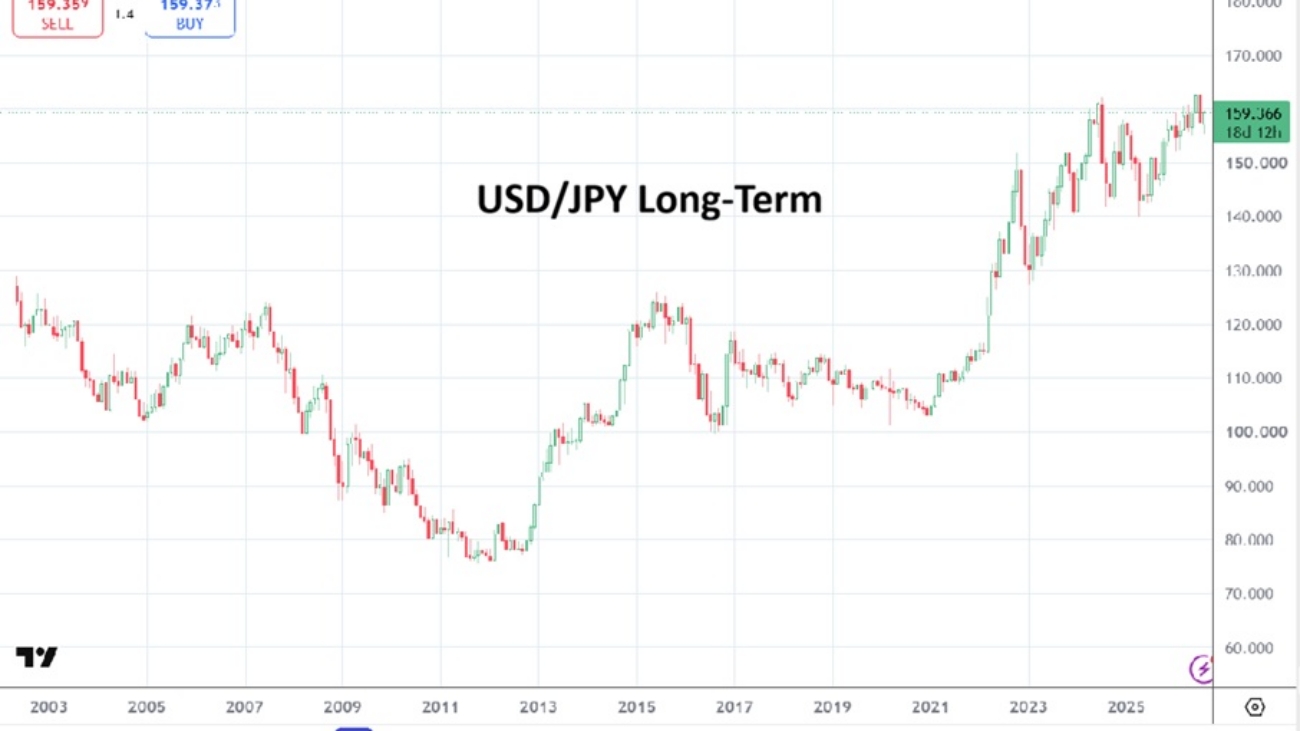
USD/JPY Long-Term Charts as of 13 August 2026

It is Much Better to be the Bank

A lot of people in the institutional financial industry know one thing for certain, while some make money investing by themselves or produce outstanding results for funds, many do not. There is an old saying among veterans in the arena, “it is much better to be the bank”. Transactional costs from commissions, carrying charges, exchange fees and taxes make money for the institutions and government regulators.

Many folks are involved in the financial markets because it provides a solid pay check, it remains a good career path for those who want the comforts of modern society. However, being a day trader while working another job as a blue collar employee, or business owner, or while being a professional in another endeavor and dreaming about wealth creation via speculation is alluring, but it frequently does not produce steady profits like it does for the people working in financial institutions collecting a paycheck. 

Confirmation Bias and Investment Outcomes

Economists for instance are relied upon to decipher inflation and decode data for devoted audiences. The believers are told why certain assets are reacting and what might happen in the future by the influencers. But this also can manifest into self-fulfilling prophesy that may not actually be connected to real economic outcomes, except that outlooks get fulfilled because of emerging behavioral sentiment.

For instance when yesterday’s U.S Core CPI was released and hit its expectation, what did markets do exactly, what were investors reacting to? The markets reacted to what the perception of mid-term outlooks will now do, based on how they think the Federal Reserve will act in September and the coming months. Reactions to anticipated results are a key factor in market dynamics. Large positions are shifted by financial institutions which have the ability to to absorb short and near-term losses of capital while they wait for their mid-term outlooks to be confirmed. Confirmation bias remains important in the marketplace as results get generated via intraday results as big players thrash violently with massive piles of cash causing technical perspectives to drive algo trading.

Inflation is Not a Joke

Btw, why did god create economists? To make weathermen look good. While that may fray the feelings of economists, the joke holds water. Because observable data and printed results often do not correlate. Just ask global consumers in various nations what they think about their government’s stated inflation data compared to what they are spending on a monthly basis and rising costs. People on the street often feel their national currencies feel like they are losing money no matter what central banks are proclaiming.

Inflation is an important measurement for consumers and investors. But real inflation is often not a desirable talking point for many governments. Often excluded data includes products like food, energy, and mandated medical and pension costs via payments to government social programs. Increasing rent or mortgages via rising interest rates inside of certain government inflation reports are frequently avoided too and would look atrocious. Central banks are supposed to fight inflation, but which inflation exactly? I am digressing I know, this may have nothing to do supposedly with everyday speculating in the marketplace, but actually it does.

Because the Forex market, gold, equity indices are reacting to sentiment generated by the second based on what outlooks will be in vogue in a few months and inflation effects. Our age of social media and fast communication makes the markets vulnerable to fear and optimism equally. Speed matters even if it sometimes causes pain for day traders via lightning quick results in the marketplace as outlooks change constantly.

Make no mistake, market forces are always in play as investors look for value. Sentiment caused by folks like central banks and their policies play consistently important and volatile roles as large players and financial institutions react to tea leaves being read. The USD/JPY is a case in point, the Japanese Yen has been dramatically weak and losing value long-term. 

The intervention by the BoJ and U.S Treasury which was coordinated a couple of weeks ago didn’t fix the problem that Japan has poor monetary and fiscal policy. What it did was serve as a warning to day traders and large players (including banks) not to bet too strongly against the JPY too consistently even if their perceptions tell them otherwise, because the Japanese and U.S government can wreck havoc and create unforgiving momentum which can kill the infectious trend upwards when they desire. 

The BoJ and U.S Treasury definitively put on a show for traders to watch and contemplate before they consider stepping into the casino again. Sometimes it is better to watch the entertainment instead of being an actor within the drama.

Thrill of Risks and Solid Tactical Strategy 

Why do speculators insists on chasing markets without having proper guidance? Why don’t these same smaller traders just let professionals manage their assets and put some money away when they can and accept the returns? Maybe because many speculators are skeptical about the real returns and know they are being made to endure a magic show of sorts. 

Day traders should only risk what they can afford to lose via a speculative allotment of cash. Fund managers for financial institutions, pension funds for example, are often mandated to put 2 to 3% of holdings into speculative assets in order to seek bolder returns. This is one of the reasons why hedge funds and speculative assets flourish in a cyclical manner. Large financial institutions allow for wagering on asset classes they know are dangerous in an extremely limited manner, but with a huge amount of money. Can you say Bitcoin? And it is widely accepted that these speculative positions can be wiped out and destroy capital. Institutions often do not mind losing on limited speculative positions, the same cannot be said for retail traders.

Smaller retail traders should not view themselves engaged in a battle against financial institutions which are filled to the rim with employees who are often unsympathetic about the outcomes produced. The world of speculative betting by retail traders is not about to change. Day traders should study momentum and behavioral sentiment.

Traders need to understand how to manage risks and emotions. While speculators can dream about making illustrious profits to impress friends and partners, if they do not take into the consideration the costs of the risks they are likely going to fall into a deep hole. Strategic tactics are necessary. Retail trading doesn’t have to be a game if it is conducted wisely.
Copy and paste the text from AMT that you want to share

Gold 20260805

Gold Looks Oversold in What Appears to be a Vulnerable Global Market

Quick Thoughts on Why Gold Should Remain a Friend

Did you stop paying attention to Gold after it stumbled from its record highs in late January? Was it no longer interesting because it wasn’t churning like an invincible machine upwards? Is Gold boring because it has produced sluggish results the past half year that doesn’t deliver the daily excitement craved to get you to wager in the marketplace? No, Gold isn’t WTI Crude Oil which has seen increased volume since late February due to the Iranian war and it might be a while before the precious metal regains a full fanbase.

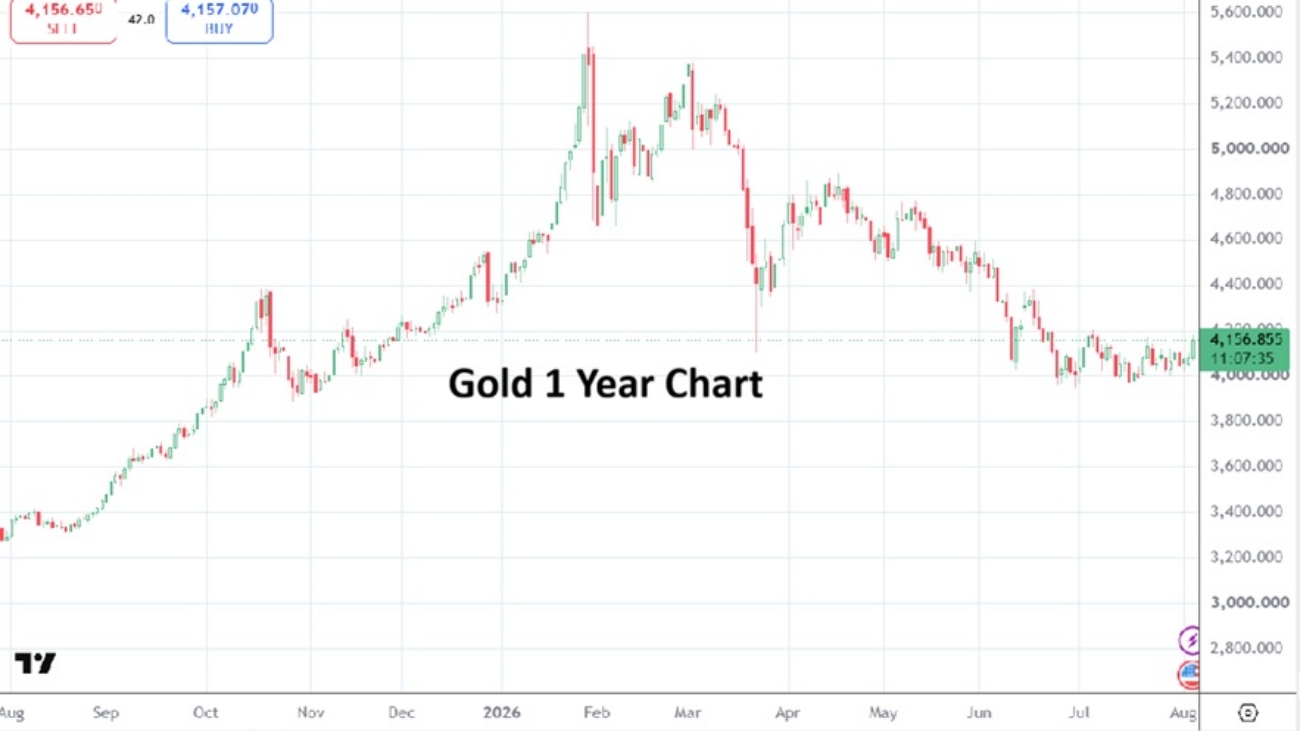
However, Gold still looks to be in oversold territory. Yes, Gold is near $4,150.00 as of this writing and in the middle of July was below $4,000.00. However, given the fragile behavioral sentiment that is being displayed in the global markets, there is a case for Gold being valued higher. Is the momentum produced upwards the past couple of days a signal that large players are starting to eye the commodity again?

Gold touched a high of nearly $5,610.00 on the 29th of January this year. Speculative fever was certainly ripe. Silver was near $120.00 too. Silver is now priced slightly above $61.00. I am not going to make a case for Silver here, so if you are looking for optimistic or speculative guidelines for ‘Argent’ you will not find it here. If you want to see a positive outlook for Gold please read on, and if you decide this means Silver may find another dose of increased pursuit that is your choice. 

Gold One Year Chart as of 5 August 2026

Via a one year chart Gold has lost plenty of value the past six months, but conditions may be turning favorable for the precious metal. Vulnerable sentiment in bonds, equity indices and Forex has grown loud and it might not vanish soon. 

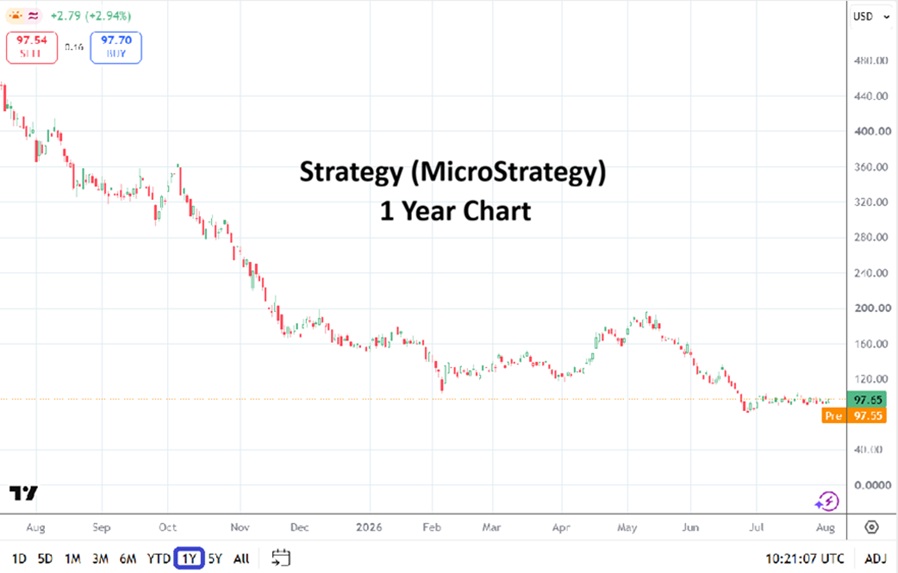
Yes, the Nasdaq 100 is once again back in its higher elements near 29,733.00, and has the 30,000 target lighting up again, but how long will it be before questions about the high cost of data centers, worries about AI revenues come back into vogue? What if interest rate worries continue to cause financial institutions to fear an increase in borrowing costs? What is going to happen if Bitcoin and Strategy (MSTR) implode completely? 

Allow me to say I am not saying Gold will go higher just because BTC/USD and MSTR are imploding, but it will not hurt the case for the precious metal either. Gold looks good because the over all health and sentiment of the marketplace doesn’t look particularly bright. 

If the price of WTI Crude Oil remains within sight of $74.00 and below that will be a positive development regarding inflation concerns, but will it be enough to generate a positive global economy? How will investors react if the Trump administration loses control in the House of Representatives in early November via the mid-term elections?

Strategy (MicroStrategy) One Year Chart as of 5 August 2026

The Case for Gold

Over the past year Gold has turned in a rather remarkable run from a speculative point of view and investment framework. One things stands out, Gold is not going anywhere. It will not disappear suddenly, meaning within the next 100 years and it will still be seen as a store of value. Gold remains a steady unit of secured capital for long-term investors having established a track record the past 3,500 years. Speculators who pursued the run higher, including hedge funds and large players likely lost money as values decreased the past six months, but let’s also note Gold has found rather tight support around its current price point since the middle of June.

Yes, gold lost value after the speculative storm subsided and people turned their wagering attention elsewhere, but the commodities loss of value in the past six months was froth being wiped away from a speculative market in which bulls ran wild.

The Fed may find itself in an increasingly difficult spot with the U.S Treasury reminding the U.S central bank about higher yield provisions. Japan is likely to continue to find it difficult to extricate doubts within financial institutions regarding the JPY. And if investment wheels struggle to produce gains steadily in the asset machines of the stock markets, some folks will turn their mid-term outlooks elsewhere for stability and potential profits.

Gold will continue to shine as it has always done. Fools Gold attracts the ignorant, real Gold attracts those looking to sustain value. I am not saying Gold needs to be $5,000, but Gold looks to be oversold in what feels like an increasingly nervous global market. 

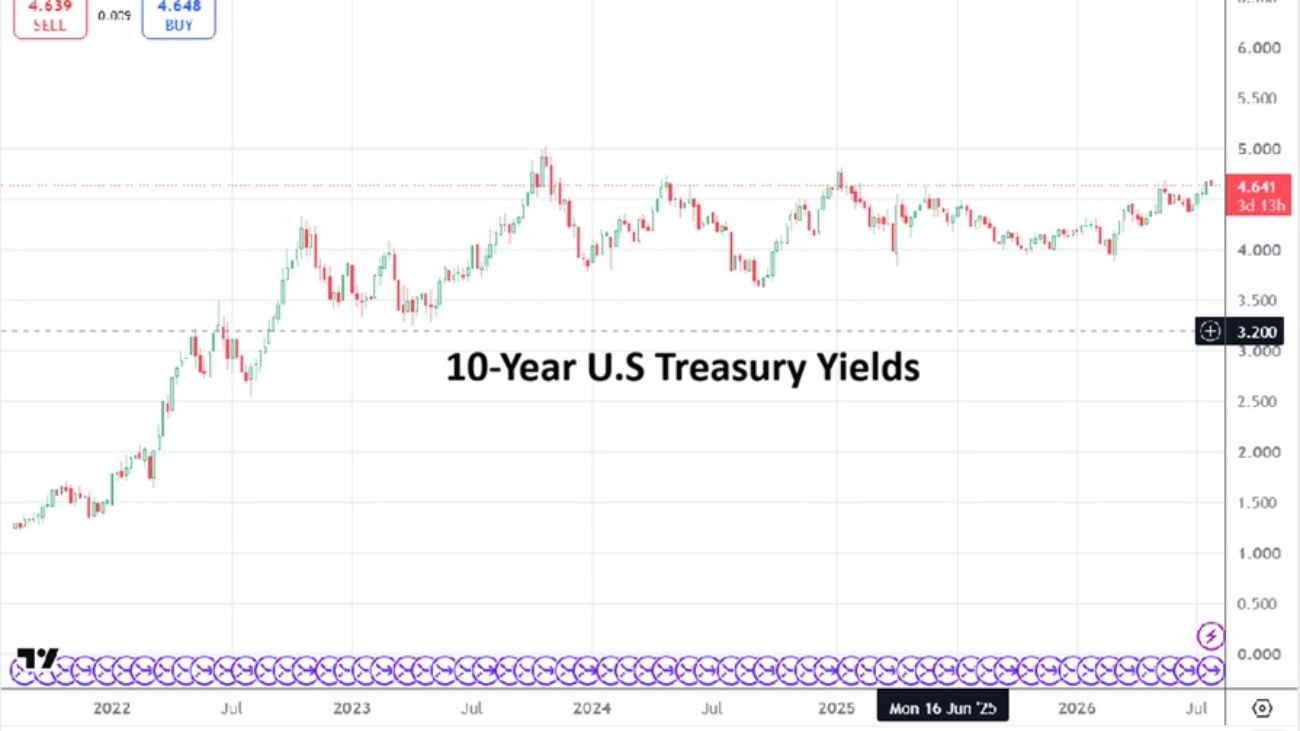
Perhaps that is the risk manager in me taking on the psychological sentiment of nervous investors who do not feel comfortable with the higher yields being seen in U.S Treasuries, the weakness in the USD because of a Fed that many feel lacks clarity or proper policy guidelines, shadows from the Middle East which are unlikely to suddenly disappear even if there is a formal agreement achieved in the near-term…and yes even as Gold has gained the past few days in the midst of the sudden USD slump.

Gold back to the $4,500.00 mark might seem like a farflung wager perhaps, but from a mid-term outlook, one that I wouldn’t be surprised with if it occurs. From a perspective of where things will be within 3 to 6 months I would venture to say Gold should not be lower than it is now. I would be genuinely surprised if it was below $4,000 in November of this year, but would not be surprised if it is touching $4,500 or higher.

Copy and paste the text from AMT that you want to share

Share:
AMT Top 10

AMT Top Ten Miscellaneous Interjections on the 3rd of August

Narrative Storms, Complaints and Observations

10. Mo’ Money: The Los Angeles Dodgers surprised nobody when they acquired Detroit Tiger’s pitcher Tarik Skubol in an effort to solidify their chances of a World Series three-peat. Don’t blame the LA Dodgers for playing by the rules, even if many don’t like the results. Expect a MLB strike in the coming year when owners try to change the salary structure in baseball.

9. Staggered: SpaceX is below $110.00 as trading gets set to begin today. Financial institutions are likely bracing for the open window that begins the 6th of August via a large amount of unblocked initial equity from pre-IPO shareholding that will soon be given freedom to sell. 

AMT Top 10 Miscellaneous Interjections on the 3rd of August 2026

8. Fidel Castro: Mayor Mamdani and a gang of other U.S utopian (and sometimes bigoted) politicians continue to make headway. Authoritarian failures like Venezuela and Cuba are prime examples of the paradise offered to U.S voters who lean left for the coming mid-term elections.

7. Takeover: Citadel’s takeover of Situational Awareness – which seems to have proven it had none – this past week in the wake of multi-billion dollars of losses has put Leopold Aschenbrenner’s smirk on hold for the moment. Have no fear fans, Aschenbrenner is likely to land on his feet and extol his methods once again to those who love leveraged speculative ventures while embracing unproven hedge fund saints.

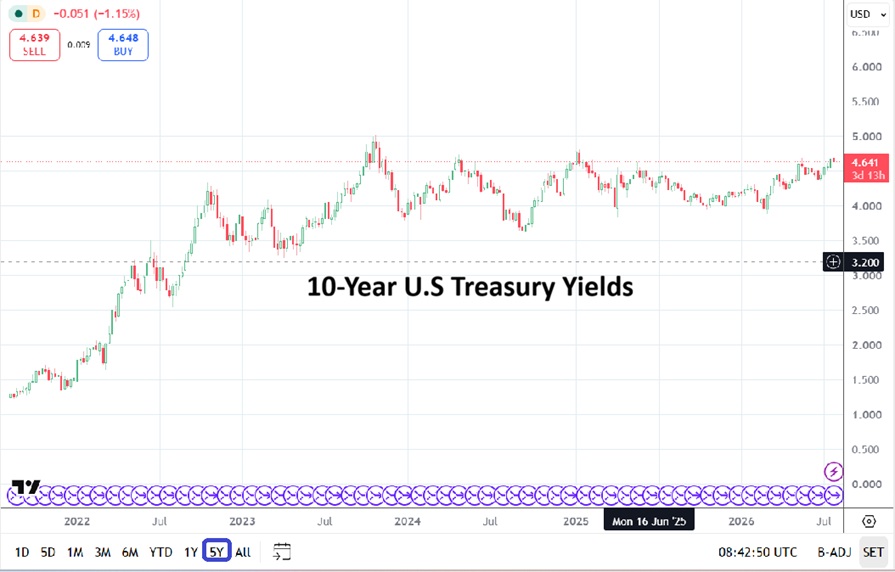
6. Fragile: The VIX Index appears asleep as it remains a hair under 16 as it measures the volatility of  the S&P 500 Index’s options. 10-Year U.S Treasury yields are around 4.68% and within sight of apex highs. The Nasdaq 100 futures are higher as of this writing as the cash market and a full week of trading awaits, having finished Friday’s session at 28,274. 

5. Anthony Fauci: Takes the Fifth and now hopes his pardon covers contempt.

4. Bitcoin: BTC/USD is near $62,850 in the wake of confirmed cold storage hacks via a generated random prediction onslaught using AI against Coldcard hardware. In other bad news Strategy’s MSTR value is around $93.35. And, yes, Michael Saylor has reportedly whispered he is thinking about buying more BTC soon. The ship appears to be sinking folks.

3. $80.00: WTI Crude Oil has shown price velocity lower today again, this after another flip-flop in behavioral sentiment was sparked by the announcement this weekend of a ‘rough framework’ agreed upon by Iran and the U.S. The Strait of Hormuz is seemingly quiet for the moment. At this point WTI Crude Oil price reversals are beginning to look like a well practiced dance routine. What will the next steps look like?

2. Forex Freakout: USD/JPY traders are listening to a myriad of narratives regarding the BoJ’s intervention. All experienced large players in the USD/JPY had to know an intervention was coming. While folks are pointing to the N.Y Fed and U.S Treasury selling of positions to bolster the JPY last week, they apparently need to be reminded the Treasury had the N.Y Fed start preparing the groundwork for such maneuvers earlier this year with steps including the ability to check on and counter USD/JPY Forex rates in January. 

While folks are accusing the Fed/Treasury of hurting the USD, they should note the move is to counter weaker JPY which Treasury Secretary Scott Bessent likely had been pressed by ‘higher ups’ to manage in order to make sure Japanese products didn’t become too cheap in the States. There had been at least two other interventions in the past handful of months from the BoJ, as of this writing the USD/JPY is near 156.600.

1. Unilateral: President Trump’s decision making has become bewildering entertainment as he practices a comedic like opera trying to convince people about his opinions which he seems to change relentlessly. President Trump should learn the Art of Sparse Talking. Will the Republicans harness the President after the mid-term elections?

Copy and paste the text from AMT that you want to share

Share:
Bitcoin 20260730

Debunking Bitcoin Lies

The Paradox, Absurdity, Lies and Myths of Bitcoin

They say it’s an “asset”… but it has zero assets.

They say it’s decentralized… but the large majority of all transactions go through trading platforms.

They say it’s digital gold… but it has none of the physical attributes gold derives its value.

They say it’s immune to censorship… but countries like the US and China manage to be the largest holders without buying any Bitcoin.

They say it’s scarce… but there are 2.1 quadrillion Satoshi units that act exactly like a Bitcoin unit.

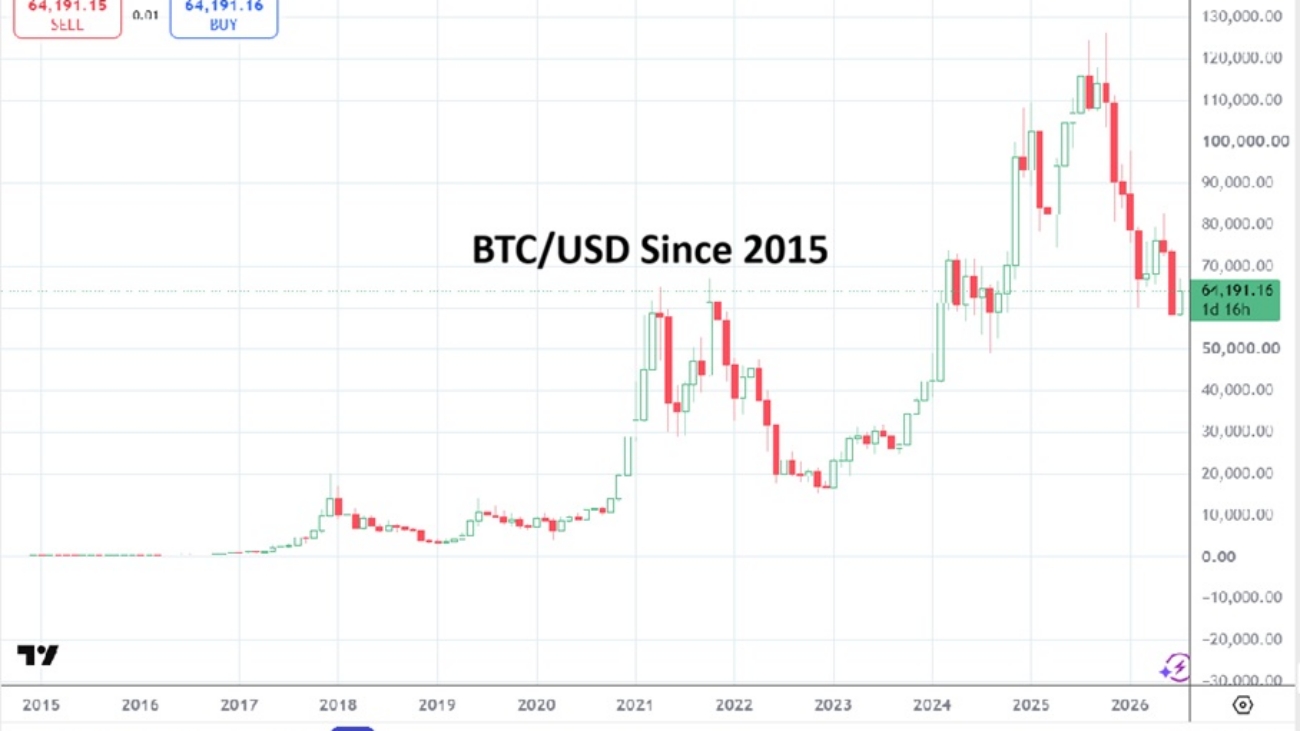
They say it’s a store of value… but it has witnessed several -50% to -80% drawdowns in its short history.

They say it derives its value from energy… but energy is a massive cost that someone has to pay!

BTC/USD Chart Since 2015 as of 30 July 2026

The Bitcoin protocol was introduced as a new monetary system: decentralized, censorship-resistant, scarce, transparent, secure, and independent of governments and financial intermediaries. It promised to eliminate the need for trusted third parties and replace institutional trust with a code.

However, more than fifteen years later, Bitcoin has failed on all those fake promises…

Today, the Bitcoin ecosystem is increasingly dependent on centralized exchanges, custodians, mining companies, stablecoin issuers, institutional investors, and financial intermediaries. The supposedly revolutionary monetary asset has become deeply intertwined with the very financial infrastructure it was designed to bypass.

And beneath everything lies an uncomfortable economic reality: the Bitcoin mining industry must continuously spend real resources (electricity, capital, land, labor, and massive equipment that becomes obsolete very quickly) to generate a virtual token that is distributed randomly… with the reward being halved by design every four years! What business model can survive such a flawed system where revenues are distributed randomly and halved every four years while costs increase constantly with adoption? It is the exact opposite of an economy of scale. The more successful your product is, the deeper your losses are! Even Fried Thiel, MARA’s CEO, ended up admitting that Bitcoin mining is a “zero sum game”! With miners doomed to fail economically, Bitcoin’s network security is destined to failure.

1. The Decentralization Paradox

The word “decentralized” is perhaps the most important word in the Bitcoin vocabulary.

In practice, it is far from being the case. Most Bitcoin transactions go through exchanges, custodians, brokers, or institutional funds (ETFs). Even miners store their mined bitcoins with custodians like Coinbase.

Today, the entire ecosystem relies on the solvency of companies like Coinbase, Binance, Tether, Strategy… all of which are in a critical financial situation. Should any of them collapse, the whole house of cards will fall down.

The irony is striking. Bitcoin was designed to eliminate the need for trusted intermediaries. Yet Bitcoin users increasingly trust intermediaries to hold their Bitcoins. Even miners do! How absurd is that?

2. The 21 Million Fake Limit

The most used argument for Bitcoin is that there will only ever be 21 million bitcoins.

But the statement requires closer examination too. A bitcoin is divisible into 100 million Satoshis. Each Satoshi has exactly the same “shape,” the same function, and the same attributes as a Bitcoin! Dividing something into exact copies of itself acts like a multiplier! That means the real supply is 2.1 quadrillion units (call them Satoshis or Bitcoins, it doesn’t matter).

The immediate response from Bitcoin supporters is that this is no different from saying that one dollar consists of 100 cents… but the dollar was never designed to have an absolute monetary cap.

The question then becomes whether the 21 million cap creates meaningful economic scarcity or simply a narrative of scarcity for marketing purposes. Anyway, the scarcity of something useless doesn’t make it useful…

The “21 million limit” becomes even more absurd when we consider the enormous number of other cryptocurrencies and tokens that exist. If scarcity itself is the central source of value, why should Bitcoin’s scarcity be uniquely valuable? The crypto ecosystem has demonstrated that creating a new digital asset is technically easy. Anyone can create a token with a fixed supply. If we create another digital token with a 10 million limit, much lower than Bitcoin’s 21 million limit, would it be worth more than Bitcoin because it would be considered scarcer? How can something be considered scarce if it can be replicated indefinitely with exactly the same “unique” attributes?

3. The “Digital Gold” Absurdity

They say Bitcoin is digital gold. Yet gold has physical properties that have made it valuable for thousands of years: durability, divisibility, portability, resistance to corrosion, and usefulness in jewelry and industry. Bitcoin has none of those unique physical attributes. Take away those physical attributes from gold, and it loses all its value. Since Bitcoin is gold without its physical attributes, it is therefore worth nothing! It’s as if we created a virtual token and called it “digital water,” pretending it’s “liquid” and “essential to life.” Still, if we can’t drink it or wash with it, what value would it have? Not only does Bitcoin have no intrinsic value, but it also requires continued investment in heavy infrastructure and massive electricity consumption to stay alive. It is like having a car parked in a garage, continuously consuming gas to remain “alive,” while you pretend it has value because it is unique! Once gold is mined, it costs nothing to continue existing. When Bitcoin is mined, the network needs to keep running on heavy electricity consumption for the Bitcoin to remain “alive.”

4. The “Censorship Proof” Lie

Governments around the world have acquired Bitcoin through seizures, confiscations, enforcement actions, bankruptcies, and other means. That’s how a digital coin created as a challenge to government monetary authority ended up in government-controlled wallets.

Governments do not need to control the blockchain to influence the market. They can shut down crypto platforms and seize their assets. What happened to the promise of monetary freedom?

5. The Myth of Low-Cost Bitcoin

Bitcoin is sometimes described as a cheap way to transfer money. The comparison can be attractive. There is no need for a traditional bank to approve a transaction. The network operates continuously.

But the cost of the system is not simply the transaction fee paid by the user. There is also the cost of maintaining the infrastructure. Bitcoin mining consumes enormous amounts of electricity and requires heavy equipment that becomes rapidly obsolete. The economic cost of maintaining the network is simply unsustainable. All listed miners show constant negative cash flow with massive dilution of shareholders and collapsing stock prices. It is not a coincidence. It is simply a sign that Bitcoin mining is economically unsustainable. It is a fundamentally losing business that is doomed to fail. When most miners inevitably capitulate, they will sell their Bitcoin reserves and provoke a massive collapse in the price. With less than 5% remaining to be mined over the next 100 years, there will be zero incentive for miners to start all over again. Bitcoin is doomed to fail from within.

If Bitcoin were truly revolutionary, all large technology companies, like Apple, Google, Microsoft, and Meta, would have jumped in to get their market share (as they did for AI)… instead we have empty shells with no business model, like Strategy, Nakamoto Inc, and Metaplanet, turning into “Bitcoin treasury” companies while incurring heavy losses and permanent negative cash flow.

Bitcoin was designed as an alternative to financial intermediaries. Now collapsing “treasury companies” and unsecured crypto platforms control the ecosystem. We shifted the risk from banks like JPMorgan, Citi, or Morgan Stanley, supported by the US central bank, to entities like Coinbase, Tether, and Binance… some of which aren’t even audited! And all without any support from a central authority.

The user may distrust banks, but he is asked to trust an exchange. The user may distrust central banks, but he is asked to trust a stablecoin issuer. The system has not eliminated trust. It has redistributed it to a much weaker ecosystem!

Bitcoin will be remembered as the greatest bubble of all time and the largest misallocation of capital and resources in human history.

Copy and paste the text from AMT that you want to share

Share:
10Y Treasury Yields 20260728

Thoughts on Kevin Warsh, the Fed and USD, Energy, Nasdaq 100, USD/JPY and Bitcoin

Fed’s Rate Announcement Tomorrow and Underlying Market Conditions as Folks Talk

Tomorrow’s FOMC rate decision from the Federal Reserve continues to cause some angst in the investment community as folks try to decipher Fed Chairman Kevin Warsh’s disdain for tea leaf reading. What is being missed by seemingly a lot of the crowd is the open signal from Warsh that he prefers to keep his outlooks rather muted, this because he appears to be focused on the mid and long-term economic picture.

Simply put, I do not think the Federal Reserve is going to raise interest rates tomorrow, nor will the Fed Chair give too much indication about his thoughts for mid-September. It might be stated in the Fed Press Conference afterwards that the costs of energy is being watched, but that is too obvious. Count on it being recorded that the Federal Reserve will watch data and react accordingly. In the meantime, financial institutions may demonstrate volatile overplayed USD centric positions which look overbought looking into the mid-term, as they still worry about the near-term.

10-Year U.S Treasury Yields Five Year Chart as of 28 July 2026

Political Questions and the Cost of Energy as the Fed Reacts

Let’s for a moment dive into politics. Does anyone think that Kevin Warsh doesn’t speak to Treasury Secretary Scott Bessent who has been a long-time associate? And does anyone think Bessent doesn’t have the constant voice of President Donald Trump in his ear? 

The mid-term elections are nearing ladies and gentlemen. The de-escalation in the Iranian situation certainly has something to do with nations expressing wishes for less military action to the White House. Israel, the UAE, Kuwait, Bahrain, Iraq, Qatar, Saudi Arabia, Pakistan and Turkey are trying to influence positions as President Trump considers his next moves regarding alliances and resources. However, the situation may have something to do with the price of WTI Crude Oil too and its effect on U.S manufacturing and surprise, surprise the Federal Reserve. 

Does anyone else remember that the last de-escalation also started just before the Federal Reserve’s last FOMC meeting in June? I am not being a conspiracy fanatic, just pointing out that lower WTI Crude Oil prices do help the case for a Fed outlook which looks at the costs of energy in a pro-active manner, one which might include the U.S economy and internal White House discussions with politicians who represent voters who have the power of creating a backlash. Lower interest rates equate into lower borrowing costs for consumers.

The Fed’s Impact on Equities and Forex (and the USD/JPY)

So if the Fed does not raise tomorrow, nor gives an indication of what it will do in September and offers a stance of ‘we are vigilant and will watch the economy’ will that help sentiment on the Nasdaq 100 which is starting to have the look of a patient with a bad cold who can’t quite seem to get rid of a cough? Microsoft and Meta step into the limelight tomorrow with earnings reports, Amazon and Apple follow on Thursday.  The combination of the Fed and important quarterly earnings will impact Nasdaq sentiment and other equity indices.

It appears analysts of financial institutions are starting to discuss CAPEX – capital and expenditures – openly. And this is creating shadows as investors weigh the costs of energy and infrastructure against stated profit projections. However, let’s not throw the baby out with the bath water, the Nasdaq 100 has a gain of 20%+ over the past year (July to July), and since March the index has still gained 12%+. The war in Iran (excuse me, conflict) has not had a meaningful impact it appears on the outcome of the Nasdaq 100 via sentiment generated. But the shadow of expenditures, debt and revenue is getting louder bandwidth and speculators need to remain cautious in the indices.

Back to the Fed and Forex, the USD has been strong, you are allowed to say extremely strong if you have been betting on downside incorrectly. The USD/JPY is almost in nosebleed terrain, currently 163.830. The Bank of Japan will announce their interest rate policy very early Friday (for those of us not in Asia) and let’s see if the ‘independent’ Bank of Japan is taking a cue from their government which is clearly interested in continuing to build stronger export ratios. Has the Bank of Japan given up the so-called stated fight to keep the JPY within a solid stance? This is doubtful externally, and Japan is certainly not going to allow the USD/JPY to traverse wildly higher, but it may not consider the 165.000 mark as the end of the world. Beware of saber-rattling from the BoJ in the coming days.

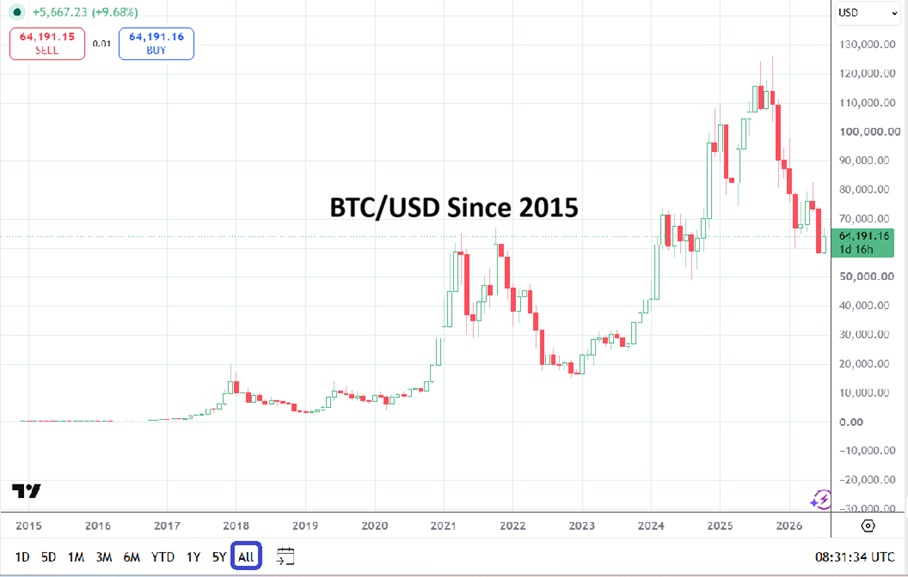
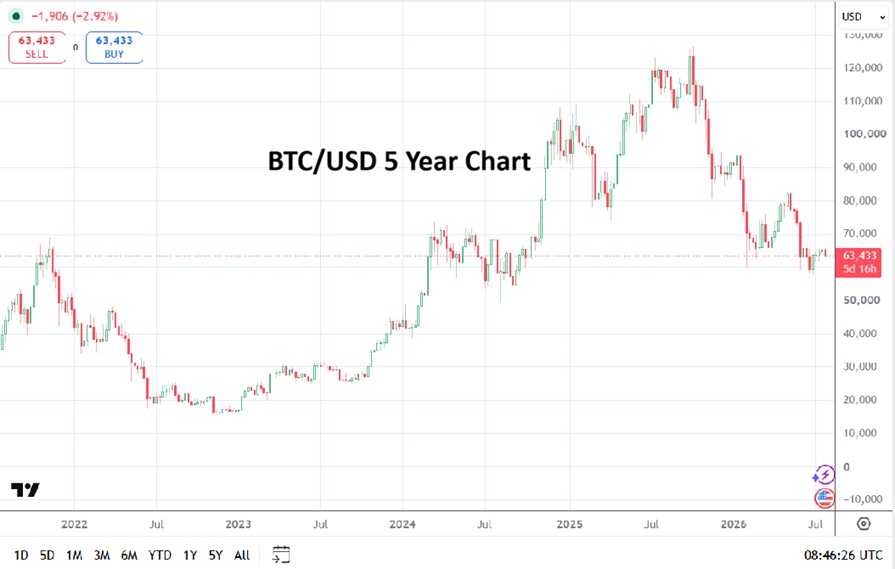
Bitcoin Five Year Chart as of 28 July 2026

Doubts and Remarks Regarding Bitcoin Below $64K

On a last note, the world of cryptocurrency remains interesting and stormy. It appears from watching the awkward statements from influencers and crypto (including Bitcoin) media outlets the past couple of months, as they attempt to explain their pain and convince others that everyone should buy at these lower values that more troubles are coming. 

What are the influencers, crypto media’s and importantly financial institutions’ actual skin in the game relative to those who have lost interest in Bitcoin and the digital market worth? Are influencers and large institutions like BlackRock hoping to pawn off their suffering ‘asset’ holdings to the public, while trying to convince us that today’s cheap prices represent buying opportunities? Is the wave of slanted influence and panic-like banner waving a hope to save themselves in order to cash out of a sinking market, this while hoping someone else takes their place in lifeboats that face a difficult voyage to safe harbors? 

BTC/USD is near $63,4000 now. Yes, we know, we have been told plenty of times before that all the Bitcoin winters eventually turn into summer again. Blossoms will create the sweet scent of profit we are assured, but what if the winter becomes an ice age? What if Michael Saylor and his ability to produce complex financial statements and instruments for MicroStrategy and Strategy equity shares continue to make little mathematical sense? What if all the investors into Bitcoin and cryptocurrencies are left holding the bag and find themselves covered by permafrost? The tundra currently looks harsh. Will the Bitcoin crowd who has been so adamant about being free of regulatory controls and mismanaged central banks cry openly for bailouts from the U.S Treasury with USD? Now that would be entertaining.

Copy and paste the text from AMT that you want to share

AMT Top 10

AMT Top Ten Miscellaneous Meditations for the 16th of June

Memorandum of Misunderstanding, the SPCX Rocket, the Knicks and Brazil as Jazz Plays in the Background

10. Legacy: Sonny Rollins passed away on the 25th of May at the age of 95. Rollins was a master jazz musician and saxophonist who will be listened to forever. His sound, cadence and imaginative ability to create while playing with bands, and often lead via his unique style make him an everlasting legend. If you haven’t listened to Sonny Rollins start out with his song St. Thomas via Saxophone Colossus.

AMT Top 10 Miscellaneous Meditations for the 16th of June, 2026

9. Surreal: The New York Knicks won their first NBA Championship in 53 years. Some Brazilian football fans returning to their hotels after their team’s 1-1 draw versus Morocco in their Group Stage World Cup match in New Jersey had to walk through throngs of Knick fans celebrating on the streets of Manhattan in bizarre looking circumstances as they worried about their national team. Walt Frazier and Pele both wore Puma and met in the 70’s.

8. Strategy: Michael Saylor continues to claim the wet and cold Bitcoin wind blowing back in investors’ faces is a refreshing mist that will invigorate the HODL crowd eventually. In the meantime MSTR is near $131.00 and BTC/USD around $66,300.00. Saylor sees Bitcoin above 1 million eventually and beyond, while some others see headwinds and more losses developing.

7. Bleeding Money: Political mismanagement shadows Chicago which appears ready to lose the Bears football team via a new stadium across state lines in Hammond, Indiana, this as team officials and ill-equipped Illinois leaders argue about property taxes and other business considerations (and maybe kickbacks). NYC is hurting for funds too, this as important companies make plans to place their corporate headquarters and employees elsewhere and avoid Mayor Mamdani’s nonsense. Apollo Global Management is the latest to decide to venture forth into Texas and make its New York presence less important. 

6. Commodities: Gold is near $4,330.00 this morning, Silver around $70.00 and WTI Crude Oil close to $78.00 via futures pricing.

5. Nasdaq 100: The index finished 3.06% higher yesterday and at a value of 30,543.92 per last night’s close. The Nasdaq 100 has been delivering a wild ride for speculators and investors. The index saw all-time highs in early June when it went above the 30,700.00 level. The S&P 500 concluded Monday’s trading at 7,554.28 and up by 1.65%, the index’s high was also in early June when it went above 7,600.00. For all the talk of doom and gloom over the past week and a half with fears about a sustained run downwards in the U.S indices, they are showing upwards momentum for now. 

4. BoJ: The USD/JPY remains within sight of the 160.000+ mark consistently. While other major currencies have gained a bit the past few days against the USD, the Japanese Yen remains sticky near its highs as the Bank of Japan is likely watching speculators wager on the higher realm. FX traders need to remember that the BoJ may act when it feels it has enough clarity regarding the Iran saga and inflation concerns. In other words, a warning shot may come soon threatening an intervention. Buyers beware.

3. SpaceX: Is it a bird or a plane? No, its a 2.1 trillion market cap valuation via a rocket like IPO on the Nasdaq 100. While some may want to bet against Elon Musk early, those type of decisions have proven costly mistakes for some short sellers in the past when dealing with Musk and Tesla. Some may argue for value of $115.00 and less per each SPCX share, but it might prove unwise to step in front of the upward trend for the moment. Case in point, Tesla is near $411.00 per share and causing chagrin within certain crowds as they point to weakening sales, but only see the company do better in value. Oh, and SpaceX ended Monday’s trading at $192.50.

2. Fed: Kevin Warsh leads the FOMC Committee as the Chairman for the first time as the Federal Funds Rate decision awaits this Wednesday. Some think the Fed will increase the interest rate by 0.25%, AMT does not based on the opinion Chairman Warsh likely wants to start off his job on friendly terms with the White House and Treasury, while also counting (hoping) on cheaper energy prices.

1. MoU: The Iran conflict awaits a signed agreement. The terms of the Memorandum of Understanding are being whispered, but transparency has not been delivered and won’t be until Friday supposedly when the U.S and Iran attend a ceremony in Switzerland. While financial institutions and global markets are ready to turn the page and engage in optimistic outlooks, it remains to be seen if negotiations will lead to tangible results as multiple questions and concerns linger. In the meantime a sizeable part of Iran’s population still lives under tyranny. Who won? Did President Trump make a quiet deal with China to guarantee oil flows from the Strait of Hormuz and receive something in return during his visit to Beijing from the 13th to the 15th of May? There appears to be room for plenty of misunderstanding.

Copy and paste the text from AMT that you want to share

AMT Top 10

AMT Top Ten Miscellaneous Early May Reflections

May Day Parades and Wishing on Santa Claus

10. NBA Playoffs: Basketball has now entered its serious season, one in which rest days are no longer done in order to gain better draft day lottery odds, nor appease star players who feel the need to take a day off. There have been a couple of upsets already during these playoffs with Houston, Denver and Boston all of whom were favored to win their first round competitions going down in flames. Semi-conference championship contests will begin tonight. Basketball fans are now getting the NBA product they want.

9. May Day: Parades and protests were seen throughout the United States this past Friday. The once treated contemptuous flag of communists was held aloft and portrayed as a viable ideology at many demonstrations. Protestors marched and chanted their displeasure about free enterprise. A lack of historical knowledge about the massacres ignited by Joseph Stalin, Mao Zedong and Pol Pot while paying homage to iconic Che Guevara images was evident. However, their longing for a Santa Claus like figure to come bearing free gifts did not appear. 

AMT Top 10 Miscellaneous Early May Reflections on the 4th of May 2026

8. $80,000.00: Bitcoin has been traversing higher and continues to flirt with the eighty thousand USD realm in its sights. Strategy (MSTR) finished last week above the $177.00 ratio. Are the new higher avenues a sign momentum will continue to endure for these two highly flammable speculative wagers, or will profit taking douse them again when suspicious caution reemerges?

7. NYC: Mayor Mamdani has made it known the city is not going to be able to meet his budget requirements and has postponed the publication of New York City expenditures until the second week of May. Mamdani has called on the State of New York to change is financial arrangements with NYC in order to facilitate his wishes. In the meantime, the Mayor has decided to pick a battle with hedge fund manager Ken Griffin, the primary owner of Citadel, which if unresolved is likely to cost NYC vital jobs and income. Charm and ignorance are likely to get Mayor Zohran Mamdani only so far.

6. Warning: USD/JPY is traversing near 156.900 as if this writing. Last week the USD/JPY was over the 160.000 ratio and sustaining values. But official murmurs from the Bank of Japan proclaiming readiness to intervene sent the Forex pair tumbling. Japanese Yen speculators betting against the BoJ should remain alert and understand that quick profits and escaping before an actual intervention strikes is a very dangerous game to play. The USD/JPY is the domain of large players and financial institutions. Yields on Japanese bonds have escalated, which is a sign that belief in Japanese fiscal policy remains lukewarm, but participating in the USD/JPY via wagers needs to be done with extreme care.

5. Hormuz Strait: WTI Crude Oil values continues to effect behavioral sentiment amongst investors and speculators. The price for spot Crude Oil is above $106.00, while futures are challenging the $100.00 realm. Inflation concerns are turning from whispers into fact. Airlines are being impacted, and logistics for large companies like Unilever are becoming higher costs for global consumers.

4. Reality Shock: Escalating electricity costs for the giant data centers that Artificial Intelligence infrastructure needs are starting to not only be realized, but causing investors to understand genuine profits for the mega-sized ambitions of many companies may prove fleeting. Hyper-scaling companies seeking to build bigger electrical capacity include Microsoft, Alphabet, Meta, Amazon Web Services and Equinix and it will not be easy. Potential and real electricity shortages are causing some nations, states and cities to plead for help due to too much demand on their overwhelmed power grids.

3. Voting: Jerome Powell has decided that he will remain as one of the seven Federal Reserve Governors, which allows him to vote fully on interest rate (FOMC) policy. Powell’s action is highly irregular and one that certainly doesn’t please the Trump administration. Treasury Secretary Scott Bessent has expressed his exasperation regarding Powell’s non-departure from the FOMC. Powell will step down as the Chairman of the Fed on the 15th of May, but his position as Governor doesn’t end until the close of January 2028. Because the Fed is an independent entity in theory, President Trump and those aligned with Trump’s economic outlooks will have to deal with Powell who will clearly not bend to White House desires. 

2. Apex Peaks: The official start to the Middle East conflict – this time – began on the 28th of February. Since deciding the Nasdaq 100 and S&P 500 were vastly oversold in late March, a parade upwards bearing gifts has developed and both indices attained record heights this past week. The Dow Jones 30 is still below its all-time levels produced in the second week of February when it scorched above the 50,000 level, but the granddaddy of U.S indices also did remarkably well in April. 

1. Exit West: The decision to officially leave OPEC by the United Arab Emirates is a clear sign that the Iranian war has turned into a philosophical realism regarding existential outlook. The UAE’s has aligned itself with the West and has said no to radicalization. The United Arab Emirates desire to become a Singapore like model in the Middle East that practices free enterprise and provides a worldwide hub for commerce is clear. Many people are not connecting the dots regarding the UAE’s choice, a realignment of the Middle East is underway and it will have a profound economic effect globally.

Copy and paste the text from AMT that you want to share

postN87

AMT Top Ten Miscellaneous Morsels for the 12th of April 2026

Optimistic Hopes Appear Ready to Fade into the Distance

10. B-ball: The NCAA Men’s Basketball Championship concluded early last week with a rather resounding outcome for the University of Michigan who won their 2nd Men’s trophy, the first one coming in 1989. Michigan dismantled the Arizona Wildcats and then handled the Connecticut Huskies. The NBA playoffs will start this coming week. The Oklahoma Thunder and the San Antonio Spurs are getting a lot of attention, and the Denver Nuggets might have something to offer.

9. Trump: A week of optimism now leads towards threats of additional noise. Peace talks held in Pakistan appear to have failed this weekend, and now another countdown has begun as the Iranian conflict appears ready to escalate. The U.S White House and President Trump will certainly make more noise in the coming days.

AMT Top 10 for the 12th of April 2026

8. Logistics Advertising: Kit Kat and Nutella have been rewarded with massive exposure. The Kit Kat truck heist of 12 tons of product (reportedly said to be in a special F1 designed candy bar theme) made headlines. Kit Kat’s owner, Nestle, was obviously content with the free publicity and proof of demand. And a jar of Nutella floated across the Artemis 2 spacecraft unexpectedly this week, gaining international attention and sparking smiles from fans of the Italian chocolate hazelnut spread.

7. Creator: Yet another candidate accused of being Satoshi Nakamoto has been produced. Blockstream’s CEO Adam Back has been named by the N.Y Times as a potential creator. In the meantime, the real question is whether anyone but Iran (as they run their illicit shadow economy), Michael Saylor of MSTR and a few big whales consisting of institutions and hedge funds are really paying any attention to BTC anymore. The BTC/USD price as of this morning is around $71,600.00. Bitcoin was traversing near $126,000.00 in the first week of October 2025.

6. Greenback: USD/JPY 159.240, EUR/USD 1.17225, USD/ZAR 16.38540, USD/INR 93.0480. USD centric strength may prove solid this coming week and other currencies may suffer a bit.

5. Sideways Shimmer: Gold finished the week near $4.745.00, roughly $100.00 above its starting point last Monday. U.S 10-Y Treasury yields went into this weekend around 4.34%. Shifting outlooks this coming week will likely ignite turbulence in both assets.

4. Blind Eyes: More than a handful of U.S politicians have been featured as big winners regarding their stock trading abilities. Their gains far exceed the winning percentages of the overall returns made by indexes (as a benchmark). Little has been done to stop what many view as insider trading. There are many forms of political corruption around the world. However, a variety of places and people, including Americans seem to accept this potential misconduct. The ‘Stop Insider Trading Act’ has been brought forth in the House of Representatives and Senate, but the legislation may simply meet a slow death and disappear.

3. Inflation: U.S interest rates via the Federal Reserve will be held in check at a minimum over the next few months. The higher costs of energy will certainly seep into prices for transportation, manufacturing and agriculture. Fed Chairman Jerome Powell may be quite content to leave his position May the 15th. The next Fed FOMC interest rate decision is due on the 29th of April.

2. Strait of Hormuz: WTI Crude Oil closed above $90.00 going into this weekend. When futures markets open early on Monday, the price of the commodity is likely to rise via increased anxiousness which will build into the mindsets of large players today because of the failure of peace talks in Pakistan. The price of Crude Oil remained high last week, only moving to a low of around $85.00 this past Tuesday, showing cautious attitudes remained. Prices above $100.00 will likely become a new target quickly for some who bet. Will an early spike upwards this week then start a counter reversal lower, or will a climb become sustained?

1.  Risk Off: The S&P 500 and Nasdaq 100 will get plenty of attention this coming week as behavioral sentiment remains fragile. Having skirted near its 200-days moving average lows in recent weeks, the indices have gained handsomely since the 31st of March. Will the upwards momentum come to an abrupt end this week, or have financial institutions been able to digest their nervousness and will they show a capability of remaining buyers?

Copy and paste the text from AMT that you want to share

postN87

AMT Top Ten Miscellaneous Missiles and Missives for the 29th of March, 2026

The Iranian War Dominates our Lack of Humor

10. Final Four: The Men’s NCAA Basketball Championship will be set after today’s games. The Arizona Wildcats, our pick, advanced to the Final 4 by beating Purdue last night. Michigan is favored to beat Tennessee and the Duke vs. UConn game is anticipated to be close. The University of Illinois advanced by beating Iowa on Saturday and maybe the biggest underdog – if the Volunteers lose to the Wolverines today.

AMT Top Ten for the 29th of March 2026

9. Jobs Data: U.S Non-Farm Employment Change numbers will be published during a banking holiday on the 3rd of April, this as the Iranian war shadows investment sentiment. Will potential jobs numbers results create nervousness on Thursday, and side effects Monday the 6th of April? 

8. Private Equity: Outflows remain a problem for BlackRock and other firms as deal making comes under a bright light. Investors are questioning valuations, lack of exits and money that sits in ‘zombie’ funds. Imposed limits on redemptions by some firms have created nervous indicators. Is the private equity problem correlated to lackluster momentum on Wall Street, this as desire for the next big thing runs out of marketing hyperbole?

7. 10-Y Notes: U.S 10-Year Treasury yields finished the week near 4.43%, Friday’s price action saw an apex around the 4.48% vicinity, highlighting nervousness. On Friday the 27th of February 10-Y yields were close to 3.94%,

6. Forex: USD/JPY ended this past Friday around 160.250, making it cheaper for tourists to visit Japan as cherry blossom season starts this week and lasts into early May. However, the Bank of Japan and Japanese citizens are not amused by the weakening Yen. USD centric strength continues to resonate loudly. 

5. Fed: Potential drama surrounding the U.S central bank and the replacement of Fed Chairman Jerome Powell has taken a backseat to the Middle East conflict. Concerns about inflation are legitimate. The Federal Reserve will be hard pressed to defend an interest rate cut in the mid-term.

4. President Trump: Speaking from both sides of his mouth (and his opponents might say another area of the body) may be strategic genius from the White House regarding Iran or prove to be a lack of focus. However, it certainly keeps everyone guessing what is going to happen next in the Middle East.

3. $100.00: WTI Crude Oil prices have remained below the one-hundred level for the most part during the Iranian war, yes – there have been outliers above. Will we begin to see sustained prices above the century mark this week? Short-term reactions to the U.S military potentially seizing Iran’s Kharg island would certainly cause price chaos, but could it also soothe some large players in the energy sector via mid-term outlooks? 

2. Good Friday: The holiday at the end of this week will be effected by anxious behavioral sentiment. The potential of a long weekend with plenty of noisy chatter could make for nervous investors this coming Thursday as they position themselves ahead of possible escalating storms.

1. Fear: The S&P 500 and Nasdaq 100 have entered corrective depths. Who will be brave enough to start looking for bottoms as the Iranian war rages with no end in sight? Will a reversal upwards emerge this week?

Copy and paste the text from AMT that you want to share

postN87

AMT Top Ten Thoughts and Trepidations for the 22nd of March, 2026

The Return of AMT's Top 10 Illustrious 'Weekly' Salvos

First we must congratulate those who were willing to climb out from under their rocks (and bomb shelters) to offer musings. But let’s not digress….. to the AMT Top Ten List we go.

AMT Top Ten for the 22nd of March 2026

10. March Madness: The NCAA Men’s Basketball Championship is underway. Some of the more hated schools remain catalysts. Our pick, the University of Arizona Wildcats. 

9. Bitcoin: Traversing above 68,000.00 USD currently almost feels like an accomplishment considering BTC/USD was near 63,000.00 in early February and again in early March. But do not blink your eyes. BTW, MSTR (the much loathed MicroStrategy by some AMT folks) went into this weekend below $136.00 per share.

8. South Africa: The USD/ZAR finished Friday near 16.96800 depending on bids and asks. On the 29th of January the currency pair was close to 15.65000. The South African Rand has done well over the long-term, but it is correlating to the broad Forex market concerns. Day traders should not take things personally, and accept that risk adverse moves – particularly as a major war rages is part of speculation. Near-term viewpoints can differ with long-term prospects. 

7. Not Glimmering: Gold at the start of the Iranian war was around $5,260.00, it has fallen to a mark of $4,491.00 this weekend. Showing gold’s speculative momentum beforehand hand, outmatched current values. Where next?

6. Silver: Above 120.00 USD briefly towards the end of January, the commodity is below 68.00. Wild betting has caused a drop of more than 42%. Too much exuberance.

5. Risks: U.S 10-Year Treasury Yields were below 3.95% on the 27th of February, via Friday’s close rates are above 4.38%. Can you spell f.e.a.r?

4. Safe Haven: The U.S Dollar Index which had been showing solid downside is near 99.500, on the 27th of February it was around 97.850 – a rather legitimate rise. 100.000 may be a target by some large players.

3. Shrieking Hyperbole: WTI Crude Oil prices are certainly getting plenty of attention. However, voices expressing concern about WTI touching higher values starts to sound like an auction in order to get attention for the circus barkers. WTI remains near 100.00 USD and this mark is a barometer. The price is high and it can go higher, but expressed fear about $140.00 and $200.00 should be treated with disdain in the near-term.

2. Iran War: The conflict in the Middle East cannot be downplayed, but it can become fearmongering by Cassandras’. The U.A.E is still open for business and other nations in the Middle East are functioning. Yes, there is noise and the situation can grow more dangerous. But the potential of freedom for the people of Iran is a solid goal, though some may find this naive until it is proven. Can it become fact?

1. Coming Attractions: U.S stock markets are rightfully nervous. Friday’s close for the S&P 500 has brought it into terrain that challenges its 200 day moving average. The combination of weak technical attitudes and behavioral sentiment is a dangerous mix. Risk management may not be enough for day traders to survive current conditions, sitting on the sideline instead of betting on equity indices intraday may be more efficient and less lethal.

Copy and paste the text from AMT that you want to share

Cactus flower 20260121

Emotional and Speculative Market Could Spark Trouble

Day Trading Problems: Not Everyday Produces a Profitable Outcome

Early indications show that U.S markets will produce volatility today. The EUR/USD is straddling the 1.19000 level, Gold is around $5005.00. Bitcoin for those that care is near 68,700.00 USD.

Flowering Cactus

Not everyday produces profits. That is rather easily dealt with by large speculators, big players and financial institutions who have the time and money to withstand short and near-term storms. The current markets represent danger if you listen to the noise from outside sources – media, analysts and influencers engaged in trying to create opinions a lot of the time. However, bias must be distinguished and another very fundamental thing needs to be accessed.

Day trading is not the same as being a large speculator, big player or financial institution. Day trading usually means a person is a retail trader, a client therefore of a brokerage house. Day traders do not typically have deep pockets.

Getting caught up in the fear factor is a quick way to lose money fast. Gold, Silver, Bitcoin, U.S major indices, Forex have all delivered volatile trading the past few weeks. What looks like a gentle day on tap for day traders must always be treated carefully.

This week the U.S will release Retail Sales, Non-Farm Employment Change data and Consumer Price Index readings.

The jobs numbers which traditionally get released on Fridays and should have been published last week, were delayed because of the quasi-govt shutdown which happened. 

Last night’s Super Bowl was a rather lackluster game, while this has nothing to do with the markets, perhaps it will cause some type of reaction via a need for more noise (emotions) to be heard by those who have a desire for attention they do not deserve. No do not worry, the game’s outcome is not going to affect today’s trading. However, via behavioral sentiment this week’s coming results across a wide range of assets are set to be more entertaining than the Seahawks victory over the Patriots last night.

Day traders have likely made money for their brokers the past couple of weeks as they have taken hits because of volatility. This week could provide more choppiness. Retail traders need to remain careful and not bet on things simply because someone else suggests they are an expert on world affairs when they in actuality are merely getting paid to make noise and sell more bets. And by the way, betting on the Patriots last night to win just because they had won so many times before is a reminder past performance doesn’t guarantee future results.

Copy and paste the text from AMT that you want to share

post231

Bitcoin Lower after White House Crypto Summit Led by Trump

Bitcoin Lower after White House Crypto Summit Led by Trump

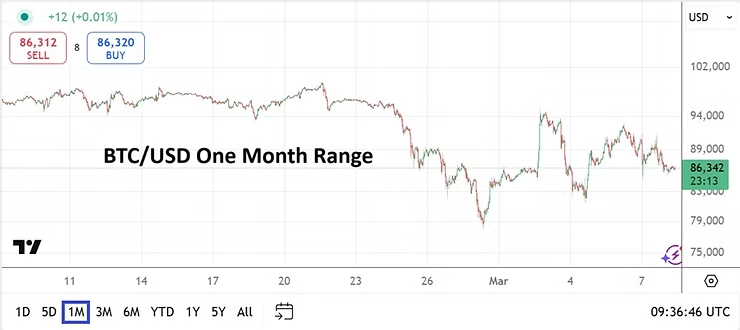
BTC/USD One Month Chart as of 8th March

Yesterday’s Crypto Summit at the White House didn’t meet the hopes of those who desire the U.S to be a proactive Bitcoin buyer. Baby steps accomplished for exchanges perhaps, but not a gamechanger for influencers looking to spark another rally higher.

Bitcoin is lower in early trading this Saturday, after the White House cryptocurrency summit essentially said it would hold onto Bitcoin that has been seized by the government, but did not express other impetus which would have driven the price of BTC/USD upwards.

While President Trump did sign an Executive Order creating a Strategic Bitcoin Reserve, it is important to note the holdings of Bitcoin and other cryptocurrency will consists of digital assets seized by the U.S, it doesn’t guarantee purchases of Bitcoin by the government.

Cryptocurrency backers may be unhappy with the White House’s lack of desire to engage in proactive cryptocurrency buying, including Bitcoin, which may have sparked the downturn being seen for the moment. One important statement in the Executive Order states:

“The Executive Order begins to resolve the current disjointed handling of cryptocurrencies seized through forfeiture by, and scattered across, various Federal agencies.”

A careful reading of the above and other declarations in the Executive Order, makes it clear that the Trump administration wants better oversight of previously seized Bitcoin and cryptocurrencies. The Executive Order while suggesting the government sold some of its Bitcoin in the past and other cryptocurrencies too early, can also be viewed as political statement proclaiming poor management – but this is an assertion which uses hindsight – which is always easier.

If the U.S government is holding substantial Bitcoin now, perhaps this may be the time to cash out considering the BTC/USD market is still rather highly valued. In other words, if the U.S government decides to hold onto Bitcoin too long it could simply prove to be just another speculator.

The Executive Order signed yesterday may create less restrictions and greater freedom for legally established U.S cryptocurrency exchanges that already exists. However, more flexibility for new enterprises trying to enter the sphere need opportunities they can pursue in what is already a competitive landscape. Bitcoin did trade above 91,300 yesterday, but after the Crypto Summit outcome began to see a selloff and as of this writing is hovering near 86,000 USD.