
US Dollar Index 20260804

Apologia: Confronting Market Opinions and Pointing Out Wrongs

The Markets Can and Will Harm You, Can You Survive?

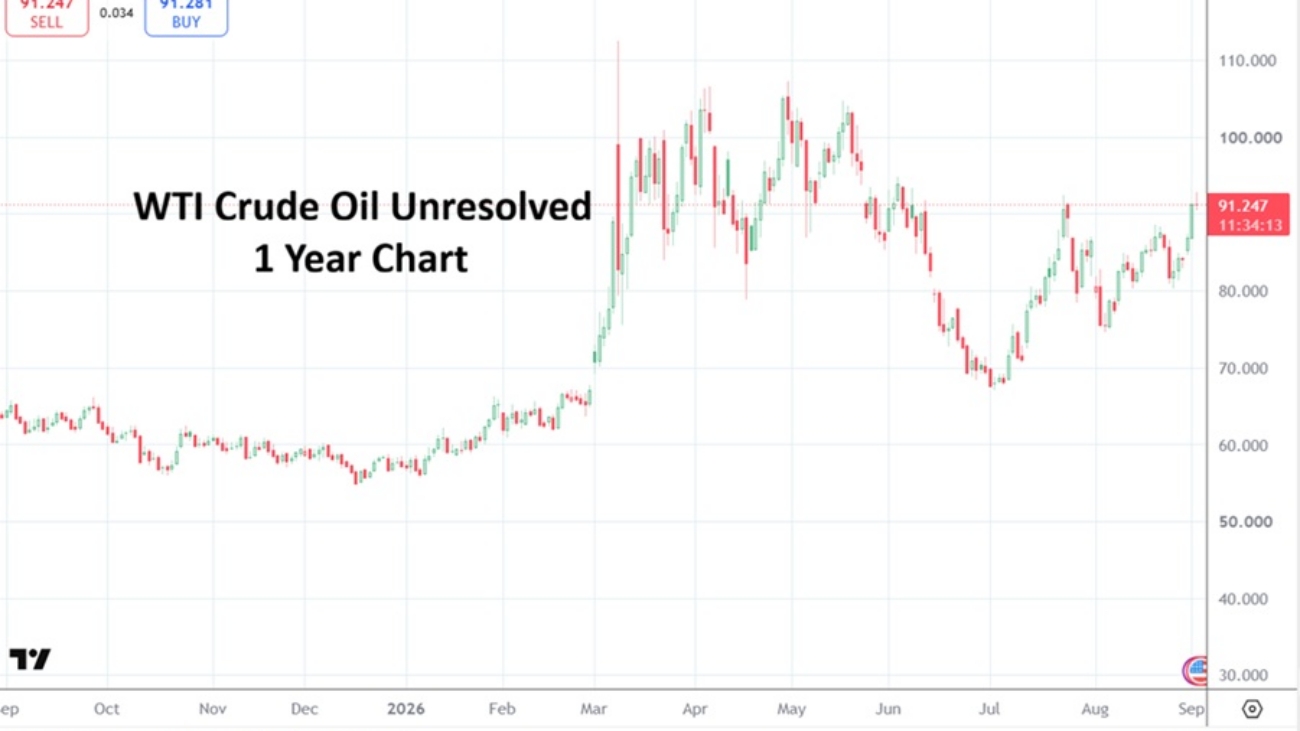
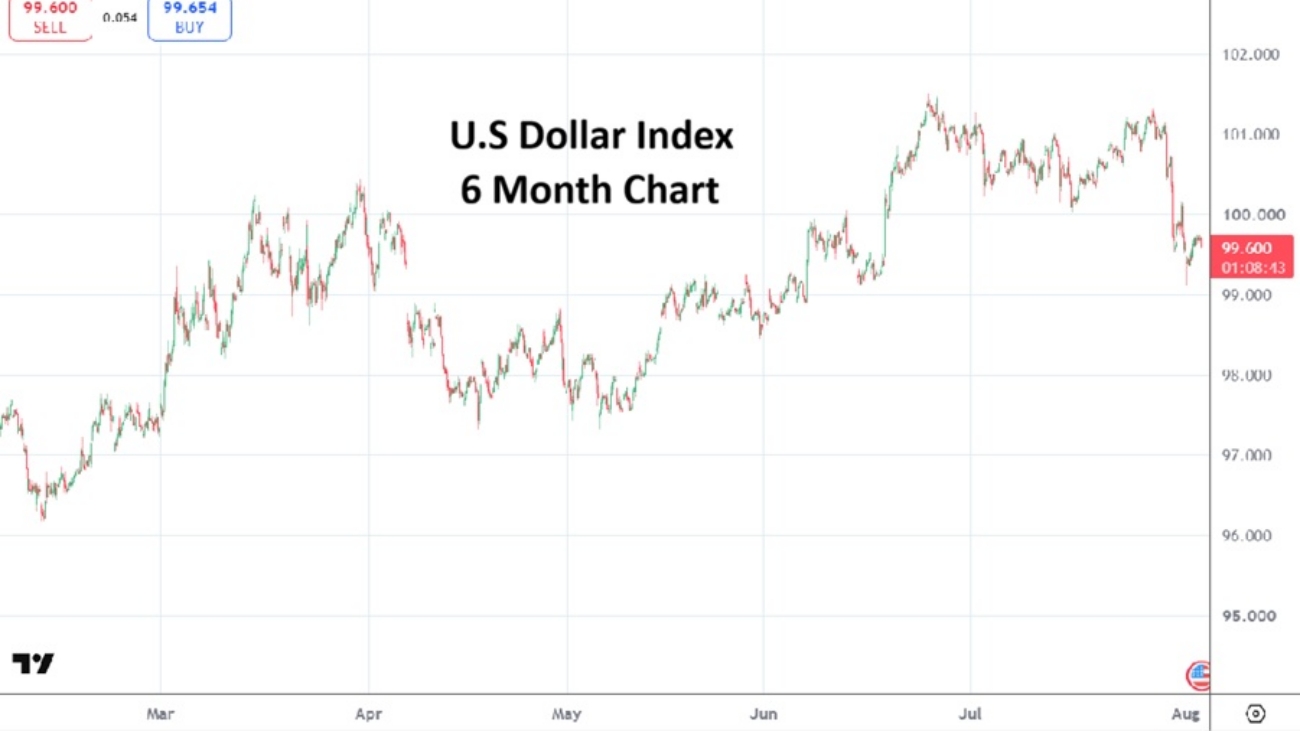
The U.S Dollar Index is back to where it was trading on Friday the 13th of March. (Yes, a Friday the 13th). Literally a week and half after the Iranian war started from a trading perspective. We are almost half a year into the war and many are still acting surprised by surges which churn on a daily basis in WTI Crude Oil and a host of other assets including bonds, equities – indices, and Forex. 

A large group of people are acting as if the USD selloff sparked across the Forex board on Friday was doomsday and had evil intentions. But what if the Trump administration actually wants a weaker USD? What if all they need to do is to get Wall Street to kick into gear and create higher values to change behavioral sentiment in Treasury yields? It is not so easy to fool professionals is it?

The narrative that the N.Y Fed via orders from the U.S Treasury was selling USD to strengthen the JPY became a conspiracy masterclass in over-reaction. Particularly because the BoJ had intervened twice already this year prior to Friday’s action – why is nobody pointing to that? It doesn’t mean, by the way, that the BoJ suddenly knows what they are doing, but it doesn’t mean that the financial end of the world is near. We need to get over our own fears.

Fed Chairman Kevin Warsh may be new on the job, he may be nervous, but he is not a schoolboy, and likely has a plan of action. I agree it sometimes is not easy to discern what Warsh wants exactly, but the USD is now weaker and maybe Scott Bessent and Donald Trump do not mind. I didn’t call Bessent and Trump the Fed Chair’s boss please note – he is independent after all. Cough, cough.

Everyone Has An Opinion, Many of Them Are Wrong

I have a good friend who constantly tells me to make sure I give an opinion, he will know who he is when I say he has proven to be the worst trader I have ever known. Hello there, Mr. Bad Trader if you are reading. Part of the reason he is so bad at trading is because he has never understood who he is as an individual participant in the marketplace.

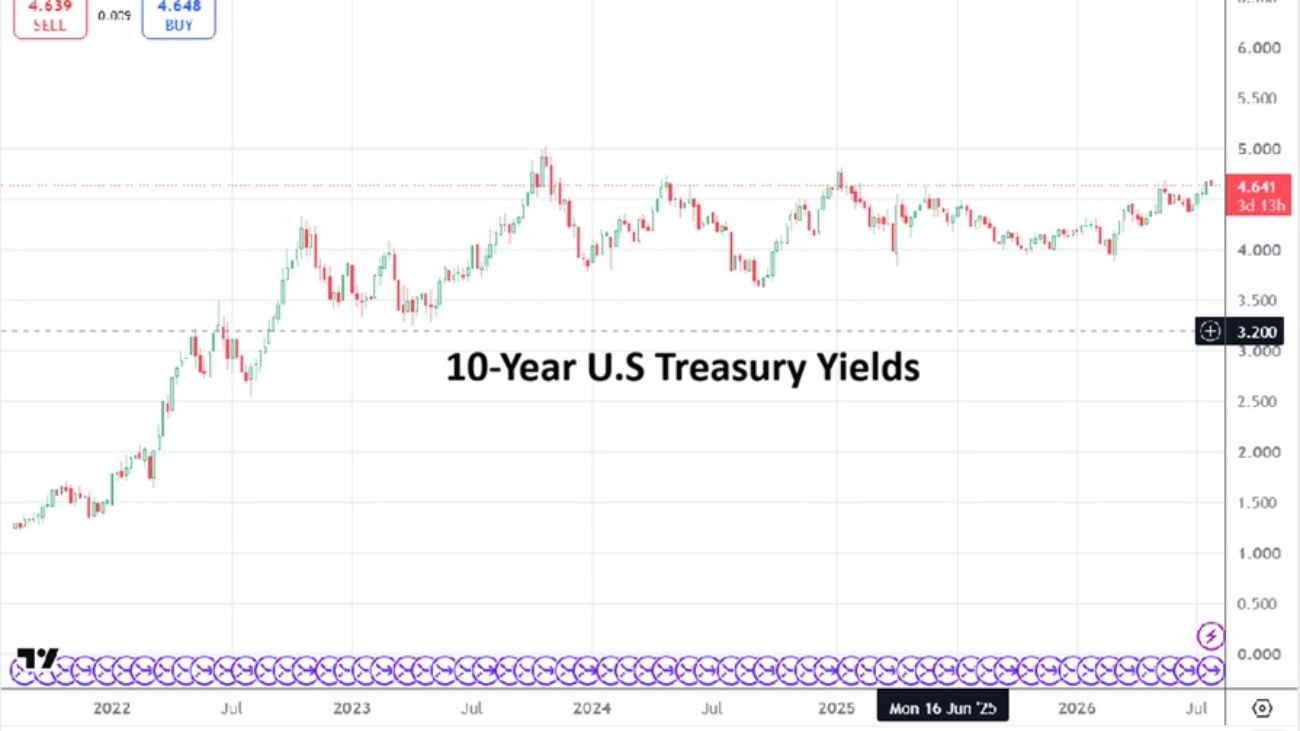
U.S Dollar Index Six Month Chart as of 4 August 2026

His ego will not let him admit to himself he is wrong. This is not an easy thing to do for anyone. When is the last time you were able to admit you were wrong about a market position and turn around on a dime and be willing to take a loss? 

My friend doesn’t seem capable of understanding he is not an investor, he is a trader. While his outlooks about the market often prove correct, his timeframes constantly complicate matters. He has never had the temprament to be an investor, he is too impatient. He always used too much exposure via leverage and he remained unwilling to change his sails even when the winds clearly told him he was about to get wrecked. My friend no longer trades.

I am certain he would be willing to trade someone else’s money, but he has no funds to risk on his own. And I kid you not when I say he has attempted to prove the marketplace wrong more times then can be counted and still thinks he will eventually be proven correct. 

So when was the last time you were able to change your mind about an opinion you held? When was the last time you said to yourself and aloud, “I am wrong and I misunderstood the circumstances.” And do you know why you were wrong?

We listen to analysts tell us why the marketplace is going to sink, we also pay attention when they say an asset is going to the moon. Analysts are never held accountable because they are able to say things like past results do not guarantee future results. They also get to point to risk disclaimers, have a look at ours angrymetatraders.com/risk-disclaimer, protecting their opinions about the markets put forth. So why should you pay attention to someone who has no skin in your game? Because it is important to get other viewpoints, once in a while you may actually be able to allow yourself to admit that your perspective is only one of many.

The broad markets have been unkind the last six months in many ways to retail speculators. Investors have gotten hurt, but they will likely survive or at least find a job elsewhere if they cannot improve their results in the coming months to hide their failures at their current firms. This is not a polite game you are playing as a retail trader. Your brokers’ no doubt love you and talk to you about the markets and your participation like it is a sporting event. ‘Even the great ones fail once in while,” have you heard this one? 

Yesterday I stumbled upon someone’s post on LinkedIn discussing a theory and ability to only aim for a half a percent of gain everyday as if that small target somehow made it achievable – all the time. Like compound interest they subtly suggested, half a percent gained everyday would show the level of control you would have in the marketplace and allow you to make millions of dollars within a few years. Good news, isn’t it?

However, many of us know, it just isn’t that easy. While it is a great notion to remain focused and not be too ambitious while trading, buying someone else’s system for a lot of money or being charged their management fee is a little like being chewed on slowly by a vulture. 

Where is the optimism? Where is the golden secret that will allow you to become a better trader? I don’t have any, except to say diligence, determination and knowing when you are wrong and need to get out of a position is vital. We all want to find the big wave and ride momentum in order to profit. 

Sometimes the markets look like they offer riches for the brave, but sometimes they turn into a pile of ashes. No matter how hard influencers want to praise certain assets they cannot shine a turd into gold. Sometimes the turds are merely garbage and need to be treated like fertilizer, allowing for something else to grow its in its place. Maybe that is replacement theory. Maybe it is meaningless. But this is a game with hard rules, risk management and knowing when you are wrong are among some of the more important early lessons that should be sustained.

A lot of smaller players are angry at larger players in the marketplace, the reason for this has a lot to do with survivability. Small traders like my friend are no longer able to speculate, big players who are frequently part of larger financial institutions simply go home and wait for another day. Those are my opinions, take them or leave them. Tomorrow is a new day and may offer more clarity, for the moment I suggest being careful in the broad markets.

Copy and paste the text from AMT that you want to share

Share:
10Y Treasury Yields 20260728

Thoughts on Kevin Warsh, the Fed and USD, Energy, Nasdaq 100, USD/JPY and Bitcoin

Fed’s Rate Announcement Tomorrow and Underlying Market Conditions as Folks Talk

Tomorrow’s FOMC rate decision from the Federal Reserve continues to cause some angst in the investment community as folks try to decipher Fed Chairman Kevin Warsh’s disdain for tea leaf reading. What is being missed by seemingly a lot of the crowd is the open signal from Warsh that he prefers to keep his outlooks rather muted, this because he appears to be focused on the mid and long-term economic picture.

Simply put, I do not think the Federal Reserve is going to raise interest rates tomorrow, nor will the Fed Chair give too much indication about his thoughts for mid-September. It might be stated in the Fed Press Conference afterwards that the costs of energy is being watched, but that is too obvious. Count on it being recorded that the Federal Reserve will watch data and react accordingly. In the meantime, financial institutions may demonstrate volatile overplayed USD centric positions which look overbought looking into the mid-term, as they still worry about the near-term.

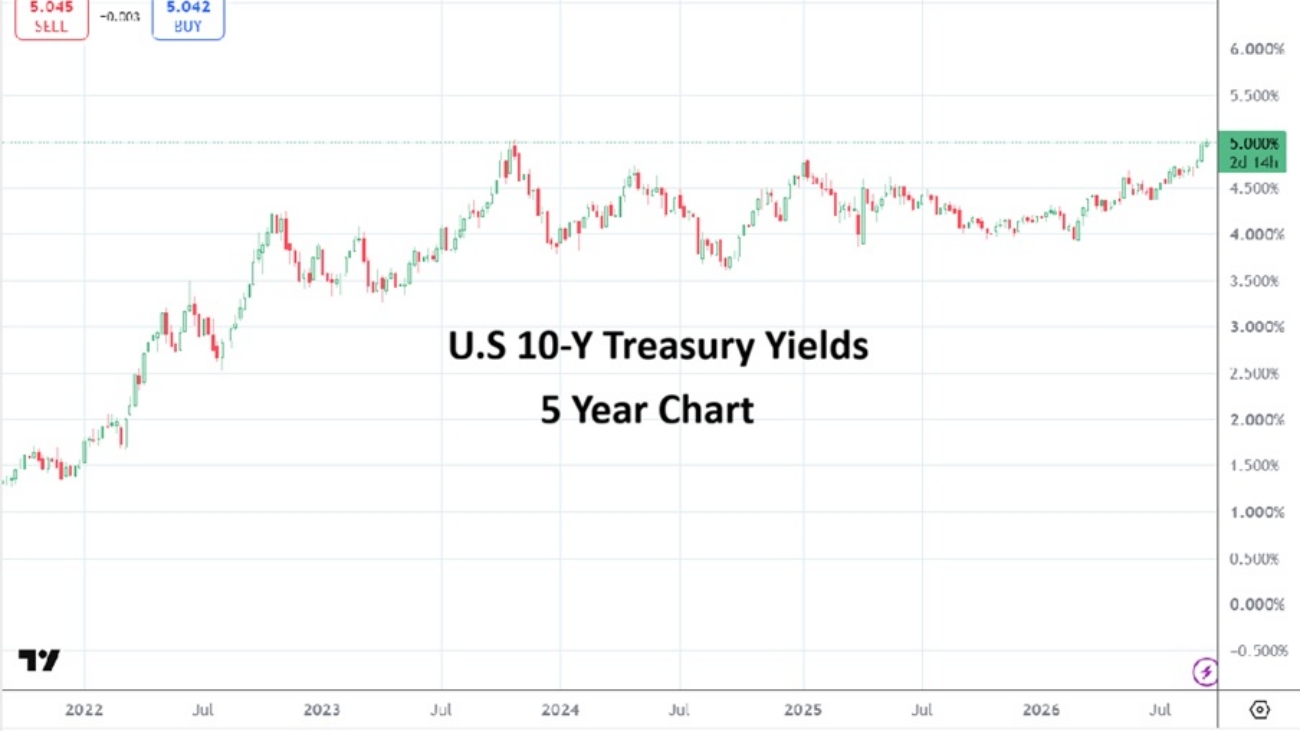
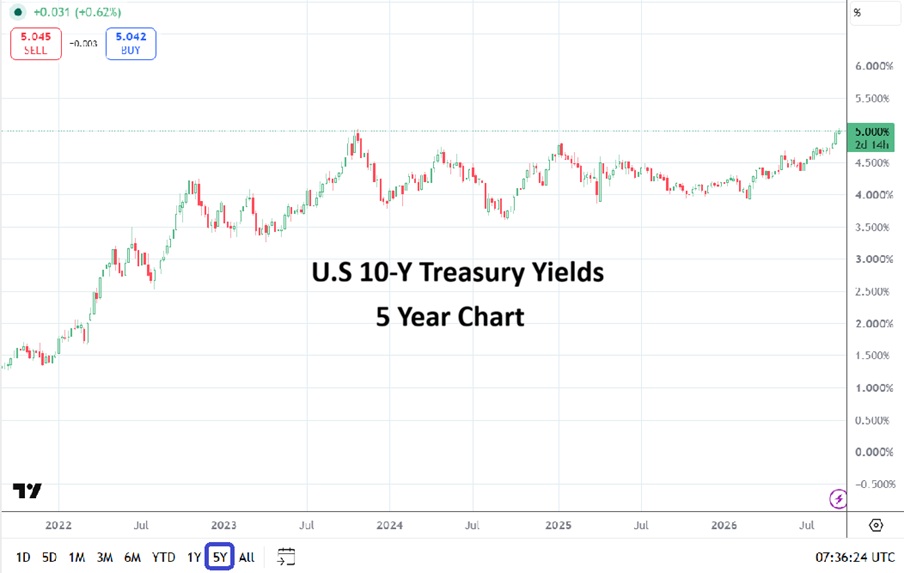
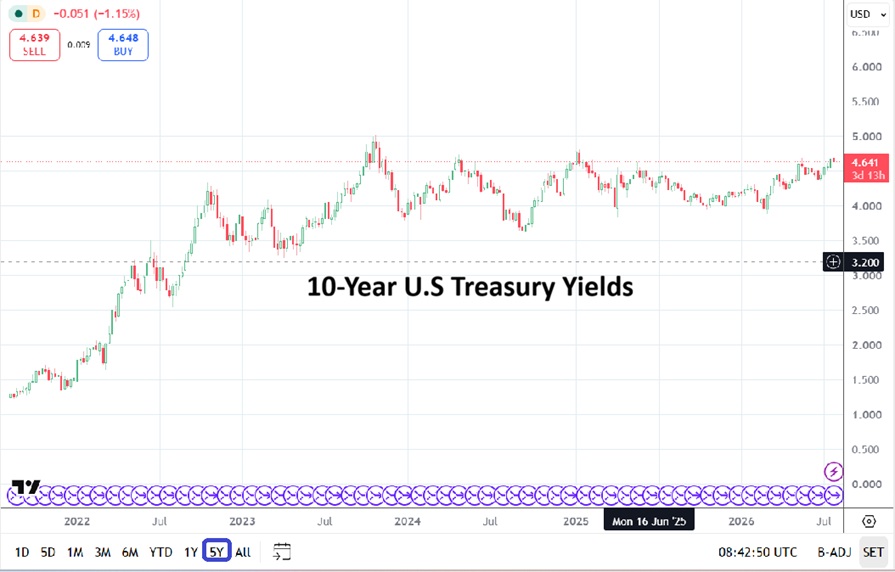
10-Year U.S Treasury Yields Five Year Chart as of 28 July 2026

Political Questions and the Cost of Energy as the Fed Reacts

Let’s for a moment dive into politics. Does anyone think that Kevin Warsh doesn’t speak to Treasury Secretary Scott Bessent who has been a long-time associate? And does anyone think Bessent doesn’t have the constant voice of President Donald Trump in his ear? 

The mid-term elections are nearing ladies and gentlemen. The de-escalation in the Iranian situation certainly has something to do with nations expressing wishes for less military action to the White House. Israel, the UAE, Kuwait, Bahrain, Iraq, Qatar, Saudi Arabia, Pakistan and Turkey are trying to influence positions as President Trump considers his next moves regarding alliances and resources. However, the situation may have something to do with the price of WTI Crude Oil too and its effect on U.S manufacturing and surprise, surprise the Federal Reserve. 

Does anyone else remember that the last de-escalation also started just before the Federal Reserve’s last FOMC meeting in June? I am not being a conspiracy fanatic, just pointing out that lower WTI Crude Oil prices do help the case for a Fed outlook which looks at the costs of energy in a pro-active manner, one which might include the U.S economy and internal White House discussions with politicians who represent voters who have the power of creating a backlash. Lower interest rates equate into lower borrowing costs for consumers.

The Fed’s Impact on Equities and Forex (and the USD/JPY)

So if the Fed does not raise tomorrow, nor gives an indication of what it will do in September and offers a stance of ‘we are vigilant and will watch the economy’ will that help sentiment on the Nasdaq 100 which is starting to have the look of a patient with a bad cold who can’t quite seem to get rid of a cough? Microsoft and Meta step into the limelight tomorrow with earnings reports, Amazon and Apple follow on Thursday.  The combination of the Fed and important quarterly earnings will impact Nasdaq sentiment and other equity indices.

It appears analysts of financial institutions are starting to discuss CAPEX – capital and expenditures – openly. And this is creating shadows as investors weigh the costs of energy and infrastructure against stated profit projections. However, let’s not throw the baby out with the bath water, the Nasdaq 100 has a gain of 20%+ over the past year (July to July), and since March the index has still gained 12%+. The war in Iran (excuse me, conflict) has not had a meaningful impact it appears on the outcome of the Nasdaq 100 via sentiment generated. But the shadow of expenditures, debt and revenue is getting louder bandwidth and speculators need to remain cautious in the indices.

Back to the Fed and Forex, the USD has been strong, you are allowed to say extremely strong if you have been betting on downside incorrectly. The USD/JPY is almost in nosebleed terrain, currently 163.830. The Bank of Japan will announce their interest rate policy very early Friday (for those of us not in Asia) and let’s see if the ‘independent’ Bank of Japan is taking a cue from their government which is clearly interested in continuing to build stronger export ratios. Has the Bank of Japan given up the so-called stated fight to keep the JPY within a solid stance? This is doubtful externally, and Japan is certainly not going to allow the USD/JPY to traverse wildly higher, but it may not consider the 165.000 mark as the end of the world. Beware of saber-rattling from the BoJ in the coming days.

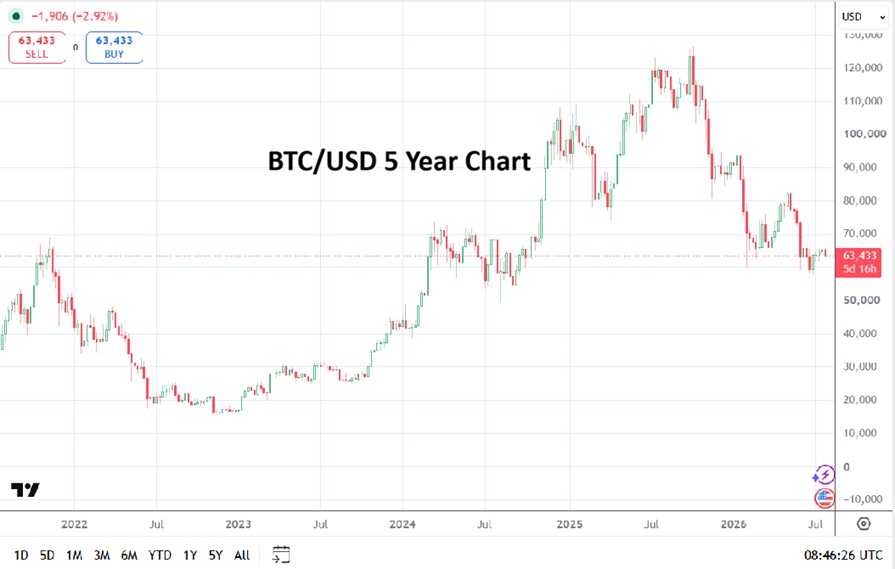
Bitcoin Five Year Chart as of 28 July 2026

Doubts and Remarks Regarding Bitcoin Below $64K

On a last note, the world of cryptocurrency remains interesting and stormy. It appears from watching the awkward statements from influencers and crypto (including Bitcoin) media outlets the past couple of months, as they attempt to explain their pain and convince others that everyone should buy at these lower values that more troubles are coming. 

What are the influencers, crypto media’s and importantly financial institutions’ actual skin in the game relative to those who have lost interest in Bitcoin and the digital market worth? Are influencers and large institutions like BlackRock hoping to pawn off their suffering ‘asset’ holdings to the public, while trying to convince us that today’s cheap prices represent buying opportunities? Is the wave of slanted influence and panic-like banner waving a hope to save themselves in order to cash out of a sinking market, this while hoping someone else takes their place in lifeboats that face a difficult voyage to safe harbors? 

BTC/USD is near $63,4000 now. Yes, we know, we have been told plenty of times before that all the Bitcoin winters eventually turn into summer again. Blossoms will create the sweet scent of profit we are assured, but what if the winter becomes an ice age? What if Michael Saylor and his ability to produce complex financial statements and instruments for MicroStrategy and Strategy equity shares continue to make little mathematical sense? What if all the investors into Bitcoin and cryptocurrencies are left holding the bag and find themselves covered by permafrost? The tundra currently looks harsh. Will the Bitcoin crowd who has been so adamant about being free of regulatory controls and mismanaged central banks cry openly for bailouts from the U.S Treasury with USD? Now that would be entertaining.

Copy and paste the text from AMT that you want to share

SP500 20260713

S&P 500: Short-Term Caution and Long-Term Ambitions

Speculative Opportunities Do Not Promise Immediate Profits as Cautious Outlooks Stir

The S&P went into this past weekend with slight gains made on Friday, but essentially finished where last week began. In early morning trading via the futures market the index has seen a slight decline. Retail short-term traders may decide that offers the potential to sit on the sidelines and watch what may be rather choppy conditions, this if they decide not to pursue.

Global markets including stock indices like the Nikkei and broad Forex have shown more discomfort early today. Short-term concerns and mid-term viewpoints are colliding and making momentum hard to sustain. The S&P 500 remains within its elevated realm, but there is a rather unpleasant taste many speculators have had to endure since the end of May, particularly if trading ambitions have been limited to near-term pursuits.

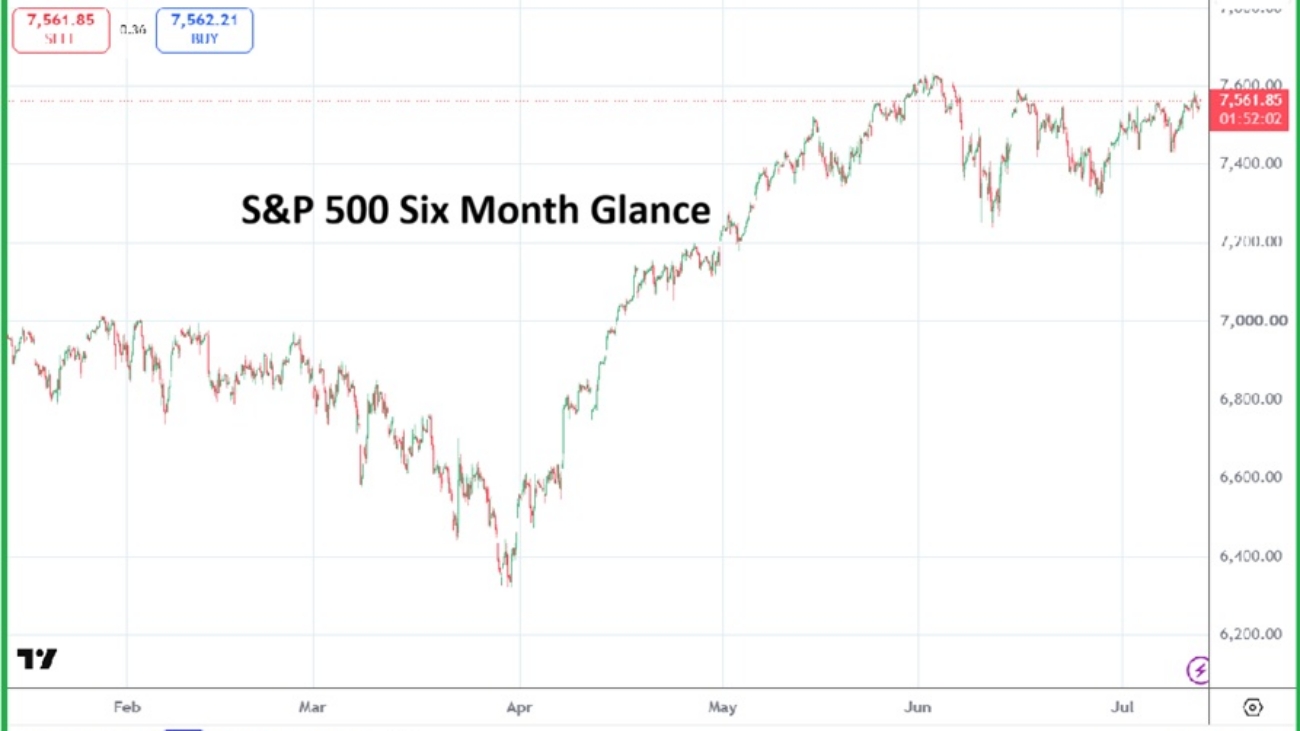
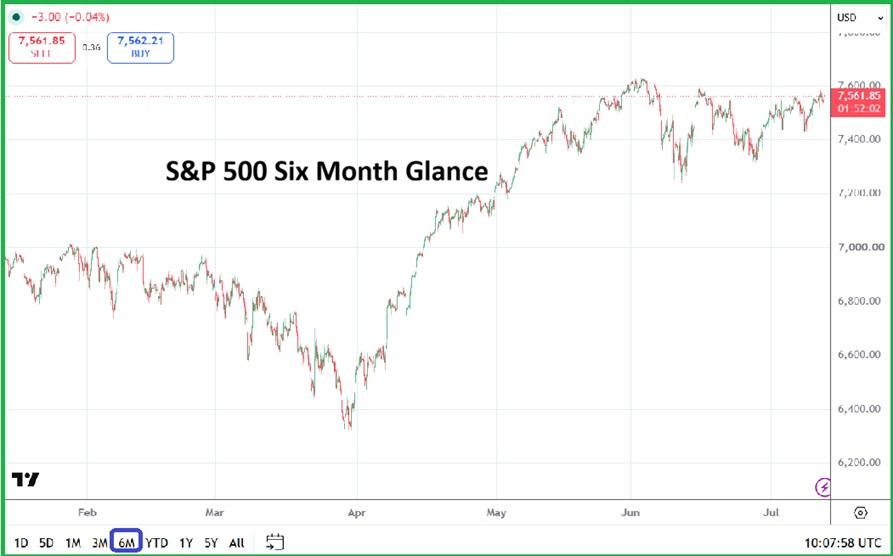
S&P 500 Futures Six Month Chart as of 13th July 2026

There will be a crowd of people at summer parties (or winter outings depending on which side of the equator you are on) discussing the gains made in the S&P 500 (and Nasdaq  100) since the end of March who will be quite keen to brag about their insights. However these same people have likely made their money via pension funds, mutual funds and other long-term endeavors guided by institutions managing their money. Because most short and near-term retail traders have likely been savaged by the results in the marketplace the past handful of months. 

Trading within the current markets conditions for those who have smaller accounts and are relying on leverage to create profits have likely been bled dry of their funds if they have not used proper risk management. It is one thing to want to make a thousand dollars a week in the markets as a retail trader and quite another to actually accomplish the task. 

Indices the past handful of months have been a churning machine in which volumes stir and create attractive chatter, but also deceive folks into believing they can win easily. The only folks winning consistently right now are brokers handling their clients’ retail accounts.

This doesn’t mean you have to stop and give up as a retail trader, but it should serve as a warning that not being overly ambitious and remaining patient are keys when trying to beat the markets. And again, let’s remember the average retail trader has about a 90% chance of failing when trying to speculate.

The S&P 500 did hit a record height in early June around the 7,620.00 vicinity. Its current values are well within sight of those highs too. Yet, headwinds continue to be seen via trading results intraday as financial institutions deal with wavering behavioral sentiment complicated by a myriad of concerns.

Yes, there will always be concerns in the marketplace, risk and reward are often compared to the potential of loss. If you are placing a bet in the markets that you believe can garner a thousand-fold profit, it is likely you are also risking a thousand-fold loss. And unfortunately the marketplace, nor your broker is going to lose sleep over your inability to understand what risks you are undertaking. You will hear that you have learned a tough lesson and the experience will help you become a better trader next time around by your broker, this as they offer you another opportunity to enter the markets on their platforms, but it still doesn’t guarantee you anything. 

The rumblings from the Middle East continues to mitigate sentiment in the global markets. As of this writing WTI Crude Oil is around $73.70. If military conflict between the U.S and Iran continues to incrementally escalate, perhaps experienced players will be able to handle the noise and worries regarding higher energy costs and threats of inflation. 

Equity indices are also running into problems caused by a realization that the costs of investing into companies working in the AI realm are now having to deal with rising costs, this as revenues do not meet expectations, and a lack of adequate physical resources to fuel growth in the sector are raised as concerns. And it is not a stretch to say the AI sector has helped drive more than a handful of equity indices higher. A legitimate fear regarding a downturn in AI related stocks and a possible knock-on effect is a sobering reminder that bullish trends do not last forever. 

And then there is the shadow that is overhangs the Federal Reserve and interest rate calisthenics being worked out by analysts who are trying to convince others (and themselves) that their outlooks are correct.

Yet, we return thankfully to a simple notion and question, one that has very little to do with economics that are taught in university classrooms – are there enough buyers in the marketplace to sustain the upwards trend in the S&P 500? The answer doesn’t have much to do with fundamentals, and often is driven by pure sentiment. Pushing aside day to day travails, wagering on long-term upside remains almost the only wager that can be made. Sure, you can bet on downside; you can short stocks, buy put options that look for lower markets. However, matching negative outlooks with the correct timeframe is just as hard as it is to bet on positive momentum. For the time being it is easy to say the near-term remains murky for day traders. It is harder to predict actual direction

Copy and paste the text from AMT that you want to share

Nasdaq100 20260707

Benefits of a Moderate Restoration While Threats of Growing Fissures are Heard

Sentiment: Financial Institutions and November Outlook Amidst Possible Gridlock

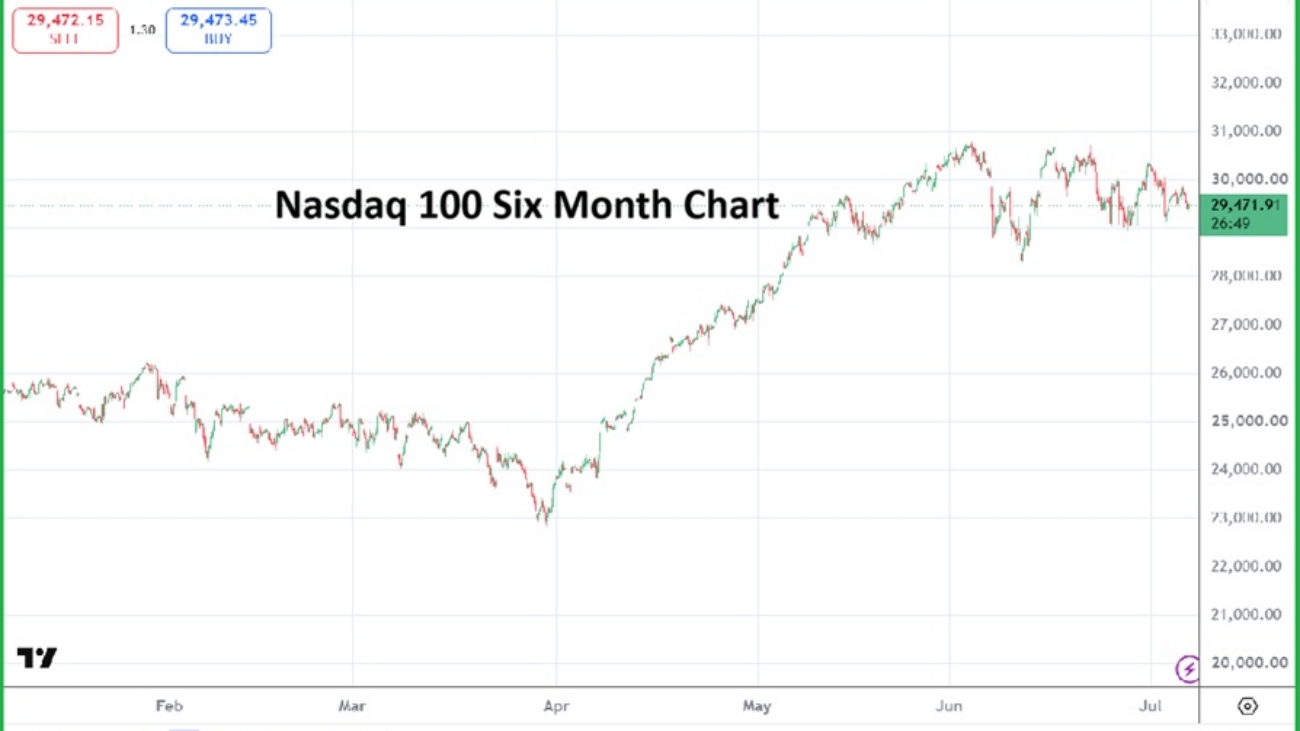
The Nasdaq 100 is clearly being driven by behavioral sentiment at this time. Few investors are paying attention to corporate data, instead many financial institutions are wagering on mid-term outlooks driven by a combination of algorithmic led coding mixed with wishful thinking and hoping they are not washed out to sea by dangerous tidal pools they know are out of their control.

On the 3rd of November 2026, the U.S mid-term elections will largely be held. President Trump’s hold on the House of Representatives looks as if it may come undone as a result of the coming vote if the Democrats take control as some polling suggests.

Perhaps that is exactly what investors are hoping for because historically when there is a divided Congress legislatively, stock market indices actually tend to gain. The reason for this is largely because a paralyzed Congress often finds it hard to pass measures which can hinder corporations and investors, because regulatory mandates are difficult to pass.

Nasdaq 100 Six Month Chart as of 7th of July 2026

If the Democrats win the House and President Trump is able to retain a Republican led Senate, this will lead to a deadlocked Congress which will make it hard to get work much done. Resulting in what may become one of the more memorable lame-duck Presidency’s of our time, one in which both sides of the U.S Congress openly disagrees with Trump’s ego driven rhetoric and instead turns to the backing of voters from their constituent state’s as a way to amplify their own policies.

While the Republicans appear potentially vulnerable in the November elections, the Democrats have problems of their own. An open fissure has been displayed as Socialists inspired candidates have won primaries in a handful of Democratic led Congressional districts and appear ready to splinter their political party regarding direction. What does any of this have to do with the economy and markets?

Perhaps this is exactly what crowds of investors in global markets, including Wall Street wants to happen at this point. Politicians forced to retreat to return their homes and become less vocal publicly may be a welcome remedy. Folks are starting to tire of political rabble, a crowded intersection of gridlock may be welcome at this point.

Unknowns: A Source of Concern for Investors

While it is certainly within the arsenal of the Trump Presidency to try and issue executive orders to try and get policies approved and acted upon. A split Congress, one in which Republicans can openly disagree with the White House without the fear of a political backlash may cause ruptures and positive outcomes for the GOP, if President Trump is weakened after the mid-term elections this November.

Democrats, particularly if they clash internally on their pronounced policies and have to spend more time trying to put out their own progressive internal fires may have to realign their thinking and walk more moderate lines. Activists on both sides of the political aisles may have to lessen their banter following election outcomes if they believe their voting public wants less noise.

A lame-duck President, could equate into a deadlocked Congress and debates simmering within each party which produce more moderate stances. However, if nothing is settled in November of this year this may lead to betrayals and revenge politically and potentially new leadership emerging which could be even more cynical, ignorant and insistent on false narratives.

Intriguingly, Wall Street will not be bothered by a deadlocked Congress and President who suddenly is limited by eroding power. In fact the conditions of withered post-revolutionary zeal and a slumber which could develop may allow corporations and investors to move freely about the ruptured political landscape with more liberty amidst the chaos. Investors will react to the sentiment that Washington D.C produces. A calm is wanted.

Within the ashes of Republican and Democratic turmoil a reconciliation may actually be able to take place. The question is if a restoration of moderate power will be finally be seen. Wall Street and most global investors would like a return of the centrists. No one is going to agree 100% of the time on policy, but a reality of transparent government without corruption would be a good start, one that many people actually would agree upon.

Copy and paste the text from AMT that you want to share

Perception Over Fact 20260603

Perception Over Fact: Iran as the Savior of Beirut

Trump Policy and The Art of a Middle Eastern Deal: Israel, Iran and Lebanon

Opinion: The following article is commentary and its views are solely those of the author. This article was first published the 2nd of June via The Angry Demagogue.

Although it is difficult to see where the negotiations between Iran and the United States are going – if anywhere – over the last 24 hours the United States has made Iran the “savior” of Beirut. Against American policy of creating a civil and unified Lebanon at peace with its neighbors, the Trump Administration has told the Lebanese government and people that Iran still controls what happens in Lebanon.

Perception over Fact: Iran as the Savior of Beirut

Even if this was not the case, in the art of the Middle Eastern deal, perception is more important than fact. Whether the Trump Administration actually twisted Israel’s arm due to Iran’s demands or not, the fact that Israel has agreed not to bomb the Dahiya section of Beirut after announcing that they would gives a message to the Lebanese people and government that Iran still calls the shots in Lebanon and not to rush to support those who wish to disarm or dismantle Hezbollah since you will be on the losing side.

Lebanon has been embroiled in civil wars since its inception. Beirut, the “Paris of the Middle East” has never known quiet times although that did not stop the partying (sort of like Paris itself today) and Iran’s involvement, much like Syria’s and the PLO’s before has not helped. Before the PLO inspired civil war in the mid 1970’s, after King Hussein threw them out of Jordan, the civil wars were about Lebanon itself. The French thought they created a formula for the creation of a semi-western state by dividing up the power centers amongst the religious and ethnic groups – Maronite-Christians got the Presidency, the Sunnis the Prime Minister-ship, the Shiites the speaker of the Parliament. The Druze historically were appointed Chief of the General Staff of the army.

This formula was, as can be imagined, not one for the free exchange of ideas but caused a rush to create power centers and led to conflict, civil and military. But it was all internal. Once the PLO and Yassir Arafat came, Israel became a factor in the civil war since Israel had to cross the border to stop the PLO from its numerous cross border terrorist attacks. After the First Lebanon War and the forced exit of the PLO, Iran created Hezbollah with the sole aim of using it, in the future, to destroy Israel. Therefore, from the late 1970’s until today, the Lebanese state has been embroiled, often against its will, in the Israeli-Palestinian conflict.

The goal of the Trump Administration’s negotiations in Washington between Israel and the Lebanese government is to break Iran’s stranglehold over Lebanese internal and external policy and allow it to either establish diplomatic relations with Israel or at least to put the two countries in the situation they were in before the late 1970’s – and that was a quiet, irrelevant border for both countries.

The real or even perceived notion that Beirut was “saved” from Israeli bombing by Iran’s demands has set back that goal and given Hezbollah and hence Iran, veto power over Lebanese government policy. The correct answer to Iran after their demands were made tying Lebanon to the cease fire was that Lebanon is none of your business and if your proxy decided to join your war then they will have to take responsibility for it. The time for “protecting” Lebanon was when you ordered Hezbollah to come to your aid and attack Israel’s north. The result of that – the administration needs to tell both Iran and the Lebanese government and people, is the loss of Lebanese sovereign territory to Israel and the destruction of Shiite villages in the south of the country. A further price is the destruction of the Beirut neighborhood in which Hezbollah has command and control facilities as well as underground arms depots.

Iran cannot be seen to be the savior of Beirut and Lebanon but the cause of its troubles. No amount of rhetoric to the contrary will prove to the Lebanese government and people what they see on the ground now – only Iran has the power to stop Israel’s bombing of their country. The Administration has set back its goals in Lebanon without aiding its war effort in Iran. The constant Iranian threat to make the war regional is coming true since the Administration is not taking seriously Iranian deal-making methods.

As we wrote two months ago in The Art of the (Middle Eastern) Deal” – “Each ‘concession’ by Iran will have to be paid for twice or three times – once upon agreement and then again before numerous times before implementation”. Iran agreed to open the Straits and then reneged and the US is negotiation for that again – AFTER Iran received the much needed cease fire.

Now, after the administration denied linkage to Lebanon, Iran is again demanding that linkage – not in order to open the Straits, but just to continue negotiations. This pushes both American interests to the back burner – the opening of the Straits of Hormuz and the normalization of Lebanon as a country free from Iranian influence. And the “concession” that Iran is giving for this is just a continuation of the negotiations that have been going on for over two months. In other words, like most negotiations in the middle east that are supposed to lead to “peace” – this too is moving backwards.

President Trump has asked for patience and has insisted that the United States will never accept a bad deal – and I am willing to be patient and believe that. But what if the goal of the Iranian government is not a deal at all but the ability to re-set their genocidal triad or missiles, proxies and nuclear weapons? These negotiations have given them time to dig out their underground missile cities, to keep their enriched uranium hidden and now to revive their flailing major proxy – Hezbollah. In the end, as the President said, it will be good, but by allowing Iran to take the initiative he is making it harder to get to that “good”.

What we have now is a continuation of American-Iranian negotiations where a concession was given to Iran and they are no closer to reaching an agreement. Iran is now perceived as the power to be reckoned with in Lebanon and Israel is put on a level with Hezbollah. Iran and the United States are now equals in this negotiation, something that was not the case when they started. While it might in fact end well, the journey is now a longer and more difficult one. The perception given by the last 24 hours that Iran controls Lebanon, is now the “fact” that the Middle East “knows”.

Disclaimer: the views expressed in this opinion article are solely those of the author, and not necessarily the opinions reflected by angrymetatraders.com or its associated parties.

Follow Ira Slomowitz via The Angry Demagogue on Substack https://iraslomowitz.substack.com/

Copy and paste the text from AMT that you want to share

Gold 20260622

Gold: Intriguing Technical Support and Curious Sentiment Shift

Mid-Term Technical Support and Lower Price Make Gold Interesting

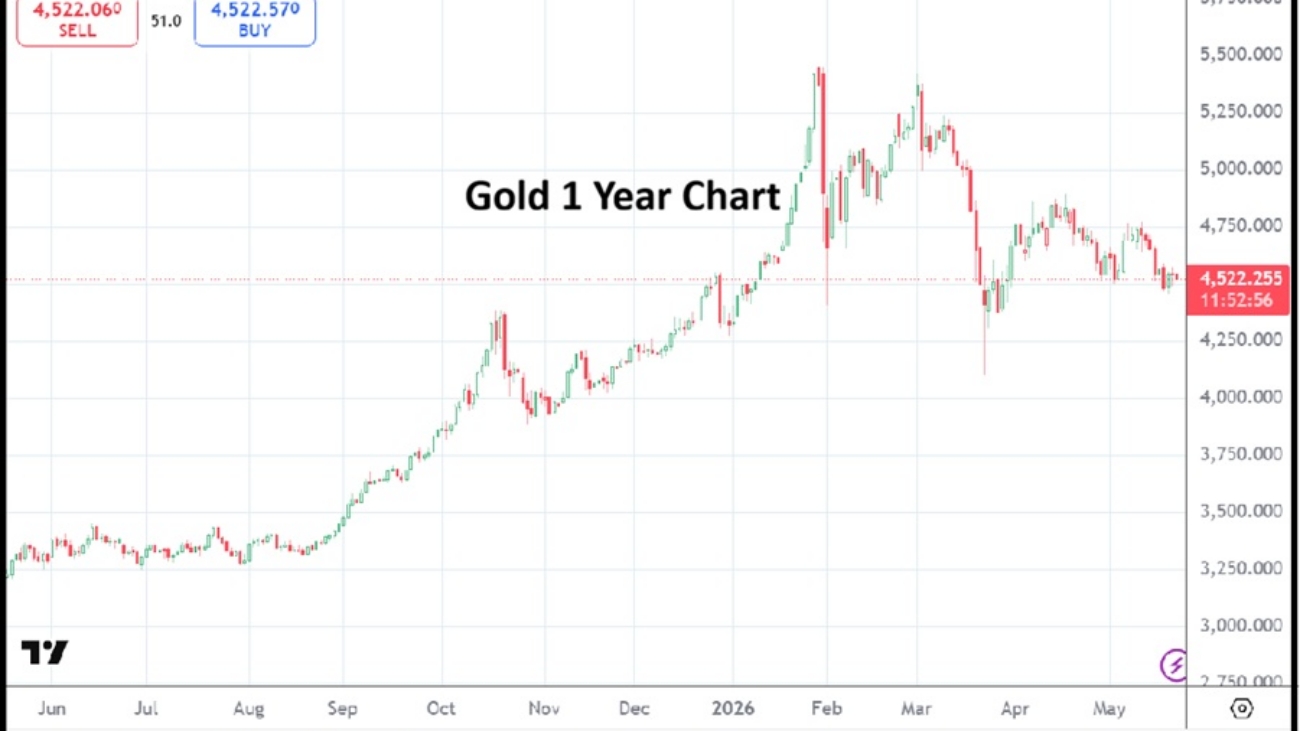
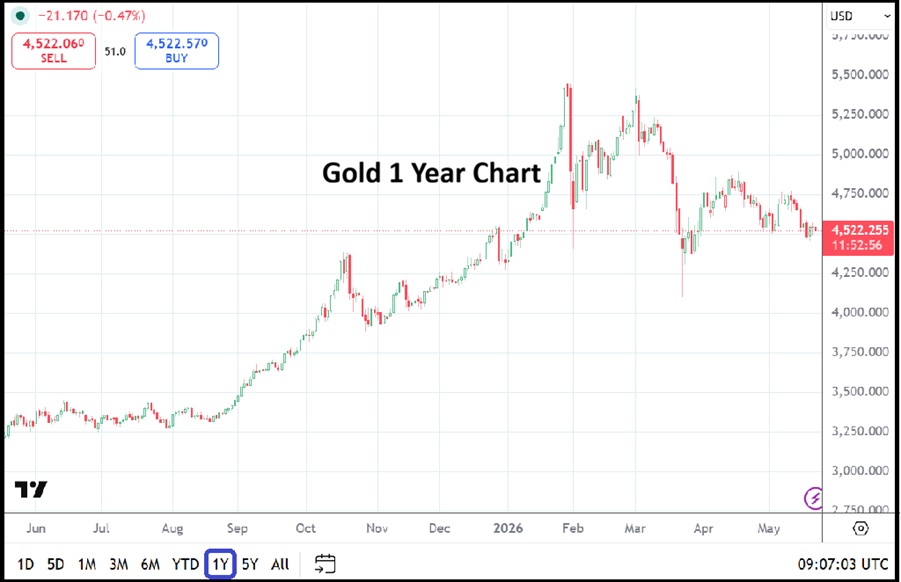
Gold has faced difficult speculative circumstances for traders with a bullish perspective since early February, this as the price of the commodity has fallen from highs. The price of the commodity is around $4,5220.00 for the moment, with its typical fast price action flourishing. Importantly, the precious metal is also traversing slightly above rather intriguing technical support when a mid-term perspective is used.

On the 29th of January Gold challenged the $5,600.00 vicinity, this as metal commodities soared including Silver and Platinum. Silver in late January touched the $120.00+ mark, Platinum in the last week of that month hit and penetrated $2800.00. Silver as of this morning is near $75.00 and Platinum is around $1937.00. The speculative momentum that drove the metals higher had a lot to do with fever pitched buying as large players feasted and smaller retail traders tried to ride the upwards wave.

Gold One Year Chart as of 22nd May 2026

Silver, Platinum and Gold Lost Their Appeal

For the moment it appears hedge funds have turned their attention away from the metals as a speculative playground. Fast profits are likely coming from other arenas, WTI Crude Oil and other energy resources are big betting areas as the Iranian situation remains at the forefront of attention.

Since the start of the military escalation in Iran all three metals have essentially lost value. Silver was around $94.00, Platinum close to $2,370 and Gold near $5,280.00 on the 27th of February. The price of WTI Crude Oil is trading with the $100.00 level acting as a technical magnet now, on the 27th of February WTI was near $67.00. It doesn’t take a brain surgeon to figure out where all of the price action has moved to as folks trading Crude Oil are certainly getting their kicks and maybe even profiting as they take advantage of support and resistance levels as rhetoric and saber-rattling flares about Iran.

Buying Gold with a Mid-Term Outlook

However, as Gold swims near the $4,522.00 mark it raises curious questions regarding its current value and how sentiment may develop within the precious metal over the mid-term. Putting to the side Silver and Platinum, Gold is intriguing because the specter of inflation is causing nervousness. The U.S Federal Reserve is now in a position in which it may have to start increasing the Federal Funds Rate again. 

President Trump wants lower borrowing costs, but because of the escalation in fuel costs effecting manufacturing, logistics and agricultural are all suffering. It will be hard for the new Fed Chair Kevin Warsh to simply wave off rising prices in the U.S as a short-term murmur. The mid-term now appears capable of sustaining inflationary winds. Gold may start to receive attention from investors again who are not looking to speculate on the precious metal, but to hold the commodity as a hedge.

  • Day traders as always will face intraday volatility with Gold if they are trying to capture a reversal higher.
  • However, if investors start to believe Gold needs to be looked at again via portfolio accumulation, and hedge funds make it a speculative party, the precious metal may start to see not only more attention but a buying surge develop again over the mid-term.
  • Gold around the $4,500.00 mark looks relatively secure as an investment plateau for folks looking for a long-term buying opportunity.
  • Day traders may start thinking about trying to take advantage of potential incremental shifts that might start to develop in Gold to the upside in the near-term and coming weeks.

Copy and paste the text from AMT that you want to share

US Cash Index 20260424

Upcoming Weekend Nervousness: Does Anyone Know What is Going On?

Preaching Caution and Looking Like a Fool to Those Who Want to Profit

Can someone please tell the rest of us what is going on? Global markets via Forex this morning are demonstrating additional USD centric strength which developed yesterday. The price of WTI Crude Oil is above $94.00. Gold is languishing and around 4,675.00 USD. And although the 3 major U.S stock indices are all within their higher realms – one thing stands out – folks are uneasy.  But then again, the markets never move in one direction only, and perhaps current results can be interpreted as profit taking by those on winning sides.

U.S Dollar Index One Month Chart on the 24th April 2026

I would love to be the person to tell you what is going to happen, but as this weekend looms making short and near-term bets still appears a fool’s game. Yes, it is easy to make predictions, but being correct is more difficult. Retail traders are suffering more than most market participants, this as leverage and a lack of funds to remain in a position through violent reversals destroy plenty of trading accounts.

There is talk of manipulation via chat rooms regarding the price of WTI Crude Oil. The usual dialogues can be seen – largely based on conspiracies via large players trying to blow out smaller traders. However, these types of forum chatter are mostly wrong. Large players are getting hurt too in the energy markets. Anyone who is taking a position in order to speculate on a quick hitting foray in WTI is betting on their perceptions. 

The problem is that unless there is inside knowledge of what the next words out of President Trump’s mouth are going to be, or that from Iranian officials – any pursuit of WTI Crude Oil at this juncture is a ‘vibe’ trade. What is going to happen from Saturday and into Sunday is an unknown quantity. Folks holding positions into this weekend need to understand they are wagering. And some may find they are quite profitable afterwards, while others grimace and find themselves on the wrong side of the next surges higher or spikes downward. Intraday trading volatility in nothing new however.

The USD/JPY is near 159.600 as of this writing. The EUR/USD is close to 1.16820. While a tourist traversing foreign lands may not find the Forex incremental shifts in value mesmerizing or of interest, FX traders who do not have deep pockets are likely wondering why risk adverse conditions are prevailing suddenly. But as a risk analyst, I must say that conditions simply may have been perceived to have been oversold in the USD by financial institutions, this as the Fed looms on the horizon.

However, my task as a risk analyst the past two months has been like a carnival barker, because while it has been easy to say that a show is happening within the big tent of speculation, I have been hard pressed to predict short and near-term directions correctly. Perhaps I fret too much. The optimistic thunder claps upwards in the stock markets since the 31st of March have been astounding to many. Hopefully it has been prosperous for day traders, but the likelihood is that financial institutions are the ones who are profiting more via their pension funds purchases for institutional clients.

This coming week the U.S Federal Reserve will make their FOMC decision public. This will be Jerome Powell’s swan song at the Fed. The Chairman is being faded out by the U.S White House mid-May. And somewhere when he is all alone, Jerome Powell may be having a quiet laugh to himself. The Fed will not act this week. Rates will remain the same – unless there is some bizarre move in the global markets over the next handful of days. Yet, Powell’s remarks will be listened to for warnings. While it is not in Powell’s nature to issue a ‘I told you so’ quote, and he is likely content to walk away from the Federal Reserve quietly, it would be captivating if Powell looked into the cameras and pointed fingers. 

But because Jerome Powell like most others, likely has no clue what is going to happen next internationally he will remain mostly mute (cautious as always).

And here we meet again, wondering what the next 72 hours hold. Will the Iranian ceasefire remain observed? Is it even a ceasefire in reality? The Strait of Hormuz remains a linchpin for military action by the U.S Navy and Iranian Revolutionary Guards via a cascade of ship seizures. Maybe that continues to be the key, WTI Crude Oil prices remain a crucial barometer. USD centric prices via Forex action seems to be a reflection of fear or positive thinking in the energy sector depending on the prevailing tides.

Last week there was so much optimism folks were talking about WTI prices potentially hitting $75.00 and lower, now this hope seems to be wishful thinking. Global markets will remain fast and dangerous, that is easy to say and is right, but telling you which direction assets will move, that is a bit different.

And there is the old standard test I use when an opinion is definitely asked for: if someone were to put a gun theoretically to my head and ask me what I think, I would venture to say things will remain quiet and optimism will seep into the markets before the close this weekend. However, I don’t like to play fool’s games, so I will leave now and wish you luck via your own perspectives because the near-term remains more speculative than normal for day traders – even if strict risk management is used. 

Copy and paste the text from AMT that you want to share

postN87

AMT Top Ten Miscellaneous Missiles and Missives for the 29th of March, 2026

The Iranian War Dominates our Lack of Humor

10. Final Four: The Men’s NCAA Basketball Championship will be set after today’s games. The Arizona Wildcats, our pick, advanced to the Final 4 by beating Purdue last night. Michigan is favored to beat Tennessee and the Duke vs. UConn game is anticipated to be close. The University of Illinois advanced by beating Iowa on Saturday and maybe the biggest underdog – if the Volunteers lose to the Wolverines today.

AMT Top Ten for the 29th of March 2026

9. Jobs Data: U.S Non-Farm Employment Change numbers will be published during a banking holiday on the 3rd of April, this as the Iranian war shadows investment sentiment. Will potential jobs numbers results create nervousness on Thursday, and side effects Monday the 6th of April? 

8. Private Equity: Outflows remain a problem for BlackRock and other firms as deal making comes under a bright light. Investors are questioning valuations, lack of exits and money that sits in ‘zombie’ funds. Imposed limits on redemptions by some firms have created nervous indicators. Is the private equity problem correlated to lackluster momentum on Wall Street, this as desire for the next big thing runs out of marketing hyperbole?

7. 10-Y Notes: U.S 10-Year Treasury yields finished the week near 4.43%, Friday’s price action saw an apex around the 4.48% vicinity, highlighting nervousness. On Friday the 27th of February 10-Y yields were close to 3.94%,

6. Forex: USD/JPY ended this past Friday around 160.250, making it cheaper for tourists to visit Japan as cherry blossom season starts this week and lasts into early May. However, the Bank of Japan and Japanese citizens are not amused by the weakening Yen. USD centric strength continues to resonate loudly. 

5. Fed: Potential drama surrounding the U.S central bank and the replacement of Fed Chairman Jerome Powell has taken a backseat to the Middle East conflict. Concerns about inflation are legitimate. The Federal Reserve will be hard pressed to defend an interest rate cut in the mid-term.

4. President Trump: Speaking from both sides of his mouth (and his opponents might say another area of the body) may be strategic genius from the White House regarding Iran or prove to be a lack of focus. However, it certainly keeps everyone guessing what is going to happen next in the Middle East.

3. $100.00: WTI Crude Oil prices have remained below the one-hundred level for the most part during the Iranian war, yes – there have been outliers above. Will we begin to see sustained prices above the century mark this week? Short-term reactions to the U.S military potentially seizing Iran’s Kharg island would certainly cause price chaos, but could it also soothe some large players in the energy sector via mid-term outlooks? 

2. Good Friday: The holiday at the end of this week will be effected by anxious behavioral sentiment. The potential of a long weekend with plenty of noisy chatter could make for nervous investors this coming Thursday as they position themselves ahead of possible escalating storms.

1. Fear: The S&P 500 and Nasdaq 100 have entered corrective depths. Who will be brave enough to start looking for bottoms as the Iranian war rages with no end in sight? Will a reversal upwards emerge this week?

Copy and paste the text from AMT that you want to share

postre2

Fed Today, Tmrw and Mid-Term with Changing of Guard

Fed Today, Tmrw and Mid-Term with Changing of Guard

The Federal Reserve will cut its Federal Funds Rate by 25 basis points in a handful of hours, that is unless they want to cause a major selling attack on Wall Street and pandemonium in Forex and gold. The Fed which spoke about uncertainty in last month’s FOMC Statement and utterly refused to give guidance about today’s decision, has had the ignition regarding an interest rate cut delivered with nearly 100% certainty because inflation for the moment remains tame.

U.S Dollar Index One Year Chart as of 12th December 2025

Fed Chairman Jerome Powell will leave the Fed in May of 2026. This isn’t a subjective opinion, he is leaving because he is not going to be reappointed by the White House. President Trump has made it clear he wants a lower interest rate and that he believes the Fed has failed to be proactive. Given Trump’s propensity for saying outlandish things, he is not wrong about Powell’s overtly cautious posture. The Fed could have cut the Federal Funds Rate in the early summer and refused to initiate.

Financial institutions have factored the 25 basis point interest rate cut into Forex already. Again, unless if for some reason they want to initiate a massive selloff in the equity indices and cause the 10 Year Treasuries yields to rise like a wildfire, the Fed needs to cut today. Day traders need to understand the first couple of reactions following the FOMC Statement tonight should not be wagered upon without deep pockets and steel stomachs.

There are three more FOMC meetings scheduled for the Fed after today’s decision while Fed Chairman Jerome Powell remains in office. The 28th of January, the 18th of March and 29th of April are the listed FOMC Statement announcement dates, this before the June meeting which Jerome Powell will not helm. While some analysts strongly believe the Fed will find it difficult to cut interest rates early in 2026, the potential for a shift in sentiment and open disagreement regarding the Federal Funds Rate could turn intriguing in late January. If inflation remains steady via the Core PCE Price Index it would not be a shock to see another interest rate cut next month.

Caution has prevailed in Forex the past couple of months. Major currencies like the EUR and GBP have lingered within known ranges. Yes, the JPY has incrementally lost value due to BoJ policy. President Trump cannot make the Fed decide what to do, but he can certainly keep appointing folks who agree with his policies and approach to enterprise. If Powell does not outright say an interest rate cut is impossible for next month’s FOMC decision, U.S economic data that will be generated over the next handful of weeks could deliver enough impetus. Let’s keep in mind ladies and gentlemen that holiday trading will come into full force after next week’s price action.

The Fed’s borrowing rate essentially stands at 4.00% for the moment. After today’s rate decision the Fed Fund Rate should be at 3.75%. And for the moment there is little justification to not make the borrowing rate 3.50% in late January. As economic data presents itself now via the PCE Price index and CPI and PPI statistics, there is reason to believe a more proactive Fed is on the horizon as the pressure is turned up on Jerome Powell.

Perhaps nothing will happen in January, but if inflation remains tame not only will Jerome Powell be criticized by the White House, but he may also face a rather public debate from Fed members who do not agree with his cautious approach to interest rate policy. A weaker USD in Forex against many major currencies mid-term appears to be a real possibility. The ability of the EUR/USD to linger within a cautious middling range may be an indicator that financial institutions have built a mechanism which will allow them to become stronger buyers. Dangerous as it is to predict a timetable, the EUR/USD over 1.17000 would not be a surprise in the weeks to come – at least to me. Let’s see where behavioral sentiment takes us.

post293

Opportunity? Market Ambition as Day Trading Volatility Looms

Opportunity? Market Ambition as Day Trading Volatility Looms

The U.S government shutdown looks like it will take place at 12:01 am EST on Wednesday, this if Washington D.C politicians fail to agree to a funding gap. There have been significant shutdowns in the past, thus financial institutions though not in love with concept are adept at continuing to trade during the events. President Trump’s first term in office produced a long shutdown from the 22nd of Dec. 2018 until the 25th of January 2019. President Obama’s White House had a 16 day affair in 2013. And President Clinton’s administration dealt with a shutdown lasting 21 days.

S&P 500 Index Three Month Chart as of 30th September 2025

While the financial markets will certainly survive and long-term investors will likely remain rather sedate during this developing saga, day traders need to brace for volatility. Opportunities may develop if Forex, U.S equities and gold see reactions per perceived safe haven endeavors by some investors. However, wagering in markets when shifting tides are happening due to sentiment torrents could prove difficult for speculators. Timing the market and its gyrations caused by potential mood changes poses threats for small traders.

And that is why it will be important to actually remain patient in the coming days. The Democrats appear ready to try and score a political win against President Trump. But what would a win look like? The public is seldom fooled by the government shutdowns. While government offices shutter and economic data publication dates will be postponed, the rest of the world will move forward.

Day traders should not be tricked into panic. Nor should they react too fast based on fears that are not legitimate. The U.S major indices may languish during a government shutdown, but it is also conceivable that they may perform rather well. The Nasdaq 100, S&P 500 and Dow Jones 30 are all within sight of their highest realms. The USD may find some buying action, but just like trades that have already been digested into the market when the Federal Reserve’s FOMC decisions are anticipated and acted upon, speculators should be prepared for counter-intuitive moves. In other words do not be surprised if sudden reversals in Forex via the USD develop.

Traders looking for discounts to emerge will need to be careful, but if the equity markets were to suffer a strong downturn on heightened nervousness, having a longer-term approach to speculative positions could become worthwhile. Gold which is traversing within record values may prove to be a significant near-term barometer as a safe haven gauge in the coming days. But then again gold has been within a sincere bullish trend over the long-term, so buying if produced near-term needs to be looked at suspiciously. In other words, the bullish trend in gold while getting perhaps an additional dose of fuel to ignite higher because of the potential U.S government shutdown should also be treated carefully and not traded with blind ambition.

Gold Three Month Chart as of 30th September 2025

The potential of a U.S government shutdown is a big event, but it is intransigence that financial institutions and big investors do not want to see. As long as some aspects of communication are being shared transparently with the public regarding negotiations in Washington D.C, many markets are likely to remain rather unbothered. How long will the U.S government shutdown last this time? It might all depend on how long the Democrats believe they can get the most out of the shutdown if it adds to their political image.

Both the Democrats and Republicans will want to get through the coming days as unscathed as possible. Why? Because both want to retain their power. One question waiting to be answered during this conundrum is who will come out looking best? If the financial markets begin to suffer there will be a lot of finger pointing by both sides. And again, importantly, financial institutions are unlikely to be fooled. Investors want clarity, the markets will only suffer if big players feel the crisis in Washington can cause potentially long lasting damage.
postN3.1

India Insider: Working with the West as it Deals with Others

India Insider: Working with the West as it Deals with Others

India’s Prime Minister Narendra Modi visited Tianjin, China for the 2025 Shanghai Cooperation Organization Summit in early September, which was attended by over twenty nations. Before India visited the conference in August, Washington D.C had already imposed a 50% punitive tariff on India’s exports. The initial tariff was a 25% duty, but included another 25% penalty because India purchases a large amount of Russian Oil, which the U.S seeks to reduce. An uneasy trade dilemma looms for India.

Many Western analysts quickly concluded that Prime Minister Modi was tilting India towards a stronger relationship with the Russian and Chinese camps, by potentially embracing warmer associations with Presidents Vladimir Putin and Xi Jinping, and defying Washington’s previous warnings.

Yet, the trade composition and the underlying reality highlights a different story. Despite India being positioned in the global South politically, the nation recognizes its higher value exports – which include textiles, gems and jewelry, apparel, and pharmaceuticals are primarily sold to the West. The United States clearly remains India’s biggest consumer. In essence President Trump holds a trump card.

In contrast, China’s total exports to the global South (excluding Western Europe, Australia, New Zealand, and North America) has doubled since 2015. Chinese exports to the U.S were $525 billion USD in 2024, but to the global South, China’s exports grew to nearly $1.3 trillion USD.

As Professor Michael Pettis accurately points out, “countries with expanding trade surpluses with the U.S, use their higher revenues to fund deficits with the rest of the world.”

India Exports More to the West:

India’s trade surplus with United States, the European Union and U.K stands at $72.18 billion USD. If India wants to be competitive with China in terms of manufacturing, it should affiliate more astutely with the Western camp.

Dependence on Anti-Western Countries Hurts India’s Trade Balance:

India’s combined trade deficit with Russia and China is approximately $158 billion USD, which demonstrates how much less India exports to these two countries. India’s overall merchandise trade deficit is $282 billion USD, with a deficit of almost 56% in total attributed to Russia and China.

Service Exports a Crucial Metric in India’s Balance of Payments:

India’s services exports stood at $383 billion USD in financial year 2025, earned primarily from the U.S and other Western countries. Washington has imposed tariffs on India’s tradable goods sector, while the nation’s non-tradable sector has been operating without much stress.

India’s overall trade deficit stood at minus $94.26 billion USD in financial year 2025. Without service exports (predominately from the software services sector), India’s current account deficit would be much larger and the Indian Rupee would face greater depreciation pressures.

India’s economic stability is precarious, equilibrium needs to be found. Solid domestic outcomes for manufacturing and a stable Rupee, including exchange rates, could be achieved with a well-defined calibration that looks West but does not weaken India’s stance as a non-aligned nation. New Delhi should focus on maintaining neutrality and strategic autonomy.

While India may shake hands with Presidents Vladimir Putin and Xi Jinping, an important economic lifeline runs firmly through Washington, Brussels, and London. Crucial negotiations are said to be taking place between Prime Minister Narendra Modi’s team and President Trump’s White House behind closed doors. New Delhi could become vulnerable if it does not find adequate solutions. President Trump has recently reiterated his friendship with the Prime Minister Modi, perhaps an agreement can be produced in the mid-term.