post264

India Insider: Concern IT Empire is at Risk in Age of AI

India Insider: Concern IT Empire is at Risk in Age of AI

When China’s DeepSeek announced its Generative AI program as a rival to U.S based ChatGPT, the world paid close attention. In fact, Nasdaq bellwether stock Nvidia, the world’s most valuable company, took a hit because the DeepSeek product was made with less expensive chip processors compared to ChatGPT’s infrastructure, which uses Nvidia’s GPU technology.

In North America and Europe, DeepSeek’s rollout was met with much surprise and intrigue. And the true ‘poster child’ of India’s post-liberalization era, the IT (Information Technology) sector has been facing its own challenges and was also caught off guard. India’s IT sector employs some 5.3 million people and helps maintain its current account balance sheet by earning crucial foreign exchange reserves. The top four major IT companies have a combined market cap of $300 billion USD, larger than India’s richest man Mukesh Ambani’s Reliance Industries, which stands around $238 billion USD.
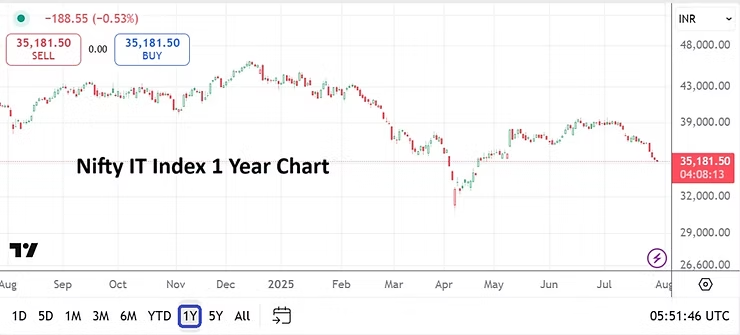
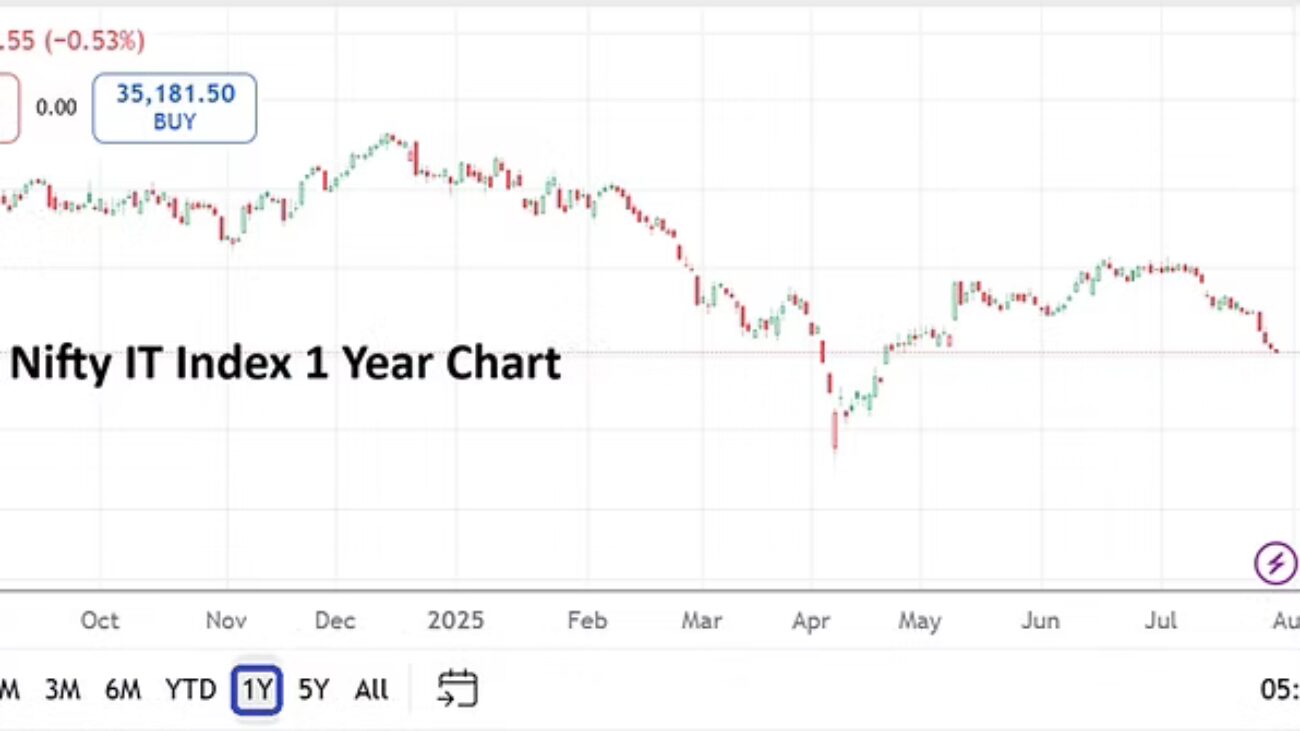
Nifty IT Index One Year Chart as of 29th July 2025

India’s IT Business Model and Artificial Intelligence

Indian IT companies operate on a model of software servicing for offshore clients, typically via medium to long-term contracts. Their business operations are embedded across the globe thanks to affordable pricing and the quality of services provided by Indian software engineers. Now, this model is being threatened by the rise of Generative AI and taking it lightly would be a serious mistake by India.

Shares of major IT companies ­- TCS, Infosys, Wipro, and HCL have delivered lackluster returns since their post pandemic rally. Since Covid high valuations amid deal pessimism were a concern. Now those worries are amplified by AI and the disruption it brings to their business models. Software exporters remain the worst performers, the Nifty IT index is down 18% year-to-date, underperforming the broader index consequentially.

The recent release of Q1 fiscal year 2026 numbers from these four IT companies have been met with skepticism regarding forecasted outlook. Analysts noted that Indian IT firms are grappling with margin pressures amid persistent macroeconomic headwinds and rising threats from AI-driven productivity improvements. In response, companies have started to protect their margins with layoffs, TCS (Tata Consultancy Services) shed around 2% of its workforce this past weekend which could affect more than 12,000 jobs.

Time For India’s IT Sector to Become Proactive

Pricing models that IT companies charge customers are changing from long to short-term flexible contracts like ‘pay as you go’ over traditional fixed annual licensing models. Despite changing CEOs in several of these companies over the last few years, animal spirits are failing thus far to innovate AI products that can enhance the bottom line. Instead, companies prefer share buybacks and paying stellar dividends to appease the shareholders rather than to invest in R&D especially when their core model is under threat.

Hang Seng Index One Year Chart as of 29th July 2025

The euphoria surrounding India’s $5.4 trillion equity market is cooling in 2025, amid concerns over slowing earnings growth, elevated valuations, and tariff related uncertainty. At the same time, sentiment towards Hong Kong’s listed Chinese shares are improving with global fund managers rapidly reallocating capital to that market. The Hang Seng Index has delivered an impressive 27% return year-to-date. Meanwhile, India’s stock market still lacks depth for investors seeking meaningful exposure to the booming Artificial Intelligence theme.

Indian IT companies excel at scaling and delivering AI solutions for global clients, but they do not own the core models, platforms, or consumer data needed to become true AI disruptors like China’s tech giants. The industry contributes approximately 7.5% to India’s GDP and remains the primary employment avenue for engineering graduates. It’s time for India’s IT sector to proactively address the growing AI threat posed by global competitors.
post262

India Insider: Booming GDP & Fragile Foundations of Growth

India Insider: Booming GDP & Fragile Foundations of Growth

India’s economic footprint on the global stage is expanding significantly each year. As the world’s largest democracy, the nation achieved a remarkable 7.4% GDP growth rate January to March of this fiscal year. Yet, beneath this impressive headline, job creation remains tepid, overshadowed by slowing foreign direct investments (FDI) and lower corporate investments from India’s domestic market.

Despite Prime Minister Narendra Modi’s initiative to attract manufacturing into India and boost jobs, the manufacturing share of GDP has stubbornly clung to 16% for the last decade. While India’s services sector accounts around 55% of GDP, the IT and allied services sectors contributes a mere 3-4% of total employment. Even after the last two decades in which India’s Asian neighbors have shifted labor force out of agriculture and into high scale manufacturing, 45% of India’s workforce still are employed in agriculture and aligned services constituting only 15-17% of GDP.

Speculative Capital, Excessive Credit and Rising Financial Risk

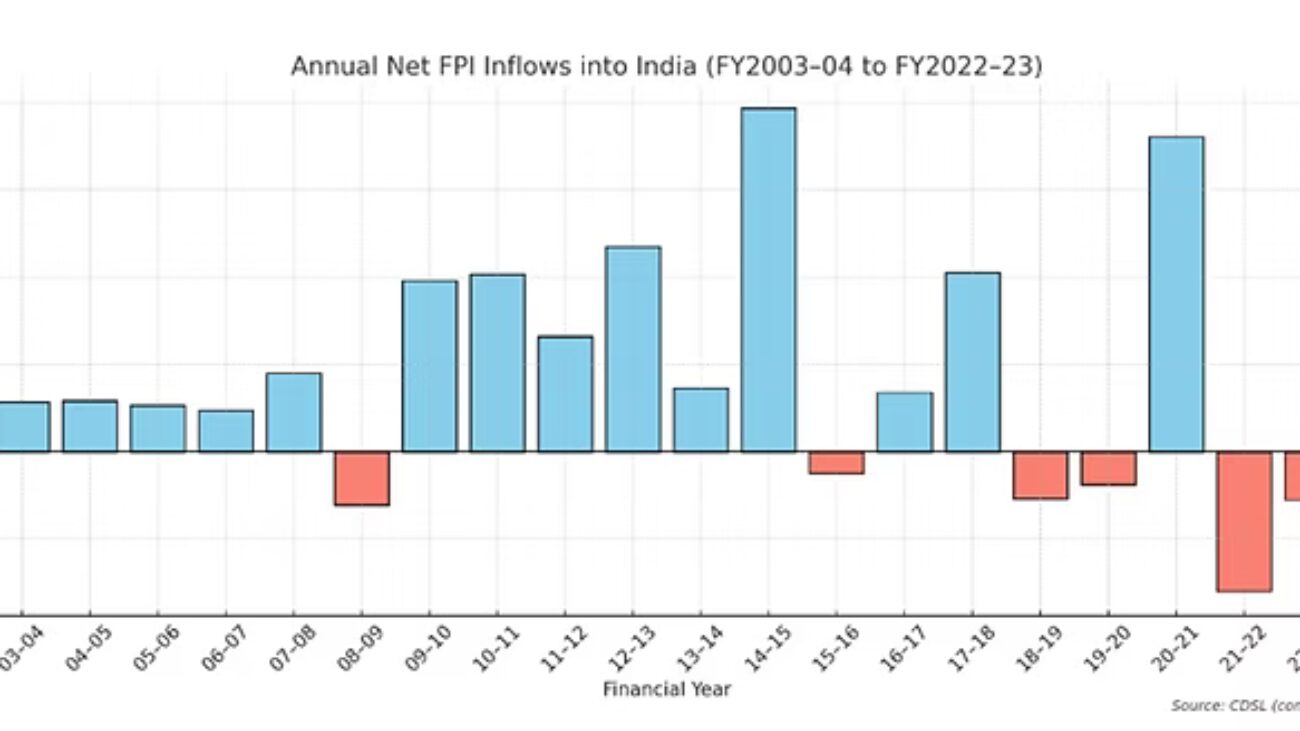
Between 2003 and 2023, India attracted approximately $275 Billion USD from foreign capital inflows, encompassing mostly equity and debt foreign portfolio investments. These capital injections are speculative in nature, primarily chasing returns in financial markets, rather than being directly invested into long-term productive infrastructure like manufacturing and export oriented industries.

Foreign Portfolio Investment into India 2003 to 2023

Interestingly, India’s public sector banks especially between 2008 and 2015 aggressively lent to infrastructure, real estate and capital intensive projects. The state owned banks tried to fill the gap left behind by private investors. A substantial share of these loans later turned into non-performing loans, exacerbating a duel crisis as corporate and bank balance sheets came under severe stress within a few years. The government of India stepped in and injected 3.1 lakh crore Rupees ($45 Billion USD) to recapitalize the struggling banks, and also orchestrated mergers of weaker banks with stronger banks. India’s citizens helped cover these costs via higher taxes and hidden banking charges.

Reserve Bank of India: FX Reserves and Liquidity Dynamics 

As of financial year 2025, the RBI’S Foreign Exchange Reserves stand at around $696 billion USD. While a stronger reserve buffer is crucial for maintaining external stability, the Reserve Bank of India’s purchase of foreign currency to build reserves leads to problems with domestic Rupee liquidity and creates liabilities for the RBI’s balance sheet. Unless it’s not fully absorbed via Open Market operations, it will end up as excess liquidity in the banking system.

Post 2020 and the Covid19 pandemic, loose monetary policy and excess liquidity within the banking system has culminated with more reckless lending. Unsecured retail credit particularly in personal loans, credit cards and consumer finance is troubling. Non-banking financial companies (shadow banking) and fintech enterprises also expanded rapidly into this segment and now pose risks.

India Falling into Debt Trap 

Per a recent survey conducted by the RBI,  household financial savings have sharply declined to a five decade low of 5.1% of GDP in FY2023, down from 11.5% in 2021. Concurrently, household liabilities have risen, particularly in the unsecured credit segment.

Delinquencies in small ticket personal loans and “Buy Now, Pay Later“ programs are on the rise, prompting the RBI to intervene recently with tightening of personal loan norms in late 2023. This dynamic suggests that excessive credit creation, unaccompanied by productive or real income growth, is fueling a fragile boom in consumption backed predominately by debt especially among middle and lower income groups.

Lower Net Foreign Direct Investment amid Higher Repatriation

Even with coordinated efforts from the likes of Apple, Foxconn (Hon Hai Technology Group) and other electronics companies setting up facilities, and the assembly of manufactured goods like iPhones as part of the “China Plus“ strategy, a more comprehensive method of doing business and improved proactive FDI policy is needed. Overall results are still falling short. Evidence shows many companies continue to choose Vietnam and Mexico over India, which is clearly reflected in the lower net FDI figures in India’s Balance of Payments. In financial year 2024-25, net FDI fell 96% to $353 million USD, caused by a surge of money being repatriated out of India led by foreign companies, and also increased foreign investments by Indian companies to other nations, per the Hindu magazine.

The irony is that India needs foreign capital to finance its current accounts deficit, long-term capital investment would boost jobs and increase wages. As the central Indian government practices an austerity drive and its corporations show an unwillingness to invest, India needs higher foreign capital at this crucial juncture. How will India achieve this task? Without better employment and raising wages, India’s celebrated growth faces risks from underlying cracks.

post261

Unpredictability of President Trump and the Markets

Unpredictability of President Trump and the Markets

Everyone wants to know what will happen in the future in the financial world. Most everyone also knows that this is impossible. However, clarity about the mid-term is a legitimate focal point that financial institutions strive. Risk managers define their considerations on assorted perspectives depending on their backgrounds.

While some may like him and others clearly are are not fans, President Trump has a reputation for wanting to get things done. His calling card for a long time has been an ability to make business deals. President Trump however has put himself in a rather difficult position and the next two weeks may prove to be an important milestone. One in which those who like the President and those who don’t will be given more credence to debate.

The Federal Reserve will announce their FOMC decision on the 30th of July. Tariff deadlines will supposedly come on the 1st of August. President Trump has made it clear he does not like the lack of aggressiveness which Fed Chairman Jerome Powell is displaying. Trump has called for the Federal Funds Rate to be cut and Powell has not acquiesced.

President Trump has openly spoken about trying to replace the Fed Chairman, but at this juncture the Trump White House knows this will be difficult unless they can prove Jerome Powell has done something maliciously. Not lowering the Federal Funds Rate because of a fear inflation will develop because of potential effects due to tariff fallout is a legitimate reason not to act. Even if the Fed Chairman is wrong, he appears to still be working on a basis which is based on an economic interpretation.

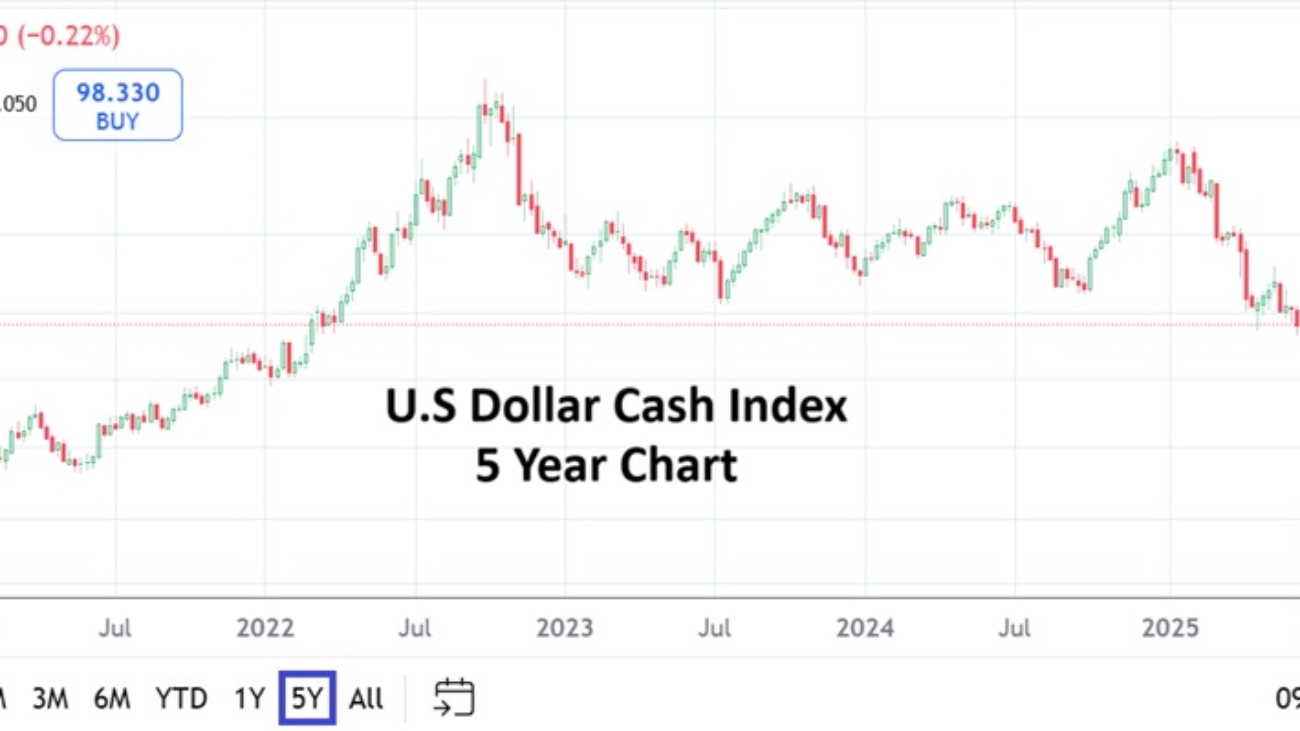
For the next two weeks the broad markets will hear about the Trump and Powell disagreement. It has been argued the Federal Reserve should have lowered the Federal Funds Rate a few months ago, clearly this was not done. However, the USD did trade with weaker sentiment in Forex from early April until the beginning of July. In the past few weeks the USD has garnered some strength, but remains within the lower part of its long-term realms via the U.S Dollar Cash Index. The weakness in the USD was likely due to financial institutions betting on rate cuts to come over the mid and long-term, and which they still believe will happen.

The upwards momentum generated recently by the USD has put the greenback in a position that seems to indicate financial institutions are transacting their cash forward orders cautiously for the moment, while waiting on the next round of impetus. And that is where Federal Reserve clarity and tariff threats now shadow mid-term outlooks.

U.S Dollar Cash Index Five Year Chart as of 21st July 2025

We have entered an unpredictable window and President Trump apparently doesn’t mind allowing a little danger into the mindsets of the financial markets. It is one thing to proclaim tremendous results and great, magnificent prospects, but how long will investors tolerate a lack of clarity regarding tariff agreements? President Trump has postponed the tariff deadlines several times and what should be considered is the potential that at some point he will have to take action to prove he means business. If the August 1st deadline is extended again this may not cause much of a shock, but it will not be met with optimism.

Instead, the main interpretation from financial institutions may be that Trump is struggling to get agreements done as he had promised. While that might lead to the idea that global commerce will continue on as is, this will certainly not help create the positive impetus which President Trump desired. At some juncture President Trump may begin to be perceived as the little boy that cried wolf. No one will pay attention and the markets will proceed without him. But President Trump will not likely let that happen, he does like attention.

The Nasdaq 100 and the S&P 500 are near record highs, so there isn’t a lot to complain about by index investors. The U.S economy has shown signs of green shoots regarding better retail sales and the recent Philly Fed Manufacturing Index. The grey area for many remains inflation, which has been coming in rather well behaved although the most recent report showed a slightly higher outcome with the yearly CPI reading. However, the Federal Reserve actually has evidence that inflation has been tame. Yes, there are questions regarding the coming influence of tariffs on the U.S economy, but for the moment inflation has not risen.

The lack of clarity and not having a mid-term comfort level which is unperturbed may be problematic for small U.S business owners that face tariff concerns on their imported goods. And the bigger picture remains unclear for large U.S corporations – but they certainly continue to try being optimistic. And this is where it gets more dangerous, plenty of perspectives are being driven (inspired) by analysts who have confirmation bias. For instance the downturn in the USD from April until early July was amplified by many who saw this as a sign the USD was being punished by foreign governments opposed to President Trump. This in fact was highly unlikely, traders need to remain alert to false narratives.

The next two weeks need to be treated carefully. There will be a running monologue among many analysts that changes daily as behavioral sentiment moves depending on what is being spoken about the Federal Reserve and tariffs. However, until there are actual answers the financial markets are likely to remain rather choppy. Self awareness will be crucial for speculators. Also, a large factor in the financial markets will be played by the U.S White House regarding how incoming results are presented. Until then day traders may want to watch technical charts and try to figure out where programmed trading lurks regarding support and resistance levels. Price velocity in Forex, bond yields and gold should be monitored.

post260

Risk Events Horizon, Fireworks and a Tranquil Marketplace

Risk Events Horizon, Fireworks and a Tranquil Marketplace

Financial narrative as always remains important and depends on who is sharing their viewpoints. As of today the U.S Senate is still discussing spending legislation which President Trump is selling as the Big Beautiful Bill. Even some Republicans don’t quite agree and it has caused political turmoil already, North Carolina Senator Thom Tillis has announced he will not seek reelection in 2026, but the markets remain stable. An agreement on the budget bill looks like it will take longer than hoped. However, day traders should remain calm.

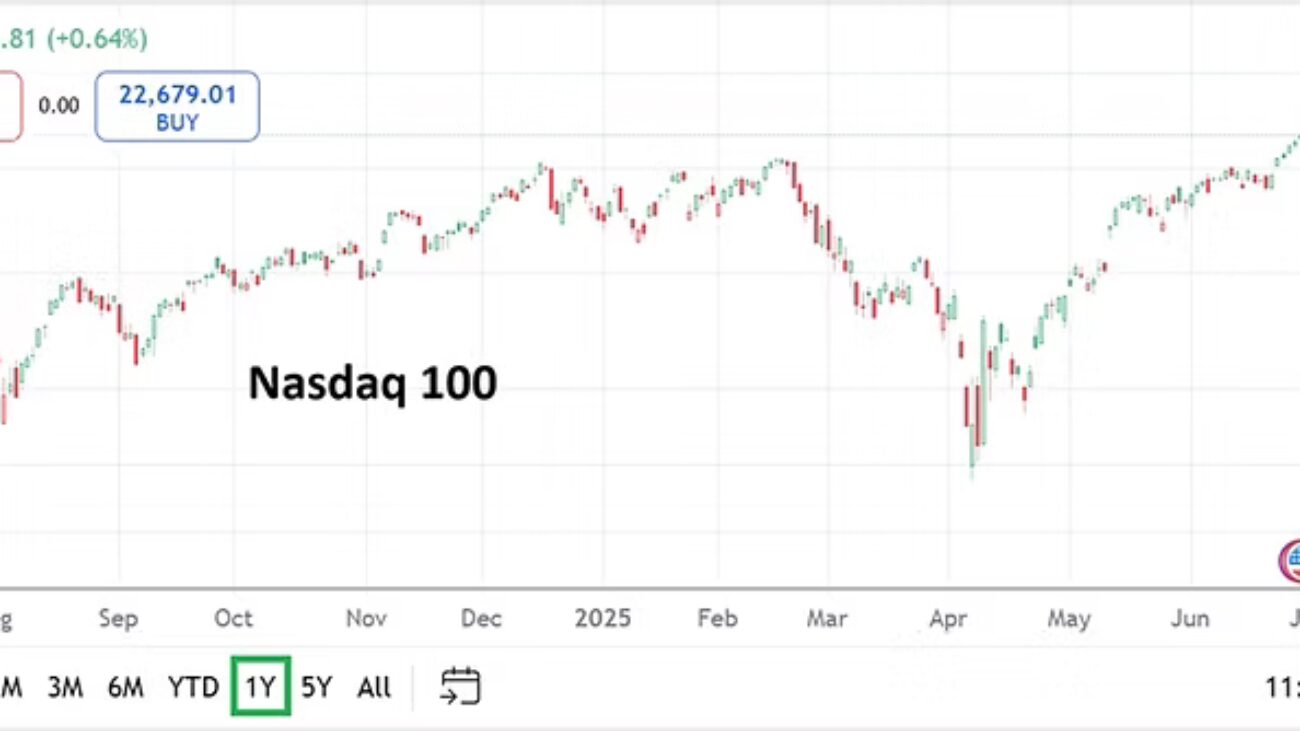
Nasdaq 100 One Year Chart as of 1st July 2025

The words scramble and race are being used by some in the media as the Senate tries to pass the legislation. If the Senate is able to approve a budget it will still have to be voted on by the House of Representatives. The deadline of July 4th is political theatre orchestrated by President Trump largely because of Independence Day symbolism. Early fireworks are ready to be sounded by some market analysts in Washington D.C if there is a legislative failure. There is a risk of irritating the White House and a danger of political backlash for certain politicians if hurdles are not jumped.

Elon Musk apparently hasn’t bought into the White House threats and has once again started to express criticism of the bill. But Musk’s condemnation seems to be falling on deaf ears the past couple of days as the work of market participants have achieved rather serene outcomes. Musk remains an important voice globally, but he has been sidelined rather effectively by President Trump in the past month. The media seemingly doesn’t have a taste for another round of Musk versus Trump recriminations and the public appears bored.

The coming Independence Day holiday means the Non Farm Employment Change numbers will be published this Thursday. The employment data may not get much fanfare if the U.S Senate is still dancing with the Big Beautiful Bill. The long holiday weekend could be made rather volatile if the legislation deadline is not met. If there is no conclusion to the Big Beautiful Bill going into the July 4th celebrations, financial institutions may preposition for the long weekend in a cautious manner, but panic doesn’t appear anticipated.

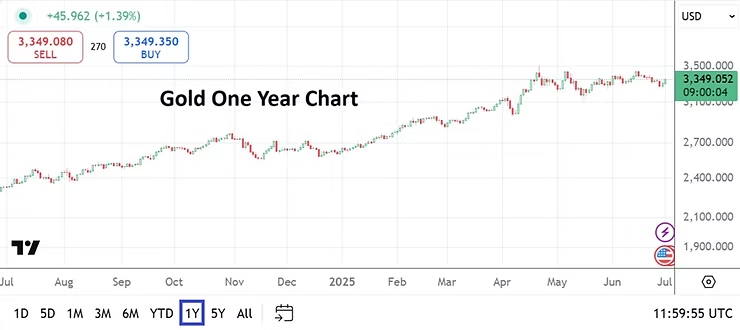
Gold One Year Chart as of 1st July 2025

Adding to the risk events horizon with dynamic ingredients are the 9th of July tariff negotiations and results which will be announced by the White House. Countries such as India are hoping for a positive outcome or at least a pronouncement of optimism that progress has been made. And this is possibly the most important role for the Big Beautiful Bill and the Tariff deadline, it is all self imposed dramatics by President Trump. The double feature for investors may be rather dull because many have seen this film before.

There is pressure on the U.S Senate to pass the spending bill, and on nations trying to negotiate new trading terms. However, many have the likely notion, that as long as the promise of solid developments are predictably claimed by the White House that global markets will stay calm.

Experienced traders in financial institutions have proven tranquil the past week, excluding the recently seen Middle East conflict – which also became a buying opportunity. The solid results seen recently might be evidence that players in equities, commodities, bonds and Forex may be viewing the anticipated fireworks with a lack of fear. While President Trump has a substantial amount of power, he also has shown the ability to take a step backwards and allow for extensions of dialogue.

The broad markets have learned to practice patience with President Trump over the past handful of months, and perhaps aren’t focused on short-term volatility, while continuing to be optimistic about mid-term harmony. The strong selling in U.S equity indices this past winter and into April has turned into bullish dreams and record values being challenged.

Yes, there will be bursts of noise from various corners that beg for attention, but financial institutions may simply go into the weekend unperturbed and feel as if they know the coming political and economic script. Day traders as always need to remain alert to risks, but keeping undisturbed if an uproar begins to reach fever pitch over the coming days may provide the best results. Market bedlam may stay rather muted much to the dismay of headlines proclaiming coming catastrophe.