postN75

U.S National Security, Part 3: Don’t Underemphasize Freedom

U.S National Security, Part 3: Don't Underemphasize Freedom

Opinion: The following article is commentary and its views are solely those of the author. This article was first published the 30th of December via The Angry Demagogue.
 

Conclusion

The post-Cold War world that the Strategy Paper tries to figure out is much more than the collapse of the Soviet Union and the rise of China. One of the main goals of the Trump administration is to turn the clock back on “globalization”, be it via tariffs, other economic ways or even, military means.

While the world is panicking over AI’s destruction of good white collar jobs, it has, paradoxically, created a world where the auto industry can’t find enough qualified mechanics at nice six figure salaries. Not even ten years ago the journalists were haranguing out of work blue collar workers with “go learn to code”, the beer guzzling crew can now tell the tearful journalists and Hollywood “writers” who can’t write better than AI to “go learn how to weld” (or at least handle a screwdriver). But the strategic issues we are facing go beyond manufacturing jobs.

The challenge to the United States and to other free countries is how to handle a new reality where massive debt threatens the diminution, if not the destruction, of the life style we have all come to take for granted and where revanchist regimes don’t quite understand that their power and “prestige” is a result of what has been built in those free countries they want to replace. China, like Russia, Iran, Turkey, Qatar and the non-state actors like Hamas, Hezbollah, the Moslem Brotherhood and others don’t quite understand that while they can use, and even sometimes improve on what freedom has provided them, they will stagnate once they attain their goal of defeating and destroying the free world.

As advanced as China becomes and even if it flies to the moon, overtakes the United States in AI and quantum computing and manages to make the United States into only the breadbasket of the world, they will stagnate as only free markets and free people can move the world to the next step. Growth can only be accomplished by free people. True enough, the economy often grows in ways that we don’t always like, the alternative is stagnation and a return to the pre-scientific age. For all the talk of “new man” and “progress” and everything else that the Soviet Union strived to create, they produced no medicines, no medical devices and no medical treatments.

Therefore, the defeat of the revanchist world and the preservation of freedom needs to be the paramount goal of American foreign policy. This does not mean the creation of democracies where none have ever existed and it does not mean sending troops in every time a political prisoner is arrested or even a plan to militarily defeat the CCP, but it does mean always supporting free countries against the unfree even when the United States is also “friends” with the unfree one.

This means that it will also give free countries leeway when their interests do not align perfectly with America’s (non-core) interests. America as sole protector of the free world has leverage that America as midwife to a set of regional alliances does not. This is a choice that America can make and a correct reading of the Strategy Paper tells us that the United States no longer wants to or can be the main power in every region in the world. This means that there needs to be a change in attitude in America so that it cannot force its will on its allies just because there is another contract to be had or another “cause” that has caught the eye of the country’s establishment.

Encouraging regional alliances of free countries such as the new Eastern-Med Alliance that has already been established between Greece, Cyprus and Israel is a prime example. In addition to the economic cooperation there has been joint defense training and there are agreements that will lead to a defense cooperation pact if not a NATO-like security treaty. Turkey is the common competitor, or enemy, of these three countries. Turkey claims certain Greek islands, occupies parts of Cyprus and has designs on Israel as it strives to be the Islamic “liberator” of Jerusalem. There are gas exploration agreements and cooperation and there would have been a pipeline to Europe if the Biden administration had not stopped it (while they approved the Russian-German pipeline).

Italy ought to be a natural member of the East-Med Alliance and maybe the dissolution of NATO will make them realize that they have more in common with Israel and Greece than they think they do. If Italy were to join then that would create a powerful naval and air deterrence of free countries against aggressors in the eastern Mediterranean. The addition of Malta, a small but strategically important country south of Sicily would provide naval bases that could control the sea lanes between north Africa and Europe helping to stem illegal migration and Turkish attempts to control those same lanes. Malta also brings with it a history of defeating Suleiman the Magnificent in a four month siege when the Ottomans tried to conquer this important island. As we stated before, the United States as a “midwife” to alliances cannot instruct countries on their own national interests. That means that allies of the United States will clash but America must always come down on the side of the free countries and not the revanchist power – in this case, Turkey.

There are of course other regional alliances that can come into being and a remake of the post-WWII world is in order. The end of the cold war created economic booms across the globe raising hundreds of millions of people out of poverty, but recent decades have seen an increase in terror and tyranny and that itself needs to be dealt with. If not by the United States alone then by the US along with the regional alliances that the Strategy Paper has highlighted and we have demarcated (partially) here. But concepts like “territorial integrity” (see Syria, Somalia and the rest of Africa) and “sovereignty” have lost their moral imperative as they are used as excuses by tyrants (and their enablers at the UN) to further their cruelty. One of the faults of the old “liberal international order” has been allowing tyrannies the same rights and respect as free countries. During the Cold War, when nuclear war loomed, this might have made sense but after the fall of the Soviet Union these “principles” have created more harm than good.

In the National Security Strategy of the administration, the words “free” and “freedom” appear twenty times, but never in the context of an alliance of free countries. While it speaks of freedom of religion and speech and free markets it never speaks of the need to put allies that are free ahead of friends that are not free. Allies are those countries that share values and will come to your aid because of that. Friends, in international affairs, are those that look to short-term gain and have no desire to further your values or interests. There is no reason that the United States, in its current fiscal condition needs to fight the fight of freedom around the world alone, but neither can it abandon that fight in the pursuit of short-term contracts or frivolous causes.

Disclaimer: the views expressed in this opinion article are solely those of the author, and not necessarily the opinions reflected by angrymetatraders.com or its associated parties.

You can follow Ira Slomowitz via The Angry Demagogue on Substack https://iraslomowitz.substack.com/ 

post297

Significant Highs All Around as Speculation Grows Frothy

Significant Highs All Around as Speculation Grows Frothy

Gold, platinum, and the major U.S indices are all flirting with record values. Fast trading is being seen on all fronts, dangerous reversals are also being displayed and causing harm for day traders. The U.S government shutdown remains in full force. Not enough pain has been heard from the U.S public yet which would make politicians pause and actually try to negotiate a deal.

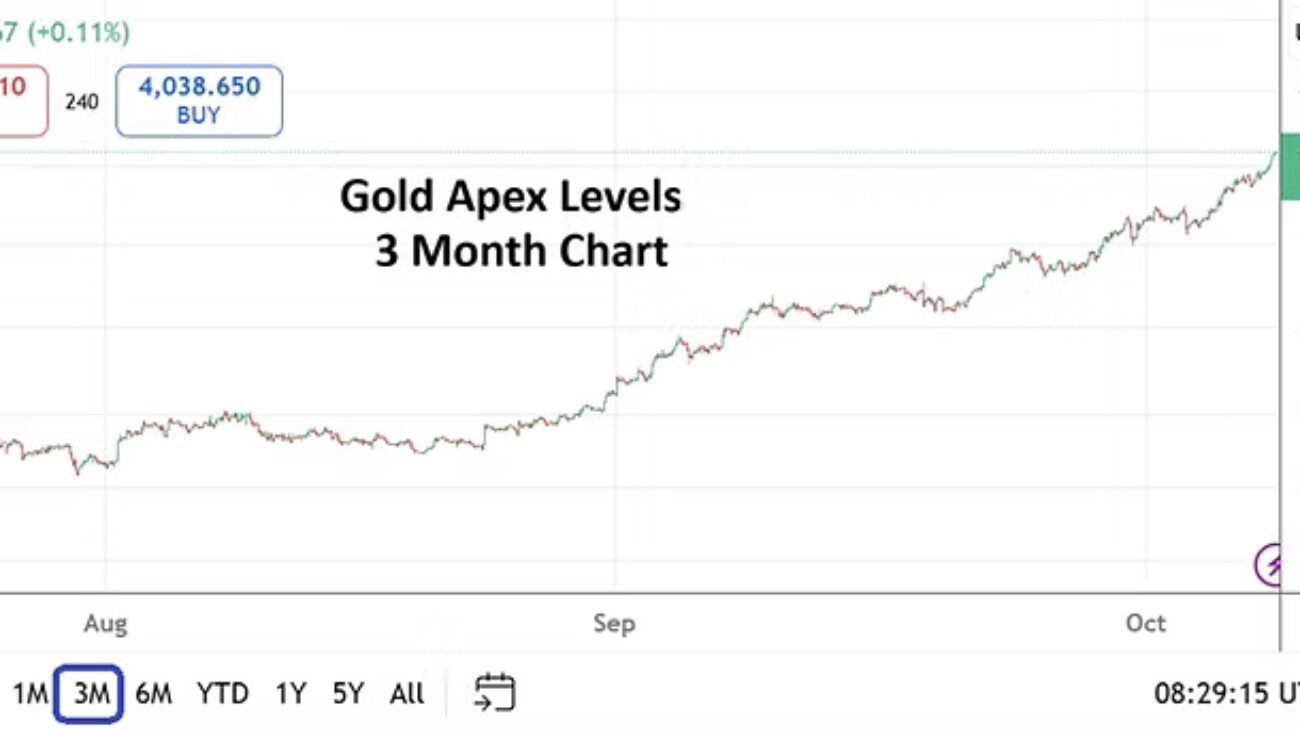
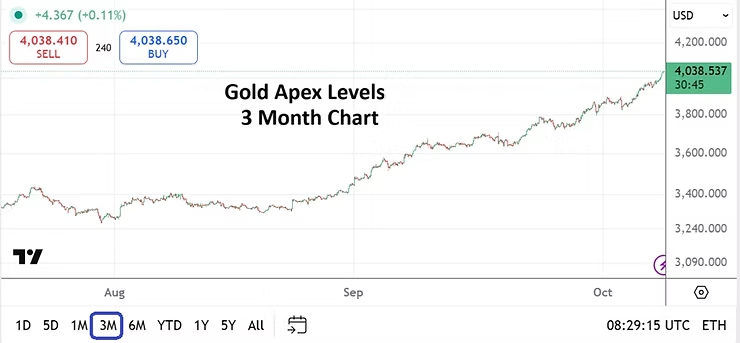
Milestone apex values have been experienced. Gold has produced the 4,000.00 USD per ounce level and sustained value, the Nasdaq 100 toppled 25,000.00 the past two days, but has moved lower for the moment. Conditions for day traders are swift and they need to be careful. And while the U.S government is shuttered, the Federal Reserve is still expected to announce their FOMC interest rate decision on the 29th of October. A Federal Funds Rate cut of 25 basis points is still anticipated.

Gold Three Month Chart as of 8th October 2025

Forex has seen jittery results as the EUR, GBP, JPY have struggled in recent trading versus the USD. And while some people may point to the stellar results and values within Gold and Bitcoin as evidence for safe haven wagers being placed, large speculators are playing a key ingredient in the broad markets too. Investors are certainly looking for value and have a belief that buying now represents a discount compared to what Gold and equity values will be over the long-term. However, day traders should also remember that a large amount of influence in the markets derives via behavioral sentiment, and as record highs are being challenged anxiousness grows regarding potential responses from speculative forces particularly when profit taking remains a part of wagering.

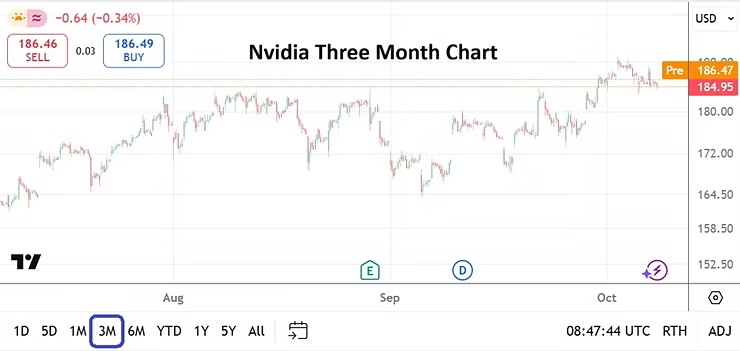
Nvidia Three Month Chart as of 8th October 2025

While questions and concerns are heard about a possible AI bubble being experienced and too much money being invested in equities like Nvidia, Oracle, Microsoft, etc., folks need to understand long-term investors are gearing their portfolios towards outlooks. Betting on these companies playing a significant role in technological advancements is a long-term viewpoint which works on optimism. Artificial intelligence is important, but the motor that runs AI infrastructure via semiconductors, big data distribution, servers and cybersecurity are crucial. The promise of quantum computing is also experiencing a surge of investment because of a belief in the future.

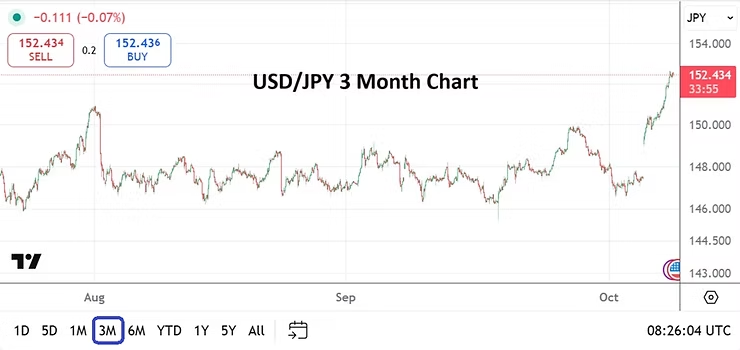
USD/JPY Three Month Chart as of 8th October 2025

And that is what day traders who are tempted to bet against the trends in the marketplace need to remember. Investors will not bet against Wall Street because of the government shutdown. In fact, they will certainly be heard joking that corporations run more effectively with less government intrusion.

This is not a simple puzzle. Complexity certainly needs to be considered regarding valuations in the EUR/USD, GBP/USD and USD/JPY. Intriguingly, day traders may want to take a look at the South African Rand too, because technically it continues to be strong against the USD, which is rather out of step and a rather interesting non-correlation. The broad Forex market has lost some its luster for day traders the past year because of a lack of perceived volatility across the board. But volatility may be on the way, the Japanese Yen certainly stands out and should be watched via the USD/JPY and JPY crosses in the coming days and weeks.

post270

India Insider: Strategic Balancing Act Comes with Risks

India Insider: Strategic Balancing Act Comes with Risks

On the 15th of August, India’s Independence Day, Prime Minister Narendra Modi announced a large reduction on Goods and Services Tax rates to boost domestic consumption. The Indian economy is certainly slowing, this as lackluster domestic consumption has prompted the Reserve Bank of India to cut the repo rates from 6.5% to 5.5% in 2025.

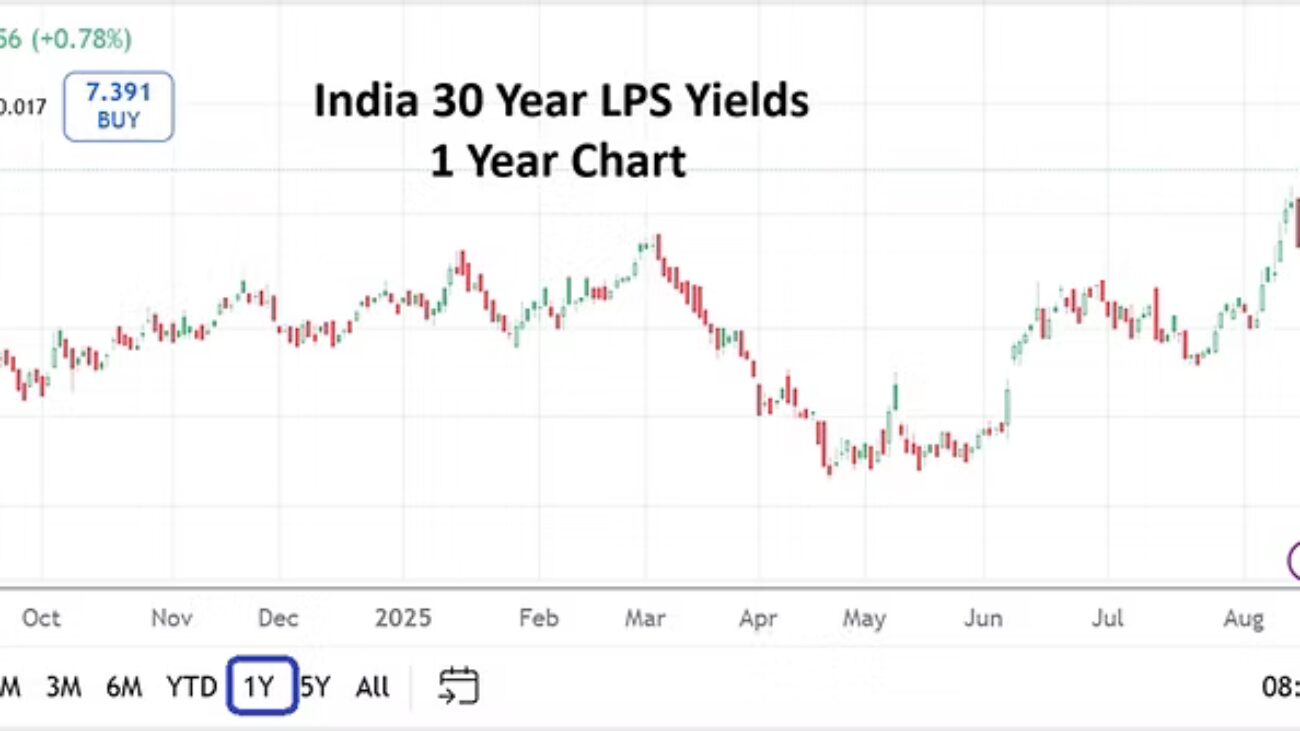
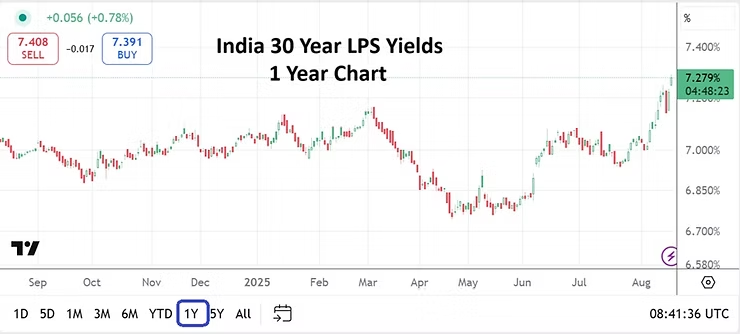
Indian Bonds 30 Year LPS Yields One Year Chart as of 19th August 2025

As trade deal discussions with Washington flounder, New Delhi is being forced to shift economic considerations towards China. The diplomatic relationship between India and China has grown colder, particularly since they clashed on the eastern border region in 2020.

Relying on China also comes with challenges for New Delhi. Since 2021, the trade deficit with China has expanded from $73.3 billion to $99.27 billion USD, showing that India still depends increasingly on China for significant importing needs.

According to Bloomberg, India’s major conglomerates have already established excellent relationships with Chinese suppliers of lithium ion batteries and EV components, although they try to discreetly tread under the radar in order to avoid the wrath of New Delhi government.

The fact is India can sustain its economy and maintain its geopolitical posture of non-alignment by practicing a multi-polar stance with Washington and Beijing. But despite clinching trade deals with the U.K and reviving trade negotiations with the E.U, New Zealand & Australia, and its deepening bilateral relationships with many central Asian nations and within BRICS, New Delhi’s major trading partner for exports remains the United States. Around 18% of India’s exports go towards the U.S, while 15% of imported goods come from China. The numbers do demonstrate an intriguing balance.

While India’s negotiations with the U.S have stalled and appear postponed indefinitely, other Southeast Asian countries, including Vietnam, Indonesia and the Philippines have secured lower tariffs with the Trump administration making them more competitive in the U.S. market. These nations are using the U.S for economic and military security, but they also rely on China for manufacturing and logistical needs.

India Faces Additional Challenges with Washington and Beijing:

Indian IT companies derive nearly 57% of their export revenues from U.S clients, making them heavily dependent on that market. And rapid advances in AI and the erosion of legacy outsourcing models are putting India’s traditional profit engines under pressure.

Meanwhile, China is not keen on helping India achieve expertise and manufacturing competitiveness which would threaten its own business model. China wants to make inroads by selling goods to the world’s largest consumer market, rather than technology transfers which would allow India to attain manufacturing supremacy.

Some economists warn that India’s own plans for mitigation of its current circumstances will likely be disinflationary. India’s bond results via yields clearly express concern about potential fiscal costs and difficulties. New Delhi’s focus has shifted towards appeasing domestic consumers, while trying to deal with uncertain foreign partners. Government capital expenditures have been declining since last year, signaling that both corporate and public investment confidence remains weak.

India’s neutrality is welcomed. It’s not anti-Western or pro-Western, and attempts to balance between the U.S and China while trying to forge new trade agreements and ties are a constant high-stakes game capable of creating strains economically and politically. The path forward with the U.S and China will remain complex and it must be worked on with precision in order to help achieve success.

postR179

AMT Top Ten Miscellaneous Rays of Light for 23rd of August

AMT Top Ten Miscellaneous Rays of Light for 23rd of August

10. Word of the Day: Like crepuscular animals which are active during twilight, large market players are ruminating as their summer hiatus draws to an end over the next week and a half. Plans for coming hunts are being formulated as leisure concludes for financial institutions preparing to work in the shadows.

9. Scrolling Failures: Lack of solid results on search engines are becoming a growing annoyance. Is it just us? An abundance of poor information via defined searches on the internet and finding what is sought is becoming increasingly problematic. Is AI being allowed to do too much while still too dumb? AI doesn’t know when it is wrong. Competitors to Google and others are sought.

8. How Dare Us: The postponement of imposed dates regarding energy policy changes are multiplying. The end for the classical use of oil, coal and nuclear is not near. Efficient power is evolving, but this will have to include ‘antique’ generation and grids. The demand for electric vehicles are being confronted with declining sales via U.S consumers. Tangible technology needs precise planning, not apocalyptic rhetoric which tries to scare people.

7. Middle East Calm: The storm is being limited within a tea cup for the moment. The potential for a dangerous boiling painful mess still exists. ‘Serenity now’ remains a mantra for those who need to pay attention as chagrin and anxiousness mix.

6. Fed Retreat: The FOMC Meeting Minutes released this week showed some Fed members remained cautious, while others banged the drum louder regarding interest rate cuts. However, a Fed Funds Rate reduction is almost a 100% certainty for the 18th of September. The question now is what the Fed will do in November. Fed Chairman Powell and a slew of other renowned global central bankers will speak today and tomorrow at the Jackson Hole Symposium. Financial institutions largely believe they know what is going to be said, but comments from Bank of Japan and Brazilian leadership could prove to be informative and entertaining for central bank nerds. Monday could be volatile for USD/BRL traders.

5. VIX: The CBOE’s Volatility Index climbed to the 56 vicinity on the 5th of August as panic grew via widespread overreactions to hyperbole ripping through the markets. The fear gauge is near the 17.55 ratio as of this writing. Market calm has resumed across the board as financial institutions and day traders have been able to achieve a pleasant tone again. Traders who use the VIX as a template regarding the potential of risks suddenly cascading into assets should keep their eyes on the index, which went to a low around the 14.45 mark on Monday. Yet, the slight incremental climb the past few days could be coming from folks still speculating on volatility which may not develop near-term.

4. Barometers: Gold is lingering slightly below 2,500.00 for the moment, this after having achieved a record high on Tuesday when it touched the 2532.00 apex. WTI Crude Oil is near 74.00 USD per barrel and is maintaining a polite value range. Speculatively, Cocoa is again above 9,000 USD per ton and Bitcoin has fought its way above 61,000 this morning. Risk appetite remains stable for the moment.

3. Forex: USD/JPY, EUR/USD, even the USD/ZAR have been able to hold onto their recent trends as USD centric weakness remains viable. Traders who were looking for huge moves in FX this week have likely been disappointed. Retail speculators need to understand financial institutions have been positioning for a weaker USD since the tail end of July. Market players may be quite pleased regarding current Forex equilibrium, which may allow technical traders the ability to take advantage of existing behavioral sentiment, this as reversals flourish and the next big wave of impetus is awaited. Next Thursday’s U.S Preliminary GDP numbers may deliver some noise.

2. Cassandras: Market experts who proclaimed a long-term stock market crash in early August have crawled back into their caves to take cover and percolate their next fear mongering tactics. This after the latest round of predicted catastrophes have vanished. While the major U.S stock indices are not at record highs, they have recovered plenty of lost ground and appear ready for more days in the sun.

1. Political Winds: The curtain closed on the Democratic National Convention in Chicago last night without a serious hiccup. Kamala Harris and Donald Trump now enter a crucial phase of campaigning, and will get plenty of attention as they go into attack mode. The next big event for Harris and Trump will be their televised debate on the 10th of September. Will the outcome prove to be a devastating storm for one of the candidates?

postR196

AMT Top Ten Miscellaneous Fragments for the 24th of May 2024

AMT Top Ten Miscellaneous Fragments for the 24th of May 2024

10. IP vs. AI: OpenAI has agreed to pay News Corp., the mass media company, for the rights to ‘farm’ data and written content from publications like the Wall Street Journal and other notable brands. OpenAI will compensate the media giant around 250 million USD over the next five years. Question, does this legally imply that all Artificial Intelligence companies will eventually have to pay for ‘scraping’ Intellectual Property from all resources they take information?

9. Memorial Day: The U.S will observe its commemoration for fallen soldiers this coming Monday. The long holiday weekend will affect financial markets later today with lighter than normal trading, and volumes will be very thin in Forex and many commodities early next week.

8. India: The 6th phase of India’s national election will be held tomorrow. The 7th and final polling date is the 1st of June. There are murmurs that Prime Minister Narendra Modi’s Bharatiya Janata Party is losing some ground and will not be able to attain a super majority in the Lok Sabha.

7. Moment of Lunacy: The United Nations observed a moment of silence for Iran’s deceased President and Foreign Minister who died earlier this week in a helicopter crash, while failing to mention the majority of citizens in Iran who live unwillingly under the Iranian Islamic Republic’s oppression.

6. 29th of May: The South Africa election will be held next Wednesday. After governing the nation since 1994, the African National Congress appears to have a fight on its hands to sustain power without having to use a coalition. Dangers abound regarding potential political alliances which might have to be formed. The USD/ZAR will certainly endure volatility in the days ahead, and geopolitical influences should be monitored in the weeks to come. Can a tranquil compromise be attained?

5. FOMC Meeting Minutes: Wednesday’s publication of the Federal Reserve’s decision making process rumpled some feathers in financial institutions regarding the central bank’s laser focus on inflation. However, traders should not have been surprised. While the outlook for the Federal Funds Rate has seemingly shifted within financial institutions to hopes of a more dovish policy, equity indices and Forex will continue to amplify a battle between short and mid-term speculative and investment positions that gyrate on power generated from fundamental economic reports and technical perspectives.

4. Gold: The precious metal is near 2,340.00 USD as of this writing, this after attaining an all-time record value around $2,450.00 per ounce this past Monday. Risk appetite is certainly high in the financial markets. Day traders need to understand large speculative forces can move commodities and other assets with lightning speed when big volumes and changes to behavioral sentiment collide.

3. Data and the G7: Today’s Consumer Sentiment and Inflation Expectations readings should be watched from the University of Michigan. Weaker than anticipated results could solidify a bearish trend for the USD. However, traders should also keep in mind the G7 meetings taking place as they monitor global events, they should also remember to eliminate the hyperbole that may come from some politicians today and tomorrow in Italy as pronouncements come from the conference.

2. U.S Debt Burden: As the U.S election draws closer, investors are likely to hear more about the growing U.S debt which is certainly increasing too rapidly. 34 trillion USD in public debt is owed by the U.S government. It is a monumental number and growing larger on a daily basis. The U.S must start to get its fiscal house in order. The ratio of 124.7% of U.S debt to Gross Domestic Product is eye catching, it is still less than many major countries but still troubling. Japan’s ratio is about 263%. However, the U.K’s ratio is less and standing at 85.4%.

1. Devaluation: USD/JPY as of this writing is hovering near 157.000. There has been talk among financial institutions regarding the belief that China is quietly devaluing the USD/CNY to gain an advantage in export ability. But little mention has been made of Japan’s devaluation of the Japanese Yen to accomplish the same goal. The USD/JPY remains in remarkably high territory and the currency pair needs to be treated carefully by day traders as the Bank of Japan maneuvers policy to accomplish economic goals.

postN51

AMT Top Ten Miscellaneous Entries for the 22nd of March 2024

AMT Top Ten Miscellaneous Entries for the 22nd of March 2024

10: Jefferson: Jon Meacham’s Thomas Jefferson The Art of Power provides well written historical and psychological insights concerning one of the U.S Founding Fathers.

9. Shohei Ohtani: Major League Baseball has a gambling scandal. Claims that Ohtani’s interpreter ‘stole’ over 4 million USD from the player to pay off gambling debts beg for questions.

8. Saudi Arabia: The nation has announced it plans on investing 40 billion USD into Artificial Intelligence sector companies via its Public Investment Fund (sovereign wealth fund) and potential business partners.

7. Steve Jobs: Apple’s innovation and tech leadership appears to be weakening as the absence of its deceased leader fades into memory, and competitors grow.

6. Bank of Japan: Monetary policy was finally shifted on Tuesday, an interest rate of 0.10% was instituted, today’s National Core CPI data came in at 2.8%. USD/JPY is currently around 151.400 suggesting financial institutions believe the BoJ Policy Rate may have to be raised again.

5. Gold & Forex: The precious metal challenged 2223.00 USD on Wednesday after the Fed’s FOMC rhetoric but is trading near 2165.00 as of this morning, this as the USD has gotten stronger again producing FX volatility.

4. Hot Chocolate: Cocoa finished yesterday at 8477.0 USD per metric ton, the commodity cost 2880.0 USD one year ago. What and who are manipulating the market?

3. China: Official Foreign Direct Investment statistics are supposed to be released soon. China argues that the fall of foreign investment capital is being reported with bias and not taking into consideration the impact of coronavirus, global monetary policy changes, and cyclical investment fluctuations. However, the FDI numbers remain troublesome and should be watched.

2. Risk Appetite: Major U.S equity indices including the S&P 500, Nasdaq Composite, and Dow Jones 30 are challenging record highs as behavioral sentiment remains exuberant, along with Japan’s Nikkei 225.

1. Interest Rates: The Federal Reserve has hinted three interest rate cuts ‘could’ happen this year, this while inflation in housing, transportation and food remain significant for U.S consumers. The Fed seems to be indicating it believes U.S jobs data will get worse. Political shadows hover over the central bank as the presidential election draws closer. The Fed only has 6 FOMC meetings left and appears to be playing with fire.

postN51

AMT Top Ten Miscellaneous Sunrays for the 23rd of February

AMT Top Ten Miscellaneous Sunrays for the 23rd of February

10. Word of the Day: Abeyance – the state of suspending something until another issue is resolved. Can you say, “Central Banks”……we knew you could.

9. South Africa: National election is scheduled for the 29th of May. Will the disdain the ANC and EFF have for the ‘West’ be addressed by voters or will the masses elect the usual suspects?

8. China and Germany: New Home Sales prices dropped again in China per data released this morning, Germany’s GDP data published today shows negative growth and recessionary pressures growing.

7. Nvidia: Their quarterly earnings report this week showed Artificial Intelligence isn’t a mere marketing tool, but a moneymaker opening a new era for technology.

6. South Carolina: Nikki Haley apparently will lose the Republican Primary in her home state tomorrow, but likely stay in the presidential race hoping that Donald Trump implodes via his own ego or legally.

5. Don’t Touch that Switch: AT&T believes yesterday’s widespread phone outage was caused by human error, not a hack.

4. U.S Equity Indices: Timeframes and patience remain crucial for investors amidst daily gyrations, this as the S&P 500, Nasdaq 100 and Dow Jones 30 explore record values.

3. New Zealand: Will the Reserve Bank of New Zealand go against the grain and actually raise its Official Cash Rate next Wednesday to fight stubborn inflation, or capitulate to the wait and see approach of ‘others’? The NZD/USD should be watched.

2. Caution: Forex remains choppy, U.S Treasury yields have crept slightly upwards, gold is hovering near 2020.00 USD. AMT’s #1 may be the reason why.

1. U.S Data Next Week: Preliminary GDP will be published on Wednesday, and Thursday will present the Core Personal Consumption Expenditures Price Index. The results could create massive impetus in all financial assets.

postN51

AMT Top Ten Miscellaneous Raindrops for 16th of February

AMT Top Ten Miscellaneous Raindrops for 16th of February

10. Bitcoin is trading within sight of 52,000.00 USD, the digital asset was trading near 38,700.00 on the 23rd of January, which is over 34% in less than a month. That’s a lot of air in the balloon folks.

9. Gold: The precious metal has climbed above 2000.00 USD, this after a drop to 1985.00 USD on the 14th of February. Sentiment is uneasy.

8. Not April Fool’s Day: Iran has announced ‘plans’ to build a naval base on Antarctica, after declaring ‘property rights’.

7. WTI Crude Oil: The price of the commodity continues to battle the 77.00 USD level. Higher energy costs will not be looked on favorably by inflation hawks.

6. U.S Treasuries: Yields should be watched today after having provided anxious results this week, U.S equity indices will continue to react to the ‘bonds’ market.

5. Nvidia: After delivering superlative results in 2023, the company has announced the release of Chat with RTX, which allows independent AI chatbot capabilities to interface with your own documents, videos, etc., providing insights from personal queries.

4. Chinese Property: Investments dropped by over 9% in 2023. China’s government faces a clash between socialistic ideology in order to help the market versus practical supply and demand realities.

3. U.K: Gross Domestic Product numbers came in with negative results yesterday for Britain, the combination of recessionary GDP and stubborn inflation is stagflation. Bank of England faces a difficult decision. Will the BoE get proactive and cut interest rates before the Federal Reserve? GBP/USD is below 1.25800 this morning.

2. Data: Stronger than expected U.S CPI statistics caused bedlam on Tuesday, but yesterday’s Retail Sales came in weaker. The ‘disappointing’ consumer spending numbers were likely welcomed by the Federal Reserve and financial institutions. Producer Price Index statistics will be published today, surprise inflation results could jostle financial markets.

1. Forex: Day traders witnessed whipsaw results early this week and should remain cautious going into this weekend. Patience will be needed as USD centric outlooks adjust to nervous shifts in behavioral sentiment.

postN51

AMT Top Ten Miscellaneous Thoughts for the 8th of December

AMT Top Ten Miscellaneous Thoughts for the 8th of December

10. Book: A History of Venice by John Julius Norwich.

9. Music: Gram Parsons (featuring Emmylou Harris) playing Ooh Las Vegas.

8. Artificial Intelligence: Speed and processing advances will continue to make AI a buzzword in 2024, this as quantum computing looms in the distance.

7. Trading Volumes: Speculators should note there are about two full weeks of trading left before ‘thin’ holiday markets will begin to be seen. Meaning financial institutions while being cautious, will also start to position their assets according to their outlooks for early next year.

6. Energy Sector: WTI Crude Oil, Brent, Natural Gas and Unleaded Gasoline continue to challenge support levels as long-term lows remain in sight.

5. China: Important inflation numbers via Consumer Price Index statistics will come from the nation early Saturday, negative results are expected.

4. Risk Appetite: Optimism continues to be encouraging within behavioral sentiment, this as U.S equities remain near highs, the USD leans towards a mid-term outlook with potential weakness, and gold stays above 2000.00 USD per ounce.

3. USD/JPY: Bearish momentum continues in the currency pair, price velocity built speed yesterday and this morning’s trading has been dynamic.

2. Data: U.S jobs numbers will be released today, the Non-Farm Employment Change and Average Hourly Earnings reports will create reactions. However, unless the results are surprising, this data may simply work as an affirmation for existing risk appetite.

1. Federal Reserve: The Fed’s next FOMC Statement will be on the 13th of December, this knowledge will shadow the broad markets today and early next week.

postN40

Trading Tips: Perspectives and Gaining Behavioral Sentiment

Trading Tips: Perspectives and Gaining Behavioral Sentiment

Data is everywhere. AI has helped increase the level of information accessible to day traders. However, the quality of the information and its insights remains questionable – suspect. Systems relying on technical, fundamentals, algos, and the magic word ‘quants’ are tools which can help a person make their decisions. Unfortunately they do not guarantee you are going to make money.

Profitable results in trading remain difficult to attain. Day traders – speculators – continue to look for a golden goose. Something or someone who can deliver profits on a steady basis remains hard to find. This article is to help you gain perspective, it is a trading tip. There are no secrets of the temple coming, but it may be time you stop looking for secrets which do not exist.

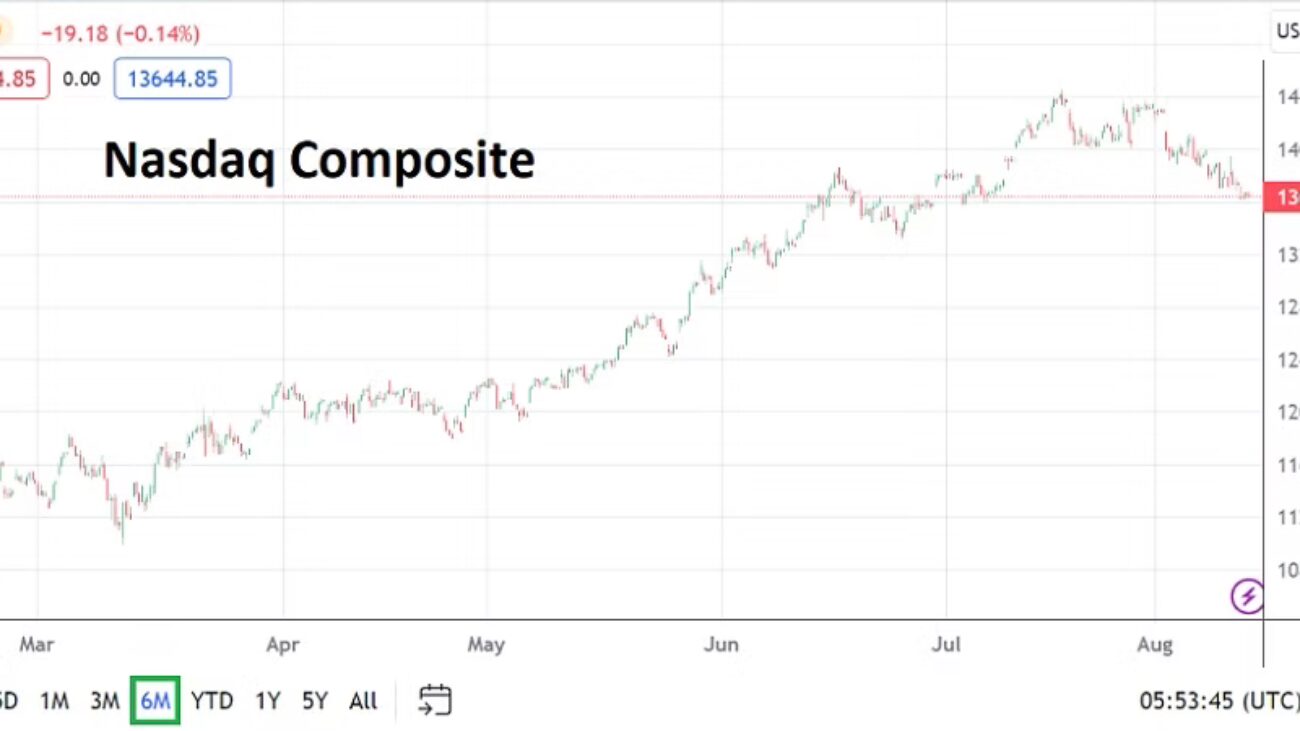
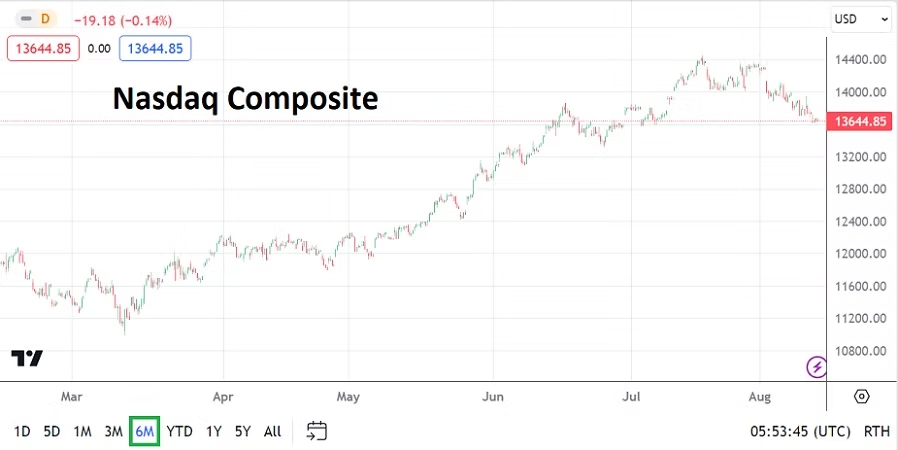
Nasdaq Composite Six Months Chart as of 12th August 2023

Trying to look forward and gaining genuine insights remains tough. Technical charts, fundamentals, opinions from experts all remain problematic to actually use in real time. The markets in a sense are alive, the environment is constantly changing. The moment information is shared it becomes old. Time and price action move fast. You can slow down the ‘game of trading’ by using different perspectives and practicing new ways to consider the dynamic values that are in flux that you are witnessing.

Behavioral sentiment – insights – regarding what the largest traders are going to do in the short, mid and long-term would be relevant. Understanding the asset you want to trade is important, understanding the inclination of the marketplace, price action – velocity – and timeframes of potential volatility is crucial. A key component would be to find a way to time a trade knowing what direction an asset is going to move.

This remains elusive for nearly all traders.

Again, this particular article is not going to solve this problem for you. It is to acknowledge the problem exists. We can have all the data in the world, past performances statistics, know what the markets are predicted to do, but the ‘game’ still needs to be played. Over 90% of day traders loss their money and eventually give up. Traders wagering on the markets need a way to put the odds of success in their favor. Folks may wonder why angrymetatraders.com writes about fantasy sports within its culture/ sports topics, it is because there is a correlation to sports and financial markets for speculators.

Day traders in many ways are not really participating in the marketplace, they are betting on the outcome of the results. The tiny trades of the majority of retail speculators are not affecting price action, sometimes the trades aren’t even being put into the real market – they are being traded virtually. Read about the topic B book trading within our articles if you have time.

Like sports gamblers who are not playing in the game, speculators are using their perceived knowledge of financial assets and past results to bet on future outcomes. A key ingredient to having successful trades that work in the financial markets is to have solid knowledge and a sense of what can develop as assets trade on a particular day. There are complexities within each sector, like every game being played in a variety of sports.

Gamblers not only bet on the outcome of the game, they also bet on the outcome of different components within the ‘contest’ – player stats, halftime scores, turnovers. Traders can do the same thing by speculating on an asset over different timeframes, and they can sometimes trade what are known as ‘options’ too, this to hedge on their positions or sometimes simply wager on their belief that a Forex pair or a share (stock) price is going to move in different ways during a certain period of time.

Understanding behavioral sentiment is important. The meshing of technical interpretation with fundamental data, and the way it affects perception and the tendencies of potential decisions to be made regarding outcomes is not easy. However, grasping the outlook of other financial market participants can improve a day traders results, if they put effort into perspectives and apply this to their risk taking tactics.

post39

AI Noise and Manipulation Feared as a Potential Threat

AI Noise and Manipulation Feared as a Potential Threat

Yesterday’s AI generated graphic which claimed an explosion had happened around the Pentagon in Washington D.C. sent equity indices into a brief selloff mode. However, the graphic was soon proven to be false news as people in Washington confirmed there had been no explosion.

AI has the capacity to cause surprise storms if some people try to trigger manipulation in the financial world and elsewhere by using ‘false’ data and graphics. ‘Bad actors’ within A.I will likely be compared to ‘ransomware’ folks in the world of high-tech, and people and institutions will have to react quickly to distinguish between fact and fiction. The ability of AI to manipulate the markets yesterday is only the beginning and we need to be prepared for more stories like the Washington D.C fake.

AI Mania is Building in the Media and People are Concerned about Wrong ‘Facts’

AI machine learning is coded by people and some of them are prone to bias, which raises the specter of bad input being used in systems that serve the public and clients in an ill-fated manner. Putting all of our trust into an AI system is wrong minded, just as we do not put all of our trust into Wikipedia information, and are aware facts should be checked on within a variety of sources.

Yesterday’s deep fake AI graphic highlights the need for financial markets to discern in a timely fashion attempts to manipulate narrative. Certainly some traders got hurt during yesterday’s reaction to the false report of an explosion in Washington. The dishonest graphic made instant news globally, and social media gadflies raced to report ‘the explosion’ and then had to quickly say they had been tricked. Data bias in AI is just as problematic and perhaps more dangerous, because what is presented as facts will always have to be given critical consideration by its users.

The prospect of bias producing arrogant AI systems ‘tools’ full of hubris as they assert ‘truth’ could develop and create self-perpetuating machines full of wrong details. This could happen as AI searches the internet for information and relies on data that is poor, and uses statistics from its own system posted elsewhere which could manifest falsehoods. The prospect of AI using its own potentially bad coding, and previous input distributed into other information networks in theory could lead to stubborn ecosystems which insists that they are correct, when they are actually not accurate.

Middle of the Road Results will make Users Choose Direction Sometimes

Public AI systems tend to frequently deliver ‘middle of the road’ result aggregates so they do not offend, leaving the users with mixed insights and without a firm stance. Perhaps if users understand this circumstance it can be perceived as a good outcome, because the person will have to do their own critical thinking while choosing direction. There is a danger that politically correct thinking which is coded into AI could lead to more vanilla and less flavor. The fear of offending people with facts may become a danger for AI, and coders will have to decide how to program searches as they produce objective and subjective outcomes.

Learning has changed as the internet has grown more robust with ‘facts’. Students often do not feel it is necessary to master particulars by reading a range of books. Instead they tend to rely on their mobile phones and laptops for their knowledge, avoiding in depth study on their own which would offer more insights and create critical thinking. This can and does lead to the use of ‘expertise’ produced by the internet which is incorrect.

Let’s also consider the notion that public use of artificial intelligence has won a large amount of publicity in the past year, but machine learning capabilities have in fact been used for a long time. The media has done a fairly good job of stirring the masses into a furor, and solid marketing has led to AI being the center of conversation the past handful of months.

AI is far from perfect because it is being built by flawed humans. In 1952 IBM via Arthur Samuel built a program allowing a computer to play checkers and learn how to improve its outcomes through ‘play’. In 1997 an IBM system called Deep Blue beat world chess champion Gary Kasparov in a six game match. The 45 year gap should be noted as we contemplate how AI will develop in the future.