post246

An Expanding Axis – Will Egypt and Pakistan Become Members?

An Expanding Axis - Will Egypt and Pakistan Become Members?

Opinion: The following article is commentary and its views are solely those of the author. This article was first published the 26th of May via The Angry Demagogue.
China seems to be taking advantage of the transition from the Obama-Biden appeasement based foreign policy to the Trump commercial based system. Whereas Obama-Biden had no problem punishing allies that dared to oppose the US-EU appeasement and woke revolution, Trump is looking to create alliances based on commerce – and threatens allies that don’t go along. While the Obama-Biden policy failed utterly and arguably caused the wars in Ukraine and the Middle East, the Trump administration seems to be playing for time as it restructures the global security order.

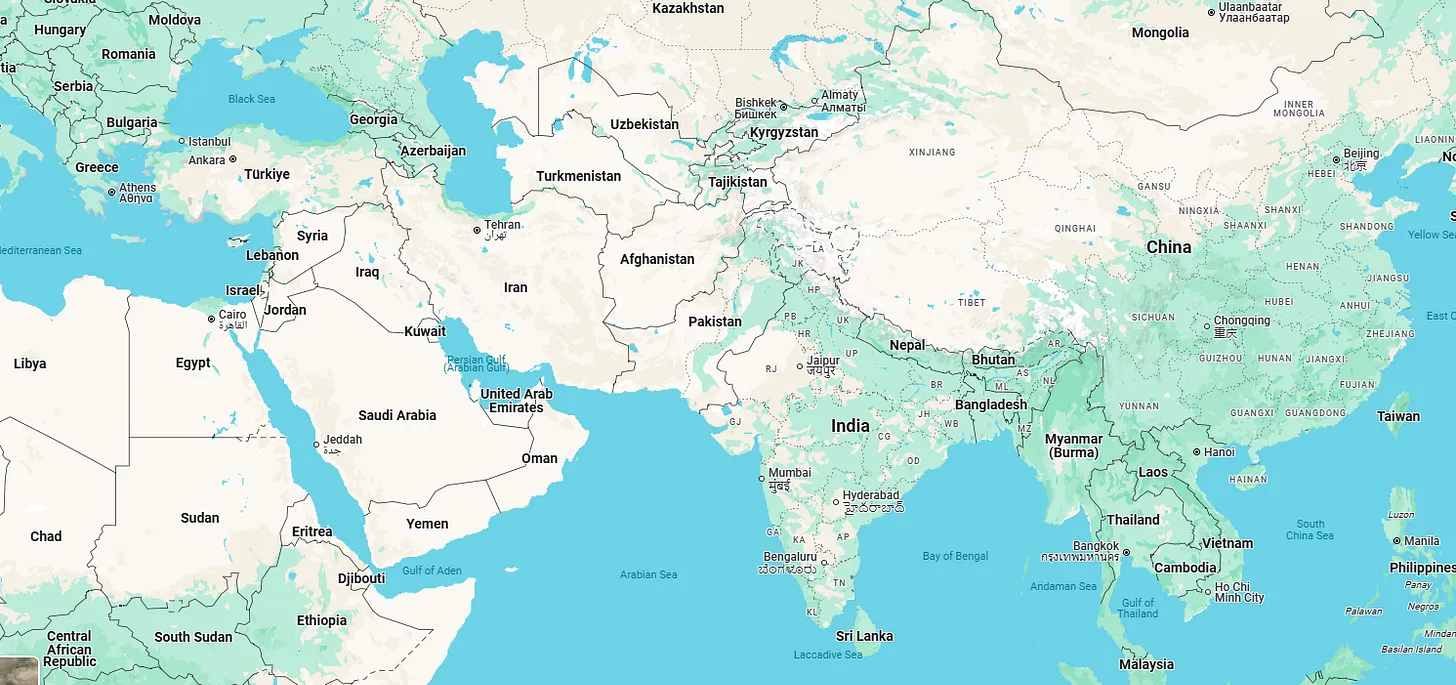
China however does not seem to care to wait and are stretching their sway not only in the South China Sea but westward towards the Middle East. The four member Axis – Russia, China, Iran and North Korea seems to be expanding to other countries with strong military dictatorships. Egypt and Pakistan will be the next members of the Axis. While much of China’s belt and road policy deals with bankrupting poor, weak countries, they seem now to concentrate on strong military dictatorships. Egypt and Pakistan are being pried from the western camp as we speak.

Pakistan has, for awhile not been firmly in the western camp. It was a cold war U.S ally as India, while democratic, sided with the Soviets on most international issues. While the US was busy in Afghanistan, the Pakistanis played double agent. Now that the U.S is not in the region and the U.S and India have become closer, Pakistan is now firmly in the Chinese camp.

In addition to Pakistan, Egypt becoming the next major member of the Axis.

Let’s take a few steps back and examine the burgeoning relationship between Egypt – a military dictatorship and Communist China. As we have written China and Egypt had joint military maneuvers that included deliberate violations of the Egyptian-Israeli peace treaty guaranteed by the United States. Egypt, in thumbing its nose not only at Israel but at the United States, allowed Chinese planes to approach the Israeli border in order to test Israeli reaction to a possible invasion. Multiple Chinese military cargo jets flew in undisclosed hardware in the days leading up to the maneuvers.

Three more Chinese Y-20 cargo planes landed in Egypt last week again, carrying unknown hardware. At least one of these planes came from Pakistan. Egypt also seems to be signing major arms deals with France as Macron reeks of desperation in his attempt to remain relevant – but a de Gaulle he is not, and he will not be able to create a force or policy independent of the U.S. Egypt will be glad to take advanced French weaponry while it creates a stronger alliance with China.

Back to Pakistan one has to wonder if the Pakistan-Indian flareup a prelude to what can happen in other theatres – or worse, a purposeful conflagration to test Chinese weapons systems in actual combat and keep the West on its back feet? According to most reports they were able to shoot down between 3 and 5 of France’s most advanced Rafal fighters without even entering Indian territory. The confrontation started with a heinous terrorist attack against Indians in Kashmir by a terror group associated with the Pakistani armed forces. India claims that Pakistan is directly involved in the attack. If so, this would not have been the first one.

The downing of the Indian French built Rafal fighters by Pakistan’s Chinese produced 10-C was, according to expert reports, not just or even mainly superior piloting but with a Chinese strategy and technology that includes all aspects of air power – including recognition of the target, locking on and attack from distances in what an American air expert called a perfect air based killing machine. This would seem to be the first real test of Chinese advanced air-power and it something that needed to be done before any invasion of Taiwan. This may not test their own pilots but it does test the strategy and the technology.

China has a main medium term goal here and it is not a secret. They are planning to take Taiwan by force and need to make sure their soldiers, sailors and hardware are up to the job. They have seen how poorly the Russian army has performed and have seen how Israel has dismantled Iran’s defenses and swatted away Iran’s offensive attacks. China has not fought a major war for decades and for all the advances they say they have made – all have been untested. Until now.

China will not risk a war with India itself but would be more than happy to have its proxy involved. Chinese fighters and their new “over the horizon” missiles are key in their plans to deter the U.S from defending Taiwan – or in defeating U.S naval airpower if the U.S does get actively involved. However, as close as French technology is to America’s it is not the same and the one country that seems to have taken U.S technology to the next level is Israel. How would Chinese weaponry due against American arms in the hands of an air force equivalent in skill and bravery to the American air forces? That has yet to be tested but that brings us back to Egypt. Is it in China’s interests for Egypt to make a major break with the U.S at China’s urging much as they made a break with the Soviet Union at America’s urging? Of course. Would that mean that China might help Egypt provoke a military confrontation with Israel in order to test Chinese arms and relieve pressure on Iran? Maybe.

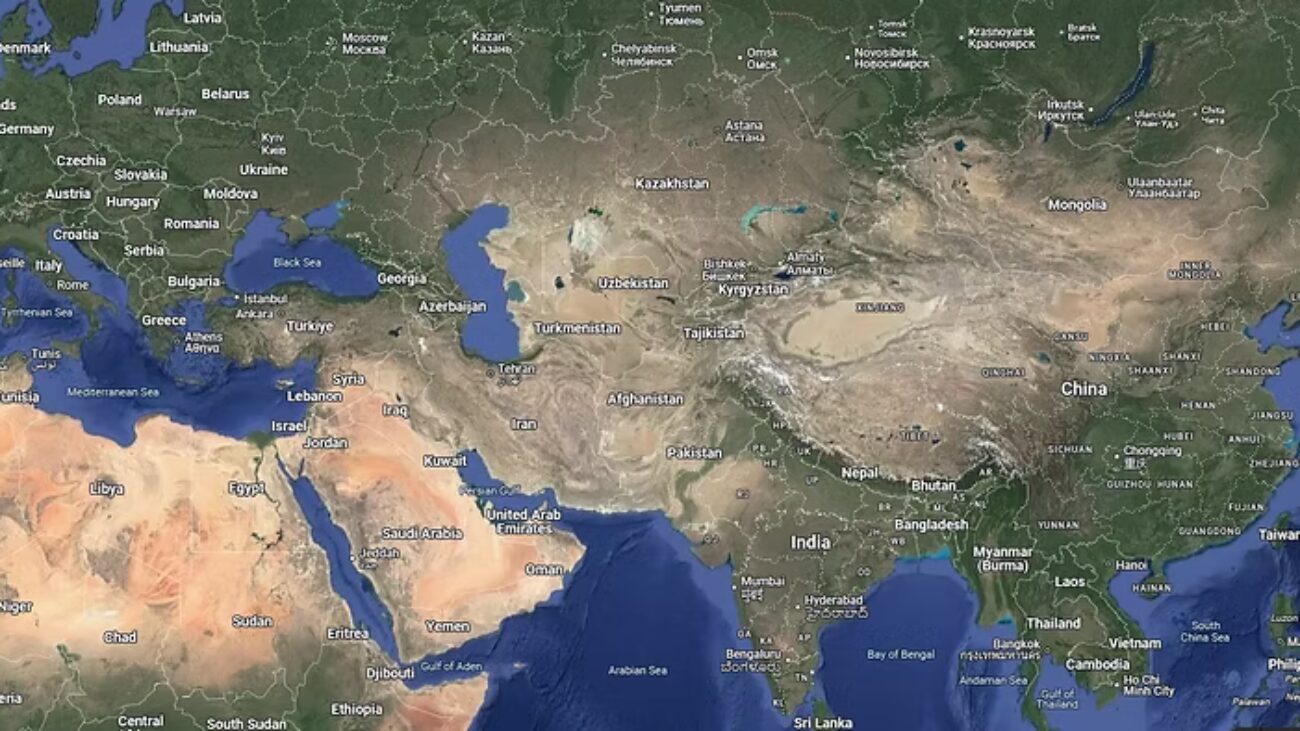
On to Iran then, where it does not seem that the Americans or Israelis understand the nature of the Iranian-Chinese relationship. Not only does China get the bulk of its oil (subsidized) from Iran but they have just completed a rail link from Xinjiang, China to Teheran, Iran – running through four countries. This rail line can ship oil as well as other cargo, cutting into the American (and Indian) naval superiority around the Persian Gulf and Indian Ocean. The assumption by military planners has always been that the U.S can cut off Chinese access to oil, if necessary. That is no longer the case.

China is not standing still – they are expanding their axis of dictatorships to countries in which the army is in control. Pakistan and Egypt qualify. Iran, while a theocracy is controlled by the Iranian Revolutionary Guards. No matter the “deal” that the Trump administration negotiates with Iran they will not be pried away from Iran. China has more to offer an ideological dictatorship then commercial deals with the United States. What the alleged realists in foreign policy refuse to understand is that dictatorships have no interest in commercial success if it weakens their grip on power. They are interested in deals that enrich their regimes since that also strengthens their grip on their people.

The trillion of so dollars in deals that the U.S has now made with the Persian Gulf states ensures that America remains a player in the middle east. Those who think that the Mideast is a tertiary region at best – after Asia and South America – need to rethink their strategies. As China closes in on control of the world from the Pacific to the Mediterranean the U.S is left with just two military powers it can depend on – Israel and India – to help defend its old/new commercial interests. It is not only oil – it is not Boeing jets, Nvidia chips and many other products that are moving from the US to the Gulf as opposed from the Gulf to the U.S. The U.S is no longer a commercial client of the Gulf states but the country who needs to protect its clients. The relationship has changed but the security relationship has only gotten more important.

The addition of Egypt and Pakistan to the Axis means that the Chinese threat has expanded. They are not giving up on Taiwan, nor are they giving up on South America and the Pacific Ocean but rather, China is using its experience as a dictatorship to strengthen ties with other freedom hating countries. We can all pretend that values and culture don’t matter, but that doesn’t mean that they don’t. This Axis is one where the interest of each member is to stay in power, force its will on its people and enrich itself at the expense of its people. This is an Axis, not only of the unfree, but of those who need to eradicate freedom to “thrive”.

Disclaimer: the views expressed in this opinion article are solely those of the author, and not necessarily the opinions reflected by angrymetatraders.com or its associated parties.

You can follow Ira Slomowitz via The Angry Demagogue on Substack https://iraslomowitz.substack.com/ 

post234

New Alternatives for Regional Alliances & Global Effects?

New Alternatives for Regional Alliances & Global Effects?

Opinion: The following article is commentary and its views are solely those of the author. This article was first published the 14th of March, 2025 via The Angry Demagogue.

There is so much going on that it really is difficult to keep up. Israel is at the center of many of the regional developments, as would be expected. But it is not just Israel as Israel, but Israel as an ally of the United States that is interesting. The Syria problem we have written about and it is still not clear what the Trump administration’s policy is there as they look skeptically but hopefully at Al-Julani’s Syria. In our opinion that decision will be made for them, since the chances that Al-Julani has changed his stripes to a Western democrat is small and even if we are wrong there – the armed Jihadist groups that he needs to control seem more interested in ridding Syria of ‘heretics’ than stabilizing the country.

Lebanon has changed enough for the United States and Israel to take chances. While it is too bad that Israel did not do more in ridding the country of Hezbollah, the fact that Syria is no longer part of the Shiite crescent means that they are isolated and not able to get funding and arms from Iran with the same ease. What is important about the current Lebanese government is that Hezbollah is not a part of it. That does not leave them powerless, but it allows the government to act more independently. The Lebanese Shiites, under Hezbollah and the less but still militant Amal, will have to rethink their loyalty to these two organizations. At the least, it should move Amal away from their stronger partner.

Iran now has no land route to Hezbollah and will have a harder time arming the Houthis, too. But it is in Iraq that they are facing problems which could cause as much damage to their projection of power as did the loss of Syria. Due to US pressure, Iraq has stopped buying Iranian electricity although they can still buy gas. It seems that the US is giving Iraq some time to find alternatives to Iranian gas and the Iraqi government is moving away from Iran on other issues too and are trying to get rid of Iran’s Shiite militias.

But the most interesting thing to happen is Israel’s attempt to strengthen America’s relationship with Azerbaijan, a country that Israel is in close contact with regarding Iran. Israel has always been rumored to plan to use Azeri air force bases in a possible attack on Iran. The Azeri official responsible for regional development was in Israel last month and is trying to bridge differences between Israel and Turkey. The Azeri’s next stop after Israel was to Turkey. Steve Witkoff is reported to have stopped in Baku after his visit to Moscow.

An Azeri company has also bought rights to Israel’s Tamar gas field. Israel currently gets oil from Azerbaijan via a pipeline that goes through Turkey so the energy relationship is strong and longstanding between Israel and Azerbaijan. It seems that Turkey’s relationship with Azerbaijan is more important to them than their animosity towards Israel – probably because the Azeris and Armenians are enemies. It seems that sometimes not only friendships have to be ranked but enemies, too.

Trump’s game with Ukraine is not necessarily to my taste but it could be that there is something much bigger going on here and that is connecting Israel, Russia, Central Asia and Turkey to a grand alliance with the United States. I don’t think that Trump will succeed in pulling Russia away from Iran and China and that Erdogan’s Turkey will not give up their dream of destroying Israel. But what if the Iranian regime falls after a combination of harsh sanctions, economic collapse and Israeli military attacks? What if Iran is pulled away from the alliance leaving Russia with just China? What if a Russian base in Syria is dependent upon their moving away from China?

Last year the Axis held a near continuous land bridge from the Pacific to the Mediterranean. China was moving into Russia’s “sphere of influence” in the “Stans” of Central Asia with their economic bear hugs. This was something that the Biden administration ignored, but could be a bigger headache for Putin than a well armed but non-NATO Ukraine with American businessmen instead of soldiers as a tripwire.

Are we giving too much credit to Trump and his foreign policy team and to Israel’s influence in the expanded region that reaches beyond Syria? Is there more going on than we know or less?

On October 7 and the days that followed, the Biden Administration was sure that Israel was in such a panic that it would agree to anything, and they could force the Obama Middle East of a hegemonic Iran and a Palestinian state down Israel’s throats – and overthrow Netanyahu as an extra. None of those things happened.

Only a fool would predict what will be in a year, but what we have discussed above is one scenario no one would have considered even six months ago. The post WWII world looked nothing like the world of 1937, and the post WWIII world (the one we wrote about a year ago and may or may not have happened!) will look nothing like September 2023 – no matter how hard the UN yells and screams.

Could Israel and Azerbaijan be the keys to a realigned world?

It is against my nature to be optimistic, especially since Israel is still not done with Gaza, the hostages are not yet home and the internal politics are reaching levels that border on a soft coup.

However, while we don’t know where the aces are, we know that the Obama-Biden jokers are no longer in the deck.

Disclaimer: the views expressed in this opinion article are solely those of the author, and not necessarily the opinions reflected by angrymetatraders.com or its associated parties.

You can follow Ira Slomowitz via The Angry Demagogue on Substack https://iraslomowitz.substack.com/ 

postR175.1

U.S Growth (Lack of it) and Inflation Report Key to End of Week

U.S Growth (Lack of it) and Inflation Report Key to End of Week

Day traders may believe they are being confronted by another wave of data and news which is going to make their endeavors more difficult. The announcement by Joe Biden that he will not run for re-election in November however was not a major surprise. The handwriting on the proverbial wall has been clear for nearly a month that Biden was under immense pressure to step aside. It appears Kamala Harris will get the Democratic nomination per reports that delegates are starting to pledge their loyalty.

Financial markets which may have been interpreted yesterday as cautious due to the Biden and Harris news may actually not have had a tremendous effect. It is quite possible investors and traders have started to position their assets for a Trump victory. Love him or hate him, the polling numbers appear to suggest the Republicans are potentially going to win big in November. Except the word November is the key, there are still over 100 days for things to go wrong for the Republicans. Nothing is settled and day traders need to understand that a lot can change. Economic data from the U.S will be plentiful in the coming days. Also, China has lowered key borrowing costs in an effort to try and fuel spending in the nation as consumers remain hesitant and a sign the nation is battling a troubling economy.

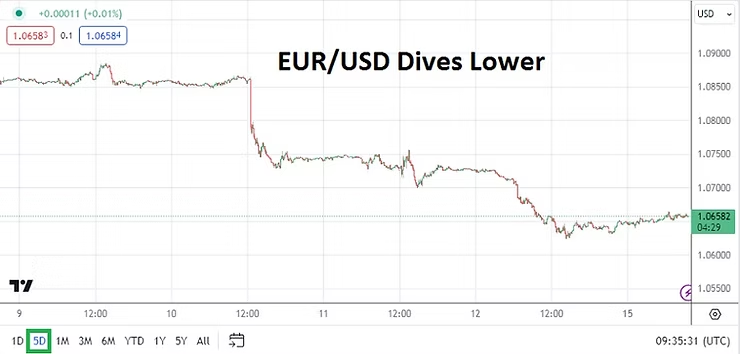
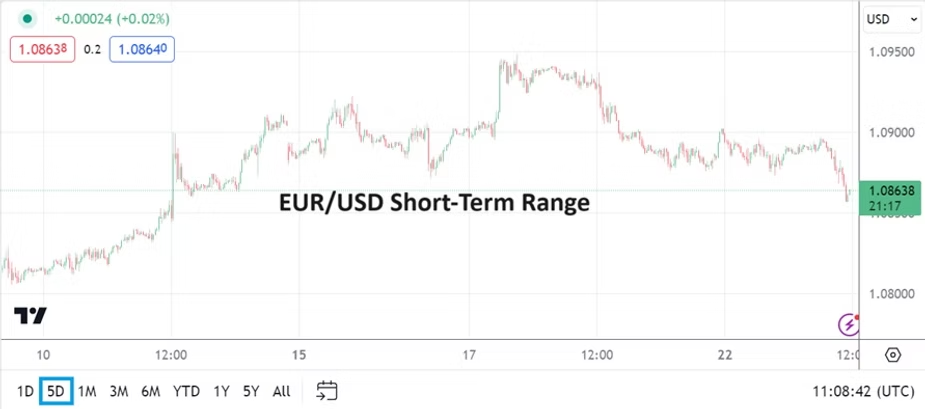
EUR/USD Five Day Chart on the 23rd July 2024

Traders who have been trying their hand in Forex have seen the EUR/USD and GBP/USD sink in value via short-term price changes. While retail speculators may look at the moves over the past day as vicious, they should note that since Wednesday of last week the USD has been stronger in Forex. It is doubtful financial institutions were betting on Biden to drop out of the race last week or for China to lower their interest rates. What in fact might be playing out is the possibility that most financial institutions believe the USD had been oversold and now want to position for the economic statistics coming this week. Results this week will help motivate notions the Federal Reserve will have to become dovish in September and proclaim a weaker U.S economic outlook through the end of this year, or for more idle chatter as the Fed undertakes a soundtrack which pleads for caution if inflation numbers remain stubborn.

USD/CNY One Year Chart on the 23rd July 2024

Monday, 22nd July, China One and Five Year Loan Prime Rates – borrowing costs were cut officially yesterday. The interest rate reductions of 0.10% were small, but China hopes this change helps propel stimulus for its struggling economy. It may not. But before folks sell China short, the nation continues to be a dynamic economic and political force and this power is not going to abate soon. The USD/CNY has incrementally risen since the start of 2024, but it is still below the higher values seen from August into early November of last year. It seems possible the Chinese government will continue to allow the Yuan to lose value in an attempt to reignite export.

Tuesday, 23rd July, U.S Existing Home Sales – the past few months have seen a decrease in the housing data. However, last month’s outcome was stronger than anticipated. These numbers tend to get a lot of fanfare, because they are a solid barometer of U.S outlook regarding interest rates and potential inflation. If folks feel like they should not sell their homes because their current payments are cheaper via their existing mortgages compared to taking on higher costs which are being offered now due to more expensive interest rates, this causes existing home sales to often fall. This because those with homes are not looking to move and simply want to stay in place, also making the potential of finding a house for folks who want to enter the market a more expensive proposition. Again, the outcome of this data is more of a barometer and doesn’t tend to affect financial markets like equities or Forex too much.

Wednesday, 24th July, Europe Manufacturing and Services PMI – E.U nations and the U.K will publish their readings. Last week the ECB kept their key lending rate in place. Political questions still linger in France which is more of a thorn in the side of the E.U than the potential outcome of these data reports. France and Germany expect better results from the Manufacturing and Services numbers. The broad E.U estimate also is optimistic about better results. Great Britain too is expecting better numbers. However, Forex traders will likely be more focused on coming U.S data and stay in a USD centric mindset the remainder of the week when making their forward considerations. And it should be noted the E.U and U.K economies are still struggling.

Wednesday, 24th July, U.S Manufacturing and Services PMI – these reports will be important certainly regarding the sentiment of Purchasing Managers, but the index reading may not be the biggest thing on investors minds. U.S data statistics on Thursday and Friday will be the outcomes that are being prepared for regarding potential affects. The Manufacturing number is expected to match the previous result, the Services figure is anticipated to be weaker.

U.S Dollar Index Six Month Chart on the 23rd July 2024

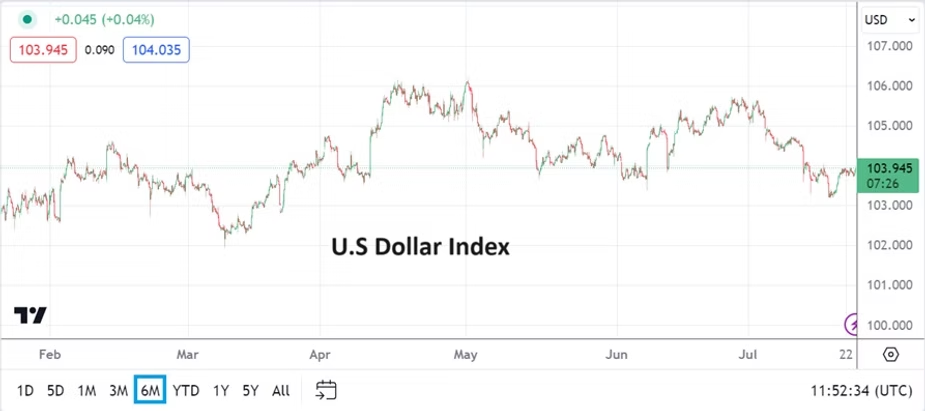
Thursday, 25th July, U.S Advance GDP and Advance GDP Price Index – last month’s growth number came in below expectations, this GDP number is anticipated to produce slightly better numbers. The U.S economy via data has been showing signs of slowing the past few months and this Gross Domestic Product number is going to get a lot of airplay not only because of investors who will use it as an outlook because they believe the Fed will be paying attention, but also because the GDP result will start to become a political football for the Republicans and Democrats. If the growth numbers are weaker than anticipated this could propel USD centric weakness. However, day traders need to keep their eyes on the GDP Price Index stats too – if the inflation report comes in below expectations this could also fuel USD selling. Day traders need to pay attention to the USD Index charts later this week. While the short-term has seen some bullishness, the range of the USD remains near important support levels via a six month perspective and as the Fed comes under more scrutiny, traders should expect more tests in the near-term.

Friday, 26th July, U.S Core PCE Price Index – last month’s report matched expectations. If this inflation number meets the anticipated outcome, or comes in below the estimate this could sustain USD centric bearish momentum into the weekend and early next week.

postR196

AMT Top Ten Miscellaneous Remarks for the 14th of July 2024

AMT Top Ten Miscellaneous Remarks for the 14th of July 2024

10. Words of the Day: Political rhetoric is using platitudes and subterfuge camouflaging verbal nonsense, masking a vacuum of non-results and causing fatigue of populist promises.

9. Harris Prediction: After the NATO press conference in which Biden was more lucid but still made mistakes, it is beginning to feel like Kamala Harris is being given room to audition for the Presidency by the Democratic machine. If her polling numbers show improvement over the next couple of weeks, look for Harris to replace Biden at the DNC in Chicago, if her polling numbers are not good enough in the eyes of the elite power brokers, it is possible Biden may be asked to give up his delegates, allowing for an open convention.

8: Zombie Inflation: Data results via the U.S CPI caused a reaction in the broad markets, and volatility in Forex. While the broad monthly Consumer Price Index number on Thursday was minus -0.1%, the PPI numbers on Friday came in higher than expected causing some to feel that inflation remains a plague. However, if the Producer Price Index was interpreted as being higher because rising prices are coming via more expensive employee costs (which might see an end to the cycle sooner rather than later if jobs data continues to weaken) this is why there might not have been a violent Forex reversal on Friday. And Consumer Sentiment numbers from the University of Michigan came in below expectations again, and inflation expectations via the consumer survey showed some erosion.

7. Federal Fund Rates: Financial institutions have clearly begun to factor in the belief an interest rate cut will occur in September. The Fed which has been cautious consistently the past seven months may now have enough ammunition to consider becoming more dovish. A September interest rate cut has certainly been factored into Forex and Treasury yields, and there is a growing tide of sentiment which believes the weaker GDP numbers combined with the potential of less inflation could spark additional Federal Funds Rate cuts this calendar year. Outlook fueled by optimism regarding a more dovish Fed could be a factor in the markets the remainder of July.

6. Gold and Silver: Commodity prices are soaring as speculators pursue bullish trends. Gold finished this week above 2,410.00 USD. Silver is traversing above 30.00 USD per ounce for the first time since 2011 and 2012. These two metals are not always correlated, and day traders should remember Silver remains a rather easily mined commodity which sometimes influences downwards pressure because supply can be increased. Having said that, Gold and Silver have had solid bullish trends since February of this year.

5. Thaw: Bitcoin is near 60,000 as of this writing. The crypto winter has seemingly ended and many folks are standing in the sunlight and proclaiming long-term projections of Bitcoin as it maintains a higher price range. It should be remembered the most significant percentage of trading volumes within cryptos reside heavily within the top tier, and the ‘assets’ ranked lower remain in wagering cesspools. Cryptocurrency remains speculatively dangerous, and largely a place to move illicit cash with the perception the money can be kept ‘dark’.

4. USD/JPY: The Bank of Japan won last week’s game of fire. The U.S Consumer Price Index numbers dealt a blow to the blind fury of speculative buying in the USD/JPY, and there is also a belief among many that the BoJ added onto the selling momentum of the currency pair too with a well timed intervention. The currency pair which was near the 161.640 juncture suddenly dived to nearly 157.420. The USD/JPY has gone into this weekend near the 157.900 ratio. The USD/JPY saga is not finished yet, and froth via bullish endeavors remains dangerous. Day traders here have been warned.

3. China: Friday’s Trade Balance numbers were good, compared to the rather weak CPI results seen on the 10th of July which were negative. China’s Communist Central Committee begins a Plenary Session tomorrow until the 18th. Will they speak in platitudes? The USD/CNY has certainly seen a ‘soft’ devaluation since February of this year, but the currency pair did go into the weekend near the 7.2500 mark which is off the high of 7.2765 seen this past Thursday. China still must improve consumer sentiment domestically and this remains a difficult struggle as ramifications from the implosion in China housing values mires the landscape. GDP numbers will come from the nation on Monday.

2. Behavioral Sentiment: Equities and indices, Forex, and commodities are all experiencing risk appetite permutations. While it might be tempting for retail traders to bet on lower reversals of trends, sometimes its much easier to simply ride optimistic waves. Certainly there will be days when financial assets struggle, but the apex heights of the Dow Jones 30, S&P 500, Nasdaq 100 should be treated with respect. Treasury yields are at mid-term depths and appear ready to traverse lower.

1. Trump: The attempted assassination of Donald Trump on Saturday in Pennsylvania will galvanize his supporters and likely push many people towards voting for him November. The amount of vitriol Trump has endured from his political opponents including the highest echelons of the Democrats and many in the media needs to be contemplated and quieted. Opposition to political ideology is fine, but the use of hyperbolic musings has led the U.S to a dangerous place. It would be wise for pragmatic adults to rejoin political discourse. Traders should watch the financial markets early this week to see if the U.S political front causes a reaction.

postR170

Middle East is Proving to be a New Playground for the Axis

Middle East is Proving to be a New Playground for the Axis

Opinion: The following article is commentary and its views are solely those of the author. This article was first published the 4th of July with an addendum on the 5th via The Angry Demagogue.

Blinken Gets Pushed to the Back of the Line

While the Biden-Blinken Administration is obsessing on “non-escalation” and telling allies they are on their own if they attack an Axis member that attacks the ally,  or that they will help the ally “defend itself” but not take the offensive (how you do that is a mystery) the Axis itself is establishing itself all over the Middle East.

Let’s start with a statement, quoted in Israel, by Alexander Dugin who is Putin’s ideological advisor advising the Russian leadership to arm Hezbollah and the Houthis in their fight against Israel. Earlier this week, Newsweek reported that Russia is considering arming the Houthis with cruise missiles. These could be used against Israel and against Saudi Arabia – or maybe U.S bases in the area. As Russia seeks to cement its ties with anti-Western countries and forces around the world, it seems to be partnering with Iran so as to increase the potency of Iran’s proxies and press their goal to rid the region of U.S forces. Toward this goal Iran and even Russia are manufacturing tanks together in Iran.

The Houthis themselves, under with the guidance of Iran, are attempting to expand their sea blockade from Bab al Mandab straits connecting the Gulf of Aden with the Red Sea, to the east African coast by cooperating with the Sunni and al-Qaeda based Somali terrorist group al-Shabaab al-Mujahadin. Reports in Israel quoting U.S intelligence sources claim that the two groups are cooperating and that the Houthis will supply weapons to al-Shabaab in order to interdict global shipping off the Somali coast and in order to harass U.S forces stationed in the area.

The anti-U.S alliance seem to be able to cross religious and ideological boundaries in ways that western intelligence thought impossible. That is because western (and Israeli) intelligence mis-categorize all of these groups and countries. The issue is not who is Sunni and who is Shiite, who is Russian Orthodox and who is Communist, but rather, who is for keeping the international status-quo and who’s for, to use a phrase meant for different times – a “new global order”.  

The Houthis, feeling confident in having defeated the U.S Navy in the Red Sea are now threatening Saudi Arabia for saying no to a Russian negotiated deal (under the auspices of the U.N and opposed by the U.S) which would bring an end to the embargo against the Houthis including their export of oil as well as Saudi financing of the Houthi civil government in the part of Yemen they occupy (they learned from Hamas and Qatar/PA/Israel that you really can have your enemies pay your salaries) amongst other goodies. They blame Saudi Arabia for allowing U.S jets to bomb Houthi sites from airbases inside Saudi Arabia – with no U.S carriers in the Red Sea that certainly could be true. In their threat they included videos of their bombing of Saudi oil fields in 2019 just in case the Saudis forgot. 

The Houthis, with their experience stopping shipping, have, according to a JCPA report been the point men for Iran’s plan to extend the sea embargo against Israel to the Mediterranean. This would not only hurt Israeli shipping but also the ability of its Air Force to operate properly. We wrote recently about Iran’s possible plans for Cyprus, including Hezbollah’s open threat to them, and this fits nicely with their plan to ring Israel with fire on all sides. We already know that Russian intelligence vessels are in the Mediterranean tracking Israeli submarines and that the Russian naval base in Syria is a safe haven for Iranian shipping. 

Just this week an Iranian vessel filled with arms for Hezbollah anchored in the Syrian port of Latakia (why did Israel not sink this??!!) which is 100kms (60 miles) north of the Russian naval base in Tartus, Syria – was it escorted in by the Russian Navy? Is that why?  

The U.S now has three main allies in the Middle East – Israel, Saudi Arabia and UAE, and with the exception that the UAE administration has a habit of criticizing and threatening these allies. 

It boggles the mind that Blinken does not see what the entire world sees – a so far successful effort rid the Middle East of the U.S and its allies. For Israel that means annihilation and for Saudi Arabia it means probably surrender to the Iranians while its royal family is allowed to enjoy their money (best case scenario). For the UAE it means it will be used even more than it currently is as an Axis financial center. For the U.S it means a withdrawal, not to the Western Hemisphere – but to the northern half of it. 

The Middle East is slowly becoming the playground of the Axis and it is just a matter of time before the West won’t be able to get a turn on the swings.

Addendum: A short follow regarding the Houthi ultimatum to Saudi Arabia

The Houthi’s gave the Saudis 72 hours to respond and respond they did. The Saudis have agreed to all the demands of the Houthis as they realized that the United States will not defend them from attack and are unwilling or unable to deter, let alone to destroy the Houthis offensive capabilities.

Amongst the Houthi demands that the Saudis agreed to are:

1. The re-opening of the airport in Sana’a, Yemen.  They will allow direct flights to bring pilgrims to Mecca, flights to Jordan and soon flights to everywhere. This will allow the Houthis to be re-armed by the Iranians via air transport.

2. Payment, by Saudi Arabia of Houthi government employees.

3. Allowing the Houthis to sell oil – ending the embargo.

This is a plan, as stated, sponsored by Russia and not opposed by the United States. It is a further move by the Axis into pushing the U.S out of the region. It is not clear if part of this agreement is for the Saudis to disallow U.S use of the Prince Sultan Ari Base for attacks on the Houthis.  

As an aside, the UAE has suggested that the U.S setup a base in Somaliland – a breakaway country in the horn of Africa on the coast of the Gulf of Aden and bordered by Djibouti and Ethiopia (and of course Somalia). This seems to be an attempt to rid the Gulf States of the responsibility to host U.S forces that attack Iranian proxies.  Could Biden’s “you are on your own if you attack Iran” (back in April after the 300 projectile attack on Israel) have influenced their decision?

Russia and Iran are on the rise in the region as the U.S administration preaches de-escalation and appeasement. 

Disclaimer: the views expressed in this opinion article are solely those of the author, and not necessarily the opinions reflected by angrymetatraders.com or its associated parties.

You can follow Ira Slomowitz via The Angry Demagogue on Substack https://iraslomowitz.substack.com/
postR169.1

Forex Debate and Coming Impetus this Week for Speculators

Forex Debate and Coming Impetus this Week for Speculators

In many respects the broad markets feel as if they are waiting for big news and this may not be delivered as wanted. Yes, the debate between Biden and Trump this Thursday will get attention, but unless there is a major television moment the outcome is not likely going to give a final affirmation regarding the U.S election results in November. Some people may be counting on Biden to literally misstep, and for Trump to say something incredibly outlandish, but it is also possible the debate disappoints even as entertainment. Perhaps the Presidential debate will deliver sideways action like the broad markets have the past week, leaving us with a desire for more.

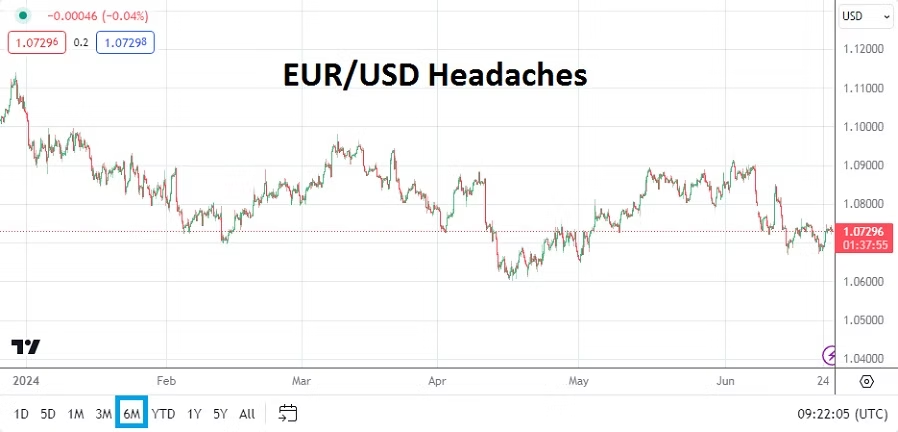
Financial institutions will look at U.S growth numbers this coming Thursday certainly, and also keep their eyes on the upcoming Sunday vote in France on the 30th which might prove rather remarkable. The EUR/USD is certainly back within its lower depths when a six month chart is inspected, and traders will react to France’s election this weekend, but it should be remembered the second and vital round of voting will not occur until the 7th of July. Until then, reactionary and precautionary results in the EUR/USD may produce headaches. The EUR does look oversold, but timeframes and the ability to hold a position may prove tough for short-term traders hoping for a wave of optimism to suddenly take hold and create a strong trend.

EUR/USD Six Month Chart on the 25th of June 2024

Not to be outdone the U.K is gaining plenty of attention because of its election on the 4th of July, but in this case it seems more like a coronation for the Labour Party and only a question about how devastating the carnage will be for the Tories. Financial institutions may have already factored in their perceived outlooks regarding the U.K vote into the GBP/USD. The currency pair will certainly react to the British election results, but financial institutions may have less to fear regarding sudden volatility of the British Pound, compared to the EUR/USD which could still have days ahead when it doesn’t trade in a USD correlated manner due to E.U political unknowns.

Monday, 24th of June, Germany Ifo Business Climate – the reading produced a drop to 88.6, missing the estimate of 89.4. Germany economic pressures remain negative and this may keep the idea alive that the ECB should be considering another interest rate cut. However, because the European Central Bank cut its Main Refinancing Rate recently and the U.S Fed continues to look rather neutral, it seems unlikely the ECB will decide to suddenly become the only proactive central bank around over the mid-term. Meaning, the ECB may stay conservative and want to wait on others to join the interest rate cut party, this before they create more unbalanced carry trade opportunities which could lower the value of the EUR/USD too much.

Tuesday, 25th of June, U.S CB Consumer Confidence – the reading will certainly be watched by investors, but will it create bedlam if there is surprise for equities or Forex? The likely answer is no. Behavioral sentiment has become flustered and shifted over the past handful of months, and this will create some caution no matter what today’s consumer reading says. Large financial institutions will probably stay geared to other upcoming data which will be considered more important.

Wednesday, 26th of June, U.S New Home Sales – a slight uptick in the amount of housing sales is expected. However, because of higher interest rates in the U.S via the cost of mortgages this number is likely to remain rather muted. For interested traders a look at the previous revisions of the New Home Sales data will prove interesting. The outcome of this reading should be treated with a bit of skepticism because it may be changed down the road. Unless there is a huge surprise the impact of this report may be rather calm, no matter what media narrative dictates.

Thursday, 27th of June, U.K Bank of England Governor – Andrew Bailey will speak about the Financial Stability Report. Bailey is certain to add some insights regarding the BoE’s neutral policy stance taken last week regarding interest rates, but more hints regarding potential cuts later this summer and possibly late this year again may be given. Economic data from the U.K remains troubling. The Bank of England may want to remain cautious because of inflation concerns, but financial institutions would like to see a more proactive dovish stance. Bailey might also talk about the potential affects from the U.K election, but he will have to be careful to make sure it doesn’t sound like he is taking a political side.

Thursday, 27th of June, U.S Gross Domestic Product and GDP Price Index – these two reports will impact the financial markets. The growth and inflation data will be examined by all financial institutions and generate trading reactions. The GDP growth number is expected to come at 1.4%, which is slightly higher than the previous report which posted a 1.3% result. Any number below 2.0% growth will be considered as lackluster by most financial analysts. Traders will then turn their attention to the inflation results which are supposed to match the 3.0% gain from the last Price Index report. If this number can somehow come in below expectations, this could propel some weakness in the USD. However, traders should be careful and remember U.S economic data the past handful of months has produced surprises which have created dangerous and choppy Forex conditions.

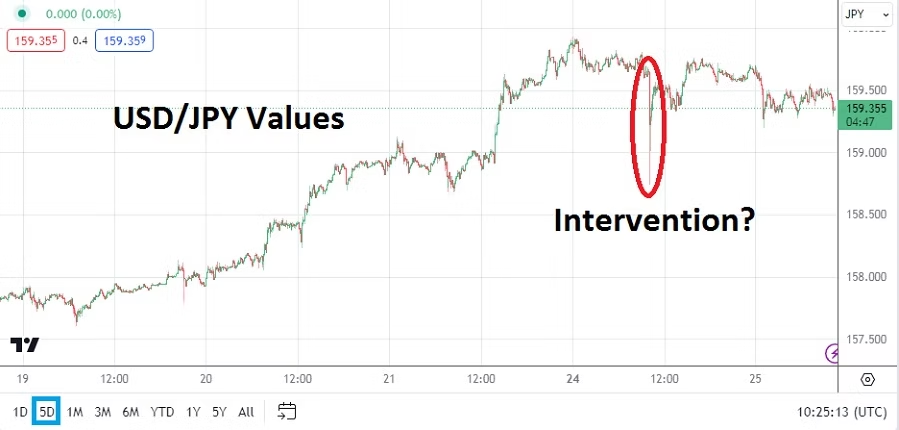
USD/JPY Five Day Chart on the 25th of June 2024

Friday, 28th of June, Japan Tokyo Core CPI – a gain of 2.0% is anticipated. The USD/JPY should be watched carefully. Early this Monday the BoJ likely tried an intervention in the Japanese Yen, but the USD/JPY only had a momentary swift selloff. As of this writing (Tuesday the 25th of June) the USD/JPY is trading near the 159.345 ratio which is very high when historical comparisons are considered. If the inflation number comes in with a 2.0% result or higher this could set off fireworks in the USD/JPY. Financial institutions clearly believe the BoJ should raise their interest rate by at least 0.25%, but the Japanese government appears keen on trying to keep the Japanese Yen weak to help GDP via exports from the nation. The Bank of Japan needs to be given attention. Speculators and the BoJ are battling against each other.

Friday, 28th of June, U.S Core PCE Price Index – the Personal Consumer Expenditures inflation report is forecasted to produce a gain of only 0.1% compared to the previous result of 0.2%. If the PCE Price Index does turn in the anticipated result, and the GDP Price Index from Thursday met expectations or came in lower, this could cause more speculative selling of the USD. However, if the inflation results come in stronger than expected Forex traders could see bullish USD buying which again challenges sellers abruptly.

postR168

AMT Top Ten Miscellaneous Missiles for the 21st of June 2024

AMT Top Ten Miscellaneous Missiles for the 21st of June 2024

10. Say Hey Kid: Baseball legend Willie Mays passed away earlier this week. He was a beloved player on the New York and San Francisco Giants in the 1950s, 1960s, and early 1970s. He might have been the best five tool baseball player of all-time.

9. AI Apocalypse: Talk about selling Nvidia shares to cash out of the super hot Artificial Intelligence tech boom on Wall Street might be considered the safe thing to do in order to protect profits. However, betting on the existing ‘machine learning’ gold rush in the stock markets to possibly end soon, thus turning into a ‘dot com’ like bubble bursting in the spring of 2000 could be misguided. The ‘dot com’ exuberance essentially started in 1995 and ran for almost five full years. The Artificial Intelligence surge may still have a lot of room to run.

8. Simmering Crypto: Bitcoin, Ethereum, and Binance Coin all remain at lofty prices, but they have lost value since touching highs in the first week of June. Trading volume of cryptos – including BTC/USD – is still below its peak of 2021 and early 2022. While the introduction of ETF products for Bitcoin has gotten institutional money involved, many individual ex-traders remain cautious. Former illustrious speculative plays like Dogecoin and Shiba Inu have turned into niche wagering cesspools.

7. Hezbollah Poker: Hassan Nasrallah delivered a surprise statement earlier this week when he proclaimed if there is an escalation between Hezbollah and Israel, that Cyprus could be attacked by missiles. The U.K still maintains sovereign military bases at Akrotiri and Dhekelia on the island of Cyprus. Direct fire from Hezbollah on an E.U member nation would be a major intensification of the Middle East conflict. Nasrallah may believe the rather limited response by the West to the Houthis attacks in the Red and Arabian seas, makes his threats on Cyprus an objective guise to get the West to pressure Israel to hold their fire.

6. Commodity Watch: WTI Crude Oil price is over 81.00 USD as of this writing and Gold is near 2365.00 per ounce. The price of energy needs to be watched because of its potential impact of inflation. WTI prices have been rather tame the past two and half months, but have climbed the past week. The precious metal remains within sight of highs and has been lingering within an elevated range since the middle of April. Cocoa for those interested is back below 10,000.00 USD per metric ton.

5. Shifting Sentiment: The Mexican Peso and Brazilian Real have lost value as politics in Mexico and Brazil are causing nervousness among financial institutions. The governing political parties in both nations are trying to reach for new powers, and the selloff of the two currencies against the USD have been clear. Morena, the leftist political party governing Mexico, is seeking controversial judicial reform which is seen as an attempt to gain more political influence. Lula da Silva’s Workers’ Party is attempting to take the head of the Central Bank of Brazil, Roberto Campos Neto, to court to try and muzzle his fiscal viewpoints. The USD/MXN is near 18.31650 and the USD/BRL is around 5.4539 as of this writing. Rand traders who have seen a bearish USD/ZAR trend emerge the past week and a half because of renewed optimism in South Africa might find the spats in Mexico and Brazil intriguing.

4. Euro Barometer: The first French election will be held on the 30th of June, the second on the 7th of July. The contest is shaping up as a election between the Left and Right. Political coalitions are being formed rapidly. The attempt to coalesce on the Left is an obvious sign that politicians feel threatened with the prospect of sweeping losses. Media noise is certain to boom and be exaggerated in the coming days as warnings about this election potentially affecting all of humankind litters the airwaves. Macron and other politicians may find tough days ahead as they apologize for policy failures and get punished via the election outcomes. The EUR/USD is close to 1.06931 for the moment.

3. China Woes: Economic data from the housing sector continues to show a downwards trajectory regarding home values in the nation, and it is having an impact on consumers as their net worth suffers and affects spending habits. Not only are property values still dropping at a rapid pace, but recent Factory output data has come in below expectations. China is tentatively scheduled to release Foreign Direct Investment numbers soon.

2. Summer Doldrums: Investor behavioral sentiment appears to be in a wait and see mode as as more impetus is awaited and large players grow cautious. The U.S will issue PMI manufacturing and services data today, but the results will have a limited effect. The U.S Juneteenth holiday which was celebrated on Wednesday and the return of traders yesterday did not rejuvenate optimism. The Nasdaq Composite and S&P 500 lost some ground. While the Dow 30 did gain slightly yesterday, the index has been treading water compared to the Nasdaq and S&P over the past month.

1. Geriatric Debate: Next Thursday the 27th of June, President Biden and former President Trump will debate. The televised event will be watched by American voters and the world. Not only will the debate deliver potential impetus to financial assets if there is a clear winner, but it may provide a large wagering environment for betters who gamble on which Presidential candidate will be the first to go off script. People in the U.S desire a discussion about the economy, foreign policy and immigration, this while hoping for a lack of mishaps, hyperbole and demagoguery which is unfortunately quite likely.

postR168

AMT Top Ten Miscellaneous Intrigues for the 17th of May 2024

AMT Top Ten Miscellaneous Intrigues for the 17th of May 2024

10. Georgia and Slovakia: It would we wise to pay attention to Tbilisi demonstrations, and also cast an eye on Bratislava after the assassination attempt of Prime Minister Fico. Russia is certainly paying attention.

9. Superconductivity: Origin Quantum Computing Technology of China is making solid advancements and has announced they are ready to domestically produce a 72 qubit capable microwave module known as ‘Origin Wukong’. The battle to create efficient quantum components and operating systems between China, the U.S and others is real.

8. Secretary of Music: Anthony Blinken’s naive decision to play guitar in a Kiev nightclub this week is comparable to Nero playing music while Rome burned. U.S foreign policy continues to raise concerned eyebrows from friends and foes alike.

7. South African Election: The coming vote on the 29th of May is less than two weeks away. USD/ZAR as of this writing is near 18.22000, where will it be on the 30th of May?

6. Biden and Trump: The potential for debates between the two presidential candidates is growing. One question observers may be wondering is if there is adequate supply of caffeine to keep Joe energetic and ample enough hairspray for Donald to look under control?

5. GameStop: Yet another market manipulation of GME is causing massive losses for day traders. The price for the stock finished near $27.67 yesterday, this after touching a high above $56.00 on the 14th of May. GME was close to $10.00 on the 15th of April. Buyers that get in too late to these betting schemes created by frenzied crowds tend to go bust as the early manipulators cash out their profits.

4. Commodities: Cocoa is near 7560.0 USD per metric ton, and Coffee Arabica is traversing slightly below 200.00 USD. Speculative forces remain powerful in both and while they are likely still overpriced, risk management is imperative for those pursuing lower values.

3. Federal Reserve: After the weaker than anticipated CPI numbers printed this Wednesday, and last week’s eroding GDP growth statistics, financial institutions are increasing their risk appetite as they watch U.S Treasury yields decline and consider a mid-term outlook which is allowing for the contemplation of actual Federal Funds Rate cuts.

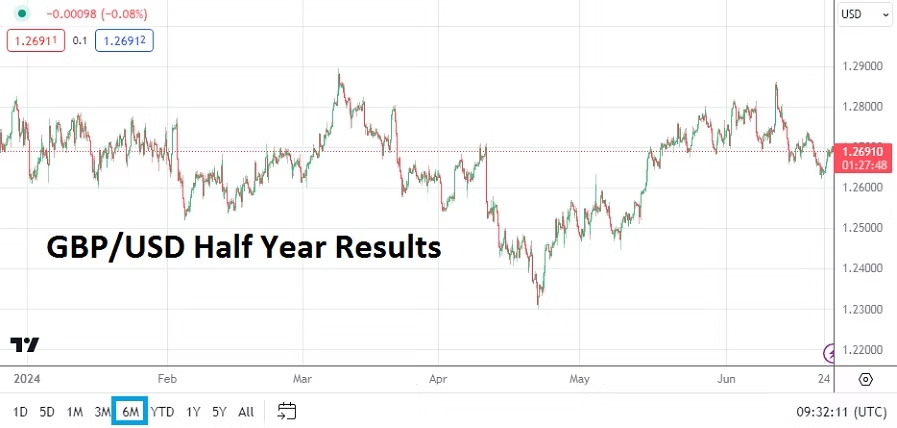
2. Forex: The EUR/USD is back above the 1.08000 level comfortably, and the GBP/USD has found sustainable trading beyond the 1.26000 ratio. While the major currencies versus the USD have pulled back slightly from near-term highs, large commercial traders are exhibiting risk appetite. A weaker USD centric notion is coming into vogue again.

1. Apex Equities: The three major U.S indices are all near record territories as solid earnings reports from corporations, amidst hopes the Federal Reserve will be able to cut rates a couple of times this year has combined to allow optimism to grow in the S&P 500, Dow 30 and Nasdaq 100. While the U.S public is starting to show they are losing confidence because of escalating consumer prices, financial institutions are wagering on solid returns via economic outlooks. Day traders looking to join the indices parade should make sure they limit their exposure, particularly if they are using CFDs and relying on short-term climbs which can suffer from sudden reversals lower.

post200

Retail Traders Caught Out by Shifting Sentiment as Data Hits

Retail Traders Caught Out by Shifting Sentiment as Data Hits

Forex speculators who relied heavily on technical data solely last week were likely punched in the gut by the rather surprising numbers from the Consumer Price Index results in the U.S last Wednesday, particularly if they were on the wrong side of trading trajectories. U.S inflation has shifted sentiment within many large investors with a rather seismic move regarding mid-term outlooks. Financial institutions which have been counting on cuts to the Federal Funds Rate have had to take a step backwards.

EUR/USD Five Day Chart as of 15th April 2024

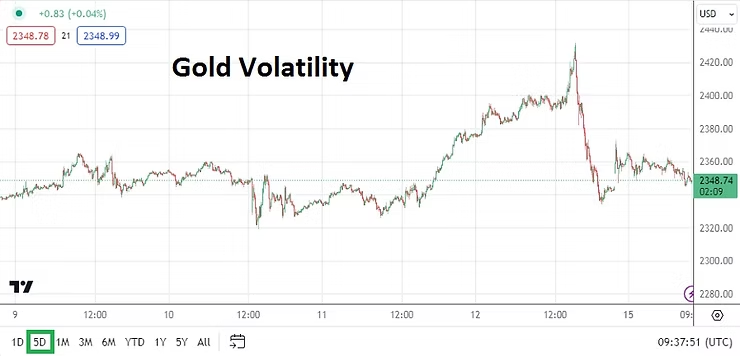
The dynamic momentum in Forex hit major currency pairs in the middle of last week and washed away support and resistance levels within a blink of the eye. Behavioral sentiment turned U.S Treasuries yields upwards and the major equity indices also experienced nervousness. Volatility also continued in Gold as new record values were produced, and then were followed by a rather strong reversal lower which likely hurt over-leveraged day traders.

Gold Five Day Chart as of 15th April 2024

Not only were U.S inflation numbers important last week, but geopolitical noise became heightened. Perhaps the climb in Gold before the weekend was helped by the anticipated conflict between Iran and Israel which did play out. The price of the precious metal and WTI Crude Oil have been more tranquil early today, which may be a signal for the moment that large market players are calm.

Monday, 15th of April, U.S Core Retail Sales – after last week’s larger than expected increase in the CPI results, the spending report today will get attention from financial institutions. Last Friday’s Preliminary Price Expectations reading from the University of Michigan did not allow investors to rest when it came in with a 3.1% elevated mark. If today’s Retail statistics are above expectations, this could make Forex roil again.

Tuesday, 16th of April, China Industrial Production and Gross Domestic Product – these economic reports will be watched closely by international investors. While there have been murmurs that China’s economy is improving, and media reports that the Biden administration is trying to engage diplomatically, the industrial and GDP results are expected to be weaker than the previous month’s outcomes. China will also release Retail Sales figures.

GBP/USD Five Day Chart as of 15th April 2024

Tuesday, 16th of April, U.K Claimant Count Change – last Friday’s GDP report from Britain did not produce any significant surprises. The U.K economy continues to struggle, but like most spheres inflation remains a problem. The GBP/USD sunk violently last week, while many speculators may believe it is currently oversold they may want to remain cautious.

Because of the U.S Federal Reserve’s own perilous fight against inflation, there are some who believe the Bank of England may need to cut interest rates before the U.S central bank. However, given the lack of proactive characteristics from the BoE and ECB which have been on full display as they dance in step with the Federal Reserve, this makes a BoE cut before the Fed a skeptical notion for the time being. The GBP/USD will stay largely USD centric even in the wake of this U.K employment report.

Tuesday, 16th of April, U.S FOMC Members – a parade of Federal Reserve voting policymakers will speak at various events, this includes Fed Chairman Jerome Powell. There will likely be little in the way of surprises from the Fed members as they likely all stick to ‘party’ lines and emphasize a cautious outlook.

Wednesday, 17th of April, U.K Consumer Price Index – the inflation report could prove to be catalyst for the GBP/USD. If the CPI number does come in weaker than expected it could spur on behavioral sentiment shifts regarding the potential for changes to BoE policy. Because the GBP/USD was so volatile the past week, day traders should be prepared for rather combustible price action from the currency pair which may look counter-intuitive. Smaller speculators should remember that ‘smart money’ from larger players may be positioned for the results of the U.K CPI data already.

Thursday, 18th of April, U.S Weekly Unemployment Claims – although not the most significant of reports usually, financial institutions are ‘waiting’ on a change of statistical direction via labor market evidence. If jobs numbers start to come in weaker than anticipated – meaning there are higher jobless claims – then the USD could react with some selling.

Friday, 19th of April, U.K Retail Sales – having endured a rather wild trading cycle, Great Britain will deliver one more important economic report to end this week. The GBP/USD will react to the consumer spending results.

post197

Iran Front and Center: 60 Tons of Explosives Sent Towards Israel

Iran Front and Center: 60 Tons of Explosives Sent Towards Israel

The Israel-Iran War is soon to enter its 7th month even though last night was the first face to face confrontation between the two countries.

There was much less panic in the air on the “Israeli street” than one would expect after Iranian threats over the last week. I was clearly wrong in my assessment that Iran would not want to start something big with Israel and risk having a chunk of their strategic power degraded but it is hard predicting what fanatics will do. The question is if the utter failure of the attack will bring Iran shame in the Muslim world or if the fact that they sent missiles and drones will be counted as a “victory” even if no damage was done to Israel. Or it could be that Iran was counting on Biden-Blinken holding back Israel from responding and sure enough, NBC is reporting exactly that:

President Joe Biden has privately expressed concern that Israeli Prime Minister Benjamin Netanyahu is trying to drag the U.S. more deeply into a broader conflict, according to three people familiar with his comments.

Last night at about 8:15pm IDF Homefront Command announced that all schools and all educational activity would be cancelled until further notice, angering parents everywhere. A few minutes later they announced that 10’s or hundreds of drones were launched from Iran and on their way to Israel. The news reported that it would take 8-10 hours to arrive, sparking this to make its round on the Whatsapp groups in this very interconnected country:

Google maps also cooperated:

Friends and family in Jerusalem and surrounding areas were awakened by alarms and scurried to the bomb shelters, children in their arms. There were alarms also in the West Bank, the Golan Heights and the Northern Negev dessert. Apparently, the main targets were two air force bases. One was hit by one missile and minor damage was done and the other was untouched. One 7 year old Bedouin girl was critically injured from pieces of a rocket that was shot down. The headline ought to read: Shiite Missile Critically Injures 7 year old Sunni Girl. 

The effectiveness of Israel’s air defense system seems to have surprised even the Israeli Air Force and special thanks has to be given to President Ronald Reagan for ignoring the comics and media (but I repeat myself) and many scientists and engineers (the experts!) as they made fun of his Strategic Defense Initiative and called it “Star Wars” – claiming that it was something undo-able and dangerous even to talk about.

Then Senator Joe Biden, using his favorite word, “provoke”, is quoted in this 1985 NY Times article:

Senator Joseph R. Biden Jr., Democrat of Delaware, pressed hard for reassurance about whether the proposed defensive weapons might be fired by mistake, thus provoking the Soviet Union to launch a real attack.
 

The Biden foreign policy theory for the last 40 years or more is based on not “provoking” your enemy, no matter the cost and appeasing your enemy at any cost.

Special thanks to the U.S armed forces who shot down numerous drones as did the U.K’s air force as well as Jordan’s. There might have been other Middle Eastern countries involved as there is an unofficial regional air defense system set up with Abraham Accord countries and others not part of the Accords. 100% of the suicide drones and 100% of the cruise missiles and 92% of the ballistic missiles were shot down by Israel’s layered “star wars” system. 

If the IRG is honest with themselves, they will understand that they have been defeated. A combination of 300 drones, cruise missiles and ballistic missiles were shot at Israel at once and no drones and no cruise missiles got through. Of the 110 ballistic missiles shot at Israel, 101 were intercepted and only one reached its target. Israeli defense firms closed higher in Tel Aviv Stock Exchange trading today. I imagine Iran’s potential clients are having second thoughts. China too, must be wondering about their own offensive and defensive systems.  

So where does this leave us now?

The War Cabinet assigned to Netanyahu, Gantz and Defense Minister Gallant needs to decide on an Israeli response. I am not sure that Israel has the firepower to destroy Iran’s nuclear sites on its own and there is almost no chance we will see U.S B52’s involved.

So the most obvious target is probably off the table.  It seems that the U.S Administration is pressuring Israel not to respond at all and to leave things as they are. This should not surprise anyone who has been awake for the last six months.

Israel and Iran have been at war for the last 6 months – one could say for the last two decades. This was clear to everyone except Biden-Blinken who could have shortened the war and the suffering by punishing Iran for their attacks on US sailors and soldiers.  Instead, they appeased Iran and released $10 billion to them essentially letting Iran hit Israel with this money.   

 The Scroll is reporting that:

We are now waiting to see how Israel responds. Although an unnamed “senior Israeli official” has been quoted promising a “significant response” to the attacks, Iran appears to have pre-cleared the attacks with the United States via the Oman diplomatic backchannel. And according to Roi Kais of Israel’s Kan News, a U.S. official told Saudi Arabia’s Al-Arabiya on Friday, “the United States will take part in the response to the Iranian response if Tehran escalates the situation inappropriately”—which means that the United States tacitly approved an appropriate level of Iranian escalation, such as, we don’t know, a “symbolic” drone-and-missile attack.

The United States has also, as Barack Ravid reported Friday, demanded to “have a say before decisions are made about any retaliation by Israel.”

If true, that is cynicism taken to the ‘Nth degree’. True enough, the United States needs to watch after its own national interests, but is it possible that the U.S government considers Iran its equal and Israel its vassal? Were Israel faced with a missile attack from China an argument could be made that U.S interests take precedence over Israel’s – but Iran? The Iranian economy is in shambles, the Rial is at record lows, its only economic lifeline comes from China, bankrupt Russia, the $10 billion Biden gave them and illegal activities. As Israel just showed– Iran’s vaunted missile force is worth less than advertised. We have not even spoken about the way it treats women and gays and how it treats opponents to its theocracy, how it spreads terror throughout the Middle East and Africa, how it helps Russia destroy Ukraine, how it is a key player in the global drug trade and money laundering.  

We have also not spoken about its foothold in the Western hemisphere and its attempts to infiltrate the United States itself via the porous southern border. 

Worst of all, if the Scroll story is correct, it shows how Biden-Blinken don’t understand what the office of the Presidency of the United States is. It is not just another head of state or head of government, but rather the President’s warnings ought always to be backed up with actions. Biden’s “Don’t Speech 2.0” was laughed at by Iran in public, for all to see. And the Biden-Blinken response is to tell Israel, “don’t”.

Ignoring Biden-Blinken for the moment, Israel must think deeply about its response. It is clear that any response will be followed by more of the same from Iran. Israel must think a few moves ahead and not just attack for the sake of attacking or it will be in the middle of yet another war of attrition. The end of the multiple rounds of attacks must leave Israel in better strategic shape than it is now and must leave Iran substantially weaker.

Whatever Israel decides to do, it must degrade Iran’s military capability by destroying its weapons and bases and killing as many IRG officers as possible. Israel should not bomb the power stations in Tehran or do other non-military strikes. Air force bases, missile silos and Iran’s navy should be targeted in such a way that degrades capabilities. They could start by sinking the Iranian spy ship that is helping the Houthis in the Red Sea.

Israelis seem to think that by “allowing” Iran to attack them it gives them many diplomatic credits, but we already know that these “credits” do not last long.  Whatever Israel does, it ought not to play the “message” game. Its attacks ought to provide tactical advantages in the coming months and not just “warnings to Iran” and “messages to Hezbollah”.

But let’s not ignore Biden-Blinken for a moment.  What if they decide to threaten Israel that if Israel retaliates the US will sit on their hands? 

This would be the time for Israel to do a little threatening of itself. The worst thing for a sitting President running for re-election is a summer gasoline price spike. Israel could certainly threaten to destroy Iran’s oil facilities and help push the price of oil. High gallon gasoline prices this summer will lose Biden more votes than he can gain in Dearborn, Michigan. In exchange for leaving Iran untouched, Israel can demand a free hand in Gaza, including Rafah as well as in Lebanon.  

Would that be worth letting Iran off the hook? It might. Iran was defeated in this battle, but it still believes it will win the war. Giving Israel free reign to destroy Hamas and then Hezbollah means that Iran will lose the war, too. Without Hezbollah, Iran will lose its most important asset in its overall goal of destroying Israel, chasing the US from the Middle East and establishing Shiite dominance in the region. It would turn October 7th into the day that Iran started on its road to defeat.

Israel needs to be opportunistic and aggressive in its dealings with its allies and its enemies. It has to let its allies know that it too is playing the long game and that it will not only hurt those who hurt it – as Netanyahu loves saying – but that it will destroy all who even try to harm it.

More importantly it needs to show its enemies with actions and not with words that threatening Israel means you will be destroyed. 

The Biden-Blinken team must be told in no uncertain terms that Israel is not a vassal.  The end result of this war cannot only be the destruction of Hamas, it must also be the destruction of the Islamic Republic of Iran as a regional power. By sending over nearly 60 tons of explosives to Israel, they have put themselves front and center.

Disclaimer: the views expressed in this opinion article are solely those of the author, and not necessarily the opinions reflected by angrymetatraders.com or its associated parties.

You can follow Ira Slomowitz via The Angry Demagogue on Substack https://iraslomowitz.substack.com/ 
postN99

Regional War Spreads: Will Blinken Wake Up to the Reality?

Regional War Spreads: Will Blinken Wake Up to the Reality?

Opinion: The following article is commentary and its views are solely those of the author.

Despite the denial of reality by the Blinken State Department the Middle East war gets hotter and spreads eastward (even without) Israel’s intervention. After spending years appeasing the Iranians the world is now faced with the results of that policy. 

Iran has trained and funded terrorists in Gaza and the West Bank where the high intensity battles continue. In Lebanon-Israel there are close to 100,000 Israelis displaced, and it seems more Lebanese have left the area south of the Litani as heavy rocket, tank, artillery and air attacks continue from both sides of the border. Attacks have intensified against Israel from Syria and Yemen, and Iranians and their militias are attacking U.S forces in Iraq and Syria. Turkey, Russia and Syrian forces continue bombing areas of northern Syria and now both Iran and Turkey are bombing Kurdish lands.  

We know what is going on in Yemen and the surrounding seas with global shipping coming to a standstill there, and diminishing Suez Canal traffic is slowly crippling an already disastrous Egyptian economy. The U.S and the U.K have been forced to bomb Houthi areas, but this of course is after the total failure of the Blinken foreign policy of ‘ending’ the war in Yemen by cutting arms sales to the side that was pro-West while encouraging Iran to continue funding, arming and training of their Houthi allies.

A new front has now opened between Pakistan and Iran. We spoke earlier of the Sunni-Shiite war heating up, but it has spread faster and more violently than we expected. 

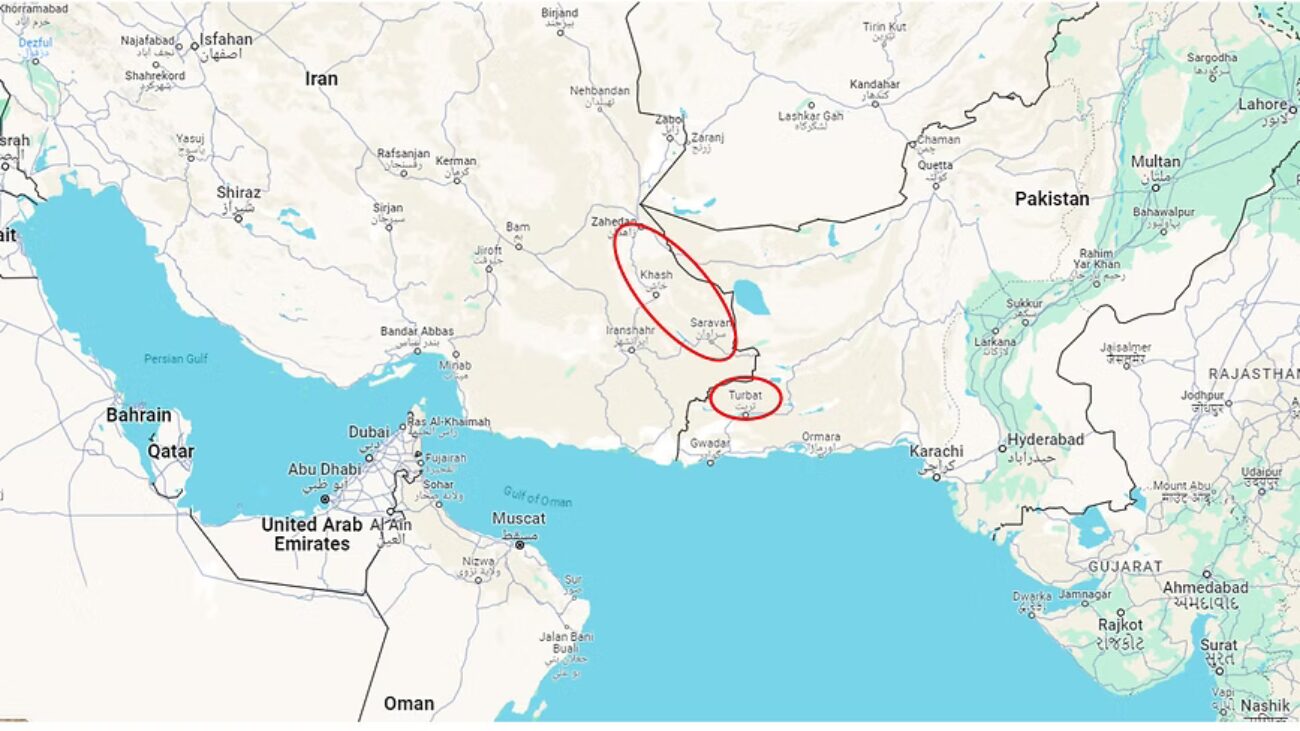
Over the last few days fighting on the Iran-Pakistan border has heated up. It started with heavy fire between the Pakistani group Jaish ul-Adl and Iranian border guards in the Sistan-Baluchestan border area, and included the assassination of Iranian Hussain Gwadanfur on the Khash-Saravan road.

In other clashes between Iranian and Pakistani forces at least two Iranian Revolutionary Guard (IRG) soldiers were killed, and the IRG has shot rockets into Pakistan hitting Turbat and surrounding areas near the coast.

Pakistan’s Ministry of Foreign Affairs released a statement claiming that they “undertook a series of highly coordinated …. precision military strikes against terrorist hideouts in Siestan-o-Baluchistan province of Iran”. At the end of the press release they speak of Iran being a “brotherly country” with “great respect and admiration for the Iranian people”. It seems that Pakistan does not want to publicly admit that official Iranian forces were involved in the attacks.

What is incredible about Iran is that they have now attacked three nuclear armed states – the U.S, Pakistan and Israel – without fear of retaliation. We can only imagine what the Revolutionary Islamic Republic of Iran will do once they too have a nuclear weapon.

We are in a regional war with fighting going on daily from Pakistan to Libya. Iran, not Israel, is at the center and is the cause of nearly all the fighting and tough statements and tough actions need to be taken against Iran – not Israel. Senate majority leader Schumer has been quoted as saying that he wants to put extra conditions upon the sale of arms to Israel, but where was he when Obama sent planeloads of cash to Iran and Biden-Blinken released further billions in November of 2023? Where are the conditions placed on a terrorist state?  

The Biden-Blinken foreign policy of appeasing enemies and threatening allies that is at the core of its operation continues apace. First with the cutoff of arms to Saudi Arabia and their Yemeni allies in order to “end the war” and then to “advice” the Ukrainians not to provoke the Russians, and next heavy pressure on Israel to ‘surrender’ to Hamas by leaving them in power.  

One can make deals with countries that are interested in their people. One cannot make deals with terrorist groups or revolutionary states that are looking to upend the global order. That is Iran in a nutshell. 

Disclaimer: the views expressed in this opinion article are solely those of the author, and not necessarily the opinions reflected by angrymetatraders.com or its associated parties.

You can follow Ira Slomowitz via The Angry Demagogue on Substack https://iraslomowitz.substack.com/
post4

Words Matter in the Financial World and Noise is Dangerous

Words Matter in the Financial World and Noise is Dangerous

As the financial markets trade in a nervous fashion the amount of ‘noise’ that traders must deal with has increased.

Markets Remain Jittery and Day Traders Pay the Price

The financial markets remain in a nervous state, and this is seen every day via the results from the major equity indices which continue to traverse within the framework of a threatening and potential bear market. Many new traders have not dealt with serious downturns in the financial markets before. Because human instinct is almost always positive, many speculators who participate in the markets tend to be buyers.

However in the past handful of months, many day traders who have been buyers have certainly found a difficult trading environment. Whether they are trying to pursue long positions in equity indices or cryptocurrencies, the speculative landscape has likely cost day traders money and produced trading accounts are negative, or worse simply have been closed.

U.S Federal Reserve Not Making Things Easy

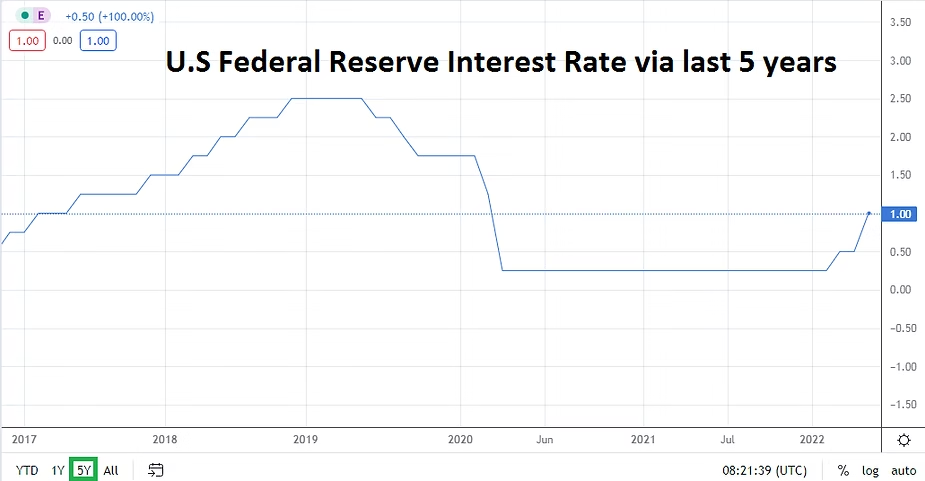
The broad financial markets are likely to remain nervous in the coming months. The U.S Federal Reserve has a major interest rate announcement which will be delivered in the middle of June, and another rate hike of 0.50% is expected. What has the financial world nervous is not the anticipated interest rate hike which has already been digested into the marketplace, but what the Fed will say regarding their outlook regarding additional rate hikes in the summer. The reason why this is unclear is because the economic landscape remains cloudy and hotly debated.

The Federal Reserve has not helped investors because they have largely misread the economic landscape and caused problems because of past statements. Last year the Fed insisted inflation was transitory, meaning that it would soon diminish, this obviously did not happen. Now the best the Fed can do is to hope that inflation becomes less strong and that disinflation occurs. Meaning the U.S central bank is simply hoping it can decrease the rate of inflation.

Words matter in this trading landscape for investors because the Federal Reserve’s policy has not exactly been met with popular fanfare. Many market participants feel that the Fed has pursued bad economic policy and that they have reacted slowly to data which was abundantly clear regarding supply problems, and the rising cost of production due to climbs in energy prices.

The Biden Administration and Energy Costs

While some in the Biden administration try to point the finger at the Ukrainian war with Russia as the culprit. Most people are not that naïve. Energy prices were on the rise before the war and it can be seen that the bullish trend in the price of crude oil has existed since the Biden administration took power.

President Biden during his recent trip to Japan spoke about inflation caused by rising energy prices that were in ‘transition’. He made it clear that rising energy prices in the U.S are happening because the U.S is following a green environment policy and that the shift in regulatory mandates is driving the costs of energy higher. This combined with the Federal Reserve’s frequent talk about inflation and its desire to raise interest rates has made for a dangerous combination.

Noise will remain at a High Volume

Inflation may come down in the coming months. Demand for certain commodities may erode to some extent. However the cost of energy is probably going to remain high throughout the summer. The additional shadow of mid-term elections in the U.S and the potential for a shift in power in the U.S Congress are going to affect nervous sentiment among financial institutions in the coming months leading right up to November.

Traders need to prepare for noise which will come from pundits as they express their opinions. Speculators who are day traders also have to take into consideration that their short term goals are in direct opposition to that of long term financial institutions. The difference in trading outlooks and monetary capabilities make this a difficult environment for day traders in the current market conditions.

Following short term trends for day traders based on behavioral sentiment is viable. Technical charts can be used to gather short term evidence, but this will not stop the constant threat of reversals and spikes in price velocity from suddenly gathering power and creating momentary bedlam.

Eliminating the noise generating from pundits who can walk away from their statements without any consequences is a must. Unfortunately the comments coming from the Federal Reserve and White House are often hard to ignore and cause reactions in the marketplace; because their words matter even if they sometimes seem to forget what they have said in the past.