post238

Trump: Will He or Won’t He Day and Uncertainty for Investors

Trump: Will He or Won't He Day and Uncertainty for Investors

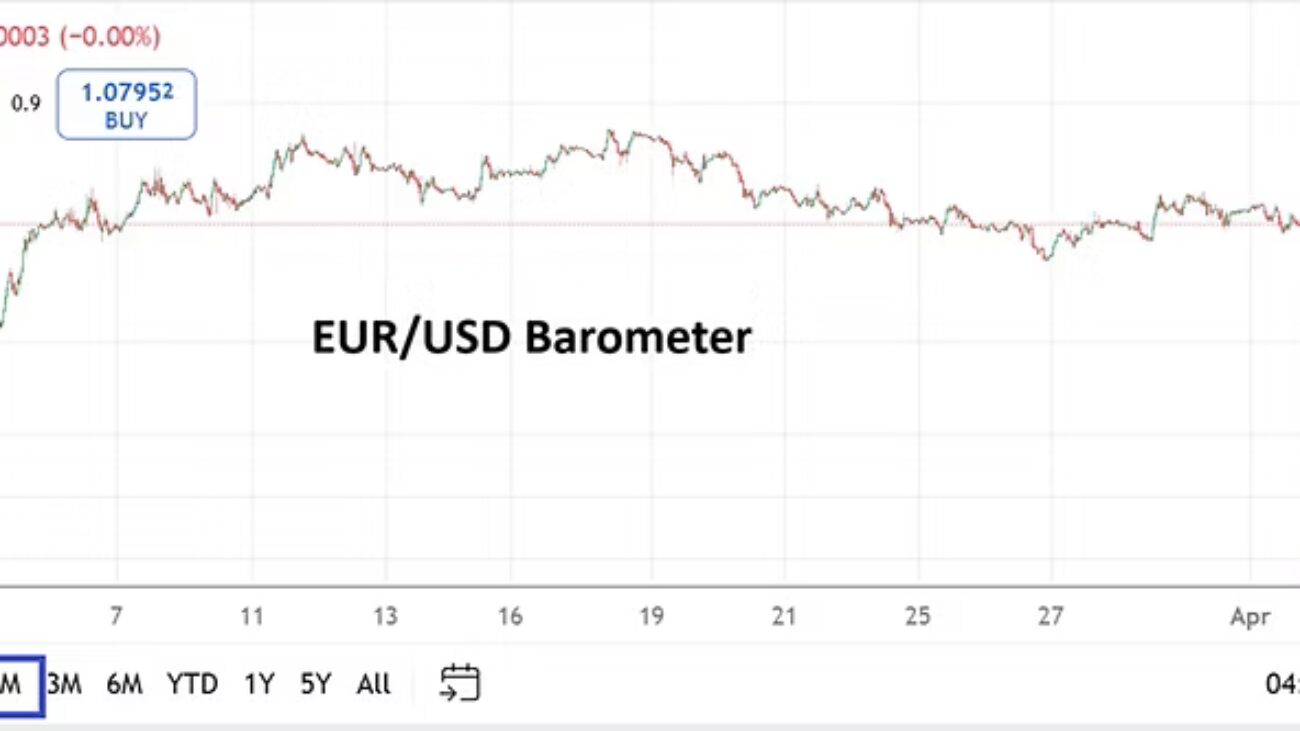
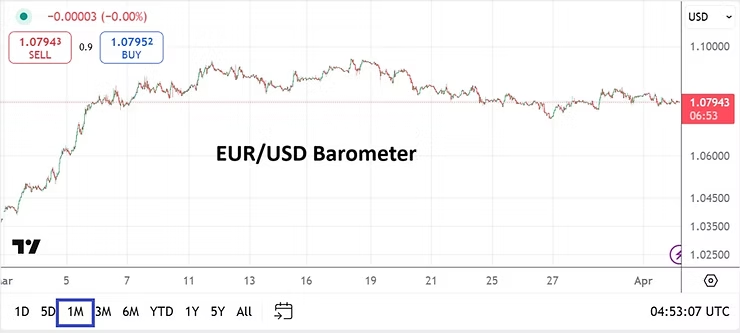
EURUSD One Month Chart as of 2nd April 2025

Liberation/Tariff Day will blow onto the global financial shores this morning. President Trump and his team are certain to take a victory lap as they announce their decisions regarding actions being imposed on commodities and products. Nations who are on the other end of the drama will be braced for the rhetoric and policies. Investors, trade ministers, financial institutions will have to sift through the pronouncements and consider their outlooks amidst uncertainty.

Trading today will be rough for smaller speculators. Choppy conditions should be expected as behavioral sentiment twists according to shifting winds and interpretations. President Trump is likely to announce aggressive penalties, but he may also try to soothe those who have worried about being punished. As an example, Trump has said recently that India has acted upon many of the White House’s wishes. Mexico, Canada, the European Union and China are likely to be mentioned as the U.S President speaks later today. Will a public scolding take place again?

Equities have faltered the past month, Forex has been volatile and commodity prices have also reflected fragile sentiment as outlooks became grey. The tariff policies announced today will affect all aspects of the financial world. Day traders thinking about wagering on the outcome should be patient and wait for the reactions which unfold from Asia, Europe, Africa, and the Americas. Wall Street will certainly be a barometer, along with the EUR/USD, USD/MXN, USD/JPY, GBP/USD, USD/SGD and gold.

While President Trump declares this is a great and magnificent day for the U.S, it will be of keen interest if an olive branch is offered to trading partners. After talking tough the past few months, financial institutions would like to hear words of optimism from the White House. If belligerence is heard and punitive actions are enacted, which are considered unproductive by investors and financial institutions the broad markets will show their disdain promptly.

President Trump’s skills as a negotiator will be judged today. The White House must play towards its constituency and show they are putting America First, but will the President also display he is cognizant that international trade provides benefits? Trump will point to his claim that he is merely putting tariffs on those who have treated the U.S unjustly and use levies against U.S goods.

It will be an important day for the Trump Presidency, because in many respects the global audience watching will decide whether or not the U.S sees itself as part of the global fabric or seeks a position which is isolationist. Brazil will look on the tariff theater intently, its position as a trading center may find increased demand from a host of nations.

Predicting the results: On the 3rd of February a fast and dangerous Forex market developed which witnessed USD centric strength exhibited with spikes in many currency pairs. In early March reactionary trading was displayed in equity indices, Forex and bonds too. Today will see wide spreads emerge in Forex with near-term resistance and support levels proving vulnerable.

Equities which sold off in March via the Nasdaq 100, S&P 500, Dow 30 and the Russell index are certainly hoping for a dose of cheer. The question is if Trump will deliver a positive message. The likelihood is that today’s events will not be the last of the tariff tirades and some proposed actions remain under deliberation. Today is unlikely to produce final results and the broad markets are probably going to be choppy as outlooks stay mitigated and absent of clear resolutions.

Gold Three Month Chart as of 4th April 2025

Day traders should think safety first today. Gold remains within record territory. If unpredictability rules near-term and the reactions of investors and financial institutions create fast conditions, the precious metal and bonds will find takers. Uncertainty breeds cravings for risk adverse assets.

post209

Forex: Trump Effect and Reasonable Trading Caution for All

Forex: Trump Effect and Reasonable Trading Caution for All

The Forex market the past two months has created a profoundly stronger USD against many major currencies. The combination of late September intrigue regarding U.S Federal Reserve outlook, then nervousness about the approaching U.S election, followed by the subsequent results have been a dumpster fire for many speculators looking for a sustained return to USD centric weakness. Hopefully risk taking tactics have included a solid dose of caution.

This week’s Non-Farm Employment Change numbers scheduled for Friday may give financial institutions a moment to focus on economic data instead of President-elect Donald Trump’s loud pronouncements, but the effect may prove to only be momentary. It isn’t data that is driving Forex for the moment it is nervousness and fear of the unknown.

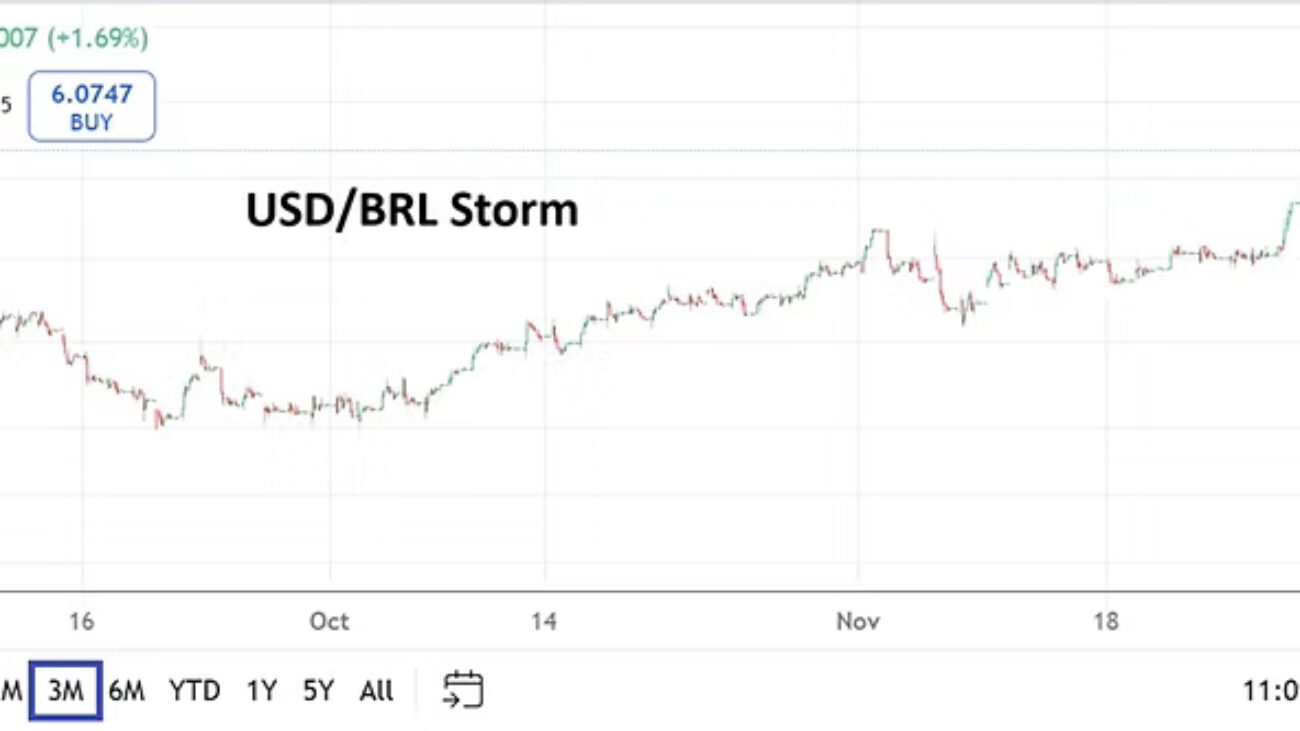
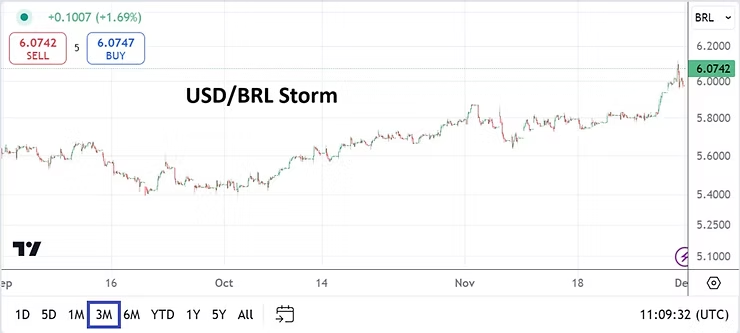
USD/BRL Three Month Chart as of 3rd December 2024

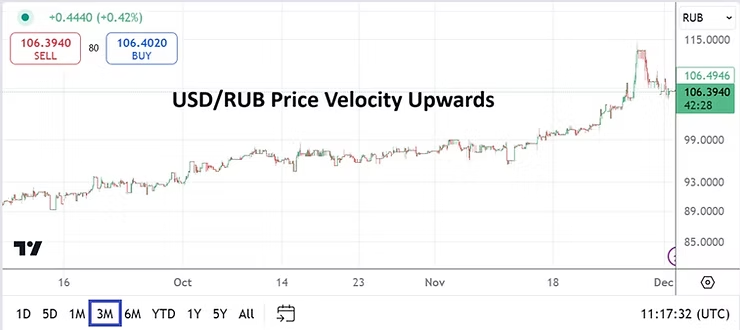
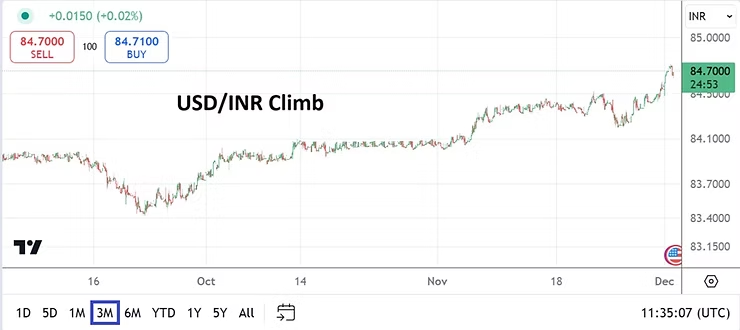
While many financial institutions and speculators trade only the major currency pairs, taking a look at the less obvious and more infrequently transacted major currencies may provide retail traders additional perspectives regarding the fragile nature of Forex. Many nations and large institutions are demonstrating concerns about possible sea changes to U.S foreign economic policy. Yes, the EUR/USD, GBP/USD and USD/JPY have all seen volatility via USD strength the past two months, but price velocity in the USD/BRL, USD/RUB, and USD/INR may be equally intriguing. And prove that mid-term forecasts (or lack of them) are causing bedlam for all.

USD/RUB Three Month Chart as of 3rd December 2024

While it is more than probable calmer heads will start to be seen in Forex and weakness eventually will return to the USD, trying to pick the exact moment this is going to happen remains a guessing game. Financial institutions via evidence in current Forex pricing remains rather cautious regarding their cash forward commercial enterprise. President-elect Donald Trump has certainly been dealt with before and his negotiation style is that of a businessman, it is not a coincidence that some global leaders who do not exactly see eye to eye with Trump are giving him respect because they understand he will act upon threats if not dealt with fairly.

Trump’s recent brief rhetoric regarding BRICS and the organization’s public consideration of creating a new currency to compete with the USD did not go unnoticed this weekend. Critics may want to proclaim Trump’s threats as belligerent, but BRICS is free to create a new currency still if they wish. While Trump cannot stop the birth of a BRICS currency, he can certainly try to initiate actions (via sanctions) against nations that attempt to create a new unified currency which tries to curtail the dominance of the USD. It would certainly help Trump’s bargaining position and the USD also, if better fiscal policy is practiced by the U.S Treasury and government.

USD/INR Three Month Chart as of 3rd December 2024

It needs to be pointed out that Trump’s warning to BRICS may not be needed. Even though the organization may be able to create a currency based on a commodities backbone, the lack of trust many financial institutions and nations would feel towards a non-transparent fiat currency powered by the fiscal monetary policies from the likes of Russia, China, Brazil and South Africa remains a difficult sell. Until many changes happen domestically within these nations via governance, creation of a BRICS currency remains wishful thinking.

Getting back to the big picture and the volatility recently seen in Forex. While the major currencies teamed against the USD have certainly faced hectic conditions, the fluctuations have not been unexpected. Day traders need to understand the month of December is likely going to remain choppy and see a test of technical support and resistance levels that are wide and full of fast reversals.

The question for the EUR, GBP, and JPY is if most of the negative inputs into these currencies has been factored into value. The suspicion may be yes, and that strength may rightfully appear in these big three sooner rather than later. However, the approaching holiday season and potential bluster from President-elect Trump will not make this a comfortable or easily wagered avenue.

Short-term retail traders looking to take advantage of the bloodbath created in Forex the past two months who seek opportunities should focus on perceived targets which aren’t overly ambitious. The coming U.S jobs data this Friday may allow the U.S Federal Reserve room to cut the Federal Funds rate on the 18th of December by another quarter of a point. As a point of attention, the European Central Bank will announce their Main Refinancing Rate on the 12th of December. The ECB’S actions may be a solid clue regarding the Fed’s approach to upcoming policy.

However, even if an interest rate cut were to take place via the Federal Reserve, it is likely the cut has already been factored into Forex. Which also highlights the high degree of nervousness that exists because of fears which permeate due to Donald Trump’s tough negotiation stances which have been made public. Meaning those who are looking for USD centric weakness to emerge still need to rely on a shift within behavioral sentiment to occur that is not generated because of the Federal Reserve. Nations need to show a willingness to amend existing trading agreements with the U.S, allowing for changes to internal policies regarding exuberant price duties they place on U.S goods in their own countries.

postR196

AMT Top Ten Miscellaneous Battlefronts for the 7th of Sept

AMT Top Ten Miscellaneous Battlefronts for the 7th of Sept

10. Cape Town: Springboks take on the All Blacks in Round Four of the Rugby Championship later this afternoon. South Africa won last week’s test. Roster changes have been made to both starting squads. Springboks Captain Siya Kolisi will start, this after he had been listed as questionable earlier this week because of a nose fracture he suffered in last Saturday’s game, which will be dealt with surgically in the near future. The All Blacks are extremely difficult to beat two games in a row, today’s match could be a firecracker.

9. Spy Games: Alleged China spy Linda Sun is accused of trying to influence policy while working in New York Governor Kathy Hochul’s office as an aide. The alleged spy also worked in the previous New York administration under Andrew Cuomo. Sun and her husband, Chris Hu, have been charged by the U.S government to be in violation of the Foreign Agents Registration Act amidst a litany of alleged illegal activities.

8. VPN Wanted: Brazilian Supreme Court Justice Alexandre de Moraes has suspended X because of claims the social media service, previously known as Twitter, is allowing ‘misinformation’. Justice Alexandre de Moraes has broad powers and is permitting Brazil’s ruling government led by Lula da Silva to walk a perilous line that does not allow for free expression. Brazil has not heard the last of Elon Musk.

7. Boeing: Starliner returned to earth last night touching down in New Mexico, but without the astronauts it delivered to space in early June. The mission was supposed to take 8 days, but instead stranded the two astronauts on the International Space Station. NASA has stated it was potentially dangerous for the astronauts to return in Starliner. The astronauts are now scheduled to return in February 2025 with SpaceX. Starliner is owned by Boeing. This time last year Boeing’s share value was near 219.00, as of yesterday it is 157.62 USD.

6. Xmas in October: Nicolas Maduro, the Venezuelan President (dictator), has announced the Christmas holiday will be celebrated on the 1st of October, allowing Venezuelan citizens an early celebration in order to forget the troubles imposed on the nation by foes who are working against the socialist government. Maduro joins a well established line of totalitarian leadership who have historically moved or canceled religious holidays to manipulate the population.

5. Harris vs. Trump: A debate between the two candidates will take place this coming Tuesday on the 10th of September. Because of murky outlooks among many financial institutions, this televised ‘exchange of views’ will not only get the attention of U.S voters and an interested worldwide populace, but global investors as well. The last Presidential debate effectively ended Joe Biden’s hopes of being re-elected. Will this event proceed without biased moderators?

4. Wobbly High-Wire: WTI Crude Oil finished the week around 68.52 per barrel as traders appear to be worried about a U.S economic slowdown. Gold closed Friday near the 2,497.00 realm per ounce, as investors fret over the USD and Federal Reserve. BTC/USD is trading around 54,230 at the time of this writing, Bitcoin was valued around 65,000 early on the 26th of August. Cocoa closed near 8,300.00 USD per ton yesterday after flirting with lows touching 7,900.00 on Wednesday. Day traders trying to wager this past week within commodities likely found they were not immune to nervous sentiment.

3. Negative: U.S jobs data was bad. While some say the numbers were mixed the Non-Farm Employment Change came in significantly lower than its estimate, and the previous month’s statistics were revised downwards. The higher Average Hourly Earnings report provided no favors via its outcome of 0.4% compared to the expected result of 0.3%, it wasn’t too far from the estimate and should not change inflation perspectives. Simply put, the jobs numbers are causing concerns in many financial institutions who believe the Federal Reserve is being too cautious.

2. Nervous Investors: U.S equity indices finished yesterday’s trading at their lows for the week. In fact the Nasdaq 100, Dow 30 and S&P 500 are all traversing values they last saw on the 13th of August. The major indices are fragile. Equities on the 13th of August were still recovering from losses seen the week before when previous Fed and BoJ policy chaos triggered overreactive selling on the 5th of August. On Friday the 2nd of August negative Non-Farm Employment Change data was published. What will happen to indices, Forex and Treasury yields on Monday the 9th of September?

1. Fed Fail: John Williams the New York Federal Reserve President said after the jobs numbers were reported, that the Federal Funds Rate is in a position to be cut. However, Williams continued to lean into the widespread notion the Fed will only impose a 0.25% decrease. He did say he would look at the jobs numbers closely, but he believed the Fed is well positioned. Behavioral sentiment among financial institutions appeared to react poorly to Williams remarks, producing a strong selloff as Friday progressed. The dream of orchestrating a soft economic landing in the U.S by the Federal Reserve allowing inflation to erode, the jobs market to soften, and GDP to remain above recessionary pressure remains the lofty goal. However financial institutions do not like the convoluted mid-term economic outlook, they now want to hear a dovish sounding Federal Reserve and appear ready to cause more short-term chaos in the markets this coming week.

postR180.1

Summer Optimism as Forex and Equities Focus on Fall Outlooks

Summer Optimism as Forex and Equities Focus on Fall Outlooks

Fed Chairman Jerome Powell admitted the obvious at the Kansas City’s Fed’s Jackson Hole Symposium last Friday. The realization the U.S Federal Reserve is going to cut interest rates confirmed what many financial institutions had positioned their trading desks for via forward cash Forex contracts over the past month.

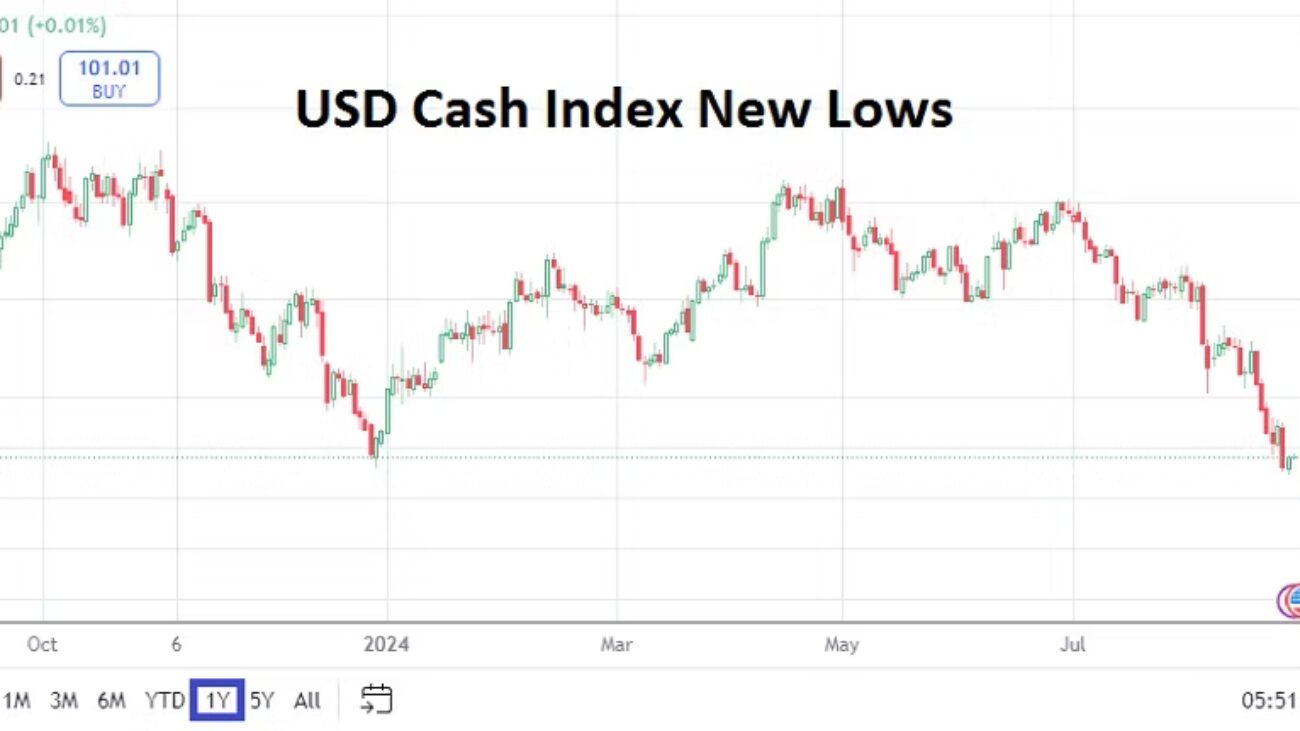
USD Cash Index One Year Chart on the 27th August 2024

The USD has been expected to grow weaker by many people because most knew the Fed would have to state a September rate cut would be delivered. The question that was also somewhat answered is the notion if the Fed will also cut in November. Though Powell certainly did not say a rate cut would happen in November, his rhetoric made it clear the Federal Reserve is considering a dovish perspective which could translate into additional cuts down the road.

The Fed has been criticized for being too passive and while Powell can be congratulated for his rather unemotional Federal Reserve leadership, he and the Fed can certainly be faulted for not reacting quickly enough to ‘transitory’ inflation and then not responding until this past weekend to the need for cutting interest rates with dovish rhetoric. Let’s also remember the U.S Treasury (government) is on the line to pay exorbitant costs for debt repayments because of bad U.S fiscal policy.

As an interesting related side note, the head of the Brazilian Central Bank, Roberto Campos Neto, made a strong appeal for governments to be fiscally responsible while speaking at the Jackson Hole Symposium this past weekend. While he could have been talking to any number of nations regarding spending, his points were obviously meant to highlight his disagreements with the Brazilian government led by Lula da Silva and the Workers Party. Roberto Campos-Neto stated that approximately 50,000,000 (yes, million) people in Brazil receive government allowances, while only about 43,000,000 people are earning money via employment and business enterprises. Traders who want to keep an eye on the USD/BRL this week may be entertained by the potential volatility within the currency pair which is trading a hair below 5.5000 before it opens today. The USD/BRL has certainly not been correlating to broad Forex USD centric weakness, and demonstrates the internal domestic fight between Lula da Silva and the Brazilian Central Bank regarding fiscal policy.

Jobs data from the U.S has continued to turn negative, particularly via revised reports which are being published rather ‘quietly’ as election season approaches. Yet, financial institutions have been aware of the weaker jobs numbers. While the poor jobs numbers combined with eroding inflation is good for USD centric weakness due to the knowledge the Fed will have to reverse from its rather high interest rates, the question becomes how much per the financial institutions selling of the USD has been acted upon in Forex. Is the USD oversold for the time being? It depends on trading timeframes certainly.

Weaker USD centric positions will need more impetus for further bearish trajectories to be seen near-term. Financial institutions may believe equilibrium is being approached, this because it appears interest rate cuts equaling a 0.50% decline seem to have been factored into Forex. Will the Federal Reserve be put into a position in which they will be able to cut by a full basis point (-1.00%) over the next six months?

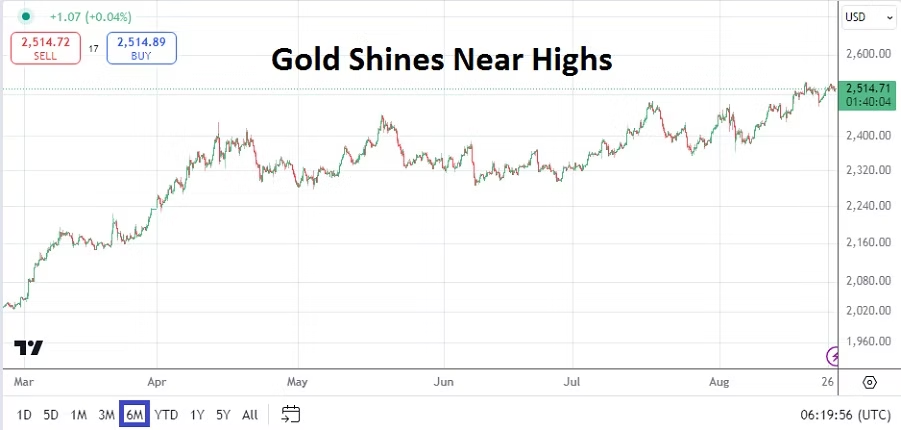
Gold Six Month Chart on the 27th of August 2024

Gold is trading near 2,500.00 plus at the time of this writing. Gold has touched higher levels in the past week and is getting a round of applause from its throngs of believers who proclaim the precious metal the ultimate safe haven against inflation and erosion fears via fiat currencies – including the USD. As a reminder, Bitcoin is highly speculative and doesn’t have the historical (thousands of years) track record that gold has acquired.

GBP/USD Five Year Chart on the 27th of August 2024

The EUR and GBP are traversing higher territories not seen in a while. The EUR/USD is near the 1.11700 level, which was last traded in July of 2023, and it has been since 2022 that sustained prices above this current realm have been traded. The GBP/USD is near 1.32000 and is within a value ratio last seen in March of 2022. Central banks will remain in focus as summer ends and the fall trading season gets underway. The ECB will release their Main Refinancing Rate on the 12th of September, the Fed will present the Federal Funds Rate on the 18th, and the BoE will follow suit with the Official Bank Rate on the 19th.

However, those September dates are still a few weeks away and financial institutions do have data this week which could stir Forex, equity indices and U.S Treasuries in the near-term. Day traders often do not have the ability to rely upon mid and long-term outlooks, and instead have to be content with trying to ride the momentum trends being caused by larger players. While the USD weaker outlook is tempting to rely upon, speculators who are looking for quick hitting wagers need to judge technical charts and try to grasp existing behavioral sentiment which can shift rapidly depending on lengths of time.

Traders should remember the U.S will celebrate its Labor Day holiday next Monday, which sets the stage for potential sudden volatility to flourish before big financial institutions in the States leave for their long weekend. The last week of August should be rather tranquil. Certainly most long-term investors feel as if they have more clarity regarding interest rates and will be able to relax. The hope is that the current calm is not the quiet before the storm due to lingering political issues in the U.S, France and elsewhere. And that escalation of the Ukrainian and Russia war, and the Middle East conflict do not cause sudden surges of bedlam.

Economic data events the remainder of this week that should be given consideration includes the U.S CB Consumer Sentiment reading today. Yesterday’s U.S Durable Goods Orders came in with mixed results as the Core number fell by minus -0.2%, but the broad number came in with a substantial gain of 9.9%.

USD/JPY Three Month Chart on the 27th of August 2024

The Bank of Japan has published their Core CPI data today and the outcome came in below expectations with a gain of 1.8% compared to the estimate of 2.1%. The USD/JPY is trading near 144.790 at the time of this writing as it continues to show bearish tendencies. The Bank of Japan which was heavily criticized in many circles may actually be achieving what they have planned, this as they have tried to stimulate stronger export and confront inflation. Their battle is not over yet.

Australian CPI data will be published on Wednesday. And on Thursday, German Preliminary Consumer Price Index numbers will be released. The EUR/USD could react to this report, but the European Single Currency remains highly USD centric. Which sets the table for the U.S Prelim Gross Domestic Product report also on Thursday. The growth number from the U.S could diminish selling considerations for the USD if the report comes in stronger than expected. However, the GDP Price Index and weekly Unemployment Claims from the U.S could also impact short-term behavioral sentiment and cause a bit of turbulence if negative results are published.

Friday will see more CPI numbers from Japan, CPI and GDP numbers from France, and GDP data from Canada. But before going into the long holiday weekend the U.S will present one more major report with its Core PCE Price Index and the monthly statistic is expected to show a slight gain of 0.2%.

China watchers will get Manufacturing PMI numbers early on Saturday. Recent China data continues to show signs of economic stress regarding foreign investment, domestic consumer spending, and deflationary results. Buyers beware.

postN51

AMT Top Ten Miscellaneous Wonders for the 12th of April 2024

AMT Top Ten Miscellaneous Wonders for the 12th of April 2024

10. Free Press: Brazil and the Lula de Silva government are cracking down on dissent in social media. ‘X’ – formerly Twitter – led by Elon Musk is fighting back and refusing to cooperate as Brazilian ‘leadership’ attempts to intimidate the ‘loyal opposition’ in the legislature.

9. GROOT: Nvidia is working on ‘humanoid’ robotics. Project GROOT was presented by Jensen Huang at the GTC Conference. The synergy between machine learning, semiconductors and robotics is an evolution taking place before our eyes. Tesla is involved in similar research as it works on Optimus.

8. Hot Chocolate: Speculation in Cocoa has brought the commodity above 10,400.00 USD per metric ton as of this writing. Questions about gravity and hypersonic speculative values are logical at this juncture.

7. Seclusion: Do humans still need each other? People are relying on their mobile devices for social interactions. Robotics with AI capabilities will make our existence potentially more lonely. Open source software DOBB-E will be part of this future as household chores are taken care of by ‘machines’.

6. Iran: Those with holiday excursion plans which include Teheran this weekend may need to check on ticket availability due to the possibility of flight cancellations.

5. Fed Liberty: President Joe Biden this week spoke about an interest rate cut coming from the Federal Reserve this year, yet Consumer Price Index statistics are demonstrating escalating expenses. Current U.S government leaders may want to spend less on ‘vote buying’ via student loan forgiveness and think about conservative fiscal practices. Why should Americans who choose not to attend universities pay for those who did via higher taxes? Are Fed and Treasury officials still independent?

4. Risk Averse: Gold is within sight of 2,400.00 USD this morning. In the meantime U.S bond yields have inverted completely except for the 30-Year issue. Financial institutions are showing nervous behavioral sentiment.

3. USD Centric: Forex has seen reactive trading this week as financial institutions begin to conclude the U.S Federal Reserve’s monetary policy ‘over time’ will remain disturbingly difficult and full of doublespeak.

2. Caution: Mixed results are flourishing in the major U.S stock indices as the Nasdaq 100 and S&P 500 touch late March values, and the Dow Jones 30 has returned to February levels. Higher than anticipated interest rates are causing turbulence.

1. Energy Illusions: As the prices of food, transportation and housing escalates isn’t it time governments start to question their ‘green’ policies which are making the costs of energy production more expensive? We all want a clean planet, but logical strategies must be applied to create efficient use of resources.

post 190

AMT’s Dubious Dozen Forex March 2024 Sentiment Outlook

AMT's Dubious Dozen Forex March 2024 Sentiment Outlook

The Dubious Dozen is comprised of nations who are wealthy or should be, and face criticism because of domestic and sometimes international policies. As the reader you are free to differ from the AMT opinions, which are admittedly subjective. The ratings and outlooks are not delivered as trading advice, but as a viewpoint to inform. The work presented is a living document. The nations and currencies listed, and data and critiques shall change monthly according to points deemed important.

AMT Dubious Dozen March 2024 Forex Sentiment Outlook

AMT’s Dubious Dozen Monthly Forex Sentiment Outlook has a scaled ratings table, listing nations and currencies that are judged to have concerns regarding outlooks due to behavioral sentiment factors within financial institutions and among citizens, based on economics, transparency, and risk concerns about government fiscal policy, and ‘leanings’ toward autocracy. Metrics like inflation, gross domestic product, direct foreign investment information, debts and budgets, and foreign currency holdings which are gathered from various public sources will sometimes be presented.

AMT also tries to judge the trust level the citizens of the nations have in their domestic currencies via exchange rates, black market FX factors, and alternative assets held to guard against potential risks – like digital assets, cryptocurrencies, and gold.

A lack of credibility in a ‘fiat’ currency is dangerous and often leads to black markets for Forex in search of safe-haven currencies like the USD. The lack of a credible domestic currency also leads to price inflation because people selling goods fear the value of the domestic currency is losing value rapidly. Rampant inflation also leads to a desire to sidestep taxation on occasion.

Problematic inflation and inability to collect taxes may open the door for certain countries to contemplate and potentially initiate Central Bank Digital Currencies in order to control domestic economic activity. It is not a coincidence that China, Iran, among others are considering implementation of CBDC’s. The potential of CBDC’s by governments could allow for draconian laws for citizens of certain nations. The ability for a government to check on how all money is used via a centralized blockchain could lead to a more authoritarian landscape.

Quick Insights of the Dubious Dozen Nations Listed:

Argentine Peso (ARS): The election of President Javier Milei has started to ignite changes within fiscal policy and has created hope among international observers of a less corrupt Argentina. However, many obstacles still must be overcome by the newly elected leader and the government, and many economic issues will take patience from the public to improve. Patience has not been a classic virtue in Argentina, unless one considers the ability to accept massive corruption and go on with everyday life as a supreme power.

Brazilian Real (BRL):  Concerns regarding potential fiscal policy changes hover over the existing government which leans towards a socialistic bent and has shown a tendency to align itself with some of the most autocratic governments. Some businesses and investors are anxious about the potential of government mismanagement to develop under President Lula da Silva. The listing of Brazil will create catcalls from some, but the fear in some circles is what might happen if fiscal policy which is led by a socialistic government becomes too populist. For the moment the BRL appears to be under control, which is a good thing. However, the Brazilian Real should be kept in sight for any signs of nervousness.

Chinese Yuan (CNY): The domestic economy remains troubling and fragile. Deflation abounds. Manufacturing, electrical usage, real estate, export numbers should be monitored by observers. Government policy, and transparency reliability due to political control by the Communist Party is problematic. Concerns are causing a backlash among many foreign investors who are looking elsewhere for long-term business endeavors, when they have the ability to divest. Stats: IMF expected GDP for China in 2024 is 4.6% for 2024. China is suffering from current monthly deflation around minus – 0.80%.

Egyptian Pound (EGP): Corruption is problematic within national institutions, bureaucracy issues plague businesses due to interference. Central bank independence is in question as the government faces a litany of fiscal problems. Worries persist about a devaluation for the EGP in order to try and get inflation under control which is currently near 26.5%. The Egyptian Pound is viewed as highly vulnerable.

Iranian Rial (IRR): The nation remains mired under international sanctions. The government practices a heavy hand regarding domestic policies which carry the threat of prison and worse because of the ability to oppress the general population. The Iranian Revolutionary Guard which has several branches of ‘service’ helps the ruling government dominate and benefits monetarily, which makes the Iranian leadership and its ability to rule comparable to a mafia. The current inflation rate in Iran is estimated to be around 32.5%. Unemployment in Iran is estimated to be above 10% and 60% of the total economy is believed to be centralized by the government.

Nigerian Naira (NGN): Corruption remains a troubling part of Nigeria. Although it is a massive exporter of commodities including ‘energy’, and has a dynamic demographic, government policy is highly questionable. Nigeria’s GDP is estimated to be around 3.46% as of December 2023. A problem for Nigeria is its shadow/informal market economy, which is estimated to be nearly 58.2%. Corruption and an inability to legitimately collect taxes hurts the government’s finances and its citizens. The Nigerian Naira is weak and is losing credibility.

Pakistani Rupee (PKR): Economic concerns regarding export and import disparities are a major factor in the lack of foreign currency reserves. A new government has been elected in Pakistan which has been able to form a ruling coalition. Issues regarding corruption remain troubling. Pakistan has also formed a stronger relationship with China, particularly as they search for strong economic partnerships, but this may leave them vulnerable politically. The IMF is a large factor in the current valuation of the PKR. The currency has been stable for a handful of months but needs monitoring.

Russian Ruble (RUB): Although the war with the Ukraine battles on, Russia has found a way to continue to create growth within its economy even in the midst of sanctions. The nation has found other ways to trade and acquire products from abroad via ‘new’ trading channels largely coming from Central and Eastern Asian routes. Russia’s government is seen as highly one dimensional and rules with an iron fist.  Russia’s economy appears to have grown at a remarkable rate of 3.6% during 2023. Core Consumer Prices were about 7.15% higher as of January 2024 per annum. Vladimir Putin has played a rather impressive game of economic poker with the ‘West’ in light of the Ukrainian war, much to the chagrin of his critics.

South African Rand (ZAR): The African National Congress has been in power nearly 30 years. Concerns about mismanagement and corruption abound which are believed to influence questionable fiscal policy. The South African economic outlook is weak due to problems regarding reliable electrical supply, logistical problems at ports, and bureaucratic interference led by government policy which leans towards central controls.  A large amount of immigrants from other African nations are still coming to South Africa as a cheap labor source, but professionally trained people are still unfortunately leaving South Africa via emigration in large numbers. The South African Rand has been within the grips a long-term trend of losing value, and while not entirely vulnerable its credibility is becoming shakier.

Turkish Lira (TRY): A thriving business and manufacturing base exists in the nation. However, inflation due to fiscal policy in Turkey remains an impediment for corporations which are forced to deal with a currency that many within the nation are worried about because of its incrementally weaker outlook which has been noteworthy for a handful of years. There are concerns about current government leadership regarding transparency and a tendency to interfere in Turkish Central Bank decisions. Financial institutions and their corporate clients have a difficult path as they try to mitigate the constant threat of high inflation in Turkey due to questionable fiscal policy.

Venezuelan Boliver Soberano (VES): The failed socialistic nightmare continues to cause squalor in Venezuela. If you want to see the potential of where the VES is headed look to Zimbabwe and the years that a combination of despotic rule under the guise of socialism has delivered. Venezuela should be a rich and successful country due to its natural resources, but it is led by a band of thieves. The black market rate of exchange if it can be found in cities like Caracas is much higher than the ‘official’ listed rate of the government. The VES has little to no credibility.

Zimbabwean Dollar (ZWD/ZWL): The nation is still trying to fix the problems caused by government mismanagement under the authoritarian leadership of Robert Mugabe which led to hyper-inflation and the destruction of the economy. Zimbabwe has a long way to go and issues to overcome to achieve the reintroduction of a domestic currency which does not suffer from a lack of faith from its citizens, which have led to a wide abandonment of the Zimbabwean Dollar and demonetization.

A national currency that is tradable internationally does not exist, the government is aiming for another attempt at monetization in 2025 if economic stability is created. The Botswana Pula (BWP), USD, and ZAR are among other currencies that are used and accepted by the population to transact business. The government tries to monitor all FX exchanges after years of misrule, but this does not stop a vigorous black market. There is an accepted perception the current leadership is trying to fix the massive problems which have created havoc in the nation for a few decades, but the road back to normality is still perilous.  

postN44.1

Dog Days of Summer and a Return of Calm as Storms Threaten

Dog Days of Summer and a Return of Calm as Storms Threaten

With essentially two full weeks of trading until the end of August and the unofficial end of summer in sight, perhaps this week may be a good time for retail traders to be observers if they do not have the stomach for potentially noisy speeches and markets.

However, speculators who can block out media hyperbole and microphone soundbites from folks standing on podiums may find conditions rather attractive. As always outlook depends on perspective, time frames and managing risk. Behavioral sentiment has been rather chaotic the past month and some traders may suspect we are approaching the end of the loud spectacles of nervous drama in the markets.

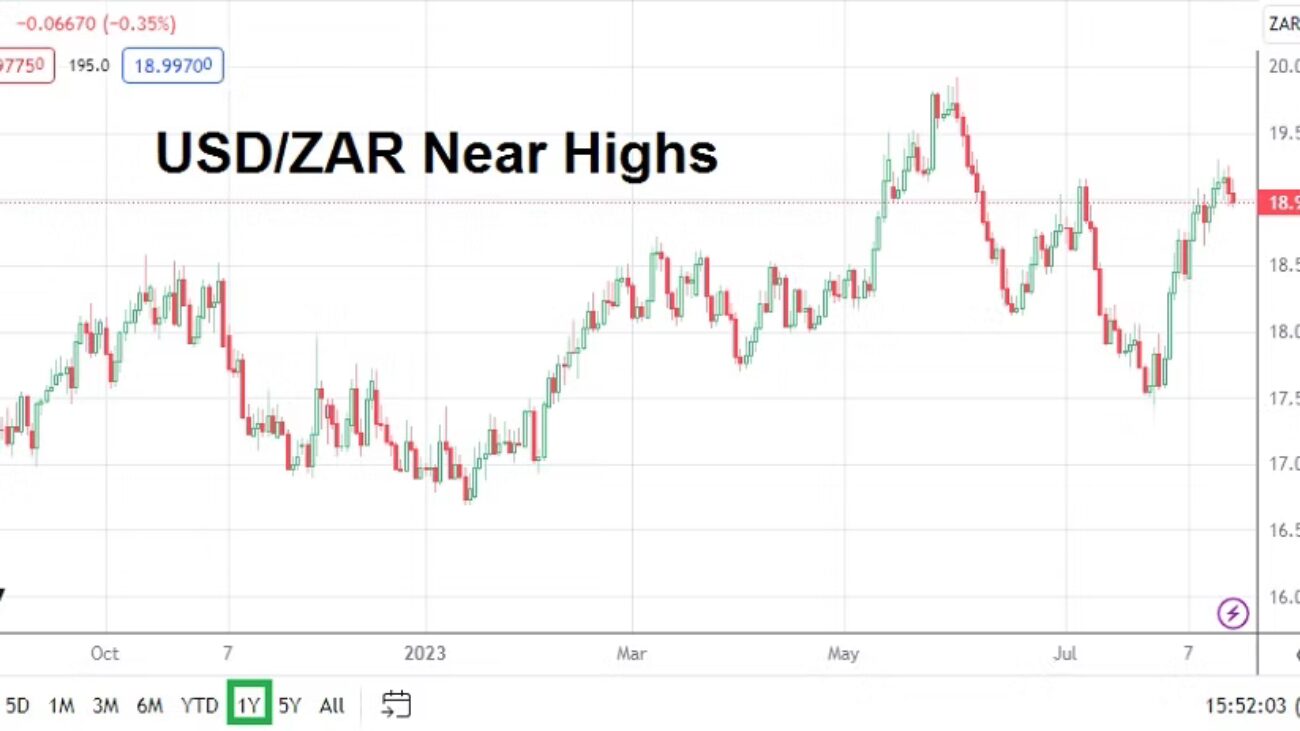
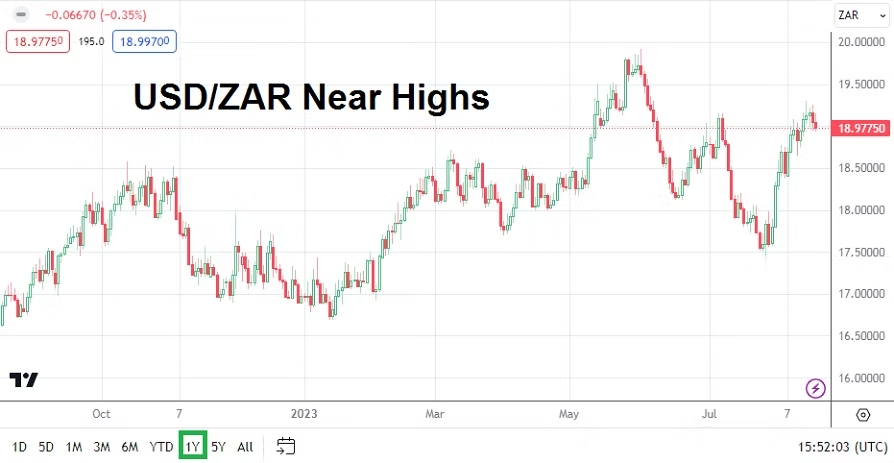
USD/ZAR One Year Chart as of 20th August 2023

The economic data this coming week should prove to be a rather mild schedule, but outside influences will certainly get publicity and get fanfare from talking heads who want 15 minutes of your attention. The BRICS Summit will get underway in Johannesburg, South Africa officially on the 22nd. Another big conference later this week will be the U.S Federal Reserve’s Jackson Hole Symposium. Both events will produce plenty of conversations about inflation, economic stability and a more cohesive global cooperation monetarily. This will also create many raised eyebrows among traders who are skeptical about these type of events.

While leaders of China, Russia, India, Brasil and South Africa get together in Johannesburg, it is likely we will hear talk about potential BRICS expansion and the pursuit of a new unified currency which doesn’t rely upon the USD. However, in the background there is likely to be plenty of distraction because of China’s faltering economic data and Russia’s Ruble which has been impacted severely in the past month. Plenty of large rugs will be needed to hide the dust which threatens to make this BRICS event rather memorable.

Add the ongoing saga of Niger and the absence of a political solution for the world’s fourth largest producer of uranium as a potential flash point standing on the side of the stage waiting to make an appearance regarding Africa news. Perhaps it is too cynical to wonder if coordinated military action within Niger will await the end of the BRICS Summit. This so China and Russia are not given an opportunity on the ‘world stage’ as a united voice to offer their opinions regarding an intervention.

The Jackson Hole get together of global central bankers from the Fed, BoE, ECB, BoJ and others will certainly grab headlines late this week, but the script is mostly known regarding the rhetoric to come from the Federal Reserve’s annual event. Forex may move based on comments from the central bank chiefs as they speak towards the end of this week, but it is unlikely anything surprising is going to be heard. U.S Treasuries will remain a topic because of the ability to lock in a solid return over the mid-term compared to betting on the outcomes of the stock market, but this scenario has been playing out the past month. Investors should prepare for a long line of speeches regarding economic outlooks from central bank officials all week. Day traders should also remember that the chatter starts to be ‘tuned out’ as the speeches grow longer.

Traders looking for other outside influences may want to look at the cryptocurrency market where major assets have shown signs of struggling. Bitcoin and Binance coin could remain in the headlines for all the wrong reasons, if their prices continue to challenge important support levels and become more vulnerable.

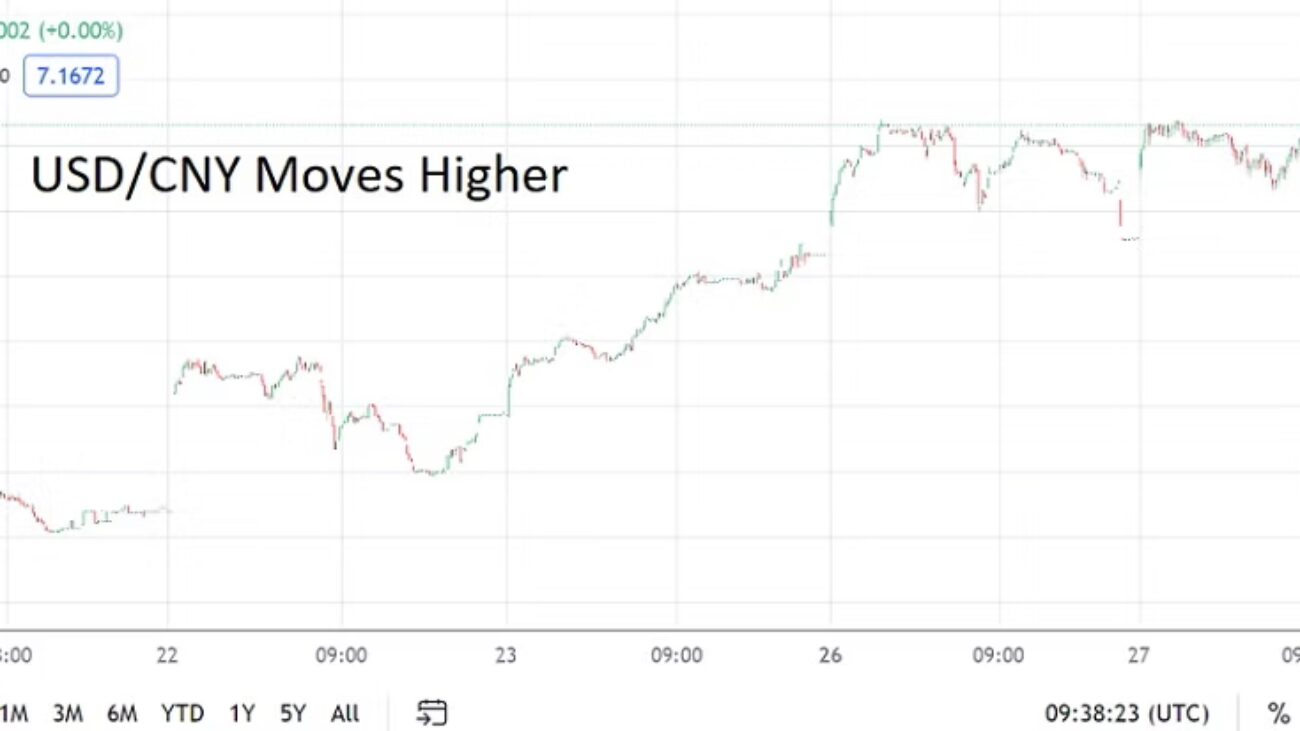
Monday, 21st August, China Prime Rates – economic data from the nation has caused concerns that real estate problems are spilling over into the domestic consumer market. The interest rates China lends money to consumers is expected to be lowered to try and spark spending. Recent economic reports from China have been bad, and readers who believe this is merely ‘Western’ bias being reported should be careful to look for other sources to confirm data. Investment within the second biggest economy of the world has become tentative, because there is a fear the ‘official’ China numbers may be worse than those being reported.

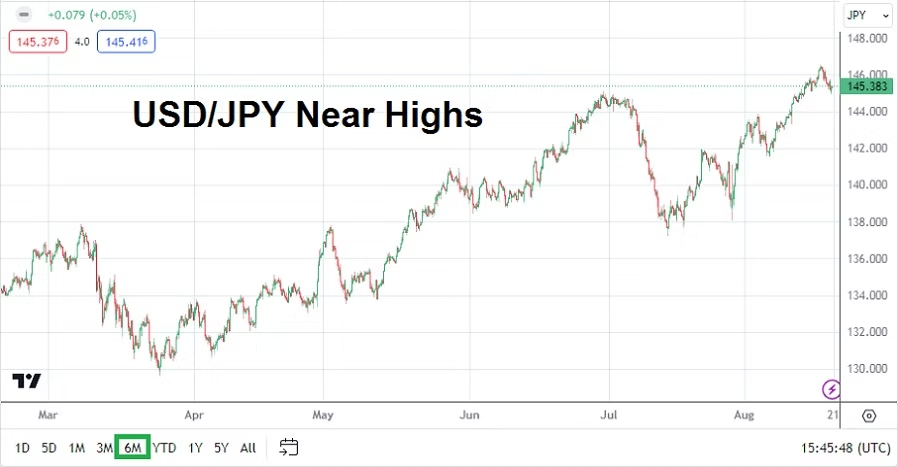
USD/JPY Six Months Chart as of 20th August 2023

Tuesday, 22nd August, Japan Consumer Price Index – the Bank of Japan report is expected to show a slight decline to the inflation numbers. Last month’s outcome of 3.0% is expected to lower and produce a 2.9% result. The USD/JPY could react momentarily to the outcome, the currency pair is near highs it hasn’t touched since November 2022.

Tuesday, 22nd August, U.S Existing Home Sales – the data is expected to show a slight decline of purchases. Mortgage prices continue to climb in the U.S and homeowners are less likely to desire taking on a new higher mortgage, this if they already have a lower mortgage locked in from a few years ago within a dwelling they already live.

Wednesday, 23rd August, Flash European Manufacturing and Services PMI – the reports will come from the E.U and U.K. The German and British outcomes will stir the Forex markets. The manufacturing data from Germany and Britain are forecast to be slightly negative.

Wednesday, 23rd of August, U.S Flash Manufacturing and Services PMI – the U.S reports are expected to show a decline in the manufacturing sector. If a negative result materializes, this could actually spark a selloff of the USD – if the financial markets have returned to calm waters by the middle of this week. Weaker numbers might be interpreted as another reason for the U.S Federal Reserve to remain neutral and why they should consider becoming dovish over the mid-term.

Thursday, 24th of August, U.S Durable Goods Orders – the core and broad numbers are anticipated to show declines. If the Durable Goods Orders numbers are worse than expected this could spark more USD selling, particularly if financial institutions are already calm and feel the data is another step to ‘lowering’ the Fed’s hawkish interest rate rhetoric. However, for the USD to weaken the markets will likely have needed to be tranquil beforehand, without major surprises having happened earlier in the week that may have escalated nervous behavioral sentiment in the broad markets.

Friday, 25th of August, Germany Business Climate and GDP – the ifo Business Climate report comes from a composite of manufacturers, wholesalers, and other enterprises and is expected to be lower than last month’s outcome. The Gross Domestic Product results are anticipated to show no changes, which would mean Germany’s economy remains in the doldrums and is flirting with recessionary pressures.

Friday, 25th of August, U.S University of Michigan Consumer Sentiment – this revised reading is expected to show U.S consumers remain steady without significant changes compared to the previous outcome.

post11.2

Nervous about the Markets, You’re not Alone

Nervous about the Markets, You're not Alone

U.K political chaos turning into clarity or further madness? Mid-term elections coming in the U.S about to deliver change? More turmoil in Brazil? What could go wrong?

So you are nervous about the global markets. You are thinking about the possibility of putting cash under your mattress. Perhaps closing your equity positions and just being a spectator for the next year, well, you are not alone. It doesn’t mean you are right however, and you may want to proceed with caution before your let paranoia guide your decisions.

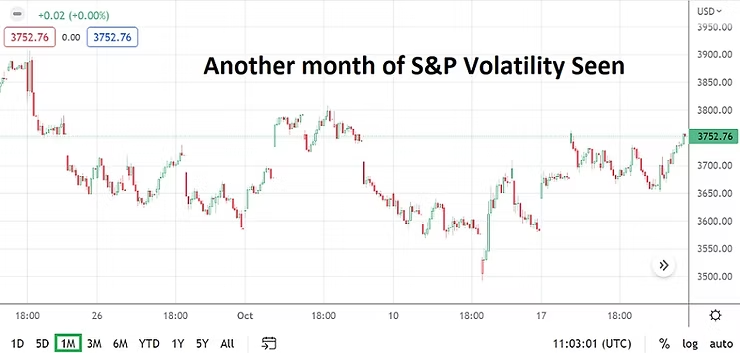
Past month of results from S&P 500

Global markets have faced perils before and will again in the future. Long term perspective is needed. The U.K, U.S and Brazil are all within intriguing political circumstance. The U.K is about to have its third Prime Minister after the ‘sacking’ of Liz Truss. The U.S is about to have a mid-term election and it appears the Republicans may seize control of the House of Representatives and Senate. Meanwhile in Brazil, the race for President appears to be getting closer and President Bolsonaro may actually pull off a photo finish against his challenger.

U.S indices have suddenly started to show brief moments of strong buying again. However many financial analysts remain skeptical. Fear of inflation, recession, quarterly earnings, debt and rumblings regarding stagnation are legitimate reasons for financial institutions to worry about this Halloween season. Jokes aside, the short term will likely remain rather challenging.

The U.S Federal Reserve has served as a solid place to show officials remain locked within their offices without a vision regarding the real world, but that is too easy to merely claim. Numbers need to be looked at and quantified to cast official blame on bad monetary policy. It does appear the Fed will raise interest rates again in November. Will they rest after this coming hike and actually wait for corporate evidence and economic data afterwards to help guide their decisions late in 2022 and early in 2023? We shall see.

The USD remains very strong and is hurting other economies as nations deal with the rising costs of food and energy, particularly when imports are involved. Things are not going to get tranquil in the short term, more hurdles need to be jumped. Remaining calm as an investor and trader is needed. Being reactionary will likely not lead to good results.