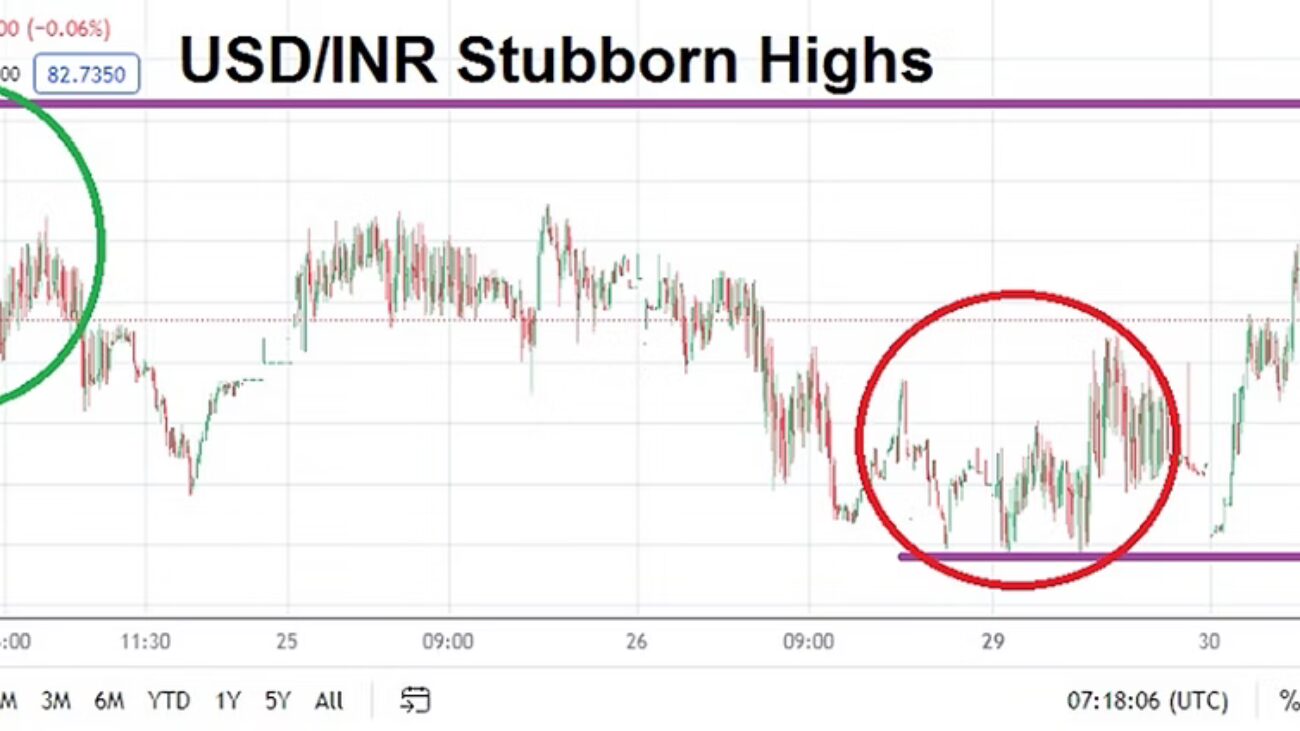
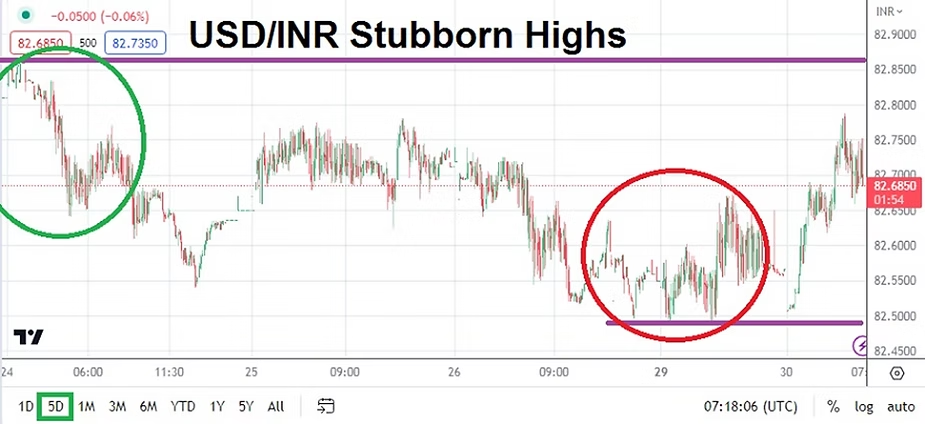
The USD/INR has remained within the higher level of its one month price range as behavioral sentiment remains difficult to gauge. As of this writing the USD/INR is near the 82.7200 ratio, but readers are urged to check this price against live market action as they read to compare conditions.
The Broad Forex Market is Nervous and so is the USD/INR
While many traders of the USD/INR who have been tempted to be sellers of the currency pair might be taking it personally that their perceived price targets have not been accomplished, they should note the broad Forex market has been difficult for most global speculators. The price action the USD/INR is experiencing currently comes from impetus due to nervous behavioral tendencies being generated from conflicting sentiment. The price range between 82.5000 and 82.8500 since the 18th of May has been rather persistent with momentary outliers.
Fear of the U.S Federal Reserve remains rather strong in Forex, this has affected the USD/INR because of concerns the U.S central bank might increase the Federal Funds Rate on the 14th of June. Inflation remains durable and is showing few signs of vanishing. The higher consumer prices in the U.S are a thorn in the side of the Federal Reserve which is intent on trying to put a dent into rising prices. If U.S data continues to show inflation is pushing ahead a rate increase could happen, and the higher prices in the USD/INR likely reflect this has been priced into the currency pair.
Federal Reserve policy can certainly be debated and fingers pointed at their wrong conclusions and decisions made the past two years. The current circumstances for the Fed has put it in a very difficult position. The lack of a clear outlook for financial institutions is leading to a lot of risk adverse trading since the 9th of May. Also concerns about the U.S debt ceiling did not calm many nerves the past few weeks, although the crisis seemingly has found a compromise which is likely to be approved tomorrow in Washington.
High U.S Interest Rates and More Corporate Banking Woes as a Potential
Higher interest rates are hurting U.S corporate banking particularly in the mid and small sized sectors of the industry. If these banks continue to suffer, their problems will create a credit crunch for many in the U.S middle class, which could have a big effect on consumer spending.
Higher interest rates via the increasing Federal Funds Rate are hurting the corporate banking sector because it makes it harder to lend money, and some clients are taking their money out of deposits to seek better returns elsewhere – like Treasury Bonds. The increased interest rates in the U.S also hurt many global currencies like the USD/INR because global financial institutions sometimes seek the better paying U.S bonds, which are also seen as more trustworthy long-term investment vehicles.
Thus, while the Fed is projecting tough talk about the potential of raising interest rates in June, and warning the mid and long-term outlook is cause for concern as inflation shows its ugly head, financial institutions are demonstrating nervous behavioral sentiment. The strong rhetoric from the U.S Fed and its lack of clarity regarding real direction has left the USD/INR and many other major currency pairs in awkward choppy positions with highs being tested. Until U.S economic data shows inflation is under control and growth is slowing down substantially, the Fed may have to continue to be rather hawkish sounding, which will not help the USD/INR selloff strongly in the near-term. In other words traders considering selling should be conservative with the USD/INR and not be overly ambitious with their targets.
Today the CB Consumer Sentiment reading is coming from the U.S, a lackluster report with negative data would actually help the USD/INR. Also this coming Friday jobs statistics will be published. While many folks will watch the employment outcome from the Non-Farm Employment Change, the Average Hourly Earnings could be more important and provide insights regarding inflation which could prove crucial. A rise in wages is not the outcome the Federal Reserve wants to see.
Warning: Use Entry Price Orders when Trading the USD/INR when Possible
Traders should also note that short-term wagers on the USD/INR should be done with entry price orders to make sure they are not caught and hurt by the large spreads which might be offered by their brokers – the spread is the differential between the ‘bid and ask’ price. Frequently a trader will be given a price fill that leaves them feeling like they have been cheated. Speculators frequently try to target short-term price goals with quick hitting bets, but bad price fills make these types of wagers difficult to get a positive result – when only a handful of pips in either direction can hurt a trader because too much leverage is being used.
USD/INR traders who are buyers should understand they will most likely be given the sell price of the ‘bid and ask’ when seeking upwards direction, and sellers of the currency pair are likely to get the ‘buying’ price of the spread – thus making a chosen wager on direction further away and difficult to achieve profits. Using an entry order which pinpoints a chosen price to enter a trade is vital. A trader should not expect to get a price fill which is ‘geared’ towards their chosen direction. Also, spreads in the USD/INR are wider than many major currency pairs because the amount of volume in the Indian Rupee cash market tends to be thinner, leaving more room for the technological capabilities of Forex brokers to provide less than attractive pricing.