postN73

U.S National Security, Part 2: Regional Alliances – Europe

U.S National Security, Part 2: Regional Alliances - Europe

Opinion: The following article is commentary and its views are solely those of the author. This article was first published the 25th of December via The Angry Demagogue.
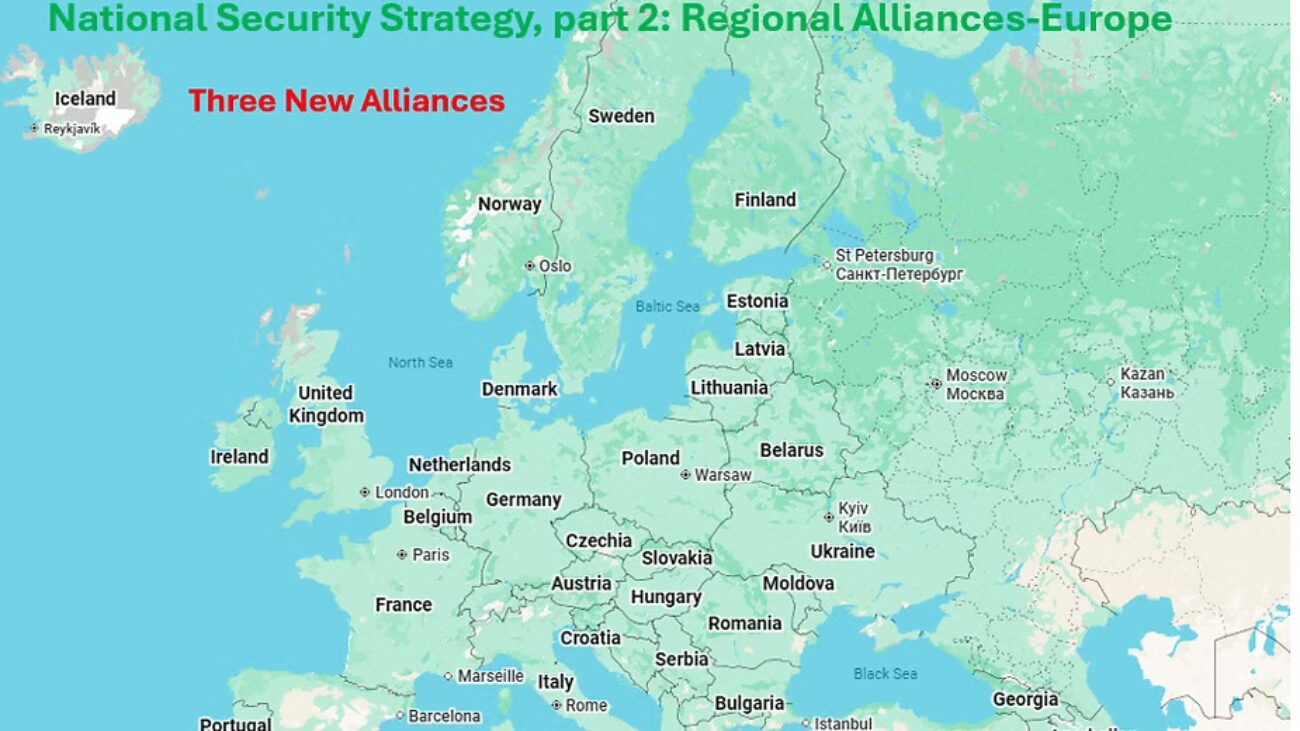
As we continue our tour of the administration’s National Security Strategy we will stay with “part III: What Are America’s Available Means to Get What We Want?” and move to the sixth bullet point: “A broad network of alliances, with treaty allies and partners in the world’s most strategically important regions” and work through the important regions that the strategy documents – Asia, Europe, the Mideast and Africa. For good or for bad we will need to split these regions up since the key point is forming coalitions that can handle their actual region. Sweden can’t be part of a coalition to protect Italy’s interests in the Mediterranean and Japan won’t be protecting Singapore.

Some U.S allied countries, like Australia, Israel and India will be involved in multiple regions helping lead alliances in all areas important to them. With that in mind we will point out the first mistake of the discussion on regions and that is Europe. We will suggest something here that would not usually come from the mouth of a hawk and pessimist and that is that NATO has no real mission and needs to be replaced by a series of alliances that make more sense. While the fear during the Cold War was a Warsaw Pact ground invasion into Germany and beyond which would have required the totality of American and European forces, Europe now is facing a Russia that could not conquer Ukraine in nearly four years of war. That is not to say that Russia is not to be feared only that each part of Europe needs to ally to face a Russian onslaught in its own theatre.

Italy is not going to send troops to Sweden to prevent an attack and Norway won’t be helping Greece in any fight. Turkey is a country that other NATO countries fear more than trust, especially regarding Russia.

In short, NATO needs to be broken up into different alliances where each country will be allied with countries whose fall would affect its national security. The United States can either be a signatory to these alliances or it can decide how involved it wants to get in any conflagration depending on its own interests at that time. It can decide to position ground troops in the countries, supply air cover or, as in the 12-day war between Israel and Iran, help with missile defense and in providing the final blow with weapons only America has. Or – it can decide that it will never participate. One hopes that that won’t happen, but each alliance will need to be ready to fight on its own.

We can include France and the U.K as large countries with advanced armed forces as allies to all of these alliances. France certainly can contribute air power to each of the alliances that are faced against Russia. As for the U.K, it is difficult to know where that country is going but its navy and air force are still powerful.

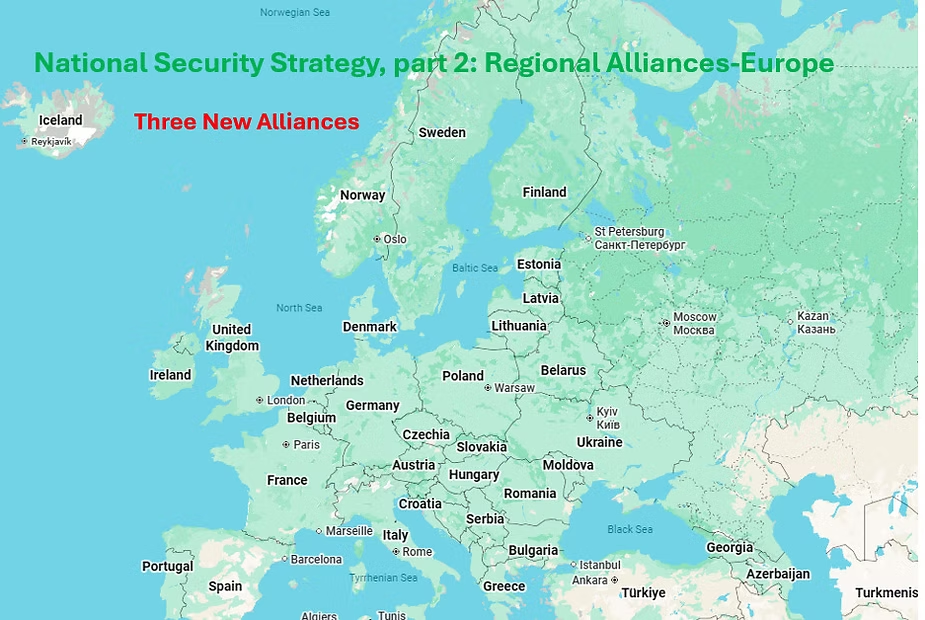
Today we will deal with north, central and western Europe.

The Baltic Alliance

This would be an alliance that includes Poland, Germany, Sweden, Finland, Norway, Denmark, Latvia, Lithuania and Estonia and would provide cover for land, air and naval battles. Each of these countries, with the exception of Germany, has a border with Russia and all are on the Baltic Sea – a key waterway for them and for Russia.

An alliance of these countries would force them to concentrate on those areas necessary for their defense. An incursion, for example into Finland would force Poland to mass forces on its border with Russia and Belarus (Poland borders Russia in Kaliningrad which is separated from Russia proper by Lithuania) and Germany to move forces to Poland. All countries could also contribute ground forces to Finland as well as naval and air power.

The only thing missing is the lack of a nuclear umbrella. That is no small issue but can be dealt with by support or threats from France or the U.K.

The Atlantic Alliance

Aside from helping the Baltic Alliance, France and the U.K will have major responsibility along with the Netherlands for patrolling the North Atlantic and, with help from Portugal, and Spain the South Atlantic. As the Atlantic Ocean can be considered one of America’s seas, this alliance will need to have the close cooperation if not outright membership of the United States. Canada too, will need to be part of this alliance. We can include the increasingly important Arctic Ocean into this alliance’s responsibilities.

As we move towards the south Atlantic countries such as Morocco, can be included as well as other western African allies of the west. An alliance like that could encourage western African countries to abandon close security and economic ties with China and Russia. The “border” of this alliance would be that squiggly line in the middle of the Atlantic that separates the Eastern and Western hemispheres.

The Central European Alliance

We can look at the smaller central European countries that formed the heart of what was the Hapsburg Empire but are not front line countries bordering Russia – Romania, Hungary, Slovakia, Czech Republic, Austria, Serbia and Bulgaria – and we have an alliance that, backed by Germany, Poland and the United States, would create a further deterrence to Russian encroachment into Europe proper.

Where, do you ask does Ukraine fall in this European alliance structure? That answer will have to come from the major European powers in concert with the United States. Adding Ukraine to the Baltic alliance might be viewed as another attempt to NATO-ize them by the Russians. However, attaching them to the less threatening Central European Alliance of smaller countries might be the excuse and “victory” that Putin would need to end the war. But we are getting ahead of ourselves here. Ukraine is a problem that can only be solved if the West decides to actively join the fight against Russia (unlikely) or when Putin and Russia get tired of the fight and look for a way out that could allow them to claim victory (more likely than the former, but sadly, a long way off).

The Administration’s concentration on regions and how certain countries can become leaders in support of western and American interests is correct – but the breakdown of the regions has to go beyond the post WWII world. The place of America in the post-cold war world, with a China that wants to challenge America’s economic and military interests and leadership needs to break down old alliances into more manageable and logical pieces.

The wild card in all of this is, of course, the will of the European powers to take their own defense seriously. The Baltic Alliance we spoke about seems to be filled with countries that understand the threat from Russia, but do they recognize the threat to them from the alignment, the Axis if you will, of Russia, Iran, North Korea and China? And of more importance have they yet come to understand the threat to their countries, as they know them, from open immigration and from their own abhorrence of families? The former is something only the governments can handle, the latter though, must come from the people themselves.

A whole generation (or two in many instances) of Europeans have grown up not only as “only children” but in families that have no aunts and no uncles, no cousins and only very elderly grandparents, if that. They have grown up in other words without families. Will the young generation see the importance of families to themselves and their countries or will they continue the nihilistic lives that they parents have “sanctified”? Religious institutions, too will have a major role in this challenge. No amount of “parental leave” and childcare subsidies will convince the young to marry and have children – will only come from a change in the culture. Is Europe up to it?

Disclaimer: the views expressed in this opinion article are solely those of the author, and not necessarily the opinions reflected by angrymetatraders.com or its associated parties.

You can follow Ira Slomowitz via The Angry Demagogue on Substack https://iraslomowitz.substack.com/ 

postR196

AMT Top Ten Miscellaneous Items on the 21st September 2024

AMT Top Ten Miscellaneous Items on the 21st September 2024

10. Shohei Ohtani: The slugger hit another home run last night bringing his total to 52 for the season. There is more than a week of regular season action remaining. Incredibly, if Ohtani pitches next season while also hitting, his current statistics could be outshined. The Dodgers pitching staff is in tatters as the MLB playoffs approach, and it has been opined that Ohtani could pitch in the postseason. However, this option is highly unlikely. Ohtani is an outstanding athlete and has surpassed many expectations.

9. Beep, Beep: The purchasing of technology, including their production and logistics sources are likely coming into question in many diverse places around the globe. The detonation of pagers and walkie talkies used by the terrorist group Hezbollah which is largely based in Lebanon has certainly created panic about vulnerabilities. Contemplation in many nations regarding the buying of equipment that could be prone to spyware and other harmful acts is a reality.

8. Michael J. Saylor: MicroStrategy led by its Executive Chairman has added to their Bitcoin holdings. MicroStrategy is reported to have around 252,220 Bitcoins. The current value of BTC/USD is around 63,000 as of this writing. Part of Saylor’s love for Bitcoin rests in his belief that value is due to scarcity, and secure durability as a store of value technologically. However, each Bitcoin holds 100 million Satoshis, the units each Bitcoin is divided by digitally as source code. Even if conservatively there are only 15 million Bitcoin in circulation in ten years time, 15 million times 100 million is 1.5e + 15, meaning more than a quadrillion Satoshis in circulation. That is not scarcity, particularly when quantum computers could create lightning quick digital trading via coding sources. The premise and concern for a major devaluation in Bitcoin is legitimate. Do you disagree?

7: Equity: Intel has apparently been made a sales offer by Qualcomm. Intel’s market cap is 93.19 billion USD, and Qualcomm’s is 188.18 billion USD. The biggest shareholders of Intel are Vanguard, Blackrock and State Street, interestingly enough Qualcomm’s three biggest shareholders are identical. So if the largest shareholders are practically alike, it comes down to a management question, can Qualcomm run Intel better?

6. Closer: The U.S election will be in a little over six weeks times. The race for the White House according to many polls is very close and the outcome will depend on important swing States. There is still enough time for Harris and Trump to pick up votes, but also enough time for each to unwittingly make an error which can cost votes. Not only is the White House up for grabs, but the House and Senate are at stake too for the Democrats and Republicans.

5. Europe’s ability to put on blinders as the Ukraine and Russia battle in a not so distant land, and bickering between E.U nations while finding no solutions for the conflict have many historical comparisons within the continent. The ability to look the other way as chaos grows and inflicts harm on neighbors has a long tradition in Europe. Since the Middle Ages into the present Europe has a significant track record of negotiating harmony and procuring tenuous treaties, which eventually lead to additional discord.

4. USD/JPY: The currency pair closed at nearly 143.850 yesterday. Analysts are trying to create narratives regarding the climb higher the past handful of days, this after the USD/JPY touched the 139.600 level approximately last Monday. Here’s the thing: financial institutions that trade the Japanese Yen had positioned for a more dovish Federal Reserve and more hawkish BoJ. The Fed delivered their end of the bargain on Wednesday, confirming actions which had already been factored into the currency pair. The USD/JPY ‘correction’ higher is within equilibrium that financial institutions have to recalibrate as they make their new mid-term outlooks and decide how to shift their cash forward positions incrementally. The move higher has not been massive and is a natural reaction as large players rearrange their commercial paper. Incremental is the key word.

3. Energy Calm: WTI Crude Oil and Brent Oil continue to trade slightly above their lower price realms, which saw long-term values in the second week of September tested. Current ratios are still flirting with technical considerations seen in the late spring of 2023. While hyperbole is communicated far and wide regarding potential Black Swan events in the Middle East which could cause Crude Oil to increase rapidly, the energy resources remain rather tranquil and seemingly transfixed on concerns about mid-term demand globally due to recessionary pressures.

2. All-Time Highs: Gold created new record values going into this weekend near 2,622.00. In September of 2022, gold was trading near 1,600.00 USD per ounce. The move higher in the precious metal has come on the heels of global inflation. Some also correctly point to a distrust of global central banks and fiscal concerns regarding the world’s largest economies. The bullish run upwards in gold has been significant and the commodity will remain an important store of value for investors. Speculatively, some short and mid-term traders are wondering about gold’s ability to maintain a trajectory skywards and if sideways price action and possible downturns will ensue for a while. Long-term investors remain serene.

1. Applause: The Federal Reserve issued an aggressive interest rate cut of 0.50%. The Fed seemingly is acting as if they are trying to please financial institutions because of past incompetence. The U.S central bank now needs economic data to behave according to their prescribed outlooks. What could go wrong? Another Federal Funds Rate cut is likely in November, after that a lot will depend on behavioral sentiment and data which may be affected by as of yet unknown leadership from the White House starting in early 2025. Fed Chairman Jerome Powell sounded almost too optimistic about the U.S economy during his Press Conference this past Wednesday. The U.S Final GDP numbers coming this Thursday will prove interesting, the growth numbers carry an expected gain of 2.9%.

postR182

Risk Analysis Review: Warning about Coronavirus in Feb. 2020

Risk Analysis Review: Warning about Coronavirus in Feb. 2020

Below is a risk analysis note written in February of 2020 regarding the risks and potential implications of coronavirus as seen by Robert Petrucci on financial markets. The letter was sent to a senior associate who was a Chief Investment Officer for a firm. After speaking to the senior associate on the phone, feeling as if his thoughts were dismissed without heed and told he was too concerned about coronavirus, Mr. Petrucci sent the following to the CIO:

Thanks for asking about my thoughts.

What worries me is the opportunity for the virus to be a catalyst. The reactions in the E.U by government talking heads reminds me a lot of the financial crisis in 2007 when people publicly disregarded the potential domino effect which was becoming apparent. 

The Coronavirus imo is a potential domino which could take down the remainder of a fragile architecture. Meaning the ill-conceived philosophy and work of central banks in Asia and Europe have left them with little regarding ammunition should they need to fire an economic gun. If Europe and Asia buckle the US will be left limping too.

Psychologically the markets appear vulnerable, but as you rightly point out the higher realms of the Indices have been waiting for a bit of a sell off for a long time and the selling underway may be more of a reaction and mere trigger which has been long overdue. 

However, I wonder about the ‘clever’ algorithms which have been developed and trade also due to human bias. What concerns me more than what is taking place in China is what is happening in Italy right now. 

Italian governments have a long political history of ineptitude and disregard of reality regarding numbers which are staring them in the face, particularly with budgets and a long tradition of corruption and its destructive force on transparency. If Italy continues to spike higher infection numbers and continue to escalate then I believe the E.U is in for trouble. The inaction of Italy and its reliance on the tourism business will make it hard for them to accept shutting down major airports and cities which enjoy the fruits of international visitors year round. 

Also, I must add and circling back to China that it is not known yet if another outbreak may suddenly appear in another zone if someone dealing with this asymmetrical virus is unaware of their affliction. 

Which brings me back to the springboard, worst case scenario I fear is a major outbreak in the E.U including Germany. If we see signs of spikes statistically across Europe the next two weeks it will be devastating economically for the next quarter financially. 

As you say, things will certainly bounce back, they always do, we must look at the long term. Investors need to keep a stiff upper lip and protect themselves as you have done in many regards with Indices, US ten year bonds and some gold. 

The question for me now is what happens the next ten business days across the U.S and Europe and how the world handles this virus. Worst case is pandemic and bad Central Bank formula, which have been in place the past twelve years with cheap money. The desire to keep everything steady may in fact lead to miscalculations which have not been planned for and cause reactions in the markets which cannot be checked this time around. I do not believe we are at a Black Swan point yet, but it does worry me that the E.U politicians and even some U.S politicians seem to have their head in the sand or look like deer stuck in the headlights.

Robert Petrucci 26 Feb 2020

postN78.1

USD and the Fed: Parade of Jobs Data Ready to Make Noise

USD and the Fed: Parade of Jobs Data Ready to Make Noise

U.S data last week created landmines for Forex speculators and the Federal Reserve. Global financial markets return to full action today following the long holiday weekend. Growth and inflation numbers from the States last week provided more unsettling results for financial institutions. While Forex has proven difficult for many traders, the major equity indexes are flirting with highs but also running into some intermittent headwinds.

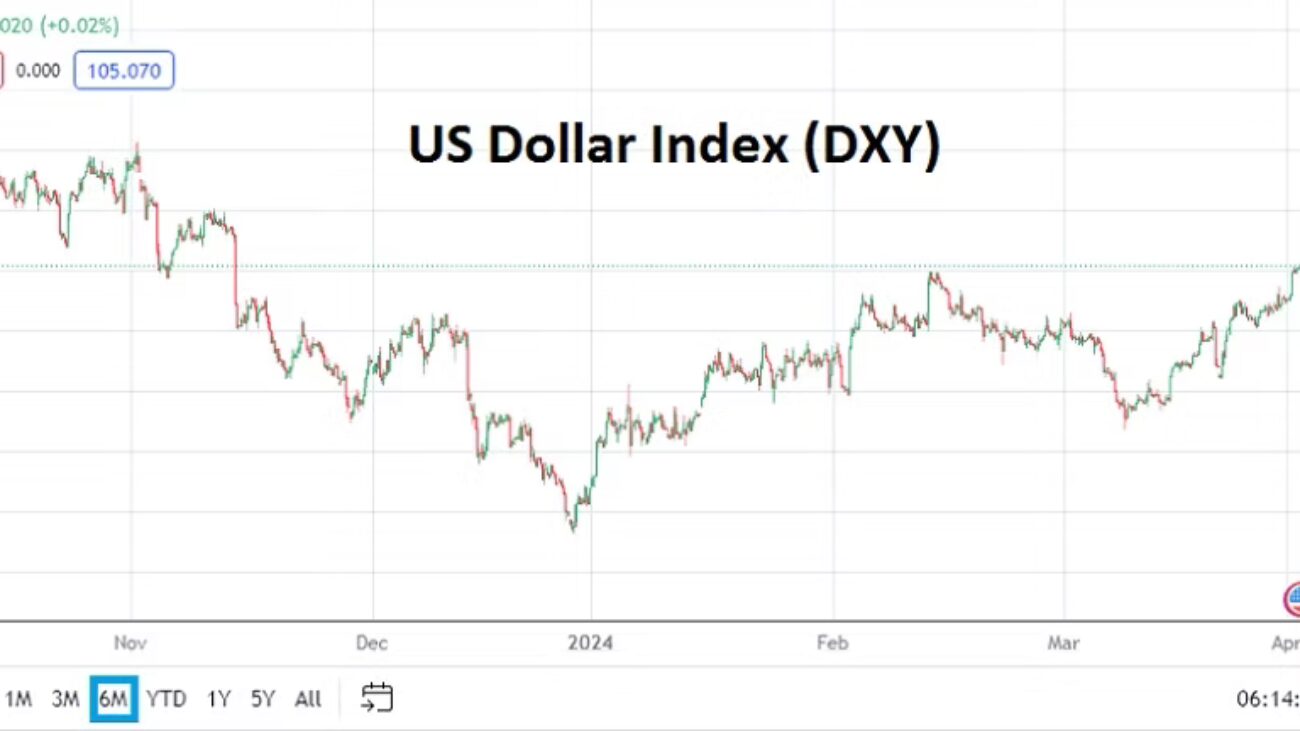
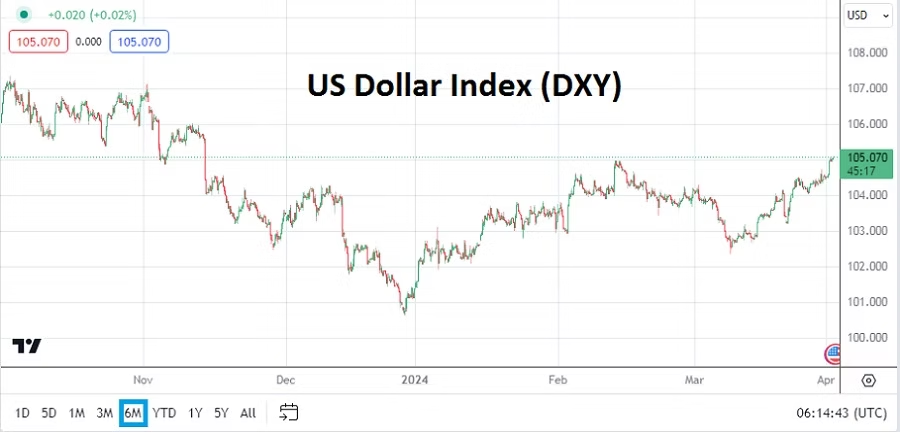
US Dollar Index Six Month Chart as of 2nd April 204

In December of 2023 the Fed was interpreted as having confirmed it would be able to cut the Federal Funds Rate during the 2024 calendar year rather consistently. Dovish policy had been anticipated by financial institutions which began to sell the USD aggressively in November. But by the end of the Christmas week the USD had essentially hit lows in many major currency pairs, and as January started reversals intensified.

The last three months of trading has produced choppy conditions in Forex, but one thing is clear – financial institutions no longer believe the Federal Reserve will be able to aggressively cut the Federal Funds Rate. The Fed has now begun to show signs that it is nervous regarding U.S economic data, this as growth via GDP numbers has remained firm, inflation sticky, and consumers resilient. Clouds shadow Forex and day traders have been hampered by a lack of solid trends.

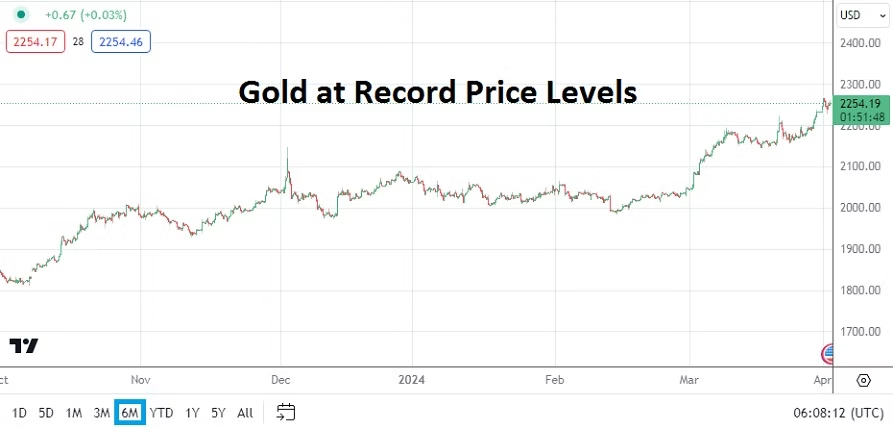
Gold Six Month Chart as of 2nd April 2024

Gold is trading near record price levels. The fact that the precious metal is touching all-time values as the USD has been strong has flustered some speculators. But traders need to remember Gold is affected by large players, including nations, that may be hedging USD bets and preparing for political instability. The price of Gold may underscore belief the U.S Fed will have to cut rates at least a couple of times this year no matter the economic facts on the ground, because this is an election year and if the central bank doesn’t deliver on its ‘promise’ jobs at the Fed may be at stake.

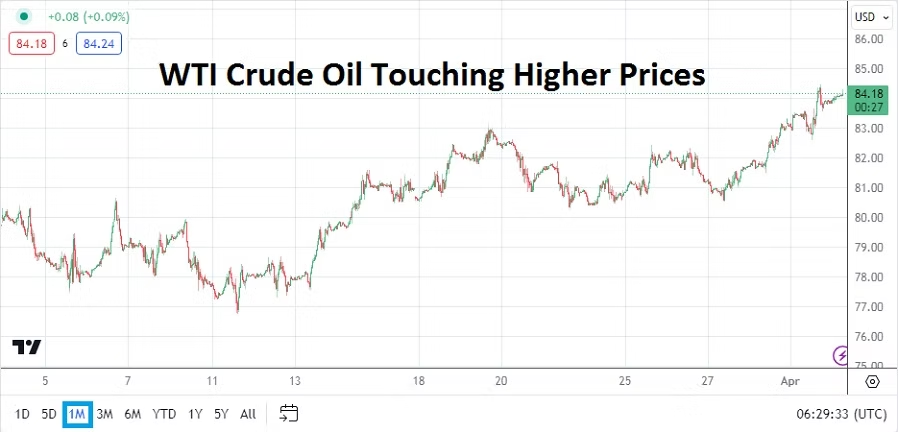
WTI Crude Oil One Month Chart as of 2nd April 2024

Not making anything easier for Federal Reserve policy is the higher price of WTI Crude Oil which has reached the 84.00 USD per barrel price. If energy costs go higher this will not help the fight against inflation. OPEC will be conducting a meeting this week. As an aside the price of Cocoa per metric ton is now over 10,000.00 USD, which is more expensive than Copper. While the price of Cocoa is not a game changer for global financial markets, the higher price will make chocolate more expensive, which some traders may find disagreeable as they try to relax and watch their speculative wagers while trying to nibble on their favorite snack.

Monday, 1st of April, U.S ISM Manufacturing – both the Purchasing Managers Index reading and the Price numbers came in higher than expected. The stronger results show the U.S economy remains better than anticipated by the Federal Reserve, which has been counting on its higher interest rate to slow down growth and inflation.

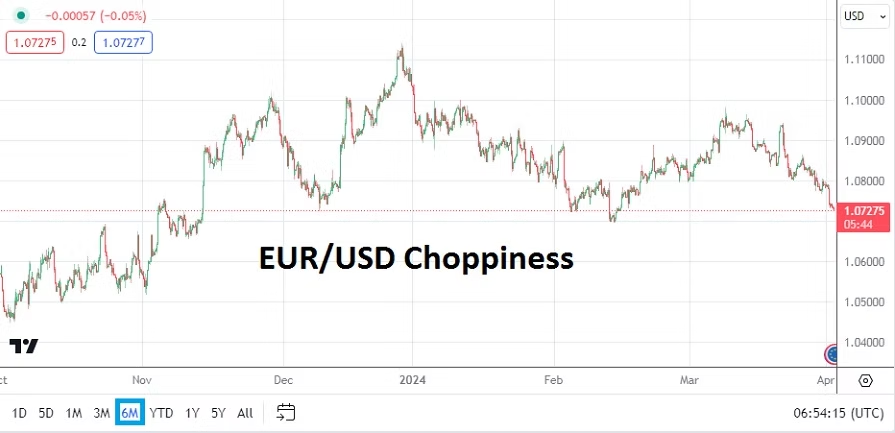
EUR/USD Six Month Chart as of 2nd April 2024

Tuesday, 2nd of April, European Manufacturing PMI – the European Union and Great Britain will release their business readings today. The results will demonstrate insights regarding sentiment. Financial institutions are worried the European Central Bank and Bank of England may have to consider lowering their interest rates before the Federal Reserve. The EUR/USD and GBP/USD will react to the results.

Tuesday, 2nd of April, U.S Federal Reserve FOMC Members – there will be appearances throughout the day in the U.S from various Federal Reserve members who will make the case for their monetary policy outlooks. It should be noted that Jerome Powell will be speaking on Wednesday. The JOLTS Job Openings will come out before the FOMC members speak. While the JOLTS report will not cause earth shattering reactions, the jobs data is the beginning of the parade regarding employment statistics for this week.

Wednesday, 3rd of April, U.S ISM Services PMI – taking into account the Manufacturing report came in stronger than expected on Monday, the Services data will be watched by financial institutions. If this report is better than anticipated, USD sellers will not rest easy. The ADP Non-Farm Employment Change data will also be released on this day.

Thursday, 4th of April, U.S Weekly Unemployment Claims – the Federal Reserve has been counting on employment strength to erode based on their notion that higher interest rates would create ‘lagging’ reactions in the jobs sector. Jerome Powell has said the Fed is anticipating weaker employment data. The results from the weekly report will not be as significant Friday’s data, but should be given attention by day traders in Forex.

Friday, 5th of April, U.S Non-Farm Employment Change and Average Hourly Earnings – the climax for speculators this week will be these jobs numbers from the States. If the numbers produce less hiring than expected this would help USD bearish momentum. Wages will also prove crucial regarding behavioral sentiment for financial institutions. Simply put, the Federal Reserve is anticipating that weaker employment numbers are going to be seen, if this doesn’t happen it might cause major volatility in Forex going into the weekend.

postN19

Broader Alliances: Sustaining Economic and Political Power

Broader Alliances: Sustaining Economic and Political Power

The following article is commentary and its views are solely those of the author.

If the United States decides to abandon its role as the premier global superpower and shall only be a Pacific and Atlantic power, withdrawing as defender of free seas, free trade and freedom in general, its democratic allies will have to start looking elsewhere for broader military alliances. This large group of nations would have to defend their interests against a revanchist China tied to Iran, Russia, North Korea and many of the Latin American countries – possibly including Brazil, and South Africa who have questionable politics and outlooks.

Eastern Mediterranean Alliance: A Strong Sea Power

Here is a speculative, yet reasonable look at the future of the free world. Let’s start with the Eastern Mediterranean where the two major powers are Israel and Turkey. One cannot deny that both these countries outclass all others regarding military might in the region. Israel’s air force is second to none and its navy is becoming a strategic necessity as it needs to defend its natural gas fields miles offshore. It now has six submarines that are capable of projecting power anywhere in the Mediterranean and even into the Indian Ocean and Persian Gulf. Turkey is currently a NATO member, but it is not clear that this will outlast the first half of the 21st century.

There is currently an informal alliance among Israel, Greece and Cyprus (both NATO countries) via joint military exercises and intelligence sharing. The Israeli navy and air force train regularly with Greece and its special forces train in the Cyprian mountains with its army. It would be in all three countries interests to formalize a treaty – if not of mutual defense, at least of mutual aid during times of war. All three of these countries are democracies and all three have mutual economic interests.

A formalization of this alliance makes sense now and if there is a NATO collapse it turns into a necessity for Greece and Cyprus. Adding Egypt (although it would be the only non-democracy) to this group would only strengthen the alliance and keep Turkey at bay. A post-Erdogan Turkey that is comfortable with its Islamic character and its modern society could even join this grouping with Israel as a potential peacemaker between the historic Greek-Turkish rivalry.

This alliance without Turkey is a powerful force in the eastern Mediterranean, and this alliance with Turkey could neutralize a nuclear Iran. A Post-Hezbollah Lebanon which is in the interests of all of these alliance members (including Turkey and Egypt), could become a reality and another member.

A New Alignment: The United Border Nations

What about Eastern and Central Europe? Poland is rapidly becoming the major non-nuclear European military power. Within the next few years it will outshine Germany and the U.K and rival France. It is quite clear, nuclear weapons aside, Poland would probably defeat Russia in a number of weeks, if not days if a conflict were to ignite.

Whether the Russian-Ukrainian war ends in a Russian defeat or in some sort of face saving armistice, Russia will not lose its aggressive nature or nuclear capabilities and it will inevitably become aligned more closely with China and Iran because of its current political nature.

The important new alignment will be categorization of ‘countries bordering Russia’. A new alliance of Poland, Finland, Sweden, Norway and the Baltic states – Lithuania, Estonia and Latvia together would have the land, sea and air power necessary to deter and defeat, if necessary, any Russian imperialist expansion. Even with closer ties to China it would be difficult to imagine that, over the next 50 years, Russia would be a threat to this alliance. Adding Ukraine to this grouping would make a powerful force. Its joint population of over 100 million people, while not quite Russia’s 150 million – would be a formidable adversary, especially as the technological skills of these countries is first world and continuing to improve. Adding the other former Warsaw Pact countries like Czech, Slovakia, Romania, Moldova and Bulgaria can only increase its potency.

Unlike the Eastern Mediterranean alliance mentioned above, this would have to be based on a mutual defense treaty in order to properly deter any Russian-Chinese-Iranian attack. Linking up, informally with the ‘new’ Eastern Mediterranean Alliance would create a powerful grouping of free countries against any attempt by authoritarian adversaries. Adding an economic aspect to these border nations and an alliance with the Eastern Med group with free trade zones would create a strong challenge to any attempted Chinese hegemony.

Asian Border Nations Group: Potential Look Ahead at Potential

If we were to unite the Eastern Mediterranean and Border Alliances to an admittedly non-democratic Asian ‘stans nations, including Kazakhstan, Kyrgyzstan, Tajikistan, Turkmenistan and Uzbekistan with a joint population of around 80 million, we are beginning to see the creation of a multi-cultural alliance that extends from the Arctic Ocean through Central Europe, Northern Africa and into Asia.

The Crucial Partner in Order to Balance Power: India

Which leads us to the Indian Ocean; a dominant India can help control the sea lanes from the Persian Gulf to the Bay of Bengal and down to Australia. An Indian-Australian alliance, along with Israel would create a democratic economic and military force that would keep China and Iran from dominating the region. This would require an Indian navy that is not only large, but effective also because it would hold a main responsibility for patrolling the seas from the Persian Gulf up to Australia strongholds.

As India also reaches its potential as a global manufacturing giant, it will be a force to be reckoned with. Including into this potent mix of nations, is the possibility of adding authoritarian countries like Saudi Arabia and the other Gulf states; along with Thailand, Myanmar, Malaysia and Indonesia who have strong ‘western’ economic interests and would create a formidable bulwark against China’s imperialist Belt and Road project.

Without the need to project naval power worldwide the Unites States could use it massive naval, air and ground forces to take better control of the Pacific Ocean along with Japan, South Korea and Australia.

If we add countries like the Philippines and Vietnam, then China would be deterred from further aggression. The only other region that would fall under American responsibility would be the Atlantic Ocean – the shipping lanes to Europe, West Africa and the Mediterranean. Along with the UK and France there would be no challenger to the control of the Atlantic. This could also lead to a revival of the old Monroe Doctrine and maybe free South America from the destructive influences of Iran, China and Russia.

The Global Economy and Free Trade Zones with a Stable USD as Reserve Currency

What does all this mean for the global economy? The free world along with its less than free allies who fear China, Russia and Iran could still maintain a U.S dollar based world. Free trade zones amongst and between the various alliances along with a revival of manufacturing led by a technology revolution using AI, quantum computing, renewable energy and space exploration could lead to a global resurgence of free countries that could stop the authoritarian appetites of Russia, China and Iran in its tracks. This can only happen with a stable reserve currency the ‘West’ can rely upon which is the USD.

Potentially a U.S freed from being the sole defender of freedom in the world, would help get America’s fiscal house in order and allow it to focus on being a dominant economic power. Is there a future for the ‘free world’ without a United States that projects power globally? Currently, a U.S withdrawal from global military assertion would certainly cause the end of freedom (economic and political) in the world for many nations. However, with the new alliances described above and a fiscally responsible United States, freedom could yet make a comeback.

Disclaimer: the views expressed in this article are solely those of the author, and not necessarily the opinions reflected by angrymetatraders.com or its associated parties.