post235

Predicting the Federal Reserve and President Trump’s Rhetoric

Predicting the Federal Reserve and President Trump's Rhetoric

Financial institutions have grown accustomed to the rather fierce rhetoric from President Trump in the early days of his second term. Financial institutions have also become quite used to the recent overly cautious statements from the Federal Reserve. This Wednesday the Fed’s FOMC Statement will be delivered and there will be no change to the Federal Funds Rate. The current ‘main’ borrowing rate offered by the Fed is 4.50%.
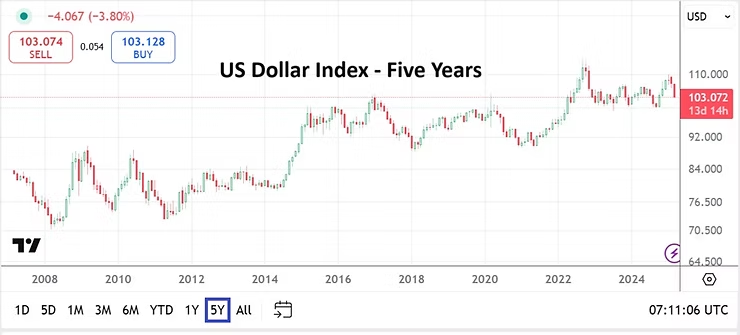
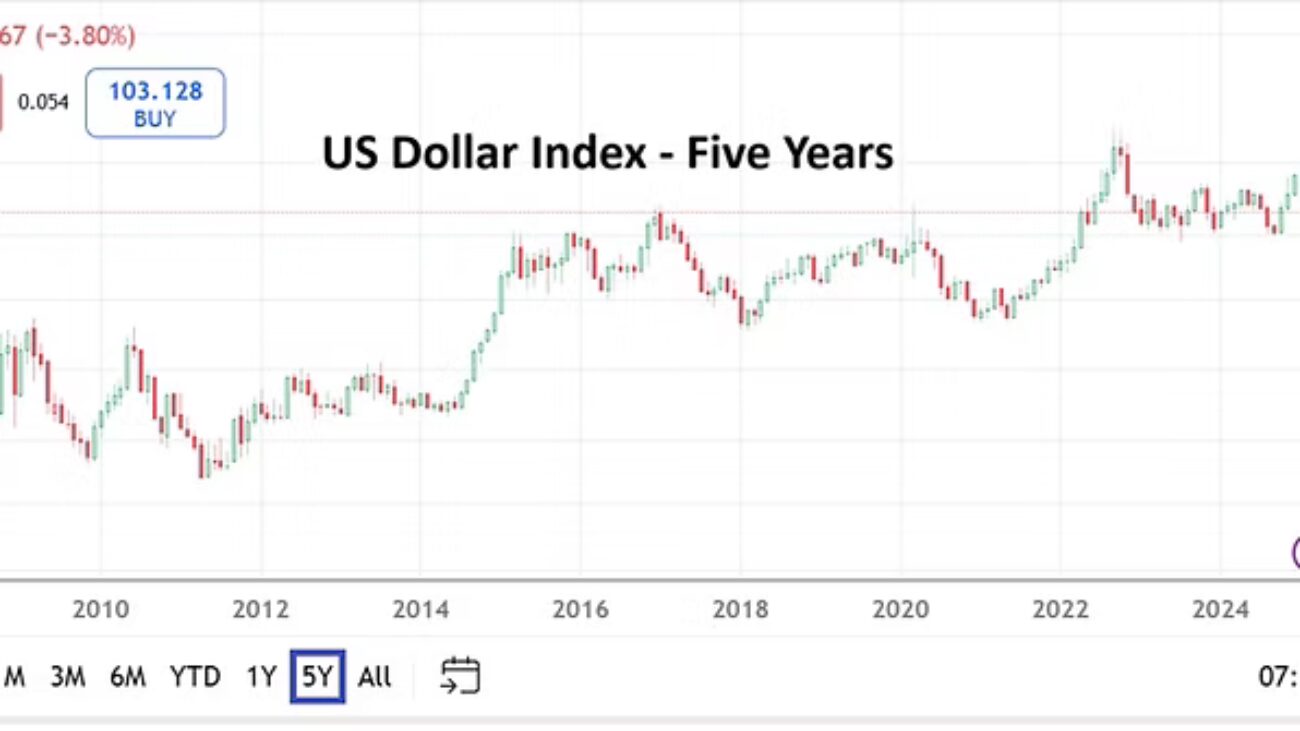
US Dollar Index Five Year Chart as of 18th March 2025

This Wednesday Fed Chairman Jerome Powell will speak about the recent CPI and PPI numbers which came in below expectations. This typically would be a good signal regarding weaker inflation. And Powell might also mention that energy prices in the U.S have started to erode. WTI Crude Oil is now trading in a sustained manner below the 70.00 USD threshold, and this will influence the potential of less inflation. It is a good development for the U.S and Federal Reserve.

However, Powell is unlikely to express the unease and anxiousness the Federal Reserve has regarding President Trump, this because the Fed certainly doesn’t want to get into an open confrontation with the White House.

The U.S Treasury is now being run Scott Bessent who was selected by President Trump. Bessent ran the Key Square Group and is well respected in financial circles, which includes vast experience in top financial institutions. Powell though perceived as pragmatic by many analysts, may not be within President Trump’s trusted inner circle like Bessent and Commerce Secretary Howard Lutnick, the former Chairman and CEO of Cantor Fitzgerald. Lutnick is perceived as a workhorse who get things done and is smart.

The Fed’s likely cautious FOMC Statement will not be enough to appease President Trump this week. While some may think Trump’s attention will be elsewhere, those who have come to understand Trump know his capability to react quickly to events should be taken seriously.

What will Bessent and Lutnick think about the Fed’s FOMC Statement and stance? Powell is not a trained economist, do Bessent and Lutnick trust Powell? One thing for certain is that Janet Yellen who served as the Fed Chairwoman before Powell, and the Treasury Secretary before Bessent is not part of the inner circle in the White House.

Powell’s loyalties may be questioned, and eyes should be kept on Trump later this week to see how the President responds to the rather cautious Federal Reserve. The Fed will certainly not want to say aloud it is waiting like everyone else regarding the effects of tariff negotiations and their implications. Powell wants to keep his job. Trump certainly wants lower interest rates. Bessent and Lutnick certainly want lower interest rates too, but like Powell these two may prove pragmatic and know inflation needs to erode further. The Treasury and Commerce secretaries may want to test chicken and egg questions. Will these two gentlemen push Trump to proactively push for lower interest rates in a louder fashion?

Day traders will have to wait to see how financial institutions react to tomorrow’s FOMC Statement – which has already been accepted as being a ‘no interest rate cut event’. And it is probably being discussed in the White House that the Fed may want to wait until early this summer – June? – to consider another interest rate cut. Which means the Fed may not be cutting interest rates mid-term, while the ECB and BoE may have to be more dovish and remain active via interest rate cuts if their economies continue to show recessionary trends.

Meaning that risk premium which was factored into the stronger USD centric buying since the Trump election on the 5th of November until the peaks in mid-January and early February, and have now reversed lower – needs to be watched technically and weighed in combination with behavioral sentiment.

Intriguingly the US Dollar Index is around levels it stood at on the 5th of November (Election Day 2024). It is also near values seen on the 15th of October. (Did financial institutions start to bet on a stronger USD around this time because of a more cautious Fed outlook and the potential Trump was going to win the election?) Raising the question, if financial institutions envision the USD can technically be weaker and attain values seen in late September and early October when the US Dollar Index was testing support levels which have held since April of 2022. The US Cash Index which stands around the 103.070 level now, was trading near 90.00 in the spring of 2021.

Trump wants lower interest rates, the Fed wants to wait on cutting the Federal Funds Rate until they have clarity regarding the results of tariff negotiations. There will be a collision between Jerome Powell and Donald Trump, the only question is when it will happen. The US Dollar Index has been lower historically. Trump, Bessent and Lutnick may not want to say it out loud, but a weaker USD in the global economy would help U.S exporters. A weaker USD may not convey the strong populist rhetoric of MAGA, but it may be economic hardware the Trump administration actually seeks. To sustain a weaker USD, inflation levels will have to erode, and interest rates will have to be lower (and another myriad of complex events have to happen), until then rhetoric and risk premium will factor into USD Forex trading for financial institutions and speculators.
postN1

BoJ and Fed are today’s Forex Bogeymen, and Job Numbers Lurk

BoJ and Fed are today's Forex Bogeymen, and Job Numbers Lurk

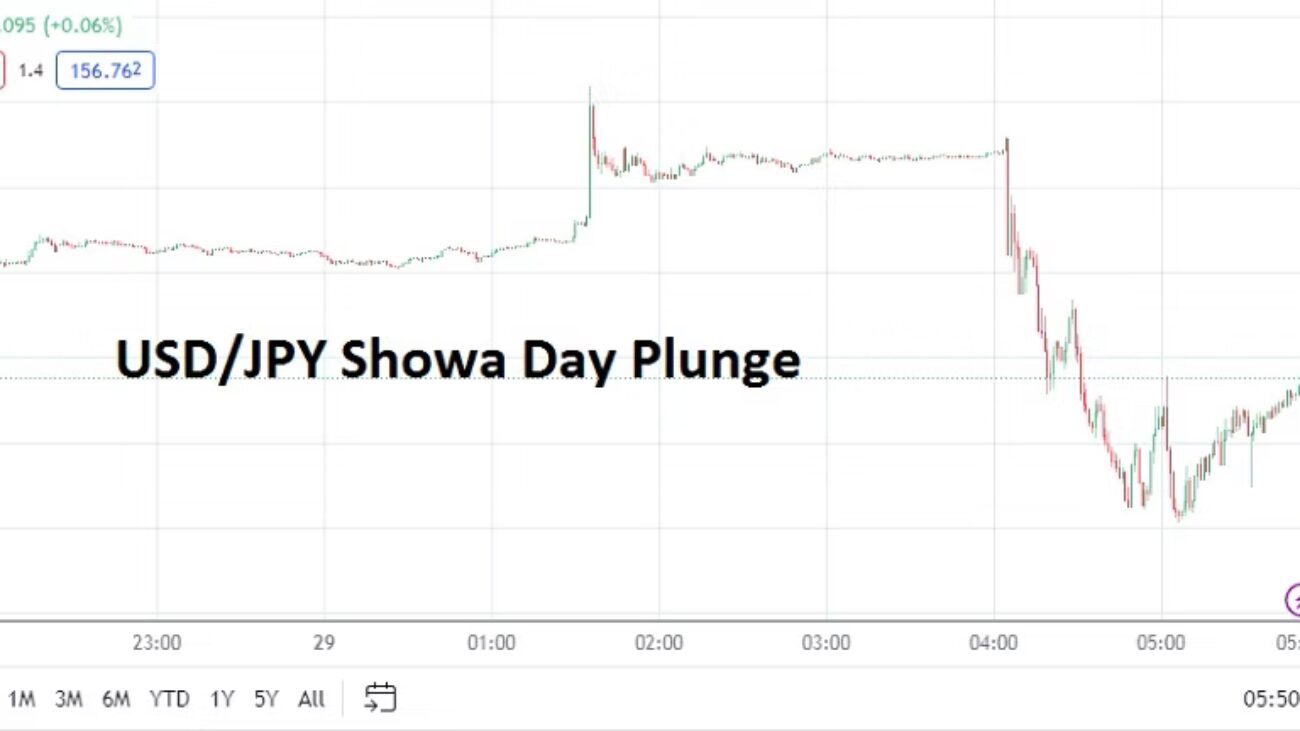
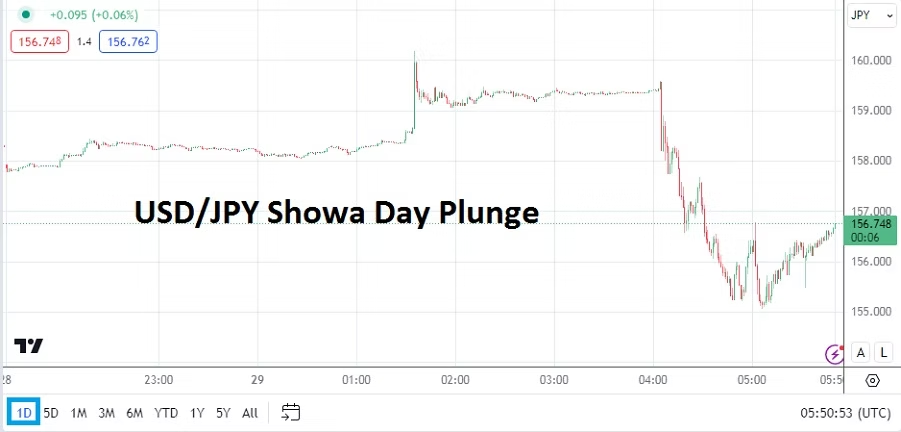
While the Showa holiday is being observed in Japan, the BoJ has apparently reacted with an intervention after seeing the USD/JPY race to new highs in the wake of the central bank’s decision to hold its Policy Rate at 0.10% on Friday. If in fact the Bank of Japan has acted when most Japanese financial institutions are celebrating a long holiday weekend, the reaction to the intervention will be noteworthy when Japanese currency traders return to their desks tomorrow. The question obviously becomes whether large players in the JPY will continue to wager against the Bank of Japan’s current monetary policy or if the apparent intervention will make them cautious.

USD/JPY One Day Chart as of 29th April 2024

U.S data this past Thursday turned in rather clumsy statistics starting with the Advance Gross Domestic Product growth results which showed the American economy is slowing. However, the GDP Price Index came in slightly higher than anticipated. This caused some tremors in Forex. Friday was followed by additionally troublesome readings when the University of Michigan’s Consumer Sentiment outcome was weaker than expected, but the U of M Inflation Expectations gauge was higher than the previous month’s report.

USD Cash Index Five Day Chart as of 29th April 2024

The USD began to show signs of weakness in many major currency pairs last week. Perhaps the expectation that the worst of Federal Reserve outlook has now been absorbed is playing into the Forex results. However, the past four months of trading have produced a continuous choppy wagering landscape for speculators and clarity still does not exist.

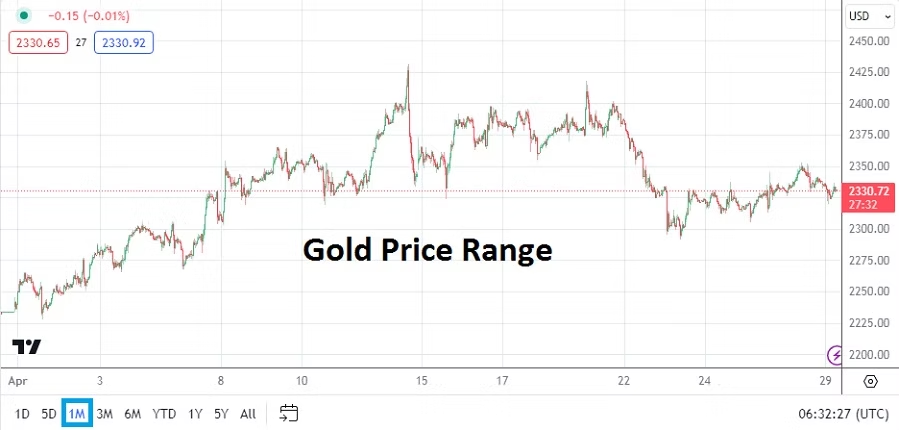
Gold One Month Chart as of 29th April 2024

Suspicion of the Bank of Japan’s intervention this morning and the creeping shadow from the U.S Federal Reserve which is scheduled to deliver their FOMC Statement this Wednesday have created trading bogeymen in many financial assets. The strains in the major equity indices, Treasuries and Forex are prime examples. While day traders try to find fair market value technically and financial institutions seek equilibrium, most observers likely have nervous behavioral sentiment as they consider mid-term prospects. The past month of speculative trading in Gold has produced record highs, but ran into resistance the past week as questions arise about USD inverse correlations not being technically efficient recently.

Monday, 29th April, Germany – Consumer Price Index – the inflation results from Germany should be given attention. The number will certainly affect sentiment surrounding the ECB and the EUR/USD, however the report should not cause an earthquake.

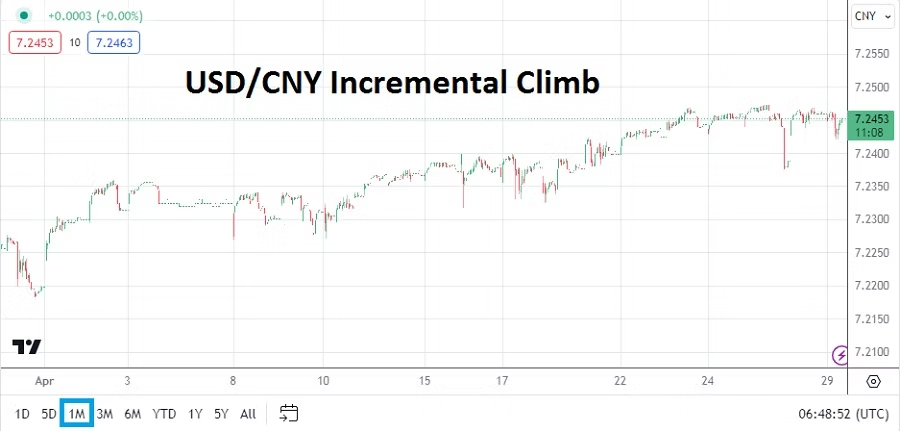
USD/CNY One Month Chart as of 29th April 2024

Tuesday, 30th April, China Manufacturing PMI – the nation has been making claims via government officials the economy is showing signs of a rebound. Yet, disturbing consumer data continues to be seen. The manufacturing statistics from China though will also reflect demand in what is generally accepted as a recessionary period for many global spheres. Traders of the USD/CNY should pay attention to the outcome, the currency pair has incrementally climbed and there are rampant whispers about China undertaking a policy to weaken the Chinese Yuan to spur economic growth.

Wednesday, 1st May, U.S Federal Reserve Funds Rate and FOMC Statement – the Fed will not change its interest rate this week. What will be noteworthy is how Fed Chairman Powell presents this month’s FOMC Statement rhetorically as he is asked questions during his Press Conference. We are certain to hear words mentioned like ‘lagging data and positive signs regarding the potential of weakening inflation’. The question financial institutions want to know is how long will they have to wait for a change to the Federal Funds Rate. The Fed is likely to try sounding cautiously optimistic, but will it be believed? Forex will react to the Fed’s policy meeting pronouncements, but no major surprises should be expected. Some observers may find interesting evidence regarding the future for Fed’s policy via the price of WTI Crude Oil which is hovering near 83.00 USD per barrel as of this writing, because stable energy prices are a key factor regarding inflation.

Thursday, 2nd May, U.S Weekly Unemployment Claims – the jobs data which will start to be delivered late this week will get attention. Forex traders however will be swimming within the riptides already created by the Federal Reserve’s policy.

Friday, 3rd May, U.S Non-Farm Employment Change Numbers and Average Hourly Earnings – these reports will cause a reaction. What financial institutions will be on the hunt for is weaker than anticipated hiring. The inflation numbers from the wages report will be a factor too. The USD traded with a slight decline in Forex last week, those who believe the greenback has been too strong and are inclined to remain sellers should pay attention to the U.S jobs numbers. If the headline hiring number is stronger than anticipated, analysts will rush to the back pages of the statistics to see if part-time hiring is still outpacing full-time employment.

postN51

AMT Top Ten Miscellaneous Thoughts for the 8th of December

AMT Top Ten Miscellaneous Thoughts for the 8th of December

10. Book: A History of Venice by John Julius Norwich.

9. Music: Gram Parsons (featuring Emmylou Harris) playing Ooh Las Vegas.

8. Artificial Intelligence: Speed and processing advances will continue to make AI a buzzword in 2024, this as quantum computing looms in the distance.

7. Trading Volumes: Speculators should note there are about two full weeks of trading left before ‘thin’ holiday markets will begin to be seen. Meaning financial institutions while being cautious, will also start to position their assets according to their outlooks for early next year.

6. Energy Sector: WTI Crude Oil, Brent, Natural Gas and Unleaded Gasoline continue to challenge support levels as long-term lows remain in sight.

5. China: Important inflation numbers via Consumer Price Index statistics will come from the nation early Saturday, negative results are expected.

4. Risk Appetite: Optimism continues to be encouraging within behavioral sentiment, this as U.S equities remain near highs, the USD leans towards a mid-term outlook with potential weakness, and gold stays above 2000.00 USD per ounce.

3. USD/JPY: Bearish momentum continues in the currency pair, price velocity built speed yesterday and this morning’s trading has been dynamic.

2. Data: U.S jobs numbers will be released today, the Non-Farm Employment Change and Average Hourly Earnings reports will create reactions. However, unless the results are surprising, this data may simply work as an affirmation for existing risk appetite.

1. Federal Reserve: The Fed’s next FOMC Statement will be on the 13th of December, this knowledge will shadow the broad markets today and early next week.

postN84.1

December Cheer, Full Volume, Considerations for Coming Week

December Cheer, Full Volume, Considerations for Coming Week

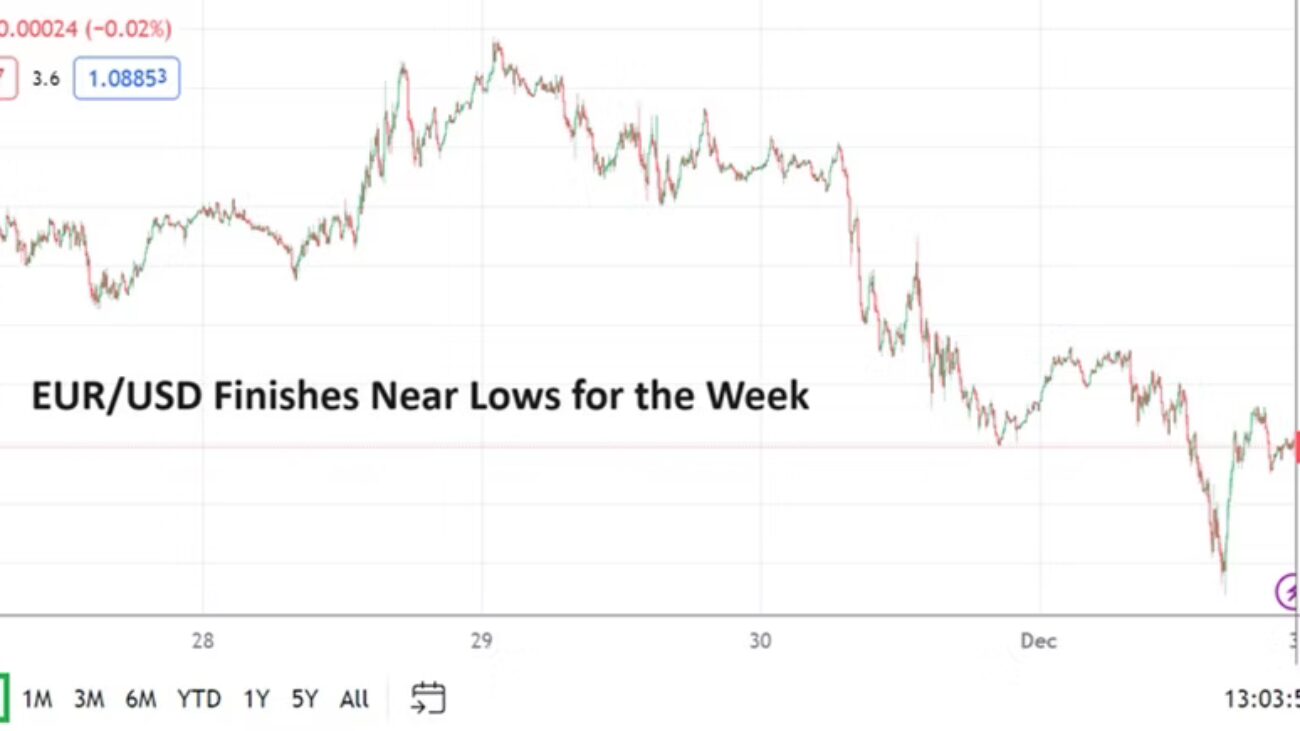
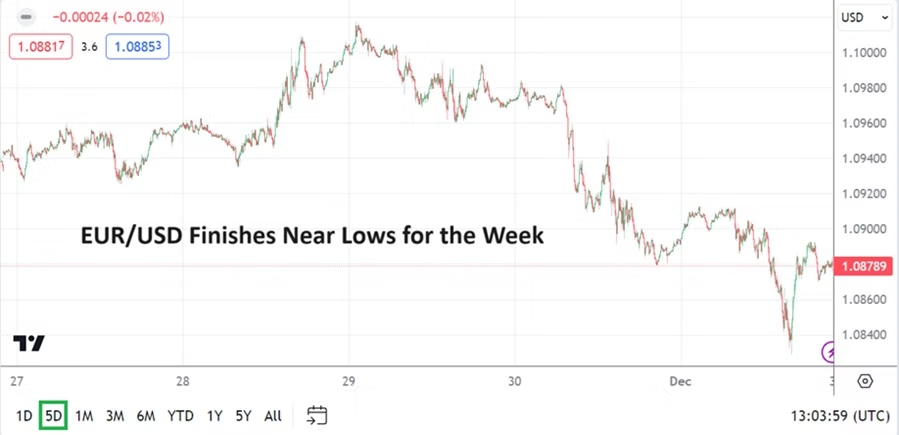
The EUR/USD finished the past week of trading below its starting point essentially closing this Friday around the 1.08790 mark. While the slight downturn may have hurt bullish day traders who kept on looking for higher ground in the short-term, the EUR/USD did trade above the 1.10000 on late Tuesday and held its ground briefly on Wednesday before starting to trend lower. A depth of nearly 1.08310 was momentarily challenged on Friday with solid price velocity, but the EUR/USD did exhibit some buying before going into the weekend.

EUR/USD Five Day Chart as of 3rd December 2023

Speculators who were looking for a higher finish for the week from the EUR/USD may have been disappointed, but the end of the trend upwards may not be finished. U.S Fed Chairman Jerome Powell sounded optimistic on Friday regarding Fed policy and mentioned a ‘soft landing’ and indicated interest rates at their current level will still need a bit of time to have their full effect. U.S growth numbers via the Gross Domestic Product came in stronger than expected on the 29th of November, but inflation data continues to show a slight erosion.

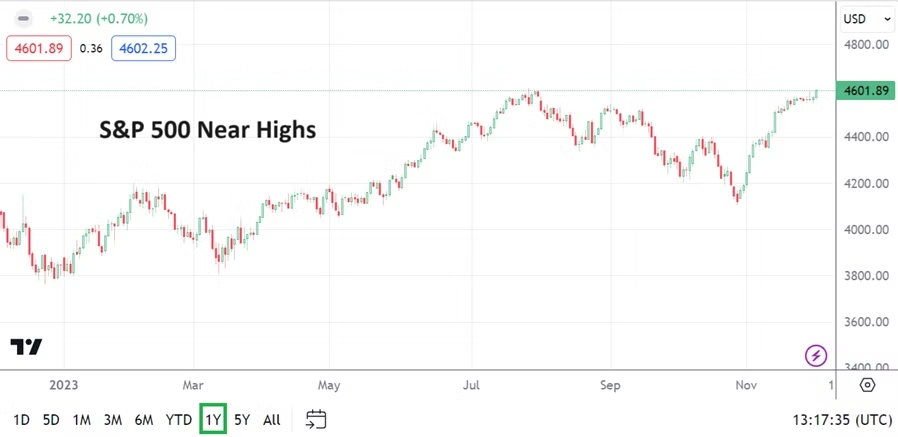
This puts the U.S Federal Reserve in position to actually sound rather neutral when the FOMC Meetings conclude in a week and a half. And if global events do not cause any sudden alarms to ring, it appears risk appetite is within a rather optimistic state. U.S equity indices continued to roll along merrily and the 3 big indexes are challenging highs. The S&P 500 and Nasdaq Composite are challenging July values, and the Dow Jones 30 is trading at ratios last seen in January of 2022.

While U.S Treasury yields have also continued to erode and are near mid-term lows, the USD/JPY continued to create a bearish trend for the week and is trading at values last seen in the second week of September. The GBP/USD finished the week within sight of highs attained on Tuesday and Wednesday, this as the currency pair also trades near values last seen in late August and early September. The EUR/USD is the outlier among the three major currency pairs and speculators may look at the EUR as potentially being in oversold territory as the week gets set to begin. Risk management as always is essential for wagering on Forex.

S&P 500 One Year Chart as of 3rd December 2023

The next two and a half weeks of trading will see full volumes, this before holiday trading starts to hit the broad marketplace. The upward moves in U.S equity indices may be seen as overdone by many analysts, but the trend has been strong and trying to step in front of the ‘optimism’ within the indexes may prove expensive in the coming days and weeks. Day traders should make sure conservative leverage is being used if they are attempting to climb aboard the moving train.

Some analysts are pointing out correctly, that if it weren’t for a few ‘workhorse’ corporations in the U.S equity indices, declines would have been seen. But day traders who are wagering on CFDs via their brokers and financial institutions investing in the three major stock indices are likely enjoying their profitable returns.

Monday, the 4th of December, E.U Sentix Investor Confidence – the reading is expected to come in with a negative result, but slightly better than last month’s outcome of minus -18.6. About a hour and a half before this European survey, German Trade Balance numbers will be released. The EUR/USD may be affected by this data, but the currency pair is likely moving within the shadows of behavioral sentiment which is USD centric. Europe is struggling with recessionary conditions, but it is outlook which drives the marketplace. If the EUR/USD can find durable support it may prove that its bullish trend has not come to an end.

Tuesday, the 5th of December, U.S ISM Services Purchasing Managers Index – an improvement is expected compared to last month’s outcome. Recent data from the manufacturing sector came in less than expected, thus the services sector will be watched closely, but as long as the result is around the expectation this will not hinder broad market sentiment. Meaning the report could be a non-factor.

Wednesday, the 6th of December, Canada BoC Overnight Rate – traders will be keen to see what line of rhetoric is taken within the Rate Statement from the Bank of Canada. No change to borrowing costs are expected. The rate is anticipated to remain at 5.00%. The economy of Canada has been struggling as recessionary clouds are shadowing, but recent GDP data was slightly better than expected and inflation has shown signs of weakening. The USD/CAD went into this weekend near its lows and in sight of values seen in late September.

Thursday, the 7th of December, China Trade Balance – economic numbers via the manufacturing sector last week came in below expectations. The lackluster China data may be a factor in the weaker WTI Crude Oil prices, but perhaps that is only speculative. Some investors participating in China are worried about outlook over the mid-term. Analysts will comment on the Trade Balance numbers, but traders should make sure they separate the ‘noise’ which may be delivered from biased perspectives depending on ‘world view’ compared to actual outcomes and genuine insights.

Friday, the 8th of December, U.S Non-Farm Employment Change and Average Hourly Earnings – the jobs numbers will be looked at attentively by market participants. The data will be correlated to existing behavioral sentiment and risk appetite that has sustained a weaker USD, higher U.S equity indices, lower yields on U.S Treasuries and the high price of gold. If the jobs data comes in around expectations that will likely be enough for investors to remain calm and look forward to the 13th of December, this is when the U.S Federal Reserve will release its FOMC Statement – which may keep risk appetite strong.

postN51

AMT Top Ten Miscellaneous Musings for the 17th of November

AMT Top Ten Miscellaneous Musings for the 17th of November

10. Book: The Art of War by Sun Tzu.

9. Music: Pablo Casals playing Bach’s – The Six Cello Suites.

8. Cricket: India and Australia will meet in the World Cup Final this Sunday in a match between two of the world’s best squads.

7. Gold: The precious metal is trading within sight of its October highs and may find speculative buyers looking for potential upside via wagers.

6. Commerical Real Estate: WeWork bankruptcy knock on effects will cause additional strains in U.S market, this as the sector struggles with vacancies in this era of ‘remote’ employees.

5. Risk Appetite: U.S equity indices are at three month highs, U.S Treasury bond yields at one week lows as optimism grows in the outlooks of long-term investors.

4. Data Watch: Retail Sales numbers from the U.K, and U.S Housing Starts and Building Permits statistics will be released today.

3. USD: Dollar Index futures are trending lower and near values last seen in the third week of September as financial institutions brace for a weaker USD mid-term.

2. U.S Treasuries: Yields are incrementally declining, helping push the USD lower, and creating positive equities momentum, this as U.S bonds appear ready to sustain a cycle lower if investors can remain tranquil.

1. Federal Reserve: Inflation data via the CPI and PPI were weaker than anticipated, and the U.S Fed’s December FOMC Statement should begin to sound less agressive.

postN69.1

USD/INR and the 83.3000 Resistance Level is Not an Illusion

USD/INR and the 83.3000 Resistance Level is Not an Illusion

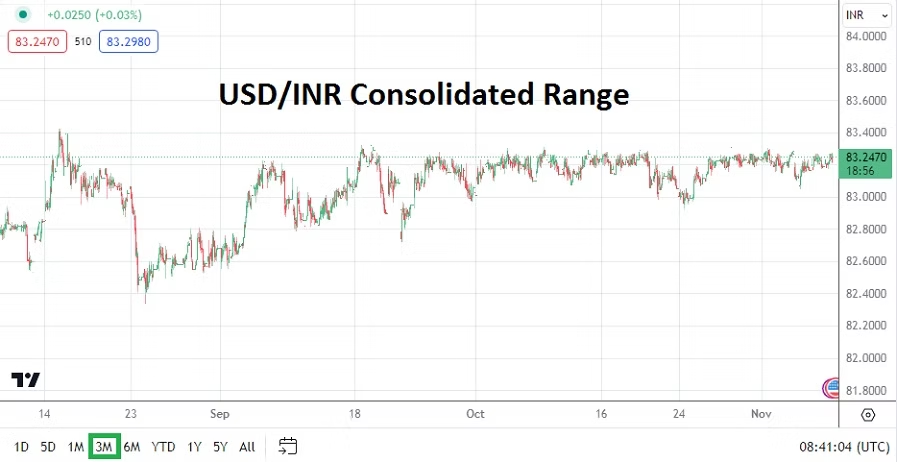
Traders of the USD/INR for those who remain short-term speculators of the currency pair, as opposed to financial institutions which position holdings for corporations and large investors, may be perplexed about values and momentum over the past three months. It is abundantly clear the USD/INR faces a rather strong force when it approaches the 83.3000 mark. Yes, sometimes the Forex pair has traversed above this level, but the moves have been momentary and have been pushed back.

USD/INR Three Month Chart as of 8th of November 2023

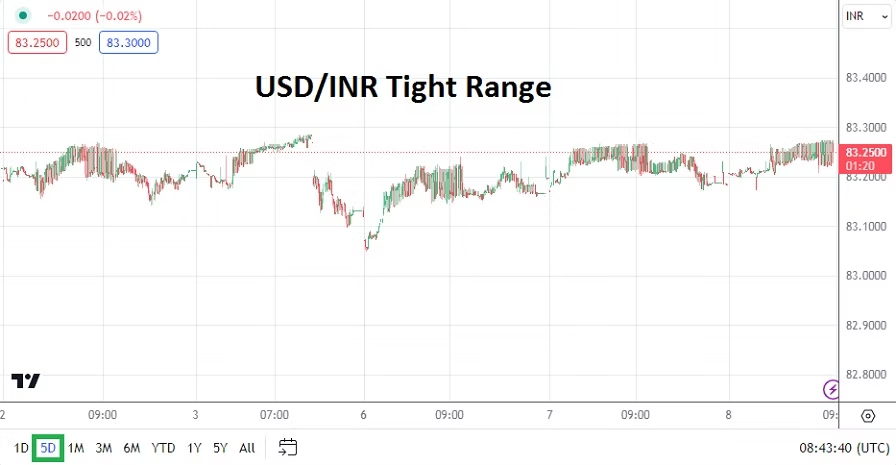
It is not a conspiratorial thought to simply look at the three month chart of the USD/INR and see that when the 83.3000 level has come into play that selling pressure mounts. And it is not news the Reserve Bank of India is involved in the durability of this resistance level. Simply put the USD/INR doesn’t trade in a ‘free’ market manner, the constraints and persistence of the Reserve Bank of India to maintain a structured resistance value for the USD/INR is evident. The past month, and last five days of trading via technical charts shows the same dynamic. And it is important to point out the resistance level of 83.3000 has been sustained over the mid-term when global risk adverse trading has seen the USD gain strength against many other major currency pairs, meaning the USD/INR should have traded at higher levels.

USD/INR Five Day Chart as of 8th of November 2023

The Indian government is managing the USD/INR with a philosophy which allows the currency pair to remain within its weaker elements regarding the Indian Rupee, but not allow it to lose too much value. And it must be pointed out that the USD/INR does show an ability to trade lower and the Reserve Bank of India doesn’t appear to mind if this happens. The 83.0000 was challenged from about the 20th to the 24th of October rather consistently and even traded at a low of 82.9300 very briefly.

As global risk conditions remain fragile the USD has shown an ability to remain strong against most major currency pairs, but risk appetite has picked up over the past handful of days. The 83.2000 to 83.2500 range of the USD/INR has been tested with momentary bursts lower. Last week’s U.S Federal Funds Rate was held in place as expected at 5.50%, and financial institutions are starting to believe the Fed has reached the end of its interest rate cycle which has seen consistent hikes. Yes, the U.S is likely to keep its higher interest rates in place over the mid-term, but U.S Treasuries yields are starting to show signs of an incremental decline. If U.S bonds start to decrease via their yields this will help soften the USD.

Gold One Month Chart as of 8th November 2023

Gold has started to come of its highs, but still remains within an elevated range per its one month chart. If the precious metal continues to trade around its current values, this can be taken as a sign risk sentiment wants to shift. The key word is ‘wants’ and there are no guarantees. While financial institutions have shown the ability to digest the escalated concerns because of the Middle East crisis there is always the possibility developing news can escalate quickly. But will it?

Unfortunately, the media and pundits largely control the narrative that is given to the public. Most traders are not privy to the inner workings of the ‘temples’ in which governments work. The Reserve Bank of India doesn’t issue a statement every time it makes a move within the USD/INR. Nor do the governments of the world which may say one thing publicly and say something else behind closed doors.

Day traders want to be told what to do and how they should react. First off risk management is essential, entry orders are crucial so fills meet expectations. However, achieving the direction desired and wagered upon is a gamble. Take profit and stop losses orders are urged as protection.

If the Reserve Bank of India had not intervened in the USD/INR it is likely the currency pair would have reached the 84.0000 level and higher over the past three months. The question is if risks will decrease now that the U.S Federal Reserve seems prepared to potentially take a less aggressive stance. While it seems logical the USD/INR should have been trading at higher values, the control the government of India has practiced has kept the currency pair within a ‘safe place’ while risks were heightened.

If behavioral sentiment conditions start to turn more tranquil and risk appetite increases it is possible the USD/INR could actually continue to show some selling momentum. However, traders looking for declines in the USD/INR need to be conservative and they might want to wait for the currency pair to come within sight of resistance levels to wager on short and near-term movements lower. Overly ambitious selling is likely to remain an expensive mistake until the U.S equity markets show sustained buying and U.S Treasury yields are no longer threatening long-term highs. Until there is a legitimate shift in behavioral sentiment, looking for quick hitting changes of value in the USD/INR needs to remain the focus for day traders.

postN66.1

Ready for Risks as Nervous Markets Await Plenty of Outcomes

Ready for Risks as Nervous Markets Await Plenty of Outcomes

So you want to be a trader. You imagine that it will be fun and possibly easy to make money from the comfort of a cafe, office, maybe a bus or subway train with a simple touch to an app on your phone that allows seamless possibilities to take advantage of trends that are easy to spot. Yet, this may not be the week to decide on beginning your endeavor, perhaps you will want to watch the global markets and learn from the possible mistakes of others in the coming days.

Simple trends for the moment have largely disappeared and financial markets face a rather important week of data and global risk events that not even the most experienced trader can comfortably embrace. Risk events will shadow this week of trading. There will be a lot of drums beating and earplugs are recommended for speculators.

To get started the war in the Middle East, actually the war between Israel and Hamas is ongoing and it will not end soon. Israel doesn’t want U.S ground troops and while some media sources may make these claims, it is extremely unlikely to happen. Yes, the U.S has sent war ships to the Mediterranean, but this is largely to suggest to Iran that the nation not become overtly active in the conflict.

Global investors who have been around the block and have traded when other conflicts have escalated – Ukraine, Iraq, Afghanistan, African wars, and simmering feuds between China and India are somewhat used to these news flows and developing crisis forays. It does not make things easier, but at the same time being able to separate the noise from the actual reality of these events is essential. Learning to be mindful of the media and its frequent empty hyperbole regarding what could happen next is vital. Traders need to be critical thinkers.

If a day trader can step away from concerns regarding conflicts and focus on how behavioral sentiment is going to develop via the gyrations of financial institutions and larger investors, they will go a long way in starting to pursue a more tranquil path and find the ability to organize their thoughts quietly.

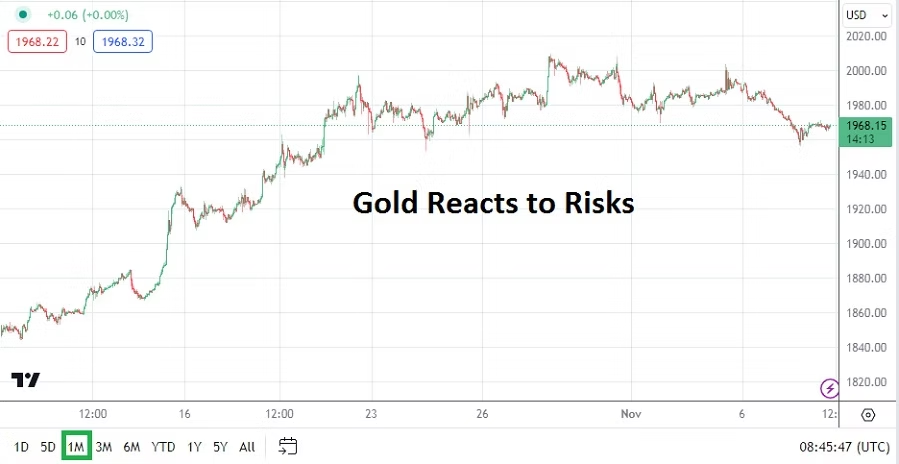
Gold is flirting with the 2000.00 USD mark per ounce. U.S indices continue to trade near lows and risk adverse tendencies will likely continue to flourish in the near term. There is a parade of important data releases and rhetoric that will come this week. Traders who are technically driven should consider paying attention to the economic reports and pronouncements that will come as they mix with business outlooks and varying time frames that must be considered when making bets on the financial markets.

Most of Monday’s economic reports are in already. Australia posted better than expected Retail Sales. German Preliminary Gross Domestic Product statistics came in with a slightly better than anticipated number, although growth is still negative.

Tuesday, 31st of October, China Manufacturing PMI – economic data from China came in slightly better than expected the past week, but shadows lurk and the manufacturing numbers will help provide insights regarding headwinds the nation is facing. The USD/CNY remains at elevated levels. Transparency remains a desire for international investors who want to participate in China.

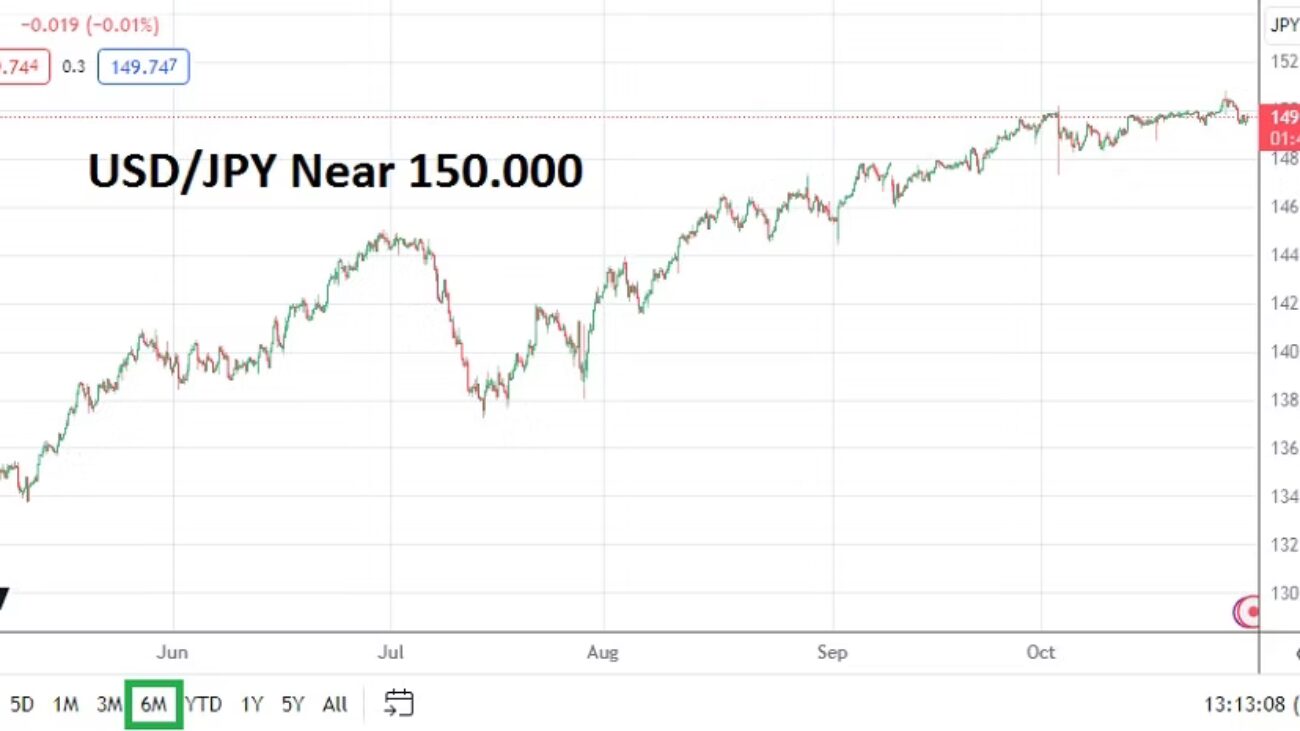
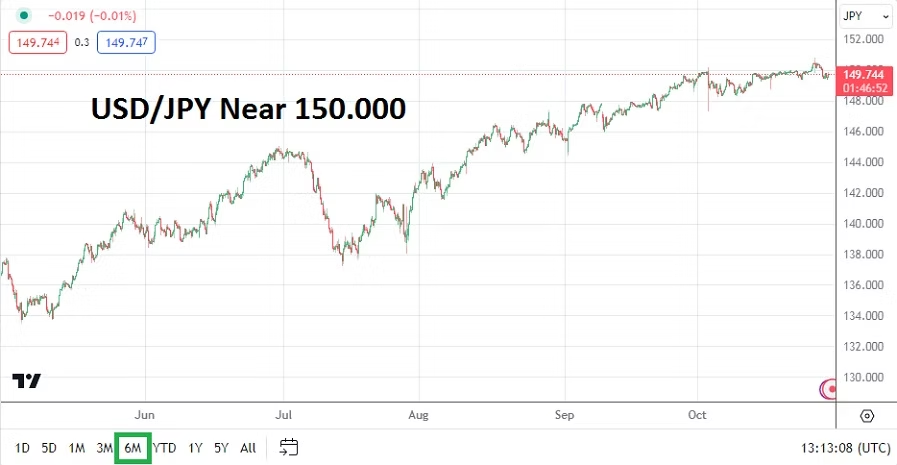
USD/JPY Six Month Chart as of 30th October 2023

Tuesday, 31st of October, Bank of Japan – the BoJ is expected to make no changes to interest rate policy (you have heard this song before), but the USD/JPY remains near the 150.000 level and the Bank of Japan is not comfortable with this higher ratio. The question remains how they can combat this value properly. By suggesting the notion the BoJ can intervene when they want to, can keep financial institutions from over aggressively buying the USD/JPY. Expect to hear some of these intervention warnings again tomorrow.

Wednesday, 1st of November, U.S Federal Reserve Funds Rate and FOMC Statement – Jerome Powell made it pretty clear in mid-October the U.S Fed will likely not raise its interest rate at this meeting. However, he warned the potential exist to raise rates down the road if inflation shows unwanted sparks. American consumers are a reason for concern too, although the Fed will not admit this – the U.S Fed would like to see less consumer demand which they believe would help decrease inflation. Problematically, U.S Treasuries are not only sticking near higher yields because of the potential of higher interest rates, but they are also being bought as a safe haven because of Middle East worries. This will continue to put pressure on the U.S government because paying off bonds with higher yielding rates of returns to investors can become increasingly difficult, particularly when U.S government spending appears to be nearly out of control.

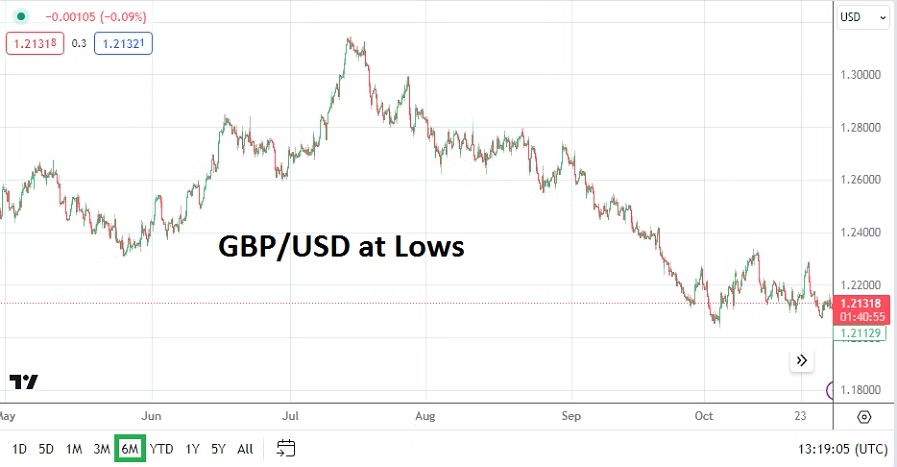
GBP/USD Six Month Chart as of 30th October 2023

Thursday, 2nd of November, U.K BoE Official Bank Rate and Monetary Policy Summary – no changes are expected by the Bank of England. Perhaps like the ECB last week the Bank of England will try to ‘sound’ a sedate level of rhetoric and say they are monitoring economic conditions which remain rather lackluster, but are showing slight signs of improvement via inflation and potential growth. The GBP/USD continues to fight near lows and the 1.20000 level is likely an important juncture.

Friday, 3rd of November, U.S Non-Farm Employment Change and Average Hourly Earnings – the jobs numbers are expected to come in less than the previous month’s results. The wages report could be important if there is a significant change not corresponding with the estimate. Inflation needs to show signs of decreasing before the U.S Fed backs down from its aggressive interest rate stance, if the Average Hourly Earnings number remains stubborn, so will the U.S Fed.

postN34

USD/INR: Consolidation Might Come to an Abrupt Conclusion

USD/INR: Consolidation Might Come to an Abrupt Conclusion

The USD/INR is trading near the 81.9750 ratio as of this writing and its price action since the 13th of July has produced a tight price range. On the 12th of July the USD/INR was trading around the 82.3000 region, this after being able to incrementally decline when a high of nearly 82.7900 was reached on the 6th of July.

Prior to the apex value of July, the USD/INR had traded in a rather consolidated mode from the middle of June until the first few days of July, essentially within a price realm the currency pair now lingers. Speculators must constantly fight the slightest of reversals if they are using too much leverage, but the USD/INR over the mid-term has produced interesting behavioral sentiment and this can be seen on technical charts.

While day traders may believe the current price ratios will hold and the potential interest rate hike from the U.S Federal Reserve has been digested into the USD/INR for this coming Wednesday, they might want to reconsider their thinking. No, the world is not coming to an end, Forex has dealt with U.S central bank decisions before and experienced traders understand the sudden potential of the USD/INR changing direction. The rather tight price range of the USD/INR could vanish in the coming days if the Federal Reserve begins to change their tone within the FOMC Statements.

USD/INR One Month Chart as of 24th July 2023

U.S Federal Reserve is Likely to Raise the Federal Funds Rate but Perhaps Shouldn’t

The USD/INR may not get hit too hard when the U.S Federal Reserve delivers the anticipated 0.25% addition to the Federal Funds Rate. However, the FOMC Statement which talks about the Fed’s outlook might cause a change to what have been calm seas recently in the USD/INR. Recent U.S economic data has been rather troubling, but inflation does actually seem to be creeping lower. The Fed has been pretty adamant in their recent ‘whispering’ about raising interest rates in July, and the potential of raising again later this year.

Time for the U.S Federal Reserve to Start Sounding Dovish

Yet, recent data suggests the Fed should likely not even raise rates on the 26th of July and continue its pause. But having expressed plenty of verbiage on the subject, the Fed may not want to surprise financial institutions and may have to raise, even if they do not really have to this week. And here is where it gets interesting – the FOMC Statement may have to express this notion of becoming more dovish. Think of this potential hike to the Federal Funds Rate this week as the last dose of medicine for a patient who already feels better, the doctor (the Fed) is insisting that to make sure the ‘sick’ is cured another teaspoon consisting of an interest rate hike is necessary.

If the FOMC Statement sounds more dovish than expected the USD/INR might start to see selling ignite and a downturn generate. There are no guarantees and certainly the Fed’s actions this coming Wednesday are not known. Yet, if the Fed hints that it will not raise interest rates over the mid-term and wants to see if inflation continues to lower that it may consider the potential of no more hikes, the USD will start to get weaker across the board. In other words, this last dose of medicine from the Fed may give them the feeling to tell the patient (U.S economy) that they no longer need to visit the doctor’s office for a while.

Other central banks are watching too. Inflation in Europe and elsewhere remains high. The complications of weaker domestic currencies against the USD have hit many economies including India where inflation has been rather strong. If the Fed can now start to become less aggressive, the effect will be quick and start helping the USD/INR trade lower if healthy economic mechanics allow this to happen.

Support levels for the USD/INR near 81.8000 to 81.7500 should be watched, if these levels begin to see challenges and sustained prices remain nearby, the USD/INR may be signaling that another downturn is about to happen. If the U.S Fed delivers a cautious, but more optimistic FOMC Statement this coming Wednesday, the USD/INR may deliver a new cycle of selling.

postN33.1

Federal Reserve Bank Decision and FOMC Statement Wednesday

Federal Reserve Bank Decision and FOMC Statement Wednesday

Monday, 24th July 2023, E.U Flash Manufacturing and Services PMI – a slew of Purchasing Managers Index readings will come from European Union nations including Germany and France. Projected outcomes are expected to show slight improvement in the Services readings and mixed results from the Manufacturing sector. The EUR/USD may get a momentary nudge from the published numbers.

EUR/USD 3 Month Chart as of 23rd July 2023

Monday, 24th July 2023, U.K Flash Manufacturing and Services PMI – the British economic reports are anticipated to come in below last month’s readings. The U.K did report slightly better Retail Sales numbers last week, but a Consumer Confidence outcome was weaker than expected. The GBP/USD might react briefly to the U.K PMI data.

Monday, 24th July 2023, U.S Flash Manufacturing and Services PMI – the reports from the States are forecast to be below last month’s numbers. U.S data produced nervous and weaker economic insights last week from the Housing sector. The Federal Reserve will certainly give some attention to the PMI data as they try to gauge the strength of the U.S economy while likely preparing to hike the Federal Funds Rate on Wednesday. The PMI statistics could factor into the Fed’s outlook, which is the crucial ingredient that financial institutions want to understand and still have skepticism about while considering the Federal Reserve’s potential actions later this week.

Tuesday, 25th of July 2023, Germany ifo Business Climate – the results are expected to be slightly weaker than last month, showing businesses in Germany are not optimistic about current conditions and outlooks.

Tuesday, 25th of July 2023, U.S CB Consumer Confidence – the report is anticipated to show U.S consumers are feeling more confident about their spending habits. If this report is stronger than expected, it could be one final clue before the U.S Federal Reserve springs into action the next day.

Wednesday, 26th of July 2023, U.S Federal Funds Rate and FOMC Statement – most financial institutions are prepared for a hike of 0.25%, which would bring the key borrowing cost to 5.50%. This number has been anticipated for a handful of weeks and any deviation would cause volatility. Forex has largely priced in the rate hike. Speculators need to pay attention to the FOMC Statement regarding outlook regarding comments on inflation, growth and what the Fed is prepared to do moving forward.

Because U.S inflationary price pressures showed a decrease recently, many financial institutions are likely betting on a slightly more optimistic sounding FOMC Statement. The question is if the Federal Reserve will risk sounding dovish, or continue to voice disciplined rhetoric about its ability fight inflation as needed and keep a middle ground. For all the criticism of the U.S Federal Reserve if it can raise interest rates without causing a credit crunch on mid and small sized banks the remainder of the summer, that would be a victory – particularly if it is perceived the U.S central bank will not raise hike the Federal Funds Rate the remainder of the year. However, that remains to be seen.

Thursday, 27th of July, E.U European Central Bank’s Main Refinancing Rate and Monetary Policy Statement – the ECB is expected raise their key lending rate by 0.25% and back up their recent ‘tough’ and heightened rhetoric regarding inflation. Again, day traders should understand the interest rate hike to 4.25% has been anticipated and largely digested into Forex. The question is the ‘voiced’ concern from the ECB within its Monetary Policy Statement. Financial institutions will react to the ECB Press Conference led by Christine Legarde, which comes about half an hour after the release of the Monetary Policy Statement.

USD/JPY 3 Month Chart as of 23rd July 2023

Friday, 28th of July, Japan BoJ Policy Rate and Outlook Report – the Bank of Japan is the one global central bank that marches to its owner drummer and this will not change in the near-term. The BoJ is expected to keep its policies of low interest rates in place, voice concern about inflation and likely say their ‘boat’ remains steady on the water. The USD/JPY will have reacted before to the rhetoric from the Federal Reserve in the middle of the week. Yes, the USD/JPY could see a flourish of volatility on Friday, but most of it will have likely been seen already on Wednesday and early Thursday.

postN14.1

Anticipated Federal Reserve Shop Talk to be Delivered Today

Anticipated Federal Reserve Shop Talk to be Delivered Today

For what it’s worth, here is my prediction regarding what the Federal Reserve will do today. The Federal Funds Rate will remain unchanged in my opinion. The FOMC Statement may show that the vote actually was debated and not unanimous. The statement is likely to warn that inflation remains stubborn and potentially problematic, meaning the Federal Reserve continues to believe it may have to raise the Federal Funds Rate over the mid-term and again before the end of 2023.

The Forex market has seen the USD get weaker against many major currencies since late May. While financial institutions have seemingly positioned for no increase from the Federal Reserve today, this move has also likely been priced into Forex. Day traders need to understand institutional traders will not be betting on what took place the last three weeks, but are trying to anticipate what will happen into early July and beyond regarding their Forex positions.

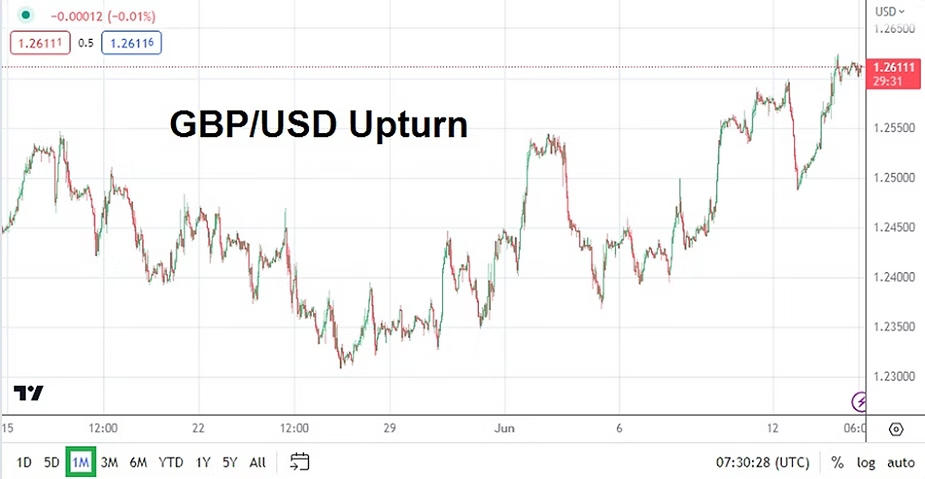
GBP/USD One Month Chart as of the 14th June 2023

Many financial institutions may still be betting the Fed will remain more dovish than the U.S central bank wants to admit, but this is a dangerous perception and could prove costly. Financial institutions are concerned about the Fed because they know the central bank has painted itself into a corner it may not be able to maneuver freely within. The battle to conquer inflation while trying to fuel economic growth is not an easy one. Mixed sentiment abounds regarding the U.S economy depending on who is asked.

Talk of a soft landing and a small recession continues to be heard, this while some analysts warn about a hard drop and darker days ahead. Folks, it is all about timelines and their interpretations, experts warning about brighter or darker days ahead have a tendency to be vague regarding exact moments in time. Everyone has an opinion, and people often have more than one.

In my opinion – my one opinion, the Fed is likely to say that it is not going to raise rates today, but may have to do so in the mid-term. If these were normal times and economic conditions were not suffering from huge spending running amok in Washington and the corporate banking sector wasn’t fragile, the Fed may actually have raised the Federal Funds Rate today to continue to battle inflation deliberately. However, a pause for the moment seems like the logical choice, this while ‘hoping’ inflation continues to diminish. And hope is a key word here. Everyone seems to be hoping. The question financial houses and traders need to decide after the FOMC Statement takes place today is how seriously do they consider the Fed’s remarks.

If they believe the Fed will have to continue to remain neutral regarding its mid and long-term interest rate policy, the USD may soften and incremental selling might be demonstrated. Human instinct tends to be optimistic, which means financial institutions and maybe even the Fed wants to believe inflation will ebb lower. If this happens the USD would weaken further. However, the Fed may have to sound more aggressive than people want, but that would damper the mood of financial institutions – so look for optimistic interpretations to abound with rose colored glasses, even if they are wrong in the long-term.

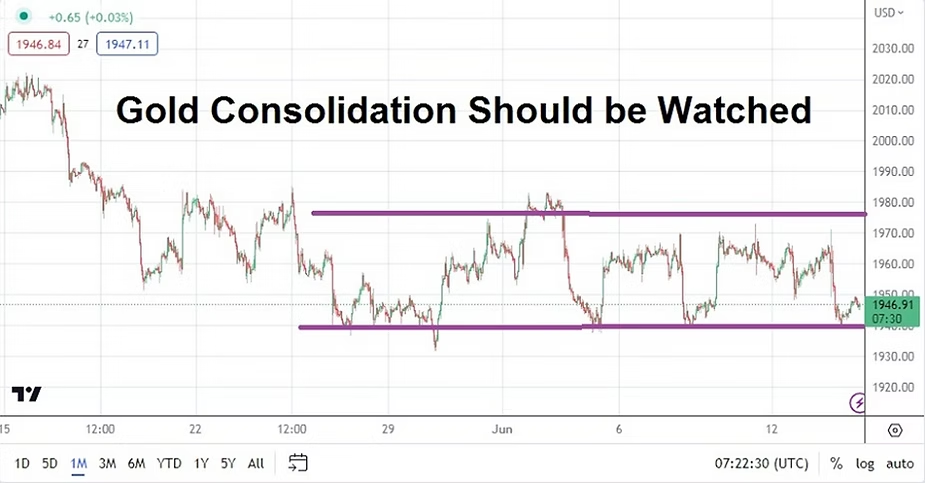
Gold One Month Chart as of the 14th June 2023

For evidence of outside barometers, traders may want to look at Gold which has essentially traded between 1940.00 and 1975.00 with a few outliers since the last week in May. The price of Gold has seemingly situated within a consolidated framework the past few weeks. The precious metal may produce a strong move if the Fed shows more dovish behavior today, particularly if financial institutions show more optimism via behavioral sentiment in Forex – meaning if a weaker USD trend continues momentarily Gold could traverse higher.

My prediction and $1.00 USD may get you on a bus. As always caution will be needed if you are trading immediately before and after the U.S Federal Reserve’s rate decision. I advise using a seat belt today consisting of entry price, stop loss and take profit orders via solid risk management, but then again these cautious attitudes should always be practiced by day traders.

postN11.1

Week Ahead: Inflation Followed by the U.S Federal Reserve

Week Ahead: Inflation Followed by the U.S Federal Reserve

Monday, 12th of June, U.S Federal Budget Balance – hold down the laughter and snickers please as you wonder why you should care, this as the report shows monthly income versus spending from the month before. Yes, the U.S ‘Debt Ceiling’ bill was passed recently. Very few people are going to pay attention to Budget Balance report, except economists and traders who have ‘skin in the game’ via hedge funds as an example – that make long-term bets, and U.S politicians who want to hoot and holler…….while nothing really gets done to limit wasteful spending in Washington D.C.

Tuesday, 13th of June, U.S Consumer Price Index reports – yes, this inflation data will be important per the monthly numbers showing what consumers are spending. A slight uptick is expected with an outcome of plus 0.2% via the broad statistics – last month’s number showed a gain of 0.4%. The outcome of the broad and core CPI statistics will give the Federal Reserve a sounding board for what will take place on Wednesday via the Federal Funds Rate announcement. Stronger than expected inflation numbers could cause a rupture and nervousness. A weaker result would calm Forex and perhaps make the USD slightly weaker.

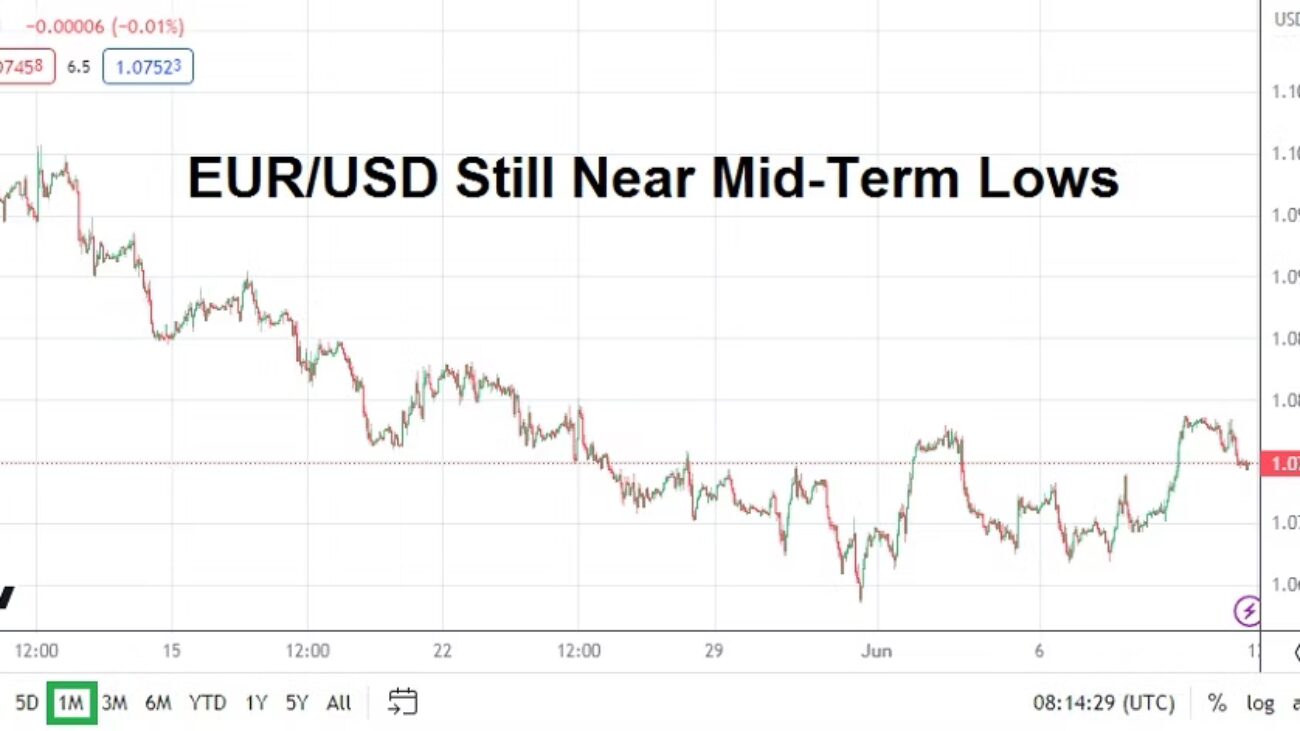
EUR/USD One Month Chart as of 11th June 2023

Wednesday, 14th of June, U.S Producer Price Index – these numbers will be released early in the day and will be followed by the Federal Reserve five and half hours later. The inflation outcome via the PPI if stronger than anticipated would cause some caution before the Federal Reserve takes the stage.

Wednesday, 14th of June, U.S Federal Funds Rate, FOMC Statement and FOMC Press Conference – while many analysts seem convinced the Fed will not hike the interest rate this week, there are obviously no guarantees. The FOMC Statement will indicate the U.S central bank’s outlook. Traders who are intent on trading before the official interest rate announcement and statement are playing with fire. Speculators should keep in mind that other central banks have surprised folks with increases recently including Canada and Australia. A hike from the U.S Federal Reserve would surprise a lot of people and financial institutions, but stranger things have happened.

Thursday, 15th of June, New Zealand Gross Domestic Product – the growth numbers which will come out a handful of hours after the U.S Fed leaves the stage will be intriguing and provide NZD/USD traders more impetus into what will likely already be a volatile trading session taking place.

Thursday, 15th of June, China Industrial Production and Retail Sales – these two reports from the economic giant will be watched closely. China’s economy is struggling a bit, and weakness in the housing sector via values are starting to cause a reaction in domestic spending. Industrial Production numbers will give some insights regarding global demand. Economic problems in Europe and North America are certainly not helping matters in China because demand for goods are restrained and hurting the manufacturing sector.

Thursday, 15th of June, U.S Retail Sales – consumers in the U.S have been expected to start producing negative numbers via these statistics, will they begin to do it? A stronger number would be of interest to some, but after Wednesdays’ FOMC Statement and news that will be generated, it is questionable who will give full attention to this report and what affect it could have.

Thursday, 15th of June, E.U ECB Press Conference – this question and answer session could prove to be interesting depending on what the U.S Fed does the day before. Certainly the European Central Bank will give their opinions on monetary policy and economic circumstances in the European Union and abroad. The EUR/USD could be affected.

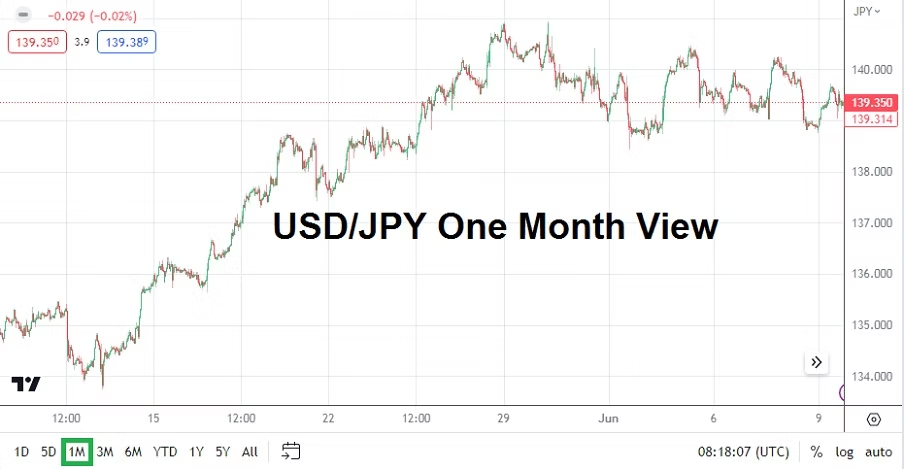
USD/JPY One Month Chart as of 11th June 2023

Friday, 16th of June, Japan BoJ Policy Rate and Monetary Policy Statement – no major changes are expected from the Bank of Japan. This is the one central bank unwilling to change its attitude regarding monetary policy because of the whims of others. Perhaps if the U.S Federal Reserve surprised everyone on Wednesday with a hike, this could change the quiet rhetoric from the BoJ – but even that is doubtful. USD/JPY traders should pay attention to the BoJ Press Conference just in case.