postR199.1

Forex: The Art of Not Making Sense and Accepting Price Values

Forex: The Art of Not Making Sense and Accepting Price Values

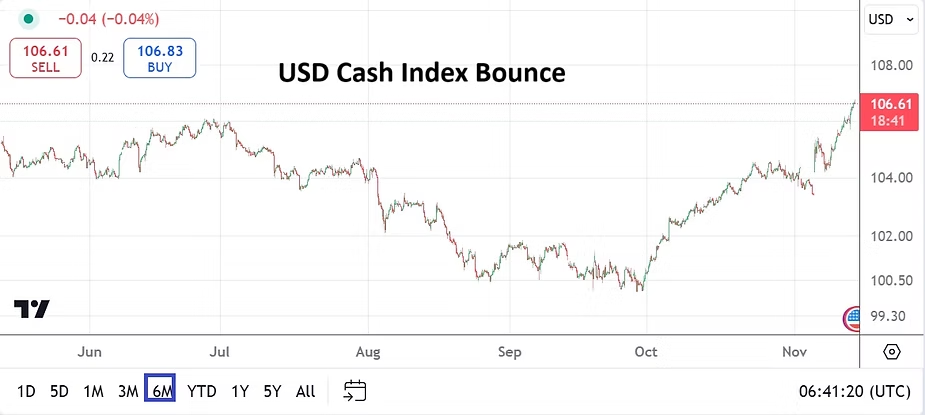
Retail traders are likely learning the hard way that attempting to trade in Forex for the moment is more than dangerous, it is expensive. The U.S Consumer Price Index numbers yesterday met expectations, which essentially allows the Federal Reserve to remain in a cautious dovish stance. However, after an initial show of USD weakness upon the data in many FX pairs, USD centric strength quickly returned.
USD Cash Index Six Month Chart as of 14 November 2024

Short and near-term trading for speculators who do not have deep pockets and are suffering from whipsaw movements are creating the need to take a step back. As many major currencies have suffered losses against the USD since late September, the tendency is to likely think a reversal is going to develop sooner rather than later. However, until financial institutions become comfortable with the notion President-elect Trump’s policies aren’t going to harm economic prospects in a variety of nations regarding tougher trade agreements, risk adverse trading is going to remain a key in Forex.

Yes, at some point the USD will start to give back some value, but timing the moment this is going to start and become sustained for day traders is simply betting. Financial institutions are feeling anxious about their commercial forward positions in Forex too, which will continue to create volatility for all trying to predict where the USD will be mid-term. Federal Reserve policy may actually be able to deliver a 0.50 basis point total cut over the next few months, but this notion has had almost no impact on USD strength short-term. Perhaps financial institutions do not feel the Fed will be that dovish through February, but if inflation remains tame the Federal Funds Rate still has room to decrease.
Gold Three Month Chart as of 14 November 2024

Today’s Producer Price Index inflation reports will be watched, but like yesterday the results are unlikely to be a key which will suddenly ignite strong reversals in Forex. In the meantime traders need to practice solid risk taking tactics and patience. Retail Sales figures will come from the U.S on Friday, but again day traders should expect financial institutions to remain risk adverse until there is an event which changes their cautious mindsets.

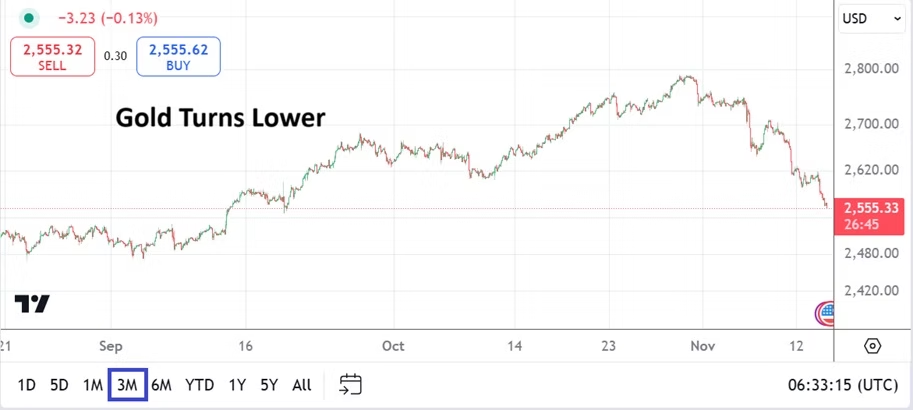
Gold is noteworthy because it has struggled since early November. There is the possibility the precious metal has turned lower because investors feel more sure about their long-term bets in the U.S equity markets for a moment, but that is likely wrong. It could also be argued speculators are cashing out winnings they have made the past handful of months. The point being that explanations for price movements are tenuous. False narratives abound. Fundamentals like behavioral sentiment are shifting because new economic policies from the U.S are going to develop and market participants want greater clarity.

Like the major currencies suffering significant declines versus the USD, the value of gold can be argued, but the market is telling us what participants are willing to pay for assets whether we agree or not. Let there be no doubt that the highs being produced in U.S Treasury yields which are near early summer values, the USD Cash Index reversing towards technical levels seen in early July, gold recently losing value, and U.S equity indices being near all-time highs makes it particularly difficult for predictions regarding what is next. Except to say the Trump victory in many ways has sparked a buy American parade for the moment. If you want to bet against the trends you are free to do so, but behavioral sentiment is proving once again the king of the hill.

While the broad markets may not feel like they are making much sense to some, as traders we need to be able to put our bias to the side and accept the markets as they are, not what we think they should be. There is a significant difference between near-term and long-term targets. Day traders need to understand they are wagering in markets that will remain dangerous for a while. Nothing is guaranteed, but the idea that U.S equities may continue to rally into the New Year is being wagered upon by larger players and they might be proven correct.
postR188.1

Trading Risks: Easy to be Nervous Now, But Calm is Needed

Trading Risks: Easy to be Nervous Now, But Calm is Needed

Simply put it is too easy to be nervous when contemplating the markets if you are a day trader. Today the Non-Farm Employment Change data will be published in the U.S and the Middle East conflict continues to reverberate. However, if a speculator looks at the markets they will see risk adverse trading has produced rather predictable results in many assets.

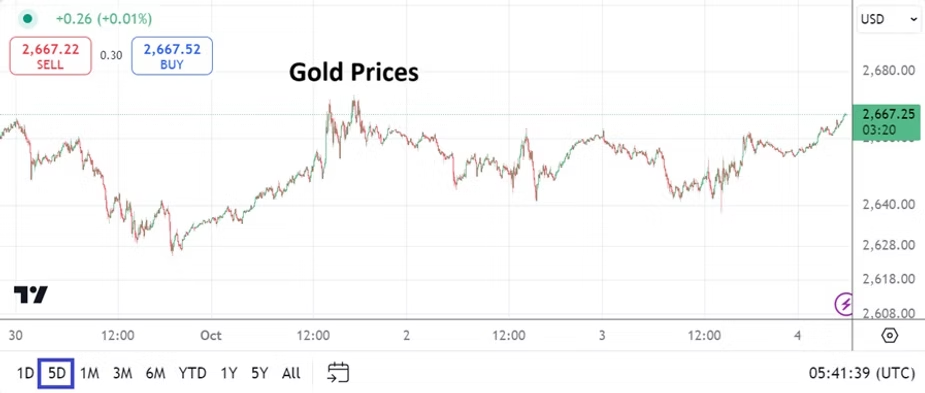
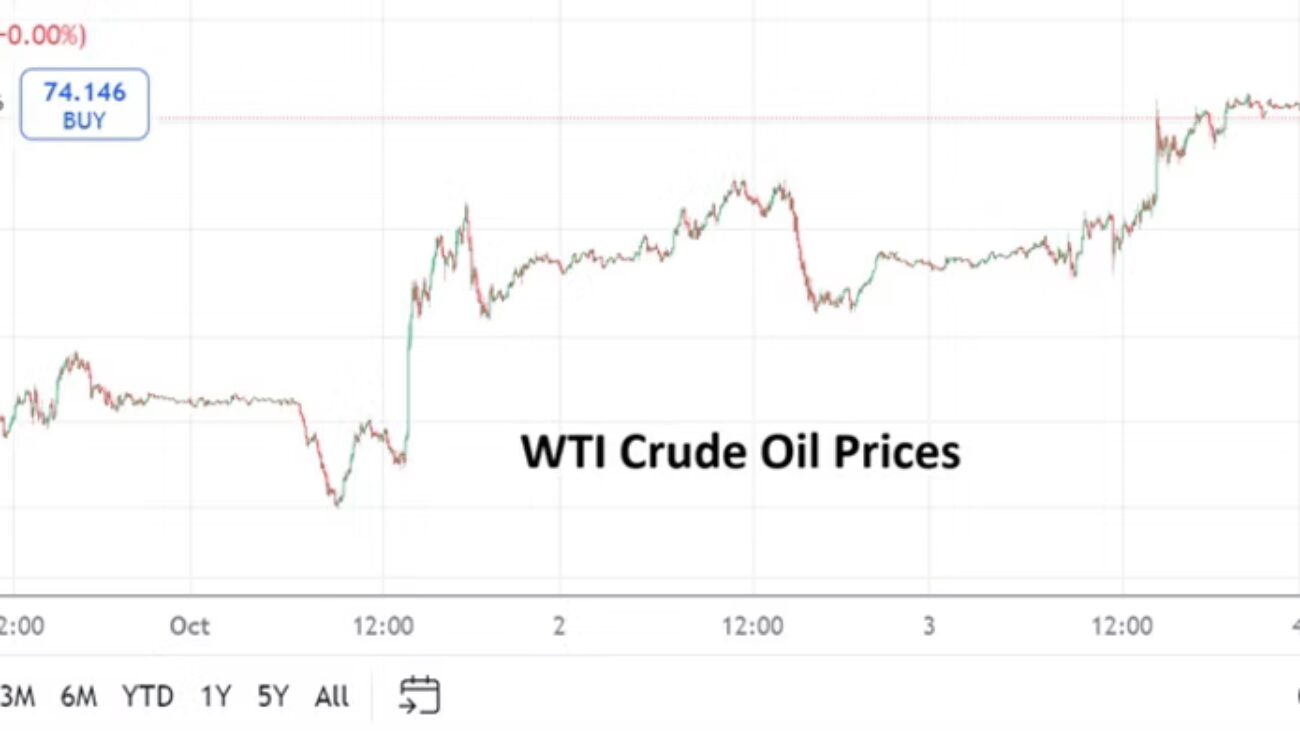
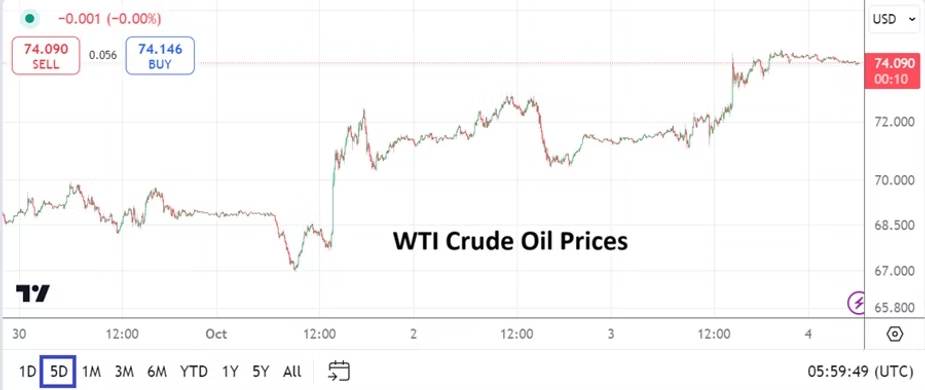
Gold remains within its higher known price realm, and WTI Crude Oil is trading around 74.00 USD after President Joe Biden for some odd reason felt it was necessary to discuss publicly potential targets Israel may pursue against Iran. Also, Biden’s influence on the decision making in the Middle East appears to be fleeting and this is making financial institutions additionally anxious.

WTI Crude Oil Five Day Chart as of 4th of October 2024

The employment numbers from the U.S today are vital regarding the Federal Reserve’s interest rate decision for November. If today’s jobs statistics come in weaker than expected this could help the USD lose some ground in Forex against major currencies. However, there is also the prospect that headwinds via concerns from the Middle East will keep a steady diet of risk adverse trading a driver for behavioral sentiment going into the weekend. Forex remains dangerous for day traders in the near-term.

Traders who believe more volatility will come because of the ramifications in the Middle East can certainly pursue assets like gold and WTI Crude Oil. Correlations with risks that are flourishing as potential conflict brews is not a foolish wager, but it is also difficult for speculators to pursue these trades via CFDs offered by many brokers, this because day traders may have to hold onto their positions too long in order to take advantage of potential moves. If a speculator can pursue options positions via future markets, this could prove to be a solid tool, provided strike prices are not outrageously expensive and the prospect of time erosion is not too fast.

Gold Five Day Chart as of 4th of October 2024

This is not an easy time to be a day trader and those that are nervous should choose to remain on the sidelines. U.S Treasury yields have increased this week as behavioral sentiment has become jittery. It is important to remember however that short-term reactions are frequently not related to long-term outlooks. Treasury yields have come down significantly in the mid-term and remain within the lower part of their range. The same can be said for equity indices this week. The notion that the world will not spin out of total control should be considered. Risk adverse trading will certainly begin to gravitate towards optimism at some point, it is only a question of time.

The point for day traders is this, it is easy to be nervous. Watching television all day and looking at smartphones for updates on developing sagas does not help create calm. Large institutional traders have been within these volatile waters before. Yes, large players also have to remain diligent, but they will certainly do their best to remain realistic. Short-term price velocity often leads to reversals and you can be assured large financial institutions will take advantage of this insight.

If today’s U.S jobs numbers meet or come around expectations this would be a welcome result for markets which appear to be standing on fragile ground. Traders while looking at today’s Non-Farm Employment Change numbers and Average Hourly Earnings statistics should also be mindful of downward revisions to previous reports which have occurred almost consistently for a handful of months. Initial trading reactions to the publication of jobs data are often met with sudden reversals due to revisions in numbers being spotted a few moments later by analysts.

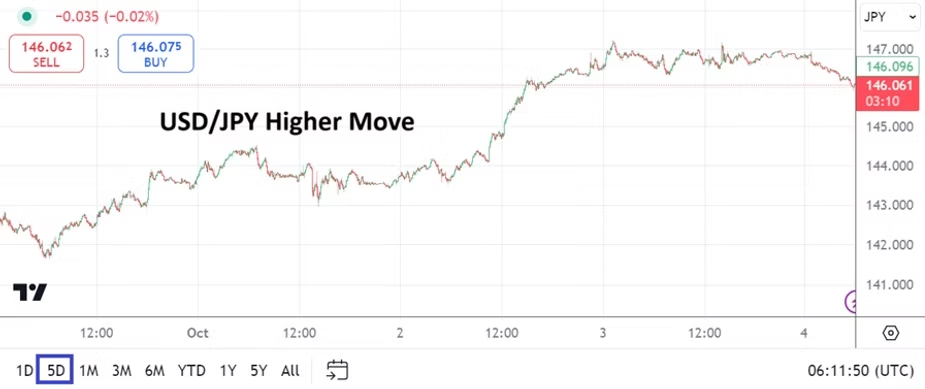
USD/JPY Five Day Chart as of 4th October 2024

As for the Middle East, financial institutions and traders are all in the same boat. Patience and deep breaths are needed. The trillion dollar question lurking, is there an end game that is viable and can restore calm, or will retribution and hatred cause the conflict to spiral out of control?

The volatility seen in Forex the past handful of days, including the USD/JPY, have caused dynamic results. There is no denying risk adverse trading has taken hold of the marketplace. The trifecta of U.S jobs numbers today, tensions in the Middle East, and the approaching U.S election have set the table for a tumultuous meal. At some point day traders may want to walk away from the table to avoid indigestion and return only when tranquility has been restored.

postN51

AMT Top Ten Miscellaneous Wonders for the 12th of April 2024

AMT Top Ten Miscellaneous Wonders for the 12th of April 2024

10. Free Press: Brazil and the Lula de Silva government are cracking down on dissent in social media. ‘X’ – formerly Twitter – led by Elon Musk is fighting back and refusing to cooperate as Brazilian ‘leadership’ attempts to intimidate the ‘loyal opposition’ in the legislature.

9. GROOT: Nvidia is working on ‘humanoid’ robotics. Project GROOT was presented by Jensen Huang at the GTC Conference. The synergy between machine learning, semiconductors and robotics is an evolution taking place before our eyes. Tesla is involved in similar research as it works on Optimus.

8. Hot Chocolate: Speculation in Cocoa has brought the commodity above 10,400.00 USD per metric ton as of this writing. Questions about gravity and hypersonic speculative values are logical at this juncture.

7. Seclusion: Do humans still need each other? People are relying on their mobile devices for social interactions. Robotics with AI capabilities will make our existence potentially more lonely. Open source software DOBB-E will be part of this future as household chores are taken care of by ‘machines’.

6. Iran: Those with holiday excursion plans which include Teheran this weekend may need to check on ticket availability due to the possibility of flight cancellations.

5. Fed Liberty: President Joe Biden this week spoke about an interest rate cut coming from the Federal Reserve this year, yet Consumer Price Index statistics are demonstrating escalating expenses. Current U.S government leaders may want to spend less on ‘vote buying’ via student loan forgiveness and think about conservative fiscal practices. Why should Americans who choose not to attend universities pay for those who did via higher taxes? Are Fed and Treasury officials still independent?

4. Risk Averse: Gold is within sight of 2,400.00 USD this morning. In the meantime U.S bond yields have inverted completely except for the 30-Year issue. Financial institutions are showing nervous behavioral sentiment.

3. USD Centric: Forex has seen reactive trading this week as financial institutions begin to conclude the U.S Federal Reserve’s monetary policy ‘over time’ will remain disturbingly difficult and full of doublespeak.

2. Caution: Mixed results are flourishing in the major U.S stock indices as the Nasdaq 100 and S&P 500 touch late March values, and the Dow Jones 30 has returned to February levels. Higher than anticipated interest rates are causing turbulence.

1. Energy Illusions: As the prices of food, transportation and housing escalates isn’t it time governments start to question their ‘green’ policies which are making the costs of energy production more expensive? We all want a clean planet, but logical strategies must be applied to create efficient use of resources.

postN87

AMT Top Ten Miscellaneous Notions for 12th of January 2024

AMT Top Ten Miscellaneous Notions for 12th of January 2024

10. Music: School Days by Stanley Clarke. Recorded in 1976, the ‘song’ is one of the best jazz fusion pieces ever played.

9. Coaches: Bill Belichick and Pete Carroll have been ‘politely’ fired, Nick Saban has retired. NFL and college football remain the ‘Kings of Sport’ in the United States.

8: Taiwan: Presidential election will be held tomorrow. Expect noise from China this weekend regarding Taiwan’s sovereignty.

7. Forex: Volatility struck yesterday in USD based currency pairs, whipsawing as financial institutions reacted to the Consumer Price Index reports. More inflation data will come from the U.S today.

6. Gold and Crude Oil: Precious metal value has been ‘almost’ steady, and WTI Crude Oil price remains rather calm.

5. China Deflation: CPI and PPI numbers were lackluster this morning. Export numbers from the nation have also delivered troubling declines.

4. Houthis: U.S and U.K missile strikes in Yemen have been conducted, diatribes from the extremists have been sounded, and may cause some investors concerns and potential risk adverse trading considerations going into weekend.

3. Bitcoin: SEC ETF funds approval has been completed, and launch is set to allow retail traders and ‘investors’ to purchase the digital asset. BTC/USD is near 45,960.00 currently. CFD products from brokers will likely be introduced and flourish soon, which will be based on the ETF notional values and allow day traders to wager on upside and downward momentum.

2. PPI Data: U.S Producer Price Index inflation results today could rattle the broad markets. No changes are forecasted. A surprise increase would worry those betting against the USD. Traders should also keep their eyes open for potential revisions to previous months.

1. Risk Appetite: Dow Jones 30, S&P 500 and Nasdaq 100 continue to flirt with apex values. The Nikkei 225, from Japan, is challenging highs not seen since 1990 as it trades above 35,575.00 for the moment. Equity indices remain optimistic.

postN67.1

To Risk or Not to Risk that is the Speculative Question

To Risk or Not to Risk that is the Speculative Question

Last week U.S equity indices demonstrated a rise in value. The highs achieved in the Dow Jones Industrial Average, the NASDAQ Composite and the S&P 500 by the end of last week only touched values seen in the middle of October. And while their ratios remain below the highs of early August and falling values seen in September, the move upwards was certainly welcome by financial institutions and day traders who hold optimistic viewpoints.

U.S Treasury yields declined last week. While incremental decreases were made through Thursday, the U.S Non-Farm Employment Change and Average Hourly Earnings reports both coming in below expectations on Friday, created a stronger dose of lower yields. The 5, 7, 10 and 30 year U.S Treasuries are now trading near mid-September values. The 2 and 3 year notes are moving around early September numbers.

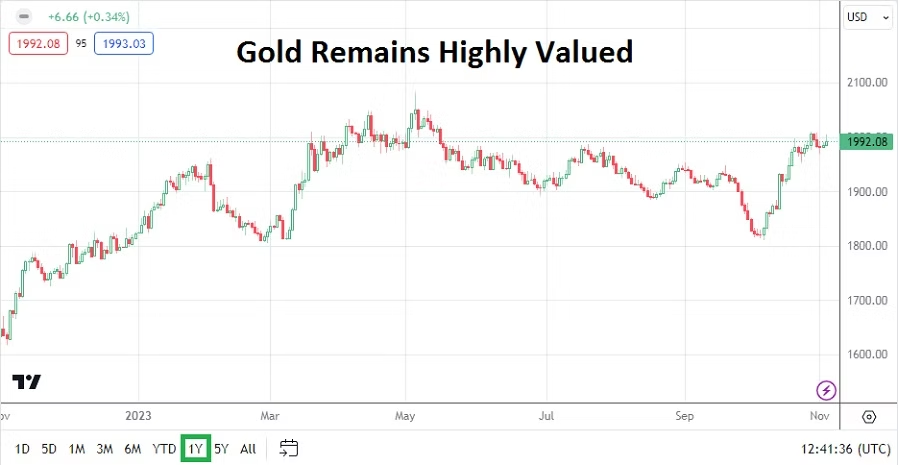
Gold One Year Chart as of the 5th November 2023

The USD grew weaker in slight movements against many major currencies last week, but upon the weaker jobs numbers found increased selling price velocity. Gold however remains suspiciously strong, which brings up the notion that risk adverse ‘insurance’ is still being held closely by investors who remain nervous.

The Middle East crisis is ongoing in Israel against Hamas and to a limited extent Hezbullah, but financial institutions have seemingly been able to digest the news and remain tranquil and vigilant. Another sign of calm coming into the global financial markets is the price of WTI Crude Oil which finished the week under 81.00 USD per barrel.

Economic data will be relatively light this coming week, and behavioral sentiment appears to be the potential larger factor until Friday regarding impetus for day traders and financial houses. Certainly loud global developing news could suddenly erupt and cause nervous investors to falter, but last week’s trading results showed signs of improving risk appetite.

The U.S Federal Reserve met expectations last Wednesday and didn’t raise the cost of borrowing. The mid-term seems to indicate interest rates will remain high, but that the U.S central bank will not raise the Federal Funds Rate anytime soon. The lower than expected inflation report via the Average Hourly Earnings before going into the weekend helped highlight this thinking, although it remains a consideration that is still speculative.

Officials from the major central banks including the BoJ, BoE and Fed will be speaking this week and could cause turbulence with their rhetoric. However, no major surprises will likely come from their mouths. Although the Bank of Japan may rattle the prospects of intervention to keep USD/JPY traders on their toes.

Monday, the 6th of November, Germany Factory Orders – the result is expected to be negative and highlight the nation remains within recessionary conditions. The Sentix Investor Confidence reading will also be released slightly afterwards for the European Union and a worse number than last month’s outcome is anticipated. But the EUR/USD is likely to remain mostly USD centric, even though these reports could cause momentary fluctuations.

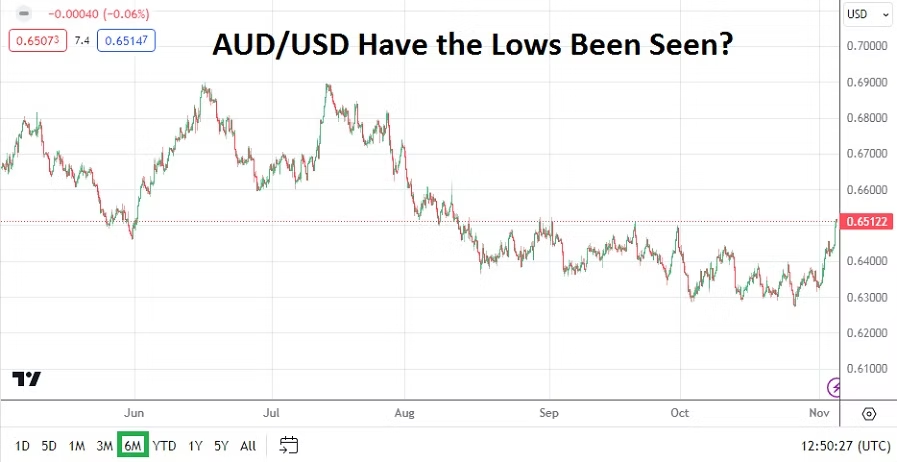
AUD/USD Six Month Chart as of the 5th November 2023

Tuesday, the 7th of November, Australia Cash Rate – the Reserve Bank of Australia is expected to raise its interest rate by 0.25% to 4.35%. Will the RBA take a gamble and not raise the interest rate due to other major central banks holding their rates in place, or will the increase go ahead to fight stubborn inflation while trying inspire some confidence in the AUD? A hike seems to be the direction the RBA will decide upon, having said that, the Australian central bank have surprised financial institutions before.

Wednesday, the 8th of November, U.S 10-year Bond Auction – the results from this sale and the yields that develop within U.S Treasuries will have an affect on Forex. Lower yields than anticipated could signal a weaker USD. However, risk adverse elements will need to be calm for the bond auction to produce tranquil results.

Thursday, the 9th of November, China CPI and PPI – the data from these inflation reports will be watched closely. Chinese economic numbers has shown some signs of stabilization the past few weeks, both of these publications are expected to have negative outcomes. Concerns about the financial pressures domestic consumers are facing regarding housing market values in China and the way in which they spend due to lackluster prospects are concerning. The USD/CNY will be affected in the wake of these statistics, and the USD/SGD could see momentary volatility too if the results prove to be a surprise.

GBP/USD One Month Chart as of the 5th of November 2023

Friday, the 10th of November, U.K Gross Domestic Product – last month’s number came in with an unexpected positive gain of 0.2%, this GDP report is anticipated to show no change. The GBP/USD jumped in value on Friday and financial institutions will be geared towards behavioral sentiment most of this week, but the British GDP data could cause a reaction before going into the weekend.

Friday, the 10th of November, U.S Preliminary Consumer Sentiment via the University of Michigan – the reading is expected to be slightly below last month’s outcome. U.S consumers remain a strong point of light for the U.S Federal Reserve. American consumers have remained spenders, although they have seemingly curtailed purchases of large ticket items such as cars and big appliances. If this data comes in weaker than expected it could propel more selling of the USD. A stronger number than anticipated could spook financial institutions and cause a slight surge in buying of the USD.

postN66.1

Ready for Risks as Nervous Markets Await Plenty of Outcomes

Ready for Risks as Nervous Markets Await Plenty of Outcomes

So you want to be a trader. You imagine that it will be fun and possibly easy to make money from the comfort of a cafe, office, maybe a bus or subway train with a simple touch to an app on your phone that allows seamless possibilities to take advantage of trends that are easy to spot. Yet, this may not be the week to decide on beginning your endeavor, perhaps you will want to watch the global markets and learn from the possible mistakes of others in the coming days.

Simple trends for the moment have largely disappeared and financial markets face a rather important week of data and global risk events that not even the most experienced trader can comfortably embrace. Risk events will shadow this week of trading. There will be a lot of drums beating and earplugs are recommended for speculators.

To get started the war in the Middle East, actually the war between Israel and Hamas is ongoing and it will not end soon. Israel doesn’t want U.S ground troops and while some media sources may make these claims, it is extremely unlikely to happen. Yes, the U.S has sent war ships to the Mediterranean, but this is largely to suggest to Iran that the nation not become overtly active in the conflict.

Global investors who have been around the block and have traded when other conflicts have escalated – Ukraine, Iraq, Afghanistan, African wars, and simmering feuds between China and India are somewhat used to these news flows and developing crisis forays. It does not make things easier, but at the same time being able to separate the noise from the actual reality of these events is essential. Learning to be mindful of the media and its frequent empty hyperbole regarding what could happen next is vital. Traders need to be critical thinkers.

If a day trader can step away from concerns regarding conflicts and focus on how behavioral sentiment is going to develop via the gyrations of financial institutions and larger investors, they will go a long way in starting to pursue a more tranquil path and find the ability to organize their thoughts quietly.

Gold is flirting with the 2000.00 USD mark per ounce. U.S indices continue to trade near lows and risk adverse tendencies will likely continue to flourish in the near term. There is a parade of important data releases and rhetoric that will come this week. Traders who are technically driven should consider paying attention to the economic reports and pronouncements that will come as they mix with business outlooks and varying time frames that must be considered when making bets on the financial markets.

Most of Monday’s economic reports are in already. Australia posted better than expected Retail Sales. German Preliminary Gross Domestic Product statistics came in with a slightly better than anticipated number, although growth is still negative.

Tuesday, 31st of October, China Manufacturing PMI – economic data from China came in slightly better than expected the past week, but shadows lurk and the manufacturing numbers will help provide insights regarding headwinds the nation is facing. The USD/CNY remains at elevated levels. Transparency remains a desire for international investors who want to participate in China.

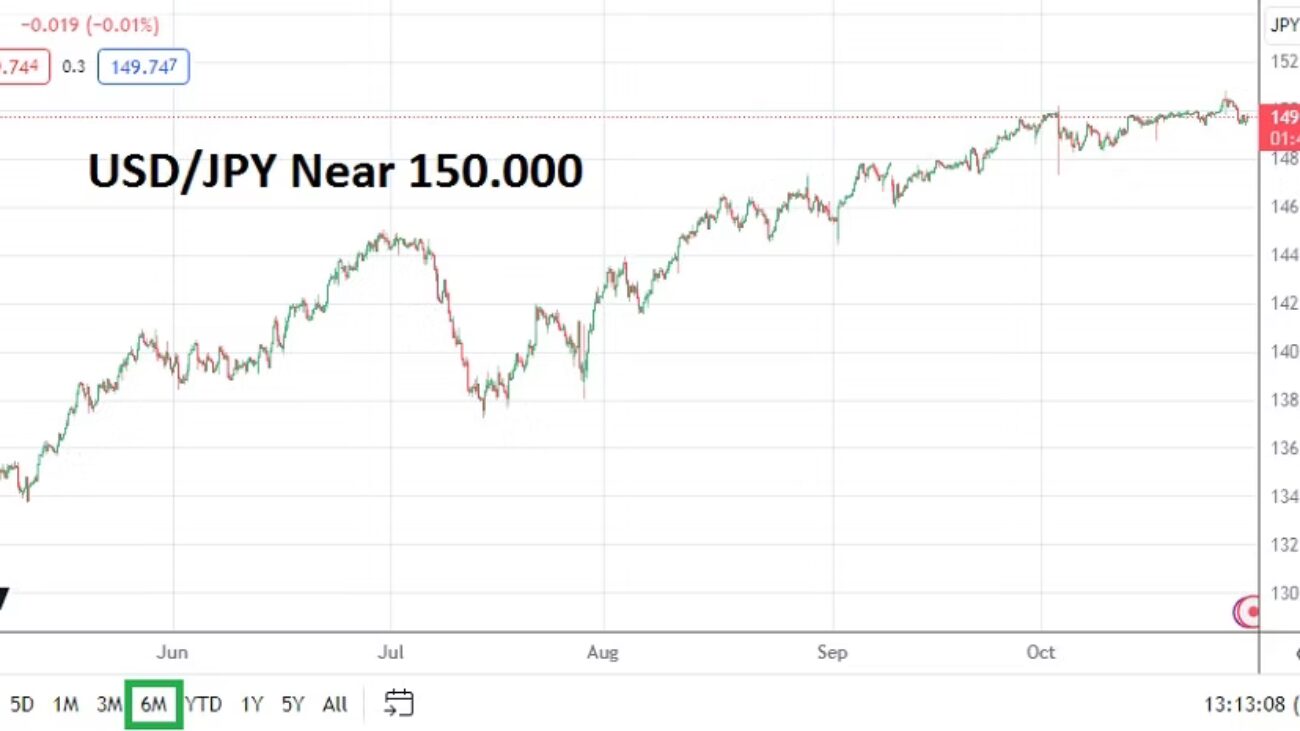
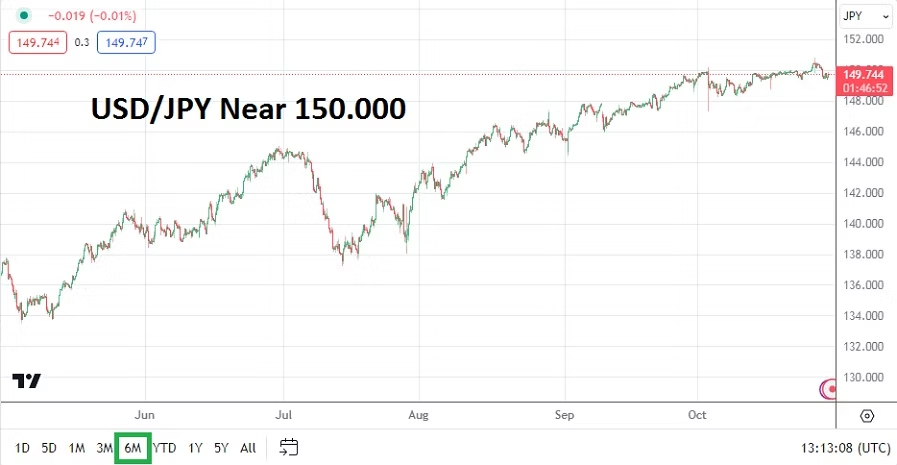
USD/JPY Six Month Chart as of 30th October 2023

Tuesday, 31st of October, Bank of Japan – the BoJ is expected to make no changes to interest rate policy (you have heard this song before), but the USD/JPY remains near the 150.000 level and the Bank of Japan is not comfortable with this higher ratio. The question remains how they can combat this value properly. By suggesting the notion the BoJ can intervene when they want to, can keep financial institutions from over aggressively buying the USD/JPY. Expect to hear some of these intervention warnings again tomorrow.

Wednesday, 1st of November, U.S Federal Reserve Funds Rate and FOMC Statement – Jerome Powell made it pretty clear in mid-October the U.S Fed will likely not raise its interest rate at this meeting. However, he warned the potential exist to raise rates down the road if inflation shows unwanted sparks. American consumers are a reason for concern too, although the Fed will not admit this – the U.S Fed would like to see less consumer demand which they believe would help decrease inflation. Problematically, U.S Treasuries are not only sticking near higher yields because of the potential of higher interest rates, but they are also being bought as a safe haven because of Middle East worries. This will continue to put pressure on the U.S government because paying off bonds with higher yielding rates of returns to investors can become increasingly difficult, particularly when U.S government spending appears to be nearly out of control.

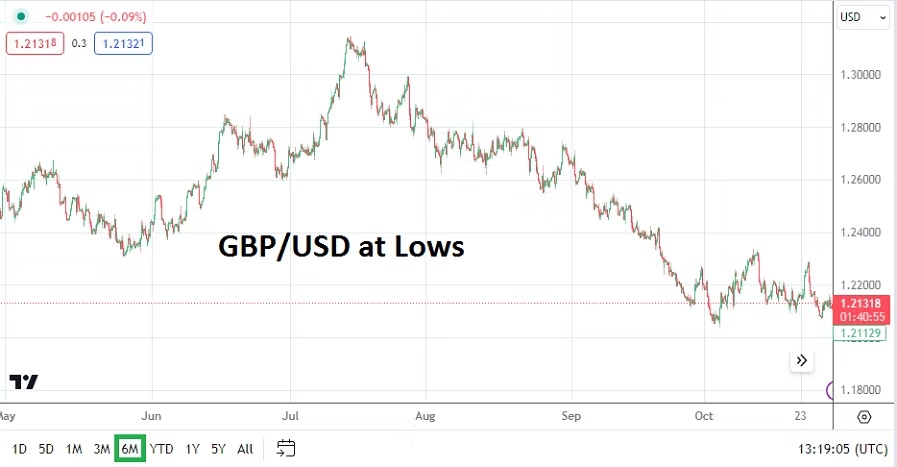
GBP/USD Six Month Chart as of 30th October 2023

Thursday, 2nd of November, U.K BoE Official Bank Rate and Monetary Policy Summary – no changes are expected by the Bank of England. Perhaps like the ECB last week the Bank of England will try to ‘sound’ a sedate level of rhetoric and say they are monitoring economic conditions which remain rather lackluster, but are showing slight signs of improvement via inflation and potential growth. The GBP/USD continues to fight near lows and the 1.20000 level is likely an important juncture.

Friday, 3rd of November, U.S Non-Farm Employment Change and Average Hourly Earnings – the jobs numbers are expected to come in less than the previous month’s results. The wages report could be important if there is a significant change not corresponding with the estimate. Inflation needs to show signs of decreasing before the U.S Fed backs down from its aggressive interest rate stance, if the Average Hourly Earnings number remains stubborn, so will the U.S Fed.

postN51

AMT Top Ten Miscellaneous Points for Friday the 27th of Oct.

AMT Top Ten Miscellaneous Points for Friday the 27th of Oct.

10. Rugby World Cup: South Africa Springboks versus New Zealand All Blacks in a titan championship tomorrow.

9. Word of the Day: ‘Resilience’ as Israel’s business and start-up sectors remain focused and strong.

8. El Nino: Change to ocean currents still problematic, Acapulco hit by significant damage via Hurricane Otis.

7. Data: U.S Core Personal Consumption Expenditures Price Index could cause a reaction if the inflation numbers are higher than anticipated.

6. ECB: Pronouncements were consistent yesterday as Europe battles lackluster economy and elevated consumer costs.

5. U.S: Advance GDP results yesterday stronger than estimated, American consumers remain buyers.

4. Electric Vehicles: EV market showing fatigue as poor earnings from Tesla and other manufacturers confront investors due to ‘resource’ hurdles and as legitimacy of mass adaption is questioned.

3. USD: Trend and resistance levels under scrutiny from day traders and financial institutions as potential reversals are contemplated.

2. U.S Equity Indices: Dow Industrials, NASDAQ and S&P 500 now facing critical tests of late May 2023 support levels after yesterday’s selloff.

1. Behavioral Sentiment: Razor’s edge conditions in many assets are dangerous. Risk adverse elements are strong, timing a sustained shift of momentum is speculative.

postN39

USD/INR: Higher Move Correlates and Political Shadows Loom

USD/INR: Higher Move Correlates and Political Shadows Loom

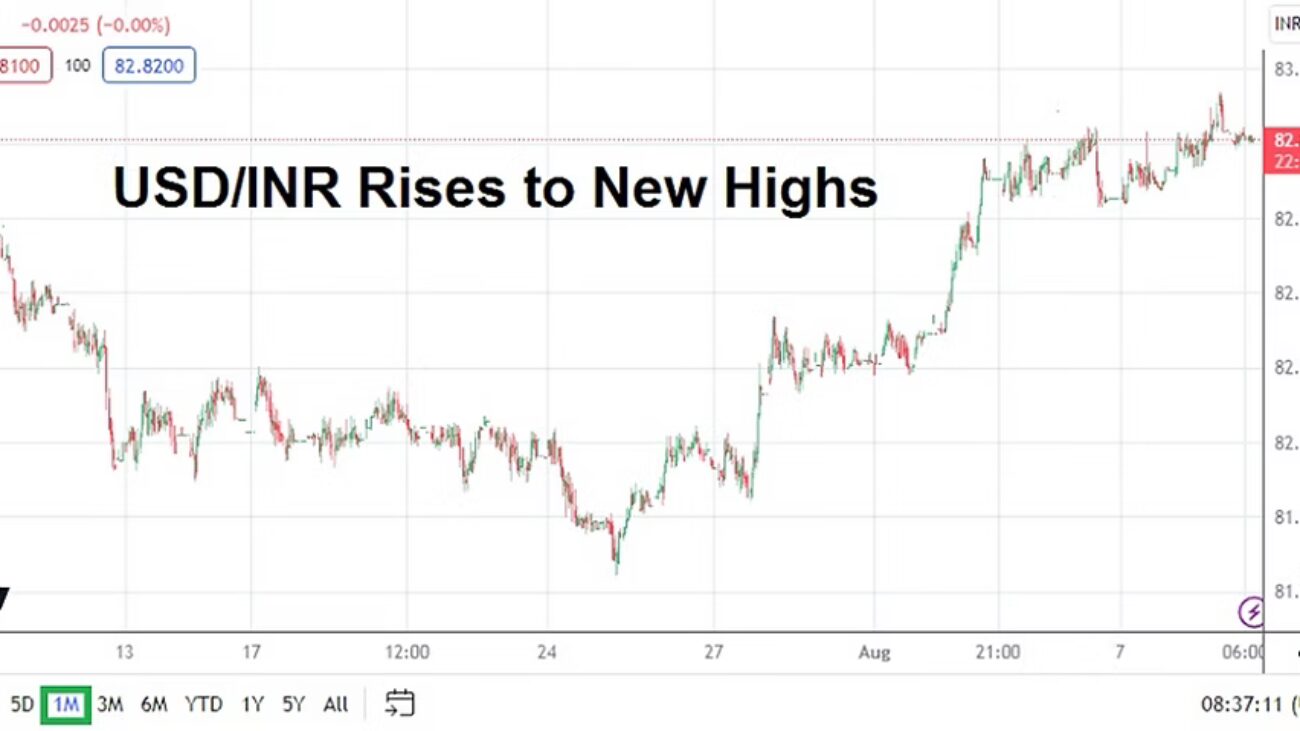
The USD/INR is near the 82.8150 ratio as of this writing the 9th of August, on the 25th of July the currency pair was near the 81.6500 level momentarily. Upwards movement of the USD/INR did produce price volatility in the last week of July, and on the 1st of August the Forex pair was near the 82.1700 ratio. Another dose of upwards momentum quickly occurred on the first day of August, and by the 2nd the USD/INR was trading around the 82.7650 mark.

From Wednesday of last week the USD/INR has essentially taken on a consolidated framework, speculators who are gambling on the USD/INR and need big movement to occur in order to facilitate profits have likely found the currency pair difficult to manage. Yesterday a high of nearly 82.9500 came within sight briefly, this as global risk adverse conditions arose because of the Moody’s rating agency downgrade of some U.S mid and small size banks regarding their fundamental ‘soundness’ and credit worthiness.

Rising interest rates from the U.S Federal Reserve have made it harder for many U.S banks to conduct their business, and loans have become more expensive for their clients struggling to keep up with the rising payments. Particularly if borrowers have the unfortunate position of holding ‘variable’ loans which cost more when interest rates are going up. This has also affected the housing sector in the U.S and in the U.K, as mortgages have become highly priced due to the Federal Reserve and Bank of England having aggressive interest rate policies which are affecting the cost of new home purchases.

The question USD/INR traders may be asking is what does this have to do with them?

USD/INR One Month Chart as of 9th of August

The USD/INR Doesn’t Trade in a Vacuum

The USD/INR has risen in value the past two and half weeks as many other major currency pairs have suffered a similar fate. Nervous sentiment abounds in the global markets because financial institutions are wary of what the major central banks will do next. U.S economic data has been mixed recently, but this perspective depends on time frames regarding outlooks.

Short and mid-term viewpoints continue to point to complications regarding growth and inflation expectations and interpretations of U.S data. The ratings downgrade of some U.S banks from Moody’s yesterday, and early last week Fitch’s downgrade of U.S Treasuries all is related. Rating agencies are getting nervous, perhaps because they do not want to be blamed and held liable if the proverbial ‘fluff’ hits the fan over the mid-term. Rating agencies largely ‘missed’ the financial crisis of 2007 in a famously bizarre manner. The sudden emergence of rating agencies warning investors has made the USD stronger as global investors have become risk adverse temporarily. Yes, this might feel illogical, but the USD remains the world’s safe haven.

The USD/INR also certainly trades because of economic conditions affecting its value from within India. The Reserve Bank of India has a large hand in managing values and is known to be rather active regarding interventions. Yet the USD/INR is being ‘allowed’ to continue to trade near all-time highs. This as India’s status as a growing economic power has taken shape in the global financial markets the past year. The India government has not been aggressive regarding its interest rate policy, and has allowed inflation to seep into the domestic economy via a weaker Indian Rupee for a number of complex reasons. Purchasing goods from India abroad and the ability to invest in India by global financial institutions may be more attractive to those holding USD and needing to convert into INR only when the time is necessary.

Politics and the USD/INR Price Level as 2024 Elections Start to Lurk

From a political perspective too, let’s acknowledge a general election will take place in India in April and May of 2024. Economic decisions being made today and for the mid-term are certainly being affected by the ruling Indian government’s outlook and desire to remain in power. Having come off of yesterday’s highs in the USD/INR the currency pair does remain within sight of highs.

The 83.0000 level likely remains a key barometer for the USD/INR and the Reserve Bank of India is likely watching this value carefully. While it seems unlikely the India government wants the USD/INR to trace much higher because of the psychological implications, global risk adverse sentiment are making the higher values of the currency pair sticky. Tomorrow’s inflation data from the U.S will affect Forex and the USD/INR via the Consumer Price Index. Friday the U.S Producer Price Index will be published. A slight rise in the broad CPI results tomorrow is expected, while Friday’s PPI outcome is expected to match last month’s numbers.

If risk adverse trading remains evident today and the USD/INR holds its ground over the next 20 hours, the currency pair could find that its consolidated price movement from the past week suddenly changes. A higher tick in U.S inflation could be enough to cause the USD/INR to challenge the 83.0000 ratio. Speculators who are wagering on the USD/INR are cautioned to be pro-active regarding their risk management the remainder of this week.