postR196

AMT Top Ten Miscellaneous Punches for the 28th of June 2024

AMT Top Ten Miscellaneous Punches for the 28th of June 2024

10. Cricket: The ICC T20 World Cup Championship will feature South Africa vs. India. The two teams are familiar with each other competitively and the final match will be held at the Kensington Oval in Bridgetown, Barbados on Saturday.

9. Selling Pressure: Lows are being challenged in Bitcoin as it hovers above 61,000.00 USD. Cocoa has stumbled dramatically this week and is below 8,000.00 per metric ton. Who will be courageous and wager on reversals higher? Speculators should remain cautious and understand price velocity that looks tantalizing can also prove costly to trading accounts.

8. Grounded: Boeing’s Starliner remains docked to the International Space Station. Problems have plagued The Boeing Company the past handful of months, and their ambitions of becoming a power within NASA’s explorations are also underachieving. SpaceX and Airbus are certainly paying attention to Boeing’s ineffectiveness.

7. Teetering: The African National Congress and Democratic Alliance political parties in South Africa are feuding about how coalition power will be shared within the National Unity Government. The USD/ZAR has become volatile and is near 18.21000 as tensions mount and reversals hit. Financial institutions are waiting for an optimistic resolution, while also fearing the possibility of an abandonment to positive visions.

6. Inflation: Core Personal Consumer Expenditures Price Index statistics will be released today from the U.S. Yesterday’s GDP Price Index came in slightly higher than anticipated which kept USD centric bullish positions relatively strong. However, other American statistics have weakened significantly and the mid-term looks troubling for the U.S economically. Stagflation remains a concern. The Federal Reserve is likely hoping to see today’s PCE numbers come in weaker than expected, which would allow the central bank to hint towards Federal Fund Rate cuts later this year.

5. Ennui: President Macron could find his political power further eclipsed after France’s first round voting results this coming Sunday. French voters appear ready to deliver a resounding message of dissatisfaction to the listless ruling government. Election turnout statistics should be watched. The second round of voting will be on the 7th of July. Financial institutions have braced for a shift of power already, but the EUR/USD will still produce volatility in the days ahead.

4. Geopolitical Risks: Russia, China and their allies are likely considering how they will prepare for a potential change in the U.S White House. Foreign policy following last night’s debate between Biden and Trump must be planned. The fact that Trump is viewed as a rather flamboyant personality and not bound by cautious diplomatic attitudes creates a calculus that U.S adversaries will have to consider. While the potential exists that some nations may try to be more aggressive now, they also know that a Trump victory in November would change the international political landscape long-term.

3. Bank of Japan: The Core Tokyo Consumer Price Index produced a gain of 2.1%, which was above the forecasted amount of 2.0% earlier today. The BoJ continues to remain far too dovish regarding interest rate policy and financial institutions are buying the USD/JPY in massive waves. The USD/JPY is around 160.750 as of this writing and did traverse above 161.000 earlier, these are Forex levels not seen since the late 1980’s for the USD/JPY. Japan’s attempt to stimulate the economy with a weaker Japanese Yen may work, but the U.S and others may start to look at the BoJ’s soft devaluation in a very negative light. Speculators of the currency pair need to be extremely careful, because the BoJ has the ability to intervene violently and cause momentary spikes which could prove deadly for day traders trying to take advantage of the outlandish bullish trend.

2. Behavioral Sentiment: Markets will be a looking glass into the future today, this as trading houses react to the realization that Donald Trump is likely going to be the next U.S President. While there are no guarantees regarding the U.S election outcome yet, the broad markets will certainly feel a shift of momentum in the coming days as large players adjust from a cautious approach to more aggressive postures regarding a Trump presidency. U.S equity indices remain near record highs, and the potential of a more business friendly White House which doesn’t threaten tax hikes on U.S corporations will likely affect speculative outlooks.

1. Power: The resounding defeat of Joe Biden last night in the Presidential debate will spark a heated battle among Democratic power brokers. Biden will certainly be asked to step aside after last night’s poor performance. However, Biden is stubborn, and Dem leaders like Nancy Pelosi and Barak Obama among others will have a difficult task to try and convince Biden for the sake of the nation that he must do the honorable thing and release his political delegates at the August Democratic National Convention in Chicago. If this doesn’t happen, the Republicans may be able to achieve a landslide victory by taking control of not only the White House but the Senate too, along with maintaining power in the House of Representatives. All the camouflage in the world last night, including the liberal media, couldn’t mask the inability of Joe Biden to be coherent.

post203

AMT Top Ten Miscellaneous Observations for 3rd of May 2024

AMT Top Ten Miscellaneous Observations for 3rd of May 2024

10. Formula One: The Miami Grand Prix race will be held on Sunday. Whispers have been heard that Red Bull driver Max Verstappen has been approached by Mercedes bidding an annual contract over 150 million USD, but that he has not accepted the offer. However, Adrian Newey, engineer and CTO of Red Bull Racing, has confirmed he is leaving the team after 19 years of leadership. F1 certainly needs more competitive racing, a shake up at Red Bull could deliver this for the sport.

9. De-movements: Desire for decolonization, decarbonization, depopulation, turned into delusion and dehydration for Columbia University protestors and the need for a glass of water per the request of a student leader. Perhaps de-escalation is next.

8. Geopolitics: The nation of Georgia is dealing with demonstrations as some citizens show disdain regarding feared political influence from Russia. Georgia has an approximate population of 3.7 million. The East European and West Asian country has seen civil disobedience on the streets of Tbilisi increase this week.

7. Lower Values: Cocoa is near 7,658.00 USD per metric ton as of this morning, on the 19th of April it traded above 12,000.00 briefly. BTC/USD is around 59,250 after having faced headwinds this week.

6. Gold: The precious metal has sold off this week and is hovering near 2,300.00 per ounce as concerns build about USD outlook remaining strong over the mid-term. A low of nearly 2,282.00 was seen on Wednesday. Today’s publication of U.S economic data will push the price of Gold around.

5. Mixed Trading: Equity indices have produced uneven results this week as investors try to find equilibrium. Optimism almost always is the eventual emotion long-term institutional market participants lean towards. The S&P 500, Dow 30, and Nasdaq Composite all gained yesterday, but remain below highs from earlier in the week. Behavioral sentiment appears fragile and many Fed observers are disgruntled.

4. Uncertainty: The Federal Reserve has admitted it is unsure about future economic progress this calendar year. When questioned about the potential of stagflation Fed Chairman Jerome Powell said he see no signs of this – while forgetting to add that politically saying such a thing would likely cost him his job. And lets remember, the Fed claimed they thought inflation was transitory in July of 2021.

3. Bank of Japan: A battle is underway with the USD/JPY as the BoJ has staged two interventions this week. Intent on trying to create economic growth via stronger exports, while allowing import inflation to be seen, the BoJ interest rate policy remains dovish. The USD/JPY is near 153.230 now, but it is unlikely to go into the weekend with this price. An apex on the 29th of April approached the 159.610 ratio. Financial institutions and Japanese Yen traders must remain alert.

2. High Anxiety: Day traders in Forex, equity indices and commodities have certainly seen heightened volatility and the choppiness is going to persist. Retail brokers will welcome speculators with open arms and point to opportunities, but traders need to understand the ‘casino’ often is making money via losses incurred because of leveraged wagers which turn into losing bets when price velocity hits.

1. Jobs Data: Yet another opportunity for inflation to be seen today via the Average Hourly Earnings numbers. A cautionary road sign was seen this Tuesday when the U.S Employment Cost Index came in with a stronger than anticipated quarterly gain of 1.2%. The USD will remain a lynchpin in many financial assets, and Treasury yields should be watched after the employment statistics have been printed.

postN80.2

Risky Outlooks: Central Banks and Inflation Colliding

Risky Outlooks: Central Banks and Inflation Colliding

Most traders and investors begin their pursuit of financial assets with an optimistic perspective. However, the markets and ability to speculate also allows those who have other outlooks to equally participate. The past week once again delivered U.S inflation data which was not anticipated. While last Tuesday’s CPI results came in slightly stronger than expected, it was Thursday’s PPI which provided surprises for many.

Producer Price Index Warning from AMT for the 14th of March 2024

Yet, some market participants may not have been utterly shocked by the results. Perhaps it was lucky to ‘guess’ the PPI numbers could cause volatility last Thursday, but the ability to be alert and attentive to the possibility of risk should not be ignored. Risk management is important for all traders.

This coming week will continue to be intriguing for day traders as they try to sail through speculative waters which are going to deliver shifting behavioral sentiment tides. A parade of central banks are ready to step into the limelight and they will focus on the word: inflation. Technical traders who wager on support and resistance levels in the coming days should not be scorned, because sideways and volatile trading results are likely.

U.S equity indices began to struggle the middle of last week, Gold has traded lower and Treasury yields have ticked upwards in recent market action, this as sentiment has again had to acknowledge economic outlooks remains problematic. Trading decisions this week will depend not only on what the central banks say and ‘do’, but also focus on the duration that a speculative position intends to be working.

Monday, 18th of March, China Industrial Production – a gain of 7.0% has beaten the expectation per the data already published this morning. Retail Sales numbers came in slightly below estimates, but Fixed Asset Investment numbers were better than anticipated. However, China’s data remains troublesome and the economic path ahead for the nation must overcome deflation and trust issues from international investors. A lack of confidence from the Chinese public about the value of Real Estate and the over abundance of available property is causing major headwinds economically.

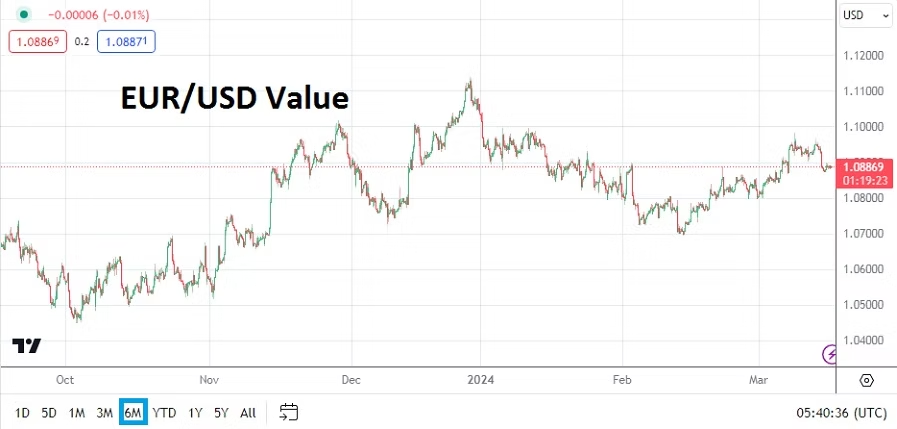
EUR/USD Six Month Chart as of 18th March 2024

Monday, 18th of March, E.U Final Core Consumer Price Index – the European Union will release crucial inflation data. An expected gain of 3.1% is the estimate. While this data release is not considered vital by many investors, the inflation statistics should be watched. The EUR/USD has produced mixed results the past four months as shifting behavioral sentiment due to battling perceptions regarding central bank policy outlooks converge.

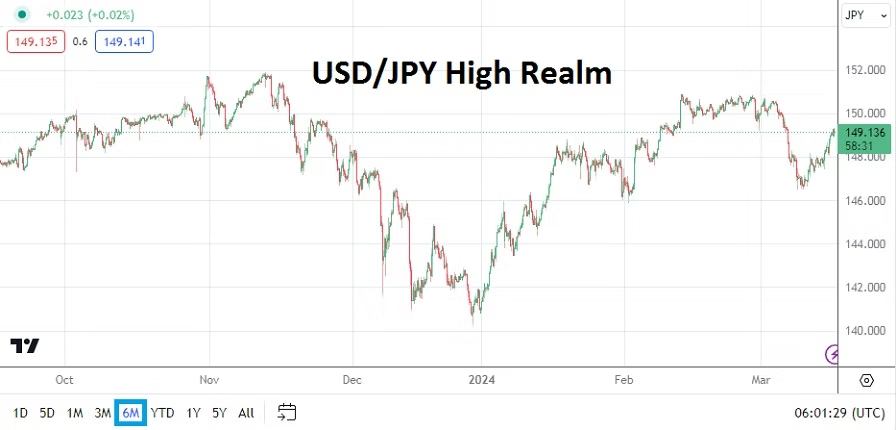
USD/JPY Six Month Chart as of 18th March 2024

Tuesday, 19th of March, Bank of Japan – the BoJ will deliver their Monetary Policy Statement and Policy Rate. While no numerical change is expected from the BoJ, signs for a change in rhetoric will be looked for as central bank observers try to read the tea leaves. The Japanese economy is within an intriguing spot, there have been signs of improvement, but the Bank of Japan is likely to remain on a conservative path regarding negative interest rates for the moment. The USD/JPY remains within the higher realms of its price range as the currency pair grapples with global inflation outlooks.

AUD/USD Six Month Chart as of 18th March 2023

Tuesday, 19th of March, Reserve Bank of Australia – the RBA is expected to parrot the pronouncements of the other central banks as they point to stubborn inflation and ‘improving yet lackluster’ economic outlook. Trading in the AUD/USD has been choppy and the volatility is likely to continue within the known price range.

Tuesday, 19th of March, Canada CPI – the Consumer Price Index data is anticipated to show inflation remains remains sticky in the ‘Northern Tundra’. The CPI report from Canada should be monitored because of the strong relationship between the U.S and Canadian economies. The USD/CAD will react to any surprises.

Wednesday, 20th of March, U.K Consumer Price Index – yet another important inflation report. Great Britain has been a ‘poster child’ regarding stagflation. The ugly word is not something central banks, nor governments want to discuss, but the simple truth is that problematic inflation and limited growth equal stagflation. The statistics from the U.K should be examined. The economic health of Great Britain is often a solid reflection of global conditions.

Wednesday, 20th of March, U.S Federal Reserve – the Federal Funds Rate, FOMC Statement and Fed Press Conference will be focal points for investors. Except importantly, not much is likely to be said be Jerome Powell that isn’t known already. Inflation reports from the U.S have highlighted stubborn higher prices. U.S economic numbers regarding manufacturing and consumer confidence have started to turn lower, but the Fed is not going to change its policy this week. Talk about ‘becoming’ dovish will be heard, but the U.S central bank still wants to see more proof that inflation can erode before they start to cut interest rates in the mid-term.

Thursday, 21st of March, E.U Manufacturing and Services PMI, readings will come from France, Germany and the U.K via the Purchasing Managers Index results. Most of the data will likely continue to point to lackluster outlooks, only the Services PMI from the U.K is expected to offer a glimmer of hope regarding ‘expansion’. If the Flash numbers come in worse than expected this could cast a shadow over behavioral sentiment for European investors.

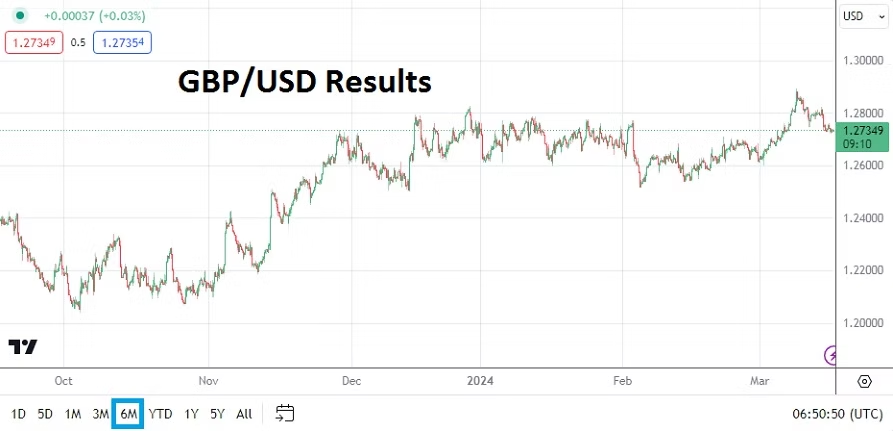
GBP/USD Six Month Chart as of 18th March 2024

Thursday, 21st of March, Bank of England – the BoE is likely to keep its Official Bank Rate within place and their pronouncements via the Monetary Policy Summary may sound like a replica of the U.S Federal Reserve. Inflation and growth will be spoken about and the BoE will try its best to paint an optimistic picture. The GBP/USD will react to the gyrations, but the range of the currency pair will have already seen tests in the preceding days. The past four months have produced a value as of the 18th of March, that is hovering slightly above late November and early December 2023 prices.

Friday, 22nd of March, U.K Retail Sales – a negative result of minus -0.3% is expected. The retail data will certainly be watched, but following the massive week of central bank statements and data which have already been published, this number may prove to be rather anti-climatic unless there is a massive surprise.

Friday, 22nd of March, E.U ECB and U.S Fed – Officials from both central banks will engage in a variety of speeches in Europe and the U.S, but again after the week’s worth of central bank rhetoric which has been heard, investors are unlikely to react much to these soundbites from members of the European Central Bank and Federal Reserve. Existing behavioral sentiment which has been produced in the dynamic days beforehand should remain the central theme as investors go into the weekend.

postN26.1

USD/INR: Bounce Higher Ignites a Return to High Water Values

USD/INR: Bounce Higher Ignites a Return to High Water Values

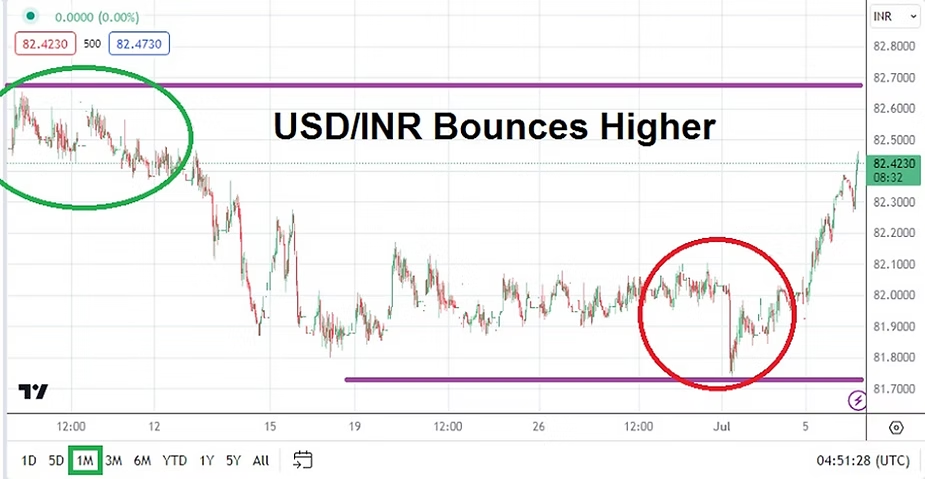
The USD/INR is trading near 82.4350 as of this writing, which is a value the currency pair has not touched since the second week of June. While some analysts may say the move to higher ground yesterday and early this morning is based on the U.S FOMC Meeting Minutes, Wednesday’s report from the Federal Reserve likely only reinforced the bullish momentum which started earlier this week. The world of Forex can feel fickle, particularly when so many of the internal dynamics are hidden from a large segment of people who are trying to speculate on the results.

If the mechanics of the move higher which started on Monday are examined a couple of points should be considered closely, the low of the USD/INR was around 81.7300 on the 3rd of July. This low took place as most U.S financial institutions were on holiday in preparation for Tuesday’s 4th of July celebrations.

Fears of U.S Economic Prospects: Behavioral Sentiment and Stagflation Potential

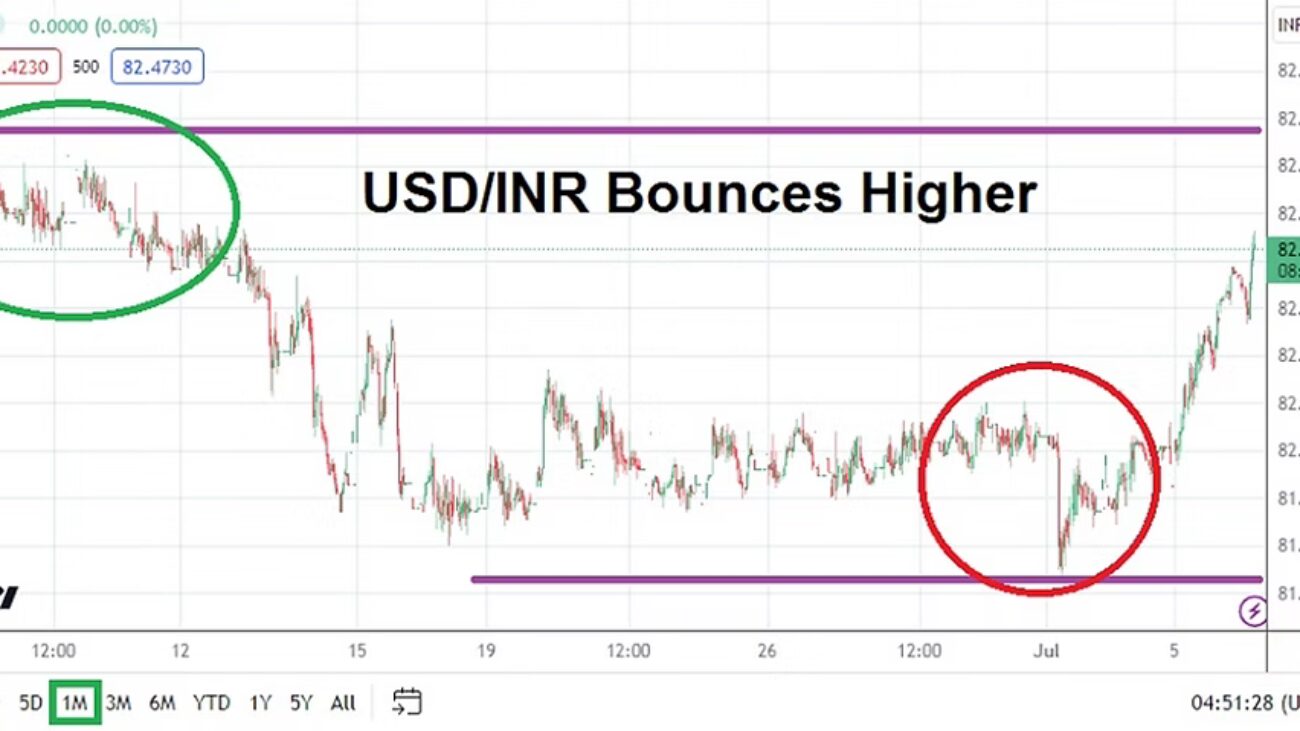
The reversal higher since the 3rd of July has been pronounced, but before going into last weekend the USD/INR was largely trading within a consolidated manner near the 82.0000 level with a test of this mark having been displayed forcefully since the middle of June. A range of nearly 81.8500 to about 82.1500 largely has played out the past three weeks of Forex trading.

USD/INR One Month Chart as of 6th July 2023

Monday’s dip in value to lows around 81.7300 took place when there was very little volume in the USD/INR market. The depths challenged marks not seen since the first week of May.

The reversal higher the past few days is certainly part of more transactional volume starting to be pumped into the USD/INR as U.S financial institutions have returned, but they are also likely being caused by an underlying nervousness within the Forex markets which may be factoring in the notion the U.S Federal Reserve seems to be on a path which will increase the Federal Funds Rate on the 26th of July.

The behavioral sentiment being generated regarding a Federal Reserve which stays in an aggressive stance started before yesterday’s release of the FOMC Meeting Minutes. Nervous conditions have been on the surface of the broad markets because U.S inflation remains rather resilient – but also importantly because last week’s Gross Domestic Product numbers published on the 29th of June, came in stronger than anticipated. From a troubling perspective some analysts could point to the moderately improved growth and combination of stubborn inflation as a sign stagflation is starting to shadow the U.S, which would certainly be a troubling predicament.

USD/INR Move to New Highs this Morning could Ignite more Nervous Reactions

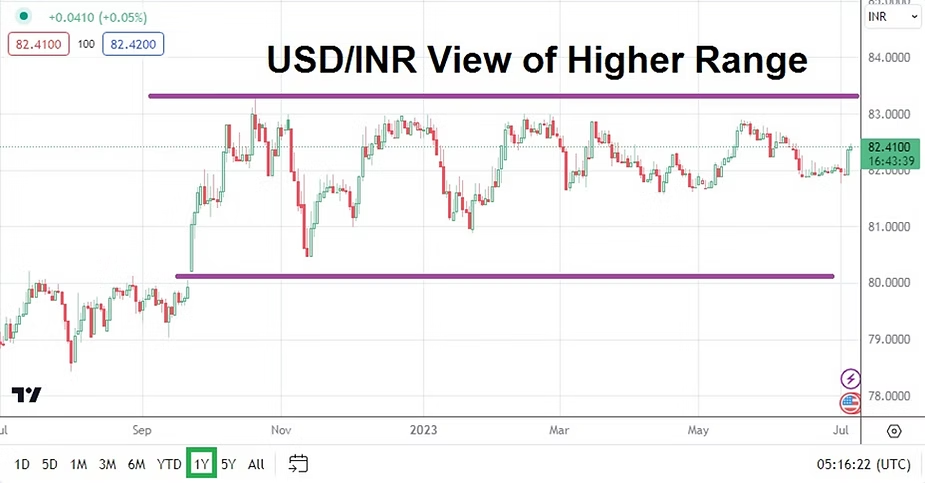
USD/INR speculators may believe the move higher in the currency pair is overdone and that values need to be lower. However, the current price of the USD/INR is one that has been experienced quite a bit since October of 2022. A look at a one year chart shows the USD/INR has returned to higher ratios of its price range which it has experienced since breaking upwards in the middle of September 2022. And to make things more interesting for technical traders, the USD/INR has actually produced a rather stable range between 81.6000 and 82.9000 since February of this year.

USD/INR One Year Chart as of 6th July 2023

While traders are certainly trying to anticipate what will happen next in the USD/INR to gain an advantage, they should remember the currency markets are almost impossible to time on a daily basis, but a look at mid-term prices does offer plenty of insights. If the USD/INR climbs too high, perhaps to the 82.5000 level the Reserve Bank of India could get a bit nervous and consider some type of intervention which it supposedly has done a few times over the past handful of months – but perhaps at higher price ratios.

USD/INR Mid-Term Considerations and the Current Price Range

However it is more cost efficient and reputably less damaging for central banks to not intervene if they do not have to, and simply let market dynamics effectively create a price for the USD/INR based on supply and demand. Meaning the current prices of the USD/INR look to be rather high, but taking into consideration the range of the Forex pair the past five months the values are not new. The prices in fact have been rather established, meaning the USD/INR may trade slightly higher, but then a lower wave of downward momentum could be anticipated.

Day traders who are gamblers may be tempted to sell the USD/INR if the currency pair finds more upwards mobility in the near-term. Trading volumes should be back to normal now that U.S financial institutions have returned from their holidays, and traders should be ready for the potential of fast price velocity developing. Risk management on wagers regarding the USD/INR are essential as always.

post30

Pay Attention to Mid-Size Banking Noise

Pay Attention to Mid-Size Banking Noise

About a week and a half ago the U.S Federal Reserve ‘admitted’ they made a mistake regarding their oversight of Silicon Valley Bank. In essence, the Fed used the sports phrase that sprung to life in the early 2000’s by baseball players who said, “my bad”, as if by admitting when they made a mental error on the field it would soon be forgiven. “What a good guy”, some folks would say as a player took responsibility, but their team would lose the game.

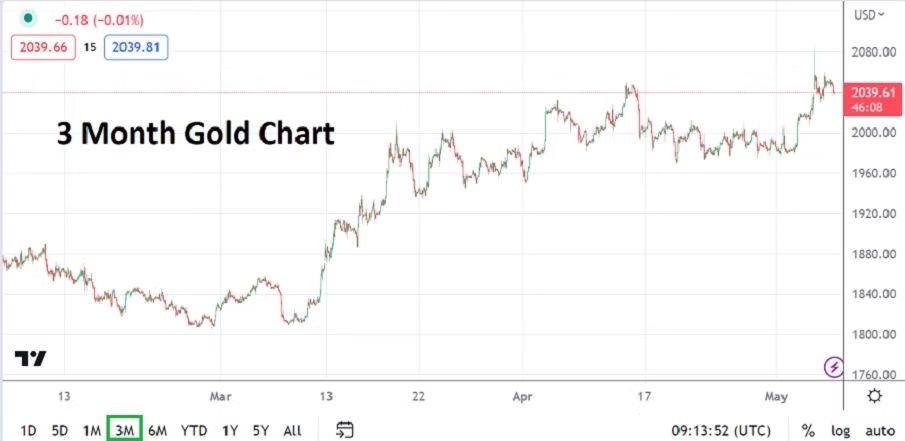
Gold 3 month chart as of 5th May 2023

The question for the Fed is what will they say when other so-called mid-size and smaller banks start to crumble from duress? The Federal Funds Rate was increased again this week by an expected 0.25% and the corporate banking sector in the U.S is under strain. Many banks are seeing share values on Wall Street disappear as they watch their trading screens with alarm.

Let’s not get caught up in hyperbole, or scare mongering, but these banks and the Federal Reserve have simply proven again they have no real grasp regarding risk analysis and what to do when the proverbial ‘fluff’ hits the fan. It is easy to point fingers now, yes, but the writing has been on the wall. It is much easier to make money for a bank when money is cheap. Little to no interest rates allowed banks to be speculative – compared to an environment when the lending rate is high and folks do not borrow, or pay back slowly. Deposits are also dwindling because bonds and other assets have become attractive for ‘clients’ who want to park their money elsewhere to earn better returns. The middle class and lower class are under pressure and small businesses are too as mid-size banks get nervous.

In the FOMC Statement this week which was somehow a unanimous decision – no dissension is a bad sign ladies and gentlemen – the Fed stated “The U.S. banking system is sound and resilient. Tighter credit conditions for households and businesses are likely to weigh on economic activity, hiring, and inflation…..” However, they also pointed out that inflation remains ‘elevated’. And let’s dissect the banking is sound statement, the Federal Reserve did not elaborate. They surely cannot mean the mid-size and smaller banking sector which is losing value almost daily because of struggling corporate share values are sturdy. Financial houses of various types are clearly betting these banks will come under immense weight because interest rates remain high.

Oh, and borrowing costs can still go higher, because let’s face it, inflation is not going away soon. The Fed has helped ramp up inflation by creating ‘import inflation’ as they have ‘killed’ foreign currencies values. If you are a fan of body language watch Fed Chairman Jerome Powell answer questions during the Fed Press Conference from this Wednesday the 3rd of May, when pushed on details regarding the mid-size banking sector and the future of interest rates. He didn’t put his hand up in the air and say, “my bad”, but it would not have been surprising, however it did look like he wanted to walk off of the field. The stadium packed with depositors within mid-sized and smaller banks should be prepared to show their disdain. Middle America should be unwilling to take this loss.

No historical events are exactly similar, but the Fed and its continued ability to put on ‘blinders’ as the corporate mid-size banking sector in the U.S potentially cracks, smells eerily similar to what happened during the financial crisis of 2007 and 2008 when rumors became strong whispers and then turned into a nightmare. Please say hello to the possibility of another massive bailout from the U.S government, because J.P Morgan, BlackRock and other ‘banking’ mammoths do not have enough capital to keep everyone liquid and safe.

Nervous behavioral sentiment is rising its head and looking out over a dangerous landscape. Middle America should be prepared to react to the potential that their neighborhood banks might be in trouble. And the U.S had also better get ready for the very ugly word ‘stagflation’.

post17

Angry Voters and the Federal Reserve

Angry Voters and the Federal Reserve

Federal Reserve Chairman Jerome Powell is scheduled to testify before the U.S Senate tomorrow. Certainly we are going to hear the words inflation and growth mentioned, this as the Fed Chairman speaks about monetary policy and the trajectory for the U.S central bank to continue raising interest rates over the mid-term.

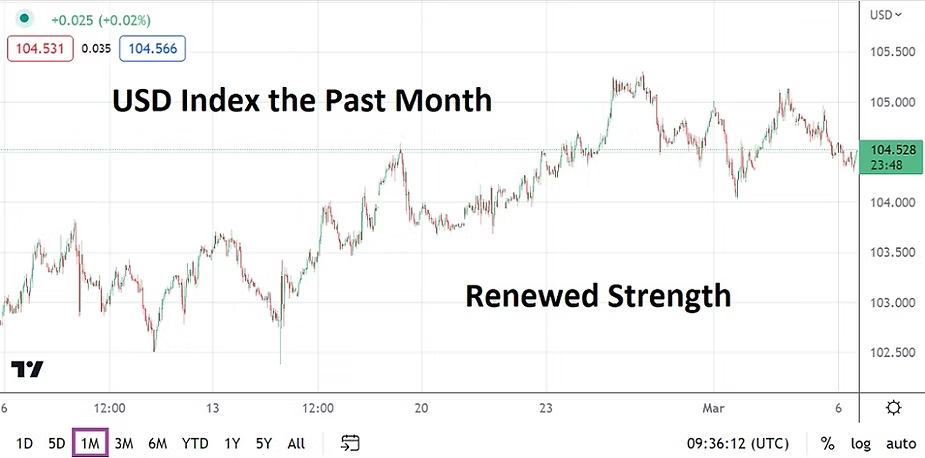
Via prices in the Forex market since the start of February, financial houses have likely priced in two additional interest rate hikes from the U.S central bank into the USD, one of them being a quarter of a point increase coming on the 22nd of March. The USD has been mostly stronger across the board the past four weeks. This week’s coming Non-Farm Employment Change numbers and Average Hourly Earnings data results should be monitored on Friday.

USD Index One Month Chart

While financial houses may have accepted the interest rates to come, this doesn’t change the rather complex economic data in the U.S which is demonstrating rather stubborn inflation, while also showing growth is not slowing down as much as has been anticipated. GDP numbers reported recently from the States showed only a slight decrease.

  • How much more can the U.S Federal Reserve increase interest rates over the next six months without making the USD too strong?

  • At what point will the Fed become less aggressive?

  • While an additional .50% has been ‘accepted’ by financial institutions, will the Fed bring the lending rate to 5.50%?

  • High inflation and limited growth could result in political quicksand for many elected officials.

The U.S Federal Reserve is going to get pressure from both sides of the aisle in Washington D.C.. Traders should not discount their perceptions that elected officials are starting to consider the ramifications of the coming elections in a year and half, because this will affect behavioral sentiment in the markets. Neither Democrats or Republicans will be happy if inflation remains a problem going into the vote. Rising costs equal less money in the bank accounts of American voters.

The U.S public has a history of voting via sentiment generated from their wallets and the power to consume. Prices that feel like they are out of control will win no friends. While energy prices seem to have calmed down in the headlines, energy costs remain a risk and concern for manufacturers worldwide. The inability to save money for individuals, and lack of profits for corporations makes for potentially angry voting results.

There is an additional problem lurking. The strong USD driven by the Federal Reserve’s increased borrowing costs, the Federal Funds Rate, has weakened currencies across the world. Vulnerable currencies have spurred inflation in many nations which are producers of goods that global consumers buy, these rising prices are being imported into the U.S economy.

As much as international economic integration helps the world, the rise of coronavirus and its knock-on affects via costs were not anticipated enough, causing weaknesses to be exposed. The U.S attempted to save its skin economically by creating a massive amount of stimulus, which certainly fueled domestic inflation. The U.S might have saved the American public in the short-term, but the government faces a long climb upwards to fix the problems overspending has caused.

The rising costs of logistics and the spotty supply of commodities internationally generated higher prices in the aftermath of coronavirus. Commodity prices have become more tranquil, but the costs of production has not eased because weaker currencies globally are hurting producers who need to use the USD to purchase resources. The U.S Federal Reserve’s attempt to tackle inflation with higher interest rates, has fueled ‘import’ inflation. This is not an easy problem to solve.

The Fed will not say in public they want the U.S economy to slow down, this acknowledgement would costs jobs which rely on political backing. The White House certainly doesn’t want the economy to suffer as it prepares for an election within a year and a half, but quietly officials likely accept slower growth and perhaps recession may become inevitable. Both the Fed and elected officials are performing a delicate dance that may be interrupted any moment.

The Fed doesn’t want us to remember they said inflation would prove transitory almost two years ago. The Fed needs to fight rising costs certainly, but very carefully. The desire to weaken inflation is correct but a dangerous balancing act, because the USD remains the global reserve currency.