postN71

India Insider: The 8.2% Growth Mirage Needs a Reality Check

India Insider: The 8.2% Growth Mirage Needs a Reality Check

India is celebrating the 8.2% real GDP growth result for Q2 FY26, as if it has entered a new economic orbit. Politicians are claiming victory and media is packaging optimism. The narrative is simple: India cannot be stopped. But once we move beyond the headline, the number loses credibility. It rests on a broken deflator, a statistical gap that no one can trace, and data architecture that doesn’t consider half the economy. This is not a story of unstoppable growth. This is a story of statistical convenience.

The Production–Expenditure Divide

On the production side, the numbers look heroic. Manufacturing allegedly grew 9.1%, and financial and professional services posted more than 10% growth. Corporate India looks like it is flying. But when the same activity is measured from the expenditure side – who actually spends this income – the story weakens.

Private consumption at 7.9% is respectable, not outstanding. The real shock is government consumption, which contracted by 2.7%. A shrinking government should normally mute growth, not accelerate it. Yet the GDP shoots up. How does that make sense? It doesn’t unless the number is being propped up somewhere else – and this is the case.

₹1.63 Lakh Crore of ‘Unknown Growth’

GDP includes a category called ‘discrepancy’. It exists because the two methods – production and expenditure – never perfectly align. The discrepancy stands at ₹1.63 lakh crore ($18.2 Billion USD) which equates into roughly 3.3% of real GDP. That means a chunk of this 8.2% growth has no identifiable spender: No households. No firms. No government.

It is income without absorption. A statistical plug. When a number this large is called ‘discrepancy’, the headline becomes unreliable – suspicious. You cannot claim world beating growth when your own data admits it cannot explain where that growth came from.
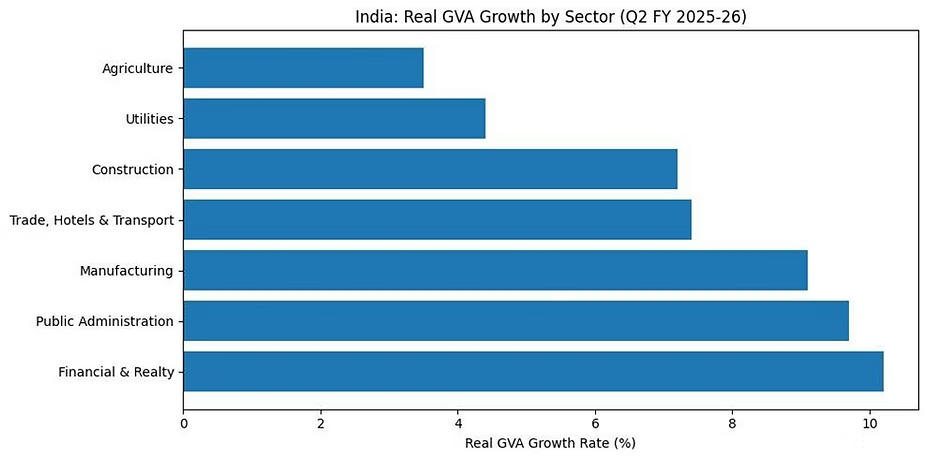
Chart via the National Statistical Office

The Deflator Illusion

The next distortion is the nominal vs real GDP gap. Nominal GDP is growing at 8.7% and real GDP at 8.2%. A gap of 0.5 percentage points implies inflation has almost vanished. Every Indian knows this is not true. Costs did not collapse. Food inflation has not disappeared.

The explanation is mechanical: India still uses the Wholesale Price Index (WPI) to deflate nominal output. Global commodity prices fell, WPI softened sharply, and that flattening pushed up the real number. In other words, GDP grew because the denominator fell, not because production surged.

This creates a fiscal problem. The Union Budget assumed 10.1% nominal growth. At 8.7%, tax buoyancy will weaken, deficit targets become more difficult, and next year’s fiscal capability shrinks. Real GDP does not pay the bills, Nominal GDP does.

The Informal Blind Spot

India still cannot measure its informal economy accurately. Nearly half of GDP and employment sits outside the formal system, yet the NSO uses formal sector proxies such as corporate balance sheets, GST data, and financial flows to estimate the rest of the economy. If a small business collapses and a corporate giant expands, the data shows a net gain, erasing distress at the bottom which means real economic circumstances are not portrayed accurately for Indian citizens.

Agriculture grew at 3.5%, but it still supports 46% of India’s workforce. That means growth is concentrated in capital intensive and balance-sheet heavy sectors, not into areas that put cash into rural hands. A booming Nifty Index via the stock market does not translate into household prosperity.

An Economy Measured with Old Tools

India continues to measure GDP using a 2011–12 base year, an era before UPI (Unified Payments Interface), before fintech credit, before e-commerce, before gig workforces, before the pandemic rewired supply chains and consumption patterns. India is living in a digital economy, but measuring activity with analog instruments.

A shift to a 2022–23 base year, plus replacing WPI with a Producer Price Index, may finally align the numbers realistically. But until then, headlines are running ahead of bona-fide measurements.

India’s 8.2% print is impressive, but growth estimates that don’t reflect grounded realities produce illusionary optics rather than useful insights. For India to strengthen fiscal and economic credibility, measurements must capture households, labor markets, and productivity, not solely corporate outputs. Policy cannot be shaped by statistical ambiguity, it requires transparency and trusted data.


postR182

Risk Analysis Review: Warning about Coronavirus in Feb. 2020

Risk Analysis Review: Warning about Coronavirus in Feb. 2020

Below is a risk analysis note written in February of 2020 regarding the risks and potential implications of coronavirus as seen by Robert Petrucci on financial markets. The letter was sent to a senior associate who was a Chief Investment Officer for a firm. After speaking to the senior associate on the phone, feeling as if his thoughts were dismissed without heed and told he was too concerned about coronavirus, Mr. Petrucci sent the following to the CIO:

Thanks for asking about my thoughts.

What worries me is the opportunity for the virus to be a catalyst. The reactions in the E.U by government talking heads reminds me a lot of the financial crisis in 2007 when people publicly disregarded the potential domino effect which was becoming apparent. 

The Coronavirus imo is a potential domino which could take down the remainder of a fragile architecture. Meaning the ill-conceived philosophy and work of central banks in Asia and Europe have left them with little regarding ammunition should they need to fire an economic gun. If Europe and Asia buckle the US will be left limping too.

Psychologically the markets appear vulnerable, but as you rightly point out the higher realms of the Indices have been waiting for a bit of a sell off for a long time and the selling underway may be more of a reaction and mere trigger which has been long overdue. 

However, I wonder about the ‘clever’ algorithms which have been developed and trade also due to human bias. What concerns me more than what is taking place in China is what is happening in Italy right now. 

Italian governments have a long political history of ineptitude and disregard of reality regarding numbers which are staring them in the face, particularly with budgets and a long tradition of corruption and its destructive force on transparency. If Italy continues to spike higher infection numbers and continue to escalate then I believe the E.U is in for trouble. The inaction of Italy and its reliance on the tourism business will make it hard for them to accept shutting down major airports and cities which enjoy the fruits of international visitors year round. 

Also, I must add and circling back to China that it is not known yet if another outbreak may suddenly appear in another zone if someone dealing with this asymmetrical virus is unaware of their affliction. 

Which brings me back to the springboard, worst case scenario I fear is a major outbreak in the E.U including Germany. If we see signs of spikes statistically across Europe the next two weeks it will be devastating economically for the next quarter financially. 

As you say, things will certainly bounce back, they always do, we must look at the long term. Investors need to keep a stiff upper lip and protect themselves as you have done in many regards with Indices, US ten year bonds and some gold. 

The question for me now is what happens the next ten business days across the U.S and Europe and how the world handles this virus. Worst case is pandemic and bad Central Bank formula, which have been in place the past twelve years with cheap money. The desire to keep everything steady may in fact lead to miscalculations which have not been planned for and cause reactions in the markets which cannot be checked this time around. I do not believe we are at a Black Swan point yet, but it does worry me that the E.U politicians and even some U.S politicians seem to have their head in the sand or look like deer stuck in the headlights.

Robert Petrucci 26 Feb 2020

postN101

Anonymous Kingdom: Bitcoin’s Lack of Transparency is Supreme

Anonymous Kingdom: Bitcoin's Lack of Transparency is Supreme

Bitcoin has fallen below the 40,000.00 USD price level today, and after penetrating the depth of 39,500.00 USD has shown additional velocity lower. Bitcoin is now testing support near the 38,850.00 ratio, a value it last tested on the 2nd of December.

Influencers will likely urge their fanbases to look at six-month charts to understand Bitcoin is still within the upper levels of its price range, this because a look at a three-month chart isn’t as cheerful. The speculative asset remains a dangerous place for day traders to participate who do not have legitimate insights regarding Bitcoin.

BTC/USD Six Month Chart as of 23rd January 2024

The question that some are likely starting to ask is what happened to the bullish rush in Bitcoin that was evangelized as a source of inspiration when the U.S Bitcoin ETFs materialized? FOMO (fear of missing out) again became an ‘advert’ for Bitcoin. True patience is needed when investing in financial assets, but day traders aren’t investing they are speculating and BTC/USD is likely costing them plenty of money.

It has been publicized that BlackRock’s spot Bitcoin ETF now holds over 1 billion USD in funds. However, while BlackRock and other ETFs have added to their assets under management of Bitcoin, what are short positions within the ETFs regarding size? This number is elusive, but the ability to sell ETF ‘share’ value within the new Bitcoin funds being offered is said to exist.

Bitcoin’s open interest numbers within the CME’s future contracts was nearly 26,669 positions on the 11th of January, yesterday’s reporting via the Chicago Mercantile Exchange was 22,250 open positions. While day traders may be speculating on the price of BTC/USD via their brokers’ trading platforms, they have to understand that their wagers are not affecting the real market price. The big players within the Bitcoin market do not operate on brokerage platforms which are merely offering CFD positions. The large traders are using cryptocurrency exchanges, futures and options via the CME, and now ETF positions.

Unless a trader is actively selling Bitcoin on a selected cryptocurrency exchange – and likely being asked to open a margin account – and thus opening the door to leverage and volatility, which it can be argued is designed to knock you out of the positions. You are going to find it difficult to actually sell ‘physical’ Bitcoin via short positions that are ‘manipulating’ the cash/spot market.

Bitcoin is a playground for sophisticated traders with plenty of cash to speculate and will continue to produce a world of extreme price volatility. On the 11th of January the price of Bitcoin jumped towards the 49,000.00 mark before declining. Bitcoin’s high early this morning was around the 40,150.00 ratio before stumbling the past handful of hours. Note, that open interest was at its highest on the 11th of January via CME futures trading information.

If you want to speculate (bet) on the value of Bitcoin as a day trader you should understand that you are participating in a marketplace that still doesn’t have the best of transparency. Yes, in most assets day traders are always competing against complex dynamics in which they have no control. However, speculating on BTC/USD is still being done almost blindfolded because of the lack of insights that is part of Bitcoin’s anonymous allure that many of its proponents love. We are still a distance away from transparency within the world of Bitcoin.

If traders can get access to volumes data – and the size of long and short positions being placed within the crypto exchanges they are using that helps. But because Bitcoin trading is still unregulated, and since there are many crypto exchanges operating you will only be getting small bits of information. The lack of information should worry day traders and serve as a caution sign.

postN17

AMT Warning: Many Brokers Do Not Care if you Lose your Money

AMT Warning: Many Brokers Do Not Care if you Lose your Money

Sounds like the title has been written wrong doesn’t it? Reads as if the editor clearly doesn’t understand the nature of the financial markets and how they work. Certainly anyone who offers their services to you would like to see you make money, or so you would like to think if you are an idealist who remains innocent and trusts all people.

Unfortunately, the title of this artcle which has lured you into reading this WARNING is not wrong. It has been written as cautionary advice for new and even experienced speculators. Many of the ‘financial’ websites and people you are considering to engage with via their day trading platforms and ‘expert’ systems are not worthy. Many do not care if you make money and some in fact are planning on ripping you off.

Blackjack Betting and Sitting at the Table with Too Much Leverage

Volatility is in the eye of the beholder, brokers like when day traders without deep pockets use leverage, because they expect their ‘clients’ to get wiped out. Yes, brokers are not your friends in many cases, in fact they are rooting against you in the back rooms of their trading operations. Why? Because they are not actually putting your trade into the cash markets, they are allowing you to trade virtuallly. Think of it as entering a casino.

The casino wants you to bet outrageous sums of money, because they know statistically most gamblers will lose. Again, you have been warned. Your use of leverage is music to the ears of your broker, because they know the volatility of the market will knock you out of a trade if your margin trading is too high and the slightest of technical reversals will produce a losing position for you. Then they will ask you if you want to make another wager. You can continue to sit at the ‘blackjack’ table or walk away.

Learn To Trade Without Getting Ripped Off

The first thing you might want to ask and acknowledge when you begin to trade is how much money can be lost? The answer is all of your money. If the answer being given to you is that there is minimal risk and that you are guaranteed profits – immediately close the website you are looking at and find another. Guaranteed profits equates into assured losses for unsophisticated traders most of the time.

If you are speaking to someone on the phone and the person keeps asking you how much money you want to make, please hang up the phone and speak to someone else. Self proclaimed gurus should be shunned. As someone once said, people tend to use the word guru, because the word charlatan takes too long to spell.

Yes, even in the most reputable and best of companies who provide trading platforms, you are going to lose money sometimes. The art of speculating and successsful trading is a delicate balance between losing money and making money. It is probable if you are a new trader, that unfortunately you are going to lose money and you will become uncomfortable. Sure you could get lucky or be a prodigy who is supremely talented, but you should understand many folks lose money in the beginning. There is a learning curve for day traders and you need good teachers. You also need a calm emotional state of mind.

Finding a Pro to Trade for You

You might want to consider letting someone that you trust and who has a proven track record with verifiable clients you can authenticate to invest your money. However to have a pro trade for you, the amount of money as a minimum you will need for them to consider trading your cash is likely sizeable. It doesn’t seem like a fair question from a social perspective, but are you wealthy enough to allow someone to trade for you?

If you find a person that is reputable to trade for you, make sure they have explained their modus operandi and you agree with their outline. In other words have them discuss their plan of attack and how they perceive complexities within the markets. What sectors do they invest in, what is the break down via percentages regarding the amounts of money they put into various financial assets? Asking questions may seem a bit impolite, but reputable fund managers and family offices should not get flustered by your questions, and they should have answers that are easy to understand. Do not let them talk over your head with fancy words and equations. Clear and concise language is necessary.

You shoud ask how often they rebalance their portfolios and if they issue a quartertly report. Importantly, ask for an example of transparent accounting which shows transaction fees that will be charged in full, including services they are charged by other financial providers within your account. Commission and banking fees can add up quickly. And then ask the magic question regarding drawdowns, and what are the allowable losses in a trade and in an account that can happen before they have to stop trading. You should get clear explanations regarding all of your inquiries.

But You Likely Still Want to Trade for Yourself

If your emotions do not let you take into consideration that there are going to be negative days, perhaps declines for weeks and bad months – simply put, trading isn’t for you. Learning to handle your money and investing should not be a speculative adventure, this is not about having fun. Oh you will certainly experience thrills, but you should try your best to limit crises. Risk management is a way to curb the elements of gambling which every day trader is undertaking.

Will you become a professional investor? What is a professional investor? Nothing like semantics and flattery to get the juices of a prospective investor going. Do not be fooled by flattery. Do not be fooled by the fact that you have a degree. There are folks who do not have high school graduation certificates looking to take advantage of you, some of them are great traders and will eat you alive. Education at the best of colleges or universities is no guarantee you will become a good trader. There is a difference between paper trading and having skin in the game.

The marketplace is waiting for you to enter and anticipates taking your money. Brokers are trying to get you to come to their trading platforms because they want to make money from your transactions and wagers if they are not reputable. These brokers actually do not believe you will make money. Until you prove you know what you are doing you will be treated like a ‘mark’. When you do prove you know what you are doing you will be treated differently in more ways than one, and it might prove difficult to withdraw your winnings.

Trust is Important, but Facts and Regulations Help

You must deal with people and companies you trust. Make sure to do a deep examination of the folks you are about to forge a trading association. Trading virtually via digitalized CFD and Forex houses that are not regulated can lead to financial disaster. And ask where your broker is regulated, and then check on the mandates of the entity and government which has written the rules for brokers – are they legitimate supervisors and who do the regulations favor? There is a lot of work involved before you trade, you must practice due diligence.

AngryMetaTraders wants you to understand the game of trading. We talk about sports often because the world of trading can be closely compared. If you are good and lucky, perhaps the world of investing awaits your success. If you suffer a learning curve like many, you can compare yourself to an athlete that must train to beat the best. You will need patience and dedication. Surround yourself with reputable firms and people to asssociate your speculative endeavors with in order to get solid results long-term.

postN51

AMT Top Ten Miscellaneous Tidbits for Friday 8th of Sept.

AMT Top Ten Miscellaneous Tidbits for Friday 8th of Sept.

10. Detroit Lions: NFL season last night kicked off with upset of the Kansas City Chiefs.

9. Book: Koba the Dread – Laughter and the Twenty Million by Martin Amis.

8. Sports: Rugby World Cup 2023 begins later today as France and New Zealand meet.

7. South Africa: Load shedding stage number 6 this morning, USD/ZAR near highs.

6. Dominoes: U.S banking and commercial real estate wobbling and problematic.

5. U.S Federal Reserve: Talk from both sides of mouth ongoing, but ill-advised.

4. Equities: Major U.S Indices remain under pressure with fragile behavioral sentiment.

3. Forex: USD strong as other major currencies trade with lower values.

2. Murky Outlooks: U.S Treasuries yields have come off highs seen on Wednesday.

1. China: Trade Balance data was poor yesterday, CPI and PPI statistics tomorrow.