post18

We Have Seen This Show Before Friends

We Have Seen This Show Before Friends

Another day, week, month and year – another financial crisis causing havoc. We have seen this show before, and experienced traders should make sure friends who are ‘newbies’ are prepared for what is going to happen next. And what is next is: unknown.

People who believe they can profit from the current mess in the markets need to have deep pockets to sustain choppy conditions and a time parameter that allows for volatile prices until the results targeted are achieved. Day traders need to have very narrow goals, because if they do not cash out of the market quickly, then they should expect to get burned by the price velocity which will ensue.

Sharks Eating the Minnows as Crony Capitalism Flourishes

The demise of Silicon Valley Bank and Signature Bank are unpleasant surprises, but not shocking, and not to sound too matter of fact or contradictory, but the handwriting has been on the wall. The aggressive stance by the Federal Reserve finally caused enough nervousness in the stock markets to make certain equities shake and the banking sector has proven vulnerable. It is easy for many corporations to make money when it is cheap, but when ‘and not so suddenly’ borrowing costs, inflation and bonds chaos combine and deliver mayhem then profitable outcomes become more difficult, and for some – impossible. Corporate investors do not look kindly on mid-term and long-term projections which hint of negative growth implications. Investors tend to punish these equities.
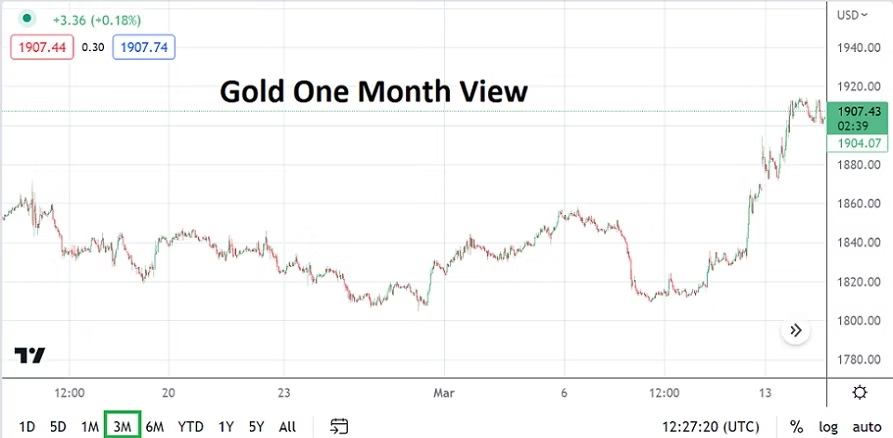
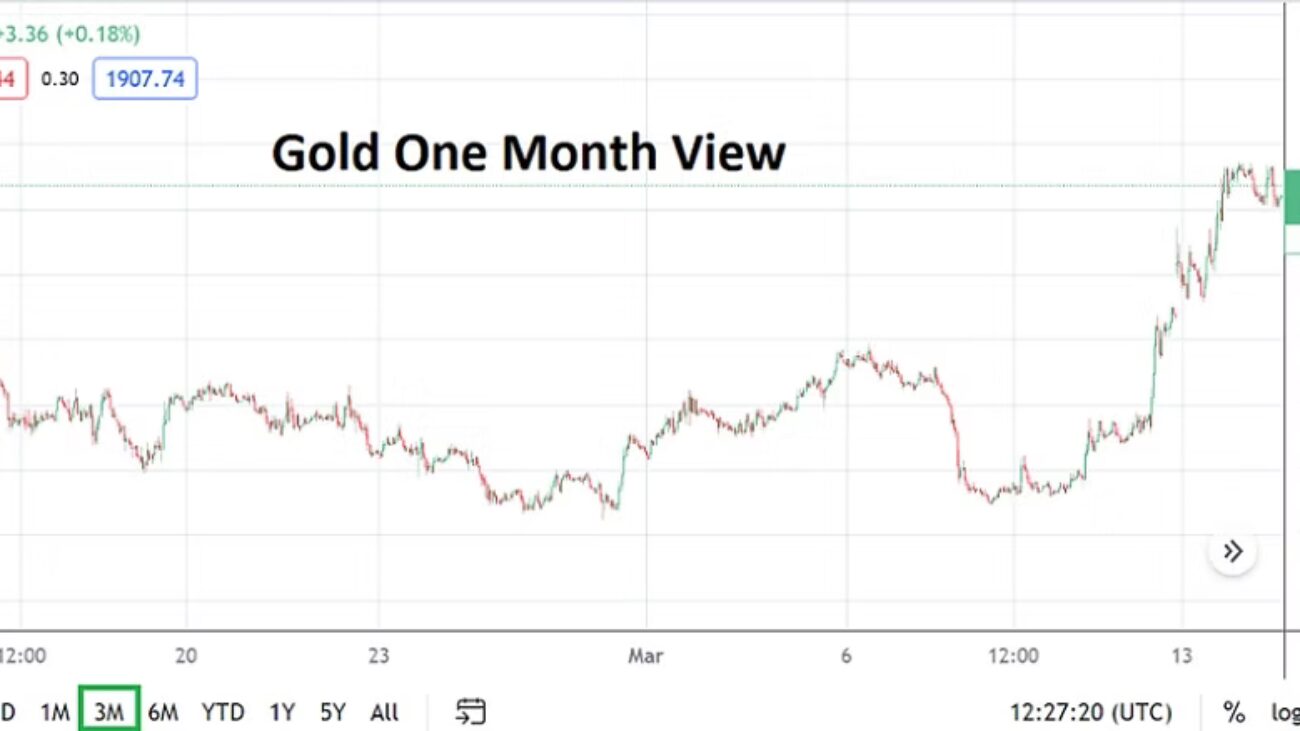
Gold One Month Chart

What comes over the next week and month will likely anger many people. Capitalism is good, it is even great. However, a dark and evil shadow lurks when crony capitalism starts to have an upper hand. The insolvency of Silicon Valley Bank raises the prospect for crony capitalism to be witnessed by all. Suddenly the U.S Treasury, Federal Reserve and government have emerged to save the skin of depositors within a bank which up until last week was heralding its ability to be a ‘lone wolf’; merrily disregarding sound investment principles and saying they knew better. It is only my opinion, but it stinks of contradiction that both the U.S Federal Reserve and Silicon Valley Bank have made vast mistakes and now are being allowed to cover their tracks and protect members of their ‘club’. Both Fed and Silicon Valley Bank officers need to be held accountable, but do not count on this result producing more than scapegoats.

Rising interest rates which are causing ‘import inflation’ has been a worry expressed by some economists and they can still be heard, but obviously not given enough attention. The Fed has marched to its own drummer and disregarded ‘the street’ for its own ideals and statistics viewed from its ‘ivory tower’ where it could not be held accountable.

Inflation is stubborn, yes, but it is a result of chaos via global commerce from the effects of difficult supply and logistics problems caused by coronavirus. Inflation became problematic two years ago and it was essentially disregarded for about nine months, until the Fed and others admitted rising prices was a concern. Hopes of transitory inflation have faded into oblivion. But I digress…..

Nervous Financial Institutions Battling as Federal Reserve Wavers

A sin bin of mistakes has collected and is now being exposed. Many financial houses were surprised when the Fed came out on the 1st of February and sounded so aggressive talking about inflation while increasing the Federal Funds rate again. Then jobs numbers came out on the 3rd of February, along with Average Hourly Earnings and showed the U.S economy was stronger than expected. The USD began to find strength again, and inflation data then added an extra punch by coming in strong again in February via the CPI results.

Btw, Consumer Price Index will be published today too from the U.S, and this will cause a reverberation for those attempting to day trade among waters filled with nervous financial houses who have their programmed algos ready to take advantage of hectic markets. Volatility the next handful of trading days is set to be wild. The Fed is not likely to raise interest rates by half a basis point on the 22nd of March, but if CPI numbers are stronger than anticipated today, this could cause a tremor and fear. Even if the Fed pauses for the moment, the prospects of raising interest rates again in the near future unless the banking sector shows it cannot sustain another round of Federal Fund increases is troublesome. Nothing like a complete lack of clarity for short-term traders to cause bedlam and a complex gauntlet of inflation statistics to make the Federal Reserve squirm.

Traders have to understand that if they are going to attempt to wager on the markets in the near-term that they are taking a huge risk. The use of leverage could provide solid profits on a winning bets via Forex, commodities or CFD wagers, but it could also wipe a trader completely out if they are caught by a violent wave. And the U.S Federal Reserve is not here to protect small traders, they frankly do not consider your results very much and likely believe you should not be wagering.

What the U.S government and its institutions like the Fed, Treasury and FDIC want to do is guard against systemic risks for the larger speculators – corporate traders, banks, hedge funds, V.C’s, etc. to make sure they do not go belly up and cause a global financial sink hole and long-term ruptures. The financial crisis of 2007 and 2008, the coronavirus pandemic starting in 2020 and the ongoing Ukrainian war have tested the markets and were likely enough for most of us to voice troubles. Now the prospects of a far-reaching banking crisis and illiquidity adding fuel to the fire are quite a combination of risk events usable as costly teaching moments. Do we seriously need another teaching moment however?

We are the little people and nobody sees us. We may yell, we may bellow our angst towards the system, but the system treats us as an afterthought. Day traders should keep this in mind as they bet in the coming days, because more gyrations are likely as a metaphoric ‘country club for institutional risk takers’ is given sanctuary. This as we minnows look up, shaking our heads in disbelief while our trading accounts flounder.
post17

Angry Voters and the Federal Reserve

Angry Voters and the Federal Reserve

Federal Reserve Chairman Jerome Powell is scheduled to testify before the U.S Senate tomorrow. Certainly we are going to hear the words inflation and growth mentioned, this as the Fed Chairman speaks about monetary policy and the trajectory for the U.S central bank to continue raising interest rates over the mid-term.

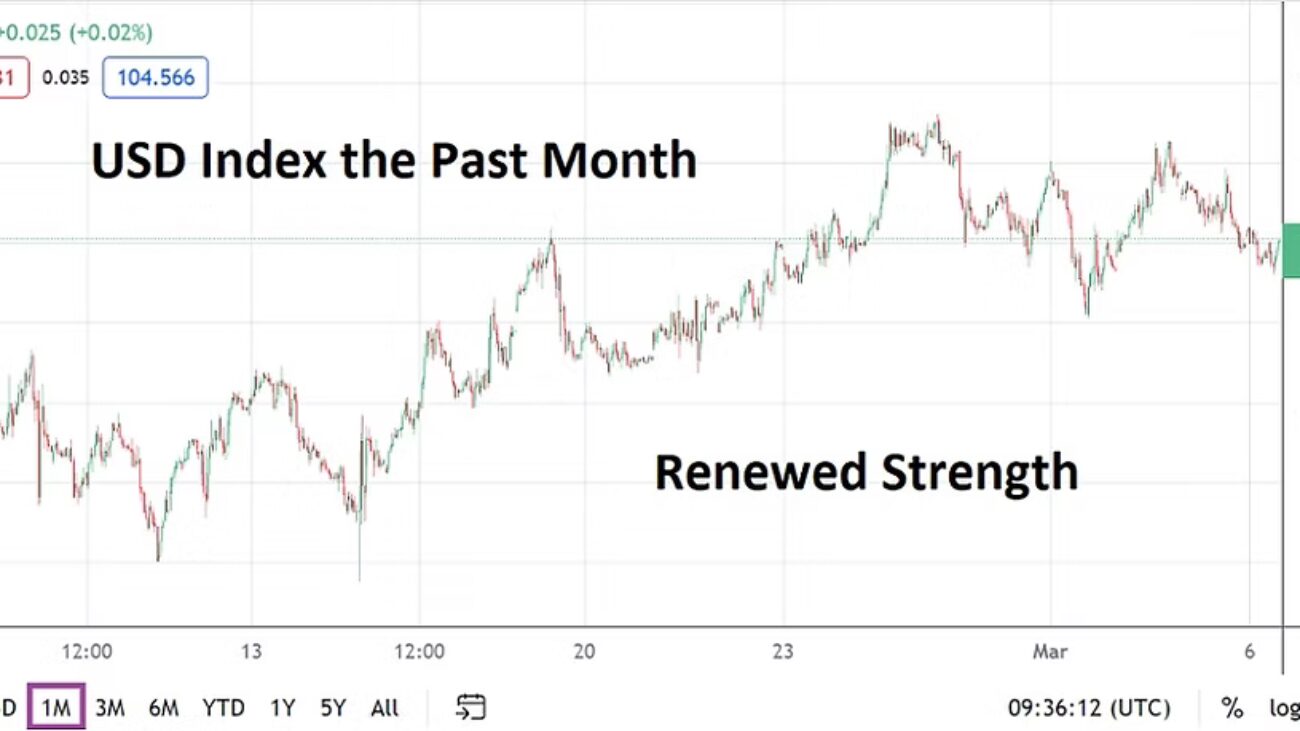
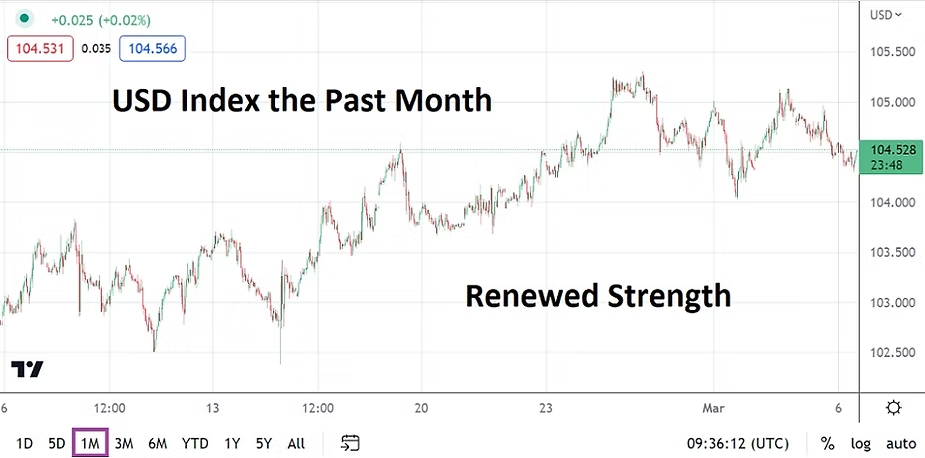
Via prices in the Forex market since the start of February, financial houses have likely priced in two additional interest rate hikes from the U.S central bank into the USD, one of them being a quarter of a point increase coming on the 22nd of March. The USD has been mostly stronger across the board the past four weeks. This week’s coming Non-Farm Employment Change numbers and Average Hourly Earnings data results should be monitored on Friday.

USD Index One Month Chart

While financial houses may have accepted the interest rates to come, this doesn’t change the rather complex economic data in the U.S which is demonstrating rather stubborn inflation, while also showing growth is not slowing down as much as has been anticipated. GDP numbers reported recently from the States showed only a slight decrease.

  • How much more can the U.S Federal Reserve increase interest rates over the next six months without making the USD too strong?

  • At what point will the Fed become less aggressive?

  • While an additional .50% has been ‘accepted’ by financial institutions, will the Fed bring the lending rate to 5.50%?

  • High inflation and limited growth could result in political quicksand for many elected officials.

The U.S Federal Reserve is going to get pressure from both sides of the aisle in Washington D.C.. Traders should not discount their perceptions that elected officials are starting to consider the ramifications of the coming elections in a year and half, because this will affect behavioral sentiment in the markets. Neither Democrats or Republicans will be happy if inflation remains a problem going into the vote. Rising costs equal less money in the bank accounts of American voters.

The U.S public has a history of voting via sentiment generated from their wallets and the power to consume. Prices that feel like they are out of control will win no friends. While energy prices seem to have calmed down in the headlines, energy costs remain a risk and concern for manufacturers worldwide. The inability to save money for individuals, and lack of profits for corporations makes for potentially angry voting results.

There is an additional problem lurking. The strong USD driven by the Federal Reserve’s increased borrowing costs, the Federal Funds Rate, has weakened currencies across the world. Vulnerable currencies have spurred inflation in many nations which are producers of goods that global consumers buy, these rising prices are being imported into the U.S economy.

As much as international economic integration helps the world, the rise of coronavirus and its knock-on affects via costs were not anticipated enough, causing weaknesses to be exposed. The U.S attempted to save its skin economically by creating a massive amount of stimulus, which certainly fueled domestic inflation. The U.S might have saved the American public in the short-term, but the government faces a long climb upwards to fix the problems overspending has caused.

The rising costs of logistics and the spotty supply of commodities internationally generated higher prices in the aftermath of coronavirus. Commodity prices have become more tranquil, but the costs of production has not eased because weaker currencies globally are hurting producers who need to use the USD to purchase resources. The U.S Federal Reserve’s attempt to tackle inflation with higher interest rates, has fueled ‘import’ inflation. This is not an easy problem to solve.

The Fed will not say in public they want the U.S economy to slow down, this acknowledgement would costs jobs which rely on political backing. The White House certainly doesn’t want the economy to suffer as it prepares for an election within a year and a half, but quietly officials likely accept slower growth and perhaps recession may become inevitable. Both the Fed and elected officials are performing a delicate dance that may be interrupted any moment.

The Fed doesn’t want us to remember they said inflation would prove transitory almost two years ago. The Fed needs to fight rising costs certainly, but very carefully. The desire to weaken inflation is correct but a dangerous balancing act, because the USD remains the global reserve currency.

post14

U.S Inflation Data Ready to Rattle Markets and Traders

U.S Inflation Data Ready to Rattle Markets and Traders

Another Day to Prove some of us are Fools

The U.S will publish its PPI data in a few hours time. The outlooks from many experts regarding the Federal Reserve have been rather suspicious when contemplating the U.S central bank. However, the results of the Non-Farm Employment Change numbers on the 3rd of February, and this Tuesday’s rather stubborn Consumer Price Index reports have created doubt among the ‘experts’.

  • Forex and equities and their related indices will react to the publication of the Producer Price Index statistics today and create price velocity that day traders may find dangerous.

  • On the surface it appears many Forex pairs have begun to search for a calm middle ground leading up to the release of the PPI report. Perhaps positions are on hold until the release of the inflation data.

  • Traders should not be tempted and get stuck in tranquil waters that could turn into seas that drown their victims later.

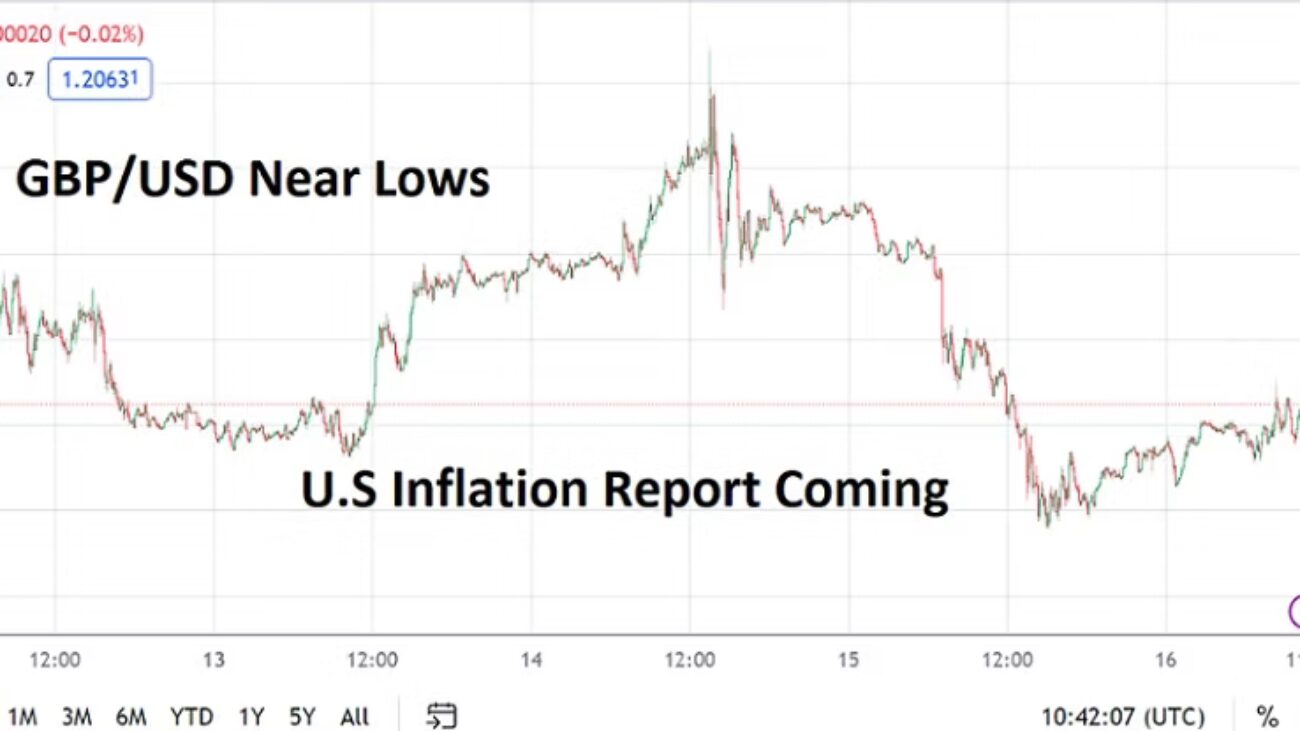
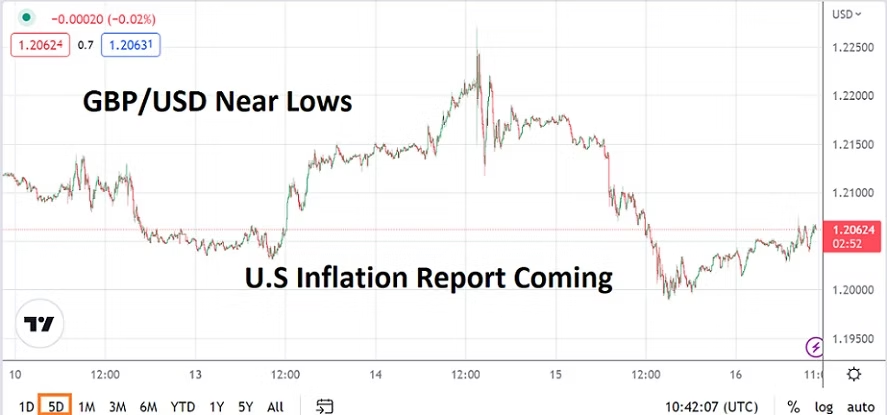
Day traders who choose to wager before the reports are published today are essentially gambling with their money unless they have direct knowledge regarding today’s outcome. The rather comfortable mid-term bearish trend in the USD against most major currencies has been stopped cold since the 3rd of February.

GBP/USD Five Day Chart

Outlook regarding the U.S Federal Reserve has gone from scorn and mockery and become a rather more sedated acknowledgement that inflation is rather robust. Today’s PPI numbers will provide evidence and clarity. If the number via the Producer Price Index is stronger than anticipated it will certainly create a foundation for the ‘promised’ 0.25% rate hike in March, but also set the road for more hikes to potentially come.

Questions remain loud. The better than expected jobs numbers a couple of weeks ago was a cumbersome development for financial houses paying attention to recent layoffs from top companies and betting on weaker data. When hiring proved to be stronger than anticipated it could be pointed out that the employment numbers were looking backwards and not forward. Yet, the strong Retail Sales numbers and the improving Empire State Manufacturing reading yesterday are signs the U.S economy remains in a better place than forecasted. Recession may not be around corner.

Day traders need to be cautious and the ‘experts’ may want to look for their safe places today.

post13.1

Is the USD Bullish Surge Coming to an End?

Is the USD Bullish Surge Coming to an End?

The long and brutal bullish trend the USD has exhibited against many other currencies could be coming to an end, as behavioral sentiment begins to suspect the U.S Federal Reserve will have to consider halting its interest rates hikes sooner rather than later.

PMI and Consumer Confidence statistics from the United States on Monday and Tuesday has heightened the perception that the U.S is within a recessionary cycle which the U.S Federal Reserve will have to act upon – by not acting. The Fed is likely to raise interest rates in November per their hawkish rhetoric, but the notion that the U.S central bank will then sit back consider the statistical landscape is growing. In other words a halt of hawkish policy appears to be a legitimate prospect after November.

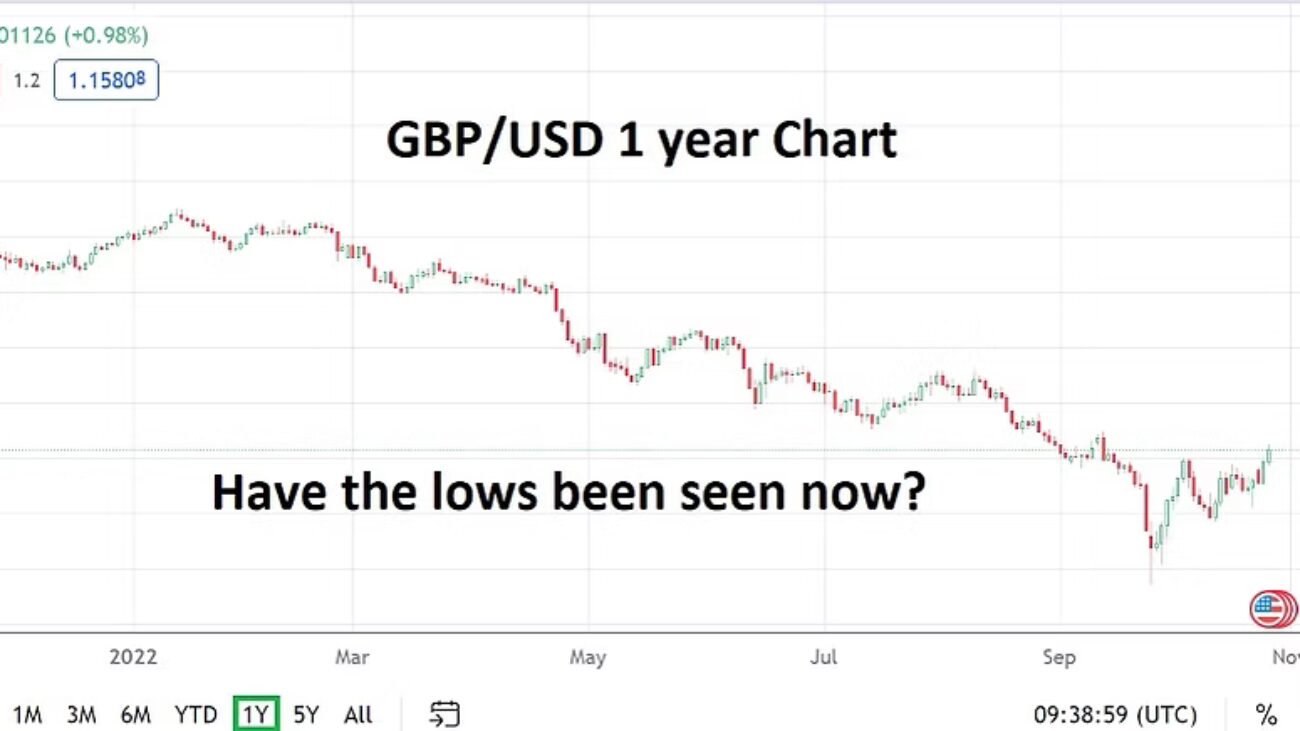
GBP/USD 1 Year Chart

If recessionary data continues to be exhibited in the U.S, the USD fundamentally could lessen its grip in Forex and allow other currencies begin to gain ground. The GBP/USD has been hit extremely hard – yes, this has had just as much to do with the political environment in the U.K which has resembled a three ring circus. The idea of tranquility within the U.K politically could help the GBP/USD move higher, the prospect of a less hawkish U.S Federal Reserve should help the British Pound also.

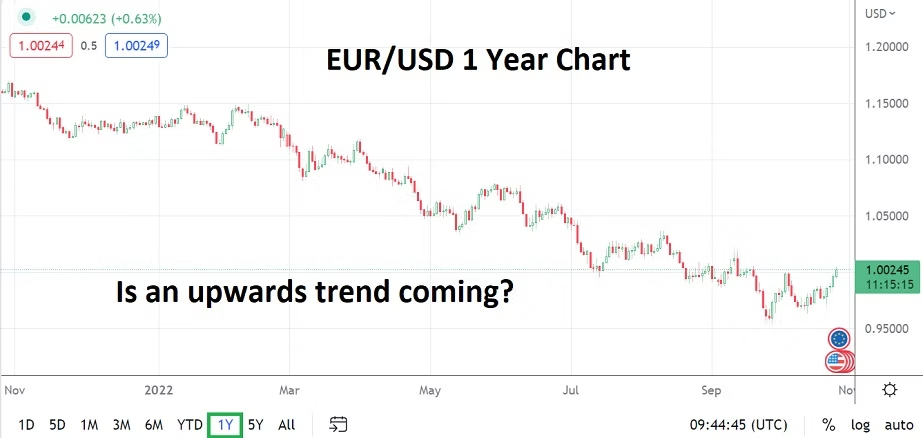
The EUR and JPY also may have the ability to gain within the EUR/USD and and USD/JPY as financial institutions begin to change their outlooks. Yes, the walls could crumble unexpectedly and another round of chaos could ensue which could cause a shockwave in Forex. However, if the U.S enters a recession which has to be officially recognized by the government and thus the Federal Reserve, the USD will be affected.

EUR/USD 1 Year Chart

This is not written to suggest a weaker USD will bring upon a great fix for the ailing global economic outlook mid-term. But it is certain that a weaker USD which trends in a bearish manner may be rather interesting to retail traders looking to gain an edge via Forex speculation. Equity indices may continue to struggle if corporations report weaker than expected earnings, but the downward trajectory in many stocks also means that PE ratios are becoming more realistic and a potential buying opportunity for long term investors. Warren Buffett can be your imaginary friend.

It has been a dynamic year of results in Forex as the USD has created stark trends with the USD/JPY, USD/ZAR, EUR/USD, GBP/USD and the USD/INR. Results in Forex and their volatility have created trading opportunities for speculators that have been likely better than wagering on cryptocurrencies; Bitcoin and Ethereum continue to stagnate and wait for the next great upheaval.

The past year has seen major equity indices suffer stark losses. Traders who have a constant bullish perspective because being positive is part of the human psychology have likely suffered if they have tried to be day traders via CFD’s of equity indices on the buy side constantly. Choppy conditions in the stock markets may continue for a while. Certainly in the long term many indices will rebound upwards, but buying individual stocks with leverage in anticipation that widespread bullish momentum is going to be a constant remains a nervous bet.

Forex via a USD pairing is beginning to look opportunistic for speculators. Picking the exact time a true solid reversal is going to become a constant is difficult and dangerous. There are no guarantees that we have seen the lows for the GBP, the EUR and JPY along with others currencies versus the USD, but if the U.S is truly going to have to admit recessionary pressures are taking hold, this may have an impact on inflation as demand decreases which the Fed would react to.

Things can wrong, more war breaking out, viruses bursting forth can be transmitted, political upheavals are a possibility in various locales, but from a risk reward perspective perhaps we are drawing to a close regarding the dominance the USD has shown the past year.

post11.2

Nervous about the Markets, You’re not Alone

Nervous about the Markets, You're not Alone

U.K political chaos turning into clarity or further madness? Mid-term elections coming in the U.S about to deliver change? More turmoil in Brazil? What could go wrong?

So you are nervous about the global markets. You are thinking about the possibility of putting cash under your mattress. Perhaps closing your equity positions and just being a spectator for the next year, well, you are not alone. It doesn’t mean you are right however, and you may want to proceed with caution before your let paranoia guide your decisions.

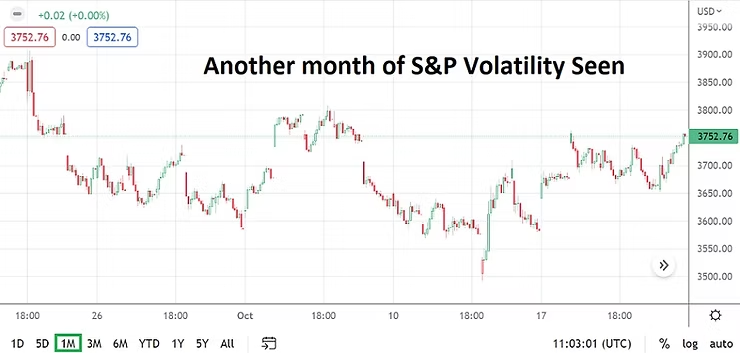
Past month of results from S&P 500

Global markets have faced perils before and will again in the future. Long term perspective is needed. The U.K, U.S and Brazil are all within intriguing political circumstance. The U.K is about to have its third Prime Minister after the ‘sacking’ of Liz Truss. The U.S is about to have a mid-term election and it appears the Republicans may seize control of the House of Representatives and Senate. Meanwhile in Brazil, the race for President appears to be getting closer and President Bolsonaro may actually pull off a photo finish against his challenger.

U.S indices have suddenly started to show brief moments of strong buying again. However many financial analysts remain skeptical. Fear of inflation, recession, quarterly earnings, debt and rumblings regarding stagnation are legitimate reasons for financial institutions to worry about this Halloween season. Jokes aside, the short term will likely remain rather challenging.

The U.S Federal Reserve has served as a solid place to show officials remain locked within their offices without a vision regarding the real world, but that is too easy to merely claim. Numbers need to be looked at and quantified to cast official blame on bad monetary policy. It does appear the Fed will raise interest rates again in November. Will they rest after this coming hike and actually wait for corporate evidence and economic data afterwards to help guide their decisions late in 2022 and early in 2023? We shall see.

The USD remains very strong and is hurting other economies as nations deal with the rising costs of food and energy, particularly when imports are involved. Things are not going to get tranquil in the short term, more hurdles need to be jumped. Remaining calm as an investor and trader is needed. Being reactionary will likely not lead to good results.

post10

Central Bank Capitulation led by Federal Reserve

Central Bank Capitulation led by Federal Reserve

The 21st and 22nd of September were potentially important signals for traders as the Federal Reserve admitted they remain reactive to inflationary pressures, and other global central banks countered with acts of their own.

While it is difficult and often foolish to believe the markets can be timed, this past Wednesday may have been an important moment for speculators in Forex. Many traders may have veered off into cryptocurrencies or into equities as day traders the past few years, but FX still remains a place that offers volatility and where wagers on price direction can be made.

The Federal Reserve raised their interest rate 0.75% again, and importantly issued a loud admission that the U.S central bank is caught in a reactionary mode. Other global central banks have begun to protect their own currencies too. Jerome Powell, the U.S Federal Reserve Chairman, said he believes the current interest rate is likely at the low end of the spectrum regarding where it has to be to have an affect on current inflationary pressures.

The USD has been strong against many major currencies with a rather unforgiving bullish trend. Raising the Federal Funds rate from 0.25% to 3.25% the past year in the U.S has made short term purchases of U.S debt attractive to many financial institutions. On Wednesday, Jerome Powell made it clear other hikes will be delivered and it is not farfetched to believe the U.S is looking at a potential rate of 4.50% and higher in the spring of 2023. This doesn’t mean the Fed’s policy is correct, it is simply an outlook for the potential Federal Funds Rate based on rhetoric.

  • A Federal Funds Rate in the U.S of 4.00% is likely by early this winter, per the Federal Reserve’s interest rate outlook.

  • Global central banks have reacted to the U.S Fed’s recent interest rate hike, by enacting methods to try and safeguard the value of their own domestic currencies.

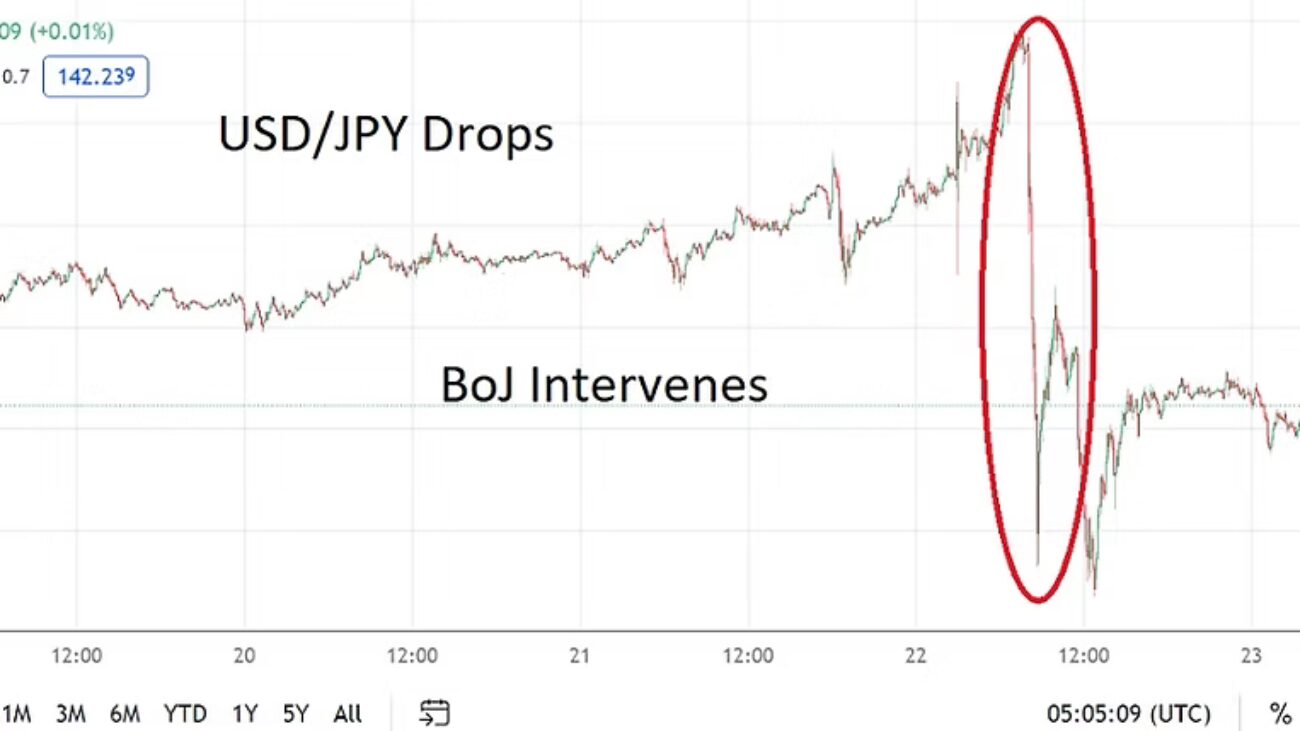
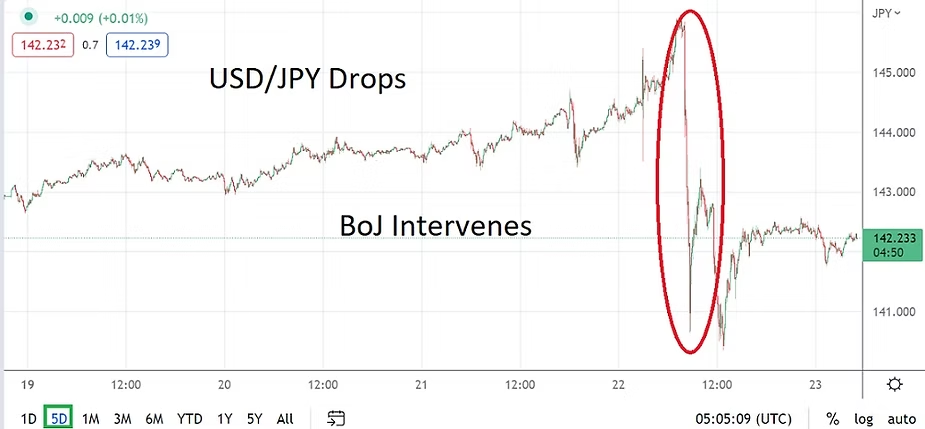
The USD surged ahead slightly before the rate announcement from the Fed, while many other currencies lost value. However, on Thursday the Bank of Japan intervened by starting to buy Japanese Yen against the USD. The Bank of Japan said it will not raise interest rates yet, but its action showed it clearly does not want the JPY to lose additional value to the USD, via the USD/JPY Forex pair. Whether the BoJ’s actions work mid-term remain to be seen.

Global Central Banks feel they must counter the U.S Federal Reserve’s Actions

Other central banks started to act too. The Bank of England and Swiss central bank both raised interest rates yesterday. Speculators who have been watching the USD dominate Forex the past year, may now have to consider that the last two day’s of action via global central banks is a signal an attitude change has taken place, which may begin to affect Forex long term. Traders need to understand opportunity also means there are risks.

Inflation remains high and governments have reached a point where they have had to admit they will have to risk slowing their economies and potentially suffer recessionary pressures to curb price increases. Many central banks likely feel they have to match the hike increases by the U.S Federal Reserve within their own systems to protect the value of their currencies.

BoJ Intervention on the 22nd of September

End of the Dominant USD Bullish Cycle in Forex?

While Japan for the moment refuses to raise borrowing rates, the BoJ’s buying of JPY effectively signals the USD has become too strong and is starting to hurt the Japanese economy. The the Bank of Japan will be interesting to study long term, to quantify if Japan’s lack of raising rates proves to actually be correct in the current environment.

Philosophical differences and central bank maneuvering is complex and has a long history of debate. Having said that the Bank of Japan has been largely scorned by many other central banks the past three decades for its methods, but while Japan has never recaptured the growth numbers it attained in the 1970’s and 1980’s, the nation remains one of the world’s richest.

The action of the BoJ and other global central banks means that speculators may want begin to look at Forex and tinker with the notion that the bullish trend of a dominant USD may start coming to an end. The cycle has been strong and again, it is difficult to say today is the day. Timing the market is often proven wrong, but the messaging from global central banks that they will start to shadow and react to the U.S Federal Reserve’s actions may mean that they will try to curtail the decreasing values of their own domestic currencies with more robust methods.

Day Traders need to understand a Complex Puzzle is Ahead

Forex markets can produce dramatic changes of value abruptly and cause costly losses to traders who bet wildly. The use of too much leverage and a lack of efficient risk management frequently destroys value quickly. However, now may be the time to contemplate testing Forex with the notion the USD may start to incrementally loss value. A lot has to happen. There are plenty of risk events ahead which could lead to wildly unforeseen results. In other words there are no guarantees.

Global equities led by the U.S indices appear very fragile and if the major stocks loss more value, this could also cause a stronger USD. Why? Because the USD would have to be purchased to buy U.S stocks by foreign investors who want a safe heaven. While it may seem contradictory to think U.S equities would be bought in downturns, this is what has historically happened when global financial institutions seek safe havens and believe other places are too dangerous to invest.

Remember financial institutions are not supposed to be day traders, they are supposed to be long term investment vehicles. Meaning if global equities suffer, even if U.S indices suffer too, the U.S is likely to remain the choice of investment houses as the place to seek shelter if they have to purchase equities as part of their mandates.

Yes, Forex will always be a complex puzzle for short term traders seeking to take advantage of the daily gyrations in the global markets. If a speculator insists on participating with wagers in the market place, they must consider that financial storms are always brewing because trading is seldom easy.

post9

Escalation of Rhetoric doesn’t create Calm Investors

Escalation of Rhetoric doesn't create Calm Investors

Putin and U.S Federal Reserve will Stir U.S Markets Today

An escalation of rhetoric via Russian President Vladimir Putin regarding his nation’s war with Ukraine took place this morning via a televised address to the Russian people. Putin has said Russia will call upon those with previous military training, and use a ‘limited’ call up of potential new troops. A claim of nearly 300,000 additional soldiers to be readied has been made by senior Russian officials shortly after Putin’s speech.

Making matters more intense, Putin said all military options are possible while Russia protects its sovereign territory. The land he was speaking about however, is not recognized Russian territory, it is Ukrainian soil. Putin’s ‘talk’ to Russia has firmly put him in a position which shows that results from the Ukrainian war have not had favorable results and that he is showing signs of frustration. An anxious Vladimir Putin is not about to calm down what are already nervous global markets.

China Urges a De-escalation in Ukraine while not naming Russia

China has already reacted to Putin’s speech by urging all sides active in the Ukrainian conflict to de-escalate the situation. China has its own economic worries presently and certainly doesn’t need another bad ingredient thrown into its midst as it deals with weaker demand for export products and a shaky real estate market as the global economy reacts to inflation and recessionary concerns.

International traders will hardly hear what China had to say today, not because it isn’t important, but because their attention will be on Putin and the U.S Federal Reserve. However, it is important to point out China did not condemn Russia, instead it asked that all sides involved in the Ukrainian sphere to lessen the dangers. China and its relationship with Russia remains an important aspect of global politics.

The U.S Federal Reserve will raise Interest Rates Today

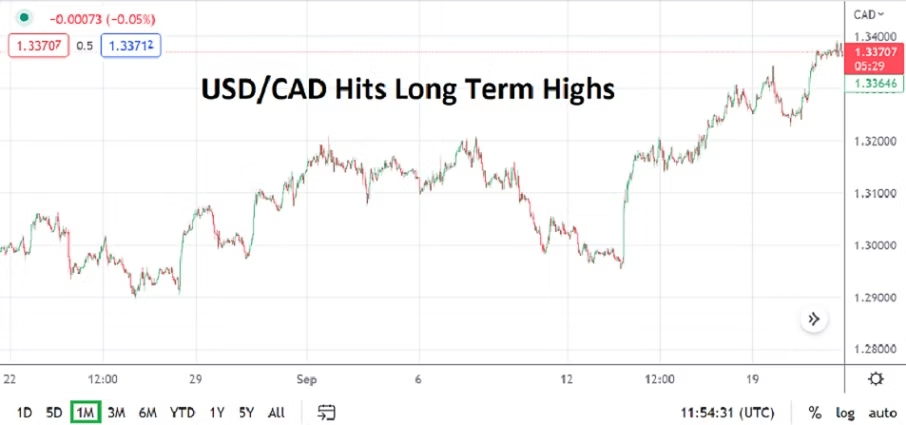
The U.S Fed will raise its interest rate by 0.75% today according to most financial houses which have already acted accordingly within Forex per interpreted price action. The USD has made new long term highs within the USD/ZAR and the USD/CAD. The EUR is below par as of this writing against the USD, and the JPY and GBP also continue to struggle near long term lows versus the USD.

USD/CAD One Month Chart

U.S equity indices which have been struggling are not showing a massive promise of a reversal upwards which will alleviate losses seen this year. Investors need to remain patient if they are invested in indices such as the S&P 500. Day traders looking to profit from the volatility ripping through the markets will continue to be challenged by choppy conditions, difficult perceptions of short term technical charts and a lack of positive behavioral sentiment among the larger players in the marketplace who actually drive the markets most of the time.

  • USD remains stronger against many major and emerging market currencies, day traders need to be very careful if they pursue Forex positions in the short term.

  • U.S equity indices traded lower yesterday, and if the Federal Reserve falters and doesn’t offer solid clarity regarding interest rates today, this could create more nervousness.

Optimism is not being heard far and wide. While it is always interesting to be a contrarian and sometimes the correct avenue to engage thinking, the notion that upwards trajectories will suddenly occur may be wishful thinking in the near and mid term. Many asset classes are under stress.

Today’s upcoming pronouncements from the Fed will be important for institutional investors as they try to gauge the U.S central bank’s outlook until early 2023. If the Fed gives clues they will remain hawkish into the winter and a Funds rate around 4.50 to 5.00%is a possibility, this could shake investors and cause more capitulation – meaning a stronger selloff via equity indices could ensue. Short term traders will need to be prepared for violent conditions if they are day traders of stocks or CFDs. The inverted U.S bond yields remains a sign investors are seeking short and mid-term safety via interest rates to preserve money.

The fact that most traders are typically buyers first, not sellers first makes trading in bear markets difficult. Psychologically humans want to be optimistic. Today’s speech by Vladimir Putin while it doesn’t change the conditions on the ground in the Ukraine immediately, will shake the confidence of some financial houses which may have become accustomed to a ‘polite war’ they could ‘forget’ about and make believe would not get loud again. Nervous behavior is likely to be seen later today as early risers in the States awake to the news of Putin’s speech and react.

In short global markets will be dynamic today and tomorrow, as financial houses position their portfolios according to their foresight regarding developments the next few months. Day traders are urged to be cautious, and the prospect of sitting on the sidelines and watching ‘the show’ may prove to be a solid choice.

post8

U.S Fed will raise Interest Rates this Week Once Again

U.S Fed will raise Interest Rates this Week Once Again

September Federal Reserve Pronouncements on the Calendar

The U.S Federal Reserve will raise their Federal Funds Rate by another 0.75% this coming Wednesday the 21st of September. If they do not it would send a shock wave through the markets, inflation data via Core CPI statistics, which were published nearly ten days ago in the U.S cemented the hike to come.

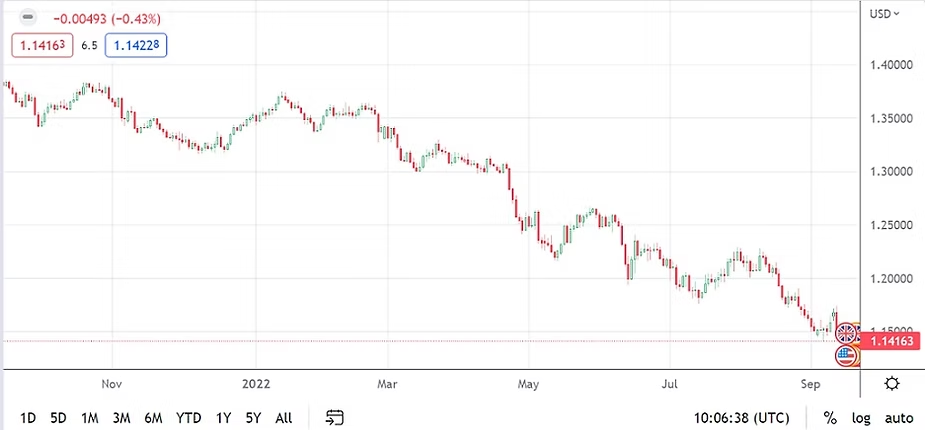
The hike has already been factored into the global markets. Forex has essentially gone ballistic via a strong USD, the GBP/USD is shown below as an example. The British Pound is now touching lows it has not seen since 1985 against the USD. Speculators may be tempted to trade this week believing they are smarter than the ‘crowd’, and that may be the case – congratulations if you are one of the few, but this may simply be an outcome of luck too. Many retail investors and speculators have been mauled in the current trading environment.

GBP/USD 1 Year Chart showing new Lows

Investors are Struggling as Clarity is Sought

Indices are struggling, gold is sputtering, U.S Treasury bonds are inverted, cryptos are under scrutiny. The U.S Fed is between the proverbial rock and hard place. Economic conditions promise to stay stormy in the next month and a half too. U.S elections will have an affect on behavioral sentiment. Certainly the Fed’s outlook which will be delivered on the 21st of September will cause turbulence also. A long term view via dividends from the S&P 500 remains a benchmark for investors seeking returns. Short term traders on the other hand must fight through the ‘noise of the experts’.

  • The U.S Fed is nearly certain to raise their key interest rate by 0.75% this week.
  • The key clarity investment houses seek is outlook regarding potential interest rate hikes to come later this year and early in 2023.

Where have the Gurus Gone?

Many self proclaimed gurus who claimed enlightenment only a year and a half ago, and offered their ‘insights’ regarding investment promises to eagerly awaiting traders are now hiding in their safe places and eating their words. Very few assets have proven profitable in the past year. Many investors are not used to the idea of merely preserving money, they have worked on the premise of solid gains made with speculative decisions which have been carried upwards by positive sentiment. Dealing with actual bear markets has not been a shared experience for many in the world of investing the past 13 years and the fresh scars are visible.

The ability to make money in this environment is difficult. The inverted bond yields in the U.S are evidence that folks are putting their money into relatively short term assets and trying to secure some of their capital. Traders can certainly wager this coming week in a variety of ways, but short term positions need to be considered with the knowledge volatility will be part of the terrain. Risk management is essential.

U.S Federal Reserve is in a Difficult Position

The notion that the U.S Federal Reserve will not stop raising their interest rates after the September meeting pronouncements this Wednesday still needs to be digested in many investment spheres. A Fed Funds Rate later this week of 3.25% is almost a 100% certainty. Speculation about a borrowing rate at 4% later this year may be realistic. And the question about how long the ‘transient’ inflation remains – yes, please laugh out loud, is a tough consideration. The outlook remains chilling.

While higher fuel costs have simmered a bit and have come off their highs, energy remains problematic and is having an effect on the costs of logistics, food and manufacturing. Energy concerns will remain the devil within the details. Some may want to look at the ISM Manufacturing data from the States for clues, but its merits remain debated too.

post6

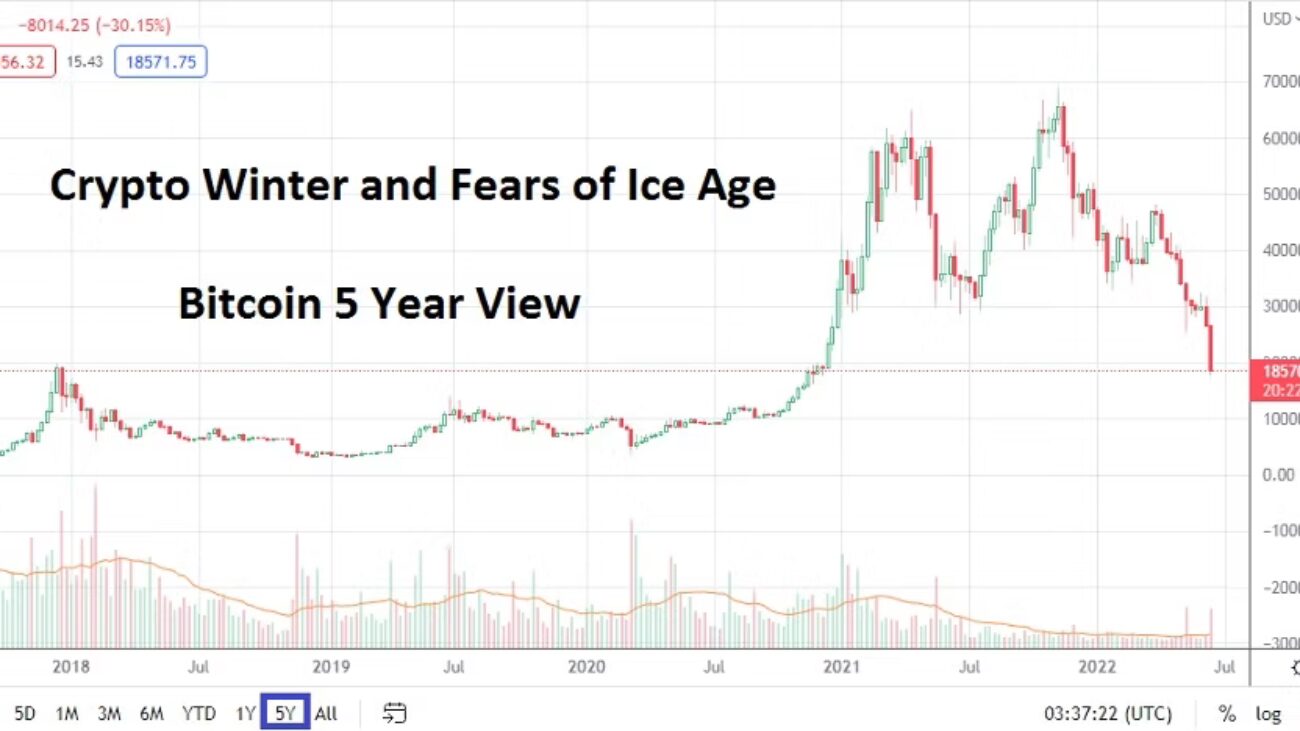
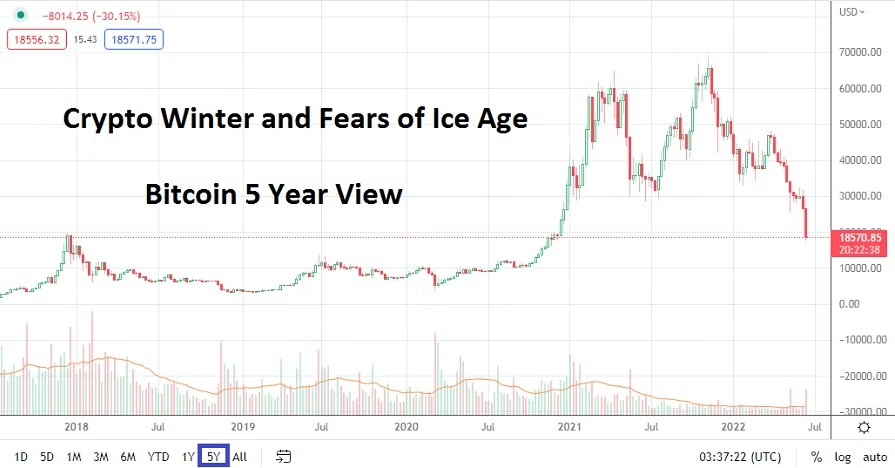
Bitcoin Winter Threatens to Become an Ice Age

Bitcoin Winter Threatens to Become an Ice Age

Many influencers within the digital asset world use the term ‘crypto winter’ as a way to explain the dramatic cyclical falls of value when cryptocurrencies prices crumble. The sun it is psychologically suggested, will shine again during summer, prices always heat up says the mantra.

However, the prices of the largest cryptocurrencies are suffering extensive erosion during this ‘winter’ storm. Although it may sound like a joke, a fear of a cryptocurrency ice age seems plausible. If values freeze too dramatically in the cryptocurrency world, will prices be able to thaw again?

Concerns regarding the ‘evangelists’ like mantras of Bitcoin backers such as Michael Saylor, the CEO of MicroStrategy, are noteworthy. Perhaps Michael Saylor will be warmed by ‘summer’ prices again and see Bitcoin emerge higher, but many of his ‘followers’ are likely to get hurt if prices do not rebound soon. Clever quotes like Bitcoin is better than fiat currency. Bitcoin is scarce. Bitcoin can be taken anywhere in times of crisis, are all frequently heard. But these quips become rather shallow sounding and questionable, during these massive selloffs which can destroy an average person’s speculative pursuits if they have over leveraged on their wagers.

Some backers will certainly say people should not be speculating on Bitcoin, they should buy and hold. However its does appear any buying of Bitcoin is speculative. Anyone who decides to purchase Bitcoin should be willing to lose all of their money. Its history as a volatile speculative asset underscores this fact.

Influencers and backers will claim they are not responsible, and in many cases they are not, but fingers will be pointed and blame will be cast and evidence will be gathered. Class action lawsuits will certainly spring forth as people who lost money look for folks and companies to accuse of wrongs. Responsibility will likely have to be proven in a court of law. Lawyers are certain to make money from their work, they may be the only ones who are guaranteed financial success from Bitcoin.

The average costs of purchased Bitcoin is said to be around 23,500.00 USD within the current total supply of 19 million plus existing coins. The problem for BTC/USD is that it is below this average purchase price as of this morning by a rather steep margin as it trades near 18,400.00 per digital asset. Meaning many folks who bought Bitcoin now have a substantial loss. Yes, the buyers who paid too much can become ‘HODLers’, but will they really be able to maintain this stance?

Another noteworthy number, it should also be remembered that it is estimated around 3 million Bitcoins have been ‘lost’ permanently via the misplacing of cold wallet information, and the forgetting of passwords that are needed to access coins in hot wallets.

Consideration must be given to the costs of producing one BTC, which supposedly is around 26,000.00 USD currently. If the price of Bitcoin continues to struggle, at what point do miners say it no longer makes viable economic sense? The price of mining a Bitcoin is not about to get cheaper in this high inflation period as energy costs grow.

When does a real capitulation take place? Why is Bitcoin being so violent during the weekends? Why does some of the greatest volatility apparently occur on Saturdays and Sundays?

Now that the 19,000.00 price level has proven vulnerable, which is the next technical level BTC/USD could challenge? Price velocity is lightning fast. Many seasoned traders could historically say this shows that fear has taken hold in the marketplace, and that may be true. But typically the fear eventually runs into an intrinsic value for the asset which creates a pause. Traders seeking value can jump in and take advantage of the low prices and wait for summer to shine. However, Bitcoin has very little intrinsic value that can be quantified. So where is the price investors jump in?

Will the price of Bitcoin fall to 13,000.00 during this so-called winter? Could it become even worse? Who is going to jump in and buy Bitcoin if it continues to stumble and its price is as cold as ice?

post5

Silence Of Tether a Loud Warning in Crypto Trading World

Silence Of Tether a Loud Warning in Crypto Trading World

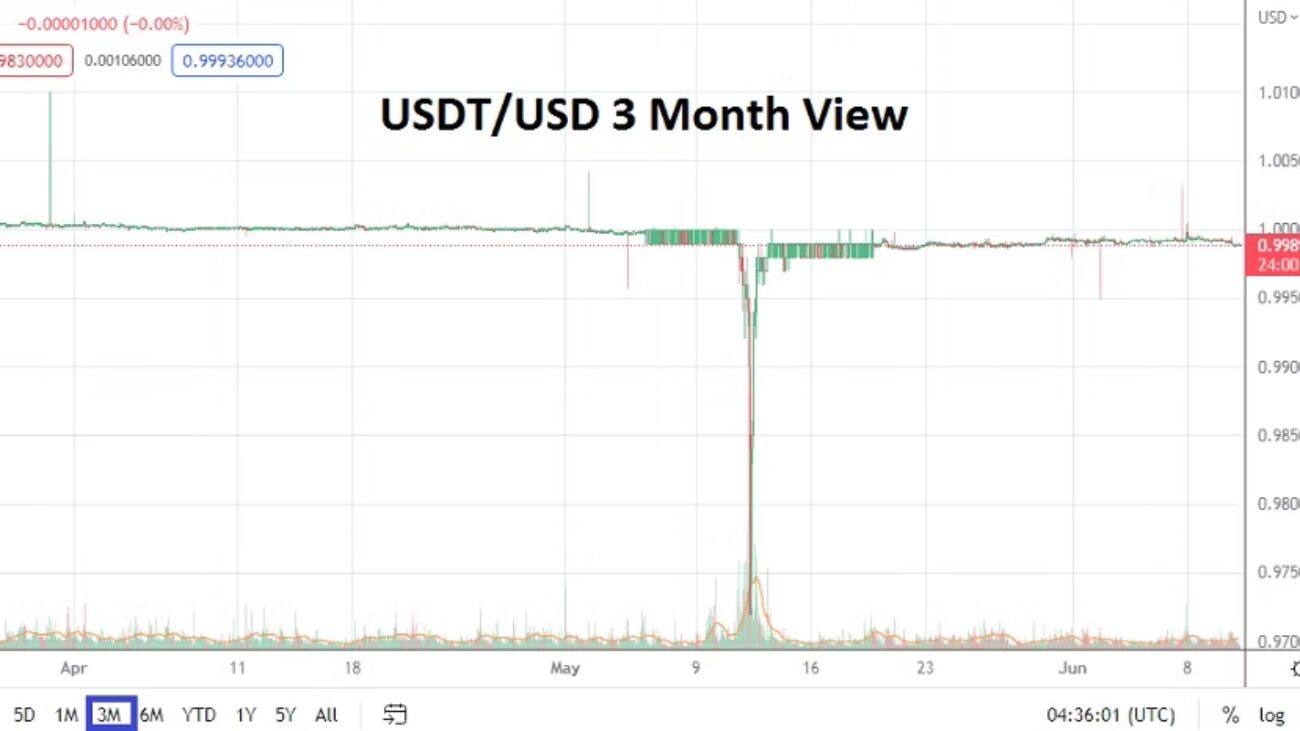
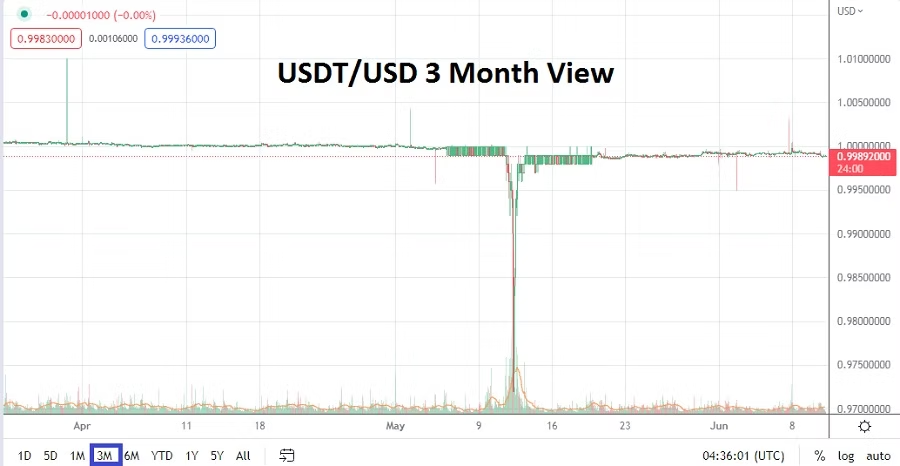
Tether continues to trade below its stated target value of 1.0000 via its stable coin ‘mandate’, and its failure to attain the target for nearly a month may be a loud warning.

Failure to Maintain 1.00000000 value in Tether

USDT/USD is trading near 0.99892000 via a Coinbase quote as of this writing. The last time Tether traded above the 1.0000 level in a sustained manner was in the last week of April. Since the destruction of TerraUSD, USDT/USD has not attained its objective as a stable coin in a month and a half.

One of the Tether functions in the cryptocurrency world is to facilitate transactions for digital asset businesses. If a tech firm, for instance, were to initiate an investment for a project in the crypto world, they might ask for the equivalent of 1 million USD. This transaction via the funding in the investment is often paid for via a stable coin. Tether is a mainstay of these investment deals.

Receiving Tether allows the business taking in the stable coin investments, to ‘know’ they hold what is supposed to be a nearly exact USD based exchange rate, if they decide to cash in their Tether if they need dollars to pay bills. The problem for USDT/USD currently is that the exchange rate is not meeting this need and expectation.

Yes, a crypto based business could say, ‘well, we know the rate is now 99 cents on the dollar, so we need to ask for more Tether to make sure we get the equivalent of our investment asking price in USD’. OK, good enough, but this creates complications that are unwanted.

The silence of Tether not trading at 1.000 speaks about a much more problematic possibility in the cryptocurrency world. What if USDT/USD is actually starting to show signs of fatigue? What if USDT/USD continues to incrementally lose a little bit of its value moving forward?

Where have the Speculators Gone?

Is it possible there are large speculative funds betting against Tether and shorting the stable coin with the belief it will continue to lose value? If funds are wagering against Tether and have the fortitude to maintain long term selling positions against USDT/USD, they could trigger big problems down the road if they are proven correct.

The cryptocurrency world is showing massive signs that speculators are not participating. While Bitcoin has been able to maintain some semblance of value, BTC/USD is still stumbling near lows and has not been able to create a large reversal higher. Bitcoin is struggling during this prolonged bearish trend. The mantra that cryptocurrencies are a hedge against inflation has proven brazenly false.

Even worse is that most of the other cryptos are struggling too. Ethereum continues to test lower values. As of this writing ETH/USD is near the 1674.00 ratio. Technical support levels are faltering and there appears to be no momentous wave of speculative zeal flourishing which is looking to buy into the digital asset world on the notion that cryptos are oversold. Cardano, Avalanche, Solana, Polkadot and Ripple are all struggling via their coins.

HODL mantra, Corporate Treasury and Hedge Funds

If speculators really have gone away, this leaves the folks who are die hard supporters known as HODL’ers (Hold on for Dear Life). It also leaves intriguingly major companies who have purchased some digital assets such as Bitcoin and cryptos such as Ethereum as ‘assets’ within their corporate treasury structures. There are also hedge fund companies that are holding cryptos as speculative investments. What if corporate treasury suddenly gets scared and decides to cash out of the digital asset world? Will the directors of MicroStrategy and Tesla get nervous and force sales of their digital asset holdings? Michael Saylor has repeatedly said no and that he will keep buying Bitcoin for MicroStrategy.

The lack of a rise in cryptocurrencies during this long bearish trend, and the notion that no massive reversal has been demonstrated during the large erosion of value the past two months is a potentially negative bad sign. Critical technical support levels have been tested repeatedly and their penetration lower is a loud screaming sign that something is going wrong from a short term speculative point of view. It doesn’t appear that we have reached the end of the downturn in cryptocurrencies yet.

If some deep pocketed folks are betting against Tether as a stable coin and believe its value will continue to dwindle without a fight upwards, the silence of USDT/USD recently in the digital asset world may prove to be vicious signal that worse is going to come for cryptos in the coming months.

Cryptocurrencies remain speculating. No matter what some folks say, digital assets over the long haul still have a questionable future via utilitarian capabilities and as their technology evolves. Corporate treasury and hedge funds who ‘invest’ in digital assets are speculating and they may pay a heavy price if they bet on the wrong direction.

The inability of USDT/USD to move back towards its 1.000 value is troubling. If speculators stay on the sidelines and do not participate in cryptos, corporations and hedge funds holding digital assets may be forced to start capitulating . Meaning they may start to sell. If directors of companies and speculative hedge funds start to get nervous about the long term outlook for Bitcoin, and Tether continues to loss value while it proclaims it is a stable coin – then darker days will come.

post4

Words Matter in the Financial World and Noise is Dangerous

Words Matter in the Financial World and Noise is Dangerous

As the financial markets trade in a nervous fashion the amount of ‘noise’ that traders must deal with has increased.

Markets Remain Jittery and Day Traders Pay the Price

The financial markets remain in a nervous state, and this is seen every day via the results from the major equity indices which continue to traverse within the framework of a threatening and potential bear market. Many new traders have not dealt with serious downturns in the financial markets before. Because human instinct is almost always positive, many speculators who participate in the markets tend to be buyers.

However in the past handful of months, many day traders who have been buyers have certainly found a difficult trading environment. Whether they are trying to pursue long positions in equity indices or cryptocurrencies, the speculative landscape has likely cost day traders money and produced trading accounts are negative, or worse simply have been closed.

U.S Federal Reserve Not Making Things Easy

The broad financial markets are likely to remain nervous in the coming months. The U.S Federal Reserve has a major interest rate announcement which will be delivered in the middle of June, and another rate hike of 0.50% is expected. What has the financial world nervous is not the anticipated interest rate hike which has already been digested into the marketplace, but what the Fed will say regarding their outlook regarding additional rate hikes in the summer. The reason why this is unclear is because the economic landscape remains cloudy and hotly debated.

The Federal Reserve has not helped investors because they have largely misread the economic landscape and caused problems because of past statements. Last year the Fed insisted inflation was transitory, meaning that it would soon diminish, this obviously did not happen. Now the best the Fed can do is to hope that inflation becomes less strong and that disinflation occurs. Meaning the U.S central bank is simply hoping it can decrease the rate of inflation.

Words matter in this trading landscape for investors because the Federal Reserve’s policy has not exactly been met with popular fanfare. Many market participants feel that the Fed has pursued bad economic policy and that they have reacted slowly to data which was abundantly clear regarding supply problems, and the rising cost of production due to climbs in energy prices.

The Biden Administration and Energy Costs

While some in the Biden administration try to point the finger at the Ukrainian war with Russia as the culprit. Most people are not that naïve. Energy prices were on the rise before the war and it can be seen that the bullish trend in the price of crude oil has existed since the Biden administration took power.

President Biden during his recent trip to Japan spoke about inflation caused by rising energy prices that were in ‘transition’. He made it clear that rising energy prices in the U.S are happening because the U.S is following a green environment policy and that the shift in regulatory mandates is driving the costs of energy higher. This combined with the Federal Reserve’s frequent talk about inflation and its desire to raise interest rates has made for a dangerous combination.

Noise will remain at a High Volume

Inflation may come down in the coming months. Demand for certain commodities may erode to some extent. However the cost of energy is probably going to remain high throughout the summer. The additional shadow of mid-term elections in the U.S and the potential for a shift in power in the U.S Congress are going to affect nervous sentiment among financial institutions in the coming months leading right up to November.

Traders need to prepare for noise which will come from pundits as they express their opinions. Speculators who are day traders also have to take into consideration that their short term goals are in direct opposition to that of long term financial institutions. The difference in trading outlooks and monetary capabilities make this a difficult environment for day traders in the current market conditions.

Following short term trends for day traders based on behavioral sentiment is viable. Technical charts can be used to gather short term evidence, but this will not stop the constant threat of reversals and spikes in price velocity from suddenly gathering power and creating momentary bedlam.

Eliminating the noise generating from pundits who can walk away from their statements without any consequences is a must. Unfortunately the comments coming from the Federal Reserve and White House are often hard to ignore and cause reactions in the marketplace; because their words matter even if they sometimes seem to forget what they have said in the past.

post2

NASDAQ Composite: Bearish Trend Testing Trading Inexperience

NASDAQ Composite: Bearish Trend Testing Trading Inexperience

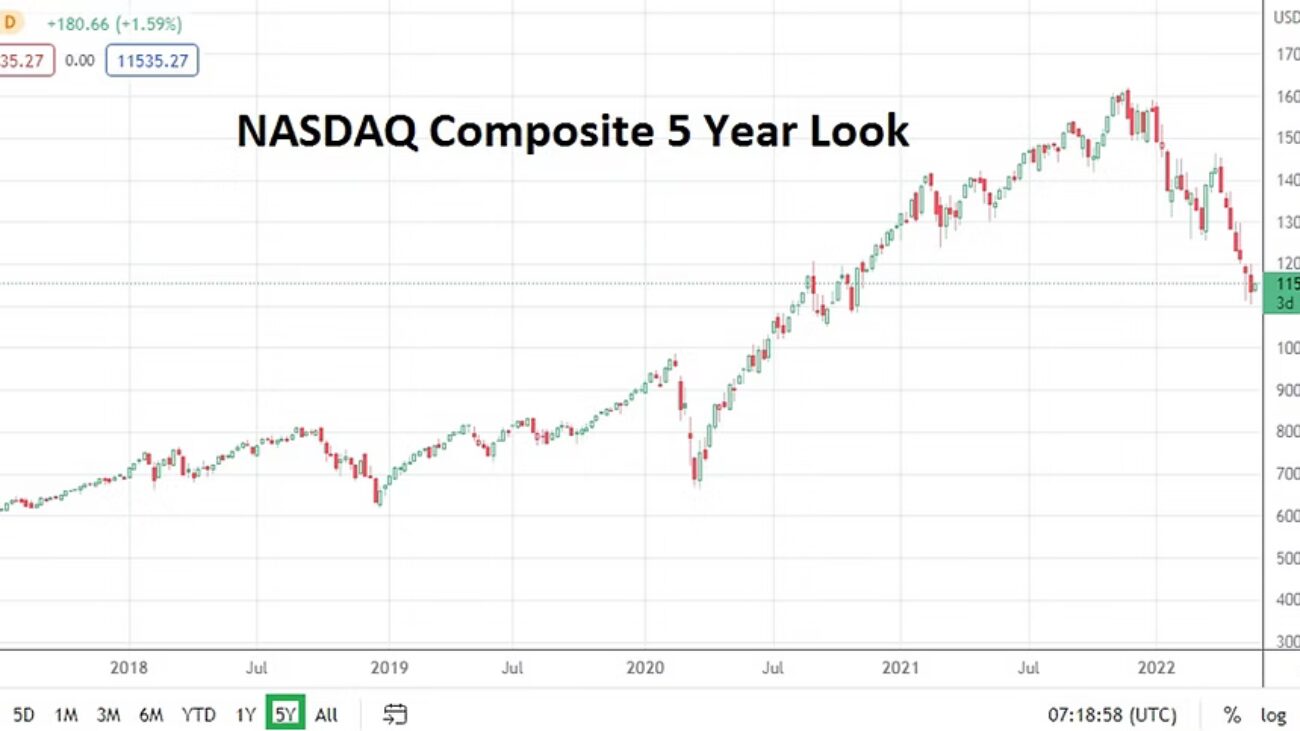
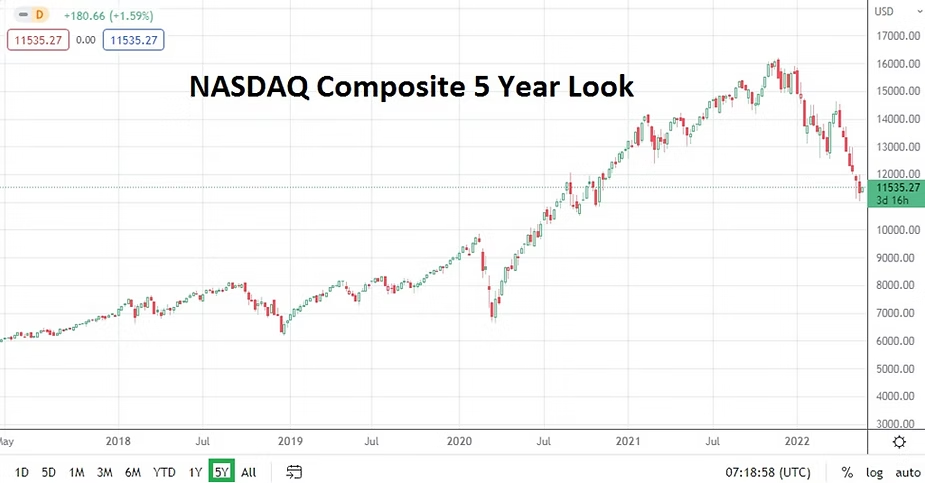
The NASDAQ Composite has been within the grasp of a selling trend since late November of 2021, and traders who feel the urge to buy should understand their goals and time frames clearly.

The NASDAQ Composite has seen a strong wave of selling take hold of its equities since the later stage of 2021. Investors have likely been spooked by inflation and high PE ratios which correlate into questionable values and fears of over exuberance and reactions. The combination of U.S Federal Reserve policy which is certainly having an effect on behavioral sentiment is problematic too. Investors are not fans of unclear outlooks and current economic conditions are definitely causing nervous sentiment.

Many traders and investors have not experienced a sincere bear market during their financial careers. Indices and their equities have produced a rather steady upwards vehicle for years. The thought that an equity index can actually go down for a long duration, without significant reversals higher following is troubling and new for many people. Timing new trends is exceptionally hard. An investor who has a ten year outlook certainly brings a different perspective to buying the NASDAQ Composite compared to a day trader who is likely maneuvering in the index with short term wagers using CFDs.

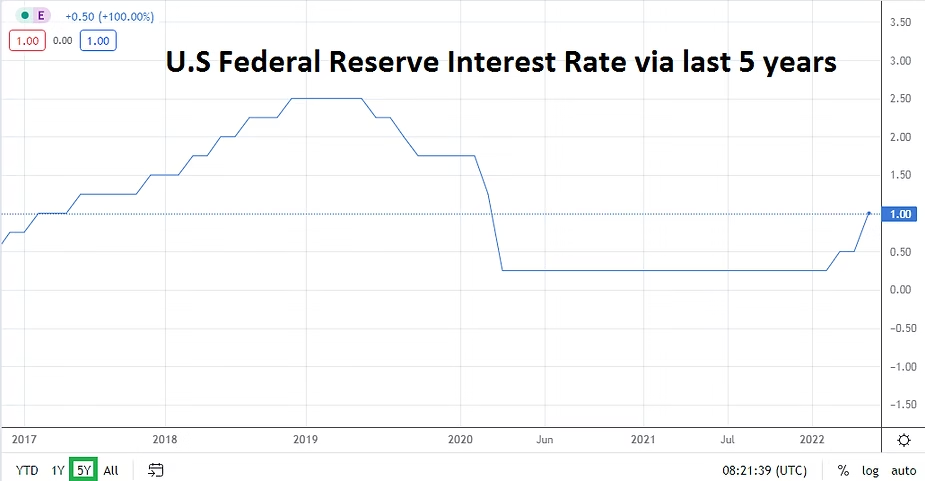
Current market conditions in the NASDAQ and other major global equity indices remain challenging and this will likely continue into early this summer. The U.S Federal Reserve will be conducting an FOMC meeting in mid-June and another interest rate hike is likely being considered. A potential rate hike of 0.50% may be seen. The potential of this additional hike to the current interest rate of 1.00% has likely been digested into the marketplace by financial institutions, but that is not the end of the troubling concerns.

Technical traders who watch the daily results of the NASDAQ Composite and other indices may attempt to speculate on the gyrations of their moves based on short term volatility. These traders should understand they are also battling large institutional traders who use complex algorithms to pursue their positions. The combination of nervous equity markets caused by uncertain economic outlooks, while it waits on the pronouncements of the U.S Federal Reserve are bound to deliver more nervous results in the NASDAQ Composite and other global equity indices.

While it may be accepted that the U.S Fed will raise interest rates again in June, the greater question that financial institutions want answered is what the U.S central bank’s outlook on additional interest rate hikes in the summer and fall will be. Inflation in the U.S remains troubling high. The rising costs of logistics, food and consumer goods are largely a manifestation of higher energy costs.

Yes, coronavirus has been a large ingredient too, regarding inflation and its current effect on employment and the resulting lack of workers is a component in the equation due to new perspectives among the workforce. The shortage of employable labor has also sparked concerns about demographics for the future. While the virus and its effects seem to have eroded in the West for the time being, unfortunately there are concerns regarding a potentially large problem in China if coronavirus infections continue to occur there. Shutdowns in China due to the virus can affect supply and commodities prices globally.

The costs of higher energy and commodity prices are something that companies and consumers will have to deal with in the months ahead. Disinflation is likely to come, but it may take a handful of months more. It is a complex puzzle and traders who want to bet on short term results will have to endure sudden storms of volatility which are likely to arise. Unanswered questions await and because of the shadows that hover over the economic landscape, clarity is not going to be delivered soon.