post 190

AMT’s Dubious Dozen Forex March 2024 Sentiment Outlook

AMT's Dubious Dozen Forex March 2024 Sentiment Outlook

The Dubious Dozen is comprised of nations who are wealthy or should be, and face criticism because of domestic and sometimes international policies. As the reader you are free to differ from the AMT opinions, which are admittedly subjective. The ratings and outlooks are not delivered as trading advice, but as a viewpoint to inform. The work presented is a living document. The nations and currencies listed, and data and critiques shall change monthly according to points deemed important.

AMT Dubious Dozen March 2024 Forex Sentiment Outlook

AMT’s Dubious Dozen Monthly Forex Sentiment Outlook has a scaled ratings table, listing nations and currencies that are judged to have concerns regarding outlooks due to behavioral sentiment factors within financial institutions and among citizens, based on economics, transparency, and risk concerns about government fiscal policy, and ‘leanings’ toward autocracy. Metrics like inflation, gross domestic product, direct foreign investment information, debts and budgets, and foreign currency holdings which are gathered from various public sources will sometimes be presented.

AMT also tries to judge the trust level the citizens of the nations have in their domestic currencies via exchange rates, black market FX factors, and alternative assets held to guard against potential risks – like digital assets, cryptocurrencies, and gold.

A lack of credibility in a ‘fiat’ currency is dangerous and often leads to black markets for Forex in search of safe-haven currencies like the USD. The lack of a credible domestic currency also leads to price inflation because people selling goods fear the value of the domestic currency is losing value rapidly. Rampant inflation also leads to a desire to sidestep taxation on occasion.

Problematic inflation and inability to collect taxes may open the door for certain countries to contemplate and potentially initiate Central Bank Digital Currencies in order to control domestic economic activity. It is not a coincidence that China, Iran, among others are considering implementation of CBDC’s. The potential of CBDC’s by governments could allow for draconian laws for citizens of certain nations. The ability for a government to check on how all money is used via a centralized blockchain could lead to a more authoritarian landscape.

Quick Insights of the Dubious Dozen Nations Listed:

Argentine Peso (ARS): The election of President Javier Milei has started to ignite changes within fiscal policy and has created hope among international observers of a less corrupt Argentina. However, many obstacles still must be overcome by the newly elected leader and the government, and many economic issues will take patience from the public to improve. Patience has not been a classic virtue in Argentina, unless one considers the ability to accept massive corruption and go on with everyday life as a supreme power.

Brazilian Real (BRL):  Concerns regarding potential fiscal policy changes hover over the existing government which leans towards a socialistic bent and has shown a tendency to align itself with some of the most autocratic governments. Some businesses and investors are anxious about the potential of government mismanagement to develop under President Lula da Silva. The listing of Brazil will create catcalls from some, but the fear in some circles is what might happen if fiscal policy which is led by a socialistic government becomes too populist. For the moment the BRL appears to be under control, which is a good thing. However, the Brazilian Real should be kept in sight for any signs of nervousness.

Chinese Yuan (CNY): The domestic economy remains troubling and fragile. Deflation abounds. Manufacturing, electrical usage, real estate, export numbers should be monitored by observers. Government policy, and transparency reliability due to political control by the Communist Party is problematic. Concerns are causing a backlash among many foreign investors who are looking elsewhere for long-term business endeavors, when they have the ability to divest. Stats: IMF expected GDP for China in 2024 is 4.6% for 2024. China is suffering from current monthly deflation around minus – 0.80%.

Egyptian Pound (EGP): Corruption is problematic within national institutions, bureaucracy issues plague businesses due to interference. Central bank independence is in question as the government faces a litany of fiscal problems. Worries persist about a devaluation for the EGP in order to try and get inflation under control which is currently near 26.5%. The Egyptian Pound is viewed as highly vulnerable.

Iranian Rial (IRR): The nation remains mired under international sanctions. The government practices a heavy hand regarding domestic policies which carry the threat of prison and worse because of the ability to oppress the general population. The Iranian Revolutionary Guard which has several branches of ‘service’ helps the ruling government dominate and benefits monetarily, which makes the Iranian leadership and its ability to rule comparable to a mafia. The current inflation rate in Iran is estimated to be around 32.5%. Unemployment in Iran is estimated to be above 10% and 60% of the total economy is believed to be centralized by the government.

Nigerian Naira (NGN): Corruption remains a troubling part of Nigeria. Although it is a massive exporter of commodities including ‘energy’, and has a dynamic demographic, government policy is highly questionable. Nigeria’s GDP is estimated to be around 3.46% as of December 2023. A problem for Nigeria is its shadow/informal market economy, which is estimated to be nearly 58.2%. Corruption and an inability to legitimately collect taxes hurts the government’s finances and its citizens. The Nigerian Naira is weak and is losing credibility.

Pakistani Rupee (PKR): Economic concerns regarding export and import disparities are a major factor in the lack of foreign currency reserves. A new government has been elected in Pakistan which has been able to form a ruling coalition. Issues regarding corruption remain troubling. Pakistan has also formed a stronger relationship with China, particularly as they search for strong economic partnerships, but this may leave them vulnerable politically. The IMF is a large factor in the current valuation of the PKR. The currency has been stable for a handful of months but needs monitoring.

Russian Ruble (RUB): Although the war with the Ukraine battles on, Russia has found a way to continue to create growth within its economy even in the midst of sanctions. The nation has found other ways to trade and acquire products from abroad via ‘new’ trading channels largely coming from Central and Eastern Asian routes. Russia’s government is seen as highly one dimensional and rules with an iron fist.  Russia’s economy appears to have grown at a remarkable rate of 3.6% during 2023. Core Consumer Prices were about 7.15% higher as of January 2024 per annum. Vladimir Putin has played a rather impressive game of economic poker with the ‘West’ in light of the Ukrainian war, much to the chagrin of his critics.

South African Rand (ZAR): The African National Congress has been in power nearly 30 years. Concerns about mismanagement and corruption abound which are believed to influence questionable fiscal policy. The South African economic outlook is weak due to problems regarding reliable electrical supply, logistical problems at ports, and bureaucratic interference led by government policy which leans towards central controls.  A large amount of immigrants from other African nations are still coming to South Africa as a cheap labor source, but professionally trained people are still unfortunately leaving South Africa via emigration in large numbers. The South African Rand has been within the grips a long-term trend of losing value, and while not entirely vulnerable its credibility is becoming shakier.

Turkish Lira (TRY): A thriving business and manufacturing base exists in the nation. However, inflation due to fiscal policy in Turkey remains an impediment for corporations which are forced to deal with a currency that many within the nation are worried about because of its incrementally weaker outlook which has been noteworthy for a handful of years. There are concerns about current government leadership regarding transparency and a tendency to interfere in Turkish Central Bank decisions. Financial institutions and their corporate clients have a difficult path as they try to mitigate the constant threat of high inflation in Turkey due to questionable fiscal policy.

Venezuelan Boliver Soberano (VES): The failed socialistic nightmare continues to cause squalor in Venezuela. If you want to see the potential of where the VES is headed look to Zimbabwe and the years that a combination of despotic rule under the guise of socialism has delivered. Venezuela should be a rich and successful country due to its natural resources, but it is led by a band of thieves. The black market rate of exchange if it can be found in cities like Caracas is much higher than the ‘official’ listed rate of the government. The VES has little to no credibility.

Zimbabwean Dollar (ZWD/ZWL): The nation is still trying to fix the problems caused by government mismanagement under the authoritarian leadership of Robert Mugabe which led to hyper-inflation and the destruction of the economy. Zimbabwe has a long way to go and issues to overcome to achieve the reintroduction of a domestic currency which does not suffer from a lack of faith from its citizens, which have led to a wide abandonment of the Zimbabwean Dollar and demonetization.

A national currency that is tradable internationally does not exist, the government is aiming for another attempt at monetization in 2025 if economic stability is created. The Botswana Pula (BWP), USD, and ZAR are among other currencies that are used and accepted by the population to transact business. The government tries to monitor all FX exchanges after years of misrule, but this does not stop a vigorous black market. There is an accepted perception the current leadership is trying to fix the massive problems which have created havoc in the nation for a few decades, but the road back to normality is still perilous.  

postN51

AMT Top Ten Miscellaneous Sunrays for the 23rd of February

AMT Top Ten Miscellaneous Sunrays for the 23rd of February

10. Word of the Day: Abeyance – the state of suspending something until another issue is resolved. Can you say, “Central Banks”……we knew you could.

9. South Africa: National election is scheduled for the 29th of May. Will the disdain the ANC and EFF have for the ‘West’ be addressed by voters or will the masses elect the usual suspects?

8. China and Germany: New Home Sales prices dropped again in China per data released this morning, Germany’s GDP data published today shows negative growth and recessionary pressures growing.

7. Nvidia: Their quarterly earnings report this week showed Artificial Intelligence isn’t a mere marketing tool, but a moneymaker opening a new era for technology.

6. South Carolina: Nikki Haley apparently will lose the Republican Primary in her home state tomorrow, but likely stay in the presidential race hoping that Donald Trump implodes via his own ego or legally.

5. Don’t Touch that Switch: AT&T believes yesterday’s widespread phone outage was caused by human error, not a hack.

4. U.S Equity Indices: Timeframes and patience remain crucial for investors amidst daily gyrations, this as the S&P 500, Nasdaq 100 and Dow Jones 30 explore record values.

3. New Zealand: Will the Reserve Bank of New Zealand go against the grain and actually raise its Official Cash Rate next Wednesday to fight stubborn inflation, or capitulate to the wait and see approach of ‘others’? The NZD/USD should be watched.

2. Caution: Forex remains choppy, U.S Treasury yields have crept slightly upwards, gold is hovering near 2020.00 USD. AMT’s #1 may be the reason why.

1. U.S Data Next Week: Preliminary GDP will be published on Wednesday, and Thursday will present the Core Personal Consumption Expenditures Price Index. The results could create massive impetus in all financial assets.

postN87

AMT Top Ten Miscellaneous Morsels for 5th of January 2024

AMT Top Ten Miscellaneous Morsels for 5th of January 2024

10. Book: Truth to Power – My Three Years Inside Eskom by Andre de Ruyter, an insider’s account about South Africa’s public energy company amidst corruption, mismanagement and scandal.

9. NBA: Last night’s Milwaukee and San Antonio game was the first ‘match’ of Giannis Antetokounmpo and Victor Wembanyama. Basketball is global and spectacular.

8. Noise: Clickbait media headlines about nervous results in financial markets this week have been exaggerated.

7. Horn of Africa: Ethiopia and Somalia are arguing about a port passage through ‘Somaliland’, astute eyes should be kept on the region and Egypt.

6. Diplomacy: U.S foreign policy has delivered poor statesmanship with India recently, allowing Russia to reinitiate its longstanding relationship with the nation.

5. Taiwan: Presidential election is on the 13th of January. President Tsai Ing-wen is not eligible to run again because she has now served two terms.

4. USD/JPY has ebbed higher and next week’s results promise to be rather insightful regarding the outlooks of financial institutions. Reversals coming?

3. China: Economic concerns in the Asian giant continue to mount as deflation threatens to become intractable and investors fret.

2. Data: U.S jobs numbers coming today, the results are anticipated to be slightly weaker. A reaction in the broad markets is certain, but it is full market volume next week which will set the tone.

1. Outlook: Anxious short-term trading results from the past two weeks are likely going to be confronted by optimism and risk appetite next week. Who will win?

postN95.1

Trading Optimism for 2024 and Pursuit of Castles in the Air

Trading Optimism for 2024 and Pursuit of Castles in the Air

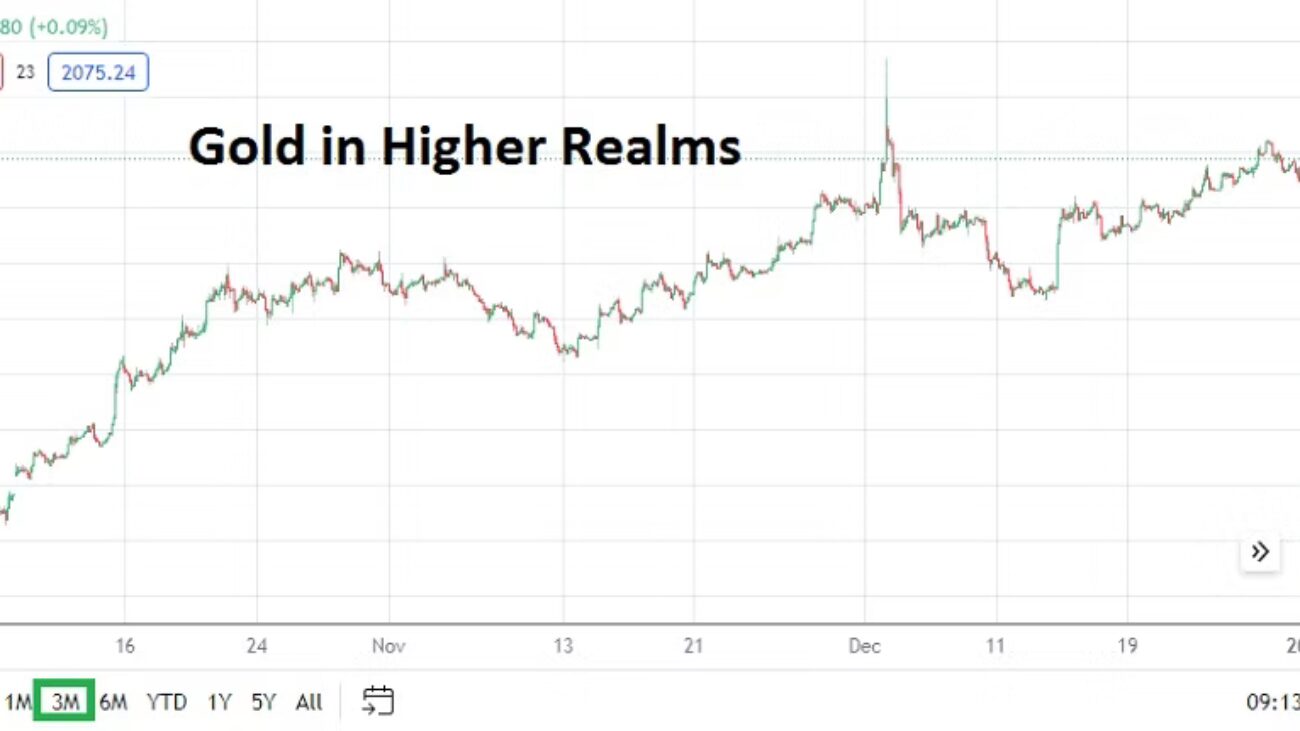
Traders may feel like horses being kept in their stables right now. The desire to run freely in Forex and other markets is certainly being felt, this as many analysts have jumped onto optimistic bandwagons and are pointing to the U.S Federal Reserve and its rather dovish outlook for 2024. Gold in early trading this morning is lingering near highs and the USD remains within weaker territory when technical charts are inspected via one month results.

Gold Three Month Chart as of 2nd January 2024

Yet, thin holiday trading is full in effect. Light volumes will continue to be seen early this week after the New Year’s celebrations. Financial institutions will open their doors today, but their corporate clients around the world will have plenty of employees who will remain on vacation until the 8th of January. Thus, while day traders may feel enticed to wager in the markets with various CFDs, they should be careful and understand unbalanced positions may cause temporary chaos. Risk taking tactics should be carefully considered.

The desire to dream about castles in the air is a source of comfort for many new day traders. But remaining realistic about potential results, while not getting overly ambitious about targets is an important aspect for all speculators. While trends may look attractive in Forex, commodities and equities a well planned approach regarding risk taking is a practical road. Castles in the air tend to vanish.

Optimism will be a word frequently heard in the coming days and weeks, and here’s to wishing everyone a prosperous and peaceful 2024. The potential of a more dovish U.S Federal Reserve regarding monetary policy and declining Treasury yields sparking more risk appetite in equities as investors seek solid returns is alluring, however risks remain on the table. The economy of China continues to worry analysts and tensions in the Middle East are still a long way from being solved.

However, the biggest cause for speculative concerns during 2024 may come from elections in Taiwan, India, South Africa and the United States. Taiwan’s presidential vote is on the 13th of January. China will certainly be watching the results, and traders should expect to hear swords rattling afterwards and then hope the noise calms down.

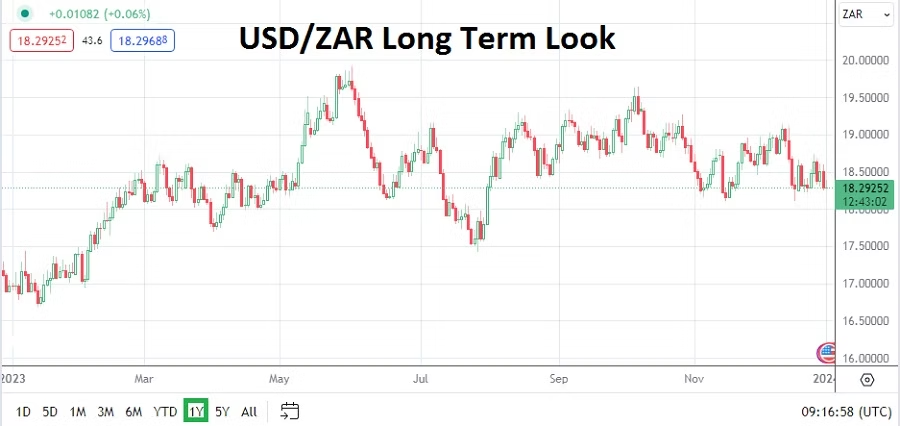
USD/ZAR One Year Chart as of 2nd January 2024

Tranquil voting results in India will be welcomed by investors. India is becoming a noteworthy economic giant, its rapid growth and ascension as an important investment vehicle needs to remain stable. South Africa remains troubled domestically by concerns regarding corruption and inefficiency, its upcoming spring election results may not solve the problems it faces. There will be many elections in Africa this year, which could spur on considerations regarding geopolitical alliances and the price of commodities.

The U.S election late in 2024 will start to grow in noise as the months progress and by early this summer behavioral sentiment will begin to become nervous regarding the outcomes for the White House and Congress. The U.S appears to be braced for an election between Joe Biden and Donald Trump and this will certainly cause skittish storms.

Traders should feel confident about risk appetite in the global markets improving, but they should keep in mind that impetus coming from many different spheres can affect the financial world.

Tuesday, 2nd of January, U.S Final Manufacturing PMI – today’s Purchasing Managers Index is expected to show a slight improvement, but the results may fall on deaf ears because many market participants will not be around to react due to the fact they are still on vacation.

Wednesday, 3rd of January, U.S ISM Manufacturing Prices – this inflation survey from purchasing managers may be given a bit of attention, but its effect may be limited because of light trading volumes still being exhibited.

Thursday, 4th of January, Germany Preliminary CPI – the inflation data from Germany will get some consideration, and the result is expected to show a slight increase. Services PMI data will also come from European Union nations, the U.K and U.S.

Friday, 5th of January, U.S Non-Farm Employment Change and Average Hourly Earnings – the jobs reports will get the notice of financial institutions. The results for employment and wages are expected to be slightly weaker than the previous month’s outcomes. Typically these numbers would cause a stir, but unless there are surprises, most financial institutions may not react massively to the reports because it remains a ‘holiday’ week. If the numbers come in weaker than expected this could cause interesting reactions on the 8th of January and weaker USD sentiment.

postN87

AMT Top Ten Miscellaneous Views for the 15th of December

AMT Top Ten Miscellaneous Views for the 15th of December

10. Book: Doctor Zhivago by Boris Pasternak.

9. Music: Moanin’ – Charles Mingus Big Band 93 Nostalgia in Times Square. Fantastic jazz.

8. Cryptocurrencies: Game of double dare continues as BTC/USD trades near 42,600.00. ETH/USD resides around 2,250.00. USDT remains at 1.00 and BNB/USD (yes, from the much criticized Binance operation) hovers near 250.00. Be careful out there, folks.

7. Argentina: Newly elected President Javier Milei has begun to enact economic reforms as the nation’s citizens and businesses hunger for better days. Will the Argentine Peso begin to stabilize?

6. South Africa: As the nation celebrates a public holiday for its Rugby World Cup victory today, it should be asked if the people are ready to vote for a political change in 2024? Or have things not gotten bad enough yet?

5. Central Banks: Federal Reserve ‘officially’ turned to a neutral/ almost soft monetary policy stance on Wednesday, the BoE and ECB followed Fed’s dance steps yesterday. GBP and EUR have gained and look intent to flirt with July 2023 values.

4. U.S Treasuries: Yields continue to erode and are near values seen half a year ago, with further decreases seemingly ready to occur mid-term.

3. Commodities: Gold is producing near-term speculative upwards muscle. Copper traders appear to be eyeing higher values.

2. JPY: Price velocity has propelled the USD/JPY to fresh lows, this as the currency pair gains speculative interest and behavioral sentiment shifts.

1. All Time Value: Dow Jones Industrials has achieved record heights. Nasdaq Composite and S&P 500 indices at one year highs as investors show risk appetite.

postN51

AMT Top Ten Miscellaneous Feast for the 24th of November

AMT Top Ten Miscellaneous Feast for the 24th of November

10. Book: A Thanksgiving Diet – Life as a Glutton by T.M.F Resuscitate.

9. Music: Frank Sinatra singing Somethin’ Stupid.

8. Global Commerce: London Metal Exchange and Baltic Exchange Dry Index prices are higher since September lows.

7. Post Holiday Warning: Trading volumes will be light today, day traders should expect quiet markets and sudden bursts of volatility. Early reactions next week may result in reversals due to perceived lack of price equilibriums having occured via today’s results, this as U.S financial institutions return in full to their offices Monday and Tuesday.

6. Election Surprises: Argentina and the Netherlands point to seismic changes in voting sentiment. India, South Africa and the U.S have major elections coming in 2024.

5. Crytocurrencies: Binance legal problems in the U.S casting shadows of doubt, but BNB/USD has been somewhat stable. Bitcoin – yes, a digital asset – is above 37,000.00 USD as of this writing.

4. Gold: Price of the precious metal remains slightly below 2000.00 USD level.

3. Energy Prices: WTI Crude Oil, Brent, Natural Gas and Gasoline remain within sight of one year lows, but intriguing support levels for speculators with long-term outlooks.

2. U.S Equity Indices: Stocks will trade in shortened sessions today. The major indices are within sight of one year highs. Next week could see positive momentum sustained.

1. Forex: USD within an intriguing near-term price range. GBP, JPY and NZD are some of the major currencies showing signs of potential strength versus the ‘greenback’ as outlooks seemingly shift.

postN51

AMT Top Ten Miscellaneous Niblets for Friday 6th of October

AMT Top Ten Miscellaneous Niblets for Friday 6th of October

10. World Cups: Big weekend ahead in Rugby and Cricket international competitions.

9. Book: Darkness at Noon by Arthur Koestler.

8. Travel Tip: The Western Cape of South Africa.

7. Inflation: Dramatic increases in costs of food globally causing nutrition concerns.

6. Jobs: U.S Non-Farm Employment Change data on the calendar.

5. Music: “In a Sentimental Mood” by Duke Ellington and John Coltrane.

4. Gold: Precious metal still languishing as USD remains strong amidst nervousness.

3. Salaries: U.S Average Hourly Earnings statistics results today will be a catalyst.

2. USD: Major currencies still weak as strength of USD causes duress.

1. U.S Indices: Equities behavioral sentiment appears fragile in stock markets.

postN55

ICC Men’s Cricket World Cup 2023 – Thoughts and Predictions

ICC Men’s Cricket World Cup 2023 – Thoughts and Predictions

The 13th edition of the ICC Men’s Cricket World Cup is scheduled to commence in October 2023, featuring a total of 48 thrilling matches. This tournament holds the prestigious title of being the “flagship event of the international cricket calendar,” according to the International Cricket Council (ICC). India has the honor of hosting this edition, a choice that aligns well with India’s global prominence. This decision gains added significance in a year when India became the world’s most populous nation, and its GDP growth rate ranks among the fastest of any major economy.

The sport of cricket has expanded its footprint across the globe, being embraced by numerous countries. However, in this edition, only 10 teams will participate, a deliberate choice to maintain the intensity of the matches. Eight out of these 10 teams earned their spots through the super league performance, while the final two, Sri Lanka and Netherlands, secured their places via a “world cup qualifier tournament.” It’s important to note that there are no newcomers in this edition; all participating teams have previous experience at this level.

Based on performance rankings, four teams stand out as strong contenders for a spot in the semifinals: India (ranked 1), England (2), Pakistan (3), and New Zealand (4). However, it’s crucial to remember the disclaimer from financial investment products: past performance is no guarantee of future results. The eventual World Cup winner will likely be a team that doesn’t rely solely on star players, but boasts a balanced composition with multiple match-winners. In another analogy with the financial world, it’s akin to maintaining a diversified investment portfolio, a prudent allocation strategy that can weather various market conditions and risks.

India currently holds the top ranking and demonstrated their prowess by convincingly defeating Sri Lanka in the recent Asia Cup. Throughout the Asia Cup, diverse Indian players showcased their talents in different games, highlighting the team’s depth of match-winners and individuals capable of thriving under pressure. These qualities are pivotal during major tournaments, making India a favorite to claim the World Cup. Additionally, as the host nation, India enjoys the advantage of playing on home soil, further boosting their prospects in the tournament.

England enters the competition as defending champions, having triumphed in the thrilling 2019 World Cup finals against New Zealand, a match that ended in a tie. Ultimately, England secured victory based on a technicality. It’s essential to note that this outcome in no way diminishes England’s deserving win, as the result could have swung in either direction. Since then, England has maintained their dominant form, boasting a squad teeming with players capable of leading their team to victory. On paper, this team is arguably the most well-balanced, featuring a batting lineup that combines power hitters and run accumulators, as well as a versatile bowling attack capable of delivering both pace and swing or employing a slow, stifling approach.

Pakistan’s performance often oscillates, creating a roller-coaster of emotions for their dedicated fan base. On their best days, Pakistan can outclass the favorites, but they also exhibit a tendency to falter in tight contests. In the recent Asia Cup, despite being favored, they fell short of reaching the finals due to injuries to key players and lapses during critical moments. Pakistan’s success frequently hinges on the prolific scoring by their captain, Babar Azam, and the batting prowess of Mohammed Rizwan. In the bowling department, their reliance on superstars like Shaheen Shah Afridi and Haris Rauf is evident. This dependency on specific players presents a challenge to their World Cup aspirations.

New Zealand is somewhat of a statistical anomaly, consistently producing a remarkable number of world-class players from a relatively small population. They excel in identifying promising talent and nurturing it to create high-performance athletes. Furthermore, the New Zealand team is affectionately known as the ‘nice guys’ of cricket, celebrated for their amiable nature. Like Pakistan, the New Zealand team places considerable reliance on specific players, with the batting finesse of Kane Williamson and Tom Latham, combined with the lethal fast bowling of

Trent Boult, serving as a cornerstone of their success. The success of the team will depend on these star players maintaining their form throughout the tournament.

Two teams with contrasting World Cup histories deserve attention: Australia, a five-time champion, and South Africa, a team that has never reached the finals despite its quality. Australia, while not as dominant as in the past, continues to display a solid brand of cricket. The team is currently undergoing a transition, with younger players assuming leadership roles. Recent performances may not indicate peak form, so Australia lifting the cup would underscore their commitment to process and mental training.

South Africa finds itself in a similar situation to Australia, boasting numerous talented players but struggling to maintain consistent performance. Both Australia and South Africa appear to have individual excellence, but face challenges in cohesively functioning as a team.

In conclusion, India and England emerge as the front-runners for a coveted spot in the World Cup final. These two teams showcase a balanced roster with game-changing abilities. However, the question looms: can Pakistan’s star-studded lineup carry them to the summit, or will New Zealand’s proficient athletes secure another final berth? Could Australia recreate history, or will South Africa, long awaiting their breakthrough in a World Cup tournament, finally shine on the global stage? Alternatively, could an underdog team spring a remarkable surprise? Only time will tell. One certainty remains, though: winning a high-pressure World Cup tournament requires more than just physical fitness and mental resilience; it demands unwavering heart and determination.

postN51

AMT Top Ten Miscellaneous Tidbits for Friday 8th of Sept.

AMT Top Ten Miscellaneous Tidbits for Friday 8th of Sept.

10. Detroit Lions: NFL season last night kicked off with upset of the Kansas City Chiefs.

9. Book: Koba the Dread – Laughter and the Twenty Million by Martin Amis.

8. Sports: Rugby World Cup 2023 begins later today as France and New Zealand meet.

7. South Africa: Load shedding stage number 6 this morning, USD/ZAR near highs.

6. Dominoes: U.S banking and commercial real estate wobbling and problematic.

5. U.S Federal Reserve: Talk from both sides of mouth ongoing, but ill-advised.

4. Equities: Major U.S Indices remain under pressure with fragile behavioral sentiment.

3. Forex: USD strong as other major currencies trade with lower values.

2. Murky Outlooks: U.S Treasuries yields have come off highs seen on Wednesday.

1. China: Trade Balance data was poor yesterday, CPI and PPI statistics tomorrow.

post204

AMT Top Ten Miscellaneous Considerations for this Friday

AMT Top Ten Miscellaneous Considerations for this Friday

AMT Top Ten Miscellaneous Considerations 25th August 2023

10. Behavioral Sentiment: Risk adverse conditions heightened again.

9. Book: Pioneering Portfolio Management by David F. Swenson.

8. Rugby: All Blacks vs. Springboks tonight at Twickenham.

7. Federal Reserve: Jackson Hole Symposium and Speeches.

6. Travel Tips: Stay away from Russian corporate jets with Wagner members flying aboard.

5. South Africa: What’s next after BRICS Summit, an end to loadshedding?

4. Cryptocurrencies: Bitcoin, Binance coin remain under pressure.

3. Germany data: Coming ifo Business Climate and GDP data.

2. U.S data: Yesterday’s mixed Durable Goods numbers.

1. USD: Another burst of strength yesterday.

postN44.1

Dog Days of Summer and a Return of Calm as Storms Threaten

Dog Days of Summer and a Return of Calm as Storms Threaten

With essentially two full weeks of trading until the end of August and the unofficial end of summer in sight, perhaps this week may be a good time for retail traders to be observers if they do not have the stomach for potentially noisy speeches and markets.

However, speculators who can block out media hyperbole and microphone soundbites from folks standing on podiums may find conditions rather attractive. As always outlook depends on perspective, time frames and managing risk. Behavioral sentiment has been rather chaotic the past month and some traders may suspect we are approaching the end of the loud spectacles of nervous drama in the markets.

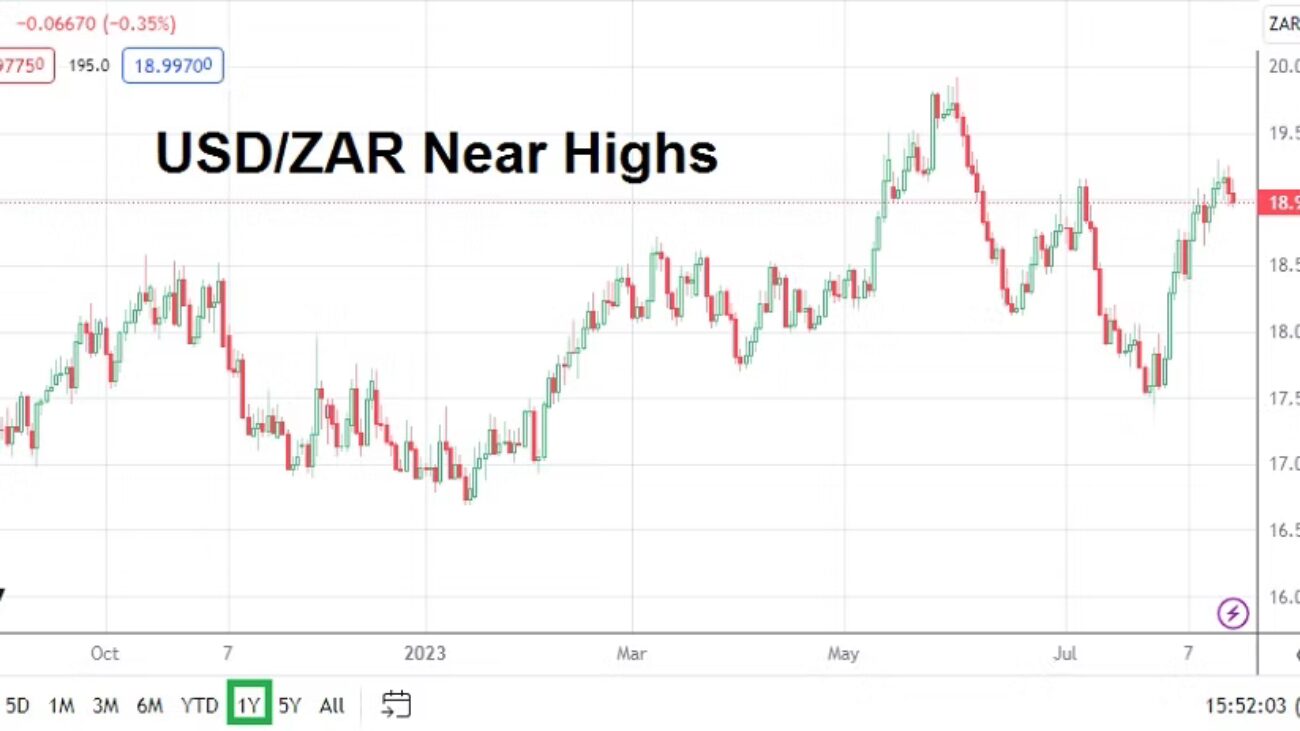
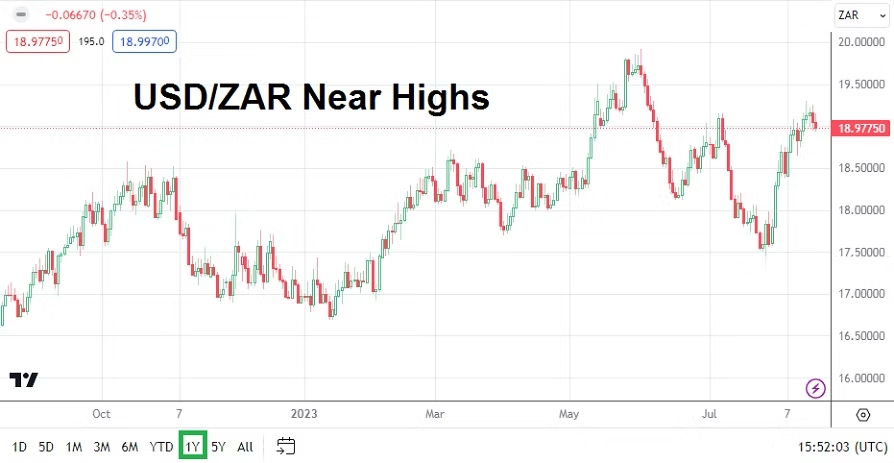
USD/ZAR One Year Chart as of 20th August 2023

The economic data this coming week should prove to be a rather mild schedule, but outside influences will certainly get publicity and get fanfare from talking heads who want 15 minutes of your attention. The BRICS Summit will get underway in Johannesburg, South Africa officially on the 22nd. Another big conference later this week will be the U.S Federal Reserve’s Jackson Hole Symposium. Both events will produce plenty of conversations about inflation, economic stability and a more cohesive global cooperation monetarily. This will also create many raised eyebrows among traders who are skeptical about these type of events.

While leaders of China, Russia, India, Brasil and South Africa get together in Johannesburg, it is likely we will hear talk about potential BRICS expansion and the pursuit of a new unified currency which doesn’t rely upon the USD. However, in the background there is likely to be plenty of distraction because of China’s faltering economic data and Russia’s Ruble which has been impacted severely in the past month. Plenty of large rugs will be needed to hide the dust which threatens to make this BRICS event rather memorable.

Add the ongoing saga of Niger and the absence of a political solution for the world’s fourth largest producer of uranium as a potential flash point standing on the side of the stage waiting to make an appearance regarding Africa news. Perhaps it is too cynical to wonder if coordinated military action within Niger will await the end of the BRICS Summit. This so China and Russia are not given an opportunity on the ‘world stage’ as a united voice to offer their opinions regarding an intervention.

The Jackson Hole get together of global central bankers from the Fed, BoE, ECB, BoJ and others will certainly grab headlines late this week, but the script is mostly known regarding the rhetoric to come from the Federal Reserve’s annual event. Forex may move based on comments from the central bank chiefs as they speak towards the end of this week, but it is unlikely anything surprising is going to be heard. U.S Treasuries will remain a topic because of the ability to lock in a solid return over the mid-term compared to betting on the outcomes of the stock market, but this scenario has been playing out the past month. Investors should prepare for a long line of speeches regarding economic outlooks from central bank officials all week. Day traders should also remember that the chatter starts to be ‘tuned out’ as the speeches grow longer.

Traders looking for other outside influences may want to look at the cryptocurrency market where major assets have shown signs of struggling. Bitcoin and Binance coin could remain in the headlines for all the wrong reasons, if their prices continue to challenge important support levels and become more vulnerable.

Monday, 21st August, China Prime Rates – economic data from the nation has caused concerns that real estate problems are spilling over into the domestic consumer market. The interest rates China lends money to consumers is expected to be lowered to try and spark spending. Recent economic reports from China have been bad, and readers who believe this is merely ‘Western’ bias being reported should be careful to look for other sources to confirm data. Investment within the second biggest economy of the world has become tentative, because there is a fear the ‘official’ China numbers may be worse than those being reported.

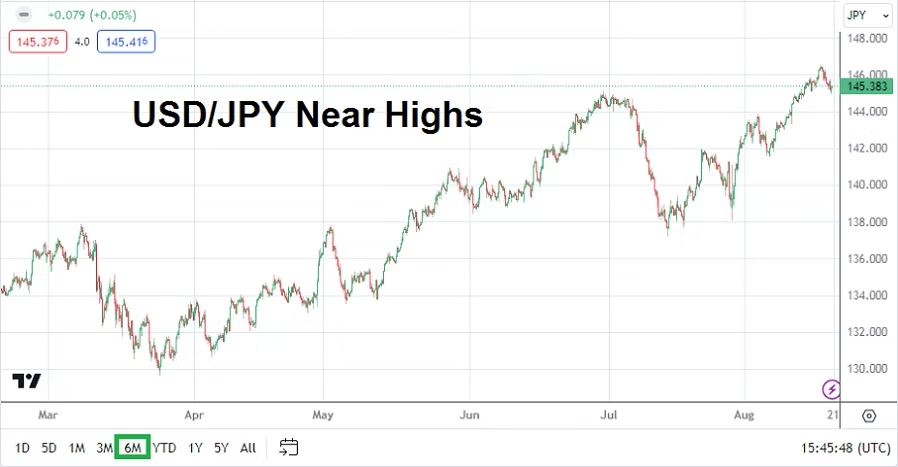
USD/JPY Six Months Chart as of 20th August 2023

Tuesday, 22nd August, Japan Consumer Price Index – the Bank of Japan report is expected to show a slight decline to the inflation numbers. Last month’s outcome of 3.0% is expected to lower and produce a 2.9% result. The USD/JPY could react momentarily to the outcome, the currency pair is near highs it hasn’t touched since November 2022.

Tuesday, 22nd August, U.S Existing Home Sales – the data is expected to show a slight decline of purchases. Mortgage prices continue to climb in the U.S and homeowners are less likely to desire taking on a new higher mortgage, this if they already have a lower mortgage locked in from a few years ago within a dwelling they already live.

Wednesday, 23rd August, Flash European Manufacturing and Services PMI – the reports will come from the E.U and U.K. The German and British outcomes will stir the Forex markets. The manufacturing data from Germany and Britain are forecast to be slightly negative.

Wednesday, 23rd of August, U.S Flash Manufacturing and Services PMI – the U.S reports are expected to show a decline in the manufacturing sector. If a negative result materializes, this could actually spark a selloff of the USD – if the financial markets have returned to calm waters by the middle of this week. Weaker numbers might be interpreted as another reason for the U.S Federal Reserve to remain neutral and why they should consider becoming dovish over the mid-term.

Thursday, 24th of August, U.S Durable Goods Orders – the core and broad numbers are anticipated to show declines. If the Durable Goods Orders numbers are worse than expected this could spark more USD selling, particularly if financial institutions are already calm and feel the data is another step to ‘lowering’ the Fed’s hawkish interest rate rhetoric. However, for the USD to weaken the markets will likely have needed to be tranquil beforehand, without major surprises having happened earlier in the week that may have escalated nervous behavioral sentiment in the broad markets.

Friday, 25th of August, Germany Business Climate and GDP – the ifo Business Climate report comes from a composite of manufacturers, wholesalers, and other enterprises and is expected to be lower than last month’s outcome. The Gross Domestic Product results are anticipated to show no changes, which would mean Germany’s economy remains in the doldrums and is flirting with recessionary pressures.

Friday, 25th of August, U.S University of Michigan Consumer Sentiment – this revised reading is expected to show U.S consumers remain steady without significant changes compared to the previous outcome.

post33.1

Spiral Downward of South African Rand as Confidence Weakens

Spiral Downward of South African Rand as Confidence Weakens

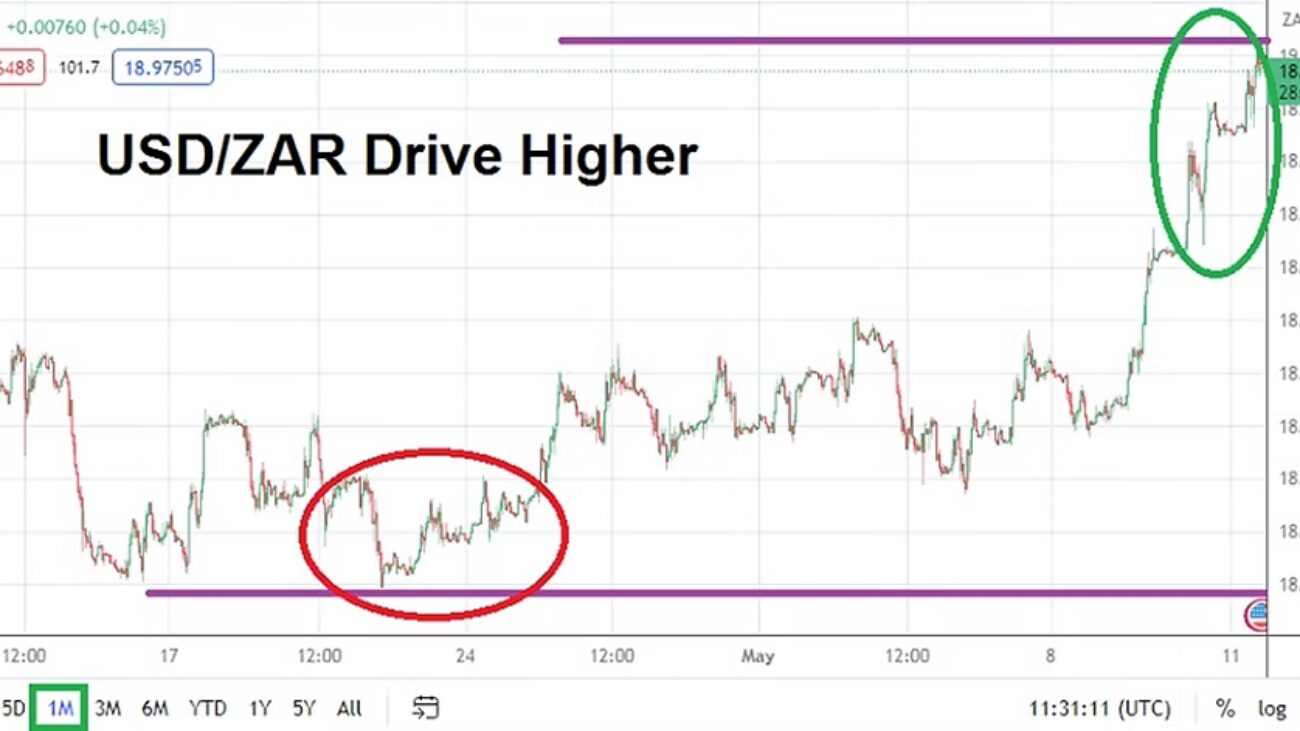
The USD/ZAR has hit a bad milestone today as the bullish trend of the currency pair has toppled the 19.00000 mark momentarily, this as the USD has shown weakness against many other major currencies in the past week because financial institutions are positioning for a more dovish tone from the U.S Federal Reserve as they wager the U.S central bank may pause its interest rate hikes. In other words, the South Africa Rand is trading in the wrong direction.

The USD/ZAR is now languishing near the 19.00000 ratio as behavioral sentiment continues to show signs of nervous exhaustion regarding the perceived political ineptness of the South African government. Nearly one month ago on the 14th of April, the USD/ZAR was slightly below 18.00000.

USD/ZAR One Month Chart as of 11th May 2023

South African Government is Perceived as Corrupt and Ineffective and this Hurts the USD/ZAR

The non-correlation of the USD/ZAR to the broader Forex market is not happening because financial institutions believe in the overall long-term strength of the USD, it is happening because dark shadows loom over the South African Rand. The darkness hovering over the Rand is occurring because of mismanagement within the South African political system, and it’s inability to deliver a reliable electricity supply to citizens and businesses domestically due to a combination of corruption and criminal activity.

The people of South Africa have plenty to be proud of because their country is one of the most beautiful in the world geographically, and it has abundant natural resources. The nation has been a pioneer regarding science and commercial enterprise in the past. However, political opportunism and neglect have led to a quagmire that has muddled the nation’s infrastructure into a nightmarish state. Loadshedding – which is the South Africa government’s term for rolling blackouts, continues to get worse and winter is approaching. Outages of electricity have steadily hit Stage 6 lately with worse loadshedding feared on the horizon. There looks to be little respite coming as electrical stoppages are happening two to three times a day, and communities are going without electrical power for up to four hours during each halt of energy. These rolling blackouts also happen daily, it is not like they are only happening once a week. Businesses of all sizes are being hurt because of a lack of production. Businesses that burn diesel via generators to power their enterprises are suffering financially due to the high costs and a dramatic loss of profits.

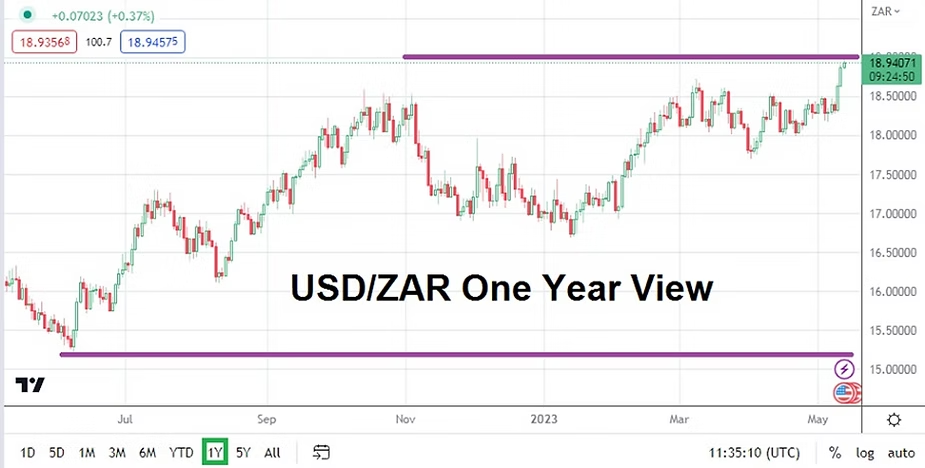
USD/ZAR One Year Chart as of 11th May 2023

Long-Term Outlook is in Question as USD/ZAR suffers from Political Peril

The loss of value in the USD/ZAR has been going on for a long time and no technical charts are inspiring confidence. The South African Rand which used to be considered among the best currencies within developing nations is now compared unfavorably. Mismanagement of the economy within South Africa has led the Rand to be associated to the likes of the Turkish Lira. Financial institutions have little reason to trust the effectiveness and long-term value of the South African Rand until concrete political changes are made, which end alleged corruption and cronyism and that seemingly look blindly on criminal activity within crucial infrastructures.

USD/ZAR Five Year Chart as of 11th May 2023

The South African Rand is not the Argentine Peso in terms of misdeeds and mismanagement, but there is a growing fear that political ineffectiveness, a lack of transparency and a poor reputation are making economic conditions worse. The last and only time the USD/ZAR traded above the 19.00000 level before was at the height of coronavirus. Yes, the value of the USD/ZAR improved from that apex of late March 2020, and the currency pair touched the 13.45000 ratio in late May of 2021. However, nearly two years later the USD/ZAR has returned to a value that shows a supreme lack of confidence exists regarding the outlook for the South Africa economy, this as Gold trades above 2000.00 USD per ounce.