SouthAfrican Rand 20260520

South Africa Outsider: Thoughts on the Rand and Guest Observations

USD/ZAR Considerations as Water Flows and Political Concerns are Compared

As a guest of South Africa (because of a personal relationship) and having been coming here frequently during the past four plus years it is easy to love the nation. Early last week a severe storm which brought high winds and plenty of rain hit a lot of the Western Cape knocking out electricity and water in a variety of towns. Having experienced hurricanes in the past, the wind was not quite comparable, but the consistency of the gusts over two days caused major damage.

Electricity and water have been restored to most people now. Wifi remains a problem for some, but folks are surviving. The damage to homes, infrastructure in towns and agriculture will keep individuals busy for a while. However, the Western Cape because of good political leadership and the stoic mannerisms of the people have worked together to move forward. So what does this all have to do with the South African Rand?
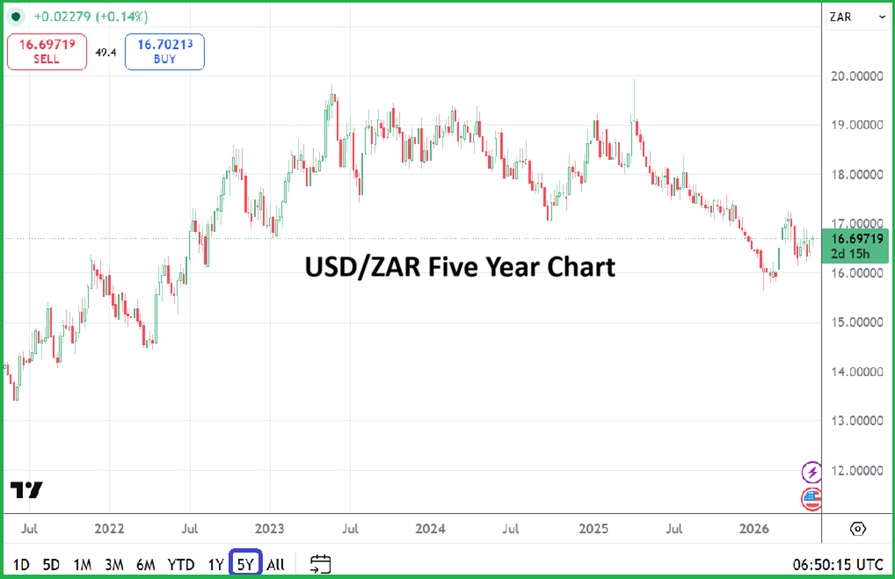
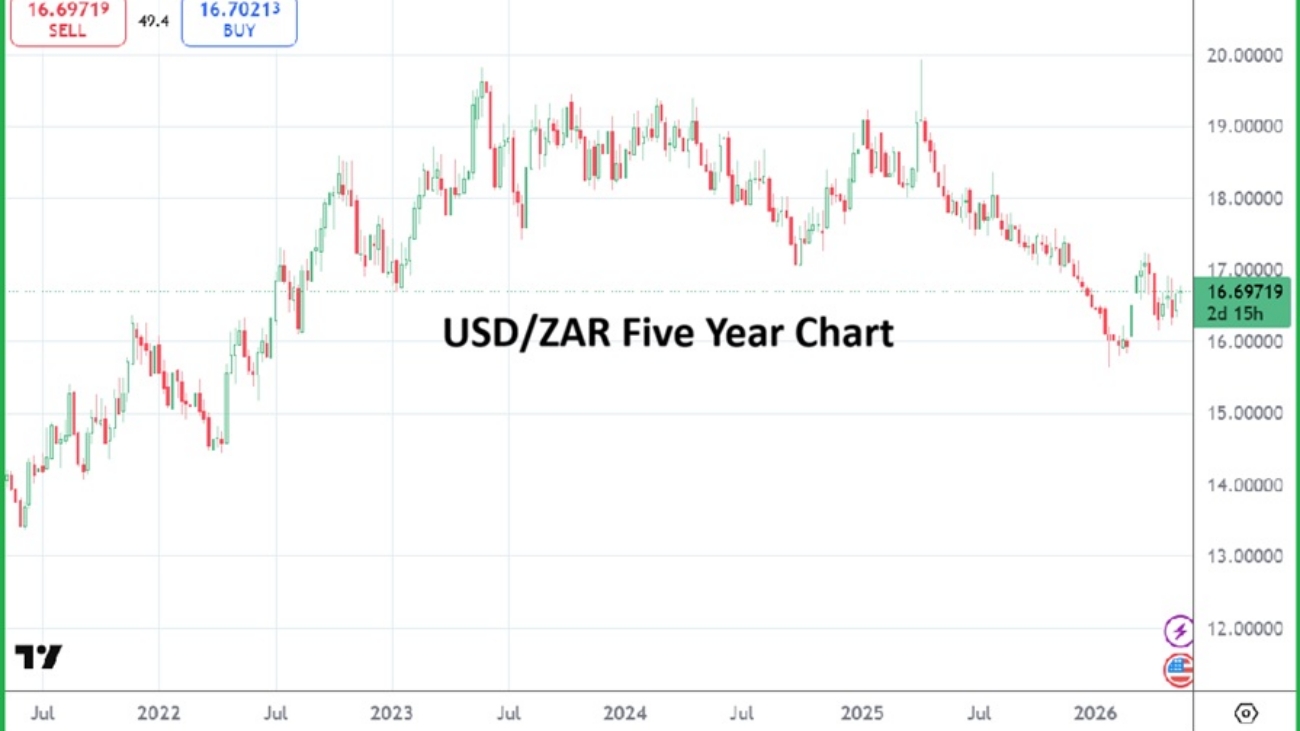
USD/ZAR Five Year Chart as of 20th May 2026

The USD/ZAR is traversing within a higher price realm since the start of March because of the Iranian conflict. The currency pair flirted with depths below 16.00000 in the middle of February. The value of the USD/ZAR at this time is close to 16.70000 depending on bids and asks. The Rand is correlating to the broad Forex market as USD centric strength has emerged recently, this as U.S 10 Year Treasury yields increase and threaten to become sustained. The U.S Federal Reserve is suddenly dealing with threats of inflation becoming sticky over the mid-term because of escalating energy costs. The U.S has plenty of WTI Crude Oil, but nations which had counted on energy from the Middle East are suddenly U.S customers and increased demand is going to cause WTI to remain elevated until the Iranian situation resolves. 

The USD/ZAR was in a bearish trend since early August 2025 when values were above 18.00000. The highs in early August of last year were caused by concerns the U.S White House sparked because of tariffs. South Africa is still facing tirades from the Trump administration about some policies being practiced in South Africa, but financial institutions have looked elsewhere regarding impetus for the Rand and its correlation to global Forex is the chief influencer.

While South Africa and its people and culture are easy to embrace, there are issues that remain problematic in the nation. Politics around the world often appear to be a complex myriad because certain people and partisanship are transfixed on power. Corruption globally is an issue in many nations that causes not only fiscal problems but inflation. South Africa suffers from these complications too. These matters can only be fixed with transparency and patience, and importantly – for citizens to demand better. 

Politically the current coalition government on the surface appears to be working. Yet, the potential for fractures to grow over the next handful of months as municipal elections approach –  the Johannesburg mayoral and city council results will prove fascinating, will be crucial for South Africa. Johannesburg has been facing a water supply crisis for a while and its consequences are a stark contrast to the Western Cape’s ability to repair and replace infrastructure in a matter of days after the recent storm.

The USD/ZAR is likely to correlate to USD centric price action near and mid-term, but there is a chance heightened political rhetoric and voting outcomes in a handful of months could shift impetus for a short while. Higher energy costs in South Africa now and into the mid-term will cause inflation. Food costs do appear to be incrementally rising in supermarkets. 

Yes, gold and platinum values will be looked at by some analysts and pointed to as reasons for the stronger South African Rand, and this influence may be real – to a degree. However for the moment, the USD/ZAR remains transfixed within the lower realms of its long-term price range mostly because the coalition government here is viewed positively, and the USD was weaker globally. 

The U.S Fed does have inflation concerns arising. As much as President Trump would like the new Fed Chairman, Kevin Warsh, to be dovish the reality for the U.S central bank and financial institutions judging outlooks lacks clarity for the moment. Sideways choppy price action in Forex and for the USD/ZAR may prevail in the coming days and weeks. And if the Iranian situation grows more boisterous, USD centric strength could grow.


Copy and paste the text from AMT that you want to share

AMT Top 10

AMT Top Ten Miscellaneous Insights on the 18th of May, 2026

Valuations and Drinking, Bad Storms and Politics Amidst the Resilient Nature of People

10. Resilience: The Western Cape of South Africa endured strong storm conditions last week. One of the hardest hit areas was the Cape Winelands District, but electricity and water have been widely restored. And a collective of people have proven working together can produce solid results when needed. 

9. Spencer Who: The Los Angeles mayor race is growing intriguing. A reality star turned social influencer threatens to become an influenza for his opponents. This as Spencer Pratt’s campaign gets noticed for its entertaining social media videos. This has caused many folks to ask what has happened to the state of politics and meaningful policy. But if NYC can elect a socialist, why can’t L.A elect an influencer and make some people feel sick?

AMT Top 10 Miscellaneous Insights for the 18th of May, 2026

8. Two Trillion: SpaceX early investors have agreed to allow a five for one stock split, meaning the company (and Elon Musk) are now aiming for a potential doubling of its worth when its IPO is initiated – on Nasdaq – in the second week of June. Some very serious accountants will be kept busy trying to show how SpaceX will produce enough revenue over the next twenty years in order to make a 2 trillion USD valuation palpable to future investors.

7. Drunk: Brown-Forman Corporation will begin its trading near $26.28 on the NYSE today. The company is the majority owner of Jack Daniels and other alcohol related enterprises. The value of Brown-Forman Inc. in June of 2021 was around 80.00 per share. The sobering phase of the public – particularly among young drinkers – to avoid bars and clubs, and instead stay on their mobile phones has hurt share values in many alcohol related companies. There are also concerns that too many drink companies now exists. Before Brown-Forman becomes the life of the party again, it appears some competition will have to go dry.

6. Deals: Prime Minister Modi visited Abu Dhabi a few days ago, and one of the results was an agreement to purchase and store energy reserves on a large scale in the United Arab Emirates. Modi also confirmed India’s strong connection to the UAE politically. While always trying to maintain a non-aligned stature, India appears to be moving closer to an increasingly important alliance with the UAE – which has also aligned with Israel strategically. The potential of these three nations acting together will ruffle feathers in a few noteworthy Middle Eastern and Asian countries.

5. Populists: President Trump’s tendency to say outlandish things and then suddenly turn around and show a willingness to negotiate terms has always been part of his art of the deal composite. However, saying what people want to hear and then turning on a dime and not delivering is also a symptom of populism. Trump isn’t the only politician suffering from this flaw. What do politicians really think, and how differently would they act if a they didn’t need votes for themselves or backers to remain in power?

4. Wall Street: After attaining apex highs early last week, the three major indices have taken a step backwards. Near-term concerns are effecting outlook as financial institutions balance risk averse tactics to long-term belief that sunnier days will prevail. While the Dow 30 didn’t set a record last week, the ability of the index to climb above 50,000 was noticeable. Equity markets appear tentative as this week begins and folks seemingly wait for more thunder and its potential effects.

3. Emirates: The UAE was attacked by drones yet again yesterday, this time at the Barakah nuclear facility. The hit has been downplayed, but highlights that military conflict with Iran remains very possible across the region. It is doubtful conversations are being conducted with polite undertones behind closed doors. The U.S, Israel and other nations are watching Iran – and Iran is watching them. The price of WTI Crude Oil remains a key barometer regarding the markets and concerns about the war igniting in full once more. Prices of oil remain sustained above $101.00 per barrel in the futures markets. The UAE might not want to be a focal point, but it isn’t backing down either.

2. Hawkish: The U.S Federal Reserve may have to actually consider raising interest rates before they can realistically discuss the notion of cutting borrowing costs, particularly if energy prices remain elevated and spark a sustained inflation threat over the mid-term. The USD started to show renewed strength the past few trading sessions in Forex, this as financial institutions compare their near-term anxiousness to growing concerns about mid-term ramifications regarding higher fuel costs.

1. Ego vs. Hubris: The U.S and China summit held largely in Beijing this past Thursday and Friday matched competing politicians and ideologies. In one corner U.S President Trump spoke with a rather inflated sense of himself while he detailed policy objectives and his perspectives. In the other corner Xi Jinping, the President of China, might have displayed some hubris as he warned the U.S about the Thucydides Trap. Xi expressed his belief that China is the emerging super power and that the U.S is a declining nation. However, China’s economy is known to be suffering because of a myriad of complex reasons, and could face more headwinds if energy prices and supplies remain hard-pressed.

Copy and paste the text from AMT that you want to share

South African Rand 20260327

G7 Snub for South Africa and other Troubles for the South African Rand

USD Centric Strength and Global Anxiety Weighing on Value of Rand

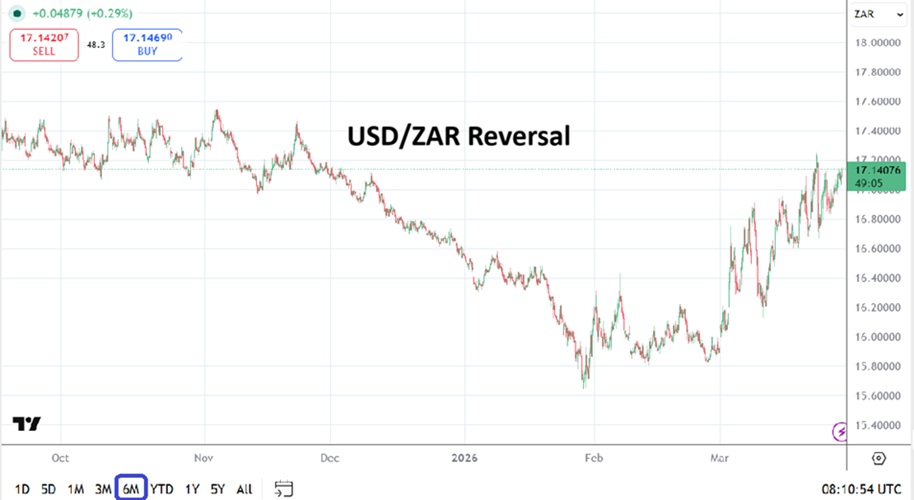
The USD/ZAR is still above 17.00000 in early trading this morning, this as USD centric strength manifests globally due to anxiety which clearly exudes because of the ongoing Iranian war. The USD/ZAR is near the 17.11000 realm, with wide spreads via bids and asks.

The price of Gold is close to $4,450.00 and Palladium is around $1,395.00 – this after touching apex marks in late January when the $2,100.00 level was breached.

USDZAR Six Month Chart as of 27th March 2026

These metals are important for South Africa, but their daily values do not effect the USD/ZAR like they did in the past because of other complexities. The USD/ZAR which had enjoyed a stellar bearish trend and touched lows of 15.68000, late in January, could be correlated to the decrease in value to the precious metals by some, but this is likely false narrative.

When the larger picture of pure behavioral sentiment within the Forex broad market is looked upon other factors are a certainty. The South African Rand, in a rather healthy manner, is largely dependent on financial institutions outlooks regarding the USD, 10-Year U.S Treasury yields, and what the U.S Federal Reserve outlook projects.

The U.S central bank, which many people including myself, was thought to be in position in which the Federal Funds Rate would be lowered in the coming months, now faces complications due to what may become chronic higher energy costs through the mid-term if the war in the Middle East persists and inflation due to logistics, manufacturing and agriculture are effected.

The USD/ZAR near the 17.0000 is a good barometer of South African financial institutional attitudes. Yesterday’s news that South Africa will be excluded from the G7 meetings in France, which will be held in June, will not make folks in South African financial spheres content. However, these same people within the machines of corporate finance in South Africa have grown used to the vagaries of mismanagement, corruption and perceptions these cause for the nation. While some South African government officials initially said France had been pressured by the U.S to disinvite South Africa from the G7 summit, they have changed their tune this morning and are trying to downplay the exclusion as insignificant.

Thus, we return back to the USD/ZAR and near-term considerations. While the currency pair has shown the tendency to reverse lower when marks above 17.10000 have been challenged the past few weeks in March, this morning’s early trading which is sustaining higher values is troubling. The consideration that nervousness among global investors remains skittish at best is unsettling. Those who are making short and near-term wagers on the USD/ZAR are likely concerning themselves with the upcoming weekend and its unknowns. From a trading perspective, folks are usually cautious about taking speculative positions over the weekend when they fear there is a possibility of bad news.

The USD/ZAR is touching important resistance above, if calm doesn’t return to the broad markets across various international assets today, the currency pair may find itself testing higher realms as next week begins.

Looking for downside in the USD/ZAR may prove difficult to attain later today. Traders should keep their eyes on other gauges and watch the U.S 10-Year Treasury yields which are near 4.45% (highs that haven’t been seen since July of 2025), WTI Crude Oil prices and the major U.S equity indices which are in correction territories.

From a betting perspective, if U.S 10-Year yields escalate and the price of energy ebbs upwards today in commodity markets, and there is more trouble on the Nasdaq 100 and S&P 500, this will be problematic. The USD has been volatile, but has certainly shown a tendency to get stronger in recent weeks. A higher USD/ZAR above the 17.20000 is not out of the question.

Copy and paste the text from AMT that you want to share

post250

AMT Top Ten Miscellaneous Ruminations for the 31st of May

AMT Top Ten Miscellaneous Ruminations for the 31st of May

Western Cape, South Africa

10. Absence: Apologies for the truancy of AMT’s Top 10 the past handful of months. The staff has offered a myriad of poor excuses, but it accepts responsibility and has promised to try and meet the standards of our readers with timely publication once more. More coffee has been promised to the staff as a negotiation tactic by management, even though the price of the beverage is obscene.

9. Dim the Lights: President Cyril Ramaphosa, his staff and well known South African golfers attended a highly publicized meeting in the White House with President Trump. After surprisingly dimming the lights, a video mainly consisting of EFF radical Julius Malema’s threatening escapades was shown while Trump voiced concern about attacks on farmers. Not a lot is known about the outcome of talks which went on behind closed doors afterwards, but speculation abounds. The USD/ZAR is near 17.97000.

8. Anduril Industries: An aviation company, cofounded by Palmer Luckey who at a young age created Oculus VR, is receiving important attention. Anduril is a privately held company intent on building pilotless jet fighters, among other innovative technologies. Palmer Luckey is now 32 years old and appears ready to become a transformative tech entrepreneur perhaps in the vein of Elon Musk.

7. Bitcoin: Value of BTC/USD is near $103,600.00 at this moment. GameStop has announced it has purchased Bitcoin as a form of corporate treasury, apparently following the path of MicroStrategy’s foray as a Bitcoin proxy to the dismay of some and delight of others. The price of the world’s biggest digital asset was nearly $75,000 on the 7th of April 2025.

6. TACO: An acronym meaning ‘Trump always chickens out’, created by Robert Armstrong of the Financial Times, has caught the attention of many, including President Trump. While an amusing and pointed term, the context should be considered as a way to monitor the thinking of behavioral sentiment of anxious investors. Trump’s tough rhetoric and tendency to then issue a softer toned stance has been noted before by his backers as well as critics. As a means of accumulation while seeking value in assets perceived to be oversold, TACO may be a useful tool for those who agree with Armstrong’s thinking.

5. Values: Gold went into this weekend near $3,288.00. After achieving an apex around the vicinity of $3,500.00 on the 22nd of April, speculative fever has subsided a bit, but the commodity remains stubbornly in demand. Inflation in the U.S appears to be under control. Yesterday’s Core PCE Price Index met expectations with a monthly outcome of 0.1%. WTI Crude Oil’s spot price finished near $61.05 on Friday showing large traders remain convinced supply is strong.

4. Paralysis: The Fed remains steadfast and scared. While using the word ‘uncertainty’ repetitively – as if part of a rave song, Federal Reserve Chairman Jerome Powell must contend with official U.S inflation data which is starkly lower and a discontent Donald Trump, this while trying to explain the comatose behavior of the U.S central bank. The Fed should cut the Federal Funds Rate asap. And a 50 basis point cut by the end of this summer should be the discussed target.

3. Leviathan: The White House’s goal of reducing the deficit is running into tough political realities as budget cutting hopes clash with entrenched bureaucracy that swallows money like a hungry sea monster. U.S Treasuries yields remain elevated. The U.S has been cautioned again via rating services – highlighted by Moody’s recent downgrade of U.S bonds. To the chagrin of many fiscal conservatives, U.S government spending remains problematic.

2. Intimidation: Apocalyptic economic headlines attract viewers. Proclaiming global catastrophe creates attention and reactions in global financial markets. However, after the fierce selling seen in equities over the past few months, there has also been plenty of resilience and indices are now showing signs of coalescing as outlooks improve. Value and yields remain a prime motivator for experienced investors.

1. Pundits: Day traders have been battling volatile market storms since the election of Donald Trump, this as financial institutions have shown a tendency to shift outlooks as they react to pandemonium and cause whipsaw price action. Many speculators have experienced costly losses. Listening to self-anointed experts has not helped. Be wary of anyone who claims to be a market guru, and remember some call themselves gurus simply because spelling charlatan takes too long.

post209

Forex: Trump Effect and Reasonable Trading Caution for All

Forex: Trump Effect and Reasonable Trading Caution for All

The Forex market the past two months has created a profoundly stronger USD against many major currencies. The combination of late September intrigue regarding U.S Federal Reserve outlook, then nervousness about the approaching U.S election, followed by the subsequent results have been a dumpster fire for many speculators looking for a sustained return to USD centric weakness. Hopefully risk taking tactics have included a solid dose of caution.

This week’s Non-Farm Employment Change numbers scheduled for Friday may give financial institutions a moment to focus on economic data instead of President-elect Donald Trump’s loud pronouncements, but the effect may prove to only be momentary. It isn’t data that is driving Forex for the moment it is nervousness and fear of the unknown.

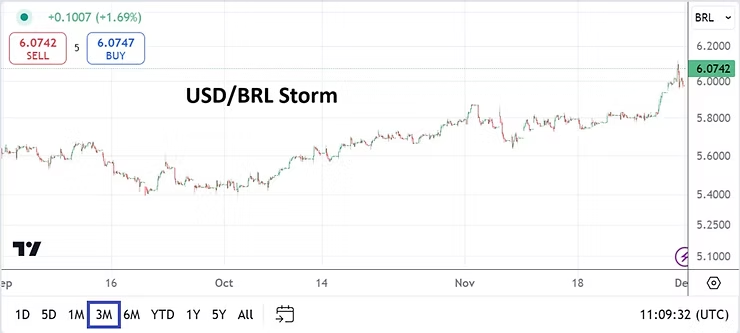
USD/BRL Three Month Chart as of 3rd December 2024

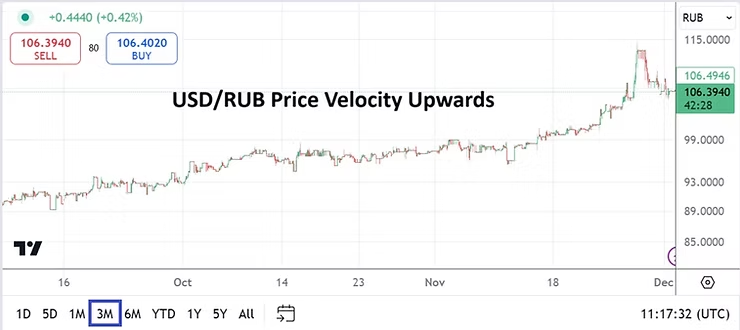
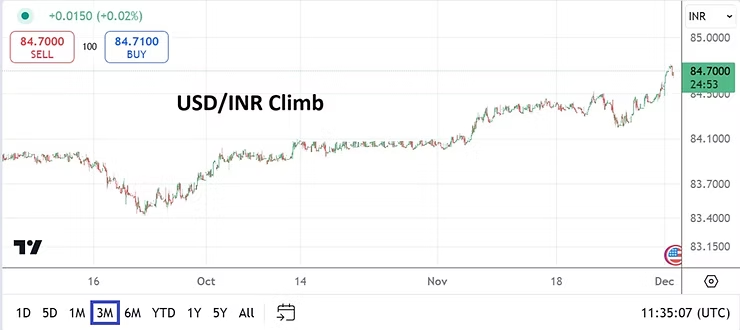
While many financial institutions and speculators trade only the major currency pairs, taking a look at the less obvious and more infrequently transacted major currencies may provide retail traders additional perspectives regarding the fragile nature of Forex. Many nations and large institutions are demonstrating concerns about possible sea changes to U.S foreign economic policy. Yes, the EUR/USD, GBP/USD and USD/JPY have all seen volatility via USD strength the past two months, but price velocity in the USD/BRL, USD/RUB, and USD/INR may be equally intriguing. And prove that mid-term forecasts (or lack of them) are causing bedlam for all.

USD/RUB Three Month Chart as of 3rd December 2024

While it is more than probable calmer heads will start to be seen in Forex and weakness eventually will return to the USD, trying to pick the exact moment this is going to happen remains a guessing game. Financial institutions via evidence in current Forex pricing remains rather cautious regarding their cash forward commercial enterprise. President-elect Donald Trump has certainly been dealt with before and his negotiation style is that of a businessman, it is not a coincidence that some global leaders who do not exactly see eye to eye with Trump are giving him respect because they understand he will act upon threats if not dealt with fairly.

Trump’s recent brief rhetoric regarding BRICS and the organization’s public consideration of creating a new currency to compete with the USD did not go unnoticed this weekend. Critics may want to proclaim Trump’s threats as belligerent, but BRICS is free to create a new currency still if they wish. While Trump cannot stop the birth of a BRICS currency, he can certainly try to initiate actions (via sanctions) against nations that attempt to create a new unified currency which tries to curtail the dominance of the USD. It would certainly help Trump’s bargaining position and the USD also, if better fiscal policy is practiced by the U.S Treasury and government.

USD/INR Three Month Chart as of 3rd December 2024

It needs to be pointed out that Trump’s warning to BRICS may not be needed. Even though the organization may be able to create a currency based on a commodities backbone, the lack of trust many financial institutions and nations would feel towards a non-transparent fiat currency powered by the fiscal monetary policies from the likes of Russia, China, Brazil and South Africa remains a difficult sell. Until many changes happen domestically within these nations via governance, creation of a BRICS currency remains wishful thinking.

Getting back to the big picture and the volatility recently seen in Forex. While the major currencies teamed against the USD have certainly faced hectic conditions, the fluctuations have not been unexpected. Day traders need to understand the month of December is likely going to remain choppy and see a test of technical support and resistance levels that are wide and full of fast reversals.

The question for the EUR, GBP, and JPY is if most of the negative inputs into these currencies has been factored into value. The suspicion may be yes, and that strength may rightfully appear in these big three sooner rather than later. However, the approaching holiday season and potential bluster from President-elect Trump will not make this a comfortable or easily wagered avenue.

Short-term retail traders looking to take advantage of the bloodbath created in Forex the past two months who seek opportunities should focus on perceived targets which aren’t overly ambitious. The coming U.S jobs data this Friday may allow the U.S Federal Reserve room to cut the Federal Funds rate on the 18th of December by another quarter of a point. As a point of attention, the European Central Bank will announce their Main Refinancing Rate on the 12th of December. The ECB’S actions may be a solid clue regarding the Fed’s approach to upcoming policy.

However, even if an interest rate cut were to take place via the Federal Reserve, it is likely the cut has already been factored into Forex. Which also highlights the high degree of nervousness that exists because of fears which permeate due to Donald Trump’s tough negotiation stances which have been made public. Meaning those who are looking for USD centric weakness to emerge still need to rely on a shift within behavioral sentiment to occur that is not generated because of the Federal Reserve. Nations need to show a willingness to amend existing trading agreements with the U.S, allowing for changes to internal policies regarding exuberant price duties they place on U.S goods in their own countries.

postR167

Forex and Political Sentiment Moving the South African Rand

Forex and Political Sentiment Moving the South African Rand

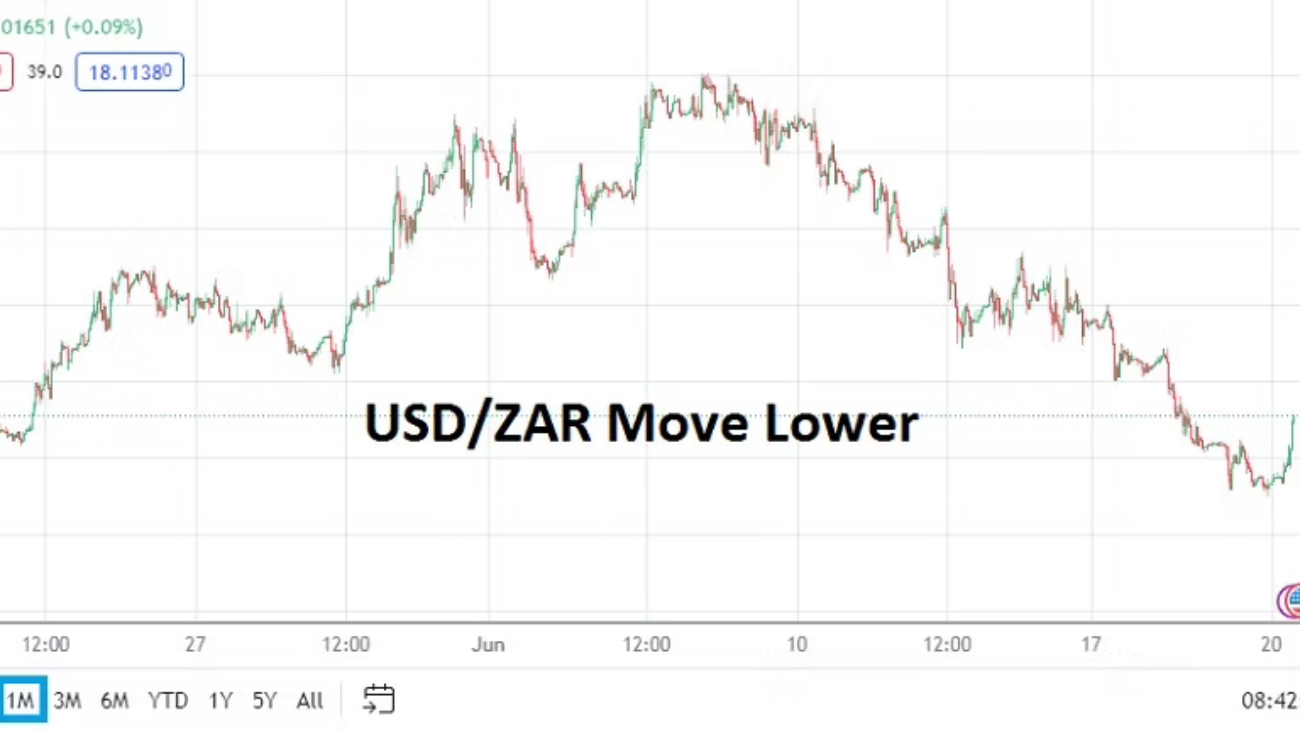
Recent trading in the USD/ZAR has become bearish and highlights the behavioral sentiment shifts taking place within South Africa, this as outlooks and perspectives create opportunities for financial institutions and speculators.

USD/ZAR One Month Chart as of 20th June 2024

South Africa politics have generated optimistic selling of the USD/ZAR in the past week and a half as the ANC has agreed to a National Unity Government coalition. Financial institutions pulled the USD/ZAR higher and to the 19.00000 realm in the second week of June as concerns grew the African National Congress could decide on a hard-left coalition in the nervous days following the election results. But those fears disappeared when it became clear the ANC would actually undertake a working association with the Democratic Alliance. The USD/ZAR began to selloff. Yesterday’s ability to test values below the 18.00000 level highlight the price velocity that optimistic outlooks have generated the past handful of trading days. Not all of South Africa’s problems are going to vanish magically, but there is a hope that better days are ahead.

As simplistic as it sounds, financial institutions trade based on their outlooks and they take an approach with much longer timeframe considerations compared to day traders. In a sense the price of the USD/ZAR isn’t a reflection of what is, it is a mirror of what can be. The trend lower will now run into a test as financial institutions question the move lower that has been attained the past week and a half, compared to realities which still have to be handled per the existing problems that remain. The African National Congress and Democratic Alliance aren’t natural bedfellows. They will certainly clash regarding fiscal transparency, day to day power sharing as the nation and municipalities are managed, and geopolitical alliances will be questioned.

While the USD/ZAR has definitively traded lower and is testing intriguing support, optimistic sellers who have a mid-term outlook will look at one year charts and know the currency pair has traded at significantly lower values in July of 2023. Day traders should not get overly ambitious, because it will be nearly impossible for most short-term speculators to hold onto a position longer than a day or two because of transaction fees most trading platforms charge for overnight positions. However, the notion that financial institutions will look at the lower values seen technically about eleven months ago, and consider the potential of ‘what can be’ might start to affect the USD/ZAR more over the coming weeks and months.

There are warning signs that need to be monitored, there is already talk among media outlets in South Africa that the ANC and DA are in disagreement regarding the working relationship they share and what type of influence will be allowed from the junior partners – which includes the Democratic Alliance and at least four other smaller political parties. Nothing is for free in politics. Power and the ability to govern will need pragmatic approaches by all members of the National Unity Government in order for it to remain viable. The coming days and weeks are sure to create headlines which will make financial institutions occasionally nervous and create support levels which sometimes look very durable.

Perhaps the best barometer for short-term traders of the USD/ZAR will be resistance technically which is tested in the coming days. The USD/ZAR is trading near the 18.14200 ratio as of this writing. U.S traders will be returning from their holiday celebrations yesterday and increase Forex volumes which could cause uneasy reversals. However, if the 18.20000 level proves to be durable resistance near-term, it may signal financial institutions may believe additional positive impetus will create more selling. Behavioral sentiment will remain nervous in South Africa, but if optimistic outlooks remain the USD/ZAR could move lower again. The search for equilibrium in the USD/ZAR is not over and the coming weeks will be worth watching.

postR166

T20 World Cup 2024: New Cricket Contenders and Shifting Powers

T20 World Cup 2024: New Cricket Contenders and Shifting Powers

The 2024 T20 Cricket World Cup has unfolded as a fascinating saga of unexpected performances and shifting dynamics. Hosted jointly by the United States and the West

Indies, this year’s tournament has been a platform for emerging teams to shine and traditional powerhouses to stumble. Here’s a look at the highlights, surprises, and

predictions as the tournament enters the next phase of Super 8s.

The 2024 T20 World Cup has seen newer teams stepping up their game, bringing fresh excitement and proving that they are no longer mere participants but serious contenders on the global stage.

Nepal: Nearing a Historic Upset

Nepal’s match against South Africa was a nail-biter, showcasing their evolution at the international level. Despite being up against a seasoned and formidable South African side, Nepal pushed their opponents to the brink, almost clinching what would have been a historic victory. This performance underscored their potential and the growing depth in their cricketing skills.

Namibia: Close Calls and Narrow Losses

Namibia’s participation in the World Cup has been marked by tight contests and commendable efforts. They came close to winning on few occasions, showing that they are not far from breaking through to the next level. Their ability to compete closely with more established teams speaks volumes about their preparation and potential for future tournaments.

Scotland: Dominating Giants

Scotland has been a revelation, delivering top performances against some of the tournament’s biggest teams. Their matches against England and Australia were particularly impressive, where they played with confidence, proving that they are a force to be reckoned with in the T20 format.

USA: A Wild Card with a Wild Ride

As co-hosts, USA received a wild card entry into the tournament and seized the opportunity with both hands. They stunned Pakistan with a remarkable win and pushed India to their limits in a well contested match. Their spirited performances have been a breath of fresh air in the tournament. However, despite their on-field success, it remains uncertain whether these efforts will translate into a broader interest in cricket within the United States. The sport still predominantly attracts expatriate communities, and it will take more than a few wins to embed cricket deeply into American culture.

Oman, Uganda and Papua New Guinea: Learning the Hard Way

For teams like Oman, Uganda and Papua New Guinea, the World Cup has been a tough lesson in the rigors of international cricket. The disparity in skill and experience was evident as they struggled against seasoned opponents. However, participating in such a high-level tournament provides invaluable exposure and learning opportunities,

which are crucial for their development.

Netherlands, Canada and Ireland: A Nothing Tournament

Netherlands, Ireland and Canada have been on the Associate level circuit for a while. In fact, Ireland and Netherlands have played in past international tournaments and caused upsets. Who can forget Netherlands knocking out the giant South Africa at the last T20 world cup. Unfortunately, these 3 teams played mediocre cricket. Although not many expected them to win games, they were certainly expected to give a decent fight. That of course did not happen.

While emerging teams have shown promise, some traditional cricketing powerhouses have surprisingly struggled, failing to live up to their reputations.

New Zealand, Pakistan, and Sri Lanka: A Rough Road

New Zealand, Pakistan, and Sri Lanka have faced unexpected challenges, each failing to advance to the next round. Their early exits are a stark reminder of the unpredictable nature of T20 cricket, where even the most experienced sides can falter. These teams have not only lost games but also a bit of their aura as formidable opponents in the shortest format of the game.

Afghanistan and Bangladesh: Rising Up the Ranks

In contrast, Afghanistan and Bangladesh have played admirably, securing their spots in the next round. Their performances suggest a shift in the balance of power within the cricketing world. Both teams have shown resilience and skill, stepping into roles traditionally occupied by the likes of Pakistan and Sri Lanka.

England: Living Up to Expectations

England, known for their aggressive and adaptable T20 style, have lived up to their billing. They have performed consistently, leveraging their dynamic approach to secure


their place in the next stage of the tournament. Their ability to play fearlessly under pressure continues to make them a formidable T20 side.

The Dominant Forces

As the tournament progresses, the established giants continue to dominate, reaffirming their positions as the top teams in the world. India, South Africa, Australia, and the West Indies have each topped their respective groups, showcasing their strength and depth.

These teams possess a blend of talent, experience, and aggression that makes them formidable opponents.

India: Combining tactical acumen with explosive batting and a versatile bowling attack, India has consistently outperformed their rivals.

South Africa: Despite their scare against Nepal, South Africa’s robust team dynamics and skilled lineup have seen them through to the top.

Australia: Known for their relentless competitiveness, Australia has continued to display their dominance with powerful performances.

West Indies: Leveraging their home advantage, the West Indies have played with flair and confidence, making the most of familiar conditions.

The Home Advantage: West Indies have the Upper Hand

With the remaining games scheduled in the Caribbean, the West Indies have a significant home advantage. Their familiarity with local conditions, coupled with enthusiastic home support, positions them strongly as favorites to lift the trophy. While all four group leaders are strong contenders, the West Indies’ home advantage could be the crucial factor tipping the scales in their favor. Given their current form and the benefits of playing on familiar grounds, they are poised to be the team to beat in this year’s tournament.

The 2024 T20 World Cup has been a spectacle of emerging talent and unexpected twists. As newer teams rise and traditional powers recalibrate, the tournament highlights the dynamic and ever-evolving nature of T20 cricket. Whether this year’s surprises will lead to lasting changes in the cricketing landscape remains to be seen, but one thing is certain: the excitement and unpredictability of T20 cricket continues to captivate the fans.

postR196

AMT Top Ten Miscellaneous Complexities for the 14th of June

AMT Top Ten Miscellaneous Complexities for the 14th of June

10. International Tech Research: Universities and institutions around the world are developing innovative systems to deliver a quantum future. Cal-Berkeley, MIT, Cambridge, the Barcelona Supercomputing Center, the Institut Polytechnique de Paris, and the Cleveland Clinic are only a few of the places in the ‘West’ that investors should monitor for developments, Asia is also very focused on high speed computing.

9. Musk Schedule: The tech mogul has had a busy week. His Tesla stock option compensation package was approved by shareholders yesterday. In 2018 Musk negotiated a package with Tesla that included a massive compensation agreement via stock options if he met valuation targets over a 10 year period. He achieved the valuation goals within only a few years. Musk also formally dropped his lawsuit against OpenAI and Sam Altman in recent days, this after the enterprise released emails showing Musk backed OpenAI’s pursuit of profits in the past. Around 2015 Musk invested about 45 million USD into OpenAI.

8. Muted Data: The U.S Consumer Sentiment and Inflation Expectations numbers will be released today via the University of Michigan. However these numbers are likely not going to impact financial assets in the U.S. The Fed and CPI results from the States published this past Wednesday will dominate the investing narrative. Searching for meaning regarding why assets move in a particular direction is the media’s job, but perceived realities always remain open to complex interpretations as real time prices are exhibited. Day traders need to be cautious of revisionist history.

7. Petrol Dollar: Saudi Arabia has not reconfirmed its commitment to transact Crude Oil exports with USD. The formal agreement reached in 1974 has expired. Forex traders should not panic about this development yet. Speculators should note that Saudi Arabia is likely to still demand most of their payments in USD since they can count on the valuation of the currency to remain relatively tranquil compared to other instruments like China’s Yuan. What the absence of an agreement between the U.S and Saudi Arabia does indicate unfortunately, is that U.S foreign policy continues to look vulnerable.

6. Optimism: A South Africa government coalition agreement could be formalized soon and create a better economic outlook for the nation. While geo-political concerns remain, and the ANC is not a 100% friendly philosophical match with the Democratic Alliance and some of the other political parties which will be involved, it appears a working agreement can be reached. The question in South Africa is if transparent fiscal and anti-corruption mandates can be accomplished while diverse political outlooks will be heard and demanded from different factions. For the moment, financial institutions seem to like what they are hearing and the USD/ZAR has edged lower in the past week.

5. Highly Valued: Gold is over 2300.00, BTC/USD is near 67,000, and Cocoa is within sight of 11,000. Speculative large players remain active, and traders looking to take advantage of short and near-term fluctuations in these commodities need to remain vigilant. Cocoa, while extremely dangerous to trade, has outperformed gold and Bitcoin recently. Investors in gold think long-term, and Bitcoin influencers preach ‘hold on for dear life’ as non-believers shake their heads in disagreement. However, daily gyrations influenced by large players can still wreck havoc on those looking for short-term wagering opportunities.

4. Zombie Fed: Cautiously optimistic undertones were served from Jerome Powell as expected this past Wednesday, but intriguingly Powell admitted some government data remains open for interpretation, particularly the suspiciously strong headline jobs numbers which are being questioned. The Fed now says its outlook is for one interest rate cut this year. Financial institutions likely believe the Fed remains too reactive. The U.S GDP has shown signs of struggling, and CPI numbers have begun to erode. Crude Oil prices remain under 80.00 USD. However, the Fed seems intent on still pumping the brakes in order to kill off inflation via the high Federal Funds Rate. It would help if the U.S govt stopped spending cash recklessly, and the U.S Treasury stopped printing money.

3. Equities: U.S political concerns as the election approaches will create more analysis paralysis than normal. Short-term behavioral sentiment may sound nervous, but a bullish trend and risk appetite remain evident. Day traders may be able to take advantage of technical trading via support and resistance in CFDs, but fundamentally financial institutions appear inclined to count on equity indices achieving record highs.

2. 157.000 – 158.000: Today’s BoJ decision to remain stuck in the mud has created more financial institutional dismay in some quarters, and the the Japanese Yen will be punished occasionally against the USD. But the folks at the BoJ are not stupid and likely anticipated the USD/JPY move higher which ensued. The BoJ is obviously preserving its ‘soft devaluation’ of the JPY in order to maintain an export advantage for the U.S and European consumer markets. The question is if and when the BoJ will buy billions worth of JPY in order to punish bullish USD/JPY Forex speculators occasionally.

1. Volatile Near-Term: EUR/USD and GBP/USD price action has been boiling. France and the U.K have crucial elections in the coming weeks, after policies in both nations have led to a lack of confidence in the ruling governments. The ruckus outcome from the E.U Parliament voting have created an intriguing complication. Oddly enough, the U.K may be the left’s torch bearer in the coming year, while other European nations drift towards the right. Can centrists create a middle ground? Volatility and the search for equilibrium via financial institutions may create a lot of opportunities for Forex day traders in the coming weeks in the EUR/USD and GBP/USD as reversals and trends are sought.

postR196

AMT Top Ten Miscellaneous Politicos for the 7th of June 2024

AMT Top Ten Miscellaneous Politicos for the 7th of June 2024

10. Three P’s: Pragmatic and populist politicians are clashing in a world that seeks to try and sell utopian visions from all sides, instead of admitting realities that should be understood and defined, thus creating a more dangerous world. It would be funny if it weren’t so serious.

9. Investment: Pasqal, a quantum tech company located in France founded in 2019, and IBM have announced a collaboration to integrate efforts on creating quantum centric supercomputing architecture. The quest for fully functioning applications appears to be years away as theories such as neutral atoms are studied and applied, and cooling systems are pressed to their limits. However, a transition into working research continues to build momentum. Accelerated investment paths for those seeking the quantum golden goose are flourishing.

8. Three C’s: Cocoa, Coffee and Copper are creating speculative storms for traders as volatility has seen apex values, then dramatic drops, followed by violent reversals higher in the commodities. Cocoa is back above 10,100 USD per metric ton as of this writing, and Coffee Arabica and Copper have been delivering huge profits and staggering losses for large players and day traders who continue to wager.

7. India: Narendra Modi has retained power after a hard fought voting outcome has diminished some of his power. However, fears that turned the Nifty 50 index sharply lower earlier this week, also created a market discount for long-term investors. Foreign investors continue to have a positive economic outlook for the nation. It will not be a surprise to see the Nifty 50 back to pre-election levels and challenging record highs soon, yet again delivering a lesson for day traders who are speculating on the short-term instead of being patient.

6. South Africa: Coalition government discussions are ongoing and will grow in noise in the coming days as a deadline to conclude an agreement approaches. The ANC is said to be talking seriously with the Democratic Alliance, but the Congress of South African Trade Unions which is strongly aligned with the ANC is against the move. It has recently been reported that South Africa’s ports are among the least dependable in the world by the Container Port Performance Index. Poor infrastructure, corruption and a lack of transparency are hurting South Africa. The ANC decision in the coming week regarding a coalition is vitally important. Either it will decide to make concessions and bring the DA in as a working government partner and hopefully build a bridge towards a better South Africa, or the ANC will decide on a hard-left coalition which could potentially bring it to a Venezuela or Zimbabwe type of outcome. The USD/ZAR will react.

5. Conservatives: The U.K election is less than one month a way, and Labour appears set to take power and control Parliament with a large majority. The failure of the Tories to create the perception of successful economic, foreign, and social polices that resonated with the public, appears to be easing the way for a ruling Labour government which has not been seen since since 2010.

4. Carry Trade: The EUR/USD will become an interesting test ground for carry trade fundamentals in the coming weeks and months. The ECB cut its Main Refinancing Rate as anticipated yesterday by 0.25%, but said it is neutral about more cuts. The ECB explained it was able to cut interest rates yesterday, because current inflation levels have dropped enough that a modification of interest rates was needed, but that it remains cautious about inflation in the future. This statement and policy could potentially allow for the Federal Reserve to become the more dovish central bank over the mid-term and lead to a stronger EUR/USD. How much will financial institutions wager on this notion in the near-term?

3. USD/JPY: Serenity now should be the new mantra for the BoJ. The Bank of Japan seems to be waiting on the Fed to sound more dovish, which could stop the need for the BoJ to intervene again. The USD/JPY remains high and is currently testing the 155.000 to 156.000 range in a fairly steady manner. The Bank of Japan will release its Monetary Policy Statement on the 14th of June. While Forex tranquility has been demonstrated the past couple of days, conditions may change rapidly later today and day traders should brace for price velocity.

2. U.S Indices: Equity values have recovered in the Nasdaq and S&P indices, and while the Dow 30 is below apex highs it is still within sight of the 40,000 level touched on the 20th of May. Treasury yields have traded slightly lower this week which has ignited risk appetite again. Gold is trading below the 2,400.00 USD ratio, but still comfortably above 2,300.00 for the moment. If Treasury yields continue to experience a downturn, institutional investors are likely to funnel cash into the stock market.

1. Data: U.S jobs numbers via the Non-Farm Employment Change and Average Hourly Earnings figures will be published today. The result will certainly set the path for the Federal Reserve’s June 12th FOMC meeting. Yesterday’s weekly Unemployment Claims came in weaker (more claims filed) than expected and other jobs data was weaker the past few days via JOLTS and the ADP statistics. All financial assets will react to the U.S data today. Weaker jobs numbers would create more confidence among institutional investors that the Fed will have to sound dovish rhetoric regarding potential cuts to the Federal Funds Rate in the coming months. Fast trading conditions are coming today.

postR164.1

USD/ZAR and EUR/USD as South Africa and ECB Create FX Shadows

USD/ZAR and EUR/USD as South Africa and ECB Create FX Shadows

Risks for day traders will abound this week in Forex. Taking advantage of trends in the days to come will rely on interpretations of behavioral sentiment, which may become rather reactionary from financial institutions if they feel existing positions are vulnerable. For the moment there is calm but day traders should not expect this to last.

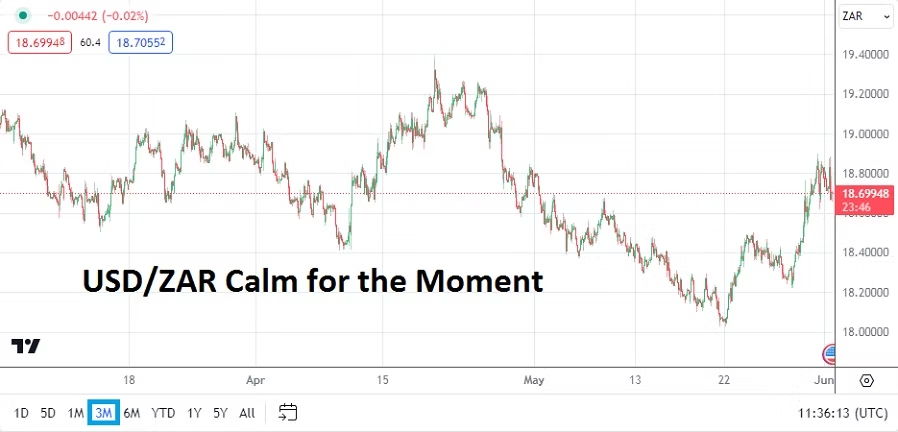
USD/ZAR Three Month Chart on the 3rd of June 2024

The results from the South Africa election have delivered the need for a government coalition. The USD/ZAR will certainly move according to degrees of nervousness being generated in South Africa. While the African National Congress has publicly called for unity and openness to achieve a working government, there are legitimate fears the ANC may consider a left wing coalition known as the Doomsday approach, which could include political parties that are not seen as being pro-business or inclusive for the entire population. Financial institutions in South Africa and abroad will have their trust of the ANC tested in the days ahead.

South Africa political concerns may cause the USD/ZAR to step out of line and not correlate to the broad Forex market. The ANC has two working weeks to reach a coalition deal. The ANC has never been in such a weak position before, and if the ANC makes a political deal which is interpreted as being against free enterprise it will not be welcomed by many businesses. Will the ANC be able to admit a new path can be followed in South Africa that creates a space for more transparency regarding fiscal policy and oversight, or will the ANC become stubborn and make a deal with a political party that moves the nation backwards economically and causes more strain via geopolitics?

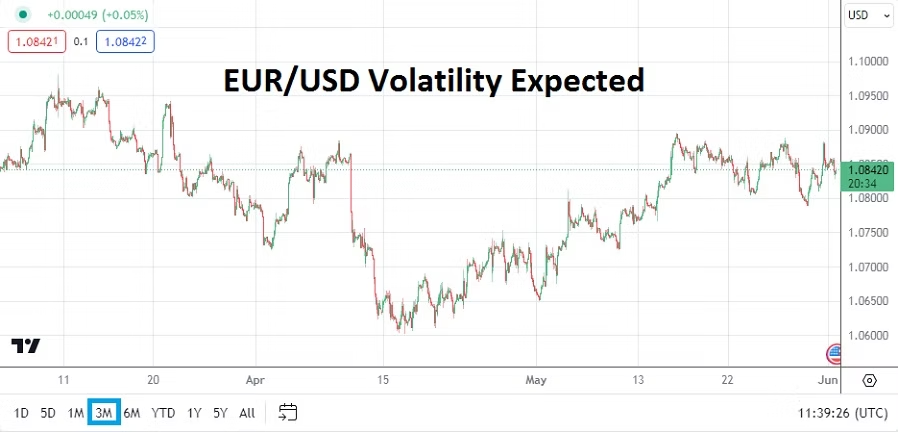
EUR/USD Three Month Chart on the 3rd of June 2024

From Europe, the ECB will step into the spotlight this coming Thursday. Following last week’s lower than expected Consumer Price Index data from Germany, the ECB is widely anticipated to cut its Main Refinancing Rate by 0.25%. Day traders need to be aware of this, because on Thursday if and when the ECB does cut the interest rate, the reaction in the EUR/USD may not move the market as much as small retail speculators anticipate.

Instead the volatile reaction could come from the inspection and understanding of the published Monetary Policy Statement, and the Press Conference which will follow half an hour later. The EUR/USD it should be noted jumped higher last Wednesday on the weaker than expected inflation report from Germany, which may mean some of the EUR/USD bullishness has already been bought into the currency pair.

The thought that the ECB has seemingly stood in the shadow of the Fed for the past year and largely reacted only after the U.S central bank is important. If the ECB actually goes out on a limb and cuts its interest rate this week, and says it is considering another later this summer it will cause a reaction. The differentiation between the Main Refinancing Rate from the ECB and the Fed’s Federal Fund Rate will cause momentary headaches too.

However, this might ignite thinking within financial institutions that the Fed has given the ECB a quiet ‘green light’ and assured the ECB that the Federal Reserve will become dovish over the mid-term. However, the Fed is not expected to cut the Federal Funds Rate next week. What should happen is that the Fed delivers a December 2023 repeat performance on the 12th of June, in which it expresses a rather dovish perspective – but this time delivers, but there are no guarantees.

The U.S jobs numbers this Friday will play into the EUR/USD sentiment too and all other Forex pairs. Importantly, traders do not want to see a retraction from the Fed again in the coming months and cautious talk about inflation. While higher prices may be the reality for the moment, financial institutions appear to be hoping on proactive actions from the ECB and Fed combined. If dovish rhetoric isn’t seen Forex choppiness will become intense again.

Political rhetoric and its influence on Forex will not only come from South Africa and Europe, but India as its election results are finalized tomorrow and Mexico after the outcome of its vote held this past weekend. The results in India and Mexico have produced the anticipated outcomes, so the USD/INR and USD/MXN should expect to become calmer in the days ahead.

After the anticipated U.S Fed FOMC meeting rhetoric on the 12th of June, and the Bank of Japan’s policy tidbits on the 14th perhaps things will become relatively tranquil. However, financial institutions will be busy over the next ten business days as they try to make sure they have balanced Forex positions, which take into account their commercial transactions and cash forward outlooks for clients which could add to the potential for volatility.

postR196

AMT Top Ten Miscellaneous Blossoms for the 31st of May 2024

AMT Top Ten Miscellaneous Blossoms for the 31st of May 2024

10. European Supremacy: The NBA Championship between Boston and Dallas is set to begin on the 6th of June. If the Dallas Mavericks win, it will mean Giannis Antetokounmpo in 2021, Nikola Jokic in 2023, and Luka Doncic in 2024 were victors, and are cementing the terrain as the best players.

9. Brisk Breeze: The need for ‘chill’ among AI and server companies isn’t only about attitude. The advent of quantum computing will add to the wintry demands. Vertiv, Asia Vital Components, and Auras Technology are a few of the enterprises in the industrial environment sector helping deliver precision cooling for the technologies to work efficiently.

8. Glitches: Stalled data within the S&P 500 and Dow Jones 30 for their index calculations took place yesterday for nearly one hour, but individual trading within companies via stock prices appears to have been unaffected. Futures trading for the two indices weren’t affected. On Monday the 18th of March, Nasdaq suffered a tech problem that stopped pre-market trading for a couple of hours.

7. OPEC: The cartel will conduct a one day online meeting this coming Sunday. Production levels will be discussed, among other issues. The price of WTI Crude Oil as of this writing is below 78.00 USD per barrel. While news remains stuck in hyperbole from the Middle East, the price of Crude Oil has declined since the first week of April.

6. Conviction: Donald Trump was found guilty in a NYC courtroom yesterday, but the verdict is certain to be appealed. The law of unintended consequences could come into play from the U.S as reactions generate. The perceived notion that ineffectual and non-credible leadership is mounting in the U.S, lends credence to some people around the globe regarding dwindling American exceptionalism.

5. Results: South Africa voting counts will be finalized sometime this weekend, India’s election count will be known on the 4th of June. The unknown outcomes are affecting the USD/ZAR and USD/INR, and more volatility in the currency pairs should be expected early next week.

4. Coincident: GDP results came in around their expectations yesterday. Growth numbers produced a gain of 1.3%, while the GDP Price Index showed a 3.0% climb. The data produced does show the U.S economy is slowing and is another ripple to be considered by analysts and traders.

3. USD/JPY: The Bank of Japan appears to be betting on weaker U.S data to continue, and potential dovish Fed rhetoric on the 12th of June to propel the USD/JPY lower, thus helping the BoJ to remain on the sideline and avoid an intervention for the moment. The BoJ will release their Policy Rate decision on the 14th of June and many eyes will be on the central bank’s Monetary Policy Statement.

2. Inflation: The Core PCE Price Index report outcome today is anticipated to be around the 0.3% ratio. The Federal Reserve pays plenty of attention to this publication and if the number meets the expectation or comes in below it, this could cause a repeat of the Fed’s dovish December 2023 FOMC Statement. Financial institutions have already begun wagering that the Federal Funds Rate could be cut this summer and later again this year. Many assets will react to today’s inflation report.

1. Behavioral Sentiment: Nervous price action has been seen in the equity indices and Forex this week. Investors may have felt they got a little ahead of their risk appetite curve and now appear to be waiting on more solid impetus to reconfirm their outlooks. Choppy price action has certainly been fueled by U.S Treasury yields which increased earlier this week. Losses in the S&P 500, Dow 30 and Nasdaq the past handful of days are now waiting for buyers to reemerge. The question day traders may want to consider is if financial institutions and large investors believe assets will cost less next week, or if prices have now hit worthwhile support levels which will spur on buying today?

postR163.1

Caution as GDP and Reactive Sentiment the Key for the Week

Caution as GDP and Reactive Sentiment the Key for the Week

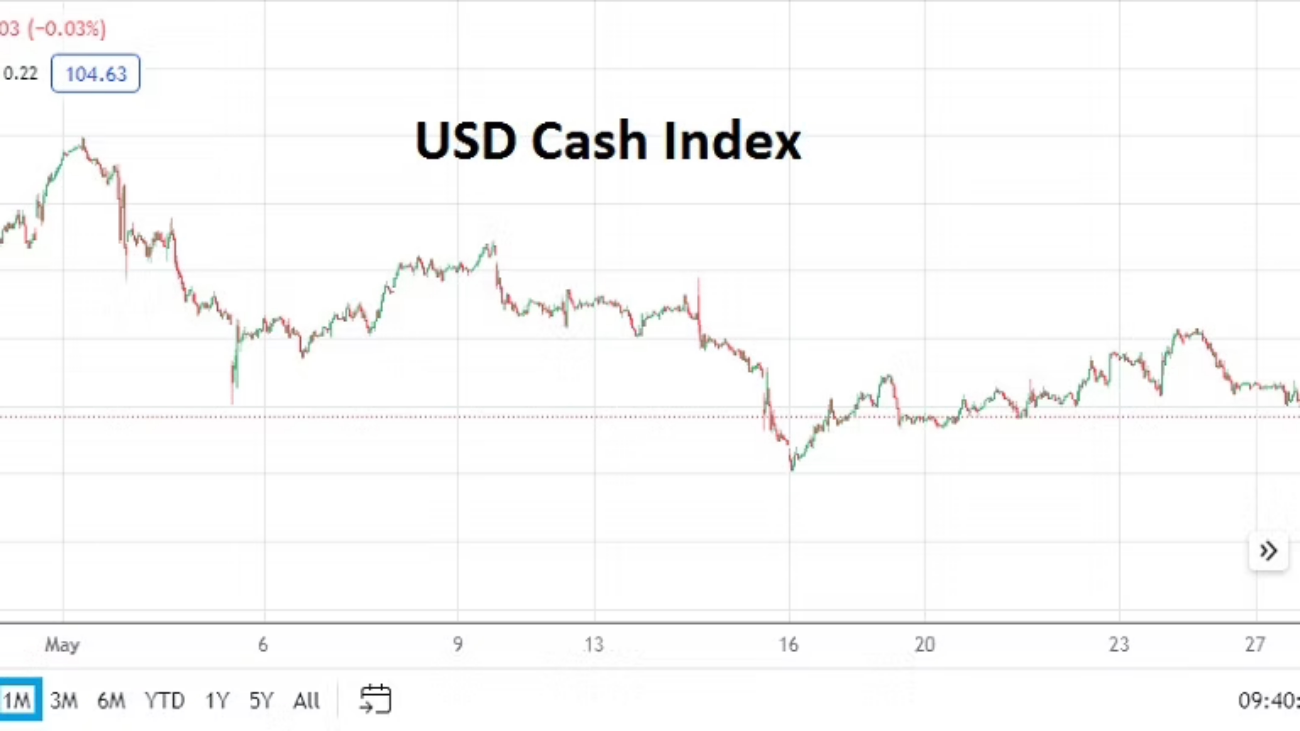
Forex markets have seen plenty of sideways action with the USD Cash Index lingering within the weaker parts of one and three month ranges. Yes, financial institutions appear to be leaning towards a belief the Federal Reserve will have to become more dovish over the mid-term, but last week’s price action before the onset of the long holiday weekend which has just passed did start to produce headwinds.

Risk appetite although high has climbed down from its peaks for the moment. Yet, financial institutions, investors and day traders likely still are aiming for more optimistic results. Speculative inclinations may believe more weakness is about to come from the USD, and major currencies are within sight of important technical barometers which could fuel more bets on a weaker USD to develop.

USD Cash Index One Month Chart on the 28th of May 2024

A taste for speculative buying in the equity indices while running out of some power last week remains within sight of highs. The Dow 30 and S&P 500 might have come off their records along with the Nasdaq, but the slight declines may be viewed as a buying opportunity by day traders.

However, before retail speculators dip their toes in the water they should understand that the Gross Domestic Product numbers this week will factor into existing behavioral sentiment. Again, taking a position for a short-term wager is different than buying an equity index as a long haul investment vehicle. The two are not the same and the daily fluctuations, even the weekly movements of the equity indices, do not bother investors who are gearing their outlooks for the long-term, while short-term moves can wipe out a person using too much leverage if they are pursing a casino like belief in direction without solid risk management.

Dow 30 Index One Month Chart on the 28th of May 2024

Yesterday’s holidays in the U.S and U.K have likely given financial institutions a chance to reflect on events and outlooks which will be unfolding and affecting sentiment. The announcement on Wednesday of last week that Britain will have a national election on the 4th of July will certainly start to create concerns for the GBP/USD.

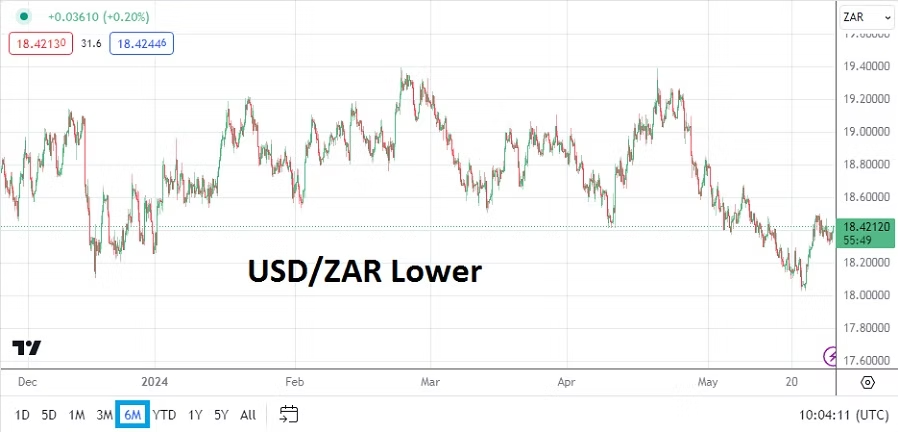
USD/ZAR Six Month Chart on the 28th of May 2024

Tomorrow the South Africa election will be held. While not an event which will get the attention of all investors, the implications of the vote in South Africa and the potential for a coalition should be watched. If the African National Congress is forced to form a coalition, investment managers will be hoping that the political maneuvering doesn’t bring about a ‘hard-left’ ruling government. Again while the investment stakes may not be felt by everyone around the globe concerning the results in the South Africa election, its impact on geopolitics long-term could be substantial.

International mining companies with large amounts of infrastructure and investment in the nation will certainly be keeping their eyes on events. There is a high level of suspicion within South Africa that load-shedding (rolling electrical blackouts) which has largely disappeared the past few months could reappear after the election, which highlights some of the distrust citizens have regarding the current leadership. The ANC has been in power for 30 years and tomorrow’s election marks one of the first times their leadership may prove vulnerable.

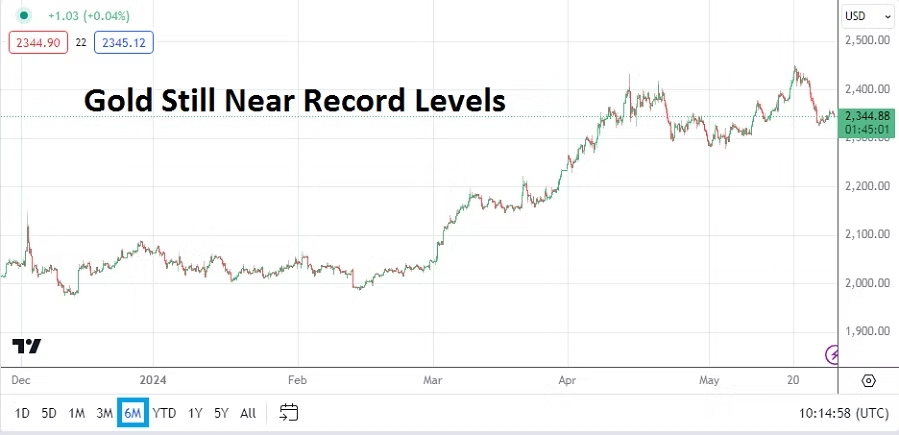
Gold Six Month Chart on the 28th of May 2024

As a clue for speculators and the level of complexity being seen in the financial markets near-term is that the price of gold remains elevated. Although not at its apex values, the price is certainly within sight of highs. What is interesting is that the record levels have taken place as USD centric attitudes have turned weaker the past month, showing that their is likely a large speculative presence within the gold market.

Certainly governments via central banks and other investors could be buying gold. The apex values in gold coupled with weaker USD sentiment which has developed the past month shows that nervousness still lingers. Again, long-term players in gold have much less to fear than short-term day traders who are betting on intraday price changes. Gold is a remarkably strong inflation hedge historically, but retail wagers on the price of the precious metal is a constant battleground. If the USD stays weaker over the mid-term it will prove very interesting to see where gold starts to display a durable support level – if in fact it is tested. There are gold bugs who certainly believe the price of the commodity should be much higher in relation to the unreliability of paper money in many spheres.

For traders who are looking ahead to the economic data risk events, the price of WTI Crude Oil needs to be given attention too. The price of the energy source remains under 80.00 USD per barrel which is important. If the costs of WTI Crude Oil remains stable this may cool some inflation fears. It should be noted that OPEC will begin conducting a conference to discuss Crude Oil production on the 2nd of June.

Tuesday, 28th of May, U.S Consumer Confidence via the Conference Board – the University of Michigan Consumer Sentiment numbers came in slightly better than expected last week. However, today’s reading is expected to be slightly lower than the previous result. Weaker than anticipated data could actually help the USD remain within its bearish technical range in Forex.

Wednesday, 29th of May, Germany Preliminary Consumer Price Index – this CPI result will impact the EUR/USD. The expectation is for a weaker result of 0.2% compared to previous outcome of 0.5%. If this number matches the expectation, this could put the European Central Bank into a collision course with financial institutions who want the ECB to take on a proactive dovish policy and begin cutting interest rates.

Thursday, 30th of May, U.S Preliminary Gross Domestic Product – the growth and Price Index numbers via the GDP reports will be significant and cause a large impact in the financial markets. Forex, commodities and equity indices (and Treasuries) will all be affected. The growth number is expected to be weaker than last month’s. Having produced lower results last month, if this GDP statistic is below the anticipated level of 1.3% it could set off fireworks. The GDP Price Index will have many eyes upon it too, and it carries a expected gain of 3.1%. Inflation remains a chief catalyst for the Fed and in Forex. The combination of the growth and price numbers is certain to cause volatility.

Friday, 31st of May, China Manufacturing PMI – economic data from China has been mixed recently, but foreign investment is still weak and the nation is looking for positive outcomes. Traders should keep their eyes on these numbers and also remember that economic results from China are not exactly the most transparent. Consumer numbers via retail spending domestically in China are still struggling. China is hoping to attain better trade relationships in Europe, but its intentions are running into a more competitive export landscape and political complications which are making the chances for a quick fix for its economy elusive.

Friday, 31st of May, U.S Core PCE Price Index – this report should be watched by Forex traders because it is highly regarded by the Federal Reserve as an inflation gauge. An outcome of 0.2% is the expectation for this report and if met, the USD could turn weaker going into the weekend.