postR196

AMT Top Ten Miscellaneous Punches for the 28th of June 2024

AMT Top Ten Miscellaneous Punches for the 28th of June 2024

10. Cricket: The ICC T20 World Cup Championship will feature South Africa vs. India. The two teams are familiar with each other competitively and the final match will be held at the Kensington Oval in Bridgetown, Barbados on Saturday.

9. Selling Pressure: Lows are being challenged in Bitcoin as it hovers above 61,000.00 USD. Cocoa has stumbled dramatically this week and is below 8,000.00 per metric ton. Who will be courageous and wager on reversals higher? Speculators should remain cautious and understand price velocity that looks tantalizing can also prove costly to trading accounts.

8. Grounded: Boeing’s Starliner remains docked to the International Space Station. Problems have plagued The Boeing Company the past handful of months, and their ambitions of becoming a power within NASA’s explorations are also underachieving. SpaceX and Airbus are certainly paying attention to Boeing’s ineffectiveness.

7. Teetering: The African National Congress and Democratic Alliance political parties in South Africa are feuding about how coalition power will be shared within the National Unity Government. The USD/ZAR has become volatile and is near 18.21000 as tensions mount and reversals hit. Financial institutions are waiting for an optimistic resolution, while also fearing the possibility of an abandonment to positive visions.

6. Inflation: Core Personal Consumer Expenditures Price Index statistics will be released today from the U.S. Yesterday’s GDP Price Index came in slightly higher than anticipated which kept USD centric bullish positions relatively strong. However, other American statistics have weakened significantly and the mid-term looks troubling for the U.S economically. Stagflation remains a concern. The Federal Reserve is likely hoping to see today’s PCE numbers come in weaker than expected, which would allow the central bank to hint towards Federal Fund Rate cuts later this year.

5. Ennui: President Macron could find his political power further eclipsed after France’s first round voting results this coming Sunday. French voters appear ready to deliver a resounding message of dissatisfaction to the listless ruling government. Election turnout statistics should be watched. The second round of voting will be on the 7th of July. Financial institutions have braced for a shift of power already, but the EUR/USD will still produce volatility in the days ahead.

4. Geopolitical Risks: Russia, China and their allies are likely considering how they will prepare for a potential change in the U.S White House. Foreign policy following last night’s debate between Biden and Trump must be planned. The fact that Trump is viewed as a rather flamboyant personality and not bound by cautious diplomatic attitudes creates a calculus that U.S adversaries will have to consider. While the potential exists that some nations may try to be more aggressive now, they also know that a Trump victory in November would change the international political landscape long-term.

3. Bank of Japan: The Core Tokyo Consumer Price Index produced a gain of 2.1%, which was above the forecasted amount of 2.0% earlier today. The BoJ continues to remain far too dovish regarding interest rate policy and financial institutions are buying the USD/JPY in massive waves. The USD/JPY is around 160.750 as of this writing and did traverse above 161.000 earlier, these are Forex levels not seen since the late 1980’s for the USD/JPY. Japan’s attempt to stimulate the economy with a weaker Japanese Yen may work, but the U.S and others may start to look at the BoJ’s soft devaluation in a very negative light. Speculators of the currency pair need to be extremely careful, because the BoJ has the ability to intervene violently and cause momentary spikes which could prove deadly for day traders trying to take advantage of the outlandish bullish trend.

2. Behavioral Sentiment: Markets will be a looking glass into the future today, this as trading houses react to the realization that Donald Trump is likely going to be the next U.S President. While there are no guarantees regarding the U.S election outcome yet, the broad markets will certainly feel a shift of momentum in the coming days as large players adjust from a cautious approach to more aggressive postures regarding a Trump presidency. U.S equity indices remain near record highs, and the potential of a more business friendly White House which doesn’t threaten tax hikes on U.S corporations will likely affect speculative outlooks.

1. Power: The resounding defeat of Joe Biden last night in the Presidential debate will spark a heated battle among Democratic power brokers. Biden will certainly be asked to step aside after last night’s poor performance. However, Biden is stubborn, and Dem leaders like Nancy Pelosi and Barak Obama among others will have a difficult task to try and convince Biden for the sake of the nation that he must do the honorable thing and release his political delegates at the August Democratic National Convention in Chicago. If this doesn’t happen, the Republicans may be able to achieve a landslide victory by taking control of not only the White House but the Senate too, along with maintaining power in the House of Representatives. All the camouflage in the world last night, including the liberal media, couldn’t mask the inability of Joe Biden to be coherent.
postR169.1

Forex Debate and Coming Impetus this Week for Speculators

Forex Debate and Coming Impetus this Week for Speculators

In many respects the broad markets feel as if they are waiting for big news and this may not be delivered as wanted. Yes, the debate between Biden and Trump this Thursday will get attention, but unless there is a major television moment the outcome is not likely going to give a final affirmation regarding the U.S election results in November. Some people may be counting on Biden to literally misstep, and for Trump to say something incredibly outlandish, but it is also possible the debate disappoints even as entertainment. Perhaps the Presidential debate will deliver sideways action like the broad markets have the past week, leaving us with a desire for more.

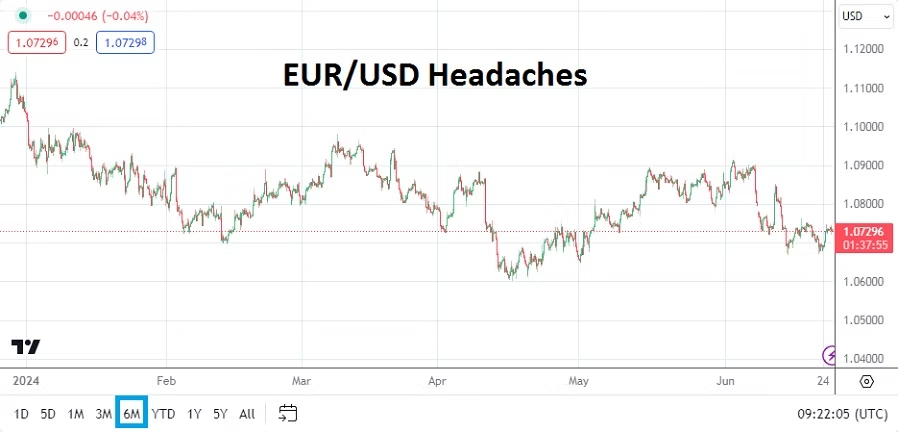
Financial institutions will look at U.S growth numbers this coming Thursday certainly, and also keep their eyes on the upcoming Sunday vote in France on the 30th which might prove rather remarkable. The EUR/USD is certainly back within its lower depths when a six month chart is inspected, and traders will react to France’s election this weekend, but it should be remembered the second and vital round of voting will not occur until the 7th of July. Until then, reactionary and precautionary results in the EUR/USD may produce headaches. The EUR does look oversold, but timeframes and the ability to hold a position may prove tough for short-term traders hoping for a wave of optimism to suddenly take hold and create a strong trend.

EUR/USD Six Month Chart on the 25th of June 2024

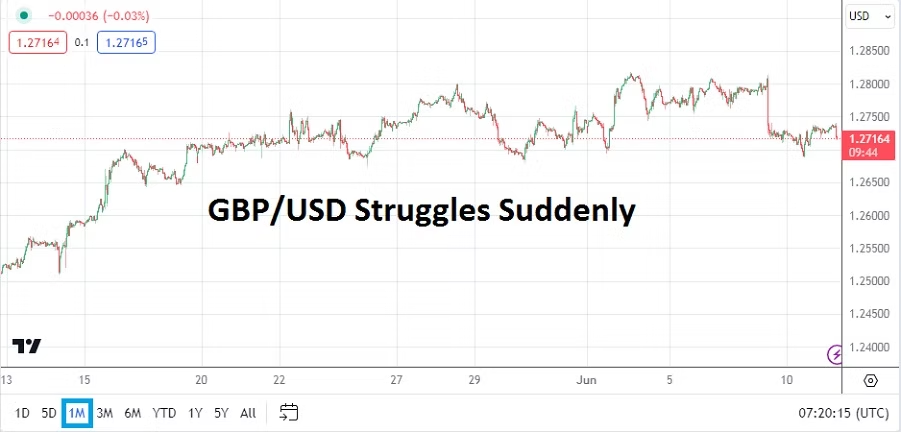
Not to be outdone the U.K is gaining plenty of attention because of its election on the 4th of July, but in this case it seems more like a coronation for the Labour Party and only a question about how devastating the carnage will be for the Tories. Financial institutions may have already factored in their perceived outlooks regarding the U.K vote into the GBP/USD. The currency pair will certainly react to the British election results, but financial institutions may have less to fear regarding sudden volatility of the British Pound, compared to the EUR/USD which could still have days ahead when it doesn’t trade in a USD correlated manner due to E.U political unknowns.

Monday, 24th of June, Germany Ifo Business Climate – the reading produced a drop to 88.6, missing the estimate of 89.4. Germany economic pressures remain negative and this may keep the idea alive that the ECB should be considering another interest rate cut. However, because the European Central Bank cut its Main Refinancing Rate recently and the U.S Fed continues to look rather neutral, it seems unlikely the ECB will decide to suddenly become the only proactive central bank around over the mid-term. Meaning, the ECB may stay conservative and want to wait on others to join the interest rate cut party, this before they create more unbalanced carry trade opportunities which could lower the value of the EUR/USD too much.

Tuesday, 25th of June, U.S CB Consumer Confidence – the reading will certainly be watched by investors, but will it create bedlam if there is surprise for equities or Forex? The likely answer is no. Behavioral sentiment has become flustered and shifted over the past handful of months, and this will create some caution no matter what today’s consumer reading says. Large financial institutions will probably stay geared to other upcoming data which will be considered more important.

Wednesday, 26th of June, U.S New Home Sales – a slight uptick in the amount of housing sales is expected. However, because of higher interest rates in the U.S via the cost of mortgages this number is likely to remain rather muted. For interested traders a look at the previous revisions of the New Home Sales data will prove interesting. The outcome of this reading should be treated with a bit of skepticism because it may be changed down the road. Unless there is a huge surprise the impact of this report may be rather calm, no matter what media narrative dictates.

Thursday, 27th of June, U.K Bank of England Governor – Andrew Bailey will speak about the Financial Stability Report. Bailey is certain to add some insights regarding the BoE’s neutral policy stance taken last week regarding interest rates, but more hints regarding potential cuts later this summer and possibly late this year again may be given. Economic data from the U.K remains troubling. The Bank of England may want to remain cautious because of inflation concerns, but financial institutions would like to see a more proactive dovish stance. Bailey might also talk about the potential affects from the U.K election, but he will have to be careful to make sure it doesn’t sound like he is taking a political side.

Thursday, 27th of June, U.S Gross Domestic Product and GDP Price Index – these two reports will impact the financial markets. The growth and inflation data will be examined by all financial institutions and generate trading reactions. The GDP growth number is expected to come at 1.4%, which is slightly higher than the previous report which posted a 1.3% result. Any number below 2.0% growth will be considered as lackluster by most financial analysts. Traders will then turn their attention to the inflation results which are supposed to match the 3.0% gain from the last Price Index report. If this number can somehow come in below expectations, this could propel some weakness in the USD. However, traders should be careful and remember U.S economic data the past handful of months has produced surprises which have created dangerous and choppy Forex conditions.

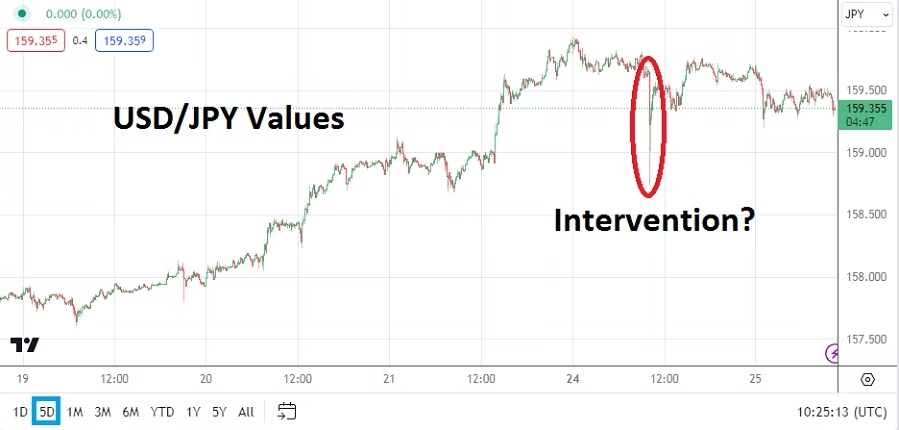
USD/JPY Five Day Chart on the 25th of June 2024

Friday, 28th of June, Japan Tokyo Core CPI – a gain of 2.0% is anticipated. The USD/JPY should be watched carefully. Early this Monday the BoJ likely tried an intervention in the Japanese Yen, but the USD/JPY only had a momentary swift selloff. As of this writing (Tuesday the 25th of June) the USD/JPY is trading near the 159.345 ratio which is very high when historical comparisons are considered. If the inflation number comes in with a 2.0% result or higher this could set off fireworks in the USD/JPY. Financial institutions clearly believe the BoJ should raise their interest rate by at least 0.25%, but the Japanese government appears keen on trying to keep the Japanese Yen weak to help GDP via exports from the nation. The Bank of Japan needs to be given attention. Speculators and the BoJ are battling against each other.

Friday, 28th of June, U.S Core PCE Price Index – the Personal Consumer Expenditures inflation report is forecasted to produce a gain of only 0.1% compared to the previous result of 0.2%. If the PCE Price Index does turn in the anticipated result, and the GDP Price Index from Thursday met expectations or came in lower, this could cause more speculative selling of the USD. However, if the inflation results come in stronger than expected Forex traders could see bullish USD buying which again challenges sellers abruptly.

postR168

AMT Top Ten Miscellaneous Missiles for the 21st of June 2024

AMT Top Ten Miscellaneous Missiles for the 21st of June 2024

10. Say Hey Kid: Baseball legend Willie Mays passed away earlier this week. He was a beloved player on the New York and San Francisco Giants in the 1950s, 1960s, and early 1970s. He might have been the best five tool baseball player of all-time.

9. AI Apocalypse: Talk about selling Nvidia shares to cash out of the super hot Artificial Intelligence tech boom on Wall Street might be considered the safe thing to do in order to protect profits. However, betting on the existing ‘machine learning’ gold rush in the stock markets to possibly end soon, thus turning into a ‘dot com’ like bubble bursting in the spring of 2000 could be misguided. The ‘dot com’ exuberance essentially started in 1995 and ran for almost five full years. The Artificial Intelligence surge may still have a lot of room to run.

8. Simmering Crypto: Bitcoin, Ethereum, and Binance Coin all remain at lofty prices, but they have lost value since touching highs in the first week of June. Trading volume of cryptos – including BTC/USD – is still below its peak of 2021 and early 2022. While the introduction of ETF products for Bitcoin has gotten institutional money involved, many individual ex-traders remain cautious. Former illustrious speculative plays like Dogecoin and Shiba Inu have turned into niche wagering cesspools.

7. Hezbollah Poker: Hassan Nasrallah delivered a surprise statement earlier this week when he proclaimed if there is an escalation between Hezbollah and Israel, that Cyprus could be attacked by missiles. The U.K still maintains sovereign military bases at Akrotiri and Dhekelia on the island of Cyprus. Direct fire from Hezbollah on an E.U member nation would be a major intensification of the Middle East conflict. Nasrallah may believe the rather limited response by the West to the Houthis attacks in the Red and Arabian seas, makes his threats on Cyprus an objective guise to get the West to pressure Israel to hold their fire.

6. Commodity Watch: WTI Crude Oil price is over 81.00 USD as of this writing and Gold is near 2365.00 per ounce. The price of energy needs to be watched because of its potential impact of inflation. WTI prices have been rather tame the past two and half months, but have climbed the past week. The precious metal remains within sight of highs and has been lingering within an elevated range since the middle of April. Cocoa for those interested is back below 10,000.00 USD per metric ton.

5. Shifting Sentiment: The Mexican Peso and Brazilian Real have lost value as politics in Mexico and Brazil are causing nervousness among financial institutions. The governing political parties in both nations are trying to reach for new powers, and the selloff of the two currencies against the USD have been clear. Morena, the leftist political party governing Mexico, is seeking controversial judicial reform which is seen as an attempt to gain more political influence. Lula da Silva’s Workers’ Party is attempting to take the head of the Central Bank of Brazil, Roberto Campos Neto, to court to try and muzzle his fiscal viewpoints. The USD/MXN is near 18.31650 and the USD/BRL is around 5.4539 as of this writing. Rand traders who have seen a bearish USD/ZAR trend emerge the past week and a half because of renewed optimism in South Africa might find the spats in Mexico and Brazil intriguing.

4. Euro Barometer: The first French election will be held on the 30th of June, the second on the 7th of July. The contest is shaping up as a election between the Left and Right. Political coalitions are being formed rapidly. The attempt to coalesce on the Left is an obvious sign that politicians feel threatened with the prospect of sweeping losses. Media noise is certain to boom and be exaggerated in the coming days as warnings about this election potentially affecting all of humankind litters the airwaves. Macron and other politicians may find tough days ahead as they apologize for policy failures and get punished via the election outcomes. The EUR/USD is close to 1.06931 for the moment.

3. China Woes: Economic data from the housing sector continues to show a downwards trajectory regarding home values in the nation, and it is having an impact on consumers as their net worth suffers and affects spending habits. Not only are property values still dropping at a rapid pace, but recent Factory output data has come in below expectations. China is tentatively scheduled to release Foreign Direct Investment numbers soon.

2. Summer Doldrums: Investor behavioral sentiment appears to be in a wait and see mode as as more impetus is awaited and large players grow cautious. The U.S will issue PMI manufacturing and services data today, but the results will have a limited effect. The U.S Juneteenth holiday which was celebrated on Wednesday and the return of traders yesterday did not rejuvenate optimism. The Nasdaq Composite and S&P 500 lost some ground. While the Dow 30 did gain slightly yesterday, the index has been treading water compared to the Nasdaq and S&P over the past month.

1. Geriatric Debate: Next Thursday the 27th of June, President Biden and former President Trump will debate. The televised event will be watched by American voters and the world. Not only will the debate deliver potential impetus to financial assets if there is a clear winner, but it may provide a large wagering environment for betters who gamble on which Presidential candidate will be the first to go off script. People in the U.S desire a discussion about the economy, foreign policy and immigration, this while hoping for a lack of mishaps, hyperbole and demagoguery which is unfortunately quite likely.

postR167

Forex and Political Sentiment Moving the South African Rand

Forex and Political Sentiment Moving the South African Rand

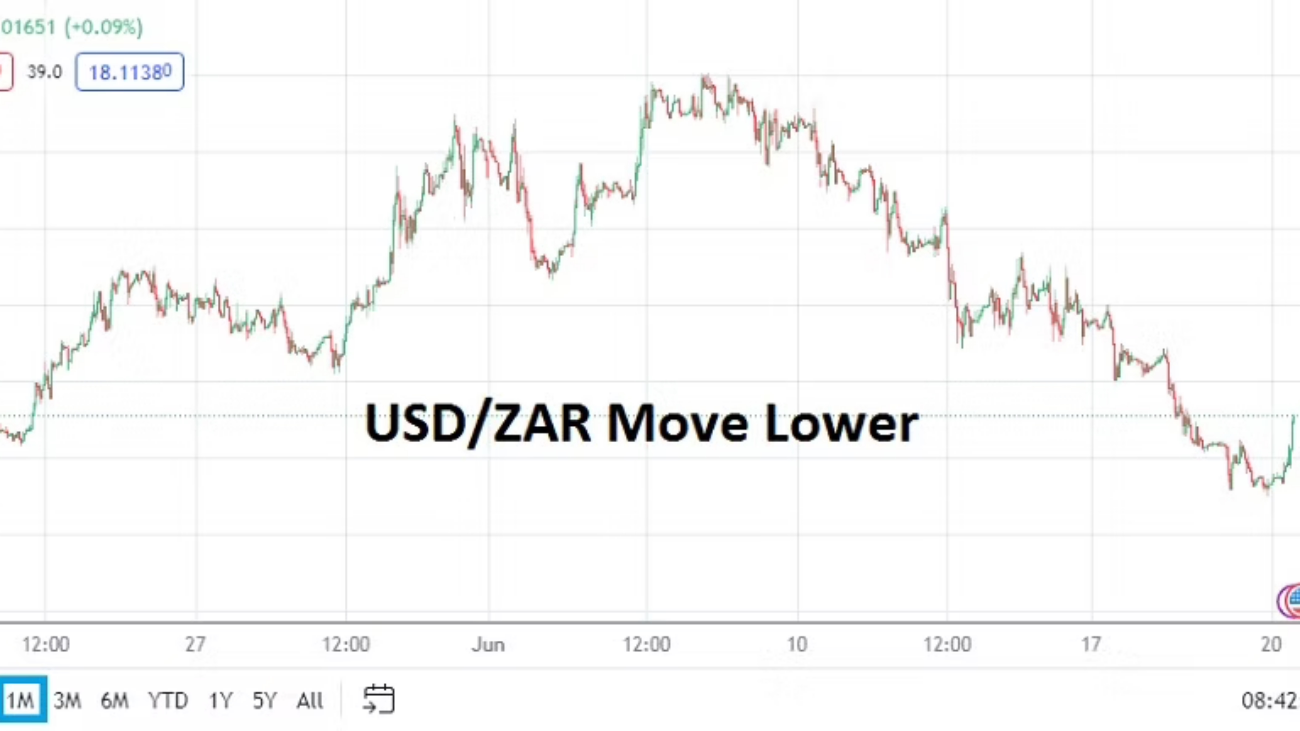
Recent trading in the USD/ZAR has become bearish and highlights the behavioral sentiment shifts taking place within South Africa, this as outlooks and perspectives create opportunities for financial institutions and speculators.

USD/ZAR One Month Chart as of 20th June 2024

South Africa politics have generated optimistic selling of the USD/ZAR in the past week and a half as the ANC has agreed to a National Unity Government coalition. Financial institutions pulled the USD/ZAR higher and to the 19.00000 realm in the second week of June as concerns grew the African National Congress could decide on a hard-left coalition in the nervous days following the election results. But those fears disappeared when it became clear the ANC would actually undertake a working association with the Democratic Alliance. The USD/ZAR began to selloff. Yesterday’s ability to test values below the 18.00000 level highlight the price velocity that optimistic outlooks have generated the past handful of trading days. Not all of South Africa’s problems are going to vanish magically, but there is a hope that better days are ahead.

As simplistic as it sounds, financial institutions trade based on their outlooks and they take an approach with much longer timeframe considerations compared to day traders. In a sense the price of the USD/ZAR isn’t a reflection of what is, it is a mirror of what can be. The trend lower will now run into a test as financial institutions question the move lower that has been attained the past week and a half, compared to realities which still have to be handled per the existing problems that remain. The African National Congress and Democratic Alliance aren’t natural bedfellows. They will certainly clash regarding fiscal transparency, day to day power sharing as the nation and municipalities are managed, and geopolitical alliances will be questioned.

While the USD/ZAR has definitively traded lower and is testing intriguing support, optimistic sellers who have a mid-term outlook will look at one year charts and know the currency pair has traded at significantly lower values in July of 2023. Day traders should not get overly ambitious, because it will be nearly impossible for most short-term speculators to hold onto a position longer than a day or two because of transaction fees most trading platforms charge for overnight positions. However, the notion that financial institutions will look at the lower values seen technically about eleven months ago, and consider the potential of ‘what can be’ might start to affect the USD/ZAR more over the coming weeks and months.

There are warning signs that need to be monitored, there is already talk among media outlets in South Africa that the ANC and DA are in disagreement regarding the working relationship they share and what type of influence will be allowed from the junior partners – which includes the Democratic Alliance and at least four other smaller political parties. Nothing is for free in politics. Power and the ability to govern will need pragmatic approaches by all members of the National Unity Government in order for it to remain viable. The coming days and weeks are sure to create headlines which will make financial institutions occasionally nervous and create support levels which sometimes look very durable.

Perhaps the best barometer for short-term traders of the USD/ZAR will be resistance technically which is tested in the coming days. The USD/ZAR is trading near the 18.14200 ratio as of this writing. U.S traders will be returning from their holiday celebrations yesterday and increase Forex volumes which could cause uneasy reversals. However, if the 18.20000 level proves to be durable resistance near-term, it may signal financial institutions may believe additional positive impetus will create more selling. Behavioral sentiment will remain nervous in South Africa, but if optimistic outlooks remain the USD/ZAR could move lower again. The search for equilibrium in the USD/ZAR is not over and the coming weeks will be worth watching.

postR166

T20 World Cup 2024: New Cricket Contenders and Shifting Powers

T20 World Cup 2024: New Cricket Contenders and Shifting Powers

The 2024 T20 Cricket World Cup has unfolded as a fascinating saga of unexpected performances and shifting dynamics. Hosted jointly by the United States and the West

Indies, this year’s tournament has been a platform for emerging teams to shine and traditional powerhouses to stumble. Here’s a look at the highlights, surprises, and

predictions as the tournament enters the next phase of Super 8s.

The 2024 T20 World Cup has seen newer teams stepping up their game, bringing fresh excitement and proving that they are no longer mere participants but serious contenders on the global stage.

Nepal: Nearing a Historic Upset

Nepal’s match against South Africa was a nail-biter, showcasing their evolution at the international level. Despite being up against a seasoned and formidable South African side, Nepal pushed their opponents to the brink, almost clinching what would have been a historic victory. This performance underscored their potential and the growing depth in their cricketing skills.

Namibia: Close Calls and Narrow Losses

Namibia’s participation in the World Cup has been marked by tight contests and commendable efforts. They came close to winning on few occasions, showing that they are not far from breaking through to the next level. Their ability to compete closely with more established teams speaks volumes about their preparation and potential for future tournaments.

Scotland: Dominating Giants

Scotland has been a revelation, delivering top performances against some of the tournament’s biggest teams. Their matches against England and Australia were particularly impressive, where they played with confidence, proving that they are a force to be reckoned with in the T20 format.

USA: A Wild Card with a Wild Ride

As co-hosts, USA received a wild card entry into the tournament and seized the opportunity with both hands. They stunned Pakistan with a remarkable win and pushed India to their limits in a well contested match. Their spirited performances have been a breath of fresh air in the tournament. However, despite their on-field success, it remains uncertain whether these efforts will translate into a broader interest in cricket within the United States. The sport still predominantly attracts expatriate communities, and it will take more than a few wins to embed cricket deeply into American culture.

Oman, Uganda and Papua New Guinea: Learning the Hard Way

For teams like Oman, Uganda and Papua New Guinea, the World Cup has been a tough lesson in the rigors of international cricket. The disparity in skill and experience was evident as they struggled against seasoned opponents. However, participating in such a high-level tournament provides invaluable exposure and learning opportunities,

which are crucial for their development.

Netherlands, Canada and Ireland: A Nothing Tournament

Netherlands, Ireland and Canada have been on the Associate level circuit for a while. In fact, Ireland and Netherlands have played in past international tournaments and caused upsets. Who can forget Netherlands knocking out the giant South Africa at the last T20 world cup. Unfortunately, these 3 teams played mediocre cricket. Although not many expected them to win games, they were certainly expected to give a decent fight. That of course did not happen.

While emerging teams have shown promise, some traditional cricketing powerhouses have surprisingly struggled, failing to live up to their reputations.

New Zealand, Pakistan, and Sri Lanka: A Rough Road

New Zealand, Pakistan, and Sri Lanka have faced unexpected challenges, each failing to advance to the next round. Their early exits are a stark reminder of the unpredictable nature of T20 cricket, where even the most experienced sides can falter. These teams have not only lost games but also a bit of their aura as formidable opponents in the shortest format of the game.

Afghanistan and Bangladesh: Rising Up the Ranks

In contrast, Afghanistan and Bangladesh have played admirably, securing their spots in the next round. Their performances suggest a shift in the balance of power within the cricketing world. Both teams have shown resilience and skill, stepping into roles traditionally occupied by the likes of Pakistan and Sri Lanka.

England: Living Up to Expectations

England, known for their aggressive and adaptable T20 style, have lived up to their billing. They have performed consistently, leveraging their dynamic approach to secure


their place in the next stage of the tournament. Their ability to play fearlessly under pressure continues to make them a formidable T20 side.

The Dominant Forces

As the tournament progresses, the established giants continue to dominate, reaffirming their positions as the top teams in the world. India, South Africa, Australia, and the West Indies have each topped their respective groups, showcasing their strength and depth.

These teams possess a blend of talent, experience, and aggression that makes them formidable opponents.

India: Combining tactical acumen with explosive batting and a versatile bowling attack, India has consistently outperformed their rivals.

South Africa: Despite their scare against Nepal, South Africa’s robust team dynamics and skilled lineup have seen them through to the top.

Australia: Known for their relentless competitiveness, Australia has continued to display their dominance with powerful performances.

West Indies: Leveraging their home advantage, the West Indies have played with flair and confidence, making the most of familiar conditions.

The Home Advantage: West Indies have the Upper Hand

With the remaining games scheduled in the Caribbean, the West Indies have a significant home advantage. Their familiarity with local conditions, coupled with enthusiastic home support, positions them strongly as favorites to lift the trophy. While all four group leaders are strong contenders, the West Indies’ home advantage could be the crucial factor tipping the scales in their favor. Given their current form and the benefits of playing on familiar grounds, they are poised to be the team to beat in this year’s tournament.

The 2024 T20 World Cup has been a spectacle of emerging talent and unexpected twists. As newer teams rise and traditional powers recalibrate, the tournament highlights the dynamic and ever-evolving nature of T20 cricket. Whether this year’s surprises will lead to lasting changes in the cricketing landscape remains to be seen, but one thing is certain: the excitement and unpredictability of T20 cricket continues to captivate the fans.

postR174

The Oldest Hate: Why The Hague Needs to Convict Israel

The Oldest Hate: Why The Hague Needs to Convict Israel

Opinion: The following article is commentary and its views are solely those of the author. This article was first published the 14th of June via The Angry Demagogue.

The oldest hate is also the most frustrating hate – why is there antisemitism and why does it never end?  All the reasons to hate the Jews have been refuted by Jewish actions. We are filthy capitalists and then communists. We are separatists and then assimilationists. We are stateless and we have a state. The list goes on and on and we can come to the conclusion that there is no answer.

The late Lutheran Pastor turned Catholic Priest, Richard John Neuhaus said years ago – I paraphrase as I don’t remember the exact quite – if you don’t like Christian America, just wait until you get post-Christian America. No one can doubt that for centuries Christianity was the source of antisemitism in the European continent as Jews were the easy scapegoats to everything from the Plague to economic crashes. But with the dawn of the scientific age, Christian antisemitism lost its cache along with Christianity itself. What we are dealing with now is an antisemitism of the nihilists.

The nihilists are those anti-semites who, like the operettist Wagner and the philosophers Karl Marx and Voltaire started a trend that reached it climax with Nazi and Stalinist totalitarianism and has now made a comeback with a combination of Islamist and progressive ideologies which are all based on the glorification of violence and cruelty that we see in ISIS, Hamas, Fatah, Al-Qaeda and now manifesting itself in America’s great cities and universities. The question still remains – why do all of these seemingly contradictory ideas all converge in anti-semitism?  

The answer, it seems to me lies in exactly that one international body that was created in the wake of the actions of greatest and most horrible of anti-semitic regimes – the Nazi perpetrators of the Holocaust. The Western world – the modern Christian west, led by the United States, felt it needed laws of war and international bodies that would continue the work of the Nuremberg Trials and make sure all those who would perpetrate genocide would, eventually, be brought to justice. That these bodies have failed miserably is proven by the genocides in Rwanda and Cambodia, the mass murders going on in Sudan and other parts of Africa, the genocide, still ongoing of Sunni Muslims in Syria and the Chinese incarceration in concentration camps (and who knows what else?) of the Uyghurs. 

So why Israel? Why is Israel, why are the Jews the main enemies of the new nihilists?

The enemy is the moral code that the Bible brought into the world – a code that protected slaves from cruel behavior, a code that did not allow the rape of women captured in war, a code that limited the number of horses and wives a king could have, a code with laws of war. Maimonides, writing in the middle ages in Spain and then Egypt, has a whole section of his Code on the laws of kings and war.  Jews didn’t always follow the law and the books of Joshua and Judges are filled with difficult passages but the commandments were there, nonetheless.

Hugo Grotius, writing in the 16th and 17th century developed Just War theory based on Christian thinking and that has formed the basis of the international laws of warfare ever since. This certainly would not have happened without the Bible and the codes that followed it and this is what the nihilists hate most of all.  

Israel is at the heart of the progressive Western, radical Islamic, pan-Slavic and Communist revolt against the containment of violence, cruelty and bloodlust under the rubric of a higher moral law. Maybe it is true that man’s natural state is war, as Hobbes believed.  Maybe Heraclitus is right that “war is the father of us all and our king” and maybe as he continued, it “discloses who is godlike and who is but a man” but the Judeo-Christian tradition taught us that we need to overcome this nature and to live with a moral code that can overcome it and change what it means to be “godlike”.   

The “court” in the Hague represents that pagan and nihilistic outlook on life and the desire to return to a time where violence and cruelty is unregulated, where war can be fought without the rules that the Jews foisted onto mankind. Camille Paglia writes in her magnum oppose “Sexual Personae” that society is the “defense against nature’s power”. Without society and the moral and behavioral codes that make it up, Paglia writes, we would be” storm-tossed on the barbarous sea that is nature”.

Convicting Israel of violating the very laws it itself created will finally put an end to the “farce that is morality” according to the nihilists and return us to that “barbarous sea that is nature”. The destruction of Israel will allow the world to finally defeat that 3,000 year old code that we call the Judeo-Christian heritage that prohibits the nihilists from living as they wish. The Hague needs to convict Israel and the woke left along with radical Islam need to finish the job on the battlefield so that they can return to their beloved state of nature.

They hate the Jews now because we have provided them with the framework to be civilized and they hate civilization most of all.  

Israel will be convicted in the Hague because to find it innocent means the nihilists will be shackled to a morality that prevents them from cruelly murdering, raping and destroying as they please. It means that Hollywood will not be able to continue glorifying the dismemberment of children in their “realistic” crime dramas. It means the universities will have to teach of truth and beauty and not perpetuate the bloody ideologies it loves. It means that they will have to subordinate their beloved blood thirsty ideologies to that horrible bourgeois virtue, human kindness.

Disclaimer: the views expressed in this opinion article are solely those of the author, and not necessarily the opinions reflected by angrymetatraders.com or its associated parties.

You can follow Ira Slomowitz via The Angry Demagogue on Substack https://iraslomowitz.substack.com/

postR196

AMT Top Ten Miscellaneous Complexities for the 14th of June

AMT Top Ten Miscellaneous Complexities for the 14th of June

10. International Tech Research: Universities and institutions around the world are developing innovative systems to deliver a quantum future. Cal-Berkeley, MIT, Cambridge, the Barcelona Supercomputing Center, the Institut Polytechnique de Paris, and the Cleveland Clinic are only a few of the places in the ‘West’ that investors should monitor for developments, Asia is also very focused on high speed computing.

9. Musk Schedule: The tech mogul has had a busy week. His Tesla stock option compensation package was approved by shareholders yesterday. In 2018 Musk negotiated a package with Tesla that included a massive compensation agreement via stock options if he met valuation targets over a 10 year period. He achieved the valuation goals within only a few years. Musk also formally dropped his lawsuit against OpenAI and Sam Altman in recent days, this after the enterprise released emails showing Musk backed OpenAI’s pursuit of profits in the past. Around 2015 Musk invested about 45 million USD into OpenAI.

8. Muted Data: The U.S Consumer Sentiment and Inflation Expectations numbers will be released today via the University of Michigan. However these numbers are likely not going to impact financial assets in the U.S. The Fed and CPI results from the States published this past Wednesday will dominate the investing narrative. Searching for meaning regarding why assets move in a particular direction is the media’s job, but perceived realities always remain open to complex interpretations as real time prices are exhibited. Day traders need to be cautious of revisionist history.

7. Petrol Dollar: Saudi Arabia has not reconfirmed its commitment to transact Crude Oil exports with USD. The formal agreement reached in 1974 has expired. Forex traders should not panic about this development yet. Speculators should note that Saudi Arabia is likely to still demand most of their payments in USD since they can count on the valuation of the currency to remain relatively tranquil compared to other instruments like China’s Yuan. What the absence of an agreement between the U.S and Saudi Arabia does indicate unfortunately, is that U.S foreign policy continues to look vulnerable.

6. Optimism: A South Africa government coalition agreement could be formalized soon and create a better economic outlook for the nation. While geo-political concerns remain, and the ANC is not a 100% friendly philosophical match with the Democratic Alliance and some of the other political parties which will be involved, it appears a working agreement can be reached. The question in South Africa is if transparent fiscal and anti-corruption mandates can be accomplished while diverse political outlooks will be heard and demanded from different factions. For the moment, financial institutions seem to like what they are hearing and the USD/ZAR has edged lower in the past week.

5. Highly Valued: Gold is over 2300.00, BTC/USD is near 67,000, and Cocoa is within sight of 11,000. Speculative large players remain active, and traders looking to take advantage of short and near-term fluctuations in these commodities need to remain vigilant. Cocoa, while extremely dangerous to trade, has outperformed gold and Bitcoin recently. Investors in gold think long-term, and Bitcoin influencers preach ‘hold on for dear life’ as non-believers shake their heads in disagreement. However, daily gyrations influenced by large players can still wreck havoc on those looking for short-term wagering opportunities.

4. Zombie Fed: Cautiously optimistic undertones were served from Jerome Powell as expected this past Wednesday, but intriguingly Powell admitted some government data remains open for interpretation, particularly the suspiciously strong headline jobs numbers which are being questioned. The Fed now says its outlook is for one interest rate cut this year. Financial institutions likely believe the Fed remains too reactive. The U.S GDP has shown signs of struggling, and CPI numbers have begun to erode. Crude Oil prices remain under 80.00 USD. However, the Fed seems intent on still pumping the brakes in order to kill off inflation via the high Federal Funds Rate. It would help if the U.S govt stopped spending cash recklessly, and the U.S Treasury stopped printing money.

3. Equities: U.S political concerns as the election approaches will create more analysis paralysis than normal. Short-term behavioral sentiment may sound nervous, but a bullish trend and risk appetite remain evident. Day traders may be able to take advantage of technical trading via support and resistance in CFDs, but fundamentally financial institutions appear inclined to count on equity indices achieving record highs.

2. 157.000 – 158.000: Today’s BoJ decision to remain stuck in the mud has created more financial institutional dismay in some quarters, and the the Japanese Yen will be punished occasionally against the USD. But the folks at the BoJ are not stupid and likely anticipated the USD/JPY move higher which ensued. The BoJ is obviously preserving its ‘soft devaluation’ of the JPY in order to maintain an export advantage for the U.S and European consumer markets. The question is if and when the BoJ will buy billions worth of JPY in order to punish bullish USD/JPY Forex speculators occasionally.

1. Volatile Near-Term: EUR/USD and GBP/USD price action has been boiling. France and the U.K have crucial elections in the coming weeks, after policies in both nations have led to a lack of confidence in the ruling governments. The ruckus outcome from the E.U Parliament voting have created an intriguing complication. Oddly enough, the U.K may be the left’s torch bearer in the coming year, while other European nations drift towards the right. Can centrists create a middle ground? Volatility and the search for equilibrium via financial institutions may create a lot of opportunities for Forex day traders in the coming weeks in the EUR/USD and GBP/USD as reversals and trends are sought.

postR165.1

Forex Noise: Influences from Suspicious Data and Rhetoric

Forex Noise: Influences from Suspicious Data and Rhetoric

Yesterday’s GDP numbers from Japan served as evidence regarding things to be considered this week regarding the rather complex web central banks and governments have created for financial institutions and day traders. There are plenty of risk events ahead that should be given attention this week.

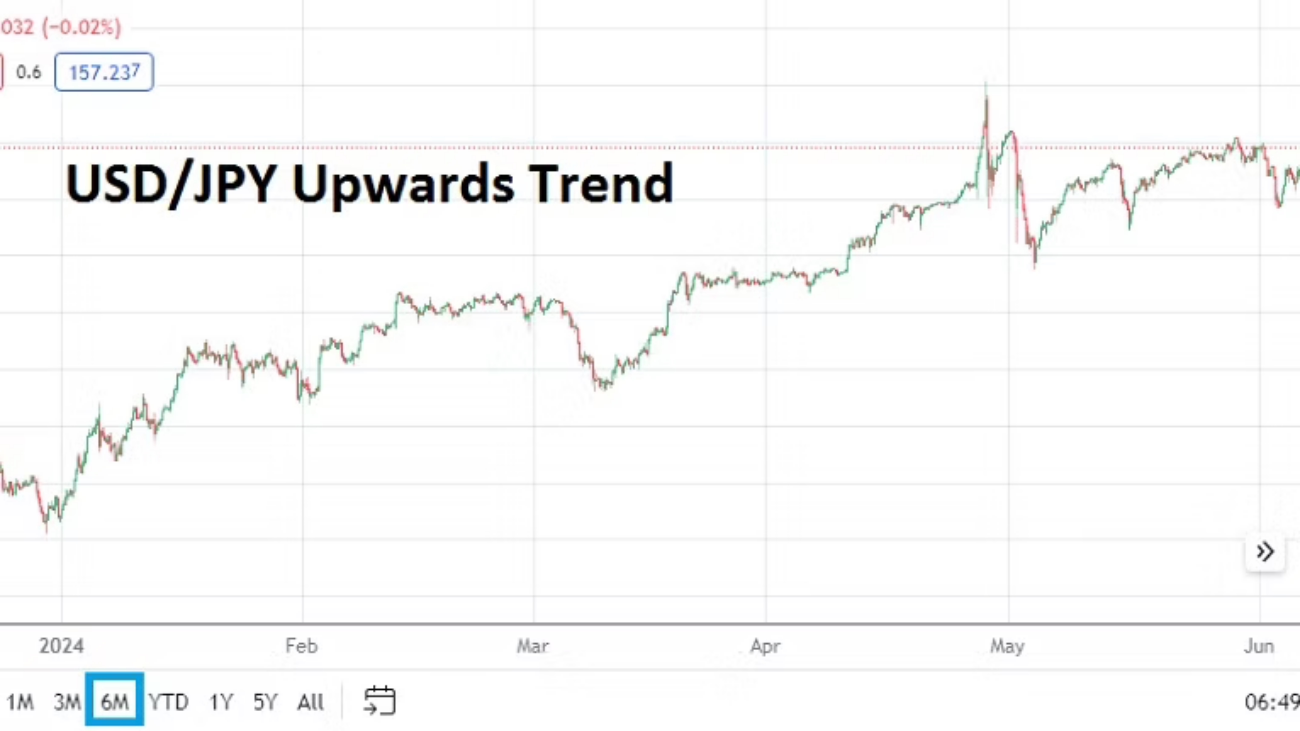
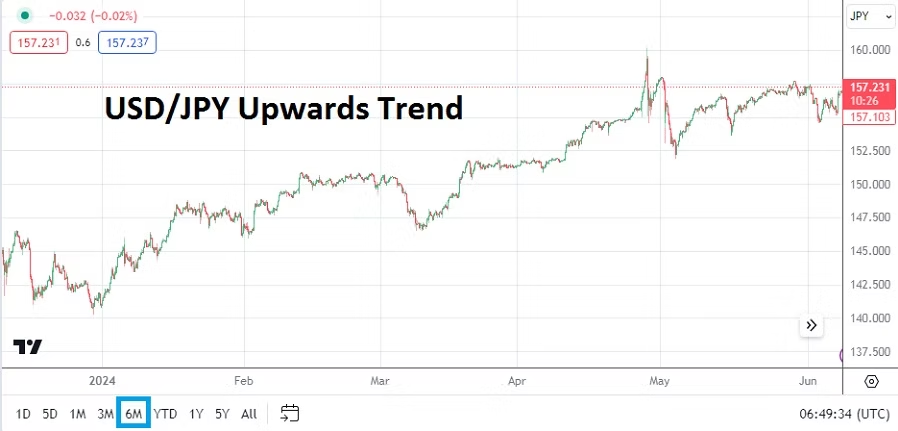
USD/JPY Six Month Chart on the 11th of June 2024

The USDJPY is now again in a dangerous value range near-term as it battles within a higher trend. The BoJ did intervene twice – in late April and early May – to try and damper speculative buying zeal of the USD/JPY and stop overly exuberant selling of the JPY. But they have been acting duplicitous as they have also wanted to no doubt allow a weaker Yen – while keeping its value within control. The BoJ has likely been hoping the Fed is going to sound more dovish this week, but if the Fed sounds more cautious than had been anticipated it could set the table for remarkably dynamic price action in the USD/JPY this week and next. If the currency pair moves too high, the BoJ could intervene again, particularly after the Fed’s FOMC pronouncements. So traders need to be careful.

Traders likely know that tomorrow CPI data and the Fed are on the schedule and these will be key events, but the noise generated around the inflation statistics and FOMC rhetoric should be viewed through the eyes of not only potential reactions from financial institution behavioral sentiment, but the possibility many of the ‘big houses’ have already positioned for the outcomes they believe will play out. In other words day traders should be ready for whipsaw trading results in the immediate aftermath of the Fed’s FOMC Statement and Press Conference.

Last week’s Non-Farm Employment Change numbers provided intriguing forensic data which will stir the suspicions of large players in Forex, equity indices and Treasuries. The jobs numbers via the headline stats looked strong. However, it must be said U.S government hiring continues to pick up, which can be looked at as an expensive way to fuel a sugar high for Americans as the States go into an election season.

Also full time workers continue to add part-time work to their tasks, this to battle rising inflation no doubt which is making their paychecks actually less effective, even if they are getting raises and receiving extra money from the added work loads they are taking on. The costs of products in the U.S are outpacing rising income. Also there is a fact that while part-term hiring is on the rise, full-time hiring is declining along with the average amount of hours employees are working per week.

The Gross Domestic Product numbers from the U.S are in decline. If folks push aside their political ideologies and look at real job numbers on the back pages of Friday’s report, and then ask why people are working less hours it is easy to conclude many businesses are actually cutting back expenses in order to try and remain profitable.

All three major stock indices from the U.S remain in sight of record highs, while there is caution surrounding the mid-term, investors still seem to be banking (wagering) on the U.S Fed to become more dovish over the long-term. Part of this analysis includes the belief that weaker GDP will eventually start to impact inflation and that this conclusion will affect the decision making of the U.S Federal Reserve at some juncture.

The Fed finds itself in a precarious position right now. They need to sound cautiously optimistic. It is an election year and they know this too. The Fed cannot publicly say they want growth to slow down because that would irritate most Americans and the White House, but they know full well that slowing GDP eventually should lower demand for products and thus erode inflation pressures.

Yet turning this full circle, the hiring being done by the U.S government, and the as of yet unmentioned fact the U.S  Treasury has increased its sales of Two Year Notes since around November; and the record amount of money the U.S is spending via a slew of suspicious costs like the ‘student loan forgiveness’, creates a muddled and over-heated fiscal policy which could be interpreted as trying to buy votes from those receiving the gifts. In other words, while the Fed is trying to stress it is battling inflation with higher interest rates and anticipates lowering them eventually, other facets of the U.S government are making this difficult because of the record amount of spending and interest rate payments they are making on short term Treasury notes. Jobs and money in the short-term are candy for voters, but the government has problems ahead regarding conflicting policies because it can lead to more economic problems.

So what do financial institutions think, well they are focused on returns for their clients. They are also looking ahead and trying to swim waters that are murky but offer the ability to profit for themselves too. They might believe they know the landscape just as well as the Fed does, and financial institutions also understand what will be said and can be done may be two different things. What to expect moving forward therefore remains confusing over the mid-term for everyone.

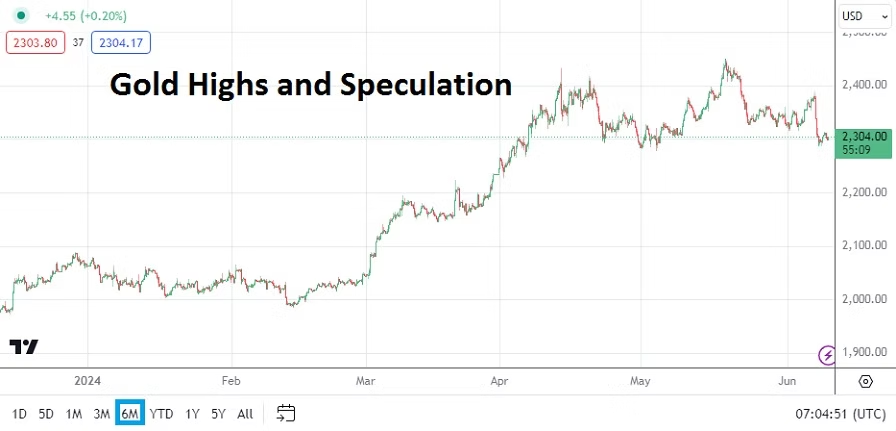
Gold Six Month Chart on the 11th of June 2024

Gold remains highly valued and traders should continue to use it as a barometer. Speculative players are also betting on gold as the USD and its ultimate mid and long-term direction remains complex. The recent downside price action after making record highs in May for the precious metal could reflect the belief the USD is going to become weaker over the mid-term.

Also it should be noted that a handful of commodities are being influenced by an abundance of speculative forces in Copper, Coffee and Cocoa. There has been a lot of talk surrounding the meme stock GameStop the past month. Experienced commodity traders understand the dynamics of speculative influences, pump and dump schemes better than most. Traders tempted to wager in these commodities should ask the same questions speculators in GameStop need to, what is the real value and when will the pin pop the balloon?

Monday, 10th of June, Japan Final GDP Price Index – the result in yesterday’s inflation data came in negative with a climb of 3.4% compared to the expected outcome of 3.6%. This is noteworthy might create more cautious rhetoric from the Bank of Japan later this week.

GPB/USD One Month Chart on the 11th of June 2024
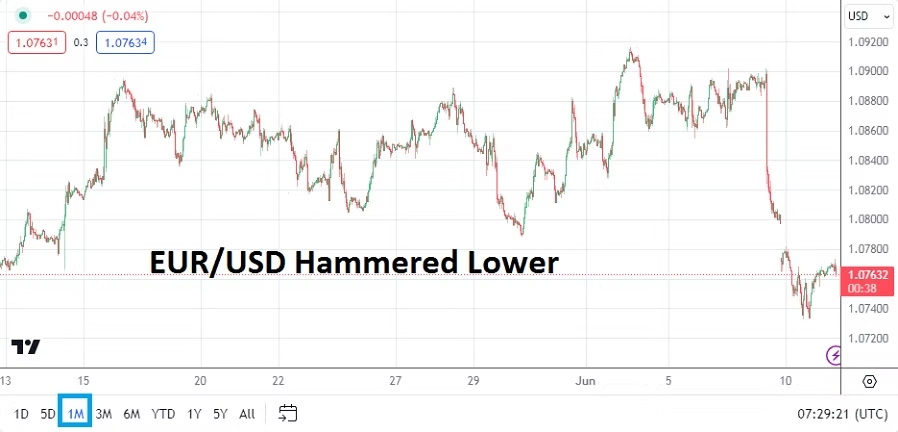
EUR/USD Six Month Chart on the 11th of June 2024

Wednesday – 12th of June, U.S Consumer Price Index – the inflation reports will be watched by all market participants in the financial world. The broad monthly CPI result is expected to come in at 0.1%, which would be below the previous months’s outcome, but the Core monthly statistic is anticipated to match the previous result of 0.3%. The CPI numbers will certainly set the tone for the price action to come in Treasuries, equity indices and Forex. Weaker numbers could spark a selloff of the USD. Stronger numbers could create more bullish ability in the USD. No matter the outcome of these CPI numbers, the U.S Federal Reserve will be standing in the shadows and ready to take center stage a handful of hours later.

Wednesday – 12th of June – U.S Federal Reserve’s FOMC Statement and Federal Funds Rate – unless there is a massive surprise tomorrow, there will be no interest rate cut from the Fed. Anyone who was holding onto the idea of a cut, had these wrong thoughts killed off this past Friday because of the ‘better’ jobs numbers report. The Fed’s monetary policy statement is likely to try and sound cautiously optimistic and will certainly include the residuals of the CPI reports filed earlier in the day. However, financial institutions will want to hear if the Fed is leaning into the notion of cutting the Fed Funds Rate late in the summer as a possibility, or if the Fed sounds so cautious that they suggest a rate cut will not happen until later this year. Let’s remember this is an election year. Yes, the Fed is supposed to be an independent body, but like the Treasury there have been signs developing that the ironclad independence of Fed rhetoric can be influenced by U.S government influences from higher up the ladder. Or perhaps it is just all a happy coincidence and the White House, Treasury and Fed all simply agree on policies which remains rather questionable in the eyes of financial institutions and analysts.

EUR/USD Consideration into Wednesday

On this note, price action in the EUR/USD is a good representative of behavioral sentiment and the different ways it can be interpreted. EUR/USD will need attention during and after the U.S Federal Reserves’s policy rhetoric. The ECB cut its interest rate last week. However the ECB refused to say it will cut rates more – leaving the EUR/USD in a neutral position. The EUR/USD sold off on Monday, this after selling off strongly this past Friday after the U.S jobs numbers.

The Fed was looked on as having to become more dovish this Wednesday, but that is now in question because of the suspiciously strong U.S jobs numbers this past Friday. And then there is the outcome of the European Parliament voting this past weekend and a turn towards the right which many in the media seem to believe is the end of the democracy, but may simply represent that some citizens of Europe want a return to law and order, solid economic practices, and respect for their historical and cultural heritage.

Meaning that financial institutions aren’t likely to be too scared about the voting outcomes regarding the European Parliament and are likely more focused on the coming U.S inflation report and FOMC meeting results. However, as much as Forex traders are considered to be sophisticated and financially astute, they still reacted to the stronger selling which was sparked yesterday. Perhaps the EUR/USD results the past couple of days will prove to be like the reaction in the India markets, this when the Nifty 50 selloff occurred early last week upon election results being in question, only to experience a reversal later.

Thursday, 13th of June, U.S Producer Price Index – these inflation reports will be watched, but the reaction to the outcome is likely to be muted because of Wednesday’s dynamics from the U.S and behavioral sentiment which will have already been stirred.

Friday, 14th of June, Bank of Japan – the BoJ is expected to keep its Policy Rate at 0.10%. The BoJ will certainly have been paying attention to the USD/JPY this week, this before they make their public announcements. The Bank of Japan like the Fed is in a difficult spot. The BoJ is trying to fuel a stronger Japanese economy with a weaker Japanese Yen, while trying to sound vigilant in order to stop speculative buyers of the USD/JPY who are trying to take advantage of the trend higher. The threat of intervention should be a concern for day traders, even though the BoJ likely doesn’t want to take this avenue because it is costly and they know the only real way to make the Japanese Yen stronger is by increasing the BoJ Policy Rate which they seemingly do not want to do for the moment.

postR196

AMT Top Ten Miscellaneous Politicos for the 7th of June 2024

AMT Top Ten Miscellaneous Politicos for the 7th of June 2024

10. Three P’s: Pragmatic and populist politicians are clashing in a world that seeks to try and sell utopian visions from all sides, instead of admitting realities that should be understood and defined, thus creating a more dangerous world. It would be funny if it weren’t so serious.

9. Investment: Pasqal, a quantum tech company located in France founded in 2019, and IBM have announced a collaboration to integrate efforts on creating quantum centric supercomputing architecture. The quest for fully functioning applications appears to be years away as theories such as neutral atoms are studied and applied, and cooling systems are pressed to their limits. However, a transition into working research continues to build momentum. Accelerated investment paths for those seeking the quantum golden goose are flourishing.

8. Three C’s: Cocoa, Coffee and Copper are creating speculative storms for traders as volatility has seen apex values, then dramatic drops, followed by violent reversals higher in the commodities. Cocoa is back above 10,100 USD per metric ton as of this writing, and Coffee Arabica and Copper have been delivering huge profits and staggering losses for large players and day traders who continue to wager.

7. India: Narendra Modi has retained power after a hard fought voting outcome has diminished some of his power. However, fears that turned the Nifty 50 index sharply lower earlier this week, also created a market discount for long-term investors. Foreign investors continue to have a positive economic outlook for the nation. It will not be a surprise to see the Nifty 50 back to pre-election levels and challenging record highs soon, yet again delivering a lesson for day traders who are speculating on the short-term instead of being patient.

6. South Africa: Coalition government discussions are ongoing and will grow in noise in the coming days as a deadline to conclude an agreement approaches. The ANC is said to be talking seriously with the Democratic Alliance, but the Congress of South African Trade Unions which is strongly aligned with the ANC is against the move. It has recently been reported that South Africa’s ports are among the least dependable in the world by the Container Port Performance Index. Poor infrastructure, corruption and a lack of transparency are hurting South Africa. The ANC decision in the coming week regarding a coalition is vitally important. Either it will decide to make concessions and bring the DA in as a working government partner and hopefully build a bridge towards a better South Africa, or the ANC will decide on a hard-left coalition which could potentially bring it to a Venezuela or Zimbabwe type of outcome. The USD/ZAR will react.

5. Conservatives: The U.K election is less than one month a way, and Labour appears set to take power and control Parliament with a large majority. The failure of the Tories to create the perception of successful economic, foreign, and social polices that resonated with the public, appears to be easing the way for a ruling Labour government which has not been seen since since 2010.

4. Carry Trade: The EUR/USD will become an interesting test ground for carry trade fundamentals in the coming weeks and months. The ECB cut its Main Refinancing Rate as anticipated yesterday by 0.25%, but said it is neutral about more cuts. The ECB explained it was able to cut interest rates yesterday, because current inflation levels have dropped enough that a modification of interest rates was needed, but that it remains cautious about inflation in the future. This statement and policy could potentially allow for the Federal Reserve to become the more dovish central bank over the mid-term and lead to a stronger EUR/USD. How much will financial institutions wager on this notion in the near-term?

3. USD/JPY: Serenity now should be the new mantra for the BoJ. The Bank of Japan seems to be waiting on the Fed to sound more dovish, which could stop the need for the BoJ to intervene again. The USD/JPY remains high and is currently testing the 155.000 to 156.000 range in a fairly steady manner. The Bank of Japan will release its Monetary Policy Statement on the 14th of June. While Forex tranquility has been demonstrated the past couple of days, conditions may change rapidly later today and day traders should brace for price velocity.

2. U.S Indices: Equity values have recovered in the Nasdaq and S&P indices, and while the Dow 30 is below apex highs it is still within sight of the 40,000 level touched on the 20th of May. Treasury yields have traded slightly lower this week which has ignited risk appetite again. Gold is trading below the 2,400.00 USD ratio, but still comfortably above 2,300.00 for the moment. If Treasury yields continue to experience a downturn, institutional investors are likely to funnel cash into the stock market.

1. Data: U.S jobs numbers via the Non-Farm Employment Change and Average Hourly Earnings figures will be published today. The result will certainly set the path for the Federal Reserve’s June 12th FOMC meeting. Yesterday’s weekly Unemployment Claims came in weaker (more claims filed) than expected and other jobs data was weaker the past few days via JOLTS and the ADP statistics. All financial assets will react to the U.S data today. Weaker jobs numbers would create more confidence among institutional investors that the Fed will have to sound dovish rhetoric regarding potential cuts to the Federal Funds Rate in the coming months. Fast trading conditions are coming today.

postR164.1

USD/ZAR and EUR/USD as South Africa and ECB Create FX Shadows

USD/ZAR and EUR/USD as South Africa and ECB Create FX Shadows

Risks for day traders will abound this week in Forex. Taking advantage of trends in the days to come will rely on interpretations of behavioral sentiment, which may become rather reactionary from financial institutions if they feel existing positions are vulnerable. For the moment there is calm but day traders should not expect this to last.

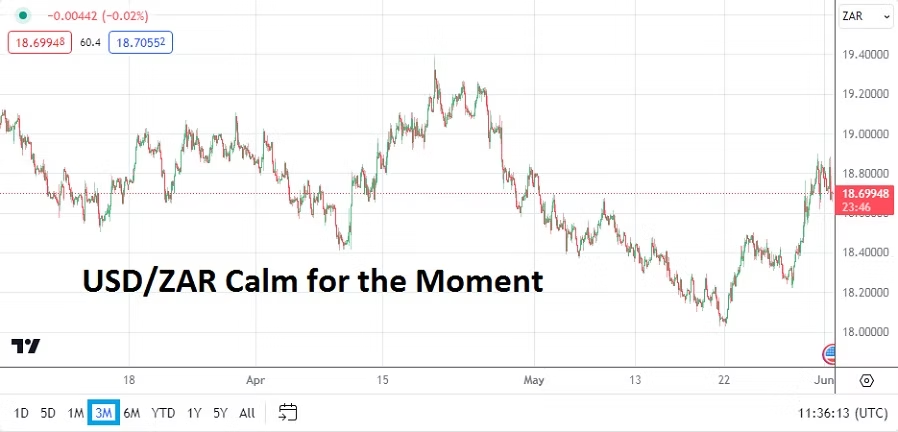
USD/ZAR Three Month Chart on the 3rd of June 2024

The results from the South Africa election have delivered the need for a government coalition. The USD/ZAR will certainly move according to degrees of nervousness being generated in South Africa. While the African National Congress has publicly called for unity and openness to achieve a working government, there are legitimate fears the ANC may consider a left wing coalition known as the Doomsday approach, which could include political parties that are not seen as being pro-business or inclusive for the entire population. Financial institutions in South Africa and abroad will have their trust of the ANC tested in the days ahead.

South Africa political concerns may cause the USD/ZAR to step out of line and not correlate to the broad Forex market. The ANC has two working weeks to reach a coalition deal. The ANC has never been in such a weak position before, and if the ANC makes a political deal which is interpreted as being against free enterprise it will not be welcomed by many businesses. Will the ANC be able to admit a new path can be followed in South Africa that creates a space for more transparency regarding fiscal policy and oversight, or will the ANC become stubborn and make a deal with a political party that moves the nation backwards economically and causes more strain via geopolitics?

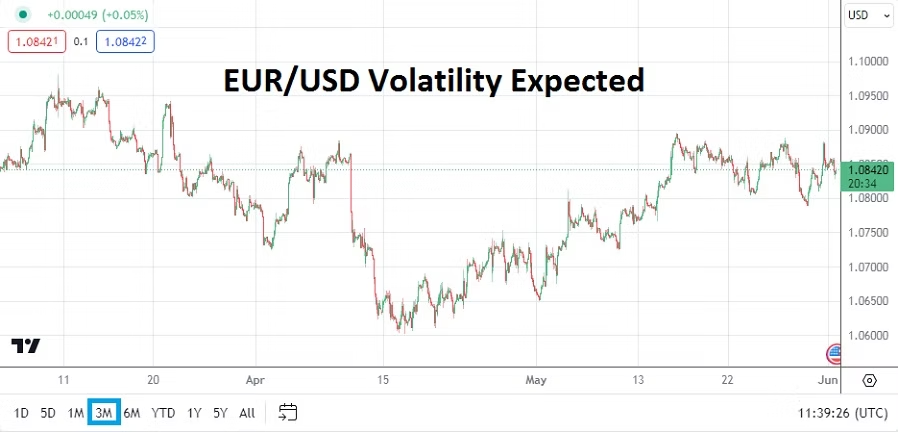
EUR/USD Three Month Chart on the 3rd of June 2024

From Europe, the ECB will step into the spotlight this coming Thursday. Following last week’s lower than expected Consumer Price Index data from Germany, the ECB is widely anticipated to cut its Main Refinancing Rate by 0.25%. Day traders need to be aware of this, because on Thursday if and when the ECB does cut the interest rate, the reaction in the EUR/USD may not move the market as much as small retail speculators anticipate.

Instead the volatile reaction could come from the inspection and understanding of the published Monetary Policy Statement, and the Press Conference which will follow half an hour later. The EUR/USD it should be noted jumped higher last Wednesday on the weaker than expected inflation report from Germany, which may mean some of the EUR/USD bullishness has already been bought into the currency pair.

The thought that the ECB has seemingly stood in the shadow of the Fed for the past year and largely reacted only after the U.S central bank is important. If the ECB actually goes out on a limb and cuts its interest rate this week, and says it is considering another later this summer it will cause a reaction. The differentiation between the Main Refinancing Rate from the ECB and the Fed’s Federal Fund Rate will cause momentary headaches too.

However, this might ignite thinking within financial institutions that the Fed has given the ECB a quiet ‘green light’ and assured the ECB that the Federal Reserve will become dovish over the mid-term. However, the Fed is not expected to cut the Federal Funds Rate next week. What should happen is that the Fed delivers a December 2023 repeat performance on the 12th of June, in which it expresses a rather dovish perspective – but this time delivers, but there are no guarantees.

The U.S jobs numbers this Friday will play into the EUR/USD sentiment too and all other Forex pairs. Importantly, traders do not want to see a retraction from the Fed again in the coming months and cautious talk about inflation. While higher prices may be the reality for the moment, financial institutions appear to be hoping on proactive actions from the ECB and Fed combined. If dovish rhetoric isn’t seen Forex choppiness will become intense again.

Political rhetoric and its influence on Forex will not only come from South Africa and Europe, but India as its election results are finalized tomorrow and Mexico after the outcome of its vote held this past weekend. The results in India and Mexico have produced the anticipated outcomes, so the USD/INR and USD/MXN should expect to become calmer in the days ahead.

After the anticipated U.S Fed FOMC meeting rhetoric on the 12th of June, and the Bank of Japan’s policy tidbits on the 14th perhaps things will become relatively tranquil. However, financial institutions will be busy over the next ten business days as they try to make sure they have balanced Forex positions, which take into account their commercial transactions and cash forward outlooks for clients which could add to the potential for volatility.