post305

India Insider: Affluence Among the Few, Aspirations for Many

India Insider: Affluence Among the Few, Aspirations for Many

A recent report by Franklin Templeton highlighted that India’s per capita income will penetrate the $5,000.00 USD level by 2031, pushing the country into what some analysts consider an affluence trigger zone. Their article celebrates the consumer boom showing the rising sales of premium detergents, growing green tea consumption, and a surge in discretionary spending, as if prosperity has finally crossed over into a mainstream phenomena.

But a closer look reveals something else and a worthwhile critique of Franklin Templeton’s optimistic portrayal.

Who Actually Spends this Money ?

The Franklin Templeton report confidently attributes the wealth effect to rising equities, real estate and gold. Yet, with only 13 crore (130 million) demat accounts in a country of 143 crore people, how can equities be driving broad affluence? Even within those attributed accounts, activity is heavily concentrated in the top decile of income earners like urban professionals in finance, IT and export linked sectors; and over 70% of mutual fund assets under management come from the top ten cities.

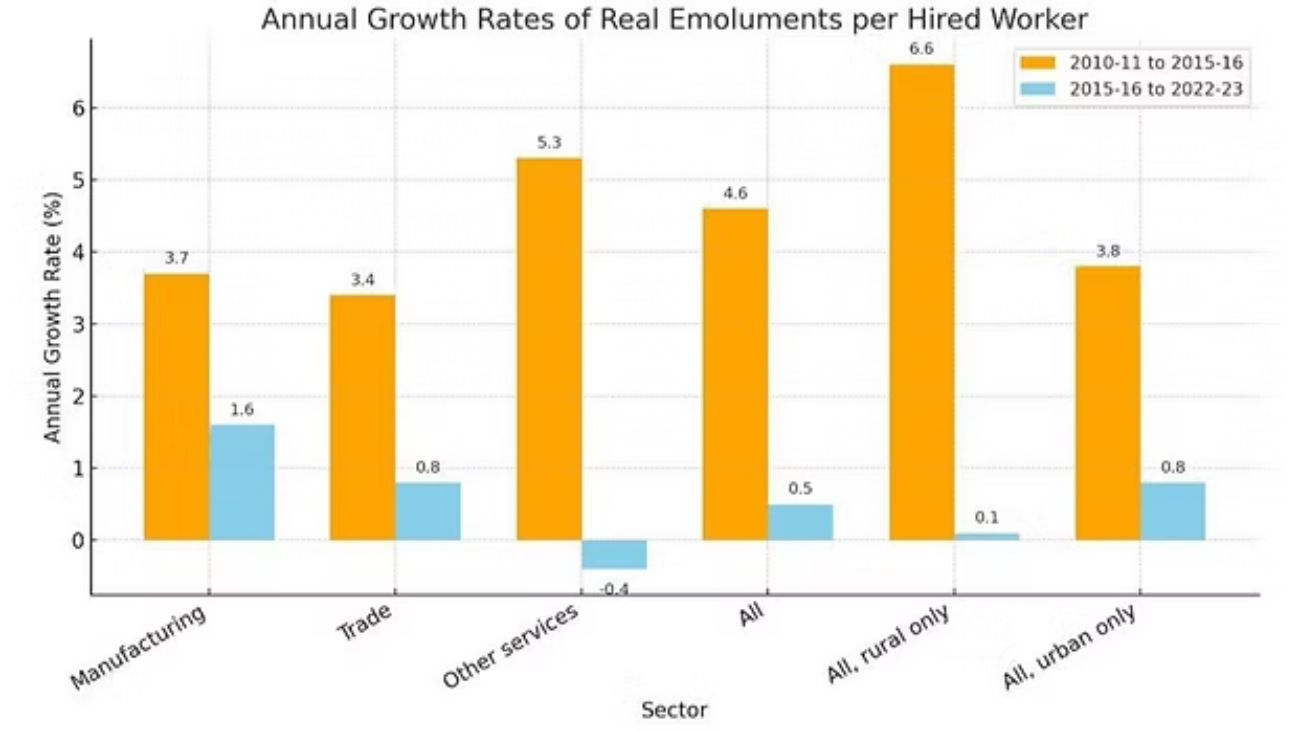
The so called upper middle class that fuels premium consumption largely works in these sectors. For the rest of India – especially the 42% still dependent on agriculture – wages have barely kept pace with inflation. Several national surveys and analyses show real wage stagnation since 2015-2016. Data from the Labor Bureau and the National Sample Survey (NSSO) indicates that real wages for rural laborers had near zero growth between 2015-2016 and 2022-2023. In contrast, the period before 2015-16 showed much faster wage growth.

NSSO Survey data compiled by Idea India Magazine

The Concentration of Savings and Spending Power

The report itself concedes that the top 20% of households hold around 85% of India’s total savings. That’s roughly 26 crore people (260 million) driving most of the premium consumption, while the remaining 104 crore (1.04 billion) share only 15% of savings – a stark reminder that aggregate growth often hides skewed realities. And this is why rural households and lower-income urban families, meanwhile, are facing tighter budgets and are actually cutting back on discretionary spending.

Gold as a Survival Cushion

The report romanticizes gold as a symbol of wealth, but in rural India, the precious metal plays a very different role. Gold is not an indicator of luxury and status, but a financial safety net. In villages around Tiruvannamalai City of Tamil Nadu State. Where I have surveyed about 50 families, average holdings are often below 40 grams. When harvests fail or cash flows tighten, this gold is pledged or sold to fund essentials like health expenses, education or seeds for the next planting season.

Yes, some towns in India have higher gold holdings and savings, sharply due to offshore remittances especially in States like Kerala and Gujarat. This remittance led prosperity fuels local real estate and pushes up rents, but it’s a localized story, not a national one. Most rural communities still depend on seasonal income and informal borrowing.

The Uneven Reality Behind Growth

Premium brands are growing faster, but this signals income polarization, not inclusive growth. The per capita income maybe rising, but it’s an average skewed by the top 10-20% who hold multiple assets. For most, consumption is fueled by rising debt. Until wage growth broadens and rural incomes strengthen, India’s  consumption boom will remain the affluence of a few – not the prosperity of the many.

post303

India and the U.S Govt Shutdown: Quick Market Thoughts

India and the U.S Govt Shutdown: Quick Market Thoughts

President Trump has been ramping up his claims that India is no longer going to buy Russian oil, he made a statement regarding this belief yesterday once again. As the White House threatened to initiate tougher sanctions against India, there seems to have been some movement towards a reconciliation between the two powerful nations.

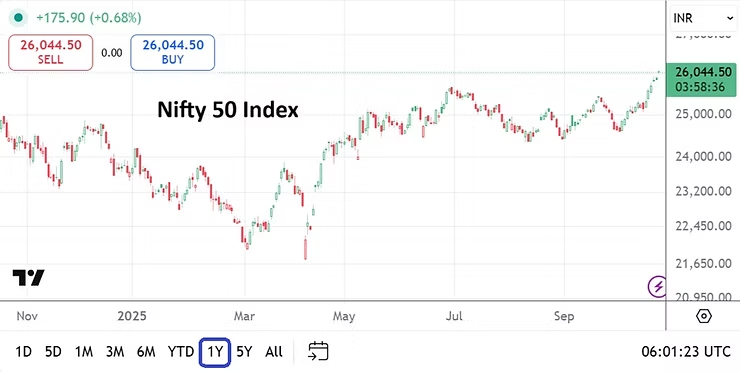
The Trump administration is clearly trying to limit the amount of purchases of Russian oil by India to increase economic pressures on Russia, and reportedly India may be starting to actually buy less oil. India has certainly not stopped buying Russian oil in a maximum ‘fait accompli’, but if the nation continues to show a willingness to purchase less energy resources from Russia, this will go a long way in preserving a good U.S and India association. A stronger relationship between the U.S and India can achieve a vital economic and military correlation for the both nations. Improved friendlier tones from New Delhi and Washington D.C appear to have reassured investors in the Indian equity markets via highs currently being seen on Nifty 50, which are now within sight of apex values from late September last year.

Nifty 50 One Year Chart as of 23rd October 2025

India is a vital and important part of U.S policy as it attempts to also create pressure on China too. By maintaining political and business dealings with India, the U.S can and should look upon this joint relationship as a vast long-term strategic interest. India understands this as well. The ability of India and the U.S to remain ‘friendly’ allies, and the prospect of creating a vigorous economic and military partnership should be one of the U.S government’s essential missions.

India does have strong connections to Russia the past handful of decades politically and economically via its non-aligned status. India will certainly maintain its dialogue and sometimes cooperative dealings with Russia. However, if India and the U.S maintain a solid relationship with the prospect of increasing their economic and political ties this could substantially change dynamics on the Asian continent.

U.S Government Shutdown Since the 1st of October

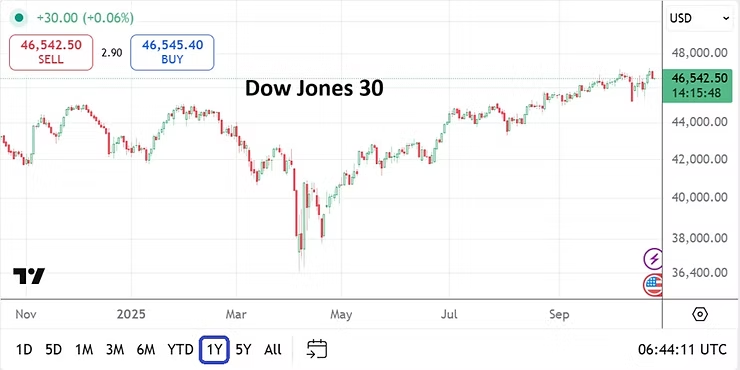
The U.S government has now been shutdown for over three weeks as Republicans and Democrats remain stubborn about compromise. Both sides have made the shutdown a political game. While each party claims they are doing what is best for the nation and preach to their collective voting bases, the stalemate could start to have uglier effects regarding wages not paid for many U.S employees on the 1st of November.

Dow Jones 30 One Year Chart as of 23rd October 2025

A lack of government salaries not being dispersed will cause an economic hit via consumer spending and create at a minimum some temporary damage for GDP numbers. Remarkably, and to be clear about this potential impact, Wall Street hasn’t seemed to care yet, but this could start to change. As the U.S economy rumbles powerfully forward without a major downturn in the major equity indices, politicians appear to be comfortable acting like spoiled children on both sides of the aisles engaged in accusing the other side of misdeeds.

Likely to start changing attitudes among Republicans and Democrats in the next two weeks are the coming Federal Reserve’s FOMC Statement during the end of October, and voting results via key political races in the first week of November.

Wall Street wants clarity regarding interest rate outlooks for November, December and early next year. Investors might not get a clear picture from the Fed next week, taking into consideration the Federal Reserve will not have up to date official U.S economic data because of the government shutdown. Meaning the Fed will likely issue a 25 basis point rate cut on the 29th of October and say it is uncertain about the coming few months because it does not have enough inflation, employment and GDP information to form a concrete opinion. The joke of coarse being the Fed seldom seems to have a strong opinion, but now can use the government shutdown as an excuse.

And now for contemplation, let’s look at the election in NYC for Mayor. A bona fide socialist may get elected in New York City who carries the historically misguided and dangerous wisdom of a Marxist. The economic and social practices of Marxism have proven utter failures for over one hundred years consistently. If NYC suffers a victory from the socialist candidate running as a Democrat, Wall Street and many financial institutions based in the city will not react favorably.

In the meantime, U.S equity indices remain elevated, cautious and within sight of record highs. The Nasdaq, Dow Jones and S&P along with other financial assets are producing choppy dangerous conditions for day traders who are attempting to wager on daily changes and suffering from the cautious behavioral sentiment being generated. Investors who look towards the mid and long-term are likely more comfortable, but are certainly keeping an eye on what is going to transpire over the next two weeks. Gold and Silver have come off their speculative highs. Forex continues to create volatile conditions as financial institutions appear unready to make bold predictions about what the Federal Reserve will do into January 2026.
post302

India Insider: Pharma and Earning Trust Thru Accountability

India Insider: Pharma and Earning Trust Thru Accountability

The pharmaceutical industry in India is a global powerhouse, often touted as “best in class.” Nearly 32% of India’s pharma exports go to the United States, and India’s products are renowned for their quality and affordability. Giants like Sun Pharma, Cipla, Dr. Reddy’s and Mankind Pharma cater to millions worldwide. Mankind Pharma, in particular, is celebrated for selling affordable essential medicines, ensuring access for lower-income communities.

The Opposite Side: A Fatal Flaw

Yet, within India, the same country with world class technology and research, exists a grim paradox: sub-standard drugs that have caused devastating human loss.

This is not a new problem. In 2022, toxic cough syrups made by two Indian companies were linked to the deaths of 70 children in The Gambia and 19 in Uzbekistan. According to the World Health Organization (WHO), the products contained excess levels of diethylene glycol (DEG).

A Killer Drug: New Tragedy 2025

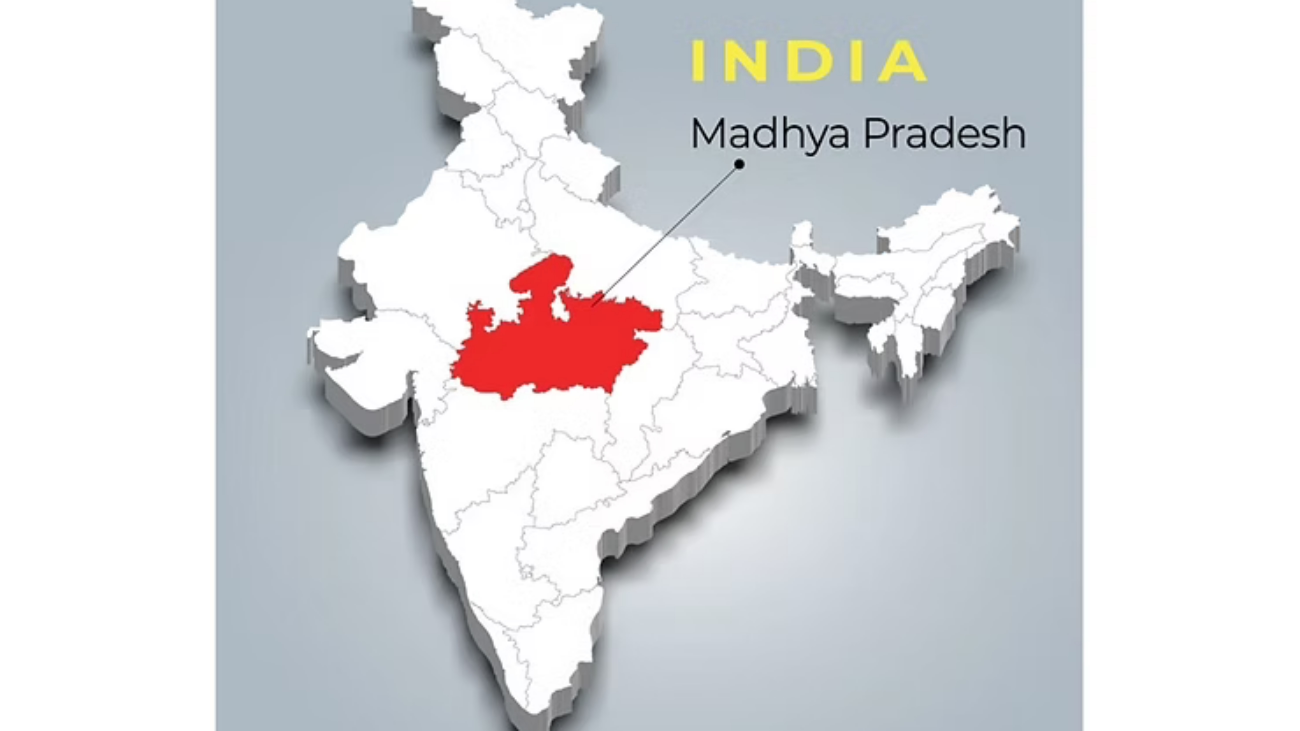
The contamination has now hit home with horrifying consequences quite recently. As Frontline magazine detailed, in the Madhya Pradesh State, Rajesh Yaduvansi’s two-year-old daughter, Jayesha, was admitted to a local clinic on September 14th for pain and fever. After temporary relief, her condition worsened. By September 25th, doctors revealed her kidneys had stopped functioning. She was rushed to Nagpur, but tragically died on October 7th from acute kidney failure.

Jayesha was one of at least 24 children who has died since early September across Madhya Pradesh, mostly from Chhindwara and nearby tribal districts. Three more patients remain in critical condition. Most victims came from poor and tribal families. They are the victims of a lethal lapse in quality control.

The culprit was the toxic industrial solvent, diethylene glycol (DEG), which causes kidney failure when ingested. The contaminated cough syrup, Coldrif, was manufactured by Tamil Nadu State based Sresan Pharmaceutical.

Following the cough syrup deaths, authorities formed an SIT (Special Investigation Team) and raided the manufacturer, Sresan Pharmaceutical, near Chennai. The company’s owner, Ranganathan Govindan, has been arrested, and several Madhya Pradesh drug officials have been suspended or transferred.

The Solvent Issue: Cutting Corners

Cough syrups typically use propylene glycol as a solvent. This ingredient exists in two grades: industrial and pharmaceutical. The industrial version, which is cheaper, can contain dangerously high levels of DEG.

When manufacturers prioritize cost cutting and fail to ensure pharmaceutical grade purity, tragedy follows. This is a profit driven decision that ignores human life and can produce fatalities.

Regulatory Failures and Neglect

India aims to reach developed nation status economy by 2047, but this ambition will ring hollow if it neglects its own people.

The drug control system is fractured. The Central Drugs Standard Control Organization (CDSCO) issues drug licenses, while State authorities are responsible for essential quality checks. In Madhya Pradesh, accountability rests with the Drug Controller and Food and Drug Administration.

The system is fundamentally broken. According to K.R. Ashokan, a former President of the Indian Medical Association (IMA), fewer than 1% of drugs are tested for quality or impurities. Indian citizens face massive risks which are often unreported. While a pharmacovigilance system exists, its national reach is minimal and desperately inadequate for a country of 1.4 billion people.

The Central Government health care expenditure remains under 2% of its GDP and this is far too little for a nation aspiring for global leadership in pharmaceutical research.

A Call for Accountability

This catastrophe has shaken parents’ trust in the medical system, especially among the most vulnerable communities. India has the potential to be a world-class player, but without strong, centralized regulation and comprehensive preventive care, such incidents will continue.

We cannot bring back the 24 children who died due to cough syrup poisoning. This tragedy must serve as a necessary wake-up call, because no parent should ever lose a child to medicines that are meant to heal again.

post300

Gold: Not a Love Note but Recognition of Long-Term Importance

Gold: Not a Love Note but Recognition of Long-Term Importance

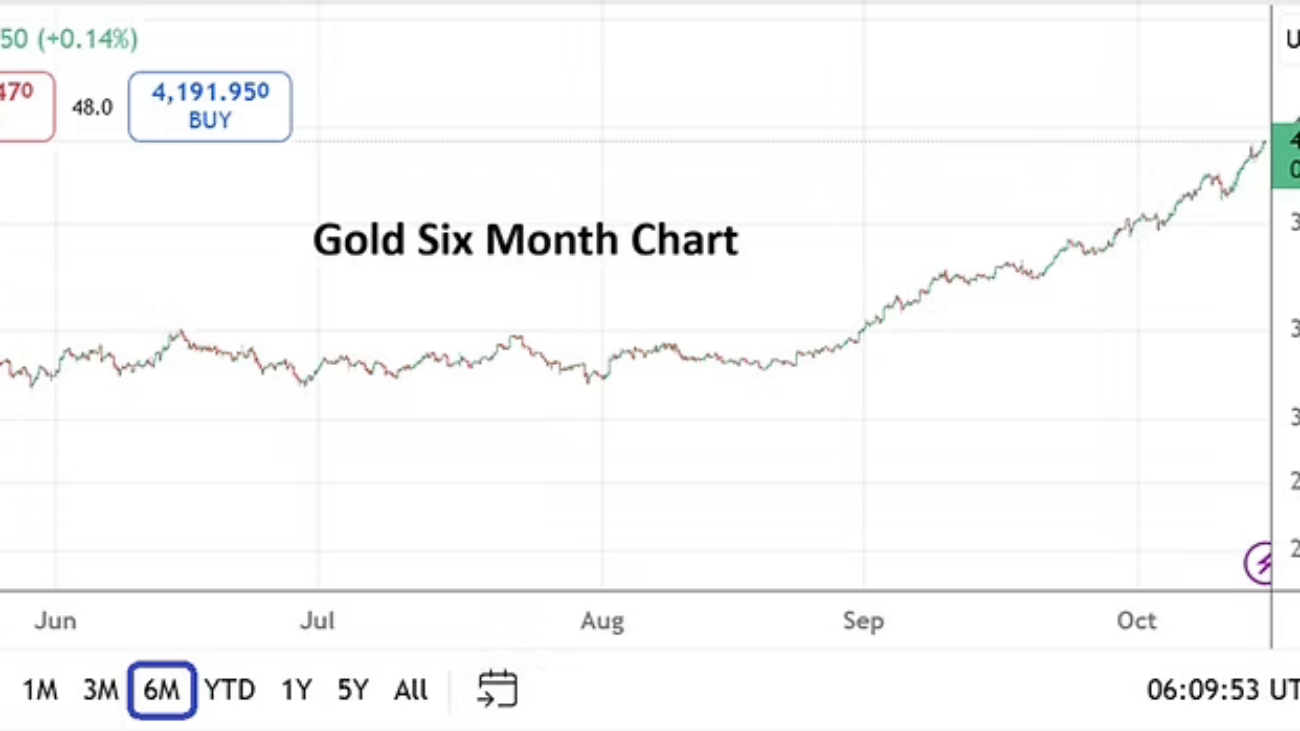
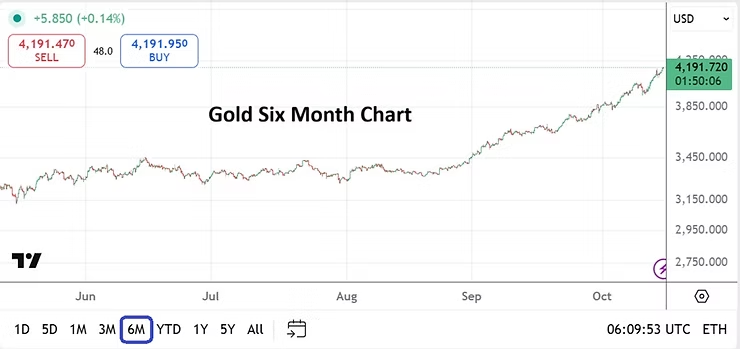
The U.S is now starting its second week of the government shutdown. Gold is near $4,190.00 as of this writing, which may be looked on as sign by some that some investors have bought into the precious metal because of a lack of faith in certain things. ‘Certain things’ being written in a way that points out the rather complex mix of perceptions that could quantify into all moving parts causing the bull run.

Gold Six Month Chart as of 15th October 2025

If you are a regular reader you will probably have figured out that I do not believe Gold is traversing higher because of a mere government shutdown. The precious metal has seen an upwards trend develop in earnest since the middle of October 2022 when it was trading around $1,640.00. Behavioral sentiment is important within Gold, and this has been the case for almost 6,000 years according to archeologists and historians.

In August 2011 Gold was near $1,900.00. In December of 2015 the precious metal was back to almost $1,000.00. This is written to show that in a little more than a four year period Gold lost nearly half its value in the relatively recent past.

This doesn’t mean I am writing to warn Gold is going to lose half its value suddenly and will be testing $2,000.00 in four years time. It points out that even though the precious metal is considered a hedge against inflation, that speculative elements are fantastically strong when large players buy and sell in unison and can cause periods in which Gold becomes overvalued and then experiences downturns.

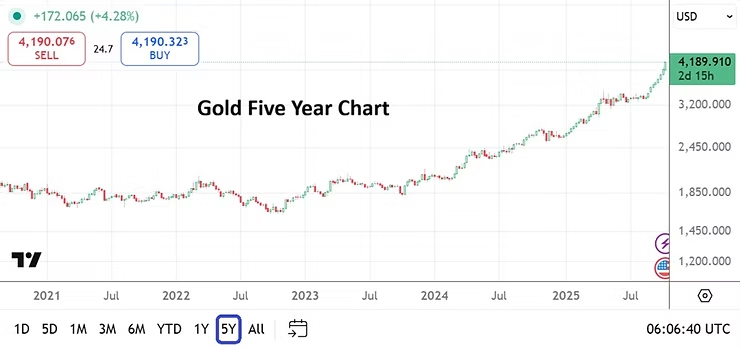
Gold Five Year Chart as of 15th October 2025

We have seen this bullish show in Gold before. Milestone numbers are significant in the minds of the public, which often causes the thinking that they should have bought some gold in the past when it was cheaper. But interestingly enough for Gold is that it is almost always considered expensive by the general public. The value of fiat currency is highly correlated to the value of Gold in an unflattering way. While this is an obvious statement for many, it is important to note that we are all looking at the value of Gold while using hindsight.

Yes, I can hear influencers singing in unison in the background ‘do not forget about Bitcoin’, but I ask permission to do so. Hindsight is not always comfortable and I have been proven wrong about the digital currency frequently. However, I still remain somewhat optimistic that my bet on Gold is a better wager compared to Bitcoin regarding value in the future. And by future I mean for all-time. There is not enough foresight to know what Gold will be valued in one thousand years compared to Bitcoin. Yet, I remain much more confident about Gold being around than BTC in a millennium.

People can speak about a debasement of fiat currencies, including the USD. Like it or not the USD remains the dominant go to currency of global enterprise and this is unlikely to change over the next decade. The USD and other currencies are plagued by a constant loss of overall value due to inflation caused by a myriad of reasons. Rising prices in goods are unlikely to suddenly disappear, the costs of commerce and consumer products may start to gradually slow periodically, but the price of things seldom grows cheaper over the long-term.

Yes, the case can be made that by owning Gold it does not serve the economy well, because it is not an asset that is easily spent, but that is an argument for Adam Smith, John Maynard Keynes and Milton Friedman to enjoy in heaven. In the meantime down here on Earth, Gold can be speculated upon, bought and sold, and treated as a precious metal that will likely always be valued highly.

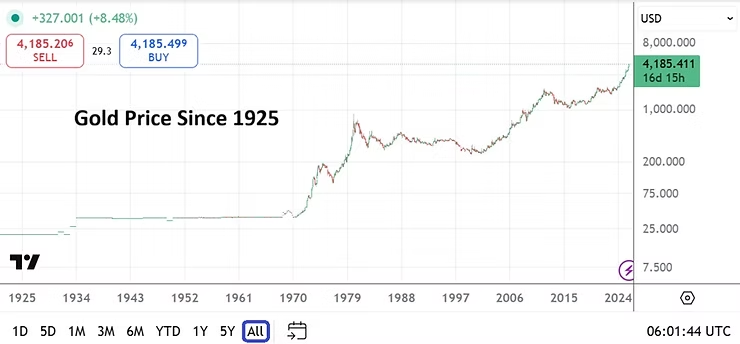
Gold Chart Prices since 1925

This is not a love note for Gold, it is meant as a way to say the precious metal is fairly priced considering the state of the world. $4,000.00 per an ounce of Gold could certainly turn into $5,000.00 in the not so distant future – like six months or one year depending on zeal. Speculative elements certainly aim for targets that psychologically please aspirations.

Day traders as always are faced with a dilemma. Looking for more upside and partaking in the bullish trend is a logical thought and perhaps even wager, but the use of leverage while battling the intraday and intraweek reversals in the marketplace make the ambition of profiting on Gold comparable to time spent at the casino. We know winners talk much louder about their money gained compared to the losers who vanish into the crowd and keep quiet.

So I write this as a warning, Gold may not be worth more one year from now than it is today. However, I will venture forth the notion that in ten years time Gold will be significantly valued higher than it is today. Will inflation suddenly be tamed globally, will confidence in fiat currencies emerge with a strong dose of optimism? No. Certain fiat currencies will do better than others via Forex. However, as a store of value Gold will likely remain an impressive asset to own.

post297

Significant Highs All Around as Speculation Grows Frothy

Significant Highs All Around as Speculation Grows Frothy

Gold, platinum, and the major U.S indices are all flirting with record values. Fast trading is being seen on all fronts, dangerous reversals are also being displayed and causing harm for day traders. The U.S government shutdown remains in full force. Not enough pain has been heard from the U.S public yet which would make politicians pause and actually try to negotiate a deal.

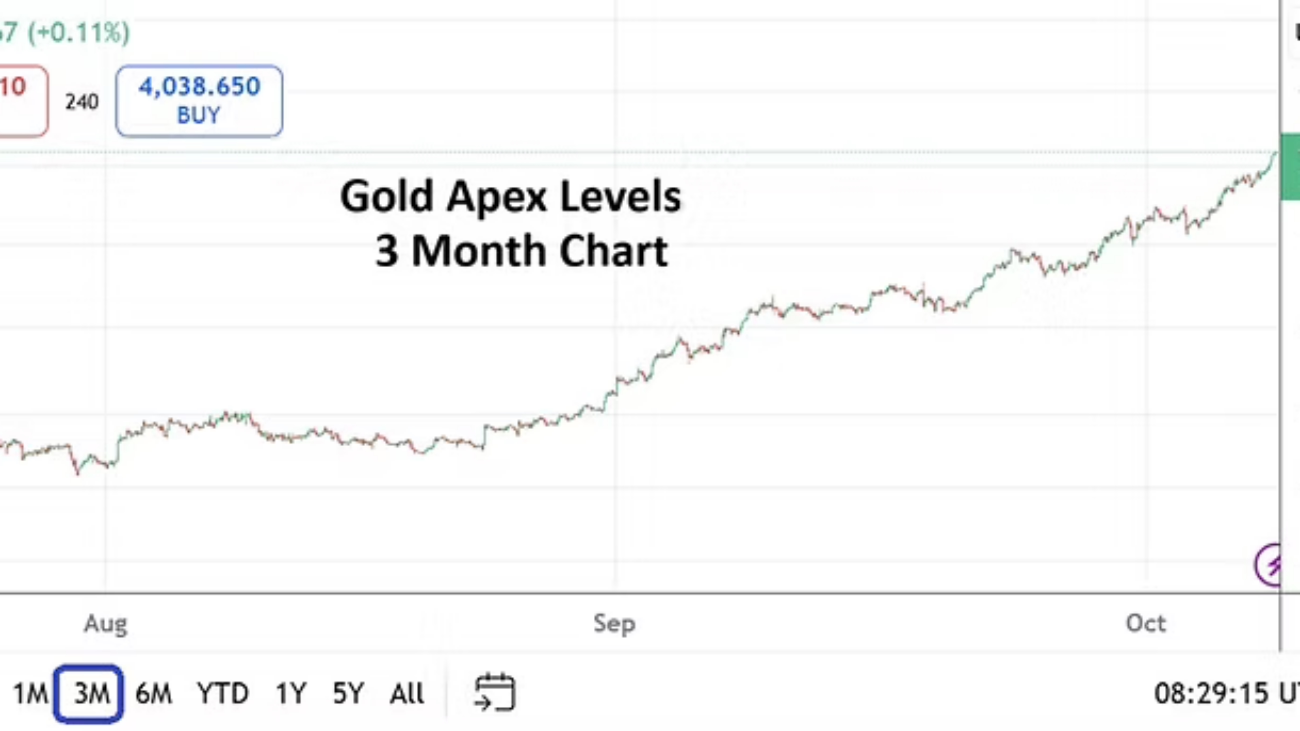
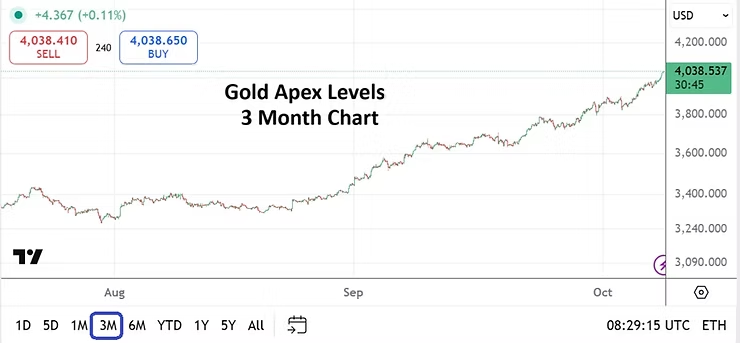
Milestone apex values have been experienced. Gold has produced the 4,000.00 USD per ounce level and sustained value, the Nasdaq 100 toppled 25,000.00 the past two days, but has moved lower for the moment. Conditions for day traders are swift and they need to be careful. And while the U.S government is shuttered, the Federal Reserve is still expected to announce their FOMC interest rate decision on the 29th of October. A Federal Funds Rate cut of 25 basis points is still anticipated.

Gold Three Month Chart as of 8th October 2025

Forex has seen jittery results as the EUR, GBP, JPY have struggled in recent trading versus the USD. And while some people may point to the stellar results and values within Gold and Bitcoin as evidence for safe haven wagers being placed, large speculators are playing a key ingredient in the broad markets too. Investors are certainly looking for value and have a belief that buying now represents a discount compared to what Gold and equity values will be over the long-term. However, day traders should also remember that a large amount of influence in the markets derives via behavioral sentiment, and as record highs are being challenged anxiousness grows regarding potential responses from speculative forces particularly when profit taking remains a part of wagering.

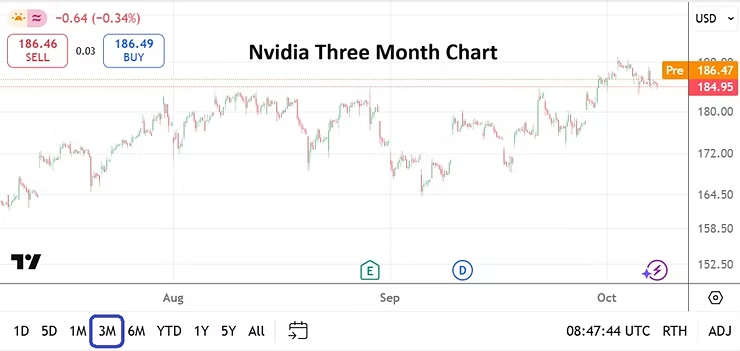
Nvidia Three Month Chart as of 8th October 2025

While questions and concerns are heard about a possible AI bubble being experienced and too much money being invested in equities like Nvidia, Oracle, Microsoft, etc., folks need to understand long-term investors are gearing their portfolios towards outlooks. Betting on these companies playing a significant role in technological advancements is a long-term viewpoint which works on optimism. Artificial intelligence is important, but the motor that runs AI infrastructure via semiconductors, big data distribution, servers and cybersecurity are crucial. The promise of quantum computing is also experiencing a surge of investment because of a belief in the future.

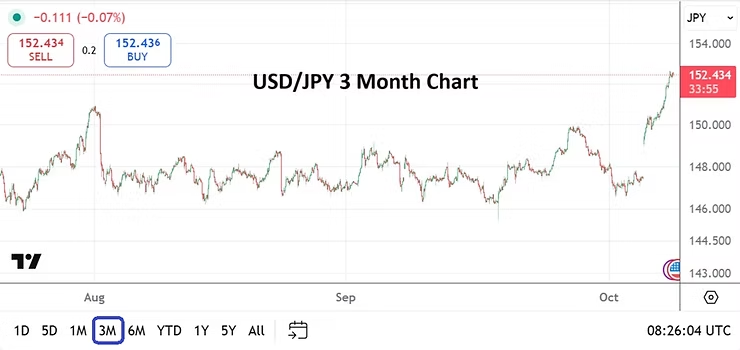
USD/JPY Three Month Chart as of 8th October 2025

And that is what day traders who are tempted to bet against the trends in the marketplace need to remember. Investors will not bet against Wall Street because of the government shutdown. In fact, they will certainly be heard joking that corporations run more effectively with less government intrusion.

This is not a simple puzzle. Complexity certainly needs to be considered regarding valuations in the EUR/USD, GBP/USD and USD/JPY. Intriguingly, day traders may want to take a look at the South African Rand too, because technically it continues to be strong against the USD, which is rather out of step and a rather interesting non-correlation. The broad Forex market has lost some its luster for day traders the past year because of a lack of perceived volatility across the board. But volatility may be on the way, the Japanese Yen certainly stands out and should be watched via the USD/JPY and JPY crosses in the coming days and weeks.

post294

India Insider: U.S Credit Crunch vs. Indian Banking Paralysis

India Insider: U.S Credit Crunch vs. Indian Banking Paralysis

When the U.S suffered a severe credit crunch in the early 1990s, the triggers were clear: the collapse of the leveraged buyout (LBO) boom, commercial real estate price corrections, and the failure of Savings and Loans (S&L) Associations, created the need for a $160 billion taxpayer bailout. Regulators, determined to act tough, declared many banks undercapitalized. The result was a nationwide squeeze from 1991 to 1993, where capital shortages – not liquidity, froze credit markets.

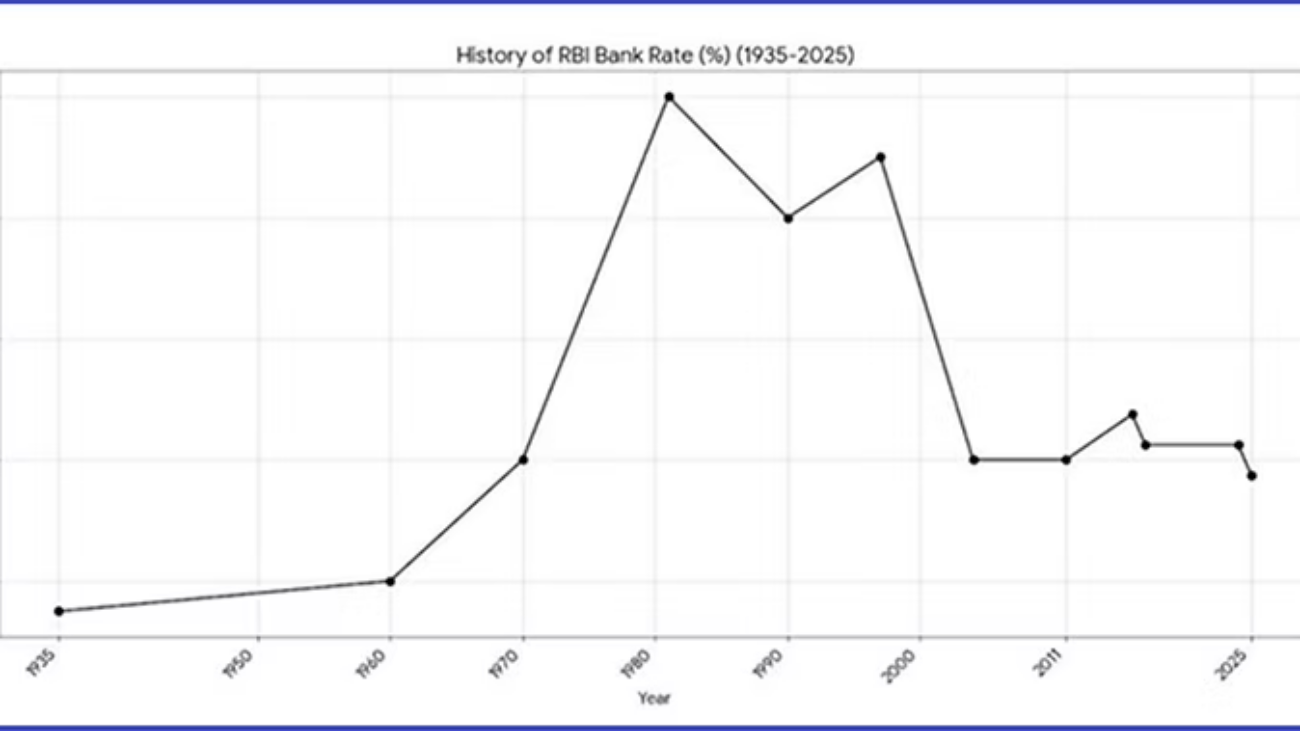
Reserve Bank of India Borrowing Rates 1935 to 2025

Fed Chairman Alan Greenspan slashed the Federal Funds rate to 3%, but banks couldn’t lend without capital. The unique twist was that, even as lending slowed, competition among borrowers pushed prime lending rates to 6%. This gave banks a fat 3–4% spread. Greenspan let this persist for nearly three years, enabling banks to earn profits equal to more than 10% of assets. With capital requirements at 8%, the windfall repaired balance sheets. By 1994, the U.S had exited the crisis and returned to strong growth.

India’s trajectory was very different. For decades, the country ran structurally high interest rates, which in theory should have allowed banks to recapitalize through spreads, just like the U.S. However, the reality was distorted by governance failures. Public sector banks (PSBs) , which dominate the system did not use their spreads to strengthen capital. Instead, politically connected lending to oligarchs and large industrial houses left the banks saddled with non-performing assets (NPAs).

I witnessed the aftermath up close in 2019 while working at Edelweiss Brokerage. Shadow banks were stressed, some private banks were crumbling, and PSBs were finally forced to acknowledge their bad loans. The selloff in the banking stocks were brutal that year, Catholic Syrian Bank’s IPO, one of the prominent South Indian banks went undersubscribed. To counter the slowdown, the government slashed corporate taxes from 30% to 22% to stimulate capital expenditure.

Unlike the U.S, India’s stress was on the asset side. Corporates were dragged into Insolvency and Bankruptcy Code (IBC) proceedings, where assets were monetized through painful restructurings. Piramal Finance bought DHFL at 30 cents on the dollar, and ArcelorMittal acquired Essar Steel at 90 cents. This was the hard clean up the system had avoided for years.

The NDA (National Democratic Alliance) government made the right call in restructuring the banking sector. Weak public sector banks were merged with stronger ones. Yes, it was costly. Households bore the burden via higher taxes, hidden charges, and high borrowing rates. But at least the problem was confronted.

The contrast is striking. The U.S endured a sharp three-year crunch, recapitalized its banks through spreads and market discipline, and bounced back quickly. India endured nearly a decade of paralysis, requiring taxpayer recapitalizations, corporate asset fire-sales, and systemic restructuring. The eventual stability allowed private sector banks to quietly capture market share from their weaker state-owned peers.

The lesson is simple: interest rate spreads can heal banks only if governance is strong. Without accountability, as India’s PSB saga shows, high rates merely tax households and businesses without fixing the system.