post293

Opportunity? Market Ambition as Day Trading Volatility Looms

Opportunity? Market Ambition as Day Trading Volatility Looms

The U.S government shutdown looks like it will take place at 12:01 am EST on Wednesday, this if Washington D.C politicians fail to agree to a funding gap. There have been significant shutdowns in the past, thus financial institutions though not in love with concept are adept at continuing to trade during the events. President Trump’s first term in office produced a long shutdown from the 22nd of Dec. 2018 until the 25th of January 2019. President Obama’s White House had a 16 day affair in 2013. And President Clinton’s administration dealt with a shutdown lasting 21 days.

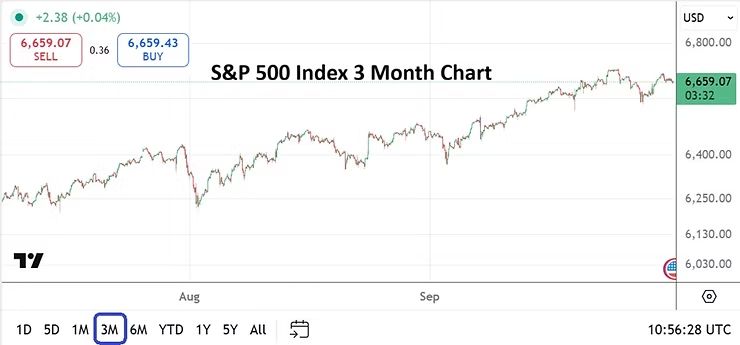
S&P 500 Index Three Month Chart as of 30th September 2025

While the financial markets will certainly survive and long-term investors will likely remain rather sedate during this developing saga, day traders need to brace for volatility. Opportunities may develop if Forex, U.S equities and gold see reactions per perceived safe haven endeavors by some investors. However, wagering in markets when shifting tides are happening due to sentiment torrents could prove difficult for speculators. Timing the market and its gyrations caused by potential mood changes poses threats for small traders.

And that is why it will be important to actually remain patient in the coming days. The Democrats appear ready to try and score a political win against President Trump. But what would a win look like? The public is seldom fooled by the government shutdowns. While government offices shutter and economic data publication dates will be postponed, the rest of the world will move forward.

Day traders should not be tricked into panic. Nor should they react too fast based on fears that are not legitimate. The U.S major indices may languish during a government shutdown, but it is also conceivable that they may perform rather well. The Nasdaq 100, S&P 500 and Dow Jones 30 are all within sight of their highest realms. The USD may find some buying action, but just like trades that have already been digested into the market when the Federal Reserve’s FOMC decisions are anticipated and acted upon, speculators should be prepared for counter-intuitive moves. In other words do not be surprised if sudden reversals in Forex via the USD develop.

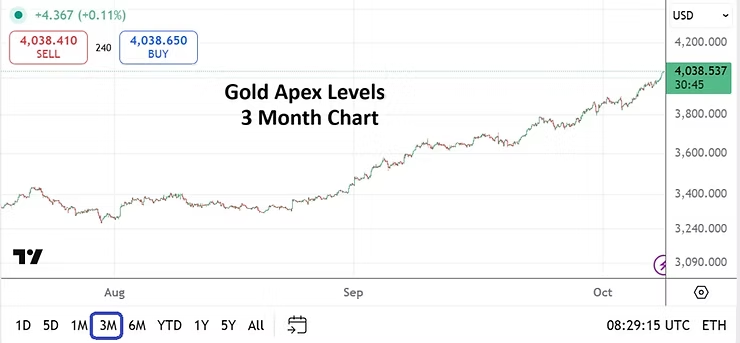
Traders looking for discounts to emerge will need to be careful, but if the equity markets were to suffer a strong downturn on heightened nervousness, having a longer-term approach to speculative positions could become worthwhile. Gold which is traversing within record values may prove to be a significant near-term barometer as a safe haven gauge in the coming days. But then again gold has been within a sincere bullish trend over the long-term, so buying if produced near-term needs to be looked at suspiciously. In other words, the bullish trend in gold while getting perhaps an additional dose of fuel to ignite higher because of the potential U.S government shutdown should also be treated carefully and not traded with blind ambition.

Gold Three Month Chart as of 30th September 2025

The potential of a U.S government shutdown is a big event, but it is intransigence that financial institutions and big investors do not want to see. As long as some aspects of communication are being shared transparently with the public regarding negotiations in Washington D.C, many markets are likely to remain rather unbothered. How long will the U.S government shutdown last this time? It might all depend on how long the Democrats believe they can get the most out of the shutdown if it adds to their political image.

Both the Democrats and Republicans will want to get through the coming days as unscathed as possible. Why? Because both want to retain their power. One question waiting to be answered during this conundrum is who will come out looking best? If the financial markets begin to suffer there will be a lot of finger pointing by both sides. And again, importantly, financial institutions are unlikely to be fooled. Investors want clarity, the markets will only suffer if big players feel the crisis in Washington can cause potentially long lasting damage.
post287

Forex: Tomorrow is Known, October and Beyond are Uncertain

Forex: Tomorrow is Known, October and Beyond are Uncertain

The U.S Federal Reserve will cut its Federal Funds Rate by 25 basis points tomorrow. The big question all financial institutions would like some clarity about is whether the U.S Central Bank will strongly suggest that another cut of 25 basis points will need to take place in late October during the next FOMC meeting.

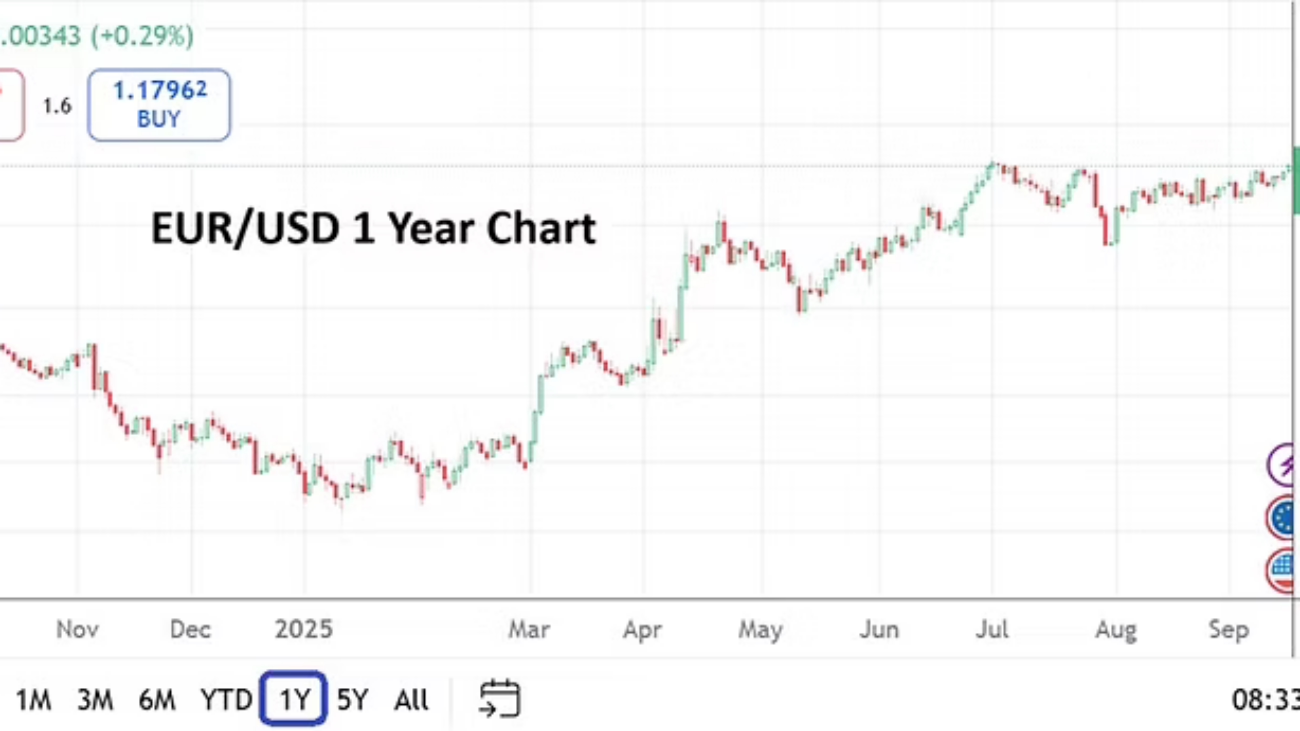
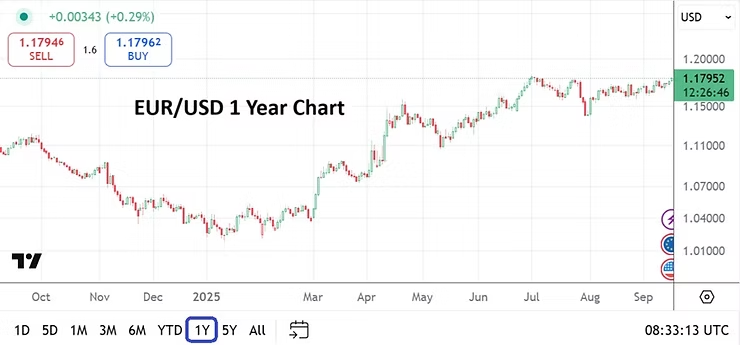
EUR/USD One Year Chart as of 16th September 2025

Forex has certainly seen the USD weaken because a definitive interest rate cut has already been factored into mid-term outlooks. Those who are betting on a 50 basis point cut tomorrow are spitting into the wind and most likely wrong. The Fed under Jerome Powell has proven time and again that it is cautious. The word uncertainly is likely to be heard on Wednesday, even as the Fed Chairman admits conditions warrant cutting interest rates further.

And this is where it will get tricky for day traders betting on conditions beyond tomorrow. Since the quarter of a point cut has been factored into Forex already, and the EUR/USD, GBP/USD and even the USD/JPY are bouncing up against technical inflection ratios for the time being, powerful reactions and dangers will ignite based on the perceptions generated about late October outlook. It is likely some large financial institutions have already priced a rate cut of 25 basis points into the USD already for their October outlooks, meaning some big houses have accounted for a 50 basis point cut mid-term.

It is probable some larger firms have remained conservative, and have not leaned into overly confident cash forward contracts for their corporate clients. This because they want to be certain the Fed is definitely setting the table for another interest rate cut in October.

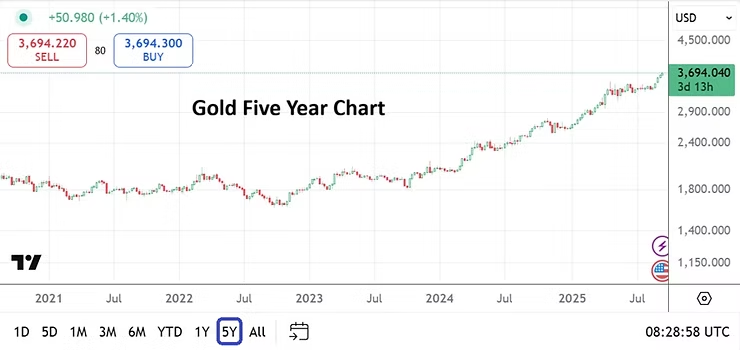
Gold Five Year Chart as of 16th of September 2025

Nothing is guaranteed and Fed Chairman Powell is likely to state this obvious point tomorrow. However, he may have to admit the jobs market looks weak. And he may have to also acknowledge, that although he and other FOMC members remain concerned about the threat of inflation, that for the moment it remains somewhat tame. This is where a secret ingredient in Forex trading tomorrow may fuel volatility. Inflation fears telltale signal is being seen in the current price of Gold which is within record territory and sight of $3,700.00 as of this writing, this even as the 10-Year U.S Treasury yields have decreased.

As a critic of the Federal Reserve’s conservative approach to cutting interest rates the past half year, I have to acknowledge that it is important that the Fed remains nimble, they cannot simply give into pressures from political circles. However and unfortunately, the Fed has been anything but nimble the past six months. The Fed should have cut interest rates by 50 basis points in total in the late spring and early summer, they did not. Now they are once again behind the proverbial curve and in a position in which they are being forced to be reactive instead of proactive.


Again the Fed has at its disposal high tech quantified data via its distinct Fed Districts to know the economic landscape and react at a quicker pace. It chooses not to do this efficiently, this was a feature of the Fed’s inability to accept that inflation was a danger almost four years ago and its snail like reaction which caused economic harm. Now the Fed finds itself in a position in which it should be admitting that it should have been cutting interest rates six months ago, while also knowing logically storm clouds are on the horizon regarding murky economic outlooks due to the threat of inflation actually increasing in the mid-term. Justification for a nimble Federal Reserve remains a pragmatic desire.

Here’s the thing, the Federal Reserve is going to cut the Funds Rate by 25 basis points tomorrow and say they are considering another cut in October. The Fed will probably also say after another cut in October, that they anticipate taking a way and see approach into the end of this calendar year.

Regarding the potential reactions of the EUR/USD, GBP/USD and USD/JPY tomorrow and into Thursday, volatility needs to be expected. The consolidation we have seen develop the past few days near important levels that seemingly are holding back large value moves will vanish for day traders. Small retail speculators in Forex need to understand what they view as massive moves are often considered simple small mathematical gyrations by financial institutions which are not only participating in the cash forward business via FX rates, but also taking part in hedging via futures trading through the likes of the Chicago Mercantile Exchange and other venues.

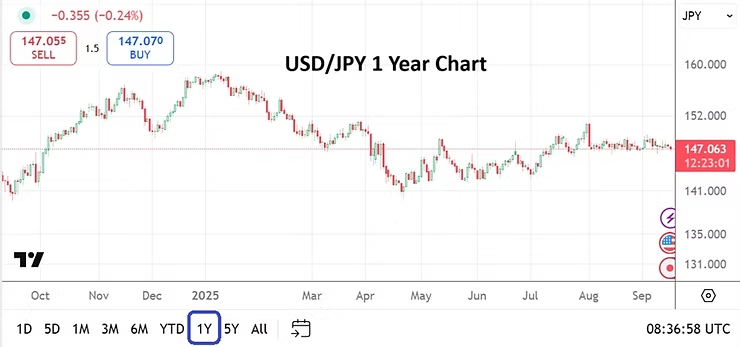
USD/JPY One Year Chart as of 16th September 2025

It needs to be noted the Bank of England will release its Official Bank Rate on Thursday along with its Monetary Policy Summary. And the Bank of Japan will issue its Policy Rate and Monetary Policy Statement on Friday. The BoE is not expected to change its borrowing rates on Thursday, and the Bank of Japan is expected to stand in place too. It should be pointed out that the Bank of Japan does have room to increase its borrowing costs, but the government of Japan appears to be married to maintaining a weaker Japanese Yen, much to the chagrin of some economists.

If the Fed admits they need to likely cut interest rates again in October this might spur on some USD weakness and create volatile conditions tomorrow and Thursday. However, if the Fed offers the phrase that they will take a wait and see approach after October, until further economic data can be accessed in November and December, then the USD may start to show signs of firming. The Fed’s interest rate is 4.50% today, by the end of Wednesday it should be at 4.25% with signs that by the end of October it will be 4.00%. Looking for more than those clues is speculative, financial institutions want answers like everyone else.

post279

Wolf of Wall Street: Greed, Bad Ethics, Sales and Notoriety

Wolf of Wall Street: Greed, Bad Ethics, Sales and Notoriety

Book corner: The Wolf of Wall Street by Jordan Belfort

I was just a greedy little bastard, and not just greedy for money but also for sex and for power and for the admiration of my peers and for just about anything else you can imagine. – Jordan Belfort

Welcome to The Wolf of Wall Street, exstockbroker and trader Jordan Belfort’s autobiographical paean to greed. Reading like a twisted success saga — like a Horatio Alger tale that went left instead of right — Belfort describes his life at the helm of Stratton Oakmont, a Long Island, NY brokerage house which he founded in 1989.

Equal parts shocking, drugged-up, zany, and hysterically funny, Belfort’s story — confession would be a more suitable word — tells how Stratton Oakmont gained notoriety for its widespread use of pump and dump schemes, an illegal practice whereby a stock’s worth is artificially inflated and then sold at a higher price.

Stratton Oakmont racked up plenty of victims and fortunately its tenure was brief. The FBI, the National Association of Securities Dealers (NASD) and the U.S Securities and Exchange Commission were on Belfort’s scent for years and would eventually shut it down in 1996. Belfort made a fortune but would serve 22 months in prison, where he began writing his memoirs, later to be shaped into this 2007 book. Wolf was a bestseller and Belfort wrote a followup two years later, Catching the Wolf of Wall Street, in which he tells his origin story and how he formed his crew, and also serves a sequel to the events of the first book.

In 2013, director Martin Scorsese released the film The Wolf of Wall Street, combining elements of both books. Scorsese shaped the film like a white-collar version of his earlier masterpiece, Goodfellas, with Leonardo DiCaprio portraying Belfort as a 1990s version of Henry Hill. The movie was a financial and critical success, and garnered accolades not only for DiCaprio’s performance — he won Best Actor at the Golden Globes — but also for Margot Robbie as Belfort’s wife and Oscarnominated Jonah Hill as his business partner (the names of the people upon which they were based were changed for the movie). Belfort himself has a bit part in the film.
 
A Jewish kid from middleclass Bayside, Queens, Belfort focuses Wolf on three areas: 1) his legal struggles 2) Stratton Oakmont and its excesses, and 3) his rampant drug use, physical ailments, and marital tensions — often weaving all three into the same scene.
 
In the first focus of the book, his legal struggles, one gets the impression that he enjoyed writing this part of the book the least, although that is understandable. Stratton Oakmont’s financial crimes broke a laundry list of federal and state regulations and before his arrest Belfort was forced to spend considerable time, money, and imagination in hiding them from the authorities.
 
Stratton Oakmont specialized in selling penny stocks, which are inexpensive stock shares from smaller companies. Although usually marketed to investors of more limited means, Stratton Oakmont marketed them to unsuspecting wealthier investors, making an insane amount of money in the process. A classic boiler room operation, brokers were trained to sell using slick, cuttingedge, highpressure tactics. The firm thrived on manipulation and deception, with an intense focus on closing deals no matter the ethical cost.
 
A significant portion of the book is dedicated to explaining Stratton Oakmont’s approach to stock price manipulation. Belfort’s traders would artificially drive up the stock price of a company during its Initial Public Offering (IPO), while retaining more shares of that company than SEC regulations permitted. Belfort uses the example of Steve Madden Shoes, a company he helped take public, to demonstrate this practice.
 
Belfort outlines how stock manipulation during an IPO works: He would invest heavily in a new business, like Steve Madden Shoes, and then leverage his controlling stake to take the company public. Belfort’s brokers would use aggressive tactics to inflate the stock price when selling to investors. Once the price reached a certain level, Belfort would sell enough of his shares to recover the cost of his initial investment — meaning he paid nothing for the remaining shares, which were now worth significantly more.
 
However, under SEC rules, an investment firm sponsoring an IPO is only allowed to hold a limited amount of stock in the company they are offering, but Belfort and Stratton Oakmont held far more Madden shares than the law allowed.
 
Belfort was also involved in money laundering, a scheme that began when he secretly traveled to Switzerland, a nation notorious for hiding money. The Swiss bankers he met with openly explained how the Swiss banking system hides vast sums of money and how they avoid cooperating with foreign institutions, like the U.S. SEC. Since the practice of issuing “numbered” bank accounts without names ceased after World War II, Belfort’s first step was to open accounts under the names of proxies, similar to those who held his stock. These individuals were tasked with smuggling large amounts of cash across the border, so Belfort relied on people he trusted who wouldn’t raise suspicion — including his wife’s elderly British aunt and a member of one of his drug dealers’ Swiss relatives.
 
As a sidenote, Belfort comes across as cynical to the whole stockbroking profession. He argues that stockbrokers, including himself, don’t truly produce anything of value and lack any specialized stock market knowledge. At their core, he says, they’re essentially just slick salesmen, especially after Belfort taught his crew highpowered sales scripts that drew customers into opening their wallets. With this training, Belfort says, even a high school or college graduate can be taught to talk like a stock market expert, which leads into the second focus of the book, the atmosphere at Stratton Oakmont.
 
In staffing Stratton Oakmont, Belfort eschewed licensed brokers (those who passed the Series 7 exam) and instead brought in a more impressionable team, a hardscrabble gang of local kids fired up to make big bucks. The place was awash in money and to reward the brokers for their highly stressful — and aggressive — jobs, Belfort spared no expense in keeping them happy. He cultivated a bacchanalian, partylike atmosphere, a sort of adult frathouse full of sex, hookers and drugs.
 
During his tenure at Stratton Oakmont, Belfort became known for his loud and proud persona. He would routinely motivate his troops by giving thumping, overthetop speeches (marvelously reenacted by DiCaprio in the movie), preaching like an evangelist about the glory of earning big money.
 
The book’s final focus is his drug use, physical ailments, and marital tensions, three issues that are tragically intertwined.
 
Belfort suffered from intense back pain and sleep problems, the latter which plagued him since childhood. As an adult, the chaotic and party-fueled atmosphere at Stratton Oakmont enabled him to indulge easily, and he would use a powerful cocktail of drugs to cope. He was particularly known for his abuse of Quaaludes, a hypnotic sedative drug which he used recreationally and frequently, often mixing them with alcohol or other substances, but it became a full-blown addiction. Besides Quaaludes, he also used cocaine, morphine, and other prescription medications.
 
Belfort reported frequent blackouts and memory loss due to mixing drugs, especially Quaaludes and alcohol. He often had no recollection of things he said or did while under the influence, sometimes waking up to damage, arrests, or people furious at him. He had multiple close calls with overdoses, particularly from taking too many sedatives or mixing drugs dangerously. In one story, he recalls almost choking to death on his own vomit after passing out. Longterm drug use left him in a nearconstant mental haze, affecting decision-making, mood, and impulse control.
 
Belfort describes in cringing details the most notorious effects of his Quaalude abuse, the loss of basic motor control. He described episodes where he was physically unable to walk, speak clearly, or even stand up — calling these “cerebral palsy phases.” There’s a wild (and comic) scene — later portrayed in the movie — where he attempts to crawl to his car while stoned out of his mind.
 
Belfort writes at length on his wives and family life, and herein lies the part which Belfort seems to have enjoyed writing the most.
 
Belfort met his first wife, a local Queens beauty, after college while working as a meat salesman. The business thrived for a while, thanks to Belfort’s silver-tongued persuasion abilities. But after overextending himself, the business went under, leaving him with a young wife and bills to pay. By all his accounts, his wife stuck by him through the lean times and he has not had (at least publicly) an unkind word to say about her. But Belfort ended up leaving her for a Londonborn and Brooklynraised model, Nadine Caridi, a stunning beauty whom he met at a party. His life with the Duchess — as he refers to her due to her birth country and British heritage — provides some of the most memorable scenes, and their life together became a bizarre mix of luxury, chaos, and toxicity (not to mention lust).
 
The two met when Belfort was already rich from Stratton Oakmont and their relationship quickly became intense. Marrying in the early 90’s, Belfort provided Caridi with a glam life of extreme wealth: yachts, mansions, exotic vacations, and nonstop partying. Belfort showered her with expensive gifts and built a lavish life for them and their children in one of the most expensive areas of Long Island. Their megamansion boasted a helicopter pad, a swimming pool, tennis courts, servants galore and a fleet of luxury cars.
 
But behind all the glamour, things became unstable. Belfort and Caridi had some intense, ugly shouting matches during their marriage, and they usually exploded over his drug use, infidelity, and parenting. Although Belfort loved his kids dearly, Caridi got especially furious when his reckless behavior endangered them. One of their biggest, most infamous fights was when Belfort, high on drugs, tried to kidnap their daughter and crashed his car into a pillar inside their property (also reenacted in the movie). Their marriage eventually broke down under the weight of Jordan’s addictions and criminal behavior, and they divorced in the early 2000’s.
 
How did it all end for Belfort? After getting cornered by the FBI, who had a strong case against him, Belfort was given a choice: either go to prison for decades, or cooperate and help bring down the dozens of brokers, business partners, and shady investors he worked with. To get a lighter sentence, he agreed to become an informant, wearing a hidden wire during meetings and conversations to secretly record people he worked with. However, a lot of his old friends and colleagues ended up getting arrested and betrayed by him — and he was absolutely hated by many in that world after that.
 
Belfort did easy time at Taft Correctional Institution in California, a lowsecurity federal prison of the type that is called “Club Fed” in popular culture because it is so relaxed and safe compared to the tough penitentiaries that house hardened convicts. While there, he had the odd coincidence of sharing a cell with Tommy Chong, of the classic Cheech & Chong stoner comedy duo. Chong was there for selling bongs online, and the two became friends. It was Chong who encouraged Belfort to write his memoirs. Interestingly enough, his writing style was influenced heavily by Tom Wolfe’s The Bonfire of the Vanities, which he read while there.
 
Belfort’s New York humor shines through the book and is the saving grace throughout the scenes where the crime and sleaze bubble through, although the vulgarity might not appeal to all readers. His antics, though tragic and costly, often come off as comedic, with a rhythm similar to stand-up comedy or a raunchy sitcom. It makes for enjoyable reading but one has to question his motives for portraying the incidents in such a manner.
 
For example, the infamous yacht story — one of the highlights of both the book and the movie and one which Belfort has retold ad nauseum in interviews and personal appearances —involved a hairraising incident where he ordered the captain of his yacht to sail through a 70knot storm, instead of avoiding it, off the coast of Sardinia.
The yacht was battered by massive waves that smashed its windows and hatches, flooding it. Despite the dire conditions, all 27 people on board were rescued by the Italian Navy, but the yacht was lost at sea. Belfort — and unfortunately later Scorsese — play it up as bumbling dark comedy, something that would fit in the first season of Breaking Bad or Michael Bay’s 2014 crime caper Pain and Gain. But after the movie was released, two of the men who were on board the yacht — friends of Belfort since childhood — were interviewed on a local Long Island radio show and told their side of the story. The real events, as they stated, were a horrific, PTSDinducing nightmare in which all aboard — crew included — thought they were about to die.
 

Another problem with the book is that it never actually defines itself. Is it a business book? A morality tale? A success story? A crime story? Is it fratire, the genre popularized by Tucker Max in I Hope They Serve Beer in Hell? It has elements of all of those, but they never truly come together into a cohesive whole. The business and legal sections are hard to follow for the average reader and Belfort didn’t seem interested — or patient enough — in describing the concepts in simpler terms. In fact, like a true salesman, at times he seems more interested in a carefully crafted portrayal of himself where even the self-deprecation — and there are loads of that — contain hints of braggadocio. One can hear him saying as he wrote the book, I had ballsI went for the brass ringI did things that you didn’t dare to do.

After the movie was released in 2013, Jordan Belfort experienced a resurgence in public attention and became a media favorite, interviewing endlessly in his thick, fasttalking Queens accent while regaling a new generation of fans with the stories behind the movie. In time, he eased into the role of elder statesman, becoming an indemand commentator on current financial affairs such as crypto and Wall Street. Belfort also rebranded himself as a motivational speaker and sales trainer, touring internationally and giving seminars on sales techniques, goalsetting, and entrepreneurship. His signature sales methodology, now marketed as the “Straight Line Persuasion” system, has become a core part of his training programs. He also created a podcast, The Wolf’s Den, where he interviews entrepreneurs, influencers, businessmen and others (although it is unclear as of this writing if the podcast is still active).

To his credit, he has shown remorse for his misdeeds and the effect his lifestyle had on his family and has repeatedly stressed the importance of ethics in business and sales. His speeches, as shown on YouTube, are enjoyable and engaging.
Unfortunately, the issue of restitution remains a sticky issue. Currently living in California, he was ordered some years ago to pay $110.4 million in restitution to victims of his stock fraud. However, critics and prosecutors accused him of not paying enough back, particularly in light of earnings from the film, books, and speaking engagements. Belfort has claimed he’s been steadily paying.


Despite the glamorized portrayal in the movie, many people — especially his victims — still view him with suspicion. He remains a controversial figure. Some see him as a charismatic redemption story, while others view him as an unrepentant fraudster profiting off his crimes. Read the book and decide for yourself.

If you want to read another Book Corner article, please visit this review by Evan Rothfeld:
https://www.angrymetatraders.com/post/rich-dad-poor-dad-what-the-rich-teach-their-kids-about-money

post275

Nvidia: Short-Term Speculative Reactions Versus Investing

Nvidia: Short-Term Speculative Reactions Versus Investing

Nvidia is near 181.60 as of this writing, this after the company issued a quarterly report that beat expectations, but also pointed out that mid-term concerns may slow down the pace of some of its data driven business, and that China enterprise complications remain murky.

Nvidia Five Day Chart Early Morning as of 28th August 2025

Day traders should be certain they acknowledge the difference between a short and near-term wager on Nvidia compared to mid and long-term outlooks. Speculators who want to venture forth and gamble on Nvidia based on last night’s quarterly earnings report are free to do so. However, there is a distinct difference between betting on what today and tomorrow’s reactions in Nvidia will be compared to folks who are investing long-term in the company and believe that over the long haul it will remain a solidly profitable company that adds value to bottom lines.

In early August Nvidia was challenging the 185.00 ratio. As of this morning the stock is near the 181.60 mark. Nvidia faces headwinds currently in after hours markets because the company had the gumption to say it outperformed expectations in the last quarter, but put up a cautionary sign saying its data business may face some obstacles regarding growth, and outlooks for its China enterprise remains solid but could face some complications.

Reacting to Short-Term Temptations and Speculating:

For those who want to sell Nvidia based on the above ‘warnings’ today, they are free to try their luck. However, selling positions could quickly turn into buying opportunities. Nvidia like most equities is about considering reactions due to behavioral sentiment, short-term nervousness could rapidly shift to bullish perspectives in the eyes of investors, programmed trading software, and – yes – day traders.

Lower support for Nvidia technically when a five day chart is looked at may be 170.00 if someone is overly cautious. A look at a one month chart for day traders who have a bit more of an aggressive manner, may believe technical chart evidence suggests a lower move can be taken advantage of at 177.00, this if they are keen on waiting for a downturn to look for an opportunity to buy at lows.

Yes, perhaps some short sellers may target the mentioned values as places to cash out positions while speculating. But there is a chance Nvidia will not touch those lows. Perhaps bearish reactions – if they even happen – will fade quickly and additional bullish sentiment will continue to seep into Nvidia. Does anyone really think Nvidia is about to face a steep selling curve?

Tech Stock Consideration and Looking for a Barometer:

·       Some folks are talking about AI and its potential status as a bubble.

·       However, this is Nvidia we are talking about, even if there is a bubble in the AI sector, Nvidia long-term is a solid stock that will likely do well for years to come.

·       Short-term reactions seen the remainder of this week and perhaps over the next few weeks may be choppy, but this would include reversals in both directions.

·       Betting on a big downside in Nvidia looks to be wrongheaded.

·       Traders who are conservative and believe Nvidia is a good buy short-term after some selling happens, while looking for momentum higher – at least back to known resistance levels – may be making a solid wager.

Nvidia is one of the most important equities in the stock market. Some may justifiably say it is the most important at this moment. As a big driver of the Nasdaq 100, Nvidia has in many respects traded sideways since late July. This has been one of the reasons the Nasdaq 100 has faced headwinds too. The broader S&P 500 has been doing better than the Nasdaq 100 the past few weeks, this because tech stocks like Nvidia are facing some skepticism regarding just how high they can go. However, Nvidia as a stand alone company has excellent long-term prospects.

post274

India Insider: K-Shaped Economy via Growth and Inequality

India Insider: K-Shaped Economy via Growth and Inequality

ndia’s growth story remains inspiring, supported by the National Democratic Alliance (NDA) government’s policies that attract foreign capital into infrastructure projects. The last decade has seen improvements in railways, ports, bridges and highways. In Financial Year 2025 (1st April 2024 to 31st March 2025), gross Foreign Direct Investment inflows reached USD 81.04 billion, a 14% rise from the previous year, reflecting global investor confidence under the China+ strategy. However, net FDI shrank to just USD 353 million, its lowest on record, as significant divestments and profit repatriations offset the inflows.

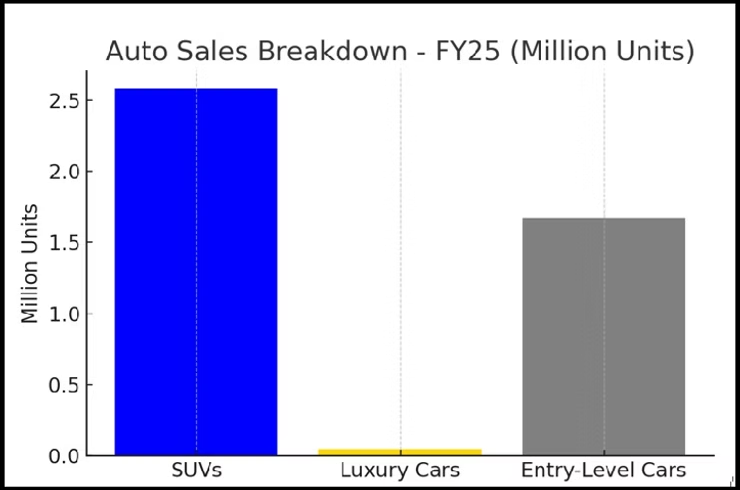
Auto Sales in India from 1st of April 2024 to the 31st of March 2025

India’s stock market has rallied recently, driven by strong corporate performance despite tariff-related jitters. Corporate capital expenditures by listed non-financial companies rose over 20% year-on-year to exceed 11 lakh crore ($125 billion USD) in FY25, surpassing the government’s capital expenditures of 10.5 lakh crore ($120 billion USD). This signals robust investment by large firms.

In contrast, the unlisted corporate sector, contributing two-thirds of corporate value added and holding most corporate debt, remains weak with falling profits and tax payments. The divergence comes from the markets they serve: listed firms cater to higher-income households, while unlisted firms rely on low and middle income consumers, where progress and recovery is slower. Corporate tax receipts remain healthy, but are largely driven by listed firms. Collections in FY25 reached 12.72 lakh crore ($145 billion USD), while net direct tax collections climbed to 22.26 lakh crore ($254.97 billion USD).

Consumer trends mirror this imbalance. Passenger vehicle sales hit a record 4.3 million units, led by SUVs and luxury cars, while entry level cars and two-wheelers saw subdued demand. The aspirational middle class, especially tech professionals in their late 20s and 30s, drives premium demand, leaving the mass market segments of the population behind.

Nearly half of the nation’s workforce remains in low productivity sectors contributing only a fifth of national income. Wage growth is stagnant in several States. Micro, medium and small enterprises struggle with credit, policy bottlenecks, and institutional constraints. This is India’s K-shaped economy as large corporates and affluent consumers thrive, while smaller businesses and lower-income groups lag. India’s booming economy hasn’t delivered progress for all quite yet.

The country remains the fastest-growing major economy in the world, above 6%. A crucial question is whether this astonishing growth will create mass employment and better equality. Unfortunately, without updated consumer expenditures data since 2011–12 due to the lack of a recent census, policymakers rely on capital expenditure and earnings trends to gauge consumption patterns which deliver incomplete insights. The next census for India is scheduled to be conducted in 2027. More transparency is needed statistically to help alleviate the K-shaped results via the Indian economy.

post270

India Insider: Strategic Balancing Act Comes with Risks

India Insider: Strategic Balancing Act Comes with Risks

On the 15th of August, India’s Independence Day, Prime Minister Narendra Modi announced a large reduction on Goods and Services Tax rates to boost domestic consumption. The Indian economy is certainly slowing, this as lackluster domestic consumption has prompted the Reserve Bank of India to cut the repo rates from 6.5% to 5.5% in 2025.

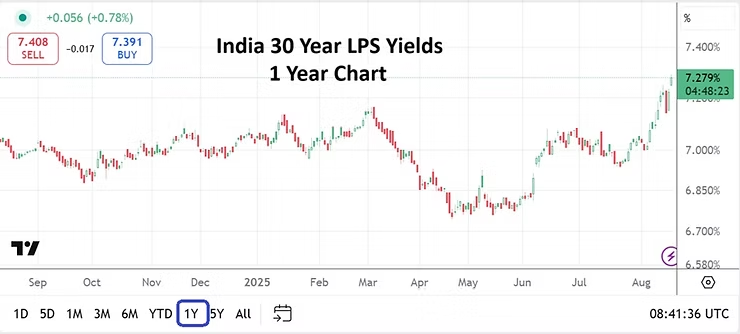
Indian Bonds 30 Year LPS Yields One Year Chart as of 19th August 2025

As trade deal discussions with Washington flounder, New Delhi is being forced to shift economic considerations towards China. The diplomatic relationship between India and China has grown colder, particularly since they clashed on the eastern border region in 2020.

Relying on China also comes with challenges for New Delhi. Since 2021, the trade deficit with China has expanded from $73.3 billion to $99.27 billion USD, showing that India still depends increasingly on China for significant importing needs.

According to Bloomberg, India’s major conglomerates have already established excellent relationships with Chinese suppliers of lithium ion batteries and EV components, although they try to discreetly tread under the radar in order to avoid the wrath of New Delhi government.

The fact is India can sustain its economy and maintain its geopolitical posture of non-alignment by practicing a multi-polar stance with Washington and Beijing. But despite clinching trade deals with the U.K and reviving trade negotiations with the E.U, New Zealand & Australia, and its deepening bilateral relationships with many central Asian nations and within BRICS, New Delhi’s major trading partner for exports remains the United States. Around 18% of India’s exports go towards the U.S, while 15% of imported goods come from China. The numbers do demonstrate an intriguing balance.

While India’s negotiations with the U.S have stalled and appear postponed indefinitely, other Southeast Asian countries, including Vietnam, Indonesia and the Philippines have secured lower tariffs with the Trump administration making them more competitive in the U.S. market. These nations are using the U.S for economic and military security, but they also rely on China for manufacturing and logistical needs.

India Faces Additional Challenges with Washington and Beijing:

Indian IT companies derive nearly 57% of their export revenues from U.S clients, making them heavily dependent on that market. And rapid advances in AI and the erosion of legacy outsourcing models are putting India’s traditional profit engines under pressure.

Meanwhile, China is not keen on helping India achieve expertise and manufacturing competitiveness which would threaten its own business model. China wants to make inroads by selling goods to the world’s largest consumer market, rather than technology transfers which would allow India to attain manufacturing supremacy.

Some economists warn that India’s own plans for mitigation of its current circumstances will likely be disinflationary. India’s bond results via yields clearly express concern about potential fiscal costs and difficulties. New Delhi’s focus has shifted towards appeasing domestic consumers, while trying to deal with uncertain foreign partners. Government capital expenditures have been declining since last year, signaling that both corporate and public investment confidence remains weak.

India’s neutrality is welcomed. It’s not anti-Western or pro-Western, and attempts to balance between the U.S and China while trying to forge new trade agreements and ties are a constant high-stakes game capable of creating strains economically and politically. The path forward with the U.S and China will remain complex and it must be worked on with precision in order to help achieve success.

post267

Inflation Numbers from U.S and Fed Outlook, and Intel Corp.

Inflation Numbers from U.S and Fed Outlook, and Intel Corp.

Two key inflation reports will come from the U.S this week. Tomorrow the U.S CPI data will be published and the PPI results will be presented on Thursday.

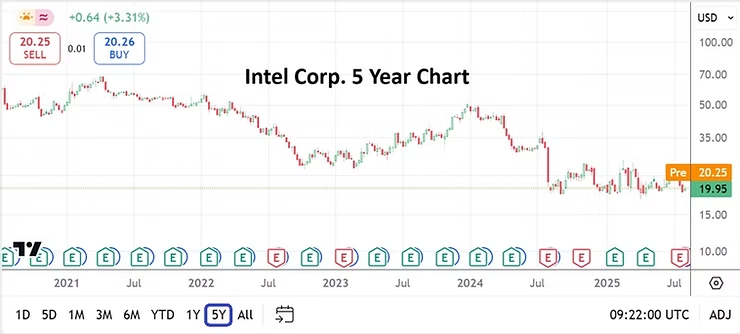
Intel Corp. Five Year Chart as of 11th August 2025

Via corporate news and perhaps effecting sentiment on Wall Street, Intel’s CEO Lip-Bu Tan is scheduled to visit the White House today. Intel Corp. closed around $19.95 going into the weekend. Intel has been a laggard in the stock market. It remains an important barometer, but its price action the past year has opened the door to consideration of the company as a takeover target – this if Intel’s boards allows its dissatisfaction of results to fester. A look at the five year chart of Intel printed above shows vast underperformance for shareholders.

Lip-Bu Tan became a target in the Senate last week because of his close business ties to China and companies there which have ‘security’ connections to the Chinese government. Intel should be watched this week. It is possible the company can produce a turnaround, but negativity makes it a questionable speculative short-term trade for pursuers. What could possibly go wrong as the Intel CEO meets with President Trump at the White House?

The USD has been weaker in Forex the past handful of days and major currencies are approaching values which clearly indicate financial houses are leaning into notions that the Federal Reserve will cut the Federal Funds Rate in September. The next Fed FOMC decision is due on the 17th of Sept. This is more than a full month from now, allowing financial institutions the ability to gamble on their cash forward positions and cause more volatility and price velocity in Forex. The fact that Donald Trump has added Stephen Miran as temporary Fed Governor adds to the ability and outlook that the Federal Reserve will become increasingly dovish. Tame inflation results from the Consumer Price Index tomorrow and the Producer Price Index on Thursday would help USD centric weakness become sustained.

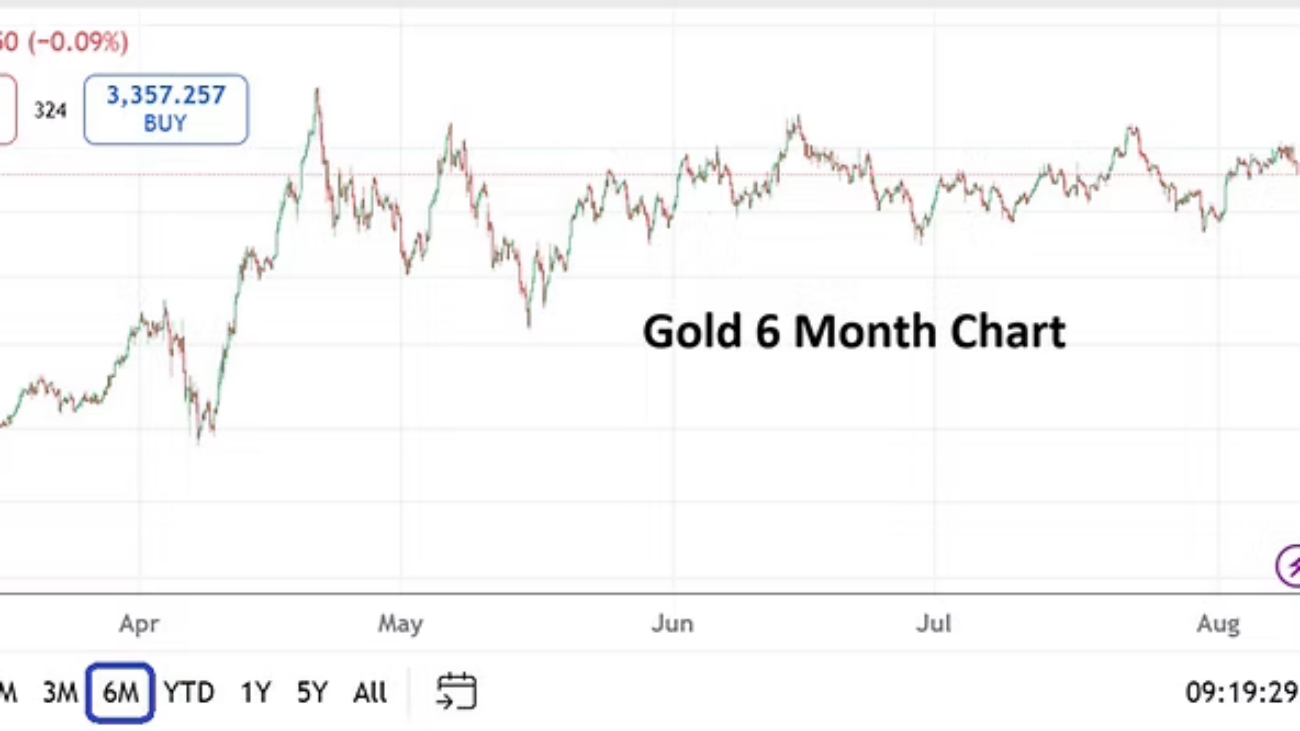
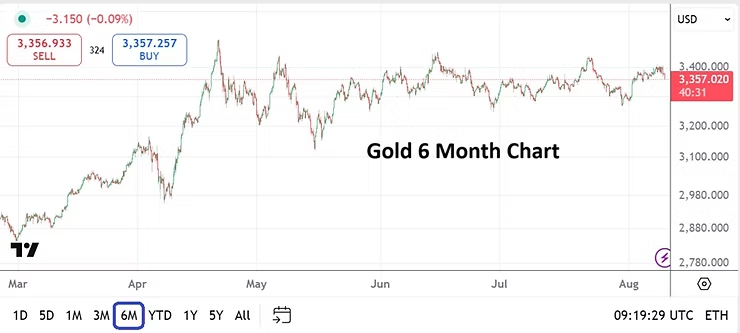
Gold Six Month Chart as of 11th August 2025

Gold near $3,355.00, Bitcoin around $121,500.00, GBP/USD close to 1.34580 as of this writing.

U.K will publish GDP reports on Thursday, last week the Bank of England lowered their Official Bank Rate to 4.00%

post265

Trading Thud Ending Last Week and Early August Insights

Trading Thud Ending Last Week and Early August Insights

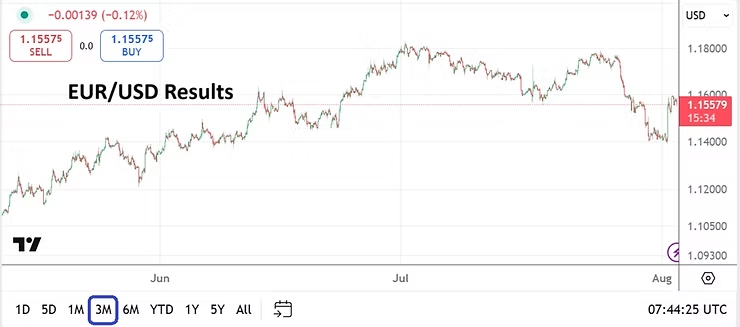
The EUR/USD is near 1.15650 early this morning. The USD/JPY around 147.850. Forex has provided fast reversals and most major currency pairs are within well established known realms, but caution prevails. Friday’s U.S jobs numbers before going into weekend provided additional mud to filter through for those seeking clear outlooks. Were the employment numbers rigged by the Bureau of Labor Statistics?

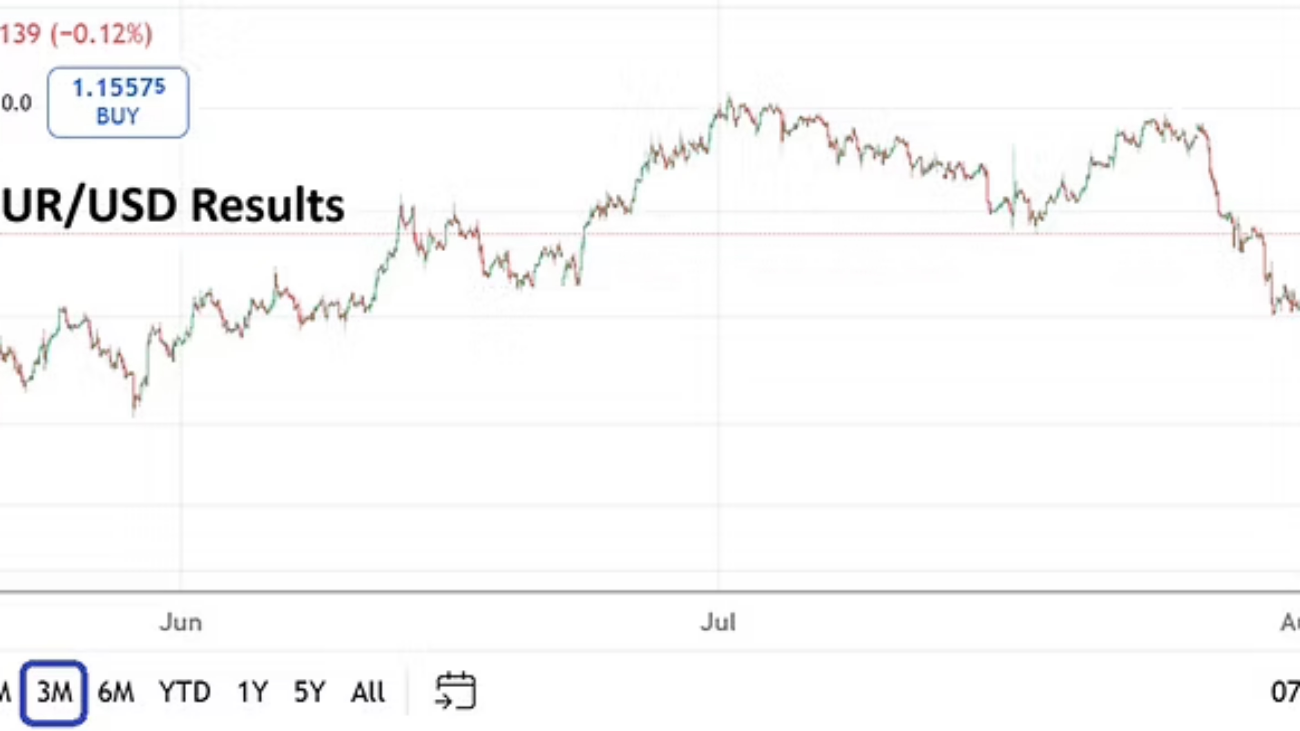
EUR/USD Three Month Chart as of 4th August 2025

Questionable economic statistics have become an open sore spot for some analysts in the U.S, this has been a problem since the financial crisis of 2007/08 and ensuing years when politically expedient numbers were rumored to be in use so the Federal Reserve and U.S Treasury could work in a more comfortable manner. Let’s just say there are actual reasons why and how economic statistics could be used to hurt and help policies. For some evidence take a look at the art of revisions that has been practiced with key economic data the past handful of years. Financial institutions now need to consider the possibility that numbers cannot be trusted, interpret reports, try to decipher reality and consider impact.

Effect on the Federal Reserve is a big question. Fed Chairman Jerome Powell continues to preach uncertainty and say a wait and see approach is needed because of implications regarding tariffs. However, conspiracy theories are also somewhat blown out of the water regarding the recent jobs numbers, because the lackluster results will actually put pressure on the Fed to cut rates in September in order to help spur on a better jobs market. So in other words, financial institutions, big investors and day traders are back to square one.

The ISM Services Purchasing Managers Index stats will be published tomorrow for the U.S, but this report is likely to be a mere ingredient that affects the marketplace. Behavioral sentiment will remain the cornerstone in Forex, equity indices, Treasuries and commodities. August is typically a rather calm month of trading taking into consideration that holidays are being taken by many market participants, but as the S&P 500, Nasdaq 100 and the Dow 30 remain elevated and capable of achieving new record highs, the USD creates chaos regarding outlook influenced by a Federal Reserve that is now in a difficult spot, and tariff implications are contemplated it would be wise to keep an eye on all near-term outcomes.

Technical trading and computer generated algos will factor into conditions as psychological levels are challenged and perceptions are debated. Has the global marketplace grown comfortable to the tactics used by President Trump? While it is easy to say yes, there are still plenty of reasons to remain concerned, this because White House policy seemingly has the ability to shift without notice.

Which has helped produce what may be the golden rule that develops under the current circumstances. Stay alert, stay optimistic but practice caution. Financial institutions have always practiced the art of realpolitik behind closed doors to chase profits, but they must remain vigilant to fast reactions caused from the potential sudden fear of shifting doctrine. President Trump’s rather swirling mix of laissez faire enterprise, and his stark ability to express anger at those who stand in his way or disagree with him do make for a new trading reality. Cautious optimism is likely to rule the world of investment and speculation going forward.

post261

Unpredictability of President Trump and the Markets

Unpredictability of President Trump and the Markets

Everyone wants to know what will happen in the future in the financial world. Most everyone also knows that this is impossible. However, clarity about the mid-term is a legitimate focal point that financial institutions strive. Risk managers define their considerations on assorted perspectives depending on their backgrounds.

While some may like him and others clearly are are not fans, President Trump has a reputation for wanting to get things done. His calling card for a long time has been an ability to make business deals. President Trump however has put himself in a rather difficult position and the next two weeks may prove to be an important milestone. One in which those who like the President and those who don’t will be given more credence to debate.

The Federal Reserve will announce their FOMC decision on the 30th of July. Tariff deadlines will supposedly come on the 1st of August. President Trump has made it clear he does not like the lack of aggressiveness which Fed Chairman Jerome Powell is displaying. Trump has called for the Federal Funds Rate to be cut and Powell has not acquiesced.

President Trump has openly spoken about trying to replace the Fed Chairman, but at this juncture the Trump White House knows this will be difficult unless they can prove Jerome Powell has done something maliciously. Not lowering the Federal Funds Rate because of a fear inflation will develop because of potential effects due to tariff fallout is a legitimate reason not to act. Even if the Fed Chairman is wrong, he appears to still be working on a basis which is based on an economic interpretation.

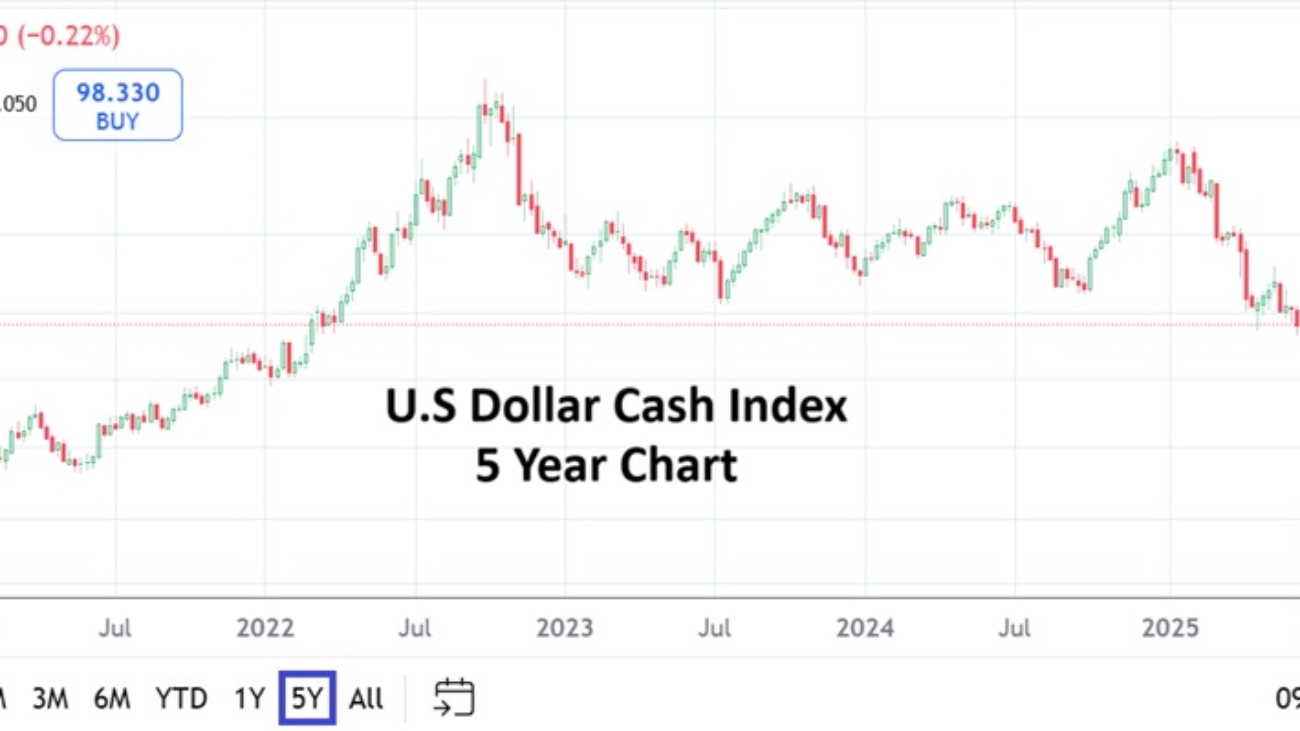
For the next two weeks the broad markets will hear about the Trump and Powell disagreement. It has been argued the Federal Reserve should have lowered the Federal Funds Rate a few months ago, clearly this was not done. However, the USD did trade with weaker sentiment in Forex from early April until the beginning of July. In the past few weeks the USD has garnered some strength, but remains within the lower part of its long-term realms via the U.S Dollar Cash Index. The weakness in the USD was likely due to financial institutions betting on rate cuts to come over the mid and long-term, and which they still believe will happen.

The upwards momentum generated recently by the USD has put the greenback in a position that seems to indicate financial institutions are transacting their cash forward orders cautiously for the moment, while waiting on the next round of impetus. And that is where Federal Reserve clarity and tariff threats now shadow mid-term outlooks.

U.S Dollar Cash Index Five Year Chart as of 21st July 2025

We have entered an unpredictable window and President Trump apparently doesn’t mind allowing a little danger into the mindsets of the financial markets. It is one thing to proclaim tremendous results and great, magnificent prospects, but how long will investors tolerate a lack of clarity regarding tariff agreements? President Trump has postponed the tariff deadlines several times and what should be considered is the potential that at some point he will have to take action to prove he means business. If the August 1st deadline is extended again this may not cause much of a shock, but it will not be met with optimism.

Instead, the main interpretation from financial institutions may be that Trump is struggling to get agreements done as he had promised. While that might lead to the idea that global commerce will continue on as is, this will certainly not help create the positive impetus which President Trump desired. At some juncture President Trump may begin to be perceived as the little boy that cried wolf. No one will pay attention and the markets will proceed without him. But President Trump will not likely let that happen, he does like attention.

The Nasdaq 100 and the S&P 500 are near record highs, so there isn’t a lot to complain about by index investors. The U.S economy has shown signs of green shoots regarding better retail sales and the recent Philly Fed Manufacturing Index. The grey area for many remains inflation, which has been coming in rather well behaved although the most recent report showed a slightly higher outcome with the yearly CPI reading. However, the Federal Reserve actually has evidence that inflation has been tame. Yes, there are questions regarding the coming influence of tariffs on the U.S economy, but for the moment inflation has not risen.

The lack of clarity and not having a mid-term comfort level which is unperturbed may be problematic for small U.S business owners that face tariff concerns on their imported goods. And the bigger picture remains unclear for large U.S corporations – but they certainly continue to try being optimistic. And this is where it gets more dangerous, plenty of perspectives are being driven (inspired) by analysts who have confirmation bias. For instance the downturn in the USD from April until early July was amplified by many who saw this as a sign the USD was being punished by foreign governments opposed to President Trump. This in fact was highly unlikely, traders need to remain alert to false narratives.

The next two weeks need to be treated carefully. There will be a running monologue among many analysts that changes daily as behavioral sentiment moves depending on what is being spoken about the Federal Reserve and tariffs. However, until there are actual answers the financial markets are likely to remain rather choppy. Self awareness will be crucial for speculators. Also, a large factor in the financial markets will be played by the U.S White House regarding how incoming results are presented. Until then day traders may want to watch technical charts and try to figure out where programmed trading lurks regarding support and resistance levels. Price velocity in Forex, bond yields and gold should be monitored.

post258

The Fed: Beating a Dead Horse as the Bulls want to Run

The Fed: Beating a Dead Horse as the Bulls want to Run

Yesterday’s lackluster and underperforming GDP results from the U.S highlights our often discussed doubts surrounding the Federal Reserve. While Jerome Powell definitely has a right to be ‘uncertain’ and express his concerns regarding sudden inflation emerging, he has also proven to be wrong. The Fed should have begun cutting the Federal Funds Rate three months ago.

10-Year U.S Treasury Yields Three Month Chart as of 27th June 2025

Although Powell may not be a fan of President Trump, the Fed Chairman and the FOMC has the ability to be more nimble in this era. Instead of being passive about interest rates, the Fed could have lowered borrowing costs and helped spur on the U.S economy months ago instead of watching GDP numbers falter.

For all of the consternation regarding potential tariff pratfalls, the effect from President Trump’s policies have not caused massive inflation. The Fed can begin cutting rates even before the next FOMC meeting in late July, but they will not. In fact, the Fed should now cut the Federal Funds Rate by 0.50% in late July, but again they won’t. We will be lucky to get a 25 point basis cut.

The Federal Reserve remains too passive and acts as if it doesn’t have data technology which can be more proactive. Instead, Fed Chairman Powell chooses to act as if cutting the Fed Funds Rate is an academic exercise and can be done via a polite semester like manner akin to a report card. Dangerously, the U.S is paying an exorbitant amount of interest on long-term Treasuries and short-term Notes. Lower borrowing costs would also help U.S consumers. Jerome Powell doesn’t seem to care about these factors, which raises the consideration regarding his loyalties.

U.S Dollar Index Five Year Chart as of 27th June 2025

In recent weeks there have been at least two FOMC members who have suggested that interest rates need to be cut sooner rather than later. And there are some financial institutions who are clamoring for aggressive interest rate cuts throughout the calendar year and into 2026 in order to jumpstart the U.S economy, this includes Goldman Sachs and UBS. Signs of evidence that interest rate cuts will develop can be seen in the 10-Year Treasury yields which have been eroding recently. Some may claim this is a false narrative and that it is merely risk premium starting to be discounted. Nevertheless yields have lowered in the past month.

Yes, President Trump speaks loudly and delivers brawling negotiations. July 9th is another deadline for tariff agreements. However, financial institutions and many governments have learned to cope with President Trump’s backstreet tactics, which academics like Jerome Powell are not fond of particularly. U.S stock markets are hovering near highs, but still cautious because they are waiting on impetus from the Federal Reserve.

If the Fed fails to deliver an impactful FOMC Statement in late July this will not be greeted well by investors. Many believe the Fed needs to react, and it is quite apparent the S&P 500, Nasdaq 100 and even the Dow 30 are positioning for gates to be opened allowing for a bullish stampede. The USD has been weaker too the past few months as large commercial players anticipate lower U.S borrowing costs. The time for the Fed and Chairman Powell to act is now, making it clear that cuts to the Federal Funds Rate are coming.

post256

Crude Oil: A Guess from the Underbelly On What Happens Next

Crude Oil: A Guess from the Underbelly On What Happens Next

Why has the WTI Crude Oil Spot price remained relatively calm? The war between Israel and Iran has been going on per this latest violent phase since Friday the 13th. While tensions have been high between the two nations from the 7th of October 2023 in a very outward manner, and missiles were fired from Iran towards Israel on two separate dates in 2024 which then featured Israeli retaliation, the past handful of days is a new escalation.

WTI Crude Oil Spot Price Six Month Chart as of 18 June 2025

Day traders of WTI Crude Oil need to understand that large players in the energy sector have a vast amount of experience and intel regarding production and supply worldwide when they make their buying and selling decisions. However, the biggest oil traders do not always share the same political viewpoints, except to say most large players in the energy sector practice the art of realpolitik. Day traders of WTI Crude Oil should try to get into the minds of the real movers of WTI Crude Oil via realpolitik considerations.

As of this writing the price for WTI Crude Oil is around 73.930 Spot, late yesterday it did move higher to within sight of the 75.750 USD mark – this when information that President Trump is considering a U.S military strike on Iran heightened. Traders need to understand Spot Crude Oil and Futures pricing can be different. The current value of WTI Spot is higher than the Futures pricing because of the short and near-term known risks.

However, volatility in WTI Crude Oil Spot has remained fairly muted, almost tame as Israel and Iran wage war. Other spot energy prices like Brent and Natural Gas are being affected directly too because of shifts in behavioral sentiment. But again, the prices within the energy sector have remained calm considering what is at stake for global economics. Here are points that may be affecting the WTI Crude Oil landscape and energy complex, which some large traders may be contemplating:

  • It is highly likely the U.S has told Israel not to harm Iranian Oil production or supply sites, including shipping.

  • The U.S does not want the price of WTI to jump rapidly because of the current war between Israel and Iran.

  • Inflation would be a scrouge for the global economy, not to mention President Trump’s ambitions.

  • Even though the U.S has its own energy supply, the price of WTI is affected by behavioral sentiment within the global Crude Oil complex.

  • Meaning conflicts in the Middle East and elsewhere always cause ripple affects, even if Crude Oil is flowing freely in the U.S via its own production.

  • The U.S doesn’t want China to be given a reason to consider becoming an open belligerent in the Middle East war.

  • China gets a lot of Crude Oil from Iran. The stated percentage is around 15% of its total supply, but it could be more if Iran sends oil to other locations and then reroutes supply to China afterwards.

The U.S not only wants to keep China calm about its energy supply, but also doesn’t want to give China an excuse to escalate political or military tensions elsewhere – read Taiwan.

As an aside there are a lot facts and rumors coming from China, highlighting that a powerplay is emerging between competing factions for leadership in China’s military, this may include the authority that Xi Jinping has too. China will be conducting Politburo meetings in the coming weeks that will get plenty of attention via Beijing analysts. If U.S intelligence knows an internal political fight is taking place in China, they will want to keep China calm regarding external considerations and not give China excuses to act. Concerns regarding the Middle East as a justification for more Chinese actions against Taiwan in some type of economic political/ military theatre is a threat.

By telling Israel not to attack Iranian oil infrastructure, this allows the U.S to placate China. Only if Iran were to attack U.S infrastructure – including military assets or interests in the Persian Gulf via attacks on Gulf States like the UAE, Bahrain or Saudi Arabia would the U.S consider retribution against Iranian Crude Oil.

While the U.S has an interest in global politics certainly, it also wants to maintain a stable global economic environment. President Trump knows this and so does his cabinet supposedly. The Federal Reserve meets later today and they will certainly speak about uncertainty regarding inflation. Whether or not they mention the Middle East war will be interesting.

Thus, it is likely the U.S will only allow an attack on Iranian Crude Oil production and supply if it has been directly threatened. And this is where it gets potentially more interesting for Crude Oil traders. It appears likely the U.S will get involved directly in Iran by hitting known Iranian nuclear facilities deep underground with heavy U.S ordinance. If the U.S does attack Iran via B2s using heavy bombs, how will Iran’s Revolutionary Guard Corps react?

Will the existing IRGC allow for the destruction of its nuclear ambitions and accept that it will have to prepare for a new political environment in which their power will likely be challenged by not reacting? Or will those in power of the IRGC double down on stupidity and attack U.S assets with some of the Iranian military weaponry that still remains? An attack on U.S ‘interests’ would risk aggravating the U.S more – giving the U.S reasons to attack Iranian economic infrastructure which is mostly Crude Oil, and likely close the door on the chances of the IRGC to survive after the war concludes.

Things often do not work out via political and military outlooks. The law of unintended consequences is always a danger. The end game is quickly approaching for Iran’s current leadership. The U.S and Israel also hopefully have taken this into account. Recent outcomes in Iraq and Afghanistan have not gone as planned for the U.S when seeking a serene endgame.

As an example, it might be better not to eliminate the current Ayatollah Khamenei, and allow the people of Iran an opportunity to remove him if they want. The Iranian Revolutionary Guard Corps and its various factions are probably eyeing what will come after a capitulation. There will be a fight for survival politically and a leadership vacuum.

The IRGC fiefdom gets most of its money from Crude Oil revenues. It is quite possible in a forward looking manner the IRGC may choose not to risk having the U.S ruin Iran’s one giant economic asset, thinking rightly or wrongly that they can continue to profit from Crude Oil the day after the war ends.

post255

Quick Hits: Inflation, USD, China and U.S Trade and WTI

Quick Hits: Inflation, USD, China and U.S Trade and WTI

Yesterday’s weaker than anticipated CPI data from the U.S cements the realization that inflation is eroding in the States statistically in a rather consistent fashion. Today’s PPI numbers will be watched, but yesterday’s results clearly show the Federal Reserve has been far too cautious.

Media reported yesterday’s inflation results differently showing bias as some pointed out that inflation rose, compared to some outlets that showed it came in less than expected. Bottom line – inflation has been below expectations consistently and tariff concerns as of yet have not killed the U.S economy with higher prices. The Fed’s insistence on being cautious are comparable to the instincts of an overly protective parent. Day traders need to understand their perceptions are in danger of being affected by folks with confirmation bias.

EUR/USD Three Month Chart as of 12th June 2025

The EUR/USD climbed above the 1.15000 level again yesterday confirming mid-term outlook for a weaker USD based on the notion the Federal Reserve will have to lower the Federal Funds Rate exists. While perhaps kicking and screaming against their desires to remain hawkish, the Fed will start feeling the heat to act. Next week’s FOMC meeting is unlikely to be the actual date. However, financial institutions have certainly been leaning into a weaker USD since April, and the upwards trajectory in values by major currencies against the USD may prove to be a solid baseline via support prices moving forward.

Certainly, day traders should consider the notion that larger traders have bet against the USD already, thus leaving the door open to the potential of reversals. Yet, mid-term price levels are what financial institutions are gearing their outlooks towards via cash forward transactions for commercial companies. If financial institutions believe the Fed will have to indicate the potential of a rate cut not only in July, but another one in September this could spur on additional USD weakness. Folks should also consider the notion that the White House won’t be against a somewhat weaker USD in order to help U.S manufacturers and producers export.

USD/CNY Six Month Chart as of 12th June 2025

U.S stock indices didn’t climb on the results of the China tariff news proclaiming a working agreement has been attained over the past two days. Perhaps markets are inclined to believe there will be more fireworks regarding rhetoric from the U.S and China over the coming months – which appears logical given the circumstances between the two nations.

While rare earth metals got the headlines, there appears to be plenty of line items in the tariff negotiations that still must be worked on. The announcement that the deadline has been pushed back again, this time until the 9th of August shows that talks are making progress – but slowly. Red lines keep getting erased.

Financial markets reacted rather passively to the U.S and China news, seemingly indicating larger players are now focused on other matters, and funds have played most of their cards regarding the China and U.S saga via their existing trading positions. Noteworthy, is the fact, the USD/CNY has reacted in a rather correlated fashion with the broad Forex market the past six months. For all the talk about a catastrophe for China and U.S trade, the USD/CYN has behaved quite well, showing the Chinese government is playing a long game against President Trump and doesn’t want to create a huge firefight via currency manipulation accusations.

WTI Crude Oil Five Day Chart as of 12 June 2025

Middle East Escalation: WTI Crude Oil jumped late yesterday as news quickly filtered through social circles of embassy evacuations in various proximities within reach of Iran. The loud whispers certainly caused the price of the commodity to surge to almost $67.75 last night, but this morning’s values suggest some deep breaths have been taken as WTI trades near $66.45.

For options traders who want to buy cheap calls on WTI, they will likely have to look several months out and speculate on military escalation under rather speculative circumstances. If traders want an idea of what larger players are doing in options they can use CME (Chicago Mercantile Exchange) info to get some thoughts on positioning pattens in WTI Crude Oil calls and puts. The call options did get more expensive last night – meaning that some large traders are hedging against the threat of higher WTI Crude Oil prices because they are likely leaning into cheaper oil for the time being, or they are betting on the price of the commodity to rise if chaos breaks out in the Middle East.