post278

Behavioral Sentiment: False Narratives and Noisy Realities

Behavioral Sentiment: False Narratives and Noisy Realities

The past handful of months in Forex have provided day traders problems if they have been trying to pursue steady trends. Constant flashes of rhetoric and news pervading tariff implications, U.S Federal Reserve interpretations from various media and analytical corners, and mixed economic data has caused a rather mired reality for speculators trying to operate.
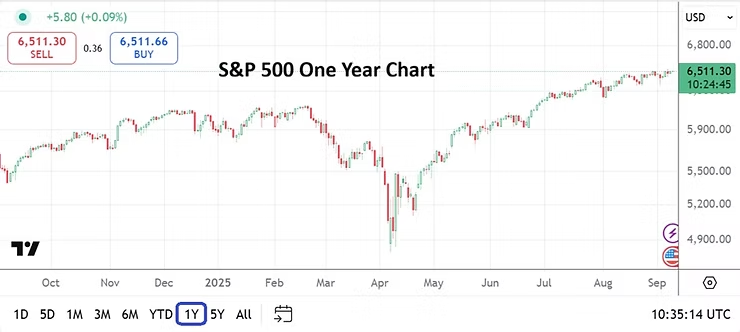
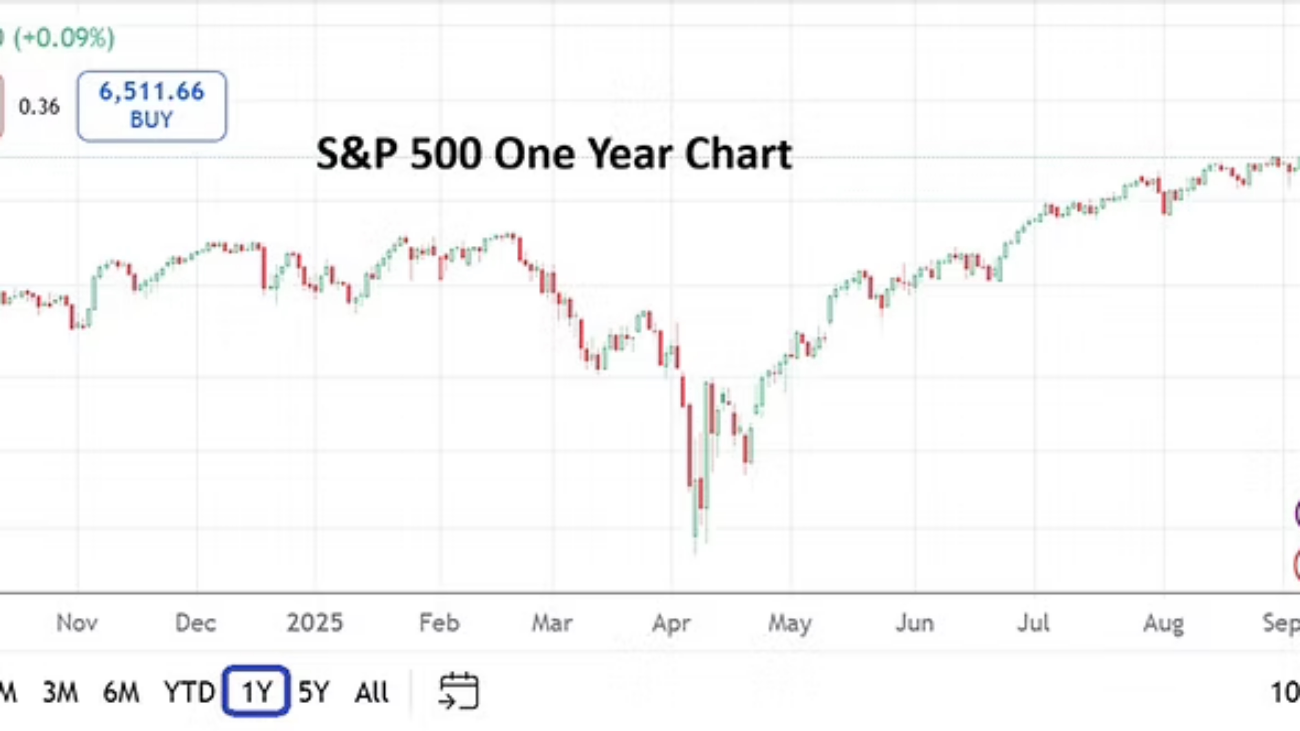
S&P 500 One Year Chart via Futures CFD Trading on the 9th of September 2025

However, if the noise is turned down by day traders and sometimes given less importance regarding potential influences, signals become visible and some perceptions can be looked upon as roadmaps. While many want to to throw their hands up and proclaim some sort of developing economic meltdown and a coming apocalypse, the major U.S indices are actually performing quite well as a barometer. The S&P 500 is continuing to challenge all-time values. Yes, the Nasdaq 100 and Dow Jones 30 are not marching in lockstep with the S&P 500 to new highs, but they are not far behind. The stock market has never guaranteed people an ability to constantly move upwards, but it does offer the potential to judge outlook and mid-term sentiment.

The USD has been extremely choppy since the start of this year, this as the Trump administration has taken over, but its trend towards weakness has been rather clear. The EUR/USD and GBP/USD have done reasonably well regarding mid-term strength. Yes, the USD/JPY has produced whipsaw movements and the Japanese Yen remains awkward, but this is a direct reflection of mitigating Japanese government policy (some may call it incompetence) regarding its ability to manage fiscal concerns, interest rates, and fight deflation and now inflation (which has been going on for a few decades).

Gold is traversing record heights and is showing signs of sustaining values above 3,600.00 as of yesterday. After languishing (albeit within elevated realms) near 3,350.00 the past handful of months with prevalent volatility, the precious metal has bolted out of its consolidation. And the likely reason for this is the anticipated Federal Reserve policy changes regarding interest rates. 10 Year U.S Treasury yields have also been pushed lower recently – this as financial institutions await a definite cut in interest rates by the Fed on the 17th of September. But folks who believe a 50 point basis reduction is coming late next week are likely wrong.

The Federal Reserve under Chairman Jerome Powell has been quite conservative, this will probably not change next Wednesday. It is more likely a cut of 25 basis points will take place on the 17th, and the FOMC Statement will offer the potential of another interest rate cut in October. Tomorrow’s PPI numbers and Thursday’s CPI results will influence the Fed’s coming meeting and mid-term outlook.

What we are left with is a broad market that is having a lot of noise applied to it by people with a variety of biases. Political bantering has reached a threshold in which it might be best to simply not pay attention to anything – but that is dangerous too. Yes, some people do talk sense, and some people do show signs of actually trying to engage in adult decision making regarding their insights, but it often feels like wanting to sound correct is more important than outcomes. Technical traders may be enjoying a quiet laugh at the expense of fundamental players right now.
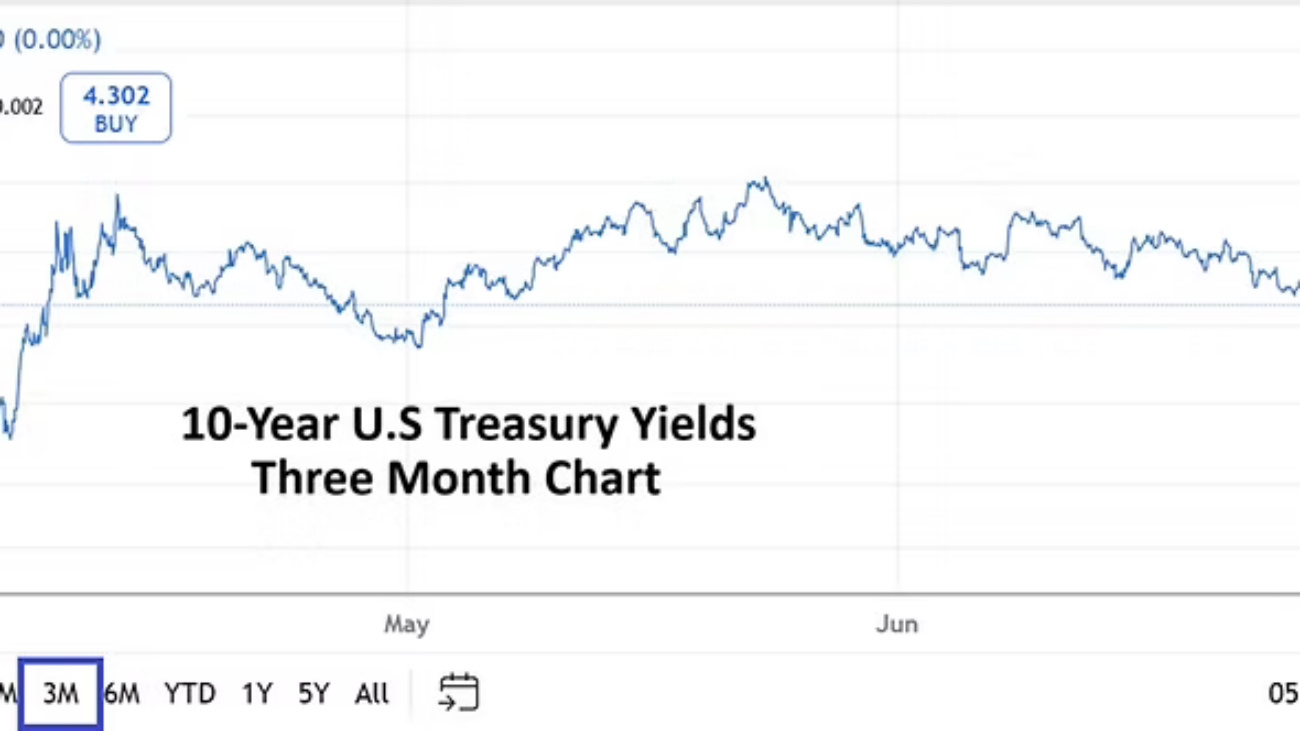
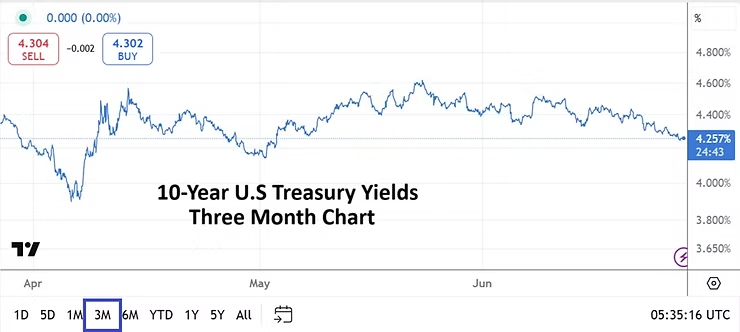
However, economic data remains important. While rhetoric from the U.S White House and its opponents remains within a state of hyperbole, day traders should try to turn down the noise and pay attention to signals that long term investors continue to produce and take advantage of their sentiment. Stocks continue to be pursued and indices have done well, but volatility should be expected particularly into next week.
post258

The Fed: Beating a Dead Horse as the Bulls want to Run

The Fed: Beating a Dead Horse as the Bulls want to Run

Yesterday’s lackluster and underperforming GDP results from the U.S highlights our often discussed doubts surrounding the Federal Reserve. While Jerome Powell definitely has a right to be ‘uncertain’ and express his concerns regarding sudden inflation emerging, he has also proven to be wrong. The Fed should have begun cutting the Federal Funds Rate three months ago.

10-Year U.S Treasury Yields Three Month Chart as of 27th June 2025

Although Powell may not be a fan of President Trump, the Fed Chairman and the FOMC has the ability to be more nimble in this era. Instead of being passive about interest rates, the Fed could have lowered borrowing costs and helped spur on the U.S economy months ago instead of watching GDP numbers falter.

For all of the consternation regarding potential tariff pratfalls, the effect from President Trump’s policies have not caused massive inflation. The Fed can begin cutting rates even before the next FOMC meeting in late July, but they will not. In fact, the Fed should now cut the Federal Funds Rate by 0.50% in late July, but again they won’t. We will be lucky to get a 25 point basis cut.

The Federal Reserve remains too passive and acts as if it doesn’t have data technology which can be more proactive. Instead, Fed Chairman Powell chooses to act as if cutting the Fed Funds Rate is an academic exercise and can be done via a polite semester like manner akin to a report card. Dangerously, the U.S is paying an exorbitant amount of interest on long-term Treasuries and short-term Notes. Lower borrowing costs would also help U.S consumers. Jerome Powell doesn’t seem to care about these factors, which raises the consideration regarding his loyalties.

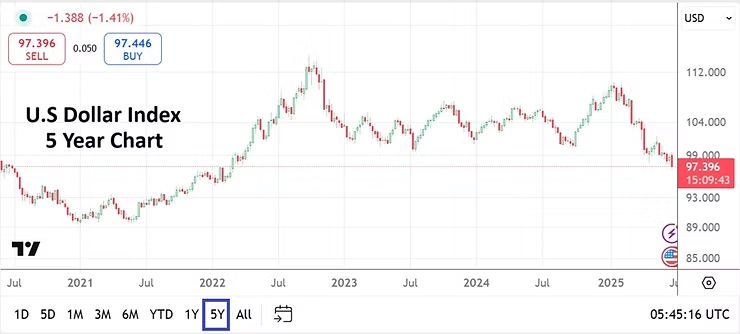
U.S Dollar Index Five Year Chart as of 27th June 2025

In recent weeks there have been at least two FOMC members who have suggested that interest rates need to be cut sooner rather than later. And there are some financial institutions who are clamoring for aggressive interest rate cuts throughout the calendar year and into 2026 in order to jumpstart the U.S economy, this includes Goldman Sachs and UBS. Signs of evidence that interest rate cuts will develop can be seen in the 10-Year Treasury yields which have been eroding recently. Some may claim this is a false narrative and that it is merely risk premium starting to be discounted. Nevertheless yields have lowered in the past month.

Yes, President Trump speaks loudly and delivers brawling negotiations. July 9th is another deadline for tariff agreements. However, financial institutions and many governments have learned to cope with President Trump’s backstreet tactics, which academics like Jerome Powell are not fond of particularly. U.S stock markets are hovering near highs, but still cautious because they are waiting on impetus from the Federal Reserve.

If the Fed fails to deliver an impactful FOMC Statement in late July this will not be greeted well by investors. Many believe the Fed needs to react, and it is quite apparent the S&P 500, Nasdaq 100 and even the Dow 30 are positioning for gates to be opened allowing for a bullish stampede. The USD has been weaker too the past few months as large commercial players anticipate lower U.S borrowing costs. The time for the Fed and Chairman Powell to act is now, making it clear that cuts to the Federal Funds Rate are coming.

post245

Why No Major Panic in U.S Stock via Moody’s Downgrade?

Why No Major Panic in U.S Stock via Moody's Downgrade?

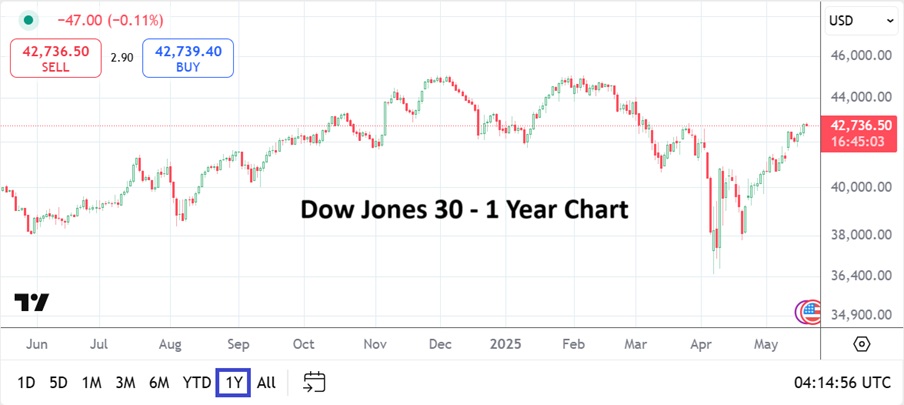
While Asian equity markets opened with initial nervousness yesterday after Friday’s late downgrade of U.S debt by Moody’s to Aa1. The U.S major indices did not respond with panic selling, By the end of yesterday’s trading the Dow30, Nasdaq100 and SP500 turned in rather mundane and positive results. Behavioral sentiment and knowing what experienced investors think remains important for people trying to mirror the actions of larger players while trying to take advantage of potential market action.

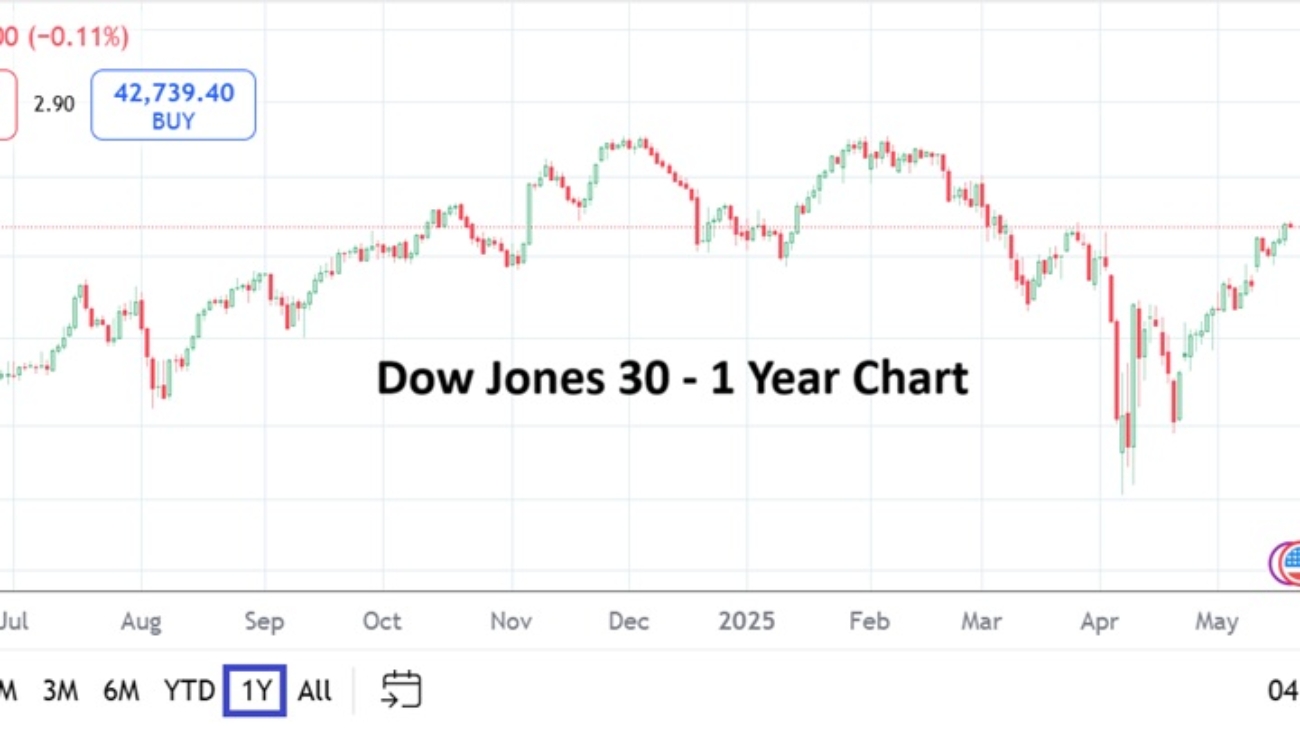
Dow Jones 30 One Year Chart as of 20th May 2025

What was NOT mentioned widely in the press yesterday were the facts that Standard & Poor’s had actually downgraded U.S debt in 2011 from AAA to AA+, also Fitch had been warning of a downgrade the past handful of years and did so in 2023 to AA+. U.S government debt remains a definite burden on the U.S economic outlook, but investment institutions have been discussing the dangers of the 36+ trillion USD deficit for years. Talking about something doesn’t mean it is fixed, but it does mean it has been acknowledged and this is where sentiment comes into play.

Wall Street remains in many respects the only game in town for large global investors looking for quiet steady returns. U.S exceptionalism – or at least the concept that the U.S economy remains a true safe haven compared to other investment vehicles worldwide – continues to spur on a confidence game that sees money pumped into it by global pension funds and long-term investors which seek yields that outpace inflation. It can certainly be argued that this endeavor is not always achieved, but the concept that the ability to grow money faster in equity investments via the likes of index investing compared to letting money sit in a bank is noteworthy. The ability of large institutions to place considerable amounts of money in more speculative pursuits like singular equities in sectors they are interested in like AI and quantum also creates a dimension to outperform benchmark indices., but is riskier.

The USD remains the world’s currency of choice for effective trade and protection against the dangers of volatile Forex. The Trump administration likely wants a weaker USD in order to spur on export from the U.S, but it certainly doesn’t want to see the greenback killed. Nor does the White House want to see U.S Treasury yields balloon too high. Day traders may not have been told to watch yields in the 10 Year U.S Treasuries by their brokers, but it is an open secret that should be used as a barometer for investor sentiment. The signals may not work everyday, but over the long-term if U.S yields on the 10 Year U.S Treasuries are soaring it likely means major U.S equity indices are struggling with anxiety – and when the yields are turning lower it can be expected that U.S equity indices are gaining.

An important piece of the confidence game that speculators should note regarding confidence in U.S markets is that 10 Year U.S Treasury yields yesterday declined, and are now lower than values seen last Friday after the ratings downgrade by Moody’s, and are testing values seen on the 14th of May. Traders should certainly stay alert, but they must remember the U.S investment landscape is resilient and is likely not going to perish suddenly. Investors like most humans tend to be optimistic and believe things will work out with positive results somehow developing. It doesn’t mean stock values will always go up, in fact they can move lower violently periodically, but a long-term vision helps when investing in U.S equities.

There has been no panic in U.S equities and the world continues to look at the SP500, Dow30 and Nasdaq100 as places to position investments. Yes, other spheres exists which can produce greater yields, but this also includes higher risks. International diversification is a solid focal point for investors, and day traders need to understand a complex game is being played. Reacting to every soundbite of developing news probably does more harm to speculators compared to good. A steady approach and conservative risk taking tactics are vital.