post300

Gold: Not a Love Note but Recognition of Long-Term Importance

Gold: Not a Love Note but Recognition of Long-Term Importance

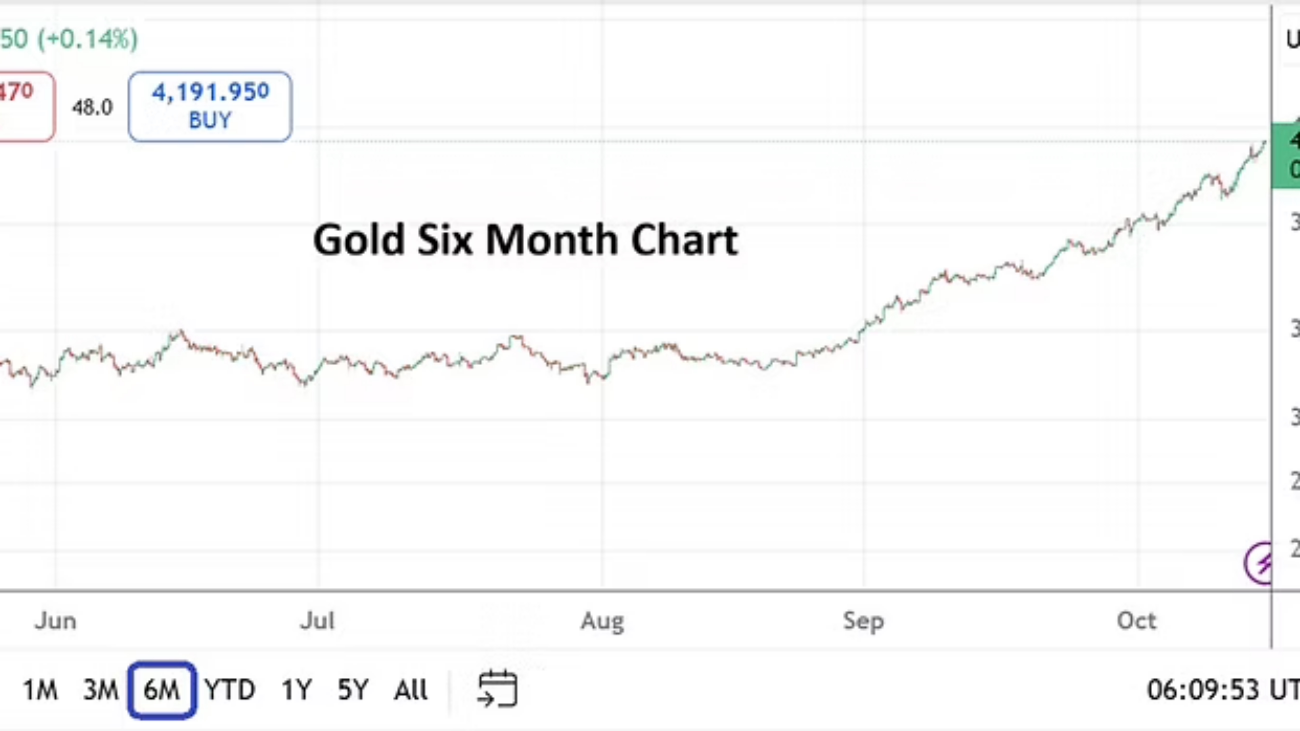
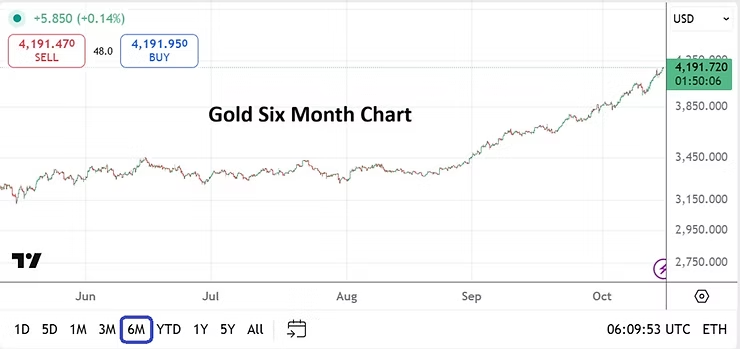
The U.S is now starting its second week of the government shutdown. Gold is near $4,190.00 as of this writing, which may be looked on as sign by some that some investors have bought into the precious metal because of a lack of faith in certain things. ‘Certain things’ being written in a way that points out the rather complex mix of perceptions that could quantify into all moving parts causing the bull run.

Gold Six Month Chart as of 15th October 2025

If you are a regular reader you will probably have figured out that I do not believe Gold is traversing higher because of a mere government shutdown. The precious metal has seen an upwards trend develop in earnest since the middle of October 2022 when it was trading around $1,640.00. Behavioral sentiment is important within Gold, and this has been the case for almost 6,000 years according to archeologists and historians.

In August 2011 Gold was near $1,900.00. In December of 2015 the precious metal was back to almost $1,000.00. This is written to show that in a little more than a four year period Gold lost nearly half its value in the relatively recent past.

This doesn’t mean I am writing to warn Gold is going to lose half its value suddenly and will be testing $2,000.00 in four years time. It points out that even though the precious metal is considered a hedge against inflation, that speculative elements are fantastically strong when large players buy and sell in unison and can cause periods in which Gold becomes overvalued and then experiences downturns.

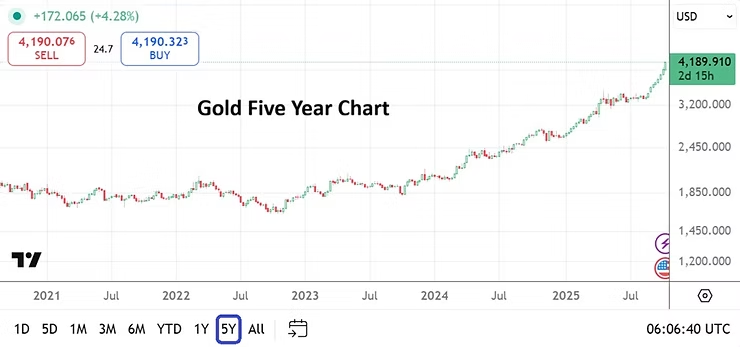
Gold Five Year Chart as of 15th October 2025

We have seen this bullish show in Gold before. Milestone numbers are significant in the minds of the public, which often causes the thinking that they should have bought some gold in the past when it was cheaper. But interestingly enough for Gold is that it is almost always considered expensive by the general public. The value of fiat currency is highly correlated to the value of Gold in an unflattering way. While this is an obvious statement for many, it is important to note that we are all looking at the value of Gold while using hindsight.

Yes, I can hear influencers singing in unison in the background ‘do not forget about Bitcoin’, but I ask permission to do so. Hindsight is not always comfortable and I have been proven wrong about the digital currency frequently. However, I still remain somewhat optimistic that my bet on Gold is a better wager compared to Bitcoin regarding value in the future. And by future I mean for all-time. There is not enough foresight to know what Gold will be valued in one thousand years compared to Bitcoin. Yet, I remain much more confident about Gold being around than BTC in a millennium.

People can speak about a debasement of fiat currencies, including the USD. Like it or not the USD remains the dominant go to currency of global enterprise and this is unlikely to change over the next decade. The USD and other currencies are plagued by a constant loss of overall value due to inflation caused by a myriad of reasons. Rising prices in goods are unlikely to suddenly disappear, the costs of commerce and consumer products may start to gradually slow periodically, but the price of things seldom grows cheaper over the long-term.

Yes, the case can be made that by owning Gold it does not serve the economy well, because it is not an asset that is easily spent, but that is an argument for Adam Smith, John Maynard Keynes and Milton Friedman to enjoy in heaven. In the meantime down here on Earth, Gold can be speculated upon, bought and sold, and treated as a precious metal that will likely always be valued highly.

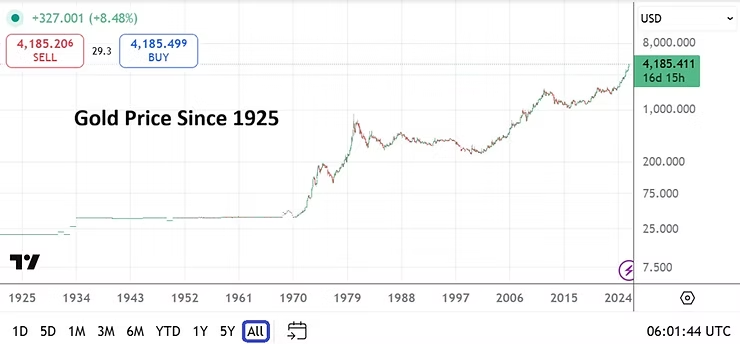
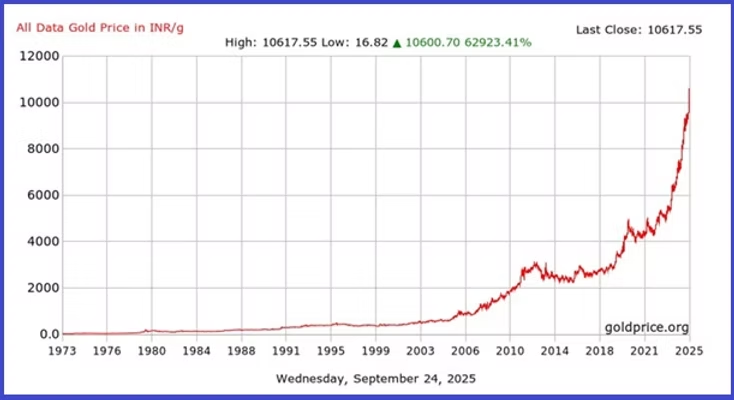
Gold Chart Prices since 1925

This is not a love note for Gold, it is meant as a way to say the precious metal is fairly priced considering the state of the world. $4,000.00 per an ounce of Gold could certainly turn into $5,000.00 in the not so distant future – like six months or one year depending on zeal. Speculative elements certainly aim for targets that psychologically please aspirations.

Day traders as always are faced with a dilemma. Looking for more upside and partaking in the bullish trend is a logical thought and perhaps even wager, but the use of leverage while battling the intraday and intraweek reversals in the marketplace make the ambition of profiting on Gold comparable to time spent at the casino. We know winners talk much louder about their money gained compared to the losers who vanish into the crowd and keep quiet.

So I write this as a warning, Gold may not be worth more one year from now than it is today. However, I will venture forth the notion that in ten years time Gold will be significantly valued higher than it is today. Will inflation suddenly be tamed globally, will confidence in fiat currencies emerge with a strong dose of optimism? No. Certain fiat currencies will do better than others via Forex. However, as a store of value Gold will likely remain an impressive asset to own.

post291

India Insider: Why is Gold Frequently Accumulated by Indians?

India Insider: Why is Gold Frequently Accumulated by Indians?

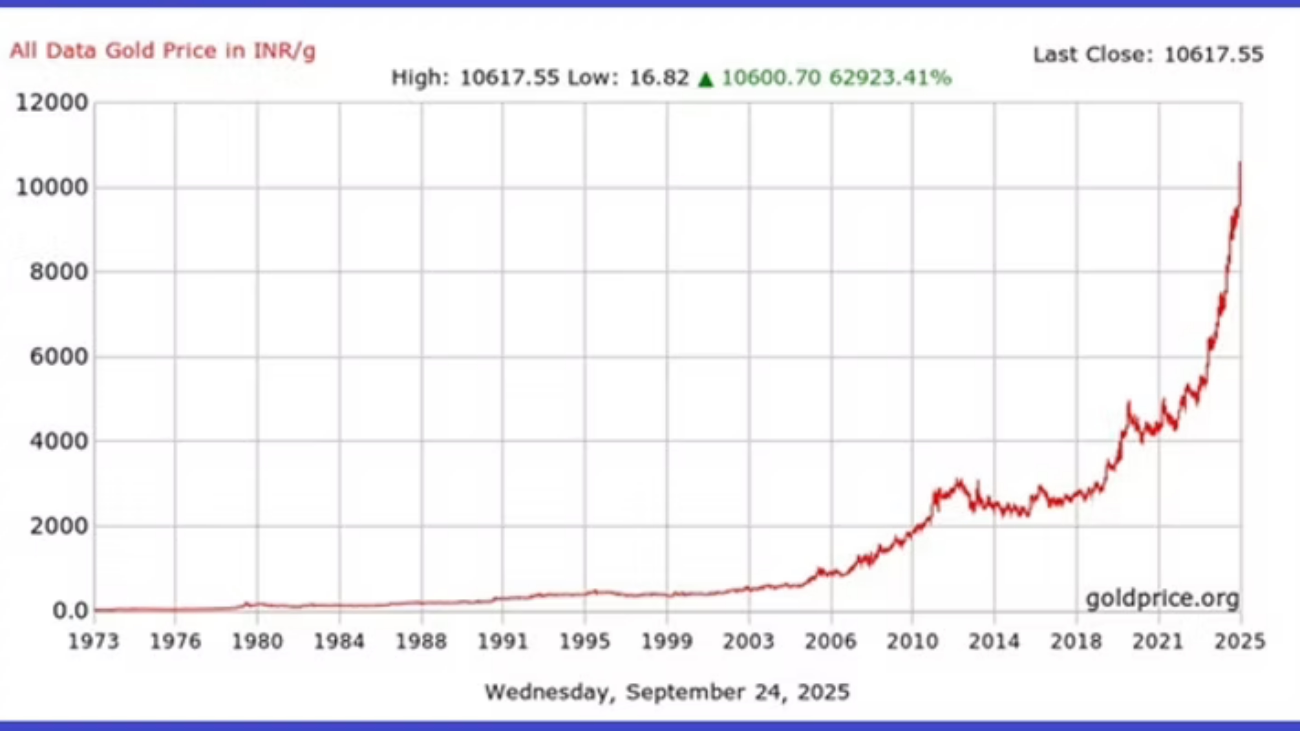
In a society like India in which I live gold hoarding is a fact of life. According to a recent report by the World Gold Council, Indian households are believed to hold around 25,000 tonnes of gold with a combined value of around $3 trillion USD.

Billionaire banker Uday Kotak applauded Indian women when he said they are ”the smartest fund managers in the world”. The precious metal has gained 42% in 2025 alone, and returned 700% in the last 20 years in Indian Rupee terms. In India consumers have a habit of monitoring daily gold prices. There is a gold festival in India called Aksayatritiyai, when gold is bought frequently in small grams but often also includes large purchases for religious sentiments. In Northern India, gold is bought during festival times like Dhanteras and believed to bring prosperity and good fortune.

It’s almost unthinkable for marriages to occur in India without gold. Many marriages have been postponed and even stopped if the requisite dowry is not given by a girl’s family. And there was a time in India when some families didn’t want to have a baby girl due to the excessive gold dowry they would be responsible for and have to give a boy’s family at the time of marriage. 

Adam Smith’s Case Against Gold:

Smith lashed out at gold for its lack of productiveness. He wrote in the The Wealth of Nations, “labour was the first price, the original purchase-money that was paid for all things. It was not by gold or by silver, but by labour, that all the wealth of the world was originally purchased; and its value, to those who possess it, and who want to exchange it for some few productions, is precisely equal to the quantity of labour which it can enable them to purchase or command.”

The act of hoarding, whether it is money or gold, depresses economic activity, as demonstrated by John Maynard Keynes in his ‘paradox of thrift’. Indeed, it was the Europeans by spending all the precious metals taken from the Americas which boosted economic activity, and ultimately sparked the rise of modern capitalism whereas Asians by hoarding ended up falling behind.

Ancient China Example:

In the past, China’s reliance on silver gave short-term stability but stunted long term growth. With no domestic silver, it depended on inflows from Spain and Japan, making its money supply hostage to global trade. Wars or disruptions cut silver inflows, draining liquidity while crippling tax collection. Unlike Europe, China clung to silver as ‘real’ money, while neglecting credit, banking and bonds. This rigid system weakened the nation’s fiscal capacity, leaving China unable to mobilize resources or industrialize effectively. In the end, silver ensured stability, but strangled flexibility and growth. Indian growth has been strangled too often because of an over-obsession towards gold.

Why Gold Prices are Moving Up?

The price of gold was relatively stable until the 2008 financial crisis and it’s been rising steadily ever since, doubling in 3 years from 2009 to 2012. After some broad consolidation, gold has been in a higher value band if you scrupulously study charts. Arguably, it is an influence due to lower interest rates that have helped gold prices move up for 15 years as inflation has been attempted to be camouflaged by Central Banks.

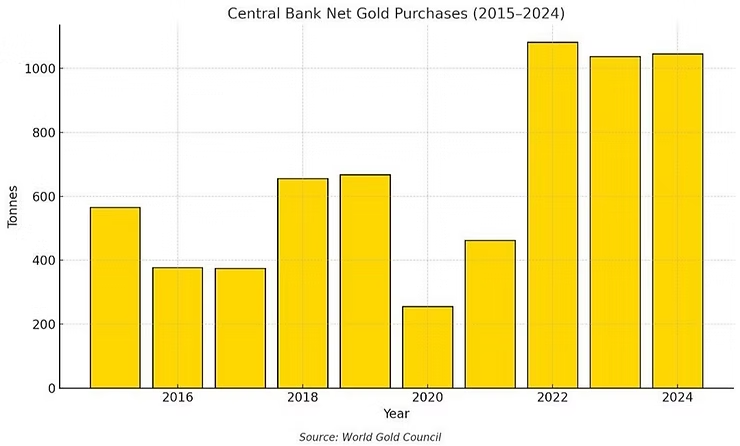
Accumulation of Central Bank Holding of Gold into 2024

Central Banks also accumulate gold for many reasons. One reason for this are rising bond yields that make existing fiscal obligations underperform for governments. Central Banks buy gold to diversify and hedge against risk. As the Official Monetary and Financial Institutions Forum – an independent body – noted recently, many European national bank systems endure massive losses because of quantitative easing. When the institutions try to undertake quantitative tightening, they are forced to sell at market prices, which deepen their balance sheets losses. Thus, Central Banks diversify into gold as a sacrosanct hedge against losses incurred and allows them to offset many liabilities. Gold has a long historical track record of working as a safeguard against inflation.

It’s also true that gold is often accumulated by Central Banks when hedging against geopolitical uncertainty. The Russia and Ukraine war offers intrigue regarding the nation of Kyrgyzstan, which China uses as a route for its exports to Russia, this due to Kyrgyzstan’s inherent ability to conduct trade via accessible routes. There is high plausibility that Kyrgyzstan might be converting Russian Ruble surpluses into gold.

Monetary Policy Matters for Gold:

Gold will remain vital for many years to come as a store of value and a safe haven. Buying the precious metal delivers investors and businesses a needed hedge against inflation. Protections against the lose of purchasing power within their own fiat currencies remains important for all people.

The Indian public and other societies need to remember, the value of gold within their own currencies often lies within the interest rate valuations sparked by Central Banks mechanisms which sometimes amount to magic shows and influence demand. While public buying of gold is important, it sometimes equates into mere speculation and does not always help economic activity.

post266

India Insider: Manufacturing Strategy to Create Rural Jobs

India Insider: Manufacturing Strategy to Create Rural Jobs

Across much of India’s rural landscape, manufacturing remains scarce and finding a solution for this remains a priority. While some towns do have small scale industries that offer jobs, this is still limited. As of financial year 2023, agriculture accounts for only 16% of India’s GDP, down sharply from around 35% in the 1990s, due to a structural shift toward services and manufacturing.

A large share of rural families still depend on agriculture, often engaging in farming and irrigation with modern equipment. However, marketing their produce remains a persistent challenge. Meanwhile, many rural workers are engaged in low-wage trade and commerce, often in informal settings such as small shops and roadside businesses. These roles typically offer limited income and little upward mobility. Falling real wages have pushed many to migrate to India’s urban centers or venture overseas to Singapore, Malaysia, and the Gulf countries in search of better livelihoods, aided by favorable exchange rates.

Capitalism and Efficient Manufacturing

Adam Smith, in his seminal work The Wealth of Nations wrote that, ‘it is not by gold or silver, but by labor that all the wealth of nations is created’. This fundamental idea underpins the modern economic thought that wealth is not derived merely from money, but from the productive capacity of people.

When capital is invested in a capitalist enterprise, it generates profits for the owner, provides wages for employees, and delivers returns (such as dividends) for shareholders. But this cycle of value creation depends on active and efficient enterprise, particularly manufacturing which has been missing or underdeveloped in many parts of rural India.

Unlike countries such as the United States, where people readily relocate across States, India faces some unique challenges. Like the European Union, India is a union of diverse linguistic and cultural regions. It is uncommon for a small business owner from Himachal Pradesh to directly access markets in Tamil Nadu or Karnataka due to language barriers, cultural differences, and logistical constraints. These frictions further isolate rural producers from wider markets.

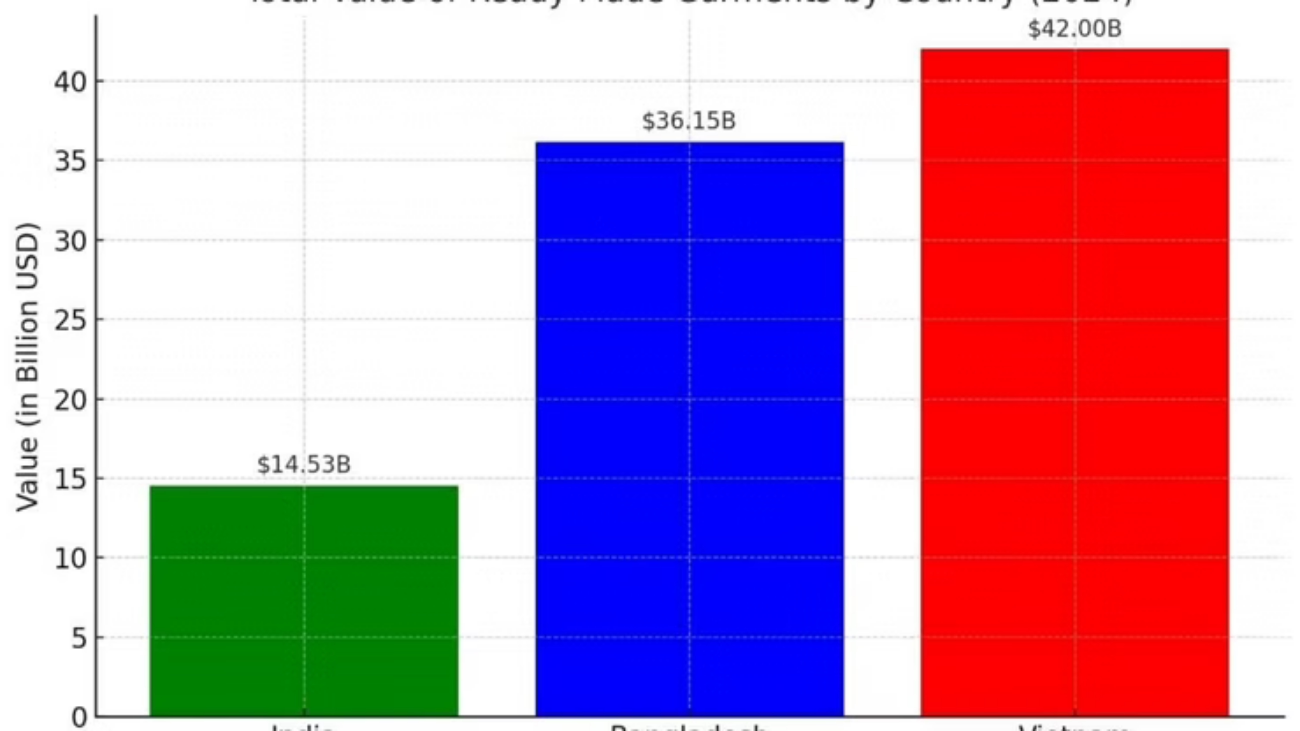
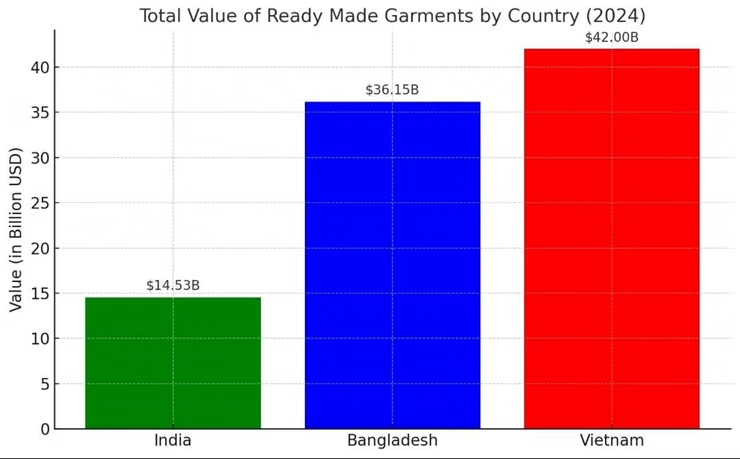
Garment Industry Values in India, Bangladesh and Vietnam

Strategic Solutions and the Role of State Governments

To revive rural economies, business people along with their state governments must identify and invest in strategic sectors that create jobs and add value. Kerala is a fine example: as one of India’s top spice-producing States, Kerala has the potential to establish local industries focused on spice processing, packaging, and export. Coordination between agriculture and manufacturing can generate employment, stimulate local economies, and enhance foreign exchange earnings.

Albert Hirschman, a development economist, highlighted this approach through his theory of unbalanced growth and economic integration. He argued that certain industries have strong reciprocal connections with other parts of the economy. By prioritizing sectors with good synergy potential, developing countries can achieve significant growth even with limited resources.

Growing competition from countries like Bangladesh and Vietnam which both enjoy favorable trade agreements do pose new challenges, this must be taken seriously by India and create a focus on forward looking international commerce. There will always be competition from distant enterprises and nations, this must be accepted and planned for via commercial insights.

Within India is Tiruppur, a city in Tamil Nadu, known as the ‘Manchester of South India’ due to its vibrant textile industry. The city has created an ecosystem of manufacturing that consistently offers higher real wages compared to other towns in the region. It has successfully shifted labor from agriculture to industry, thereby increasing productivity and income. It is a bright example and defines one way to make progress.

Protecting New Industries and Creation of Success

In his book How Rich Countries Got Rich and Why Poor Countries Stay Poor, economist Erik Reinert argues that nations develop not just by doing what they are currently good – such as agriculture or mining, but by nurturing industries that can become more productive long-term. Typically manufacturing and technology sectors lead to greater innovation and economic resilience.

Reinert provides numerous examples, like South Korea’s emerging growth in steel and its automotive industries, and Ireland’s rise in information technology where specific protections and support for young industries has led to long-term prosperity.

India’s rural transformation cannot rely on New Delhi alone. State governments along with business people must take the lead by identifying sectors that have the potential to foster high growth and employment. Helping to create local value chains, investing in infrastructure, training, and market access will build resilience in these communities. By encouraging small-scale manufacturing and leveraging regional strengths, the country’s rural areas can become engines of economic growth.