post217

USD/JPY: Bank of Japan Actually Does its Job: Raises Rate

USD/JPY: Bank of Japan Actually Does its Job: Raises Rate

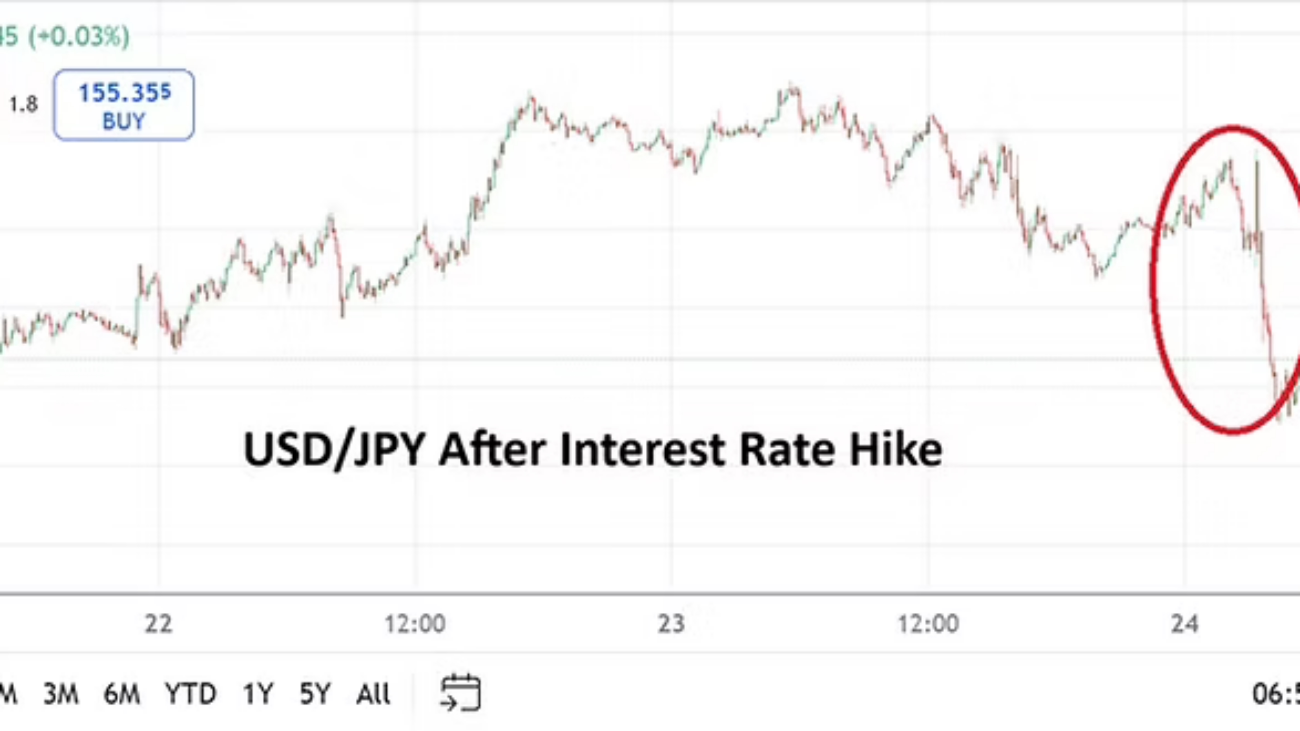
USD/JPY Five Day Chart as of 24th January 2025

The Bank of Japan actually raised its Policy Rate by 0.25 to 0.50% this morning. The move was done while the central bank stated the Japan economy is improving. The Bank of Japan also noted that the implications of U.S tariff policy are not completely known, thus it is acting on existing facts. The action by the BoJ created selling in the USD/JPY and is a healthy sign.

While the U.S Federal Reserve has taken on a cautious tone, President Trump has started to signal via rhetoric that he would like to see U.S interest rates lowered. The Fed and President Trump may find that they are in disagreement regarding mid-term policy and Forex traders shouldn’t be surprised if the debate escalates. The USD/JPY is trading near the 155.500 vicinity with fast price action at this moment. The ability to sustain values below the 156.000 level will be important technically if maintained. A fall below the 155.000 ratio may indicate more selling should be expected.

While financial institutions globally remain nervous about U.S economic policy regarding trade negotiations, Japan for the moment is out of the spotlight regarding tariff implications. The USD/JPY was trading near the 153.000 area on the 17th of December and it will be intriguing to see if large players use this level as a target in the coming days.

Retail traders should practice solid risk taking tactics and conservative leverage. The ability of the Bank of Japan to increase its interest rate, while the U.S Fed is in the midst of considering no changes to the Federal Funds Rate is a potentially solid sign for USD/JPY bearish attitudes.

Global Forex conditions remain choppy, but there has been some buying of the EUR/USD and GBP/USD produced recently. Next week talk of tariffs against China, Canada and Mexico will heighten, but traders need to understand the tough sounding talk from Trump is part of his negotiation tactics. While he certainly seems intent on carrying out his mandate, he will also be open to finding a way to create agreements.

Behavioral sentiment is in charge of Forex for the moment. Outlooks remain unclear, but USD centric strength may be traversing within the apex of its highs in many cases.

postR184.1

Trading Dangers: Profit Seeking and Federal Reserve Dynamics

Trading Dangers: Profit Seeking and Federal Reserve Dynamics

A 0.25% or 0.50% interest rate cut is the talking point for speculators and financial institutions now, as the U.S Federal Reserve readies its FOMC Statement and prepares to present its Federal Funds Rate this Wednesday. While day traders will certainly listen to plenty of noise being created by pundits and wager, and financial institutions actively operate within the market place and seek profits, long-term investors are likely not very nervous, nor concerned with the monthly Federal Reserve announcements about to be delivered. Perhaps day traders should learn from this long-term insight.

Long-term investors understand the Federal Reserve will be cutting the Federal Funds Rate back to its mean average eventually. While the Fed may only cut by 0.25% this week, over the next six months the U.S central bank is likely to cut by 0.75% or so. Investors who are comfortable with their portfolio positions believe they know what the Fed will be doing and they are not concerned with daily gyrations in the marketplace. Yes, long-term investors will rebalance their positions occasionally, but they do not overtrade.

However, speculators need to be braced for the price velocity which will develop over the next few days. Small price movements in Forex, U.S equity indices and commodities creates havoc for folks who are using leverage and short-term timeframes to bet on outcomes. Nervous sentiment has created velocity, reversals, and unreliable trends recently which will be tested again the next few days.

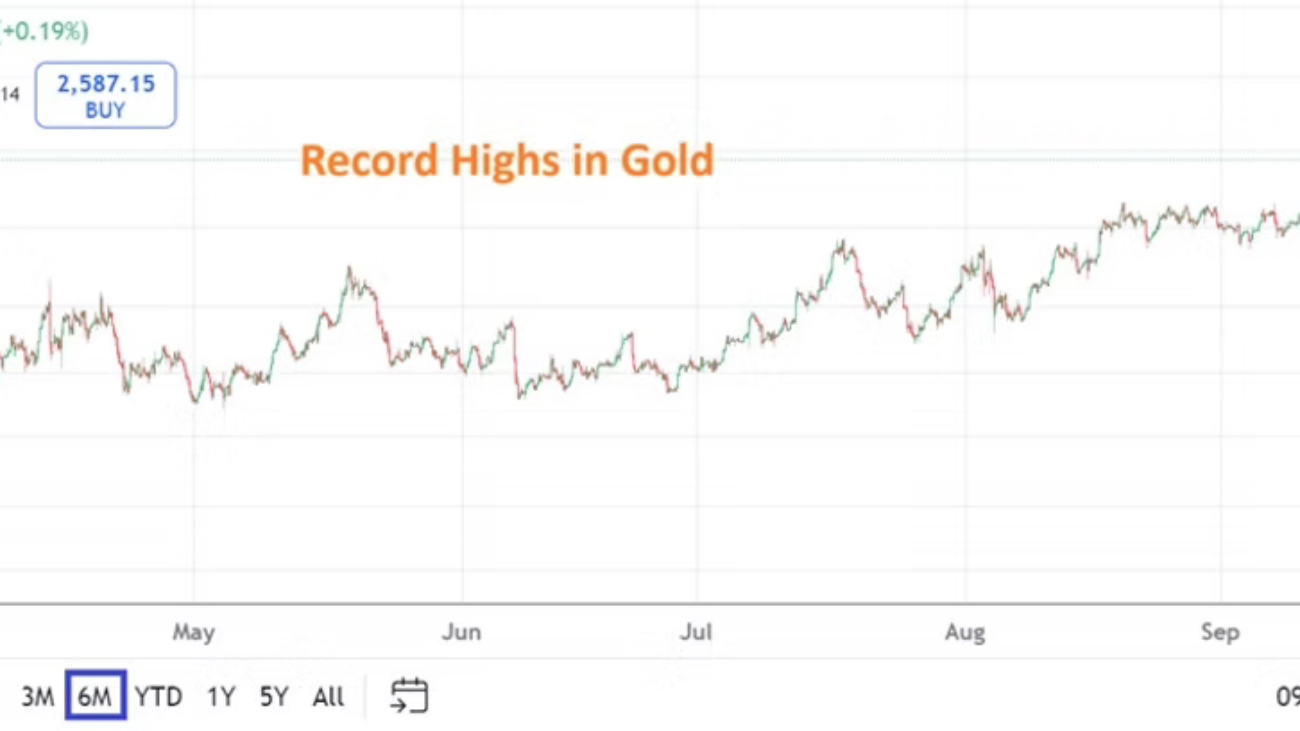
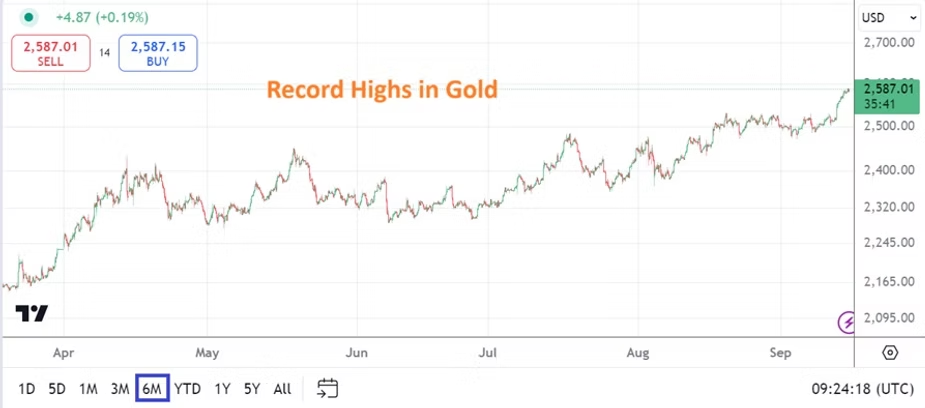
Gold Six Month Chart as of 16th Sept. 2024

Financial institutions are part of this turbulent landscape as they use algos geared towards working models like trend, mean revision (statistical arbitrage) and other dynamics which create huge amounts of volume and move the markets. Let there be no doubt that the broad markets will react violently on Wednesday in the wake of the Federal Reserve’s actions and rhetoric. Last week’s trading produced new highs in gold, and buying in the U.S major equity indices increased starting on Wednesday and pushed towards highs once again.

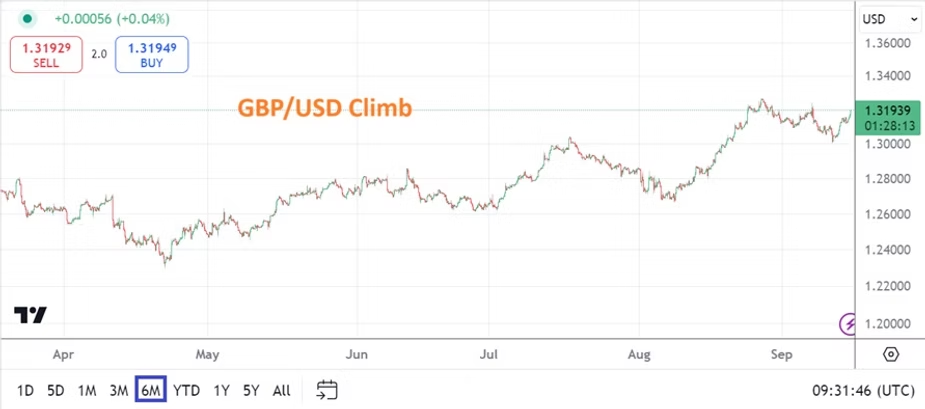
GBP/USD Six Month Chart as of 16th Sept. 2024.

The question every one has is what is the Fed going to do this week? I believe the Fed is going to cut by 0.25%, and say that if current economic conditions via the jobs numbers and growth remains lackluster that another interest rate cut will be possible in November. Based on the knowledge that central banks remain wary of stubborn inflation and appear to be debating what the inflation rate will be over the mid-term, it would be surprising to see the Federal Reserve suddenly turn aggressive given their history the past handful of years.

Having seen the ECB stay cautious last Thursday even though economic data shows recession is still being battled across Europe is a strong indicator regarding what the Fed’s likely thinking. The U.K will release important inflation numbers this Wednesday, but the BoE is probably going to remain rather mute on Thursday because they cut interest rates already in August. Again, central banks remain in turtle mode, they are not rabbits.

A dangerous consideration is how will the large financial institutions react to this quagmire being caused by cautious central banks? As said, many long term investors believe the Fed will have to be dovish over the mid-term. Lackluster economic data from China, Europe and the U.S feed into a belief interest rates cuts will continue to be delivered. Day traders live and die via the price action created by financial institutions.

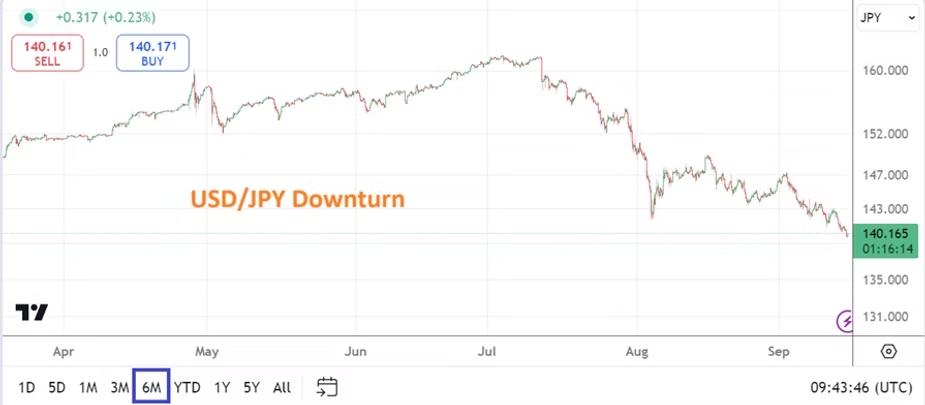
Potential Black Swan events aside, behavioral sentiment generated by short and mid-term results will likely be geared towards the notion that financial institutions also believe global central banks will have to be dovish over the mid-term. This doesn’t include the Bank of Japan which is its own animal and has delivered a rather admirable bearish trend the past two months. The BoJ will release its Policy Rate this Friday and are likely to remain standing in place.

USD/JPY Six Month Chart as of 16th Sept. 2024

So what can day traders who are nervous that volatility will cause great harm over the next few days do? They can always decide to sit on the sidelines and not bet. Long-term investors who plan on holding their assets over the span of a few years are not so concerned about what the central banks are doing short-term – except to say investors are obviously hoping that solid fiscal and monetary policy are being practiced.

Financial institutions engaged in their funds trying to create profitable returns are the folks that need to be kept an eye on, their behavioral sentiment will drive markets in the short and mid-term. Speculators who are trying to take advantage of the dynamics caused by large trading houses this week need to practice solid risk management. While it might be fun to have wagers on potential sudden moves in the coming days, the Federal Reserve’s FOMC Statement and Jerome Powell’s press conference will cause short-term pandemonium.

postR183.1

Nervous? Central Banks Cautious, FX and Asset Equilibrium

Nervous? Central Banks Cautious, FX and Asset Equilibrium

Sometimes when looking for ideas regarding a risk analysis article it is difficult to find a timely subject. Exaggeration is often used to grab attention. This week and next will not be one of those times. Equities, Forex and commodities have produced nervous results since last Monday. The broad markets appear to be in search of equilibrium, but price velocity while higher than normal hasn’t produced a volcanic surge of pain. Financial institutions were presented less than inspiring jobs data this past Friday and day traders hopefully had their risk management working. Everyone will need to be paying attention this week too.

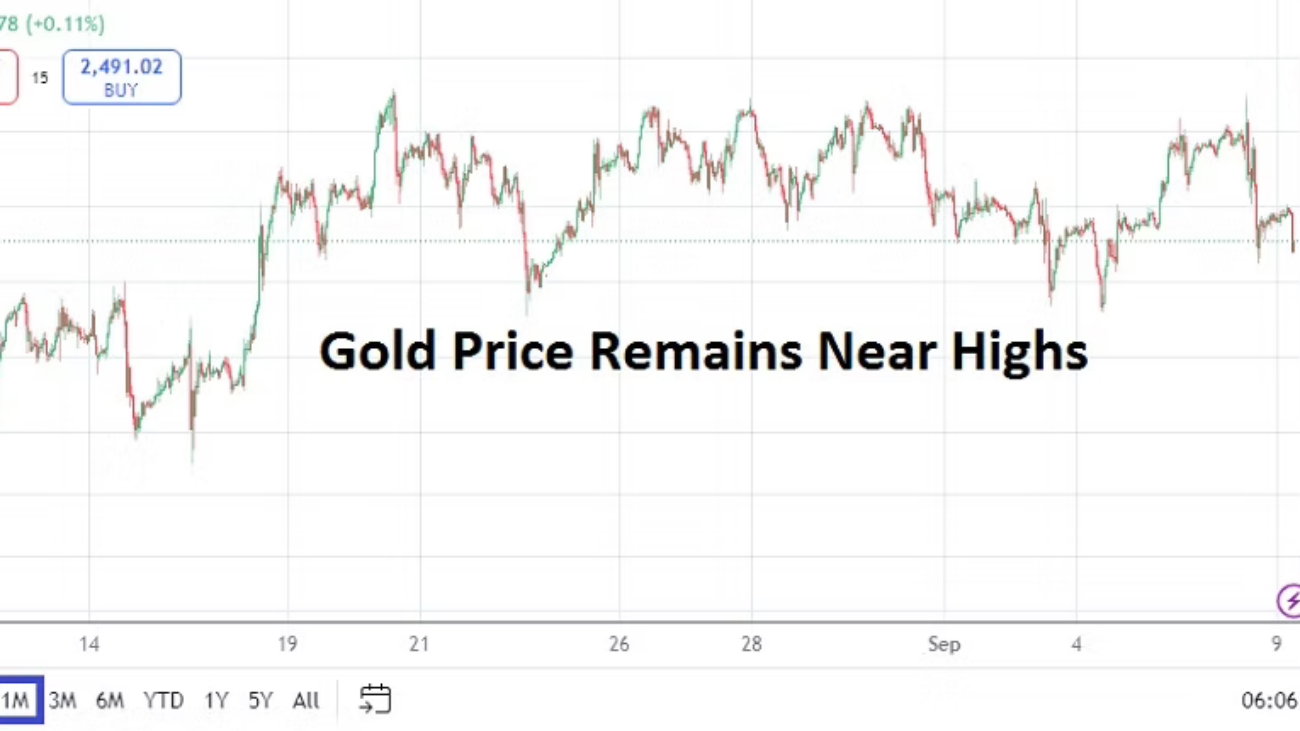
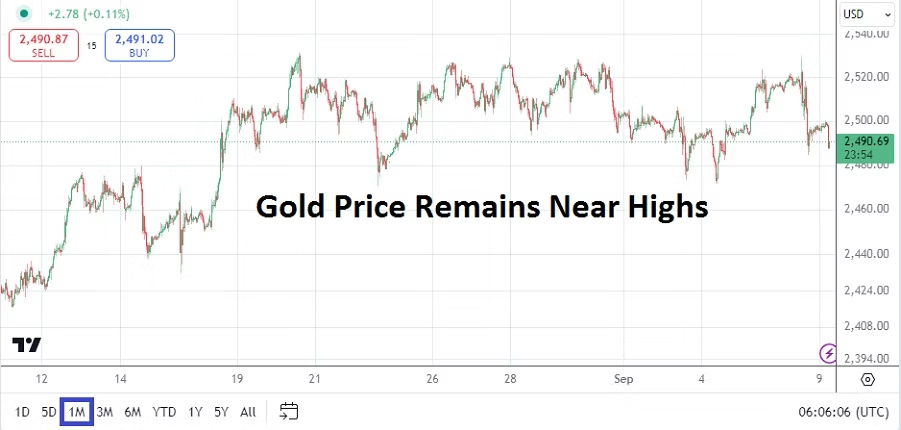
Gold One Month Chart as of 9th Sept. 2024

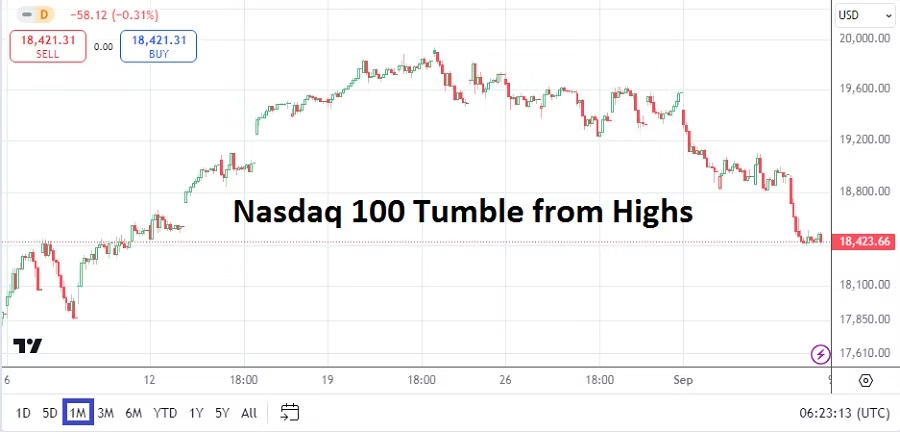
Gold has hovered around the 2,500.00 level and while it certainly is a short-term speculative asset for day traders, the precious metal also serves as distinct barometer of behavioral sentiment and long-term guidance regarding inflation. Recent economic data has created concerns in financial institutions about the potential for a stronger than anticipated U.S downturn. The volatility and sell off in equity indices last week is a clear sign investors would like the Federal Reserve to be more aggressively dovish.

This coming week is packed with a variety of risk events which will keep all market participants engaged. Long-term investors may feel calm as they rely on their outlooks which extend over a handful of years, but anyone who needs a firm grasp on short and mid-term viewpoints might not be comfortable. It is important not to cry wolf too often, but based on the trading results seen the past week it is worthwhile to point to the turbulent outcomes and issue a warning that more volatility could develop.

Nasdaq 100 One Month Chart as of 9th of Sept. 2024

Some analysts may apply the thought that what we have seen was profit taking, and this can certainly be debated. The coming two weeks have plenty of noteworthy events on the calendar. Besides the listed risk highlights noted below, the Fed will release its FOMC Statement on Wednesday the 18th, the BoE will follow on the 19th and not to be outdone the Bank of Japan will step onto center stage on Friday the 20th of September.

While long-term investors likely believe all variables will return to known price realms and that central banks sooner or later will fall into their proper places regarding monetary policy, day traders who are gambling on short-term momentum must try to figure out where behavioral sentiment is leaning. One of the ways speculators without deep pockets can put the odds in their favor concerning potential profits, is to make sure they are practicing rock solid risk management and not stepping into Forex trades, equity indices via CFDs wagers, and commodities bets when they are displaying rough conditions without being prepared.

Monday, 9th of Sept., China Consumer and Producer Price Index – the inflation reports from China both came in below their estimates earlier today. While some may believe that less inflation than predicted is a good thing, it isn’t when the economy is suffering from deflationary pressures. Lackluster spending from consumers in China continues to highlight negative sentiment about prospects for growth. The USD/CNY is near the 7.1125 ratio as of this writing.

Tuesday, 10th of Sept., U.S Presidential Debate – while not an economic data event, investors might want to pay attention to the answers given by Vice President Kamala Harris and former President Donald Trump. The race for the White House appears to be close according to various polling. It could prove interesting for financial institutions if Harris is questioned about her ideas regarding taxing unrealized capital gains.

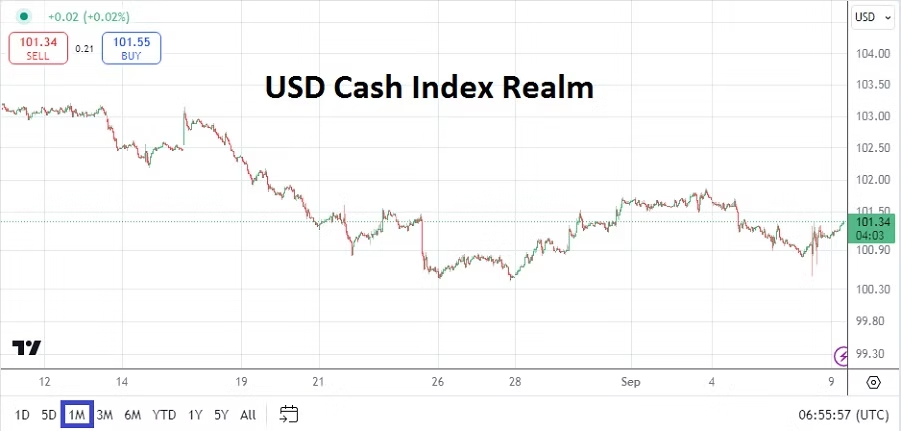
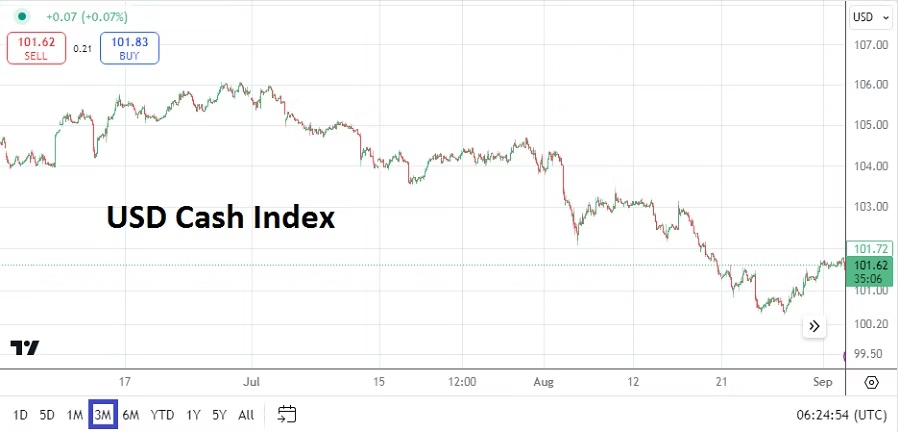
USD Cash Index One Month Chart as of 9th Sept. 2024

Wednesday, 11th of Sept., U.S Consumer Price Index data – the inflation reports will certainly get the attention of financial institutions. If the annual CPI report comes in weaker than the previous outcome, this could spark more USD centric weakness in Forex. All asset classes will react to the inflation numbers because they are likely to play a major part in the Fed’s FOMC decision in one week’s time. The USD Cash Index is still lingering near lows, but for it too resume a more bearish trajectory, financial institutions will need to believe the Federal Reserve is going to become increasingly dovish.

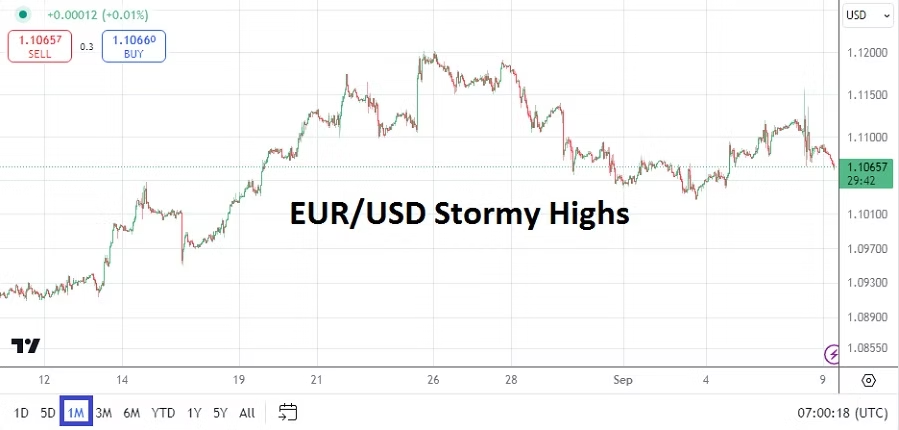
EUR/USD One Month Chart as of 9th Sept. 2024

Thursday, 12th of Sept., European Central Bank Main Refinancing Rate – The ECB is definitely going to cut its prime borrowing interest rate, the question is how much of a haircut they are going to provide. A 0.25% cut has certainly been traded into the EUR/USD, but many financial institutions believe there is a possibility to see a 0.50% basis cut. Can the ECB and Christine Legarde be aggressive? The European Union remains under recessionary pressures and inflation data is starting to show signs of erosion. The amount of the interest rate cut from the ECB will also be a telltale sign regarding what will happen via the Federal Reserve on the 18th of September. The EUR/USD will react to the European Central Bank’s decision, and global assets in far off places may react too because behavioral sentiment among investors may shift according to the rhetoric provided. Prediction: The ECB will stay cautious and cut by 0.25%, while saying a November rate cut is likely if economic data remains under pressure. Having said the above, the ECB should cut by 0.50% this Thursday, if they do not – financial institutions will not be pleased unless ECB President Legarde sounds very dovish during her Press Conference.

Thursday, 12th of Sept., U.S Producer Price Index – more inflation data from the U.S will provide investors an other opportunity to glance into the Fed’s looking glass. But if these PPI numbers meet or are near the anticipated results, financial institutions may be reacting to the ECB’s rate decision more because they might believe it is a better clue regarding the Fed’s Federal Funds Rate decision which will come in a handful of days.

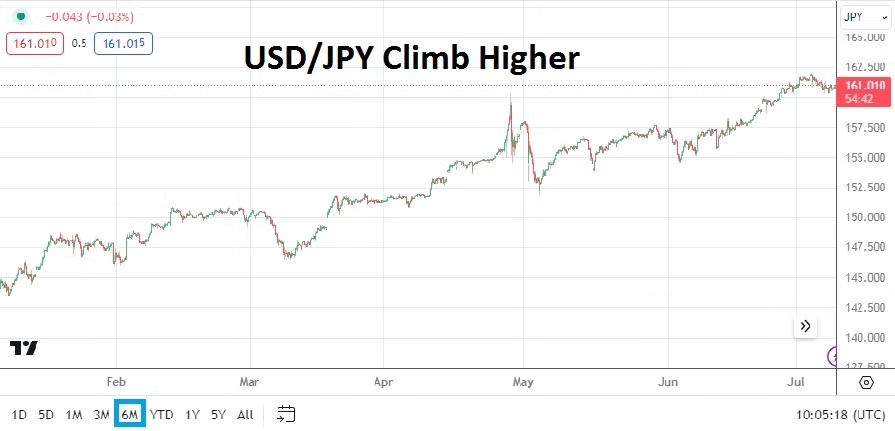
USD/JPY One Month Chart as of 9th Sept. 2024

Friday, 13th of Sept., Japan Revised Industrial Production – this number may not get much attention, but because the Bank of Japan will release its Policy Rate on the 20th, the outcome could impact existing sentiment in the USD/JPY. The Japanese Yen has continued its bearish trajectory and traders who are wagering on more downside should not bet blindly on selling positions because intraday trading remains very choppy. The USD/JPY is now touching values last seen in a sustained manner in early January of 2024, lower values were seen in December 2023, and lower ratios that traversed the 138.000 realm and proved choppy occurred in the spring of 2023.

Saturday, 14th of Sept., China New Home Prices, Retail Sales, Industrial Production – this parade of data from the nation will be important. Foreign investors remain concerned about China’s economic prospects. The deflationary winds that have been blowing in the Asian giant have been well documented. The results from these three reports are expected to be lackluster.

postR181.1

Has a Great Selloff Begun? The Fed Holds a Crucial Card

Has a Great Selloff Begun? The Fed Holds a Crucial Card

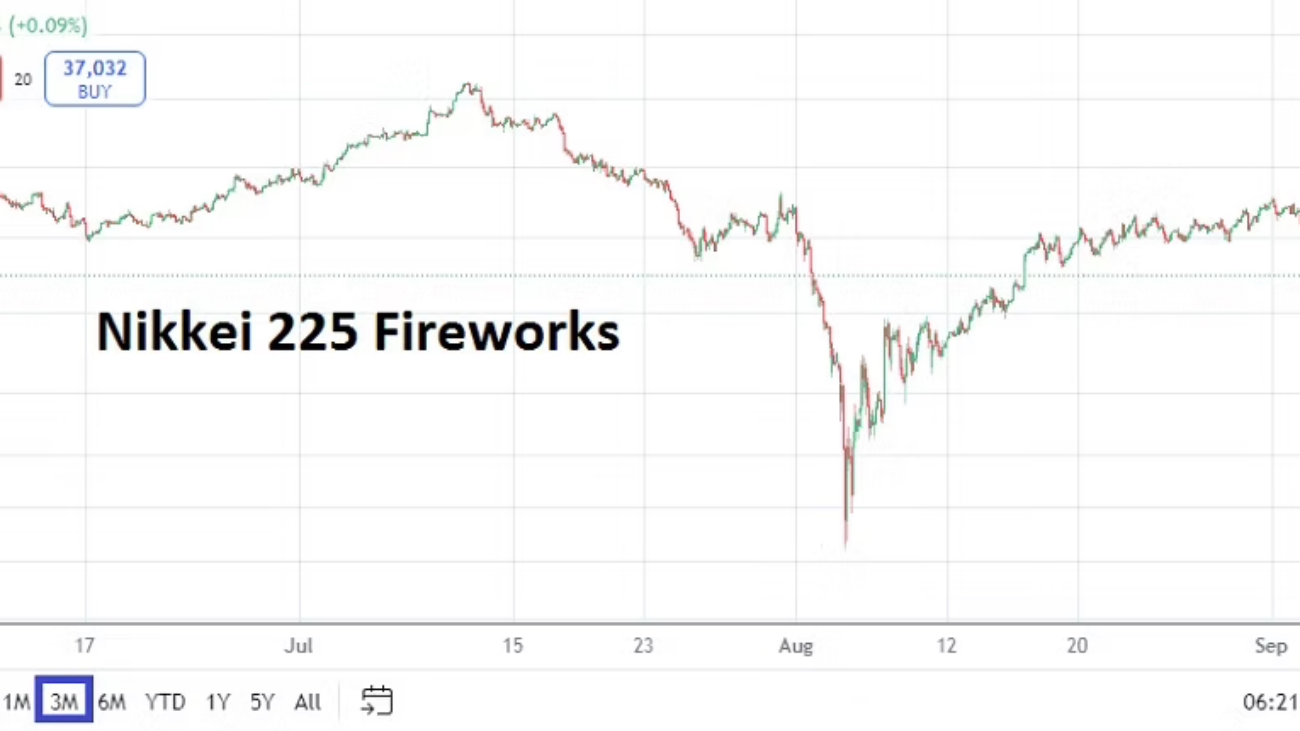
Once upon a time the Federal Reserve caused a massive amount of fear to simmer and then boil over in the global market place but this is no fairy tale, the date was the 5th of August 2024 to be exact. However, the trigger causing events to unfold was pulled on Thursday the 31st of July. The Bank of Japan increased their policy rate to 0.25%, which was an increase of 0.15%. Then later on the same day the U.S Fed published a cautious sounding FOMC Statement followed by an inconclusive Press Conference, which left investors scratching their heads.

Nikkei 225 Three Month Chart as of 4th September 2024

Markets started to react with scorn on Friday the the 1st of August, particularly when the U.S jobs numbers showed a big miss with the Non-Farm Employment Change numbers, and also a lower than anticipated Average Hourly Earnings report was produced. Because Japan was essentially closed for equity trading when the U.S jobs data was released late on Friday, the Nikkei 225 responded with fury on the 5th of August. Global markets essentially crumbled over the next twelve hours as a massive selloff was sparked.

Some analysts noted the move lower in equity indices was an overreaction and the wild Forex trading would calm down, and this began quite predictably on the 6th of August. In essence the bad jobs numbers from the U.S proved the Federal Reserve was being too cautious and would need to begin sounding more aggressive regarding interest rate cuts. This dynamic played out when Fed Chairman Jerome Powell made his Jackson Hole Symposium speech on the 23rd of August and admitted the Fed would have to begin cutting interest rates – and he seemed to indicate the use of a plural regarding Federal Funds Rate cuts. This dynamic essentially confirmed what most financial institutions had bet on starting in late July via Forex. Equity indices which were able to recover plenty of lost ground after the 5th of August, also built up more momentum per Powell’s rhetoric at Jackson Hole.

USD Cash Index Three Month Chart as of 4th September 2024

However, Powell while sounding more dovish did not say how much the Fed would cut by in September. And based on the history of the Fed’s rather cautious and very passive monetary policy over the past handful of years, many financial institutions likely felt a cautious outlook should include a 0.25% cut on the 18th of September and then another 0.25% move lower in November. In the last week of August – yes, last week – equity markets started to show signs of nervousness again and the USD began to produce choppy trading before going into the Labor Day holiday.

Yesterday’s large selloff in assets has sparked more worries. While it is clear U.S inflation data has shown signs of erosion, the Federal Reserve has not indicated in any form that a Federal Funds Rate cut of more than 0.25% should be expected in two weeks. And perhaps not so coincidentally, the U.S Non-Farm Employment Change and Average Hourly Earnings data will be published this Friday. The outcome of these two reports will shake the ground for investors and financial institutions may be positioning for the drama.

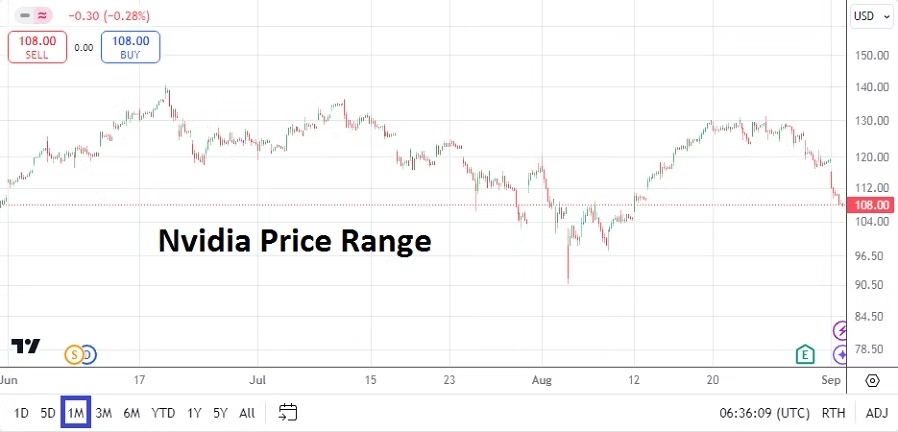
Nvidia Three Month Chart as of 4th September 2024

An interesting three month barometer looking backwards has been created by Nvidia which has been choppy. While it remains only a ‘stock’, the company’s earnings and outlook are firmly on center stage for many investors. Nvidia has soared in value the past year. While some may feel that the asset is within a bubble, the company continues to post impressive earnings and its outlook appears bright as new software and hardware relies upon its products and development promises. Some analysts have said that earnings reports from Nvidia are now just as important as U.S economic data like inflation and jobs numbers. However, that is overstated, but let there be no doubt that Nvidia’s trading results over the next six months will probably tell us a lot about global market conditions and behavioral sentiment within financial institutions.

Day traders should not panic, they have the capability of watching from the sidelines if they choose over the next few days. The USD is still standing on weaker legs and Gold remains near 2,500.00 USD. Investors who have long-term holdings will certainly be nervous and want to make sure their mid-term yield perspectives are alright and their long-term targets are safe. Speculators small and large know the Fed will definitely cut the Federal Funds Rate in September. Yet, the trillion dollar question is if the Fed will only cut by 0.25%?

Gold Three Month Chart as of 4th September 2024

If the U.S jobs numbers this Friday come in below anticipated results once again, the Fed should strongly consider a 0.50% basis cut to the Federal Funds Rate on the 18th, that is what financial institutions would certainly like to see. They should also consider coming out with a brief statement this Friday to make sure investors know that a more aggressive stance will be taken if the jobs numbers are weak. However, as long time day traders and investors know, it is not in the Fed’s nature to grab the microphone loudly, unless a seismic event is taking place in the world and inflicting harm on the financial markets. Are investors now trying to warn the U.S Federal Reserve that they will ignite a major selloff unless the Fed becomes more aggressive?

postR178.1

Tranquility: Forex, Equities and Treasury Yields Drama-Free

Tranquility: Forex, Equities and Treasury Yields Drama-Free

Sometimes no news is welcome. The markets though not devoid of drama, have been relatively tranquil. It is obviously summer in the northern hemisphere which helps bring about quiet, this since many ‘active’ market participants are off vacationing having been allowed to go on holiday. The implosion in the markets on the 5th of August after the dangerous riptides created by the combination of the Federal Reserve and Bank of Japan have certainly eased and evidence of the chaos is fading. Retail traders who are always looking at charts and for opportunities may have even been able to rest too the past week and a half.

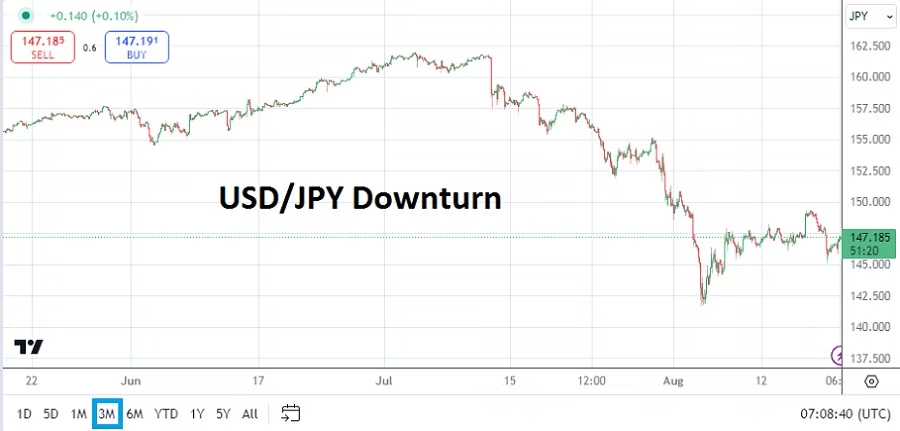
USD/JPY Three Month Chart as of 20th August 2024

The USD/JPY as of this moment is near 147.185. The Nikkei 225 has recovered lost ground from over-reactive selling on the 5th of August. The value of the Japanese equity index is within extremely intriguing territory as financial institutions are clearly taking a wait and see approach regarding more BoJ and Fed rhetoric, combined with fundamental analysis of Japan’s economy and their companies in consideration. It is a healthy market dynamic, particularly via a notion the Nikkei 225 having reached an early August equilibrium is a solid result, this if you have a long-term viewpoint.

Nikkei 225 Three Month Chart as of 20th August 2024

The GBP/USD, EUR/USD, USD/SGD have all seen better results for traders who have been wagering on USD centric weakness. Even the USD/ZAR has produced a solid trajectory. U.S Treasuries yields are falling.

Gold Six Month Chart as of 20th August 2024

Yes, day traders definitely have different approaches compared to long-term investors, but if a speculator who is accustomed to quick trades synthesizes an outlook using the behavioral sentiment of long-term institutional players, they might find it helps build some foundations which help perceptions when deciding what to pursue. The use of barometers is always good too, this often gives a trader insights regarding market mood even if it is not an asset class they want to pursue. Gold is within record territory as it hovers around 2,500.00 USD per ounce.

Investors can argue all day and night about interpretations regarding results. The trading within gold the past six months, even since November of 2022 opens doors to a vast amount of complex explanations and narratives. They are too numerous to argue here, but the ability of the precious metal to march higher should continue to be watched. The recent surge higher since the end of June suggests – but it is again, only an explanation after the results have been seen – that gold traders believed the Federal Reserve would have to eventually capitulate and stop behaving hawkish about interest rates.

And this brings us squarely to this weeks events. Yes, the DNC is underway in Chicago and hopefully it provides a rather calm atmosphere free of political chaos via unwanted demonstrators. If investors can focus on the Fed’s FOMC Meeting Minutes report which will be published on Wednesday this would be good.

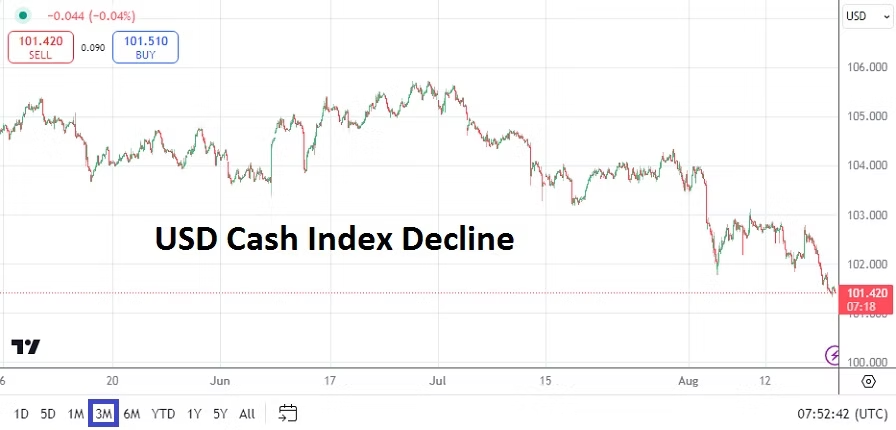
Because the Fed refused to sound dovish in their last FOMC Statement this created the potential for massive retaliation by institutional traders, and when coupled with the BoJ hike and their rhetoric, market turmoil in Japan and globally promptly ensued for a few days. However, because of recent inflation data again highlighting U.S prices via Producer Price Index are stable and decreasing in some sectors, and CPI has continued to come in below anticipated results, investors again firmly believe the Federal Reserve will definitely cut the Fed Funds Rate by at least 0.25% in September, and may be in a position to cut in November. Thus, the weakness and volatility of the USD which is clear to see via the USD Cash Index results.

USD Cash Index Three Month Chart as of 20th August 2024

Yet and potentially amusing tomorrow, the Fed’s FOMC Meeting Minutes may simply restate the cautious and very passive rhetoric from the last FOMC Statement. This because the Meeting Minutes are a reflection on thoughts shared at the Fed meeting, and we know what that outcome was already. Meaning tomorrow’s publication may scare some investors, but it shouldn’t. Tomorrow’s Fed paper may prove to be a non-event.

This sets the table for the Jackson Hole Symposium in Wyoming which starts on Thursday to produce a myriad of central banker statements led by Jerome Powell and his counterparts from the European Central Bank, Bank of Japan and Bank of England. The event is likely going to be important, but much of the talk which occurs in closed meetings is unlikely going to be made public.

postR177.1

Central Banks and Summer Storms for Traders as Actors Change

Central Banks and Summer Storms for Traders as Actors Change

Yesterday’s rather quiet start to the week regarding economic data allowed for traders to look over the financial markets before the onslaught of central bank mayhem hits on Wednesday. The Forex market has seen rather interesting results the past few weeks as behavioral sentiment has clearly shifted (for seemingly the tenth or so time) towards a more dovish outlook regarding the U.S Federal Reserve. Expect stormy waters this week in currency markets.

The usual lazy summer of the markets has had to deal with political winds in June and July as Britain, France and the U.S have delivered rather intriguing mischief via election results and changes of leadership. However, the world has survived and this is a lesson new day traders need to understand quickly. While tomorrow may not be known, experienced market players have seen these dramas before, they might be new episodes with different actors, but the theme remains the same for veterans of the markets.

Although powers shift, a focus on outlooks is often what matters. People and institutions are in pursuit of profit. This week central banks will be heard from and the rhetoric delivered will affect assets.

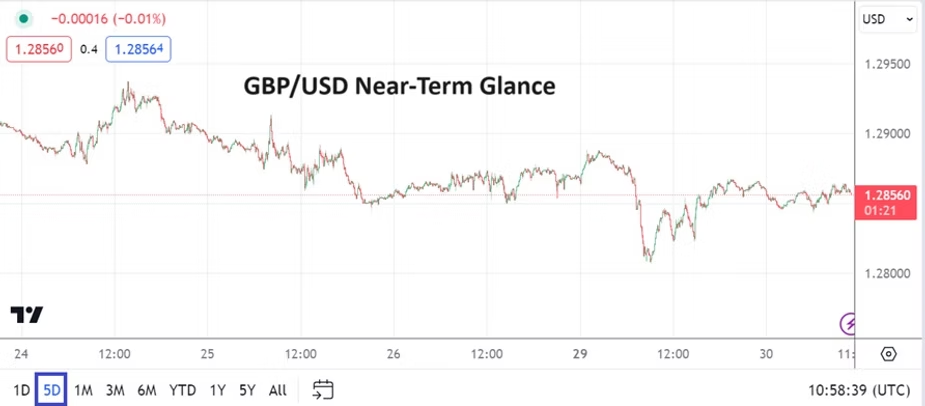
GBP/USD Five Day Chart on the 30th of July 2024

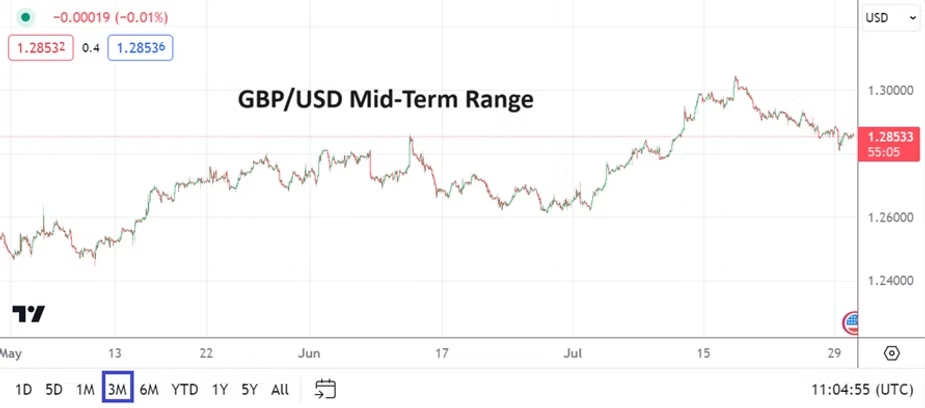
Monday, 29th July, U.K assorted data – Mortgage Approvals, Net Lending to Individuals and M4 Money Supply data was released to various fanfare yesterday and did not shake the GBP/USD dramatically. However, making more important news perhaps was the public statement by Rachel Reeves, who is the new Chancellor of the Exchequer, saying there is an existing 22 GBP billion ‘black hole’ within the U.K government finances that was not accounted for by the Conservatives. In other words the blame game between the new Labour bosses and now banished Tories has begun. While the GBP/USD dropped a bit on this development, it did not crush the currency pair as it returned to the lower depths of its higher three month technical chart.

GBP/USD Three Month Chart on the 30th of July 2024

Tuesday, 30th July, E.U Gross Domestic Product – a variety of GDP reports came from across the continent this morning, including France which recorded a slight gain of 0.3% and the German numbers which recorded a minus -0.1% result. The numbers show the E.U remains in trouble for the larger economic nations. Spain did show an improvement, but it is nothing that should start parades of celebration.

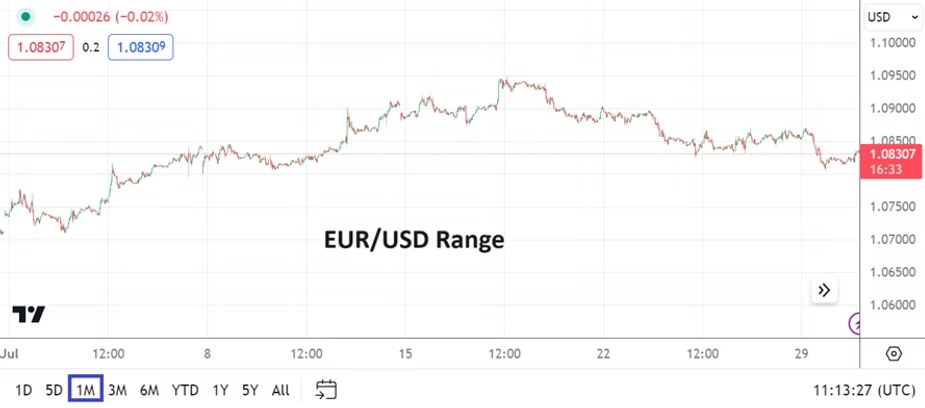
EUR/USD One Month Chart on the 30th of July 2024

Tuesday, 30th July, U.S CB Consumer Confidence – this sentiment report for the U.S consumers will get some notice today, but financial institutions are largely braced for tomorrow’s U.S Fed rhetoric. The trading of Forex, gold, equities and their indices will likely remain choppy today as folks take on cautious tones.

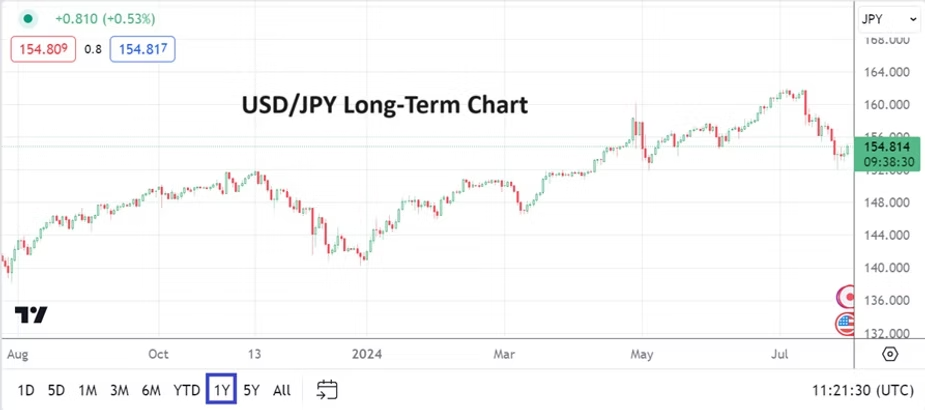
Wednesday, 31st July, Bank of Japan Policy Rate – and here we go ladies and gentlemen. The BoJ can never be counted on to do what is logical in the eyes of many analysts outside of the central bank’s inner circle. Japan has pursued a soft devaluation of the Yen this year. The Bank of Japan should consider an interest rate hike to the 0.20% level from the 0.10% ratio, but will they? Speculators need to be extra careful with the USD/JPY over the next 30 hours. If the BoJ somehow decides to raise and the U.S Fed makes it known they will consider more than one interest rate cut this calendar year, the USD/JPY could see swift price velocity lower. Perhaps the BoJ will stay muted and cautious, allowing for the currency pair to go higher again. However, there have been some signs large players suspect a slight interest rate hike could come tomorrow from the Bank of Japan. Day traders are advised to be extraordinarily careful.

Wednesday, 31st July, U.S Federal Reserve FOMC Statement – the Fed is not going to lower their Federal Funds Rate during this meeting. But what they are expected to do via their FOMC policy rhetoric is to say a cut is likely in September considering the current economic data, and that if inflation continues to show signs of erosion another cut will be considered in November. Recent economic data in the U.S has been mixed. GDP numbers jumped higher, but importantly the GDP Price Index was lower than anticipated last Thursday, and the PCE Price Index on last Friday matched expectations (and importantly didn’t rise). If the Fed sounds optimistic about an interest rate cut in September this will match the expectations of many financial institutions. If they sound cautious about a possible second rate cut later this year, this could cause a hiccup for those with weaker USD centric outlooks over the mid-term.

Thursday, 1st August, U.K Bank of England Official Bank Rate – the BoE is expected to lower the borrowing rate by 0.25% to 5.00%. The GBP/USD has been trading higher in July based on a cocktail of a weaker USD stance. There is plenty of reason to believe the less than sterling economic data from the U.K will help deliver the lower interest rate from the BoE this week. The BoE is likely to have spoken with the Fed and ECB to correlate a gameplan. The Bank of England Monetary Policy Summary should be given attention. GBP/USD traders will have responded to the Fed’s outlook from Wednesday, opening the door to plenty of volatility after the BoE speaks. Meaning that Forex speculators should be extremely cautious if they are pursuing short-term wagers which will be akin to surfing a violent storm.

Friday, 2nd August, U.S Non-Farm Employment Change and Average Hourly Earnings – this data will be anti-climatic. The results from Wednesday through Thursday from the central banks will take a lot of the bang out of these reports. The earnings report should be given some attention, but the financial markets will likely be trading on behavioral sentiment generated over the prior days.

postR192

AMT Top Ten Miscellaneous Fireworks for the 5th of July 2024

AMT Top Ten Miscellaneous Fireworks for the 5th of July 2024

10. Grudge: Ireland and the Springboks begin their rugby two match competition this Saturday in Loftus Stadium, Pretoria. Anticipation is palpable in South Africa. The weather is forecast to be good and the game is expected to be better. The battle between the Green Machines is real. The second game will be played on the 13th of July in Durban.

9. Digital Jitters: Bitcoin is trading near 54,300.00 USD as of this writing. As analysis filters in to explain this particular downturn which essentially began on the 7th of June, the fact is that BTC/USD has become a playground for institutional gamblers while many in the public remain dubious. Excuses such as the U.S election potential outcome and Fed monetary policy are all likely false narratives. Speculation is your answer.

8. Correlations: The USD/ZAR is near the 18.20500 mark, and the USD/MXN is around 18.06000 as of this morning. The South African Rand and Mexican Peso are not correlated, except as currencies that are witnessing a strong amount of political sentiment generate trading behavior in financial institutions which are trying to judge their long-term outlooks. The coalition National Unity Government of South Africa, and the Morena political party of Mexico are in the spotlights and are being watched by anxious investors.

7. National Security: The race for quantum supremacy is real as nations issue significant controls over the export of computing mechanisms to unfriendly competitors as reported by the New Scientist website recently. And the smuggling of semiconductors which are ‘forbidden’ to China who are using organized underground operations in order that Nvidia AI processors can be obtained, was reported on by the Wall Street Journal two days ago.

6. Commodities: WTI Crude Oil is trading above 84.00 USD, the energy has sustained prices above $80.00 since the 17th of June and is approaching mid-term highs, the slight rise in price earlier this week may have been because of hurricane concerns, but buyers have remained strong this morning. Cocoa is still traversing around 8,456.00 USD per metric ton, as it bounces along mid-term technical support levels. In early January of this year Cocoa was trading at half its current value.

5. Jobs Numbers: One of the favorite tools used by salespeople to get day traders geared towards speculating blindly are the monthly U.S Non-Farm Employment Change numbers which will be published today. But because of the U.S Independence Day yesterday, many financial institutions are celebrating a long holiday weekend and will be mostly inactive. Data has become increasingly lackluster from the U.S the past two months with rather pessimistic GDP, PMI manufacturing and services outcomes. Traders considering a dip of their toes into the markets today should be aware that volumes are going to be low which opens the door for volatility. Who will be paying attention to the Average Hourly Earnings report?

4. Markets: U.S Treasury yields are within sight of three month lows, this as the major stock indices via the S&P 500 and Nasdaq 100 make noise at record highs. The Dow 30 is not at a high but within a healthy territory as bullish behavioral sentiment remains rather abundant. When full trading volumes return next week, there is reason to believe the summer rally may continue.

3. Bank of Japan: The USD/JPY is trading below the 161.000 level. Some analysts suspect the BoJ engaged in a limited intervention earlier this week when the currency pair approached the 162.000 vicinity. The Bank of Japan is playing a dangerous game with speculators. The next BoJ Outlook Report is not due until the 31st of July. Until then the USD/JPY apparently is going to traverse in a higher price range with the threat of a potentially engaged Bank of Japan lurking which can punish speculators if they get too comfortable betting on the bullish trend. The price of Gold should be watched as it traverses around 2,365.00 USD, which remains in sight of record highs that touched the 2,425.00 vicinity on the 20th of May. Retail purchasing of gold in Asia is strong as citizens of some nations try to hedge against inflation.

2. Fallout: The Presidency of Joe Biden remains vulnerable as media pundits who have long supported him lurch towards public criticism, and question Biden’s inability to handle unscripted situations. Talk of replacing Biden with another candidate to face Donald Trump remains fever pitched, but there are strong obstacles which will not allow an easy path to unseat the current President. Biden owns his delegates won via Primary voting. He would have to officially relinquish his delegates at the Democratic National Convention in order to allow for a new candidate. The Democratic political party also knows that Vice President Kamala Harris is not particularly well liked, but if Biden were pushed to the side it would open the door for a potentially messy challenge by Harris who would certainly want the Presidency. Getting her to bow out of the race could be another potential disaster for the Democrats, and help create a level of disdain which could trigger a huge landslide for the Republicans in November.

1. Trouncing: Political incompetence is not only a stronghold in the U.S, this as the U.K and France are proving. The GBP/USD is near 1.27685 as of this writing, the EUR/USD is around 1.08230. Both currency pairs have gained this week. The massive defeat of the Conservatives in the U.K last night, and Macron’s political weakness which may increase after the 2nd round of voting this coming Sunday in France has been digested by financial institutions. The GBP/USD and EUR/USD were punished over the past few weeks due to knowledge that the Tories in Britain would suffer a resounding humiliation, and the belief that Macron opened the door for a loss of clout. Financial institutions have proven they are keen observers of politics and are accustomed to shifts of direction via new forces. Some may also say that financial institutions are comfortable as long as they know where power resides in the ‘deep state’ bureaucracies of every nation.

postR169.1

Forex Debate and Coming Impetus this Week for Speculators

Forex Debate and Coming Impetus this Week for Speculators

In many respects the broad markets feel as if they are waiting for big news and this may not be delivered as wanted. Yes, the debate between Biden and Trump this Thursday will get attention, but unless there is a major television moment the outcome is not likely going to give a final affirmation regarding the U.S election results in November. Some people may be counting on Biden to literally misstep, and for Trump to say something incredibly outlandish, but it is also possible the debate disappoints even as entertainment. Perhaps the Presidential debate will deliver sideways action like the broad markets have the past week, leaving us with a desire for more.

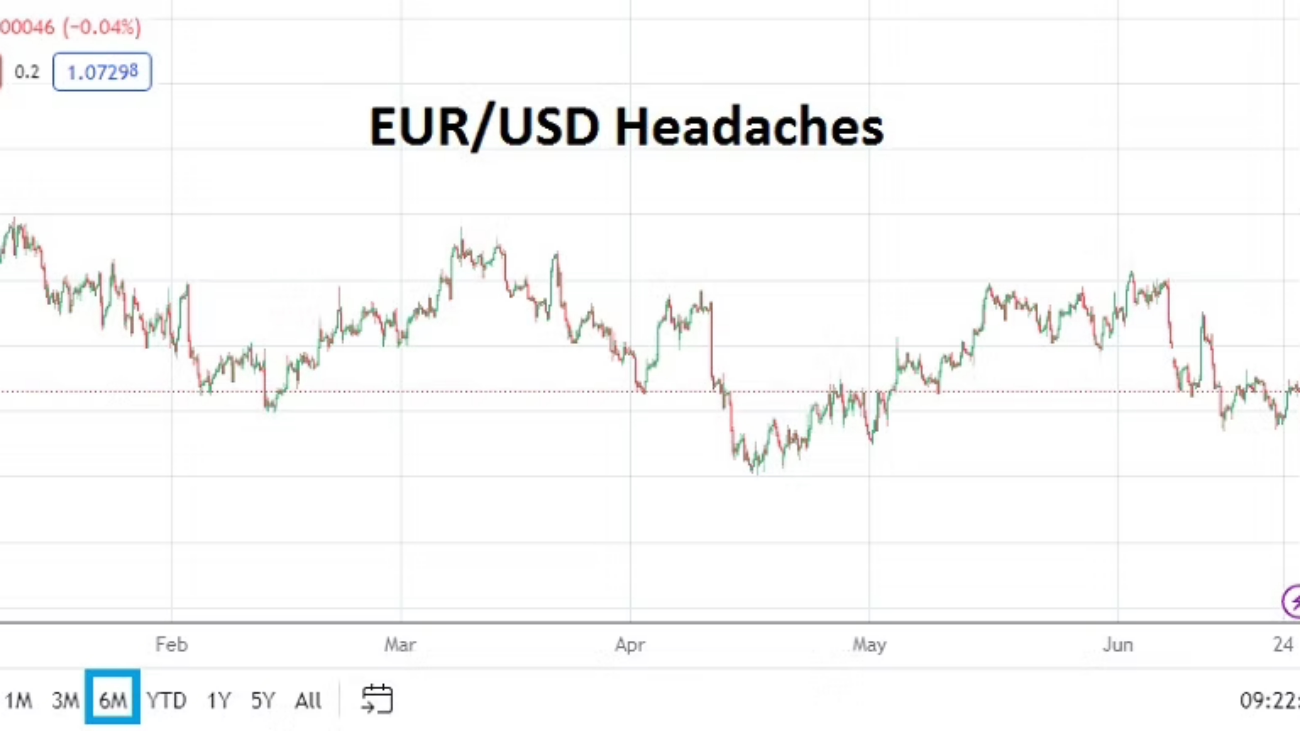
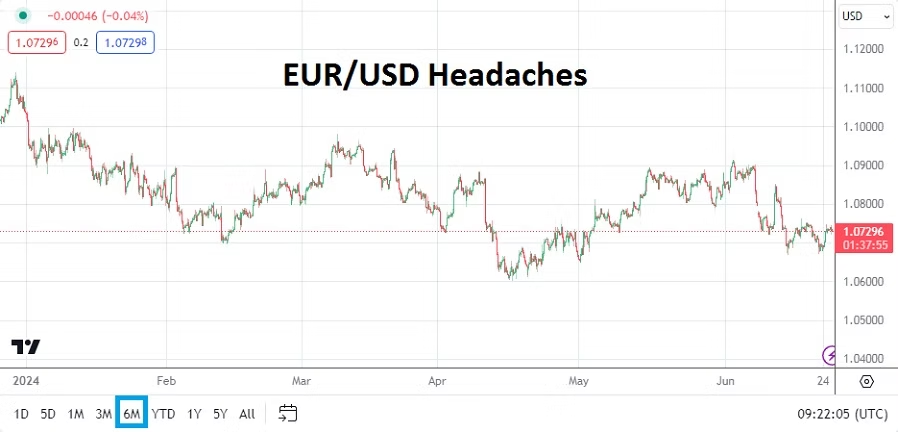
Financial institutions will look at U.S growth numbers this coming Thursday certainly, and also keep their eyes on the upcoming Sunday vote in France on the 30th which might prove rather remarkable. The EUR/USD is certainly back within its lower depths when a six month chart is inspected, and traders will react to France’s election this weekend, but it should be remembered the second and vital round of voting will not occur until the 7th of July. Until then, reactionary and precautionary results in the EUR/USD may produce headaches. The EUR does look oversold, but timeframes and the ability to hold a position may prove tough for short-term traders hoping for a wave of optimism to suddenly take hold and create a strong trend.

EUR/USD Six Month Chart on the 25th of June 2024

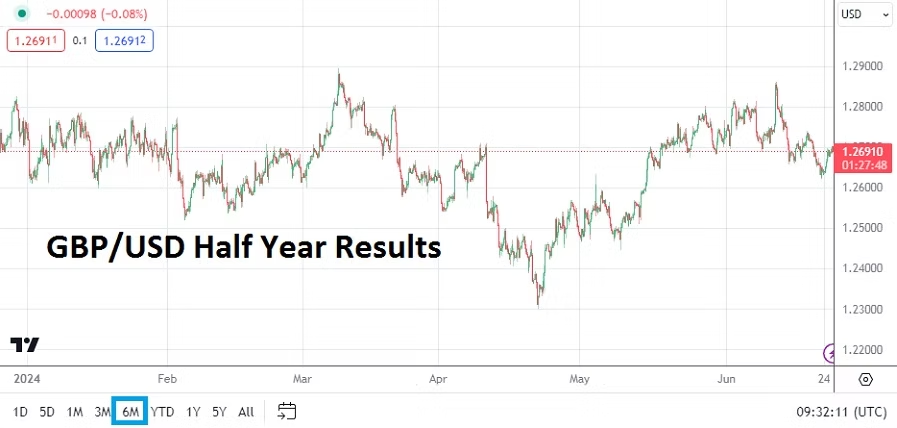
Not to be outdone the U.K is gaining plenty of attention because of its election on the 4th of July, but in this case it seems more like a coronation for the Labour Party and only a question about how devastating the carnage will be for the Tories. Financial institutions may have already factored in their perceived outlooks regarding the U.K vote into the GBP/USD. The currency pair will certainly react to the British election results, but financial institutions may have less to fear regarding sudden volatility of the British Pound, compared to the EUR/USD which could still have days ahead when it doesn’t trade in a USD correlated manner due to E.U political unknowns.

Monday, 24th of June, Germany Ifo Business Climate – the reading produced a drop to 88.6, missing the estimate of 89.4. Germany economic pressures remain negative and this may keep the idea alive that the ECB should be considering another interest rate cut. However, because the European Central Bank cut its Main Refinancing Rate recently and the U.S Fed continues to look rather neutral, it seems unlikely the ECB will decide to suddenly become the only proactive central bank around over the mid-term. Meaning, the ECB may stay conservative and want to wait on others to join the interest rate cut party, this before they create more unbalanced carry trade opportunities which could lower the value of the EUR/USD too much.

Tuesday, 25th of June, U.S CB Consumer Confidence – the reading will certainly be watched by investors, but will it create bedlam if there is surprise for equities or Forex? The likely answer is no. Behavioral sentiment has become flustered and shifted over the past handful of months, and this will create some caution no matter what today’s consumer reading says. Large financial institutions will probably stay geared to other upcoming data which will be considered more important.

Wednesday, 26th of June, U.S New Home Sales – a slight uptick in the amount of housing sales is expected. However, because of higher interest rates in the U.S via the cost of mortgages this number is likely to remain rather muted. For interested traders a look at the previous revisions of the New Home Sales data will prove interesting. The outcome of this reading should be treated with a bit of skepticism because it may be changed down the road. Unless there is a huge surprise the impact of this report may be rather calm, no matter what media narrative dictates.

Thursday, 27th of June, U.K Bank of England Governor – Andrew Bailey will speak about the Financial Stability Report. Bailey is certain to add some insights regarding the BoE’s neutral policy stance taken last week regarding interest rates, but more hints regarding potential cuts later this summer and possibly late this year again may be given. Economic data from the U.K remains troubling. The Bank of England may want to remain cautious because of inflation concerns, but financial institutions would like to see a more proactive dovish stance. Bailey might also talk about the potential affects from the U.K election, but he will have to be careful to make sure it doesn’t sound like he is taking a political side.

Thursday, 27th of June, U.S Gross Domestic Product and GDP Price Index – these two reports will impact the financial markets. The growth and inflation data will be examined by all financial institutions and generate trading reactions. The GDP growth number is expected to come at 1.4%, which is slightly higher than the previous report which posted a 1.3% result. Any number below 2.0% growth will be considered as lackluster by most financial analysts. Traders will then turn their attention to the inflation results which are supposed to match the 3.0% gain from the last Price Index report. If this number can somehow come in below expectations, this could propel some weakness in the USD. However, traders should be careful and remember U.S economic data the past handful of months has produced surprises which have created dangerous and choppy Forex conditions.

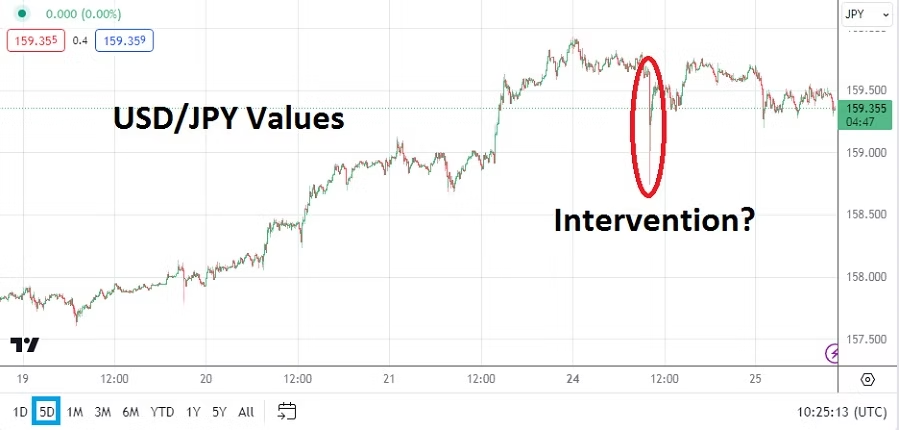
USD/JPY Five Day Chart on the 25th of June 2024

Friday, 28th of June, Japan Tokyo Core CPI – a gain of 2.0% is anticipated. The USD/JPY should be watched carefully. Early this Monday the BoJ likely tried an intervention in the Japanese Yen, but the USD/JPY only had a momentary swift selloff. As of this writing (Tuesday the 25th of June) the USD/JPY is trading near the 159.345 ratio which is very high when historical comparisons are considered. If the inflation number comes in with a 2.0% result or higher this could set off fireworks in the USD/JPY. Financial institutions clearly believe the BoJ should raise their interest rate by at least 0.25%, but the Japanese government appears keen on trying to keep the Japanese Yen weak to help GDP via exports from the nation. The Bank of Japan needs to be given attention. Speculators and the BoJ are battling against each other.

Friday, 28th of June, U.S Core PCE Price Index – the Personal Consumer Expenditures inflation report is forecasted to produce a gain of only 0.1% compared to the previous result of 0.2%. If the PCE Price Index does turn in the anticipated result, and the GDP Price Index from Thursday met expectations or came in lower, this could cause more speculative selling of the USD. However, if the inflation results come in stronger than expected Forex traders could see bullish USD buying which again challenges sellers abruptly.

postR196

AMT Top Ten Miscellaneous Complexities for the 14th of June

AMT Top Ten Miscellaneous Complexities for the 14th of June

10. International Tech Research: Universities and institutions around the world are developing innovative systems to deliver a quantum future. Cal-Berkeley, MIT, Cambridge, the Barcelona Supercomputing Center, the Institut Polytechnique de Paris, and the Cleveland Clinic are only a few of the places in the ‘West’ that investors should monitor for developments, Asia is also very focused on high speed computing.

9. Musk Schedule: The tech mogul has had a busy week. His Tesla stock option compensation package was approved by shareholders yesterday. In 2018 Musk negotiated a package with Tesla that included a massive compensation agreement via stock options if he met valuation targets over a 10 year period. He achieved the valuation goals within only a few years. Musk also formally dropped his lawsuit against OpenAI and Sam Altman in recent days, this after the enterprise released emails showing Musk backed OpenAI’s pursuit of profits in the past. Around 2015 Musk invested about 45 million USD into OpenAI.

8. Muted Data: The U.S Consumer Sentiment and Inflation Expectations numbers will be released today via the University of Michigan. However these numbers are likely not going to impact financial assets in the U.S. The Fed and CPI results from the States published this past Wednesday will dominate the investing narrative. Searching for meaning regarding why assets move in a particular direction is the media’s job, but perceived realities always remain open to complex interpretations as real time prices are exhibited. Day traders need to be cautious of revisionist history.

7. Petrol Dollar: Saudi Arabia has not reconfirmed its commitment to transact Crude Oil exports with USD. The formal agreement reached in 1974 has expired. Forex traders should not panic about this development yet. Speculators should note that Saudi Arabia is likely to still demand most of their payments in USD since they can count on the valuation of the currency to remain relatively tranquil compared to other instruments like China’s Yuan. What the absence of an agreement between the U.S and Saudi Arabia does indicate unfortunately, is that U.S foreign policy continues to look vulnerable.

6. Optimism: A South Africa government coalition agreement could be formalized soon and create a better economic outlook for the nation. While geo-political concerns remain, and the ANC is not a 100% friendly philosophical match with the Democratic Alliance and some of the other political parties which will be involved, it appears a working agreement can be reached. The question in South Africa is if transparent fiscal and anti-corruption mandates can be accomplished while diverse political outlooks will be heard and demanded from different factions. For the moment, financial institutions seem to like what they are hearing and the USD/ZAR has edged lower in the past week.

5. Highly Valued: Gold is over 2300.00, BTC/USD is near 67,000, and Cocoa is within sight of 11,000. Speculative large players remain active, and traders looking to take advantage of short and near-term fluctuations in these commodities need to remain vigilant. Cocoa, while extremely dangerous to trade, has outperformed gold and Bitcoin recently. Investors in gold think long-term, and Bitcoin influencers preach ‘hold on for dear life’ as non-believers shake their heads in disagreement. However, daily gyrations influenced by large players can still wreck havoc on those looking for short-term wagering opportunities.

4. Zombie Fed: Cautiously optimistic undertones were served from Jerome Powell as expected this past Wednesday, but intriguingly Powell admitted some government data remains open for interpretation, particularly the suspiciously strong headline jobs numbers which are being questioned. The Fed now says its outlook is for one interest rate cut this year. Financial institutions likely believe the Fed remains too reactive. The U.S GDP has shown signs of struggling, and CPI numbers have begun to erode. Crude Oil prices remain under 80.00 USD. However, the Fed seems intent on still pumping the brakes in order to kill off inflation via the high Federal Funds Rate. It would help if the U.S govt stopped spending cash recklessly, and the U.S Treasury stopped printing money.

3. Equities: U.S political concerns as the election approaches will create more analysis paralysis than normal. Short-term behavioral sentiment may sound nervous, but a bullish trend and risk appetite remain evident. Day traders may be able to take advantage of technical trading via support and resistance in CFDs, but fundamentally financial institutions appear inclined to count on equity indices achieving record highs.

2. 157.000 – 158.000: Today’s BoJ decision to remain stuck in the mud has created more financial institutional dismay in some quarters, and the the Japanese Yen will be punished occasionally against the USD. But the folks at the BoJ are not stupid and likely anticipated the USD/JPY move higher which ensued. The BoJ is obviously preserving its ‘soft devaluation’ of the JPY in order to maintain an export advantage for the U.S and European consumer markets. The question is if and when the BoJ will buy billions worth of JPY in order to punish bullish USD/JPY Forex speculators occasionally.

1. Volatile Near-Term: EUR/USD and GBP/USD price action has been boiling. France and the U.K have crucial elections in the coming weeks, after policies in both nations have led to a lack of confidence in the ruling governments. The ruckus outcome from the E.U Parliament voting have created an intriguing complication. Oddly enough, the U.K may be the left’s torch bearer in the coming year, while other European nations drift towards the right. Can centrists create a middle ground? Volatility and the search for equilibrium via financial institutions may create a lot of opportunities for Forex day traders in the coming weeks in the EUR/USD and GBP/USD as reversals and trends are sought.

postR165.1

Forex Noise: Influences from Suspicious Data and Rhetoric

Forex Noise: Influences from Suspicious Data and Rhetoric

Yesterday’s GDP numbers from Japan served as evidence regarding things to be considered this week regarding the rather complex web central banks and governments have created for financial institutions and day traders. There are plenty of risk events ahead that should be given attention this week.

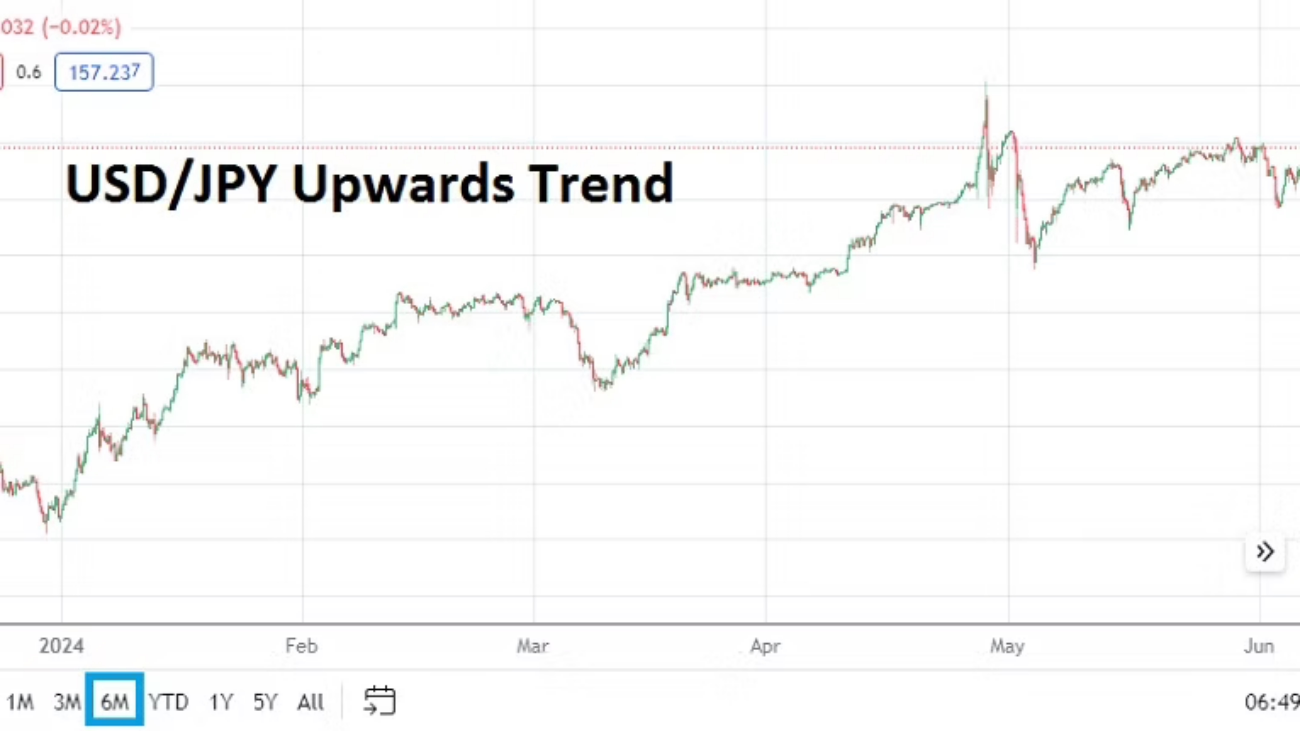
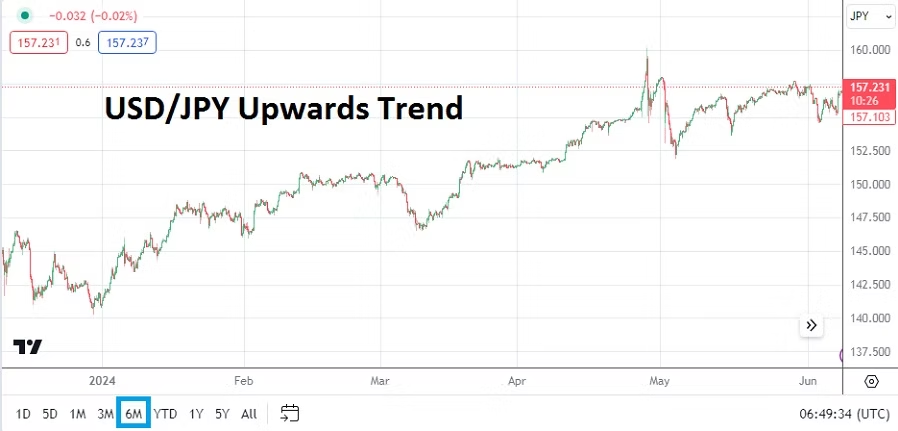
USD/JPY Six Month Chart on the 11th of June 2024

The USDJPY is now again in a dangerous value range near-term as it battles within a higher trend. The BoJ did intervene twice – in late April and early May – to try and damper speculative buying zeal of the USD/JPY and stop overly exuberant selling of the JPY. But they have been acting duplicitous as they have also wanted to no doubt allow a weaker Yen – while keeping its value within control. The BoJ has likely been hoping the Fed is going to sound more dovish this week, but if the Fed sounds more cautious than had been anticipated it could set the table for remarkably dynamic price action in the USD/JPY this week and next. If the currency pair moves too high, the BoJ could intervene again, particularly after the Fed’s FOMC pronouncements. So traders need to be careful.
Traders likely know that tomorrow CPI data and the Fed are on the schedule and these will be key events, but the noise generated around the inflation statistics and FOMC rhetoric should be viewed through the eyes of not only potential reactions from financial institution behavioral sentiment, but the possibility many of the ‘big houses’ have already positioned for the outcomes they believe will play out. In other words day traders should be ready for whipsaw trading results in the immediate aftermath of the Fed’s FOMC Statement and Press Conference.

Last week’s Non-Farm Employment Change numbers provided intriguing forensic data which will stir the suspicions of large players in Forex, equity indices and Treasuries. The jobs numbers via the headline stats looked strong. However, it must be said U.S government hiring continues to pick up, which can be looked at as an expensive way to fuel a sugar high for Americans as the States go into an election season.

Also full time workers continue to add part-time work to their tasks, this to battle rising inflation no doubt which is making their paychecks actually less effective, even if they are getting raises and receiving extra money from the added work loads they are taking on. The costs of products in the U.S are outpacing rising income. Also there is a fact that while part-term hiring is on the rise, full-time hiring is declining along with the average amount of hours employees are working per week.

The Gross Domestic Product numbers from the U.S are in decline. If folks push aside their political ideologies and look at real job numbers on the back pages of Friday’s report, and then ask why people are working less hours it is easy to conclude many businesses are actually cutting back expenses in order to try and remain profitable.

All three major stock indices from the U.S remain in sight of record highs, while there is caution surrounding the mid-term, investors still seem to be banking (wagering) on the U.S Fed to become more dovish over the long-term. Part of this analysis includes the belief that weaker GDP will eventually start to impact inflation and that this conclusion will affect the decision making of the U.S Federal Reserve at some juncture.

The Fed finds itself in a precarious position right now. They need to sound cautiously optimistic. It is an election year and they know this too. The Fed cannot publicly say they want growth to slow down because that would irritate most Americans and the White House, but they know full well that slowing GDP eventually should lower demand for products and thus erode inflation pressures.

Yet turning this full circle, the hiring being done by the U.S government, and the as of yet unmentioned fact the U.S  Treasury has increased its sales of Two Year Notes since around November; and the record amount of money the U.S is spending via a slew of suspicious costs like the ‘student loan forgiveness’, creates a muddled and over-heated fiscal policy which could be interpreted as trying to buy votes from those receiving the gifts. In other words, while the Fed is trying to stress it is battling inflation with higher interest rates and anticipates lowering them eventually, other facets of the U.S government are making this difficult because of the record amount of spending and interest rate payments they are making on short term Treasury notes. Jobs and money in the short-term are candy for voters, but the government has problems ahead regarding conflicting policies because it can lead to more economic problems.

So what do financial institutions think, well they are focused on returns for their clients. They are also looking ahead and trying to swim waters that are murky but offer the ability to profit for themselves too. They might believe they know the landscape just as well as the Fed does, and financial institutions also understand what will be said and can be done may be two different things. What to expect moving forward therefore remains confusing over the mid-term for everyone.

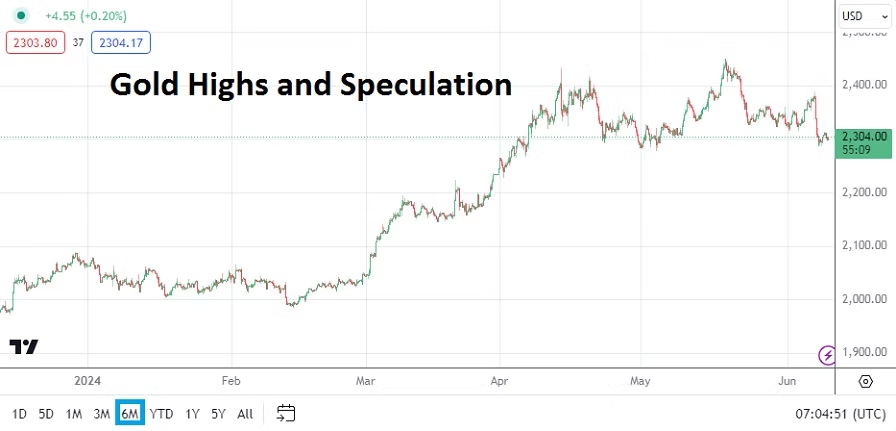
Gold Six Month Chart on the 11th of June 2024

Gold remains highly valued and traders should continue to use it as a barometer. Speculative players are also betting on gold as the USD and its ultimate mid and long-term direction remains complex. The recent downside price action after making record highs in May for the precious metal could reflect the belief the USD is going to become weaker over the mid-term.

Also it should be noted that a handful of commodities are being influenced by an abundance of speculative forces in Copper, Coffee and Cocoa. There has been a lot of talk surrounding the meme stock GameStop the past month. Experienced commodity traders understand the dynamics of speculative influences, pump and dump schemes better than most. Traders tempted to wager in these commodities should ask the same questions speculators in GameStop need to, what is the real value and when will the pin pop the balloon?

Monday, 10th of June, Japan Final GDP Price Index – the result in yesterday’s inflation data came in negative with a climb of 3.4% compared to the expected outcome of 3.6%. This is noteworthy might create more cautious rhetoric from the Bank of Japan later this week.

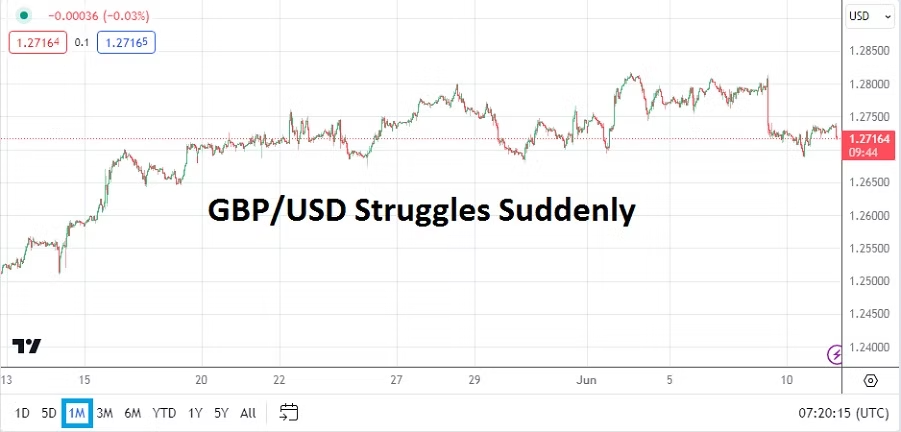
GPB/USD One Month Chart on the 11th of June 2024
EUR/USD Six Month Chart on the 11th of June 2024

Wednesday – 12th of June, U.S Consumer Price Index – the inflation reports will be watched by all market participants in the financial world. The broad monthly CPI result is expected to come in at 0.1%, which would be below the previous months’s outcome, but the Core monthly statistic is anticipated to match the previous result of 0.3%. The CPI numbers will certainly set the tone for the price action to come in Treasuries, equity indices and Forex. Weaker numbers could spark a selloff of the USD. Stronger numbers could create more bullish ability in the USD. No matter the outcome of these CPI numbers, the U.S Federal Reserve will be standing in the shadows and ready to take center stage a handful of hours later.

Wednesday – 12th of June – U.S Federal Reserve’s FOMC Statement and Federal Funds Rate – unless there is a massive surprise tomorrow, there will be no interest rate cut from the Fed. Anyone who was holding onto the idea of a cut, had these wrong thoughts killed off this past Friday because of the ‘better’ jobs numbers report. The Fed’s monetary policy statement is likely to try and sound cautiously optimistic and will certainly include the residuals of the CPI reports filed earlier in the day. However, financial institutions will want to hear if the Fed is leaning into the notion of cutting the Fed Funds Rate late in the summer as a possibility, or if the Fed sounds so cautious that they suggest a rate cut will not happen until later this year. Let’s remember this is an election year. Yes, the Fed is supposed to be an independent body, but like the Treasury there have been signs developing that the ironclad independence of Fed rhetoric can be influenced by U.S government influences from higher up the ladder. Or perhaps it is just all a happy coincidence and the White House, Treasury and Fed all simply agree on policies which remains rather questionable in the eyes of financial institutions and analysts.

EUR/USD Consideration into Wednesday

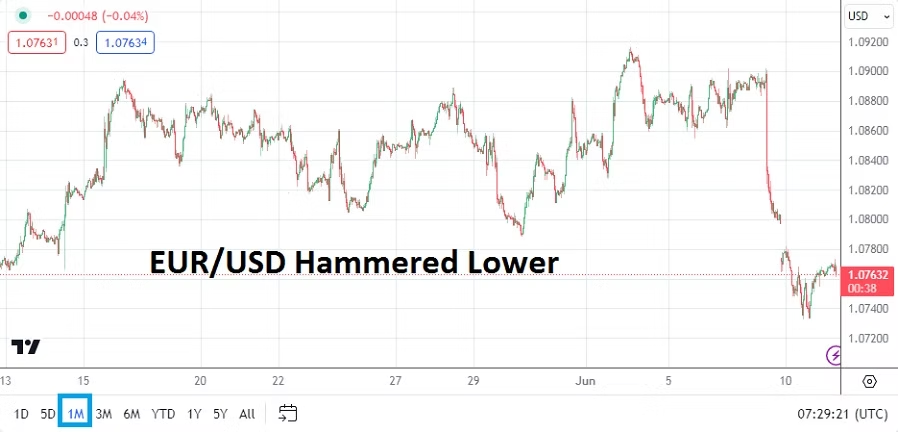
On this note, price action in the EUR/USD is a good representative of behavioral sentiment and the different ways it can be interpreted. EUR/USD will need attention during and after the U.S Federal Reserves’s policy rhetoric. The ECB cut its interest rate last week. However the ECB refused to say it will cut rates more – leaving the EUR/USD in a neutral position. The EUR/USD sold off on Monday, this after selling off strongly this past Friday after the U.S jobs numbers.

The Fed was looked on as having to become more dovish this Wednesday, but that is now in question because of the suspiciously strong U.S jobs numbers this past Friday. And then there is the outcome of the European Parliament voting this past weekend and a turn towards the right which many in the media seem to believe is the end of the democracy, but may simply represent that some citizens of Europe want a return to law and order, solid economic practices, and respect for their historical and cultural heritage.

Meaning that financial institutions aren’t likely to be too scared about the voting outcomes regarding the European Parliament and are likely more focused on the coming U.S inflation report and FOMC meeting results. However, as much as Forex traders are considered to be sophisticated and financially astute, they still reacted to the stronger selling which was sparked yesterday. Perhaps the EUR/USD results the past couple of days will prove to be like the reaction in the India markets, this when the Nifty 50 selloff occurred early last week upon election results being in question, only to experience a reversal later.

Thursday, 13th of June, U.S Producer Price Index – these inflation reports will be watched, but the reaction to the outcome is likely to be muted because of Wednesday’s dynamics from the U.S and behavioral sentiment which will have already been stirred.

Friday, 14th of June, Bank of Japan – the BoJ is expected to keep its Policy Rate at 0.10%. The BoJ will certainly have been paying attention to the USD/JPY this week, this before they make their public announcements. The Bank of Japan like the Fed is in a difficult spot. The BoJ is trying to fuel a stronger Japanese economy with a weaker Japanese Yen, while trying to sound vigilant in order to stop speculative buyers of the USD/JPY who are trying to take advantage of the trend higher. The threat of intervention should be a concern for day traders, even though the BoJ likely doesn’t want to take this avenue because it is costly and they know the only real way to make the Japanese Yen stronger is by increasing the BoJ Policy Rate which they seemingly do not want to do for the moment.

postR164.1

USD/ZAR and EUR/USD as South Africa and ECB Create FX Shadows

USD/ZAR and EUR/USD as South Africa and ECB Create FX Shadows

Risks for day traders will abound this week in Forex. Taking advantage of trends in the days to come will rely on interpretations of behavioral sentiment, which may become rather reactionary from financial institutions if they feel existing positions are vulnerable. For the moment there is calm but day traders should not expect this to last.

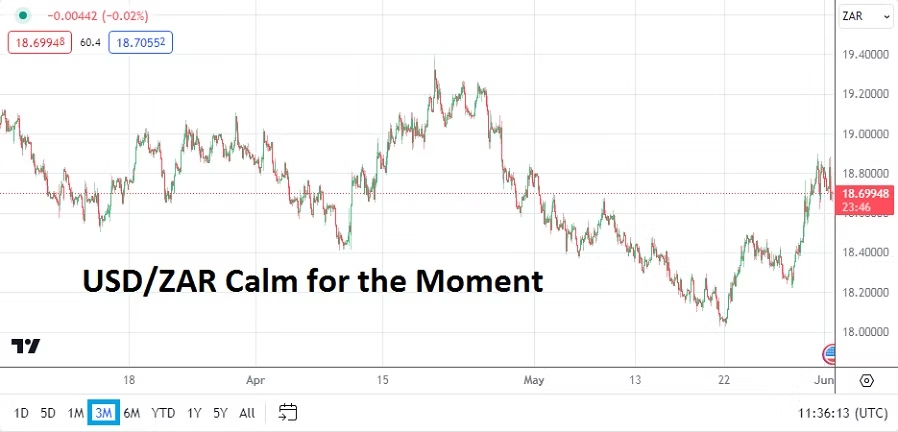
USD/ZAR Three Month Chart on the 3rd of June 2024

The results from the South Africa election have delivered the need for a government coalition. The USD/ZAR will certainly move according to degrees of nervousness being generated in South Africa. While the African National Congress has publicly called for unity and openness to achieve a working government, there are legitimate fears the ANC may consider a left wing coalition known as the Doomsday approach, which could include political parties that are not seen as being pro-business or inclusive for the entire population. Financial institutions in South Africa and abroad will have their trust of the ANC tested in the days ahead.

South Africa political concerns may cause the USD/ZAR to step out of line and not correlate to the broad Forex market. The ANC has two working weeks to reach a coalition deal. The ANC has never been in such a weak position before, and if the ANC makes a political deal which is interpreted as being against free enterprise it will not be welcomed by many businesses. Will the ANC be able to admit a new path can be followed in South Africa that creates a space for more transparency regarding fiscal policy and oversight, or will the ANC become stubborn and make a deal with a political party that moves the nation backwards economically and causes more strain via geopolitics?

EUR/USD Three Month Chart on the 3rd of June 2024

From Europe, the ECB will step into the spotlight this coming Thursday. Following last week’s lower than expected Consumer Price Index data from Germany, the ECB is widely anticipated to cut its Main Refinancing Rate by 0.25%. Day traders need to be aware of this, because on Thursday if and when the ECB does cut the interest rate, the reaction in the EUR/USD may not move the market as much as small retail speculators anticipate.

Instead the volatile reaction could come from the inspection and understanding of the published Monetary Policy Statement, and the Press Conference which will follow half an hour later. The EUR/USD it should be noted jumped higher last Wednesday on the weaker than expected inflation report from Germany, which may mean some of the EUR/USD bullishness has already been bought into the currency pair.

The thought that the ECB has seemingly stood in the shadow of the Fed for the past year and largely reacted only after the U.S central bank is important. If the ECB actually goes out on a limb and cuts its interest rate this week, and says it is considering another later this summer it will cause a reaction. The differentiation between the Main Refinancing Rate from the ECB and the Fed’s Federal Fund Rate will cause momentary headaches too.

However, this might ignite thinking within financial institutions that the Fed has given the ECB a quiet ‘green light’ and assured the ECB that the Federal Reserve will become dovish over the mid-term. However, the Fed is not expected to cut the Federal Funds Rate next week. What should happen is that the Fed delivers a December 2023 repeat performance on the 12th of June, in which it expresses a rather dovish perspective – but this time delivers, but there are no guarantees.

The U.S jobs numbers this Friday will play into the EUR/USD sentiment too and all other Forex pairs. Importantly, traders do not want to see a retraction from the Fed again in the coming months and cautious talk about inflation. While higher prices may be the reality for the moment, financial institutions appear to be hoping on proactive actions from the ECB and Fed combined. If dovish rhetoric isn’t seen Forex choppiness will become intense again.

Political rhetoric and its influence on Forex will not only come from South Africa and Europe, but India as its election results are finalized tomorrow and Mexico after the outcome of its vote held this past weekend. The results in India and Mexico have produced the anticipated outcomes, so the USD/INR and USD/MXN should expect to become calmer in the days ahead.

After the anticipated U.S Fed FOMC meeting rhetoric on the 12th of June, and the Bank of Japan’s policy tidbits on the 14th perhaps things will become relatively tranquil. However, financial institutions will be busy over the next ten business days as they try to make sure they have balanced Forex positions, which take into account their commercial transactions and cash forward outlooks for clients which could add to the potential for volatility.

postR161.1

Market Trading Risks: Speculative, Anxious Impatient Results

Market Trading Risks: Speculative, Anxious Impatient Results

Monday’s trading provided a solid oversight for day traders to observe market conditions in commodities, Forex and equities. Financial institutions appear to be leaning towards a belief the U.S Federal Reserve will have to become more dovish, but financial institutions and other large players are worried about shadows being caused by inflation concerns and timeframes which are likely sparking nervous wagers.

Via the commodities, results saw Gold come down from highs on Friday which approached the 2,380.00 USD perch, and drop to lows around 2333.00 yesterday. The precious metal remains within sight of record values, this as questions persist about USD direction, and speculative forces bet. WTI Crude Oil meanwhile climbed from a selloff late Friday and into yesterday’s opening while challenging the 77.75 USD vicinity, and as of early Tuesday is now over the 79.00 mark again.

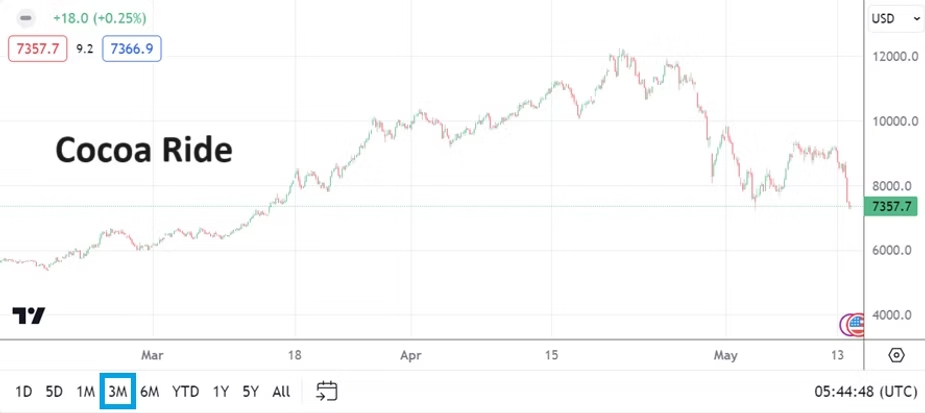
Also within the volatile world of commodities it needs to be mentioned that Cocoa which regained a portion of its higher price values last week and finished Friday above 9,000.0 USD per metric ton, fell swiftly in yesterday’s trading session and is now traversing 7,357.0 USD. Cocoa has enjoyed a spectacularly wide ride of maneuvering via market forces. The commodity is still valued within loftier heights when compared to its historical averages, and demonstrates the speed and danger (and opportunity) of price velocity.

Cocoa Three Month Chart on the 14th of May 2024

Further signs of risk appetite and fragile notions are being exhibited via U.S equity indices, which produced sideways price action yesterday as important economic data awaits and will certainly churn short-term and mid-term perspectives. The S&P 500 is again within sight of record levels, while investors of it and the Dow Jones 30 and Nasdaq 100 all brace for this week’s data which will affect their risk outlooks.

S&P 500 Index Three Month Chart on the 14th of May 2024

Monday, 13th of May, New Zealand Inflation Expectations – yesterday’s quarterly result came in slightly below the previous report. The decrease of inflation concerns likely helped the NZD/USD spark Monday’s climb above 0.60300 briefly. This morning’s early trading is seeing sideways action as U.S inflation reports are anticipated and the currency pair ebbs around 0.60180.

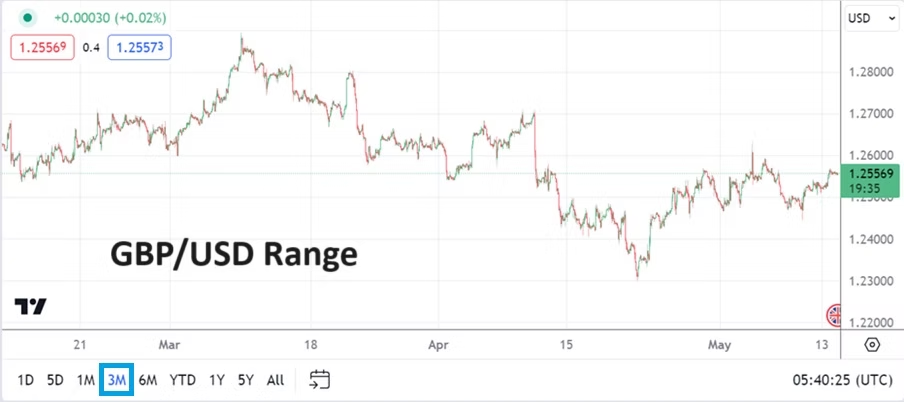
GBP/USD Three Month Chart on the 14th of May 2024

Tuesday, 14th of May, U.K Average Earnings Index, a gain of 5.7% has just been posted. This result will make GBP/USD traders nervous because it highlights that inflation remains sticky in Britain. While last week’s GDP numbers from the U.K showed an improvement, the growth certainly was not spectacular. The range of the GBP/USD remains choppy and bullish day traders targeting higher ratios on the belief the currency pair remains in oversold territory need to consider their timeframes and bias. While the 1.26000 may look like a logical target, it will take weaker U.S inflation and USD centric price action to get there.

Tuesday, 14th of May, U.S Core Producer Price Index – last month’s core report matched expectations. However, the PPI numbers occasionally spell trouble in Forex. Higher inflation results from the U.S would certainly kickstart volatility for all major currency pairs today.

Wednesday, 15th of May, U.S Consumer Price Index – this reading could prove to be the prime mover for financial assets this week because of its potential affect on behavioral sentiment. The Federal Reserve watches this number because of the influence it has on the American public. Forex will react to this report and if it is weaker than anticipated this would create weaker USD centric price action. The U.S will also report Retail Sales and the Empire State Manufacturing Index statistics on Wednesday.

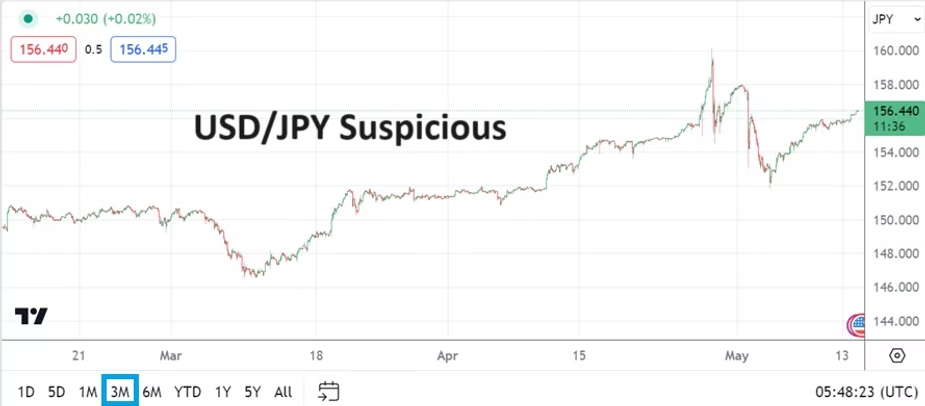
USD/JPY Three Month Chart on the 14th of May 2024

Thursday, 16th of May, Japan Preliminary Gross Domestic Product – last month’s report came in with a gain of 0.1%. This GDP data carries an expectation of minus -0.4%. Traders who like fundamentals should pay attention to revisions within the statistical pages. The Bank of Japan remains in a curious and suspicious predicament. After two interventions, the USD/JPY has climbed incrementally once again. The BoJ is certainly keeping their eyes on the USD/JPY and know financial institutions are still wagering against the Japanese Yen.

Day traders should be extremely cautious with the USD/JPY because the BoJ has the ability to strike with a massive blow when not expected. Risk management is essential for speculators wagering on this currency pair. Evidence of speculative interest in the USD/JPY correlates to the notion that while the USD has been weaker against many major currencies recently, the Japanese Yen remains within a weaker and elevated price range.

Friday, 17th of May, China Industrial Production and Retail Sales – economic dark clouds continue to cascade on Asia’s largest economy. The industrial numbers will be watched by investors certainly, but the overall health of Chinese consumers will likely be the focal point. The USD/CNY remains within bullish terrain, but the Shanghai Stock Exchange’s SSE Index has done well since its lows in the first week of February.