postR169.1

Forex Debate and Coming Impetus this Week for Speculators

Forex Debate and Coming Impetus this Week for Speculators

In many respects the broad markets feel as if they are waiting for big news and this may not be delivered as wanted. Yes, the debate between Biden and Trump this Thursday will get attention, but unless there is a major television moment the outcome is not likely going to give a final affirmation regarding the U.S election results in November. Some people may be counting on Biden to literally misstep, and for Trump to say something incredibly outlandish, but it is also possible the debate disappoints even as entertainment. Perhaps the Presidential debate will deliver sideways action like the broad markets have the past week, leaving us with a desire for more.

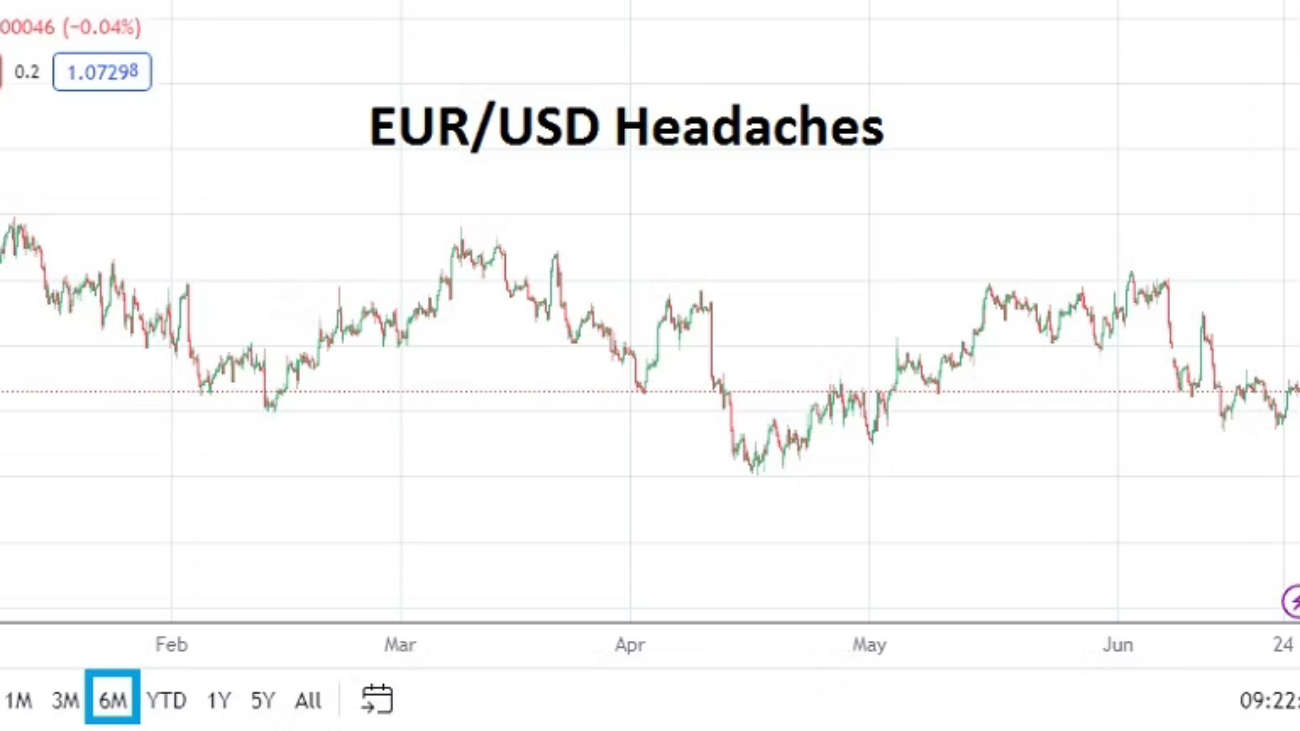
Financial institutions will look at U.S growth numbers this coming Thursday certainly, and also keep their eyes on the upcoming Sunday vote in France on the 30th which might prove rather remarkable. The EUR/USD is certainly back within its lower depths when a six month chart is inspected, and traders will react to France’s election this weekend, but it should be remembered the second and vital round of voting will not occur until the 7th of July. Until then, reactionary and precautionary results in the EUR/USD may produce headaches. The EUR does look oversold, but timeframes and the ability to hold a position may prove tough for short-term traders hoping for a wave of optimism to suddenly take hold and create a strong trend.
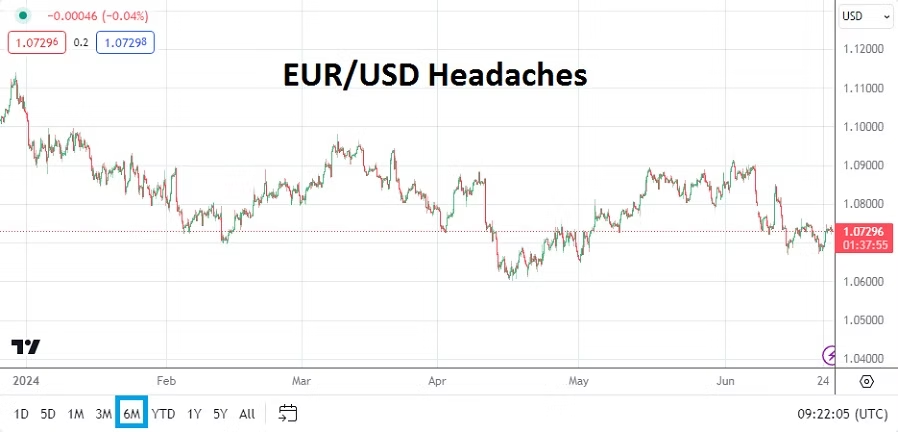
EUR/USD Six Month Chart on the 25th of June 2024

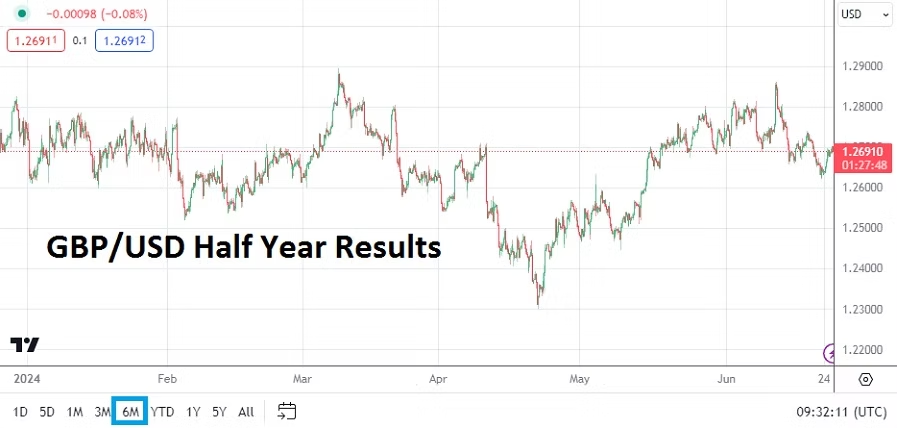
Not to be outdone the U.K is gaining plenty of attention because of its election on the 4th of July, but in this case it seems more like a coronation for the Labour Party and only a question about how devastating the carnage will be for the Tories. Financial institutions may have already factored in their perceived outlooks regarding the U.K vote into the GBP/USD. The currency pair will certainly react to the British election results, but financial institutions may have less to fear regarding sudden volatility of the British Pound, compared to the EUR/USD which could still have days ahead when it doesn’t trade in a USD correlated manner due to E.U political unknowns.
Monday, 24th of June, Germany Ifo Business Climate – the reading produced a drop to 88.6, missing the estimate of 89.4. Germany economic pressures remain negative and this may keep the idea alive that the ECB should be considering another interest rate cut. However, because the European Central Bank cut its Main Refinancing Rate recently and the U.S Fed continues to look rather neutral, it seems unlikely the ECB will decide to suddenly become the only proactive central bank around over the mid-term. Meaning, the ECB may stay conservative and want to wait on others to join the interest rate cut party, this before they create more unbalanced carry trade opportunities which could lower the value of the EUR/USD too much.

Tuesday, 25th of June, U.S CB Consumer Confidence – the reading will certainly be watched by investors, but will it create bedlam if there is surprise for equities or Forex? The likely answer is no. Behavioral sentiment has become flustered and shifted over the past handful of months, and this will create some caution no matter what today’s consumer reading says. Large financial institutions will probably stay geared to other upcoming data which will be considered more important.

Wednesday, 26th of June, U.S New Home Sales – a slight uptick in the amount of housing sales is expected. However, because of higher interest rates in the U.S via the cost of mortgages this number is likely to remain rather muted. For interested traders a look at the previous revisions of the New Home Sales data will prove interesting. The outcome of this reading should be treated with a bit of skepticism because it may be changed down the road. Unless there is a huge surprise the impact of this report may be rather calm, no matter what media narrative dictates.

Thursday, 27th of June, U.K Bank of England Governor – Andrew Bailey will speak about the Financial Stability Report. Bailey is certain to add some insights regarding the BoE’s neutral policy stance taken last week regarding interest rates, but more hints regarding potential cuts later this summer and possibly late this year again may be given. Economic data from the U.K remains troubling. The Bank of England may want to remain cautious because of inflation concerns, but financial institutions would like to see a more proactive dovish stance. Bailey might also talk about the potential affects from the U.K election, but he will have to be careful to make sure it doesn’t sound like he is taking a political side.

Thursday, 27th of June, U.S Gross Domestic Product and GDP Price Index – these two reports will impact the financial markets. The growth and inflation data will be examined by all financial institutions and generate trading reactions. The GDP growth number is expected to come at 1.4%, which is slightly higher than the previous report which posted a 1.3% result. Any number below 2.0% growth will be considered as lackluster by most financial analysts. Traders will then turn their attention to the inflation results which are supposed to match the 3.0% gain from the last Price Index report. If this number can somehow come in below expectations, this could propel some weakness in the USD. However, traders should be careful and remember U.S economic data the past handful of months has produced surprises which have created dangerous and choppy Forex conditions.
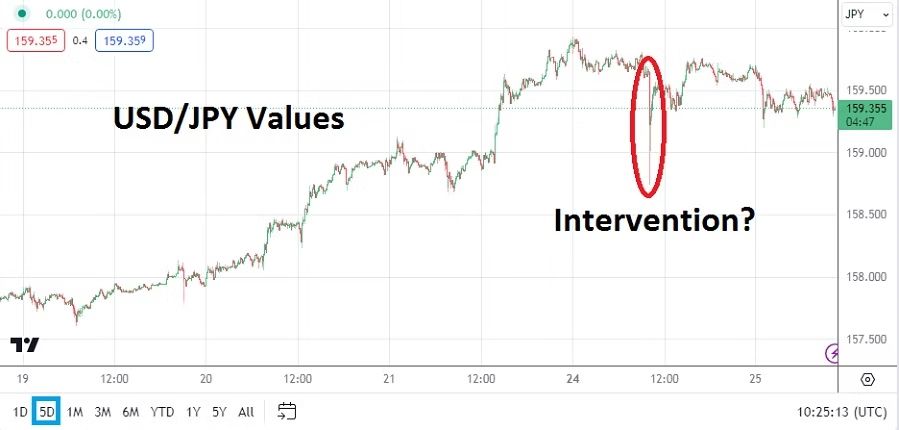
USD/JPY Five Day Chart on the 25th of June 2024

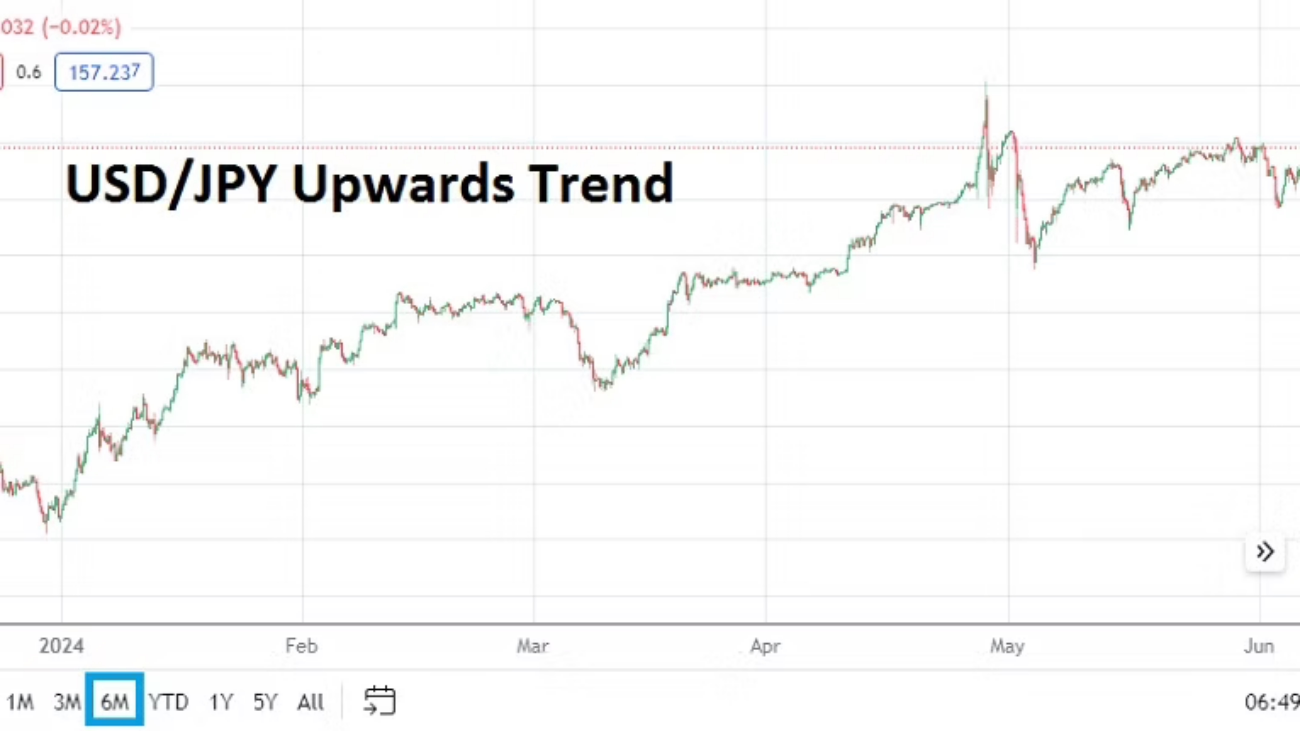
Friday, 28th of June, Japan Tokyo Core CPI – a gain of 2.0% is anticipated. The USD/JPY should be watched carefully. Early this Monday the BoJ likely tried an intervention in the Japanese Yen, but the USD/JPY only had a momentary swift selloff. As of this writing (Tuesday the 25th of June) the USD/JPY is trading near the 159.345 ratio which is very high when historical comparisons are considered. If the inflation number comes in with a 2.0% result or higher this could set off fireworks in the USD/JPY. Financial institutions clearly believe the BoJ should raise their interest rate by at least 0.25%, but the Japanese government appears keen on trying to keep the Japanese Yen weak to help GDP via exports from the nation. The Bank of Japan needs to be given attention. Speculators and the BoJ are battling against each other.

Friday, 28th of June, U.S Core PCE Price Index – the Personal Consumer Expenditures inflation report is forecasted to produce a gain of only 0.1% compared to the previous result of 0.2%. If the PCE Price Index does turn in the anticipated result, and the GDP Price Index from Thursday met expectations or came in lower, this could cause more speculative selling of the USD. However, if the inflation results come in stronger than expected Forex traders could see bullish USD buying which again challenges sellers abruptly.
postR165.1

Forex Noise: Influences from Suspicious Data and Rhetoric

Forex Noise: Influences from Suspicious Data and Rhetoric

Yesterday’s GDP numbers from Japan served as evidence regarding things to be considered this week regarding the rather complex web central banks and governments have created for financial institutions and day traders. There are plenty of risk events ahead that should be given attention this week.

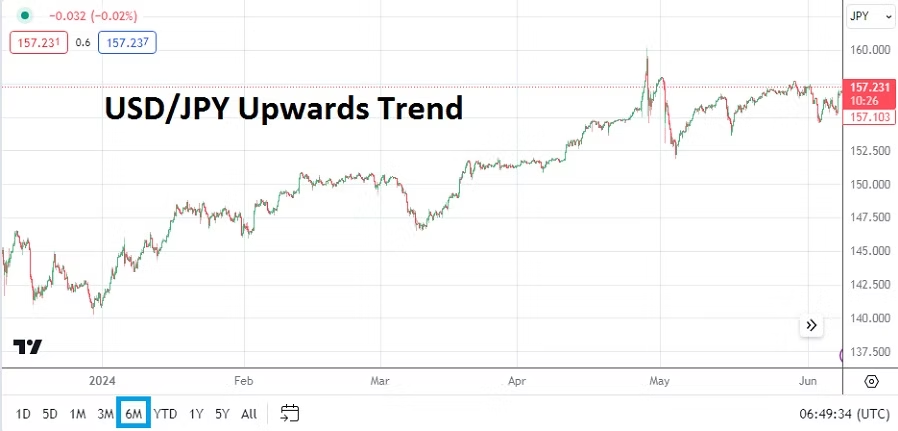
USD/JPY Six Month Chart on the 11th of June 2024

The USDJPY is now again in a dangerous value range near-term as it battles within a higher trend. The BoJ did intervene twice – in late April and early May – to try and damper speculative buying zeal of the USD/JPY and stop overly exuberant selling of the JPY. But they have been acting duplicitous as they have also wanted to no doubt allow a weaker Yen – while keeping its value within control. The BoJ has likely been hoping the Fed is going to sound more dovish this week, but if the Fed sounds more cautious than had been anticipated it could set the table for remarkably dynamic price action in the USD/JPY this week and next. If the currency pair moves too high, the BoJ could intervene again, particularly after the Fed’s FOMC pronouncements. So traders need to be careful.

Traders likely know that tomorrow CPI data and the Fed are on the schedule and these will be key events, but the noise generated around the inflation statistics and FOMC rhetoric should be viewed through the eyes of not only potential reactions from financial institution behavioral sentiment, but the possibility many of the ‘big houses’ have already positioned for the outcomes they believe will play out. In other words day traders should be ready for whipsaw trading results in the immediate aftermath of the Fed’s FOMC Statement and Press Conference.

Last week’s Non-Farm Employment Change numbers provided intriguing forensic data which will stir the suspicions of large players in Forex, equity indices and Treasuries. The jobs numbers via the headline stats looked strong. However, it must be said U.S government hiring continues to pick up, which can be looked at as an expensive way to fuel a sugar high for Americans as the States go into an election season.

Also full time workers continue to add part-time work to their tasks, this to battle rising inflation no doubt which is making their paychecks actually less effective, even if they are getting raises and receiving extra money from the added work loads they are taking on. The costs of products in the U.S are outpacing rising income. Also there is a fact that while part-term hiring is on the rise, full-time hiring is declining along with the average amount of hours employees are working per week.

The Gross Domestic Product numbers from the U.S are in decline. If folks push aside their political ideologies and look at real job numbers on the back pages of Friday’s report, and then ask why people are working less hours it is easy to conclude many businesses are actually cutting back expenses in order to try and remain profitable.

All three major stock indices from the U.S remain in sight of record highs, while there is caution surrounding the mid-term, investors still seem to be banking (wagering) on the U.S Fed to become more dovish over the long-term. Part of this analysis includes the belief that weaker GDP will eventually start to impact inflation and that this conclusion will affect the decision making of the U.S Federal Reserve at some juncture.

The Fed finds itself in a precarious position right now. They need to sound cautiously optimistic. It is an election year and they know this too. The Fed cannot publicly say they want growth to slow down because that would irritate most Americans and the White House, but they know full well that slowing GDP eventually should lower demand for products and thus erode inflation pressures.

Yet turning this full circle, the hiring being done by the U.S government, and the as of yet unmentioned fact the U.S  Treasury has increased its sales of Two Year Notes since around November; and the record amount of money the U.S is spending via a slew of suspicious costs like the ‘student loan forgiveness’, creates a muddled and over-heated fiscal policy which could be interpreted as trying to buy votes from those receiving the gifts. In other words, while the Fed is trying to stress it is battling inflation with higher interest rates and anticipates lowering them eventually, other facets of the U.S government are making this difficult because of the record amount of spending and interest rate payments they are making on short term Treasury notes. Jobs and money in the short-term are candy for voters, but the government has problems ahead regarding conflicting policies because it can lead to more economic problems.

So what do financial institutions think, well they are focused on returns for their clients. They are also looking ahead and trying to swim waters that are murky but offer the ability to profit for themselves too. They might believe they know the landscape just as well as the Fed does, and financial institutions also understand what will be said and can be done may be two different things. What to expect moving forward therefore remains confusing over the mid-term for everyone.

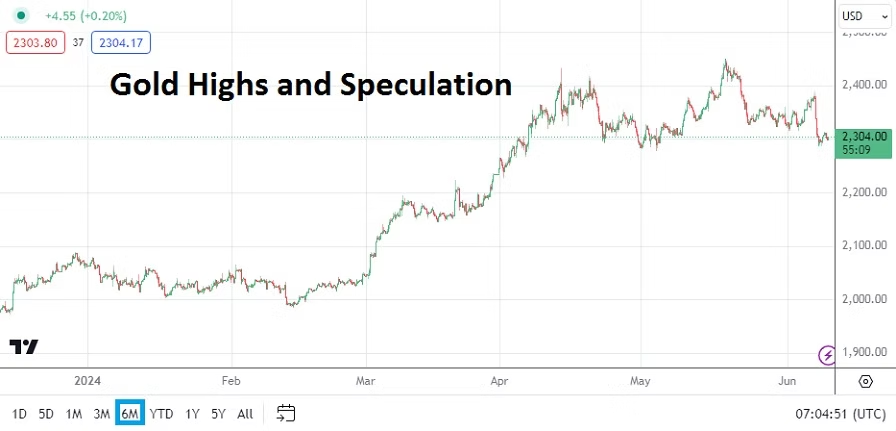
Gold Six Month Chart on the 11th of June 2024

Gold remains highly valued and traders should continue to use it as a barometer. Speculative players are also betting on gold as the USD and its ultimate mid and long-term direction remains complex. The recent downside price action after making record highs in May for the precious metal could reflect the belief the USD is going to become weaker over the mid-term.

Also it should be noted that a handful of commodities are being influenced by an abundance of speculative forces in Copper, Coffee and Cocoa. There has been a lot of talk surrounding the meme stock GameStop the past month. Experienced commodity traders understand the dynamics of speculative influences, pump and dump schemes better than most. Traders tempted to wager in these commodities should ask the same questions speculators in GameStop need to, what is the real value and when will the pin pop the balloon?

Monday, 10th of June, Japan Final GDP Price Index – the result in yesterday’s inflation data came in negative with a climb of 3.4% compared to the expected outcome of 3.6%. This is noteworthy might create more cautious rhetoric from the Bank of Japan later this week.

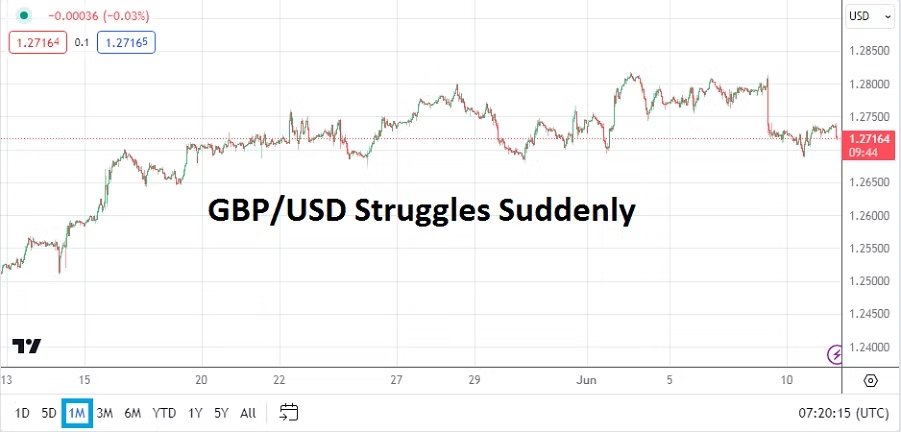
GPB/USD One Month Chart on the 11th of June 2024
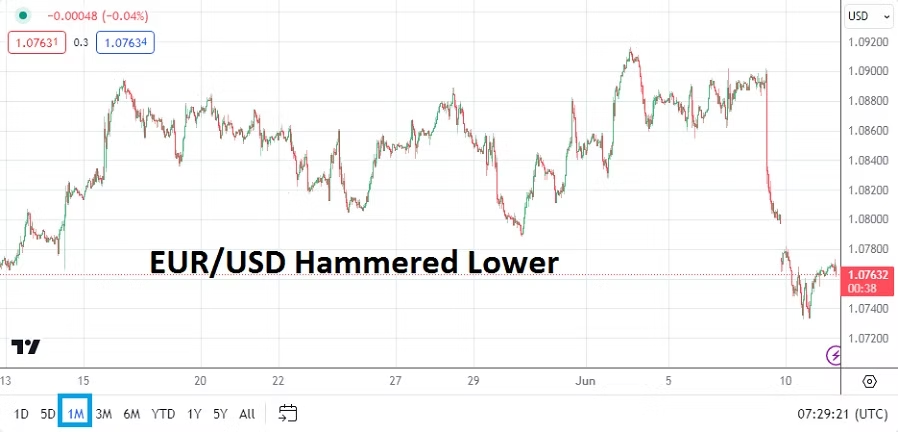
EUR/USD Six Month Chart on the 11th of June 2024

Wednesday – 12th of June, U.S Consumer Price Index – the inflation reports will be watched by all market participants in the financial world. The broad monthly CPI result is expected to come in at 0.1%, which would be below the previous months’s outcome, but the Core monthly statistic is anticipated to match the previous result of 0.3%. The CPI numbers will certainly set the tone for the price action to come in Treasuries, equity indices and Forex. Weaker numbers could spark a selloff of the USD. Stronger numbers could create more bullish ability in the USD. No matter the outcome of these CPI numbers, the U.S Federal Reserve will be standing in the shadows and ready to take center stage a handful of hours later.

Wednesday – 12th of June – U.S Federal Reserve’s FOMC Statement and Federal Funds Rate – unless there is a massive surprise tomorrow, there will be no interest rate cut from the Fed. Anyone who was holding onto the idea of a cut, had these wrong thoughts killed off this past Friday because of the ‘better’ jobs numbers report. The Fed’s monetary policy statement is likely to try and sound cautiously optimistic and will certainly include the residuals of the CPI reports filed earlier in the day. However, financial institutions will want to hear if the Fed is leaning into the notion of cutting the Fed Funds Rate late in the summer as a possibility, or if the Fed sounds so cautious that they suggest a rate cut will not happen until later this year. Let’s remember this is an election year. Yes, the Fed is supposed to be an independent body, but like the Treasury there have been signs developing that the ironclad independence of Fed rhetoric can be influenced by U.S government influences from higher up the ladder. Or perhaps it is just all a happy coincidence and the White House, Treasury and Fed all simply agree on policies which remains rather questionable in the eyes of financial institutions and analysts.

EUR/USD Consideration into Wednesday

On this note, price action in the EUR/USD is a good representative of behavioral sentiment and the different ways it can be interpreted. EUR/USD will need attention during and after the U.S Federal Reserves’s policy rhetoric. The ECB cut its interest rate last week. However the ECB refused to say it will cut rates more – leaving the EUR/USD in a neutral position. The EUR/USD sold off on Monday, this after selling off strongly this past Friday after the U.S jobs numbers.

The Fed was looked on as having to become more dovish this Wednesday, but that is now in question because of the suspiciously strong U.S jobs numbers this past Friday. And then there is the outcome of the European Parliament voting this past weekend and a turn towards the right which many in the media seem to believe is the end of the democracy, but may simply represent that some citizens of Europe want a return to law and order, solid economic practices, and respect for their historical and cultural heritage.

Meaning that financial institutions aren’t likely to be too scared about the voting outcomes regarding the European Parliament and are likely more focused on the coming U.S inflation report and FOMC meeting results. However, as much as Forex traders are considered to be sophisticated and financially astute, they still reacted to the stronger selling which was sparked yesterday. Perhaps the EUR/USD results the past couple of days will prove to be like the reaction in the India markets, this when the Nifty 50 selloff occurred early last week upon election results being in question, only to experience a reversal later.

Thursday, 13th of June, U.S Producer Price Index – these inflation reports will be watched, but the reaction to the outcome is likely to be muted because of Wednesday’s dynamics from the U.S and behavioral sentiment which will have already been stirred.

Friday, 14th of June, Bank of Japan – the BoJ is expected to keep its Policy Rate at 0.10%. The BoJ will certainly have been paying attention to the USD/JPY this week, this before they make their public announcements. The Bank of Japan like the Fed is in a difficult spot. The BoJ is trying to fuel a stronger Japanese economy with a weaker Japanese Yen, while trying to sound vigilant in order to stop speculative buyers of the USD/JPY who are trying to take advantage of the trend higher. The threat of intervention should be a concern for day traders, even though the BoJ likely doesn’t want to take this avenue because it is costly and they know the only real way to make the Japanese Yen stronger is by increasing the BoJ Policy Rate which they seemingly do not want to do for the moment.

postR160.1

Forex: Shifting Winds and Potential Optimism for Speculators

Forex: Shifting Winds and Potential Optimism for Speculators

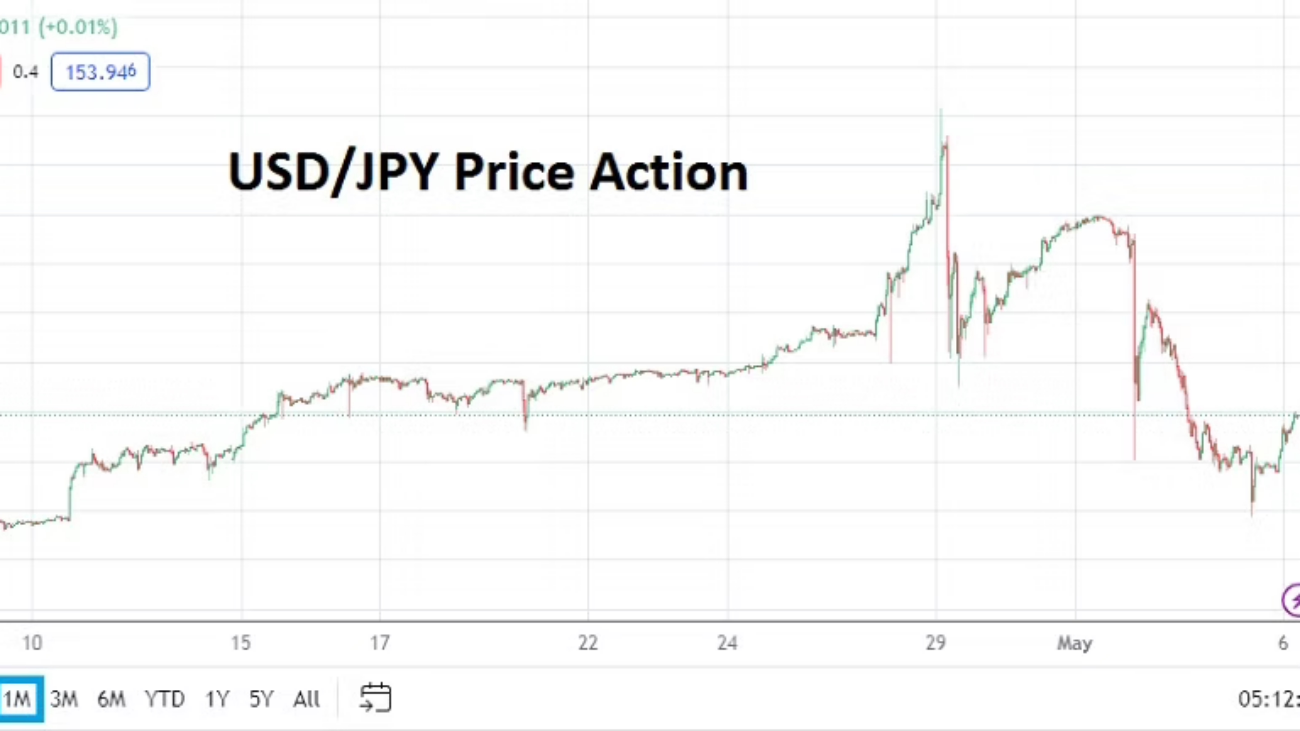
The BoJ intervened in Forex and propelled two fast selloffs of the USD/JPY last week. The actions by the Bank of Japan did not come as a surprise as the central bank seeks to maintain a dovish interest rate policy, a relatively weak Japanese Yen – but also a philosophy of not letting the JPY to suffer too much. Speculators and financial institutions got caught up in the price action which ensued as a clash developed between large traders and the BoJ as equilibrium was sought.

The BoJ clearly wants to keep the USD/JPY within the weaker realms of its long-term values to spur on the Japanese export sector with solid business results. However, domestically the Japanese government doesn’t want inflation within Japan to inflict too much pain for its citizens. BoJ interventions were carried out twice last week, once during a holiday in Japan, and the second when most global financial institutions were shuttered. At the time of this writing the USD/JPY is trading near the 153.720 mark.

Day traders always need to understand just how small they are within the larger speculative world. They need to judge economic intelligence and forecasts to get an understanding where behavioral sentiment could affect tides.

USD/JPY One Month Chart on 6th of May 2024

In the U.S, inflation and growth data caused investors to react nervously a week and a a half ago, additionally more anxious moments were fueled by the Federal Reserve’s FOMC Statement this past Wednesday when the Fed said it was uncertain about the timetable that inflation would return to their stated goal of two percent. Forex trading has been volatile the entire calendar year of 2024 for speculators.

Nearly ten days ago while inflation continued to prove it was stubborn via the U.S GDP Price Index on the 25th of April, Advance GDP data was much weaker than expected showing that economic growth was slowing. And last Friday’s Non-Farm Employment results were not only weaker regarding hiring, but also showed a slight drop in Average Hourly Earnings. This might have been enough to begin causing a shift in financial institution outlooks. This week of trading will prove interesting regarding risk appetite versus risk averse sentiment, particularly if large players believe economic data is finally catching up to the Fed’s rhetoric.

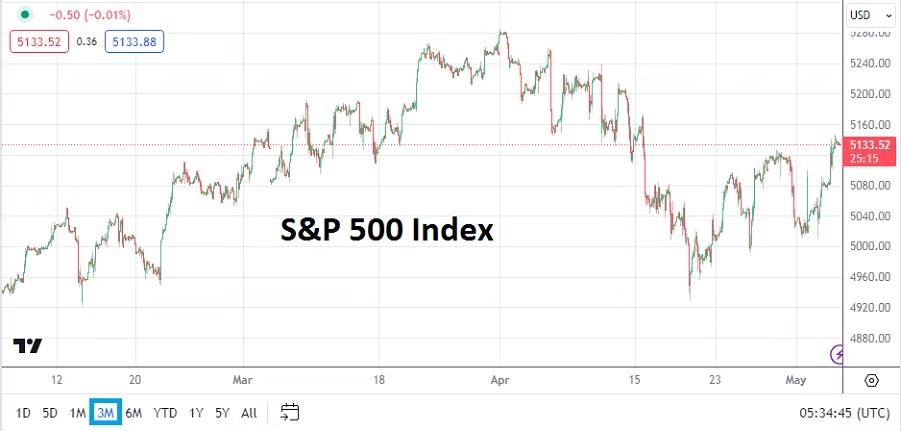
U.S equity indices which started last week with selling and battled lower depths in the middle of the week, began to see buying develop on Thursday, and finished Friday’s trading within their highs via weekly technical charts. While it is easy to report the past, it is the future speculators want to know. The ability of the U.S jobs numbers to produce results which were seen in a favorable light regarding the Fed’s ability to potentially cut the Federal Funds Rate certainly was an optimistic sign for financial institutions. If inflation can remain under control it would help the global economic picture. On that note, WTI Crude Oil is trading below 80.00 USD and should be monitored.

S&P 500 Index Three Month Chart on 6th of May 2024.

Monday, 6th of May, European Union Final Services PMI – Italy, France and Germany among other will present Purchasing Managers Index data. The broad numbers are mostly expected to replicate the previous month’s outcomes. Traders should note the U.K is observing a banking holiday today, which means lighter than normal Forex volumes will be seen.

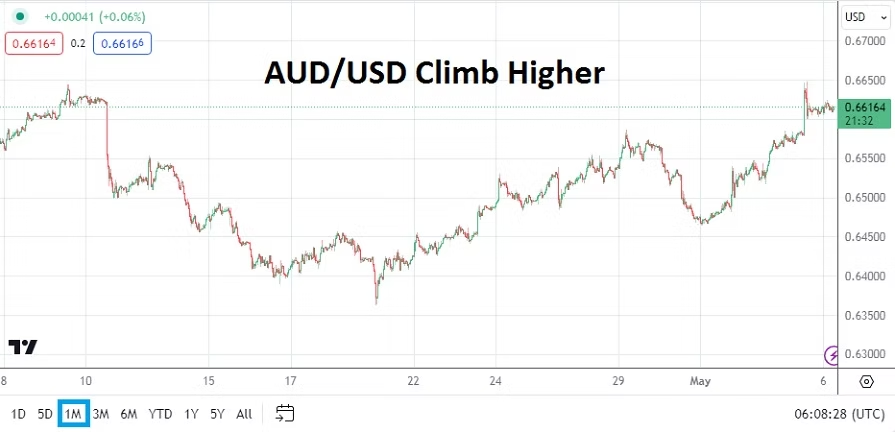
Tuesday, 7th of May, Reserve Bank of Australia Monetary Policy Statement – the central bank is not expected to change its interest rate. The AUD/USD has provided some upwards momentum the past week. The RBA is not expected to step out of line regarding global central bank policies. Expect talk about an optimistically cautious outlook by the RBA as they preach patience regarding an interest rate cut.

AUD/USD One Month Chart on 6th of May 2024

Wednesday, 8th of May, Bond Sales from Japan, the U.K and the U.S – while many European nations observe a holiday, Japan, Great Britain and the U.S will sell government debt. U.S Treasury yields should be watched and equity indices should have an eye kept on them. If behavioral sentiment remains optimistic as this day comes to a close it could set the table for more bullishness, particularly if the USD remains relatively tame or weaker.

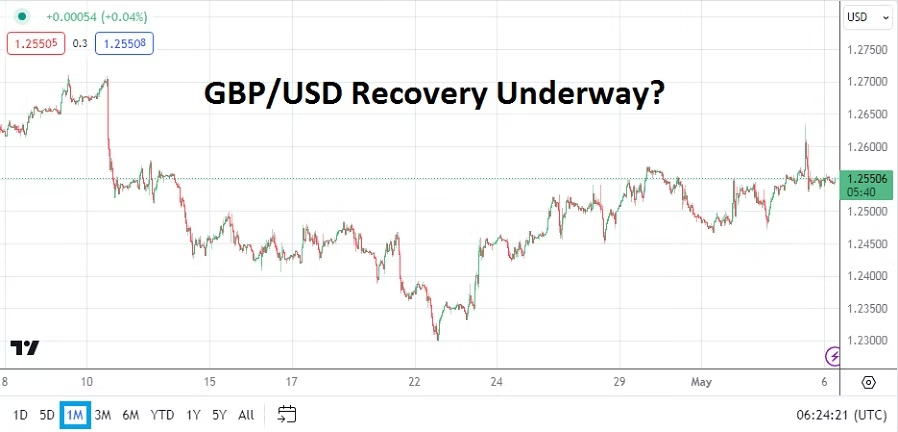
Thursday, 9th of May, Bank of England Monetary Policy Summary – the BoE is likely to mirror other central banks and keep its interest rate policy in place. No changes are expected to the Official Bank Rate. However, it would not be surprising to hear the BoE try to pose upbeat expectations, and if this occurs perhaps the GBP/USD will continue to find some momentum upwards.

GBP/USD One Month Chart on 6th of May 2024

Thursday, 9th of May, U.S Weekly Unemployment Claims – investors will keep their eyes on the jobs report. If the numbers come in around expectations this would allow risk appetite to remain strong in the near-term.

Friday, 10th of May, U.K Gross Domestic Product – an expected gain of 0.1% is forecast. GBP/USD traders who have bullish sentiment will be looking for the number to match expectations or beat the anticipated result. If the number is weaker, this could cause a reversal lower in the GBP/USD and an attempt to push back against gains made in the currency pair recently.

Friday, 10th of May, U.S Consumer Sentiment and Inflation Expectations via the University of Michigan – these readings will be watched by investors to see if consumers continue to show decreasing confidence in the U.S economy. While it sounds counter intuitive to want eroding sentiment regarding the ability to spend money, this would create more ammunition for the Federal Reserve to consider an interest rate cut. The Inflation Expectations could be the catalyst for traders going into the weekend regarding the USD.

post203

AMT Top Ten Miscellaneous Observations for 3rd of May 2024

AMT Top Ten Miscellaneous Observations for 3rd of May 2024

10. Formula One: The Miami Grand Prix race will be held on Sunday. Whispers have been heard that Red Bull driver Max Verstappen has been approached by Mercedes bidding an annual contract over 150 million USD, but that he has not accepted the offer. However, Adrian Newey, engineer and CTO of Red Bull Racing, has confirmed he is leaving the team after 19 years of leadership. F1 certainly needs more competitive racing, a shake up at Red Bull could deliver this for the sport.

9. De-movements: Desire for decolonization, decarbonization, depopulation, turned into delusion and dehydration for Columbia University protestors and the need for a glass of water per the request of a student leader. Perhaps de-escalation is next.

8. Geopolitics: The nation of Georgia is dealing with demonstrations as some citizens show disdain regarding feared political influence from Russia. Georgia has an approximate population of 3.7 million. The East European and West Asian country has seen civil disobedience on the streets of Tbilisi increase this week.

7. Lower Values: Cocoa is near 7,658.00 USD per metric ton as of this morning, on the 19th of April it traded above 12,000.00 briefly. BTC/USD is around 59,250 after having faced headwinds this week.

6. Gold: The precious metal has sold off this week and is hovering near 2,300.00 per ounce as concerns build about USD outlook remaining strong over the mid-term. A low of nearly 2,282.00 was seen on Wednesday. Today’s publication of U.S economic data will push the price of Gold around.

5. Mixed Trading: Equity indices have produced uneven results this week as investors try to find equilibrium. Optimism almost always is the eventual emotion long-term institutional market participants lean towards. The S&P 500, Dow 30, and Nasdaq Composite all gained yesterday, but remain below highs from earlier in the week. Behavioral sentiment appears fragile and many Fed observers are disgruntled.

4. Uncertainty: The Federal Reserve has admitted it is unsure about future economic progress this calendar year. When questioned about the potential of stagflation Fed Chairman Jerome Powell said he see no signs of this – while forgetting to add that politically saying such a thing would likely cost him his job. And lets remember, the Fed claimed they thought inflation was transitory in July of 2021.

3. Bank of Japan: A battle is underway with the USD/JPY as the BoJ has staged two interventions this week. Intent on trying to create economic growth via stronger exports, while allowing import inflation to be seen, the BoJ interest rate policy remains dovish. The USD/JPY is near 153.230 now, but it is unlikely to go into the weekend with this price. An apex on the 29th of April approached the 159.610 ratio. Financial institutions and Japanese Yen traders must remain alert.

2. High Anxiety: Day traders in Forex, equity indices and commodities have certainly seen heightened volatility and the choppiness is going to persist. Retail brokers will welcome speculators with open arms and point to opportunities, but traders need to understand the ‘casino’ often is making money via losses incurred because of leveraged wagers which turn into losing bets when price velocity hits.

1. Jobs Data: Yet another opportunity for inflation to be seen today via the Average Hourly Earnings numbers. A cautionary road sign was seen this Tuesday when the U.S Employment Cost Index came in with a stronger than anticipated quarterly gain of 1.2%. The USD will remain a lynchpin in many financial assets, and Treasury yields should be watched after the employment statistics have been printed.

postN1

BoJ and Fed are today’s Forex Bogeymen, and Job Numbers Lurk

BoJ and Fed are today's Forex Bogeymen, and Job Numbers Lurk

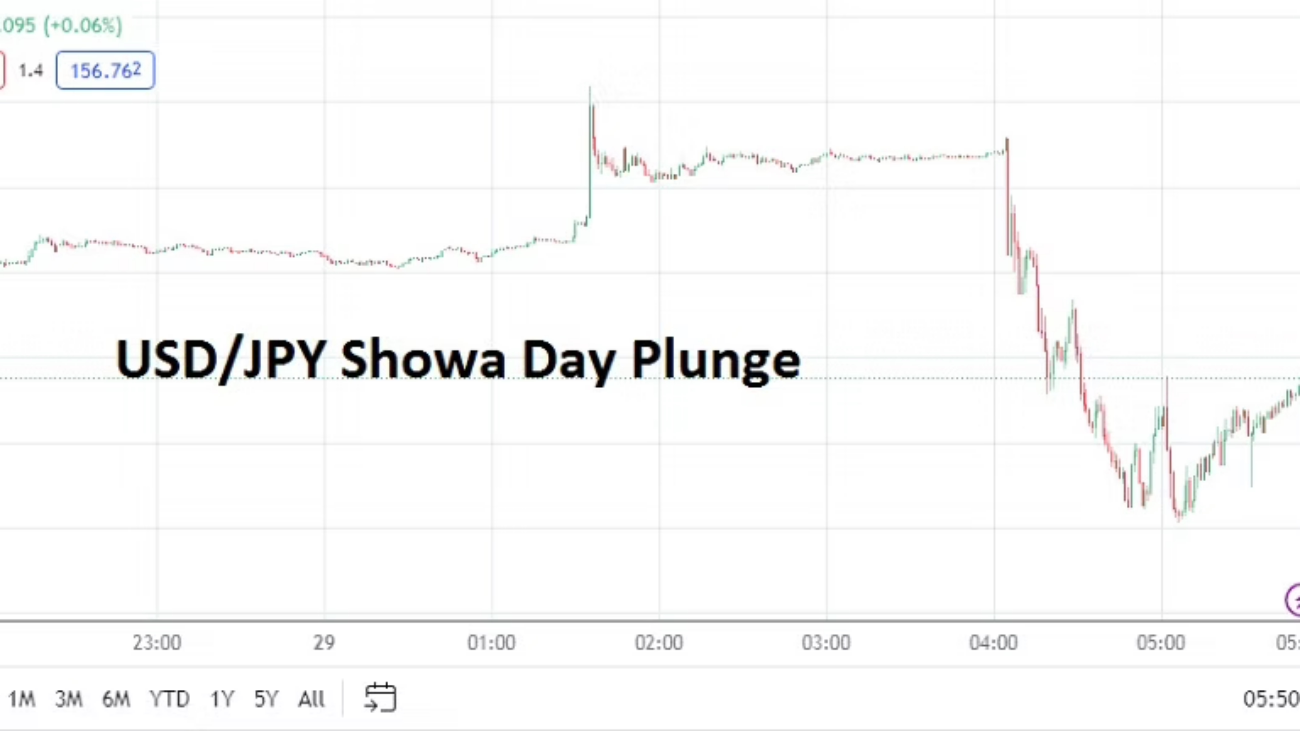
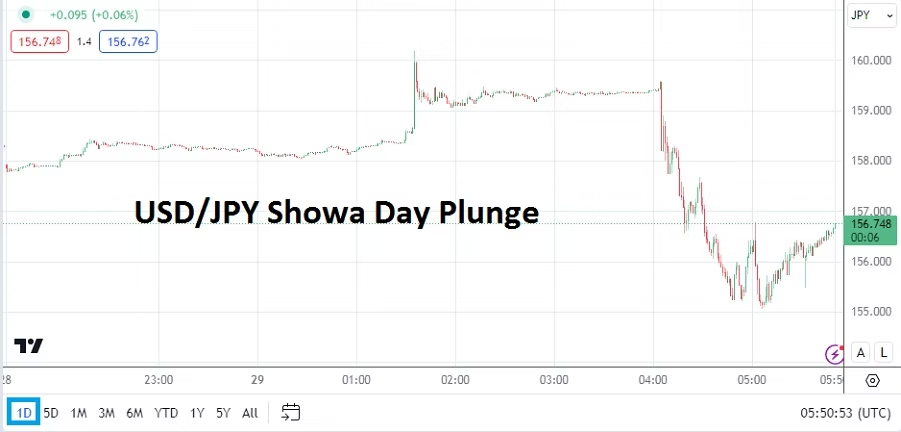
While the Showa holiday is being observed in Japan, the BoJ has apparently reacted with an intervention after seeing the USD/JPY race to new highs in the wake of the central bank’s decision to hold its Policy Rate at 0.10% on Friday. If in fact the Bank of Japan has acted when most Japanese financial institutions are celebrating a long holiday weekend, the reaction to the intervention will be noteworthy when Japanese currency traders return to their desks tomorrow. The question obviously becomes whether large players in the JPY will continue to wager against the Bank of Japan’s current monetary policy or if the apparent intervention will make them cautious.

USD/JPY One Day Chart as of 29th April 2024

U.S data this past Thursday turned in rather clumsy statistics starting with the Advance Gross Domestic Product growth results which showed the American economy is slowing. However, the GDP Price Index came in slightly higher than anticipated. This caused some tremors in Forex. Friday was followed by additionally troublesome readings when the University of Michigan’s Consumer Sentiment outcome was weaker than expected, but the U of M Inflation Expectations gauge was higher than the previous month’s report.

USD Cash Index Five Day Chart as of 29th April 2024

The USD began to show signs of weakness in many major currency pairs last week. Perhaps the expectation that the worst of Federal Reserve outlook has now been absorbed is playing into the Forex results. However, the past four months of trading have produced a continuous choppy wagering landscape for speculators and clarity still does not exist.

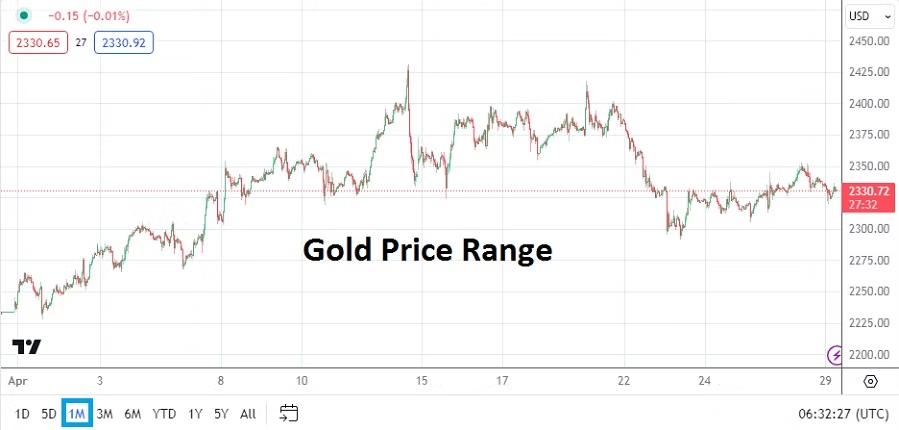
Gold One Month Chart as of 29th April 2024

Suspicion of the Bank of Japan’s intervention this morning and the creeping shadow from the U.S Federal Reserve which is scheduled to deliver their FOMC Statement this Wednesday have created trading bogeymen in many financial assets. The strains in the major equity indices, Treasuries and Forex are prime examples. While day traders try to find fair market value technically and financial institutions seek equilibrium, most observers likely have nervous behavioral sentiment as they consider mid-term prospects. The past month of speculative trading in Gold has produced record highs, but ran into resistance the past week as questions arise about USD inverse correlations not being technically efficient recently.

Monday, 29th April, Germany – Consumer Price Index – the inflation results from Germany should be given attention. The number will certainly affect sentiment surrounding the ECB and the EUR/USD, however the report should not cause an earthquake.

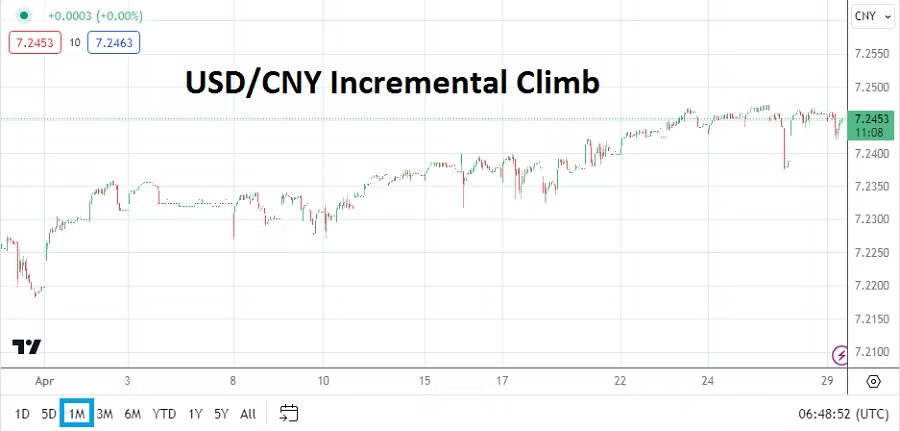
USD/CNY One Month Chart as of 29th April 2024

Tuesday, 30th April, China Manufacturing PMI – the nation has been making claims via government officials the economy is showing signs of a rebound. Yet, disturbing consumer data continues to be seen. The manufacturing statistics from China though will also reflect demand in what is generally accepted as a recessionary period for many global spheres. Traders of the USD/CNY should pay attention to the outcome, the currency pair has incrementally climbed and there are rampant whispers about China undertaking a policy to weaken the Chinese Yuan to spur economic growth.

Wednesday, 1st May, U.S Federal Reserve Funds Rate and FOMC Statement – the Fed will not change its interest rate this week. What will be noteworthy is how Fed Chairman Powell presents this month’s FOMC Statement rhetorically as he is asked questions during his Press Conference. We are certain to hear words mentioned like ‘lagging data and positive signs regarding the potential of weakening inflation’. The question financial institutions want to know is how long will they have to wait for a change to the Federal Funds Rate. The Fed is likely to try sounding cautiously optimistic, but will it be believed? Forex will react to the Fed’s policy meeting pronouncements, but no major surprises should be expected. Some observers may find interesting evidence regarding the future for Fed’s policy via the price of WTI Crude Oil which is hovering near 83.00 USD per barrel as of this writing, because stable energy prices are a key factor regarding inflation.

Thursday, 2nd May, U.S Weekly Unemployment Claims – the jobs data which will start to be delivered late this week will get attention. Forex traders however will be swimming within the riptides already created by the Federal Reserve’s policy.

Friday, 3rd May, U.S Non-Farm Employment Change Numbers and Average Hourly Earnings – these reports will cause a reaction. What financial institutions will be on the hunt for is weaker than anticipated hiring. The inflation numbers from the wages report will be a factor too. The USD traded with a slight decline in Forex last week, those who believe the greenback has been too strong and are inclined to remain sellers should pay attention to the U.S jobs numbers. If the headline hiring number is stronger than anticipated, analysts will rush to the back pages of the statistics to see if part-time hiring is still outpacing full-time employment.