postR160.1

Forex: Shifting Winds and Potential Optimism for Speculators

Forex: Shifting Winds and Potential Optimism for Speculators

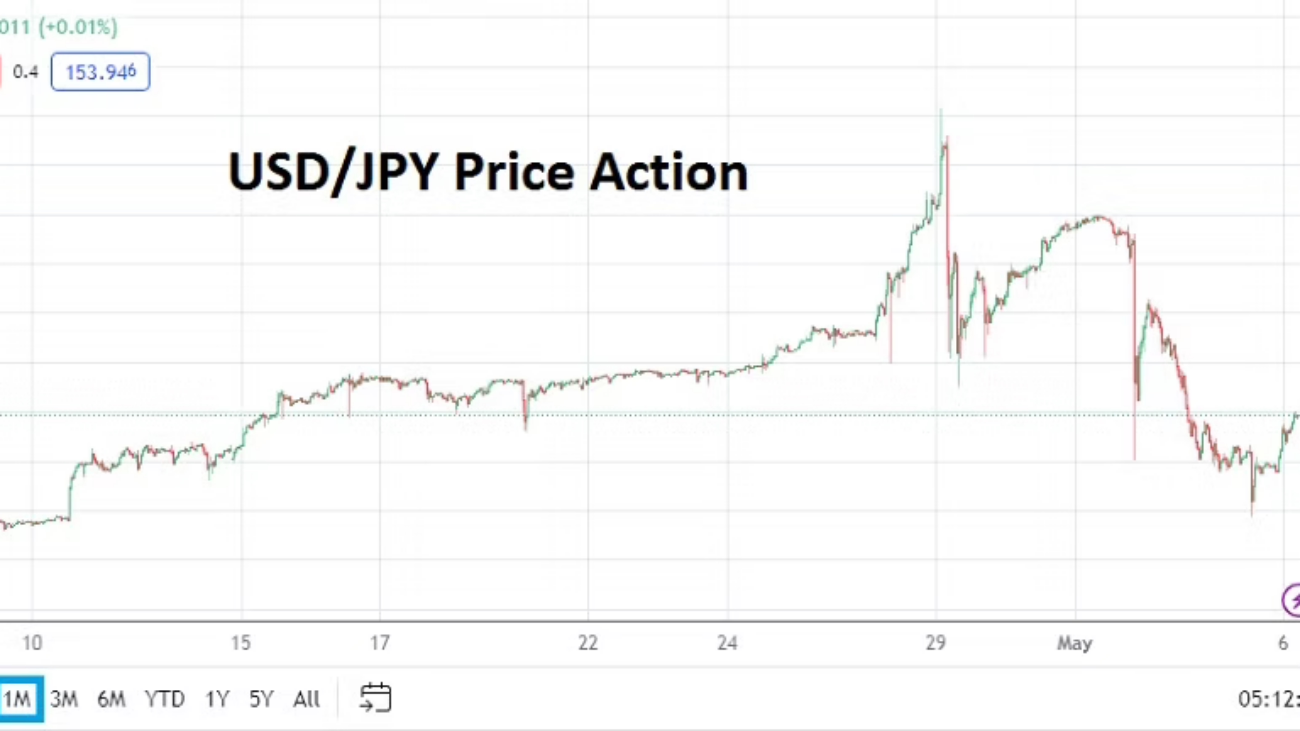
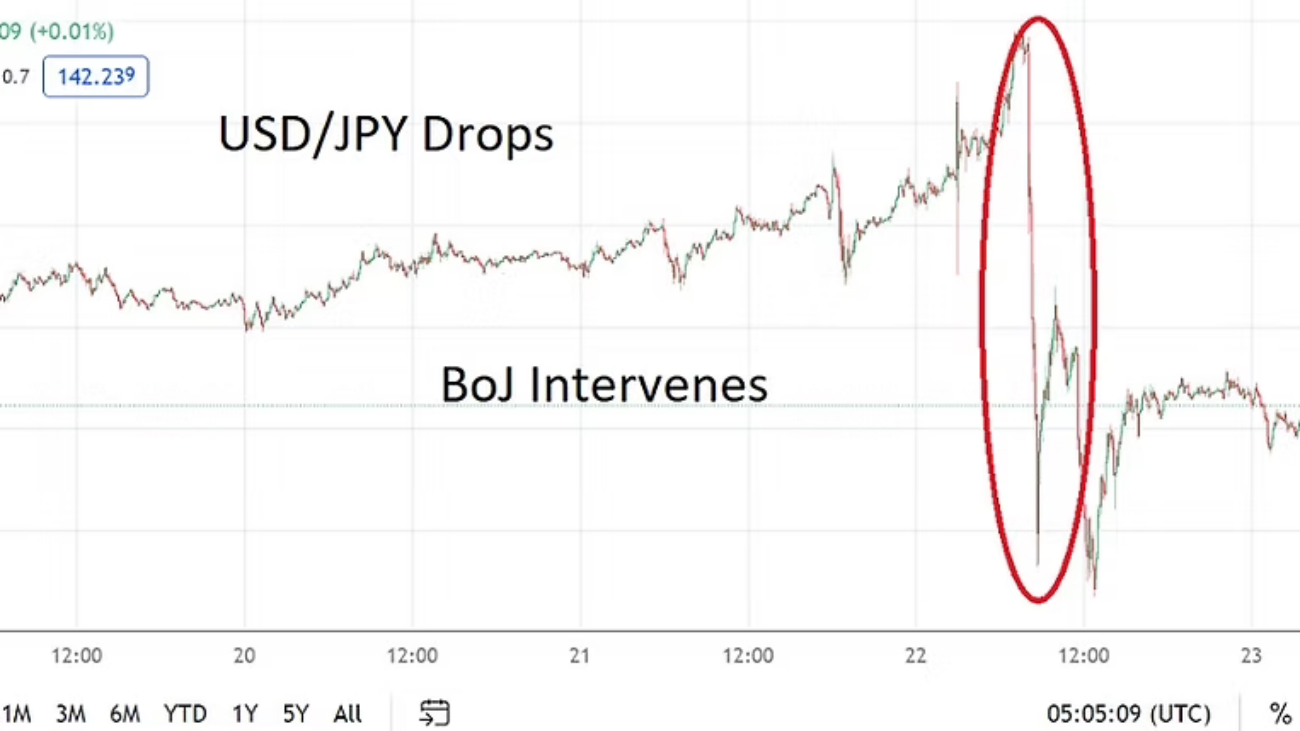
The BoJ intervened in Forex and propelled two fast selloffs of the USD/JPY last week. The actions by the Bank of Japan did not come as a surprise as the central bank seeks to maintain a dovish interest rate policy, a relatively weak Japanese Yen – but also a philosophy of not letting the JPY to suffer too much. Speculators and financial institutions got caught up in the price action which ensued as a clash developed between large traders and the BoJ as equilibrium was sought.

The BoJ clearly wants to keep the USD/JPY within the weaker realms of its long-term values to spur on the Japanese export sector with solid business results. However, domestically the Japanese government doesn’t want inflation within Japan to inflict too much pain for its citizens. BoJ interventions were carried out twice last week, once during a holiday in Japan, and the second when most global financial institutions were shuttered. At the time of this writing the USD/JPY is trading near the 153.720 mark.

Day traders always need to understand just how small they are within the larger speculative world. They need to judge economic intelligence and forecasts to get an understanding where behavioral sentiment could affect tides.

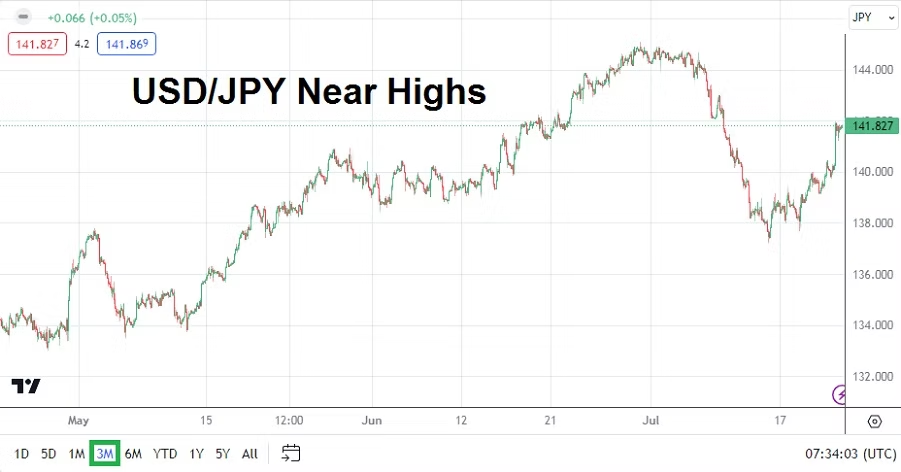
USD/JPY One Month Chart on 6th of May 2024

In the U.S, inflation and growth data caused investors to react nervously a week and a a half ago, additionally more anxious moments were fueled by the Federal Reserve’s FOMC Statement this past Wednesday when the Fed said it was uncertain about the timetable that inflation would return to their stated goal of two percent. Forex trading has been volatile the entire calendar year of 2024 for speculators.

Nearly ten days ago while inflation continued to prove it was stubborn via the U.S GDP Price Index on the 25th of April, Advance GDP data was much weaker than expected showing that economic growth was slowing. And last Friday’s Non-Farm Employment results were not only weaker regarding hiring, but also showed a slight drop in Average Hourly Earnings. This might have been enough to begin causing a shift in financial institution outlooks. This week of trading will prove interesting regarding risk appetite versus risk averse sentiment, particularly if large players believe economic data is finally catching up to the Fed’s rhetoric.

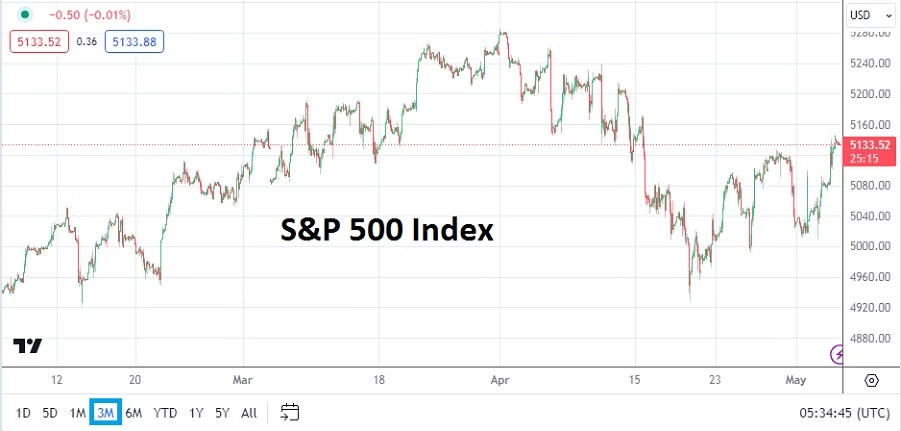
U.S equity indices which started last week with selling and battled lower depths in the middle of the week, began to see buying develop on Thursday, and finished Friday’s trading within their highs via weekly technical charts. While it is easy to report the past, it is the future speculators want to know. The ability of the U.S jobs numbers to produce results which were seen in a favorable light regarding the Fed’s ability to potentially cut the Federal Funds Rate certainly was an optimistic sign for financial institutions. If inflation can remain under control it would help the global economic picture. On that note, WTI Crude Oil is trading below 80.00 USD and should be monitored.

S&P 500 Index Three Month Chart on 6th of May 2024.

Monday, 6th of May, European Union Final Services PMI – Italy, France and Germany among other will present Purchasing Managers Index data. The broad numbers are mostly expected to replicate the previous month’s outcomes. Traders should note the U.K is observing a banking holiday today, which means lighter than normal Forex volumes will be seen.

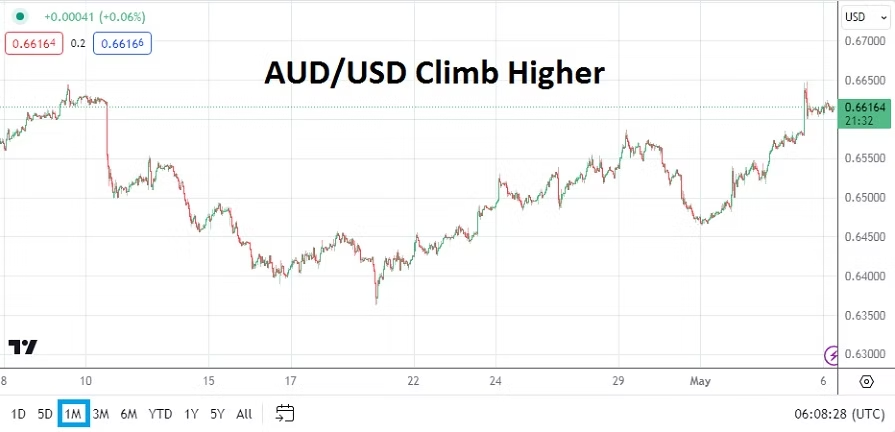
Tuesday, 7th of May, Reserve Bank of Australia Monetary Policy Statement – the central bank is not expected to change its interest rate. The AUD/USD has provided some upwards momentum the past week. The RBA is not expected to step out of line regarding global central bank policies. Expect talk about an optimistically cautious outlook by the RBA as they preach patience regarding an interest rate cut.

AUD/USD One Month Chart on 6th of May 2024

Wednesday, 8th of May, Bond Sales from Japan, the U.K and the U.S – while many European nations observe a holiday, Japan, Great Britain and the U.S will sell government debt. U.S Treasury yields should be watched and equity indices should have an eye kept on them. If behavioral sentiment remains optimistic as this day comes to a close it could set the table for more bullishness, particularly if the USD remains relatively tame or weaker.

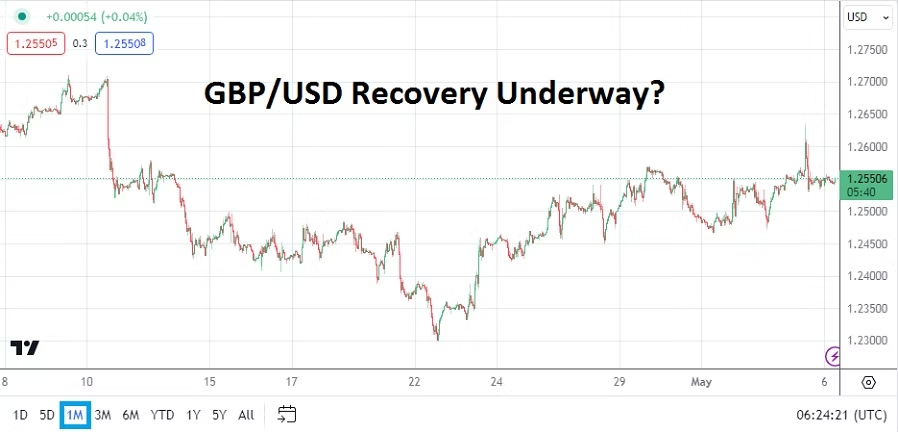
Thursday, 9th of May, Bank of England Monetary Policy Summary – the BoE is likely to mirror other central banks and keep its interest rate policy in place. No changes are expected to the Official Bank Rate. However, it would not be surprising to hear the BoE try to pose upbeat expectations, and if this occurs perhaps the GBP/USD will continue to find some momentum upwards.

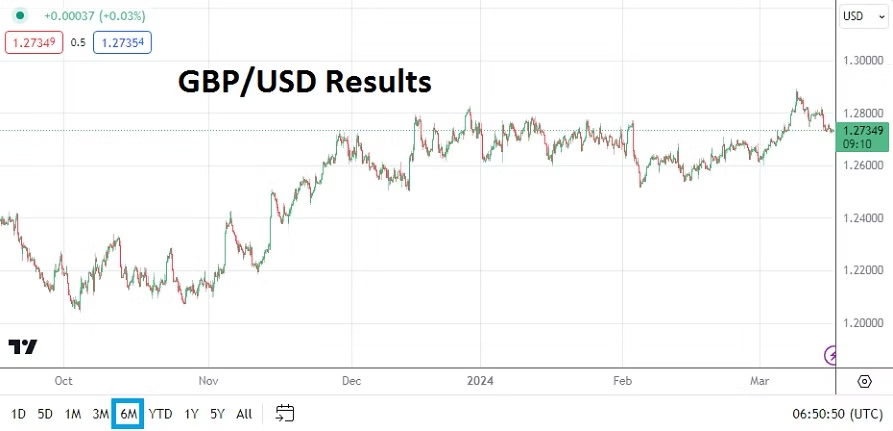
GBP/USD One Month Chart on 6th of May 2024

Thursday, 9th of May, U.S Weekly Unemployment Claims – investors will keep their eyes on the jobs report. If the numbers come in around expectations this would allow risk appetite to remain strong in the near-term.

Friday, 10th of May, U.K Gross Domestic Product – an expected gain of 0.1% is forecast. GBP/USD traders who have bullish sentiment will be looking for the number to match expectations or beat the anticipated result. If the number is weaker, this could cause a reversal lower in the GBP/USD and an attempt to push back against gains made in the currency pair recently.

Friday, 10th of May, U.S Consumer Sentiment and Inflation Expectations via the University of Michigan – these readings will be watched by investors to see if consumers continue to show decreasing confidence in the U.S economy. While it sounds counter intuitive to want eroding sentiment regarding the ability to spend money, this would create more ammunition for the Federal Reserve to consider an interest rate cut. The Inflation Expectations could be the catalyst for traders going into the weekend regarding the USD.

post203

AMT Top Ten Miscellaneous Observations for 3rd of May 2024

AMT Top Ten Miscellaneous Observations for 3rd of May 2024

10. Formula One: The Miami Grand Prix race will be held on Sunday. Whispers have been heard that Red Bull driver Max Verstappen has been approached by Mercedes bidding an annual contract over 150 million USD, but that he has not accepted the offer. However, Adrian Newey, engineer and CTO of Red Bull Racing, has confirmed he is leaving the team after 19 years of leadership. F1 certainly needs more competitive racing, a shake up at Red Bull could deliver this for the sport.

9. De-movements: Desire for decolonization, decarbonization, depopulation, turned into delusion and dehydration for Columbia University protestors and the need for a glass of water per the request of a student leader. Perhaps de-escalation is next.

8. Geopolitics: The nation of Georgia is dealing with demonstrations as some citizens show disdain regarding feared political influence from Russia. Georgia has an approximate population of 3.7 million. The East European and West Asian country has seen civil disobedience on the streets of Tbilisi increase this week.

7. Lower Values: Cocoa is near 7,658.00 USD per metric ton as of this morning, on the 19th of April it traded above 12,000.00 briefly. BTC/USD is around 59,250 after having faced headwinds this week.

6. Gold: The precious metal has sold off this week and is hovering near 2,300.00 per ounce as concerns build about USD outlook remaining strong over the mid-term. A low of nearly 2,282.00 was seen on Wednesday. Today’s publication of U.S economic data will push the price of Gold around.

5. Mixed Trading: Equity indices have produced uneven results this week as investors try to find equilibrium. Optimism almost always is the eventual emotion long-term institutional market participants lean towards. The S&P 500, Dow 30, and Nasdaq Composite all gained yesterday, but remain below highs from earlier in the week. Behavioral sentiment appears fragile and many Fed observers are disgruntled.

4. Uncertainty: The Federal Reserve has admitted it is unsure about future economic progress this calendar year. When questioned about the potential of stagflation Fed Chairman Jerome Powell said he see no signs of this – while forgetting to add that politically saying such a thing would likely cost him his job. And lets remember, the Fed claimed they thought inflation was transitory in July of 2021.

3. Bank of Japan: A battle is underway with the USD/JPY as the BoJ has staged two interventions this week. Intent on trying to create economic growth via stronger exports, while allowing import inflation to be seen, the BoJ interest rate policy remains dovish. The USD/JPY is near 153.230 now, but it is unlikely to go into the weekend with this price. An apex on the 29th of April approached the 159.610 ratio. Financial institutions and Japanese Yen traders must remain alert.

2. High Anxiety: Day traders in Forex, equity indices and commodities have certainly seen heightened volatility and the choppiness is going to persist. Retail brokers will welcome speculators with open arms and point to opportunities, but traders need to understand the ‘casino’ often is making money via losses incurred because of leveraged wagers which turn into losing bets when price velocity hits.

1. Jobs Data: Yet another opportunity for inflation to be seen today via the Average Hourly Earnings numbers. A cautionary road sign was seen this Tuesday when the U.S Employment Cost Index came in with a stronger than anticipated quarterly gain of 1.2%. The USD will remain a lynchpin in many financial assets, and Treasury yields should be watched after the employment statistics have been printed.

postN2.1

Impact: Powell’s White Flag, Inflation Data, and the BoJ

Impact: Powell's White Flag, Inflation Data, and the BoJ

Federal Reserve Chairman Jerome Powell’s waving of the ‘white flag’ last Tuesday, when he admitted that inflation was producing stronger than anticipated data had been essentially wagered on since the second week of March by financial institutions. Powell’s speech acknowledging the Fed will find it difficult to cut the Federal Funds Rate in the mid-term (and probably at best not until late this summer) simply verified Forex positions which had already been taken by large players who could afford to make mid-term wagers.

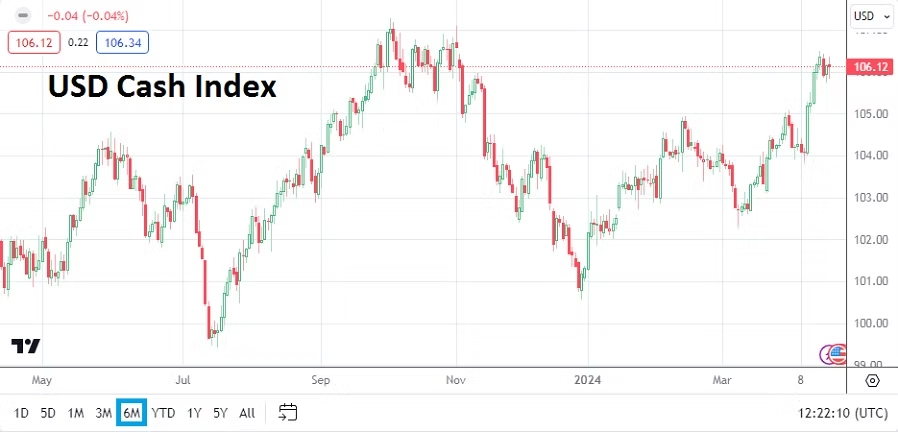
The USD Index has returned to early November 2023 values, and appears able to challenge late September and October prices if inflation data this week causes more volatility, which should put traders of major currencies like the GBP, EUR, JPY and others on full alert. After the USD spiked higher from the 10th to the 12th of April, Forex speculators have seen dynamic action incrementally flirting with stronger USD results the past week and a half.

USD Cash Index Six Month Chart as of 21st April 2024

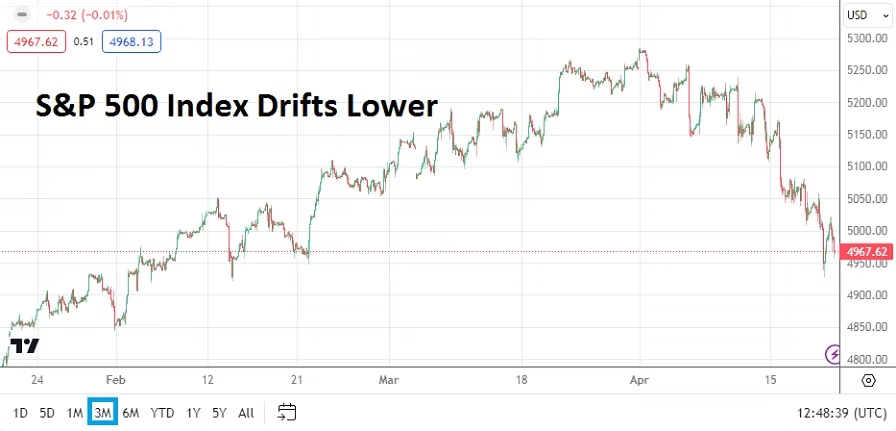
Nervous trading continues to be seen in U.S equity indices. The Dow 30 and the Nasdaq 100 are fighting near ratios they touched in the last week of January. And the S&P 500 is traversing ground from the first week of February.

S&P 500 Three Month Chart as of 21st April 2024

Content

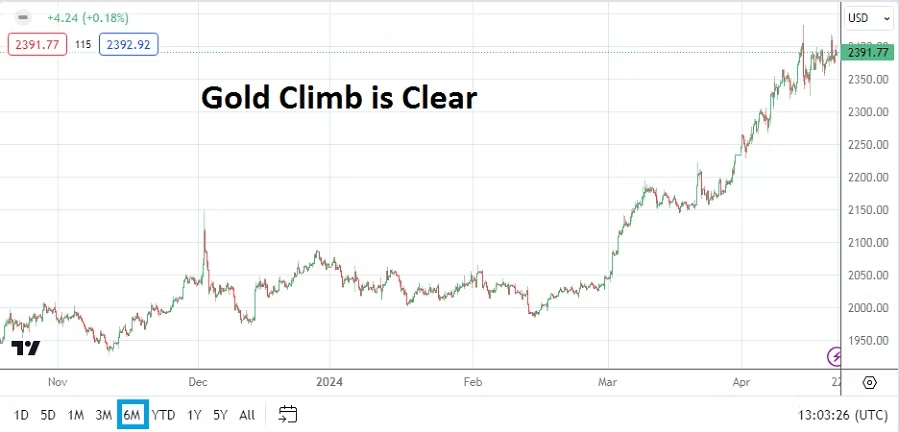
Gold Six Month Chart as of 21st April 2024

Gold remains speculatively high as its hovers near 2,400.00 USD per ounce. The price of the precious metal has not given back its gains made since the start of March and this is intriguing because of the ‘known’ USD inverse correlation, which had proven to work well with the precious metal over the past couple of years but has been stopped in its tracks for the moment. Technically Gold may look overbought, but geopolitical concerns and the prospect that some central banks may be strong buyers could be fueling the rather incremental gains. Retail traders of Gold need to be careful because price action is likely to produce more surprises.

Forex has been turbulent the past handful of months as shifting behavioral sentiment has created choppy conditions. This coming week contains large fundamental risk events via data releases traders should monitor. USD/JPY speculators will also have to contend with the Bank of Japan.

Monday, 22nd of April, China Loan Prime Rates – borrowing costs are anticipated to remain at the current benchmarks. China produced slightly better Gross Domestic Product results last week, but Industrial Production numbers were weaker. Consumers in China remain burdened by decreasing home values and concerns about the economy.

Tuesday, 23rd of April, European Union and U.K Manufacturing and Services PMI – E.U results via the PMI readings are expected to show slight improvements. However the readings from the United Kingdom are anticipated to come in flat. The EUR/USD and GBP/USD will be affected by the results, but the currency pairs will likely remain focused on U.S data later in the day.

Tuesday, 23rd of April, U.S Purchasing Managers Index – the Manufacturing and Services sectors are expected to produce slightly better readings than the previous month. These results will be interesting taking into consideration the Empire State Manufacturing Index numbers last week were bad. The PMI statistics will provide some impetus to the broad Forex market.

Wednesday, 24th of April, Australia Consumer Price Index – inflation data is anticipated to be higher than the previous month’s results. While stronger inflation is not something that will make consumers happy in Australia, stubborn price results may keep the AUD/USD slightly steadier. The currency pair is traversing values last seen in the second week of November 2023 as of this writing.

Thursday, 25th of April, U.S Advance Gross Domestic Product and Price Index – these numbers are certain to have an impact on all financial assets. A decline in growth is anticipated in the U.S compared to the previous month’s result, but the Price Index is expected to show an increase. Jerome Powell having come out last week and said inflation is causing uncertainty within the Federal Reserve, may have a bit of inside knowledge regarding this GDP inflation number and ‘tipped his hand’. If this inflation gauge is higher than anticipated it could pour fuel onto the already volatile USD. All Forex traders need to pay attention to these results and be prepared with solid risk management.

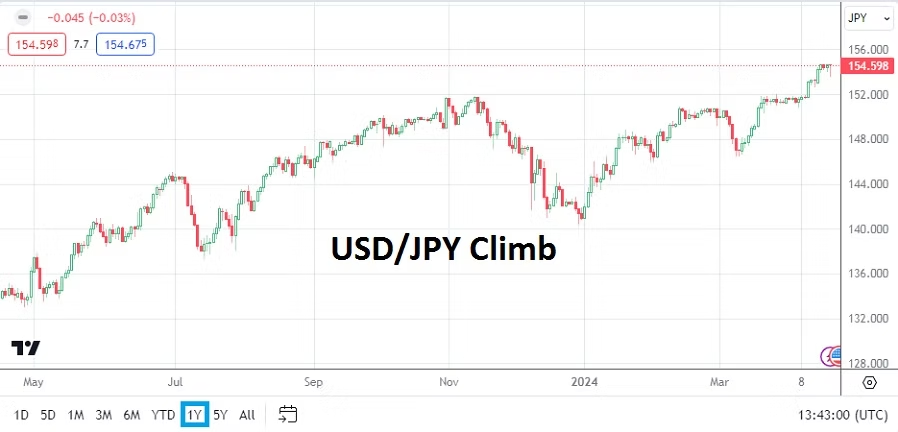
USD/JPY One Year Chart as of 21st April 2024

Friday, 26th of April, Bank of Japan – in what has already proven to be a couple of weeks filled with drama for the USD/JPY, the BoJ will step into the limelight. During their last central bank meeting the Bank of Japan increased the Policy Rate to 0.10%. It was the first time the BoJ hiked interest rates in 17 years. The USD/JPY is trading at values last seen in June of 1990. The Nikkei 225 has come off of recent record heights, but the famed Japanese stock index is also trading within territory seen in January of 1990. Business activity via the Core Machine Orders and the Tertiary Industry data last week were stronger than anticipated.

The Bank of Japan may want to maintain a weaker USD/JPY equilibrium to continue fostering domestic growth. However, many financial analysts have been calling on the BoJ to become more hawkish regarding monetary policy. The interest rate decision is certain to cause immediate volatility before and after the Policy Rate is made public. USD/JPY traders need to be prepared for fireworks. A slight raise of the interest rate seems to be needed, but after the March hike the BoJ may prove conservative again. The 34 year lows now being seen in the Japanese Yen are astonishing.

Friday, 26th of April, U.S Core PCE Price Index, and Inflation Expectations – the data from the government, and the reading from the University of Michigan will close the curtain on a big week of economic statistics for all traders. The USD will react to these outcomes. It should be noted the previous Inflation Expectations data from the University of Michigan caused a storm in Forex when it came with 3.1% gain.

postN77.1

Forex: Behind the Curtain as Speculative Deja Vu Strikes

Forex: Behind the Curtain as Speculative Deja Vu Strikes

Friday jobs reports came in stronger than anticipated on the surface, and this led to a roller coaster like ride for Forex traders as results were acted upon by financial institutions. However, a look behind the data shows ‘positive’ results were spurred on by part-time hiring and government influences leading to a notion that jobs numbers were not exactly a ray of sunshine regarding U.S economic health. The suspicious results cause a desire to look for ulterior motives, and to wonder if election year politics are playing a role in the U.S employment picture.

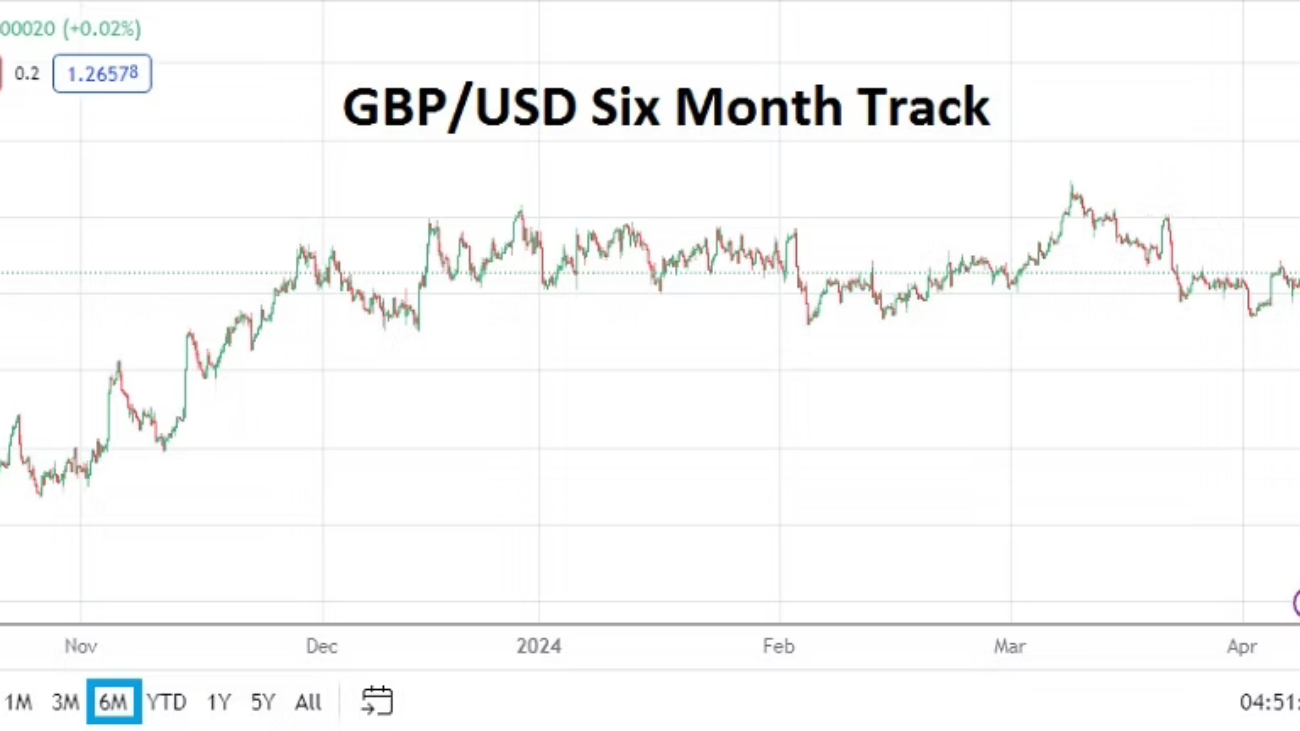
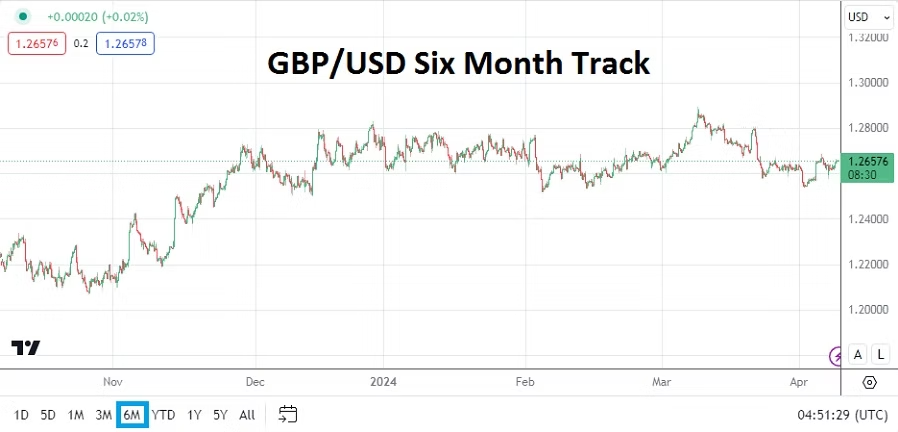
GBP/USD Six Month Chart as of 9th April 2024

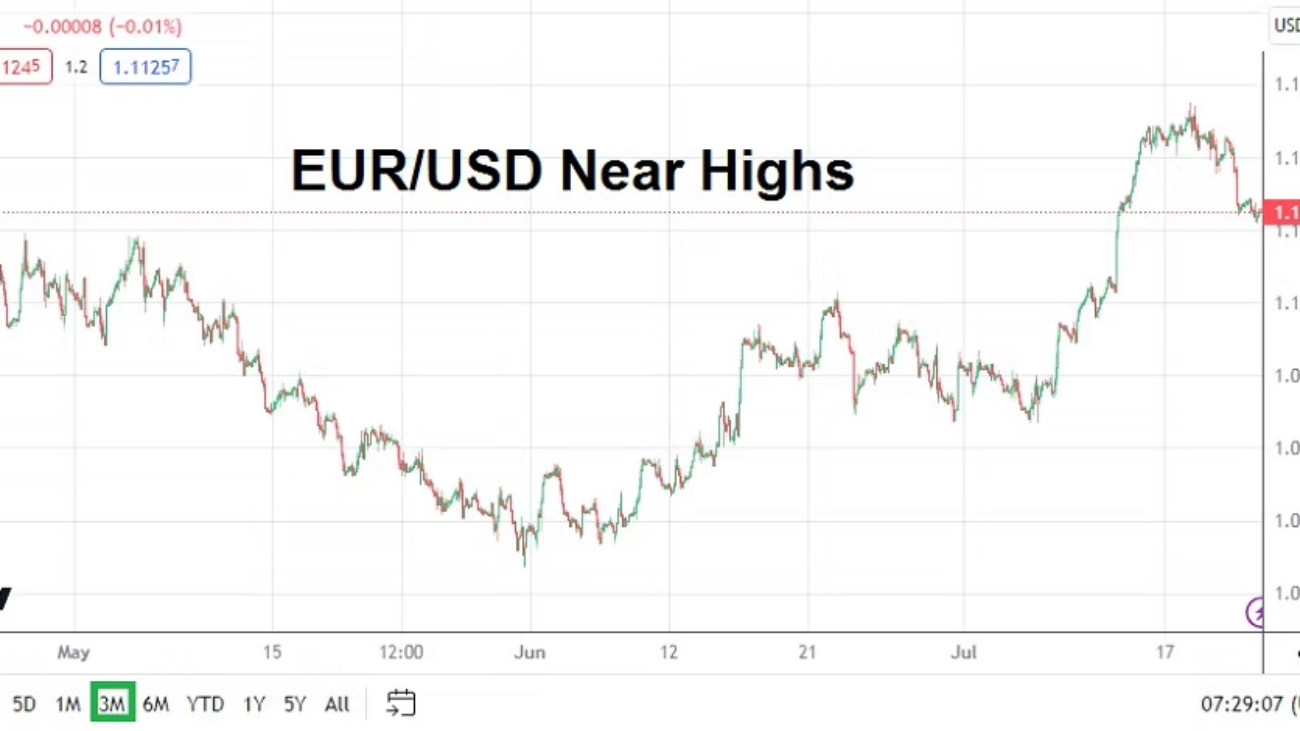
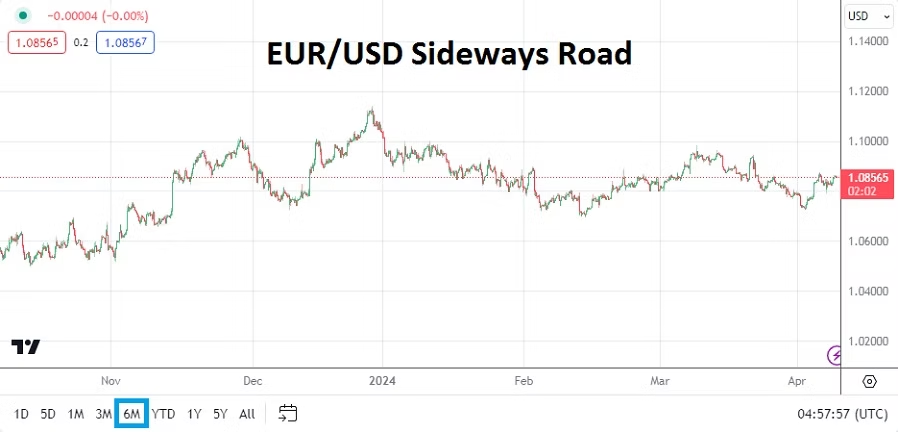
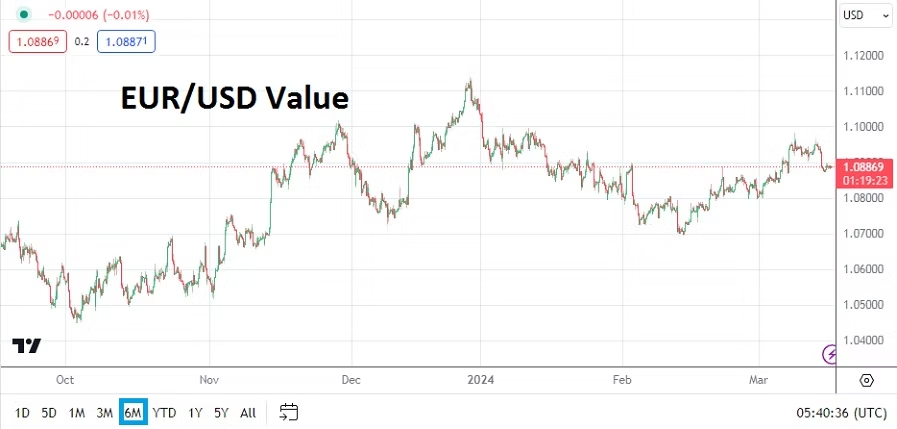
The GBP/USD and EUR/USD are rather insightful for technical and fundamental traders. The currency pairs are languishing as of today’s values near pricing that was seen in the second week of December. Since the ‘announcement’ from the U.S Federal Reserve on the 13th of December that a change in monetary policy would begin to occur in 2024, in actuality nothing has really happened, except government ‘speak’ trying to sound as if everything is understood and in control, while it is clearly not.

Economic data from the U.S and Europe has continued to be soiled by mixed results, and retail speculators looking for a trend to emerge have had to deal with choppy conditions. Financial institutions remain unclear about interest rate outlooks. The Fed while trying to ‘sound’ dovish rhetoric remains locked within a Google engine keyword mantra as they mutter the phrase ‘over time’ when trying to convince people that interest rates will ‘eventually’ be cut.

Last week leading up to the Non-Farm Employment Change numbers, many FOMC members were offering cautious tones about the Federal Funds Rate and warning it should not be changed yet. The implication of the Fed’s verbiage could lead some to suspect they have all practiced statements handed to them by their overlords who are concerned this is an election year and jobs are in jeopardy.

EUR/USD Six Month Chart as of 9th April 2024

Which leads us back to Forex and all financial assets, as investors try to swim waters which have left fundamental perspectives grasping at data which is not easy to decipher. U.S government policy is practicing fiscal spending that is causing massive debts, and perhaps influencing hiring data which may be more akin to putting lipstick on a pig. Many U.S voters seemingly lean towards electing officials who promise to hand out the biggest ‘social rewards’, while ignoring there will be a price to be paid down the road.

The Federal Reserve in the meantime tries to sound optimistic about inflation eroding, but concerns due to U.S government debt being accrued, and global geopolitical affairs combined with energy policy which is making it more expensive to maintain cheap transportation, efficient agriculture and manufacturing, shadow the Fed’s hopes. WTI Crude Oil remains over 86.00 USD per barrel. Gold is trading at record high values and above 2300.00 USD. Does anyone see the dangerous connections? Equity indices should be watched as a barometer this week.

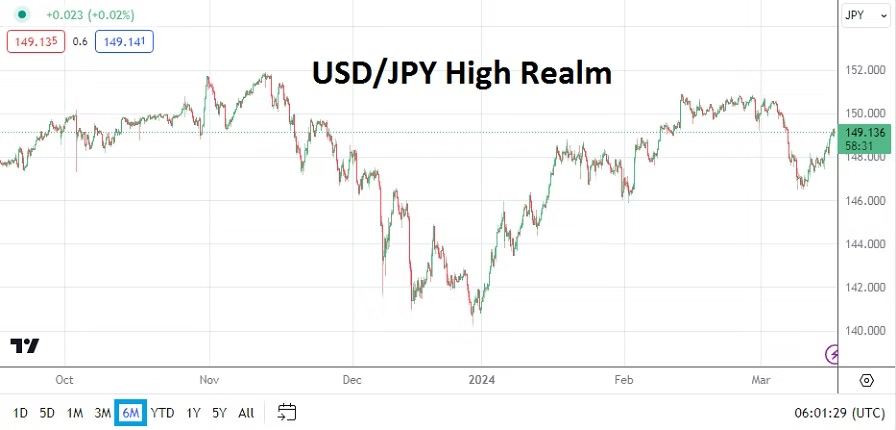
USD/JPY Six Month Chart as of 9th April 2024

Monday, 8th of April, Japan Average Cash Earnings and Economic Watchers Sentiment – yesterday’s reports matched expectations regarding wages, but workers surveyed noted their concerns about incremental inflation which is being seen in Japan. The USD/JPY is challenging November higher values and the Bank of Japan has been widely criticized for not raising interest rates more aggressively. However, it is possible the BoJ wants the Japanese Yen to remain within its weaker price range to spark a stronger Japanese economy via exports.

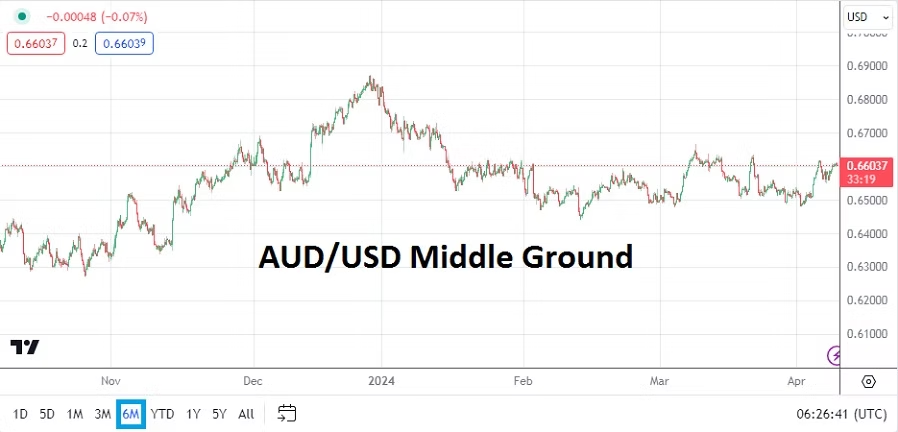
AUD/USD Six Month Chart as of 9th April 2024

Tuesday, 9th of April, Australia Westpac Consumer Sentiment – the results via the consumer reading came in negative. The AUD/USD like the GBP/USD and EUR/USD is traversing values tested in the second week of December 2023, leading to the feeling of deja vu.

Wednesday, 10th of April, U.S Consumer Price Index – you have heard this before, the inflation reports from the States are going to rattle the financial markets including Forex. The USD is certain to react. Data from the U.S has produced surprises aplenty in the past few months. The Consumer Price Index is important and day traders certainly need to pay attention.

Thursday, 11th of April, European Central Bank – the ECB is not expected to change its Main Refinancing Rate, but many analysts believe they should cut borrowing costs. However, the ECB will likely remain within the camp of choosing to ‘wait and see’. The ECB Press Conference with Christine Legarde has widely become regarded as an opportunity for political speech as much as an economic dialogue. Recent data from the European Union suggests the worst of the recessionary cycle is gone, but German Trade Balance numbers released on Monday were negative, highlighting hurdles remain. Inflation is a worry, and a cut to the interest rate might be able to help spur on economic activity while counting on lagging data to prove proactive policy should be implemented. But this likely is not going to happen and the EUR/USD will remain problematic.

Thursday, 11th of April, U.S Producer Price Index – these slew of reports should be watched carefully. If the data is stronger than expected it is likely a part of the residue caused by higher energy costs that have affected logistics and created more expensive raw materials which are needed to produce goods. It was the higher PPI reports last month that caused dramatic tidal shifts in Forex, speculators should brace for the potential of additional mayhem.

Friday, 12th of April, U.K Gross Domestic Product – last month’s GDP numbers from Great Britain came in slightly higher than expected with a 0.2% gain, this report is anticipating growth of only 0.1%. Traders should take a deeper look at the statistics upon publication and check for revisions to past months. The U.K economy has been struggling, the ‘growth’ results will affect the GBP/USD before going into the weekend.

postN51

AMT Top Ten Miscellaneous Entries for the 22nd of March 2024

AMT Top Ten Miscellaneous Entries for the 22nd of March 2024

10: Jefferson: Jon Meacham’s Thomas Jefferson The Art of Power provides well written historical and psychological insights concerning one of the U.S Founding Fathers.

9. Shohei Ohtani: Major League Baseball has a gambling scandal. Claims that Ohtani’s interpreter ‘stole’ over 4 million USD from the player to pay off gambling debts beg for questions.

8. Saudi Arabia: The nation has announced it plans on investing 40 billion USD into Artificial Intelligence sector companies via its Public Investment Fund (sovereign wealth fund) and potential business partners.

7. Steve Jobs: Apple’s innovation and tech leadership appears to be weakening as the absence of its deceased leader fades into memory, and competitors grow.

6. Bank of Japan: Monetary policy was finally shifted on Tuesday, an interest rate of 0.10% was instituted, today’s National Core CPI data came in at 2.8%. USD/JPY is currently around 151.400 suggesting financial institutions believe the BoJ Policy Rate may have to be raised again.

5. Gold & Forex: The precious metal challenged 2223.00 USD on Wednesday after the Fed’s FOMC rhetoric but is trading near 2165.00 as of this morning, this as the USD has gotten stronger again producing FX volatility.

4. Hot Chocolate: Cocoa finished yesterday at 8477.0 USD per metric ton, the commodity cost 2880.0 USD one year ago. What and who are manipulating the market?

3. China: Official Foreign Direct Investment statistics are supposed to be released soon. China argues that the fall of foreign investment capital is being reported with bias and not taking into consideration the impact of coronavirus, global monetary policy changes, and cyclical investment fluctuations. However, the FDI numbers remain troublesome and should be watched.

2. Risk Appetite: Major U.S equity indices including the S&P 500, Nasdaq Composite, and Dow Jones 30 are challenging record highs as behavioral sentiment remains exuberant, along with Japan’s Nikkei 225.

1. Interest Rates: The Federal Reserve has hinted three interest rate cuts ‘could’ happen this year, this while inflation in housing, transportation and food remain significant for U.S consumers. The Fed seems to be indicating it believes U.S jobs data will get worse. Political shadows hover over the central bank as the presidential election draws closer. The Fed only has 6 FOMC meetings left and appears to be playing with fire.

postN80.2

Risky Outlooks: Central Banks and Inflation Colliding

Risky Outlooks: Central Banks and Inflation Colliding

Most traders and investors begin their pursuit of financial assets with an optimistic perspective. However, the markets and ability to speculate also allows those who have other outlooks to equally participate. The past week once again delivered U.S inflation data which was not anticipated. While last Tuesday’s CPI results came in slightly stronger than expected, it was Thursday’s PPI which provided surprises for many.
Producer Price Index Warning from AMT for the 14th of March 2024

Yet, some market participants may not have been utterly shocked by the results. Perhaps it was lucky to ‘guess’ the PPI numbers could cause volatility last Thursday, but the ability to be alert and attentive to the possibility of risk should not be ignored. Risk management is important for all traders.
This coming week will continue to be intriguing for day traders as they try to sail through speculative waters which are going to deliver shifting behavioral sentiment tides. A parade of central banks are ready to step into the limelight and they will focus on the word: inflation. Technical traders who wager on support and resistance levels in the coming days should not be scorned, because sideways and volatile trading results are likely.

U.S equity indices began to struggle the middle of last week, Gold has traded lower and Treasury yields have ticked upwards in recent market action, this as sentiment has again had to acknowledge economic outlooks remains problematic. Trading decisions this week will depend not only on what the central banks say and ‘do’, but also focus on the duration that a speculative position intends to be working.

Monday, 18th of March, China Industrial Production – a gain of 7.0% has beaten the expectation per the data already published this morning. Retail Sales numbers came in slightly below estimates, but Fixed Asset Investment numbers were better than anticipated. However, China’s data remains troublesome and the economic path ahead for the nation must overcome deflation and trust issues from international investors. A lack of confidence from the Chinese public about the value of Real Estate and the over abundance of available property is causing major headwinds economically.

EUR/USD Six Month Chart as of 18th March 2024

Monday, 18th of March, E.U Final Core Consumer Price Index – the European Union will release crucial inflation data. An expected gain of 3.1% is the estimate. While this data release is not considered vital by many investors, the inflation statistics should be watched. The EUR/USD has produced mixed results the past four months as shifting behavioral sentiment due to battling perceptions regarding central bank policy outlooks converge.

USD/JPY Six Month Chart as of 18th March 2024

Tuesday, 19th of March, Bank of Japan – the BoJ will deliver their Monetary Policy Statement and Policy Rate. While no numerical change is expected from the BoJ, signs for a change in rhetoric will be looked for as central bank observers try to read the tea leaves. The Japanese economy is within an intriguing spot, there have been signs of improvement, but the Bank of Japan is likely to remain on a conservative path regarding negative interest rates for the moment. The USD/JPY remains within the higher realms of its price range as the currency pair grapples with global inflation outlooks.

AUD/USD Six Month Chart as of 18th March 2023

Tuesday, 19th of March, Reserve Bank of Australia – the RBA is expected to parrot the pronouncements of the other central banks as they point to stubborn inflation and ‘improving yet lackluster’ economic outlook. Trading in the AUD/USD has been choppy and the volatility is likely to continue within the known price range.

Tuesday, 19th of March, Canada CPI – the Consumer Price Index data is anticipated to show inflation remains remains sticky in the ‘Northern Tundra’. The CPI report from Canada should be monitored because of the strong relationship between the U.S and Canadian economies. The USD/CAD will react to any surprises.

Wednesday, 20th of March, U.K Consumer Price Index – yet another important inflation report. Great Britain has been a ‘poster child’ regarding stagflation. The ugly word is not something central banks, nor governments want to discuss, but the simple truth is that problematic inflation and limited growth equal stagflation. The statistics from the U.K should be examined. The economic health of Great Britain is often a solid reflection of global conditions.

Wednesday, 20th of March, U.S Federal Reserve – the Federal Funds Rate, FOMC Statement and Fed Press Conference will be focal points for investors. Except importantly, not much is likely to be said be Jerome Powell that isn’t known already. Inflation reports from the U.S have highlighted stubborn higher prices. U.S economic numbers regarding manufacturing and consumer confidence have started to turn lower, but the Fed is not going to change its policy this week. Talk about ‘becoming’ dovish will be heard, but the U.S central bank still wants to see more proof that inflation can erode before they start to cut interest rates in the mid-term.

Thursday, 21st of March, E.U Manufacturing and Services PMI, readings will come from France, Germany and the U.K via the Purchasing Managers Index results. Most of the data will likely continue to point to lackluster outlooks, only the Services PMI from the U.K is expected to offer a glimmer of hope regarding ‘expansion’. If the Flash numbers come in worse than expected this could cast a shadow over behavioral sentiment for European investors.

GBP/USD Six Month Chart as of 18th March 2024

Thursday, 21st of March, Bank of England – the BoE is likely to keep its Official Bank Rate within place and their pronouncements via the Monetary Policy Summary may sound like a replica of the U.S Federal Reserve. Inflation and growth will be spoken about and the BoE will try its best to paint an optimistic picture. The GBP/USD will react to the gyrations, but the range of the currency pair will have already seen tests in the preceding days. The past four months have produced a value as of the 18th of March, that is hovering slightly above late November and early December 2023 prices.

Friday, 22nd of March, U.K Retail Sales – a negative result of minus -0.3% is expected. The retail data will certainly be watched, but following the massive week of central bank statements and data which have already been published, this number may prove to be rather anti-climatic unless there is a massive surprise.

Friday, 22nd of March, E.U ECB and U.S Fed – Officials from both central banks will engage in a variety of speeches in Europe and the U.S, but again after the week’s worth of central bank rhetoric which has been heard, investors are unlikely to react much to these soundbites from members of the European Central Bank and Federal Reserve. Existing behavioral sentiment which has been produced in the dynamic days beforehand should remain the central theme as investors go into the weekend.

postN67.1

To Risk or Not to Risk that is the Speculative Question

To Risk or Not to Risk that is the Speculative Question

Last week U.S equity indices demonstrated a rise in value. The highs achieved in the Dow Jones Industrial Average, the NASDAQ Composite and the S&P 500 by the end of last week only touched values seen in the middle of October. And while their ratios remain below the highs of early August and falling values seen in September, the move upwards was certainly welcome by financial institutions and day traders who hold optimistic viewpoints.

U.S Treasury yields declined last week. While incremental decreases were made through Thursday, the U.S Non-Farm Employment Change and Average Hourly Earnings reports both coming in below expectations on Friday, created a stronger dose of lower yields. The 5, 7, 10 and 30 year U.S Treasuries are now trading near mid-September values. The 2 and 3 year notes are moving around early September numbers.

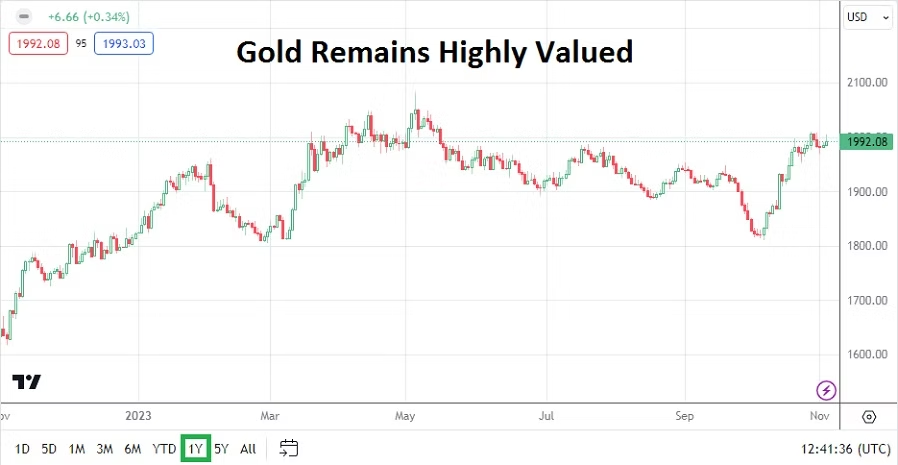
Gold One Year Chart as of the 5th November 2023

The USD grew weaker in slight movements against many major currencies last week, but upon the weaker jobs numbers found increased selling price velocity. Gold however remains suspiciously strong, which brings up the notion that risk adverse ‘insurance’ is still being held closely by investors who remain nervous.

The Middle East crisis is ongoing in Israel against Hamas and to a limited extent Hezbullah, but financial institutions have seemingly been able to digest the news and remain tranquil and vigilant. Another sign of calm coming into the global financial markets is the price of WTI Crude Oil which finished the week under 81.00 USD per barrel.

Economic data will be relatively light this coming week, and behavioral sentiment appears to be the potential larger factor until Friday regarding impetus for day traders and financial houses. Certainly loud global developing news could suddenly erupt and cause nervous investors to falter, but last week’s trading results showed signs of improving risk appetite.

The U.S Federal Reserve met expectations last Wednesday and didn’t raise the cost of borrowing. The mid-term seems to indicate interest rates will remain high, but that the U.S central bank will not raise the Federal Funds Rate anytime soon. The lower than expected inflation report via the Average Hourly Earnings before going into the weekend helped highlight this thinking, although it remains a consideration that is still speculative.

Officials from the major central banks including the BoJ, BoE and Fed will be speaking this week and could cause turbulence with their rhetoric. However, no major surprises will likely come from their mouths. Although the Bank of Japan may rattle the prospects of intervention to keep USD/JPY traders on their toes.

Monday, the 6th of November, Germany Factory Orders – the result is expected to be negative and highlight the nation remains within recessionary conditions. The Sentix Investor Confidence reading will also be released slightly afterwards for the European Union and a worse number than last month’s outcome is anticipated. But the EUR/USD is likely to remain mostly USD centric, even though these reports could cause momentary fluctuations.

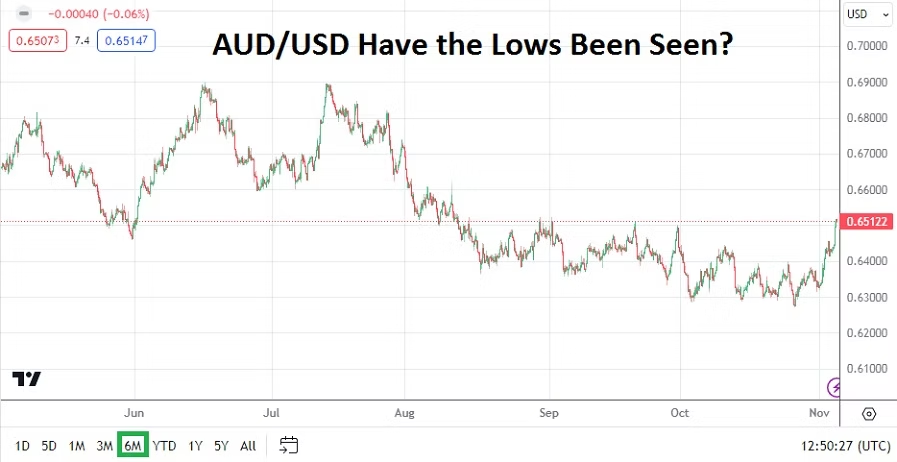
AUD/USD Six Month Chart as of the 5th November 2023

Tuesday, the 7th of November, Australia Cash Rate – the Reserve Bank of Australia is expected to raise its interest rate by 0.25% to 4.35%. Will the RBA take a gamble and not raise the interest rate due to other major central banks holding their rates in place, or will the increase go ahead to fight stubborn inflation while trying inspire some confidence in the AUD? A hike seems to be the direction the RBA will decide upon, having said that, the Australian central bank have surprised financial institutions before.

Wednesday, the 8th of November, U.S 10-year Bond Auction – the results from this sale and the yields that develop within U.S Treasuries will have an affect on Forex. Lower yields than anticipated could signal a weaker USD. However, risk adverse elements will need to be calm for the bond auction to produce tranquil results.

Thursday, the 9th of November, China CPI and PPI – the data from these inflation reports will be watched closely. Chinese economic numbers has shown some signs of stabilization the past few weeks, both of these publications are expected to have negative outcomes. Concerns about the financial pressures domestic consumers are facing regarding housing market values in China and the way in which they spend due to lackluster prospects are concerning. The USD/CNY will be affected in the wake of these statistics, and the USD/SGD could see momentary volatility too if the results prove to be a surprise.

GBP/USD One Month Chart as of the 5th of November 2023

Friday, the 10th of November, U.K Gross Domestic Product – last month’s number came in with an unexpected positive gain of 0.2%, this GDP report is anticipated to show no change. The GBP/USD jumped in value on Friday and financial institutions will be geared towards behavioral sentiment most of this week, but the British GDP data could cause a reaction before going into the weekend.

Friday, the 10th of November, U.S Preliminary Consumer Sentiment via the University of Michigan – the reading is expected to be slightly below last month’s outcome. U.S consumers remain a strong point of light for the U.S Federal Reserve. American consumers have remained spenders, although they have seemingly curtailed purchases of large ticket items such as cars and big appliances. If this data comes in weaker than expected it could propel more selling of the USD. A stronger number than anticipated could spook financial institutions and cause a slight surge in buying of the USD.

postN36.1

Anxiety and Surprising U.S Data for Day Traders to Consider

Anxiety and Surprising U.S Data for Day Traders to Consider

Global central banks stayed in their anticipated lanes last week as the Fed and ECB raised their key lending rates. The BoJ has admitted it is allowing its yield curve to increase, meaning the Japan government is cutting back on purchases of Japanese bonds. Forex produced anxiety and choppy results for day traders.

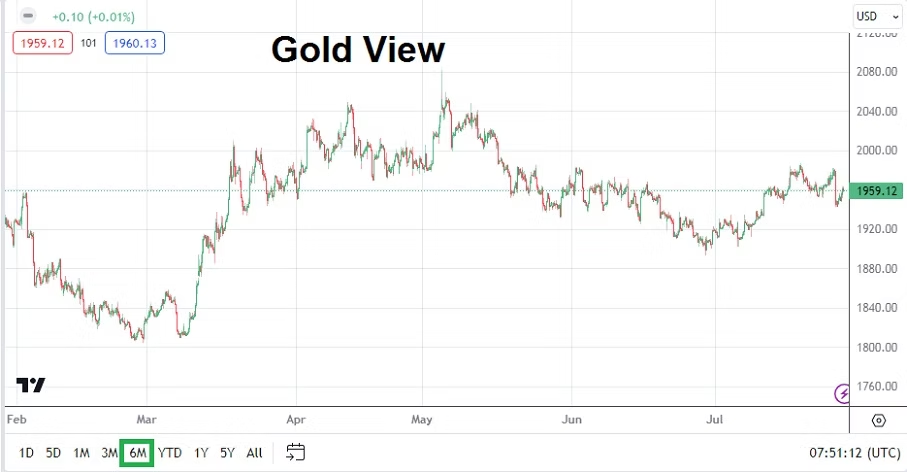
Gold 6 Months Chart as of 30 July 2023

Economic data from the U.S last week provided a strong Gross Domestic Product result on Thursday, and followed with weaker than expected Personal Consumption Expenditures and Personal Income statistics before going into the weekend. Meaning the U.S economy appears to be surprisingly solid, while inflation pressures do indicate they are in decline. The Forex market turned volatile on Thursday and Friday, gold which traded at nearly 1980.00 USD on Thursday went into the weekend near 1959.00.

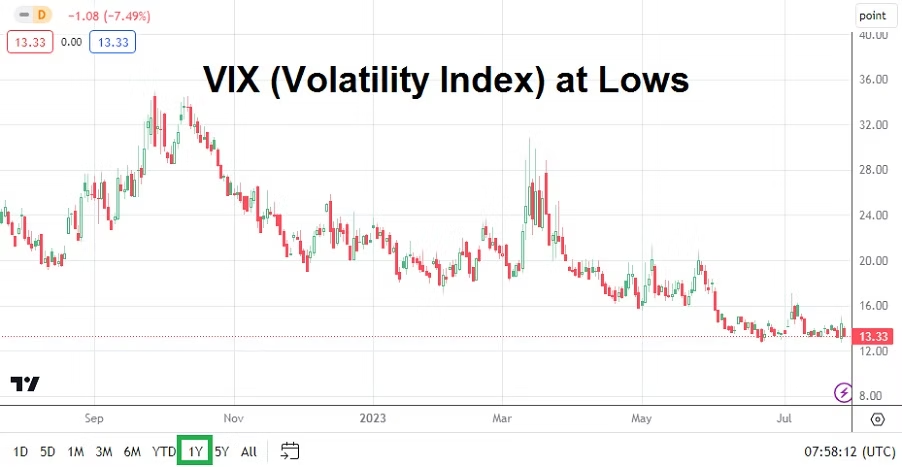
VIX Index 1 Year Chart as of 30 July 2023

Stock markets in the U.S via the major indices continue to incrementally rise and folks waiting for a big sustained selloff are having their patience tested. Perceived volatility in U.S markets is very low and the VIX (Volatility Index) indicates many investors are not taking the time to hedge with options because their confidence is remarkably high. A cautious reminder for traders, one bad day could change all of the optimistic sentiment.

In the cryptocurrency world, folks should continue to keep their eyes on the Binance exchange and its Binance coin. Many digital assets seem to be suspiciously close to important support levels as this week begins and appear vulnerable.

Monday, 31st of July, China Manufacturing PMI – while U.S data surprisingly improves, China has not begun to show signs of a positive turnaround quite yet, and this reading is expected to be below last month’s outcome. China data is a solid barometer of global economic health and traders should give these results proper attention.

Monday, 31st of July, E.U Consumer Price Index Flash Estimates – the European CPI numbers are expected to come in slightly below the previous month’s reading. If for some reason these inflation numbers are higher than expected, this could cause some chaos briefly for the EUR/USD. A weaker number however offers no sound wagering basis for short-term day traders either. Behavioral sentiment appears to be ruling the EUR/USD landscape for the time being, and technical levels should be watched.

Tuesday, 1st of August, Australia Reserve Bank Cash Rate – the RBA is expected to follow in the footsteps of the Fed and ECB and raise its lending rate by 0.25%.

Tuesday, 1st of August, E.U Manufacturing PMI – Germany and France are anticipated to produce similar results to last month’s outcomes. Recessionary pressures are a concern in the E.U and better than expected numbers would be welcomed, but this may prove difficult to demonstrate as economic conditions remain challenging.

Tuesday, 1st of August, U.S ISM Manufacturing PMI – the results from the manufacturing sector in the States should be watched. A slight improvement is expected, but the reading is not expected to produce a wildly optimistic result. An outcome which slightly beats expectations, but is not too strong might make the USD slightly weaker. Global investment institutions are likely hoping for any signs that the Federal Reserve will have to become less aggressive. A lackluster to ‘fair’ ISM Manufacturing PMI result could be evidence larger Forex traders want to see if they are aiming for bearish momentum in the USD.

NZD/USD 3 Months Chart as of 30 July 2023

Wednesday, 2nd of August, New Zealand Employment Change – the jobs statistics are expected to show slightly weaker results from the nation. The NZD/USD remains within the lower elements of its long-term price range. There are many NZD/USD bullish traders waiting for a sustained reversal higher, but it is unlikely to be produced from these New Zealand jobs numbers.

Thursday, 3rd of August, U.K BoE Monetary Policy Summary and Official Bank Rate – the Bank of England remains in a difficult spot and it will likely raise interest rates by another 0.25%. Criticism of the Bank of England has been loud in Britain, but the BoE likely feels it has to remain in line with the Fed and ECB. Recessionary pressures continue in the U.K and inflation remains problematic. Concerns will be heard regarding property mortgages for home owners if the BoE hikes. The GBP/USD will certainly move depending on the rhetoric from the Monetary Policy Summary and talking points delivered by BoE Governor Andrew Bailey.

Friday, 4th of August, U.S Non-Farm Employment Change and Average Hourly Earnings – the jobs data parade will climax at the end of the week, this after starting on Wednesday via the ADP jobs numbers. Investors will watch the Non-Farm Employment Change data carefully and correlate them to the better than expected GDP results from the 27th of July. The wages data from the Average Hourly Earnings is expected to come in with a slight decrease. A weaker inflation result from the wages statistics could cause additional softness in the USD. However, recent data from the U.S has been hard to predict correctly, and day traders may want to sit on the sidelines until all the jobs numbers are digested.

postN33.1

Federal Reserve Bank Decision and FOMC Statement Wednesday

Federal Reserve Bank Decision and FOMC Statement Wednesday

Monday, 24th July 2023, E.U Flash Manufacturing and Services PMI – a slew of Purchasing Managers Index readings will come from European Union nations including Germany and France. Projected outcomes are expected to show slight improvement in the Services readings and mixed results from the Manufacturing sector. The EUR/USD may get a momentary nudge from the published numbers.

EUR/USD 3 Month Chart as of 23rd July 2023

Monday, 24th July 2023, U.K Flash Manufacturing and Services PMI – the British economic reports are anticipated to come in below last month’s readings. The U.K did report slightly better Retail Sales numbers last week, but a Consumer Confidence outcome was weaker than expected. The GBP/USD might react briefly to the U.K PMI data.

Monday, 24th July 2023, U.S Flash Manufacturing and Services PMI – the reports from the States are forecast to be below last month’s numbers. U.S data produced nervous and weaker economic insights last week from the Housing sector. The Federal Reserve will certainly give some attention to the PMI data as they try to gauge the strength of the U.S economy while likely preparing to hike the Federal Funds Rate on Wednesday. The PMI statistics could factor into the Fed’s outlook, which is the crucial ingredient that financial institutions want to understand and still have skepticism about while considering the Federal Reserve’s potential actions later this week.

Tuesday, 25th of July 2023, Germany ifo Business Climate – the results are expected to be slightly weaker than last month, showing businesses in Germany are not optimistic about current conditions and outlooks.

Tuesday, 25th of July 2023, U.S CB Consumer Confidence – the report is anticipated to show U.S consumers are feeling more confident about their spending habits. If this report is stronger than expected, it could be one final clue before the U.S Federal Reserve springs into action the next day.

Wednesday, 26th of July 2023, U.S Federal Funds Rate and FOMC Statement – most financial institutions are prepared for a hike of 0.25%, which would bring the key borrowing cost to 5.50%. This number has been anticipated for a handful of weeks and any deviation would cause volatility. Forex has largely priced in the rate hike. Speculators need to pay attention to the FOMC Statement regarding outlook regarding comments on inflation, growth and what the Fed is prepared to do moving forward.

Because U.S inflationary price pressures showed a decrease recently, many financial institutions are likely betting on a slightly more optimistic sounding FOMC Statement. The question is if the Federal Reserve will risk sounding dovish, or continue to voice disciplined rhetoric about its ability fight inflation as needed and keep a middle ground. For all the criticism of the U.S Federal Reserve if it can raise interest rates without causing a credit crunch on mid and small sized banks the remainder of the summer, that would be a victory – particularly if it is perceived the U.S central bank will not raise hike the Federal Funds Rate the remainder of the year. However, that remains to be seen.

Thursday, 27th of July, E.U European Central Bank’s Main Refinancing Rate and Monetary Policy Statement – the ECB is expected raise their key lending rate by 0.25% and back up their recent ‘tough’ and heightened rhetoric regarding inflation. Again, day traders should understand the interest rate hike to 4.25% has been anticipated and largely digested into Forex. The question is the ‘voiced’ concern from the ECB within its Monetary Policy Statement. Financial institutions will react to the ECB Press Conference led by Christine Legarde, which comes about half an hour after the release of the Monetary Policy Statement.

USD/JPY 3 Month Chart as of 23rd July 2023

Friday, 28th of July, Japan BoJ Policy Rate and Outlook Report – the Bank of Japan is the one global central bank that marches to its owner drummer and this will not change in the near-term. The BoJ is expected to keep its policies of low interest rates in place, voice concern about inflation and likely say their ‘boat’ remains steady on the water. The USD/JPY will have reacted before to the rhetoric from the Federal Reserve in the middle of the week. Yes, the USD/JPY could see a flourish of volatility on Friday, but most of it will have likely been seen already on Wednesday and early Thursday.

postN30.1

Summertime Behavioral Sentiment Game: Who Do You Trust?

Summertime Behavioral Sentiment Game: Who Do You Trust?

Have we started to reach a polite equilibrium within Forex, gold, equities and bonds for a moment? U.S CPI data just came in below expectations, the decrease of inflation pressures in the U.S will be welcomed. Price ranges are starting to show signs of polite trends in Forex and equities – there seems to be a recognition of basic ideas which are perhaps serving as factors that are ‘accepted’ in the broad markets. Please do not close your eyes for long, because conditions can change in a moments notice, but for the moment the USD is weaker.

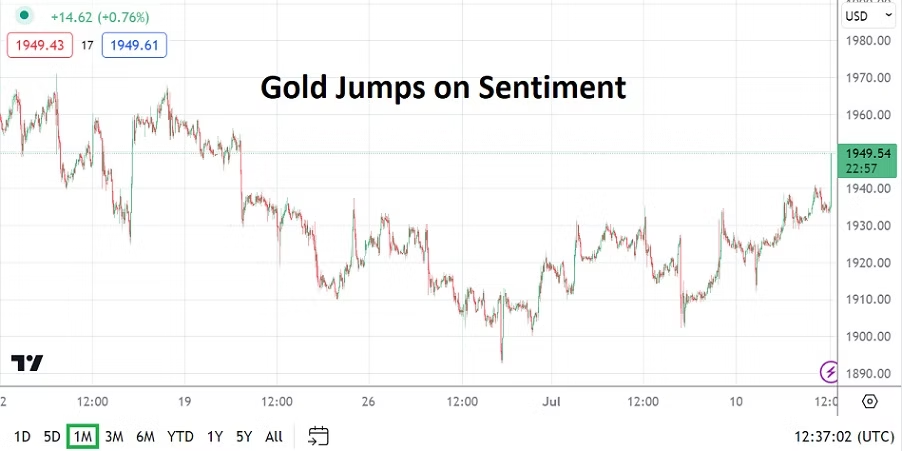
Gold One Month Chart as of 12th July 2023

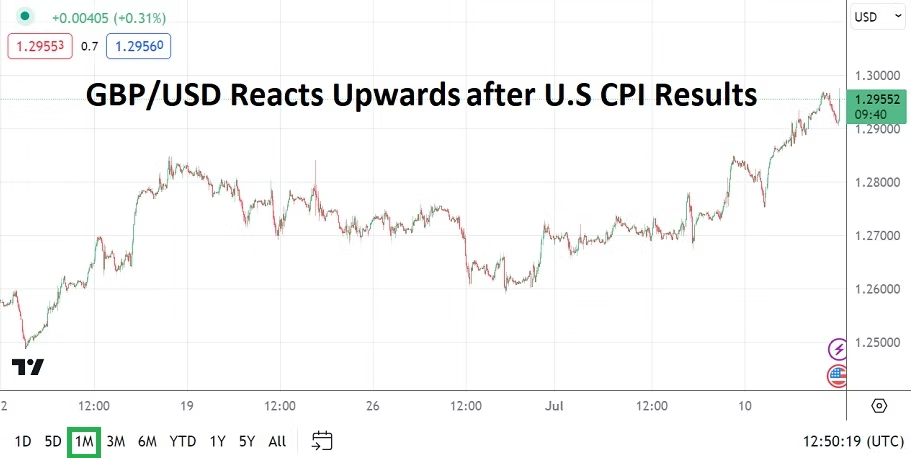
The Federal Reserve could still raise its Federal Funds Rate at the end of July, though today’s CPI data outcome will create headwinds against that notion. There has been a wide voice given by folks who say the Fed shouldn’t raise rates again, and that real inflation will start to come down and that it is doing so now. The CPI has shown a decrease in U.S inflation – a larger drop than anticipated, which will certainly spur on USD weakness today. This confirms – momentarily – many analysts inflation outlooks who work in financial institutions not related to the U.S Federal Reserve and have been saying price pressures will recede. Yet, inflation is not dead yet and may still be heard. Stagflation is a genuine concern.

Tomorrow’s U.S Producer Price Index will be another opportunity to stir sentiment. Remember folks, outlooks are often adjusted according to facts. But what are facts? Can we really trust them. What are leading indicators, what is data that looks forward instead of backwards – numbers are often offered as evidence but randomness often rules interpretations of data. How do acceptable outlooks really develop when data management and outlooks can change within split seconds depending on the team looking over the quantified math. Humans are naturally optimistic, even when the data is negative, this can lead to bias.

We are in an age when trading software is doing a majority of the large volume transactions, and has been coded by algos processed by quant teams in financial institutions. Do retail traders even have a chance in this type of environment? Yes, retail traders can still manage to find opportunities, but they need to combine technical perceptions with fundamental knowledge of data, and combine the two into a behavioral sentiment outlook depending on their time horizons.

Market dynamics and situations change a lot in the broad markets. Assets move depending on the bias of incoming data. Preconceived notions being acted on and then changing according to need can be done in microseconds because of existing trading technology that financial institutions use. Larger players have an advantage and they are not about to give this up. Timeframes are also different for big trading houses compared to small speculators. It is also important to stress institutional traders could care less about day traders in Forex.

GBP/USD One Month Chart as of 12th July 2023

We have finished nearly a month of summer trading and seem to be confronted by a question of who do we trust? Do we trust the U.S Federal Reserve and its decisions and outlooks? In my opinion, you shouldn’t. But you should also remember the old adage, do not fight the Fed. The U.S central bank is bigger than you and I.

Central banks work together and often coordinate their combined outlooks, while shadows cast from the ‘oversight’ of political leaders rhetoric are frequently given consideration by the Fed, BoE, ECB and BoJ officials even if they claim they are not listening. Inflation is not welcomed by central banks, but because they are largely reactive and not proactive the Fed and others sometimes look uncaring and like fools, while the public sometimes suffer.

Thus we sit and wait for central bank pronouncements, but for the moment we seem to have a good grasp regarding what they will say. And perhaps – for the moment, maybe that is why Forex, gold and equities are trading rather politely. We seem to think we know what is going to be said moving forward for the next few weeks and remainder of the summer – more of the same warnings and interest rate correlations sprinkled in via central bank diatribes.

postN11.1

Week Ahead: Inflation Followed by the U.S Federal Reserve

Week Ahead: Inflation Followed by the U.S Federal Reserve

Monday, 12th of June, U.S Federal Budget Balance – hold down the laughter and snickers please as you wonder why you should care, this as the report shows monthly income versus spending from the month before. Yes, the U.S ‘Debt Ceiling’ bill was passed recently. Very few people are going to pay attention to Budget Balance report, except economists and traders who have ‘skin in the game’ via hedge funds as an example – that make long-term bets, and U.S politicians who want to hoot and holler…….while nothing really gets done to limit wasteful spending in Washington D.C.

Tuesday, 13th of June, U.S Consumer Price Index reports – yes, this inflation data will be important per the monthly numbers showing what consumers are spending. A slight uptick is expected with an outcome of plus 0.2% via the broad statistics – last month’s number showed a gain of 0.4%. The outcome of the broad and core CPI statistics will give the Federal Reserve a sounding board for what will take place on Wednesday via the Federal Funds Rate announcement. Stronger than expected inflation numbers could cause a rupture and nervousness. A weaker result would calm Forex and perhaps make the USD slightly weaker.

EUR/USD One Month Chart as of 11th June 2023

Wednesday, 14th of June, U.S Producer Price Index – these numbers will be released early in the day and will be followed by the Federal Reserve five and half hours later. The inflation outcome via the PPI if stronger than anticipated would cause some caution before the Federal Reserve takes the stage.

Wednesday, 14th of June, U.S Federal Funds Rate, FOMC Statement and FOMC Press Conference – while many analysts seem convinced the Fed will not hike the interest rate this week, there are obviously no guarantees. The FOMC Statement will indicate the U.S central bank’s outlook. Traders who are intent on trading before the official interest rate announcement and statement are playing with fire. Speculators should keep in mind that other central banks have surprised folks with increases recently including Canada and Australia. A hike from the U.S Federal Reserve would surprise a lot of people and financial institutions, but stranger things have happened.

Thursday, 15th of June, New Zealand Gross Domestic Product – the growth numbers which will come out a handful of hours after the U.S Fed leaves the stage will be intriguing and provide NZD/USD traders more impetus into what will likely already be a volatile trading session taking place.

Thursday, 15th of June, China Industrial Production and Retail Sales – these two reports from the economic giant will be watched closely. China’s economy is struggling a bit, and weakness in the housing sector via values are starting to cause a reaction in domestic spending. Industrial Production numbers will give some insights regarding global demand. Economic problems in Europe and North America are certainly not helping matters in China because demand for goods are restrained and hurting the manufacturing sector.

Thursday, 15th of June, U.S Retail Sales – consumers in the U.S have been expected to start producing negative numbers via these statistics, will they begin to do it? A stronger number would be of interest to some, but after Wednesdays’ FOMC Statement and news that will be generated, it is questionable who will give full attention to this report and what affect it could have.

Thursday, 15th of June, E.U ECB Press Conference – this question and answer session could prove to be interesting depending on what the U.S Fed does the day before. Certainly the European Central Bank will give their opinions on monetary policy and economic circumstances in the European Union and abroad. The EUR/USD could be affected.

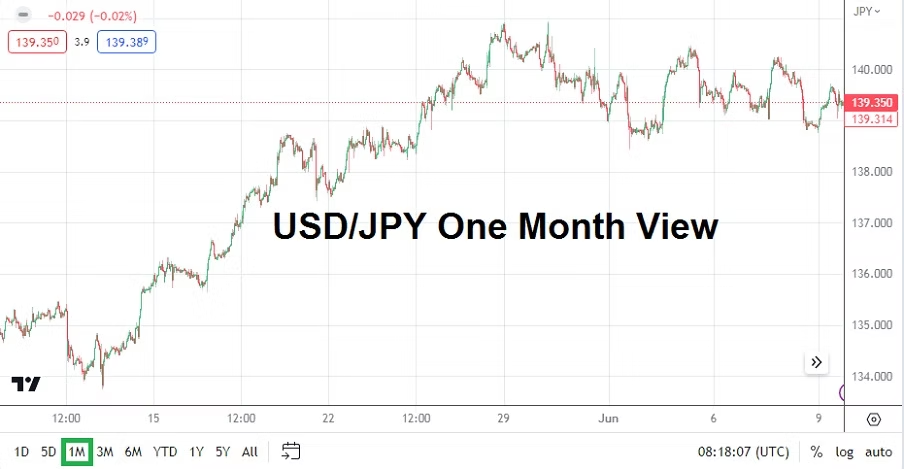
USD/JPY One Month Chart as of 11th June 2023

Friday, 16th of June, Japan BoJ Policy Rate and Monetary Policy Statement – no major changes are expected from the Bank of Japan. This is the one central bank unwilling to change its attitude regarding monetary policy because of the whims of others. Perhaps if the U.S Federal Reserve surprised everyone on Wednesday with a hike, this could change the quiet rhetoric from the BoJ – but even that is doubtful. USD/JPY traders should pay attention to the BoJ Press Conference just in case.

post10

Central Bank Capitulation led by Federal Reserve

Central Bank Capitulation led by Federal Reserve

The 21st and 22nd of September were potentially important signals for traders as the Federal Reserve admitted they remain reactive to inflationary pressures, and other global central banks countered with acts of their own.

While it is difficult and often foolish to believe the markets can be timed, this past Wednesday may have been an important moment for speculators in Forex. Many traders may have veered off into cryptocurrencies or into equities as day traders the past few years, but FX still remains a place that offers volatility and where wagers on price direction can be made.

The Federal Reserve raised their interest rate 0.75% again, and importantly issued a loud admission that the U.S central bank is caught in a reactionary mode. Other global central banks have begun to protect their own currencies too. Jerome Powell, the U.S Federal Reserve Chairman, said he believes the current interest rate is likely at the low end of the spectrum regarding where it has to be to have an affect on current inflationary pressures.

The USD has been strong against many major currencies with a rather unforgiving bullish trend. Raising the Federal Funds rate from 0.25% to 3.25% the past year in the U.S has made short term purchases of U.S debt attractive to many financial institutions. On Wednesday, Jerome Powell made it clear other hikes will be delivered and it is not farfetched to believe the U.S is looking at a potential rate of 4.50% and higher in the spring of 2023. This doesn’t mean the Fed’s policy is correct, it is simply an outlook for the potential Federal Funds Rate based on rhetoric.

  • A Federal Funds Rate in the U.S of 4.00% is likely by early this winter, per the Federal Reserve’s interest rate outlook.

  • Global central banks have reacted to the U.S Fed’s recent interest rate hike, by enacting methods to try and safeguard the value of their own domestic currencies.

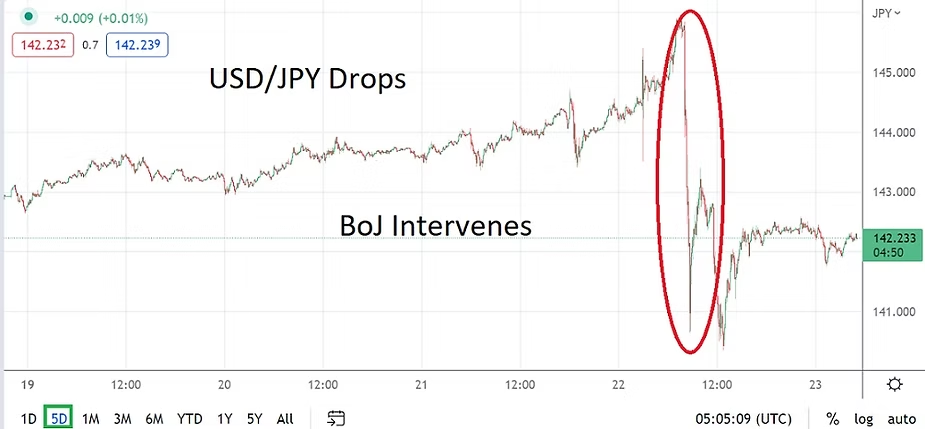
The USD surged ahead slightly before the rate announcement from the Fed, while many other currencies lost value. However, on Thursday the Bank of Japan intervened by starting to buy Japanese Yen against the USD. The Bank of Japan said it will not raise interest rates yet, but its action showed it clearly does not want the JPY to lose additional value to the USD, via the USD/JPY Forex pair. Whether the BoJ’s actions work mid-term remain to be seen.

Global Central Banks feel they must counter the U.S Federal Reserve’s Actions

Other central banks started to act too. The Bank of England and Swiss central bank both raised interest rates yesterday. Speculators who have been watching the USD dominate Forex the past year, may now have to consider that the last two day’s of action via global central banks is a signal an attitude change has taken place, which may begin to affect Forex long term. Traders need to understand opportunity also means there are risks.

Inflation remains high and governments have reached a point where they have had to admit they will have to risk slowing their economies and potentially suffer recessionary pressures to curb price increases. Many central banks likely feel they have to match the hike increases by the U.S Federal Reserve within their own systems to protect the value of their currencies.

BoJ Intervention on the 22nd of September

End of the Dominant USD Bullish Cycle in Forex?

While Japan for the moment refuses to raise borrowing rates, the BoJ’s buying of JPY effectively signals the USD has become too strong and is starting to hurt the Japanese economy. The the Bank of Japan will be interesting to study long term, to quantify if Japan’s lack of raising rates proves to actually be correct in the current environment.

Philosophical differences and central bank maneuvering is complex and has a long history of debate. Having said that the Bank of Japan has been largely scorned by many other central banks the past three decades for its methods, but while Japan has never recaptured the growth numbers it attained in the 1970’s and 1980’s, the nation remains one of the world’s richest.

The action of the BoJ and other global central banks means that speculators may want begin to look at Forex and tinker with the notion that the bullish trend of a dominant USD may start coming to an end. The cycle has been strong and again, it is difficult to say today is the day. Timing the market is often proven wrong, but the messaging from global central banks that they will start to shadow and react to the U.S Federal Reserve’s actions may mean that they will try to curtail the decreasing values of their own domestic currencies with more robust methods.

Day Traders need to understand a Complex Puzzle is Ahead

Forex markets can produce dramatic changes of value abruptly and cause costly losses to traders who bet wildly. The use of too much leverage and a lack of efficient risk management frequently destroys value quickly. However, now may be the time to contemplate testing Forex with the notion the USD may start to incrementally loss value. A lot has to happen. There are plenty of risk events ahead which could lead to wildly unforeseen results. In other words there are no guarantees.

Global equities led by the U.S indices appear very fragile and if the major stocks loss more value, this could also cause a stronger USD. Why? Because the USD would have to be purchased to buy U.S stocks by foreign investors who want a safe heaven. While it may seem contradictory to think U.S equities would be bought in downturns, this is what has historically happened when global financial institutions seek safe havens and believe other places are too dangerous to invest.

Remember financial institutions are not supposed to be day traders, they are supposed to be long term investment vehicles. Meaning if global equities suffer, even if U.S indices suffer too, the U.S is likely to remain the choice of investment houses as the place to seek shelter if they have to purchase equities as part of their mandates.

Yes, Forex will always be a complex puzzle for short term traders seeking to take advantage of the daily gyrations in the global markets. If a speculator insists on participating with wagers in the market place, they must consider that financial storms are always brewing because trading is seldom easy.