post219

MicroStrategy and Bitcoin: Will They Turn into Smithereens?

MicroStrategy and Bitcoin: Will They Turn into Smithereens?

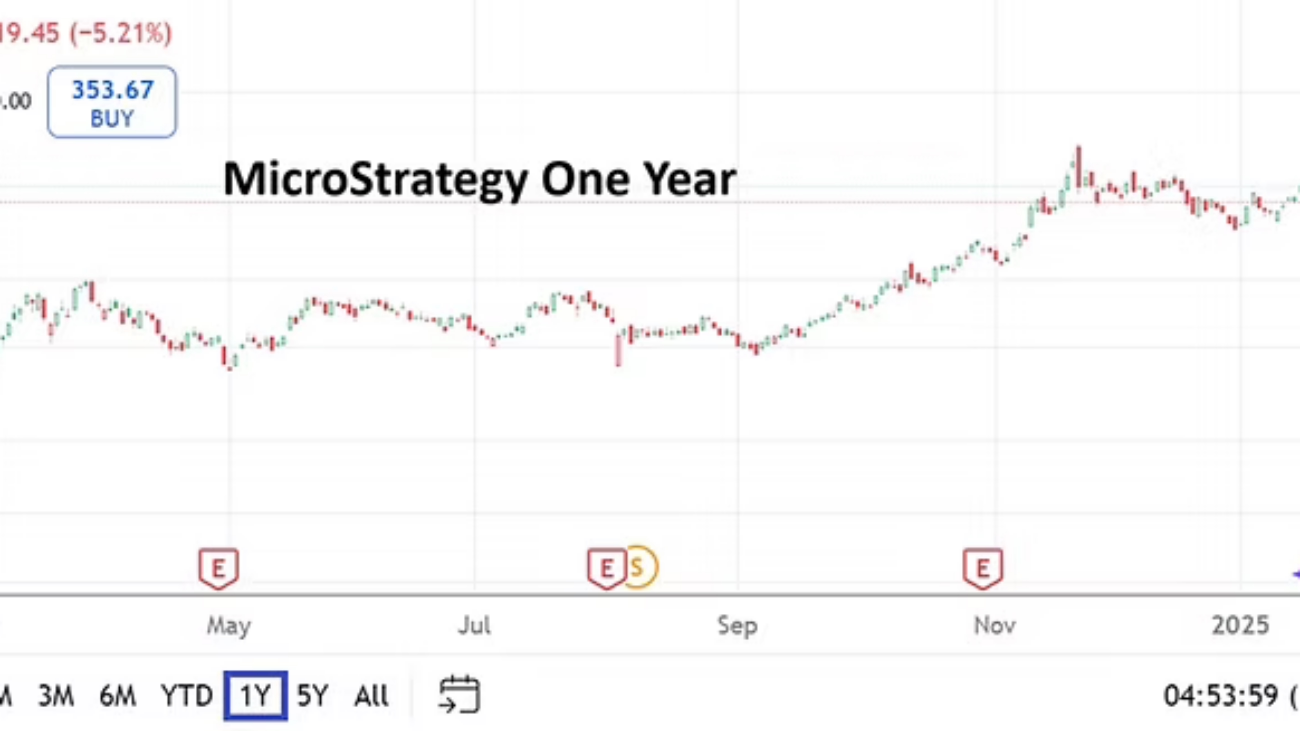
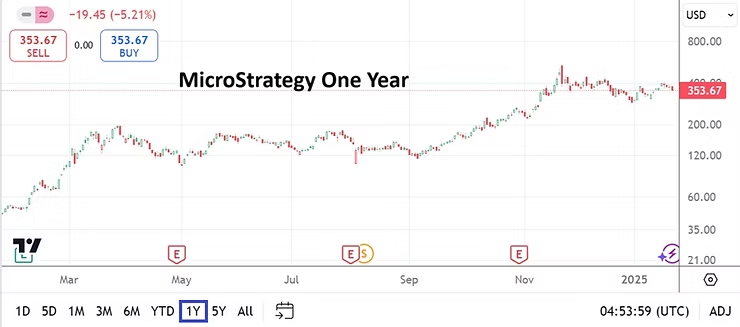
MicroStrategy One Year Chart as of 25th January 2025

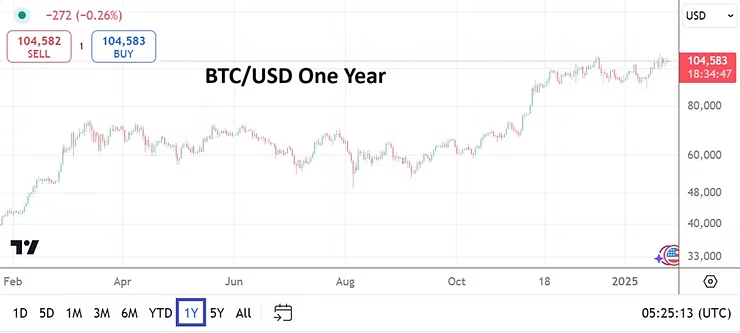
MicroStrategy near 353.67 per yesterday’s close. Bitcoin around $104,625 this morning. Will the balloons keep inflating or become smithereens? The combo of MSTR and BTC/USD are combustible.

MarketWatch has published an excellent article on the borrowing via bonds that MicroStrategy is undertaking with investors. https://www.marketwatch.com/story/why-investors-are-lending-microstrategy-billions-of-dollars-at-0-interest-so-it-can-buy-bitcoin-03f7cacf The article highlights the red hot glow that some investors are pursuing via bets on MicroStrategy and Bitcoin.

MSTR has turned from a data driven company that produces revenue into a proxy bet on Bitcoin. Not everyone is a fan. As of late November 2024 Citron Capital has been reported to be ‘shorting’ MicroStrategy.

Students intrigued by the art of speculation, finance and business outlook have an active case study via MicroStrategy. This is a saga which will continue to grow in stature as investors and speculators seek profits. While the potential for disaster remains high, Michael Saylor of MicroStrategy and his cult like leadership capabilities has led his flock of believers into a golden land for now, but what storms await?

BTC/USD One Year Chart as of 25th January 2025

Naysayers of MicroStrategy’s foray into Bitcoin have thus far been proven wrong. Michael Saylor and his legions will continue singing praises about Bitcoin and its ability to turn into the modern version of gold, but perhaps it will turn into a digital asset nightmare. However, there is no denying the strength of the trend which has manifested the past year in both MSTR and BTC/USD. With the advent of President Trump and his seemingly pro digital asset stance being taken; and the growing desire by some crowds to turn fiat currencies which have been paper based into Central Bank Digital Currencies (CBDC) there are likely years left in this saga to unfold.

There has been a growing clamor for central banks to start holding some of their reserves in Bitcoin instead of gold, but for the moment this seems like too wild a thought and a purely speculative notion. Wagering on the confidence generated by digital hype with little intrinsic value, except the ability to create hot air via rhetoric and lofty visions of grandeur still appears to a step too far for most central bankers. Speculating on MicroStrategy and Bitcoin is one of the ultimate bets looking to take advantage of behavioral sentiment in the digital asset realm. MSTR and BTC/USD are highly volatile and have certainly created profits, but the combination could also turn into a horror if things go wrong.

post214

Central Banks Noise: Holiday Trading Put on Hold For a Bit

Central Banks Noise: Holiday Trading Put on Hold For a Bit

As suspected the Federal Reserve sounded more cautious than many analysts expected yesterday. While the Fed did cut the Federal Funds Rate by 0.25 to 4.50%, they essentially opened the door to allowing the current borrowing rate to simmer over the mid-term. Yes, they did suggest they would like to lower interest rates, but it sounded more like wishful thinking. In response to the more aggressive rhetoric (hawkish) from the Federal Reserve financial markets became volatile in equities, Forex and bonds.

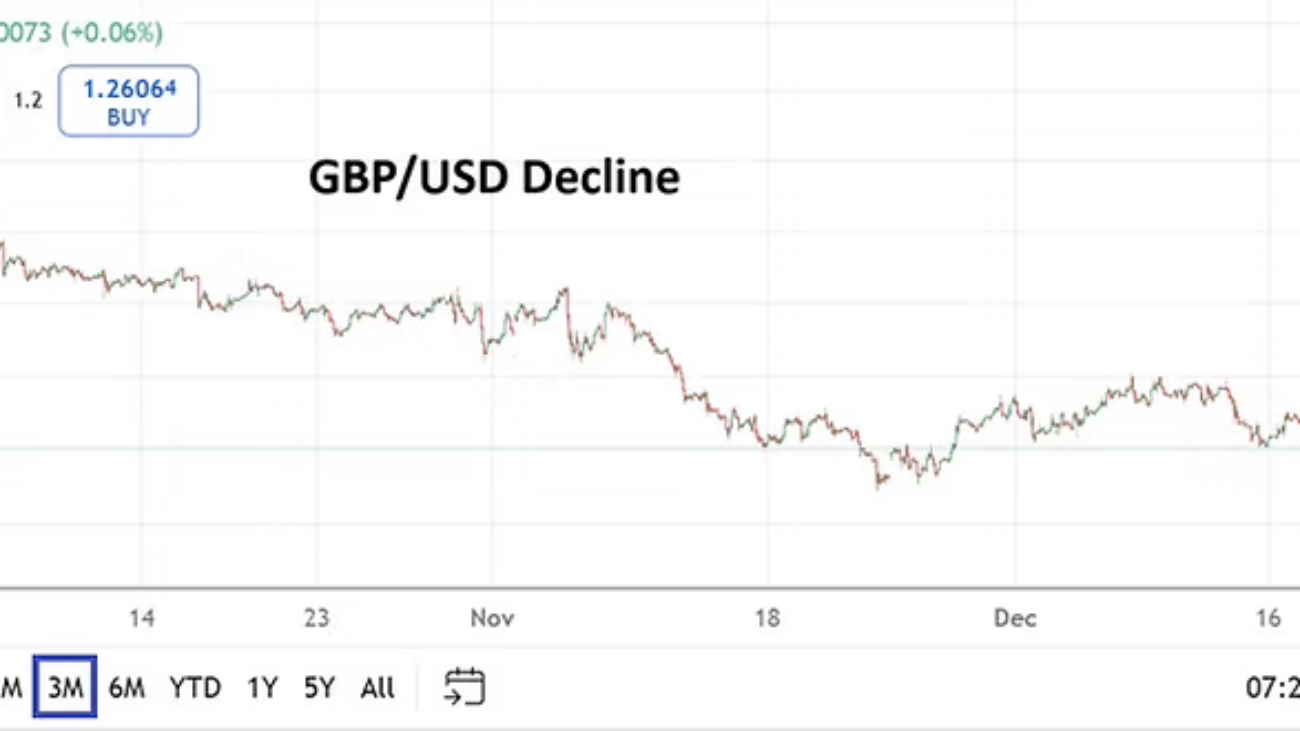
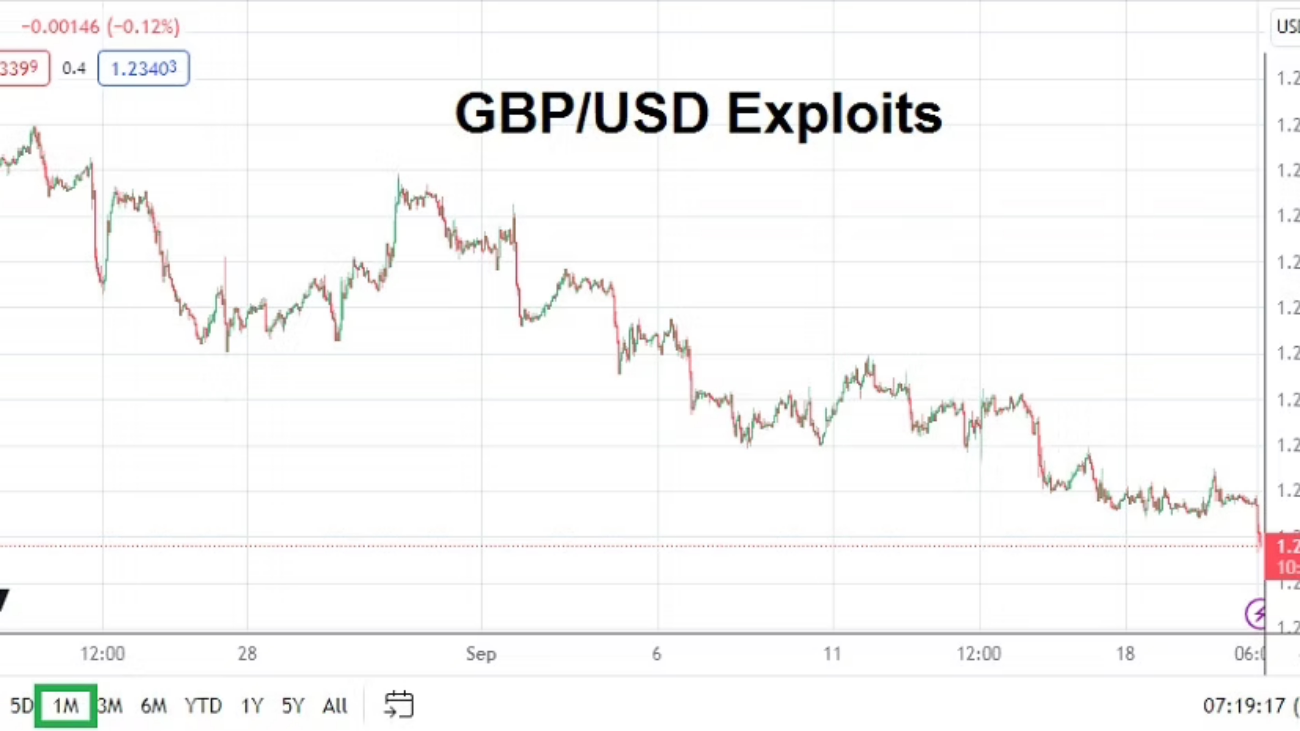
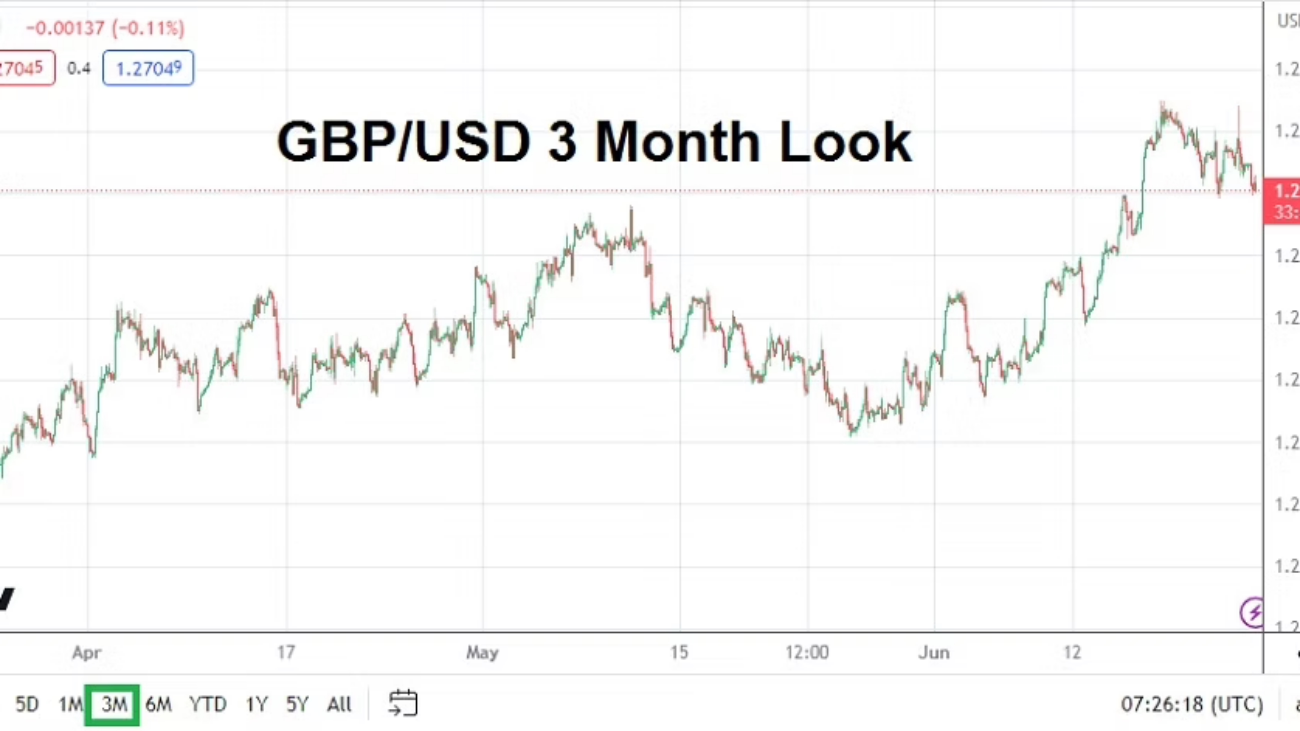
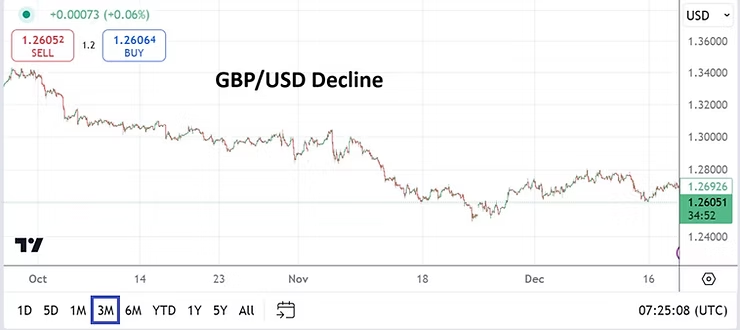
GBP/USD Three Month Chart as of 19th December 2024

The show is not over yet ladies and gentlemen, this morning the Bank of Japan repeated their typical historic stance of proving cautious, and later today the Bank of England will step onto centerstage with their Monetary Policy Summary and Official Bank Rate. And here is where things may get more odd, the BoE in many circles is not expected to cut its interest rate even though the U.K economy has been struggling and continues to publish lackluster statistics. The current borrowing rate via the Bank of England stands at 4.75%. Though the BoE should consider a rate cut of 0.25 certainly, and may even have enough reasons to decrease by 0.50, they may do absolutely nothing and that would be a mistake.

If the BoE decides to remain overtly guarded this will cause some bedlam with the GBP/USD. Large commercial players may choose to punish the GBP/USD as they consider their cash forward positions. Retail traders should be extremely careful if they choose to speculate on the British Pound in the coming hours. Not to say the GBP/USD is going to have a Liz Truss like moment from September 2022 today, but Forex traders have been selling the currency pair based on nervous outlooks over the past three months. If the Bank of England looks at the incoming headlights via the GBP/USD bearish trend and does not move, they might get run over by the truck.

Big and small traders certainly have the approaching holiday season on their minds and they might be getting things in order to take a break for the next couple of weeks, but financial markets because of the central banks actions yesterday and today will not allow for comfortable thoughts. And this is important, because some financial institutions are shuttering for the long holiday starting this Friday, they may be more prone to being quite cautious going into a period where trading volumes will light and assets will be exposed to the potential of sudden gyrations caused by large positions being placed in unbalanced markets. In other words, equities, Forex and bonds will be dangerous today and tomorrow. Behavioral sentiment will be the power.

postN67.1

To Risk or Not to Risk that is the Speculative Question

To Risk or Not to Risk that is the Speculative Question

Last week U.S equity indices demonstrated a rise in value. The highs achieved in the Dow Jones Industrial Average, the NASDAQ Composite and the S&P 500 by the end of last week only touched values seen in the middle of October. And while their ratios remain below the highs of early August and falling values seen in September, the move upwards was certainly welcome by financial institutions and day traders who hold optimistic viewpoints.

U.S Treasury yields declined last week. While incremental decreases were made through Thursday, the U.S Non-Farm Employment Change and Average Hourly Earnings reports both coming in below expectations on Friday, created a stronger dose of lower yields. The 5, 7, 10 and 30 year U.S Treasuries are now trading near mid-September values. The 2 and 3 year notes are moving around early September numbers.

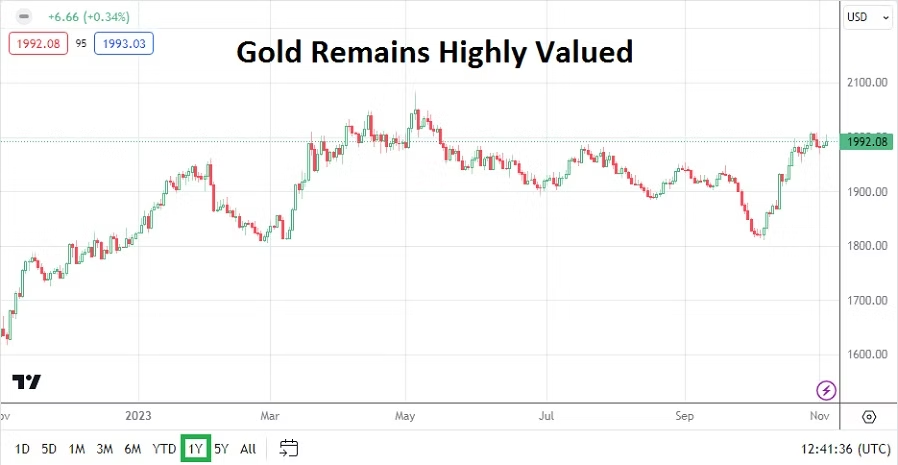
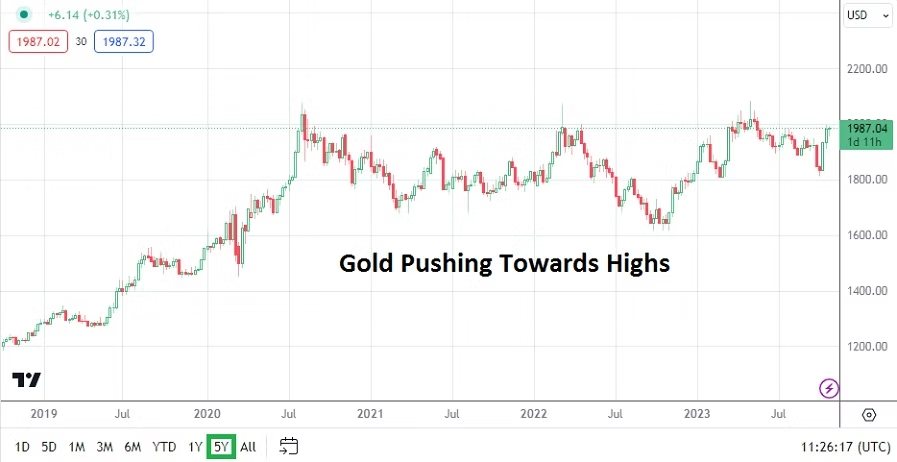
Gold One Year Chart as of the 5th November 2023

The USD grew weaker in slight movements against many major currencies last week, but upon the weaker jobs numbers found increased selling price velocity. Gold however remains suspiciously strong, which brings up the notion that risk adverse ‘insurance’ is still being held closely by investors who remain nervous.

The Middle East crisis is ongoing in Israel against Hamas and to a limited extent Hezbullah, but financial institutions have seemingly been able to digest the news and remain tranquil and vigilant. Another sign of calm coming into the global financial markets is the price of WTI Crude Oil which finished the week under 81.00 USD per barrel.

Economic data will be relatively light this coming week, and behavioral sentiment appears to be the potential larger factor until Friday regarding impetus for day traders and financial houses. Certainly loud global developing news could suddenly erupt and cause nervous investors to falter, but last week’s trading results showed signs of improving risk appetite.

The U.S Federal Reserve met expectations last Wednesday and didn’t raise the cost of borrowing. The mid-term seems to indicate interest rates will remain high, but that the U.S central bank will not raise the Federal Funds Rate anytime soon. The lower than expected inflation report via the Average Hourly Earnings before going into the weekend helped highlight this thinking, although it remains a consideration that is still speculative.

Officials from the major central banks including the BoJ, BoE and Fed will be speaking this week and could cause turbulence with their rhetoric. However, no major surprises will likely come from their mouths. Although the Bank of Japan may rattle the prospects of intervention to keep USD/JPY traders on their toes.

Monday, the 6th of November, Germany Factory Orders – the result is expected to be negative and highlight the nation remains within recessionary conditions. The Sentix Investor Confidence reading will also be released slightly afterwards for the European Union and a worse number than last month’s outcome is anticipated. But the EUR/USD is likely to remain mostly USD centric, even though these reports could cause momentary fluctuations.

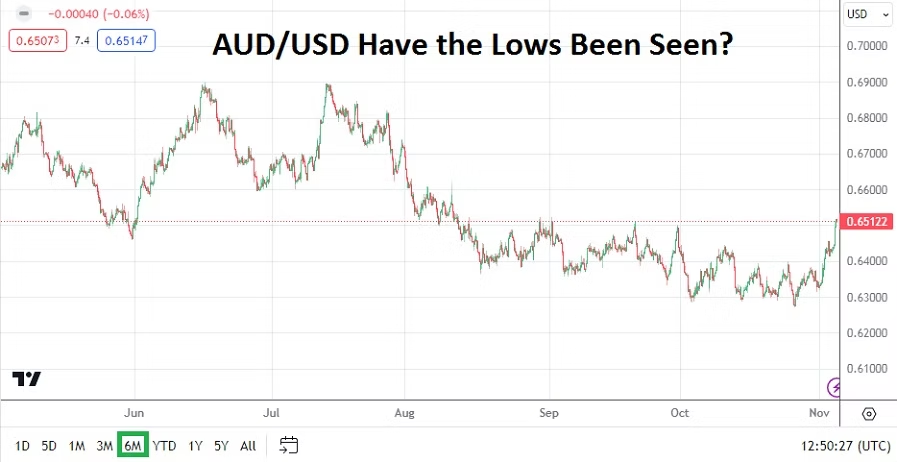
AUD/USD Six Month Chart as of the 5th November 2023

Tuesday, the 7th of November, Australia Cash Rate – the Reserve Bank of Australia is expected to raise its interest rate by 0.25% to 4.35%. Will the RBA take a gamble and not raise the interest rate due to other major central banks holding their rates in place, or will the increase go ahead to fight stubborn inflation while trying inspire some confidence in the AUD? A hike seems to be the direction the RBA will decide upon, having said that, the Australian central bank have surprised financial institutions before.

Wednesday, the 8th of November, U.S 10-year Bond Auction – the results from this sale and the yields that develop within U.S Treasuries will have an affect on Forex. Lower yields than anticipated could signal a weaker USD. However, risk adverse elements will need to be calm for the bond auction to produce tranquil results.

Thursday, the 9th of November, China CPI and PPI – the data from these inflation reports will be watched closely. Chinese economic numbers has shown some signs of stabilization the past few weeks, both of these publications are expected to have negative outcomes. Concerns about the financial pressures domestic consumers are facing regarding housing market values in China and the way in which they spend due to lackluster prospects are concerning. The USD/CNY will be affected in the wake of these statistics, and the USD/SGD could see momentary volatility too if the results prove to be a surprise.

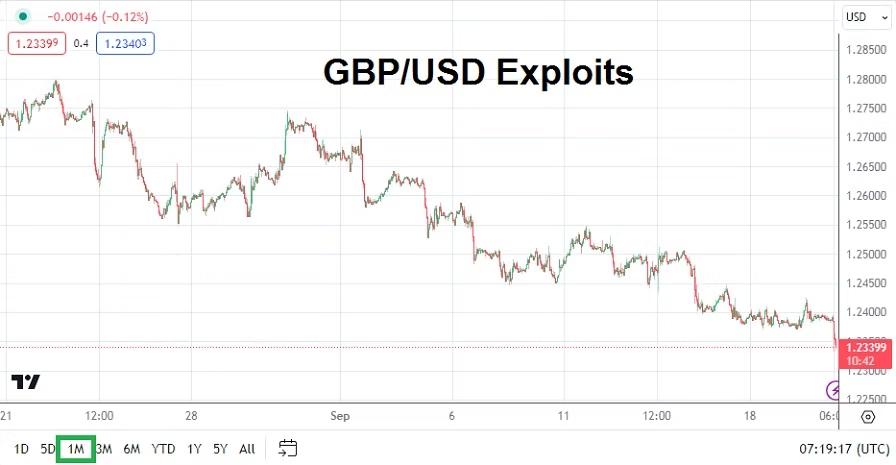
GBP/USD One Month Chart as of the 5th of November 2023

Friday, the 10th of November, U.K Gross Domestic Product – last month’s number came in with an unexpected positive gain of 0.2%, this GDP report is anticipated to show no change. The GBP/USD jumped in value on Friday and financial institutions will be geared towards behavioral sentiment most of this week, but the British GDP data could cause a reaction before going into the weekend.

Friday, the 10th of November, U.S Preliminary Consumer Sentiment via the University of Michigan – the reading is expected to be slightly below last month’s outcome. U.S consumers remain a strong point of light for the U.S Federal Reserve. American consumers have remained spenders, although they have seemingly curtailed purchases of large ticket items such as cars and big appliances. If this data comes in weaker than expected it could propel more selling of the USD. A stronger number than anticipated could spook financial institutions and cause a slight surge in buying of the USD.

postN64

Optimism in Challenging Conditions and Time Considerations

Optimism in Challenging Conditions and Time Considerations

Traders by nature are optimists, after all they are wagering on outcomes they believe are valid with targets regarding future results. Global market conditions for the moment have created expensive price action unfortunately, this as plenty of day traders wagering on their perceptions have found out while whipsaw movements and fast velocity have taken place and caused losses.

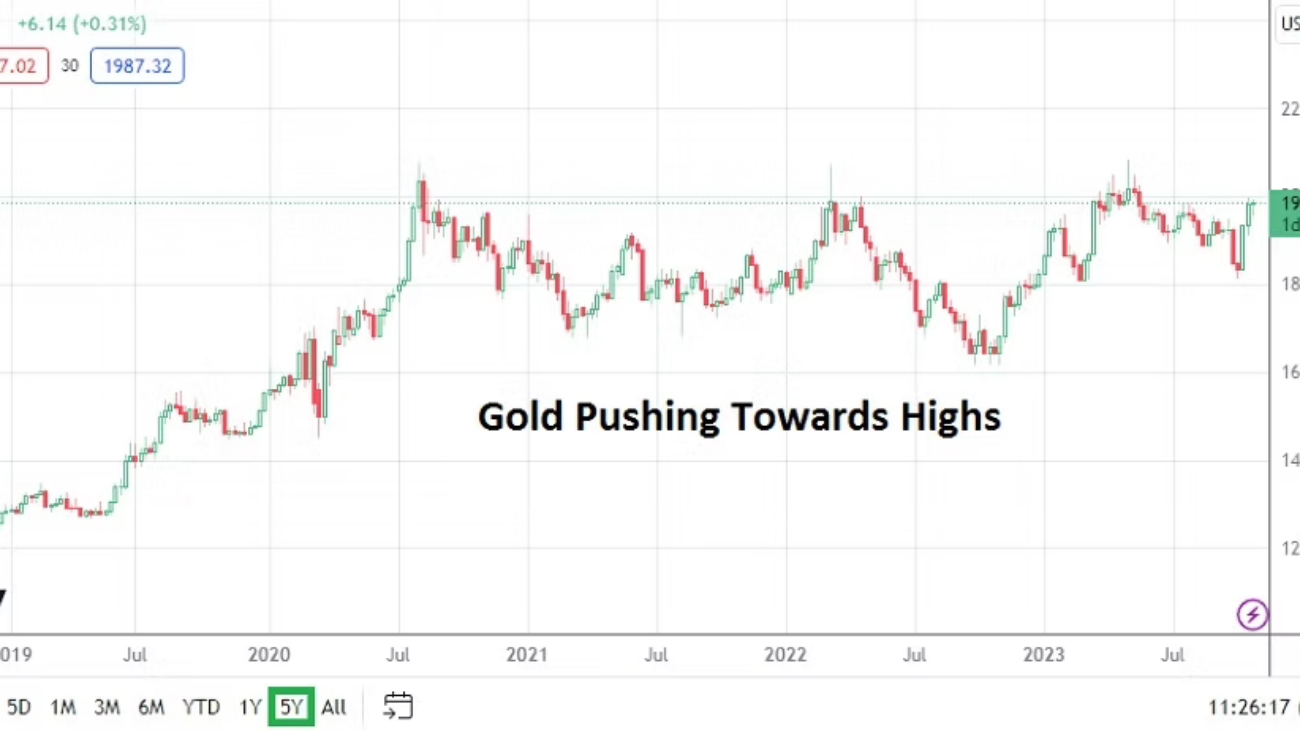
The USD continues to create turbulent higher values among many major currencies it is teamed against as financial institutions exhibit risk adverse tendencies. U.S Treasury yields may be going up because the U.S Federal Reserve continues to sound alarms regarding inflation, but the last two weeks of trading globally have seen an influx into U.S Treasuries as a safe haven move. Another signal that risk appetite is poor among global investors is because while the USD has gotten stronger, gold has also risen in value.

Gold Five Year Chart as of 26th Oct. 2023

And importantly, global markets are trading in conditions which are not considered normal. Many inexperienced people within financial institutions have not dealt with markets like the ones being battled now. High interest rates combined with risk adverse conditions because of concerns regarding an escalation of war conditions in the Middle-East are causing a storm of volatility. U.S stock indices are trading at mid-term lows, and this may continue to be a theme over the next few weeks and beyond, but certainly there are those among us who look towards sunnier days.

So what does an optimist do if they are a day-trader? Perspective needs to be questioned at all times by speculators, and bias regarding all insights by individuals need to be given consideration. A trader must make sure they are not trading based on noise which is coming from the media and tainted with hyperbole. A trader must also question their personal instincts making sure they are free of preconceived notions. Behavioral sentiment gets affected from many angles when market noise becomes loud. Looking for a quiet place to think about market direction is vital for everyone.

Speculators need to remain calm and stick to risk management tactics that prove effective even during chaotic trading conditions. A variety of ways to be involved with the markets directly exists for all, Forex, equities and indices, commodities, bonds are only some of the avenues. Traders can go long or short on their chosen positions, they can participate in the ‘cash’ markets, but can also participate in futures and options trading via time related duration.

Famous investors are known for taking advantage of lower values when fear is high. They look for value via fundamentals within assets with long-term track records. It is not an accident the USD is strong, U.S Treasuries are being sought, gold is being bought currently.

Trends are there to be found and can be taken advantage of by day traders who are looking for quick hitting outcomes, but they must proceed carefully. Because it is also important to acknowledge that no matter how bad circumstances sometimes look in the short-term, that a positive quality among we as humans is to seek optimism. There are reasons to participate in trades with a perspective knowing more tranquil days will come and the markets will grow calm again, markets can reverse and suddenly display risk appetite.

postN56

Wednesday Federal Reserve Prediction and Central Bank Unity

Wednesday Federal Reserve Prediction and Central Bank Unity

Later today the Federal Reserve will release its Federal Funds Rate and FOMC Statement. Jerome Powell will also field questions. My prediction regarding the Fed today is that the Federal Reserve will hold (pause). It will say inflation remains problematic and stubborn, and the Fed continues to monitor economic conditions it finds complex. The high costs of energy (Crude Oil) will be presented as part of the problem.

The Fed will say they will strongly consider an interest rate hike next month, thus bracing the markets for what financial institutions have already traded into the system. This because trading houses have listened to the Fed already and believed that a pause would be seen for a few months, but cracks in sentiment quickly appeared in mid-July because of the Fed’s cloudy rhetoric as it spoke out of both sides of its mouth. Ratings downgrades and worries began, the USD sprung to significant values, higher U.S Treasury yields have flourished and increased fears for the long-term investment world. All the noise has certainly helped doomsayers.

The problem for the Fed and they should be aware of this, is that their interest rate hike threats have little direct affect on the price of Crude Oil. The rise in oil prices is directly due to Saudi Arabia cutting back on production. The U.S has much less influence on Saudi Arabia then it would like to believe it does. The Saudi Arabia government is interested in sustaining a profitable price for the commodity. At 90.00 USD per barrel, Saudi Arabia is making significant profit, but under 80.00 USD per barrel they grow concerned. After all someone has to pay for the ‘Line’ project of Neom.

Getting back on point, if the Fed is so intent on raising rates they should do so now. Not next month. But as the Federal Reserve and other major central banks often demonstrate, they are reactive – not proactive. Meaning if the Fed has no direct influence on the high price of energy that they should go ahead now and influence the marketplace instead of rattling a sword which only creates nervous global behavioral sentiment.

And yes, a hike of the Federal Funds Rate would be problematic for credit and cash reserves of consumers and businesses, which face more expensive obligations regarding loans and bonds. However, if you are merely going to threaten to do something, why not do it now and say without a doubt – like the ECB did last week – this will be our last hike for the foreseeable future. But the Fed is likely to prove they have limited desire to act swiftly and try to remain painfully polite, very much like when they refused to acknowledge inflation was a real threat when it started in earnest over two years ago.

GBP/USD One Month Chart as of 20th Sept. 2023

Lastly, the Bank of England will make their pronouncements tomorrow, and some are suggesting the BoE because of today’s ‘weaker’ inflation results will not raise the Official Bank Rate. However, I disagree, inflation is still high in the U.K and the Bank of England may also feel it has to protect GBP value.

Last week’s interest rate hike from the European Central Bank, which I didn’t believe would happen and was wrong about, suggests the BoE and ECB may have privy knowledge regarding the Fed’s inner thinking. It is quite possible the European’s raised rates last week not only to fight inflation, but because they had been warned by the Federal Reserve that the U.S central bank wants to ‘sound’ aggressive. There is reason to believe if the Fed doesn’t raise tonight, but groans on about a complex economy and stubborn inflation and the need to consider raising rates next month, the BoE will feel very compelled to still hike the Official Bank Rate by a quarter of a point tomorrow.

Nothing quite like coordinated banter between the major central banks which have already demonstrated a rather stark level of mistakes over the past two years. Why not add onto the shenanigans today and tomorrow? Good luck to us all.

postN42.1

Day and Institutional Traders Suffering Nervous Conditions

Day and Institutional Traders Suffering Nervous Conditions

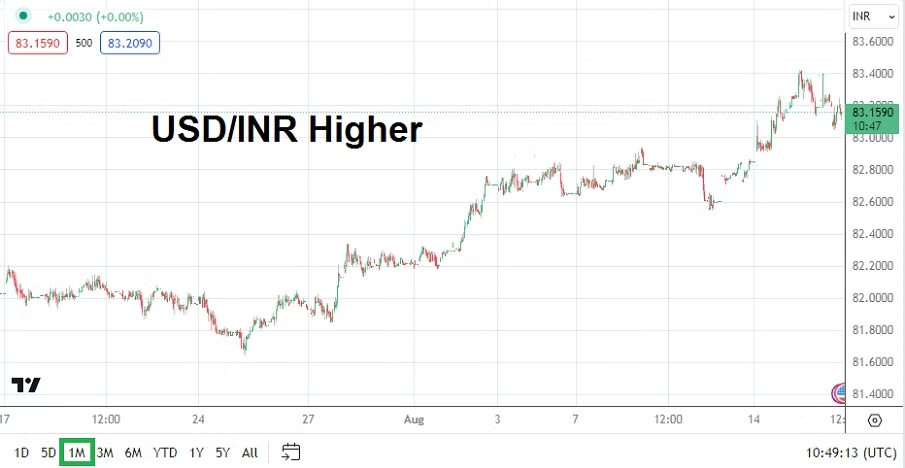
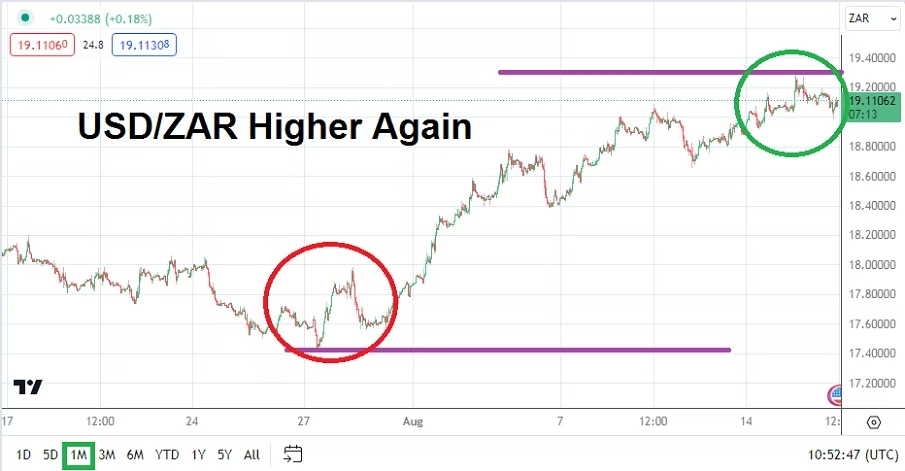
Market price action has caused quite a few interesting interpretations of the prices being demonstrated in Forex, gold and equity markets recently. The USD/INR is now at record heights, the USD/ZAR is back above 19.00000 and the USD/BRL is again near the 5.0000 ratio.

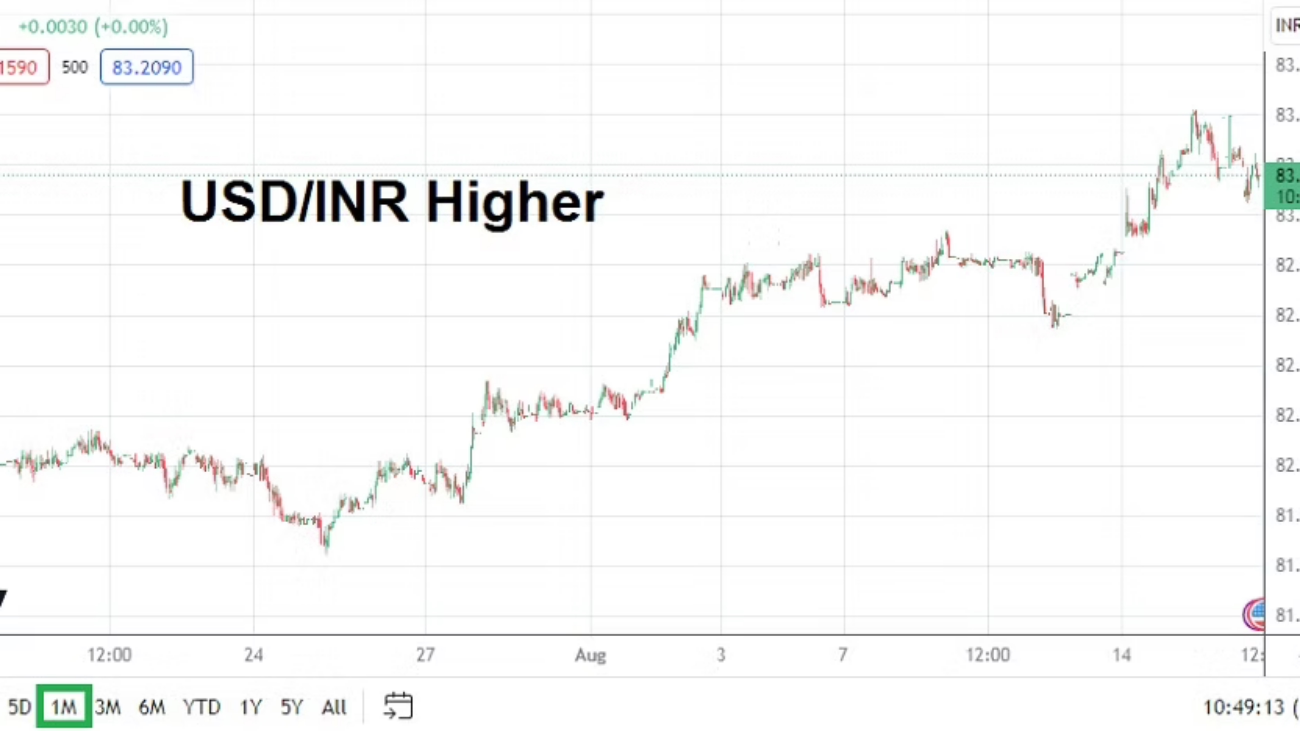
USD/INR One Month Chart as of 16th August 2023

While Forex traders around the world look for clues as to why their local currencies are suffering and are likely blaming domestic policy from their own governments and central banks, they should remember the larger global financial markets tend to move in a unified sphere. Domestic concerns are a real cause for market action often, but when global sentiment becomes nervous the larger force of institutional financial houses shake the ground.

Correlations exists worldwide because of behavioral sentiment ruling outlooks over the near, mid and long-term in the marketplace. While we like to put our faith in the financial markets as an all knowing entity, this is far from the truth. Humans who react to nervous conditions and also have bias are the ones still making decisions in financial houses, they are the ones giving orders to their programmers via their trading software which is largely geared to follow perceived trends these institutions deem important.

USD/ZAR One Month Chart as of 16th August 2023

Most financial institutions are not speculative in nature, day and even longer term retail traders should remember this point. Most institutions are trying very hard not to ‘speculate’, they are simply positioning per their outlooks based on their understanding of the trading landscape. Whispers of potential downgrades from U.S rating agencies on larger corporate banks yesterday sent a shudder through the broad markets, economic data and rumors swirling about China are not helping either. The current volatility in the broad markets is not welcomed warmly by financial institutions.

When price velocity accelerates and volatility flourishes in highly charged trading situations, this suggests financial institutions are nervous and not able to find comfortable positions. Conflicting ‘opposite’ positions from other larger players are causing market chaos in Forex, equities and other financial assets. There is a herd mentality in trading and when the herd doesn’t march in an unified direction chaos happens.

Most institutional players want calm, they want tranquil trading conditions so they can manage their clients’ money quietly. Bonds, equities and indices, real estate holdings via REITs, and gold make up a large part of their holdings.

Most U.S pension funds for instance have mandates to be positioned into a large amount of quiet investment vehicles which do not trade with wild price ranges. They seek steady returns from their institutional investors that can be counted on in a quantitative manner to demonstrate to their clients.

Large financial institutions are allowed sometimes to trade 2 to 4% of their holdings in different categories of speculative investments – such as start-ups, allocate cash to hedge funds they trust, small cap stocks they might know about, etc., depending on the exact mandates agreed upon.

Yes, hedge fund managers like Bill Ackman and investor Michael Burry get a lot of attention when they bet against the markets, but believe it or not they are small fish in a large ocean a lot of the time. They are good at what they do, but their speculative positions cannot be mirrored by most financial institutions or small day traders.

Ackman and Burry may be trading billions, but remember institutional financial companies including pension funds when combined total approximately 80% of market cap. Institutional trading decisions can cause massive waves in the financial world, but they actually seek calm seas.

When markets become volatile this often means institutional traders are not comfortable and their behavioral sentiment is fragile. Forex for example is often affected by financial institutions moving money as they handle export and import transactions for companies, but transactions are often done to buy and sell equities too. The Bank of International Settlements estimated an average around 7.5 trillion USD in value was traded in Forex everyday in 2022.

Day traders should not take it personally when the markets move against them, instead they should look to try and mirror the sentiment of larger financial movers. However, knowing and timing financial institution decisions is elusive because short term compared to long term considerations are often different.

Most traders are merely betting on the price action the large institutional funds are undertaking via the direction of the marketplace. Day trading for most retail speculators remains dangerous. A solid fundamental understanding of market ‘forces’ can allow smaller traders to feel more comfortable.

postN30.1

Summertime Behavioral Sentiment Game: Who Do You Trust?

Summertime Behavioral Sentiment Game: Who Do You Trust?

Have we started to reach a polite equilibrium within Forex, gold, equities and bonds for a moment? U.S CPI data just came in below expectations, the decrease of inflation pressures in the U.S will be welcomed. Price ranges are starting to show signs of polite trends in Forex and equities – there seems to be a recognition of basic ideas which are perhaps serving as factors that are ‘accepted’ in the broad markets. Please do not close your eyes for long, because conditions can change in a moments notice, but for the moment the USD is weaker.

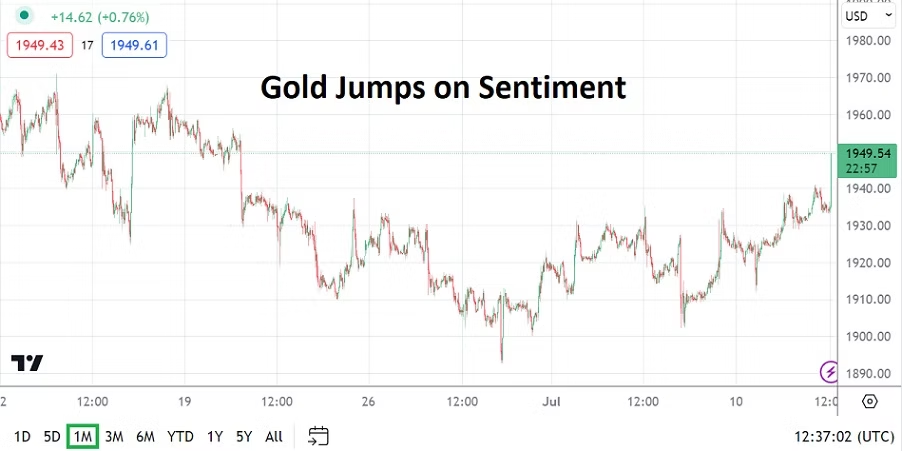
Gold One Month Chart as of 12th July 2023

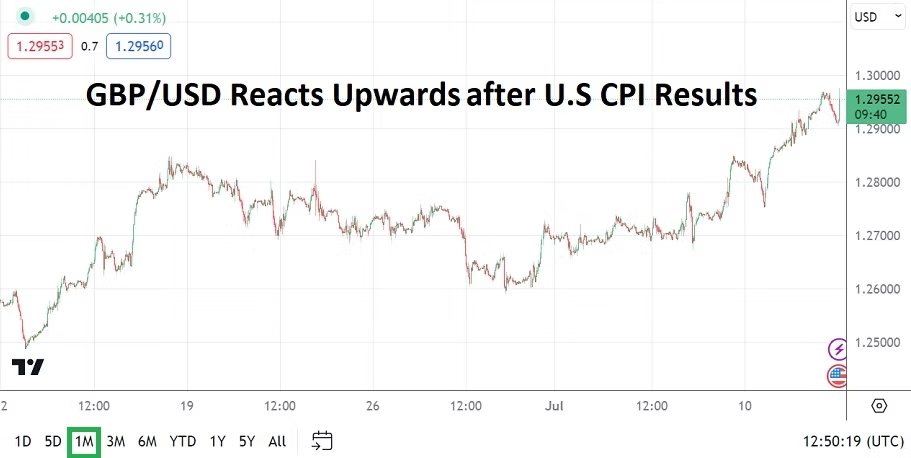
The Federal Reserve could still raise its Federal Funds Rate at the end of July, though today’s CPI data outcome will create headwinds against that notion. There has been a wide voice given by folks who say the Fed shouldn’t raise rates again, and that real inflation will start to come down and that it is doing so now. The CPI has shown a decrease in U.S inflation – a larger drop than anticipated, which will certainly spur on USD weakness today. This confirms – momentarily – many analysts inflation outlooks who work in financial institutions not related to the U.S Federal Reserve and have been saying price pressures will recede. Yet, inflation is not dead yet and may still be heard. Stagflation is a genuine concern.

Tomorrow’s U.S Producer Price Index will be another opportunity to stir sentiment. Remember folks, outlooks are often adjusted according to facts. But what are facts? Can we really trust them. What are leading indicators, what is data that looks forward instead of backwards – numbers are often offered as evidence but randomness often rules interpretations of data. How do acceptable outlooks really develop when data management and outlooks can change within split seconds depending on the team looking over the quantified math. Humans are naturally optimistic, even when the data is negative, this can lead to bias.

We are in an age when trading software is doing a majority of the large volume transactions, and has been coded by algos processed by quant teams in financial institutions. Do retail traders even have a chance in this type of environment? Yes, retail traders can still manage to find opportunities, but they need to combine technical perceptions with fundamental knowledge of data, and combine the two into a behavioral sentiment outlook depending on their time horizons.

Market dynamics and situations change a lot in the broad markets. Assets move depending on the bias of incoming data. Preconceived notions being acted on and then changing according to need can be done in microseconds because of existing trading technology that financial institutions use. Larger players have an advantage and they are not about to give this up. Timeframes are also different for big trading houses compared to small speculators. It is also important to stress institutional traders could care less about day traders in Forex.

GBP/USD One Month Chart as of 12th July 2023

We have finished nearly a month of summer trading and seem to be confronted by a question of who do we trust? Do we trust the U.S Federal Reserve and its decisions and outlooks? In my opinion, you shouldn’t. But you should also remember the old adage, do not fight the Fed. The U.S central bank is bigger than you and I.

Central banks work together and often coordinate their combined outlooks, while shadows cast from the ‘oversight’ of political leaders rhetoric are frequently given consideration by the Fed, BoE, ECB and BoJ officials even if they claim they are not listening. Inflation is not welcomed by central banks, but because they are largely reactive and not proactive the Fed and others sometimes look uncaring and like fools, while the public sometimes suffer.

Thus we sit and wait for central bank pronouncements, but for the moment we seem to have a good grasp regarding what they will say. And perhaps – for the moment, maybe that is why Forex, gold and equities are trading rather politely. We seem to think we know what is going to be said moving forward for the next few weeks and remainder of the summer – more of the same warnings and interest rate correlations sprinkled in via central bank diatribes.

postN27.1

Risk Friday: Fear is a Terrible Thing to Waste

Risk Friday: Fear is a Terrible Thing to Waste

Behavioral sentiment in the broad markets took a turn for the worse yesterday among many major equity indices. This as financial institutions seemingly came to the short-term conclusion the Federal Reserve may actually have to raise interest rates again on the 26th of July, and possibly beyond. Meaning, the Fed might actually back up what it has been saying.

Yes, investors have been warned many times already by some analysts that the handwriting was on the wall regarding additional increases to the Federal Funds Rate, but it seems a fear of losing out has kept many market participants actively running forward with blinders on not cognizant of the Fed’s rhetoric.

Day traders should always be mindful of their emotions. While it is not good to trade based on emotions when involved in an active position, intuition and gut instinct sometimes can save you money when you decide to simply sit on the sidelines and watch the market action instead of participating. In other words, if you are nervous and your instinct is bothering you – do not attempt to enter the trade.

U.S Data Remains Rather Strong even as Inflation Boils

Yesterday’s better than expected jobs report via ADP helped create sparks early regarding U.S economic data continuing to show it is robust, but the ISM Services PMI threw gasoline onto the fire with a much better result of 53.9 compared to the estimated reading of only 51.3. While inflation simmers in the U.S, signs of limited growth abound too making stagflation a real danger.

Investors can now attain a yield around 4.995% on 2-year U.S government Treasuries. A gain of nearly 5% that is almost assured with very little costs regarding commission rates needing to be spent, looks like a solid short-term investment to many. Equity markets have a reason to feel spooked. If the U.S Fed raises the Federal Funds Rate which is now 5.25% to 5.50% at the end of July, and at the same time continues to speak in an aggressive manner about other potential hikes later this year, summer may lose its sense of tranquility for financial institutions.

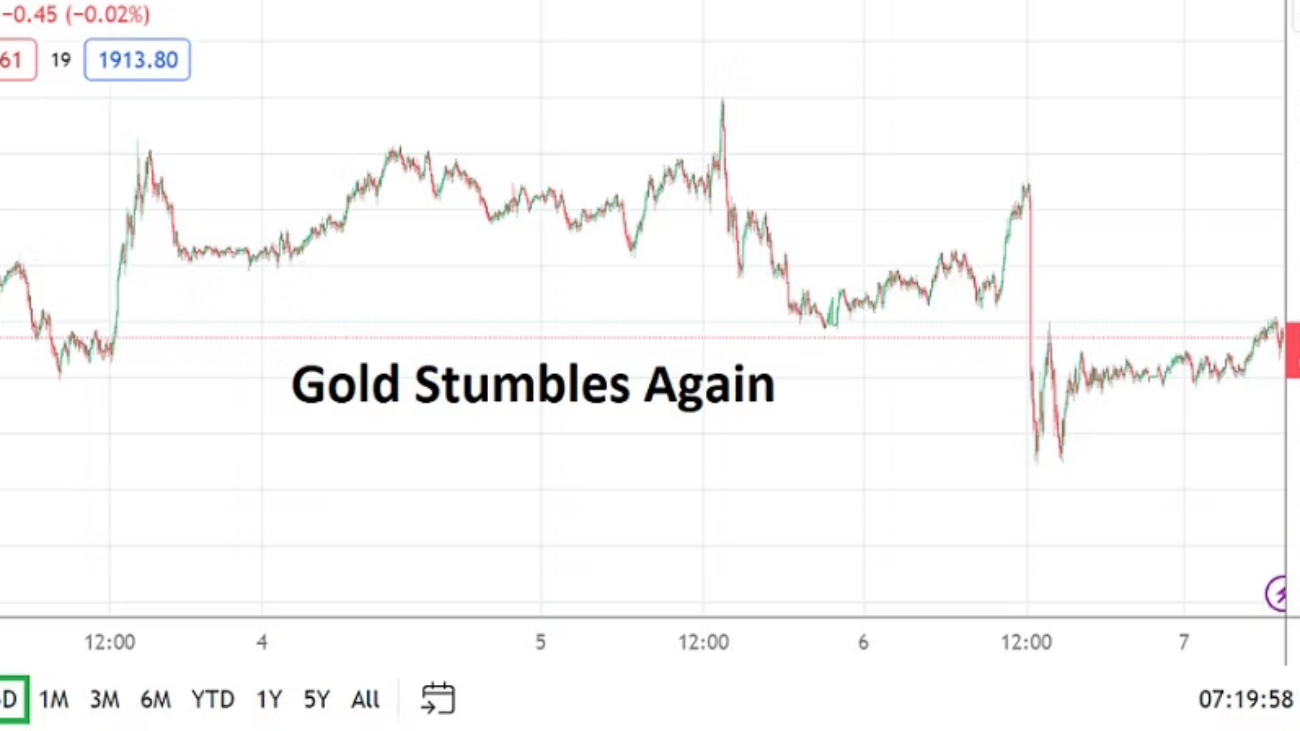
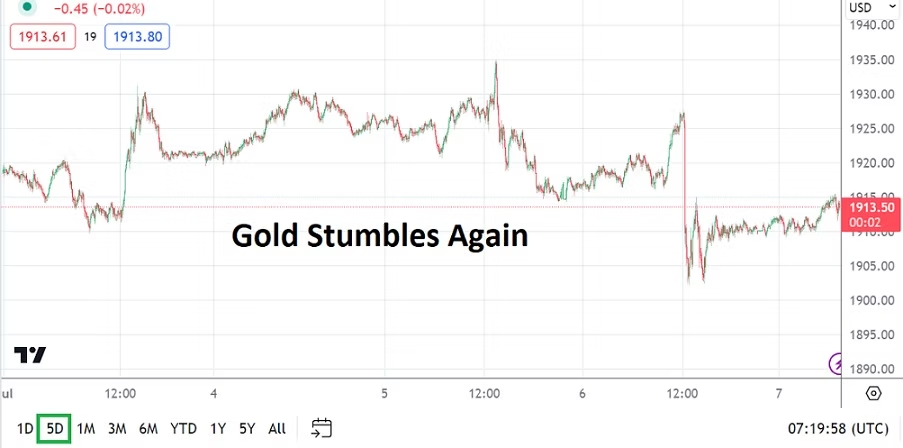
Gold Five Day Chart as of 7th July 2023

Gold which was trading at nearly 1925.00 USD yesterday, suddenly fell to around the 1900.00 briefly in the wake of the better U.S economic data, showing investors are worried the USD has some additional strength to display potentially. Again, the results of intraday gyrations may not mean a lot to mid and long-term investors, but day traders speculating on the outcome of quick hitting results frequently get hurt by the bursts of volatile storms.

U.S Official Jobs Numbers Today and Anticipation

Adding another dose of intrigue to the day are the upcoming official jobs numbers from the U.S, including the Non-Farm Employment Change and the Average Hourly Earnings reports. The inflation data via the earnings statistics are anticipated to show a gain of 0.3%, if for some reason it comes in stronger than expected this could create more fireworks. Having said that, the Wall Street Journal reported yesterday that Americans appear to have stopped quitting their jobs in order to switch to similar competitive positions as much as they had been the past couple of years. Perhaps this signals wages are starting to cool or least will in the near-term.

Let’s also remember that yesterday’s selloff in equities may have been anticipating better Non-Farm Employment Change results today based on the ADP outcome Thursday, and other solid U.S data before like last week’s GDP gains. Day traders betting on quick hitting CFDs via their brokerage platforms should be careful today and listen to news regarding the U.S bonds market. Inexperienced speculators should try to understand the adage – buy the rumor and sell the fact. Meaning ‘smart money’ often acts before others and takes advantage of their outlooks regarding data.

Quick Warning on Binance and Cryptocurrencies for Gamblers

BNB/USD Three Month Chart as of 7th July 202

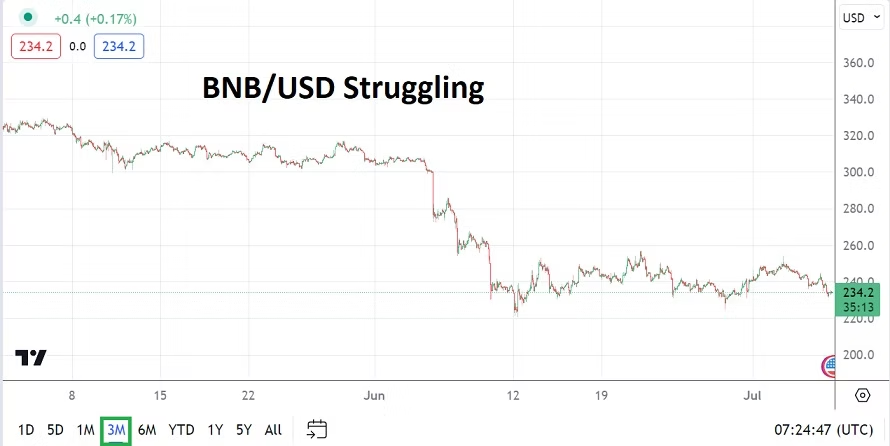
In a non-related subject, cryptocurrency traders seem to remain rather steady but should be nervous – if anyone is actually really trying to speculate in this endeavor besides Larry Fink of BlackRock currently, news regarding Binance remains troubling on the surface as legal clouds grow. Folks involved with the BNB coin should be careful. As one of the most ‘important’ crypto exchanges Binance’s legal problems moving forward could affect the prices of cryptocurrencies significantly. As of this writing BNB/USD is at nearly 233.00, and it should be noted Tether’s USDT appears to remain rather solid for the moment at 1.00. A look at the current three month chart of BNB/USD highlights its latest value struggles.

postN24

Interest Rates, Fireworks, OPEC, Fed Minutes, and Jobs Data

Interest Rates, Fireworks, OPEC, Fed Minutes, and Jobs Data

Global day traders will certainly be able to work early this week, but they should note the 4th of July holiday in the U.S will deliver rather light volumes Monday and Tuesday. Markets in the U.S will be open on the 3rd, but speculators need to understand that price action may be flat and then experience sudden bursts of energy. Financial institutions in the U.S could be rather quiet until Wednesday.

Monday, the 3rd of July, European Manufacturing PMI – data will come from across Europe and is expected to show the sector remains rather lackluster. France, Germany, the U.K and others will issue reports.

Monday, the 3rd of July, U.S Manufacturing PMI via the ISM – the Purchasing Managers Index numbers are expected to produce a slight rise, but remain under the level of 50. However, any increase compared to last month’s outcome will be an additional sign the U.S economy is battling on and would give the U.S Federal Reserve another reason to lean towards an interest rate hike later this month.

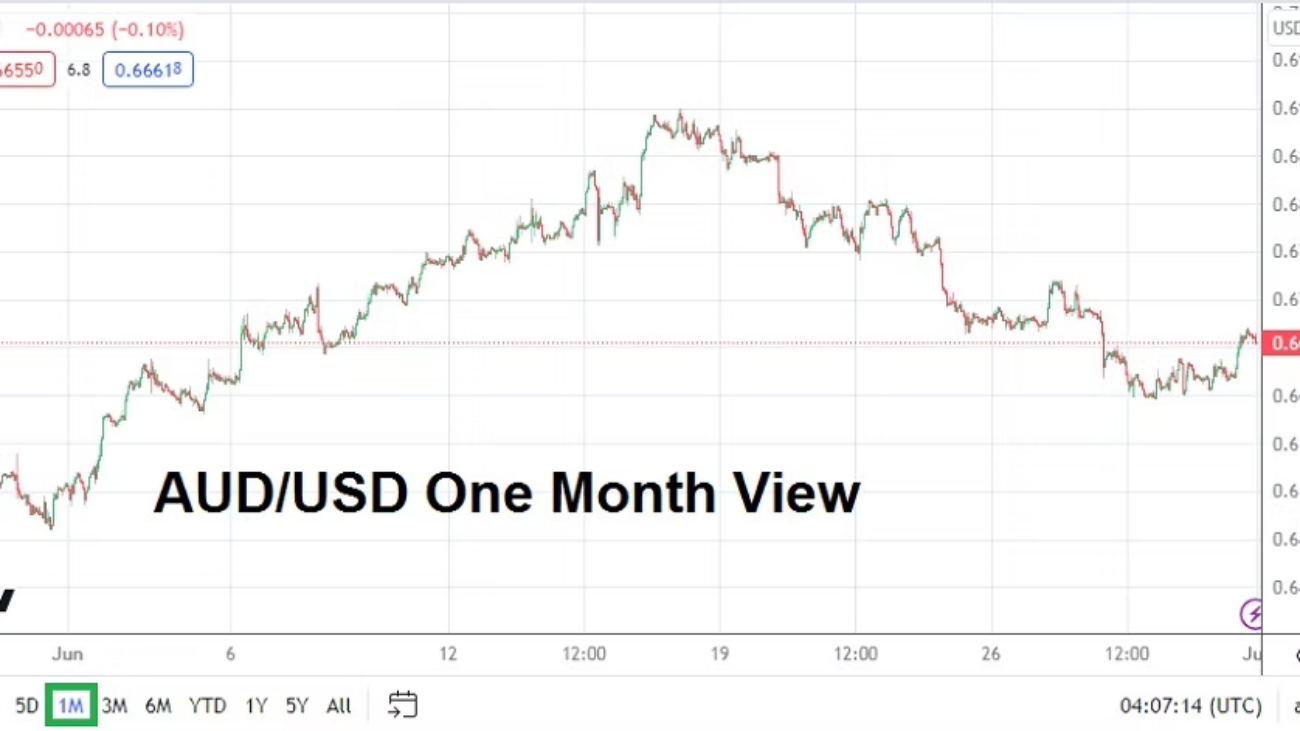
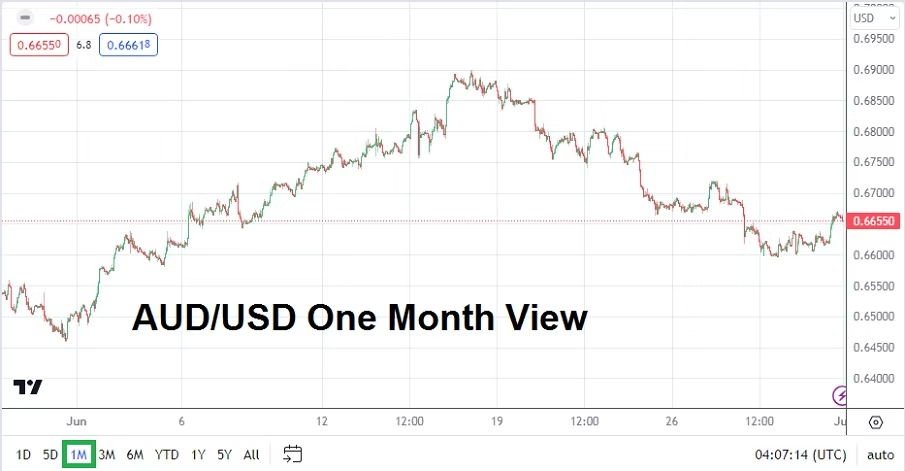
AUD/USD One Month Chart as of 2nd July 2023

Tuesday, the 4th of July, Australia RBA Cash Rate and Statement – while some analysts assume no interest rate hike will be delivered in July because the CPI has shown a slight downturn, there seems to be rather large whispers another hike of 0.25% could be added from the Reserve Bank of Australia. AUD/USD traders certainly need to pay attention, and folks with limited funds should stay on the sidelines until the decision is released.

Tuesday, the 4th of July, U.S Independence Day – banking holiday.

Wednesday, the 5th of July, China Caixin Services PMI – economic data from China has certainly shown signs of downward pressure. A slight decrease is the expected result.

Wednesday, 5th of July, OPEC Meetings – the energy cartel will be conducting its official get together in Vienna, Austria and oil traders should be on alert for any news and decisions made public that could affect the energy sector.

Wednesday, 5th of July, U.S FOMC Meeting Minutes – the publication will provide insights into the Federal Reserve’s decision to ‘pause’ interest rate hikes last month, but could also add fuel to the notion the U.S central bank remains within an aggressive stance regarding inflation. Forex markets will react to the report.

Thursday, 6th of July, U.S Services PMI via ISM – the statistics will be monitored closely due to the rather positive outcome from the GDP report last week, which showed the U.S economy remains rather resilient. A positive outcome in the Services numbers will add further evidence for the Federal Reserve to remain hawkish.

Friday, 7th of July, U.S Jobs Numbers – the employment data will culminate as the week comes to an end with the Non-Farm Employment Change and Average Hourly Earnings figures. Yes, on the day before, Thursday, traders will also see the JOLTS numbers and weekly Unemployment Claims. However, it is the Non-Farm and wages data that financial institutions will largely react upon depending on the outcomes. Because it is a ‘holiday’ week in the U.S, the reports may find a muted response, but financial institutions will use the information to gauge their mid-term outlooks and position their assets including Forex and bonds.

postN20.1

Friday Barometer Regarding the BoE Decision and Gold Prices

Friday Barometer Regarding the BoE Decision and Gold Prices

The Bank of England’s rate hike of 0.50% cements the notion that global central banks remain steadfastly locked on inflation, and understand politically the implications on the public regarding higher consumer prices which are being experienced. The Bank of England ‘met’ before its Official Bank Rate announcement with corporate bank executives it was whispered, to discuss their concerns regarding the knock on affects of higher mortgage rates to come. However, this did not stop the BoE from being aggressive.

GBP/USD Three Month Chart as of 23rd June 2023

Is the BoE Move a Sign Regarding the Fed’s Next Decision?

The move by the BoE also is intriguing because the larger than expected hike puts into play the notion the U.S Fed may be raising the Federal Funds Rate in July. The reasoning is based on the idea the Bank of England wants to protect the British Pound from another interest rate hike from the Fed, thus ‘securing’ the value of GBP/USD Forex mechanics.

The U.S Federal Reserve, the BoE and ECB finally seem to have a grasp on import inflation implications. Although higher costs and dynamic pressures on exporting countries like China, India and others that face the gauntlet of these challenges remains critical, because these nations need to raise the costs of manufactured goods internationally when they sell.

Smart Money and the Value of Gold

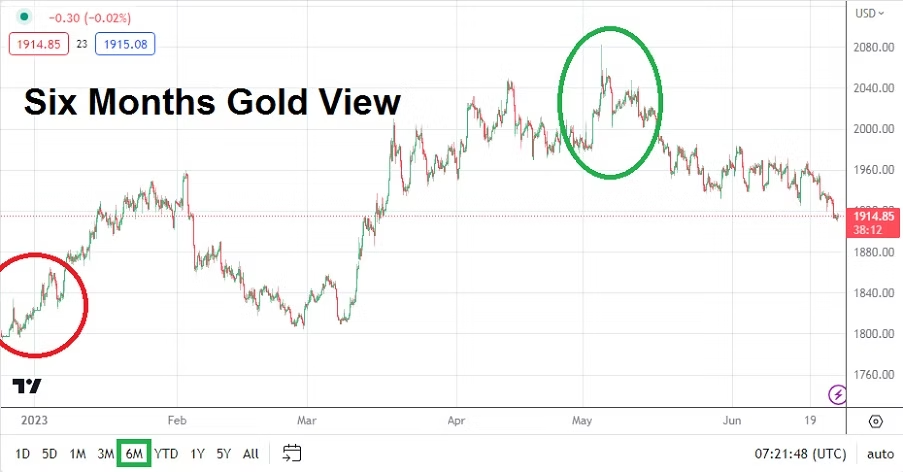
Let’s talk about ‘smart money’ for a moment surrounding Gold – and please try to hold down your laughter – but the price of the precious metal is interesting and should be monitored even by folks who do not trade the commodity. Gold as of this morning is near the 1915.00 USD ratio.

Gold Six Month Chart as of 23rd June 2022

On the 4th of May the price of the precious metal momentarily challenged the 2080.00 level. On the 1st of June the price of the commodity was near 1985.00. Do you see a trend here? Please note, Gold isn’t going to zero.

The point to be made is that the build up in the price of the precious metal from the 22nd of November 2022 when Gold was around the 1625.00 USD per ounce level, until early May anticipated the U.S Federal Reserve was going to become more dovish regarding their interest rate polkicy. For consideration look at the price of the USD during this time too, against many major currencies – the value of the USD also started to come down.

‘Smart money’ is showing signs of nervousness certainly since the start of June that more hikes are feared from the Federal Reserve. However, the price of Gold and the USD are not correlating well at this moment. This is a potential sign that Gold and the USD are both within speculative trading zones in which financial institutions are seeking ‘true’ equilibrium and are not comfortable. Fragility in the financial marketplace is likely to be seen until the Federal Reserve Federal Funds Rate announcement late in July. Expect financial institutions to price in their outlooks respectively depending on their outlooks.
Gold and U.S Treasuries: Inverted Interest Rate Implications

Gold definitely fluctuates within daily trading conditions, it is a speculative commodity, but it is also a solid barometer of risk management among the elite. If financial institutions are in favor of buying items like U.S bonds because of their guaranteed short term interest payments (look at the fact U.S Treasuries are mostly inverted – meaning shorter term bond interest rates are paying higher returns compared to longer term bonds) instead of buying Gold as an investment tool.

The Gold and USD Forex dynamics tells us that investment institutions are still very nervous about the Fed potentially raising interest rates a couple of more times this year. July and late this year appear to be reasonable bets. This Fed consideration and concern remains legitimate while looking forward as long as inflation remains elevated in the U.S. However, the Federal Reserve must also feel comfortable they will not kill mid and small sized banks, which by now should have shifted their business practices allowing for slightly higher interest rates to be delivered.

post35.1

Sudden Bullish Momentum of Indian Rupee Raises Questions

Sudden Bullish Momentum of Indian Rupee Raises Questions

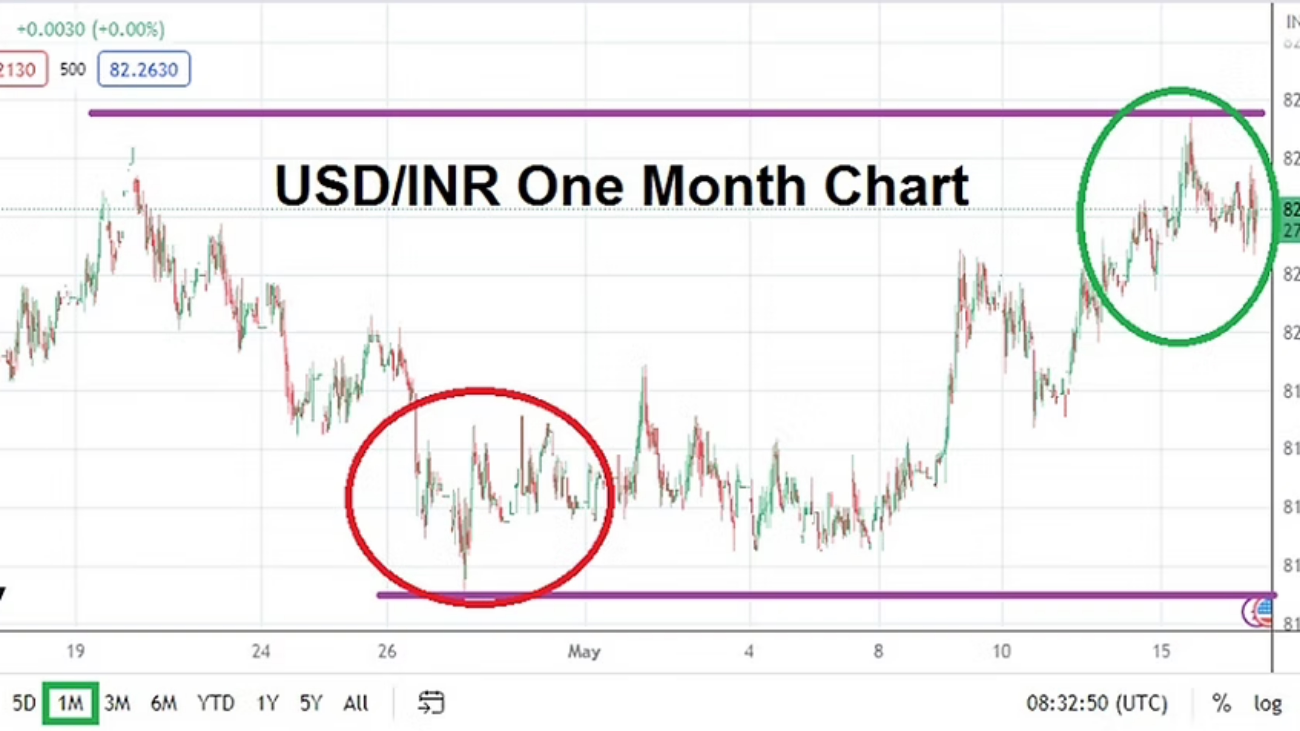
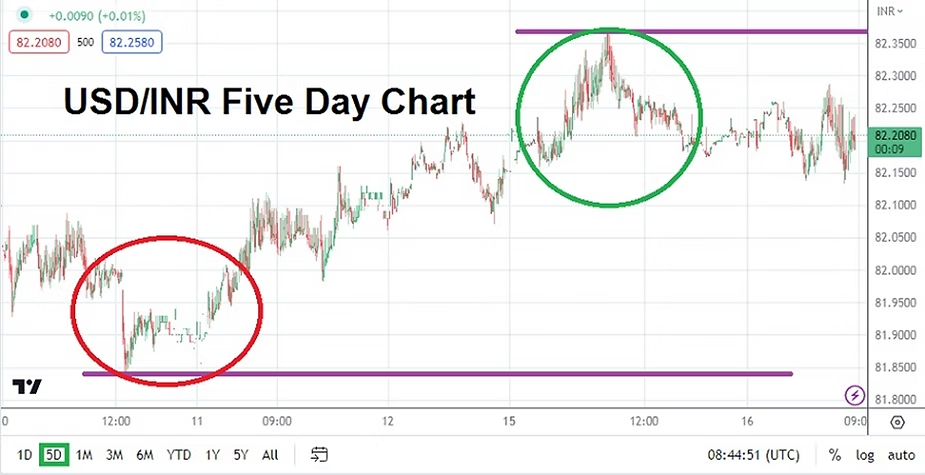
The past week of trading within the USD/INR has seen a bullish trend emerge, this while many speculators were likely starting to believe lower price realms and targets were possible.

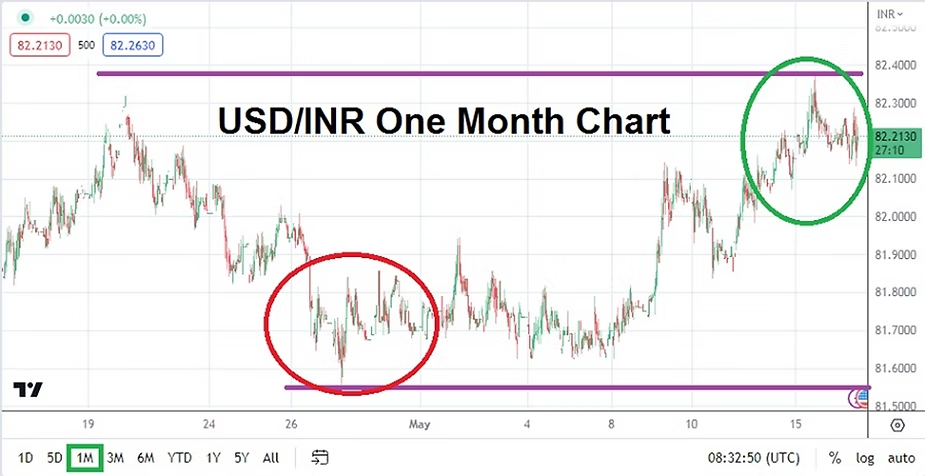
The USD/INR is trading near the 82.2200 mark as of this writing, which is within the higher elements of its one month price range. Volatility within the USD/INR has been abundant the past week and has likely proven expensive for speculators who were pursuing the currency pair with visions of more bearish price action to target. Early May values of the USD/INR certainly tested lows and likely fueled the appeal of selling positions. However, the early May lows within the Forex pair tested the 81.6260 mark, while never actually hitting April’s lowest values which tested the 81.5500 ratio on a couple of occasions.

USD/INR One Month Chart as of 16th May 2023

One of the dangers of trading is always the potential for a sudden change in behavioral sentiment. The lows in the USD/INR seen on the 8th of May, which is only a little bit more than a week ago, highlights the price velocity the currency pair has demonstrated. While many speculators are trying to understand why the sudden shift in dynamics has taken place, it is important to remember the USD/INR was actually trading above its current values in February, March and early April of this year.

USD/INR Five Day Chart as of 16th of May 2023

The Difference between Day Traders and Financial Institutions

The outlook of speculators within the USD/INR is totally different than financial institutions. This is because most speculators are short and near-term traders. They do not have deep pockets like financial institutions – which can hold the USD/INR in a chosen direction for a long period of time and simply allow the currency pair to trade until they want to cash out of a position. Day traders are also using leverage a lot of the time, and the combination of leverage with limited available trading funds makes the daily gyrations of trading volatile and frequently dangerous.

Short-term traders look at the USD/INR with a technical viewpoint much of the time, financial institutions are likely maneuvering in the Forex pair with fundamental perspectives and inside knowledge based on known transactions they have to accomplish.

Many financial houses believe the U.S Federal Reserve will have to become less aggressive regarding its hawkish interest rate stance it has maintained the past year and a half. However there is enough nervousness within the broad Forex markets to make things very difficult for day traders, this as the potential for risk adverse trading based on economic data results move currency pairs including the USD/INR constantly, particularly if a financial institution needs to react quickly.

The ability of the USD/INR to move downward and hit support depths at the beginning of last week, may indeed be a sign that financial institutions have a belief the currency pair should be lower. However, the recent strength of the USD the past handful of days may have been brought on by the simple notion that financial houses grew momentarily nervous. There is also the possibility that large corporations made transactions in the USD/INR that moved the price higher. Day traders must understand there are forces within the USD/INR that are much stronger than their opinions. The USD/INR is not a widely traded currency pair in the open markets, it is difficult for instance to trade the currency pair in a speculative manner within India and traders in the nation face restrictions, which forces many Indian speculators who want to wager on the USD/INR to seek foreign brokers abroad.

Data and Rumors Can Sometimes be False Flags for USD/INR Traders

Some analysts have claimed the recent move higher in the USD/INR has taken place because of factors like a fear of the U.S debt ceiling not being raised in time and causing chaos in the financial markets, however this if true is likely only a short-term worry. It is very unlikely the U.S government is ‘idiotic’ enough to allow the U.S debt ceiling to not be taken care of within Congress. It would be very problematic for the U.S Federal Reserve and Treasury to have to explain why U.S bonds are suddenly difficult to repay. In other words, the U.S debt ceiling is likely to be taken care of and many financial institutions with a long-term view know this, although it is a possibility they could ‘punish’ the financial markets and act in a risk adverse manner in the short-term.

Data from the U.S yesterday highlighted another important aspect again regarding behavioral sentiment. The U.S Empire State Manufacturing Index reading came in with a negative number of minus -31.8. The expected result was -3.7, the report shows that New York business activity and outlook is worse than forecasted. This doesn’t mean the entire U.S manufacturing sector will have the same results, but it underscores the potential for a U.S recession to possibly occur. Today the U.S will release Retail Sales numbers. If these numbers come in with a negative result this could spur on bearish sentiment within the USD/INR in the near-term, particularly if financial institutions feel the results are more evidence the U.S Federal Reserve will have to pause interest rate hikes in June. USD/INR day traders should be ready for more choppiness. But there is reason to suspect resistance above in the currency pair may start to prove durable from a speculative point of view considering the trading results the past month in the USD/INR.

Traders wishing to pursue the USD/INR need to use solid risk management. Entry price orders will help traders get a ‘fill’ they are expecting and the use of stop loss and take profit tactics are highly encouraged. The past week of trading in the USD/INR has likely tested the nerves of many speculators and the assault on highs is alarming, but downside price action may be ready to reignite if U.S economic data continues to falter in the near-term.