post230

FX Trends: Brutal Months for Day Traders and Happy Brokers

FX Trends: Brutal Months for Day Traders and Happy Brokers

The past few months for day traders have likely not been pleasant experiences for many. Forex, equity indices and other assets have experienced plenty of volatility and finding a trend has not been easy. While speculators who are wagering on the ups and downs in the marketplace have been getting crushed, their brokers likely have not been getting hurt.
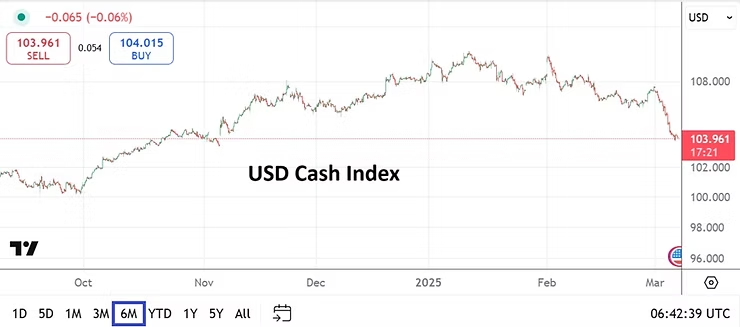
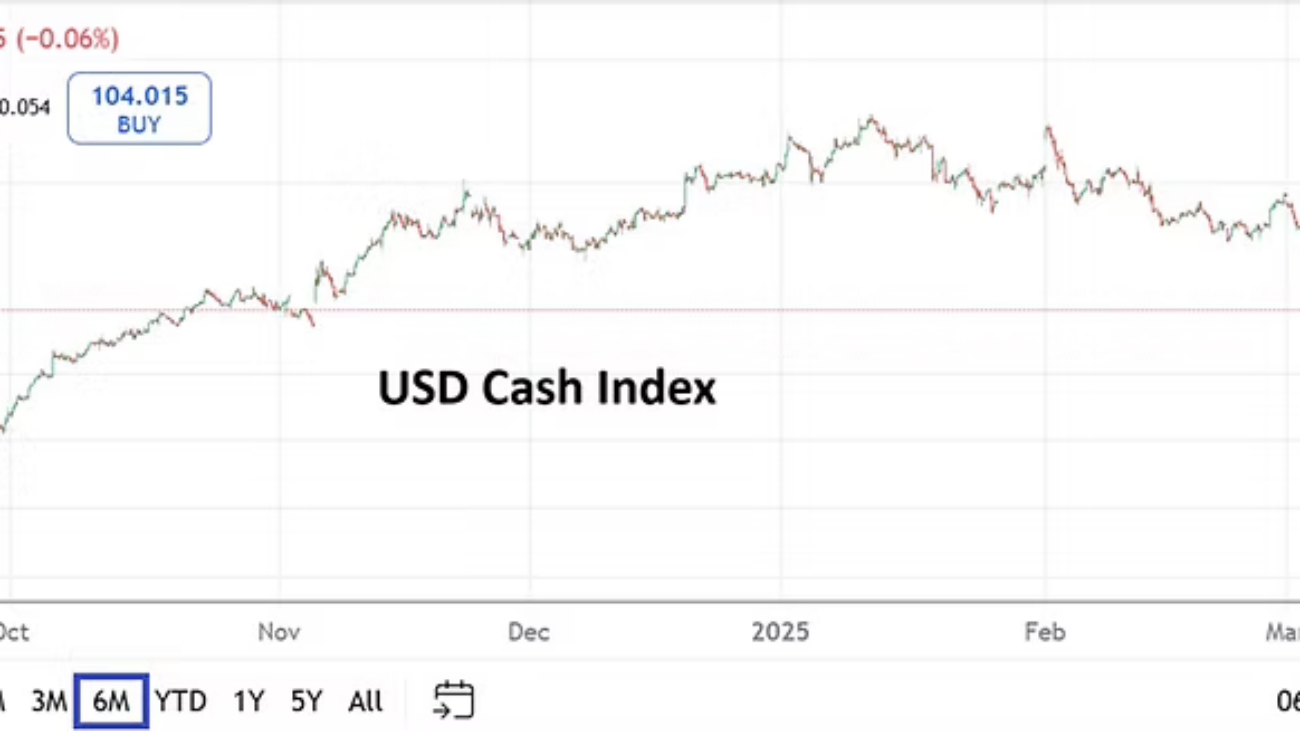
USD Cash Index Six Month Chart as of 7th of March 2025

Day traders need to understand that CFDs are virtual. Your broker is merely placing a wager for you on chosen direction, in most cases they are acting as ‘the house’ and know the volatility is going to knock you out of your trade. They pocket your losses as their winnings in many cases. The brokers are not only making money from the differentials from the bids and asks (the spread), they might also be charging you a transaction fee.

If a broker feels less confident about their ability to make a profit off your poor results (I am not kidding about this), then they sometimes insure your wager via a liquidity provider who in many cases is literally betting against your broker, because the liquidity providers believe your broker is likely being overly cautious. (A vicious circle). In other words brokers allow your trades to work virtually (not in the real marketplace) on something many risk management rooms in Forex call the B Book. If the broker is not certain if you will lose money, they put your trades into something called an A Book. And, yes, many liquidity providers (the A Book providers) are betting against their clients (who are brokers seeking to mitigate their risks).

Again, the brokers and the liquidity providers do not believe you will make money most of the time. They are allowing you to bet and they are happy to take your wager, because historical evidence shows retail bettors in Forex tend to lose money via their trading accounts at least 85% over long durations. Depending on what source you look at regarding CFD statistics, speculators tend to do a little better against their brokers but still lose money more than 50% of the time. Some statistics claim up to 75% of the CFD outcomes via trading accounts equate into losses for speculators.

And if all of this sounds like sour grapes, it is not, it is a warning to you the bettor. Brokers in many cases are glorified casinos that provide you an opportunity to wager. You need to acknowledge the above before your start trading. Speculating on Forex and CFDs ( via equities, indices and commodities) is like betting on a horse. The racetrack doesn’t lose money, they know most bettors simply enjoy the thrill of gambling and don’t mind losing. Racetracks are happy to pay the occasional winner. If you choose to wager on Forex and CFDs you need to practice risk management.

You probably didn’t come here to be reminded about risk management, you have heard it before – conservative leverage, price targets, timeframe parameters, entry – stop loss – take profit orders are standard warnings. You want to read about trends, you want to know which direction you should take, yet there are no guarantees and that is why speculating is gambling. You are wagering.

If you intend on improving your odds, by following solid risk taking tactics – including trying to understand behavioral sentiment via the financial institutions you are trying to emulate, you might find better results. And still, speculating will be tough.

The U.S will release Non-Farm Employment Change numbers today, but traders should pay attention to the Average Hourly Earnings report which will give insights about inflation too. However, the jobs numbers may prove to be a false narrative, because more importantly, whether you like him or not, there is the Trump Effect to ponder.

Tariff mantras and fears, negotiations regarding the fate of Ukraine, and a myriad of other concerns have financial institutions anxious as they try to seek clarity. Equity indices have been a mess. Yet, the USD Cash Index has given back a lot of its gains since February the 4th – this after the Forex bloodshed caused by nervous reactions to fear of tariffs being implemented. And now, not so coincidently the USD Cash Index is traversing values it saw on the 5th of November 2024, yes, U.S Election Day. Speculators and financial institutions have returned full circle to big unknowns.


postR192

Telling Someone to Not Trade Works Like Reverse Psychology

Telling Someone to Not Trade Works Like Reverse Psychology

From the strange but true file, comes the realization after working within risk analysis for a long time that telling a speculator to avoid a particular market because I believe it is going to be volatile often has the opposite effect. Perhaps the best thing to do is to remain silent and allow inexperienced day traders to lose their money, convincing them to walk away from speculative endeavors forever. But I prefer to constantly teach and warn, while providing help for those who have made the firm decision they want to pursue the financial markets.

It is rather well documented that 90% of retail traders lose their money. And as pointed out within AMT since our inception most brokerage institutions are counting on you to lose money. This because many platforms are letting you trade via CFD assets and virtual Forex wagering, meaning the brokers take the risks that you may actually make money and are willing to pay out your winning bet, because they know most of the time you are going to lose. If not today then tomorrow, because casinos always believe the gamblers will lose.

People ask why I refer to wagers and bets when I write about Forex, commodities and equity CFDs. The answer is because I feel the need to remind speculators constantly they are entering a domain that is akin to gambling. I have come to learn that I cannot stop inexperienced day traders from making costly mistakes by telling them not to trade. New retail speculators can be helped by providing them risk management via basic knowledge and expanding upon the theme. Angry Meta Traders intends to always make risk management and analysis of the markets its core foundation.

Yes, we also provide our insights about potential directions in particular assets constantly, and try to contribute our thoughts on the thinking of the large players within the marketplace. We would like AMT to become a membership pass into the temple for retail traders and the occasional institutional participant that reads our material. Temples are usually the domain for philosophies which have been gained through years of experience and contemplation about the human condition.

While it may sound absurd to discuss temples, experienced traders unless they have been merely lucky their entire careers, know the psychology of financial institutions is always important. Understanding the behavioral sentiment of large players and the quantitative engineering they use to make decisions is crucial. The keys to the inner workings of the financial temples is a metaphor, hopefully allowing day traders to feel like they have been given the ability to look inside and understand the decision making process of large institutions that can move the markets.

Angry Meta Traders is not always right, our analysis and predicted movements about assets are sometimes wrong. Yet, by stressing risk management via limited leverage, stop losses when appropriate (they almost always are), and telling traders to not be overly ambitious, we hope AMT delivers constant reinforcement and needed learning.

The noise of the market can be quite intense, false narratives, and misguided analysis are dangers all traders face, even the most experienced large players and financial institutions understand they will not always be correct. And this takes us back to the notion that trading for inexperienced people is not easy. But I know telling you not to trade works in the wrong way. So what I tell you now is to be patient, learn, gather wisdom as you trade and hopefully you will attain some of the tools needed to make your speculative life easier. Knowing that 90% of traders lose money, we hope that via our efforts to inform that we can put you within the small percentage of people who actually profit.

postR196

AMT Top Ten Miscellaneous Complexities for the 14th of June

AMT Top Ten Miscellaneous Complexities for the 14th of June

10. International Tech Research: Universities and institutions around the world are developing innovative systems to deliver a quantum future. Cal-Berkeley, MIT, Cambridge, the Barcelona Supercomputing Center, the Institut Polytechnique de Paris, and the Cleveland Clinic are only a few of the places in the ‘West’ that investors should monitor for developments, Asia is also very focused on high speed computing.

9. Musk Schedule: The tech mogul has had a busy week. His Tesla stock option compensation package was approved by shareholders yesterday. In 2018 Musk negotiated a package with Tesla that included a massive compensation agreement via stock options if he met valuation targets over a 10 year period. He achieved the valuation goals within only a few years. Musk also formally dropped his lawsuit against OpenAI and Sam Altman in recent days, this after the enterprise released emails showing Musk backed OpenAI’s pursuit of profits in the past. Around 2015 Musk invested about 45 million USD into OpenAI.

8. Muted Data: The U.S Consumer Sentiment and Inflation Expectations numbers will be released today via the University of Michigan. However these numbers are likely not going to impact financial assets in the U.S. The Fed and CPI results from the States published this past Wednesday will dominate the investing narrative. Searching for meaning regarding why assets move in a particular direction is the media’s job, but perceived realities always remain open to complex interpretations as real time prices are exhibited. Day traders need to be cautious of revisionist history.

7. Petrol Dollar: Saudi Arabia has not reconfirmed its commitment to transact Crude Oil exports with USD. The formal agreement reached in 1974 has expired. Forex traders should not panic about this development yet. Speculators should note that Saudi Arabia is likely to still demand most of their payments in USD since they can count on the valuation of the currency to remain relatively tranquil compared to other instruments like China’s Yuan. What the absence of an agreement between the U.S and Saudi Arabia does indicate unfortunately, is that U.S foreign policy continues to look vulnerable.

6. Optimism: A South Africa government coalition agreement could be formalized soon and create a better economic outlook for the nation. While geo-political concerns remain, and the ANC is not a 100% friendly philosophical match with the Democratic Alliance and some of the other political parties which will be involved, it appears a working agreement can be reached. The question in South Africa is if transparent fiscal and anti-corruption mandates can be accomplished while diverse political outlooks will be heard and demanded from different factions. For the moment, financial institutions seem to like what they are hearing and the USD/ZAR has edged lower in the past week.

5. Highly Valued: Gold is over 2300.00, BTC/USD is near 67,000, and Cocoa is within sight of 11,000. Speculative large players remain active, and traders looking to take advantage of short and near-term fluctuations in these commodities need to remain vigilant. Cocoa, while extremely dangerous to trade, has outperformed gold and Bitcoin recently. Investors in gold think long-term, and Bitcoin influencers preach ‘hold on for dear life’ as non-believers shake their heads in disagreement. However, daily gyrations influenced by large players can still wreck havoc on those looking for short-term wagering opportunities.

4. Zombie Fed: Cautiously optimistic undertones were served from Jerome Powell as expected this past Wednesday, but intriguingly Powell admitted some government data remains open for interpretation, particularly the suspiciously strong headline jobs numbers which are being questioned. The Fed now says its outlook is for one interest rate cut this year. Financial institutions likely believe the Fed remains too reactive. The U.S GDP has shown signs of struggling, and CPI numbers have begun to erode. Crude Oil prices remain under 80.00 USD. However, the Fed seems intent on still pumping the brakes in order to kill off inflation via the high Federal Funds Rate. It would help if the U.S govt stopped spending cash recklessly, and the U.S Treasury stopped printing money.

3. Equities: U.S political concerns as the election approaches will create more analysis paralysis than normal. Short-term behavioral sentiment may sound nervous, but a bullish trend and risk appetite remain evident. Day traders may be able to take advantage of technical trading via support and resistance in CFDs, but fundamentally financial institutions appear inclined to count on equity indices achieving record highs.

2. 157.000 – 158.000: Today’s BoJ decision to remain stuck in the mud has created more financial institutional dismay in some quarters, and the the Japanese Yen will be punished occasionally against the USD. But the folks at the BoJ are not stupid and likely anticipated the USD/JPY move higher which ensued. The BoJ is obviously preserving its ‘soft devaluation’ of the JPY in order to maintain an export advantage for the U.S and European consumer markets. The question is if and when the BoJ will buy billions worth of JPY in order to punish bullish USD/JPY Forex speculators occasionally.

1. Volatile Near-Term: EUR/USD and GBP/USD price action has been boiling. France and the U.K have crucial elections in the coming weeks, after policies in both nations have led to a lack of confidence in the ruling governments. The ruckus outcome from the E.U Parliament voting have created an intriguing complication. Oddly enough, the U.K may be the left’s torch bearer in the coming year, while other European nations drift towards the right. Can centrists create a middle ground? Volatility and the search for equilibrium via financial institutions may create a lot of opportunities for Forex day traders in the coming weeks in the EUR/USD and GBP/USD as reversals and trends are sought.

postN87

AMT Top Ten Miscellaneous Notions for 12th of January 2024

AMT Top Ten Miscellaneous Notions for 12th of January 2024

10. Music: School Days by Stanley Clarke. Recorded in 1976, the ‘song’ is one of the best jazz fusion pieces ever played.

9. Coaches: Bill Belichick and Pete Carroll have been ‘politely’ fired, Nick Saban has retired. NFL and college football remain the ‘Kings of Sport’ in the United States.

8: Taiwan: Presidential election will be held tomorrow. Expect noise from China this weekend regarding Taiwan’s sovereignty.

7. Forex: Volatility struck yesterday in USD based currency pairs, whipsawing as financial institutions reacted to the Consumer Price Index reports. More inflation data will come from the U.S today.

6. Gold and Crude Oil: Precious metal value has been ‘almost’ steady, and WTI Crude Oil price remains rather calm.

5. China Deflation: CPI and PPI numbers were lackluster this morning. Export numbers from the nation have also delivered troubling declines.

4. Houthis: U.S and U.K missile strikes in Yemen have been conducted, diatribes from the extremists have been sounded, and may cause some investors concerns and potential risk adverse trading considerations going into weekend.

3. Bitcoin: SEC ETF funds approval has been completed, and launch is set to allow retail traders and ‘investors’ to purchase the digital asset. BTC/USD is near 45,960.00 currently. CFD products from brokers will likely be introduced and flourish soon, which will be based on the ETF notional values and allow day traders to wager on upside and downward momentum.

2. PPI Data: U.S Producer Price Index inflation results today could rattle the broad markets. No changes are forecasted. A surprise increase would worry those betting against the USD. Traders should also keep their eyes open for potential revisions to previous months.

1. Risk Appetite: Dow Jones 30, S&P 500 and Nasdaq 100 continue to flirt with apex values. The Nikkei 225, from Japan, is challenging highs not seen since 1990 as it trades above 35,575.00 for the moment. Equity indices remain optimistic.

postN81

Behavioral Sentiment: Sports and Trading a Key Correlation

Behavioral Sentiment: Sports and Trading a Key Correlation

In order to be an effective day trader a speculator needs to be able to control their emotions. A person can have years of market knowledge, the best schooling, read the world’s greatest books, be able to quote the leading financial experts and still be a bad trader. While it is important to understand the complexities being generated via technical and fundamentals and the power of behavioral sentiment, again it doesn’t guarentee you profits.

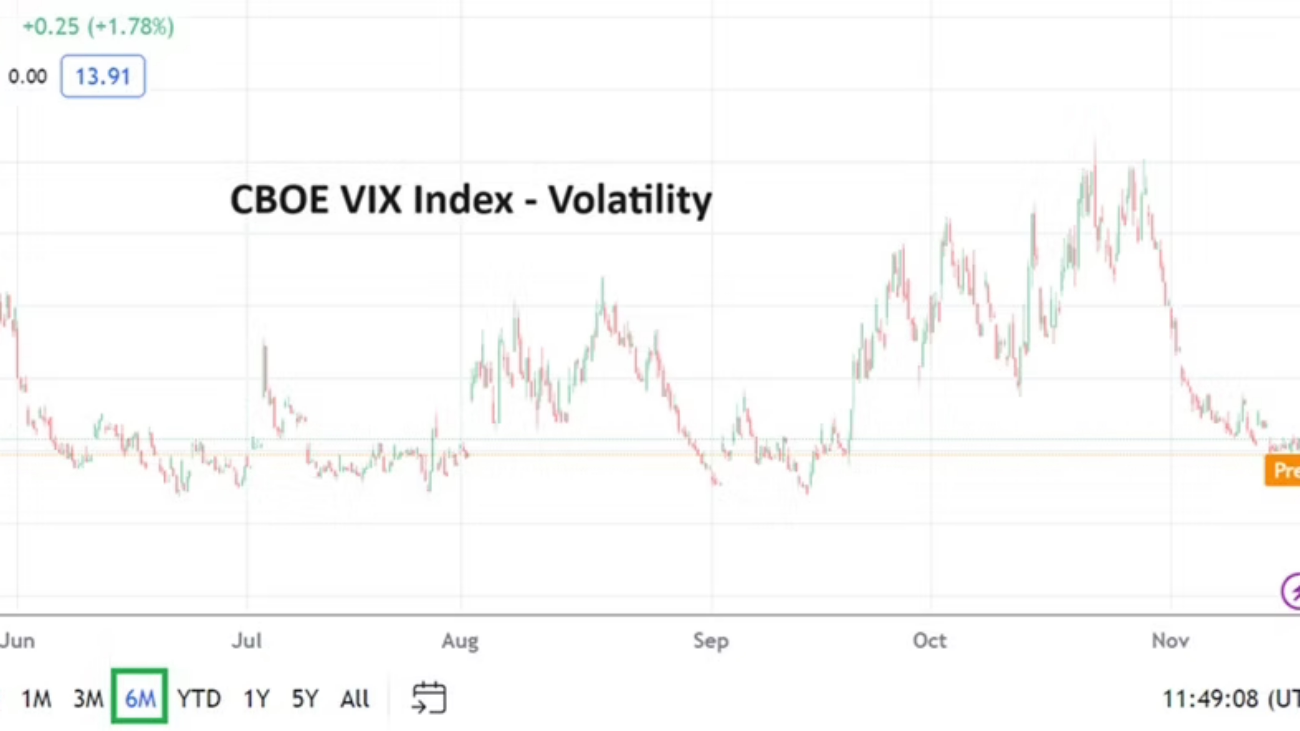
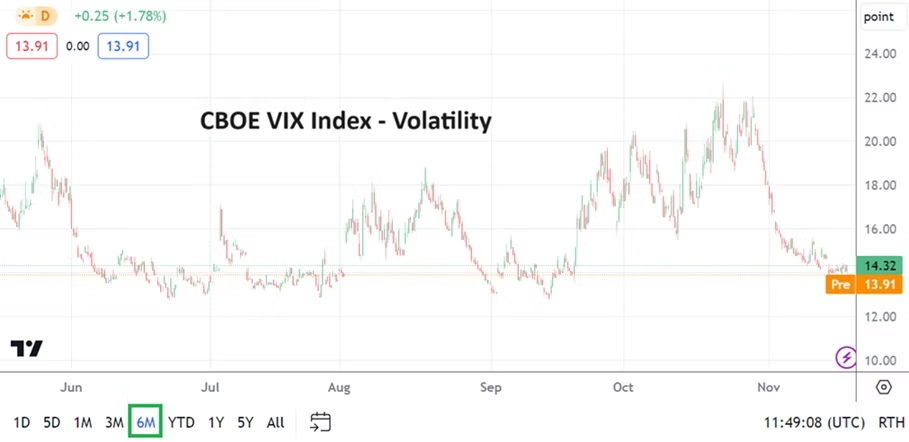
CBOE VIX Index six month chart as of 17th November 2023

When a day trader initiates pursuit of position, long or short, they can even be right about the eventual direction and still lose their money when the trade is complete. The missing link for many speculators while trading is their inability to control their emotions.

Many sports fans know that there are teams that have some of the highest paid athletes, but frequently have lackluster results because the team is not able to handle the bright lights of the stadium, they let crowds affect them. Some teams simply prove over time they are not prepared to really compete in the most important games; trading results frequently are similar when a speculator is not ready for the financial market they want to compete within.

Unless a market participant can handle their anxiousness, nervousness, frustration, assaults from value gyrations (reversals of price), doubts and the noise of the crowd (news being generated from the media that is mere hyberbole) and other challenges that can affect their emotional state – a trader is unlikely to have success.

Sports and trading are very similar sometimes. Professional athletic competitions between the world’s best are often a contest of ‘wills’. In many sports the top athletes are almost equally matched regarding their physical ability. In trading many speculators have the same perspectives regarding potential market directions, yet they produce different outcomes.

The difference maker in sports and trading when it comes to positive results – winning, is the ability to control their emotional state. Remaining calm and focused, knowing the goal and tasks that must be accomplished to achieve victory in sports and trading is often the result of keeping tranquil psychologically in the middle of battle.

You can have all the necessary trading skills needed to pursue a position within Forex, equity indices, commodities via the cash market, CFDs and futures, but if you do not have control of your emotions you are likely to lose.

Day traders also need to understand that one day of results, winning or losing, does not mean anything regarding future prospects. Like the best athletes, traders need to enter every trade as if it is a new game. Discipline, tactical objectives are important in trading. Being able to walk away from a losing position and leaving enough in your account to pursue the markets, for the next time you feel there is a potentially profitable objective that is attractive is also important.

You must know yourself to be a good trader, you must understand your own emotions and work on weaknesses. The ability to be profitable over a long time is not as simple as merely entering your online trading platform and opening a position which has been recommended or that you think is a winner.

It is one thing to understand the positive movement of a potential trade, but you must be ready for the negative possibilities when a trade is not going your way and the ability to navigate through the storm. Is your stop loss in place? Does the amount of leverage you are using allow you to walk away from a losing trade and still have enough ammunition (money) for other trades? Can you handle the volatility that is likely to ensue in potentially choppy conditions?

You need a solid gameplan. One of the greatest risks a trader is confronted by is their lack of emotional fortitude. Successful speculators embrace their trading positions because they are attractive, but they also manage their expectations and have a plan of attack in place before they enter every trade. Good traders can block out the noise of the crowd and enjoy the competitive nature of battling the financial markets.

postN50

Trading Tactics to Add to Your Risk Management Knowledge

Trading Tactics to Add to Your Risk Management Knowledge

Retail traders seeking quick speculative positions are not the masters of the financial world. Institutions which day traders are hoping to reflect are the real shakers of the markets. Understanding your actual place in the world of trading is crucial, accepting this point and putting ego to the side will create a better grasp of behavioral sentiment as you interpret combinations of fundamentals and technical perceptions and merge them into your risk taking.

Making your decisions with the acknowledgement of your place in the trading world is important. Your 10,000.00, 50,000.00 and 100,000.00 USD value based positions are very small fish in a large ocean. Your trades are very unlikely to affect market direction in any meaningful manner. The more leverage you use makes your available ‘margin’ prone to failure.

Risk analysis is vital for day traders, guarding you money should be a fundamental aspect of your tactical decisions. Deep pockets are not luxuries most day traders have.

If you happen to have a solid amount of money to speculate with it will assist you, but you will still need to practice solid risk taking strategies.

Plenty of rich folks have lost all of their money trading, that isn’t written to make you feel better, it is written as a warning and highlights that speculating is dangerous when not done with a solid plan of action. Once a trade is placed your work than immediately doubles via responsibility, because you have ‘skin in the game’ and need to manage your emotions and thinking as the markets move.

Metallgesellschaft and Barings Bank are two prime examples of two institutional traders who made vital mistakes with risk management and lost everything in the 1990’s. Protecting cash reserves are vital for all. Metallgesellschaft and Barings did not supervise their traders and ‘hoped’ that all things would work out in the end, because they had the false notion institutionally that their capacity to hold onto positions that were not profitable would eventually turn into positive results. Their losing trades caused the destruction of their enterprises.

Most speculators by nature are optimists. After all day traders are gambling on the movement of assets they believe they have a correct perspective regarding future direction of value. In order to wager a trader needs to feel confident regarding their outlook, otherwise they would not pursue currency trading. The same can be said for equities and indices, commodities and all other financial assets. False hope can destroy the efforts of all traders and they must be alert to perspectives which can lead to detrimental results as they trade.

Too much leverage, no real insights about direction, and trading based on ‘noise’ that influences and causes you to make unwise decisions are dangers. It might be boring to constantly be told to be careful, a bit like a parent warning you when you were little to act in a certain way. Good risk management while day trading is vital for surviving and finding success.

Do not be stubborn. In trading no matter if it is Forex, CFDs with equities, indices, commodities or cryptocurrencies you should not ‘marry’ your position blindly. If your trading position begins to show signs of potentially failing and you have concluded you are wrong – end the trade asap.

However, at the same time do not make your decisions based on emotions which may create whipsaw reactions regarding your choices. Having solid goals before going into a trade will help you eliminate emotional stress.

Have price targets and a strategy for getting in and out of trades. If the trade is going in your direction, then protect your profits by either cashing out of the trade, or raising your stop loss to a place that you are actually still going to make money. Some trading platforms may allow you to raise your stop losses – this is called a ‘trailing stop’. If you are lucky enough to catch a trend at the correct time and it is being sustained, using a ‘trailing stop’ is a solid risk management tactic and can protect your profits.

If the trend in your position starts to reverse against you, do not cancel your ‘trailing stop’ because you think the reversal is a momentary cycle. Trading floors are littered by people who had substantial gains and then watched them vanish, all because they thought the market would reverse in their chosen direction again. Folks dream about owning a castle when all they need is a comfortable home. Cancelling stop loss orders is a sure way to the poor house.

Immodest ambitions can ruin your trades when you become stubborn, unrealistic and emotional. Make sure you stay ‘grounded’ and are pursuing trades because you believe in them, and not because you are looking for price action to fill up a boring day with wagers than make no sense.

postN48.1

Absurd Friday Forex Results? Suspicions as the Week Begins

Absurd Friday Forex Results? Suspicions as the Week Begins

This coming week may be an opportunity where speculators can test their conspiracy thinking, perceptions of technical and fundamentals in unison. Experienced traders who typically have a high degree of skepticism about markets (particularly when results don’t go in the direction they expected) may question late last week’s results.

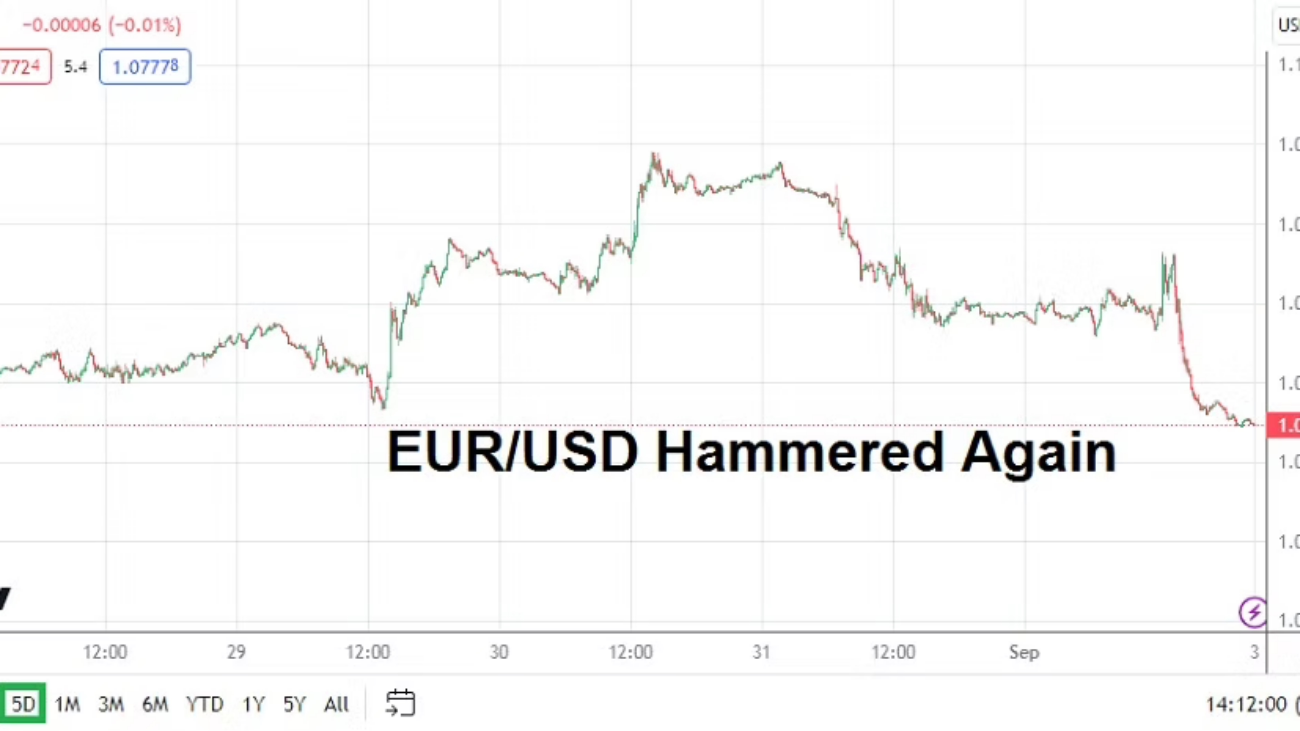
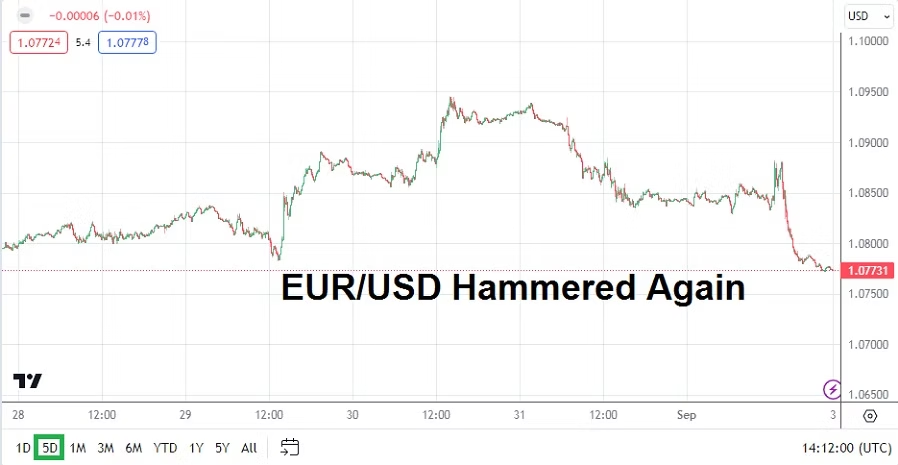
EUR/USD 5 Day Chart as of 3rd of Sept. 2023

Without trumpets or too much hyperbole, was Friday before going into the weekend a ‘false flag’, this as the USD gained strength against many other major currencies. A lack of volume because of the Labor Day holiday coming in the U.S and Canada tomorrow may have affected the Forex landscape. While trading is largely done by computer programs in financial institutions, day traders should understand last Friday worked as a get away day to enjoy a long holiday weekend in North America.

Meaning financial executives largely escaped their offices because they have seniority and the ability to disappear while their ‘underlings mind the store’. Essentially senior management often tells the staff that has to stay behind, “monitor and not touch the system”. This could have left the door open for what appears to be a strange reaction in Forex upon what was in fact weaker data on Friday from the U.S via the Average Hourly Earnings which came in slightly below expectations, and less than stellar U.S GDP results on Wednesday the 30th of August.

Yes, also this past Friday the Non-Farm Employment Change numbers were fractionally better this month than anticipated, but the prior month’s results were actually revised downward. And yet the USD remained strong. Is this because senior analysts, chief traders and risk management officers were absent on Friday?

Tomorrow the same folks will remain largely away from the markets too, meaning results should also be viewed with suspicion. Which sets the table for an intriguing Tuesday and Wednesday for all the major and minor currency pairs teamed against the USD. Gold and equity markets will need to be monitored closely too.

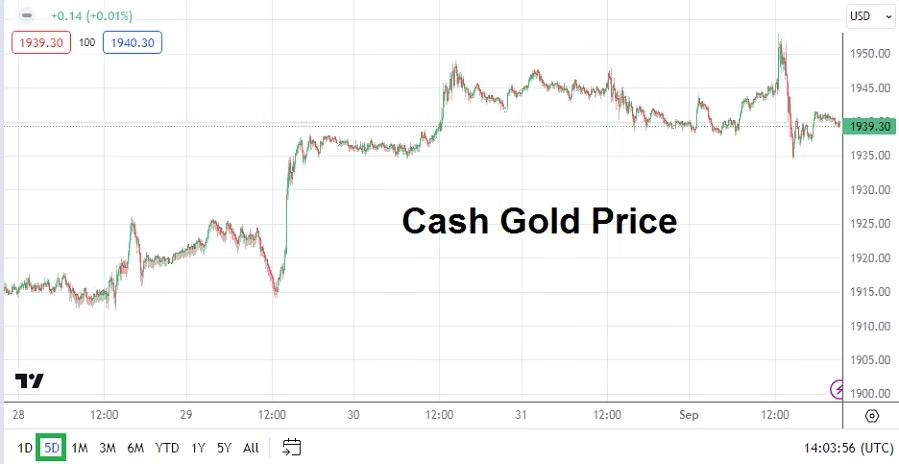
Gold Cash Price Five Day Chart as of 3rd Sept. 2023

Some potential clues are that the price of gold stumbled slightly on Friday as the weekend approached, but this happened as the EUR/USD sank to a low for the week, and the GBP/USD came under renewed pressure. But again this happened in rather questionable circumstances. Important support levels technically may get tested tomorrow, but trading volumes should be examined. Gold in many respects held onto gains made earlier in the week.

Yes, there are reasons to be nervous in financial institutions, due to higher short-term U.S Treasury yields, concerns about the China economy, mortgage rate worries in the U.S and elsewhere, fears about credit availability for small U.S businesses. However, these troubles have not caused a massive meltdown in the most primal of trading venues yet – major stock indices.

September is a notoriously volatile month for equities and speculators who use CFDs to participate in the stock markets globally need to be careful. Correct, some well known ‘traders’ are talking about a coming selloff in the markets, but so far we have not seen a major decline in the NASDAQ, S&P 500 or Dow Jones 30 indices. Day traders should not and cannot underestimate the potential for volatility to occur suddenly. Successful speculative bets via limited funds often means having to practice patience and risk management.

Thus, as the week begins early this Monday, day traders should be careful. Please note that a lack of big trading volumes because of the absence of U.S and Canadian financial institutions will make tomorrow’s results questionable. Opening the door for the potential of reversals on Tuesday, which might be abrupt as a ‘re-balancing’ of sorts takes place as folks returning to their offices seek equilibrium perhaps with their adjusted outlooks.

Simply put the U.S Federal Reserve the past two weeks has seen the same lackluster U.S data as all global traders, and the U.S central bank is in no position to raise interest rates over the mid-term. It would be useful if the Fed voiced their insights regarding the weaker than expected U.S Gross Domestic Product results last week, and the lower than expected Average Hourly Earnings report seen before the weekend. However, do not count on the Federal Reserve to do the right thing.

postN47.1

Plenty of Data from the U.S and China Should be Anticipated

Plenty of Data from the U.S and China Should be Anticipated

As the last week of August trading gets ready to begin, day traders may be glad to put the past month behind. The BRICS Summit and Jackson Hole Symposium delivered soundbites as promised last week, but there were few surprises. Forex, equities and commodities have been supplying a bumpy road for a while and may continue to do so.

Behavioral sentiment in the broad markets remains fragile, this as short-term U.S Treasuries continue to allure institutional players looking for solid returns. Some well known market players continue to issue cautious words regarding U.S equities, but the three major indices are still near mid-term highs. We have yet to experience a blood curdling selloff in the U.S equity markets. This maybe producing choppy results for some day traders pursuing CFDs while betting against higher moves.

Which brings up the question, which quantified analysis do you want to act upon? While the major U.S indices are up, a lot of the market action in these indices are driven by the ‘top performers’ which have ‘floated the boat’ while many other stocks have not performed handsomely.

Retail traders who are wagering on daily fluctuations need to understand there is a vast difference between short-term speculative positions and long-term investments. Hence the reason day traders are reminded to only bet money on what can be lost without a great deal of discomfort. Speculation should only be done with a very limited amount of cash, because day trading never offers guaranteed profits.

The next handful of days will deliver plenty of important data. The question is how financial institutions will react as they weigh the coming results against their own sentiment and outlooks regarding mid-term interest rates via the U.S Federal Reserve’s rhetoric. Market nervousness remains on edge as more tranquil days are certainly sought via risk adverse financial decisions.

The cryptocurrency market should be watched carefully by participants within its volatile assets. Bitcoin continues to trade near the 26,000.00 level and this is considered important support by many. And Binance coin has failed to inspire a sustained upwards reversal as Binance exchange remains under legal and regulatory shadows.

Traders are also advised to note the U.S will be on holiday on the 4th of September, the coming long holiday weekend could spark rather dynamic market action Thursday and Friday as financial institutions trade in advance of Labor Day.

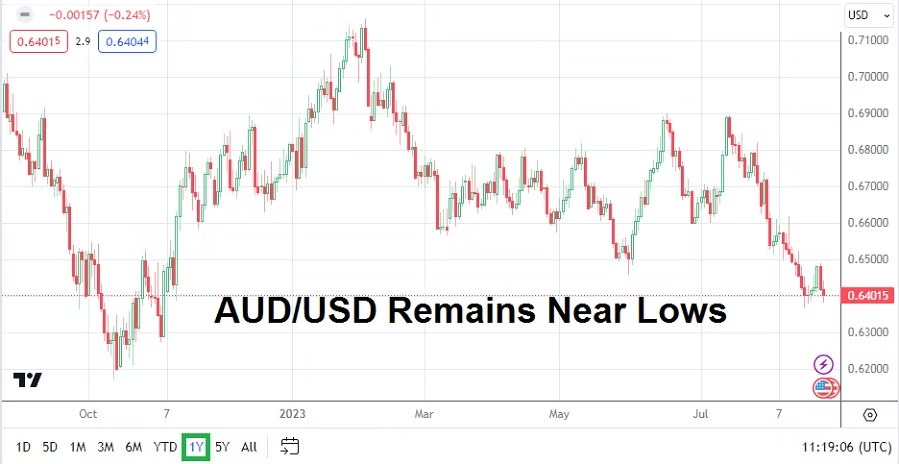
AUD/USD One Year Chart as of 27th August 2023

Monday, 28th of August, Australia Retail Sales – the numbers will cause a reaction in the AUD/USD and the result is expected to be slightly better than last month’s outcome. The AUD/USD is near important long-term lows.

Tuesday, 29th of August, U.S Consumer Confidence via The Conference Board – the anticipated result is lower than last month’s reading. However, the past three months have done better than expected, which may put some analysts on edge before the publication.

Wednesday, 30th of August, Germany Preliminary Consumer Price Index – the inflation numbers are expected to match last month’s gain of 0.3%. The EUR/USD will react to the outcome with momentary volatility. German economic data has been a concern in the European Union for a handful of months.

Wednesday, 30th of August, U.S Preliminary Gross Domestic Product and GDP Price Index – the numbers from the GDP reports will be watched by most financial institutions. Last month’s numbers surprised traders, this as growth remained quietly stubborn and inflation crept higher. The USD has been a powerhouse against the GBP and EUR recently. If these GDP reports surprise to the upside again, this could spark more buying of U.S Treasuries which could create additional strength in the USD.

USD/CNY One Year Chart as of 27th August 2023

Thursday, 31st of August, China Manufacturing PMI – the results from the Purchasing Managers Index from China since April have been lackluster and showed weak export demand globally. Economic data from China has sparked concerns from international investors, and the USD/CNY has certainly received attention as it has risen steadily and is now challenging highs from late October and early November 2022.

Thursday, 31st of August, U.S Core PCE Price Index – the Personal Consumption Expenditures data is expected to match last month’s gain. This inflation data, and the GDP Price Index numbers from the day before will certainly get a reaction from financial institutions which would prefer to see no surprises higher.

Friday, 1st of September, U.S Non-Farm Employment Change and Average Hourly Earnings – as always these reports could shake market sentiment instantly. However it is the wages data which will likely be a focal point for investors. If wages can come under last month’s gain of 0.4%, this would be welcomed by investors and they may go into the long U.S holiday weekend a bit more calm regarding the Federal Reserve.

postN23

Fed Spits into the Wind as Day Traders React to Volatility

Fed Spits into the Wind as Day Traders React to Volatility

Broad market analysts continue to spit up an eternal fountain of opinions and data to show why yesterdays moves happened and why tomorrows are going to have bright sunshine and positive outcomes. However, day traders know this is not the reality for them and understand the gyrations and volatility of the marketplace is actually quite dangerous in the short-term.

Day traders may even know market correlations looking backwards are also tales of fiction sometimes. Random results from various fronts are often viewed and assembled by analysts and data providers to give credence as to why ‘John Doe’ lost all of his money, because he was not paying attention to the storm that was ‘obviously’ developing in front of his face. Thus, wiping away any stains of responsibility the analysts and data providers may have for their clients loss of money.

Gold Five Year Chart as of 28th June 2023

Traders seemingly want to know what the U.S Federal Reserve is going to do every minute. If they could, short-term speculators would probably buy information on the amount of coffee breaks FOMC members take, and monitor what Fed officials daily meals are to understand their moods.

However, we should also understand that a lot of the day to day mechanics in the financial markets are tasks that have been done thousands of times before, in other words we know the history and results of many financial institutions. The U.S Federal Reserve is doing nothing new and their actions in July, August and onward really do not amount to much. The monthly decisions and annual manifestations of governments that spend too much cash and their officials trying to balance the value of their national currencies are well documented historically.

Markets in reality think long-term and this is where nearly all of the large money is invested. Day traders need to understand what they are doing is almost considered a ‘hobby’ by investment professionals who do not take the ‘hobby’ of the small speculators very seriously. This because the amount of money most day traders are using doesn’t affect market price very much, unless they form a ‘team’ like the Wall Street Bets ‘crew’ or act in unison via other social media groups influenced by people they mostly do not know personally, and should be wary of regarding motives. Let’s point out for a moment though, that long-term investors can lose money too based on faulty outlooks.

Long-term money is invested with perspectives that stretch often for periods of two to three years and beyond. Outcomes are projected not on data that cause daily momentary values to change, but rather on sophisticated insights which take a perspective the value of equities and certain indices, and other assorted assets tend to rise. Long-term investors mix their outlooks on economic road signs which will be affected by the investing landscape over a period of years. Meaning knowledge of geopolitics, interest rates, social stability and economic transparency are vital. History is a guide post for established financial institutions as they work. But sometimes these factors do not work, and employees at long-term thinking financial institutions find they need new jobs.

U.S Federal Reserve officials, after yesterday’s Core Durable Goods Orders and the CB Consumer Confidence reports which showed strength were published, might have raised their eyebrows. FOMC members likely acknowledged the long-term exuberance and nature of the U.S economy and thought ‘we need to raise interest rates again in July’ because growth data is too resilient. However, they have already said this via their FOMC Statement in June which warned about inflation and why it continues to be a concern, but the ‘words’ thus far have not been taken too seriously.

Yesterday’s reaction in the broad markets was not overly volatile because of the U.S data outcomes. Yes, short-term Forex traders were likely hurt or rewarded depending on the what lucky side of the coin they were betting. However, for the most part many long-term investors have already placed their positions and continue to do so, which they may not alter for the next two to three years depending on the amount of cash reserves they have in their arsenal. This ammunition of large capital, allows long-term players to remain in the game until a result can be quantified – good or bad.

Day traders and long-term investors are playing a different game. Their mode of operations work in different manners. Again, it must be stressed long-term investors do not take into consideration the outcome of most short-term traders, nor for that matter do global central banks. In fact most global central banks and the governments behind them, would rather see day traders simply give their money to investment ‘experts’ who put the ‘little peoples’ money into long-term savings and investment programs.

Speculative cash in the markets does exists, but the amounts of money being used by day traders and large ‘players’s looking for short-term results are quite different. It should also be pointed out that many day traders are using CFD’s – which largely means their positions are being wagered virtually – and are not really being deposited into the ‘cash markets’. In other words day traders can go broke much faster than their long-term counterparts who are investing in positions that have the power of time duration on their side. The virtual positions of CFD wagers are not going into the real cash market, thus not causing a reaction in the actual assets being traded.

Many day traders participating in the daily results of Forex, and equities and indices are merely trading on casino like platforms built for wagering on the results of what is happening elsewhere in the real cash markets of assets. It in a sense, it quite a bit like sports gamblers betting on the outcome of game they are not participating.

Tomorrow the GDP numbers will come from the U.S and the growth numbers will certainly be watched. The results will be consumed differently by day traders compared to long-term speculators. The Final Gross Domestic Product numbers from the States on Thursday are expected to show a slight rise. An outcome of 1.3% was seen last month, tomorrow’s anticipated number is a 1.4% gain.

If the growth number is stronger than expected, this would put the U.S Federal Reserve in a position in which it would almost certainly have to acknowledge another hike to the Federal Funds Rate is ‘needed’ in July. The Fed has learned the hard way that incremental rises in the costs of borrowing (Federal Funds Rate) are not curtailing the spending of U.S consumers. If the U.S doesn’t start to show recessionary like economic signs in the mid-term, the Fed may feel like it has been spitting into the wind. Day traders will find tomorrow’s GDP report causes volatility, but long-term investors will likely view this as just another day with a momentary price reaction.

post22

Quick Thoughts for Friday 21st April

Quick Thoughts for Friday 21st April

It appears the broad financial markets are producing rather cautious price ranges which day traders should be wary of and this could continue until the 3rd of May. The Federal Reserve will release its FOMC Statement and Federal Funds Rate on Wednesday the 3rd of May. It is likely a quarter of a basis point will be added then, meaning an increase of another 0.25%. The worry for financial institutions is the potential for another Federal Funds hike in June and unease regarding the possible move.

Choppy markets are also happening because of a lack of major U.S economic data the past few days, which has created an air of uncertainty and undefined trends in many assets.

The difficulty of finding a defined trend for day traders can cause them to get eaten alive. Skittish conditions are not good for a majority of retail Forex and CFD traders – and plays into the fact 90% of retail speculators are eventually wiped out. An absence of deep pockets to withstand volatility because leverage is being used too excessively, and an inability to digest overnight ‘carrying charges’ which must be factored in too as ‘costs of trading’ also causes money to disappear – although your broker might try to ‘sell’ this as part of your learning curve while they try to convince you to trade again.

Next week the U.S will see the CB Consumer Confidence report on Tuesday the 25th of April, Thursday will have Advanced GDP and Friday will finish with inflation data. However, it is the week afterwards which is already a large focus. Yes, corporate earnings are being published today and in the coming week too, but many eyes are on the U.S Federal Reserve. Clarity on interest rates is what is desired.

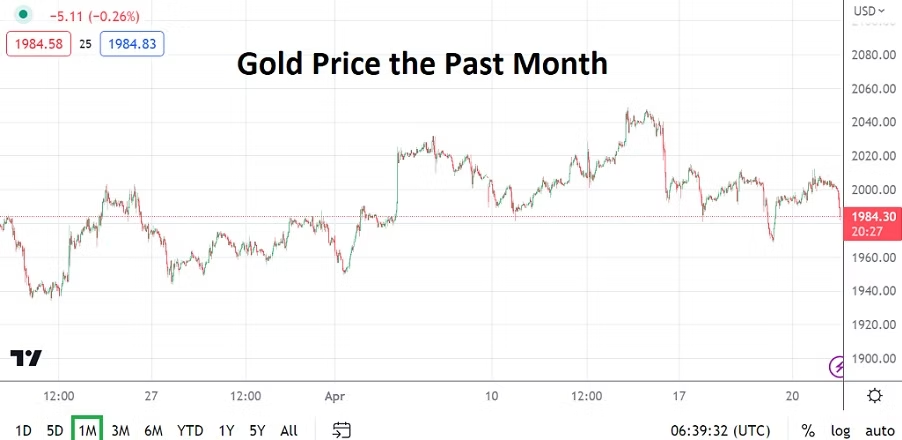
Gold price the past month of trading as of 21st of April 2023

If you are looking for evidence regarding what ‘smart money’ may be doing, it should be noted the price of Gold remains hovering around 2000.00 USD per ounce. Suddenly the price of Gold has become almost calm, please do not expect this to continue. The rather tight and ‘high’ price range of the precious metal is a potential sign that financial folks still believe that the U.S Fed may remain semi-aggressive in the mid-term, while ‘hoping’ over the long-term lower interest rates are coming.

As traders should know by now, nothing is guaranteed. Trying to understand behavioral sentiment helps.

post13.1

Is the USD Bullish Surge Coming to an End?

Is the USD Bullish Surge Coming to an End?

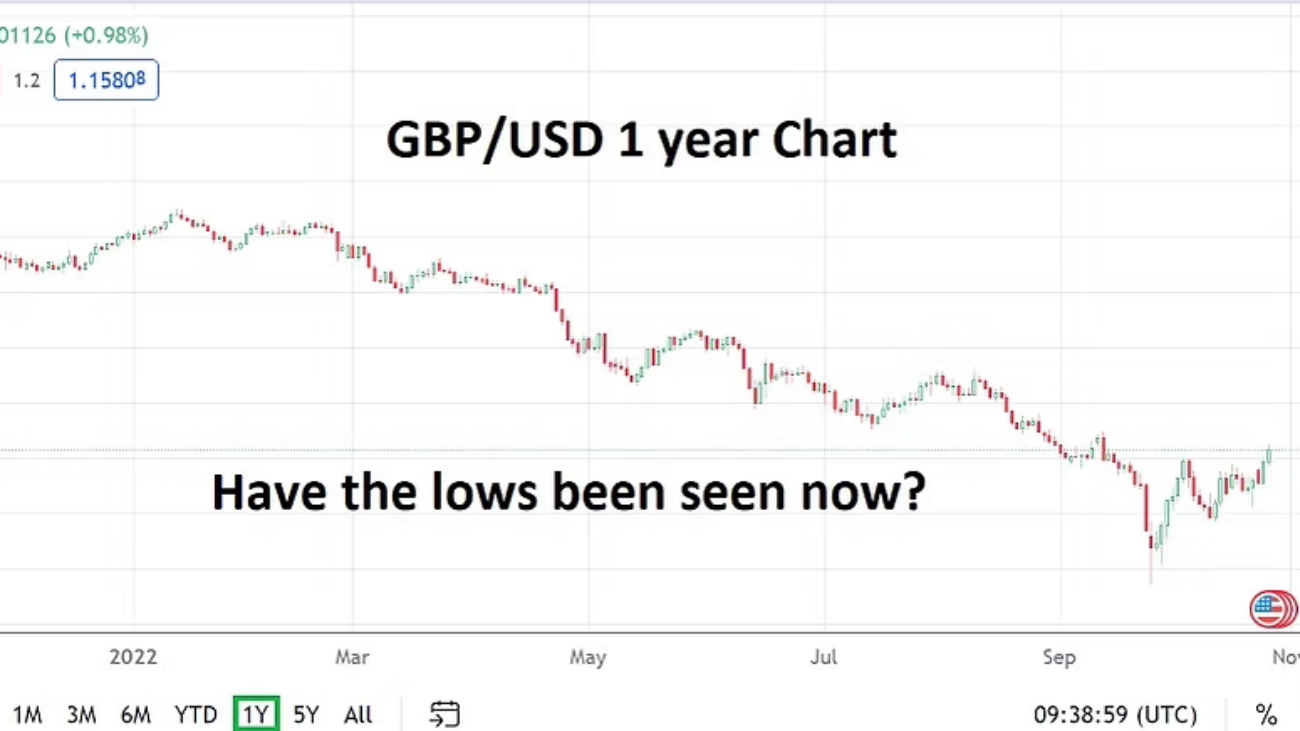
The long and brutal bullish trend the USD has exhibited against many other currencies could be coming to an end, as behavioral sentiment begins to suspect the U.S Federal Reserve will have to consider halting its interest rates hikes sooner rather than later.

PMI and Consumer Confidence statistics from the United States on Monday and Tuesday has heightened the perception that the U.S is within a recessionary cycle which the U.S Federal Reserve will have to act upon – by not acting. The Fed is likely to raise interest rates in November per their hawkish rhetoric, but the notion that the U.S central bank will then sit back consider the statistical landscape is growing. In other words a halt of hawkish policy appears to be a legitimate prospect after November.

GBP/USD 1 Year Chart

If recessionary data continues to be exhibited in the U.S, the USD fundamentally could lessen its grip in Forex and allow other currencies begin to gain ground. The GBP/USD has been hit extremely hard – yes, this has had just as much to do with the political environment in the U.K which has resembled a three ring circus. The idea of tranquility within the U.K politically could help the GBP/USD move higher, the prospect of a less hawkish U.S Federal Reserve should help the British Pound also.

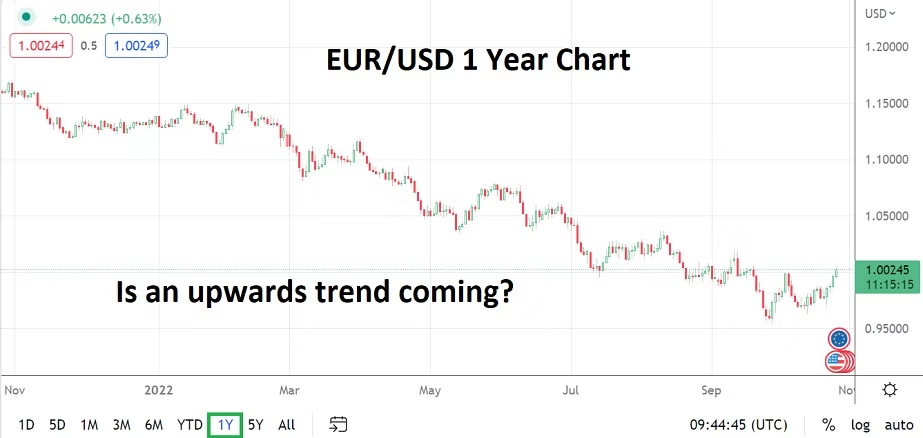
The EUR and JPY also may have the ability to gain within the EUR/USD and and USD/JPY as financial institutions begin to change their outlooks. Yes, the walls could crumble unexpectedly and another round of chaos could ensue which could cause a shockwave in Forex. However, if the U.S enters a recession which has to be officially recognized by the government and thus the Federal Reserve, the USD will be affected.

EUR/USD 1 Year Chart

This is not written to suggest a weaker USD will bring upon a great fix for the ailing global economic outlook mid-term. But it is certain that a weaker USD which trends in a bearish manner may be rather interesting to retail traders looking to gain an edge via Forex speculation. Equity indices may continue to struggle if corporations report weaker than expected earnings, but the downward trajectory in many stocks also means that PE ratios are becoming more realistic and a potential buying opportunity for long term investors. Warren Buffett can be your imaginary friend.

It has been a dynamic year of results in Forex as the USD has created stark trends with the USD/JPY, USD/ZAR, EUR/USD, GBP/USD and the USD/INR. Results in Forex and their volatility have created trading opportunities for speculators that have been likely better than wagering on cryptocurrencies; Bitcoin and Ethereum continue to stagnate and wait for the next great upheaval.

The past year has seen major equity indices suffer stark losses. Traders who have a constant bullish perspective because being positive is part of the human psychology have likely suffered if they have tried to be day traders via CFD’s of equity indices on the buy side constantly. Choppy conditions in the stock markets may continue for a while. Certainly in the long term many indices will rebound upwards, but buying individual stocks with leverage in anticipation that widespread bullish momentum is going to be a constant remains a nervous bet.

Forex via a USD pairing is beginning to look opportunistic for speculators. Picking the exact time a true solid reversal is going to become a constant is difficult and dangerous. There are no guarantees that we have seen the lows for the GBP, the EUR and JPY along with others currencies versus the USD, but if the U.S is truly going to have to admit recessionary pressures are taking hold, this may have an impact on inflation as demand decreases which the Fed would react to.

Things can wrong, more war breaking out, viruses bursting forth can be transmitted, political upheavals are a possibility in various locales, but from a risk reward perspective perhaps we are drawing to a close regarding the dominance the USD has shown the past year.

post9

Escalation of Rhetoric doesn’t create Calm Investors

Escalation of Rhetoric doesn't create Calm Investors

Putin and U.S Federal Reserve will Stir U.S Markets Today

An escalation of rhetoric via Russian President Vladimir Putin regarding his nation’s war with Ukraine took place this morning via a televised address to the Russian people. Putin has said Russia will call upon those with previous military training, and use a ‘limited’ call up of potential new troops. A claim of nearly 300,000 additional soldiers to be readied has been made by senior Russian officials shortly after Putin’s speech.

Making matters more intense, Putin said all military options are possible while Russia protects its sovereign territory. The land he was speaking about however, is not recognized Russian territory, it is Ukrainian soil. Putin’s ‘talk’ to Russia has firmly put him in a position which shows that results from the Ukrainian war have not had favorable results and that he is showing signs of frustration. An anxious Vladimir Putin is not about to calm down what are already nervous global markets.

China Urges a De-escalation in Ukraine while not naming Russia

China has already reacted to Putin’s speech by urging all sides active in the Ukrainian conflict to de-escalate the situation. China has its own economic worries presently and certainly doesn’t need another bad ingredient thrown into its midst as it deals with weaker demand for export products and a shaky real estate market as the global economy reacts to inflation and recessionary concerns.

International traders will hardly hear what China had to say today, not because it isn’t important, but because their attention will be on Putin and the U.S Federal Reserve. However, it is important to point out China did not condemn Russia, instead it asked that all sides involved in the Ukrainian sphere to lessen the dangers. China and its relationship with Russia remains an important aspect of global politics.

The U.S Federal Reserve will raise Interest Rates Today

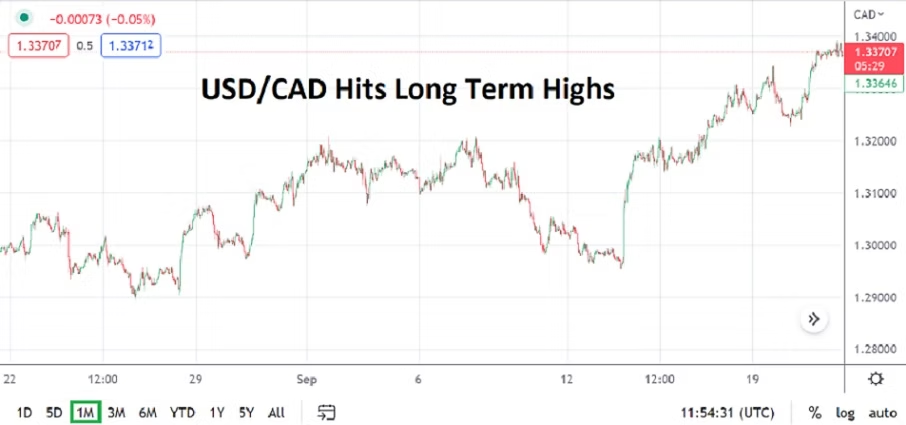
The U.S Fed will raise its interest rate by 0.75% today according to most financial houses which have already acted accordingly within Forex per interpreted price action. The USD has made new long term highs within the USD/ZAR and the USD/CAD. The EUR is below par as of this writing against the USD, and the JPY and GBP also continue to struggle near long term lows versus the USD.

USD/CAD One Month Chart

U.S equity indices which have been struggling are not showing a massive promise of a reversal upwards which will alleviate losses seen this year. Investors need to remain patient if they are invested in indices such as the S&P 500. Day traders looking to profit from the volatility ripping through the markets will continue to be challenged by choppy conditions, difficult perceptions of short term technical charts and a lack of positive behavioral sentiment among the larger players in the marketplace who actually drive the markets most of the time.

  • USD remains stronger against many major and emerging market currencies, day traders need to be very careful if they pursue Forex positions in the short term.

  • U.S equity indices traded lower yesterday, and if the Federal Reserve falters and doesn’t offer solid clarity regarding interest rates today, this could create more nervousness.

Optimism is not being heard far and wide. While it is always interesting to be a contrarian and sometimes the correct avenue to engage thinking, the notion that upwards trajectories will suddenly occur may be wishful thinking in the near and mid term. Many asset classes are under stress.

Today’s upcoming pronouncements from the Fed will be important for institutional investors as they try to gauge the U.S central bank’s outlook until early 2023. If the Fed gives clues they will remain hawkish into the winter and a Funds rate around 4.50 to 5.00%is a possibility, this could shake investors and cause more capitulation – meaning a stronger selloff via equity indices could ensue. Short term traders will need to be prepared for violent conditions if they are day traders of stocks or CFDs. The inverted U.S bond yields remains a sign investors are seeking short and mid-term safety via interest rates to preserve money.

The fact that most traders are typically buyers first, not sellers first makes trading in bear markets difficult. Psychologically humans want to be optimistic. Today’s speech by Vladimir Putin while it doesn’t change the conditions on the ground in the Ukraine immediately, will shake the confidence of some financial houses which may have become accustomed to a ‘polite war’ they could ‘forget’ about and make believe would not get loud again. Nervous behavior is likely to be seen later today as early risers in the States awake to the news of Putin’s speech and react.

In short global markets will be dynamic today and tomorrow, as financial houses position their portfolios according to their foresight regarding developments the next few months. Day traders are urged to be cautious, and the prospect of sitting on the sidelines and watching ‘the show’ may prove to be a solid choice.