post203

AMT Top Ten Miscellaneous Picks for the 26th of April 2024

AMT Top Ten Miscellaneous Picks for the 26th of April 2024

10. Salk Institute: Work known as the Harnessing Plants Initiative is focused on optimizing the ability of plants to help combat climate change, sometimes via root systems in order to help reduce carbon dioxide. Problematically when plants die they do release carbon dioxide too. One key to the HPI project maybe altering the affects of Suberin. The Salk Institute received 50 million USD last year from the Hess Corporation to fight climate change.

9. Anticipation: Chicago is celebrating today after landing quarterback Caleb Williams and wide receiver Rome Odunze as hoped. However, as the August 2024 Democratic National Convention approaches, trepidation for the potential of nasty demonstrations is building.

8. Quantum Investing: Oak Ridge National Laboratory has announced a successful test using the H1-1 computer via Quantinuum to study the spread of disease via quantum mathematical models. Honeywell International Inc. owns a large stake in Quantinuum which is a stand alone company valued at approximately 5 billion USD.

7. Speculative: Gold is near 2348.00, the price is below values seen last week, but remains high via some perspectives as the USD creates havoc.

6. Forex: Whipsaw volatility has been seen in foreign exchange as financial institutions fight to get a proper gauge on their mid-term outlooks. Equilibrium will continue to be fought over today.

5. Fixed Income: U.S Treasury yields are battling within higher ground as investors look for guaranteed returns as behavioral sentiment remains fragile. And there is a likelihood the next four days of trading will continue to produce a whirlwind.

4. Equities: Major U.S indices continue to grapple with headwinds caused by a murky economic outlook. Retail traders speculating via CFD’s should remain careful. Patience is a key for the S&P 500, Nasdaq Composite, and Dow 30. Trying to ‘time’ the indices for short-term wagers is dangerous because technical trends are vulnerable.

3. Data: U.S Core Personal Consumption Expenditures Price Index statistics will be released today, inflation via the GDP Price Index came in higher than expected yesterday. Forex will react to the PCE results which is anticipated to have a gain of 0.3%. Financial institutions do not need another scare today. The Revised University of Michigan Inflation Expectations reading should also be given attention which will be published afterwards.

2. BoJ: The Bank of Japan is clearly playing a game of truth or dare with Forex. Having held interest rates at merely 0.10% earlier today, the USD/JPY climbed comfortably above 156.000 and is presently near the 156.540. The BoJ will remain in the news as the USD/JPY trades around a 34 year high. As financial institutions clamor for a higher interest rate, the BoJ apparently is more concerned with creating dynamic export demand and growing Japan’s economy, believing it can keep inflation under control. Speculators need to be on alert for an intervention from the Bank of Japan, but cannot count on one either.

1. Analysis Paralysis: The Federal Reserve was served an intriguing dose of results via the lower than expected growth numbers from the Gross Domestic Product yesterday, while digesting a higher GDP Price Index. Jerome Powell has stressed caution and patience. However, yesterday’s stubborn inflation numbers with waning growth creates the prospect for stagflation. This is an important political year because of the upcoming U.S elections in November. Next Wednesday the Fed’s FOMC Meeting pronouncements will be made. There will not be a change to the Federal Funds Rate on the 1st of May. It is the FOMC Statement’s vocabulary which will get attention. Today’s inflation reports will play a role in next week’s Fed meeting. Day traders may want to tune out political noise from pundits today which will certainly be sounded. The inflation numbers globally are tricky, and have created overthinking by investors and central banks which remain mostly reactive.
post41.1

Risk Friday: To Freeze or Reduce is not the Correct Question

Risk Friday: To Freeze or Reduce is not the Correct Question

The U.S debt ceiling debate in actuality, is a vote to legally increase the amount of debt the U.S government can spend. Approval of the debt ceiling vote will give a green light to the government to be a larger debtor without consequence. Other than eventually not being able to pay its bills in the future, what’s the problem some might ask. And let’s not consider potential downgrades from S&P, Fitch Ratings and others for the moment.

Here are the Problems Ahead for the U.S

U.S debt dominoes have grown heavy and are getting harder to stand back up, but those with the ability to spend simply do not care because they will never be held responsible. The U.S government seems to have forsaken capitalism and have entered the plundering stage, where the government believes it can ‘find’ enough revenues from higher taxes and the selling of long-term Treasury bonds while remaining the big man on campus.

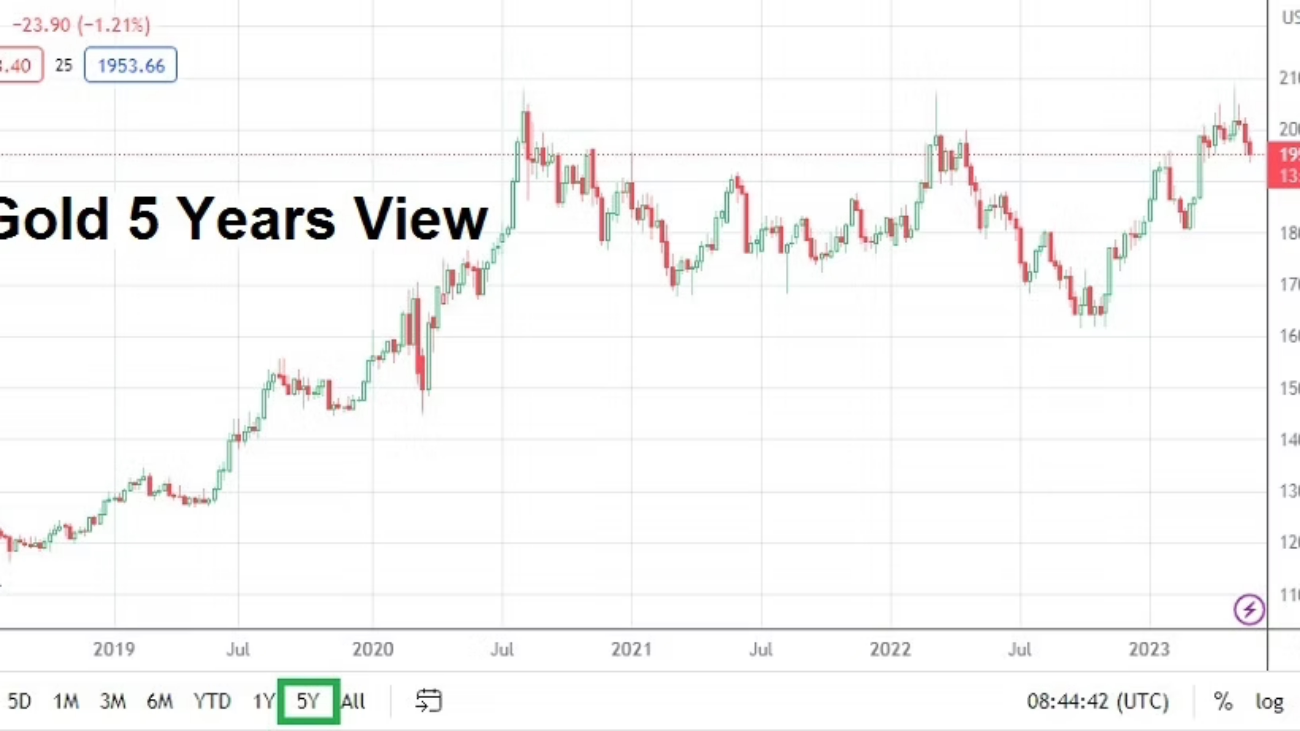
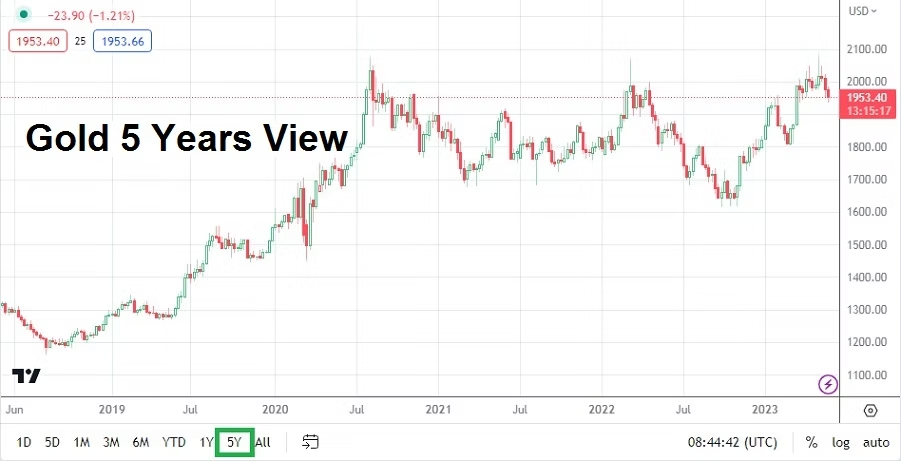
Gold Five Years Chart as of 26 May 2023

Higher taxes frequently stymie businesses and make it harder to hire employees because the expenses become too big. As an example for what the future could look like in the States turn your eyes to Chicago, where elected city leadership is considering implementing a ‘head tax’ in which businesses would need to pay a fee on each person it employs. The tax situation is getting so ridiculous in Chicago, that long time economic juggernauts like the Chicago Mercantile Exchange are grumbling and threatening to leave because of “ill-conceived” policies.

Likewise, the U.S government seemingly doesn’t understand that spending cannot be replenished by tax collection alone. Actual cuts to spending need to take place. It is called reducing the deficit. The naive will eventually be made to see the light painfully.

The Ramifications for the U.S could be Economically Untenable

U.S interest rates which have been raised the past year and a half, have affected mid and small sized banks and the amount of money the U.S government has to pay on maturing bonds because of higher borrowing costs. Fitch Ratings has recently whispered publicly they may be forced to downgrade U.S debt offerings, this if the U.S government doesn’t increase the amount of money it is legally allowed to owe. Pause for a second here, do you see the absurdity in this clown show? In other words a rating service company is OK with the debtor being allowed to ‘borrow’ more money from itself that it does not have – in order for that same debtor to be allowed to ‘promise’ it can repay its debt at a later time.

The U.S government keeps allowing debts to grow and creating entitlements as if this has no effect on inflation. Quantitative easing and stimulus packages initiated by the U.S government artificially kept the Gross Domestic Product figures looking positive and the equity markets happy for more than a handful of years. However, the proverbial ‘can’ has been kicked down the road so many times it is ready to disintegrate. The debt problem is simply being passed down to the children and grandchildren of the U.S, or so the current leadership seems to hope. But what if the debt problem explodes now? This generational problem is systematic globally, other governments practice equally bad or worse fiscal policy. Politicians do not like to walk around with empty hands.

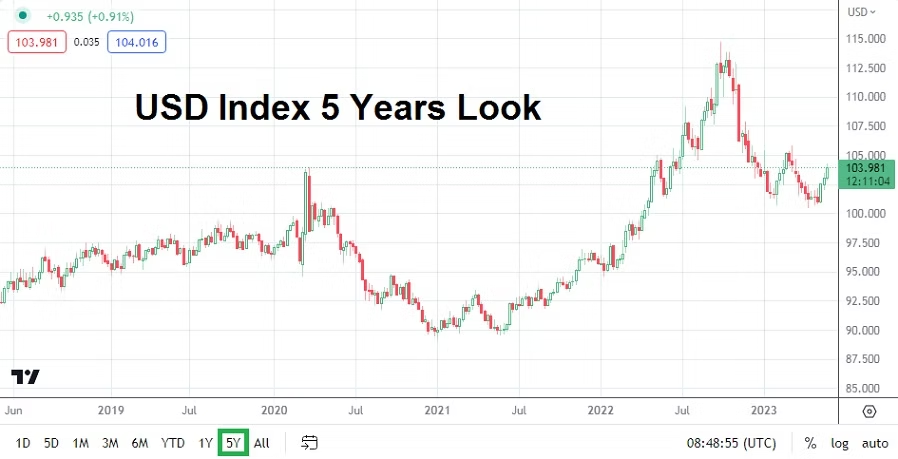
USD Index Five Years Chart as of 26 May 2023

The Clock is Ticking Loudly and Some Investors are Paying Attention

The clock is ticking in the U.S and unless they can prove expenses can be managed better, they are on a perilous road to becoming a regular nation among others, that is looked upon with scorn and derision because they cannot pay their debts. The dominance of the USD will be punished and shattered if they do not stop the nonsense. The dollar’s status as the reserve currency of the world has been slipping incrementally for a couple of decades and this will continue if the U.S government does not seize the problem and find solutions. A failure to show budgetary sanity and decrease expenditures will eventually cause something many U.S citizens do not want, relegation to the status of a ‘regular’ nation. The attitude of, “I remember when” could become a refrain heard in the U.S sooner rather than later.

The U.S is in a precarious place and sunshine in many respects is not on the horizon. Financial institutions supposedly believe the U.S debt ceiling will be taken care of in the coming days or weeks. However, a debt ceiling agreement is not the correct bandage for a broken leg, the problem is much larger. Debt should not be allowed to continuously grow. If the situation gets worse, some nations sitting on the geopolitical fence may shift their alliances depending on the ability of mutual relationships to help deliver economic stability.