post258

The Fed: Beating a Dead Horse as the Bulls want to Run

The Fed: Beating a Dead Horse as the Bulls want to Run

Yesterday’s lackluster and underperforming GDP results from the U.S highlights our often discussed doubts surrounding the Federal Reserve. While Jerome Powell definitely has a right to be ‘uncertain’ and express his concerns regarding sudden inflation emerging, he has also proven to be wrong. The Fed should have begun cutting the Federal Funds Rate three months ago.

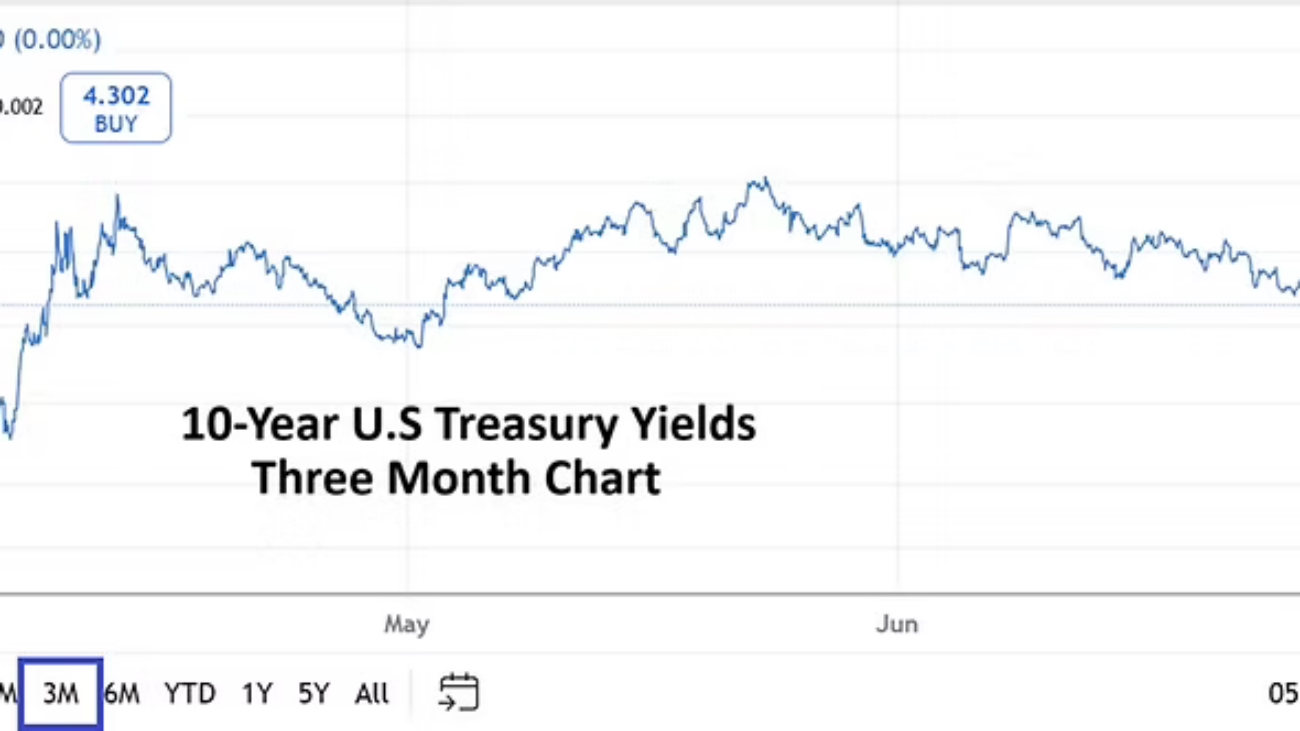
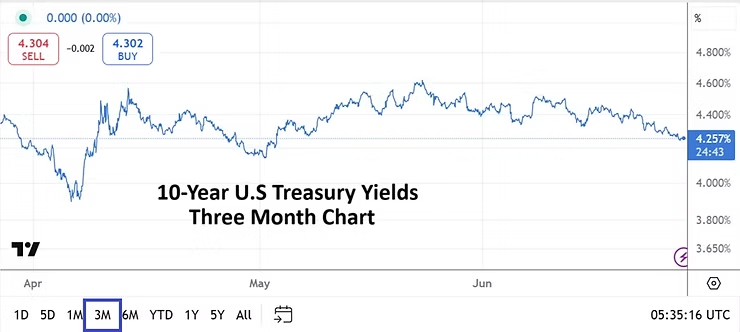
10-Year U.S Treasury Yields Three Month Chart as of 27th June 2025

Although Powell may not be a fan of President Trump, the Fed Chairman and the FOMC has the ability to be more nimble in this era. Instead of being passive about interest rates, the Fed could have lowered borrowing costs and helped spur on the U.S economy months ago instead of watching GDP numbers falter.

For all of the consternation regarding potential tariff pratfalls, the effect from President Trump’s policies have not caused massive inflation. The Fed can begin cutting rates even before the next FOMC meeting in late July, but they will not. In fact, the Fed should now cut the Federal Funds Rate by 0.50% in late July, but again they won’t. We will be lucky to get a 25 point basis cut.

The Federal Reserve remains too passive and acts as if it doesn’t have data technology which can be more proactive. Instead, Fed Chairman Powell chooses to act as if cutting the Fed Funds Rate is an academic exercise and can be done via a polite semester like manner akin to a report card. Dangerously, the U.S is paying an exorbitant amount of interest on long-term Treasuries and short-term Notes. Lower borrowing costs would also help U.S consumers. Jerome Powell doesn’t seem to care about these factors, which raises the consideration regarding his loyalties.

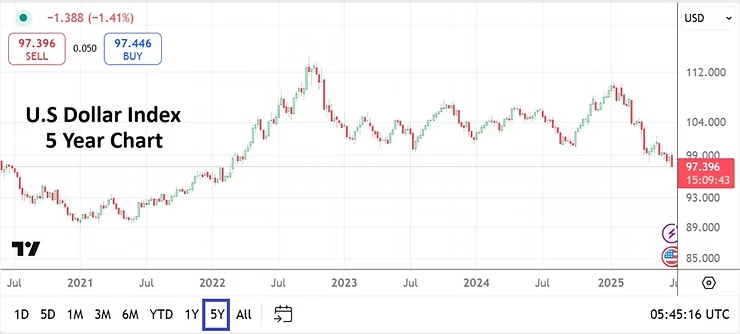
U.S Dollar Index Five Year Chart as of 27th June 2025

In recent weeks there have been at least two FOMC members who have suggested that interest rates need to be cut sooner rather than later. And there are some financial institutions who are clamoring for aggressive interest rate cuts throughout the calendar year and into 2026 in order to jumpstart the U.S economy, this includes Goldman Sachs and UBS. Signs of evidence that interest rate cuts will develop can be seen in the 10-Year Treasury yields which have been eroding recently. Some may claim this is a false narrative and that it is merely risk premium starting to be discounted. Nevertheless yields have lowered in the past month.

Yes, President Trump speaks loudly and delivers brawling negotiations. July 9th is another deadline for tariff agreements. However, financial institutions and many governments have learned to cope with President Trump’s backstreet tactics, which academics like Jerome Powell are not fond of particularly. U.S stock markets are hovering near highs, but still cautious because they are waiting on impetus from the Federal Reserve.

If the Fed fails to deliver an impactful FOMC Statement in late July this will not be greeted well by investors. Many believe the Fed needs to react, and it is quite apparent the S&P 500, Nasdaq 100 and even the Dow 30 are positioning for gates to be opened allowing for a bullish stampede. The USD has been weaker too the past few months as large commercial players anticipate lower U.S borrowing costs. The time for the Fed and Chairman Powell to act is now, making it clear that cuts to the Federal Funds Rate are coming.

post244

High Level Antics as Trump Battles Institutions over Economy

High Level Antics as Trump Battles Institutions over Economy

Late last week Moody’s downgraded U.S debt, and the 10 Year Treasury yields as of this morning are near 4.50%. Yet, the Chicago Volatility Index is around the 17.25 level which is actually a small victory and shows that sentiment has improved quite a bit the past month. Let’s remember the VIX was near 60.50 in early April.

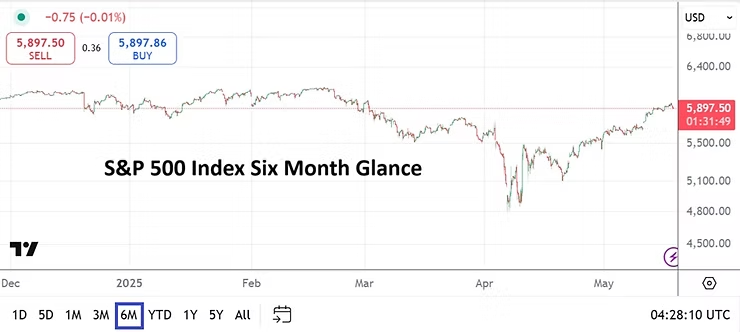
Wall Street had a handful of rather positive trading days too last week. Complexity remains a fixture for investors as they navigate their sentiment which is being generated by a rather stormy mix of perceptions. Day traders continue to face a tough betting environment via trends. The S&P 500 and other stock indices are showing signs of life, but how will they react to the Moody’s downgrade with a full weekend of consideration?

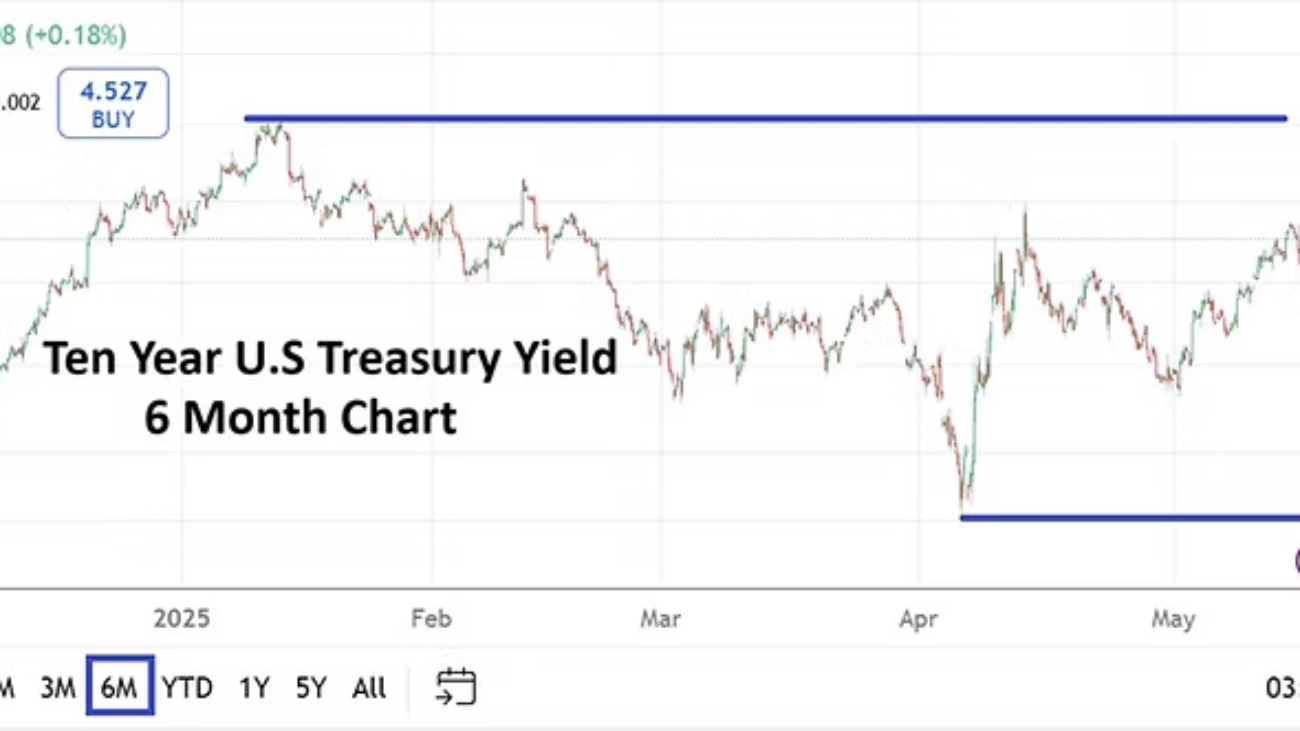
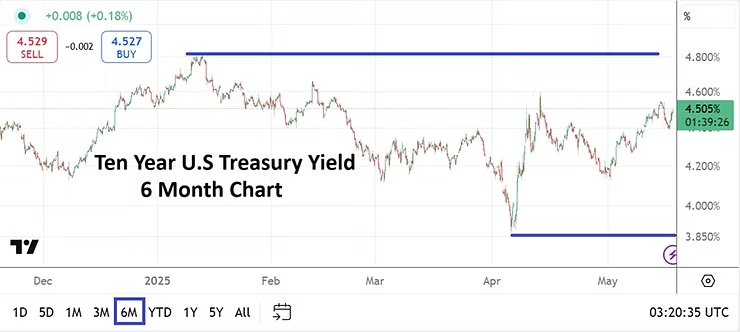
10 Year U.S Treasury Yields Six Month Chart as of 19 May 2025

Last week’s U.S inflation numbers via CPI and PPI were weaker than expected, which raises the curious and obvious question as to why the Federal Reserve remains overtly cautious and refuses to cut the Federal Funds Rate by 0.25% basis points? Short-term traders still have difficult days ahead and those anticipating a fast and powerful bullish run in equities among the bigger indices need to remain vigilant. Sustained higher price action has likely not arrived quite yet for overly optimistic endeavors.

S&P 500 Six Month Chart as of 19 May 2025

Let there be no doubt that there is a coming collision between the U.S White House and the Federal Reserve. The high level of yields the U.S Treasuries are accountable for are unsustainable and costly for the economy. President Trump will be in no mood for polite conversation with Fed Chairman Jerome Powell. Now that Trump is back from his Middle East trip he will likely turn his attention to the U.S debt downgrade and blame not only his predecessor in the White House but Powell too. Treasury Secretary Scott Bessent will likely address monetary policy too in the coming days.

The lower costs of WTI Crude Oil seen the past few months is helping fight inflation. As of this morning $61.70 is the vicinity for early trading. The price of energy appears to be within a solid lower range and likely has little ability to raise significantly. If the price of WTI remains under 70.00 USD this will help global inflation remain rather polite.

But this doesn’t take away from the threat of tariff pressures which do remain unknown. However, it can be argued the Federal Reserve is being far too cautious in the interim. Yes, the U.S central bank faces uncertain economic forecasts because of the potential of U.S tariffs hitting manufacturing and consumer prices, but there is a chance also the Trump administration will actually achieve better than anticipated trade agreements.

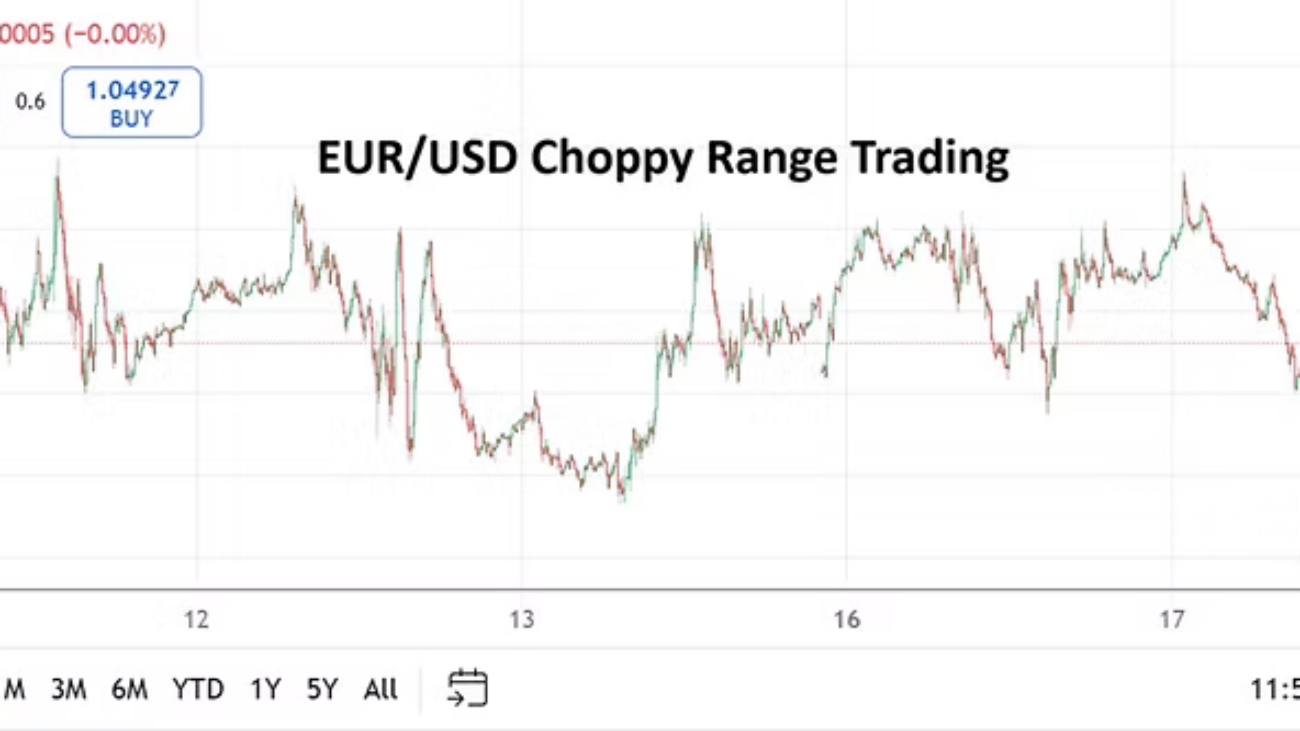
EUR/USD Six Month Chart as of 19 May 2025

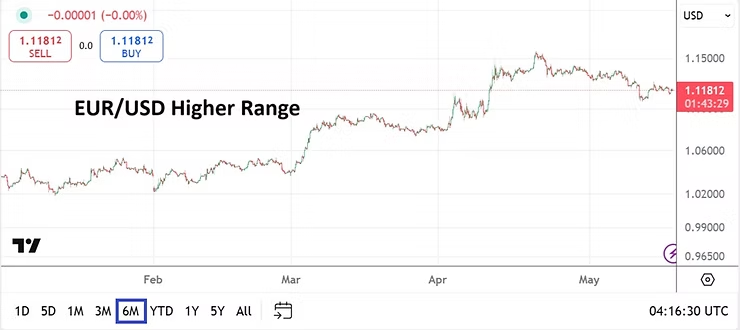
Gold as of this morning is slightly above $3,200.00 per ounce, which shows that speculators and investors have backed away from the buying power the precious metal created in the third week of April when the $3,500.00 price was challenged. The USD remains in a dog fight against major currencies in Forex as financial institutions look for equilibrium and try to decide if they should gamble on the Fed cutting interest rates in July. The USD has lost value since early April and remains in weaker mid-term territory. However, the EUR/USD has given back a lot of its gains made throughout April, but financial institutions may now look at current levels as viable support and become buyers again.

Day traders remain in a difficult spot. Wagering on daily market gyrations via interpretations of behavioral sentiment is sensible, but the problem is the quickly shifting winds that still remain a danger. Folks participating in the markets should use the 10 Year U.S Treasury yields as a barometer. Having fallen to lows below 4.00% in the first week of April, investors are again demanding more incentives to buy U.S debt, highlighting murky mid-term outlooks.

U.S Manufacturing PMI numbers will be released this week on Thursday, but this will not influence the markets too much. Instead investors will keep their eyes on the White House as media focus turns from Middle East politics to U.S economic policy. While there have been ‘green shoots’ emerging in the SP500, Nasdaq100 and Dow30, traders should keep their leverage at conservative levels if they merely intend on making short-term wagers.

post213

Federal Reserve Expected to Sound Guardedly Cautious Tmrw

Federal Reserve Expected to Sound Guardedly Cautious Tmrw

EUR/USD Five Day Chart as of 17th December 2024

Large traders are clearly bracing for the Fed tmrw as Forex produces volatile tight ranges. A rate cut is expected, but cautious Fed rhetoric will likely follow.

Forex has been a dangerous wagering ground for retail traders since the end of September. Financial institutions which clearly were betting on a more dovish Federal Reserve starting in early summer becoming a central theme into 2025 have been proven half right, this as the Fed has cut interest rates and is expected to do so tomorrow. However, being half right leaves the door open to also being half wrong, and financial institutions have reacted to this by becoming aggressive buyers of the USD since late September as perspectives have changed. The strong USD trend the past two months plus has hit some speculators hard.

The election of Donald Trump added a strong dose of impetus for USD buyers, this as the President-elect’s tough rhetoric regarding tariffs caused reactions and fear of unknown consequences. In the past couple of weeks more tranquil Forex trading has emerged and the USD finally started to give back some of its gains, yet the USD versus most major currencies, like the EUR/USD, remains within the the stronger elements of it range. While the Fed is expected to lower its Federal Funds Rate tomorrow by 0.25 to 4.50% tomorrow, traders need to remember this has been priced into Forex already. Tranquil trading the past two weeks indicates financial institutions have readjusted their outlooks to the incoming White House administration.

Now it is time to see if the U.S Federal Reserve has started to adjust their outlooks to what a Trump Presidency means. And financial institutions are keen to better understand the outlook of the U.S central bank. Inflation numbers while traversing lower are still rather stubborn and this may will not help the Fed’s mid-term mindset regarding interest rate cuts. GDP in the U.S has remained steady, and there is the potential the economy in the States will improve under Trump. Unemployment numbers while showing signs of weakness have not been terrible either. So while the Fed’s current Federal Funds Rate is higher than normal taking into consideration the historic average the past ten years, they still may not feel they have enough ability to cut interest rates too much more without sparking inflation.

A January rate cut seems unlikely at this time. If the Fed does sound guardedly cautious tomorrow, retail traders may see the USD get initially weaker due to the Fed rate cut, but then see a storm emerge and USD centric strength reappear all in the same day – perhaps in the span of minutes. Speculators need to understand that financial institutions have already baked tomorrow’s interest rate cut into the cake. So it isn’t the rate cut tomorrow that is important if it happens (if it doesn’t then that’s another story); it is what the Fed says and traders should expect them to be very cautious – because per the recent trading of the USD and a barometer it appears financial institutions are bracing for a more vigilant Fed.

Just like he has with many folks he views as uncompromising before, Donald Trump may begin to feel Federal Reserve Chairman Jerome Powell is not on his side regarding interest rate policy. If the Federal Reserve chooses to sound hesitant to cut interest rates in early 2025, it will be rather intriguing to see President-elect Trump’s response. Could a confrontation between the White House and Federal Reserve be in the cards over the next six months?

postN1

BoJ and Fed are today’s Forex Bogeymen, and Job Numbers Lurk

BoJ and Fed are today's Forex Bogeymen, and Job Numbers Lurk

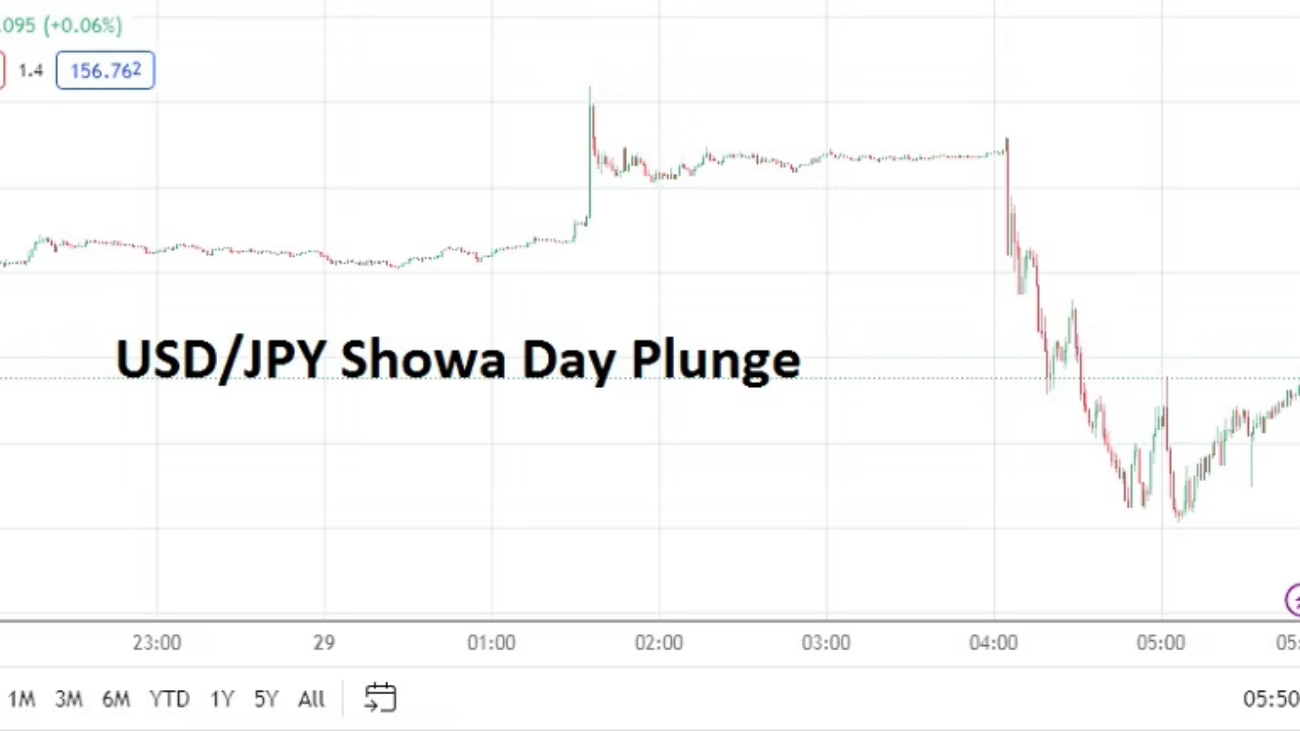
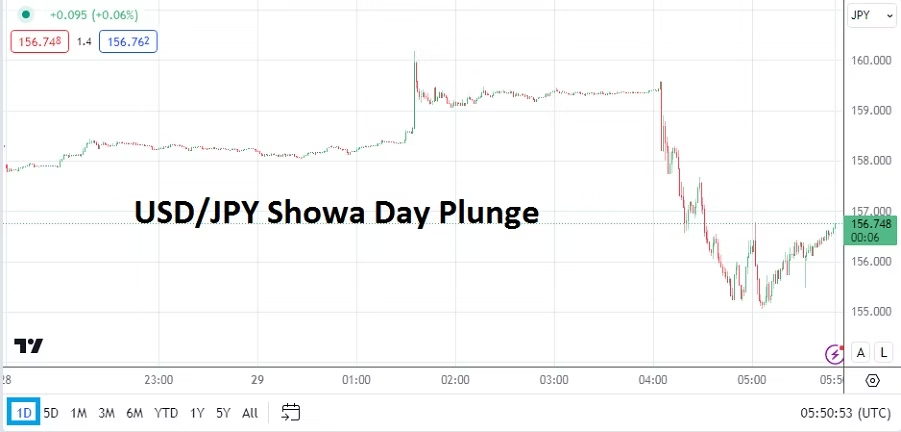
While the Showa holiday is being observed in Japan, the BoJ has apparently reacted with an intervention after seeing the USD/JPY race to new highs in the wake of the central bank’s decision to hold its Policy Rate at 0.10% on Friday. If in fact the Bank of Japan has acted when most Japanese financial institutions are celebrating a long holiday weekend, the reaction to the intervention will be noteworthy when Japanese currency traders return to their desks tomorrow. The question obviously becomes whether large players in the JPY will continue to wager against the Bank of Japan’s current monetary policy or if the apparent intervention will make them cautious.

USD/JPY One Day Chart as of 29th April 2024

U.S data this past Thursday turned in rather clumsy statistics starting with the Advance Gross Domestic Product growth results which showed the American economy is slowing. However, the GDP Price Index came in slightly higher than anticipated. This caused some tremors in Forex. Friday was followed by additionally troublesome readings when the University of Michigan’s Consumer Sentiment outcome was weaker than expected, but the U of M Inflation Expectations gauge was higher than the previous month’s report.

USD Cash Index Five Day Chart as of 29th April 2024

The USD began to show signs of weakness in many major currency pairs last week. Perhaps the expectation that the worst of Federal Reserve outlook has now been absorbed is playing into the Forex results. However, the past four months of trading have produced a continuous choppy wagering landscape for speculators and clarity still does not exist.

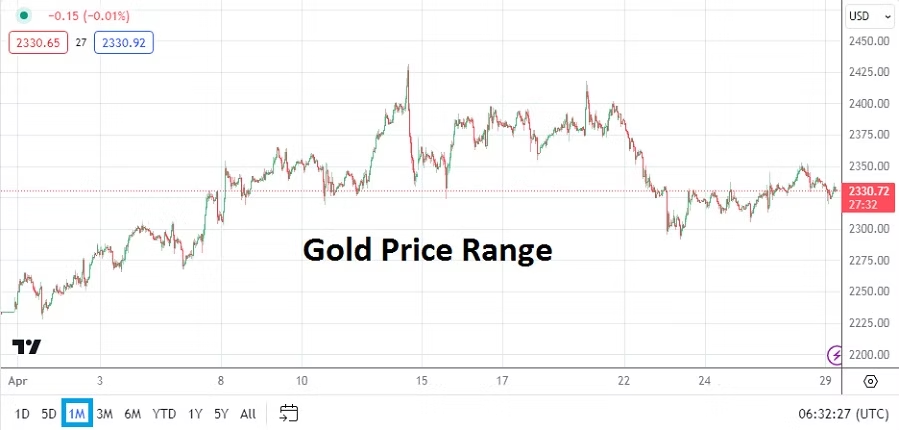
Gold One Month Chart as of 29th April 2024

Suspicion of the Bank of Japan’s intervention this morning and the creeping shadow from the U.S Federal Reserve which is scheduled to deliver their FOMC Statement this Wednesday have created trading bogeymen in many financial assets. The strains in the major equity indices, Treasuries and Forex are prime examples. While day traders try to find fair market value technically and financial institutions seek equilibrium, most observers likely have nervous behavioral sentiment as they consider mid-term prospects. The past month of speculative trading in Gold has produced record highs, but ran into resistance the past week as questions arise about USD inverse correlations not being technically efficient recently.

Monday, 29th April, Germany – Consumer Price Index – the inflation results from Germany should be given attention. The number will certainly affect sentiment surrounding the ECB and the EUR/USD, however the report should not cause an earthquake.

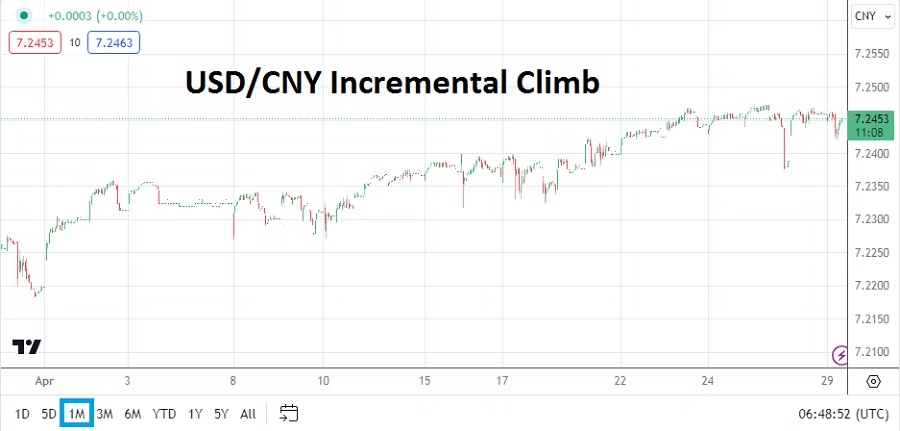
USD/CNY One Month Chart as of 29th April 2024

Tuesday, 30th April, China Manufacturing PMI – the nation has been making claims via government officials the economy is showing signs of a rebound. Yet, disturbing consumer data continues to be seen. The manufacturing statistics from China though will also reflect demand in what is generally accepted as a recessionary period for many global spheres. Traders of the USD/CNY should pay attention to the outcome, the currency pair has incrementally climbed and there are rampant whispers about China undertaking a policy to weaken the Chinese Yuan to spur economic growth.

Wednesday, 1st May, U.S Federal Reserve Funds Rate and FOMC Statement – the Fed will not change its interest rate this week. What will be noteworthy is how Fed Chairman Powell presents this month’s FOMC Statement rhetorically as he is asked questions during his Press Conference. We are certain to hear words mentioned like ‘lagging data and positive signs regarding the potential of weakening inflation’. The question financial institutions want to know is how long will they have to wait for a change to the Federal Funds Rate. The Fed is likely to try sounding cautiously optimistic, but will it be believed? Forex will react to the Fed’s policy meeting pronouncements, but no major surprises should be expected. Some observers may find interesting evidence regarding the future for Fed’s policy via the price of WTI Crude Oil which is hovering near 83.00 USD per barrel as of this writing, because stable energy prices are a key factor regarding inflation.

Thursday, 2nd May, U.S Weekly Unemployment Claims – the jobs data which will start to be delivered late this week will get attention. Forex traders however will be swimming within the riptides already created by the Federal Reserve’s policy.

Friday, 3rd May, U.S Non-Farm Employment Change Numbers and Average Hourly Earnings – these reports will cause a reaction. What financial institutions will be on the hunt for is weaker than anticipated hiring. The inflation numbers from the wages report will be a factor too. The USD traded with a slight decline in Forex last week, those who believe the greenback has been too strong and are inclined to remain sellers should pay attention to the U.S jobs numbers. If the headline hiring number is stronger than anticipated, analysts will rush to the back pages of the statistics to see if part-time hiring is still outpacing full-time employment.

postN103.1

Friday’s Forex Violence and Coming Attractions for Traders

Friday's Forex Violence and Coming Attractions for Traders

While the past month has continued to produce positive trends upwards for traders speculating on equities via U.S indices with record breaking values, Forex has been rather brutal for many day traders if they have remained stubborn.

Short-term trading conditions in Forex again proved violent this past Friday, as the Non-Farm Employment Change and Average Hourly Earnings reports came in stronger than anticipated and set off fireworks in the major currency pairs.

Fed Chairman Jerome Powell offered a clue to speculators paying attention last Wednesday, during the Fed’s Press Conference in which he spoke about the tight labor market. It seems likely the Federal Reserve knew the jobs data was going to be rather robust and hinted.

The Federal Reserve did continue to speak about interest rate cuts, but they certainly have not given an exact timetable when more dovish policy will begin. This has left many speculators, corporations and financial institutions nervous and the results via choppy trading conditions the past handful of weeks are proof.

USD strength the past month has caused headaches for many Forex speculators, but it needs to be said that many major currency pairs are lingering near values post-December 13th 2023, this was when the Federal Reserve made it ‘official’ that a more dovish monetary policy would develop in 2024.

Early wagers by financial institutions in December indicated they believed a March Federal Funds Rate cut would be seen, but after last Wednesday’s Fed’s FOMC Statement and Friday’s jobs numbers it seems more likely for the moment a May interest rate cut could be a legitimate target.

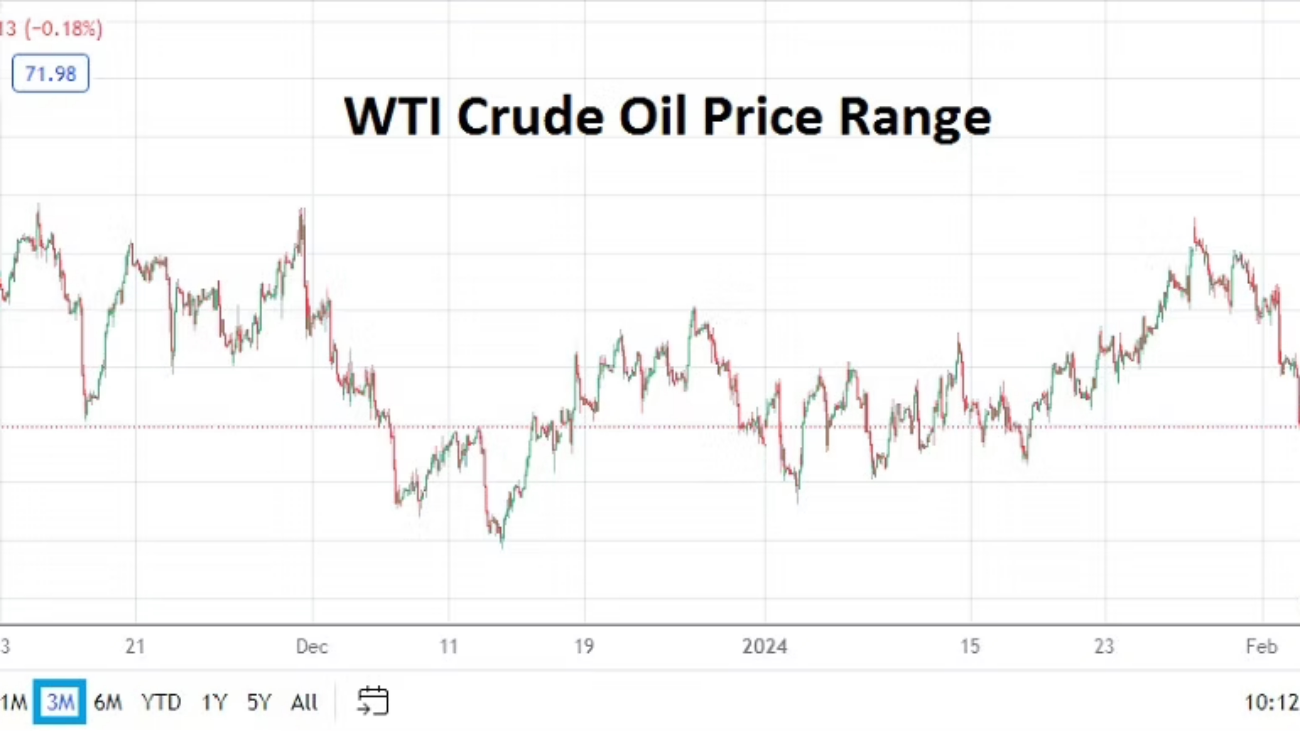
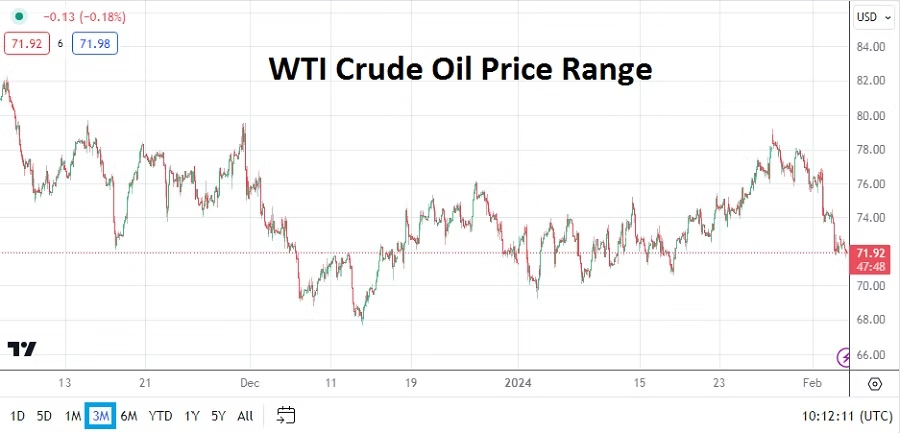
WTI Crude Oil Three Month Chart as of 5th February 2024

Risks do Abound and Speculators Should Remain Cautious Near-Term

Inflation concerns via knock-on affects from logistical complications via Red Sea chaos which disrupts the Suez Canal shipping is a legitimate threat and needs to be monitored. However, the price of WTI Crude Oil traded in a remarkably stable manner last week as noise was heard from the Middle East. In early price action this morning the commodity has been polite and remains within sight of 72.00 USD per barrel. The lack of a nervous reaction in Crude Oil thus far could keep global investors calm.

This week will be limited regarding important economic data. However, there will be plenty of rhetoric offered by U.S Federal Reserve members in the coming days via conferences and interviews. Forex traders have needed to combat an array of reversals as price equilibrium has created rather tenacious price realms and this may continue near-term.

There are time periods when traders should be willing to accept that methods regarding short-term trading tactics need to be adjusted. January has shown that financial institutions were of the mindset the USD had gotten too strong. And although it appears financial institutions continue to lean towards a weaker USD outlook in the mid-term (as proven by lower moves in the USD leading up to the jobs report on Friday), the surprisingly good jobs data certainly caused the USD to bounce upwards.

Technical considerations of the USD at this moment are important, fundamental data is still coming in rather mixed, this as financial houses wait on central banks to start reacting with interest rate cuts due to lackluster economic data. It is important to note that some analysts have started to murmur the ECB and BoE may have to move first regarding interest rate cuts – if they have the courage to take this action sooner rather than later. The U.S economy has remained rather strong regarding consumer sentiment and this is causing angst among Fed observers. The U.S jobs numbers on Friday highlighted this nervousness.

Monday, 5th of February, U.S Services PMI via ISM – an outcome of 52.0 is the expected reading, which would be higher than the previous result of 50.6. If the Services number meets its estimate and doesn’t exceed the expectation, this would calm nervous financial institutions which may believe the U.S economy may be too strong for the Federal Reserve’s liking, and cause some hawkisk sentiment regarding monetary policy to linger. A weaker number from the Services PMI could help the USD selloff slightly, a stronger outcome could result in more USD buying short-term.

Tuesday, 6th of February, Australia Cash Rate and Monetary Policy Statement via RBA – no major changes are expected from the Reserve Bank of Australia. Global central banks have taken a wait and see approach as they likely remain nervous regarding the potential of inflation to remain stubborn in the mid-term. The RBA is probably going to follow the ECB, BoE and Fed’s stances from last week and remain conservative.

EUR/USD Six Month Chart as of 5th February 2024

Wednesday, 7th of February, Germany Industrial Production – though this report is not viewed as a major economic event for traders the results should be watched. The EUR/USD has been hit by rather volatile conditions as financial institutions try to anticipate central bank moves. If the German data comes in weaker than expected (a minus -0.4% result is anticipated) this could make the EUR/USD slightly more bearish.

Shanghai Composite Index One Year Chart as of 5th February 2024

Thursday, 8th of February, China CPI and PPI – economic data from China has not improved and foreign investors are not showing an appetite for risk. Deflation remains a concern in China, and although the official government rhetoric promised sunnier days ahead, fundamentals in real estate, manufacturing and consumer driven data offers troubled prospects. The Consumer Price Index from China is anticipated to be worse than the previous month’s outcome. The downturn in the SSE (Shanghai Composite Index) is now challenging the 2,700.00 vicinity.

Friday, 9th of February, Canada Employment Change – Canadian economic data has been lackluster and analysts have been quite critical of government policy. Having said this the USD/CAD is largely going to stay in a USD centric mode going into the weekend.

postN92.1

Forex Calm After the Storm? Volatility and Coming Holidays

Forex Calm After the Storm? Volatility and Coming Holidays

The weakness of the USD was anticipated last week, this as the Federal Reserve essentially admitted its aggressive interest rate hikes policy has come to an end. While Fed Chairman Jerome Powell tried to sound neutral, most financial institutions reacted to the FOMC Statement and the Fed’s Press Conference last Wednesday with a rather demonstrative amount of USD selling, largely showing they were prepared to react.

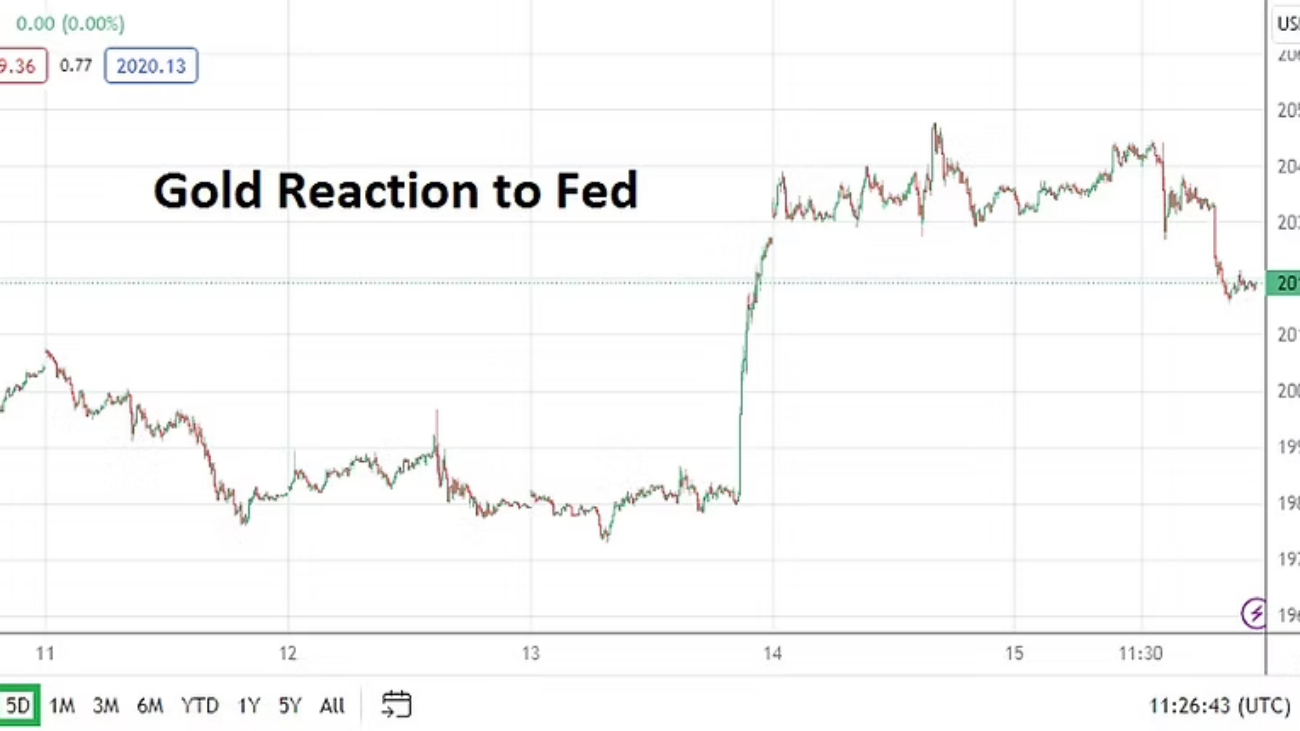
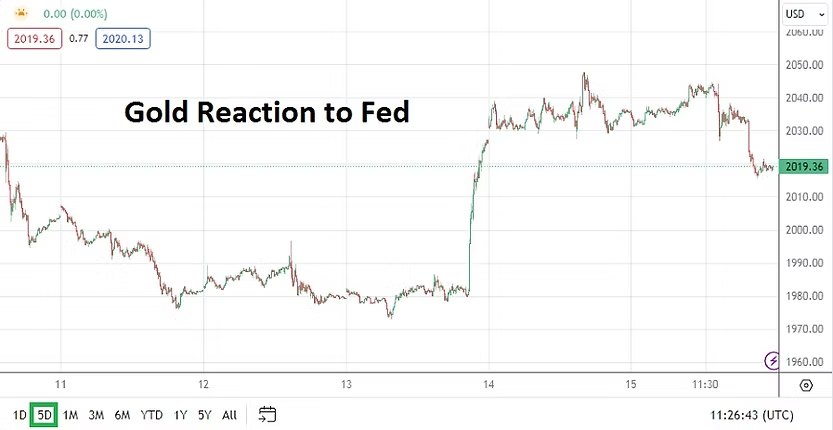
The EUR, GBP and JPY all gained, and many other currencies added value against the greenback too. Gold flourished upwards and even WTI Crude Oil came off its lows. However, after producing strong gains late Wednesday and into Thursday, gold and major Forex pairs did reverse slightly lower on Friday as the USD gained some footing.

Gold Five Day Chart as of 17th December 2023

Risk appetite likely has enough positive behavioral sentiment influence to continue its desire for dynamic buying on U.S indices. The Dow Jones Industrials will start Monday at record heights, the S&P 500 and Nasdaq Composite are approaching one year highs.

Yes, potential headwinds can develop, so day traders should not bet blindly on bullish gyrations to mount without reversals being expected too. As the GBP and EUR gave back some of their gains on Friday, financial institutions may have been reacting to the notion price velocity higher had been too robust in the near-term. Speculators received another reminder that one way trends tend to meet with reversals that can still cause harm.

Risk adverse traders who have their eyes on global affairs should monitor the situation in the Red and Arabian Seas. Houthi extremists continue to fire at international ships sailing in the areas, and this may generate a reaction at some point from allied navies which are supposed to protect vessels and commerce. If the U.S Navy reacts to the Houthis in a strong manner this could deliver a cold short-term shiver into markets.

Speculators also need to understand this is the last ‘full’ week of trading before the Christmas and New Year holidays, which can cause a massive decline in volumes. This Thursday’s trading will begin to decrease from norms, and Friday’s price action will likely be affected by offices around the world starting to shutter as employees disappear for extended vacations. Day traders who want to participate in Forex, commodities, and equities via CFDs should be prepared for the emergence of quiet markets the end of this week with occasional volatility disrupting technical charts.

However, this Monday and Tuesday will pose questions regarding possible reactions to the weaker USD which has emerged, and U.S equity indices showing signs of speculative zeal. U.S Treasury yields continued to trend lower last week, and U.S bonds should be watched early to see if market participants continue their optimistic paces, or show signs of becoming more passive as the holidays approach. Traders with strong convictions regarding directions may feel inclined to remain active throughout this week and cannot be blamed, but some caution should be practiced.

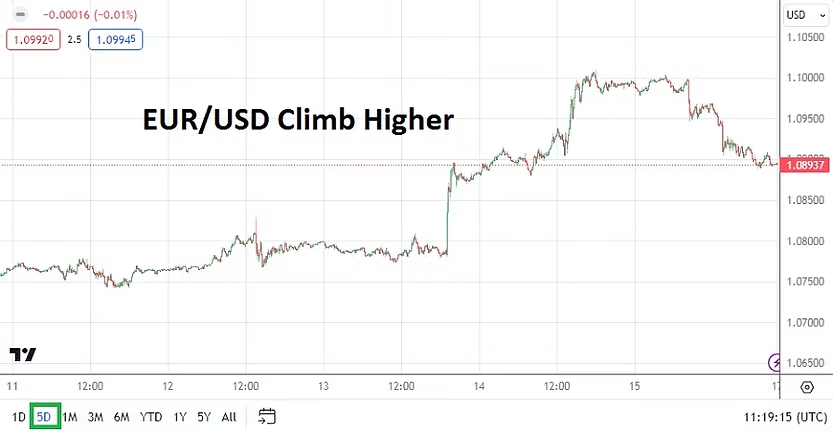
EUR/USD Five Day Chart as of 17th December 2023

Monday, 18th of December, Germany ifo Business Climate – the reading is expected to show a slight improvement over the last month. EUR/USD traders may believe they should react to the results from this report, but the EUR is likely to stay within a USD centric mode driven by existing outlooks. The ability of the EUR/USD to hit the 1.10000 level late last week confirmed positive mid-term bullish outlook. The reversal lower on Friday may ignite speculative buying positions early this week, but day-traders may want to be conservative.

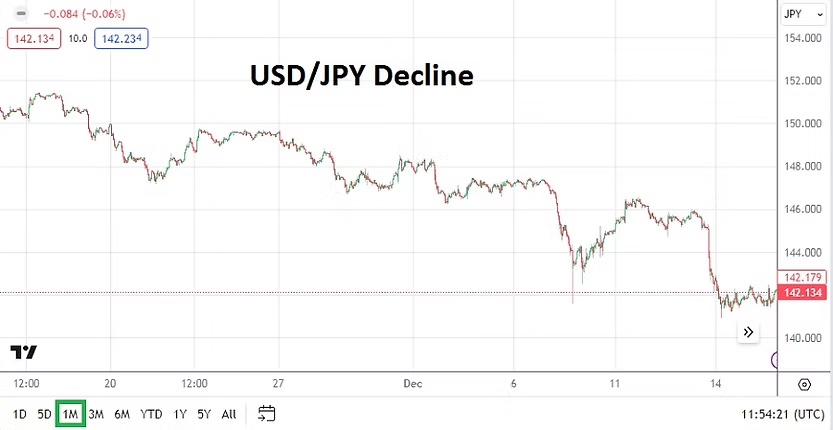
USD/JPY One Month Chart as of 17th December 2023

Tuesday, 19th of December, Bank of Japan Monetary Policy Statement and Press Conference – the BoJ is not expected to raise their interest rates quite yet. However the end of the BoJ’s negative monetary policy may be coming to an end in 2024. The BoJ bet on the notion that inflation would come down eventually, even it maintained a negative interest rate policy – this seems to have been proven correct. The USD/JPY has reacted the past month with a rather incremental decline. Perhaps Japanese financial institutions have been positioning for a stronger JPY over the mid-term. The USD/JPY trajectory lower remains intriguing for speculators.

Wednesday, 20th of December, U.K Consumer Price Index – the BoE sounded more dovish than many folks expected they would this past Thursday. Inflation numbers coming this week should be watched. The British economy remains lackluster, but sounds about ‘weaker’ inflation have been heard. The data from the CPI is expected to be slightly lower than the previous month. The GBP/USD could react to this report. The British Pound has delivered upwards momentum since late October. Traders should be careful regarding potential short-term reactions from the GBP/USD, and understand Forex volumes may start to decrease on Thursday and Friday which could affect results.

Thursday, 21st of December, U.S Final Gross Domestic Product – growth in the U.S has been better than most anticipated. While many analysts are still predicting a slowdown, the GDP number is expected to show a 5.2% gain. The inflation report via the GDP Price Index is anticipated to be 3.6%. While the broad markets typically would react to these statistics in a strong fashion, trading might be somewhat muted as financial institutions begin to focus more on the coming holidays.

Friday, 22nd of December, Canada GDP – a slight gain of 0.2% is expected regarding the growth statistics. Markets will be quiet and while the USD/CAD could see a momentary increase in trading, behavioral sentiment from earlier this week will likely have had a bigger effect.

postN83.1

FOMO Potential Could Fuel FX and Equities with Calm Winds

FOMO Potential Could Fuel FX and Equities with Calm Winds

Traders should not run towards their trading screens as the week begins, steady attitudes and risk taking tactics will be needed. Yet, there may be reasons to get excited. The return of full market volume as U.S financial institutions open and employees get back in their offices after the long holiday weekend needs to be monitored. The term ‘FOMO’ – fear of missing out – may be heard this week if U.S equity indices continue to shine, Forex demonstrates additional USD weakness and U.S Treasury yields decline further. There will be a whirlwind of economic data and opportunities for ‘official’ rhetoric in the days ahead.

Day traders should ask questions about the results which were seen technically via their charts last week, assets all struggled to find momentum last Thursday and Friday. And earlier in the week many Forex pairs produced choppy results. But here’s the thing, behavioral sentiment was rather muted as large speculators and financial institutions understood that trading volumes would be light – this caused strong bursts and sudden reversals early – but by the end of the week rather calm waters.

Many trading houses could increase their speculative positions this week based on their outlooks. Financial institutions clearly have believed the USD had been overbought and the ability of the GBP, EUR and JPY to gain in the past two weeks are possible signs large ‘players’ remain positioned for further USD weakness.

Equity markets have done well in November, but the major indices including the Dow 30, S&P 500 and the NASDAQ Composite all started to garner strength in the last week of October. Mid-term highs are being achieved in U.S indices. The parade of buyers may not be done quite yet.

Economic data results are vital for day traders to understand because they provide insights into the thinking of financial institutions regarding their outlooks. It is not the trading of small speculators that moves markets, it is the power of large cash positions which drives results. Questions regarding where the cash is going and the allotments financial institutions are pursuing is a key to understanding how the markets are going to react. This information is not readily available for day traders, instead smaller speculators need to try to comprehend outlooks regarding positioning and timeframes of larger players.

Part of the FOMO factor could develop as financial institutions begin to question how much money they will hold in money market accounts for their clients. While the practices of large investors are always comforted by the notion they are making guaranteed returns, the pursuit of better results and the desire for risk appetite does drive behavioral sentiment when bullish markets are being exhibited.

This week will be intriguing as full volumes return to the marketplace today and tomorrow. From today until the 13th of December FOMC Statement from the U.S Federal Reserve, results in the financial markets could be speculative. Financial markets are starting to signal that optimism is creeping back into the mindsets of large investors who may believe mid-term economic scenarios have improved.

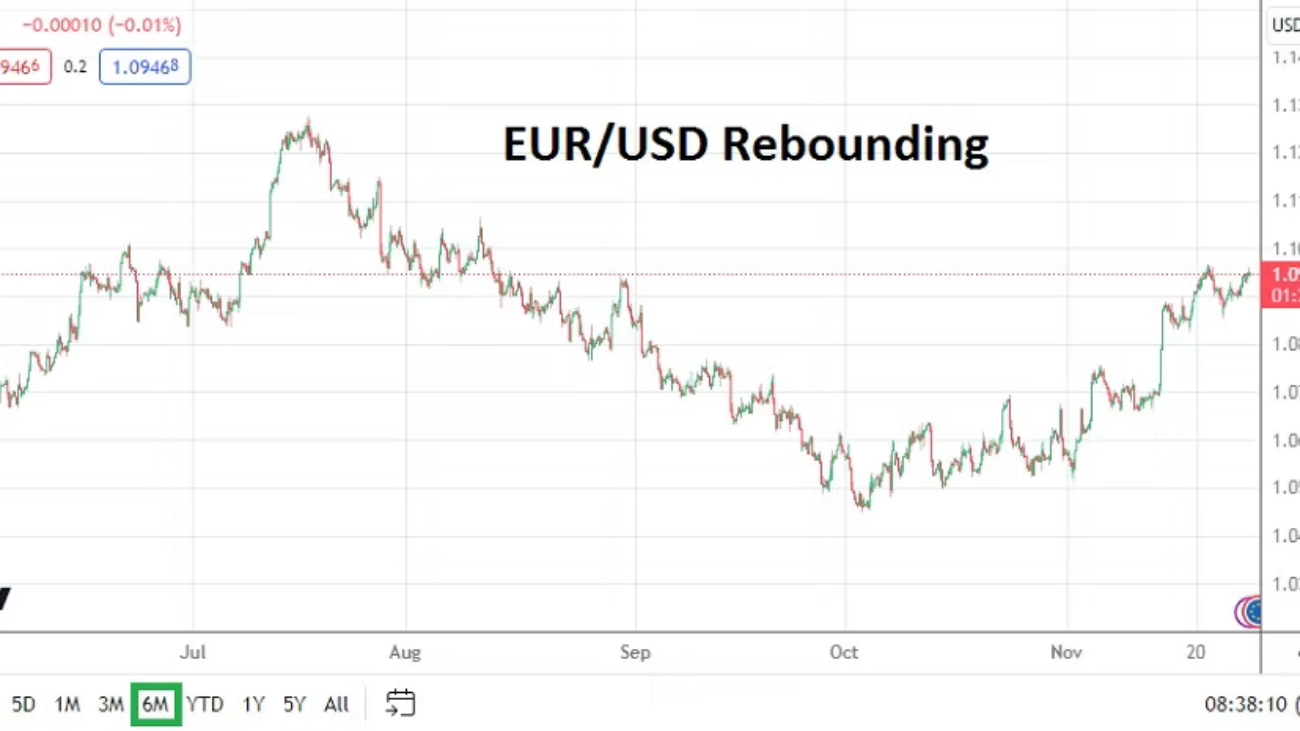
EUR/USD Six Month Chart as of 27th November 2023

Monday, 27th of November, E.U. ECB President Lagarde – the European Central Bank leader will deliver thoughts regarding monetary policy to the European Parliament. While the E.U still is sufferning from recessionary numbers, economic data last week came in slightly better than estimated. However, the EUR/USD remains in a USD centric mode and this will continue this week.

Tuesday, 28th of November, U.S Consumer Confidence via the Conference Board, the numbers are expected to be slightly weaker than last month’s outcome. U.S economic data has been showing signs of being weaker than expected, last week’s Core Durable Goods Orders report followed this trend.

While this may be read as bad news by some people, day traders should note – particularly Forex speculators – that slightly weaker U.S economic data currently is music to the ears of many financial institutions because they believe the Federal Reserve will have to shift their rhetoric from aggressive to neutral.

Tuesday, U.S Federal Reserve Officials – a slew of FOMC members will be speaking at various events during the day. The Fed likes to give clues to the financial markets regarding their outlooks and perceptions regarding interest rates. The Federal Reserve has certainly paused their interest rate hikes.

The question now is if the U.S central bank will start to say while they remain diligent regarding inflation, that they now see signs of a ‘soft landing’ emerging within the U.S economy. If the Fed speakers begin to sound not only neutral, but offer hints of becoming potentially dovish by the spring of 2024 regarding monetary policy, this could spur USD selling.

Wednesday, 29th of November, Germany Preliminary Consumer Price Index – the inflation results are expected to be slightly weaker than last month’s outcome. German economic data has been recessionary, financial institutions know this, what large traders would like to see is stable results that are not wildly surprising.

Wednesday, 29th of November, U.S Preliminary Gross Domestic Product – the growth numbers are expected to show a slight increase. Equity markets, Forex and commodity markets will react to these results. The U.S economy has been surprisingly strong regarding growth. A slight slowdown regarding the GDP numbers would not be the worse thing, if growth numbers did come in below the estimate this could fuel additional USD weakness.

But traders should not get overly ambitious and bet against the GDP numbers. If the expected outcome of 5.0% is delivered, equity markets could use this as additional fuel. The number is sure to be a talking point, but unless their is a massive divergence it may simply be a way to create noise for ‘talking heads’, when in fact behavioral sentiment regarding risk appetite remains optimistic.

Thursday, 30th of November, China Manufacturing PMI – the result is forecast to show a slight improvement. China economic numbers remain a concern, particularly from the real estate sector which is suffering and is causing cascading troubles on other sectors within the nation. Global demand for products, as an example from European countries, that are suffering recessionay pressures also is slowing China’s manufacturing. A slight improvement would be welcomed by global investors participating in China financial assets.

WTI Crude Oil Six Month Chart as of 27th November 2023

Thursday, 30th of November, OPEC and JMMC Conference – the oil producers will certainly make their policies known and energy markets will react to the news and rumors. Commodity traders should note that WTI Crude Oil, Brent, Natural Gas and Unleaded Gasoline markets have been under price pressure and important mid-term cash support levels are in sight.

Thursday, 30th of November, U.S Core Personal Consumption Expenditures Index – this inflation reading is important and should be watched. The result is expected to be weaker than the previous month. If the outcome matches the anticipated reading of 0.2% or less, this could spur additional USD weakness. The Core PCE Index is an important reading for the U.S Federal Reserve regarding its inflation insights.

Friday, 1st of December, U.S Fed Chairman Jerome Powell – the Fed leader will be speaking at a college event in Atlanta. Traders should remember that about ten days before the Fed’s pause in November regarding its FOMC Statement, Powell delivered a large hint regarding monetary policy. The Fed Chairman’s comments will come late on Friday and could cause a reaction early next week if Powell’s remarks fuel more Forex speculation.

Additional note – the U.S jobs numbers will not be released this Friday, the Non-Farm Employment Change and Average Hourly Earnings results will be published on the 8th of December.

postN18

USD/INR: Correlation to Broad Forex Market Intriguing Signal

USD/INR: Correlation to Broad Forex Market Intriguing Signal

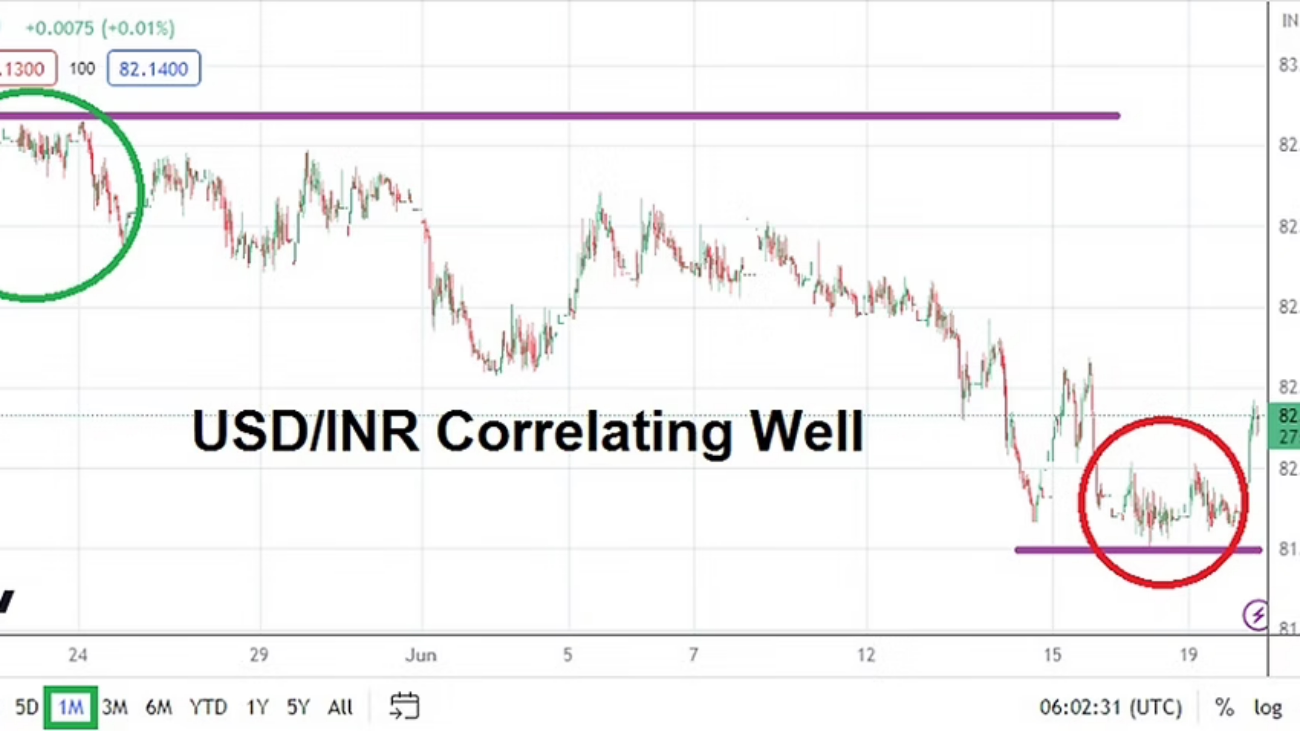
The USD/INR is near the 82.1200 price as of this writing. On Friday the USD/INR hit a low near the 81.8000 ratio. The ability to touch depths in the USD/INR before going into the weekend correlated well with the broad Forex markets, as the USD was showing signs of weakness globally. Yesterday’s trading volumes were weak because of a U.S banking holiday being observed and only in the next handful of hours will U.S financial institutions return from their long weekend, meaning an increase in volatility could arise.

The lows seen in the USD/INR on Friday challenged values not seen since the 10th and 11th of May. Interestingly support seems to have held technically, and the USD/INR was not able to test lower values seen in the middle of April and the first week of May. However, the trading conditions in the USD/INR appear to be healthy and performing in a manner that can be compared to the broad currency markets, and that is important because it may be a sign that interventions have not been necessary from the Reserve Bank of India the past few weeks.

USD/INR One Month Chart as of 20th of June

Was the Federal Reserve Decision a Pause or a Skip Regarding Interest Rates?

While the U.S Federal Reserve behaved as anticipated last Wednesday and did not raise its Federal Funds Rate, the central bank is still rattling its ‘inflation’ sword and has let it be known it can raise interest rates in July. The decision to not hike borrowing rates in June has been described widely as a pause by U.S Federal Reserve watchers, but if the Fed were to raise interest rates in July the pause would then have to be described as mere ‘skip’.

However, if broad Forex market price action is being interpreted correctly, it does appear many financial institutions are seemingly betting on a less aggressive Federal Reserve over the long-term. The question is if this is the correct outlook. Inflation remains problematic and until consistently solid drops in the costs of goods takes place, the Federal Reserve will remain rather unclear regarding its rhetoric and will likely bang on its higher interest rates ‘drum’ as a warning.

Here Comes More U.S Federal Reserve Rhetoric: Today and Tomorrow

Something USD/INR traders should pay attention to later today and tomorrow are the spoken words and gestures from Federal Reserve officials. New York Fed President John William will be speaking later today and he will certainly be asked about his outlook regarding interest rates. Because he is in charge of the New York Federal Reserve Bank, Williams remarks are watched carefully by the financial markets and his comments will certainly affect Forex and equity indices.

And then leaning into the microphone tomorrow will be Federal Reserve Chairman Jerome Powell. He will present his viewpoints and be asked questions regarding monetary policy in the House of Representatives by the Financial Services Committee on Wednesday. On Thursday, Powell will remain in Washington and perform the same show for the Senate Banking Committee. The Fed Chairman is a trained D.C insider and he will try not to inflame the financial markets with any surprises.

Outlook for the USD/INR is Choppy in the Near-Term

A reversal higher in the USD/INR early this morning has also correlated to the broad Forex market. It is likely the USD has been viewed as potentially oversold in the short-term. However, the slight moves higher might also be a natural cautious reaction to the coming rhetoric from John Williams and Jerome Powell. Because of this USD/INR traders should expect rather choppy conditions to flourish near-term.

Friday’s trading for the USD/INR will get important U.S economic data via the Flash Manufacturing and Services PMI reports. If the USD/INR remains below resistance levels of 82.1500 and 82.2000 consistently over the next few days leading into Friday’s trading, this could mean the broad Forex market remains bearish regarding its outlook for the USD. Speculators should be careful over the next 24 hours. It should also be mentioned that if Jerome Powell doesn’t surprise the marketplace tomorrow, he will not be likely to offer any new information the following day in Washington, meaning tomorrow’s comments from the Fed Chairman are the words likely to cause volatility if this happens.

postN17

Returning to the Roots of Commerce and Positive Contribution

Returning to the Roots of Commerce and Positive Contribution

This article was originally written in September of 2009 when the U.S national debt was 3 trillion , as of June 2023 it is above 32 trillion USD. Mr. Jeremy Blatch suggests current economic conditions warrant further reflection.

As the bloodletting continues in an attempt to cure the banking disease, we are no closer to resolving the root cause of the problem of the financial crisis. Unlike the proletariat in France before the revolution, the masses have not been offered cake to chew on, but a diet of more indebtedness. The chosen elite have distributed billions of other people’s money leaving the silent majority to choke in anger and incredulity.

The Chairman of the U.S Federal Reserve, when challenged by Congress as to the authority which allowed him to give away billions of tax payer’s dollars, nervously sighted the Federal Reserve Act of 1913. The total capitalization of the USA at that time was perhaps USD 500b. The current Public Account Deficit of the USA is around 3 trillion USD (3,000,000,000,000). Where is the money coming from to repay this?

The Dominance of Central Bank Policy and Government Mismanagement

For the first time in history, we have witnessed central banks and governments acting in unison to give away huge sums, seemingly daily to banks and the capital markets. In the press and media, figures in billions and even trillions have become common place. Governments are not companies. They cannot manufacture anything except perhaps lies. Or misspeak if you prefer to be politically correct. What they can do is print money, as they own and control the printing presses. They can then distribute the paper. In this case swallowed up by a banking system, drowning in its own sea of corruption, deception, mismanagement and greed.

We are told that the banking system is now stable again. But for how long and at what cost? The Damocles sword for failure in times of plenty, has yet to fall and will do so as a crippling tax burden on future generations. This at a time when Western governments are unable to guarantee their own elderly a life of dignity in their final years. The great champion of freedom and equality – the USA, cannot even guarantee its people a basic level of free health care at point of need.

The last decade has ended on a sad but predictable note, proving that we have sown the wind of increasing wealth at any cost, and have reaped the whirlwind. In the process we have singularly failed to distribute that wealth and resources equitably to where it’s needed.

Ironically one if the trends to emerge over the past decade of plenty are the development of socially responsible funds. The concept is to allow investors to direct their money into companies whose activities and ‘modus operandi’ are contributing positively to society. This is of course is selective, but at least the investor knows what their money is buying.

The Rise of Sovereign Wealth Funds as a ‘Caretaker’

Governments, especially with oil revenues have joined the band wagon creating Sovereign Wealth Funds. Norway the third largest oil producer, has formed a fund aimed at being socially responsible. In a global economy, ownership of companies is the most important way to have influence claims the Norwegian Foreign Minister. More humanitarian than an oil baron, the Norwegian government was key in gaining the International Land Mines Treaty, and also hosted the historic meeting in Oslo between Israel and Palestine. With the wisdom of Joseph they established a Petroleum Fund, in 1996, now renamed the Pension Fund to take care of the future generations. What a comparison to the arrogant ineptness of the USA, UK and Europe, who have burdened their future generations. The Norwegian government pension fund excludes companies that it believes are failing ethically. Interestingly, there are as many companies who are blacklisted abusing their employees as there are failings in other areas.

Whilst Norway has unambiguously laid out its outline addressing the needs of its own people before the needs of society at large, not the same can be said of Sovereign Wealth Funds which in general are about gaining political and strategic power by buying into the economy and owning strategic assets in the western industrialised nations. As we witness a shift in the balance of world economic power, ownership of strategic assets and the ability to guard and maintain trade routes will dominate the next decade’s macro economic strategy.

The concept of allowing investors choices consistent with their ethical beliefs is nothing new. But is it possible to combine successful business practices while looking after the disadvantaged.

The Impact of the Quakers in the Business World

The first funds to allow investors to direct their money into companies whose activities they approved of were pioneered by the Life Assurance Group Friends Provident in the 1980’s. This pioneering move was typical of the Quakers who were the founders of the Life Assurance Company. The Religious Society of Friends was a Christian movement founded in England in the 17th Century by George Fox. Puritans and non-conformist, they were given the name Quakers’ a term of derision, as they would often quake in the presence of God. They gained a reputation for social activism and were instrumental in the campaign against the transatlantic slave trade of the 18th and 19th centuries. Many were imprisoned for their faith and beliefs.

The Quakers flourished in business and due to both their success and religious beliefs made more enemies than friends. Persecuted and unable to gain insurance, they formed their own company. One of the overriding concerns of the Friendly Society, was to care for the poor and disadvantaged in their own communities.

Many captains of commerce and industry, in the 1800’s were Quakers, who founded and managed their businesses on biblical principals. Joseph Fry who started the famous Fry’s chocolates built a small town for his employees of his factories, with all amenities, schools, hospitals and recreation facilities. Work was scare, and many had to leave their home towns to find employment. Fry’s were bought by the Cadbury company. John Cadbury, himself, also being a Quaker. Edward Pease, owner and pioneer of the first railway in England from Stockton to Darlington housed his own employees, and Joseph Rowntree founder of the famous Rowntree Chocolates was the first person to develop low cost housing for the poor.

Barclays Bank had its roots in the Quaker movement. Unable to obtain loans the Quakers decided to form their own bank. True to their faith and beliefs employees were well housed and looked after.

In spite of being persecuted for their beliefs, through their success in business they were able to alleviate much poverty in serve the wider community. They didn’t need to wait for governments to bankrupt their future generations, they used what they had wisely, and gave something back. The bottom line in any business must be to make money. But as we have seen with the banking and financial crisis of today at what cost?

Originally published in www.ehh.gi in September 2009. Jeremy Blatch is the Founder and Consultant of Ein Harod Family Office.

postN16.1

Week Ahead: Summer Begins with Questions Lurking for Traders

Week Ahead: Summer Begins with Questions Lurking for Traders

Monday, the 19th of June, China Foreign Direct Investment – data from China has been lackluster and last week’s announcement of a stimulus program from the government underscores economic concerns regarding growth.

Monday, the 19th of June, U.S banking holiday – for commemoration of Juneteenth.

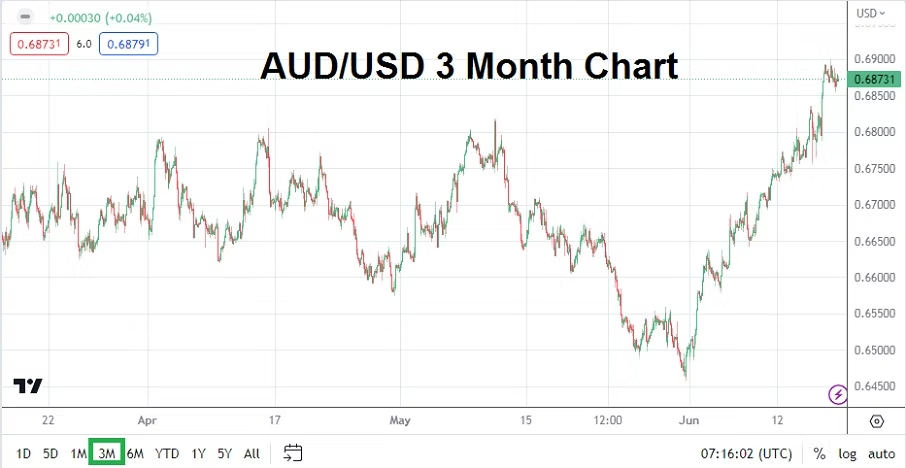
AUD/USD Three Month Chart as of 18th June 2023

Tuesday, the 20th of June, Australia Monetary Policy Meeting Minutes – report from the Reserve Bank of Australia will interest AUD traders and those with an interest in Asian Pacific economics.

Tuesday, the 20th of June, U.S FOMC member John Willliams – as the President of the New York Federal Reserve, Williams, is a key member regarding policy. Taking into consideration last week’s pause, traders may want to pay attention to the New York Fed Presidents’s remarks to see if the pause in Federal Funds Rates seen last week is looked upon as a halt or a ‘skip’ by Williams. The difference between a pause and a skip may appear to be semantics, but a skip would mean an interest rate hike is coming in July. Williams is not going to say what is going to happen at the next Federal Reserve meeting, but he may give a hint regarding his opinion on what should be done.

GBP/USD Three Month Chart as of 18th June 2023

Wednesday, the 21st of June, U.K Consumer Price Index – the data will be important regarding inflation insights for Britain. The Bank of England is expected to raise their Official Bank Rate on Thursday by 0.25%. Another report showing stubborn inflation could set the table for a rather hawkish Monetary Policy Statement from the BoE.

Wednesday, the 21st of June, U.S Federal Reserve Chairman Powell testimony – the Fed Chairman will begin two days of speaking and taking questions. The first day will be before the House of Representatives and the second day in front of the Senate. Because a major election is coming in the U.S in 2024, this will be an opportunity for politicians from both sides of the aisle to get airtime and take a ‘stance’ while bludgeoning Jerome Powell. The Fed Chairman’s remarks could stir the markets slightly, but Powell will be as careful as possible not to put a scare into the financial sector.

Thursday, the 22nd of June, U.K Bank of England – the Official Bank Rate, Monetary Policy Summary and vote count from the Monetary Policy Committee will be released. A hike has been widely expected by GBP traders and has been factored into the British Pound already.

Thursday, the 22nd of June, U.S Existing Home Sales – the housing report will cause a few murmurs in the marketplace because it is seen as an extension of consumer health and interest rate policy in the U.S regarding behavioral sentiment. Existing home sales numbers have been dropping as people with homes have decided to stay put in their current residences. ‘Locked in’ interest rates are more attractive, instead of taking on a higher rate via a new purchase due to costlier mortgages because of more expensive borrowing fees.

Friday, the 23rd of June, E.U Manufacturing and Services PMI – the flash reports from the likes of Germany, France and the U.K should be watched. Manufacturing readings have been producing recessionary readings while Services data is expected to show incremental decreases too.

Friday, the 23rd of June, U.S Manufacturing and Services PMI – the flash reports via the Purchasing Managers Index data need to be monitored too from the States. The readings give a rather good insight regarding outlook of U.S business sentiment.

post30

Pay Attention to Mid-Size Banking Noise

Pay Attention to Mid-Size Banking Noise

About a week and a half ago the U.S Federal Reserve ‘admitted’ they made a mistake regarding their oversight of Silicon Valley Bank. In essence, the Fed used the sports phrase that sprung to life in the early 2000’s by baseball players who said, “my bad”, as if by admitting when they made a mental error on the field it would soon be forgiven. “What a good guy”, some folks would say as a player took responsibility, but their team would lose the game.

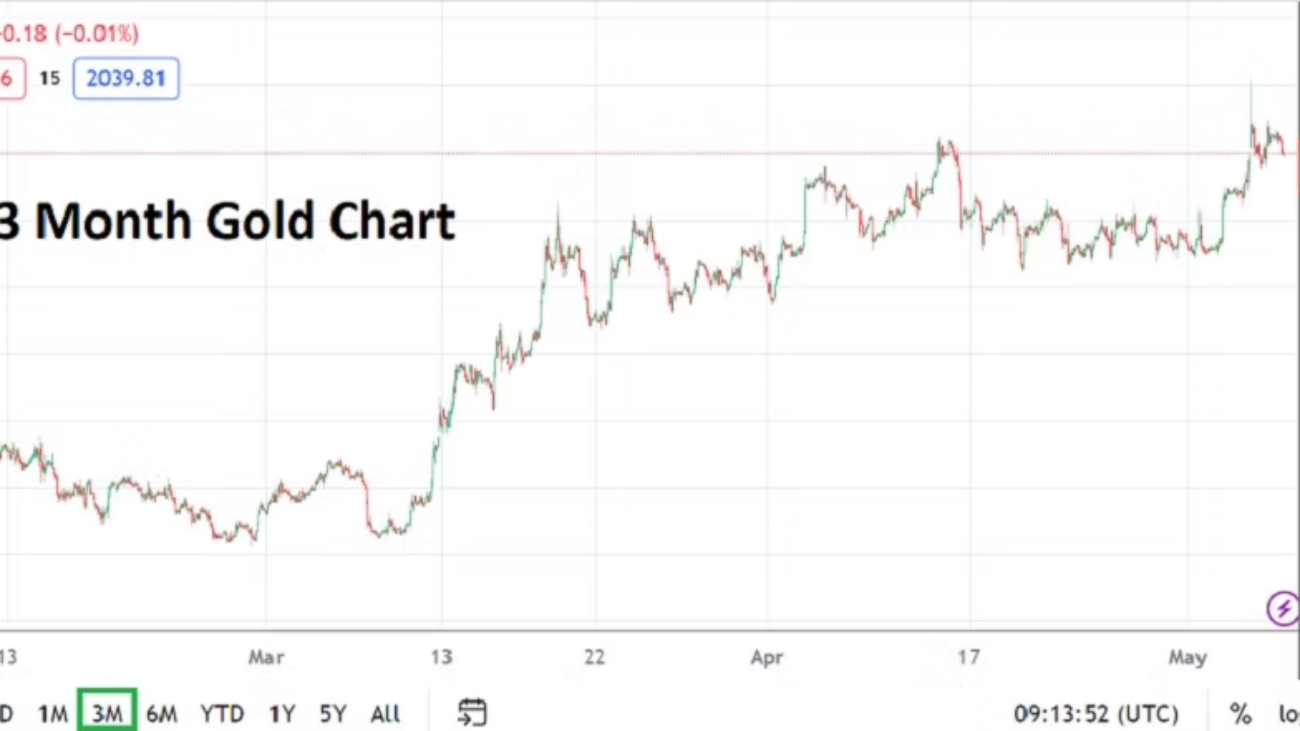
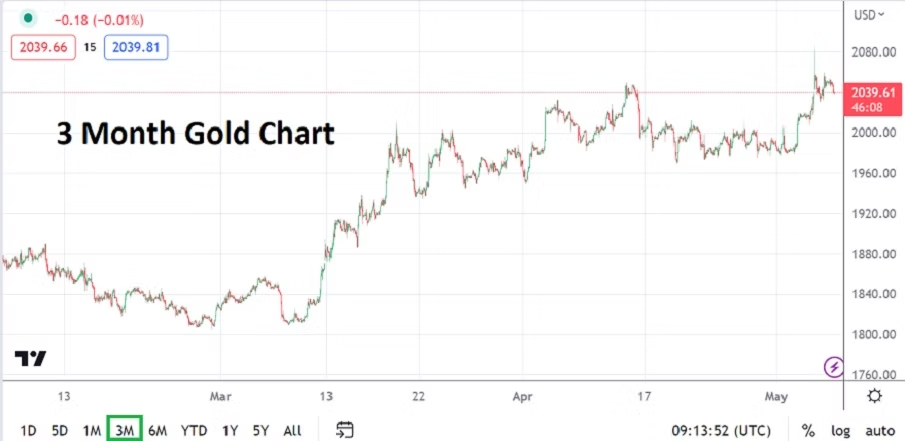
Gold 3 month chart as of 5th May 2023

The question for the Fed is what will they say when other so-called mid-size and smaller banks start to crumble from duress? The Federal Funds Rate was increased again this week by an expected 0.25% and the corporate banking sector in the U.S is under strain. Many banks are seeing share values on Wall Street disappear as they watch their trading screens with alarm.

Let’s not get caught up in hyperbole, or scare mongering, but these banks and the Federal Reserve have simply proven again they have no real grasp regarding risk analysis and what to do when the proverbial ‘fluff’ hits the fan. It is easy to point fingers now, yes, but the writing has been on the wall. It is much easier to make money for a bank when money is cheap. Little to no interest rates allowed banks to be speculative – compared to an environment when the lending rate is high and folks do not borrow, or pay back slowly. Deposits are also dwindling because bonds and other assets have become attractive for ‘clients’ who want to park their money elsewhere to earn better returns. The middle class and lower class are under pressure and small businesses are too as mid-size banks get nervous.

In the FOMC Statement this week which was somehow a unanimous decision – no dissension is a bad sign ladies and gentlemen – the Fed stated “The U.S. banking system is sound and resilient. Tighter credit conditions for households and businesses are likely to weigh on economic activity, hiring, and inflation…..” However, they also pointed out that inflation remains ‘elevated’. And let’s dissect the banking is sound statement, the Federal Reserve did not elaborate. They surely cannot mean the mid-size and smaller banking sector which is losing value almost daily because of struggling corporate share values are sturdy. Financial houses of various types are clearly betting these banks will come under immense weight because interest rates remain high.

Oh, and borrowing costs can still go higher, because let’s face it, inflation is not going away soon. The Fed has helped ramp up inflation by creating ‘import inflation’ as they have ‘killed’ foreign currencies values. If you are a fan of body language watch Fed Chairman Jerome Powell answer questions during the Fed Press Conference from this Wednesday the 3rd of May, when pushed on details regarding the mid-size banking sector and the future of interest rates. He didn’t put his hand up in the air and say, “my bad”, but it would not have been surprising, however it did look like he wanted to walk off of the field. The stadium packed with depositors within mid-sized and smaller banks should be prepared to show their disdain. Middle America should be unwilling to take this loss.

No historical events are exactly similar, but the Fed and its continued ability to put on ‘blinders’ as the corporate mid-size banking sector in the U.S potentially cracks, smells eerily similar to what happened during the financial crisis of 2007 and 2008 when rumors became strong whispers and then turned into a nightmare. Please say hello to the possibility of another massive bailout from the U.S government, because J.P Morgan, BlackRock and other ‘banking’ mammoths do not have enough capital to keep everyone liquid and safe.

Nervous behavioral sentiment is rising its head and looking out over a dangerous landscape. Middle America should be prepared to react to the potential that their neighborhood banks might be in trouble. And the U.S had also better get ready for the very ugly word ‘stagflation’.

post18

We Have Seen This Show Before Friends

We Have Seen This Show Before Friends

Another day, week, month and year – another financial crisis causing havoc. We have seen this show before, and experienced traders should make sure friends who are ‘newbies’ are prepared for what is going to happen next. And what is next is: unknown.

People who believe they can profit from the current mess in the markets need to have deep pockets to sustain choppy conditions and a time parameter that allows for volatile prices until the results targeted are achieved. Day traders need to have very narrow goals, because if they do not cash out of the market quickly, then they should expect to get burned by the price velocity which will ensue.

Sharks Eating the Minnows as Crony Capitalism Flourishes

The demise of Silicon Valley Bank and Signature Bank are unpleasant surprises, but not shocking, and not to sound too matter of fact or contradictory, but the handwriting has been on the wall. The aggressive stance by the Federal Reserve finally caused enough nervousness in the stock markets to make certain equities shake and the banking sector has proven vulnerable. It is easy for many corporations to make money when it is cheap, but when ‘and not so suddenly’ borrowing costs, inflation and bonds chaos combine and deliver mayhem then profitable outcomes become more difficult, and for some – impossible. Corporate investors do not look kindly on mid-term and long-term projections which hint of negative growth implications. Investors tend to punish these equities.

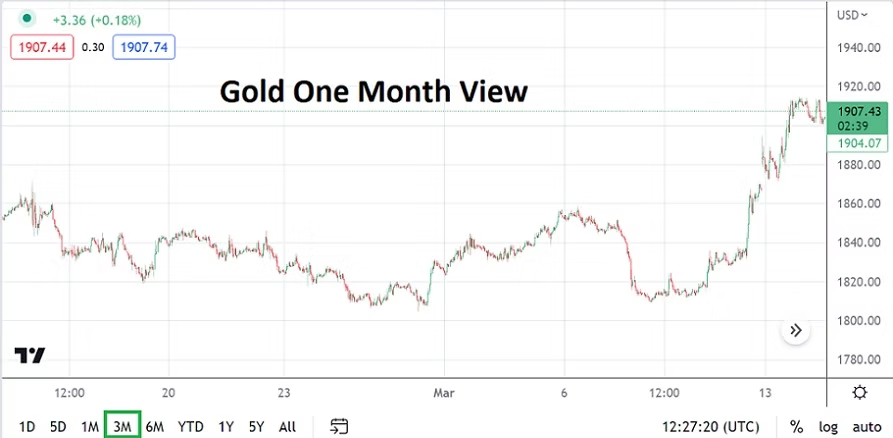
Gold One Month Chart

What comes over the next week and month will likely anger many people. Capitalism is good, it is even great. However, a dark and evil shadow lurks when crony capitalism starts to have an upper hand. The insolvency of Silicon Valley Bank raises the prospect for crony capitalism to be witnessed by all. Suddenly the U.S Treasury, Federal Reserve and government have emerged to save the skin of depositors within a bank which up until last week was heralding its ability to be a ‘lone wolf’; merrily disregarding sound investment principles and saying they knew better. It is only my opinion, but it stinks of contradiction that both the U.S Federal Reserve and Silicon Valley Bank have made vast mistakes and now are being allowed to cover their tracks and protect members of their ‘club’. Both Fed and Silicon Valley Bank officers need to be held accountable, but do not count on this result producing more than scapegoats.

Rising interest rates which are causing ‘import inflation’ has been a worry expressed by some economists and they can still be heard, but obviously not given enough attention. The Fed has marched to its own drummer and disregarded ‘the street’ for its own ideals and statistics viewed from its ‘ivory tower’ where it could not be held accountable.

Inflation is stubborn, yes, but it is a result of chaos via global commerce from the effects of difficult supply and logistics problems caused by coronavirus. Inflation became problematic two years ago and it was essentially disregarded for about nine months, until the Fed and others admitted rising prices was a concern. Hopes of transitory inflation have faded into oblivion. But I digress…..

Nervous Financial Institutions Battling as Federal Reserve Wavers

A sin bin of mistakes has collected and is now being exposed. Many financial houses were surprised when the Fed came out on the 1st of February and sounded so aggressive talking about inflation while increasing the Federal Funds rate again. Then jobs numbers came out on the 3rd of February, along with Average Hourly Earnings and showed the U.S economy was stronger than expected. The USD began to find strength again, and inflation data then added an extra punch by coming in strong again in February via the CPI results.

Btw, Consumer Price Index will be published today too from the U.S, and this will cause a reverberation for those attempting to day trade among waters filled with nervous financial houses who have their programmed algos ready to take advantage of hectic markets. Volatility the next handful of trading days is set to be wild. The Fed is not likely to raise interest rates by half a basis point on the 22nd of March, but if CPI numbers are stronger than anticipated today, this could cause a tremor and fear. Even if the Fed pauses for the moment, the prospects of raising interest rates again in the near future unless the banking sector shows it cannot sustain another round of Federal Fund increases is troublesome. Nothing like a complete lack of clarity for short-term traders to cause bedlam and a complex gauntlet of inflation statistics to make the Federal Reserve squirm.

Traders have to understand that if they are going to attempt to wager on the markets in the near-term that they are taking a huge risk. The use of leverage could provide solid profits on a winning bets via Forex, commodities or CFD wagers, but it could also wipe a trader completely out if they are caught by a violent wave. And the U.S Federal Reserve is not here to protect small traders, they frankly do not consider your results very much and likely believe you should not be wagering.

What the U.S government and its institutions like the Fed, Treasury and FDIC want to do is guard against systemic risks for the larger speculators – corporate traders, banks, hedge funds, V.C’s, etc. to make sure they do not go belly up and cause a global financial sink hole and long-term ruptures. The financial crisis of 2007 and 2008, the coronavirus pandemic starting in 2020 and the ongoing Ukrainian war have tested the markets and were likely enough for most of us to voice troubles. Now the prospects of a far-reaching banking crisis and illiquidity adding fuel to the fire are quite a combination of risk events usable as costly teaching moments. Do we seriously need another teaching moment however?

We are the little people and nobody sees us. We may yell, we may bellow our angst towards the system, but the system treats us as an afterthought. Day traders should keep this in mind as they bet in the coming days, because more gyrations are likely as a metaphoric ‘country club for institutional risk takers’ is given sanctuary. This as we minnows look up, shaking our heads in disbelief while our trading accounts flounder.