postR165.1

Forex Noise: Influences from Suspicious Data and Rhetoric

Forex Noise: Influences from Suspicious Data and Rhetoric

Yesterday’s GDP numbers from Japan served as evidence regarding things to be considered this week regarding the rather complex web central banks and governments have created for financial institutions and day traders. There are plenty of risk events ahead that should be given attention this week.
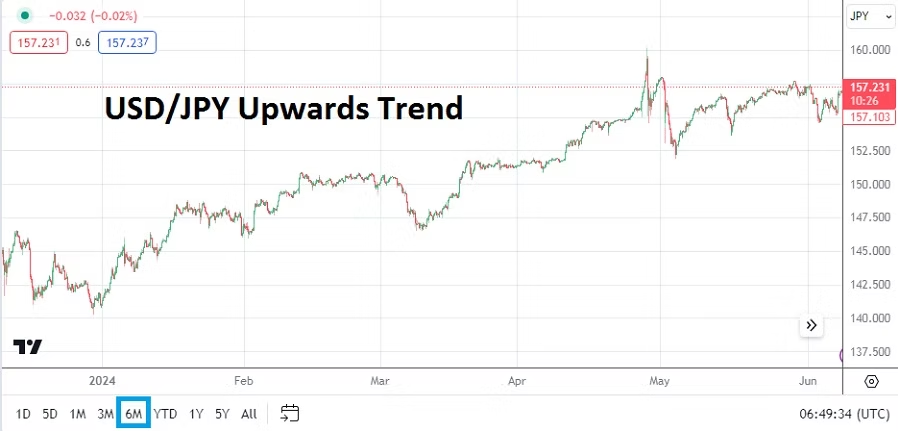
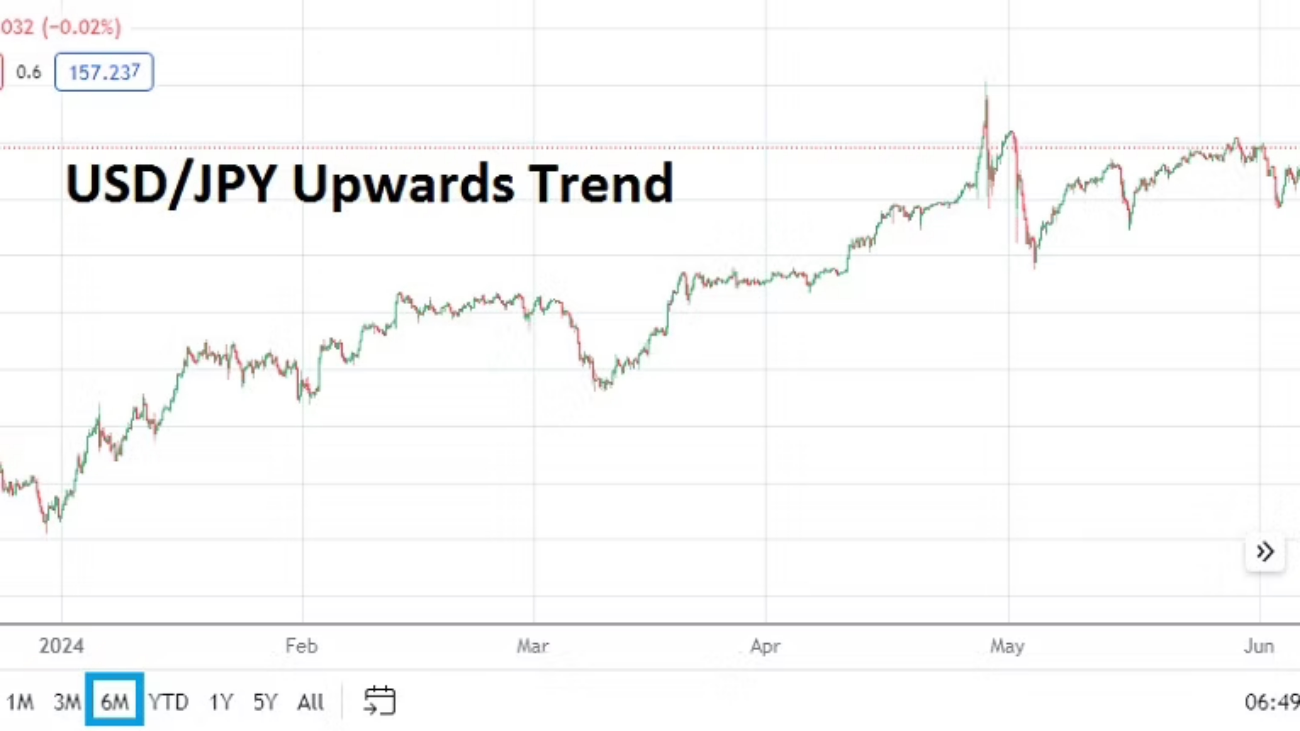
USD/JPY Six Month Chart on the 11th of June 2024

The USDJPY is now again in a dangerous value range near-term as it battles within a higher trend. The BoJ did intervene twice – in late April and early May – to try and damper speculative buying zeal of the USD/JPY and stop overly exuberant selling of the JPY. But they have been acting duplicitous as they have also wanted to no doubt allow a weaker Yen – while keeping its value within control. The BoJ has likely been hoping the Fed is going to sound more dovish this week, but if the Fed sounds more cautious than had been anticipated it could set the table for remarkably dynamic price action in the USD/JPY this week and next. If the currency pair moves too high, the BoJ could intervene again, particularly after the Fed’s FOMC pronouncements. So traders need to be careful.

Traders likely know that tomorrow CPI data and the Fed are on the schedule and these will be key events, but the noise generated around the inflation statistics and FOMC rhetoric should be viewed through the eyes of not only potential reactions from financial institution behavioral sentiment, but the possibility many of the ‘big houses’ have already positioned for the outcomes they believe will play out. In other words day traders should be ready for whipsaw trading results in the immediate aftermath of the Fed’s FOMC Statement and Press Conference.

Last week’s Non-Farm Employment Change numbers provided intriguing forensic data which will stir the suspicions of large players in Forex, equity indices and Treasuries. The jobs numbers via the headline stats looked strong. However, it must be said U.S government hiring continues to pick up, which can be looked at as an expensive way to fuel a sugar high for Americans as the States go into an election season.

Also full time workers continue to add part-time work to their tasks, this to battle rising inflation no doubt which is making their paychecks actually less effective, even if they are getting raises and receiving extra money from the added work loads they are taking on. The costs of products in the U.S are outpacing rising income. Also there is a fact that while part-term hiring is on the rise, full-time hiring is declining along with the average amount of hours employees are working per week.

The Gross Domestic Product numbers from the U.S are in decline. If folks push aside their political ideologies and look at real job numbers on the back pages of Friday’s report, and then ask why people are working less hours it is easy to conclude many businesses are actually cutting back expenses in order to try and remain profitable.

All three major stock indices from the U.S remain in sight of record highs, while there is caution surrounding the mid-term, investors still seem to be banking (wagering) on the U.S Fed to become more dovish over the long-term. Part of this analysis includes the belief that weaker GDP will eventually start to impact inflation and that this conclusion will affect the decision making of the U.S Federal Reserve at some juncture.

The Fed finds itself in a precarious position right now. They need to sound cautiously optimistic. It is an election year and they know this too. The Fed cannot publicly say they want growth to slow down because that would irritate most Americans and the White House, but they know full well that slowing GDP eventually should lower demand for products and thus erode inflation pressures.

Yet turning this full circle, the hiring being done by the U.S government, and the as of yet unmentioned fact the U.S  Treasury has increased its sales of Two Year Notes since around November; and the record amount of money the U.S is spending via a slew of suspicious costs like the ‘student loan forgiveness’, creates a muddled and over-heated fiscal policy which could be interpreted as trying to buy votes from those receiving the gifts. In other words, while the Fed is trying to stress it is battling inflation with higher interest rates and anticipates lowering them eventually, other facets of the U.S government are making this difficult because of the record amount of spending and interest rate payments they are making on short term Treasury notes. Jobs and money in the short-term are candy for voters, but the government has problems ahead regarding conflicting policies because it can lead to more economic problems.

So what do financial institutions think, well they are focused on returns for their clients. They are also looking ahead and trying to swim waters that are murky but offer the ability to profit for themselves too. They might believe they know the landscape just as well as the Fed does, and financial institutions also understand what will be said and can be done may be two different things. What to expect moving forward therefore remains confusing over the mid-term for everyone.
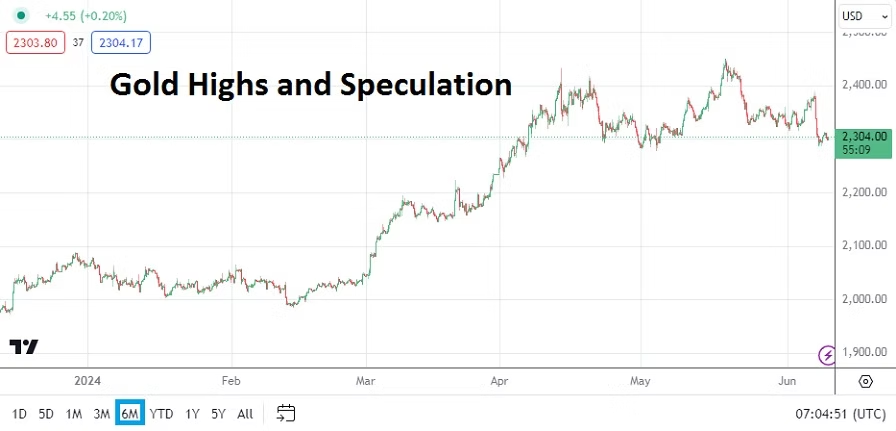
Gold Six Month Chart on the 11th of June 2024

Gold remains highly valued and traders should continue to use it as a barometer. Speculative players are also betting on gold as the USD and its ultimate mid and long-term direction remains complex. The recent downside price action after making record highs in May for the precious metal could reflect the belief the USD is going to become weaker over the mid-term.

Also it should be noted that a handful of commodities are being influenced by an abundance of speculative forces in Copper, Coffee and Cocoa. There has been a lot of talk surrounding the meme stock GameStop the past month. Experienced commodity traders understand the dynamics of speculative influences, pump and dump schemes better than most. Traders tempted to wager in these commodities should ask the same questions speculators in GameStop need to, what is the real value and when will the pin pop the balloon?

Monday, 10th of June, Japan Final GDP Price Index – the result in yesterday’s inflation data came in negative with a climb of 3.4% compared to the expected outcome of 3.6%. This is noteworthy might create more cautious rhetoric from the Bank of Japan later this week.
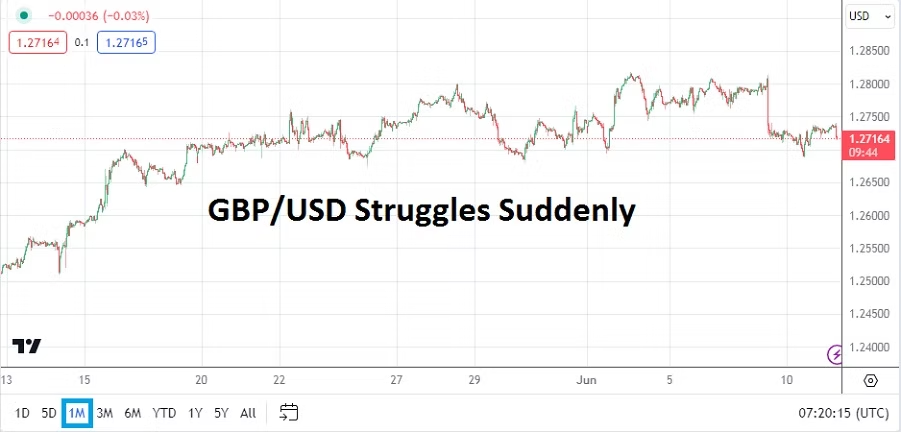
GPB/USD One Month Chart on the 11th of June 2024
EUR/USD Six Month Chart on the 11th of June 2024

Wednesday – 12th of June, U.S Consumer Price Index – the inflation reports will be watched by all market participants in the financial world. The broad monthly CPI result is expected to come in at 0.1%, which would be below the previous months’s outcome, but the Core monthly statistic is anticipated to match the previous result of 0.3%. The CPI numbers will certainly set the tone for the price action to come in Treasuries, equity indices and Forex. Weaker numbers could spark a selloff of the USD. Stronger numbers could create more bullish ability in the USD. No matter the outcome of these CPI numbers, the U.S Federal Reserve will be standing in the shadows and ready to take center stage a handful of hours later.

Wednesday – 12th of June – U.S Federal Reserve’s FOMC Statement and Federal Funds Rate – unless there is a massive surprise tomorrow, there will be no interest rate cut from the Fed. Anyone who was holding onto the idea of a cut, had these wrong thoughts killed off this past Friday because of the ‘better’ jobs numbers report. The Fed’s monetary policy statement is likely to try and sound cautiously optimistic and will certainly include the residuals of the CPI reports filed earlier in the day. However, financial institutions will want to hear if the Fed is leaning into the notion of cutting the Fed Funds Rate late in the summer as a possibility, or if the Fed sounds so cautious that they suggest a rate cut will not happen until later this year. Let’s remember this is an election year. Yes, the Fed is supposed to be an independent body, but like the Treasury there have been signs developing that the ironclad independence of Fed rhetoric can be influenced by U.S government influences from higher up the ladder. Or perhaps it is just all a happy coincidence and the White House, Treasury and Fed all simply agree on policies which remains rather questionable in the eyes of financial institutions and analysts.

EUR/USD Consideration into Wednesday

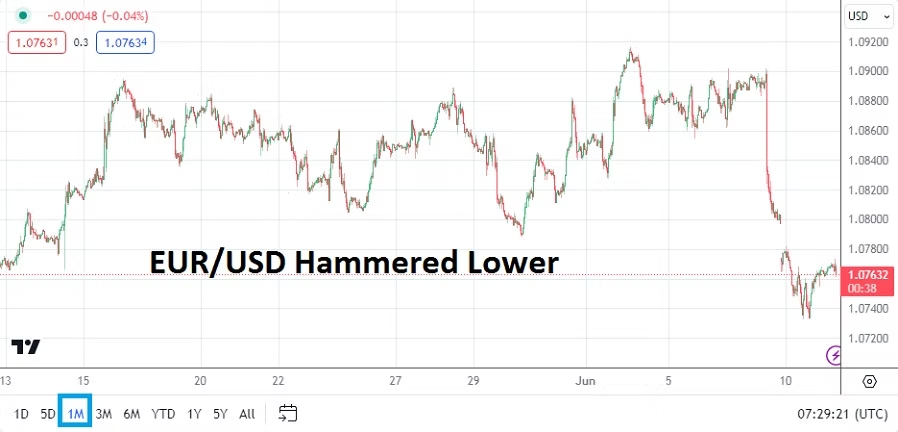
On this note, price action in the EUR/USD is a good representative of behavioral sentiment and the different ways it can be interpreted. EUR/USD will need attention during and after the U.S Federal Reserves’s policy rhetoric. The ECB cut its interest rate last week. However the ECB refused to say it will cut rates more – leaving the EUR/USD in a neutral position. The EUR/USD sold off on Monday, this after selling off strongly this past Friday after the U.S jobs numbers.

The Fed was looked on as having to become more dovish this Wednesday, but that is now in question because of the suspiciously strong U.S jobs numbers this past Friday. And then there is the outcome of the European Parliament voting this past weekend and a turn towards the right which many in the media seem to believe is the end of the democracy, but may simply represent that some citizens of Europe want a return to law and order, solid economic practices, and respect for their historical and cultural heritage.

Meaning that financial institutions aren’t likely to be too scared about the voting outcomes regarding the European Parliament and are likely more focused on the coming U.S inflation report and FOMC meeting results. However, as much as Forex traders are considered to be sophisticated and financially astute, they still reacted to the stronger selling which was sparked yesterday. Perhaps the EUR/USD results the past couple of days will prove to be like the reaction in the India markets, this when the Nifty 50 selloff occurred early last week upon election results being in question, only to experience a reversal later.

Thursday, 13th of June, U.S Producer Price Index – these inflation reports will be watched, but the reaction to the outcome is likely to be muted because of Wednesday’s dynamics from the U.S and behavioral sentiment which will have already been stirred.

Friday, 14th of June, Bank of Japan – the BoJ is expected to keep its Policy Rate at 0.10%. The BoJ will certainly have been paying attention to the USD/JPY this week, this before they make their public announcements. The Bank of Japan like the Fed is in a difficult spot. The BoJ is trying to fuel a stronger Japanese economy with a weaker Japanese Yen, while trying to sound vigilant in order to stop speculative buyers of the USD/JPY who are trying to take advantage of the trend higher. The threat of intervention should be a concern for day traders, even though the BoJ likely doesn’t want to take this avenue because it is costly and they know the only real way to make the Japanese Yen stronger is by increasing the BoJ Policy Rate which they seemingly do not want to do for the moment.
postN66.1

Ready for Risks as Nervous Markets Await Plenty of Outcomes

Ready for Risks as Nervous Markets Await Plenty of Outcomes

So you want to be a trader. You imagine that it will be fun and possibly easy to make money from the comfort of a cafe, office, maybe a bus or subway train with a simple touch to an app on your phone that allows seamless possibilities to take advantage of trends that are easy to spot. Yet, this may not be the week to decide on beginning your endeavor, perhaps you will want to watch the global markets and learn from the possible mistakes of others in the coming days.

Simple trends for the moment have largely disappeared and financial markets face a rather important week of data and global risk events that not even the most experienced trader can comfortably embrace. Risk events will shadow this week of trading. There will be a lot of drums beating and earplugs are recommended for speculators.

To get started the war in the Middle East, actually the war between Israel and Hamas is ongoing and it will not end soon. Israel doesn’t want U.S ground troops and while some media sources may make these claims, it is extremely unlikely to happen. Yes, the U.S has sent war ships to the Mediterranean, but this is largely to suggest to Iran that the nation not become overtly active in the conflict.

Global investors who have been around the block and have traded when other conflicts have escalated – Ukraine, Iraq, Afghanistan, African wars, and simmering feuds between China and India are somewhat used to these news flows and developing crisis forays. It does not make things easier, but at the same time being able to separate the noise from the actual reality of these events is essential. Learning to be mindful of the media and its frequent empty hyperbole regarding what could happen next is vital. Traders need to be critical thinkers.

If a day trader can step away from concerns regarding conflicts and focus on how behavioral sentiment is going to develop via the gyrations of financial institutions and larger investors, they will go a long way in starting to pursue a more tranquil path and find the ability to organize their thoughts quietly.

Gold is flirting with the 2000.00 USD mark per ounce. U.S indices continue to trade near lows and risk adverse tendencies will likely continue to flourish in the near term. There is a parade of important data releases and rhetoric that will come this week. Traders who are technically driven should consider paying attention to the economic reports and pronouncements that will come as they mix with business outlooks and varying time frames that must be considered when making bets on the financial markets.

Most of Monday’s economic reports are in already. Australia posted better than expected Retail Sales. German Preliminary Gross Domestic Product statistics came in with a slightly better than anticipated number, although growth is still negative.

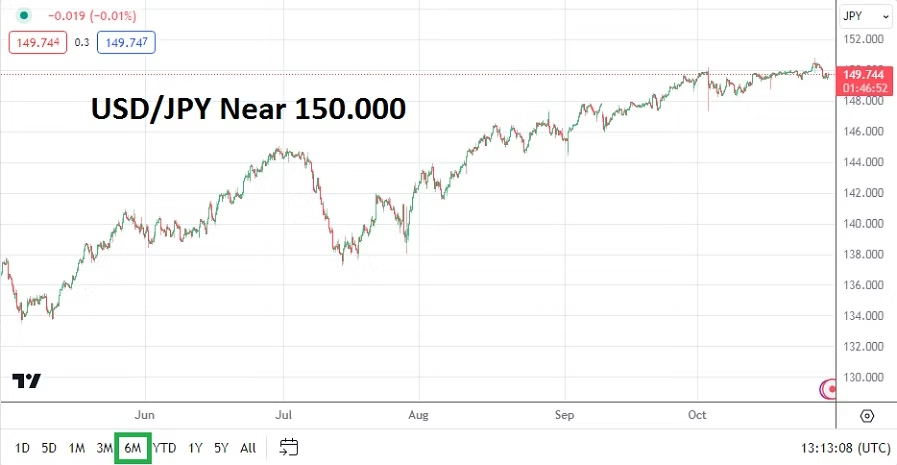
Tuesday, 31st of October, China Manufacturing PMI – economic data from China came in slightly better than expected the past week, but shadows lurk and the manufacturing numbers will help provide insights regarding headwinds the nation is facing. The USD/CNY remains at elevated levels. Transparency remains a desire for international investors who want to participate in China.

USD/JPY Six Month Chart as of 30th October 2023

Tuesday, 31st of October, Bank of Japan – the BoJ is expected to make no changes to interest rate policy (you have heard this song before), but the USD/JPY remains near the 150.000 level and the Bank of Japan is not comfortable with this higher ratio. The question remains how they can combat this value properly. By suggesting the notion the BoJ can intervene when they want to, can keep financial institutions from over aggressively buying the USD/JPY. Expect to hear some of these intervention warnings again tomorrow.

Wednesday, 1st of November, U.S Federal Reserve Funds Rate and FOMC Statement – Jerome Powell made it pretty clear in mid-October the U.S Fed will likely not raise its interest rate at this meeting. However, he warned the potential exist to raise rates down the road if inflation shows unwanted sparks. American consumers are a reason for concern too, although the Fed will not admit this – the U.S Fed would like to see less consumer demand which they believe would help decrease inflation. Problematically, U.S Treasuries are not only sticking near higher yields because of the potential of higher interest rates, but they are also being bought as a safe haven because of Middle East worries. This will continue to put pressure on the U.S government because paying off bonds with higher yielding rates of returns to investors can become increasingly difficult, particularly when U.S government spending appears to be nearly out of control.

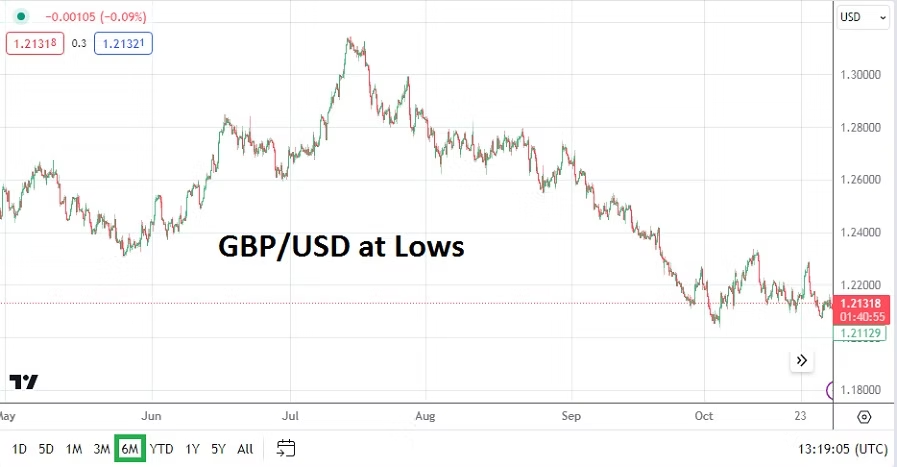
GBP/USD Six Month Chart as of 30th October 2023

Thursday, 2nd of November, U.K BoE Official Bank Rate and Monetary Policy Summary – no changes are expected by the Bank of England. Perhaps like the ECB last week the Bank of England will try to ‘sound’ a sedate level of rhetoric and say they are monitoring economic conditions which remain rather lackluster, but are showing slight signs of improvement via inflation and potential growth. The GBP/USD continues to fight near lows and the 1.20000 level is likely an important juncture.

Friday, 3rd of November, U.S Non-Farm Employment Change and Average Hourly Earnings – the jobs numbers are expected to come in less than the previous month’s results. The wages report could be important if there is a significant change not corresponding with the estimate. Inflation needs to show signs of decreasing before the U.S Fed backs down from its aggressive interest rate stance, if the Average Hourly Earnings number remains stubborn, so will the U.S Fed.

postN63.1

Fed Rhetoric, U.S Consumers, and Fresh Concerns about China

Fed Rhetoric, U.S Consumers, and Fresh Concerns about China

U.S inflation data via the Consumer Price Index last Thursday met the anticipated result regarding the core number, and the broad statistics were only fractionally larger than expected. U.S Treasuries yields however jumped via quick reactions about stubborn inflation, then settled down. Equities via the major indices continue to show nervousness.

Day traders continue to get hit by choppiness, which means if they are not on the correct side of a trade initially, they can get knocked out of their positions quickly due to the use of too much leverage.

China produced another round of troublesome Consumer Price Index Producer Price Index reports last Friday, once again highlighting deflation is a legitimate concern for the nation.

The USD began to weaken within many major currency pairs on late Tuesday and early Wednesday, and then began to prove difficult with sideways price action. However, many currencies held onto their slight gains against the USD going into the weekend. But before a massive bearish trend against the USD actually can be sustained, perceptions about the U.S Federal Reserve stands clearly in the way regarding behavioral sentiment.

Inflation numbers last week remained strong enough to suspect the Fed will raise interest rates again on the 1st of November. As a way to keep traders on their toes, U.S Federal Reserve officials will be speaking at many functions over the entirety of this week, offering crumbles of evidence for their less than spectacular rhetoric on the global economy no doubt.

Gold has produced a rather startling climb in the past ten days and its one month charts resemble a rather turbulent roller coaster. Traders who have been pursuing the precious metal during its strong reversals the past handful of weeks have hopefully been using solid risk management while taking a speculative ride.

Gold One Month Chart as of 16th of October

Monday, the 16th of October, U.S Empire State Manufacturing Index – the number has come in slightly better than expected, but has still produced a negative reading of minus -4.6. While many U.S officials will not state it publicly, a decline in the manufacturing index may pave the way towards a more tranquil Federal Reserve. But this may be wishful thinking too, particularly if inflation remains elevated.

Tuesday, the 17th of October, U.S Retail Sales – the data about consumer spending will affect Forex if there are surprises. Both the core and broad reports are anticipated to be weaker than last month’s numbers. Weaker results could create some USD weakness.

Wednesday, the 18th of October, China Industrial Production, Gross Domestic Product and Retail Sales – the Industrial Production results are expected to be slightly weaker than last months, while the GDP outcome is being estimated to show a significant drop. If the growth number comes in at the anticipated 4.5% mark it would be another signal that China is struggling while trying to jump start the economy. USD/CNY traders should be careful around these reports.

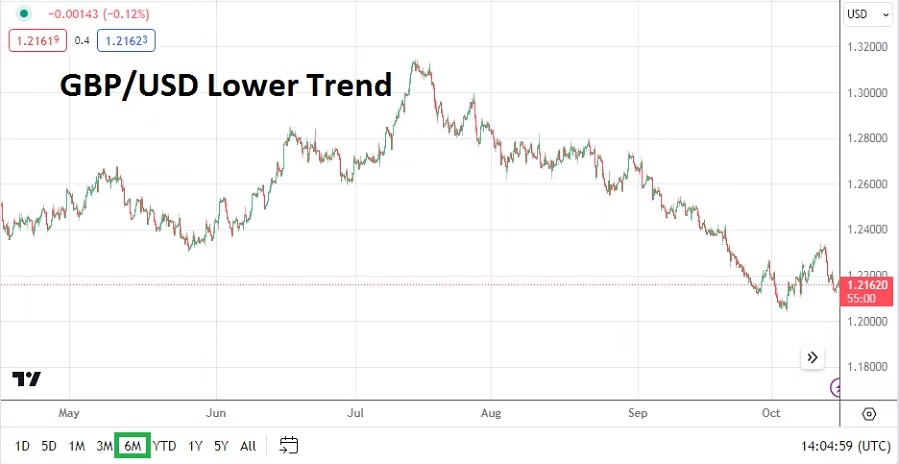
GBP/USD Six Month Chart as of 16th October

Wednesday, the 18th of October, U.K Consumer Price Index – the CPI data from Great Britain is expected to show a slight decline from the previous month. While last week’s GDP numbers met their rather lackluster expectations; Construction, Manufacturing, Trade Balance data came in much worse than anticipated. While no one from the U.K government is going to cheer on the bad economic numbers from last week, these figures will make these CPI inflation results important to monitor. Will the U.K inflation numbers remain stubborn like the U.S? The GBP/USD certainly needs to be watched in the aftermath of this CPI report.

Thursday, the 19th of October, China New Home Prices – the housing bubble within China is a thing of the past. Last month’s outcome produced another negative number and a poor report would not be a surprise this week. Negative housing values hurt the Chinese public which have largely quantified their personal savings via their real estate holdings.

Thursday, the 19th of October, U.S Unemployment Claims – the weekly report will give another small dose of evidence regarding the strength of the U.S economy for financial institutions to consider.

Friday, the 20th of October, U.K Retail Sales – the consumer spending report is expected to produce a decline of minus -0.3%. GBP/USD traders may use this report as another sphere of influence.

postN18

USD/INR: Correlation to Broad Forex Market Intriguing Signal

USD/INR: Correlation to Broad Forex Market Intriguing Signal

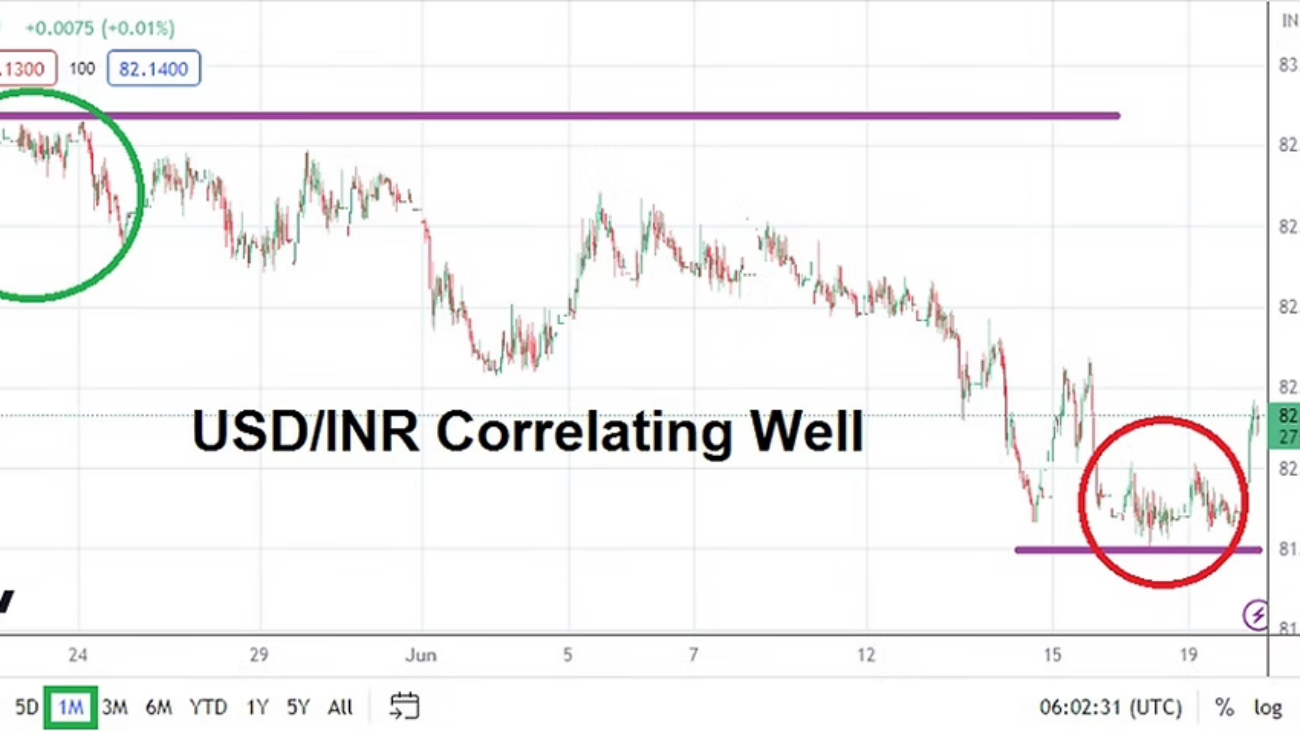
The USD/INR is near the 82.1200 price as of this writing. On Friday the USD/INR hit a low near the 81.8000 ratio. The ability to touch depths in the USD/INR before going into the weekend correlated well with the broad Forex markets, as the USD was showing signs of weakness globally. Yesterday’s trading volumes were weak because of a U.S banking holiday being observed and only in the next handful of hours will U.S financial institutions return from their long weekend, meaning an increase in volatility could arise.

The lows seen in the USD/INR on Friday challenged values not seen since the 10th and 11th of May. Interestingly support seems to have held technically, and the USD/INR was not able to test lower values seen in the middle of April and the first week of May. However, the trading conditions in the USD/INR appear to be healthy and performing in a manner that can be compared to the broad currency markets, and that is important because it may be a sign that interventions have not been necessary from the Reserve Bank of India the past few weeks.

USD/INR One Month Chart as of 20th of June

Was the Federal Reserve Decision a Pause or a Skip Regarding Interest Rates?

While the U.S Federal Reserve behaved as anticipated last Wednesday and did not raise its Federal Funds Rate, the central bank is still rattling its ‘inflation’ sword and has let it be known it can raise interest rates in July. The decision to not hike borrowing rates in June has been described widely as a pause by U.S Federal Reserve watchers, but if the Fed were to raise interest rates in July the pause would then have to be described as mere ‘skip’.

However, if broad Forex market price action is being interpreted correctly, it does appear many financial institutions are seemingly betting on a less aggressive Federal Reserve over the long-term. The question is if this is the correct outlook. Inflation remains problematic and until consistently solid drops in the costs of goods takes place, the Federal Reserve will remain rather unclear regarding its rhetoric and will likely bang on its higher interest rates ‘drum’ as a warning.

Here Comes More U.S Federal Reserve Rhetoric: Today and Tomorrow

Something USD/INR traders should pay attention to later today and tomorrow are the spoken words and gestures from Federal Reserve officials. New York Fed President John William will be speaking later today and he will certainly be asked about his outlook regarding interest rates. Because he is in charge of the New York Federal Reserve Bank, Williams remarks are watched carefully by the financial markets and his comments will certainly affect Forex and equity indices.

And then leaning into the microphone tomorrow will be Federal Reserve Chairman Jerome Powell. He will present his viewpoints and be asked questions regarding monetary policy in the House of Representatives by the Financial Services Committee on Wednesday. On Thursday, Powell will remain in Washington and perform the same show for the Senate Banking Committee. The Fed Chairman is a trained D.C insider and he will try not to inflame the financial markets with any surprises.

Outlook for the USD/INR is Choppy in the Near-Term

A reversal higher in the USD/INR early this morning has also correlated to the broad Forex market. It is likely the USD has been viewed as potentially oversold in the short-term. However, the slight moves higher might also be a natural cautious reaction to the coming rhetoric from John Williams and Jerome Powell. Because of this USD/INR traders should expect rather choppy conditions to flourish near-term.

Friday’s trading for the USD/INR will get important U.S economic data via the Flash Manufacturing and Services PMI reports. If the USD/INR remains below resistance levels of 82.1500 and 82.2000 consistently over the next few days leading into Friday’s trading, this could mean the broad Forex market remains bearish regarding its outlook for the USD. Speculators should be careful over the next 24 hours. It should also be mentioned that if Jerome Powell doesn’t surprise the marketplace tomorrow, he will not be likely to offer any new information the following day in Washington, meaning tomorrow’s comments from the Fed Chairman are the words likely to cause volatility if this happens.

postN11.1

Week Ahead: Inflation Followed by the U.S Federal Reserve

Week Ahead: Inflation Followed by the U.S Federal Reserve

Monday, 12th of June, U.S Federal Budget Balance – hold down the laughter and snickers please as you wonder why you should care, this as the report shows monthly income versus spending from the month before. Yes, the U.S ‘Debt Ceiling’ bill was passed recently. Very few people are going to pay attention to Budget Balance report, except economists and traders who have ‘skin in the game’ via hedge funds as an example – that make long-term bets, and U.S politicians who want to hoot and holler…….while nothing really gets done to limit wasteful spending in Washington D.C.

Tuesday, 13th of June, U.S Consumer Price Index reports – yes, this inflation data will be important per the monthly numbers showing what consumers are spending. A slight uptick is expected with an outcome of plus 0.2% via the broad statistics – last month’s number showed a gain of 0.4%. The outcome of the broad and core CPI statistics will give the Federal Reserve a sounding board for what will take place on Wednesday via the Federal Funds Rate announcement. Stronger than expected inflation numbers could cause a rupture and nervousness. A weaker result would calm Forex and perhaps make the USD slightly weaker.

EUR/USD One Month Chart as of 11th June 2023

Wednesday, 14th of June, U.S Producer Price Index – these numbers will be released early in the day and will be followed by the Federal Reserve five and half hours later. The inflation outcome via the PPI if stronger than anticipated would cause some caution before the Federal Reserve takes the stage.

Wednesday, 14th of June, U.S Federal Funds Rate, FOMC Statement and FOMC Press Conference – while many analysts seem convinced the Fed will not hike the interest rate this week, there are obviously no guarantees. The FOMC Statement will indicate the U.S central bank’s outlook. Traders who are intent on trading before the official interest rate announcement and statement are playing with fire. Speculators should keep in mind that other central banks have surprised folks with increases recently including Canada and Australia. A hike from the U.S Federal Reserve would surprise a lot of people and financial institutions, but stranger things have happened.

Thursday, 15th of June, New Zealand Gross Domestic Product – the growth numbers which will come out a handful of hours after the U.S Fed leaves the stage will be intriguing and provide NZD/USD traders more impetus into what will likely already be a volatile trading session taking place.

Thursday, 15th of June, China Industrial Production and Retail Sales – these two reports from the economic giant will be watched closely. China’s economy is struggling a bit, and weakness in the housing sector via values are starting to cause a reaction in domestic spending. Industrial Production numbers will give some insights regarding global demand. Economic problems in Europe and North America are certainly not helping matters in China because demand for goods are restrained and hurting the manufacturing sector.

Thursday, 15th of June, U.S Retail Sales – consumers in the U.S have been expected to start producing negative numbers via these statistics, will they begin to do it? A stronger number would be of interest to some, but after Wednesdays’ FOMC Statement and news that will be generated, it is questionable who will give full attention to this report and what affect it could have.

Thursday, 15th of June, E.U ECB Press Conference – this question and answer session could prove to be interesting depending on what the U.S Fed does the day before. Certainly the European Central Bank will give their opinions on monetary policy and economic circumstances in the European Union and abroad. The EUR/USD could be affected.

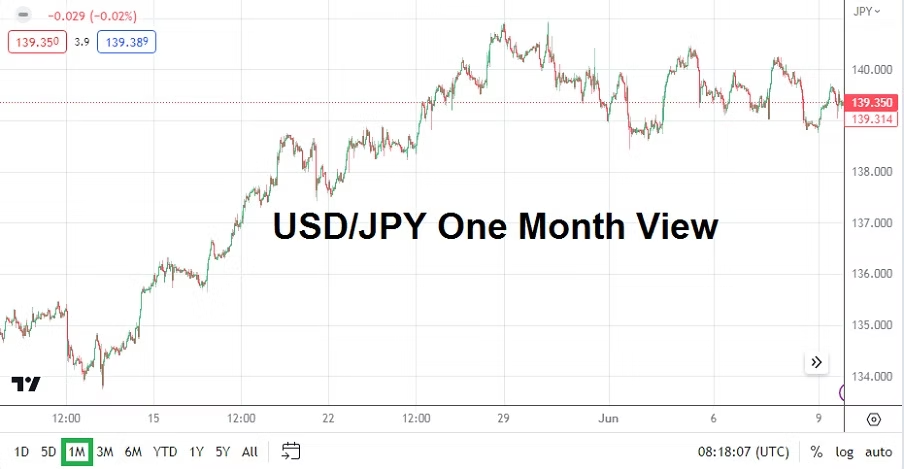
USD/JPY One Month Chart as of 11th June 2023

Friday, 16th of June, Japan BoJ Policy Rate and Monetary Policy Statement – no major changes are expected from the Bank of Japan. This is the one central bank unwilling to change its attitude regarding monetary policy because of the whims of others. Perhaps if the U.S Federal Reserve surprised everyone on Wednesday with a hike, this could change the quiet rhetoric from the BoJ – but even that is doubtful. USD/JPY traders should pay attention to the BoJ Press Conference just in case.