post203

AMT Top Ten Miscellaneous Missiles for the 19th of April 2024

AMT Top Ten Miscellaneous Missiles for the 19th of April 2024

10. Fusion: The U.S Senate presented legislation yesterday which creates guidelines allowing the Nuclear Regulatory Commission to authorize commercial investment and research of fusion energy. Significant strides are being made in the technology and the U.S government is preparing for the newest developments.

9. Cup of Joe: Your cafe is going to get more expensive. Robusta and Arabica coffee both remain at higher values having hit apex prices respectively this Wednesday and Thursday. And Cocoa remains ‘comfortably’ above 11,000.00 USD per metric ton this morning.

8. United Arab Emirates: The UAE has been hit by heavy weather, suffering its biggest rainfall in 75 years. It was reported that over 14 centimeters of rain fell this Tuesday in Dubai, which is the equivalent to one and a half year’s worth of typical accumulation in the city.

7. India Elections: The vote in the world’s biggest democracy has begun as millions decide on the the Lok Sabha. The election process will take place for nearly a month and a half with the results formally being presented on 4th of June. The Bharatiya Janata Party is expected to win a majority in the House of the People, thus likely re-electing Narendra Modi as the country’s Prime Minister.

6. Gold: The precious metal remains within sight of record values with the price around 2,388.00 USD per ounce. Today’s earlier ratios touched the 2,420.00 vicinity.

5. Cone of Silence: Israel and Iran have remained mum on military counterstrike action scuttlebutt, which was heard this morning throughout global media. The silence from the two nations did not stop the Nikkei 225 Index from dropping over 1000 points upon the news.

4. Bitcoin Halving: A coding change is anticipated to occur soon in Bitcoin which will affect ‘mining’ parameters for the digital asset. The code change will double the amount processing needed to create one BTC, making it twice as expensive for Bitcoin operators. Day traders tempted to wager on BTC/USD over the next couple of days need to be careful. BTC/USD is near 64,560.00 at the moment of this report.

3. Fear Factor: Price of WTI Crude Oil is near 82.70 USD per barrel. Large energy traders continue to show they are experienced in geopolitics, remaining relatively calm as Middle East concerns are being brandished.

2. While Flag: U.S Fed Chairman Jerome Powell conceded that inflation remains stubborn earlier this week. Stagflation is not being discussed openly by the Fed, but it is likely raising concerns among global central bankers. The USD has returned to very strong levels as financial institutions brace for the possibility of U.S interest rates remaining high into the late summer.

1. Behavioral Sentiment: Equity indices, Treasury yields and Forex are within the midst of nervous seas as central banks and geopolitical concerns create storms. Speculators should make sure they pay attention to the waters they traverse with their bets, which could prove dangerous to navigate in the near-term.

postN77.1

Forex: Behind the Curtain as Speculative Deja Vu Strikes

Forex: Behind the Curtain as Speculative Deja Vu Strikes

Friday jobs reports came in stronger than anticipated on the surface, and this led to a roller coaster like ride for Forex traders as results were acted upon by financial institutions. However, a look behind the data shows ‘positive’ results were spurred on by part-time hiring and government influences leading to a notion that jobs numbers were not exactly a ray of sunshine regarding U.S economic health. The suspicious results cause a desire to look for ulterior motives, and to wonder if election year politics are playing a role in the U.S employment picture.

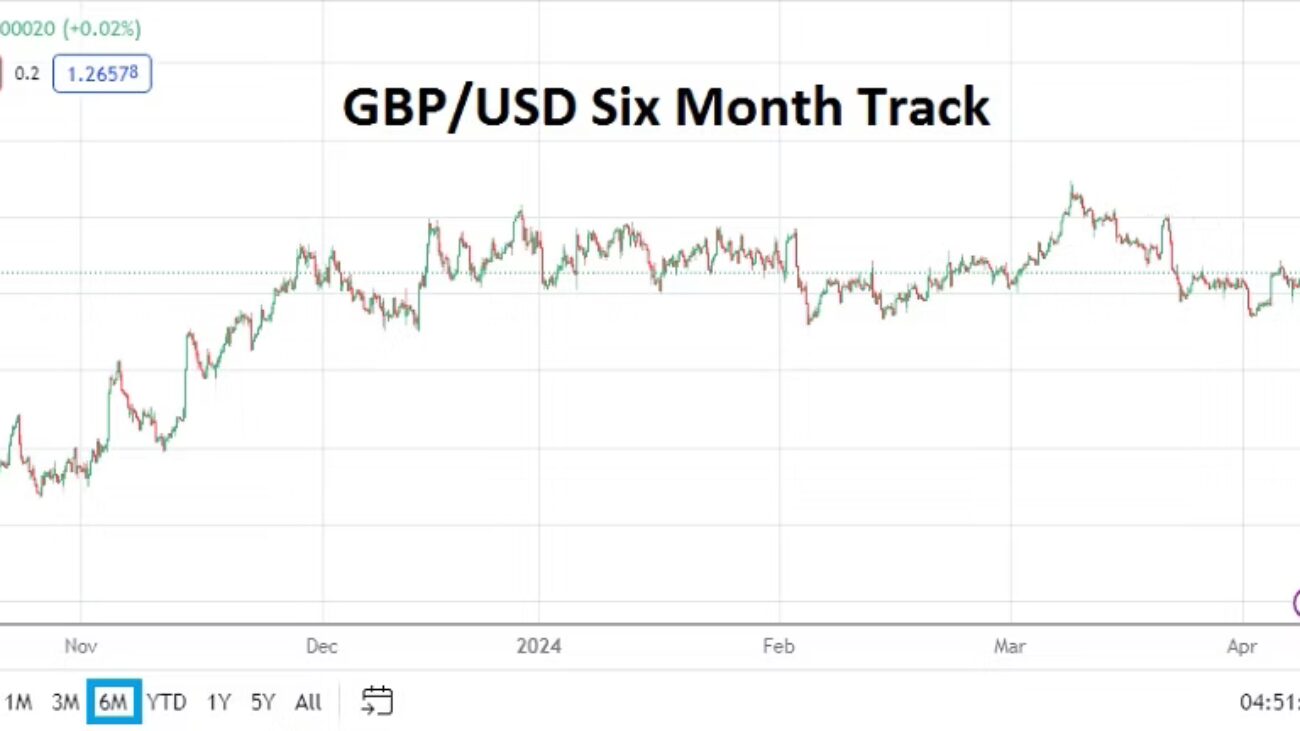
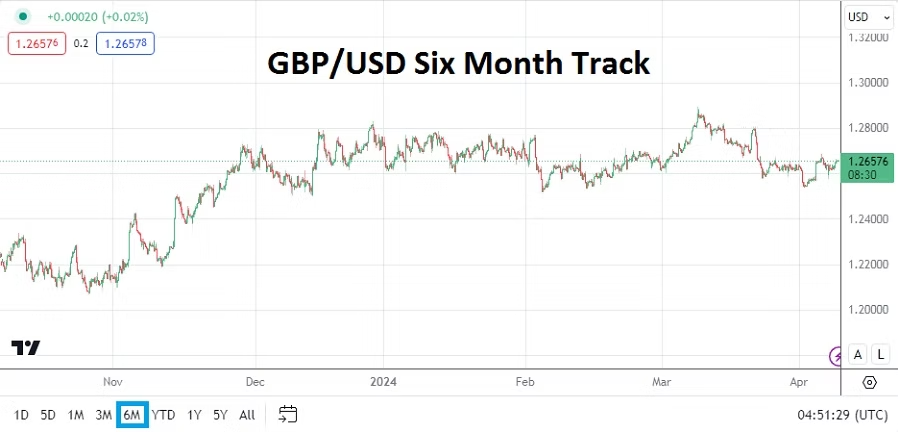
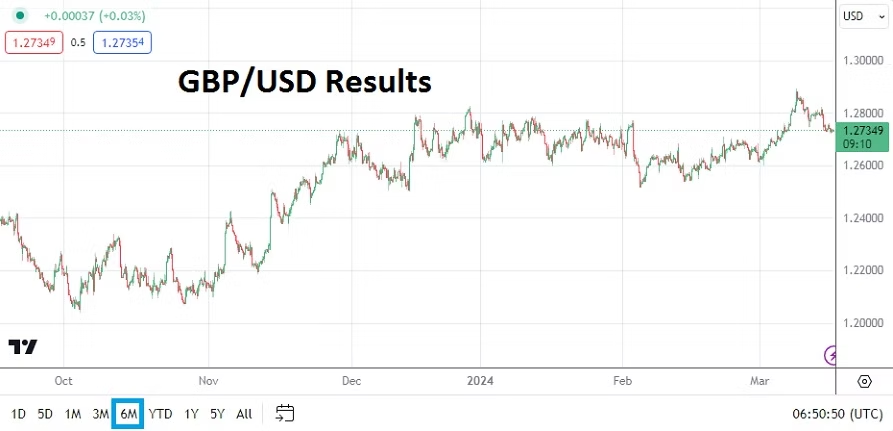
GBP/USD Six Month Chart as of 9th April 2024

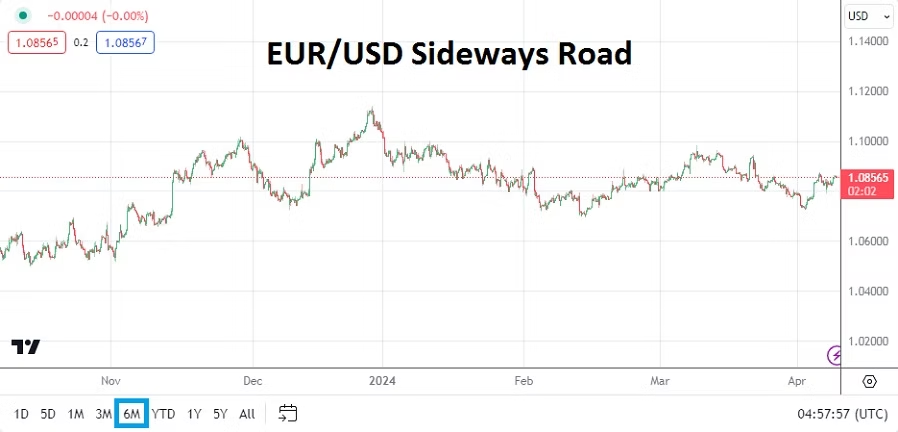
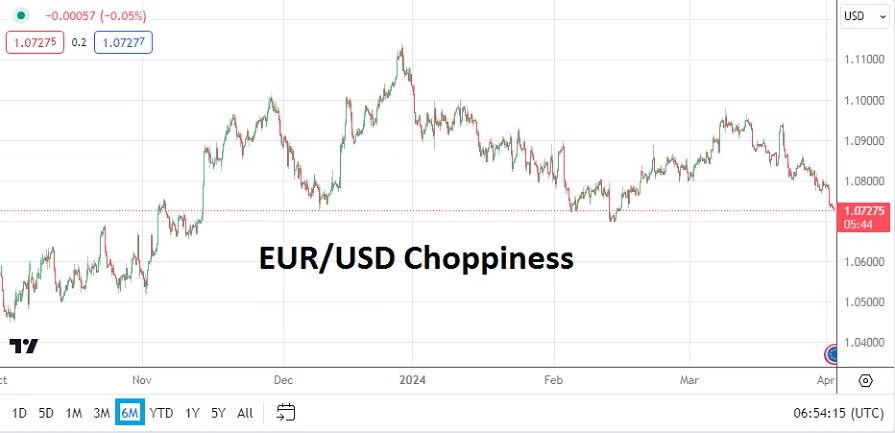
The GBP/USD and EUR/USD are rather insightful for technical and fundamental traders. The currency pairs are languishing as of today’s values near pricing that was seen in the second week of December. Since the ‘announcement’ from the U.S Federal Reserve on the 13th of December that a change in monetary policy would begin to occur in 2024, in actuality nothing has really happened, except government ‘speak’ trying to sound as if everything is understood and in control, while it is clearly not.

Economic data from the U.S and Europe has continued to be soiled by mixed results, and retail speculators looking for a trend to emerge have had to deal with choppy conditions. Financial institutions remain unclear about interest rate outlooks. The Fed while trying to ‘sound’ dovish rhetoric remains locked within a Google engine keyword mantra as they mutter the phrase ‘over time’ when trying to convince people that interest rates will ‘eventually’ be cut.

Last week leading up to the Non-Farm Employment Change numbers, many FOMC members were offering cautious tones about the Federal Funds Rate and warning it should not be changed yet. The implication of the Fed’s verbiage could lead some to suspect they have all practiced statements handed to them by their overlords who are concerned this is an election year and jobs are in jeopardy.

EUR/USD Six Month Chart as of 9th April 2024

Which leads us back to Forex and all financial assets, as investors try to swim waters which have left fundamental perspectives grasping at data which is not easy to decipher. U.S government policy is practicing fiscal spending that is causing massive debts, and perhaps influencing hiring data which may be more akin to putting lipstick on a pig. Many U.S voters seemingly lean towards electing officials who promise to hand out the biggest ‘social rewards’, while ignoring there will be a price to be paid down the road.

The Federal Reserve in the meantime tries to sound optimistic about inflation eroding, but concerns due to U.S government debt being accrued, and global geopolitical affairs combined with energy policy which is making it more expensive to maintain cheap transportation, efficient agriculture and manufacturing, shadow the Fed’s hopes. WTI Crude Oil remains over 86.00 USD per barrel. Gold is trading at record high values and above 2300.00 USD. Does anyone see the dangerous connections? Equity indices should be watched as a barometer this week.

USD/JPY Six Month Chart as of 9th April 2024

Monday, 8th of April, Japan Average Cash Earnings and Economic Watchers Sentiment – yesterday’s reports matched expectations regarding wages, but workers surveyed noted their concerns about incremental inflation which is being seen in Japan. The USD/JPY is challenging November higher values and the Bank of Japan has been widely criticized for not raising interest rates more aggressively. However, it is possible the BoJ wants the Japanese Yen to remain within its weaker price range to spark a stronger Japanese economy via exports.

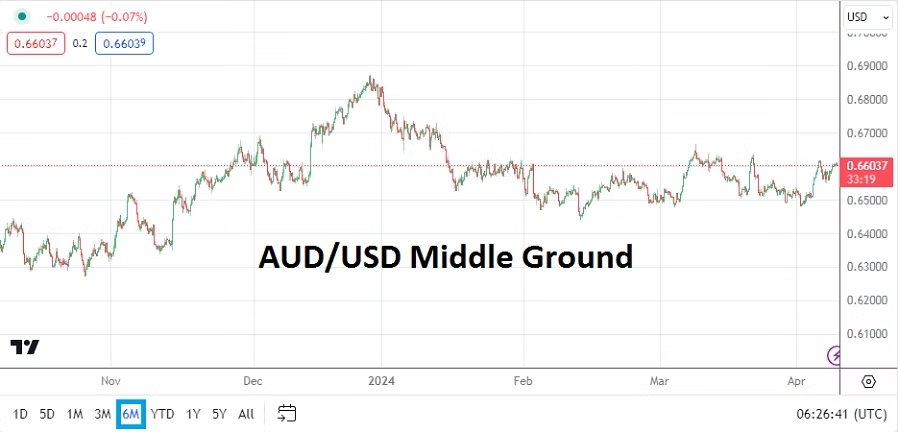
AUD/USD Six Month Chart as of 9th April 2024

Tuesday, 9th of April, Australia Westpac Consumer Sentiment – the results via the consumer reading came in negative. The AUD/USD like the GBP/USD and EUR/USD is traversing values tested in the second week of December 2023, leading to the feeling of deja vu.

Wednesday, 10th of April, U.S Consumer Price Index – you have heard this before, the inflation reports from the States are going to rattle the financial markets including Forex. The USD is certain to react. Data from the U.S has produced surprises aplenty in the past few months. The Consumer Price Index is important and day traders certainly need to pay attention.

Thursday, 11th of April, European Central Bank – the ECB is not expected to change its Main Refinancing Rate, but many analysts believe they should cut borrowing costs. However, the ECB will likely remain within the camp of choosing to ‘wait and see’. The ECB Press Conference with Christine Legarde has widely become regarded as an opportunity for political speech as much as an economic dialogue. Recent data from the European Union suggests the worst of the recessionary cycle is gone, but German Trade Balance numbers released on Monday were negative, highlighting hurdles remain. Inflation is a worry, and a cut to the interest rate might be able to help spur on economic activity while counting on lagging data to prove proactive policy should be implemented. But this likely is not going to happen and the EUR/USD will remain problematic.

Thursday, 11th of April, U.S Producer Price Index – these slew of reports should be watched carefully. If the data is stronger than expected it is likely a part of the residue caused by higher energy costs that have affected logistics and created more expensive raw materials which are needed to produce goods. It was the higher PPI reports last month that caused dramatic tidal shifts in Forex, speculators should brace for the potential of additional mayhem.

Friday, 12th of April, U.K Gross Domestic Product – last month’s GDP numbers from Great Britain came in slightly higher than expected with a 0.2% gain, this report is anticipating growth of only 0.1%. Traders should take a deeper look at the statistics upon publication and check for revisions to past months. The U.K economy has been struggling, the ‘growth’ results will affect the GBP/USD before going into the weekend.

postN78.1

USD and the Fed: Parade of Jobs Data Ready to Make Noise

USD and the Fed: Parade of Jobs Data Ready to Make Noise

U.S data last week created landmines for Forex speculators and the Federal Reserve. Global financial markets return to full action today following the long holiday weekend. Growth and inflation numbers from the States last week provided more unsettling results for financial institutions. While Forex has proven difficult for many traders, the major equity indexes are flirting with highs but also running into some intermittent headwinds.

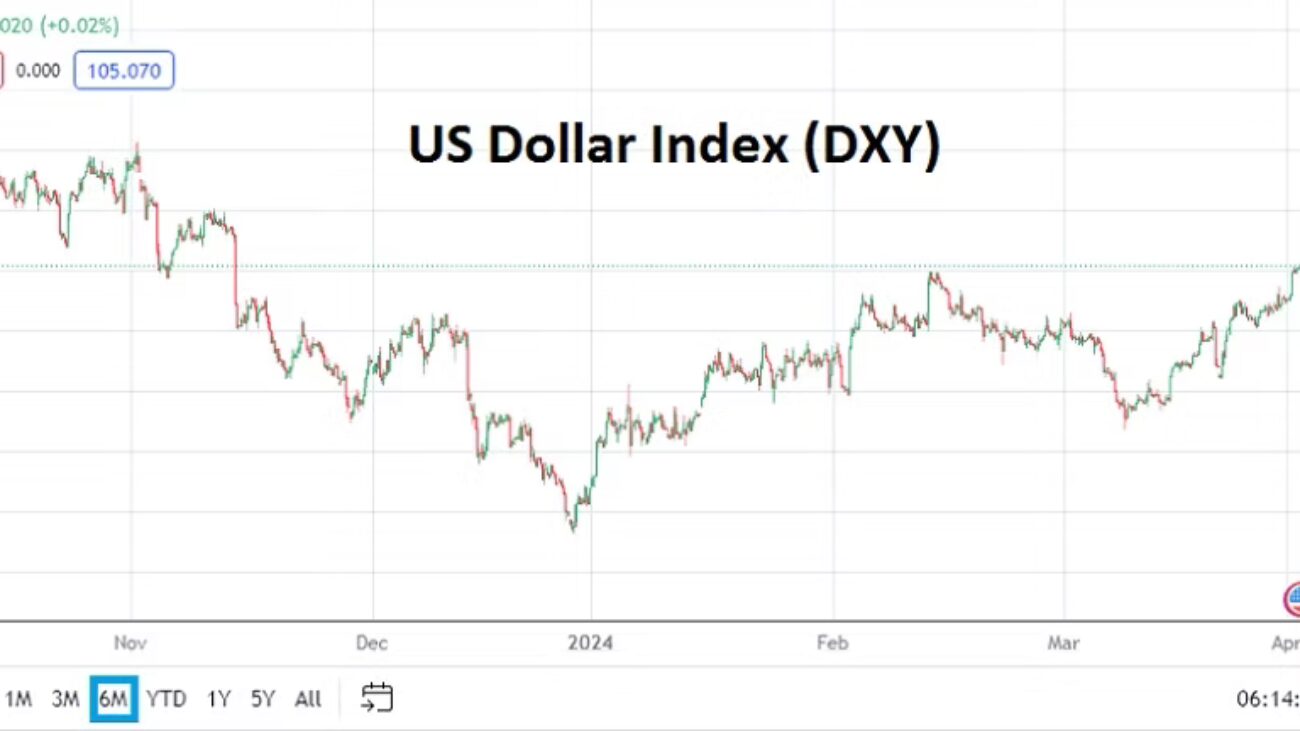
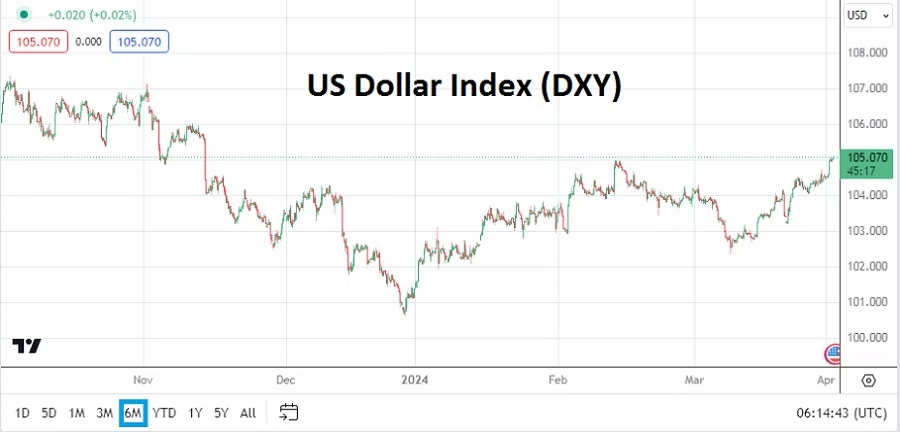
US Dollar Index Six Month Chart as of 2nd April 204

In December of 2023 the Fed was interpreted as having confirmed it would be able to cut the Federal Funds Rate during the 2024 calendar year rather consistently. Dovish policy had been anticipated by financial institutions which began to sell the USD aggressively in November. But by the end of the Christmas week the USD had essentially hit lows in many major currency pairs, and as January started reversals intensified.

The last three months of trading has produced choppy conditions in Forex, but one thing is clear – financial institutions no longer believe the Federal Reserve will be able to aggressively cut the Federal Funds Rate. The Fed has now begun to show signs that it is nervous regarding U.S economic data, this as growth via GDP numbers has remained firm, inflation sticky, and consumers resilient. Clouds shadow Forex and day traders have been hampered by a lack of solid trends.

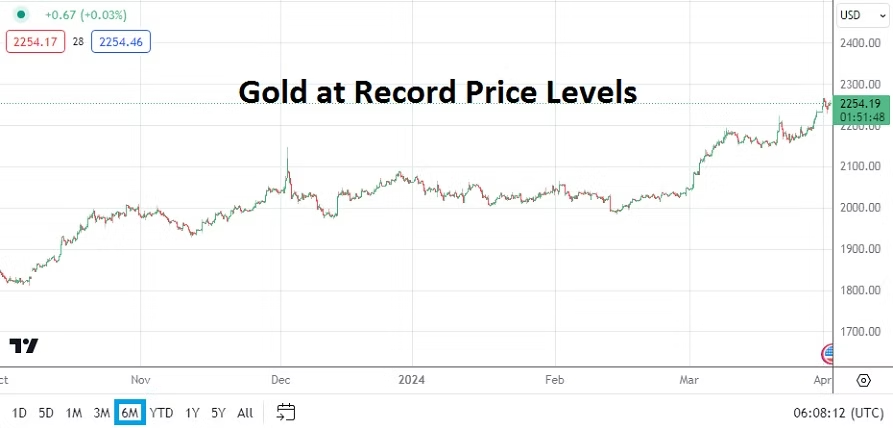
Gold Six Month Chart as of 2nd April 2024

Gold is trading near record price levels. The fact that the precious metal is touching all-time values as the USD has been strong has flustered some speculators. But traders need to remember Gold is affected by large players, including nations, that may be hedging USD bets and preparing for political instability. The price of Gold may underscore belief the U.S Fed will have to cut rates at least a couple of times this year no matter the economic facts on the ground, because this is an election year and if the central bank doesn’t deliver on its ‘promise’ jobs at the Fed may be at stake.

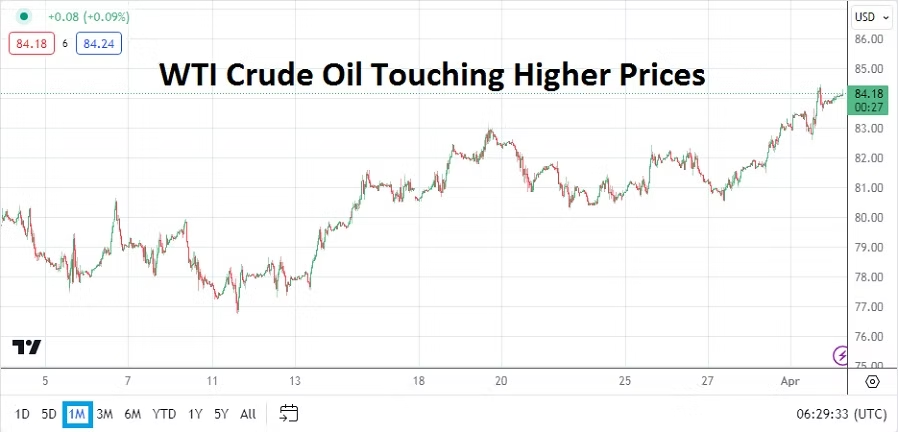
WTI Crude Oil One Month Chart as of 2nd April 2024

Not making anything easier for Federal Reserve policy is the higher price of WTI Crude Oil which has reached the 84.00 USD per barrel price. If energy costs go higher this will not help the fight against inflation. OPEC will be conducting a meeting this week. As an aside the price of Cocoa per metric ton is now over 10,000.00 USD, which is more expensive than Copper. While the price of Cocoa is not a game changer for global financial markets, the higher price will make chocolate more expensive, which some traders may find disagreeable as they try to relax and watch their speculative wagers while trying to nibble on their favorite snack.

Monday, 1st of April, U.S ISM Manufacturing – both the Purchasing Managers Index reading and the Price numbers came in higher than expected. The stronger results show the U.S economy remains better than anticipated by the Federal Reserve, which has been counting on its higher interest rate to slow down growth and inflation.

EUR/USD Six Month Chart as of 2nd April 2024

Tuesday, 2nd of April, European Manufacturing PMI – the European Union and Great Britain will release their business readings today. The results will demonstrate insights regarding sentiment. Financial institutions are worried the European Central Bank and Bank of England may have to consider lowering their interest rates before the Federal Reserve. The EUR/USD and GBP/USD will react to the results.

Tuesday, 2nd of April, U.S Federal Reserve FOMC Members – there will be appearances throughout the day in the U.S from various Federal Reserve members who will make the case for their monetary policy outlooks. It should be noted that Jerome Powell will be speaking on Wednesday. The JOLTS Job Openings will come out before the FOMC members speak. While the JOLTS report will not cause earth shattering reactions, the jobs data is the beginning of the parade regarding employment statistics for this week.

Wednesday, 3rd of April, U.S ISM Services PMI – taking into account the Manufacturing report came in stronger than expected on Monday, the Services data will be watched by financial institutions. If this report is better than anticipated, USD sellers will not rest easy. The ADP Non-Farm Employment Change data will also be released on this day.

Thursday, 4th of April, U.S Weekly Unemployment Claims – the Federal Reserve has been counting on employment strength to erode based on their notion that higher interest rates would create ‘lagging’ reactions in the jobs sector. Jerome Powell has said the Fed is anticipating weaker employment data. The results from the weekly report will not be as significant Friday’s data, but should be given attention by day traders in Forex.

Friday, 5th of April, U.S Non-Farm Employment Change and Average Hourly Earnings – the climax for speculators this week will be these jobs numbers from the States. If the numbers produce less hiring than expected this would help USD bearish momentum. Wages will also prove crucial regarding behavioral sentiment for financial institutions. Simply put, the Federal Reserve is anticipating that weaker employment numbers are going to be seen, if this doesn’t happen it might cause major volatility in Forex going into the weekend.

postN79.1

Forex Volatility and Coming Data Attractions for this Week

Forex Volatility and Coming Data Attractions for this Week

Nervous trading results have hurt many day traders and likely financial institutions too, as behavioral sentiment in Forex gets blindsided by rather mixed U.S data and the Federal Reserve not giving a definitive answer regarding monetary policy. The violent trading in the USD last week was expected, but the turbulence that many Forex pairs experienced on Thursday and Friday of last week was rather vicious. For all the perceived sophistication of Forex markets via financial institutions, the trading results last week point to a definite fear of the unknown.

USD/JPY Five Day Chart as of 25th March 2024

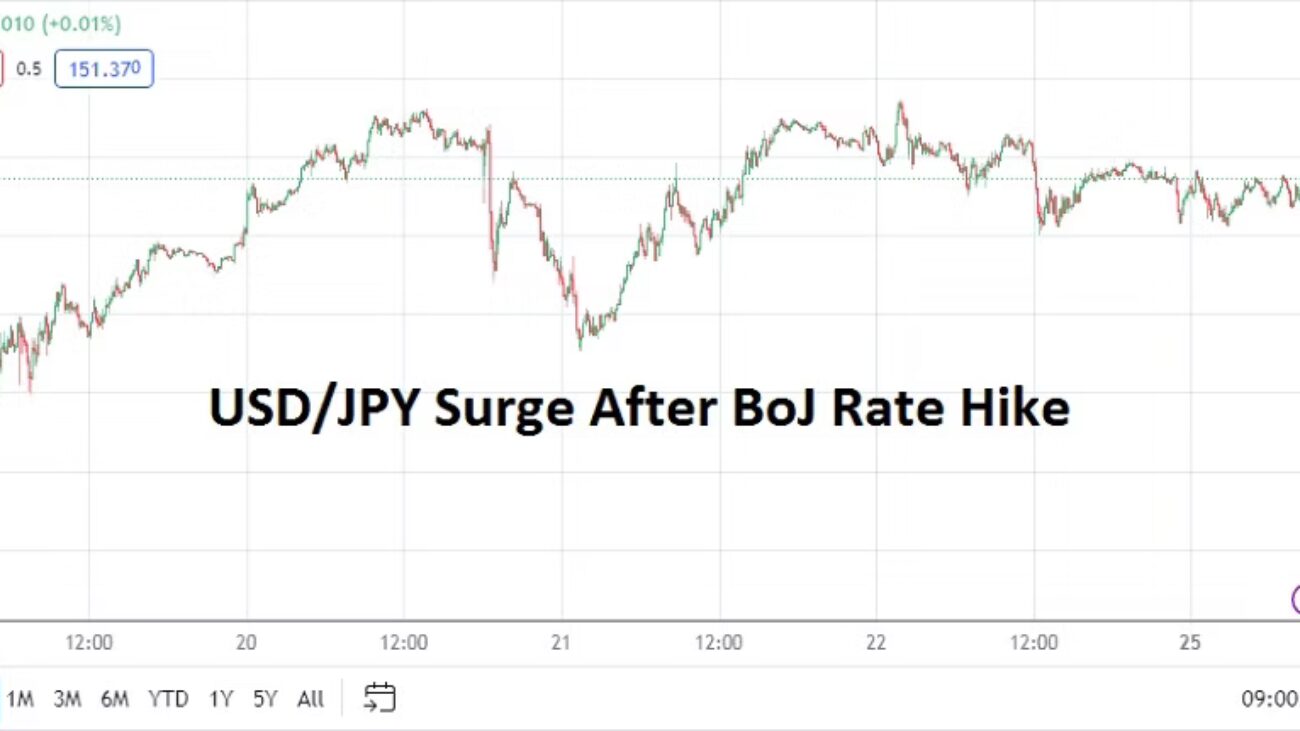
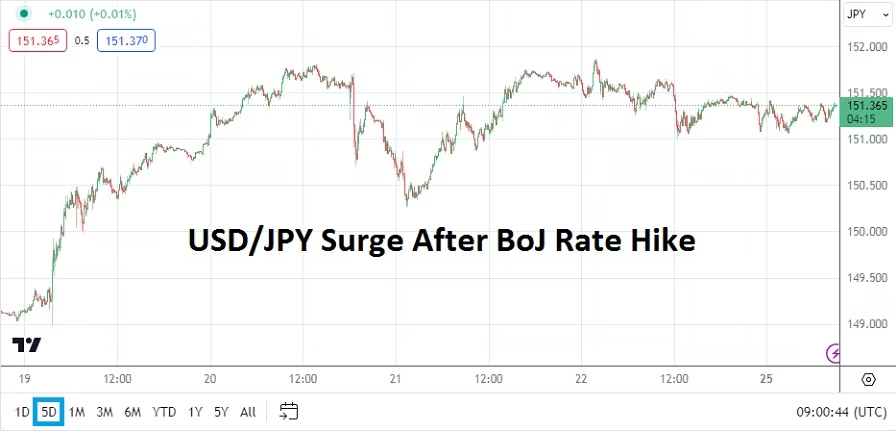
While the Bank of Japan finally changed its interest rate policy and moved to a Policy Rate of 0.10% early last week, this did not create selling momentum in the USD/JPY. The Federal Reserve’s dangling of potential interest rates to come this year caused temporary weakness in the USD, but as financial institutions and their clients looked at the prospects for a more dovish Fed they apparently became unimpressed as the days passed.

WTI Crude Oil Six Month Chart as of 25th March 2024

The Fed seems to be betting on weaker jobs numbers developing, and there has been data which points to part-time jobs increasing, and full-time jobs becoming harder to find in the States. Jerome Powell said last week that if jobs numbers start to show weakness that the Fed would be willing to begin cutting interest rates even if inflation remains sticky. Lagging economic data correlations have not eased the Fed’s problems.

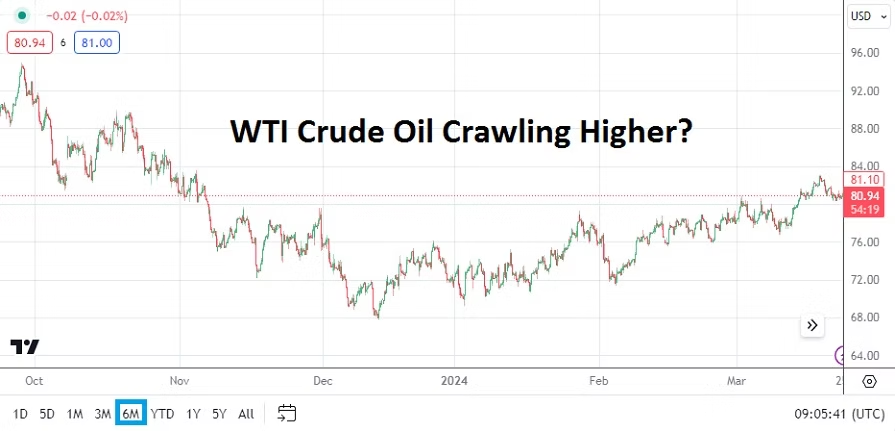
The Fed has also admitted inflation in housing, transportation and food remains problematic. WTI Crude Oil spent much of last week above 80.00 USD per barrel as its price has begun to show signs of rising incrementally again; and there is little the Fed can do about more expensive energy costs should they be seen. Higher costs for logistics will not make anything cheaper. Pricier mortgages, more expensive rent and insurance rates for cars and gasoline is creating serious knock on effects.

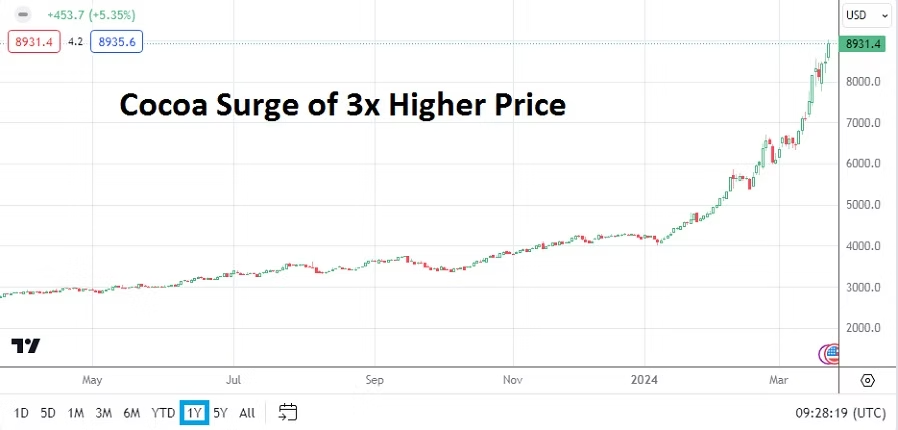
And for the sake of acknowledging the screaming prices in Cocoa, please have a look at the chart below which should explain why your chocolate products are going to be more expensive in the coming months. The price of the most delicious commodity in the world has tripled in less than a year’s time and is around 8931.0 USD per metric ton as of this writing.

Cocoa One Year Chart as of 25th March 2024

Gold turned in a violent week of trading too as it reached 2224.00 last Wednesday, only to fall back to a known value around 2165.00. Day traders are dealing with violent cycles in Forex because sustained trends have been nearly impossible to find. While U.S equity indices are fighting upwards, speculators who are afraid of heights are likely being cautious if they are betting merely on the daily results from the S&P 500, Nasdaq 100 and Dow Jones 30 instead of investing for the long-term.

This week’s coming data from the U.S is important, financial institutions are already dealing with plenty of noise, and they will have to be careful regarding their interpretations regarding the coming economic statistics. Meaning day traders who are speculating in all financial assets should use risk taking tactics that are planned significantly in advance.

Monday, 25th of March, U.S New Home Sales – a slight gain is expected, but mortgage rates continue to shadow the housing sector and cause concerns.

Tuesday, 26th of March, U.S Consumer Confidence via the Conference Board – the reading is anticipating a slight increase. Consumer numbers from the U.S have come in mixed recently. A stronger result than estimated might not be welcomed by traders with bearish sentiment regarding the USD. The Fed wants its cake and to eat it too, they would like to see weaker consumer numbers and a soft economic downturn. If U.S shoppers remain confident this could help sustain inflation. It should be noted too, that Core Durable Goods Orders data will be released one and a half hours before the Consumer Confidence numbers.

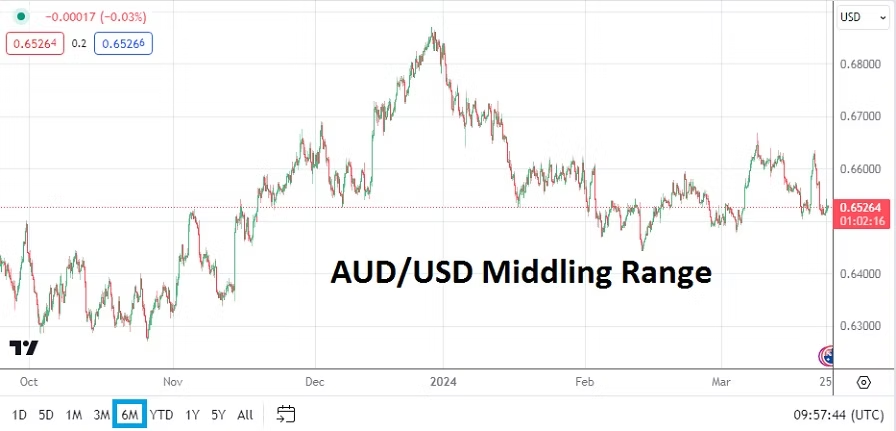
AUD/USD Six Month Chart as of 25th March 2024.

Wednesday, 27th of March, Australia Consumer Price Index – inflation numbers are expected to come in slightly higher than the previous results. Like most other central banks, except for the BoJ, the Reserve Bank of Australia would enjoy seeing inflation erode. The AUD/USD will react to the results certainly, but the price action might prove complicated because of USD centric notions.

Thursday, 28th of March, U.S GDP, Weekly Unemployment Claims, Pending Home Sales, and Revised Consumer Sentiment from the University of Michigan – put bluntly day traders will have to be well prepared for the combination of data from the States. Spectators who do not have large trading accounts and cannot take on a great amount of risk, should seriously consider sitting on the sidelines until most of the data is published. The GDP numbers will be watched carefully, while they are expected to match last month’s total, any surprises will affect the USD immediately in Forex. Weaker growth numbers might cause USD sellers to ignite positions.

However, before traders react too much to the Gross Domestic Product numbers, the Weekly Unemployment data will also impact the financial market. Financial institutions are anticipating a higher amount of unemployment claims this week. Also, at the same time as the growth and jobs numbers, the Final GDP Price Index numbers will be brought forth. The mixture from these reports could cause speculative whiplash.

The housing sector numbers and consumer numbers which come one and a half hours later will finish off a very big day for traders and institutional investors. The wide array of data could make this coming Thursday rather loud, and again rather dangerous for retail traders to participate.

Friday, 29th of March, Japan’s Tokyo Core Consumer Price Index – the inflation numbers are expecting to show a slight decrease to 2.4%. The result should certainly be watched by USD/JPY and GBP/JPY traders. If the number were to come in higher than expected, this could cause additional volatility for the Japanese Yen. Financial institutions seemed to indicate last week they would like to see the BoJ become more aggressive with their Policy Rate.

Friday, 29th of March, U.S Core Personal Consumption Expenditures Price Index – the reading is expected to be below the previous month’s total. Traders should be on the lookout for revisions to past results. Financial institutions know this inflation number is important for the Federal Reserve, but they are concerned the U.S central bank doesn’t have the ability to combat inflation which is not part of the Core number. Energy and food costs which are hurting U.S consumers are not part of this report and likely making the Federal Reserve gun shy regarding monetary policy – which has caused a large part of the USD whipsaw trading results that Forex has experienced.

postN51

AMT Top Ten Miscellaneous Entries for the 22nd of March 2024

AMT Top Ten Miscellaneous Entries for the 22nd of March 2024

10: Jefferson: Jon Meacham’s Thomas Jefferson The Art of Power provides well written historical and psychological insights concerning one of the U.S Founding Fathers.

9. Shohei Ohtani: Major League Baseball has a gambling scandal. Claims that Ohtani’s interpreter ‘stole’ over 4 million USD from the player to pay off gambling debts beg for questions.

8. Saudi Arabia: The nation has announced it plans on investing 40 billion USD into Artificial Intelligence sector companies via its Public Investment Fund (sovereign wealth fund) and potential business partners.

7. Steve Jobs: Apple’s innovation and tech leadership appears to be weakening as the absence of its deceased leader fades into memory, and competitors grow.

6. Bank of Japan: Monetary policy was finally shifted on Tuesday, an interest rate of 0.10% was instituted, today’s National Core CPI data came in at 2.8%. USD/JPY is currently around 151.400 suggesting financial institutions believe the BoJ Policy Rate may have to be raised again.

5. Gold & Forex: The precious metal challenged 2223.00 USD on Wednesday after the Fed’s FOMC rhetoric but is trading near 2165.00 as of this morning, this as the USD has gotten stronger again producing FX volatility.

4. Hot Chocolate: Cocoa finished yesterday at 8477.0 USD per metric ton, the commodity cost 2880.0 USD one year ago. What and who are manipulating the market?

3. China: Official Foreign Direct Investment statistics are supposed to be released soon. China argues that the fall of foreign investment capital is being reported with bias and not taking into consideration the impact of coronavirus, global monetary policy changes, and cyclical investment fluctuations. However, the FDI numbers remain troublesome and should be watched.

2. Risk Appetite: Major U.S equity indices including the S&P 500, Nasdaq Composite, and Dow Jones 30 are challenging record highs as behavioral sentiment remains exuberant, along with Japan’s Nikkei 225.

1. Interest Rates: The Federal Reserve has hinted three interest rate cuts ‘could’ happen this year, this while inflation in housing, transportation and food remain significant for U.S consumers. The Fed seems to be indicating it believes U.S jobs data will get worse. Political shadows hover over the central bank as the presidential election draws closer. The Fed only has 6 FOMC meetings left and appears to be playing with fire.

postN80.2

Risky Outlooks: Central Banks and Inflation Colliding

Risky Outlooks: Central Banks and Inflation Colliding

Most traders and investors begin their pursuit of financial assets with an optimistic perspective. However, the markets and ability to speculate also allows those who have other outlooks to equally participate. The past week once again delivered U.S inflation data which was not anticipated. While last Tuesday’s CPI results came in slightly stronger than expected, it was Thursday’s PPI which provided surprises for many.

Producer Price Index Warning from AMT for the 14th of March 2024

Yet, some market participants may not have been utterly shocked by the results. Perhaps it was lucky to ‘guess’ the PPI numbers could cause volatility last Thursday, but the ability to be alert and attentive to the possibility of risk should not be ignored. Risk management is important for all traders.

This coming week will continue to be intriguing for day traders as they try to sail through speculative waters which are going to deliver shifting behavioral sentiment tides. A parade of central banks are ready to step into the limelight and they will focus on the word: inflation. Technical traders who wager on support and resistance levels in the coming days should not be scorned, because sideways and volatile trading results are likely.

U.S equity indices began to struggle the middle of last week, Gold has traded lower and Treasury yields have ticked upwards in recent market action, this as sentiment has again had to acknowledge economic outlooks remains problematic. Trading decisions this week will depend not only on what the central banks say and ‘do’, but also focus on the duration that a speculative position intends to be working.

Monday, 18th of March, China Industrial Production – a gain of 7.0% has beaten the expectation per the data already published this morning. Retail Sales numbers came in slightly below estimates, but Fixed Asset Investment numbers were better than anticipated. However, China’s data remains troublesome and the economic path ahead for the nation must overcome deflation and trust issues from international investors. A lack of confidence from the Chinese public about the value of Real Estate and the over abundance of available property is causing major headwinds economically.

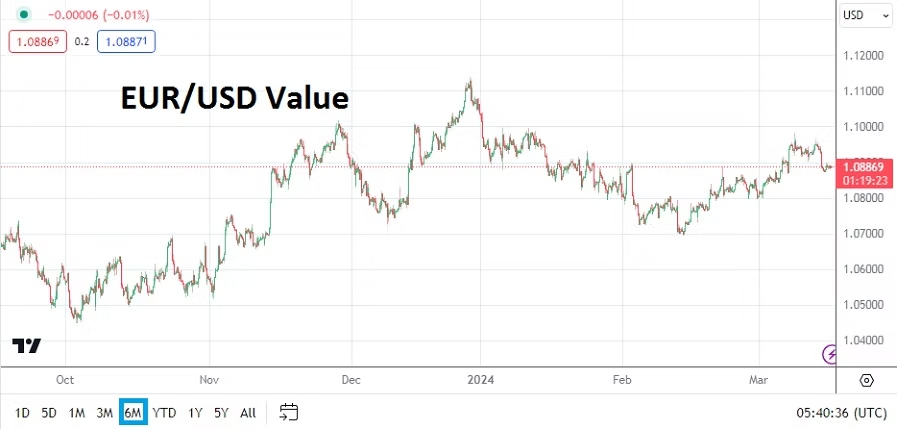
EUR/USD Six Month Chart as of 18th March 2024

Monday, 18th of March, E.U Final Core Consumer Price Index – the European Union will release crucial inflation data. An expected gain of 3.1% is the estimate. While this data release is not considered vital by many investors, the inflation statistics should be watched. The EUR/USD has produced mixed results the past four months as shifting behavioral sentiment due to battling perceptions regarding central bank policy outlooks converge.

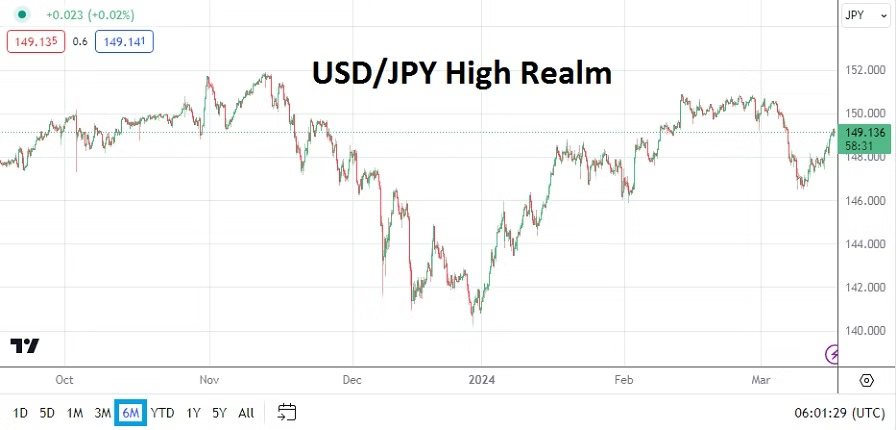
USD/JPY Six Month Chart as of 18th March 2024

Tuesday, 19th of March, Bank of Japan – the BoJ will deliver their Monetary Policy Statement and Policy Rate. While no numerical change is expected from the BoJ, signs for a change in rhetoric will be looked for as central bank observers try to read the tea leaves. The Japanese economy is within an intriguing spot, there have been signs of improvement, but the Bank of Japan is likely to remain on a conservative path regarding negative interest rates for the moment. The USD/JPY remains within the higher realms of its price range as the currency pair grapples with global inflation outlooks.

AUD/USD Six Month Chart as of 18th March 2023

Tuesday, 19th of March, Reserve Bank of Australia – the RBA is expected to parrot the pronouncements of the other central banks as they point to stubborn inflation and ‘improving yet lackluster’ economic outlook. Trading in the AUD/USD has been choppy and the volatility is likely to continue within the known price range.

Tuesday, 19th of March, Canada CPI – the Consumer Price Index data is anticipated to show inflation remains remains sticky in the ‘Northern Tundra’. The CPI report from Canada should be monitored because of the strong relationship between the U.S and Canadian economies. The USD/CAD will react to any surprises.

Wednesday, 20th of March, U.K Consumer Price Index – yet another important inflation report. Great Britain has been a ‘poster child’ regarding stagflation. The ugly word is not something central banks, nor governments want to discuss, but the simple truth is that problematic inflation and limited growth equal stagflation. The statistics from the U.K should be examined. The economic health of Great Britain is often a solid reflection of global conditions.

Wednesday, 20th of March, U.S Federal Reserve – the Federal Funds Rate, FOMC Statement and Fed Press Conference will be focal points for investors. Except importantly, not much is likely to be said be Jerome Powell that isn’t known already. Inflation reports from the U.S have highlighted stubborn higher prices. U.S economic numbers regarding manufacturing and consumer confidence have started to turn lower, but the Fed is not going to change its policy this week. Talk about ‘becoming’ dovish will be heard, but the U.S central bank still wants to see more proof that inflation can erode before they start to cut interest rates in the mid-term.

Thursday, 21st of March, E.U Manufacturing and Services PMI, readings will come from France, Germany and the U.K via the Purchasing Managers Index results. Most of the data will likely continue to point to lackluster outlooks, only the Services PMI from the U.K is expected to offer a glimmer of hope regarding ‘expansion’. If the Flash numbers come in worse than expected this could cast a shadow over behavioral sentiment for European investors.

GBP/USD Six Month Chart as of 18th March 2024

Thursday, 21st of March, Bank of England – the BoE is likely to keep its Official Bank Rate within place and their pronouncements via the Monetary Policy Summary may sound like a replica of the U.S Federal Reserve. Inflation and growth will be spoken about and the BoE will try its best to paint an optimistic picture. The GBP/USD will react to the gyrations, but the range of the currency pair will have already seen tests in the preceding days. The past four months have produced a value as of the 18th of March, that is hovering slightly above late November and early December 2023 prices.

Friday, 22nd of March, U.K Retail Sales – a negative result of minus -0.3% is expected. The retail data will certainly be watched, but following the massive week of central bank statements and data which have already been published, this number may prove to be rather anti-climatic unless there is a massive surprise.

Friday, 22nd of March, E.U ECB and U.S Fed – Officials from both central banks will engage in a variety of speeches in Europe and the U.S, but again after the week’s worth of central bank rhetoric which has been heard, investors are unlikely to react much to these soundbites from members of the European Central Bank and Federal Reserve. Existing behavioral sentiment which has been produced in the dynamic days beforehand should remain the central theme as investors go into the weekend.

postN51

AMT Top Ten Miscellaneous Rays for the 15th of March 2024

AMT Top Ten Miscellaneous Rays for the 15th of March 2024

10. Argentina: President Javier Milei is practicing fiscal sanity. The health of the Argentine Peso has improved, and monthly inflation data has begun to show signs of erosion.

9. Copper: The commodity has shown a steady increase since the 9th of February and is challenging values last seen in April of 2023. Demand could signal better global economic outlooks emerging.

8. Gold: The precious metal is near 2167.00 USD which appears high momentarily, this as questions about USD near-term direction lurks and Forex remains choppy.

7. Aramco: Profits for the energy producer were an approximately 121 billion USD for 2023, this as Saudi Arabia is propelling the nation’s infrastructure towards an elite future.

6. Bubble Watch: Binance Coin is around 580.00 USD as of this writing. BNB/USD was near 200.00 in the middle of October 2023.

5. Centrists: Will the adults be allowed back into the political arena to govern and brush away populists?

4. Inflation: Consumer prices are causing pain and household arrears are growing. Total U.S credit card debt is estimated over 1 trillion USD by the Reserve Bank of New York.

3. China: New Home Prices are still losing value via data released today. And the Shanghai Composite Index is near 3050.00 which looks suspiciously like a member of the ‘too expensive club’.

2. Data: U.S Producer Price Index stats were sharply higher yesterday, while Retail Sales came in below estimates. University of Michigan Consumer Sentiment readings will be published today. The U.S economic outlook remains murky.

1. Prediction: Fed’s FOMC meeting next week will provide financial institutions cautious ‘vanilla’ remarks about monetary policy from Jerome Powell, meaning market conditions will likely continue to move sideways.

postN51

AMT Top Ten Miscellaneous Notions for the 8th of March 2024

AMT Top Ten Miscellaneous Notions for the 8th of March 2024

10. Social Credit Score: George Orwell in our Age of the All Knowing State via public cameras using facial and body language recognition, along with listening devices that can gather voices and other sounds would chill him to the bone.

9. French Revolution: It was ‘wrong’ to say madame and monsieur after the ‘ancien regime‘ was replaced, instead the expression ‘citizen’ (citoyen) was invoked. Not using the proper words could bring the guillotine into your future.

8. Japan: Nikkei 225 has come off the top, but remains highly valued. GDP numbers will come from the nation next Monday, and the BoJ is on the calendar the 19th of March.

7. Tech Espionage: Linwei Ding, a Chinese national, who worked for Google as a software engineer has been accused of stealing information regarding supercomputing and artificial intelligence. The U.S government has filed criminal charges against Ding in San Francisco, California.

6. Central Banks: Federal Reserve Chairman Powell per his testimony in Washington D.C remained cautious, saying he wants data to confirm inflation is eroding. The ECB yesterday also voiced care while trying to sound optimistic about economic conditions which remain lackluster.

5. FOMO: ‘Fear of missing out’ is being seen in many asset classes including cryptos and equities. Day traders while speculating should remain realistic and practice solid risk management.

4. U.S Indices: Apex heights persist as the S&P 500, Nasdaq 100 and Dow Jones 30 receive massive inflows of capital.

3. Gold: Record prices have been attained in the precious metal as speculative elements have pushed value above 2160.00 USD as of this writing.

2. Forex: The USD has seen weakness re-emerge the past handful of days as the ‘masses’ have seemingly energized again upon the notion of a change to the Federal Funds Rate.

1. U.S Data: Non-Farm Employment Change and Hourly Average Earnings statistics will be published today, either helping confirm or confront financial institutions behavioral sentiment. Weaker hiring and a diminishing of wage inflation is anticipated. Will it happen? Forex, U.S Treasury yields and equities will react.

post 190

AMT’s Dubious Dozen Forex March 2024 Sentiment Outlook

AMT's Dubious Dozen Forex March 2024 Sentiment Outlook

The Dubious Dozen is comprised of nations who are wealthy or should be, and face criticism because of domestic and sometimes international policies. As the reader you are free to differ from the AMT opinions, which are admittedly subjective. The ratings and outlooks are not delivered as trading advice, but as a viewpoint to inform. The work presented is a living document. The nations and currencies listed, and data and critiques shall change monthly according to points deemed important.

AMT Dubious Dozen March 2024 Forex Sentiment Outlook

AMT’s Dubious Dozen Monthly Forex Sentiment Outlook has a scaled ratings table, listing nations and currencies that are judged to have concerns regarding outlooks due to behavioral sentiment factors within financial institutions and among citizens, based on economics, transparency, and risk concerns about government fiscal policy, and ‘leanings’ toward autocracy. Metrics like inflation, gross domestic product, direct foreign investment information, debts and budgets, and foreign currency holdings which are gathered from various public sources will sometimes be presented.

AMT also tries to judge the trust level the citizens of the nations have in their domestic currencies via exchange rates, black market FX factors, and alternative assets held to guard against potential risks – like digital assets, cryptocurrencies, and gold.

A lack of credibility in a ‘fiat’ currency is dangerous and often leads to black markets for Forex in search of safe-haven currencies like the USD. The lack of a credible domestic currency also leads to price inflation because people selling goods fear the value of the domestic currency is losing value rapidly. Rampant inflation also leads to a desire to sidestep taxation on occasion.

Problematic inflation and inability to collect taxes may open the door for certain countries to contemplate and potentially initiate Central Bank Digital Currencies in order to control domestic economic activity. It is not a coincidence that China, Iran, among others are considering implementation of CBDC’s. The potential of CBDC’s by governments could allow for draconian laws for citizens of certain nations. The ability for a government to check on how all money is used via a centralized blockchain could lead to a more authoritarian landscape.

Quick Insights of the Dubious Dozen Nations Listed:

Argentine Peso (ARS): The election of President Javier Milei has started to ignite changes within fiscal policy and has created hope among international observers of a less corrupt Argentina. However, many obstacles still must be overcome by the newly elected leader and the government, and many economic issues will take patience from the public to improve. Patience has not been a classic virtue in Argentina, unless one considers the ability to accept massive corruption and go on with everyday life as a supreme power.

Brazilian Real (BRL):  Concerns regarding potential fiscal policy changes hover over the existing government which leans towards a socialistic bent and has shown a tendency to align itself with some of the most autocratic governments. Some businesses and investors are anxious about the potential of government mismanagement to develop under President Lula da Silva. The listing of Brazil will create catcalls from some, but the fear in some circles is what might happen if fiscal policy which is led by a socialistic government becomes too populist. For the moment the BRL appears to be under control, which is a good thing. However, the Brazilian Real should be kept in sight for any signs of nervousness.

Chinese Yuan (CNY): The domestic economy remains troubling and fragile. Deflation abounds. Manufacturing, electrical usage, real estate, export numbers should be monitored by observers. Government policy, and transparency reliability due to political control by the Communist Party is problematic. Concerns are causing a backlash among many foreign investors who are looking elsewhere for long-term business endeavors, when they have the ability to divest. Stats: IMF expected GDP for China in 2024 is 4.6% for 2024. China is suffering from current monthly deflation around minus – 0.80%.

Egyptian Pound (EGP): Corruption is problematic within national institutions, bureaucracy issues plague businesses due to interference. Central bank independence is in question as the government faces a litany of fiscal problems. Worries persist about a devaluation for the EGP in order to try and get inflation under control which is currently near 26.5%. The Egyptian Pound is viewed as highly vulnerable.

Iranian Rial (IRR): The nation remains mired under international sanctions. The government practices a heavy hand regarding domestic policies which carry the threat of prison and worse because of the ability to oppress the general population. The Iranian Revolutionary Guard which has several branches of ‘service’ helps the ruling government dominate and benefits monetarily, which makes the Iranian leadership and its ability to rule comparable to a mafia. The current inflation rate in Iran is estimated to be around 32.5%. Unemployment in Iran is estimated to be above 10% and 60% of the total economy is believed to be centralized by the government.

Nigerian Naira (NGN): Corruption remains a troubling part of Nigeria. Although it is a massive exporter of commodities including ‘energy’, and has a dynamic demographic, government policy is highly questionable. Nigeria’s GDP is estimated to be around 3.46% as of December 2023. A problem for Nigeria is its shadow/informal market economy, which is estimated to be nearly 58.2%. Corruption and an inability to legitimately collect taxes hurts the government’s finances and its citizens. The Nigerian Naira is weak and is losing credibility.

Pakistani Rupee (PKR): Economic concerns regarding export and import disparities are a major factor in the lack of foreign currency reserves. A new government has been elected in Pakistan which has been able to form a ruling coalition. Issues regarding corruption remain troubling. Pakistan has also formed a stronger relationship with China, particularly as they search for strong economic partnerships, but this may leave them vulnerable politically. The IMF is a large factor in the current valuation of the PKR. The currency has been stable for a handful of months but needs monitoring.

Russian Ruble (RUB): Although the war with the Ukraine battles on, Russia has found a way to continue to create growth within its economy even in the midst of sanctions. The nation has found other ways to trade and acquire products from abroad via ‘new’ trading channels largely coming from Central and Eastern Asian routes. Russia’s government is seen as highly one dimensional and rules with an iron fist.  Russia’s economy appears to have grown at a remarkable rate of 3.6% during 2023. Core Consumer Prices were about 7.15% higher as of January 2024 per annum. Vladimir Putin has played a rather impressive game of economic poker with the ‘West’ in light of the Ukrainian war, much to the chagrin of his critics.

South African Rand (ZAR): The African National Congress has been in power nearly 30 years. Concerns about mismanagement and corruption abound which are believed to influence questionable fiscal policy. The South African economic outlook is weak due to problems regarding reliable electrical supply, logistical problems at ports, and bureaucratic interference led by government policy which leans towards central controls.  A large amount of immigrants from other African nations are still coming to South Africa as a cheap labor source, but professionally trained people are still unfortunately leaving South Africa via emigration in large numbers. The South African Rand has been within the grips a long-term trend of losing value, and while not entirely vulnerable its credibility is becoming shakier.

Turkish Lira (TRY): A thriving business and manufacturing base exists in the nation. However, inflation due to fiscal policy in Turkey remains an impediment for corporations which are forced to deal with a currency that many within the nation are worried about because of its incrementally weaker outlook which has been noteworthy for a handful of years. There are concerns about current government leadership regarding transparency and a tendency to interfere in Turkish Central Bank decisions. Financial institutions and their corporate clients have a difficult path as they try to mitigate the constant threat of high inflation in Turkey due to questionable fiscal policy.

Venezuelan Boliver Soberano (VES): The failed socialistic nightmare continues to cause squalor in Venezuela. If you want to see the potential of where the VES is headed look to Zimbabwe and the years that a combination of despotic rule under the guise of socialism has delivered. Venezuela should be a rich and successful country due to its natural resources, but it is led by a band of thieves. The black market rate of exchange if it can be found in cities like Caracas is much higher than the ‘official’ listed rate of the government. The VES has little to no credibility.

Zimbabwean Dollar (ZWD/ZWL): The nation is still trying to fix the problems caused by government mismanagement under the authoritarian leadership of Robert Mugabe which led to hyper-inflation and the destruction of the economy. Zimbabwe has a long way to go and issues to overcome to achieve the reintroduction of a domestic currency which does not suffer from a lack of faith from its citizens, which have led to a wide abandonment of the Zimbabwean Dollar and demonetization.

A national currency that is tradable internationally does not exist, the government is aiming for another attempt at monetization in 2025 if economic stability is created. The Botswana Pula (BWP), USD, and ZAR are among other currencies that are used and accepted by the population to transact business. The government tries to monitor all FX exchanges after years of misrule, but this does not stop a vigorous black market. There is an accepted perception the current leadership is trying to fix the massive problems which have created havoc in the nation for a few decades, but the road back to normality is still perilous.  

postN51

AMT Top Ten Miscellaneous Spiders for the 1st of March 2024

AMT Top Ten Miscellaneous Spiders for the 1st of March 2024

10. Palystes: Huntsman spiders known in South Africa as ‘rain spiders’ are nocturnal and visit indoors, sometimes causing horror for those stumbling through hallways in the middle of the night. But it is better than a baboon entering the house.

9. Victor Wembanyama: Last night’s stat line included 28 points, 13 rebounds, 5 blocks, 5 3pts made, 7 assists, 2 steals in less than 33 minutes played. The rookie is already one of the best NBA players. Btw, the Spurs beat the Thunder also.

8. Tech: Chinese cars are now in the crosshairs of U.S politicians who are worried the ‘smart’ vehicles can collect sensitive data from Americans.

7. Crypto: Bitcoin above 61,000.00 USD, Ethereum over 3,300.00, and Binance Coin testing 400.00 even as the company remains under U.S legal shadows. How much air can the balloons withstand?

6. Putin’s Nuclear Threats: In a world with escalating geo-political tension, the Russian leader remains determined and energetic while playing ‘war poker’ against Europe.

5. U.S Data: Core PCE Index numbers yesterday met expectations, but the previous month’s outcome was revised downwards. Today a Consumer Sentiment reading comes from the University of Michigan. This week’s U.S data has mostly been pleasantly ‘weaker’.

4. Central Banks: Fed ‘watchers’ are likely feeling more comfortable this morning regarding the possibility of a late spring ‘thaw’ in U.S interest rates. Jerome Powell will testify in front of the Senate next Thursday. The ECB will release their Monetary Policy Statement on the 7th of March also. Next FOMC pronouncements will be on the 20th of March.

3. Gold: The precious metal is near 2050.00 USD, this after yesterday’s U.S inflation report, gold could remain volatile today. Some speculators may be looking for additional value to develop.

2. Forex: FX has been a constant battle the past two months, but patient traders with mid-term perspectives may be anticipating their weaker USD targets to trend more steadily.

1. Equities: Many global stock indices are achieving record levels as bullish behavioral sentiment creates upwards momentum. S&P 500, Nasdaq 100 and the Composite, Dow 30, Nikkei 225 and the DAX Index are flirting with higher values.

post 189

Forex and Equities Storm: Crucial Data will Impact Markets

Forex and Equities Storm: Crucial Data will Impact Markets

Today will start out with a rather important consumer report from the U.S and day traders should stay alert. It is easy to point to every day and week as being a crucial circumstance for speculators, because that is what gets their juices moving and gets them to wager in the markets.

However, given the rather choppy conditions in Forex seen since the last week of December and pointing to the results of the Consumer Price Index on the 13th of February and the storms created in FX, traders hopefully have enough muscle memory to remember how they felt in the midst of the whipsaw conditions which were experienced only two weeks ago.

Central bank outlooks are fragile among analysts and financial institutions. Simply put this week’s data could prove to be more important than the CPI numbers. Consumer sentiment, GDP, and inflation statistics are all on the U.S roll call this week.

Other geographies will make news too and impact global markets. Last week’s impressive results from Nvidia created another massive wave of positive momentum in equity indices. The Nasdaq 100, S&P 500 and the Dow Jones 30 all have hit record values. Japan’s Nikkei 225 has surpassed record heights.

Yet, other barometers do highlight caution abounds too, U.S Treasuries yields have edged upwards and are touching values which show there is nervousness regarding monetary policy from the U.S Federal Reserve. This week’s data will deliver more insights for investors, and Treasuries are certainly going to react to the economic reports.

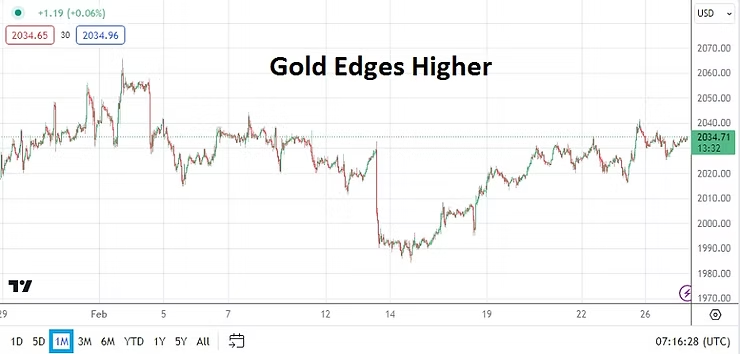
Gold One Month Chart as of 27th of February 2024

Gold has edged higher in the past week and is around the 2034.00 USD mark as of this writing. The slight climb above the 2020.00 ratio which has worked like a magnet recently, indicates some traders may be leaning optimistically towards a weaker USD mid and long-term. These folks may be proven correct, but day traders should note that the 2030.00 ratio in gold is below highs seen in December, January and early February – which indicates nervousness. If day traders do not believe gold acts as an inverse barometer for the USD, simply look at the results of trading when the stronger than expected CPI numbers were released on the 13th of February. Gold fell to a low near 1985.00 on the 14th, this was not a coincidence.

Again, while it is easy to sound alarms and jump up and down and proclaim every week important for day traders, the acknowledgement that this week’s economic data is significant should not be treated as hyperbole. You have been warned.

Monday, 26th of February, U.S New Home Sales – yesterday’s results showed another decline in the housing market, and the previous month’s number was revised downwards. The outcome may point to concerns about U.S mortgage rates which remain stubbornly high for those considering purchases.

Tuesday, 27th of February, U.S Durable Goods Orders – a rather large drop of minus -4.9% is expected. The Core data however is expected to produce a rise of 0.2%. These numbers will be a good precursor for the important consumer sentiment which will follow one and a half hours later.

Tuesday, 27th of February, U.S Consumer Confidence via the Conference Board – the results of the important readings have shown intriguing gains since late fall in 2023. While improvement in sentiment has been recorded, revisions lower have also been seen in the previous three reports. The outcome of today’s report should be treated carefully. If another higher reading is produced this may create some positive momentum in the USD momentarily.

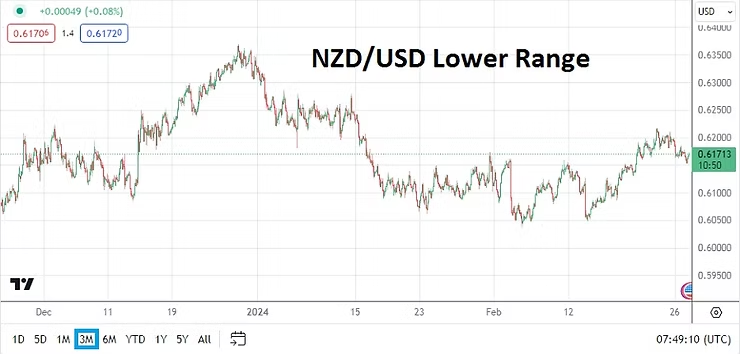
NZD/USD Three Month Chart as of 27th February 2024

Wednesday, 28th of February, Reserve Bank of New Zealand Official Cash Rate and Monetary Policy Statement – while many Forex traders will be sleeping when the RBNZ makes its important pronouncement, New Zealand inflation data has remained strong and a conservative government is in charge politically that is pro-business. The question is if the Reserve Bank of New Zealand will go against the grain of other global central banks and actually increase their interest rate while others seem to be adamant about trying to become less aggressive. While many analysts believe the RBNZ will sit on its hands and act according to the whims of others, if an interest rate hike is announced global Forex traders should take note because it would be a signal that central bankers are uneasy regarding their rhetoric and not in agreement.

Wednesday, 28th of February, U.S Preliminary Gross Domestic Product – a gain of 3.3% is the expectation from many analysts. The previous reading was stronger than anticipated. If growth numbers in the U.S come in higher than estimated the USD will react with strength. The Federal Reserve would like to see the outcome meet the expectation or come in below, this so the U.S central bank can consider reducing the Federal Funds Rate late this spring or in early summer. However, if a significantly strong growth number is demonstrated this would cause turmoil in Forex.

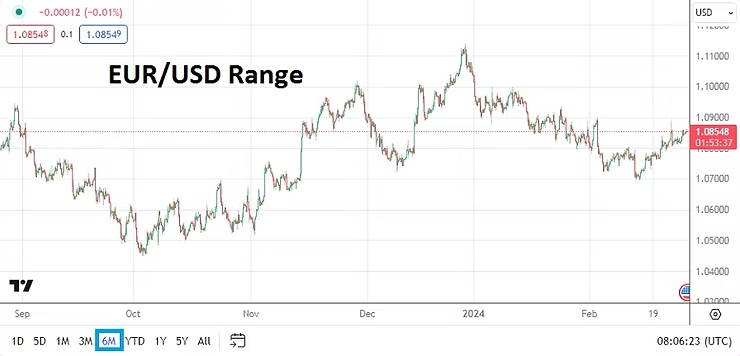
EUR/USD Six Month Chart as of 27th February 2024

Thursday, 29th of February, Germany Preliminary Consumer Price Index – a slight gain is expected in the inflation number. The EUR/USD has been struggling as stagflation concerns shadow the European Union. A higher inflation result will not be welcomed by the ECB, which would prefer to cut interest rates sooner rather than later. The German number should be watched and it will cause an impact if there is a surprise. The EUR/USD has been turbulent and is likely to produce more choppy conditions depending on the parade of data results this week.

Thursday, 29th of February, U.S Core Personal Consumption Expenditures Price Index – traders who have felt the previous economic reports already have caused intense reactions this week should brace for this inflation report. A result of 0.4% is expected. The Federal Reserve admits this is one of the most important publications that it monitors. This means financial institutions react to this report too. If inflation were to come in higher than expected, like the CPI results from two weeks ago, this would essentially kill off expectations of a May interest rate cut from the Fed. The USD will react to this report and so will U.S Treasury yields, which means equity indices will also be affected. A weaker inflation report is being wished for by many market participants, but will this be the result?

Friday, 1st of March, China Manufacturing PMI – not to beat a dead horse, but China’s economic data has been poor and this report will be viewed as important. Another negative outcome is expected. Transparency regarding economic numbers from China is a worry for investors. Conditions in China are being watched and it is important for traders to eliminate bias regarding their perspectives. China may be struggling, but its importance as an economic power is still very much in evidence. Foreign direct investment into China is diminishing, but plenty of investors still have ‘skin in the game’ and will be affected by the manufacturing reports.

Friday, 1st of March, U.S Manufacturing PMI via ISM – a slightly improved manufacturing reading is expected. However, because of the U.S data releases from the previous days, the results may be looked at only momentarily and not cause much of a reaction from market participants. Traders may be looking forward to the weekend after this week’s economic publications in order to rest.

postN51

AMT Top Ten Miscellaneous Sunrays for the 23rd of February

AMT Top Ten Miscellaneous Sunrays for the 23rd of February

10. Word of the Day: Abeyance – the state of suspending something until another issue is resolved. Can you say, “Central Banks”……we knew you could.

9. South Africa: National election is scheduled for the 29th of May. Will the disdain the ANC and EFF have for the ‘West’ be addressed by voters or will the masses elect the usual suspects?

8. China and Germany: New Home Sales prices dropped again in China per data released this morning, Germany’s GDP data published today shows negative growth and recessionary pressures growing.

7. Nvidia: Their quarterly earnings report this week showed Artificial Intelligence isn’t a mere marketing tool, but a moneymaker opening a new era for technology.

6. South Carolina: Nikki Haley apparently will lose the Republican Primary in her home state tomorrow, but likely stay in the presidential race hoping that Donald Trump implodes via his own ego or legally.

5. Don’t Touch that Switch: AT&T believes yesterday’s widespread phone outage was caused by human error, not a hack.

4. U.S Equity Indices: Timeframes and patience remain crucial for investors amidst daily gyrations, this as the S&P 500, Nasdaq 100 and Dow Jones 30 explore record values.

3. New Zealand: Will the Reserve Bank of New Zealand go against the grain and actually raise its Official Cash Rate next Wednesday to fight stubborn inflation, or capitulate to the wait and see approach of ‘others’? The NZD/USD should be watched.

2. Caution: Forex remains choppy, U.S Treasury yields have crept slightly upwards, gold is hovering near 2020.00 USD. AMT’s #1 may be the reason why.

1. U.S Data Next Week: Preliminary GDP will be published on Wednesday, and Thursday will present the Core Personal Consumption Expenditures Price Index. The results could create massive impetus in all financial assets.