Nasdaq 100 20260608

Nasdaq 100: Terrible Friday Being Confronted by Manic Monday

Fear of the Middle East Not the Main Motivator for the Nasdaq 100

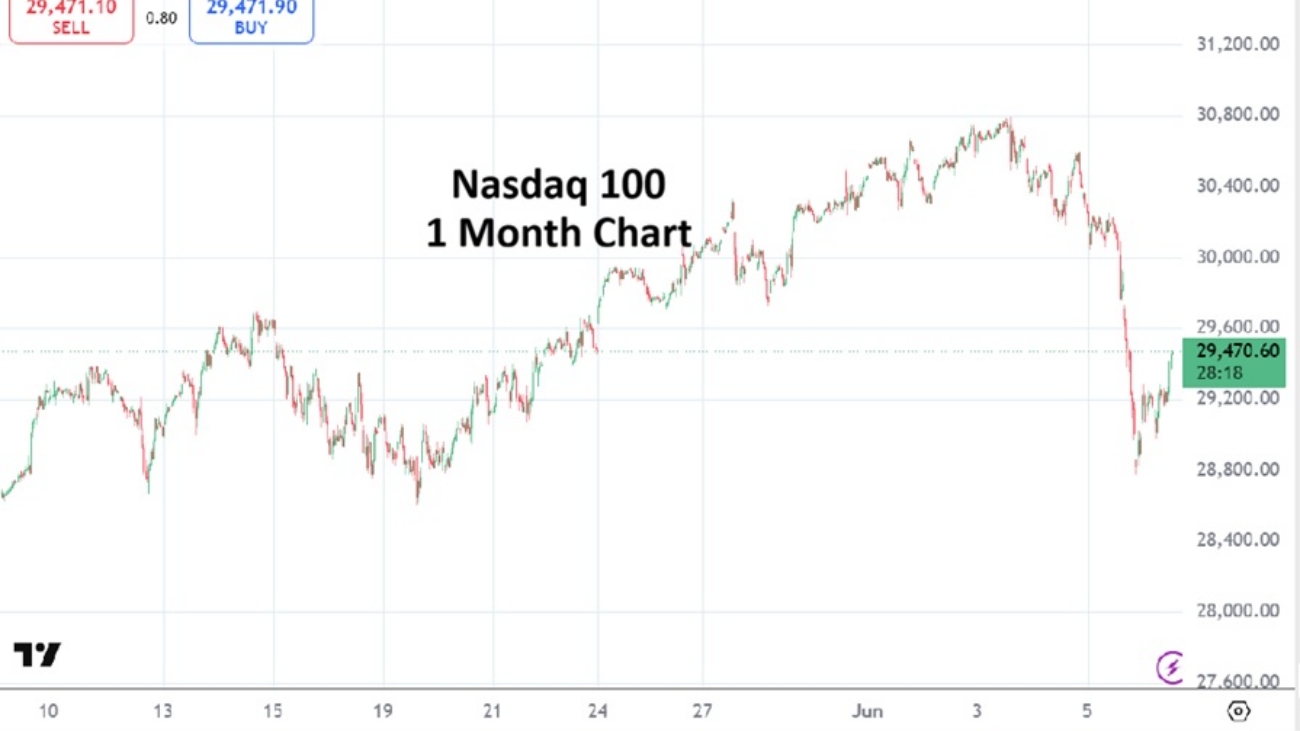
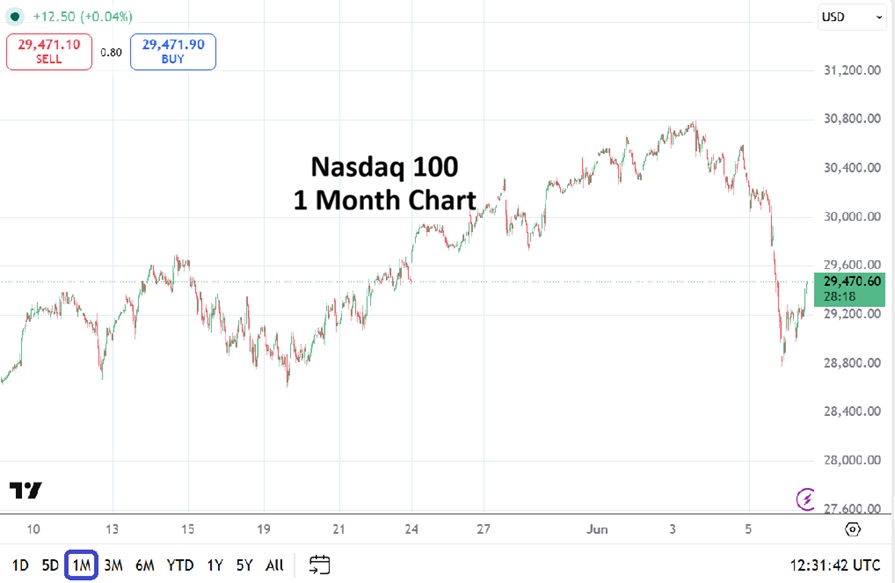
After Friday’s selling surge and a fall of -4.77% with a close of 28,957.60, the Nasdaq 100 futures trading this morning has actually seen an increase and is near the 29,479.00 mark as of this writing before the cash Nasdaq 100 market opens.

Friday’s selling nightmare for traders who found themselves stubbornly locked into what were to be short-term buying positions and saw the Nasdaq 100 plummet -4.77%, probably woke this morning believing ugly conditions may not stop. An escalation in military action via proclaimed retaliatory moves between Israel and Iran started today’s trading with a high degree of more anxiousness. USD centric strength in Forex was demonstrated early.

Nasdaq 100 Futures Value 1 Month Chart as of the 8th of June 2026

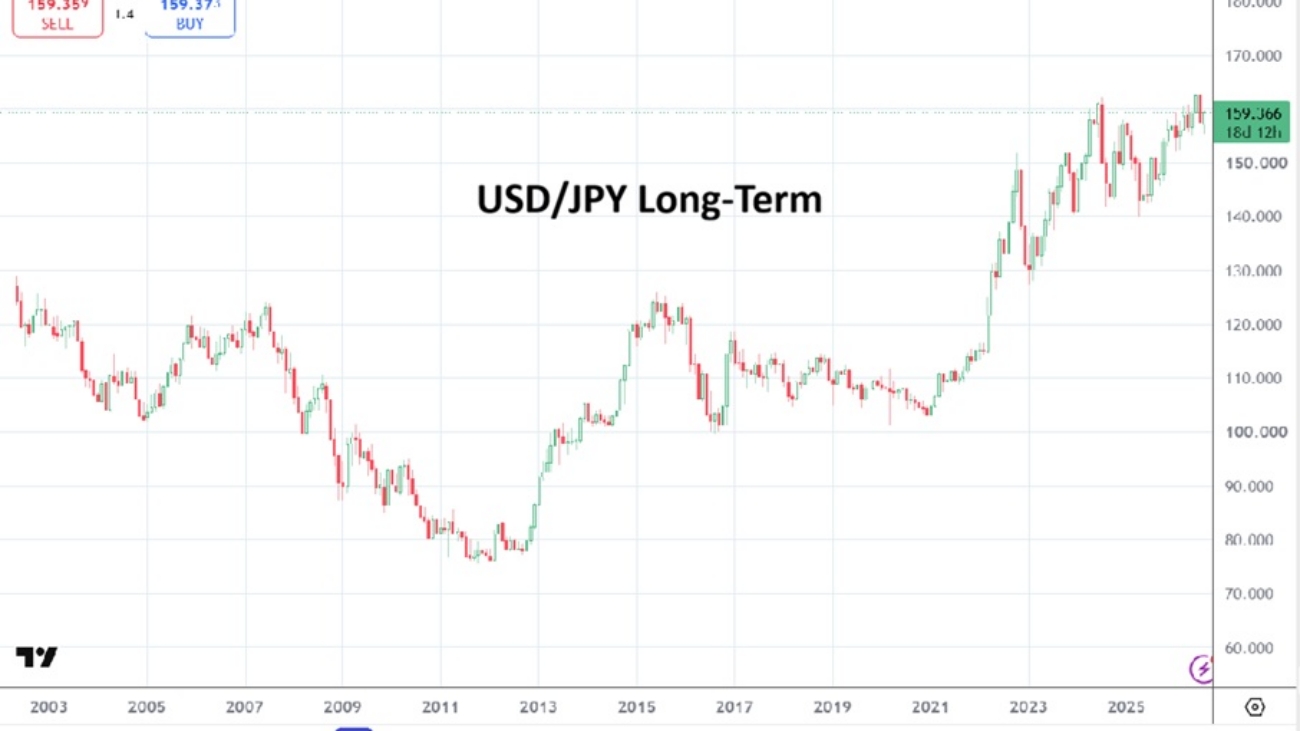
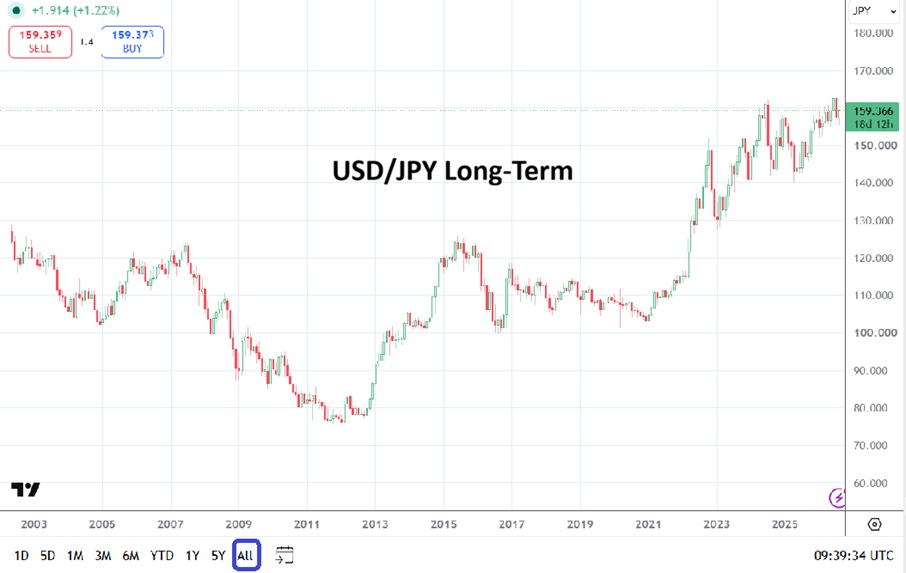
However, in the past couple of hours calmer heads have prevailed among financial institutions and USD centric buying in the broad Forex market has run out of steam – at least momentarily. For instance the USD/JPY is near 159.927 currently, opposed to earlier highs seen this morning which challenged the 160.400 vicinity. What does this have to do with the Nasdaq 100 and its current status? 

It appears via futures trading that large players may also have taken a sedative and looked at the index as having been oversold on Friday. The Nasdaq 100 has actually gained early today and signs that a de-escalation of military force between Israel and Iran is being reported. However, that still leaves day traders wondering what will happen as the cash market opens soon and volumes increase.

Let’s Say Quiet Prevails the Remainder of the Day

Not because of a utopian outlook, but a geopolitical perspective, let’s try to image Iran’s stated intentions of no more retaliatory strikes being launched towards Israel as true. The past couple of hours have been more tranquil as a signal in case you are wondering. Then investors and financial institutions will have to digest the Middle East concerns as they have done over the past couple of months in U.S equities, and decide to operate again on the Nasdaq 100 with near and mid-term outlooks.

Friday’s huge selling was blamed by some on the likelihood of a ‘potential’ U.S Federal Reserve interest rate taking place on the 17th of June. This because better than expected jobs numbers showed to some that the U.S economy was running hot once again. 

Additionally expressed fears, which are legitimate, about higher energy costs sparking sticky inflation have been discussed and worried about aloud. Yet, again let’s decide to say even if U.S inflation numbers via the Consumer Price Index come in higher than expected this Wednesday via the coming CPI data, that doesn’t shut the door on the possibility the new Fed Chair Kevin Warsh won’t fight against an interest rate hike during the FOMC meeting next week. In other words it still seems rather unlikely – to me – that the new Federal Reserve Chairman is going to want to initiate higher interest rates the first month on the job. So what if there was another reason for the steep selling on the Nasdaq 100?

Not Paradise but Purgatory

The Nasdaq 100 actually has other questions which have been raised as possible fodder for its large selling this past Friday. Was it spawned because of profit taking by those who took advantage of the index’s fabulous rise knowing that many institutions had been front running the IPO of SpaceX which is scheduled to happen on the 12th of June – this Friday? 

Did large players who rode the wave of frontrunning by financial institutions up in the Nasdaq 100 since late March, decide to cash in profits. There is plenty of nervousness surrounding what will take place with SpaceX in the coming months and long-term via outlooks because of its rather inflated valuation which looks like it will be around 1.7+ Trillion plus at share values of $135.00 per share this coming Friday. 

Questions surrounding SpaceX’s price per sales rhetoric, this instead of price per earnings (because SpaceX is not making a net profit) is just one example. While denying Elon Musk’s genius and ability to create clamor for his companies has proven to be a losing proposition for many, doubters still remain. 

Folks might have cashed out winnings on Friday and decided to now wait on the sidelines to see where behavioral sentiment takes the Nasdaq 100. After two full months of paradise for the Nasdaq 100, a few days of purgatory and seeing which direction U.S indices go may be the right decision by folks who rely on clarity; this as the Middle East gets untangled (or becomes more complicated), the Federal Reserve offers insights on the 17th of June, and large financial institutions lead the way regarding investment decisions.

Copy and paste the text from AMT that you want to share

US Cash Index 20260424

Upcoming Weekend Nervousness: Does Anyone Know What is Going On?

Preaching Caution and Looking Like a Fool to Those Who Want to Profit

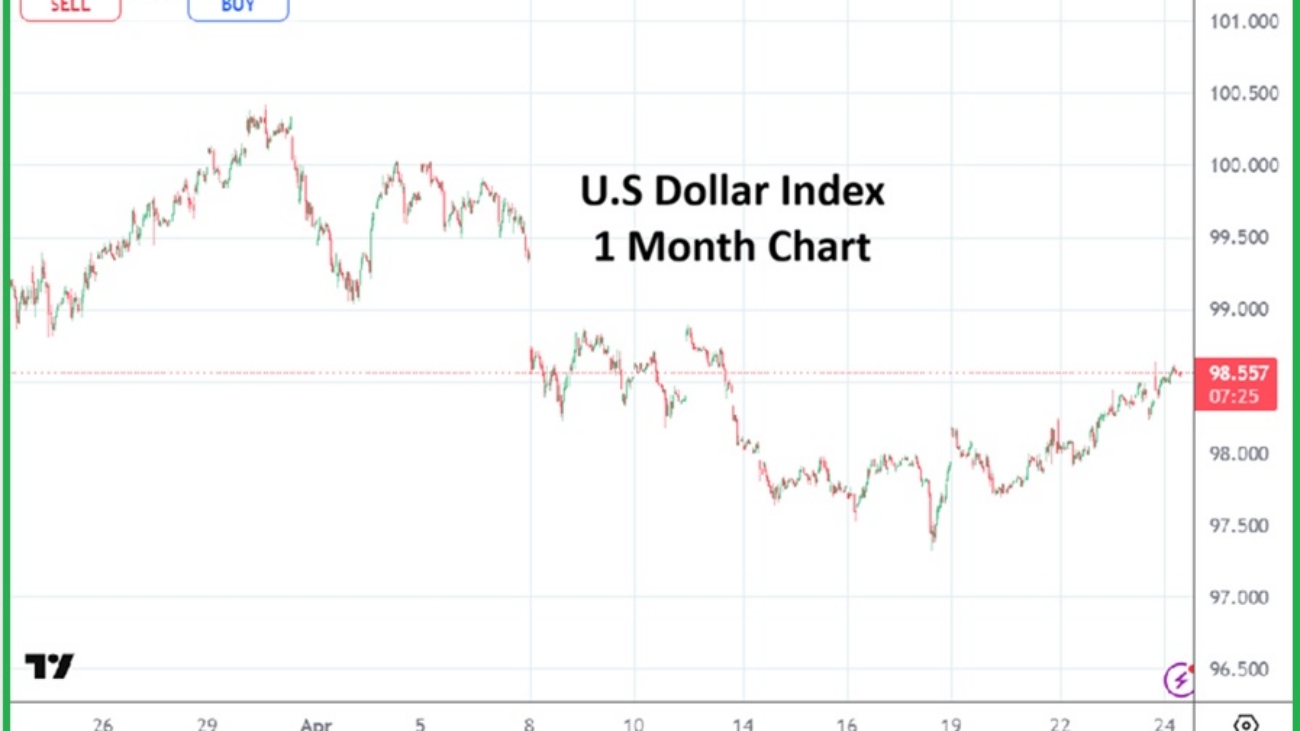
Can someone please tell the rest of us what is going on? Global markets via Forex this morning are demonstrating additional USD centric strength which developed yesterday. The price of WTI Crude Oil is above $94.00. Gold is languishing and around 4,675.00 USD. And although the 3 major U.S stock indices are all within their higher realms – one thing stands out – folks are uneasy.  But then again, the markets never move in one direction only, and perhaps current results can be interpreted as profit taking by those on winning sides.

U.S Dollar Index One Month Chart on the 24th April 2026

I would love to be the person to tell you what is going to happen, but as this weekend looms making short and near-term bets still appears a fool’s game. Yes, it is easy to make predictions, but being correct is more difficult. Retail traders are suffering more than most market participants, this as leverage and a lack of funds to remain in a position through violent reversals destroy plenty of trading accounts.

There is talk of manipulation via chat rooms regarding the price of WTI Crude Oil. The usual dialogues can be seen – largely based on conspiracies via large players trying to blow out smaller traders. However, these types of forum chatter are mostly wrong. Large players are getting hurt too in the energy markets. Anyone who is taking a position in order to speculate on a quick hitting foray in WTI is betting on their perceptions. 

The problem is that unless there is inside knowledge of what the next words out of President Trump’s mouth are going to be, or that from Iranian officials – any pursuit of WTI Crude Oil at this juncture is a ‘vibe’ trade. What is going to happen from Saturday and into Sunday is an unknown quantity. Folks holding positions into this weekend need to understand they are wagering. And some may find they are quite profitable afterwards, while others grimace and find themselves on the wrong side of the next surges higher or spikes downward. Intraday trading volatility in nothing new however.

The USD/JPY is near 159.600 as of this writing. The EUR/USD is close to 1.16820. While a tourist traversing foreign lands may not find the Forex incremental shifts in value mesmerizing or of interest, FX traders who do not have deep pockets are likely wondering why risk adverse conditions are prevailing suddenly. But as a risk analyst, I must say that conditions simply may have been perceived to have been oversold in the USD by financial institutions, this as the Fed looms on the horizon.

However, my task as a risk analyst the past two months has been like a carnival barker, because while it has been easy to say that a show is happening within the big tent of speculation, I have been hard pressed to predict short and near-term directions correctly. Perhaps I fret too much. The optimistic thunder claps upwards in the stock markets since the 31st of March have been astounding to many. Hopefully it has been prosperous for day traders, but the likelihood is that financial institutions are the ones who are profiting more via their pension funds purchases for institutional clients.

This coming week the U.S Federal Reserve will make their FOMC decision public. This will be Jerome Powell’s swan song at the Fed. The Chairman is being faded out by the U.S White House mid-May. And somewhere when he is all alone, Jerome Powell may be having a quiet laugh to himself. The Fed will not act this week. Rates will remain the same – unless there is some bizarre move in the global markets over the next handful of days. Yet, Powell’s remarks will be listened to for warnings. While it is not in Powell’s nature to issue a ‘I told you so’ quote, and he is likely content to walk away from the Federal Reserve quietly, it would be captivating if Powell looked into the cameras and pointed fingers. 

But because Jerome Powell like most others, likely has no clue what is going to happen next internationally he will remain mostly mute (cautious as always).

And here we meet again, wondering what the next 72 hours hold. Will the Iranian ceasefire remain observed? Is it even a ceasefire in reality? The Strait of Hormuz remains a linchpin for military action by the U.S Navy and Iranian Revolutionary Guards via a cascade of ship seizures. Maybe that continues to be the key, WTI Crude Oil prices remain a crucial barometer. USD centric prices via Forex action seems to be a reflection of fear or positive thinking in the energy sector depending on the prevailing tides.

Last week there was so much optimism folks were talking about WTI prices potentially hitting $75.00 and lower, now this hope seems to be wishful thinking. Global markets will remain fast and dangerous, that is easy to say and is right, but telling you which direction assets will move, that is a bit different.

And there is the old standard test I use when an opinion is definitely asked for: if someone were to put a gun theoretically to my head and ask me what I think, I would venture to say things will remain quiet and optimism will seep into the markets before the close this weekend. However, I don’t like to play fool’s games, so I will leave now and wish you luck via your own perspectives because the near-term remains more speculative than normal for day traders – even if strict risk management is used. 

Copy and paste the text from AMT that you want to share

Gold 20260409

Intraday Blues as Trading Conditions Remain Perilous

Red Flags Persists for Day Traders and Hedge Funds as More Wild Surf Predicted

Risk on or risk off? Day traders and hedge funds, two groups who are known to speculate, have both suffered considerably the past handful of weeks due to the market turbulence. While falls of 4 to 5% the past handful of weeks for long-term investors can be digested with proper patience and accumulation ability, those who are using leverage or making monster sized bets on intraday speculation continue to suffer from widespread anxiousness within the marketplace.

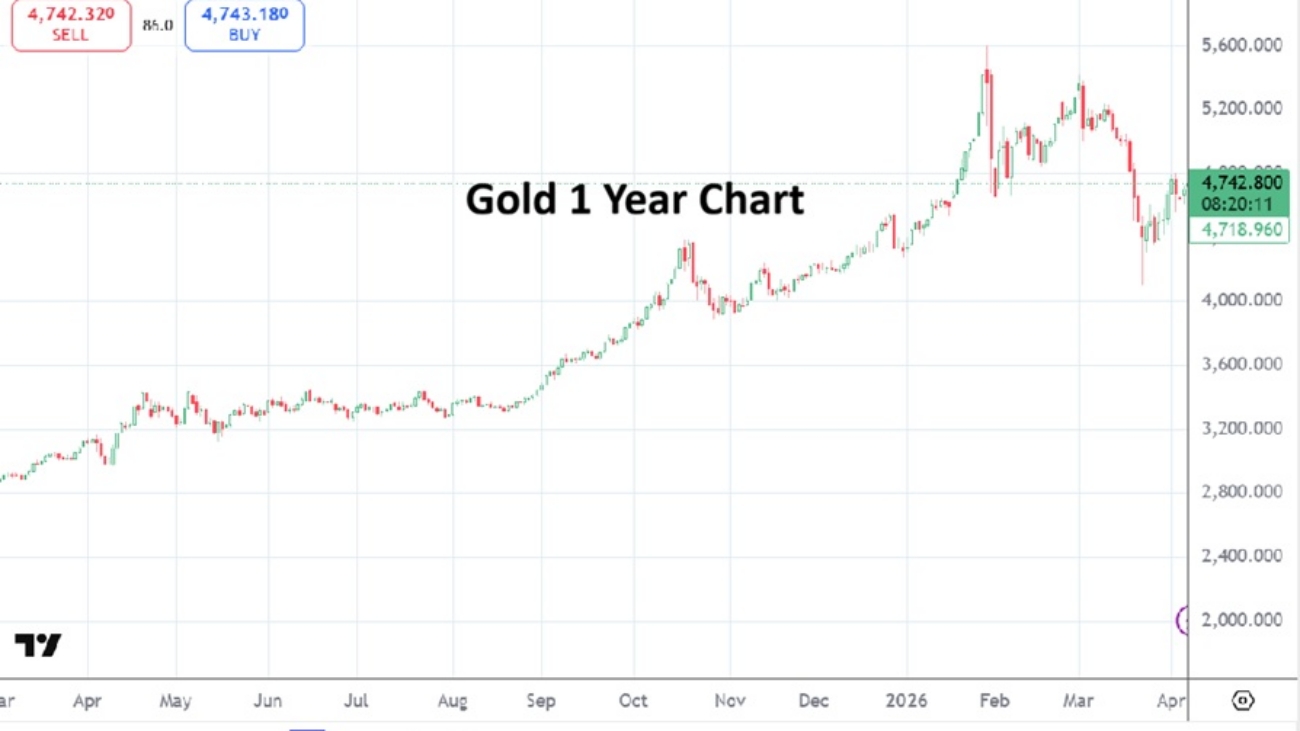
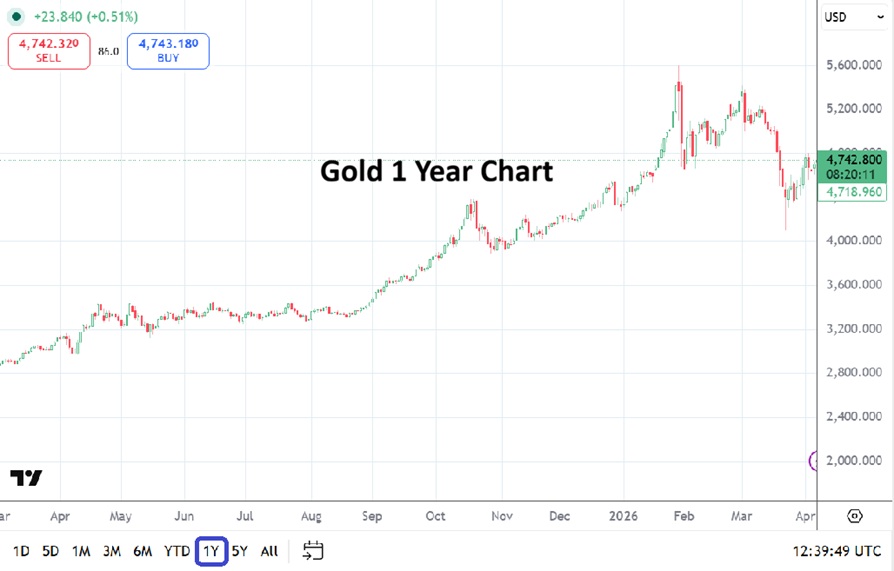
Gold One Year Chart as of 9th March 2026

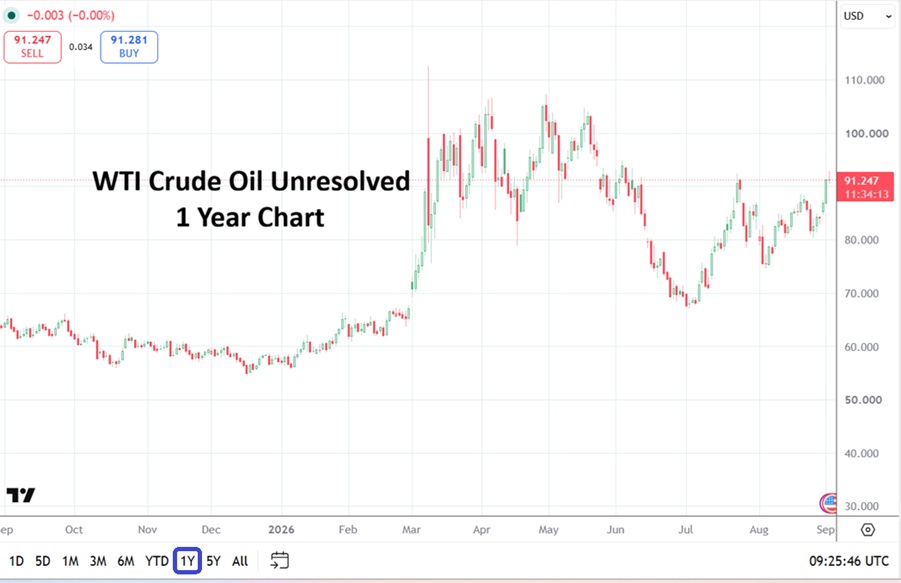
WTI Crude Oil should have gone back down below $80.000 in many folks thinking – and they may have bet on this strike price via options –  due to ideas of an Iranian ceasefire, but the target has not been met. WTI did in fact challenge $88.000 early this week, but it is back around $93.000.

With the weekend quickly approaching and concerns about what will happen when the marketplace is largely shuttered, March mayhem has opened the door for April surprises. Gold is near $4,737.00, and this price remains mildly upsetting for many who believed it would act as a safe haven asset that would gain during the war, but hasn’t responded with buying fever. Gold was near $5,180.00 on the 27th of February. But in fact gold has performed rather well considering it was riding a long-term speculative buying spree and its current price still remains well above where is was last year around this time near $2920.00.

The point? The markets still exists and can still be bet on. The parameters may have changed, but let’s recall at this time last year global investors were dealing with the potential of Trump tariffs which was an entirely other set of hypersonic conditions caused by noise. If you don’t like loud markets you can cover your ears. You can try to take advantage of them too, but day trading the marketplace via Forex, commodities and stock indices has always been gambling. Perhaps this is what you are looking for – price action.

Again, the global markets are not concerned with your feelings. If you want to cry, grab a tissue and sit on the sidelines until the big show is over. However, know that the Iranian war is certain to have an encore from either a new round of potential fighting in the Middle East via stresses caused by the said openings/closings of the Hormuz Strait, or some other entirely new flashpoint elsewhere. 

The S&P 500 closed slightly below 6783.00 yesterday, last year the index was close to 5,745.00. Sometimes the best thing all traders and investors can do is take a deep breath and believe in better days.

Near-term price action will remain choppy. That is very easy to say and agree to, yet it tells you nothing. It doesn’t tell you what the markets are going to do today or tomorrow. And the reason for that is that intraday performance at this juncture is being driven by swiftly changing sentiment in which momentum is a swirling sea. Technical traders may claim they have a handle on the price skirmishes via their perceptions, but are likely suffering like everyone else as they try to surf the rather wild waves.

Copy and paste the text from AMT that you want to share

Universe 20260409

Foreign Exchange and Reading Through the Noise

Brief Clarity, Constantly Interrupted: What Does Copernicus Have To Do With FX?

This article was first published the 7th of April on LinkedIn by the author.

I have spent most of my professional life in foreign exchange markets – an environment that rewards the ability to read signal through noise. And yet the older I get, the more I find myself drawn to a question that no Reuters terminal can answer: why do intelligent, well-resourced people, working inside some of the most information-rich institutions ever created, still systematically misread reality?

I think the answer has less to do with the quality of our data, and more to do with the nature of our frameworks.

The Ptolemaic Trading Floor

In the sixteenth century, Copernicus did not discover new stars. He did not build a better telescope. He simply stood in a different place and looked at the same sky – and from that different vantage point, the complexity that had been accumulating for centuries suddenly resolved into something simpler and more true.

The philosopher Thomas Kuhn, writing about this in The Structure of Scientific Revolutions, made a point that has stayed with me. The Ptolemaic astronomers were not stupid. They were brilliant people doing extraordinarily sophisticated work, and their model of the universe – with its epicycles and equants – was genuinely good at predicting where the planets would be. By their own measures, they were succeeding. But the framework was self-sealing. Every anomaly became a problem to be patched rather than a signal that the whole edifice needed replacing. The epicycles kept accumulating.

I recognise that trading floor.

The VAR models, the correlation assumptions, the ratings frameworks that failed simultaneously in 2008 did not fail because the mathematics was wrong within the model. They failed because the model had pre-decided what reality looked like, and reality declined to cooperate. The framework had accumulated its own epicycles – its own patches and exceptions and special cases – and nobody had stood back to ask whether the whole structure still made sense.

This is what the economist Herbert Simon called bounded rationality – the idea that we make decisions within limits of information, time, and cognitive capacity. But I think there is a deeper form of boundedness that Simon’s original formulation didn’t fully capture. It is not just that we lack information within a given framework. It is that the framework itself determines what counts as information in the first place. The boundary is not cognitive – it is epistemological. The frame has pre-decided what reality looks like, and we optimize furiously within it, never suspecting there is anything outside.

This is framework-induced bounded rationality. And financial markets are one of its purest expressions.

The Filmiest of Screens

William James, writing in 1902, described something that has always struck me as one of the most quietly radical observations in the history of psychology:

“Our normal waking consciousness, rational consciousness as we call it, is but one special type of consciousness, whilst all about it, parted from it by the filmiest of screens, there lie potential forms of consciousness entirely different. We may go through life without suspecting their existence; but apply the requisite stimulus, and at a touch they are there in all their completeness.”

James was writing about mystical experience. But I think he was also describing something that every trader knows intuitively – that there are moments of genuine clarity, where the market’s structure becomes briefly, luminously obvious, and then the noise closes back in. Not constant confusion, but brief clarity, constantly interrupted.

What interrupts it? I think James gives us a clue, though the fuller answer comes from a tradition he was only beginning to encounter.

The Deluded Self and the Distracted Market

The Yogācāra school of Buddhist philosophy, developed in the fourth and fifth centuries, offers one of the most sophisticated maps of consciousness ever produced. It describes eight layers of awareness, from the basic sense consciousnesses up through something far more interesting – the seventh consciousness, called kliṣa-manas.

Kliṣṭa-manas is the layer of mind whose function is to construct and defend a sense of self. But the Yogācāra tradition makes a more precise and more troubling point than simply calling it deluded. By the time information reaches the seventh consciousness, it has already passed through the sense consciousnesses and the discriminating mind – each stage filtering, selecting, and coloring what gets through. The seventh consciousness is not distorting clean data. It is working with inputs that are already biased, and it has no way of knowing this. It constructs its picture of reality from pre-processed material, and then defends that picture as if it were direct perception. Try telling a QANON follower to get a vaccine jab.

The parallel to institutional behavior in markets is uncomfortable in its precision. Risk committees, house views, investment mandates – these are the kliṣṭa-manas of the trading floor. They exist, at least in part, to protect the institution’s sense of itself. The risk manager who cannot recommend a position that contradicts last quarter’s framework. The economist whose forecast must remain defensible to the committee. The trader who holds a losing position because admitting the loss means admitting the thesis was wrong. These are not failures of analysis. They are the seventh consciousness doing exactly what it was built to do.

And into this environment, the attention economy arrives as accelerant. Social media does not simply distract – it feeds kliṣṭa-manas directly. Likes, outrage, identity, tribal affiliation – all of it strengthens the self-constructing layer and weakens the capacity for clear perception. The signal-to-noise ratio in markets was already difficult. We have now built an entire industrial infrastructure for generating noise that feels like signal, because it flatters the self that is doing the perceiving.

Standing in a Different Place

The Yogācāra tradition does not stop at the seventh consciousness. Beneath it lies the ālaya-vijñāna — the storehouse awareness, a kind of ground-level consciousness before the self-construction begins. It is not a mystical concept, or not only that. It is a description of what perception might be like before the defending ego has finished processing it.

The best risk-takers I have encountered in markets seem to access something like this, in their better moments. A capacity to see the position as it actually is, without the framework that produced it colouring the perception. To hold a view lightly enough to abandon it when the evidence changes. Copernicus looking at the same sky and seeing something different – not because he had more data, but because he had momentarily freed himself from the inherited frame.

James was right that these states are parted from ordinary consciousness by the filmiest of screens. The Eastern traditions – Buddhist and Vedantic – have spent two and a half millennia developing systematic methods for thinning that screen. Western psychology, for all its extraordinary achievements, has been slower to take this seriously, often treating consciousness itself as a problem that better neuroscience will eventually dissolve. It may be that, in this respect, we are in the position of the medieval scholars encountering Arabic science – not lacking intelligence, but working within a framework that makes certain questions difficult to even formulate.

What This Has To Do With FX

Markets are reflexive. The moment enough participants adopt the same model, the model changes the thing it was measuring. The framework that produced clarity attracts capital, the capital erodes the edge, and you need a new framework. Brief clarity, constantly interrupted – not as a pathology, but as the structural condition of the thing itself.

The question is not how to achieve permanent clarity, which is probably neither possible nor desirable. The question is whether we can develop the capacity to notice when we are inside a framework rather than seeing through it – to feel the epicycles accumulating before the model breaks.

That capacity, I suspect, is less a matter of better data or faster processing, and more a matter of the quality of attention we bring to the screen. Which means the most important professional development available to a markets practitioner might not be in a CFA curriculum.

I am aware of the irony of writing this on LinkedIn, which is itself a highly effective delivery mechanism for kliṣṭa-manas. The seventh consciousness is nothing if not adaptive.

Note: The author works in foreign exchange markets and thinks too much.

Copy and paste the text from AMT that you want to share

postN50

Clear Betting Environment Is a Winning Proposition for Brokers, Not Day Traders

Things Unlikely To Get Easier for Retail Speculators Remainder of Week

I would like to offer day traders encouragement under the current market circumstances. However, the reality is that the next handful of days will remain difficult for retail traders who do not have comfortable amounts of cash to absorb when intraday chaos occurs. On the other hand as an ex-risk manager for a brokerage house, I can state that CFD providers are singing joyfully because they are making profits from the wild fluctuations in equity indices, Forex and commodities.

Gasoline and Burning Cash Continues

A case in point are the results via the future markets, this via CFD offerings by brokers’ platforms yesterday for the S&P 500 and Nasdaq 100. Early nervousness saw an electric amount of selling get demonstrated and then suddenly a reversal higher, this as President Trump caused a thunderous optimistic reaction as he spoke about the potential of a deal with Iran in the coming days. The dose of optimistic risk taking lasted a couple of hours.

Not only did U.S equity indices bolt higher, but WTI Crude Oil prices slid lower, and Forex suddenly saw the USD losing strength. Here’s the thing, some day traders certainly made money as waves of momentum carried their wagers into positive terrain, but many speculators were likely knocked out of the their trades with sudden loses. CFD trading using leverage has always been a casino, this is not going to change. But the volatility seen the past three weeks has likely not created great wealth for retail traders. Some have gained certainly, but I can guarantee you brokers are making more money via the intraday swings and volatility that knock smaller traders out, this as leverage causes fluctuations that expose too much risk and cause folks to lose money.

Again, this is the nature of the beast. Day traders wanting to participate in the markets have to acknowledge the risks that will confront them. It is a warning worth noting once again as a war rages in the Middle East. 

Markets in the best of times are difficult. Risk management is constantly needed. While the thrill of trading is fantastic, without solid tactics speculating equates into gambling. Think of brokers as bookies, they gear the market via wide spreads, transaction fees including overnight charges to favor themselves. Brokers are certainly glad to pay out winners so others are enticed and bring more business, but strategic day traders who use well practiced methodology are watched closely by brokers – because these folks (good traders who are careful) are a threat for brokers bottom lines – profits are king.

Trading and fundamental notions are proving dangerous too during these loud times. Gold for instance which was trading at all-time highs in January (along with silver – but that is another speculative story) is now traversing near $4,425.00. The precious metal was testing the $5,600.00 vicinity in late January. So how did this long heralded safe haven metal actually see a selloff become stronger since the start of the Iranian war when it was around $5,200.00 on the 27th of February?

IMO, it shows that speculative fervor in gold was fever pitched in January, and even though a war has broken out and caused widespread anxiety in the broad markets (which in theory is supposed to make gold more valuable), the volatile nature of wagering – yes gambling – on the markets including gold, often is a crapshoot. Folks who bought gold as a speculative endeavor have now cashed out their profits, those who believe gold is a safe haven and are buying based on this belief will need another round of speculative fuel to induce significant gains like those made in January. The market sometimes runs out of participants when things get too cautious. In other words, if there are not enough buyers, selling momentum takes over.

And to put a finishing touch on this piece, let there be no doubt that brokers were likely relieved that the one way avenue upwards for gold (and silver) seen into January has now turned into a volatile betting battle. The point here, if I am able to make one is this, market conditions are rough and will remain extreme in the coming days. Folks need to be cautious, the markets are not your friend, they are a tool for making money (or losing it).

Copy and paste the text from AMT that you want to share

Cactus flower 20260121

Emotional and Speculative Market Could Spark Trouble

Day Trading Problems: Not Everyday Produces a Profitable Outcome

Early indications show that U.S markets will produce volatility today. The EUR/USD is straddling the 1.19000 level, Gold is around $5005.00. Bitcoin for those that care is near 68,700.00 USD.

Flowering Cactus

Not everyday produces profits. That is rather easily dealt with by large speculators, big players and financial institutions who have the time and money to withstand short and near-term storms. The current markets represent danger if you listen to the noise from outside sources – media, analysts and influencers engaged in trying to create opinions a lot of the time. However, bias must be distinguished and another very fundamental thing needs to be accessed.

Day trading is not the same as being a large speculator, big player or financial institution. Day trading usually means a person is a retail trader, a client therefore of a brokerage house. Day traders do not typically have deep pockets.

Getting caught up in the fear factor is a quick way to lose money fast. Gold, Silver, Bitcoin, U.S major indices, Forex have all delivered volatile trading the past few weeks. What looks like a gentle day on tap for day traders must always be treated carefully.

This week the U.S will release Retail Sales, Non-Farm Employment Change data and Consumer Price Index readings.

The jobs numbers which traditionally get released on Fridays and should have been published last week, were delayed because of the quasi-govt shutdown which happened. 

Last night’s Super Bowl was a rather lackluster game, while this has nothing to do with the markets, perhaps it will cause some type of reaction via a need for more noise (emotions) to be heard by those who have a desire for attention they do not deserve. No do not worry, the game’s outcome is not going to affect today’s trading. However, via behavioral sentiment this week’s coming results across a wide range of assets are set to be more entertaining than the Seahawks victory over the Patriots last night.

Day traders have likely made money for their brokers the past couple of weeks as they have taken hits because of volatility. This week could provide more choppiness. Retail traders need to remain careful and not bet on things simply because someone else suggests they are an expert on world affairs when they in actuality are merely getting paid to make noise and sell more bets. And by the way, betting on the Patriots last night to win just because they had won so many times before is a reminder past performance doesn’t guarantee future results.

Copy and paste the text from AMT that you want to share

postre1

India Insider: Why Russian Oil Should Be Treated Skeptically

India Insider: Why Russian Oil Should Be Treated Skeptically

As Russian President Vladimir Putin arrives in New Delhi for a bilateral summit, the mood in India’s capital is one of profound strategic tension. The core of the problem is India’s massive appetite for discounted Russian Crude Oil, which has shielded the economy from high energy prices but is now causing significant financial and geopolitical risks. This move comes at a time when India’s most important trade surpluses lies with the West, raising anxieties about U.S sanctions and shrinking strategic space.

Trapped Rupee Problem

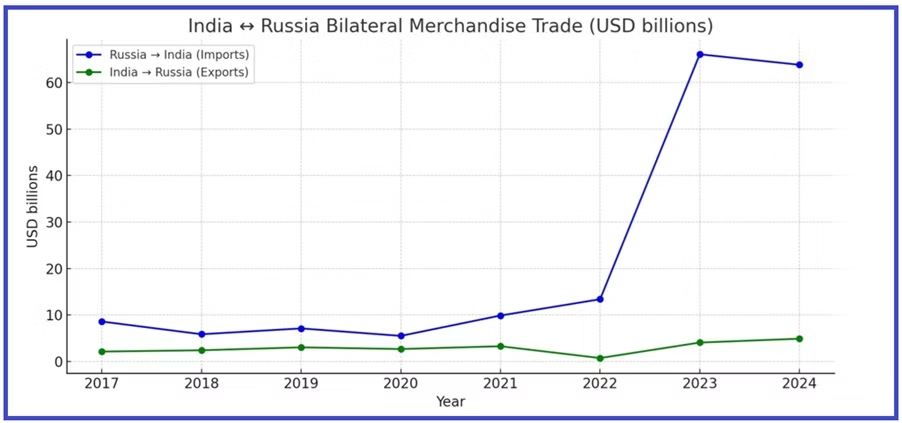
Since the Ukraine war, Russia’s share of India’s Crude Oil imports has surged from under 2% to nearly 40%. This has simultaneously inflated India’s trade deficit with Russia to nearly $59 billion.

The transactions are largely settled in Indian Rupees (INR). Moscow has accumulated billions of Rupees in Indian banks. However, because the Rupee is not fully convertible on the global market, Russia has very limited ways to use this huge surplus within India. These billions of Rupees are essentially ‘trapped liquidity’ – a problem neither country can easily solve.

India – Russia Bilateral Merchandise Trade Chart from 2017 – 2024

The Kremlin, meanwhile, is shifting its financial allegiance. It is preparing to issue Yuan denominated sovereign bonds, a decisive step that deepens its reliance on Beijing’s financial system amid a cut off from the Western financial system. This financial trajectory clearly signals the next logical step: Russia will inevitably demand that India begin paying for its oil shipments in Chinese Yuan (CNY).

Structural Risk of Holding Chinese Yuan

India has never been comfortable holding Chinese Yuan or settling trades in the currency. That’s partly strategic as New Delhi wants to protect its geopolitical autonomy and position itself as the democratic anchor of the Global South while staying closely aligned with the West.

But Russia’s financial plumbing is now increasingly routed through China. As the Kremlin becomes more deeply integrated into China’s banking and payments system, its dependence on the Yuan becomes structural. Moscow needs Yuan not only to service Chinese creditors, but also to pay for its expanding list of manufactured imports from China. The Ruble, being a largely non-convertible currency, simply cannot support this scale of trade.

For now, Russia-China trade is balanced enough because Beijing still buys large quantities of Russian energy. But this equilibrium can shift quickly. As the Ukraine war drags on and Moscow’s defense spending rises, the Kremlin will be forced to rely even more heavily on Chinese financing, Chinese goods, and ultimately the Yuan itself, tightening its economic dependency on Beijing.

When that moment arrives, the Reserve Bank of India (RBI) will be forced to accumulate Yuan as part of its Forex reserves to ensure the continued flow of oil. This decision, born of necessity, introduces a structural vulnerability into India’s financial system as the adoption of Yuan as a reserve currency subject to China’s capital controls.

Risks of Holding the Yuan

China may have both the onshore (CNY) and offshore (CNH) Yuan, but the currency is ultimately controlled by the PBOC, which makes it a risky reserve asset for India. In a crisis, Beijing’s capital controls could restrict liquidity and prevent the RBI from freely converting yuan into hard currency like the USD, effectively trapping India’s capital.

Beyond this financial rigidity, large Yuan holdings also expose India to CCP driven political risk, tying its external stability to China’s domestic decisions. And unlike the Dollar which can be deployed anywhere, Yuan reserves are usable mainly for transactions with China or countries in its financial orbit, sharply limiting India’s strategic and financial flexibility.

Strategic Win for Beijing

For Beijing, this shift delivers a double strategic win, cementing the Yuan as the dominant settlement currency across Eurasia especially among countries squeezed by Western sanctions and it allows the yuan to slip into India’s financial system indirectly, not through Chinese pressure but through Russia’s growing dependence on Chinese finance and India’s reliance on discounted Russian oil.

For Moscow, this is a reluctant compromise: giving up some monetary autonomy in exchange for necessary financial support from China.

For India, however, it introduces a new long term structural risk with a slow but steady Yuan encroachment into its trade and reserve system, operating alongside the dominant U.S Dollar. The oil corridor that was meant to offer an independent strategic opportunity for India is now becoming a channel which Beijing can strengthen its monetary footprint. In this complex triangle, India risks paying a dangerous tactical long-term price for its energy security.

post310

Digesting Holiday and Markets to Come as Fed Looms Next Week

Digesting Holiday and Markets to Come as Fed Looms Next Week

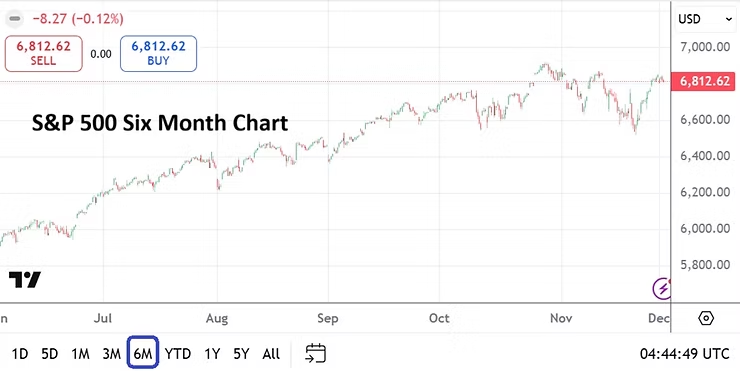
Day traders trying to gauge markets may be feeling a bit of angst for the moment. Always wanting to participate when record highs are being made in the stock markets, the S&P 500 and Nasdaq 100 remain under their respective apexes from late October and early November. Though the markets have produced gains recently, they have not come particularly easily for those who like to ride momentum waves. As always timeframes matter, it is often easier to make mistakes and be impatient when short-term wagers factor into decision making.

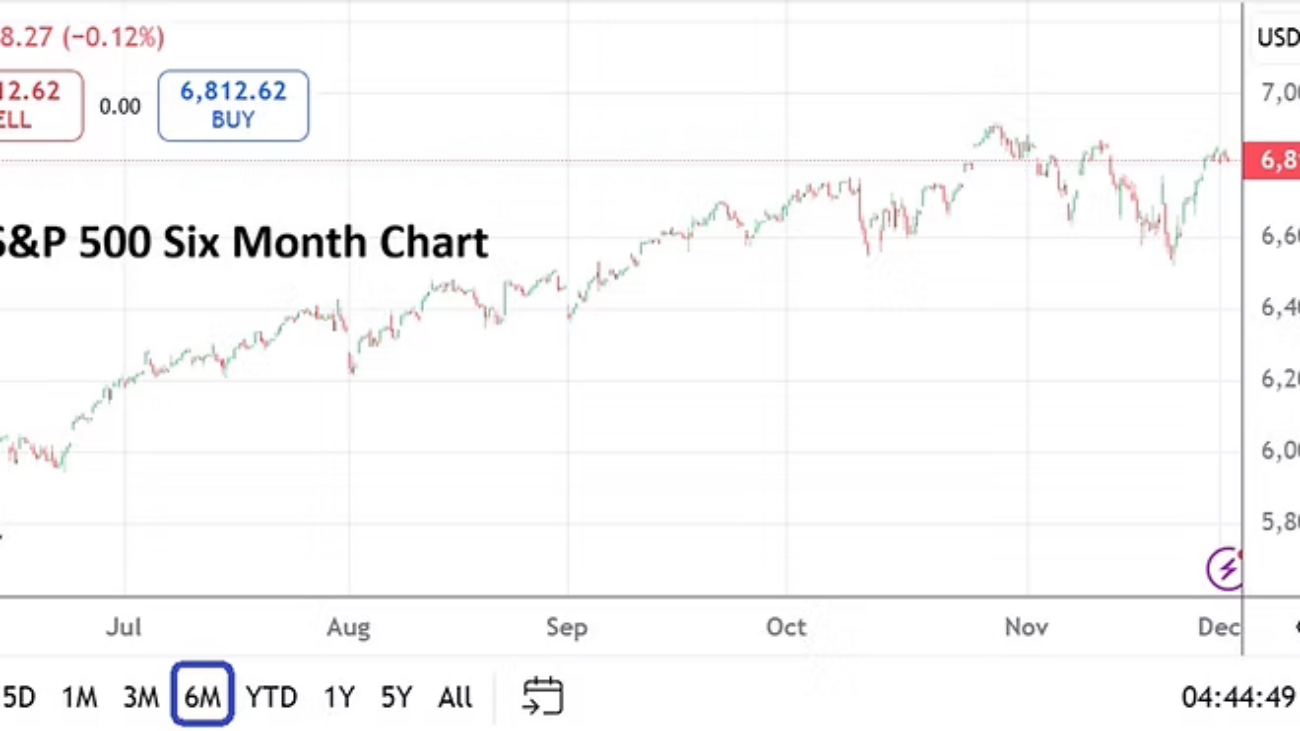
S&P 500 Index Six Month Chart as of 2nd December 2025

Gold has done well the past couple of weeks, regaining its upwards traction, but also remains under its apex values. The Federal Reserve will release its FOMC interest rate decision on the 10th of December, and this is what many in the markets may be waiting for in order to make their last big bets for the year per speculative plays.

The Forex market like equities and commodities continue to provide choppy behavior. The ISM Manufacturing numbers from the U.S came in below expectations yesterday. Retail Sales data and Consumer Confidence numbers last week from the States came in below expectations too. There will be jobs statistics via the ADP report on Wednesday and an ISM Services figure. Thursday will see U.S weekly Unemployment Claims. Friday will provide a rather interesting clue for Forex traders and likely influence bond yields when the Core PCE Price Index reading is provided – which the Federal Reserve pays quite a bit of attention regarding their interest rate decisions. The Consumer Sentiment Preliminary University of Michigan data will also be seen on Friday.

As Tuesday starts, day traders should also beware that full market volumes will emerge, this after last week’s Thanksgiving holiday in the States and perhaps a slow return to offices yesterday. The markets will provide plenty of action over the next couple of weeks, before the inevitable Christmas and New Year’s trading doldrums begin.

post303

India and the U.S Govt Shutdown: Quick Market Thoughts

India and the U.S Govt Shutdown: Quick Market Thoughts

President Trump has been ramping up his claims that India is no longer going to buy Russian oil, he made a statement regarding this belief yesterday once again. As the White House threatened to initiate tougher sanctions against India, there seems to have been some movement towards a reconciliation between the two powerful nations.

The Trump administration is clearly trying to limit the amount of purchases of Russian oil by India to increase economic pressures on Russia, and reportedly India may be starting to actually buy less oil. India has certainly not stopped buying Russian oil in a maximum ‘fait accompli’, but if the nation continues to show a willingness to purchase less energy resources from Russia, this will go a long way in preserving a good U.S and India association. A stronger relationship between the U.S and India can achieve a vital economic and military correlation for the both nations. Improved friendlier tones from New Delhi and Washington D.C appear to have reassured investors in the Indian equity markets via highs currently being seen on Nifty 50, which are now within sight of apex values from late September last year.

Nifty 50 One Year Chart as of 23rd October 2025

India is a vital and important part of U.S policy as it attempts to also create pressure on China too. By maintaining political and business dealings with India, the U.S can and should look upon this joint relationship as a vast long-term strategic interest. India understands this as well. The ability of India and the U.S to remain ‘friendly’ allies, and the prospect of creating a vigorous economic and military partnership should be one of the U.S government’s essential missions.

India does have strong connections to Russia the past handful of decades politically and economically via its non-aligned status. India will certainly maintain its dialogue and sometimes cooperative dealings with Russia. However, if India and the U.S maintain a solid relationship with the prospect of increasing their economic and political ties this could substantially change dynamics on the Asian continent.

U.S Government Shutdown Since the 1st of October

The U.S government has now been shutdown for over three weeks as Republicans and Democrats remain stubborn about compromise. Both sides have made the shutdown a political game. While each party claims they are doing what is best for the nation and preach to their collective voting bases, the stalemate could start to have uglier effects regarding wages not paid for many U.S employees on the 1st of November.

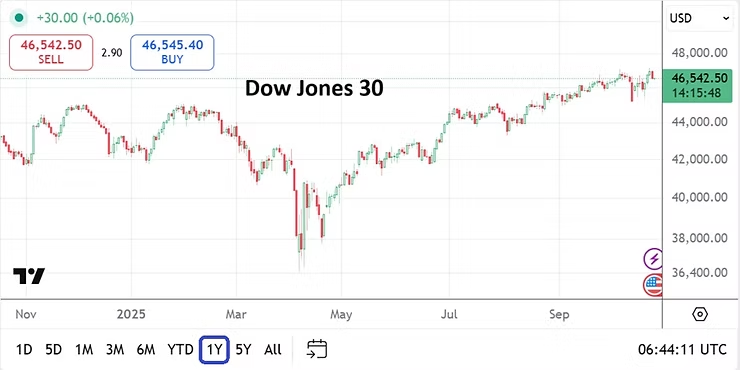
Dow Jones 30 One Year Chart as of 23rd October 2025

A lack of government salaries not being dispersed will cause an economic hit via consumer spending and create at a minimum some temporary damage for GDP numbers. Remarkably, and to be clear about this potential impact, Wall Street hasn’t seemed to care yet, but this could start to change. As the U.S economy rumbles powerfully forward without a major downturn in the major equity indices, politicians appear to be comfortable acting like spoiled children on both sides of the aisles engaged in accusing the other side of misdeeds.

Likely to start changing attitudes among Republicans and Democrats in the next two weeks are the coming Federal Reserve’s FOMC Statement during the end of October, and voting results via key political races in the first week of November.

Wall Street wants clarity regarding interest rate outlooks for November, December and early next year. Investors might not get a clear picture from the Fed next week, taking into consideration the Federal Reserve will not have up to date official U.S economic data because of the government shutdown. Meaning the Fed will likely issue a 25 basis point rate cut on the 29th of October and say it is uncertain about the coming few months because it does not have enough inflation, employment and GDP information to form a concrete opinion. The joke of coarse being the Fed seldom seems to have a strong opinion, but now can use the government shutdown as an excuse.

And now for contemplation, let’s look at the election in NYC for Mayor. A bona fide socialist may get elected in New York City who carries the historically misguided and dangerous wisdom of a Marxist. The economic and social practices of Marxism have proven utter failures for over one hundred years consistently. If NYC suffers a victory from the socialist candidate running as a Democrat, Wall Street and many financial institutions based in the city will not react favorably.

In the meantime, U.S equity indices remain elevated, cautious and within sight of record highs. The Nasdaq, Dow Jones and S&P along with other financial assets are producing choppy dangerous conditions for day traders who are attempting to wager on daily changes and suffering from the cautious behavioral sentiment being generated. Investors who look towards the mid and long-term are likely more comfortable, but are certainly keeping an eye on what is going to transpire over the next two weeks. Gold and Silver have come off their speculative highs. Forex continues to create volatile conditions as financial institutions appear unready to make bold predictions about what the Federal Reserve will do into January 2026.
post293

Opportunity? Market Ambition as Day Trading Volatility Looms

Opportunity? Market Ambition as Day Trading Volatility Looms

The U.S government shutdown looks like it will take place at 12:01 am EST on Wednesday, this if Washington D.C politicians fail to agree to a funding gap. There have been significant shutdowns in the past, thus financial institutions though not in love with concept are adept at continuing to trade during the events. President Trump’s first term in office produced a long shutdown from the 22nd of Dec. 2018 until the 25th of January 2019. President Obama’s White House had a 16 day affair in 2013. And President Clinton’s administration dealt with a shutdown lasting 21 days.

S&P 500 Index Three Month Chart as of 30th September 2025

While the financial markets will certainly survive and long-term investors will likely remain rather sedate during this developing saga, day traders need to brace for volatility. Opportunities may develop if Forex, U.S equities and gold see reactions per perceived safe haven endeavors by some investors. However, wagering in markets when shifting tides are happening due to sentiment torrents could prove difficult for speculators. Timing the market and its gyrations caused by potential mood changes poses threats for small traders.

And that is why it will be important to actually remain patient in the coming days. The Democrats appear ready to try and score a political win against President Trump. But what would a win look like? The public is seldom fooled by the government shutdowns. While government offices shutter and economic data publication dates will be postponed, the rest of the world will move forward.

Day traders should not be tricked into panic. Nor should they react too fast based on fears that are not legitimate. The U.S major indices may languish during a government shutdown, but it is also conceivable that they may perform rather well. The Nasdaq 100, S&P 500 and Dow Jones 30 are all within sight of their highest realms. The USD may find some buying action, but just like trades that have already been digested into the market when the Federal Reserve’s FOMC decisions are anticipated and acted upon, speculators should be prepared for counter-intuitive moves. In other words do not be surprised if sudden reversals in Forex via the USD develop.

Traders looking for discounts to emerge will need to be careful, but if the equity markets were to suffer a strong downturn on heightened nervousness, having a longer-term approach to speculative positions could become worthwhile. Gold which is traversing within record values may prove to be a significant near-term barometer as a safe haven gauge in the coming days. But then again gold has been within a sincere bullish trend over the long-term, so buying if produced near-term needs to be looked at suspiciously. In other words, the bullish trend in gold while getting perhaps an additional dose of fuel to ignite higher because of the potential U.S government shutdown should also be treated carefully and not traded with blind ambition.

Gold Three Month Chart as of 30th September 2025

The potential of a U.S government shutdown is a big event, but it is intransigence that financial institutions and big investors do not want to see. As long as some aspects of communication are being shared transparently with the public regarding negotiations in Washington D.C, many markets are likely to remain rather unbothered. How long will the U.S government shutdown last this time? It might all depend on how long the Democrats believe they can get the most out of the shutdown if it adds to their political image.

Both the Democrats and Republicans will want to get through the coming days as unscathed as possible. Why? Because both want to retain their power. One question waiting to be answered during this conundrum is who will come out looking best? If the financial markets begin to suffer there will be a lot of finger pointing by both sides. And again, importantly, financial institutions are unlikely to be fooled. Investors want clarity, the markets will only suffer if big players feel the crisis in Washington can cause potentially long lasting damage.
post278

Behavioral Sentiment: False Narratives and Noisy Realities

Behavioral Sentiment: False Narratives and Noisy Realities

The past handful of months in Forex have provided day traders problems if they have been trying to pursue steady trends. Constant flashes of rhetoric and news pervading tariff implications, U.S Federal Reserve interpretations from various media and analytical corners, and mixed economic data has caused a rather mired reality for speculators trying to operate.

S&P 500 One Year Chart via Futures CFD Trading on the 9th of September 2025

However, if the noise is turned down by day traders and sometimes given less importance regarding potential influences, signals become visible and some perceptions can be looked upon as roadmaps. While many want to to throw their hands up and proclaim some sort of developing economic meltdown and a coming apocalypse, the major U.S indices are actually performing quite well as a barometer. The S&P 500 is continuing to challenge all-time values. Yes, the Nasdaq 100 and Dow Jones 30 are not marching in lockstep with the S&P 500 to new highs, but they are not far behind. The stock market has never guaranteed people an ability to constantly move upwards, but it does offer the potential to judge outlook and mid-term sentiment.

The USD has been extremely choppy since the start of this year, this as the Trump administration has taken over, but its trend towards weakness has been rather clear. The EUR/USD and GBP/USD have done reasonably well regarding mid-term strength. Yes, the USD/JPY has produced whipsaw movements and the Japanese Yen remains awkward, but this is a direct reflection of mitigating Japanese government policy (some may call it incompetence) regarding its ability to manage fiscal concerns, interest rates, and fight deflation and now inflation (which has been going on for a few decades).

Gold is traversing record heights and is showing signs of sustaining values above 3,600.00 as of yesterday. After languishing (albeit within elevated realms) near 3,350.00 the past handful of months with prevalent volatility, the precious metal has bolted out of its consolidation. And the likely reason for this is the anticipated Federal Reserve policy changes regarding interest rates. 10 Year U.S Treasury yields have also been pushed lower recently – this as financial institutions await a definite cut in interest rates by the Fed on the 17th of September. But folks who believe a 50 point basis reduction is coming late next week are likely wrong.

The Federal Reserve under Chairman Jerome Powell has been quite conservative, this will probably not change next Wednesday. It is more likely a cut of 25 basis points will take place on the 17th, and the FOMC Statement will offer the potential of another interest rate cut in October. Tomorrow’s PPI numbers and Thursday’s CPI results will influence the Fed’s coming meeting and mid-term outlook.

What we are left with is a broad market that is having a lot of noise applied to it by people with a variety of biases. Political bantering has reached a threshold in which it might be best to simply not pay attention to anything – but that is dangerous too. Yes, some people do talk sense, and some people do show signs of actually trying to engage in adult decision making regarding their insights, but it often feels like wanting to sound correct is more important than outcomes. Technical traders may be enjoying a quiet laugh at the expense of fundamental players right now.

However, economic data remains important. While rhetoric from the U.S White House and its opponents remains within a state of hyperbole, day traders should try to turn down the noise and pay attention to signals that long term investors continue to produce and take advantage of their sentiment. Stocks continue to be pursued and indices have done well, but volatility should be expected particularly into next week.
post271

Hard Truth: No Secret Sauce, A Possibly Unfriendly Reminder

Hard Truth: No Secret Sauce, A Possibly Unfriendly Reminder

Day traders face constant battles. Choppy conditions in markets lead many salespeople within brokerage firms to proclaim the ability to take advantage of technical shifts to their clients, but it is much easier to demonstrate what has taken place before compared to what is going to happen next. Technical trading via charts often looks good for those offering its charms until reality bites.

Day traders also have the disadvantage of fighting large market institutional forces that have completely different timeframes, deeper pockets, and perhaps even a fair amount of analyses they can use to validate their reasons for taking a position – not necessarily a correct position – but enough to provide insurance regarding their decision making.

S&P 500 One Year Chart as of 22nd August 2025

Institutional traders can fall back on the analyses they have at their disposal and point to it as the reason why they made a trade. Literally giving them an excuse to explain why things went wrong, so they can tell inquiring management when needed, this in order to protect their miscues. Institutional players do not get fired easily from their positions, they usually just wait a few years and shift to another company when too many bad trades have been made – that is a dirty little secret in the trading world.

Comparatively, day traders simply blow out their own accounts while losing money. Yes, sometimes they have to explain to their romantic partner why they can’t go on the trip they had been planning because there is a sudden lack of funds. Hopefully they didn’t wipe out too much money that they may have borrowed from family or friends, this via ambitions and proclamations that a coming trade was a once in a lifetime opportunity.

But wait, yes, there are speculators and large traders who do make money. These are the folks many allude to who are – in many peoples’ minds – sitting on a yacht in a lovely ocean locale and enjoying the fruits of their labors. They do exists and we should acknowledge this, even if we sometimes think they are merely lucky and one day will face a losing streak.

However, many of these anointed winners do not exists either. Beware of experts ladies and gentlemen. Influencers are often selling a dream they know a day trader desires. Commissions drive the brokerage business. Unfortunately, it is seldom profits made by an emerging victorious crowd via newly minted speculators that make brokerages money.
I am frequently warned that this is not what day traders want to read. They do not want to be reminded that 90% of their group usually loses most of their money, or at a minimum walks away with less money than they started. The U.S Fed’s Jackson Hole Symposium is now underway in Wyoming. Yet, most day traders will only be able to take advantage of this event by trying to ride on the sentiment tides created by large institutional traders in Forex. The headline: Fed Rhetoric and Jackson Hole, will be the talking point of the media today.

However wait a moment please, the retail brokerage business in the States must be pointed out as a reason for some positive momentum in the major U.S indices the past handful of years and needs to be watched regarding its sentiment. Reddit, X, Instagram, Quora and other social media sites can be monitored to gather this info. Behavioral sentiment is becoming important in the markets. While some institutional investors are showing caution via inquiries (polling) and actual market positions, some public cash appears to be supporting the S&P 500, Nasdaq 100 and Dow Jones 30 via purchases through reputable brokers who do buy the actual asset.

That is a contradiction of sorts compared to what has been written in previous paragraphs, but then again this is trading (and investing) we are discussing, so there are no straight lines, and often complexity rules. Perhaps you noticed that I didn’t say, institutional players are smarter than day traders. In many cases institutions and their managers merely have more money to wager with, and can do this without too much leverage and over much longer timeframes – giving them the ability to ride out financial storms and survive.

Under the current market circumstances the Fed is expected to cut interest rates in September by 25 basis points. But the U.S central bank is going to face a possible battle via murky data that will have to be factored into October, November and decisions beyond, meaning caution prevails. Trading choppiness in Forex will continue in the near term. The possibility that financial institutions may believe current pricing represents fair value is legitimate.

Let’s remember that the movements in Forex, stocks and indices, commodities, bonds and other assets always appear more volatile for smaller traders, because intraday price action and the absurd amount of leverage being used by many folks often leads to dangerous speculative circumstances.

Traders need patience, shouldn’t use too much leverage and allow for the ability to walk away from a losing trade with limited losses. Leaving enough cash in your account to participate again later can lead to other opportunities. There are no guarantees in trading. Good trading discipline is essential.