post275

Nvidia: Short-Term Speculative Reactions Versus Investing

Nvidia: Short-Term Speculative Reactions Versus Investing

Nvidia is near 181.60 as of this writing, this after the company issued a quarterly report that beat expectations, but also pointed out that mid-term concerns may slow down the pace of some of its data driven business, and that China enterprise complications remain murky.

Nvidia Five Day Chart Early Morning as of 28th August 2025

Day traders should be certain they acknowledge the difference between a short and near-term wager on Nvidia compared to mid and long-term outlooks. Speculators who want to venture forth and gamble on Nvidia based on last night’s quarterly earnings report are free to do so. However, there is a distinct difference between betting on what today and tomorrow’s reactions in Nvidia will be compared to folks who are investing long-term in the company and believe that over the long haul it will remain a solidly profitable company that adds value to bottom lines.

In early August Nvidia was challenging the 185.00 ratio. As of this morning the stock is near the 181.60 mark. Nvidia faces headwinds currently in after hours markets because the company had the gumption to say it outperformed expectations in the last quarter, but put up a cautionary sign saying its data business may face some obstacles regarding growth, and outlooks for its China enterprise remains solid but could face some complications.

Reacting to Short-Term Temptations and Speculating:

For those who want to sell Nvidia based on the above ‘warnings’ today, they are free to try their luck. However, selling positions could quickly turn into buying opportunities. Nvidia like most equities is about considering reactions due to behavioral sentiment, short-term nervousness could rapidly shift to bullish perspectives in the eyes of investors, programmed trading software, and – yes – day traders.

Lower support for Nvidia technically when a five day chart is looked at may be 170.00 if someone is overly cautious. A look at a one month chart for day traders who have a bit more of an aggressive manner, may believe technical chart evidence suggests a lower move can be taken advantage of at 177.00, this if they are keen on waiting for a downturn to look for an opportunity to buy at lows.

Yes, perhaps some short sellers may target the mentioned values as places to cash out positions while speculating. But there is a chance Nvidia will not touch those lows. Perhaps bearish reactions – if they even happen – will fade quickly and additional bullish sentiment will continue to seep into Nvidia. Does anyone really think Nvidia is about to face a steep selling curve?

Tech Stock Consideration and Looking for a Barometer:

·       Some folks are talking about AI and its potential status as a bubble.

·       However, this is Nvidia we are talking about, even if there is a bubble in the AI sector, Nvidia long-term is a solid stock that will likely do well for years to come.

·       Short-term reactions seen the remainder of this week and perhaps over the next few weeks may be choppy, but this would include reversals in both directions.

·       Betting on a big downside in Nvidia looks to be wrongheaded.

·       Traders who are conservative and believe Nvidia is a good buy short-term after some selling happens, while looking for momentum higher – at least back to known resistance levels – may be making a solid wager.

Nvidia is one of the most important equities in the stock market. Some may justifiably say it is the most important at this moment. As a big driver of the Nasdaq 100, Nvidia has in many respects traded sideways since late July. This has been one of the reasons the Nasdaq 100 has faced headwinds too. The broader S&P 500 has been doing better than the Nasdaq 100 the past few weeks, this because tech stocks like Nvidia are facing some skepticism regarding just how high they can go. However, Nvidia as a stand alone company has excellent long-term prospects.

postN23

Fed Spits into the Wind as Day Traders React to Volatility

Fed Spits into the Wind as Day Traders React to Volatility

Broad market analysts continue to spit up an eternal fountain of opinions and data to show why yesterdays moves happened and why tomorrows are going to have bright sunshine and positive outcomes. However, day traders know this is not the reality for them and understand the gyrations and volatility of the marketplace is actually quite dangerous in the short-term.

Day traders may even know market correlations looking backwards are also tales of fiction sometimes. Random results from various fronts are often viewed and assembled by analysts and data providers to give credence as to why ‘John Doe’ lost all of his money, because he was not paying attention to the storm that was ‘obviously’ developing in front of his face. Thus, wiping away any stains of responsibility the analysts and data providers may have for their clients loss of money.

Gold Five Year Chart as of 28th June 2023

Traders seemingly want to know what the U.S Federal Reserve is going to do every minute. If they could, short-term speculators would probably buy information on the amount of coffee breaks FOMC members take, and monitor what Fed officials daily meals are to understand their moods.

However, we should also understand that a lot of the day to day mechanics in the financial markets are tasks that have been done thousands of times before, in other words we know the history and results of many financial institutions. The U.S Federal Reserve is doing nothing new and their actions in July, August and onward really do not amount to much. The monthly decisions and annual manifestations of governments that spend too much cash and their officials trying to balance the value of their national currencies are well documented historically.

Markets in reality think long-term and this is where nearly all of the large money is invested. Day traders need to understand what they are doing is almost considered a ‘hobby’ by investment professionals who do not take the ‘hobby’ of the small speculators very seriously. This because the amount of money most day traders are using doesn’t affect market price very much, unless they form a ‘team’ like the Wall Street Bets ‘crew’ or act in unison via other social media groups influenced by people they mostly do not know personally, and should be wary of regarding motives. Let’s point out for a moment though, that long-term investors can lose money too based on faulty outlooks.

Long-term money is invested with perspectives that stretch often for periods of two to three years and beyond. Outcomes are projected not on data that cause daily momentary values to change, but rather on sophisticated insights which take a perspective the value of equities and certain indices, and other assorted assets tend to rise. Long-term investors mix their outlooks on economic road signs which will be affected by the investing landscape over a period of years. Meaning knowledge of geopolitics, interest rates, social stability and economic transparency are vital. History is a guide post for established financial institutions as they work. But sometimes these factors do not work, and employees at long-term thinking financial institutions find they need new jobs.

U.S Federal Reserve officials, after yesterday’s Core Durable Goods Orders and the CB Consumer Confidence reports which showed strength were published, might have raised their eyebrows. FOMC members likely acknowledged the long-term exuberance and nature of the U.S economy and thought ‘we need to raise interest rates again in July’ because growth data is too resilient. However, they have already said this via their FOMC Statement in June which warned about inflation and why it continues to be a concern, but the ‘words’ thus far have not been taken too seriously.

Yesterday’s reaction in the broad markets was not overly volatile because of the U.S data outcomes. Yes, short-term Forex traders were likely hurt or rewarded depending on the what lucky side of the coin they were betting. However, for the most part many long-term investors have already placed their positions and continue to do so, which they may not alter for the next two to three years depending on the amount of cash reserves they have in their arsenal. This ammunition of large capital, allows long-term players to remain in the game until a result can be quantified – good or bad.

Day traders and long-term investors are playing a different game. Their mode of operations work in different manners. Again, it must be stressed long-term investors do not take into consideration the outcome of most short-term traders, nor for that matter do global central banks. In fact most global central banks and the governments behind them, would rather see day traders simply give their money to investment ‘experts’ who put the ‘little peoples’ money into long-term savings and investment programs.

Speculative cash in the markets does exists, but the amounts of money being used by day traders and large ‘players’s looking for short-term results are quite different. It should also be pointed out that many day traders are using CFD’s – which largely means their positions are being wagered virtually – and are not really being deposited into the ‘cash markets’. In other words day traders can go broke much faster than their long-term counterparts who are investing in positions that have the power of time duration on their side. The virtual positions of CFD wagers are not going into the real cash market, thus not causing a reaction in the actual assets being traded.

Many day traders participating in the daily results of Forex, and equities and indices are merely trading on casino like platforms built for wagering on the results of what is happening elsewhere in the real cash markets of assets. It in a sense, it quite a bit like sports gamblers betting on the outcome of game they are not participating.

Tomorrow the GDP numbers will come from the U.S and the growth numbers will certainly be watched. The results will be consumed differently by day traders compared to long-term speculators. The Final Gross Domestic Product numbers from the States on Thursday are expected to show a slight rise. An outcome of 1.3% was seen last month, tomorrow’s anticipated number is a 1.4% gain.

If the growth number is stronger than expected, this would put the U.S Federal Reserve in a position in which it would almost certainly have to acknowledge another hike to the Federal Funds Rate is ‘needed’ in July. The Fed has learned the hard way that incremental rises in the costs of borrowing (Federal Funds Rate) are not curtailing the spending of U.S consumers. If the U.S doesn’t start to show recessionary like economic signs in the mid-term, the Fed may feel like it has been spitting into the wind. Day traders will find tomorrow’s GDP report causes volatility, but long-term investors will likely view this as just another day with a momentary price reaction.

postN6

Federal Reserve Noise as Short and Long-Term Clarity Fades

Federal Reserve Noise as Short and Long-Term Clarity Fades

There is a storm in the Forex markets currently and it will persist tomorrow. Today is a good day to talk about the difference between short-term trading and long-term investing. Short-term outlooks typically are top heavy with technical interpretation, and behavioral sentiment mixed with fundamentals when speculators are pursuing the marketplace looking for quick profits. Loud short term thunderbolts coming from various components that affect trading are significant. Yesterday’s noise had an impact.

Long-term investment is done with a focus on patience, conservative outlooks regarding fundamentals and potential behavioral sentiment that could develop and encapsulate attitudes within a chosen asset. Day traders are often ready to bet on what is going to happen in a matter of minutes, hours and perhaps a day. If a so called day trader has to be in a position longer than a couple of days, they often find that they are not emotionally prepared to wait for outcomes.

There is also the problem regarding a lack of enough cash in many trading accounts. Short term traders often do not have enough money to carry positions for a significant duration, sometimes overnight transaction fees charged by their brokerage platforms are too expensive. The availability of limited money is a liability and creates unprofitable propositions, unless an extreme amount of leverage is being used. Most short term traders lose their money when trying to apply excessive leverage. Dangers abound for day traders.

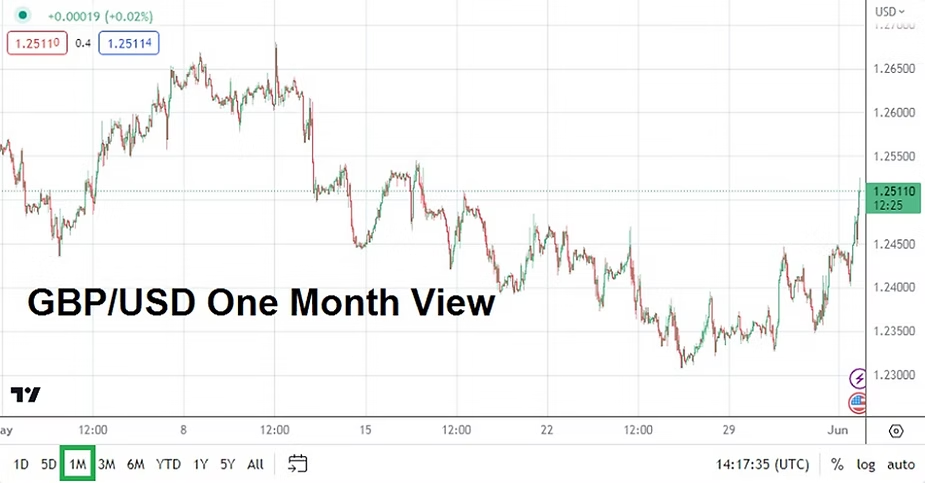
GBP/USD One Month Chart as of 1st of June 2023

Important U.S Data is on the Schedule Tomorrow which may not be mere Noise

Tomorrow the Non-Farm Employment Change number will be published, but the Average Hourly Earnings report will be a crucial part of the data brought forth too. Short-term traders like wagering on the jobs outcome and trying to ride its impetus, hoping a prosperous wave delivers them to the shore with profits. If the Average Hourly Earnings report comes in stronger than anticipated tomorrow, this could send Forex markets into a volatile and dangerous session as it mixes with yesterday’s Federal Reserve ‘dust’ which is still in the air causing problems.

Federal Reserve Dust Storm Caused by Jefferson and Harker Yesterday

Two members of the Federal Reserve’s FOMC committee, Philip Jefferson a Federal Reserve Board of Governors member and Patrick Harker the President of the Federal Reserve Bank of Philadelphia, suggested on Wednesday that keeping the Federal Funds Rate in place on the 14th of June would be a good idea.

Philip Jefferson has been nominated by President Biden to take the powerful seat of Vice-Chair of the Federal Reserve, but he has not been appointed to the position yet officially. The position of Vice-Chair is a key job within the Fed which creates a rather strong voice regarding policy historically. Jefferson’s voice could make a difference in the next two weeks. However, even with Patrick Harker joining Jefferson’s rhetoric yesterday, among them are a handful of other FOMC voting members who have expressed loud concerns about inflation and made it clear in their opinions, that staying aggressive regarding interest rate policy is important.

Clarity remains difficult to visualize regarding what the U.S Federal Reserve will do near and mid-term. However, the Federal Reserve has been exceptionally good at creating choppy Forex conditions much to the detriment of short-term traders, which is supposedly not part of the Fed’s mandates.

Forex Markets have been Stirred and Tomorrow’s Data could Shake Conditions More

Wednesday’s comments from the two Federal Reserve members briefly stirred global Forex and the broad marketplace. Short term traders likely got caught in the momentary flashes of hysteria caused by the comments of the two gentlemen.

Arriving closely behind the comments by the Fed officials yesterday was the U.S JOLTS Job Openings report, which is viewed suspiciously by many professionals in the investment world because its numbers are sometimes suspected of being inflated by ‘headhunters’. However yesterday’s JOLTS results showed a huge increase in available employment options and caused another temporary reaction in Forex – in many ways counteracting the Fed voices.

Meaning tomorrow’s Non-Farm Employment Change numbers, and the inflation report via the Average Hourly Earnings will cause a loud buzz before and after their publication. This as the rhetoric from Fed members Jefferson and Harker mixes into the statistical outcomes.

The USD has been strong in the broad markets the past few weeks against many major currencies. This as evidence has grown the Federal Reserve may feel pressured into increasing the Federal Funds Rate in June in order to fight inflation. Tomorrow’s job reports will be essentially a week and half before the interest rate decision on the 14th of this month.

Short-term traders will likely bet on what will happen tomorrow and will continue to speculate in the coming two weeks regarding what the Federal Reserve will do. This while long-term players position their portfolios based on outlooks that can deal with the ‘dust’ in the air momentarily, knowing they should remain patient. Long-term investors do not always make money, but yesterday’s brief fireworks caused by the Federal Reserve officials weren’t quite as troubling for investors with a broader horizon who don’t flinch with fear from short-term murmurs.