postN70.1

Yields, Credit Worthiness, Trading and Geo-Political Risks

Yields, Credit Worthiness, Trading and Geo-Political Risks

Traders participating in Forex and equity indices this week may want to consider finding a very quiet room and avoiding the loud conjecture which is certain to be heard. U.S bond yields will remain a focal point the entire week, and Moody’s new negative label regarding U.S credit worthiness issued late on Friday will not help the Federal Reserve and Treasury as the size of U.S debt is called into question once again. Forex markets provided speculators velocity and volatility last Thursday and Friday, and this week’s risk events are certain to cause behavioral sentiment turbulence.
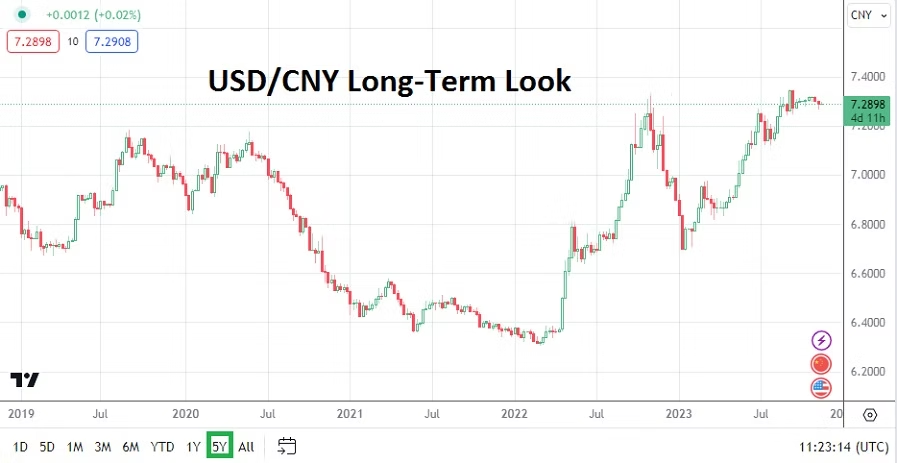
USD/CNY Five Year Chart as of 13th November 2023

Added to the ‘fun’ for speculators this week will be the APEC Summit gyrations which will be held in San Francisco, and includes a scheduled meeting with President Joe Biden and President Xi Jinping this Wednesday. The meeting comes at a critical time as geo-political and economic concerns come from Asia, the Middle East and Eastern Europe.

However, traders should not allow their emotions to grow too nervous, financial institutions actually showed a taste for U.S equity indices last week and the price of gold has declined, while the value of Crude Oil per barrel has also eroded. This shows that even in the midst of carnival like barking from pessimistic naysayers, that investors are still participating in the broad markets and makeing bets on the notion that optimism will continue to show sparks of light.

Monday, 13th of November, U.S Federal Budget Balance – this report is certain to be rather negative if studied closely. However, investors already know this story, and last week’s Moody’s downgrade of U.S credit accountability has already rang alarms. Thus, this report will likely fall on deaf ears today.

Tuesday, 14th of November, E.U Flash GDP – the numbers from the European Union are exected to be negative. However, last week’s slightly better than expected Germany Factory Orders may help the European Gross Domestic Product results limit the capability of a surprisingly bad decline. An expectation of only minus -0.1% is awaited.

Tuesday, 14th of November, U.S Consumer Price Index – the inflation numbers from the States will get the attention of most global investors. The results are sure to affect the USD, Treasury yields and equity markets. A weaker than expected outcome could propel the USD lower. Stronger than estimated statistics could ignite buying of the USD based on the notion the Fed will feel compelled to remain aggressive via its monetary policy rhetoric.

Wednesday, 15th of November, China Industrial Production – while the APEC Summit is highlighted by the media, it is economic data from China which remains important. Data from the nation continues to be lackluster and demand for commodities, the USD/CNY, domestic real estate and conusmer spending are all being watched and questioned by financial analysts. A gain of 4.5% is expected.
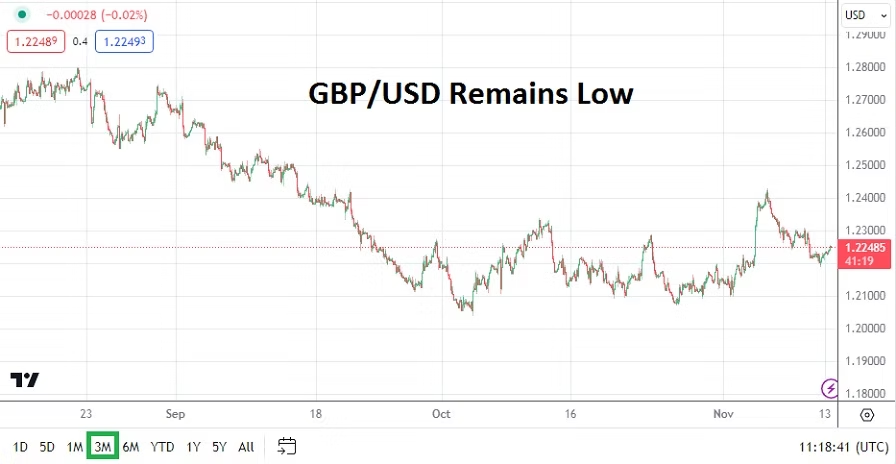
GBP/USD Three Month Chart as of 13th of November 2023

Wednesday, 15th of November, U.K CPI, the inflation numbers from Britain will be important and will follow Tuesday’s Average Earnings Index publication. The GBP/USD has found choppy terrain and the results of the combined numbers from the U.K will affect Forex, even if USD centric considerations remain key.

Wednesday, 15th of November, U.S Producers Price Index, Retail Sales, and the Empire State Manufacturing Index – these reports will be issued at roughly the same time and will factor into sentiment created from the U.S CPI data seen the day before. The combination of all these outcomes will play into the broad markets, and the USD within all major currency pairs. Weaker than anticipated numbers would be welcome by USD sellers. However, until the reports are published wagering on the USD will prove volatile and risk management is encouraged.

Thursday, 16th of November, U.S Federal Reserve Officials – at least 4 U.S Federal Reserve members will be speaking at various conferences. They are sure to give their opinions on the Federal Funds Rate outlook and will be asked to comment on the week’s data already published in the U.S regarding inflation and consumer spending.

Friday, 17th of November, U.K Retail Sales – a gain of 0.3% is expected compared to last month’s negative results. Speculators will react to the consumer driven data and the GBP/USD will again come under the influence of risk sentiment regarding outlook. However, traders need to understand these numbers are largely a result of looking backwards and not forwards regarding outcomes.

Friday, 17th of November, U.S Housing Starts and Building Permits – the American housing industry is being closely monitored and the high costs of mortgages is affecting the U.S marketplace. The Building Permits number is expected to be slightly lower than last month’s outcome. Traders should also keep their eyes on the potential of revisions to suddenly emerge from previous reports.
postN48.1

Absurd Friday Forex Results? Suspicions as the Week Begins

Absurd Friday Forex Results? Suspicions as the Week Begins

This coming week may be an opportunity where speculators can test their conspiracy thinking, perceptions of technical and fundamentals in unison. Experienced traders who typically have a high degree of skepticism about markets (particularly when results don’t go in the direction they expected) may question late last week’s results.

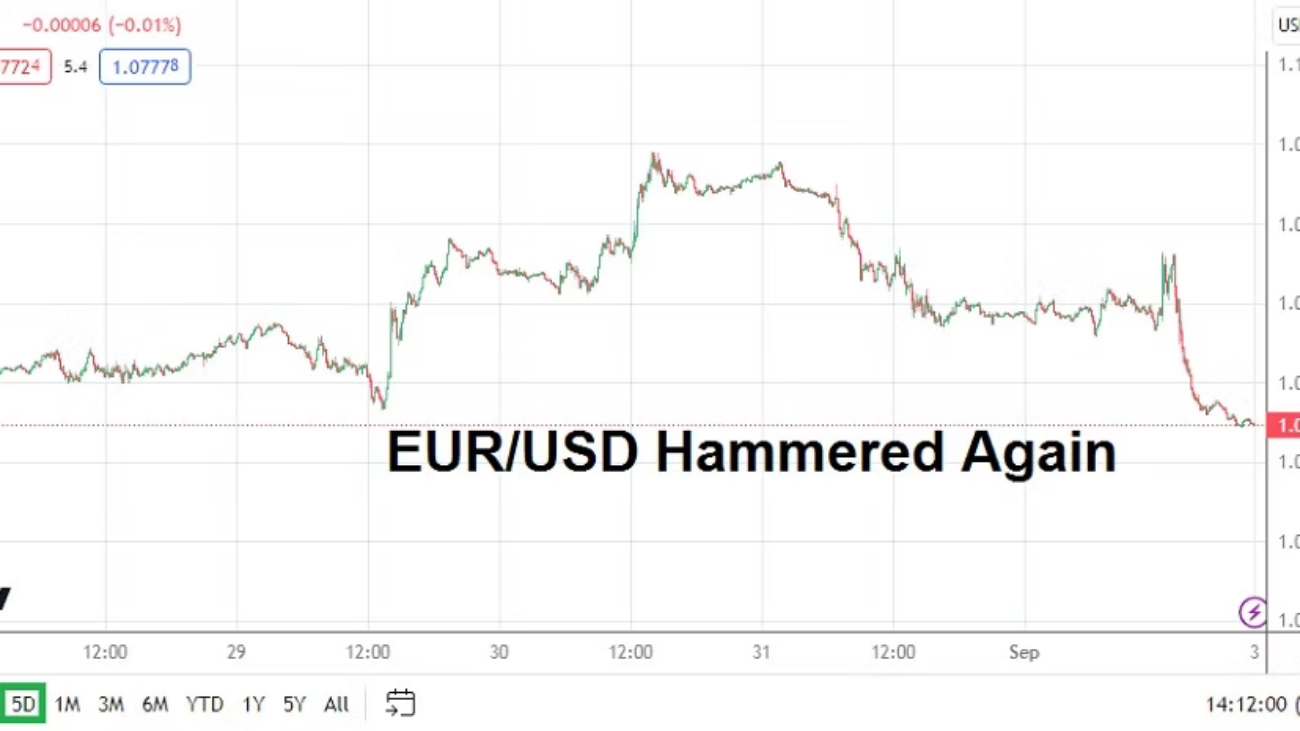
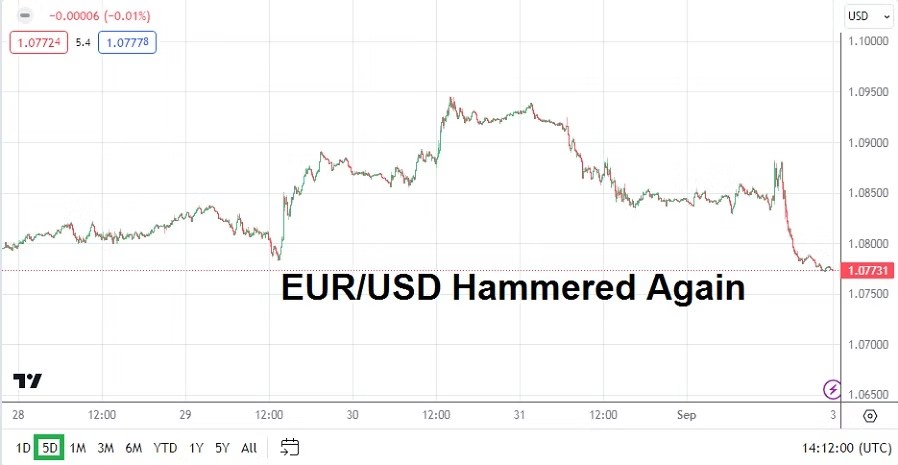
EUR/USD 5 Day Chart as of 3rd of Sept. 2023

Without trumpets or too much hyperbole, was Friday before going into the weekend a ‘false flag’, this as the USD gained strength against many other major currencies. A lack of volume because of the Labor Day holiday coming in the U.S and Canada tomorrow may have affected the Forex landscape. While trading is largely done by computer programs in financial institutions, day traders should understand last Friday worked as a get away day to enjoy a long holiday weekend in North America.

Meaning financial executives largely escaped their offices because they have seniority and the ability to disappear while their ‘underlings mind the store’. Essentially senior management often tells the staff that has to stay behind, “monitor and not touch the system”. This could have left the door open for what appears to be a strange reaction in Forex upon what was in fact weaker data on Friday from the U.S via the Average Hourly Earnings which came in slightly below expectations, and less than stellar U.S GDP results on Wednesday the 30th of August.

Yes, also this past Friday the Non-Farm Employment Change numbers were fractionally better this month than anticipated, but the prior month’s results were actually revised downward. And yet the USD remained strong. Is this because senior analysts, chief traders and risk management officers were absent on Friday?

Tomorrow the same folks will remain largely away from the markets too, meaning results should also be viewed with suspicion. Which sets the table for an intriguing Tuesday and Wednesday for all the major and minor currency pairs teamed against the USD. Gold and equity markets will need to be monitored closely too.

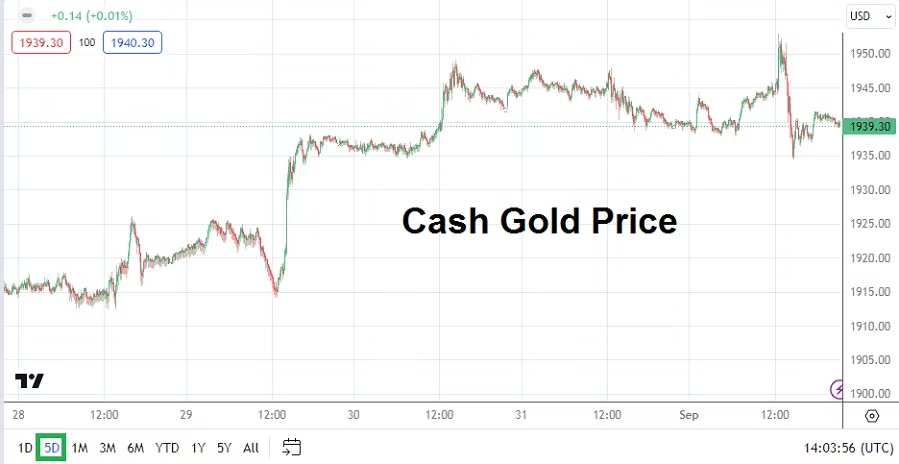
Gold Cash Price Five Day Chart as of 3rd Sept. 2023

Some potential clues are that the price of gold stumbled slightly on Friday as the weekend approached, but this happened as the EUR/USD sank to a low for the week, and the GBP/USD came under renewed pressure. But again this happened in rather questionable circumstances. Important support levels technically may get tested tomorrow, but trading volumes should be examined. Gold in many respects held onto gains made earlier in the week.

Yes, there are reasons to be nervous in financial institutions, due to higher short-term U.S Treasury yields, concerns about the China economy, mortgage rate worries in the U.S and elsewhere, fears about credit availability for small U.S businesses. However, these troubles have not caused a massive meltdown in the most primal of trading venues yet – major stock indices.

September is a notoriously volatile month for equities and speculators who use CFDs to participate in the stock markets globally need to be careful. Correct, some well known ‘traders’ are talking about a coming selloff in the markets, but so far we have not seen a major decline in the NASDAQ, S&P 500 or Dow Jones 30 indices. Day traders should not and cannot underestimate the potential for volatility to occur suddenly. Successful speculative bets via limited funds often means having to practice patience and risk management.

Thus, as the week begins early this Monday, day traders should be careful. Please note that a lack of big trading volumes because of the absence of U.S and Canadian financial institutions will make tomorrow’s results questionable. Opening the door for the potential of reversals on Tuesday, which might be abrupt as a ‘re-balancing’ of sorts takes place as folks returning to their offices seek equilibrium perhaps with their adjusted outlooks.

Simply put the U.S Federal Reserve the past two weeks has seen the same lackluster U.S data as all global traders, and the U.S central bank is in no position to raise interest rates over the mid-term. It would be useful if the Fed voiced their insights regarding the weaker than expected U.S Gross Domestic Product results last week, and the lower than expected Average Hourly Earnings report seen before the weekend. However, do not count on the Federal Reserve to do the right thing.

postN44.1

Dog Days of Summer and a Return of Calm as Storms Threaten

Dog Days of Summer and a Return of Calm as Storms Threaten

With essentially two full weeks of trading until the end of August and the unofficial end of summer in sight, perhaps this week may be a good time for retail traders to be observers if they do not have the stomach for potentially noisy speeches and markets.

However, speculators who can block out media hyperbole and microphone soundbites from folks standing on podiums may find conditions rather attractive. As always outlook depends on perspective, time frames and managing risk. Behavioral sentiment has been rather chaotic the past month and some traders may suspect we are approaching the end of the loud spectacles of nervous drama in the markets.

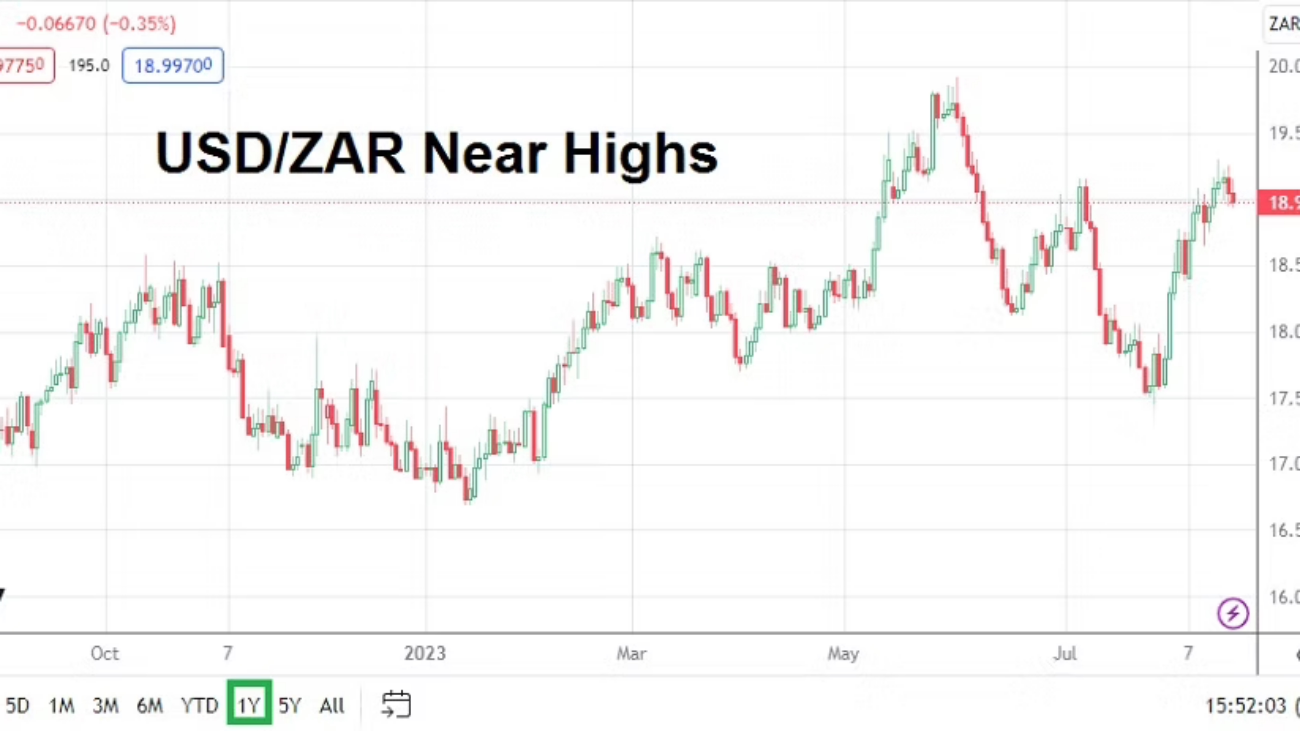
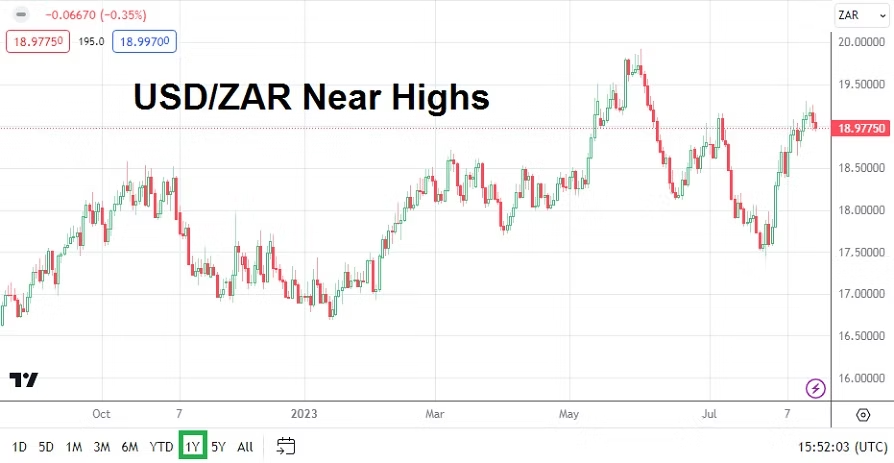
USD/ZAR One Year Chart as of 20th August 2023

The economic data this coming week should prove to be a rather mild schedule, but outside influences will certainly get publicity and get fanfare from talking heads who want 15 minutes of your attention. The BRICS Summit will get underway in Johannesburg, South Africa officially on the 22nd. Another big conference later this week will be the U.S Federal Reserve’s Jackson Hole Symposium. Both events will produce plenty of conversations about inflation, economic stability and a more cohesive global cooperation monetarily. This will also create many raised eyebrows among traders who are skeptical about these type of events.

While leaders of China, Russia, India, Brasil and South Africa get together in Johannesburg, it is likely we will hear talk about potential BRICS expansion and the pursuit of a new unified currency which doesn’t rely upon the USD. However, in the background there is likely to be plenty of distraction because of China’s faltering economic data and Russia’s Ruble which has been impacted severely in the past month. Plenty of large rugs will be needed to hide the dust which threatens to make this BRICS event rather memorable.

Add the ongoing saga of Niger and the absence of a political solution for the world’s fourth largest producer of uranium as a potential flash point standing on the side of the stage waiting to make an appearance regarding Africa news. Perhaps it is too cynical to wonder if coordinated military action within Niger will await the end of the BRICS Summit. This so China and Russia are not given an opportunity on the ‘world stage’ as a united voice to offer their opinions regarding an intervention.

The Jackson Hole get together of global central bankers from the Fed, BoE, ECB, BoJ and others will certainly grab headlines late this week, but the script is mostly known regarding the rhetoric to come from the Federal Reserve’s annual event. Forex may move based on comments from the central bank chiefs as they speak towards the end of this week, but it is unlikely anything surprising is going to be heard. U.S Treasuries will remain a topic because of the ability to lock in a solid return over the mid-term compared to betting on the outcomes of the stock market, but this scenario has been playing out the past month. Investors should prepare for a long line of speeches regarding economic outlooks from central bank officials all week. Day traders should also remember that the chatter starts to be ‘tuned out’ as the speeches grow longer.

Traders looking for other outside influences may want to look at the cryptocurrency market where major assets have shown signs of struggling. Bitcoin and Binance coin could remain in the headlines for all the wrong reasons, if their prices continue to challenge important support levels and become more vulnerable.

Monday, 21st August, China Prime Rates – economic data from the nation has caused concerns that real estate problems are spilling over into the domestic consumer market. The interest rates China lends money to consumers is expected to be lowered to try and spark spending. Recent economic reports from China have been bad, and readers who believe this is merely ‘Western’ bias being reported should be careful to look for other sources to confirm data. Investment within the second biggest economy of the world has become tentative, because there is a fear the ‘official’ China numbers may be worse than those being reported.

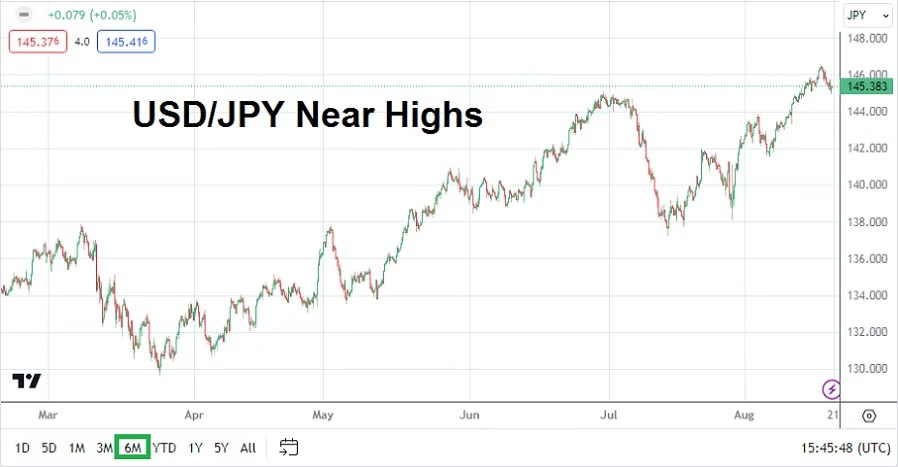
USD/JPY Six Months Chart as of 20th August 2023

Tuesday, 22nd August, Japan Consumer Price Index – the Bank of Japan report is expected to show a slight decline to the inflation numbers. Last month’s outcome of 3.0% is expected to lower and produce a 2.9% result. The USD/JPY could react momentarily to the outcome, the currency pair is near highs it hasn’t touched since November 2022.

Tuesday, 22nd August, U.S Existing Home Sales – the data is expected to show a slight decline of purchases. Mortgage prices continue to climb in the U.S and homeowners are less likely to desire taking on a new higher mortgage, this if they already have a lower mortgage locked in from a few years ago within a dwelling they already live.

Wednesday, 23rd August, Flash European Manufacturing and Services PMI – the reports will come from the E.U and U.K. The German and British outcomes will stir the Forex markets. The manufacturing data from Germany and Britain are forecast to be slightly negative.

Wednesday, 23rd of August, U.S Flash Manufacturing and Services PMI – the U.S reports are expected to show a decline in the manufacturing sector. If a negative result materializes, this could actually spark a selloff of the USD – if the financial markets have returned to calm waters by the middle of this week. Weaker numbers might be interpreted as another reason for the U.S Federal Reserve to remain neutral and why they should consider becoming dovish over the mid-term.

Thursday, 24th of August, U.S Durable Goods Orders – the core and broad numbers are anticipated to show declines. If the Durable Goods Orders numbers are worse than expected this could spark more USD selling, particularly if financial institutions are already calm and feel the data is another step to ‘lowering’ the Fed’s hawkish interest rate rhetoric. However, for the USD to weaken the markets will likely have needed to be tranquil beforehand, without major surprises having happened earlier in the week that may have escalated nervous behavioral sentiment in the broad markets.

Friday, 25th of August, Germany Business Climate and GDP – the ifo Business Climate report comes from a composite of manufacturers, wholesalers, and other enterprises and is expected to be lower than last month’s outcome. The Gross Domestic Product results are anticipated to show no changes, which would mean Germany’s economy remains in the doldrums and is flirting with recessionary pressures.

Friday, 25th of August, U.S University of Michigan Consumer Sentiment – this revised reading is expected to show U.S consumers remain steady without significant changes compared to the previous outcome.

postN39

USD/INR: Higher Move Correlates and Political Shadows Loom

USD/INR: Higher Move Correlates and Political Shadows Loom

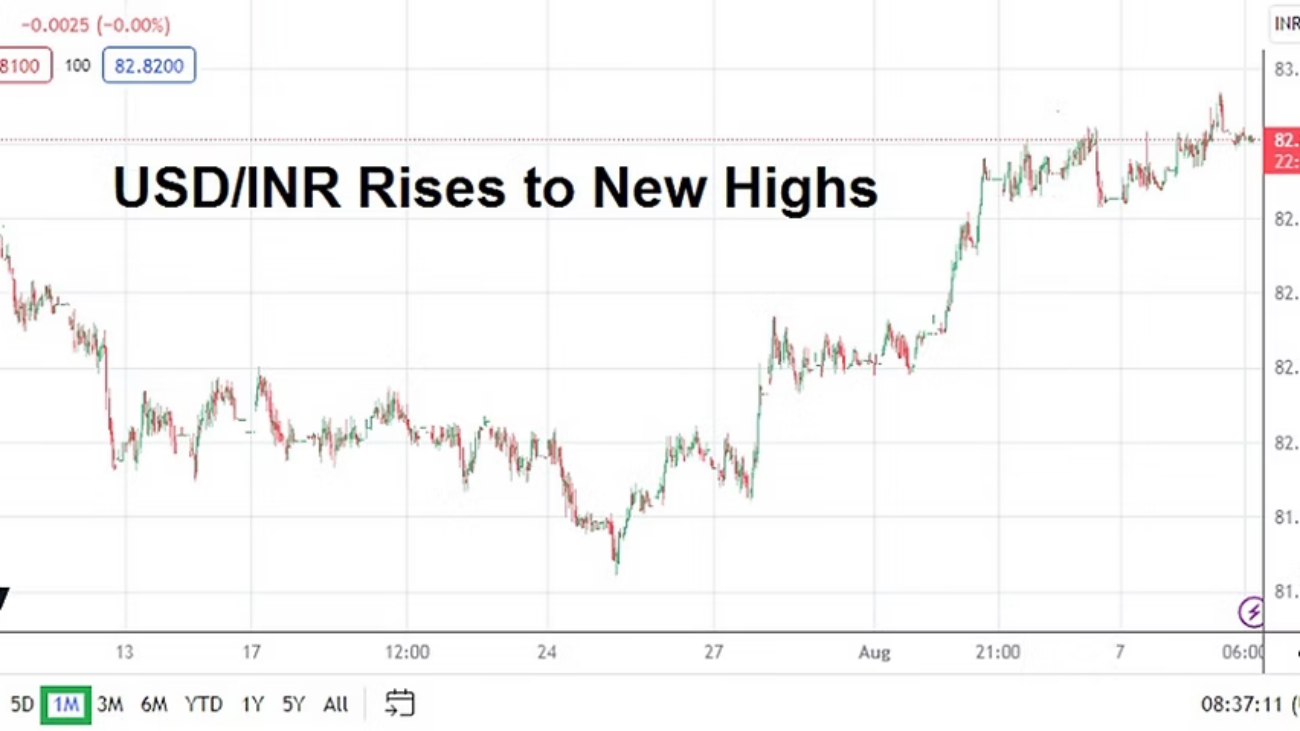
The USD/INR is near the 82.8150 ratio as of this writing the 9th of August, on the 25th of July the currency pair was near the 81.6500 level momentarily. Upwards movement of the USD/INR did produce price volatility in the last week of July, and on the 1st of August the Forex pair was near the 82.1700 ratio. Another dose of upwards momentum quickly occurred on the first day of August, and by the 2nd the USD/INR was trading around the 82.7650 mark.

From Wednesday of last week the USD/INR has essentially taken on a consolidated framework, speculators who are gambling on the USD/INR and need big movement to occur in order to facilitate profits have likely found the currency pair difficult to manage. Yesterday a high of nearly 82.9500 came within sight briefly, this as global risk adverse conditions arose because of the Moody’s rating agency downgrade of some U.S mid and small size banks regarding their fundamental ‘soundness’ and credit worthiness.

Rising interest rates from the U.S Federal Reserve have made it harder for many U.S banks to conduct their business, and loans have become more expensive for their clients struggling to keep up with the rising payments. Particularly if borrowers have the unfortunate position of holding ‘variable’ loans which cost more when interest rates are going up. This has also affected the housing sector in the U.S and in the U.K, as mortgages have become highly priced due to the Federal Reserve and Bank of England having aggressive interest rate policies which are affecting the cost of new home purchases.

The question USD/INR traders may be asking is what does this have to do with them?

USD/INR One Month Chart as of 9th of August

The USD/INR Doesn’t Trade in a Vacuum

The USD/INR has risen in value the past two and half weeks as many other major currency pairs have suffered a similar fate. Nervous sentiment abounds in the global markets because financial institutions are wary of what the major central banks will do next. U.S economic data has been mixed recently, but this perspective depends on time frames regarding outlooks.

Short and mid-term viewpoints continue to point to complications regarding growth and inflation expectations and interpretations of U.S data. The ratings downgrade of some U.S banks from Moody’s yesterday, and early last week Fitch’s downgrade of U.S Treasuries all is related. Rating agencies are getting nervous, perhaps because they do not want to be blamed and held liable if the proverbial ‘fluff’ hits the fan over the mid-term. Rating agencies largely ‘missed’ the financial crisis of 2007 in a famously bizarre manner. The sudden emergence of rating agencies warning investors has made the USD stronger as global investors have become risk adverse temporarily. Yes, this might feel illogical, but the USD remains the world’s safe haven.

The USD/INR also certainly trades because of economic conditions affecting its value from within India. The Reserve Bank of India has a large hand in managing values and is known to be rather active regarding interventions. Yet the USD/INR is being ‘allowed’ to continue to trade near all-time highs. This as India’s status as a growing economic power has taken shape in the global financial markets the past year. The India government has not been aggressive regarding its interest rate policy, and has allowed inflation to seep into the domestic economy via a weaker Indian Rupee for a number of complex reasons. Purchasing goods from India abroad and the ability to invest in India by global financial institutions may be more attractive to those holding USD and needing to convert into INR only when the time is necessary.

Politics and the USD/INR Price Level as 2024 Elections Start to Lurk

From a political perspective too, let’s acknowledge a general election will take place in India in April and May of 2024. Economic decisions being made today and for the mid-term are certainly being affected by the ruling Indian government’s outlook and desire to remain in power. Having come off of yesterday’s highs in the USD/INR the currency pair does remain within sight of highs.

The 83.0000 level likely remains a key barometer for the USD/INR and the Reserve Bank of India is likely watching this value carefully. While it seems unlikely the India government wants the USD/INR to trace much higher because of the psychological implications, global risk adverse sentiment are making the higher values of the currency pair sticky. Tomorrow’s inflation data from the U.S will affect Forex and the USD/INR via the Consumer Price Index. Friday the U.S Producer Price Index will be published. A slight rise in the broad CPI results tomorrow is expected, while Friday’s PPI outcome is expected to match last month’s numbers.

If risk adverse trading remains evident today and the USD/INR holds its ground over the next 20 hours, the currency pair could find that its consolidated price movement from the past week suddenly changes. A higher tick in U.S inflation could be enough to cause the USD/INR to challenge the 83.0000 ratio. Speculators who are wagering on the USD/INR are cautioned to be pro-active regarding their risk management the remainder of this week.

postN28

Week Ahead: Inflation will be the Crucial Word for Investors

Week Ahead: Inflation will be the Crucial Word for Investors

Last week finished with another reminder that inflation cannot be easily scoffed at by investors who continue to believe higher prices will eventually slowdown. Average Hourly Earnings last Friday came in above the expectation and this was enough to rattle Wall Street again, which saw the major equity indices decline and bond yields incrementally rise. Inflation ‘talk’ will remain important this week because of coming U.S data.

Real Estate including REITS becoming a Topic of Discussion as Mortgages Rise

Market watchers should also pay attention to news regarding mortgages on residential homes, and listen for troubles from the commercial real estate market, as these sectors deal with rising interest rates in the U.S and U.K. Increased nervousness within these markets could have an affect on behavioral sentiment. Let’s remember the catalyst for the financial crisis of 2007 was the real estate sector.

Which brings us back to inflation and the growing acceptance among investors the U.S Federal Reserve may be ‘forced’ to hike the Federal Funds Rate on the 26th of July, if price data continues to come in ‘hot’. Some investors will likely be heard saying an increase of 0.25% has already been factored into marketplace, but the prospect of another hike in late 2023 could be problematic. Forex, gold and bonds dynamics will tell us a lot when this week concludes regarding outlooks.

BNB/USD Price Should be Monitored as Binance Trembles

An outside source of financial and speculative news is likely to come from cryptocurrency. If you are gambling on this asset class (or should we say commodity based on hot air) and like the adventure of wagering, please continue to pay attention to Binance which is showing signs of duress. If the Binance cryptocurrency exchange shows additional signs of pressure on its BNB (Binance Coin), trading waters within the world of crypto could trigger additional drowning victims. If you thought the Sam Bankman-Fried story made interesting news last year regarding fraud and other criminal activity, the FTX saga could prove to be only the tip of the iceberg.

Data Events Ahead to Watch

Monday, 10th of July, China CPI and PPI – the inflation data could prove important for investors who correlate economic statistics from China into their global forecasts. Traders within India should pay attention to these Chinese price reports, because global investors are starting to shift their assets into the Nifty 50 and other NSE equities because of risk and reward equations.

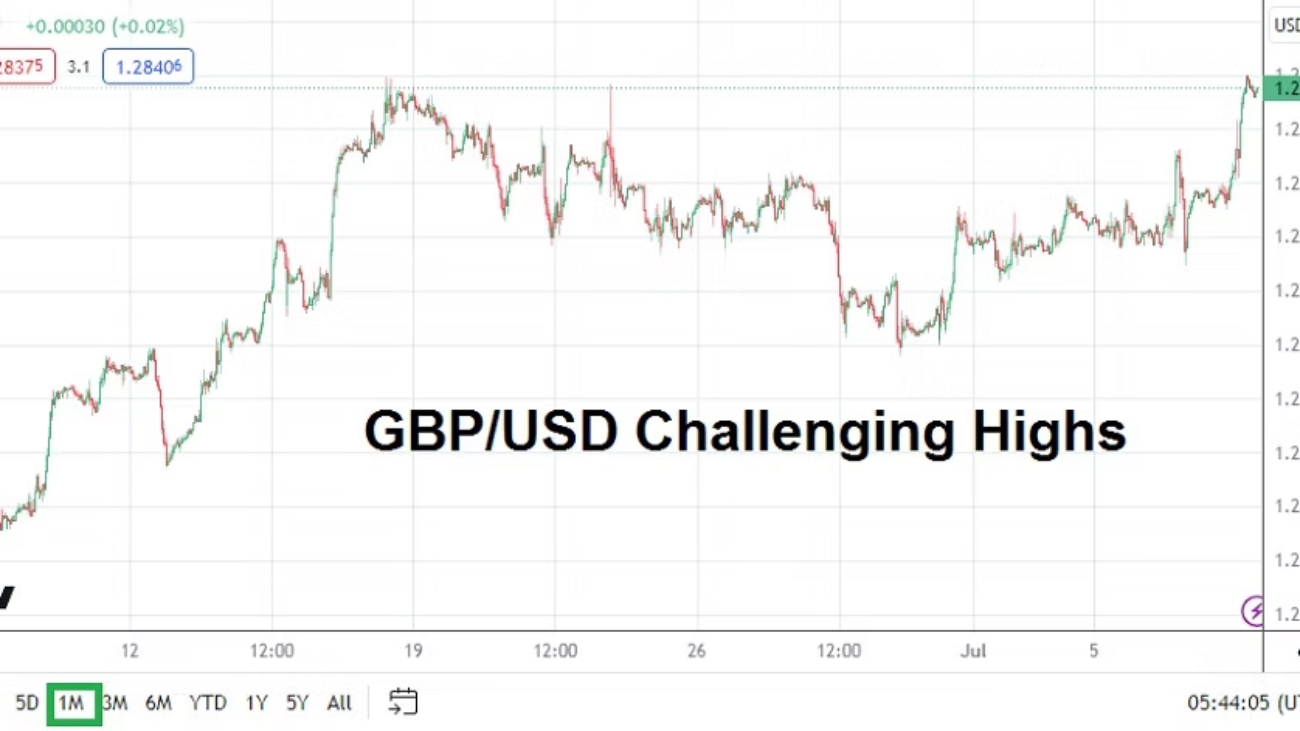
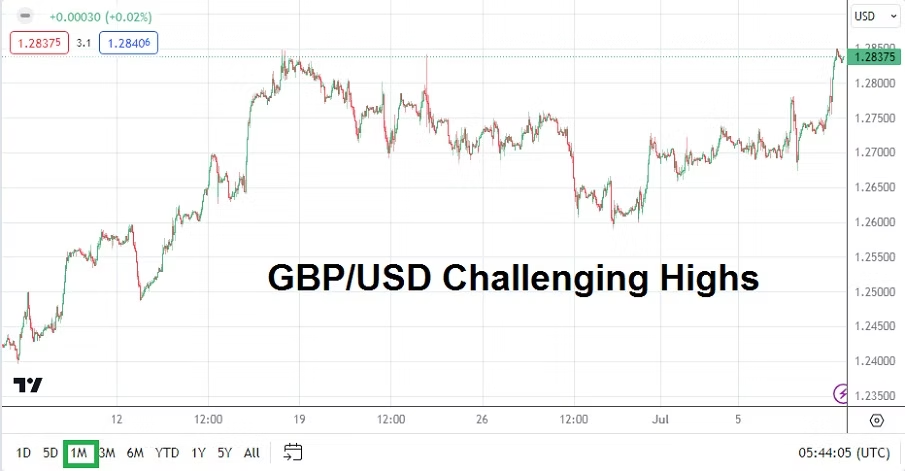
GBP/USD One Month Chart as of 9th July 2023

Tuesday, 11th of July, U.K Claimant Count Change and Average Earnings Index – the numbers need to be watched by GBP/USD speculators. The results from the U.K will be intriguing because of employment results, but more importantly for inflation concerns and the knock-on effects. Bank of England Governor Andrew Bailey is speaking a few times this week, and this includes Wednesday the 12th of July, when he will talk about the Financial Stability Report. The GBP/USD has moved towards monthly highs recently.

Wednesday, 12th of July, New Zealand RBNZ Official Bank Rate – NZD/USD day traders will want to pay attention to the central bank’s Rate Statement. While no increase of interest rates is predicted, the Reserve Bank of New Zealand at a minimum will likely have to admit inflation remains a concern.

Wednesday, 12th of July, U.S Consumer Price Index – the inflation reports from the States will have all eyes on the outcomes of the monthly and annual comparisons, including the Core numbers. The results from these inflation statistics will certainly cause momentary volatility within Forex with the USD as the focal point.

Wednesday, 12th of July, Canada BoC Overnight Rate – the Bank of Canada is expected to hike its interest rate by 0.25% to the 5.00% mark. USD/CAD will react to the BoC Rate Statement based on its outlook.

Thursday, 13th of July, U.K Gross Domestic Product – the ‘growth’ numbers are not expected to be positive. A drop of minus -0.3% is the expectation. Talk of recessionary pressures in Great Britain will be heard. Unfortunately, the discussion about a struggling economy, mixed with stubborn higher prices for consumers and mortgage rates that are rising will not make for calm stomachs. U.K equity results via the FTSE 100 Index should be monitored.

Thursday, 13th of July, U.S PPI – the Producer Price Index figures will be the last cog within the important inflation data for the week. Stubborn prices for wholesale goods are a concern, because the costs to consumers becomes more expensive when there are higher price pressures.

Friday, 14th of July, U.S Consumer Sentiment via the University of Michigan – if the Consumer Sentiment readings from the UofM report improves, and the U.S inflation data which was released earlier this week has proven stubborn, this could become a source of pain for investors who may be forced to consider the Fed will not only raise the Federal Funds Rate late July, but later in 2023 also. Short-term traders should monitor this report accordingly.