postN76.1

India Insider: Strategic Memory and Why Unilateral Power is Resisted

India Insider: Strategic Memory and Why Unilateral Power is Resisted

After Independence, India was often described as “tilting” toward the Soviet Union. In reality, this was the outcome of India’s pursuit of Non-Alignment at a time when the United States was actively backing perceived rogue actors in South Asia, most notably Pakistan. What appeared as ideological preference was, in fact, strategic necessity born of hard experience.
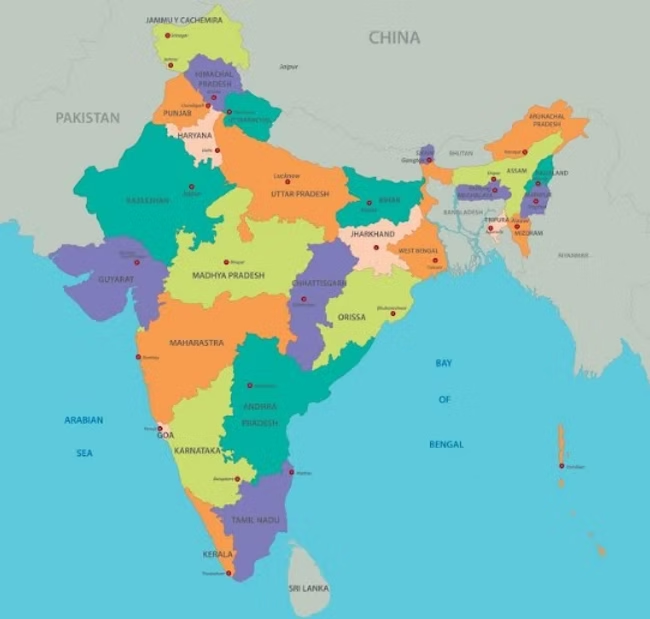
The Soviet Union supported India on core security concerns when few others would. The first major Soviet defense deal was not merely a weapons sale. It included licensed production in India through Hindustan Aeronautics Limited, full technology transfer, and made India the first non-Communist country to receive the MiG-21. This distinction mattered. India was treated as a sovereign partner capable of absorbing technology, not as a dependent client expected to align unquestioningly.

By contrast, Washington’s alignment with Pakistan was driven by Cold War geopolitics rather than South Asian stability. Despite repeated military coups, wars with India, and regional destabilization, the United States armed Pakistan, provided diplomatic cover during conflicts, and sustained the relationship through military rule and nuclear proliferation. These experiences deeply shaped India’s strategic culture and explain its enduring emphasis on autonomy, redundancy, and diversified partnerships rather than alliance dependency.

This history is one of the central reasons India resists Washington dictating regional dynamics. South Asia, in New Delhi’s view, is not a chessboard for external powers to reorder at will.

Democratic Republic of the Congo Example

The same pattern is visible beyond Asia. Take the Democratic Republic of Congo. After decades of horrific colonial exploitation, the Belgians realized by the mid-20th century that they could not hold on indefinitely and exited abruptly, having never prepared the country for self-rule. What they left behind was not independence, but a political vacuum. The United States and the United Nations intervened, but their actions were shaped less by concern for Congolese society than by geopolitical rivalry, ideological competition, and racial hierarchy.

The assassination of Patrice Lumumba destroyed the Republic of the Congo’s (as it was known then) only credible attempt at building a unified nationalist state at independence. The dictatorship of Mobutu Sese Seko that followed did not merely fail to develop institutions; it actively hollowed them out. Corruption became a governing principle, loyalty replaced competence, and the state turned into a vehicle for extraction. Today’s instability in the Democratic Republic of the Congo is not a governance failure in isolation—it is the predictable outcome of a political system designed to rule without building state capacity. For countries like India, this is not ancient history, it is a warning.

Washington’s unilateralism reinforces this mistrust:

The recent military operation to remove Venezuelan President Nicolás Maduro without U.S Congress authorization, international legal justification, or an imminent threat would have been unthinkable as recently as the first Trump administration. It became possible in 2026 only because of congressional capitulation, judicial immunity, and the transformation of an apolitical defense establishment into a politicized instrument of executive power. To much of the world, this signals that restraint is no longer embedded in American decision making.

Europe exposes another contradiction. The post war order was built on liberal democracy and collective security through NATO. When that order is weakened by unilateral action, trust erodes, even among allies expected to align automatically.

Even before Trump, the U.S – India relationship remained cordial rather than fully strategic. Before 9/11, India was the most natural regional ally against Al-Qaeda, yet Washington lacked patience and local understanding to navigate India’s complex democracy and nationalism. That failure was not tactical, it was conceptual.

India’s neutrality today is deliberate:

It prioritizes diplomacy over military actions that violate international law. India sees a multipolar world emerging, not as disorder, but as the end of unchecked unilateral supremacy. This is not ambiguity. It is a strategic memory.

post246

An Expanding Axis – Will Egypt and Pakistan Become Members?

An Expanding Axis - Will Egypt and Pakistan Become Members?

Opinion: The following article is commentary and its views are solely those of the author. This article was first published the 26th of May via The Angry Demagogue.

China seems to be taking advantage of the transition from the Obama-Biden appeasement based foreign policy to the Trump commercial based system. Whereas Obama-Biden had no problem punishing allies that dared to oppose the US-EU appeasement and woke revolution, Trump is looking to create alliances based on commerce – and threatens allies that don’t go along. While the Obama-Biden policy failed utterly and arguably caused the wars in Ukraine and the Middle East, the Trump administration seems to be playing for time as it restructures the global security order.

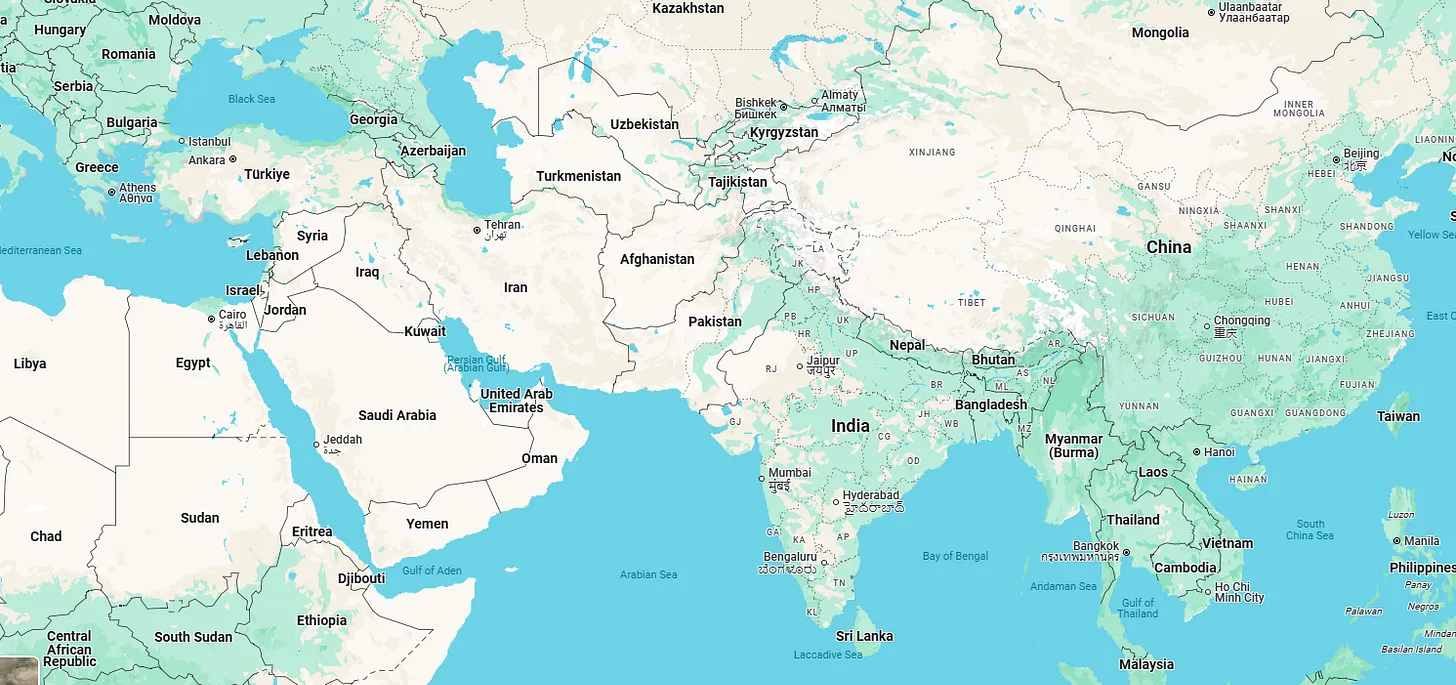
China however does not seem to care to wait and are stretching their sway not only in the South China Sea but westward towards the Middle East. The four member Axis – Russia, China, Iran and North Korea seems to be expanding to other countries with strong military dictatorships. Egypt and Pakistan will be the next members of the Axis. While much of China’s belt and road policy deals with bankrupting poor, weak countries, they seem now to concentrate on strong military dictatorships. Egypt and Pakistan are being pried from the western camp as we speak.

Pakistan has, for awhile not been firmly in the western camp. It was a cold war U.S ally as India, while democratic, sided with the Soviets on most international issues. While the US was busy in Afghanistan, the Pakistanis played double agent. Now that the U.S is not in the region and the U.S and India have become closer, Pakistan is now firmly in the Chinese camp.

In addition to Pakistan, Egypt becoming the next major member of the Axis.

Let’s take a few steps back and examine the burgeoning relationship between Egypt – a military dictatorship and Communist China. As we have written China and Egypt had joint military maneuvers that included deliberate violations of the Egyptian-Israeli peace treaty guaranteed by the United States. Egypt, in thumbing its nose not only at Israel but at the United States, allowed Chinese planes to approach the Israeli border in order to test Israeli reaction to a possible invasion. Multiple Chinese military cargo jets flew in undisclosed hardware in the days leading up to the maneuvers.

Three more Chinese Y-20 cargo planes landed in Egypt last week again, carrying unknown hardware. At least one of these planes came from Pakistan. Egypt also seems to be signing major arms deals with France as Macron reeks of desperation in his attempt to remain relevant – but a de Gaulle he is not, and he will not be able to create a force or policy independent of the U.S. Egypt will be glad to take advanced French weaponry while it creates a stronger alliance with China.

Back to Pakistan one has to wonder if the Pakistan-Indian flareup a prelude to what can happen in other theatres – or worse, a purposeful conflagration to test Chinese weapons systems in actual combat and keep the West on its back feet? According to most reports they were able to shoot down between 3 and 5 of France’s most advanced Rafal fighters without even entering Indian territory. The confrontation started with a heinous terrorist attack against Indians in Kashmir by a terror group associated with the Pakistani armed forces. India claims that Pakistan is directly involved in the attack. If so, this would not have been the first one.

The downing of the Indian French built Rafal fighters by Pakistan’s Chinese produced 10-C was, according to expert reports, not just or even mainly superior piloting but with a Chinese strategy and technology that includes all aspects of air power – including recognition of the target, locking on and attack from distances in what an American air expert called a perfect air based killing machine. This would seem to be the first real test of Chinese advanced air-power and it something that needed to be done before any invasion of Taiwan. This may not test their own pilots but it does test the strategy and the technology.

China has a main medium term goal here and it is not a secret. They are planning to take Taiwan by force and need to make sure their soldiers, sailors and hardware are up to the job. They have seen how poorly the Russian army has performed and have seen how Israel has dismantled Iran’s defenses and swatted away Iran’s offensive attacks. China has not fought a major war for decades and for all the advances they say they have made – all have been untested. Until now.

China will not risk a war with India itself but would be more than happy to have its proxy involved. Chinese fighters and their new “over the horizon” missiles are key in their plans to deter the U.S from defending Taiwan – or in defeating U.S naval airpower if the U.S does get actively involved. However, as close as French technology is to America’s it is not the same and the one country that seems to have taken U.S technology to the next level is Israel. How would Chinese weaponry due against American arms in the hands of an air force equivalent in skill and bravery to the American air forces? That has yet to be tested but that brings us back to Egypt. Is it in China’s interests for Egypt to make a major break with the U.S at China’s urging much as they made a break with the Soviet Union at America’s urging? Of course. Would that mean that China might help Egypt provoke a military confrontation with Israel in order to test Chinese arms and relieve pressure on Iran? Maybe.

On to Iran then, where it does not seem that the Americans or Israelis understand the nature of the Iranian-Chinese relationship. Not only does China get the bulk of its oil (subsidized) from Iran but they have just completed a rail link from Xinjiang, China to Teheran, Iran – running through four countries. This rail line can ship oil as well as other cargo, cutting into the American (and Indian) naval superiority around the Persian Gulf and Indian Ocean. The assumption by military planners has always been that the U.S can cut off Chinese access to oil, if necessary. That is no longer the case.

China is not standing still – they are expanding their axis of dictatorships to countries in which the army is in control. Pakistan and Egypt qualify. Iran, while a theocracy is controlled by the Iranian Revolutionary Guards. No matter the “deal” that the Trump administration negotiates with Iran they will not be pried away from Iran. China has more to offer an ideological dictatorship then commercial deals with the United States. What the alleged realists in foreign policy refuse to understand is that dictatorships have no interest in commercial success if it weakens their grip on power. They are interested in deals that enrich their regimes since that also strengthens their grip on their people.

The trillion of so dollars in deals that the U.S has now made with the Persian Gulf states ensures that America remains a player in the middle east. Those who think that the Mideast is a tertiary region at best – after Asia and South America – need to rethink their strategies. As China closes in on control of the world from the Pacific to the Mediterranean the U.S is left with just two military powers it can depend on – Israel and India – to help defend its old/new commercial interests. It is not only oil – it is not Boeing jets, Nvidia chips and many other products that are moving from the US to the Gulf as opposed from the Gulf to the U.S. The U.S is no longer a commercial client of the Gulf states but the country who needs to protect its clients. The relationship has changed but the security relationship has only gotten more important.

The addition of Egypt and Pakistan to the Axis means that the Chinese threat has expanded. They are not giving up on Taiwan, nor are they giving up on South America and the Pacific Ocean but rather, China is using its experience as a dictatorship to strengthen ties with other freedom hating countries. We can all pretend that values and culture don’t matter, but that doesn’t mean that they don’t. This Axis is one where the interest of each member is to stay in power, force its will on its people and enrich itself at the expense of its people. This is an Axis, not only of the unfree, but of those who need to eradicate freedom to “thrive”.

Disclaimer: the views expressed in this opinion article are solely those of the author, and not necessarily the opinions reflected by angrymetatraders.com or its associated parties.

You can follow Ira Slomowitz via The Angry Demagogue on Substack https://iraslomowitz.substack.com/ 

post224

The Greatest Rivalry: India vs Pakistan: Netflix Doc. Review

The Greatest Rivalry: India vs Pakistan: Netflix Doc. Review

The India-Pakistan cricket rivalry is one of the most intense and storied in the history of sports. This 3-part Netflix documentary delves into this historic cricket rivalry, focusing primarily on the 1999 and 2004 tours. While it provides an engaging look at these high-stakes encounters, the series feels somewhat incomplete, as it largely skips over the period before 1999 and rushes through the events post-2004, condensing nearly two decades into the final 10 minutes of the last episode.

The Greatest Rivalry: India vs. Pakistan – A Review of the Netflix Cricket Documentary

One of the more thought-provoking moments comes from Pakistani journalist Osman Samiuddin, who draws a cultural comparison by noting that Pakistan’s savings rate lags India’s. He suggests this reflects differing life philosophies – Pakistanis living more in the present versus Indians planning more for the future. Indian journalist Ayaz Memon describes the 1999-2004 era as a clash between Pakistan’s world-class bowlers and India’s formidable batsmen. However, the reality is that both teams were evenly matched during this period, adding to the intensity and unpredictability of their contests.

The documentary effectively captures the electrifying atmosphere whenever these two nations face off, highlighting the high emotions and record TV ratings. Indian cricket legends like Sunil Gavaskar, Kris Srikanth, and Sourav Ganguly provide insightful commentary, but it’s Virender Sehwag who takes center stage for his pivotal role in the 2004 series. On the Pakistani side, Shoaib Akhtar, at the peak of his career, is a key figure, alongside Javed Miandad, Waqar Younis, and Inzamam-ul-Haq. John Wright, the coach of the Indian team in 2004, also shares some noteworthy behind-the-scenes anecdotes.

The series makes a commendable effort to keep political tensions at bay, but the deep-rooted rivalry between the two nations inevitably influences the narrative and the emotions of fans on both sides.

A brief segment touches on the Indian Premier League (IPL), cricket’s biggest moneymaker, noting that Pakistani players participated in the inaugural 2007 tournament. However, the 2008 Mumbai terror attacks led to a political fallout, resulting in the exclusion of Pakistani players from the IPL. This absence has deprived the league of some exceptional talent and the unique buzz that a cross-border rivalry would have generated. The documentary provocatively suggests that had Pakistani players continued in the IPL, the fierce on-field competition might have evolved into a more sporting rivalry, possibly softening fan perceptions across borders.

The timing of this documentary is particularly relevant, with the 2025 Champions Trophy starting this week (Feb 19) in Pakistan. However, citing player safety concerns, India has opted to play all its matches at a neutral venue in Dubai. This decision underscores the ongoing political tensions that overshadow cricketing ties. The documentary leaves viewers pondering whether a day will come when sports can take precedence over politics, allowing fans in both countries to once again experience the thrill of live, cross-border cricket.

Overall, while the documentary provides a nostalgic and thrilling account of one of cricket’s most storied rivalries, a more balanced historical perspective and deeper exploration of the post-2004 era would have made it even more compelling.

postN51

AMT Top Ten Miscellaneous Postings for the 5th of April 2024

AMT Top Ten Miscellaneous Postings for the 5th of April 2024

10. Petrichor: The pleasant smell after a rain has fallen following a long dry spell which elicits earth’s fragrance. The Fed is likely hoping for this sensation via ‘weaker’ Non-Farm Employment Change numbers today. In December the Federal Reserve spoke about data signals needed in order to cut interest rates. If jobs statistics are stronger than anticipated, there will be no ‘petrichor’ for the Fed.

9. Underreported: Five engineers from China on their way to work for the Dasu dam project they participated, were killed in a ‘suicide’ terrorist attack in Pakistan on the 26th of March. Terror attacks in Pakistan on Chinese involved with infrastructure ‘Economic Corridor’ work have been increasing.

8. Qubits: Microsoft and Quantinuum recently announced they have made breakthroughs regarding quantum computing research reliability. Results have shown 14,000 ‘test routines’ without errors. The emergence of quantum technology approaches.

7. Intrinsic Value: Cocoa is near 9640.0 USD per metric ton as of this morning and remains speculatively energetic. Bitcoin is slightly below 67,000 USD and continues to ‘beat’ the notion that intrinsic value is important.

6. Precious: Gold prices have ‘fallen’ below 2300.00 USD per ounce, and is near 2289.00 for the moment, but the metal is shining as crowds admire its ability to create a safe haven.

5. WTI Crude Oil: Middle East news is rumbling and hyperbole is resonating, the price of the commodity is over 86.40 USD per this writing. A calm weekend, and peaceful end to Ramadan this coming Tuesday might help calm nerves. Higher oil prices will not help global inflation.

4. Forex: The USD/JPY has started to experience waves of volatility and has recently challenged long-term highs. Bottom line is the notion that large players are positioning for today’s U.S data which will affect all financial assets as USD centric power resounds.

3. Equities: The U.S major stock indices are beginning their day near lows not seen since the 15th of March for the Dow 30, and the 19th of March for the S&P 500 and Nasdaq Composite. Nervous?

2. Bonds Watch: U.S Treasuries need to be monitored as the 5, 7, and 10-Years Notes respond to nervous investors and fears of a new ‘inversion’. Having come off of high yields a couple of days ago, doesn’t mean all is well as values languish near late September 2023 technical realms.

1. Data: Recent chatter from many Fed FOMC members have created anxious investors. Vivid reactions will occur after the Non-Farm Employment Change and Average Hourly Earnings. Bluntly, today’s jobs reports are crucial and the Fed would like the results to be weaker than anticipated in order to consider cutting interest rates. However, if hiring comes in stronger, it would be a sign of a resilient U.S economy and would ignite more USD strength. The first half hour following the jobs numbers may look counter-intuitive regarding price action as financial institutions adjust their trading positions.

postN99

Regional War Spreads: Will Blinken Wake Up to the Reality?

Regional War Spreads: Will Blinken Wake Up to the Reality?

Opinion: The following article is commentary and its views are solely those of the author.

Despite the denial of reality by the Blinken State Department the Middle East war gets hotter and spreads eastward (even without) Israel’s intervention. After spending years appeasing the Iranians the world is now faced with the results of that policy. 

Iran has trained and funded terrorists in Gaza and the West Bank where the high intensity battles continue. In Lebanon-Israel there are close to 100,000 Israelis displaced, and it seems more Lebanese have left the area south of the Litani as heavy rocket, tank, artillery and air attacks continue from both sides of the border. Attacks have intensified against Israel from Syria and Yemen, and Iranians and their militias are attacking U.S forces in Iraq and Syria. Turkey, Russia and Syrian forces continue bombing areas of northern Syria and now both Iran and Turkey are bombing Kurdish lands.  

We know what is going on in Yemen and the surrounding seas with global shipping coming to a standstill there, and diminishing Suez Canal traffic is slowly crippling an already disastrous Egyptian economy. The U.S and the U.K have been forced to bomb Houthi areas, but this of course is after the total failure of the Blinken foreign policy of ‘ending’ the war in Yemen by cutting arms sales to the side that was pro-West while encouraging Iran to continue funding, arming and training of their Houthi allies.

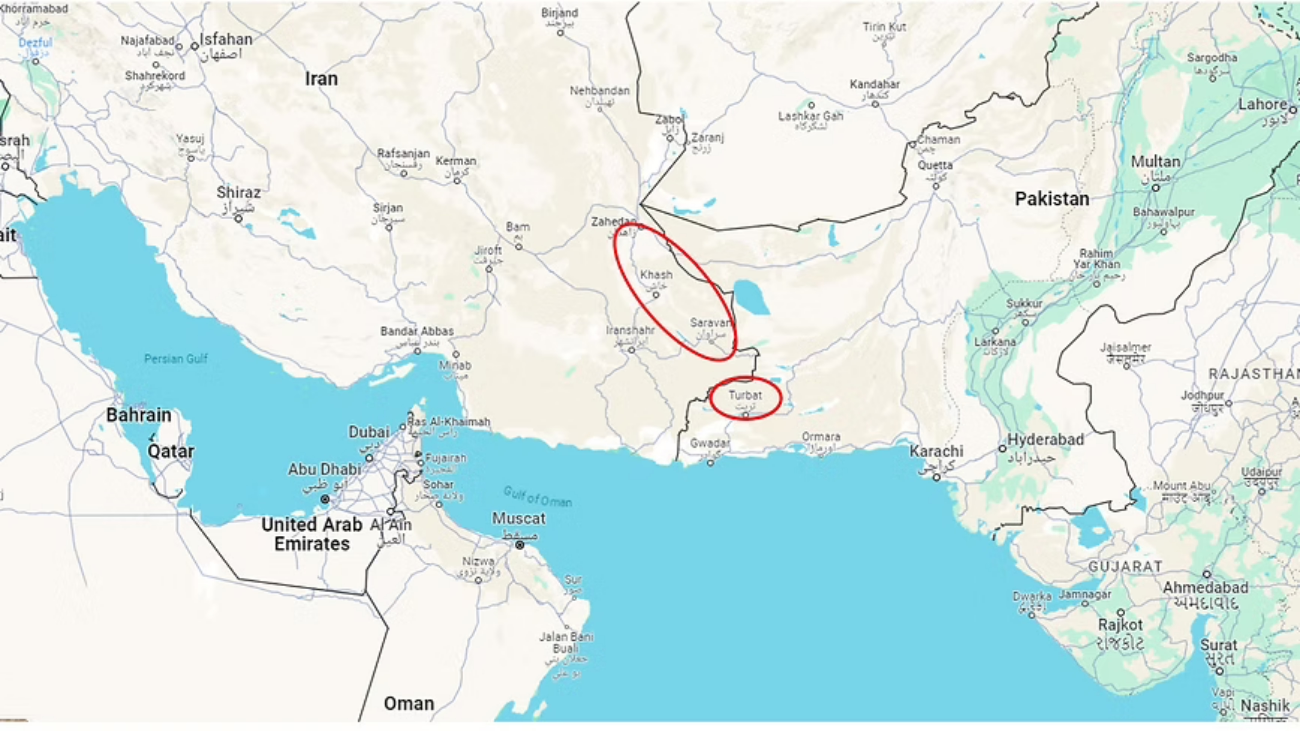
A new front has now opened between Pakistan and Iran. We spoke earlier of the Sunni-Shiite war heating up, but it has spread faster and more violently than we expected. 

Over the last few days fighting on the Iran-Pakistan border has heated up. It started with heavy fire between the Pakistani group Jaish ul-Adl and Iranian border guards in the Sistan-Baluchestan border area, and included the assassination of Iranian Hussain Gwadanfur on the Khash-Saravan road.

In other clashes between Iranian and Pakistani forces at least two Iranian Revolutionary Guard (IRG) soldiers were killed, and the IRG has shot rockets into Pakistan hitting Turbat and surrounding areas near the coast.

Pakistan’s Ministry of Foreign Affairs released a statement claiming that they “undertook a series of highly coordinated …. precision military strikes against terrorist hideouts in Siestan-o-Baluchistan province of Iran”. At the end of the press release they speak of Iran being a “brotherly country” with “great respect and admiration for the Iranian people”. It seems that Pakistan does not want to publicly admit that official Iranian forces were involved in the attacks.

What is incredible about Iran is that they have now attacked three nuclear armed states – the U.S, Pakistan and Israel – without fear of retaliation. We can only imagine what the Revolutionary Islamic Republic of Iran will do once they too have a nuclear weapon.

We are in a regional war with fighting going on daily from Pakistan to Libya. Iran, not Israel, is at the center and is the cause of nearly all the fighting and tough statements and tough actions need to be taken against Iran – not Israel. Senate majority leader Schumer has been quoted as saying that he wants to put extra conditions upon the sale of arms to Israel, but where was he when Obama sent planeloads of cash to Iran and Biden-Blinken released further billions in November of 2023? Where are the conditions placed on a terrorist state?  

The Biden-Blinken foreign policy of appeasing enemies and threatening allies that is at the core of its operation continues apace. First with the cutoff of arms to Saudi Arabia and their Yemeni allies in order to “end the war” and then to “advice” the Ukrainians not to provoke the Russians, and next heavy pressure on Israel to ‘surrender’ to Hamas by leaving them in power.  

One can make deals with countries that are interested in their people. One cannot make deals with terrorist groups or revolutionary states that are looking to upend the global order. That is Iran in a nutshell. 

Disclaimer: the views expressed in this opinion article are solely those of the author, and not necessarily the opinions reflected by angrymetatraders.com or its associated parties.

You can follow Ira Slomowitz via The Angry Demagogue on Substack https://iraslomowitz.substack.com/

postN87

AMT Top Ten Miscellaneous Flakes for 19th of January 2024

AMT Top Ten Miscellaneous Flakes for 19th of January 2024

10. Music: Come On, Come Over performed by Jaco Pastorius. The bass playing on this song is magnificent.

9. Cybersecurity: Prospect of quantum computing is making Central Banks nervous, quantum development will impact blockchain and make current payment systems vulnerable and perhaps obsolete. Post-quantum cryptography development is vital.

8. Frigid Weather: Tesla owners have dealt with battery power failures as winter temperatures have plummeted in Chicagoland and elsewhere. EV energy solutions need to improve.

7. China: Over the past 11 months FDI (foreign direct investment) has dropped more than 10% in the nation, an estimated short fall of 145.51 billion USD. China’s Foreign Direct Investment release has seemingly been pushed off to next week. Shanghai Composite (SSE) near 2832.28.

6. Energy Sector: WTI Crude Oil still priced politely as ‘interactions’ with Houthis flare. Natural Gas values remain near lows while North America suffers from a deep freeze.

5. Risk Assessment: Iran and Pakistan, although expressing ‘brotherly love’ for each other, have exchanged missiles across their respective border aimed at extremists.

4. U.S Treasuries: Inversion has almost ended completely, 5-Year Notes up to 30-Year Bonds yields have returned to ‘norms’.

3. Gold: Price of the precious metal near 2027.00 USD having bounced higher after challenging the 2000.00 vicinity on Wednesday.

2. Data: Consumer Sentiment reading via University of Michigan on the schedule today, this could provide impetus to markets that appear to be waiting for the next big push.

1. FX Volatility: USD strength has pushed the greenback towards important mid-term resistance in Forex as many day traders are likely still fighting the trend.

postN55

ICC Men’s Cricket World Cup 2023 – Thoughts and Predictions

ICC Men’s Cricket World Cup 2023 – Thoughts and Predictions

The 13th edition of the ICC Men’s Cricket World Cup is scheduled to commence in October 2023, featuring a total of 48 thrilling matches. This tournament holds the prestigious title of being the “flagship event of the international cricket calendar,” according to the International Cricket Council (ICC). India has the honor of hosting this edition, a choice that aligns well with India’s global prominence. This decision gains added significance in a year when India became the world’s most populous nation, and its GDP growth rate ranks among the fastest of any major economy.

The sport of cricket has expanded its footprint across the globe, being embraced by numerous countries. However, in this edition, only 10 teams will participate, a deliberate choice to maintain the intensity of the matches. Eight out of these 10 teams earned their spots through the super league performance, while the final two, Sri Lanka and Netherlands, secured their places via a “world cup qualifier tournament.” It’s important to note that there are no newcomers in this edition; all participating teams have previous experience at this level.

Based on performance rankings, four teams stand out as strong contenders for a spot in the semifinals: India (ranked 1), England (2), Pakistan (3), and New Zealand (4). However, it’s crucial to remember the disclaimer from financial investment products: past performance is no guarantee of future results. The eventual World Cup winner will likely be a team that doesn’t rely solely on star players, but boasts a balanced composition with multiple match-winners. In another analogy with the financial world, it’s akin to maintaining a diversified investment portfolio, a prudent allocation strategy that can weather various market conditions and risks.

India currently holds the top ranking and demonstrated their prowess by convincingly defeating Sri Lanka in the recent Asia Cup. Throughout the Asia Cup, diverse Indian players showcased their talents in different games, highlighting the team’s depth of match-winners and individuals capable of thriving under pressure. These qualities are pivotal during major tournaments, making India a favorite to claim the World Cup. Additionally, as the host nation, India enjoys the advantage of playing on home soil, further boosting their prospects in the tournament.

England enters the competition as defending champions, having triumphed in the thrilling 2019 World Cup finals against New Zealand, a match that ended in a tie. Ultimately, England secured victory based on a technicality. It’s essential to note that this outcome in no way diminishes England’s deserving win, as the result could have swung in either direction. Since then, England has maintained their dominant form, boasting a squad teeming with players capable of leading their team to victory. On paper, this team is arguably the most well-balanced, featuring a batting lineup that combines power hitters and run accumulators, as well as a versatile bowling attack capable of delivering both pace and swing or employing a slow, stifling approach.

Pakistan’s performance often oscillates, creating a roller-coaster of emotions for their dedicated fan base. On their best days, Pakistan can outclass the favorites, but they also exhibit a tendency to falter in tight contests. In the recent Asia Cup, despite being favored, they fell short of reaching the finals due to injuries to key players and lapses during critical moments. Pakistan’s success frequently hinges on the prolific scoring by their captain, Babar Azam, and the batting prowess of Mohammed Rizwan. In the bowling department, their reliance on superstars like Shaheen Shah Afridi and Haris Rauf is evident. This dependency on specific players presents a challenge to their World Cup aspirations.

New Zealand is somewhat of a statistical anomaly, consistently producing a remarkable number of world-class players from a relatively small population. They excel in identifying promising talent and nurturing it to create high-performance athletes. Furthermore, the New Zealand team is affectionately known as the ‘nice guys’ of cricket, celebrated for their amiable nature. Like Pakistan, the New Zealand team places considerable reliance on specific players, with the batting finesse of Kane Williamson and Tom Latham, combined with the lethal fast bowling of

Trent Boult, serving as a cornerstone of their success. The success of the team will depend on these star players maintaining their form throughout the tournament.

Two teams with contrasting World Cup histories deserve attention: Australia, a five-time champion, and South Africa, a team that has never reached the finals despite its quality. Australia, while not as dominant as in the past, continues to display a solid brand of cricket. The team is currently undergoing a transition, with younger players assuming leadership roles. Recent performances may not indicate peak form, so Australia lifting the cup would underscore their commitment to process and mental training.

South Africa finds itself in a similar situation to Australia, boasting numerous talented players but struggling to maintain consistent performance. Both Australia and South Africa appear to have individual excellence, but face challenges in cohesively functioning as a team.

In conclusion, India and England emerge as the front-runners for a coveted spot in the World Cup final. These two teams showcase a balanced roster with game-changing abilities. However, the question looms: can Pakistan’s star-studded lineup carry them to the summit, or will New Zealand’s proficient athletes secure another final berth? Could Australia recreate history, or will South Africa, long awaiting their breakthrough in a World Cup tournament, finally shine on the global stage? Alternatively, could an underdog team spring a remarkable surprise? Only time will tell. One certainty remains, though: winning a high-pressure World Cup tournament requires more than just physical fitness and mental resilience; it demands unwavering heart and determination.

postN13.1

Cricket Destined to be a Fountain of Joy & Money in India

Cricket Destined to be a Fountain of Joy & Money in India

Ask any person in India who is young or old, man or woman, city resident or village dweller and you will struggle to find someone who does not understand cricket. Why does the sport have a such a huge following in India? And more importantly, why is the “business of cricket” so lucrative? To put it simply, it was destiny. And to understand this you need to know 4 key events that lined the stars up and destined cricket in India for success.

First the Victory: June 25th, 1983

The sport of cricket was a remnant from the British rule in India which lasted until 1947. Cricket was considered an upper-class pastime, and probably not expected to survive in an independent India which was mostly poor. Yet cricket managed to endure at first, thanks to private clubs which played the sport for the prestige the British attached to it; and secondly with an even bigger thanks to the famous day of June 25th 1983, when India won the Cricket World Cup against all odds by defeating the mighty West Indies team. The icing on the cake was that the finals were held in London. It was at this point that India put the world on notice, that Indians could and would compete at something their colonial rulers of the past adored. The sense of pride created in India was uninhibited, and the first batch of Indian cricket stars were born out of this event. Naturally the interest and following of the game increased.

Second the Economy: Cricket Rules and the Power of Advertising

In the 1990’s the Prime Minister of India, P.V. Narsimha Rao, opened the economy to allow foreign companies to facilitate their business enterprises in India. Lowering the barriers for entry meant a liberal economy, which brought the likes of Honda, Leyland, Suzuki, Sony, and other well-known corporations to come in and partner with local Indian firms. Foreign capital brought jobs and fresh market competition which meant that India waded out of economic lethargy. International media companies were allowed to broadcast news, shows and sports on prime time television. The business impetus helped kick start the growth of television ads, which would be instrumental in pushing cricket popularity to new heights. How? It so happens that the rules of cricket are structured perfectly well to allow TV broadcasters to show ads every 4-6 minutes. No other sport in India (or probably the world) can boast of this unique set of advertising advantages. This meant there was plenty of advertising revenues to be made, which the broadcasters of course loved. The television broadcasters and BCCI realized these powers quickly and turned the sport into the business of cricket. Wait, who is BCCI?

Third the BCCI: Power to Organize and Create Fame

The Board of Cricket Control in India (BCCI) is a private body that manages cricket activities in India. In the mid 1990’s as the economy opened, the BCCI sold the TV rights to broadcast Indian matches to Transworld International (TWI). This broke the monopoly of Doordarshan (a state backed broadcaster which did not pay fees to BCCI). After a bitter legal battle, the Supreme Court of India decided that matches were a commodity the BCCI owned, and broadcasters must pay the BCCI if they wanted to air the matches. From the late 1990s to 2000s the BCCI went from strength to strength and hosted several international cricket events, which were a commercial success leading to high profits for the BCCI itself and the International Cricket Council (ICC), a governing body of cricket. These circumstances turned the BCCI into a very profitable entity, and it helped that the BCCI was organized in a focused manner and run like a free business not harmed by government bureaucracy that other sports in India faced.

As the popularity of cricket and its talented players increased, so did the value of its teams and its players sponsorship deals. During the early 2000’s Indian cricket players began to be featured in adverts for shaving creams, sodas, motorcycles, shoes, credit cards and anything else they could pose with on camera. Indian cricketers were now household names and the business of cricket gained critical velocity regarding valuation. The BCCI had become very influential on the world stage and with their ample funds in the coffers, and ready for use the organization took the step to launch the Indian Premier League (IPL) in 2007.

Fourth the IPL: The World of Cricket Takes Notice

The Indian Premier League is a high-intensity short-format (T20) cricket league, which is held annually and is contested by franchise teams. The league uses the shorter format of cricket to maximize viewer entertainment (including cheerleaders, fireworks and DJs) as opposed to showcasing traditional elements of the game like technique, proper form, and mental resilience.

The strength and stature of the BCCI is such that it negotiated with other international cricket boards to block out an exclusive window where fewer international cricket games happened during the IPL season. This meant that cricketers from all over the world (except Pakistan, for political reasons) were available to participate in the IPL. The Indian Premier League is huge.

Here are some important facts and monetary insights to consider:

· The Indian Premier League is the most influential cricket league in the world and attracts a huge audience because of the size and scope of its Indian fans.

· By the year 2014, the IPL was ranked sixth in average attendance via its games compared to all global sports.

· The Indian Premier League broadcast a game live on YouTube in 2010, becoming the first sports event to be officially shown live on the site.

· The IPL brand was valued at nearly 90,038 ‘crore’ (11 billion USD) already in 2022

· It was estimated in 2015 by the BCCI that the Indian Premier League had added 1,150 ‘crore’ (140 million USD) to the economy of India in Gross Domestic Product.

· The IPL achieved the status as a ‘decacorn’ valued at 10.9 billion USD in December of 2022.

· Thus producing a large statistical growth in USD compared to 2020, when the Indian Premier League had an accepted value of approximately 6.2 billion USD, this according to a report compiled by D & P Advisory, a consultant firm which inspected the IPL’s business.

· Recently the IPL championship final for 2023, became the most streamed live event ever on the internet with an estimated 3.2 ‘crore’ (32 million) viewers.

· The Indian Premier League sold its media rights early this year for the 2023–2027 seasons for a price of 6.4 billion USD to the Viacom18 and Star Sports companies.

· Creating a value for every match in the IPL of nearly 13.4 million USD, proving again the might of the gigantic Indian audience which appears to still be growing in stature.

With growing popularity and its ability to expand its audience, naturally corporations have lined up to advertise during the games. Celebrities have vied to own IPL teams and players have been traded at auctions for ridiculous amounts of money. The need for constant fresh talent has brought players from the small nooks and crannies of India to play alongside the international stars, allowing them to gain experience. This element of new players has added to the excitement of IPL for its viewers, while creating a framework to uncover new faces that could go on to play long-term for the Indian national team.

The synergy of the world’s best players along with the development of new talent from India and beyond is a win-win for the BCCI, and it continues to enjoy the growing fruits of success. No one knows when this high will end for cricket in India, but for the moment and foreseeable future expect cricket in India to generate revenues that other international cricket boards can only dream of, while the nation also contends as a top power in the sport globally.